Lesson 59 of 60 · about 9 minutes
Francis Salvador: The Jewish Planter Killed on the Cherokee Frontier
You'll be able to
- Trace Salvador from London to the backcountry of South Carolina and the Provincial Congress
- Describe the Cherokee War of 1776 and the ambush near Esseneca
- Compare the sources on the date, the place and the account of his dying words
- Explain why the claims that he was the first Jewish officeholder and the first Jewish death need qualifiers
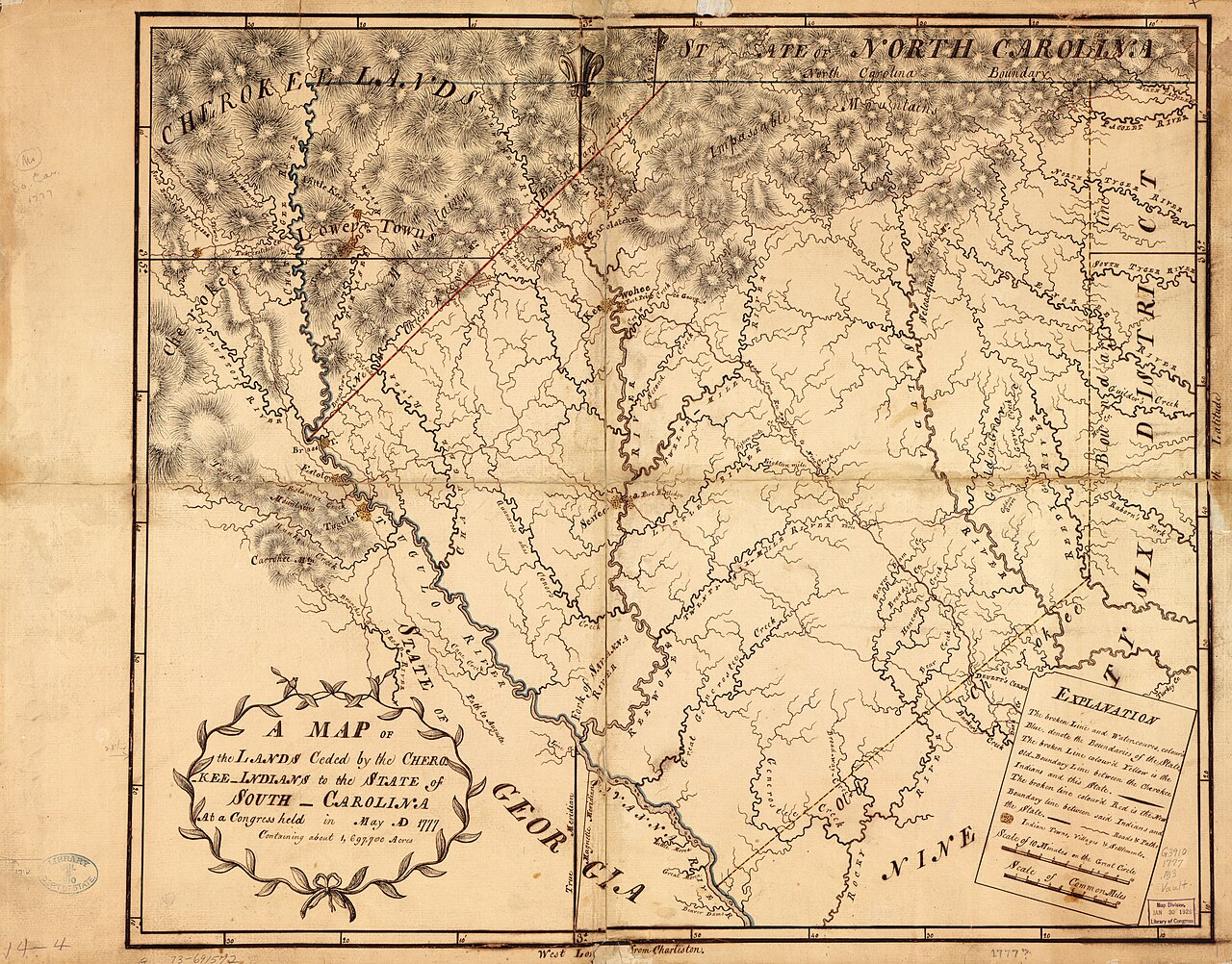
Before dawn on August 1, 1776, a column of about 330 South Carolina militiamen crept along the Keowee Path toward a Cherokee town named Esseneca. They had been marching since the night before. Loyalists and Cherokee warriors were waiting, and Francis Salvador, a planter from the backcountry who had been in the colony less than three years, was among the first to fall.1 He was 29.2 He lived about forty-five minutes, by the account Leon Hühner gave in 1901.3
From London to Coronaca
Salvador was born in London in 1747 into a Sephardic family that had left Portugal after the Inquisition and become one of the wealthiest Jewish families in England.4 His father died when he was about two.5 He married his cousin Sarah and had four children.2 Then the money went. The Library of Congress and the Jewish Encyclopedia name two blows: the Lisbon earthquake of 1755 and the decline of the Dutch East India Company, in which the family had invested. The South Carolina Encyclopedia names only the company's failure.254
He landed in Charleston on December 6, 1773, and settled on an indigo plantation called Corn Acre on Coronaca Creek in Ninety Six District. It was a remnant of some 200,000 acres his uncle had bought, known locally as "Jews Lands."4 The Encyclopedia says he acquired roughly thirty enslaved people.4 His wife and children stayed in London and never came.2
The Provincial Congress
Salvador made friends fast among the planters who led the patriot cause, including Henry Laurens, John Rutledge and William Henry Drayton.5 The Encyclopedia says he was elected on December 19, 1774, with Patrick Calhoun and eight other Ninety Six delegates, to the First Provincial Congress, which opened in Charleston in January 1775.45 He served on committees in both Provincial Congresses and in the first General Assembly.4 The Library of Congress says he spoke for independence in the second Congress.2
Myth: He was the first Jew elected to office in America
The claim is repeated everywhere, and it needs a qualifier. The Library of Congress notes that Joseph Ottolengui sat in the Georgia Assembly from 1761 to 1765, but had become an Anglican first. Salvador did not convert.2 The Library's point is that Ottolengui held office first but as a convert, while Salvador served without converting.
The Cherokee War of 1776
In the summer of 1776, British-allied Cherokee and Loyalists attacked the Carolina frontier. The American Battlefield Trust says the Cherokee were trying to hold their land against settlers moving in.1 The Jewish Encyclopedia says that on July 1 Salvador rode 28 miles to Major Andrew Williamson's plantation to give the alarm.6 The Library of Congress gives the same ride.2 Over the next month he went out with Williamson's militia. Nancy Ward, on the Tennessee side of the same war, warned settlers of an attack in 1776. Her story is in another lesson.
August 1, 1776
Dates and places differ by source. The Battlefield Trust, the Jewish Encyclopedia and the South Carolina Encyclopedia put his death on August 1, and the first two place it at the Cherokee town of Esseneca.164 The Library of Congress describes an ambush on July 31 at the Keowee River.2 These can be one event, since the column marched through the night of July 31.
Two nineteenth-century accounts of his last minutes survive in print. Hühner says he died in forty-five minutes, without knowing he had been scalped.3 The Library of Congress quotes Major Andrew Williamson's report, from John Drayton's Memoirs: "When I came up to him after dislodging the enemy and speaking to him, he asked whether I had beaten the enemy. I told him 'Yes.' He said he was glad of it and shook me by the hand and bade me farewell, and said he would die in a few minutes."27 Wikipedia prints nearly the same words from a letter of August 4, 1776, credited to Colonel William Thomson, who says Salvador fell by his side. The sources disagree on who was at his side.8 The South Carolina Encyclopedia quotes Drayton's memoirs saying his death "excited universal regret. . . . His manners were those of a polished gentleman."4
The Library of Congress adds a detail that fits the date: the Declaration was a month old, but news of it probably had not reached the frontier before he died.2
What the War Cost the Cherokee
The militia won at Esseneca. Williamson's men burned the town and then others, destroying the Cherokees' winter food and livestock. By late 1776 more than two thousand Cherokee had been killed, according to the Battlefield Trust. Under the May 1777 treaty at DeWitt's Corner, the Cherokee gave up most of their land in South Carolina.1 A patriot martyr and a dispossession belong to the same story.
Myth: He was the first Jew to die for American independence
The South Carolina Encyclopedia says his death made him the first Jew to die for the patriot cause, and the Battlefield Trust calls him widely remembered as the first Jewish man to die in the Revolutionary War. The Library of Congress qualifies it as the first Jewish person known to have died for independence.412 Haym Salomon's wartime service is in its own lesson.
Salvador's Life at a Glance
- 1747 Born in London.
- December 6, 1773 Arrives in Charleston.
- December 19, 1774 Elected to the First Provincial Congress, according to the South Carolina Encyclopedia.
- July 1, 1776 Rides to Williamson's plantation to give the alarm of Cherokee attacks.
- July 31 to August 1, 1776 Ambushed near Esseneca and dies of his wounds.
- May 1777 Cherokee cede most of their South Carolina land.
- 1950 and 1960 Memorials erected in Charleston and near Greenwood.9
Learn more
- South Carolina Encyclopedia: Salvador, Francis: a short, careful entry
- Library of Congress: The First Jewish Member of a Legislative Assembly: the Ottolengui qualifier and the dying exchange
- American Battlefield Trust: Esseneca: the battle and what followed for the Cherokee
- Jewish Encyclopedia: Salvador, Francis: an early entry that much later writing follows
Notes
- American Battlefield Trust, "Esseneca," on the Cherokee War of 1776, Williamson's march of about 330 men, the ambush in the early hours of August 1, the burning of Esseneca, the destruction of Cherokee food stores, the more than two thousand Cherokee killed and the May 20, 1777, treaty. Read it online. ↩
- Library of Congress, In Custodia Legis blog, "Francis Salvador: The First Jewish Member of a Legislative Assembly in American History" (May 2020), on Joseph Ottolengui, his marriage to his cousin Sarah, the Lisbon earthquake, his speech for independence, the July 31 ambush, his age of 29, Williamson's account, the family staying in London and the 1960 memorial. Read it online. ↩
- Leon Huhner, "Francis Salvador, a Prominent Patriot of the Revolutionary War," Publications of the American Jewish Historical Society 9 (1901): 107-122, at pp. 120-121, on the fight near Esseneka and his death in forty-five minutes. Read it online. ↩
- Jack Bass, "Salvador, Francis," South Carolina Encyclopedia, on his birth, family, arrival on December 6, 1773, Corn Acre, about thirty enslaved people, the December 19, 1774 election, the date of death, the "first Jew to die" phrase and the quotation from Drayton's memoirs. Read it online. ↩
- Cyrus Adler and Leon Huhner, "Salvador, Francis," Jewish Encyclopedia, on the death of his father when he was about two, the Lisbon earthquake, his friendships with Pinckney, Rutledge, Drayton and Laurens and the first Provincial Congress meeting on January 11, 1775. Read it online. ↩
- Adler and Huhner, same entry, on the July 1 ride to Williamson, the shooting near "Esseneka" on the morning of August 1, 1776, and the scalping. Read it online. ↩
- John Drayton, Memoirs of the American Revolution, vol. 2 (Charleston, 1821), p. 370, as cited by the Library of Congress blog for Williamson's account of Salvador's last words. Read the Library of Congress post. ↩
- Wikipedia, "Francis Salvador," which prints a letter dated August 4, 1776 and credited to Colonel William Thomson (citing Robert W. Gibbes, Documentary History of the American Revolution, vol. 1, pp. 125-127), with wording close to the Williamson report. Read it online. ↩
- South Carolina Encyclopedia, on the 1950 plaque in Charleston's City Hall Park; Library of Congress blog on the 1960 memorial on Highway 221 near Coronaca. Read it online. ↩
Terms in this lesson
- Provincial Congress
- South Carolina's revolutionary assembly, which met from January 1775 and ran the colony after royal government collapsed.
- Ninety Six District
- The South Carolina backcountry district where Salvador held land and which sent him to the Congress.
- Sephardic
- Descended from the Jews of Spain and Portugal. The Salvador family fled Portugal after the Inquisition.
- Esseneca
- A Cherokee town on the Keowee River, near present-day Seneca, South Carolina, where the ambush of August 1, 1776, took place.
- Cherokee War of 1776
- A summer of Cherokee and Loyalist attacks on the Carolina and Virginia frontier, answered by militia campaigns that destroyed many Cherokee towns.
Sources
- South Carolina Encyclopedia, Salvador, Francis checked 2026-10
- Jewish Encyclopedia, Salvador, Francis checked 2026-10
- American Battlefield Trust, Esseneca checked 2026-10
- Library of Congress, Francis Salvador: The First Jewish Member of a Legislative Assembly in American History checked 2026-10
- Wikipedia, Francis Salvador checked 2026-10