Lesson 13 of 60 · about 9 minutes
Haym Salomon: The Broker Behind the Myth
You'll be able to
- Describe what Salomon actually did for the Office of Finance in 1781 and 1782
- Explain where the claim that he financed the Revolution came from
- Say what Madison's own letter shows
- Understand how historians such as Kohler, Schappes and Kaganoff corrected the record
On January 11, 1785, the Pennsylvania Packet in Philadelphia printed a short notice that began, "Thursday last, expired after a lingering illness, Mr. Haym Salomon, an eminent broker of this city;" and went on to call him "remarkable for his skill and integrity in his profession."1 It noted his burial in the synagogue's cemetery.1 It said nothing about lending a fortune to the Revolution. That story came later.
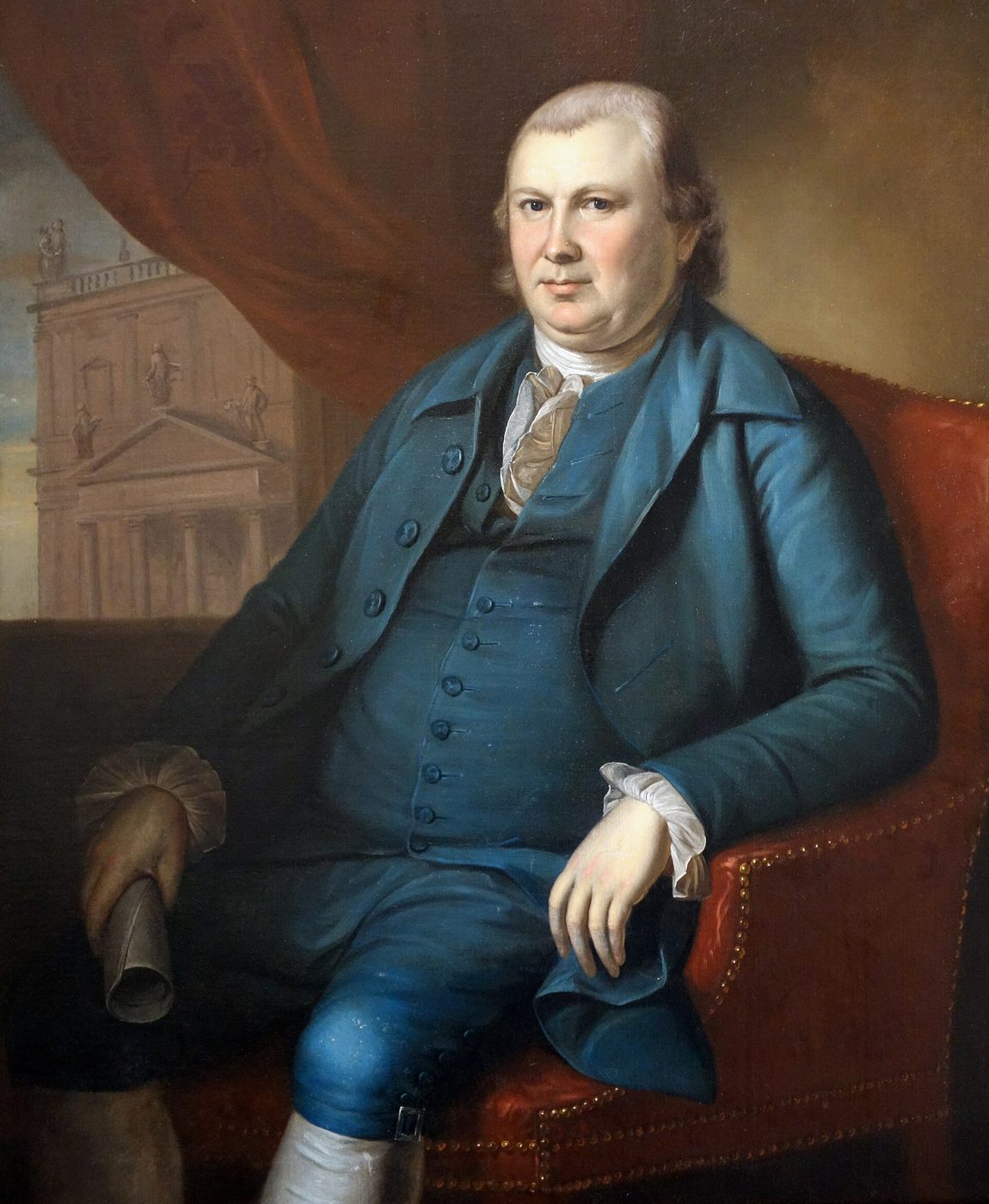
A Merchant from Poland
The obituary called him "a native of Poland."1 Jewish Currents puts his birth at around 1740 and gives no firm date.2 He came to New York around 1775 as a merchant and broker and joined the Sons of Liberty, according to Jewish Currents.2 When the British took New York in September 1776 they arrested him as a suspected spy. In 1778 he told Congress that a Hessian commander, Lieutenant General Leopold Philip de Heister, had used him as a purveyor because of his languages, that he had helped French and American prisoners, and that he had escaped the British in September 1778. He listed his losses at "five or six thousand Pounds Sterling" and asked for work in his trade.3 Jewish Currents says he was "believed to have been arrested twice" and caught tuberculosis in prison, but marks both as uncertain.2
Broker for the Office of Finance
He reached Philadelphia and started over. When Robert Morris took charge of the nation's money in 1781, he needed people to sell the government's bills of exchange. Salomon became one. The Journal of the American Revolution reports, citing Morris Schappes's reading of Morris's diary, that in 1781 and 1782 Salomon sold about $200,000 in such bills and was paid a broker's fee.4 Nathan Kaganoff's study of his newspaper advertisements shows he called himself "Authorized Broker to the Office of Finance."4 A 1975 passage in the Congressional Record says Morris's diary records some 75 transactions with Salomon, with entries like "I sent for Haym Salomon."2
What Madison wrote
Salomon also made personal loans to delegates. In a letter of August 27, 1782, to Edmund Randolph, James Madison wrote that he had for some time been "a pensioner on the favor of" Haym Solomon, "a Jew Broker."5 Madison's spelling is Solomon. The letter shows that Salomon lent Congress's members money to live on. It does not show a loan to the government. The Journal of the American Revolution lists others he helped in the same way, including Edmund Randolph, Joseph Reed, Arthur St. Clair and Thomas Mifflin.4
How the Legend Grew
The legend began with his family. In the late 1820s his son Haym Moses Salomon wrote to Madison, who had little to say from memory. In 1846 the family pressed a claim in Congress for a wartime loan, beginning at $353,000 and rising to $3,000,000.6 A House committee in 1893 recommended a gold medal "in recognition of services rendered by Haym Salomon for advances of money made during the Revolutionary war," and called the $250 cost "the least that the Congress of the United States can do." Congress never passed the bill.6 Some of the reaction was ugly. The article notes that anti-Semitic accusations arose, with some blaming Jews for profiting while others fought.6
"did not himself lend money to the government and never claimed he did"
Morris U. Schappes on Haym Salomon, as quoted in the Journal of the American Revolution. 7
Kohler's book, Haym Salomon, the Patriot Broker of the Revolution, His Real Achievements and their Exaggeration, was the first corrective. President Hoover had praised Salomon's financial genius only weeks before.8 Schappes extended it in 1950 and again in 1977 from Morris's diary, and Kaganoff looked at the advertisements.7 They agreed that Salomon was a broker who sold government securities for a commission. The Journal of the American Revolution traces the legend through a 1939 film, a 1941 statue in Chicago, a 1941 Liberty ship, a 1941 book and the 1975 stamp.9
Myth: Salomon lent the government $600,000
Jewish Currents states that he died penniless partly because the government failed to repay more than $600,000 in loans, "about twenty million dollars" in 2018 terms.2 The Journal of the American Revolution finds no documentary basis for loans to the government and places the claim in the family petitions of the nineteenth century. When two secondary accounts disagree, the one that cites Morris's diary and Salomon's own memorial is the stronger.73
What Is Left
What remains is a smaller man and a real one. Salomon was a refugee from British prisons who found work in the new government's finances. He sold bills for a commission, he lent money to delegates when Congress was broke, and he died in his forties. Remove the legend and the story is still worth telling.
Salomon's Life at a Glance
- About 1740 Born in Poland.
- About 1775 Settles in New York as a broker; joins the Sons of Liberty.
- 1776 British arrest him as a suspected spy after taking New York.
- August 25, 1778 Sends his memorial to Congress from Philadelphia.
- 1781 and 1782 Sells about $200,000 in bills of exchange for the Office of Finance.
- August 27, 1782 Madison writes of being a "pensioner" on his favor.
- January 1785 Dies; obituary printed January 11.
- 1846 Family presses its claim in Congress.
- 1931 Max Kohler publishes the first correction.
- 1975 U.S. stamp labels him "Financial Hero."
Learn more
- Journal of the American Revolution: Haym Salomon, Broker: the strongest correction of the legend
- Jewish Currents: Financier of the Revolutionary War: the popular version, for comparison
- Founders Online: Madison to Randolph, 27 August 1782: the letter with the word "pensioner"
Notes
- Pennsylvania Packet and Daily Advertiser, January 11, 1785, obituary of Haym Salomon, as quoted in the Journal of the American Revolution, "Haym Salomon, Broker of the Revolution." Read it online. ↩
- Jewish Currents, "Financier of the Revolutionary War," January 6, 2018, on his birth around 1740, his move to New York, the uncertain arrests, the Congressional Record passage of March 25, 1975, and the $600,000 claim. Read it online. ↩
- Journal of the American Revolution, same article, on Salomon's memorial to Congress of August 25, 1778, with the Hessian commander de Heister and the loss of "five or six thousand Pounds Sterling." Read it online. ↩
- Journal of the American Revolution, same article, on the sale of about $200,000 in bills in 1781 and 1782, Kaganoff's study of his advertisements, and his personal loans to Randolph, Reed, St. Clair and Mifflin. Read it online. ↩
- James Madison to Edmund Randolph, August 27, 1782, Founders Online, giving "a pensioner on the favor of" Haym Solomon "a Jew Broker." Read it online. ↩
- Journal of the American Revolution, same article, on Haym Moses Salomon's letters to Madison, the claim of 1846 rising from $353,000 to $3,000,000, the 1893 House committee report and the anti-Semitic accusations. Read it online. ↩
- Journal of the American Revolution, same article, on Kohler in 1931 and Schappes in 1950 and 1977, and the quotation from Schappes. Read it online. ↩
- Journal of the American Revolution, same article, on Kohler's 1931 book and President Hoover's earlier praise. Read it online. ↩
- Journal of the American Revolution, same article, on the 1939 film, the 1941 Chicago statue, Liberty ship and book, and the 1975 stamp. Read it online. ↩
Terms in this lesson
- Bill of exchange
- A written order to pay a sum on a set date. Salomon sold the government's bills for a commission.
- Office of Finance
- The department Robert Morris ran as Superintendent of Finance from 1781.
- Broker
- An agent who arranges sales between parties for a fee and does not necessarily lend his own money.
- Memorial
- A written petition to a legislature. Salomon sent one to Congress in 1778.
- Contributors to the Cause
- The series of 1975 U.S. stamps that included Salomon, labeled "Financial Hero."
Sources
- Journal of the American Revolution, Haym Salomon, Broker of the Revolution checked 2026-10
- Jewish Currents, Financier of the Revolutionary War checked 2026-10
- Founders Online, James Madison to Edmund Randolph, 27 August 1782 checked 2026-10