Lesson 43 of 60 · about 9 minutes
Pierre Beaumarchais: The Playwright Behind Secret French Aid
You'll be able to
- Explain how a watchmaker's son who wrote comedies became France's agent for aid to the American rebels
- Describe how Roderigue Hortalez and Company was set up and how it hid French and Spanish government money
- Follow the dispute over whether the supplies were a gift, a loan or a sale
- Note where the sources disagree on quantities and on how the debt was settled
On June 10, 1776, a French playwright climbed into his carriage with a million livres in gold coin packed in canvas bags. At home he called his family together and poured the coins onto the floor in a shining heap.1 That scene is Streeter Bass's telling, in a history published by the CIA.1 The date and the sum rest on better evidence. A receipt for one million livres, given by Beaumarchais on that day and paid on the order of the Comte de Vergennes, turned up in the French files, and a copy reached the American government in 1794. It caused trouble for his family for a generation.2
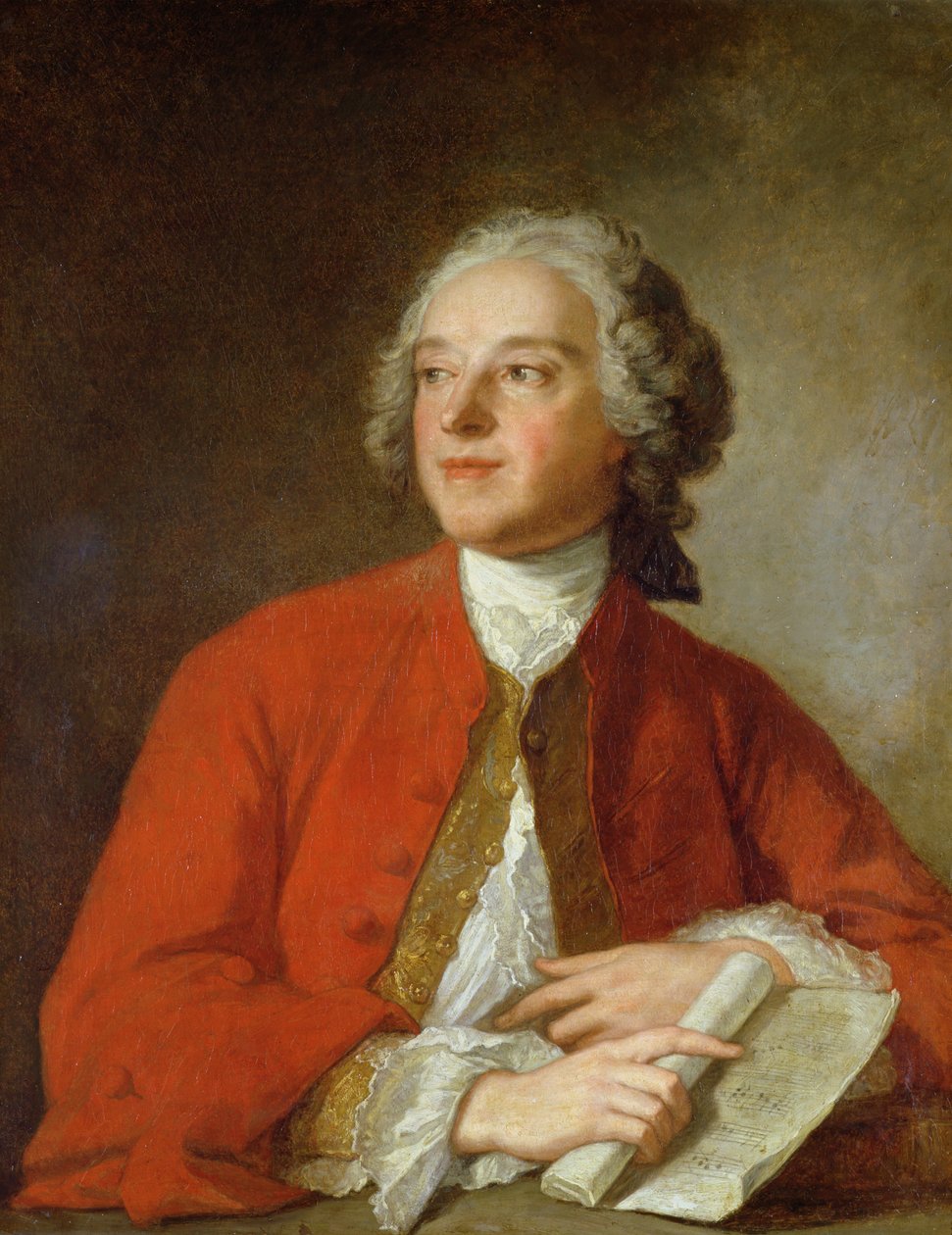
A Watchmaker's Son at Court
Pierre-Augustin Caron was born in Paris on January 24, 1732, the son of a watchmaker. He took the name Beaumarchais when he married the widow of a court official, Madame Franquet.3 He invented a small watch escapement, made a watch for Madame de Pompadour small enough to fit in a ring, and taught Louis XV's daughters music. He also made money.4 His comedy The Barber of Seville opened in February 1775. The first night failed, and he cut and reworked the play in time for a second night that was a success.43 Its sequel, The Marriage of Figaro, was blocked by Louis XVI and did not open until April 27, 1784.35
A Spy in London
In April 1775 he was in London on the king's business, sent to buy off the Chevalier d'Éon, who was holding the crown to ransom over old secret papers. Vergennes had backed him for the job and added a second one: report on the quarrel with the colonies.4 At the house of John Wilkes, Beaumarchais met Arthur Lee, an American agent who wanted complete separation from Britain. By autumn Beaumarchais was pressing Versailles to help.6
Vergennes agreed, but for different reasons. Bass puts it this way: Beaumarchais felt the necessity of freeing a gallant people, while Vergennes, the realist, saw that a British war in America served French interests. Louis XVI held back on religious grounds. Finance minister Turgot was the only member of the cabinet who dissented, and he soon resigned.6
Roderigue Hortalez and Company
The government did not want a direct subsidy that broke French neutrality. It chose a business. Beaumarchais would run a firm that bought surplus guns and supplies from French arsenals on credit, sold them to the Americans and repaid the crown.1 Bass says the capital was one million livres from the French treasury, one million from the Spanish ambassador on August 11, and a third million from French merchants.1 Spain's own part in the war is told in the lesson on Bernardo de Galvez.
Silas Deane reached Paris on July 5 and met Beaumarchais on July 19, and the two settled terms in letters of July 20 and 22.7 On August 18, 1776, Beaumarchais wrote to the Committee of Secret Correspondence, signing as the firm:
"Your deputies, gentlemen, will find in me a sure friend, an asylum in my house, money in my coffers, and every means of facilitating their operations, whether of a public or a secret nature."
Roderique Hortales and Co. to the Secret Committee of Correspondence, August 18, 1776, printed in H. Rept. 64, 18th Cong., 1st sess. 8
The same letter claimed he had already gathered about 200 brass cannon, 20,000 pounds of cannon powder and 20,000 muskets.8 Bass reports far larger totals for the end of 1776, including 300,000 muskets and 100 tons of powder. That is far above Beaumarchais's own list. Franklin, passing on word from a merchant named Penet in October 1776, put the shipment then loading at 200 brass field pieces and 30,000 firelocks, so 300,000 is probably a misprint for 30,000.19 The House committee of 1824 said only that eight cargoes in 1776 and 1777 came to upwards of three million livres.2
The ships were nearly stopped. British ambassador Stormont protested, and Vergennes held them in Le Havre. They slipped out at night and reached Portsmouth, New Hampshire, in April 1777, and the goods went to Horatio Gates's northern army.1 Bass says there can be little doubt they mattered at Saratoga. That is his judgment, not a count. News of Saratoga reached Paris on December 4, 1777, and a treaty of alliance followed on February 6, 1778.110 Beaumarchais also lent Friedrich von Steuben the money for his voyage and dressed him as a Prussian lieutenant general to impress the American commissioners. The debt was still in Beaumarchais's papers when he died.11
The Unpaid Bill
Was it a gift or a sale? Arthur Lee said gift. In a letter of October 6, 1777, he reported that Beaumarchais had told him in London that the aid was "for a cover only, and not for payment, as the remittance was gratuitous."12 Deane thought Beaumarchais was selling on his own account. Vergennes told the commissioners the king had furnished nothing and had only let Beaumarchais draw on the arsenals on condition that he replace what he took.2 Bass says the French ambassador Gérard made that plain to Congress in January 1779, and that Congress apologized.13
Payment still did not come. The American side sent about three and a half million livres in tobacco and bills of exchange.2 The fight turned on the million Beaumarchais received on June 10, 1776. A Treasury auditor found in 1793 that the United States owed him 2,280,231 livres, but the Treasury charged him with the million, and a settlement in 1805 left a balance of about $41,119, paid to his heirs with interest in 1806.2 His daughter Eugénie kept petitioning, and a select committee of 1824 thought the king had meant the million to help Beaumarchais buy the supplies.2
The sources disagree on the rest. Bass names Hamilton as the 1793 reviewer and says Lee found in 1787 that Beaumarchais owed Congress 1,800,000 livres. The House report says an auditor did the 1793 work and that the 1789 Board of Treasury, with Lee on it, found a balance owed to the United States of 742,413 livres, not counting the million.142 The report is the better source. Bass also says, citing the biographer Lemaître, that Congress offered the heirs 800,000 francs in 1835 and they took it.14 That comes after the 1824 report and rests on Bass alone.
Myth: Beaumarchais got rich from the American war
Lee accused him of war profiteering. Lemaître's accounts, quoted by Bass, put the firm's business from 1776 to 1783 at over 42 million livres and its profit at 51,324 livres, about two-tenths of one percent.14 Bass adds that the sugar trade after 1778 brought the firm out of the red. The French minister who pleaded for his heirs in 1807 said he spent his fortune on the American cause.2 That is an advocate's claim, but the numbers do not show a fortune.
Beaumarchais died in Paris on May 18, 1799, still a creditor of the United States by his own account.3
Beaumarchais's Life at a Glance
- January 24, 1732 Born in Paris, son of a watchmaker.
- April 1775 Arrives in London on the king's business; meets Arthur Lee at John Wilkes's house.
- June 10, 1776 Receives one million livres from the French treasury.
- July 1776 Meets Deane and agrees terms for arms.
- August 18, 1776 Writes to the Secret Committee as Hortalez.
- April 1777 First ships reach Portsmouth, New Hampshire.
- April 27, 1784 The Marriage of Figaro opens in Paris.
- May 18, 1799 Dies in Paris.
Learn more
- Streeter Bass, Beaumarchais and the American Revolution: the best short account of the firm
- House Report 64, 1824: the claim, with his letters and Lee's
- State Department Office of the Historian: French Alliance: how secret aid became a treaty
- Friedrich von Steuben: the officer Beaumarchais helped send
Notes
- Streeter Bass, "Beaumarchais and the American Revolution," Studies in Intelligence 14, no. 1 (Spring 1970), CIA, section "Hortalez et Compagnie," on the gold, the design of the firm, its capital, the shipments, Portsmouth and Saratoga. Read it online. ↩
- U.S. House of Representatives, "Report of the select committee ... in relation to the representatives of the late Caron de Beaumarchais," February 16, 1824, 18th Cong., 1st sess., H. Rept. 64, pp. 1-9, the committee's narrative of the claim, the June 10, 1776 receipt, Vergennes's reply, the 1793 audit, the 1805 settlement and the 1807 note from the French minister. Read it online. ↩
- Encyclopaedia Britannica, "Pierre-Augustin Caron de Beaumarchais," on his birth and death dates (online edition), and "Beaumarchais, Pierre Augustin Caron de," 11th ed., vol. 3 (1911), on his marriage and new name, the failed first night of the Barber and Louis XVI's opposition to Figaro until 1784. Read the 1911 entry online. ↩
- Bass, same article, section "The King's Agent," on the watch, music lessons, The Barber of Seville and the mission to London. Read it online. ↩
- EBSCO Research Starters, "First Performance of The Marriage of Figaro," on the first performance on April 27, 1784 and the king's opposition. Read it online. ↩
- Bass, same article, section "The Advocate of Intervention," on Lee, Wilkes, Vergennes, Louis XVI's scruples and Turgot. Read it online. ↩
- Bass, same article, section "Enter Silas Deane," on Deane's arrival and the July 1776 contract. Read it online. ↩
- H. Rept. 64, document No. 13, letter of Roderique Hortales and Co. to the Secret Committee of Correspondence, August 18, 1776. Read it online. ↩
- H. Rept. 64, document No. 18, extract of a letter from Dr. Franklin to the President of Congress, Nantes, October 8, 1776. Read it online. ↩
- Office of the Historian, U.S. Department of State, "French Alliance, French Assistance, and European Diplomacy during the American Revolution, 1778-1782," on the treaties of February 6, 1778. Read it online. ↩
- Bass, same article, section "The Inspector General," on Steuben's voyage and the unpaid sum of 5,997 francs found in Beaumarchais's papers. Read it online. ↩
- H. Rept. 64, document No. 5, extract of a letter from Arthur Lee to the Secret Committee, Paris, October 6, 1777. Read it online. ↩
- Bass, same article, section "The Ineffable Arthur Lee," on Lee's charges, Gérard's statement of January 1779 and Congress's apology. Read it online. ↩
- Bass, same article, sections "The War Profiteer" and the closing pages, on the Lemaître figures, the reviews of 1787 and 1793, and the 1835 settlement. Read it online. ↩
Terms in this lesson
- Livre
- The French unit of account. One million livres was a very large sum in the 1770s.
- Roderigue Hortalez and Company
- The cover firm, written Hortalez et Cie in French, through which Beaumarchais sold munitions to the Americans.
- Committee of Secret Correspondence
- The congressional committee, formed in 1775, that dealt with foreign contacts. Beaumarchais wrote to it as Hortalez.
- Cover firm
- A business set up so a government can act without being seen to act.
- Vergennes
- The Comte de Vergennes, Louis XVI's foreign minister from 1774, who approved and managed the secret aid.
Sources
- Streeter Bass, Beaumarchais and the American Revolution, Studies in Intelligence 14 (1970), CIA checked 2026-10
- U.S. House of Representatives, Report of the select committee on the representatives of the late Caron de Beaumarchais, Feb. 16, 1824 (H. Rept. 64, 18th Cong., 1st sess.) checked 2026-10
- Office of the Historian, U.S. Department of State, French Alliance, French Assistance, and European Diplomacy checked 2026-10
- Encyclopaedia Britannica, Pierre-Augustin Caron de Beaumarchais checked 2026-10
- EBSCO Research Starters, First Performance of The Marriage of Figaro checked 2026-10