Lesson 23 of 60 · about 9 minutes
Agrippa Hull: The Free Black Soldier Who Served Kosciuszko
You'll be able to
- Describe Hull's service from his enlistment in 1777 to his discharge at West Point in 1783
- Explain his work as an orderly to General Paterson and then to Kosciuszko
- Follow the story of his pension and of Kosciuszko's will, and why the will was never carried out
- Tell which battles the records support and which come from repetition
On May 1, 1777, a young man of eighteen signed up in Stockbridge, Massachusetts, for "three years or the war."1 He was free, born on March 7, 1759, in Northampton, Massachusetts, according to BlackPast, though the National Park Service's Kosciuszko timeline says Connecticut.36 Agrippa Hull stayed with the army for more than six years.2
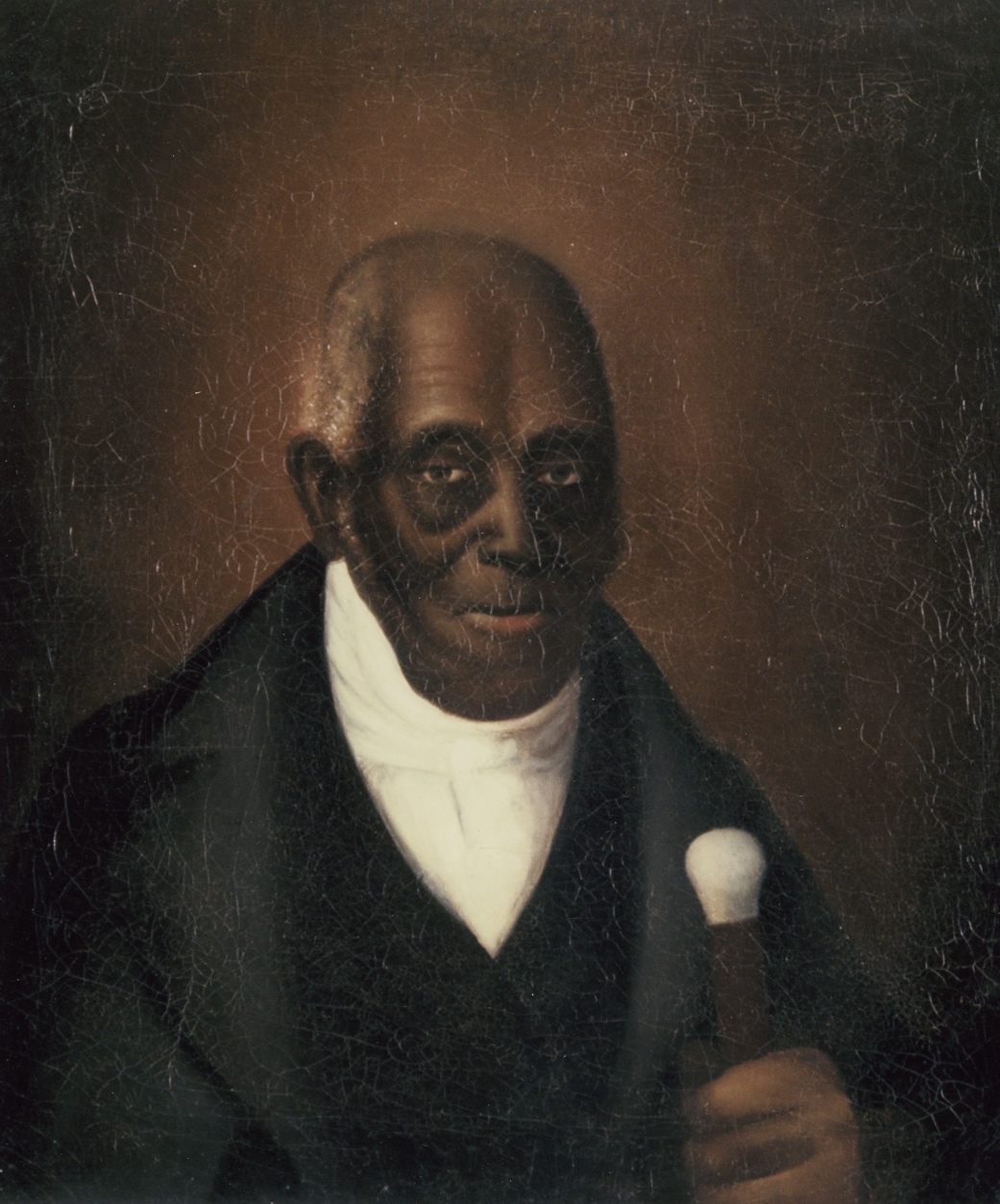
A Free Boy in Stockbridge
His parents were Amos and Bathsheba Hull. His father died in 1761, and at six Agrippa went to live in Stockbridge with Joab and Rose Binney, a Black couple.2 A line from older popular accounts says he was the son of an African prince. BlackPast repeats it with the words "said to be."3 None of the records quoted in this lesson mention it, and the sources that repeat it cite no document. What the records show is a free boy raised by neighbors.
Orderly to General Paterson
The enlistment papers put him in the First Stockbridge Company under Isaac Marsh, with service credited to the 12th Massachusetts Regiment and Colonel Samuel Brewer.4 In practice he became an orderly to General John Paterson of Lenox, a brigadier general in 1777 and a brevet major general from 1783. Muster rolls place him at Valley Forge in December 1777 and January 1778.2
Which battles he saw is where the sources split. The National Park Service says he took part in the Battle of Freeman's Farm, the first Saratoga fight of September 19, 1777.2 The Bidwell House Museum, using the Stockbridge Library's papers, also places him at that fight, and adds that the record does not show him carrying a weapon. It cites the historians Gary Nash and Graham Hodges for the point that no evidence from his six years shows he was an arms-bearing soldier.4
Myth: Hull charged through every major battle of the war
Popular summaries put him at Saratoga, Monmouth, Cowpens, Guilford Courthouse and the siege of Charleston.3 The documents are thinner. The Stockbridge Library names fighting "from Saratoga to Eutaw Springs."5 The National Park Service adds Ninety-Six and Cowpens.2 Monmouth appears only in secondary summaries, and the Bidwell muster-roll excerpts do not mention it.4 A man who carried messages and kept a general's tent was near battles. That is not the same as standing in the line.
With Kosciuszko
In May 1779 he moved to the staff of Tadeusz Kosciuszko, the Polish engineer who was building the defenses of West Point.2 BlackPast puts the service at about fifty months.3 The National Park Service's Kosciuszko timeline dates the southern trip with Hull to 1780 and says they parted in 1782, and a muster roll of early 1781 reads "On extra service with Col. Kosciuszko."64 The sources do not agree on the dates. A muster roll for early 1781 puts Hull near West Point "on extra service with Col. Kosciuszko," while the park service timeline already has the two in the South in 1780. The pairing is certain. The calendar is not.
They went south together under Nathanael Greene, through heavy fighting in South Carolina. Afterward Hull helped surgeons with the wounded, an experience the park service says he never forgot.2 The same account tells of a dinner he threw for the black servants in camp while wearing the general's uniform, a stunt that, PBS says, surprised Kosciuszko.27
The discharge
He was discharged at West Point on July 24, 1783, on a certificate signed by George Washington, with the signatures of Joseph Trumbull and Lt. Jacob Town.5 He turned down an invitation to go to Poland with Kosciuszko.3 Accounts say the two men met again in 1797, the year Kosciuszko came to the United States.6
The Will and the Pension
Kosciuszko's stay in America ended in a will. In 1798 he left his American back pay to Thomas Jefferson with the instruction "to employ the whole thereof in purchasing Negroes," and setting them free in his name.8 Kosciuszko died on October 15, 1817.6 Jefferson, then seventy-four, declared himself too old and feeble to carry out the trust.8 In 1852 the Supreme Court ordered the money paid to Kosciuszko's heirs in Europe.8 None of it bought anyone's freedom. For Kosciuszko himself, see lesson 11.
Hull's own money came through the army. He applied for a pension under the Act of March 18, 1818, and was placed on the roll at eight dollars a month from April 27, 1818.9 A second declaration followed on June 12, 1828, with two Lenox men swearing he was generally reputed a soldier of the Revolution.9 He did not want to hand over his discharge as proof. In 1828 Charles Sedgwick wrote that Hull "had rather forego the pension than lose the discharge."5 He kept the paper, and the pension went through.5
Back in Stockbridge
He worked for Judge Theodore Sedgwick for roughly two decades, alongside Elizabeth Freeman, known as Mum Bett.10 In 1785 he bought land near the Housatonic River. Jane Darby, who had fled slavery in Lenox and was freed through Sedgwick's help, became his wife. The iBerkshires account dates the marriage to 1785, and the Bidwell House Museum says it is believed to have been about 1795.1013 After Jane died he married Margaret Timbrook, called Peggy, on February 4, 1813.9 By 1800 he was the largest Black landowner in town and was ahead of about 40 percent of the white householders in assessed property.2
He had a plain way of putting things. The park service quotes him as saying, "Many a good book has dark covers."2 The abolitionist Eliza Lee Cabot Follen, writing in 1845, recorded him saying that God "will not ask what is our color, but what has been our conduct."10
He died on May 21, 1848, at eighty-nine.2 Peggy applied for the widow's pension in 1853 and was granted eighty dollars a year.9 Sources name his burial place three ways: the Stockbridge Cemetery, the Stockbridge Congregational church cemetery and the Afro-American Cemetery, grave 47.11312 The Stockbridge Library keeps his portrait, his chair and the daguerreotype.5
Hull's Life at a Glance
- March 7, 1759 Born free, most likely in Northampton, Massachusetts.
- May 1, 1777 Enlists in Stockbridge at eighteen.
- Winter 1777 to 1778 At Valley Forge, as muster rolls show.
- May 1779 Becomes orderly to Tadeusz Kosciuszko.
- 1780 to 1781 Goes south with Kosciuszko under General Greene.
- July 24, 1783 Discharged at West Point.
- 1785 Buys land in Stockbridge; marriage to Jane Darby dated here or about 1795.
- 1818 Placed on the pension roll.
- May 21, 1848 Dies in Stockbridge.
Learn more
- NPS, Valley Forge: Agrippa Hull: the best short account from the park that holds his muster rolls
- Stockbridge Library on the discharge certificate: how the paper Hull refused to give up reached the town archive
- Bidwell House Museum on the pension: the 1818, 1828 and 1853 documents, read closely
- New York Review of Books, Jefferson's Betrayal: Kosciuszko's will and what became of it
Notes
- Bidwell House Museum, "Bidwell Lore: Agrippa Hull's War Experience," on his enlistment papers listing "three years or the war" and the First Stockbridge Company. Read it online. ↩
- National Park Service, Valley Forge National Historical Park, "Agrippa Hull," on his birth, parents, enlistment of May 1, 1777, Freeman's Farm, Valley Forge muster rolls, the move to Kosciuszko in May 1779, land holdings and death. Read it online. ↩
- BlackPast, "Agrippa Hull: Revolutionary Patriot," by Gary B. Nash, on the "said to be the son of an African prince" line, the fifty months with Kosciuszko, the battles listed and the burial. Read it online. ↩
- Bidwell House Museum, "Bidwell Lore: Agrippa Hull's War Experience," on units, muster-roll remarks and the question of whether Hull bore arms. Read it online. ↩
- Stockbridge Library Museum & Archives, "Agrippa Hull: Public Unveiling of Certificate of Discharge" (2024), on the certificate of July 24, 1783, the 1818 pension application, Sedgwick's letter and the library's holdings. Read it online. ↩
- National Park Service, Thaddeus Kosciuszko National Memorial, "The Life and Times of Thaddeus Kosciuszko," on the 1780 trip south, the 1782 parting, the 1797 visit and his death on October 15, 1817. Read it online. ↩
- PBS, Africans in America, "Agrippa Hull." Read it online. ↩
- Edmund S. Morgan, "Jefferson's Betrayal," New York Review of Books, June 26, 2008, quoting the will of 1798 and describing Jefferson's refusal and the later ruling. Read it online. ↩
- Bidwell House Museum, "Bidwell Lore: More on Agrippa's Military Pension," transcribing the 1818 roll entry, the June 12, 1828 declaration and Margaret Hull's 1853 claim. Read it online. ↩
- Joe Durwin, "An Uncommonly Fine Head: The Life and Times of Agrippa Hull," iBerkshires, 2015, on the Sedgwick years, his marriage to Jane Darby, Follen's 1845 account and his sayings. Read it online. ↩
- Find a Grave, memorial for Agrippa "Grippy" Hull, listing burial at Stockbridge Cemetery. Read it online. ↩
- Sons of the American Revolution, Patriot Index record for Agrippa Hull, listing burial in the Afro-American Cemetery, Grave 47, and pension file W.760. Read it online. ↩
- Rick Wilcox, "The Wives of Agrippa Hull," Bidwell House Museum, 2022, on Jane Darby fleeing her enslaver in Lenox, the marriage "about 1795" and his 1813 marriage to Margaret Timbrook. Read it online. ↩
Terms in this lesson
- Orderly
- A soldier assigned to an officer to carry messages, tend his needs and run errands. Hull served two generals this way.
- Muster roll
- A list of the soldiers present with a unit on a given date. Hull's survive and place him at Valley Forge.
- Discharge certificate
- The paper that proved a soldier had been honorably released. Hull's, signed by Washington, is dated July 24, 1783.
- Pension
- A regular payment to a veteran. Congress began paying pensions to needy veterans of the Continental line in 1818.
- Executor
- The person named in a will to carry out its terms. Kosciuszko named Thomas Jefferson.
Sources
- National Park Service, Valley Forge: Agrippa Hull checked 2026-10
- Stockbridge Library Museum & Archives, Agrippa Hull certificate of discharge checked 2026-10
- Bidwell House Museum, Bidwell Lore: Agrippa Hull's War Experience checked 2026-10
- Bidwell House Museum, Bidwell Lore: More on Agrippa's Military Pension checked 2026-10
- National Park Service, The Life and Times of Thaddeus Kosciuszko checked 2026-10
- New York Review of Books, Jefferson's Betrayal checked 2026-10