Lesson 58 of 60 · about 9 minutes
Charles Carroll of Carrollton: The Last Surviving Signer
You'll be able to
- Explain how a Catholic barred from Maryland politics became a leader of the patriot cause
- Describe the First Citizen letters, the 1776 Canada mission and Carroll's signing on August 2, 1776
- Separate the signature-and-bayonet legends from what the records show
- Weigh his reputation against the more than 350 people he held in slavery
On August 2, 1776, in Philadelphia, a thirty-eight-year-old Marylander stepped up to the engrossed Declaration of Independence and signed it. Congress had voted for independence a month earlier, and he had been seated only since July 18.1 The state he came from had kept Catholics out of public office for nearly a century.1 Charles Carroll signed anyway, and the Maryland State Archives says he did it "most willingly," as a long-held intention "to defend the liberties of my country, or die with them."1
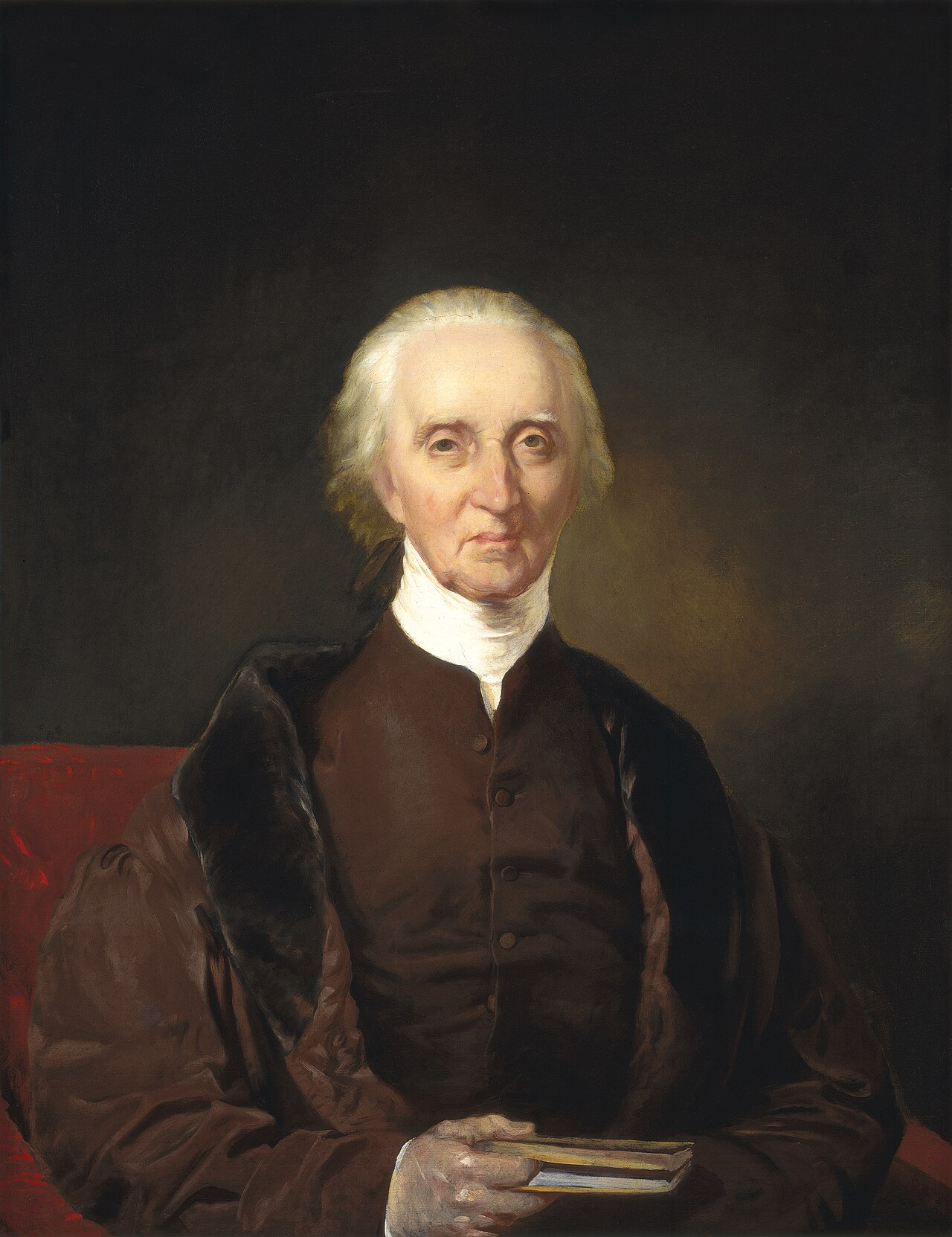
A Catholic Shut Out of Politics
Carroll was born in Annapolis on September 19, 1737, the only son of Charles Carroll of Annapolis.2 The family held the largest fortune in colonial Maryland, the Charles Carroll House says, and the money bought an education abroad.3 He went to a Jesuit school at Bohemia Manor in 1747, then to French colleges at St. Omer, Rheims and Louis-le-Grand, and finally studied law in Bourges, Paris and London.2 The Archives dates his return to Maryland to 1764. The Charles Carroll House museum says 1765.23
He was heir to Doughoregan Manor. On his return he was given a 10,000-acre tract called Carrollton in Frederick County, and he added the name to his signature to set himself apart from other Charles Carrolls.3
First Citizen
His public career began in a newspaper. The Fee Bill controversy was a fight over a governor's proclamation setting officials' fees. Daniel Dulany the Younger argued the official side in the Maryland Gazette, and Carroll answered him as "First Citizen." The Maryland Archives and the Charles Carroll House both date the exchange to 1773.13 By any date, a Catholic taking on a royal governor's lawyer in public was a risk. The Archives says it won him "the gratitude and respect" of the anti-proprietary party.1
The voters then did what the law had long forbidden. Carroll served in the Maryland Convention of 1774, and the Charles Carroll House says his election that November effectively ended the ban on Catholics in Maryland politics.3 The Archives counts him as the first Roman Catholic to hold public office in Maryland in nearly a century.1
Myth: Chase and Carroll agreed the answer to the Crown was "the bayonet"
The story has Samuel Chase saying they had won the war of words and Carroll replying that the bayonet would come next. It is a tale told about him. Neither the Maryland State Archives biography nor the Charles Carroll House biography mentions it, and neither cites a letter or diary of the time for it.13
Canada and the Signing
In March 1776 Congress sent Carroll with Samuel Chase and Benjamin Franklin to Canada to win over the French Canadians. His cousin John Carroll, later the first American Catholic bishop, went along. The mission failed.31 John Adams later explained why Carroll was chosen: French fluency, yes, and also because "he continues to hazard his all, his immense Fortune...and his life."1 Franklin's later turn at the Constitutional Convention has its own lesson.
Back in Maryland, Carroll introduced the June 1776 resolution that lifted the instructions holding back the state's delegates in Congress. On July 4 he was chosen a delegate, reached Philadelphia on July 18, and signed on August 2.1 He also sat on the committee that drafted the Maryland constitution of 1776 and served in the state Senate until 1800, with a stretch in the first U.S. Senate from 1789 to 1792.2
Myth: He added "of Carrollton" at the signing so the King could find him
The tale says Carroll added the words to his name at the signing table so the Crown would know which Charles Carroll to hang. The Charles Carroll House says he added "Carrollton" to his signature after returning to Maryland in 1765, to tell himself apart from other Charles Carrolls. That was eleven years before the Declaration.3
The Man Who Enslaved Hundreds
Carroll is often praised for opposing slavery on principle. The record is less tidy. The Maryland State Archives says that at his death in 1832 he enslaved more than 350 people, and that nearly all the tributes to him left it out.1 The Charles Carroll House biography gives a different figure, 400 to 500, and calls him the largest slaveholder at the time of the Revolution.3
His son-in-law Richard Caton said Carroll introduced a gradual abolition bill in the Maryland Senate in 1797. The Archives once repeated that in its own dictionary. Its staff could not find the bill in the legislative journals for the session that began in November 1797, and neither could the historian Mary Clement Jeske, whose 2022 article traces how Caton's claim hardened into family and biographical tradition.14 The Archives allows that he may have proposed such a bill in some other year, and calls it "equally possible" that he never did. In 1828 he was tied to the colonization movement, which aimed to send free Black Americans to Africa. The Charles Carroll House says he was president of the American Colonization Society from 1828 to 1831, while Wikipedia says he headed only the Auxiliary State Colonization Society of Maryland.35
The Last Signer
Jefferson and Adams both died on July 4, 1826.6 That left Carroll as the last living signer.1 Two years later, on July 4, 1828, he laid the first stone of the Baltimore and Ohio Railroad. A report printed in 1876 gives his remark as "I consider this among the most important acts of my life, second only to that of signing the Declaration of Independence, if even second to that."7 Retellings vary in wording, and they vary in his age. Counting from his September 1737 birth he was 90. A Baltimore magazine says 90, while the engineers' union and the American Society of Mechanical Engineers landmark text say 92.789 The engineers' account says the remark appeared in a report printed decades afterward, and the landmark text says he "reportedly" made it.
He died in Baltimore on November 14, 1832, at 95, and was buried at Doughoregan Manor.2
Carroll's Life at a Glance
- 1737 Born September 19 in Annapolis.
- 1747 to 1764 Schooling in Maryland, France and London; returns to Maryland in 1764 or 1765, depending on the source.
- 1773 Writes as "First Citizen" against the governor's fee proclamation.
- March 1776 Goes to Canada with Chase and Franklin.
- August 2, 1776 Signs the Declaration in Philadelphia.
- 1789 to 1792 Serves in the first U.S. Senate.
- July 4, 1828 Lays the first stone of the Baltimore and Ohio Railroad.
- November 14, 1832 Dies in Baltimore, the last surviving signer.
Learn more
- Maryland State Archives: Charles Carroll of Carrollton: the official biography, including its frank section on his slaveholding
- Charles Carroll House: The Signer: a family-museum view of his life and faith
- BLET: 1828 and the Birth of Railroading: the first stone and his remark
- Charles Thomson: the secretary of the Congress Carroll joined in 1776
Notes
- Maryland State Archives, "Charles Carroll of Carrollton (1737-1832)," extended biography (MSA SC 3520-209), on the First Citizen debate, the 1776 Canada mission and the John Adams remark, his arrival on July 18 and signing on August 2, the last-signer status, his enslaving of more than 350 people and the unverified 1797 bill. Read it online. ↩
- Maryland State Archives, "Charles Carroll of Carrollton," biographical summary (MSA SC 3520-209), on birth, education, offices and death on November 14, 1832. Read it online. ↩
- Charles Carroll House, Annapolis, "Charles Carroll of Carrollton, The Signer," on his fortune, his cousin John Carroll, the 1765 return and the Carrollton tract, the 1773 letters, the 1774 election, slaveholding, colonization and the Baltimore and Ohio. Read it online. ↩
- Mary Clement Jeske, "Charles Carroll of Carrollton and the Enslaved Families of Doughoragen Manor in Post-revolutionary Maryland," Maryland Historical Magazine (Winter 2022): 185-225, as listed in the Maryland State Archives source page and described in its extended biography. Read the source list online. ↩
- Wikipedia, "Charles Carroll of Carrollton," on his 1828 presidency of the Auxiliary State Colonization Society of Maryland. Read it online. ↩
- Library of Congress, Headlines and Heroes, "Deaths of John Adams and Thomas Jefferson on July 4th." Read it online. ↩
- Brotherhood of Locomotive Engineers and Trainmen, "1828 Marked the Birth of Railroading in America," quoting the September 1876 Locomotive Engineers Journal and giving his age as 92. Read it online. ↩
- Baltimore magazine, "How Baltimore Invented the Modern World" (January 2017), on the July 4, 1828, ceremony and the first stone now kept in the B&O Railroad Museum. Read it online. ↩
- American Society of Mechanical Engineers, "Baltimore & Ohio Railroad Old Main Line" landmark text, on Carroll turning the first spade and "reportedly" calling it second only to the signing. Read it online. ↩
Terms in this lesson
- First Citizen
- The pen name Carroll used in 1773 newspaper letters in the Maryland Gazette, arguing against the governor's fee proclamation.
- Fee Bill controversy
- A Maryland dispute over whether the governor could set officials' fees by proclamation without the assembly's consent.
- Doughoregan Manor
- The Carroll family estate in what is now Howard County, Maryland, where he was buried.
- Last surviving signer
- After Thomas Jefferson and John Adams died on July 4, 1826, Carroll was the only signer still alive.
- Gradual abolition
- A plan to end slavery over time, usually by freeing children born to enslaved mothers once they reached a set age.
Sources
- Maryland State Archives, Charles Carroll of Carrollton (1737-1832), extended biography checked 2026-10
- Maryland State Archives, Charles Carroll of Carrollton, biographical summary checked 2026-10
- Charles Carroll House, Charles Carroll of Carrollton: The Signer checked 2026-10
- BLET, 1828 Marked the Birth of Railroading in America checked 2026-10