Lesson 15 of 60 · about 9 minutes
Mercy Otis Warren: The Pen of the Revolution
You'll be able to
- Describe Warren's plays of the 1770s and what they attacked
- Explain her objections to the Constitution in Observations on the New Constitution
- Understand why her authorship of Observations was long in doubt
- Describe her history of the Revolution and her quarrel with John Adams
In 1788, as the states debated the new Constitution, a pamphlet appeared in Boston signed "By a Columbian Patriot." It made a short list of complaints, and one of them was blunt: "There is no provision by a bill of rights to guard against the dangerous encroachments of power in too many instances to be named."1 For years the pamphlet was credited to a man. Its author was a woman in Plymouth, Massachusetts, named Mercy Otis Warren.2
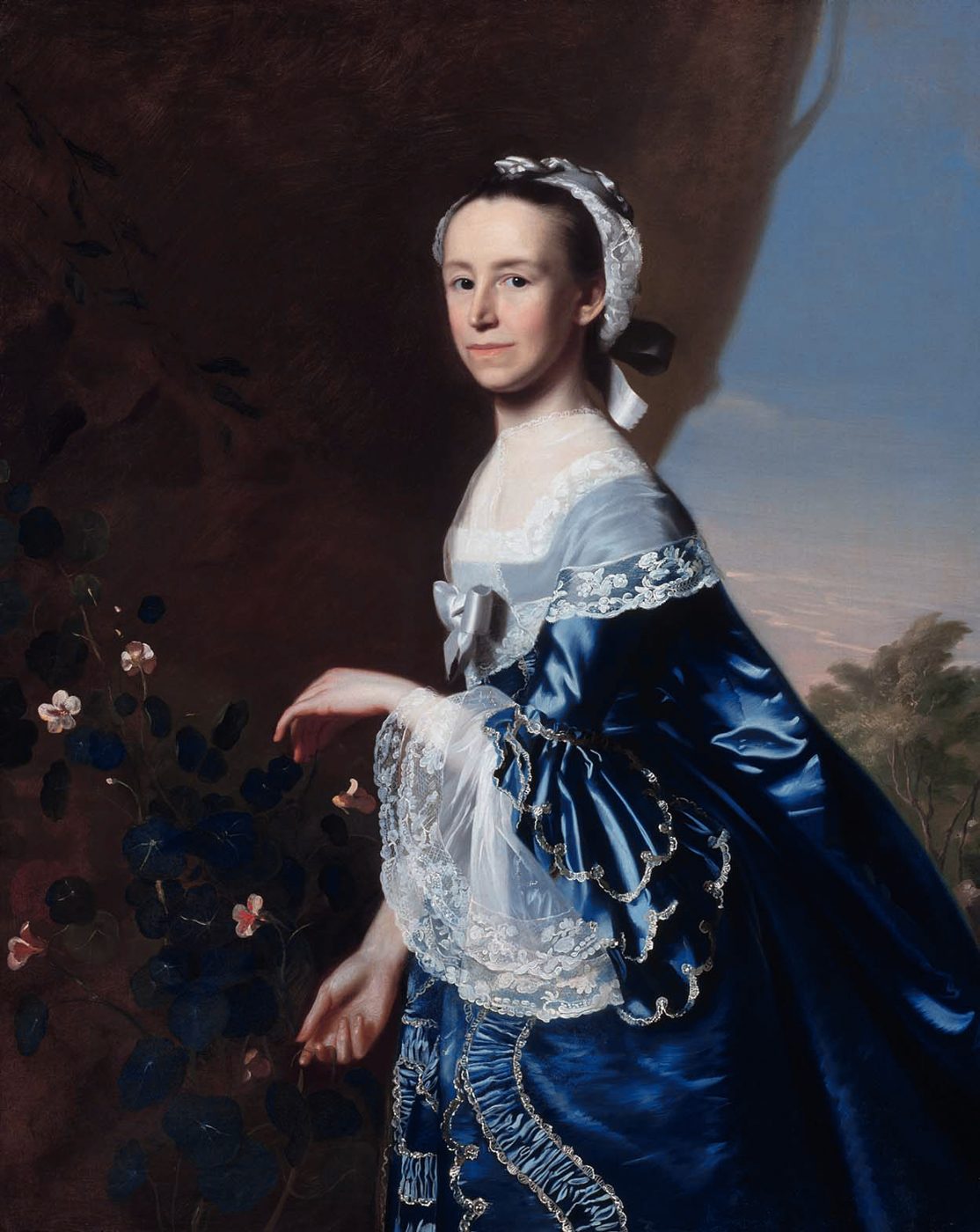
A Barnstable Girl Who Read Her Brother's Books
Mercy Otis was born in Barnstable, Massachusetts, in 1728. She had no formal schooling, and she studied alongside her brother James Otis while he prepared for Harvard.3 In 1754 she married James Warren, and the couple made their Plymouth home a meeting place for patriots, including John and Samuel Adams.4 Protest meetings held in her home helped lay the groundwork for the committees of correspondence, which she later described as a step that did much to cement the union of the colonies.5
During the war she managed the family's affairs and followed her husband's militia.3 She was close to Abigail Adams and Martha Washington.3
The Plays
Her first notable work was a poem about the Boston Tea Party. Then came the plays.6 The Adulateur (1772) is a satire of Governor Thomas Hutchinson, in which a character named Brutus stands for her brother James Otis and Hutchinson appears as Rapatio.7 Part of it was published in 1773 without her consent. A second satire, The Defeat (1773), also turned on Hutchinson. The Group (1775) imagined the British king revoking the Massachusetts charter. Two more, The Blockheads (1776) and The Motley Assembly (1779), are attributed to her and appeared anonymously.7
Warren hesitated about whether satire fit a woman's role. Abigail Adams encouraged her, and the plays kept coming.7 The Defeat, the Hutchinson satire, helped the effort to remove him from office.7
Observations on the New Constitution
By 1788 Warren was on the other side from many of her old friends. She opposed ratification. Her pamphlet, Observations on the New Constitution, and on the Federal and State Conventions, raised several objections. On rights of conscience and the press she wrote that "There is no security in the profered system, either for the rights of conscience or the liberty of the Press." On representation she wrote that "One Representative to thirty thousand inhabitants is a very inadequate representation."8 She also objected to the Senate, chosen for six years, which she thought could become a lifetime post.9
"There is no provision by a bill of rights to guard against the dangerous encroachments of power in too many instances to be named."
Mercy Otis Warren ("A Columbian Patriot"), Observations on the New Constitution, Boston, 1788. 1
The other side had an answer, and it was a serious one. Alexander Hamilton wrote in Federalist No. 84 that bills of rights "are not only unnecessary in the proposed Constitution, but would even be dangerous," because they "would contain various exceptions to powers not granted" and so give a pretext for claiming powers the Constitution never gave.10 Warren was not persuaded. The Constitution was ratified. On September 25, 1789, Congress proposed twelve amendments, and the first ten became the Bill of Rights.11
Who wrote it?
The pamphlet was long attributed to Elbridge Gerry. Wikipedia says her authorship was established when her descendant Charles Warren found a reference to it in an 1787 letter she wrote to Catharine Macaulay. The 1955 Old South Leaflet reprint at Project Gutenberg credits her in Lawrence Towner's prefatory note.2 Her anonymity was normal for the time. It also kept her from being judged as a woman before she was judged as an argument.
Her anti-Federalist views cost her. The National History Day biography says they led her and her husband to distance themselves from former Revolutionary allies.9
The History and the Break with Adams
In 1790 she published Poems, Dramatic and Miscellaneous, her first work under her own name.12 Her three-volume History of the Rise, Progress, and Termination of the American Revolution appeared in 1805. It accused John Adams of forgetting the principles of the American revolution, and a public rift followed.13 Adams and Warren exchanged heated letters, and the friendship was broken until 1812.12 She died in Plymouth on October 19, 1814, and is buried at Burial Hill.9
Warren's Life at a Glance
- 1728 Born in Barnstable, Massachusetts.
- 1754 Marries James Warren.
- 1772 Writes The Adulateur.
- 1775 Writes The Group.
- 1788 Publishes Observations on the New Constitution as "A Columbian Patriot."
- 1790 Publishes Poems, Dramatic and Miscellaneous under her own name.
- 1805 Publishes the three-volume History; breaks with John Adams.
- 1812 Reconciles with Adams.
- October 19, 1814 Dies in Plymouth.
Learn more
- Observations on the New Constitution (1788): the pamphlet itself, in a modern reprint
- Massachusetts Historical Society: Mercy Otis Warren: a short life and the Adams quarrel
- Wikipedia: Mercy Otis Warren: the plays and the authorship question
- National History Day: Mercy Otis Warren: a classroom biography with excerpts
Notes
- Mercy Otis Warren, Observations on the New Constitution, and on the Federal and State Conventions (Boston, 1788), Old South Leaflets No. 226 reprint, Project Gutenberg, on the bill of rights. Read it online. ↩
- Wikipedia, "Mercy Otis Warren," on the long attribution of Observations to Elbridge Gerry and Charles Warren's discovery of her 1787 letter to Catharine Macaulay; Lawrence Towner's prefatory note in the Gutenberg reprint credits her. Read it online. ↩
- National History Day, "Mercy Otis Warren," on her lack of formal schooling and study alongside her brother. Read it online. ↩
- Massachusetts Historical Society, "Mercy Otis Warren and Hannah Winthrop," on her marriage to James Warren in 1754 and the Plymouth home. Read it online. ↩
- Wikipedia, same article, on protest meetings at her home and the committees of correspondence. Read it online. ↩
- National History Day, same page, on her poem about the Boston Tea Party and her satirical plays. Read it online. ↩
- Wikipedia, same article, on The Adulateur, The Defeat, The Group, the two later anonymous plays, and Abigail Adams's encouragement. Read it online. ↩
- Warren, Observations, Gutenberg reprint, on conscience and the press, and on representation. Read it online. ↩
- National History Day, same page, on her objection to the six-year Senate and her burial in Burial Hill Cemetery. Read it online. ↩
- Alexander Hamilton, The Federalist No. 84, Avalon Project, Yale Law School, on bills of rights in the proposed Constitution. Read it online. ↩
- National Archives, "The Bill of Rights," on the joint resolution of September 25, 1789, proposing twelve amendments, of which the first ten became the Bill of Rights. Read it online. ↩
- Wikipedia, same article, on Poems, Dramatic and Miscellaneous in 1790 and the quarrel with Adams that ended in 1812. Read it online. ↩
- Massachusetts Historical Society, same article, on the History of 1805, the break with Adams, reconciliation in 1812, her death on October 19, 1814, and her burial. Read it online. ↩
Terms in this lesson
- Satire
- Writing that mocks real people or institutions to criticize them. Warren wrote satirical plays against Governor Thomas Hutchinson.
- Committees of correspondence
- Networks of local committees that shared news and coordinated resistance across the colonies.
- Anti-Federalist
- A person who opposed ratifying the Constitution of 1787 as written, often because it lacked a bill of rights.
- Pseudonym
- A pen name. Warren signed her 1788 pamphlet "A Columbian Patriot."
- Bill of rights
- A list of rights the government may not violate. The Constitution had none when it was sent to the states.
Sources
- Massachusetts Historical Society, Mercy Otis Warren and Hannah Winthrop checked 2026-10
- Wikipedia, Mercy Otis Warren checked 2026-10
- Project Gutenberg, Observations on the New Constitution (1788) checked 2026-10
- National History Day, Mercy Otis Warren checked 2026-10