Lesson 34 of 60 · about 9 minutes
Benjamin Tallmadge and the Culper Ring: Washington's Spy Network
You'll be able to
- Connect Tallmadge's friendship with Nathan Hale to his work as Washington's spymaster
- Name the main members of the Culper Ring and explain how the codebook and invisible ink worked
- Describe Tallmadge's part in the capture of John Andre and the exposure of Benedict Arnold
- Explain how the ring's secrecy lasted until 1930 and what Tallmadge did afterward
In the Culper code, 711 meant George Washington. 745 meant England. 727 meant New York.1 A farmer in Setauket, Long Island, could write out a string of such numbers, and a major in Washington's army would read it as news from British-held New York. The man who built that system had gone to college with Nathan Hale.
A Classmate of Hale
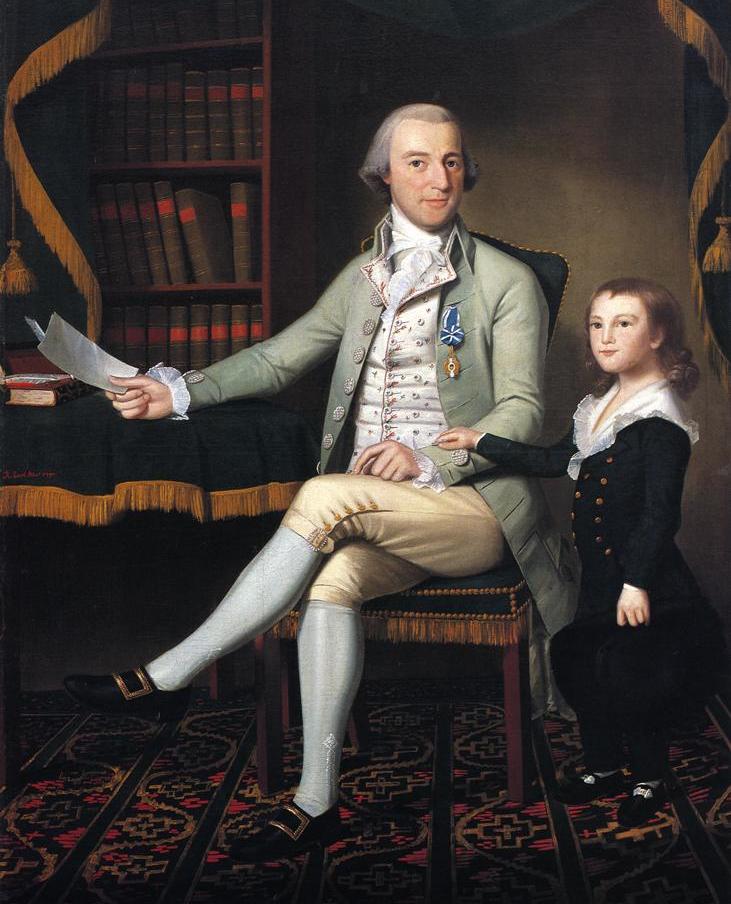
Benjamin Tallmadge was born in Setauket on February 25, 1754, the son of a minister.2 He graduated from Yale in 1773, in the same class as Hale, and then ran a school in Wethersfield, Connecticut.3 When Hale was hanged in September 1776, Tallmadge lost a close friend. One reviewer of a Tallmadge biography argues that the loss hardened his resolve to fight.4
Tallmadge became a captain in Colonel Elisha Sheldon's 2nd Continental Light Dragoons by December 1776 and a major in April 1777.5 He fought at Brandywine and Germantown that fall.5
Washington's Spymaster
In 1778 Washington gave him the job of learning what the British were doing in New York City, then the main British base. Wikipedia's account of the ring has Charles Scott resigning on October 29, 1778, with Tallmadge replacing him as intelligence chief, while Mount Vernon says Washington appointed Tallmadge in November 1778.61 He reported straight to Washington and wrote under the name John Bolton.2
The lesson of Hale's mission was plain. Hale had no training, no code and no secret ink.7 Tallmadge picked friends he had made at school on Long Island, and gave them a code and invisible ink.1
The Members
Abraham Woodhull, a prosperous Setauket farmer, was Samuel Culper Sr. and Tallmadge's chief agent.18 Robert Townsend, a young Quaker merchant of Oyster Bay, was Samuel Culper Jr. He replaced Woodhull in New York City in June 1779 and used a dry goods business as cover.8 Caleb Brewster ran the crossings of Long Island Sound, and Austin Roe rode as the main courier from 1779.6 The name Culper itself probably comes from Culpeper County, Virginia.6
Women were part of it. Anna Strong lived near Woodhull, and a mysterious "355" turns up in his letters. Woodhull wrote Tallmadge on August 15, 1779, that "by the assistance of a 355 of my acquaintance" they could outwit the British. The code book translates 355 as "lady."9 Whether she was Strong, a friend of André, or Townsend's partner is argued, and the full story is in the lesson on Anna Strong and Agent 355.
Myth: Anna Strong signaled Brewster with her laundry
The story says a black petticoat on her line meant a message was ready for pickup. Pennypacker credited her with it, and a reference summary of the ring calls the tradition unverifiable.96 It may be true. The evidence does not settle it.
Numbers and Invisible Ink
Tallmadge built a codebook of 763 numbers that stood in for words, names and places.10 By July 1779 he had finished pocket dictionaries with numbers for verbs, nouns, people and places.6 The proper names in the book include "Culper Sam," "Culper Junr.," "Austin Roe" and "C. Brewster."10
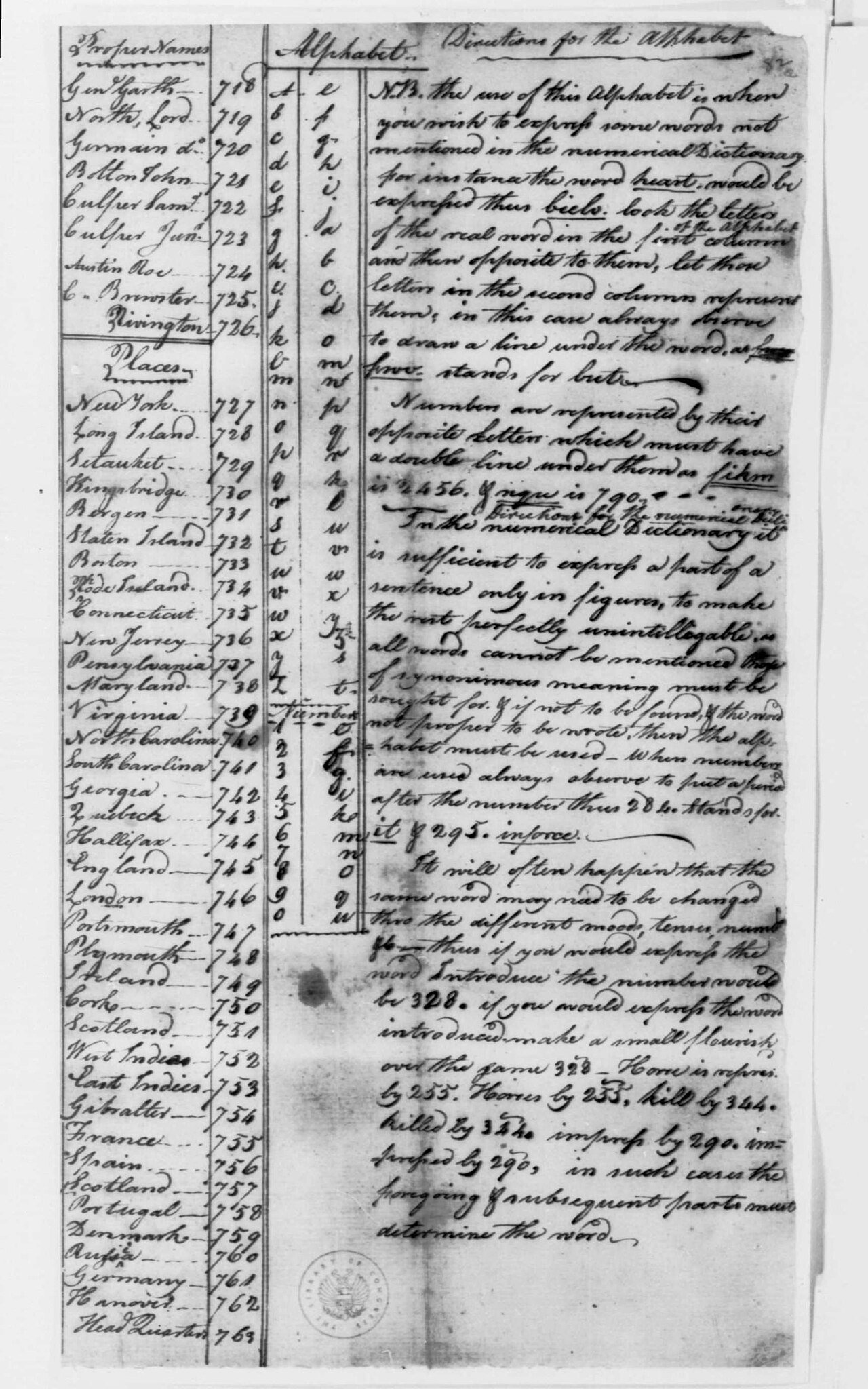
The ring also wrote between the lines in a "sympathetic stain," an invisible ink that showed only when the reader brushed the page with a second chemical.6 One account credits James and John Jay with developing it before the war and says its exact makeup is unknown.11 It had a cost. In a letter to Townsend, Tallmadge warned him not to put private business in ink, because Tallmadge lacked the counterpart needed to read it.12
Close Calls and Newport
Woodhull nearly fell more than once. A British checkpoint questioned him on October 31, 1778. In June 1779 a man named John Wolsey told officers that Woodhull was up to something, and Colonel John Graves Simcoe came to Setauket looking for him and beat his father, Judge Richard Woodhull. Loyalist Colonel Benjamin Floyd vouched for Abraham, and he went free.6 On July 2, 1779, Banastre Tarleton's cavalry raided Tallmadge's camp and seized papers that mentioned a "C" and another man.6
In July 1780 the ring went to work for the French, who had just landed at Newport, Rhode Island. Washington asked Tallmadge to revive the correspondence. Brewster reached the sick Woodhull, and Roe rode to New York, where Townsend learned of Clinton's troops gathering on Long Island. Alexander Hamilton had the report at Preakness, New Jersey, on July 21. Washington planned a diversion toward Kingsbridge.13 Mount Vernon says Clinton canceled the attack.14 A Journal of the American Revolution article disagrees on credit. Other warnings reached Newport first, it says, and quarrels between Clinton and Admiral Arbuthnot did as much to stop the attack.13 Sources give the ring a real part and a smaller one than the legend.
John André and Benedict Arnold
Tallmadge's best-known act came in September 1780. At North Castle he learned that a prisoner calling himself "John Anderson" carried papers tied to Benedict Arnold's plan to hand over West Point.5 Lieutenant Colonel John Jameson sent word to Arnold, who fled to a British ship. Tallmadge urged Jameson to recall the message, and Jameson refused.4 Accounts differ on the exact steps by which the prisoner and papers were redirected to Washington. The prisoner was Major John André, Clinton's intelligence chief. Tallmadge took charge of him, escorted him to Tappan and watched him hang on October 2.5 The full stories are in the lessons on John André and Benedict Arnold. Some popular accounts credit the Culper Ring with uncovering Arnold. One standard reference marks that claim as unsourced.6
A Secret Kept for 150 Years
Townsend never told. He kept the secret until his death in 1838.15 The man who wrote as Culper Jr. stayed unnamed for roughly 150 years. Long Island historian Morton Pennypacker matched the handwriting of the Culper Jr. letters to ledgers from an Oyster Bay merchant, and the handwriting expert Albert S. Osborn confirmed it.15 The identification was announced at a meeting of the New York State Historical Society on September 27, 1930, and reported in the New York Times the next day.15 Wikipedia dates Pennypacker's handwriting comparison to 1929, a year before the announcement.6
After the War
On November 21, 1780, Tallmadge led about 80 dismounted dragoons across the Sound from Connecticut, and on November 23 they took Fort St. George on Long Island and burned a British hay store at Coram on the way back. Washington thanked him for "spirited execution of this business."1617 Tallmadge stayed with the army until it disbanded in late 1783. He married Mary Floyd in 1784 and settled in Litchfield, Connecticut, where he went into business and was an original member of the Connecticut Society of the Cincinnati.52 He served as a Federalist in the House of Representatives from March 4, 1801, to March 3, 1817.25 He died in Litchfield on March 7, 1835, at 81, and his son Frederick published his wartime memoir in 1858.52
Tallmadge's Life at a Glance
- 1754 Born February 25 in Setauket, Long Island.
- 1773 Graduates from Yale with Nathan Hale in his class.
- 1776 Hale is hanged in September; Tallmadge joins the 2nd Continental Light Dragoons by December.
- 1778 Becomes Washington's spymaster; the Culper Ring begins.
- June 1779 Townsend takes over in New York City.
- July 1780 The ring reports the British plan against Newport.
- September 1780 Helps expose Arnold; André is hanged October 2.
- 1801 to 1817 Serves in Congress.
- September 27, 1930 Pennypacker names Townsend as Culper Jr.
Learn more
- Mount Vernon: The Culper Code Book: the numbered code and what it covered
- Journal of the American Revolution: The Culper Spy Ring and Newport: how much credit the ring earned in July 1780
- Colonial Williamsburg: Who Was Agent 355?: the candidates and the evidence
- Stony Brook University Libraries: Washington letters: how Pennypacker identified Townsend
Notes
- Mount Vernon, "Culper Spy Ring," on the code numbers 711 for Washington, 745 for England and 727 for New York, Woodhull as Tallmadge's chief agent and the informants as friends from school on Long Island. Read it online. ↩
- Wikipedia, "Benjamin Tallmadge," on his birth, Yale, the alias John Bolton, Brandywine, his service in Congress, his death and his memoir. Treated as a lead and checked against other notes. Read it online. ↩
- Wikipedia, same article, on the Yale class of 1773, Hale as a classmate and the Wethersfield school. Read it online. ↩
- Journal of the American Revolution, "General Washington's Commando: Benjamin Tallmadge in the Revolutionary War," a review of a Tallmadge biography, on Hale's death, Jameson and Arnold. Read it online. ↩
- American Battlefield Trust, "Benjamin Tallmadge," on the dragoons, Brandywine, North Castle, André, Fort St. George, Washington's thanks, the Cincinnati and the 1858 memoir. Read it online. Mount Vernon, "Benjamin Tallmadge," on his captaincy in December 1776 and promotion to major in April 1777. Read it online. ↩
- Wikipedia, "Culper Ring," on the October 29, 1778 change of intelligence chiefs, members and aliases, the code pocket dictionaries of July 1779, sympathetic stain, Woodhull's near arrests, Tarleton's raid, the Arnold claim marked as unsourced and the 1929 handwriting comparison. Read it online. ↩
- Library of Congress Information Bulletin, "The Tiffany Manuscript," on the weaknesses of Hale's mission. Read it online. ↩
- Encyclopedia.com, "The Culper Ring," on Townsend as a Quaker merchant of Oyster Bay and his takeover in June 1779. Read it online. ↩
- Colonial Williamsburg, "Who Was Agent 355?" (Spring 2024), on Woodhull's letter of August 15, 1779, the codebook's meaning of 355, Anna Strong and Pennypacker's laundry story. Read it online. ↩
- Mount Vernon, "The Culper Code Book," on the 763 numbers and the proper names in the book. Read it online. ↩
- Encyclopedia.com, "The Culper Ring," on the Jay brothers and the stain. The same page gives 1939 for Pennypacker's identification, which the 1930 announcement shows is wrong. Read it online. ↩
- Long Island Museum, Culper Spy Ring collection page, on Tallmadge's letter to Townsend about invisible ink. Read it online. ↩
- Journal of the American Revolution, "The Culper Spy Ring Was Not the First to Warn the French at Newport" (December 2014), on July 1780, Hamilton's receipt of the report on July 21 and other warnings. Read it online. ↩
- Mount Vernon, "Culper Spy Ring," on Clinton canceling the Rhode Island expedition. Read it online. ↩
- Stony Brook University Libraries, Washington letters and the Long Island Historical Documents Collection, on Pennypacker, Osborn, the announcement on September 27, 1930 and Townsend's silence until 1838. Read it online. ↩
- Benjamin Tallmadge to George Washington, November 25, 1780, Founders Online, Papers of George Washington, Revolutionary War Series, vol. 29, reporting the raid on Fort St. George on November 23, with an editorial note quoting Washington's reply of November 28, 1780. Read it online. ↩
- Journal of the American Revolution, "Major Benjamin Tallmadge and the Battle of Fort St. George" (November 2020), on two companies of 80 men embarking on the evening of November 21, 1780. Read it online. ↩
Terms in this lesson
- Spymaster
- The officer who runs agents and collects their reports. Tallmadge held the job for Washington from 1778.
- Culper Ring
- The spy network that reported from British-held New York City and Long Island between 1778 and 1783.
- Codebook
- A list that swaps numbers for words, names and places. The Culper codebook used 763 numbers.
- Sympathetic stain
- An invisible ink that appears only when the reader brushes the page with a second chemical.
- Dragoons
- Mounted soldiers who could also fight on foot. Tallmadge served in the 2nd Continental Light Dragoons.
- Alias
- A false name used for safety. Woodhull wrote as Samuel Culper Sr. and Tallmadge as John Bolton.
Sources
- Mount Vernon, Benjamin Tallmadge checked 2026-10
- American Battlefield Trust, Benjamin Tallmadge checked 2026-10
- Mount Vernon, The Culper Code Book checked 2026-10
- Mount Vernon, Culper Spy Ring checked 2026-10
- Journal of the American Revolution, The Culper Spy Ring Was Not the First to Warn the French at Newport checked 2026-10
- Stony Brook University Libraries, Washington letters and the Culper collection checked 2026-10
- Colonial Williamsburg, Who Was Agent 355? checked 2026-10