Lesson 41 of 60 · about 9 minutes
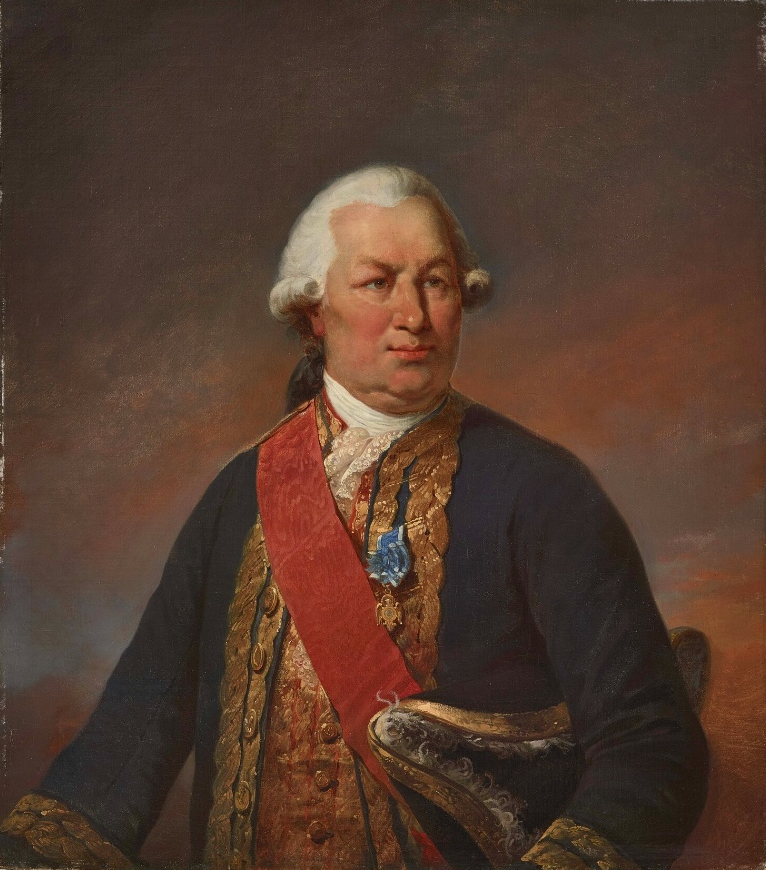
Comte de Grasse: The Admiral Who Closed the Chesapeake
You'll be able to
- Explain why de Grasse sailed for the Chesapeake in 1781 and what he brought with him
- Describe the Battle of the Capes on September 5 and how it sealed Yorktown
- Tell what de Grasse would and would not do for Washington at their meeting on the Ville de Paris
- Follow his defeat at the Saintes, his capture and the court-martial that ended his career
On the morning of September 5, 1781, a British fleet of nineteen ships of the line came up to the Virginia Capes. The French fleet lay at anchor inside the Chesapeake, and 90 of its officers and 1,800 of its men were ashore. At noon the tide served, and Admiral de Grasse put to sea short-handed and formed a line of battle.1 The fight lasted about two and a half hours. When it was over, the French held the mouth of the bay.1
From Provence to the West Indies
Francois Joseph Paul de Grasse was born on September 13, 1722, into one of the oldest noble families in France. The American Battlefield Trust has him in the navy at seventeen, wounded and captured off Cape Finisterre in 1747, and held three months in England.23 He commanded a squadron at Ushant in 1778, fought Admiral George Rodney in the West Indies, and made rear admiral in 1779 and admiral in 1781.23 He reached the Caribbean in April 1781 and took Tobago on June 1.34
The Decision to Sail North
Rochambeau, in Newport, had written to him on May 28 that there were two places to strike, the Chesapeake and New York, and that the winds and the weak defenses of Virginia would probably draw him to the Chesapeake.5 Washington and Rochambeau asked for ships, troops and money. De Grasse picked the Chesapeake because it was closer to his base and its waters were easier than New York harbor.4 The Battlefield Trust calls it the most important strategic decision that set Washington's army on the path to victory, and notes that Washington did not make it.2
Soldiers and silver
At Santo Domingo he loaded 3,000 French troops from three regiments, the Gatinais, Agenois and Touraine. The agreement with the island's commander let them stay on the American mainland only until October 15, because they might be needed in the West Indies after that.46 At Havana he raised money. The Park Service counts 1.2 million livres from the Cuban government, banks and private citizens. A Spanish history site counts 500,000 pesos, gathered in about forty-eight hours and sent north aboard the frigate Aigrette on August 17, after the Spanish envoy Francisco de Saavedra and de Grasse agreed on the loan.47 The two figures are in different currencies and the sources do not reconcile them. Either way, the sums were large, and the money reached an army that Washington himself described on August 27 as unpaid for a very long time.7
He sailed from Cap Francais on August 5 and took the dangerous route through the Straits of the Bahamas to avoid Rodney and Hood.4 British Admiral Hood reached the Chesapeake first, on August 25, saw nothing and went on to New York. De Grasse reached the Capes on August 30, anchored in the bay the next day and sent the troops up the James on September 2.6
The Battle off the Capes
Admiral Thomas Graves left New York with the combined British fleet on August 31 and reached the Capes on the morning of September 5.4 Twenty-four French ships of the line met nineteen British. The action began about four in the afternoon and ended at sunset. Wind and confused signals kept the British rear from closing, and the wind died on the last nine French ships.6 British losses were 90 killed and 246 wounded. The French counted about 200 killed and wounded.6
Myth: De Grasse was Washington's naval commander
He answered to the king of France, and he had duties to the Spanish and to the French islands in the West Indies. When Washington and Rochambeau came aboard the Ville de Paris on September 18, de Grasse said he could stay in the Chesapeake until November 1 but preferred to leave by October 15 and take his 3,000 soldiers with him. He would not support follow-on naval operations against Wilmington or Charleston.8 Washington had hoped for more.8
Sealing Yorktown
The two fleets drifted south for days. On September 9 de Grasse lost sight of the British, turned back and reached the bay on the 11th. De Barras arrived from Newport on the 10th with his squadron, and the French had 36 ships of the line in the Chesapeake.46 Graves sailed for New York on September 14 to repair. A relief fleet with about 7,000 troops left New York on October 19, the day Cornwallis surrendered.42
In his answers to Washington's questions before that meeting, de Grasse stated that "The Peace & Independence of this Country & the general Tranquility of Europe will, it is more than probable, result from our completeness of success."8 After the surrender Washington put the lesson in a letter to the admiral, dated October 28, 1781: "whatever efforts are made by the Land Armies, the Navy must have the casting vote in the present contest."9
The Saintes and the Court-Martial
De Grasse's fleet sailed for Martinique on November 4, 1781.10 In early 1782 he took St. Kitts, which Colonial Williamsburg dates to February 12.3 On April 12, 1782, Rodney caught him at the Battle of the Saintes. The Battlefield Trust says his flagship was left in shambles and had to strike its colors, and de Grasse became a prisoner again.2 The count of lost ships differs. Britannica has four French ships of the line captured and a fifth destroyed by an explosion, while Colonial Williamsburg says Rodney captured seven.113
De Grasse went to London, talked informally with British ministers about peace, and was paroled in August 1782.3 Back in France he demanded a court-martial and blamed his captains. In 1784 the captains were cleared. The king was angry that the admiral kept pressing him to step in, and de Grasse stayed out of favor for the rest of his life.3 He died in Paris in January 1788. The Battlefield Trust and Britannica give January 11, and Colonial Williamsburg gives January 14.2113
His four daughters fled the French Revolution for Charleston, South Carolina, where their brother lived. Congress gave each of them $1,000 and in 1798 voted a pension of $400 a year for five years.3
De Grasse's Life at a Glance
- September 13, 1722 Born in Provence.
- 1747 Wounded and captured off Cape Finisterre; held three months in England.
- April 1781 Reaches the West Indies as admiral.
- August 5, 1781 Sails from Cap Francais for the Chesapeake with about 3,000 soldiers and money from Havana.
- September 5, 1781 Beats Graves off the Virginia Capes.
- September 18, 1781 Meets Washington and Rochambeau aboard the Ville de Paris.
- October 19, 1781 Cornwallis surrenders, with the bay held by the French fleet.
- April 12, 1782 Defeated and captured at the Saintes.
- 1784 Court-martial clears his captains.
- January 1788 Dies (January 11 or 14, by source).
Learn more
- NPS Yorktown: Battle of the Capes: the best short account of the voyage, the battle and the blockade
- American Battlefield Trust: Comte de Grasse: a one-page life with the Washington quotation
- All Things Liberty: Meeting of the Three Commanders: the conference aboard the Ville de Paris
- Unveiling Memories: Spanish Money for a Decisive Victory: Havana, Saavedra and the cash behind Yorktown
- Founders Online: Washington to de Grasse, October 28, 1781: Washington's own letter to the admiral, with the casting-vote sentence
Notes
- National Park Service, Yorktown, Historical Handbook 14 (1957), "Battle of the Virginia Capes," on the approach of Graves on the morning of September 5, the 90 officers and 1,800 men not aboard, the sortie at noon and the length of the action. Read it online. ↩
- American Battlefield Trust, "Comte de Grasse," on his birth, his entry to the navy, the choice of Virginia, the relief fleet of October 19, the Saintes, the court-martial and the death date of January 11, 1788. Read it online. ↩
- Colonial Williamsburg, The American Revolution, "Francois-Joseph-Paul de Grasse-Rouville, Comte de Grasse (1722-1788)," on Ushant, his ranks, Tobago, St. Eustatius, St. Kitts, the Saintes, his parole, the court-martial, his daughters and the congressional grants. Read it online. ↩
- National Park Service, Yorktown Battlefield, "Battle of the Capes," on his arrival in April 1781, the choice of the Chesapeake, the 3,000 troops, the 1.2 million livres from Havana, the route through the Bahamas, Hood's arrival and the Graves fleet. Read it online. ↩
- Robert Selig, "The Washington-Rochambeau Revolutionary Route," National Park Service, quoting Rochambeau's letter to de Grasse of May 28, 1781. Read it online. ↩
- National Park Service, Yorktown, Historical Handbook 14, same chapter, on the agreement at Santo Domingo to keep the troops until October 15, the arrival on August 30, the strength and casualties of each side, De Barras and the departure of Graves. Read it online. ↩
- Unveiling Memories, "Yorktown: Spanish Money for a Decisive Victory," on the 500,000 pesos raised in Havana in about 48 hours, the frigate Aigrette sailing August 17 and Washington's letter to Robert Morris of August 27. Read it online. ↩
- All Things Liberty, "Meeting of the Three Commanders" (2021), citing Washington's questions of September 17, 1781, and de Grasse's answers, on the conference of September 18 aboard the Ville de Paris. Read it online. ↩
- Founders Online, "From George Washington to Francois-Joseph-Paul, comte de Grasse-Tilly, 28 October 1781." The Battlefield Trust prints the same sentence in modern wording. Read it online. ↩
- Selig, National Park Service, same article, on the departure of de Grasse's fleet from Lynnhaven Bay for Martinique on November 4, 1781. Read it online. ↩
- Encyclopaedia Britannica, "Battle of the Saintes," on the ships captured and destroyed, and "Francois-Joseph-Paul, comte de Grasse," on his death on January 11, 1788 in Paris. Saintes. Biography. ↩
Terms in this lesson
- Ship of the line
- A large warship with two or three gun decks, built to fight in a battle line. De Grasse had 24 of them in the battle off the Capes.
- Line of battle
- The formation in which warships sailed one behind another so that every ship could fire broadsides at the enemy. Admirals fought by keeping the line.
- Livre
- The main French money of account. NPS counts the Havana money in livres, while a Spanish source counts it in pesos.
- Blockade
- Control of a harbor or coast by warships so that nothing can sail in or out. De Grasse's blockade shut Cornwallis off from rescue by sea.
- Court-martial
- A military trial of an officer. De Grasse demanded one after the Saintes, and it cleared the captains he blamed.
Sources
- National Park Service, Yorktown Battlefield: Battle of the Capes checked 2026-10
- National Park Service Historical Handbook 14, Yorktown: Battle of the Virginia Capes checked 2026-10
- American Battlefield Trust, Comte de Grasse checked 2026-10
- Colonial Williamsburg, The American Revolution: Comte de Grasse checked 2026-10
- All Things Liberty, Meeting of the Three Commanders checked 2026-10
- Unveiling Memories, Yorktown: Spanish Money for a Decisive Victory checked 2026-10
- Founders Online, Washington to de Grasse, October 28, 1781 checked 2026-10