Lesson 22 of 60 · about 9 minutes
Lemuel Haynes: The Minuteman Who Became a Pastor
You'll be able to
- Describe how Haynes came to Granville, Massachusetts, and what he did in the militia in 1775 and 1776
- Explain what his essay Liberty Further Extended argued and why it stayed unpublished until 1983
- Follow his ordination, his thirty years in Rutland, Vermont, and his 1805 sermon on universal salvation
- Separate what the sources agree on from the dates and titles they disagree about
A baby of five months was handed to a deacon in the hill country of western Massachusetts and bound to him until the age of twenty-one. That was the start Lemuel Haynes got. He was born in West Hartford, Connecticut, on July 18, 1753, to a Black father and a white mother, and neither one stayed.110 Sources disagree about who his mother was, and no one knows his father's name. What survives is what he did with the life he was given.
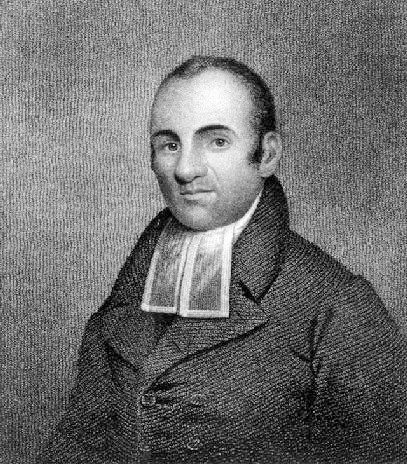
Bound to the Roses of Granville
Haynes went to Deacon David Rose of Granville, Massachusetts, and stayed with the family until his indenture ended in 1774.1 Rose's household took him to church, and Haynes learned the Bible there. Mark Bushnell of VTDigger reports that he later said of Rose's wife Elizabeth that she loved him more than her own children.2
He turned twenty-one in 1774 and joined his town's militia. When word of Lexington and Concord reached Granville in April 1775, his company marched toward the siege of Boston and stayed less than a month.2 The National Park Service says he marched in response to the Lexington Alarm and probably wrote his poem while the militia was encamped at Cambridge.3
A Poem and a Tour at Ticonderoga
The poem is called "The Battle of Lexington." It tells of eight colonists killed at Lexington and two at Concord, and calls liberty a gift of God. The last stanza prefers death to life as slaves.4 Vermont's state marker for Haynes dates it to 1775.5
Myth: Haynes fought at Lexington and took Ticonderoga
He did neither. The fighting at Lexington was over before his company left Granville. The National Park Service landmark nomination calls him one of Ethan Allen's Green Mountain Boys, but the other sources here do not say so. VTDigger has him enlisting with the Hampshire County militia in 1776 and marching north to Ticonderoga, where he caught typhus and was discharged. Cooley, the 1837 biographer, has him taking sick at home instead, so the place is disputed.210 Even the year of his minuteman service varies by source: Connecticut History says 1776, the others say 1774 and 1775.1
Liberty Further Extended
In 1776 Haynes wrote an essay on slavery. It argued that liberty is a natural right and that the colonists, who were shouting about their own chains, had no excuse for holding Africans in bondage. He wrote that "Liberty is a jewel which was handed down to man from the cabinet of Heaven, and is coeval with his existence."6
"...even an African, has equally as good a right to his Liberty in common with Englishmen."
Lemuel Haynes, Liberty Further Extended, 1776. 6
He also wrote that liberty is "equally as precious to a Black man, as it is to a white one," and that anyone who would infringe another man's benefit "assumes an unreasonable, and tyrannic power."6 He rejected the claim that skin color could settle who deserved freedom, and he had no use for the Curse of Ham.7
Nobody printed it. Colonial Williamsburg describes the manuscript as an unfinished draft pamphlet that stops in mid-sentence, and Haynes plainly meant it for publication.8 Historian Ruth Bogin brought it out in the William and Mary Quarterly in 1983.712 Historians are not sure whether he wrote it before or after he read the Declaration of Independence.2
Ordained in 1785
Granville's Congregational church called him as its preacher in 1780, and he was licensed that November.2 He studied Latin with the Rev. Daniel Farrand of Canaan, Connecticut, and Greek with the Rev. William Bradford of Wintonbury.9 In November 1785 an association of Congregational ministers in Litchfield County, Connecticut, ordained him, and he served the church at Torrington.9 Sources word the milestone differently. The Vermont marker calls him the first ordained African American minister in the United States, and VTDigger says he was the first Black person ordained by a religious body in North America.52 The National Park Service nomination says he was the first Black clergyman ordained by any religious organization in North America.9 What every source agrees on is the church: he was ordained in the Congregational church, in 1785.
Thirty Years in Rutland
In 1787 he preached on a Vermont circuit and was asked to take the West Parish church in Rutland. He left Torrington in March 1788 to begin.910 He stayed about thirty years, and the congregation grew from 46 members to more than 300.9 Middlebury College gave him an honorary master of arts in 1804.9
In June 1805 Hosea Ballou, the Universalist, preached in West Rutland and invited a Calvinist reply. Haynes spoke right after him. The sermon, printed as Universal Salvation, a Very Ancient Doctrine, was published in Rutland in 1806, was reprinted without his leave inside a year, and by one count passed fifty printings and editions before he died.11
The end in Rutland came in spring 1818. The National Park Service nomination says his politics and his work in the Washington Benevolent Society had brought him into conflict with parishioners.9 Connecticut History says historians still argue over whether politics or race drove the dismissal, and notes that the church council afterward called him "a tried and faithful minister of Jesus Christ."1
The Last Years
He spent three years at Manchester, Vermont. In 1822, at sixty-nine, he took the church at South Granville, New York, and served there until he died on September 28, 1833.9 He and his wife Elizabeth Babbitt, a white schoolteacher, had ten children.2 His house in South Granville is a National Historic Landmark.9
Haynes's Life at a Glance
- July 18, 1753 Born in West Hartford, Connecticut, to a Black father and a white mother.
- Late 1753 Bound as an infant to Deacon David Rose of Granville, Massachusetts.
- 1774 Indenture ends; joins the town militia.
- April 1775 Marches after the Lexington Alarm; writes "The Battle of Lexington."
- 1776 Marches north with the militia and takes ill with typhus; writes Liberty Further Extended.
- November 1785 Ordained a Congregational minister; serves at Torrington.
- 1787 to 1788 Called to West Parish, Rutland, Vermont, and begins his thirty-year pastorate.
- 1805 Answers Hosea Ballou with his sermon on universal salvation.
- 1818 Leaves Rutland.
- 1822 to 1833 Pastor at South Granville, New York; dies September 28, 1833.
Learn more
- Connecticut History: Lemuel Haynes: a clear short biography from his Connecticut years onward
- Liberty Further Extended: the essay itself, in his own words
- NPS, Voices of 1775: an audio reading of "The Battle of Lexington"
- Vermont Historical Society, The Doctrinal Controversy: the Haynes and Ballou exchange in Rutland
Notes
- Alex Gerrish, "Lemuel Haynes: America's First Black Ordained Minister," Connecticut History (CT Humanities), on his birth to a Black father and white mother, the Rose indenture until 1774, the date given for his minuteman service, the Rutland dismissal of 1818 and the council's words. Read it online. ↩
- Mark Bushnell, "Then Again: Lemuel Haynes, a minuteman, preacher and longtime Vermonter puts his stamp on history again," VTDigger, July 5, 2026, on the Rose household, militia service in 1774 and 1775, Ticonderoga and typhus, the 1776 essay, his ordination, marriage and children. Read it online. ↩
- National Park Service, Minute Man National Historical Park, "Voices of 1775," entry on Lemuel Haynes and his poem. Read it online. ↩
- For The Church, "Lemuel Haynes's Patriotic Poem," giving the text of "The Battle of Lexington." Read it online. ↩
- Vermont Division for Historic Preservation, Lemuel Haynes Historic Site Marker (2018), West Rutland. Read it online. ↩
- Lemuel Haynes, "Liberty Further Extended: Or Free Thoughts on the Illegality of Slave-Keeping" (1776), Teaching American History, from the Electronic Texts in American Studies edition. Read it online. ↩
- EBSCO Research Starters, "Analysis of Liberty Further Extended," on the arguments, the rejection of the Curse of Ham and Bogin's discovery and 1983 publication. Read it online. ↩
- Colonial Williamsburg, "Liberty Further Extended," describing the manuscript as an unfinished draft that ends mid-sentence. Read it online. ↩
- National Park Service, National Historic Landmark nomination form, Lemuel Haynes House, South Granville, New York, on his licensing in 1780, ordination in November 1785, Rutland years, Middlebury degree, the 1818 end of his pastorate, his studies with Farrand and Bradford, the claim that he was the first Black clergyman ordained in North America and his later posts. Read it online. ↩
- Timothy Mather Cooley, Sketches of the Life and Character of the Rev. Lemuel Haynes (New York: Harper and Brothers, 1837), on his birth on July 18, 1753, placement with Deacon Rose at five months, his illness in 1776 and his going to Rutland on March 28, 1788. Read it online. ↩
- Vermont Historical Society, "The Doctrinal Controversy" (journal article, PDF), on the June 1805 Ballou sermon, Haynes's reply, the 1806 Rutland printing by William Fay and the fifty printings. Read it online. ↩
- Ruth Bogin, "'Liberty Further Extended': A 1776 Antislavery Manuscript by Lemuel Haynes," William and Mary Quarterly 40, no. 1 (January 1983). Read it online. ↩
Terms in this lesson
- Indenture
- A contract binding a person to work for another for a set number of years. Haynes was bound out as an infant and served until he was twenty-one.
- Minuteman
- A militiaman in colonial Massachusetts pledged to turn out on short notice. Haynes joined his town's company in 1774.
- Natural rights
- Rights that belong to every person by nature or by God, whether or not a government recognizes them. Haynes built his anti-slavery argument on them.
- Ordination
- The formal act by which a church or association of ministers authorizes a man to serve as a minister. Haynes was ordained in Connecticut in November 1785.
- Universalism
- The belief that all people will finally be saved. Haynes, a Calvinist, opposed it in a famous 1805 sermon.
- Federalist
- A supporter of the party of Washington and Hamilton. Haynes was a lifelong Federalist, and sources link his politics to his dismissal in 1818.
Sources
- Connecticut History, Lemuel Haynes: America's First Black Ordained Minister checked 2026-10
- VTDigger, Then Again: Lemuel Haynes, a Minuteman, Preacher and Longtime Vermonter checked 2026-10
- National Park Service, National Historic Landmark nomination, Lemuel Haynes House checked 2026-10
- Teaching American History, Liberty Further Extended checked 2026-10
- Vermont Historical Society, The Doctrinal Controversy in Rutland (PDF) checked 2026-10
- National Park Service, Minute Man National Historical Park, Voices of 1775 checked 2026-10