Lesson 8 of 14 · about 75 minutes
People M to R: Spies, Officials, Accusers and the Accused
Updated November 6, 2026
You'll be able to
- You'll be able to sort any person in this range by four separate claims: party membership, espionage, sympathy and association.
- You'll be able to name the cover names RAIDER, FEDYA, MIRAGE, DIR, STORM, ANTENNA and LIBERAL, HOMER and FROST and say who identified each and on what evidence.
- You'll be able to explain why the Venona identifications of Oppenheimer and of Mary Price as ARENA were corrected, and what that does and does not mean for Venona's reliability.
- You'll be able to state what the 2003 Senate edition, the Subversive Activities Control Board and later scholarship show about Annie Lee Moss and Irving Peress.
- You'll be able to distinguish the evidence against Julius Rosenberg from the evidence against Ethel Rosenberg, including the 2001 and 2015 disclosures.
- You'll be able to describe the roles of McCarran, Mundt, Nixon and Rankin in building the investigating machinery, with dates and votes from the record.
Start here: the short version
This lesson holds 33 entries, alphabetical from Donald Maclean to Julius and Ethel Rosenberg. The letters M to R happen to contain both ends of the story. Joseph McCarthy, Pat McCarran, Karl Mundt, Richard Nixon and John Rankin built and ran the investigations. Victor Perlo, J. Peters, Mary Price, William Remington, Robert T. Miller and Julius Rosenberg worked for Soviet intelligence or the Communist Party's secret apparatus, and the opened archives now confirm it. George C. Marshall, Annie Lee Moss, Irving Peress, J. Robert Oppenheimer, Arthur Miller and Paul Robeson were accused in public, and the evidence tested from 2026 does not show that any of them served a Soviet service. Mary Stalcup Markward, Herbert Philbrick and Harvey Matusow were informants: two told the truth as far as the record can test it, and one admitted that he lied.
Every entry keeps four claims apart: party membership, espionage, sympathy and association. Each ends with a rating of its main claim (Supported, Partly supported, Unsupported, Refuted or Unresolved) and a pointer to the module 81 lesson that tells the story at length. The Venona cover names here come from John Earl Haynes's working index of cover names, which records for each name who identified it and on what evidence.1 Readers who want the full narrative should keep module 81 open beside this page.
How to read these entries
This is the third of four people lessons. Lesson 06 covers A to F (Bentley, Browder, Chambers, Cohn, Currie, Fuchs and others), lesson 07 covers G to L (Gold, Greenglass, Hiss, Hoover, Lattimore and others) and lesson 09 covers S to Z (Silvermaster, Stalin, Tydings, Welch, White and others). People named in passing here, such as Elizabeth Bentley or Whittaker Chambers, have their own entries in those lessons. The networks these people belonged to are drawn as diagrams in lesson 12, and the words used in the entries (cover name, legal station, Fifth Amendment Communist) are defined in the glossary.
Each entry opens with the name, the years of birth and death, and a one-line role.2 Then come the documented acts, the person's own words where a transcript or a signed document survives, the accusation and who made it, the archive evidence, and what the scholars on each side wrote. Four separate questions run through every entry:
- Party membership. Did the person join the Communist Party of the United States (CPUSA) or a foreign communist party? Membership was legal for most of these years, and many members never touched espionage.
- Espionage. Did the person pass information to, or work for, a Soviet intelligence service (the NKVD and its successors, called "KGB" by historians for convenience, or the GRU, Soviet military intelligence)?
- Sympathy. Did the person publicly or privately support the Soviet Union or communist causes without joining or spying?
- Association. Did the person know, work with or belong to groups with communists? Association was the evidence most often used against people in the 1950s, and the weakest.
Evidence is graded by its source. A Venona decryption identified by the National Security Agency (NSA) and the FBI is strong but not infallible: Haynes and Klehr, comparing Venona with the notebooks Alexander Vassiliev copied from KGB archives, found "only four cases where Venona analysts made incorrect identifications," two of them in this lesson's range (Mary Price and J. Robert Oppenheimer).3 A cover name in the Vassiliev notebooks, a person's own admission, a trial verdict, and the sworn testimony of a defector each carry their own weight, and each entry says which kind supports it.
A word on the scholars. The entries cite both schools by name. John Earl Haynes and Harvey Klehr (Venona, 1999; In Denial, 2003; Spies, with Alexander Vassiliev, 2009), Allen Weinstein and Vassiliev (The Haunted Wood, 1999), and Ronald Radosh and Joyce Milton (The Rosenberg File, 1983) wrote the archive-based case that Soviet espionage was broad and real. Ellen Schrecker (Many Are the Crimes, 1998), David Oshinsky (A Conspiracy So Immense, 1983) and Richard Rovere (Senator Joe McCarthy, 1959) wrote the case that the response did great harm to innocent people. M. Stanton Evans (Blacklisted by History, 2007) and Arthur Herman (Joseph McCarthy, 2000) wrote in McCarthy's defense. Quotations from them appear only where the text was opened for this lesson; where it was not, the entry paraphrases and says so.
M
Donald Maclean (1913 to 1983): British diplomat and Soviet agent, cover name HOMER
Donald Maclean was recruited at Cambridge University in the 1930s and became one of the group later called the Cambridge Five. He joined the British Foreign Office and served at the British embassy in Washington in the mid-1940s. The Haynes index records his cover names: Waise (German for "orphan") in Britain in the 1930s and HOMER (Gomer in Russian transliteration) in the United States in 1944 and 1945. The index lists HOMER (Gomer) in its Venona entries as Maclean, and gives Waise and Homer as his cover names in the Vassiliev notebooks, so the two sources agree. His American-born wife, Melinda, is listed as a courier between him and the KGB.1
The HOMER messages are the reason Maclean belongs in an American reference book. In Washington he had access to Anglo-American diplomatic traffic at the end of the war, and his exposure through Venona set off the chain of events that ended British trust in Kim Philby. Philby warned Maclean and Guy Burgess that they were under suspicion, and "the two men consequently escaped to the Soviet Union in 1951," in the words of the Britannica biography of Philby.4 The four claims are easy to sort: espionage is documented in Venona and the notebooks, and his own flight to Moscow settled the question in the public mind.
Rating of the main claim (that Maclean was a Soviet agent): Supported. In module 81: lesson 02 (HOMER and the British connection). See also the Philby entry below and the Cambridge Five in lesson 12.
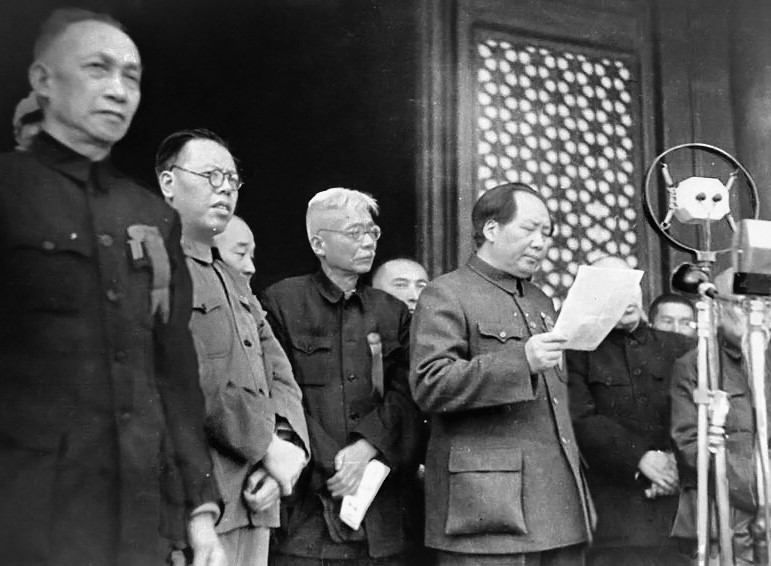
Mao Zedong (1893 to 1976): chairman of the Chinese Communist Party
Mao Zedong led the Chinese Communist Party to victory in the civil war. "On October 1, 1949, Chinese Communist leader Mao Zedong declared the creation of the People's Republic of China (PRC)," the State Department's Office of the Historian records, and the "fall" of mainland China "led the United States to suspend diplomatic ties with the PRC for decades."5 In American politics the event became the question "Who lost China?", which drove the attacks on John Stewart Service, Owen Lattimore and George C. Marshall (see the Marshall entry below, Lattimore in lesson 07 and Service in lesson 09).
Mao's rule (the land reform campaigns, the Great Leap Forward and its famine of 1958 to 1962, and the Cultural Revolution of 1966 to 1976) is told with the ranges of death estimates and who produced them in lesson 03, and the count of the dead is weighed in lesson 04. This entry does not repeat those numbers.

Rating of the main claim (that Mao's party took power in 1949 and its rule produced mass deaths): Supported, with the size of the toll a matter of ranges explained in lessons 03 and 04. In module 81: lesson 01 (China in 1949 and the American reaction).
Mary Stalcup Markward (1922 to 1972): FBI informant inside the Washington Communist Party
Mary Stalcup Markward joined the Communist Party in Washington, D.C., "at the request of the FBI," as she told McCarthy's subcommittee in its August 1953 hearings on the Government Printing Office. The Senate Historical Office's editor, Donald Ritchie, records that at an executive session of the House Committee on Un-American Activities on February 22, 1954, Markward identified Annie Lee Moss "as a former cafeteria worker whose name had appeared on the Communist party's membership roles in 1944."6 She then repeated the identification in public. The Senate editors record that she "operated undercover for the FBI from 1943 to 1950," that she was recruited at twenty-one while her husband served in Europe, and that she "advanced through the party ranks to become treasurer and membership director," the post that gave her access to its rolls.7
Her testimony is the strongest single piece of evidence in the Moss case, and also its weak point. In 1958 the Subversive Activities Control Board "confirmed Markward's assertion that Moss' name had appeared on the Communist party rolls in the mid-1940s," Ritchie writes, but the same board "conducted no further investigation of Moss," and the following year concluded that "Markward's testimony should be assayed with caution."6 Markward had seen a name on a list. She did not testify that she knew Moss.
Rating of the main claim (that Markward's identification of Moss's name on the party rolls was accurate): Partly supported. The name was confirmed, the board itself urged caution about her testimony, and nothing she said showed that Moss was a security risk. In module 81: lesson 07 (case 7, Annie Lee Moss) and lesson 11.
George C. Marshall (1880 to 1959): Army chief of staff, secretary of state and secretary of defense
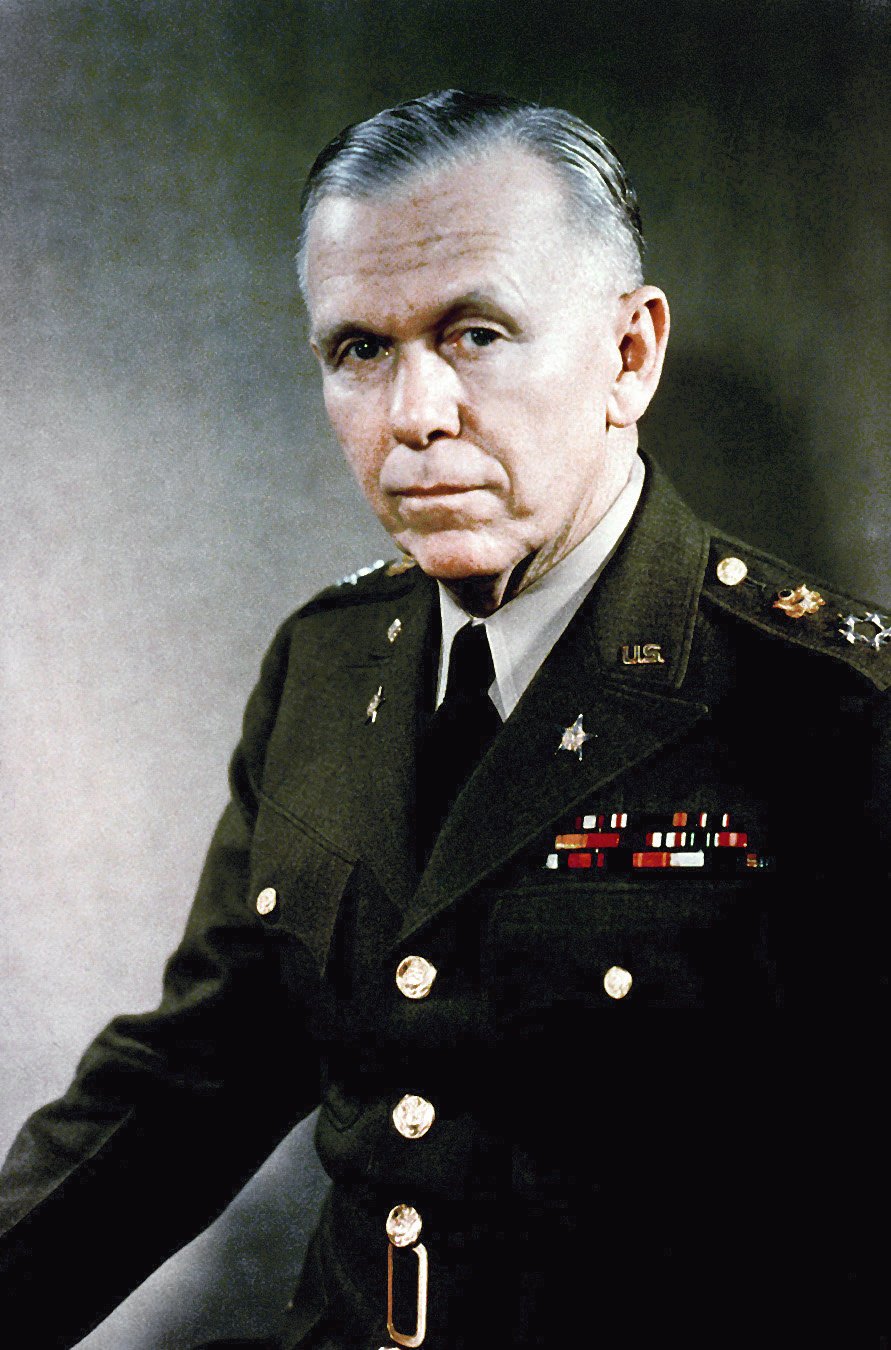

George Catlett Marshall "served as chief of staff from 1939 to 1945, building and directing the largest army in history," and "acted as secretary of state from 1947 to 1949, formulating the 'Marshall Plan'," in the words of the biography written for his 1953 Nobel Peace Prize. The same biography records that he had served in China from 1924 to 1927, long before his postwar mission there.8 He was the most senior American official whom McCarthy accused of serving a Soviet design.
The accusation. On June 14, 1951, McCarthy delivered a long Senate speech on Marshall's career, later published as the book America's Retreat from Victory. Its central passage reads: "How can we account for our present situation unless we believe that men high in this Government are concerting to deliver us to disaster? This must be the product of a great conspiracy, a conspiracy on a scale so immense as to dwarf any previous such venture in the history of man." Its argument from numbers ran: "If Marshall were merely stupid, the laws of probability would dictate that part of his decisions would serve this country's interest."9 The speech treated a record of policy decisions McCarthy judged wrong (Yalta, the China mission of 1945 to 1947, the conduct of the Korean War) as proof of intent.
The archive evidence. Marshall appears in the Haynes index only as "General, U.S. Army chief of staff, later U.S. Secretary of State," a person reported on in Soviet cables.1 In his 2007 check of every name McCarthy used, Haynes classed Marshall as a "Benign identification in Venona" and concluded that "some, Drew Pearson, Dean Acheson, and George Marshall for example, certainly were not" security risks.10 In 2000, at a joint book talk with Arthur Herman, Haynes said: "There is no basis in Venona or in the Soviet archives for implicating Acheson or Marshall as participants in a Communist conspiracy or for describing either the Roosevelt or the Truman administrations as the instrument of a Soviet conspiracy." He added, in fairness to McCarthy's concern, that "some officials, including some very high ones, in those administrations displayed naivete toward Soviet espionage, and internal-security policies until the late 1940s were notably weak."11
The scholarly reading. Oshinsky took the title of his McCarthy biography from the speech. Evans, as module 81 lesson 07 reports from Robert Novak's 2007 review, argued that McCarthy charged Marshall with being swayed by Soviet agents rather than with pro-Communist sentiment of his own; the speech's own text, which treats Marshall's decisions as deliberate service to a design directed from Moscow, makes that defense thin (module 81 lesson 07 quotes the passages). Criticism of Marshall's China policy remains a legitimate historical argument, made by people with no sympathy for McCarthy's method. The four claims: no party membership, no espionage, no sympathy, and the only "association" was having held the offices that set policy.
Rating of the main claim (that Marshall took part in a conspiracy serving Soviet ends): Refuted. In module 81: lesson 07 (case 3) and lesson 11.
Karl Marx (1818 to 1883) and Friedrich Engels (1820 to 1895): authors of the Communist Manifesto
Marx and Engels wrote the Manifesto of the Communist Party (February 1848), and Marx wrote Capital (volume 1, 1867). Every party in this lesson claimed descent from them. Their lives, texts and organizations are told in lesson 01, with the Manifesto quoted from the 1888 Samuel Moore translation, and the economics of the system they proposed is taught in module 51, lesson 07. This pointer entry is not rated.
Hede Massing (1900 to 1981): Soviet intelligence agent, later witness against Alger Hiss
Hede Massing, born in Vienna and also known as Hedda Gumperz or Gompertz, was in the words of the Haynes index a "Soviet intelligence agent. Austrian/German Communist, Cominternist, GRU, and KGB agent," married to Paul Massing, a social scientist at Columbia University's Institute of Social Research who was himself a Soviet agent. Her cover name in the Vassiliev notebooks was REDHEAD; she is also "a candidate for the cover names Rita or Valet circa 1937," and she was "identified in the Venona decryptions as a Soviet source/agent."1 The same index credits her as one of the sources who identified State Department official Noel Field as a KGB source; Field later confirmed the relationship in his own statements to the Hungarian communist security police.1
Massing later broke with Soviet intelligence and became a witness for the government. At the second perjury trial of Alger Hiss in December 1949 she testified that she had met Hiss "in the summer or fall of 1935 at the home of one Noel Field." Time reported her account of their exchange. She said she told Hiss, "I understand you are trying to get Noel Field away from my organization and into yours," and that Hiss replied, "So you're the famous girl who is trying to get Noel Field away from me?" She also recalled, though she could not say who spoke the line, "Whoever is going to win, we are both working for the same boss." Time described her as the former wife of the Communist official Gerhart Eisler and "once a vampish Viennese actress."12 Her testimony gave the jury an independent witness to Hiss's covert life in the 1930s, separate from Whittaker Chambers. Hiss denied her account; he was convicted of perjury in 19501 (see the Hiss entry in lesson 07).
The four claims: party membership (Austrian and German communist parties, by her own account and the index), espionage (documented in the notebooks and by her own admission), and later a public break. Her 1951 memoir, This Deception, was not opened for this lesson.
Rating of the main claim (that Massing worked for Soviet intelligence and that her testimony about the Field circle was credible): Supported for her own work, with her account of the 1935 conversation resting on her word, corroborated by Field's later admissions about himself. In module 81: lesson 02 (ALES and the Hiss dispute).
J. B. Matthews (1894 to 1966): investigator for the Dies committee and, briefly, for McCarthy
Joseph Brown Matthews was the professional list-keeper of the anti-communist investigations. Ritchie's introduction to the Senate's 2003 edition of McCarthy's executive sessions records that "Matthews boasted of having joined more Communist-front organizations than any other American, although he had never joined the Communist party." When he fell out with radical groups in the mid-1930s he "converted into an outspoken anti-Communist and served as chief investigator for the House" committee under Martin Dies.13 His files of front organizations and their sponsors became the raw material for later charges of guilt by association.
When Francis Flanagan left McCarthy's staff in June 1953, McCarthy "named J. B. Matthews (1894-1966) as executive director, hoping that the seasoned investigator would impose some order on the staff."13 The appointment lasted weeks. Just as the appointment was announced, Matthews's article in the July 1953 American Mercury appeared (Ritchie titles it "Reds in Our Churches"; other sources give "Reds and Our Churches," and module 81 lesson 06 records both). Time quoted its central sentence: "The largest single group supporting the Communist apparatus in the U.S. today is composed of Protestant clergymen."38 "His portrayal of Communist sympathy among the nation's Protestant clergy caused a public uproar," Ritchie writes, and the Republican Charles Potter joined the subcommittee's three Democrats in calling for his dismissal. "Although Matthews resigned voluntarily, it was Senator McCarthy's insistence on maintaining the sole power to hire and fire staff that caused the three Democratic senators to resign from the subcommittee."13 The magazine itself was not opened for this lesson; the sentence quoted above is from Time's report.
Rating of the main claim (Matthews's 1953 charge about the Protestant clergy): Unsupported. The record cited here contains no evidence offered for it, and the charge cost him the post within weeks. His earlier lists named real fronts, many of which appear on the Attorney General's list (see lesson 11). In module 81: lesson 03 and lesson 06.
Harvey Matusow (1926 to 2002): informant and government witness who recanted
Harvey Matusow is the clearest case in the era of a paid witness who lied, and he said so himself. The University of Sussex, which holds his papers, records that he "joined the Communist Party in 1946," and in 1950 "began to supply information to the FBI about Party activities." From 1951 to 1954 he was an official government witness against the union leader Clinton Jencks, the CPUSA leader Elizabeth Gurley Flynn, Owen Lattimore, the Communist Party itself, related groups and several labor unions.14
In 1955 he admitted giving false evidence against Jencks and published a memoir titled False Witness, which set off a public argument about the use of paid government witnesses. He was convicted of perjury and sentenced to three years; after a successful appeal a New York grand jury brought new perjury charges, and he was convicted again and sentenced to five years.14 The case carries two lessons that cut in opposite directions. A witness who had told the FBI the truth about some party activity also invented testimony for pay and attention, and his recantation itself was not always reliable, as his second perjury conviction shows. Readers should treat any claim resting on Matusow alone as unproven.
Rating of the main claim (that Matusow's testimony against Jencks and others was true): Refuted, by his own admission and the perjury convictions that followed. In module 81: not covered. Related terms are in the glossary.
Pat McCarran (1876 to 1954): senator from Nevada, author of the Internal Security Act
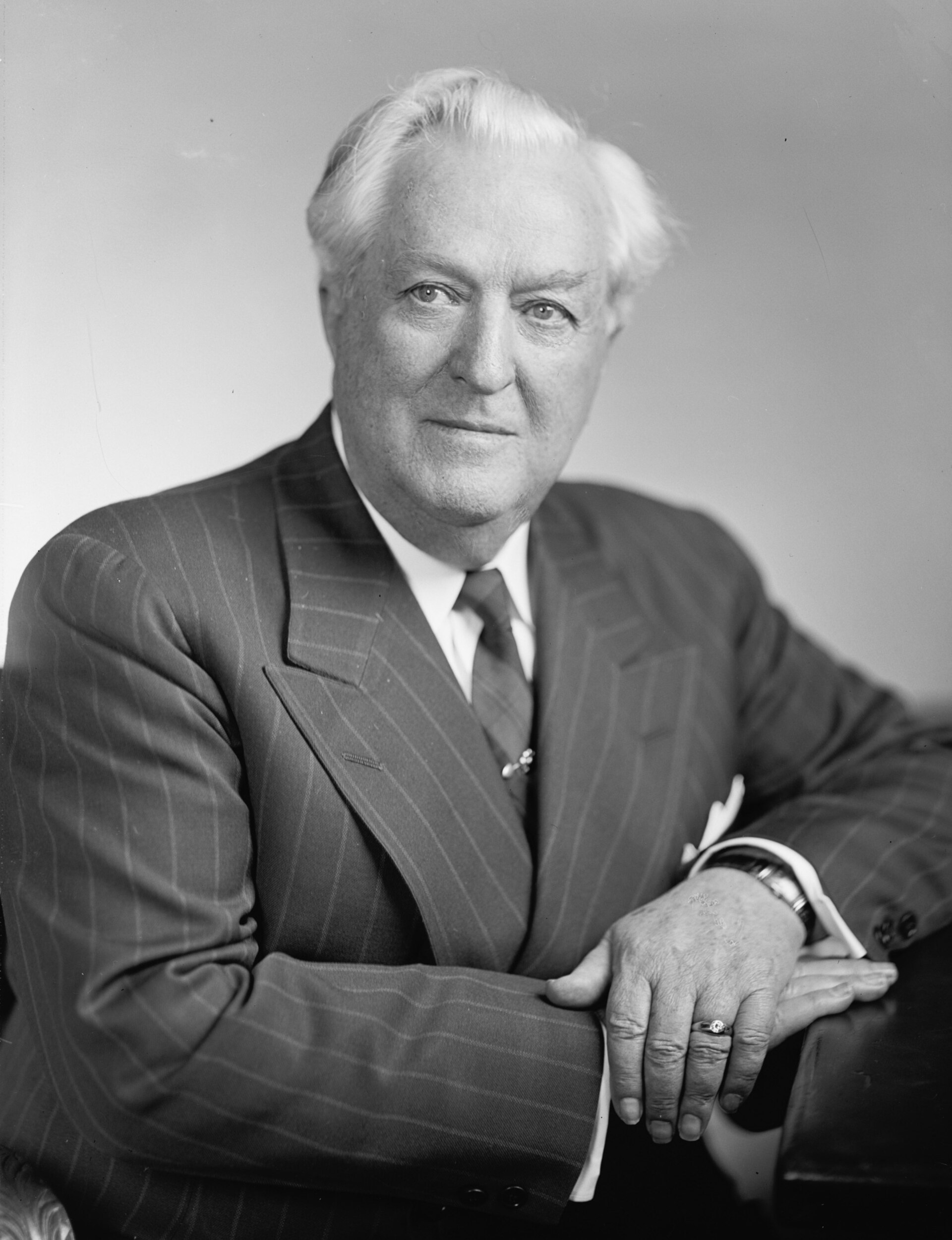

Patrick A. (Pat) McCarran, a Nevada Democrat, chaired the Senate Judiciary Committee and gave his name to two of the era's major laws. The first, the Internal Security Act of 1950 (Public Law 81-831, "also known as the McCarran Act"), required communist organizations to register and set up the Subversive Activities Control Board.15 President Truman vetoed it on September 22, 1950. "H.R. 9490 would not hurt the communists. Instead, it would help them," his veto message said, warning that "any governmental stifling of the free expression of opinion is a long step toward totalitarianism" and that "We need not fear the expression of ideas, we do need to fear their suppression" (the message's dash replaced here by a comma).16 Congress overrode the veto. The second law, the McCarran-Walter Act of 1952, rewrote immigration and naturalization law.15
McCarran also created the Senate's lasting counterpart to the House committee. The National Archives guide records that the Senate Internal Security Subcommittee (SISS) "was authorized under S. Res. 366, 81st Cong., approved December 21, 1950," to investigate espionage, sabotage and "the extent, nature, and effects of subversive activities in the United States," and that "the chairman of the subcommittee in the 82d Congress was Patrick (Pat) McCarran of Nevada (1950-53)." William Jenner followed him, then James Eastland, until the subcommittee was abolished in 1977.15 Under McCarran, SISS held the long hearings on the Institute of Pacific Relations that led to the perjury indictment of Owen Lattimore (lesson 07). Module 81 lessons 06 and 07 compare SISS's methods with McCarthy's and follow the Lattimore prosecution, which ended when the courts dismissed the main counts.
Rating of the main claim (that McCarran's subcommittee exposed real Soviet influence): Partly supported. In module 81: lesson 03 (the McCarran Act) and lesson 06 (SISS compared with HUAC and the PSI).
Joseph McCarthy (1908 to 1957): senator from Wisconsin and chairman of the Permanent Subcommittee on Investigations
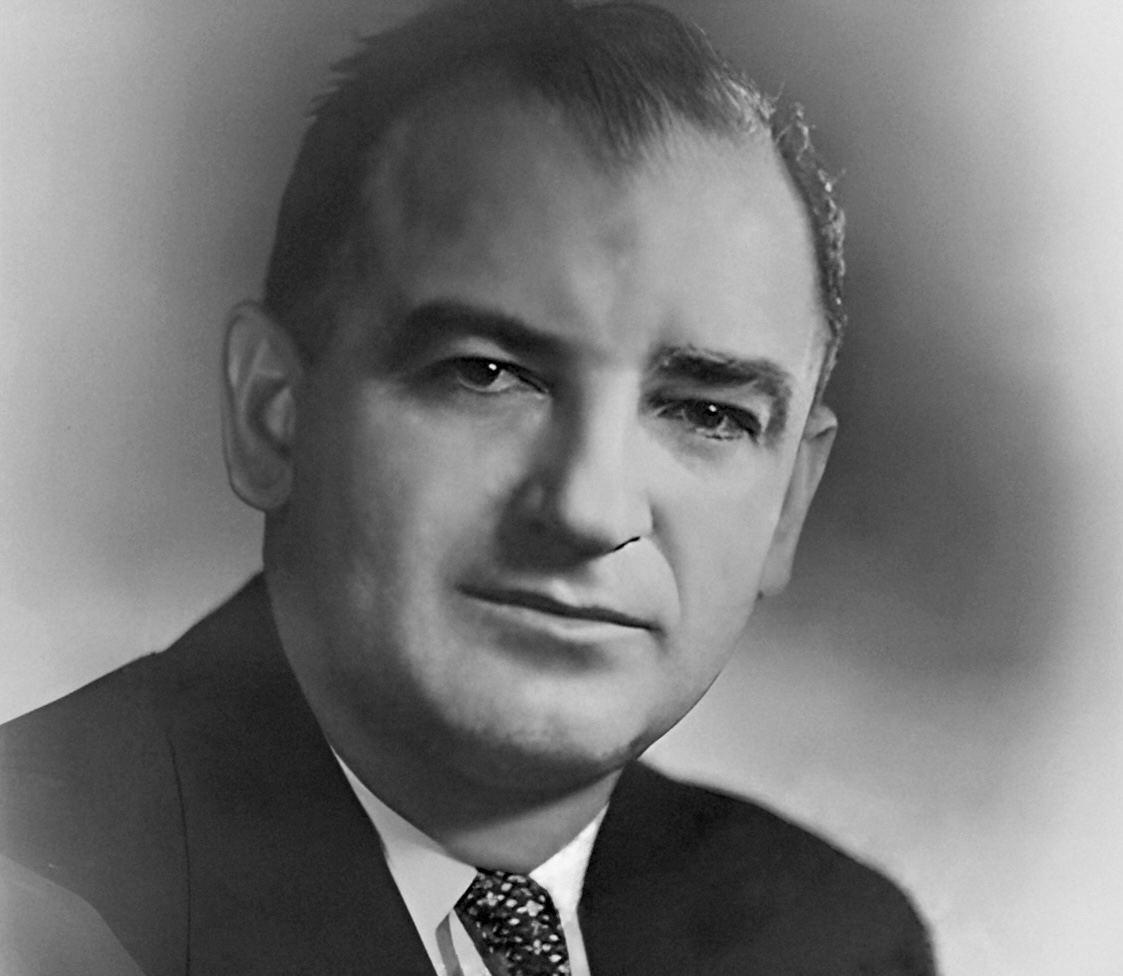

Module 81 is McCarthy's full biography and assessment, lesson by lesson. This summary entry gives the outline and the verdict, then points to the lesson for each stage.
The career. "Elected as a Wisconsin Republican in 1946, Senator McCarthy had burst into national headlines in February 1950, when he delivered a Lincoln Day address in Wheeling, West Virginia, that blamed failures in American foreign policy on Communist infiltration of the United States government," Ritchie writes. "He held in his hand, the senator asserted, a list of known Communists still working in the Department of State." A special subcommittee of the Foreign Relations Committee, chaired by Millard Tydings, rejected the charges as "a fraud and a hoax," but "the outbreak of the Korean War, along with the conviction of Alger Hiss and arrest of Julius Rosenberg in 1950, lent new credibility to McCarthy's charges."13 When Republicans won the Senate in 1952, McCarthy (1908 to 1957), "who had joined the committee in 1947, became chairman of both the committee and its permanent subcommittee."13 In 1953 and 1954 the subcommittee pursued the Voice of America, the overseas libraries, the Government Printing Office, Fort Monmouth and the Army.136 The Army-McCarthy hearings, chaired by Karl Mundt, "were televised nationally" and "resulted in an erosion of the senator's public standing, and contributed to his censure by the United States Senate that December."6
The censure. On December 2, 1954, the Senate voted 67 to 22 to censure McCarthy. The final resolution cited his "non-cooperation with and abuse of the Subcommittee on Privileges and Elections" in 1952 and his "abuse of the Select Committee to Study Censure" in 1954; the select committee, chaired by Arthur Watkins of Utah, had also recommended a count for his abuse of General Ralph Zwicker, which the Senate replaced.17 After the censure "his name disappeared from the front pages," Ritchie writes; "his health and spirit declined rapidly and he died in 1957 at the age of forty-eight."6
The verdict from 2026. The fairest summary keeps McCarthy's mission and his method apart. The threat he described was real: the people in this lesson's Soviet column prove it. His own names were a different matter. Haynes, the historian who did more than any other to document Soviet espionage from the archives, checked all 159 people on McCarthy's lists against Venona and other evidence and found "substantial evidence that nine assisted Soviet espionage against the United States: Lauchlin Currie, Harold Glasser, Gerald Graze, Standley Graze, Many Jane Keeney, David Karr, Robert T. Miller, Franz Neumann, and William Remington," with David Zablodowsky "a tenth ambiguous case." He added that "a number of those on the lists above, perhaps a majority, likely were security risks, but others, a minority but a significant one, likely were not."10 (The index spells Mary Jane Keeney's first name "Many," a typing error.) At least two of the nine, Miller and Remington, had already been named by Elizabeth Bentley to the FBI in 1945, Haynes notes.10 In his book talk with Arthur Herman, Haynes judged that McCarthy "attempted to make anticommunism a partisan weapon."11 Herman and Evans argue that the mission deserves more credit than the method deserves blame; Oshinsky, Rovere and Schrecker argue that the method did lasting harm to innocent people and to anti-communism itself.
Rating of the main claim (that McCarthy's lists exposed Communists and Soviet agents in the government): Partly supported. A small number on his lists were Soviet sources, some of them already known to the FBI. Many more were security risks by the standards of the time, and some, such as Marshall, were falsely accused. In module 81: 01 (why the fear was real), 02 (Venona), 03 (the machinery before him), 04 (Wisconsin, the Marines and 1946), 05 (Wheeling and the list), 06 (three committees), 07 (the cases), 08 (the Army-McCarthy hearings), 09 (censure and the courts), 10 (what it cost), 11 (the assertions assessed), 12 (method versus mission), 13 (espionage in 2026) and 14 (reading the record).
Arthur Miller (1915 to 2005): playwright, HUAC witness, acquitted of contempt
Arthur Miller, author of Death of a Salesman (1949) and of a 1953 play about the Salem witch trials widely read as a comment on the investigations, testified before the House Committee on Un-American Activities on June 21, 1956. He answered questions about himself but "refused to name names of other alleged Communists, citing the First Amendment."18 He was "convicted of contempt of Congress, on May 31, 1957," and "his conviction was overturned on August 7, 1958."18
The appeal shows how the courts handled such cases. The question Miller refused concerned a 1947 meeting of "Communist writers." During the hearing he asked the presiding member, Francis Walter: "Mr. Walter, could I ask you to postpone this question until the testimony is completed and you can gage for yourself?" Walter agreed, and the hearing ended without the question being put again with a clear direction to answer. Sitting together (en banc), the nine judges of the District of Columbia Circuit, among them the future Chief Justice Warren Burger, reversed the conviction in a short opinion for the whole court, with directions to enter a judgment of acquittal. Under Quinn v. United States, they held, a witness must be told plainly that refusal risks prosecution. Joseph L. Rauh Jr. was Miller's counsel on the appeal (see the Rauh entry below).19
The four claims: Miller was never shown to be a party member and was never accused of espionage; the questioning concerned his associations and the meetings of writers he had attended in the 1940s.19
Rating of the main claim (that Miller was a Communist Party member or a security risk): Unsupported. In module 81: not covered. The legal background (contempt of Congress, the Watkins decision of 1957) is in 81 lesson 09.
Robert T. Miller (dates not confirmed): State Department official and Bentley source, cover name MIRAGE
Robert T. Miller worked for the Office of the Coordinator of Inter-American Affairs and the State Department. The Haynes index describes him as a "Soviet intelligence source/agent. Secret Communist," "identified by Elizabeth Bentley as one of her singleton espionage sources," with the cover name MIRAGE in the Vassiliev notebooks and the party name "Bob."1 Venona contains MIRAGE as an unidentified source; a 1948 KGB memo by Anatoly Gorsky on failures in the United States, copied into the notebooks, identifies MIRAGE as Robert Miller.10
Miller was number 16 on McCarthy's 1950 numbered list. Haynes counts him among the nine on McCarthy's lists against whom there is "substantial evidence" of assisting Soviet espionage, and notes that he was "First Identified as a Soviet Espionage Source by Elizabeth Bentley in her 1945 FBI statement."10 He is the clearest example of how McCarthy's lists overlapped with real espionage: the overlap was real, and the FBI had the name five years before Wheeling. Miller was never prosecuted; the evidence against him is Bentley's statement and the KGB documents.
Rating of the main claim (that Miller was a Soviet source): Supported. In module 81: lesson 02 and lesson 05.
Vyacheslav Molotov (1890 to 1986): Soviet premier and foreign minister
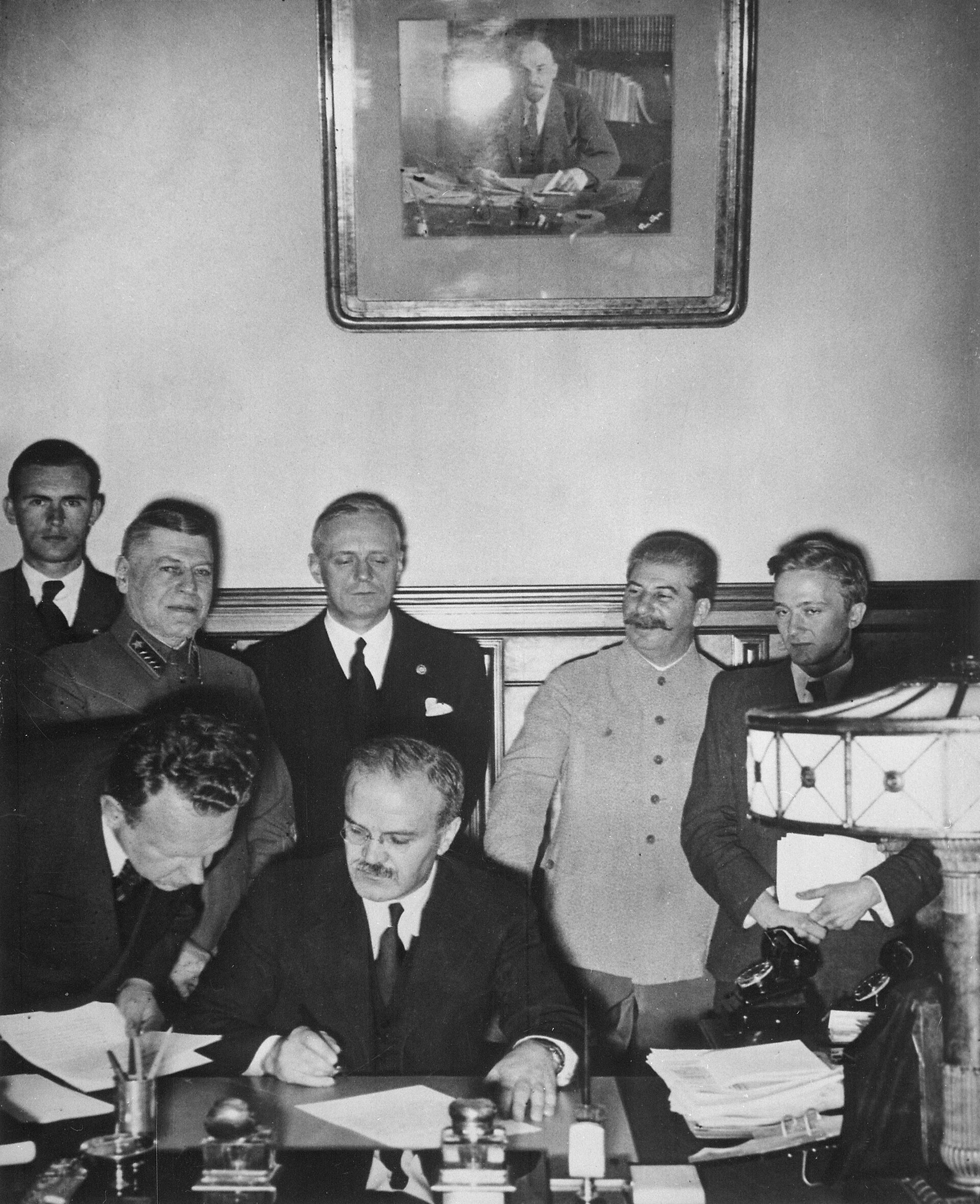

Vyacheslav Molotov was, in the Haynes index's phrase, a "Senior Soviet diplomat and member of Stalin's inner circle."1 He signed for the Soviet Union the treaty of nonaggression with Nazi Germany and the secret additional protocol that divided Eastern Europe. The protocol, dated "Moscow, August 23, 1939," is signed "V. RIBBENTROP" for Germany and "V. MOLOTOV" as "Plenipotentiary of the Government of the U.S.S.R.," and its first article set "the northern boundary of Lithuania" as "the boundary of the spheres of influence of Germany and the U.S.S.R." in the Baltic states.20 For American communists the pact was a test of loyalty, since the CPUSA's line changed with it (see lesson 05).
Molotov's closeness to Stalin did not protect his family. His wife, Polina Zhemchuzhina, a deputy people's commissar in the 1930s, was "arrested and sent to the Gulag in 1948 during Stalin's anti-Jewish purge" and "released after Stalin's death," according to the Haynes index; some accounts date her arrest to January 1949.1 Her brother had emigrated to the United States as Sam Carp, and he appears on Adolf Berle's 1939 notes of Whittaker Chambers's disclosures.1 Molotov's role in the wartime conferences and his later fall from power are covered in lesson 02 and lesson 03.
Rating of the main claim (that Molotov signed the secret protocol dividing Eastern Europe with Nazi Germany): Supported. In module 81: lesson 01.
Boris Morros (1891 to 1963): Hollywood producer, Soviet agent and FBI double agent, cover name FROST
Boris Morros was a Russian-born music director and producer in Hollywood. The Haynes index records that his family name appears in KGB files as Moroz, Morozov, Moros and Morros, that moroz is the Russian word for frost, and that his cover name, FROST, was "a play on his Russian family name." It describes him as a "Soviet intelligence source/agent" who "was turned by the FBI and became a double agent." His wife Catherine (cover name KATYA) and his son Richard (REED, 1950) also appear in the notebooks, and a KGB project around a music company he ran with the American Alfred Stern carried the cover name CHORD.1
As a double agent Morros reported to the FBI on a Soviet network. The FBI's file description of the case records that "Jack Soble and his wife, Myra Soble, were arrested as part of an Espionage Ring known as the 'Mocase,'" whose associates included Jane and George Zlatovski, Alfred Stern, Jacob Albam and Boris Morros. Myra Soble received a five-and-a-half-year sentence on August 9, 1957, later reduced to four years, and "Judge Levet sentenced Jack Soble to seven years in prison."21 His memoir, My Ten Years as a Counterspy (1959), was not opened for this lesson, and its account of his own motives should be read with care, since it was written by a man who had worked for both services.
Rating of the main claim (that Morros worked for Soviet intelligence and then as an FBI double agent): Supported. In module 81: not covered. The Soble ring is drawn in lesson 12.
Annie Lee Moss (1905 to 1996): Army Signal Corps clerk questioned by McCarthy in 1954
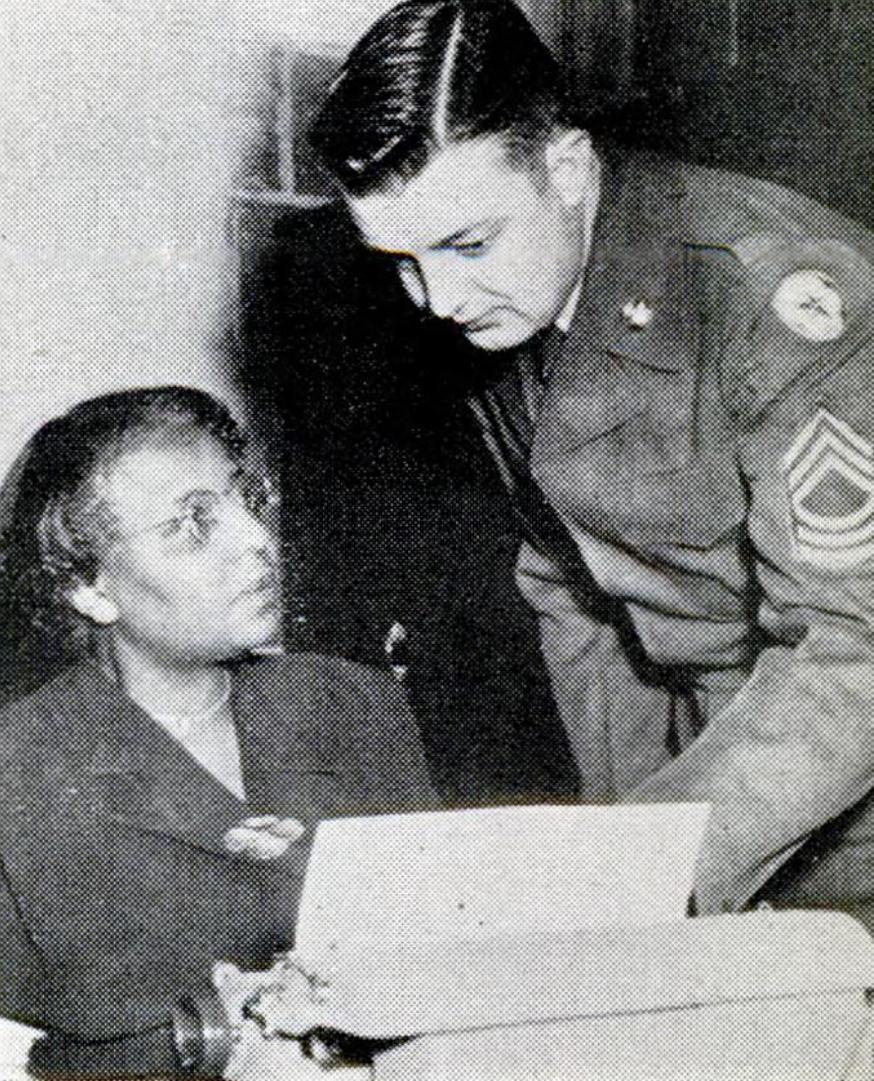

Annie Lee Moss had worked in a government cafeteria before becoming an Army Signal Corps communications clerk at the Pentagon in 1950.6 On February 22, 1954, Mary Stalcup Markward told a House committee executive session that Moss's name had appeared on the Communist Party's membership rolls in 1944 (see the Markward entry above). At the time, Ritchie writes, "Moss was a communications clerk at the Pentagon."6 McCarthy's subcommittee called her to a televised public hearing on March 11, 1954. McCarthy called her "not of any great importance" but demanded to know: "Who in the military, knowing that this lady was a Communist, promoted her from a waitress to a code clerk?"6
The hearing. Moss denied having been a party member, paid dues or attended meetings. The Army described her job as relay machine operator, receiving and transmitting "unintelligible code messages." Ritchie's account of the scene became the standard one: "Appearing frail and perplexed at the hearing, she seemed an unlikely espionage agent even to Senator McCarthy, who left midway through her testimony. The hearing was replayed on Edward R. Murrow's popular See It Now television program and proved a public relations blow to the chairman. The army eventually reinstated Annie Lee Moss, placing her in its finance and accounts office."6
What the later record shows. For decades the case was told as mistaken identity. The Senate's editors corrected that in 2003: "In 1958 the Subversive Activities Control Board confirmed Markward's assertion that Moss' name had appeared on the Communist party rolls in the mid-1940s." They added in the same passage that the board "conducted no further investigation of Moss, and the following year it concluded that 'Markward's testimony should be assayed with caution.'"6 Evans, in Blacklisted by History, made the case that there was no other Annie Lee Moss; module 81 lesson 07 reports his argument through Robert Novak's 2007 review. The historian Andrea Friedman's 2007 article in the Journal of American History, summarized in module 81, concluded that Moss was most likely a casual recruit in the 1940s, drawn by the party's work on wages and housing.
Keeping the four claims apart settles most of the argument. Party membership in the mid-1940s: supported by the board's finding. Espionage: no evidence at all, and her job, as the Army described it, gave her no access to the meaning of the traffic she handled. Sympathy: plausible for the 1940s. Association: she testified that her late husband had received copies of the Daily Worker, though she was unsure to whom they were addressed, and that she had paid dues to a cafeteria workers' union in 1943.6
Rating of the main claim (that a Communist had been placed in Pentagon code work): Partly supported. The name on the rolls is supported; the security danger McCarthy described is unsupported. In module 81: lesson 07 (case 7), lesson 08 and lesson 11.
Karl Mundt (1900 to 1974): representative and senator from South Dakota, chairman of the Army-McCarthy hearings
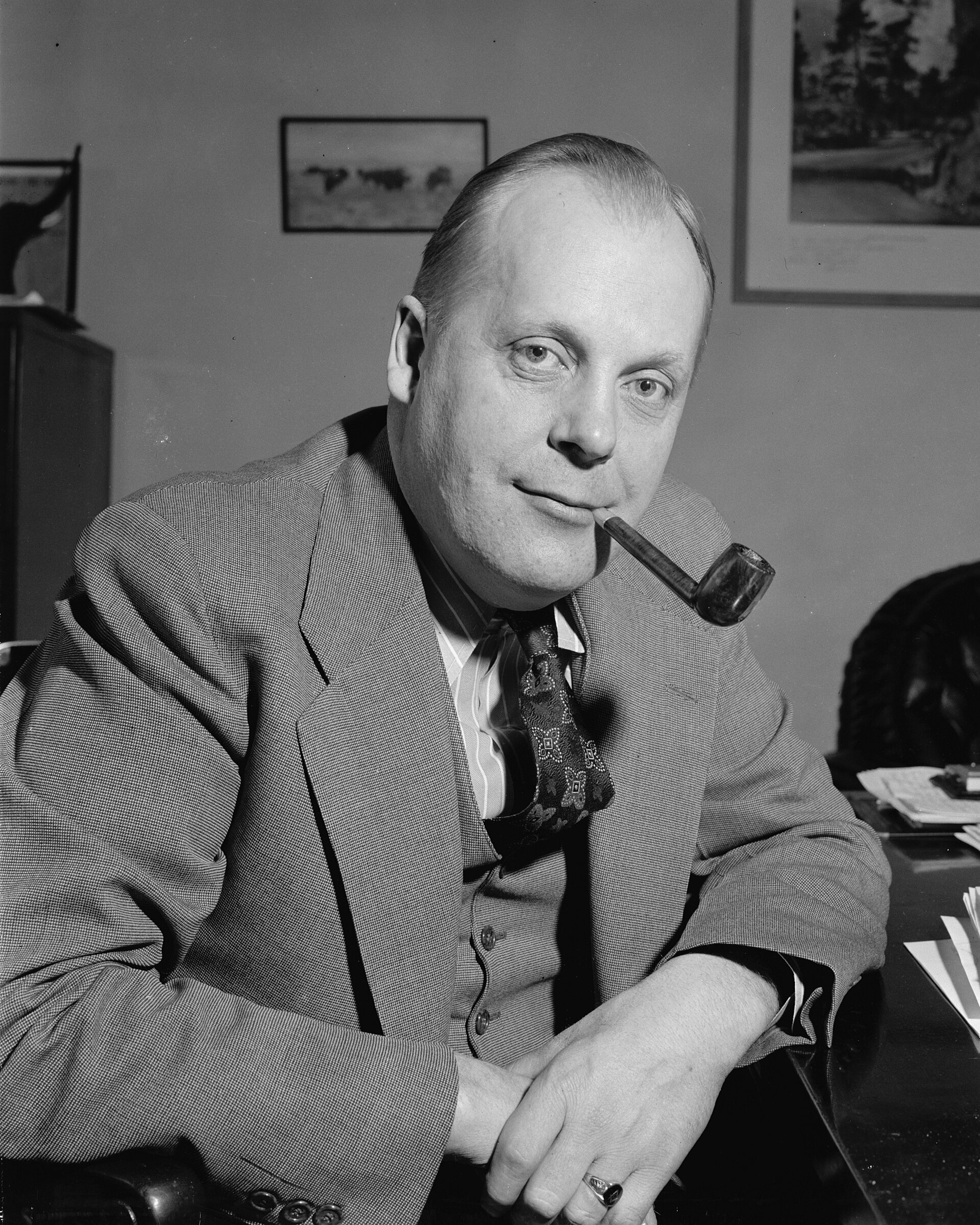

Karl Mundt sat on both sides of the Capitol's anti-communist machinery. As a House member he voted on January 3, 1945, for John Rankin's amendment making the Committee on Un-American Activities a standing committee; the Congressional Record lists him among the 208 yeas, and records him rising to "congratulate the gentleman" from Mississippi for introducing it.22 He served on HUAC during the Hiss hearings of 1948 and co-sponsored with Richard Nixon the Mundt-Nixon bill to require the registration of communist organizations, which passed the House in May 1948 and died in the Senate (module 81 lesson 03 gives the roll call); registration returned in the McCarran Act of 1950.15
In the Senate Mundt joined McCarthy's subcommittee in 1953. Ritchie calls him "a veteran investigator who had previously served on the House Un-American Activities Committee" and records that he "urged Cohn to call administrative officials who could explain the policies and rationale of the government agencies under investigation, and to keep the hearings balanced, but Cohn felt disinclined."13 In January 1954 Mundt "sought to mediate between the chairman and Democrats" on the subcommittee.6 When the Army and McCarthy traded charges over the treatment of G. David Schine, "a special subcommittee, chaired by Senator Karl Mundt, then attempted to unravel these charges."6 The printed record of those hearings runs from April 22 to June 17, 1954.6 Mundt was a McCarthy ally who presided over the hearings that broke McCarthy's standing.
Rating of the main claim (that Mundt helped build the investigating machinery and then chaired the hearings that turned the public against McCarthy): Supported. In module 81: lesson 03, lesson 06 and lesson 08.
Edward R. Murrow (1908 to 1965): CBS broadcaster, See It Now
On March 9, 1954, Edward R. Murrow's CBS television program See It Now devoted its broadcast to McCarthy. Murrow's closing words included these sentences: "We must not confuse dissent with disloyalty." "We will not walk in fear, one of another." "This is no time for men who oppose Senator McCarthy's methods to keep silent, or for those who approve." "The actions of the junior Senator from Wisconsin have caused alarm and dismay amongst our allies abroad, and given considerable comfort to our enemies."23 The program also aired a half-hour built around Reed Harris's interrogation by the subcommittee and replayed the Moss hearing.136 In 1961 Murrow became head of the U.S. Information Agency under President Kennedy and reinstated Harris, one of McCarthy's targets, as executive assistant to the director.13
The broadcast's place in the story is often overstated. McCarthy's fall came from the Army hearings and the Senate's censure, and senators such as Ralph Flanders, who offered the censure resolution, and Arthur Watkins, whose select committee recommended censure, did the formal work.17 Murrow offered McCarthy time to reply, and McCarthy's filmed reply aired in April 1954; its text was not opened for this lesson. The historian Andrea Friedman argued that Murrow's presentation of Moss as a bewildered innocent flattened a woman with real political convictions into a symbol, a criticism module 81 lesson 07 reports.
Rating of the main claim (that Murrow's broadcast brought McCarthy down): Partly supported. It was one blow among several, and the decisive ones came from the Senate. In module 81: lesson 07 and lesson 08.
N
Steve Nelson (1903 to 1993): CPUSA organizer and defendant in Pennsylvania v. Nelson
Steve Nelson was a long-serving Communist Party organizer. Standard accounts describe him as a veteran of the International Brigades in Spain and, in the early 1940s, a party leader in the San Francisco Bay Area whom FBI surveillance tied to Soviet officials and to scientists at the Berkeley radiation laboratory; those accounts rest on House committee material and later histories not opened for this lesson, so they are listed as unverified. His name lasts in the law books. The Supreme Court's opinion of April 2, 1956, describes him as "an acknowledged member of the Communist Party" who "was convicted in the Court of Quarter Sessions of Allegheny County, Pennsylvania," of violating the state sedition act and "sentenced to imprisonment for twenty years and to a fine of $10,000." Chief Justice Earl Warren's opinion held that the federal Smith Act, as amended in 1948, superseded the enforceability of Pennsylvania's sedition law; Justices Reed, Burton and Minton dissented.24 The decision ended state prosecutions under sedition laws that duplicated the Smith Act.24
Rating of the main claim (that Nelson was a Communist Party official): Supported, by the Court's own description and his acknowledgment. Any espionage role is unverified in this lesson. In module 81: lesson 09 (the courts).
Richard Nixon (1913 to 1994): congressman, senator, vice president and president
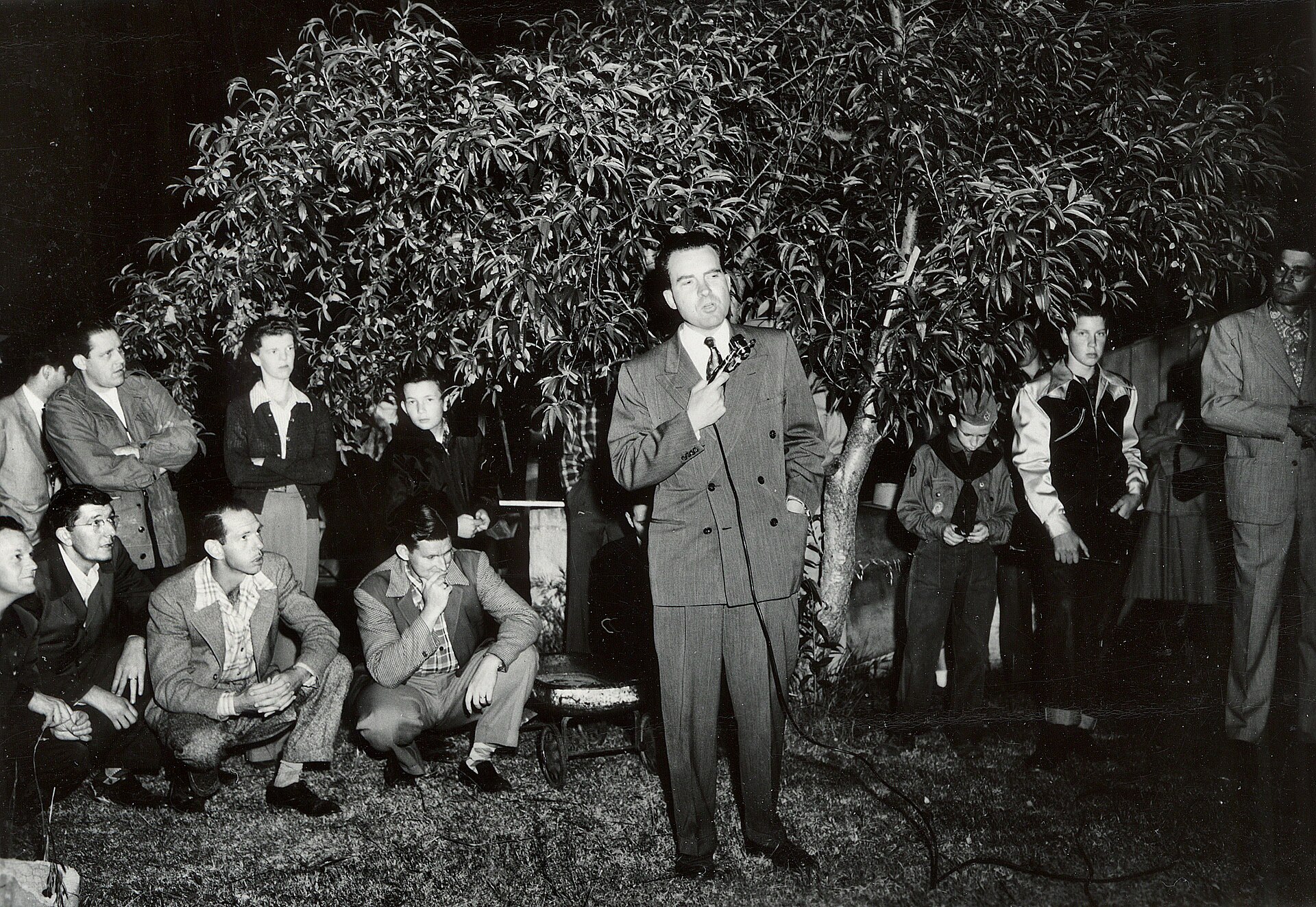

Richard Milhous Nixon was "born on January 9, 1913, on his parents' citrus farm in Yorba Linda, California," and in the election of November 5, 1946, "defeated Democratic Congressman Jerry Voorhis by more than fifteen thousand votes," the Nixon Presidential Library records (the library dates the result November 6, the day after the vote; the 1946 general election was held on November 5, the date module 81 lesson 04 gives from the Wisconsin returns). In 1948, as a member of the House Committee on Un-American Activities, "he took the lead in investigating charges against former State Department official Alger Hiss." In 1950 "he defeated Democratic Congresswoman Helen Gahagan Douglas to win California's vacant U.S. Senate seat."25 He served as vice president under Eisenhower from 1953 to 1961 and as president from 1969 until he resigned, effective at noon on August 9, 1974. He died on April 22, 1994.25
The Hiss case. When Whittaker Chambers named Hiss in August 1948 and Hiss denied knowing him, Nixon chaired the subcommittee that questioned Chambers in closed session and tested whether he really knew Hiss by drawing out private details of the Hiss household. Module 81 lesson 03 tells that sequence from the committee's printed hearings. The outcome justified the effort: Hiss was convicted of perjury in 1950, and the Haynes index records that he was "identified in the Venona decryptions as a Soviet source/agent" and "documented as assisting Soviet espionage" by the Baltimore and Pumpkin Papers and the testimony of Chambers, Hede Massing and Elizabeth Bentley.1 The identification of Hiss as ALES is still disputed by a minority of historians; the dispute is set out in 81 lesson 02 and in the Hiss entry in lesson 07.
The 1950 campaign and McCarthy. Nixon's 1950 Senate campaign against Douglas made her voting record the issue and was attacked by her supporters as a smear; as vice president from 1953 he held office through the years of the Army hearings and the censure. The campaign details, and accounts of his efforts to mediate between McCarthy and the Eisenhower administration, come from standard biographies not opened for this lesson. Nixon and McCarthy worked the same ground with different methods: Nixon's best-known case was won on documents and a perjury verdict; McCarthy's best-known charges were not.
Rating of the main claim (that Nixon's pursuit of Hiss was justified by the evidence): Supported. In module 81: lesson 03 and lesson 06.
O
J. Robert Oppenheimer (1904 to 1967): scientific director of the Manhattan Project
J. Robert Oppenheimer directed the Los Alamos laboratory that built the atomic bomb and then chaired the General Advisory Committee of the Atomic Energy Commission (AEC). In December 1953 the AEC suspended his clearance. A three-member Personnel Security Board heard his case, and "on May 27, 1954, by a 2-1 vote," recommended that his clearance not be reinstated, while finding "no evidence of disloyalty" and "much responsible and positive evidence of the loyalty and love of country of the individual concerned." The AEC's general manager found "no direct evidence that Dr. Oppenheimer gave secrets to a foreign nation or that he is disloyal to the United States." On June 29, 1954, two days before his consulting contract would have expired, the Commission affirmed the revocation by a vote of 4 to 1, resting on "fundamental defects" in his character, his candor about his past associations, and the associations themselves.26
On December 16, 2022, Secretary of Energy Jennifer Granholm vacated the 1954 decision. Her order found that "the AEC did not claim that Dr. Oppenheimer had ever divulged or mishandled classified information. Nor did it question his loyalty to the United States," and her statement said the clearance had been revoked "through a flawed process that violated the Commission's own regulations."26
The archive evidence. The four claims must be kept especially far apart here. On espionage, the record has moved against the accusation. Venona's analysts had linked Oppenheimer to the cover name VEKSEL; when Haynes and Klehr compared Venona with the Vassiliev notebooks, they found that "Venona's Veksel appears to be a decoding error" for VECTOR, that "Vector wasn't Robert Oppenheimer as asserted but Enrico Fermi," and that "KGB attempts to contact Fermi failed (as did its attempts to contact Oppenheimer)." Oppenheimer's own cover names in the notebooks (CHESTER, CHEMIST and YEW) "none of which occur in the deciphered Venona cables," mark him as a target, not a source.3 On party membership the scholars disagree. The Haynes index describes him as a "Secret member of the CPUSA" and a "Target of recruitment," and lists his brother Frank as a secret member as well.1 Oppenheimer denied membership, and historians who doubt it read the same evidence as close sympathy and association in the late 1930s; the AEC hearing transcript, which records his own account of his associations, was not opened for this lesson. On association, the 1954 decision itself rested on his past associations and his candor about them.26
Rating of the main claim (that Oppenheimer was a Soviet spy): Unsupported, and close to refuted by the notebooks. Party membership in the late 1930s: Unresolved. In module 81: lesson 02 (the Venona corrections).
Gaik Ovakimian (1898 to 1967): chief of the Soviet intelligence station in New York, cover name GENNADY
Gaik (Gayk) Badalovich Ovakimian, whose name is also transliterated Ovakimyan, was "chief of the KGB legal station in the U.S. from the late 1930s until arrested and expelled in 1941," according to the Haynes index. His cover name was GENNADY, he used the work name "George" with the source Alfred Slack, and he worked under the pseudonym Aleksandr Osipov. Venona, Christopher Andrew and Vasili Mitrokhin's The Sword and the Shield, and the Vassiliev notebooks all carry the identification.1 A "legal" station worked under official diplomatic or trade cover; see lesson 10. Simon Rosenberg, a Soviet source unrelated to Julius, did "a variety of espionage tasks for Gayk Ovakimyan" before cooperating with the FBI.1
Rating of the main claim (that Ovakimian ran Soviet espionage in the United States until 1941): Supported. In module 81: not covered by name. His successors are in lesson 09 (Vasily Zarubin).
P
Irving Peress (1917 to 2014): Army dentist whose promotion and discharge set off the Zwicker affair
Irving Peress, an Army dentist at Camp Kilmer, New Jersey, "had been under military surveillance as a suspected member of the Communist party." In September 1953, when Captain Peress applied for promotion under the Doctor Draft Act, the First Army's intelligence staff recommended against it, but "the processing officers, however, judged Peress' case on his professional qualifications and the promotion went through on October 23." The new commanding officer at Camp Kilmer, General Ralph Zwicker, "urged that the dentist be relieved from active duty, and on January 18, 1954, the army ordered Major Peress to be discharged within ninety days." Called before McCarthy's subcommittee in executive session on January 30, Peress "cited the Fifth Amendment in his refusal to answer questions." He then "asked for an immediate release and received an honorable discharge on February 2."6
McCarthy's question, "Who promoted Peress?", was a fair one about a real failure in the Army's security procedures.6 His treatment of General Zwicker on February 18, 1954, was another matter. When Zwicker cited the executive order that barred him from naming the officers involved, McCarthy told him: "Then, General, you should be removed from any command. Any man who has been given the honor of being promoted to general and who says, 'I will protect another general who protected Communists,' is not fit to wear that uniform, General."6 Zwicker was the officer who had pressed for Peress's removal and who, according to the subcommittee staff, had identified Peress to them as a Communist.6 The Watkins committee recommended censure for the abuse of Zwicker.17
The four claims: party membership was suspected by Army intelligence and believed by Zwicker, and Peress declined to answer under the Fifth Amendment, which is a constitutional right and not evidence of guilt. No one alleged espionage. Peress later spoke publicly about the case, but his statements were not opened for this lesson.
Rating of the main claim (that Peress was a Communist Party member): Unresolved on the public record. The claim that the Army mishandled the case is supported by its own records; the claim that Zwicker protected Communists is refuted. In module 81: lesson 07 (case 6), lesson 08 and lesson 09.
Victor Perlo (1912 to 1999): economist and head of the Perlo group, cover name RAIDER
Victor Perlo was a government economist, by the war years at the War Production Board, where the index records that his supervisor was Thomas Blaisdell.1 Whittaker Chambers named him in 1948 among the members of the 1930s Ware group, the secret Communist unit among New Deal officials, and Elizabeth Bentley named him as the leader of the second network she handled, which she called "the Perlo group" (module 81 lessons 01 and 02 quote both testimonies). The Haynes index summarizes: "Identified by Elizabeth Bentley as the chief figure in the Perlo espionage group. KGB sent Comintern a vetting inquiry about him in 1944." His cover names in the Vassiliev notebooks were ECK and RAID; Venona's analysts read the same name as RAIDER, "likely a matter of Venona code breakers making a minor error in reconstructing the KGB code book."13 The group's members, including Edward Fitzgerald (cover name TED), whom Bentley identified as part of the group,1 are drawn in lesson 12.
Perlo was never charged with espionage, and he spent his later career as an economist and writer in the CPUSA's circle; those details come from standard accounts not opened for this lesson. Three independent kinds of evidence now agree on his role: Bentley's 1945 statement to the FBI, the Venona cables and the KGB file notes Vassiliev copied. This is the pattern of the best-documented cases.
Rating of the main claim (that Perlo led a Soviet espionage group in wartime Washington): Supported. In module 81: lesson 01 (Chambers's list) and lesson 02 (the Silvermaster and Perlo groups).
J. Peters (1894 to 1990): head of the CPUSA's secret apparatus, cover name STORM
The man known as J. Peters used a dozen names in the United States. The Haynes index lists "Peter, J. Peters, Joseph Peters, Alexander Stevens, Sandor Goldberger, Silver, Isidore Boorstein, Steve, Steve Lapin, and Steve Miller," and describes him as a "Soviet intelligence source/agent. Senior CPUSA official and head of its covert arm from 1932 to 1938." He was "on Whittaker Chambers' 1939 Berle list," was "identified in the Venona decryptions as a Soviet source/agent," and carried the cover name STORM in the Vassiliev notebooks, along with the work names PETER and STEVE.1 Haynes and Klehr add that STORM "occurred in the Venona decryptions as an unidentified cover name and one that is consistent with it being Peters."3
Peters was the link between the CPUSA's open organization and its secret work. Module 81 lesson 01 records Chambers's description of him as head of the party's underground. A 1945 KGB cable from Washington, quoted in the index, records that the Perlo group member Charles Kramer "had also worked on the connection between Peter [Josef Peters] and Richard [H.D. White] (through R's wife)," tying Peters to Harry Dexter White's circle.1 Lee Pressman, testifying in 1950, had only a "hazy recollection" that a man named Peters may have attended his group's meetings once or twice.27 Peters left the United States for Hungary in 1949 while under a deportation order; that detail, and his later life in Budapest, could not be checked against a primary source for this lesson.
Rating of the main claim (that Peters ran the CPUSA's covert apparatus and worked with Soviet intelligence): Supported. In module 81: lesson 01.
Herbert Philbrick (1915 to 1993): FBI informant inside the Boston Communist Party
Herbert Arthur Philbrick joined the Communist Party in the Boston area while reporting to the FBI. Britannica records that he worked undercover "for nine years," and that "on April 6, 1949, he broke cover to testify against 11 Communist leaders" at the Smith Act trial in New York. In 1952 he published "a record of his undercover work called I Led Three Lives, which became a best-seller."28 The book became the basis of a 1950s television series, I Led 3 Lives, a detail not checked against a primary source here.
Philbrick's testimony mattered because it went to the core of the Smith Act charge: what the party taught its members about revolution. Defenders of the Smith Act defendants argued that teaching books was not the same as advocating action, an argument the Supreme Court accepted in part in Yates v. United States in 1957 (see 81 lesson 09). The four claims about Philbrick himself are simple: he was a party member on the FBI's instruction, never a spy for anyone but the Bureau.
Rating of the main claim (that Philbrick was a genuine FBI informant whose testimony described real party practice): Supported. The legal weight of what he described is a separate question. In module 81: not covered by name.
Kim Philby (1912 to 1988): British intelligence officer and Soviet agent
Harold Adrian Russell (Kim) Philby, at Cambridge, "became a communist and in 1933 a Soviet agent," and in 1940 Guy Burgess recruited him into the British secret intelligence service, MI-6. In 1949 he "was sent to Washington to serve as chief MI-6 officer there."4 Module 81 lesson 02 records that in Washington he received Venona translations. He warned Burgess and Donald Maclean that they were under suspicion, and they fled to Moscow in 1951. Philby was dismissed in 1955, worked as a journalist in Beirut and fled to the Soviet Union in 1963. He died in Moscow on May 11, 1988, having reached the rank of colonel in the KGB.4 His cover name in the Vassiliev notebooks was SOHNCHEN (German for "sonny"), and in the British Venona traffic STANLEY.1
For the American story Philby's importance is what he told Moscow. Module 81 lesson 02 records the CIA historians' finding that Philby and the Army code clerk William Weisband let Moscow learn of Venona's success, so that "Timely warnings from Philby helped the KGB protect some of its agents." The secret that the American public was kept from knowing until 1995 was known in Moscow by 1950.
Rating of the main claim (that Philby was a Soviet agent inside British intelligence): Supported. In module 81: lesson 01 and lesson 02. See also lesson 12 (the Cambridge Five).
Lee Pressman (1906 to 1969): CIO general counsel and former Ware group member, cover name VIG
Lee Pressman worked in the New Deal's Agricultural Adjustment Administration (the "Triple A") and later as the chief legal adviser to the Congress of Industrial Organizations (CIO), the union federation; Chambers identified him as a member of the original Ware group.127 On August 28, 1950, Pressman testified to the House committee that he had joined a Communist group in Washington about 1934 and left it, and Washington, in late 1935. "I was asked to join [the Communist Party] by a man named Harold Ware," he said. He named Charles Kramer as a member and did not dispute the names John Abt and Nathan Witt when Nixon put them to him. Of the group's structure: "There was absolutely no leader. We were a group." Of Alger Hiss: "Alger Hiss was not a member of the group" during his own time in it, and "I have no knowledge regarding the political beliefs or affiliations of Alger Hiss."27
The Haynes index classes Pressman as a "Soviet intelligence contact/agent" and gives his cover name in the Vassiliev notebooks as VIG; Venona also contains him under his own name.1 Pressman admitted party membership, denied any espionage, and as the CIO's chief legal adviser had held one of the most influential posts in the labor movement; the CIO's expulsion of its Communist-led unions in 1949 and 1950 is in lesson 11.
Rating of the main claim (that Pressman was a secret Communist in the Ware group): Supported by his own testimony. The espionage claim is Partly supported: the KGB carried him as a contact, and the record cited here does not show what, if anything, he passed. In module 81: lesson 01 and lesson 03.
Mary Price (1909 to 1980): Bentley courier and source, cover name DIR
Mary Wolfe Price was "identified in the Venona decryptions as a Soviet source/agent" and "identified by Elizabeth Bentley as one of her singleton espionage sources." Her cover names in the Vassiliev notebooks changed over time: "Kid (early 1941), then Dir (late 1941 to August 1944), Cat (August 1944), and Zone (starting in September 1944)."1 Her sister Mildred Price was also a secret Communist and, per Bentley, "a talent spotter and source for the Golos/Bentley apparatus."1 Price worked as secretary to the columnist Walter Lippmann, a post that gave her sight of his sources and notes; that detail comes from Bentley's account and Haynes and Klehr's Venona and was not checked against a primary document here.
Price is also a case study in how Venona was corrected. NSA and FBI analysts had identified a second cover name, ARENA, as Mary Price. The Vassiliev notebooks show ARENA was the government employee Gerald Graze; in Haynes and Klehr's words, "the identification of Arena in the Venona cables as Mary Price appeared to be incorrect."3 The DIR identification stands. Price was never prosecuted.
Rating of the main claim (that Price worked for Soviet intelligence as a source and courier): Supported. In module 81: lesson 02 (Venona's errors).
R
John Rankin (1882 to 1960): Mississippi congressman who made HUAC permanent
John Elliott Rankin was a Mississippi Democrat in the House. On January 3, 1945, the opening day of the 79th Congress, he offered an amendment to the resolution adopting the House rules. "Mr. Speaker, the object of this amendment is to extend the life of the Committee on Un-American Activities, usually referred to as the Dies committee, and to make it one of the standing committees of the House," he told the chamber. The clerk called the roll: "yeas 208, nays 186, not voting 40."22 In the same debate Rankin said the committee's files had been consulted on "more than 5,000 different occasions" by agencies of the government;22 the figure was his own and no independent count has been found (see 81 lesson 06).
He was notorious in his own time for attacks on Jews and Black Americans on the House floor; those statements are documented in the Congressional Record of the 1940s but were not opened for this lesson. His record is a reminder that the anti-communist coalition held people whose motives had little to do with the Soviet threat.
Rating of the main claim (Rankin's statement that agencies used HUAC's files more than 5,000 times): Unresolved. His authorship of the amendment and the 208 to 186 vote are supported. In module 81: lesson 03 and lesson 06.
Joseph L. Rauh Jr. (1911 to 1992): defense counsel and anti-communist liberal
Joseph Louis Rauh Jr. was a Washington lawyer and, by standard accounts not checked here, a founder of Americans for Democratic Action (founded in January 1947 as a liberal group that excluded Communists; see lesson 11), and counsel for witnesses before the investigating committees. The most important case he won in this lesson's range was Arthur Miller's. The District of Columbia Circuit's 1958 opinion lists "Joseph L. Rauh, Jr." for the appellant, with Lloyd K. Garrison and John Silard on the brief, and the court ordered a judgment of acquittal.19
Rauh's position is worth understanding because it does not fit either camp in the later arguments. He opposed Communist participation in liberal organizations and also defended people's rights before committees he thought abused them. He was counsel for other witnesses of the era as well, including, by standard accounts not checked here, the playwright Lillian Hellman before HUAC in 1952.
Rating of the main claim (that Rauh won Miller's acquittal on appeal): Supported. In module 81: not covered by name; the law of contempt is in 81 lesson 09.
William Remington (1917 to 1954): Commerce Department economist, Bentley source, cover name FEDYA
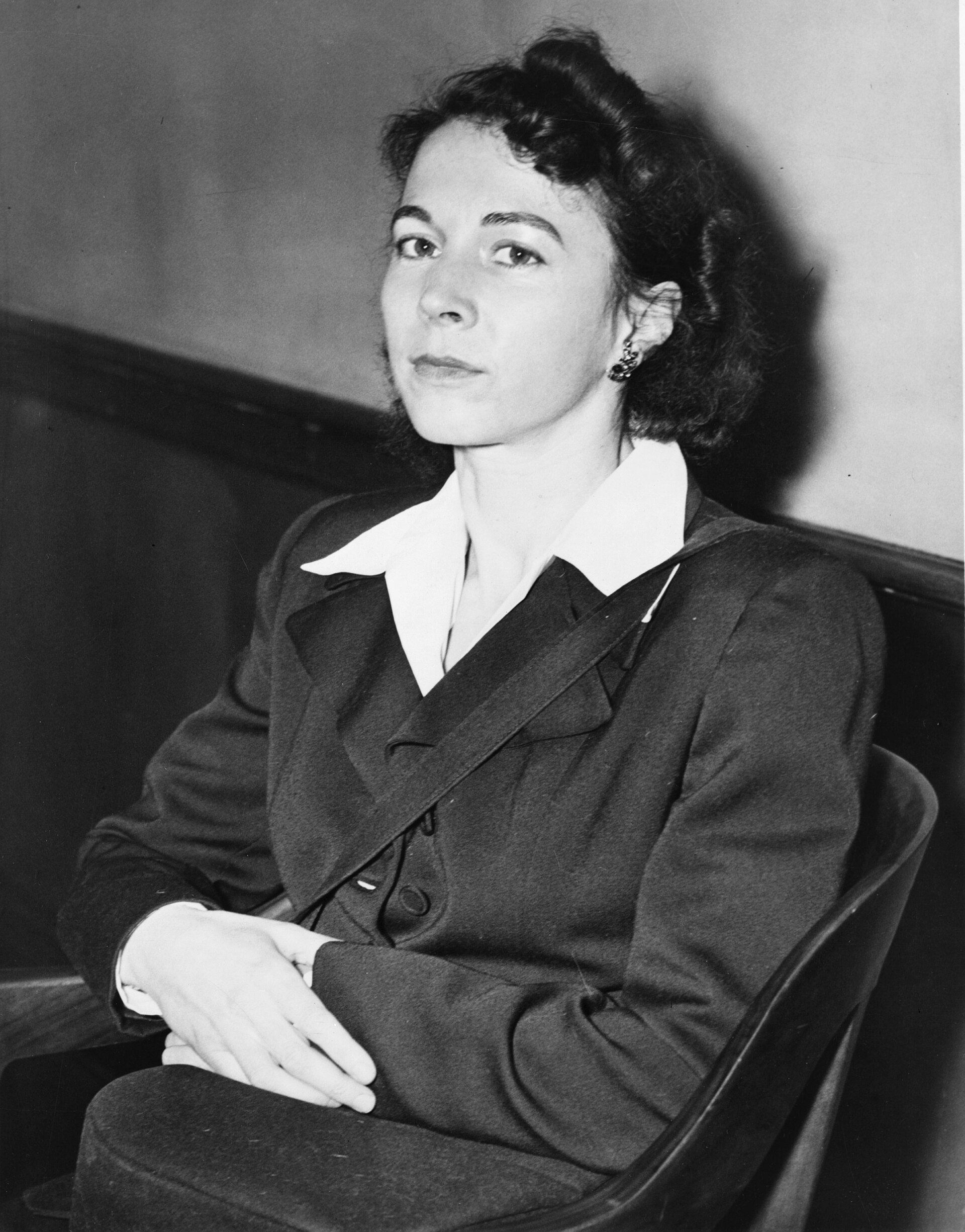

William Walter Remington, a Dartmouth graduate, was an economist with the War Production Board and later the Commerce Department. The Haynes index calls him a "Soviet intelligence source/agent" who was "identified by Elizabeth Bentley as one of her singleton espionage sources," with the cover name FEDYA in the Vassiliev notebooks (an alternative translation is "Ted" or "Teddy").1 Haynes and Klehr's notes on the notebooks add that he was recruited through a Columbia University friend, Henry Ware, who "recommended the KGB approach two of his Columbia friends, Bela Gold and William Remington, both of whom were recruited."3 He was number 19 on McCarthy's 1950 list, "Not identified in Venona," and "First Identified as a Soviet Source by Elizabeth Bentley in her 1945 FBI statement"; Haynes counts him among the nine on McCarthy's lists against whom there is substantial evidence.10
The trials. A federal Loyalty Review Board had cleared Remington before the prosecutions began.29 In May 1950 he told a federal grand jury in New York that he had never been a Communist Party member and was indicted for perjury. A jury convicted him, and the Second Circuit reversed for error in the jury charge. The government then obtained a new indictment, dated October 25, 1951, for perjury committed at the first trial. Its five counts covered his denials of attending party meetings, giving Bentley information she was not entitled to, paying party dues, soliciting members, and knowledge of the Young Communist League at Dartmouth. He was convicted on the counts about Bentley and the Young Communist League, acquitted on one, and the jury could not agree on two. On November 24, 1953, the Second Circuit affirmed in an opinion by Augustus N. Hand, holding that a witness under oath "could not, in our eyes, lie with impunity" even if the first indictment had been flawed. Learned Hand dissented and would have dismissed the indictment.30
In November 1954, while serving his sentence at the federal penitentiary at Lewisburg, Pennsylvania, Remington was attacked by three fellow inmates and killed. A Dartmouth classmate, writing in the alumni magazine in 1994 on Gary May's biography Un-American Activities: The Trials of William Remington, recalled that "Bill Remington had been dead for two years, murdered by three fellow inmates in the Federal Penitentiary" by the time he returned to Hanover in 1956.29
The four claims: party membership in his Dartmouth and early career years (supported by the conviction on the Young Communist League count and by the KGB files); espionage (supported by Bentley and the notebooks, never charged as such); and the case shows why perjury became the proxy charge of the era, a theme of 81 lesson 10.
Rating of the main claim (that Remington passed information to Soviet intelligence through Bentley): Supported. In module 81: lesson 02, lesson 05 and lesson 10.
Paul Robeson (1898 to 1976): singer, actor and defender of the Soviet Union
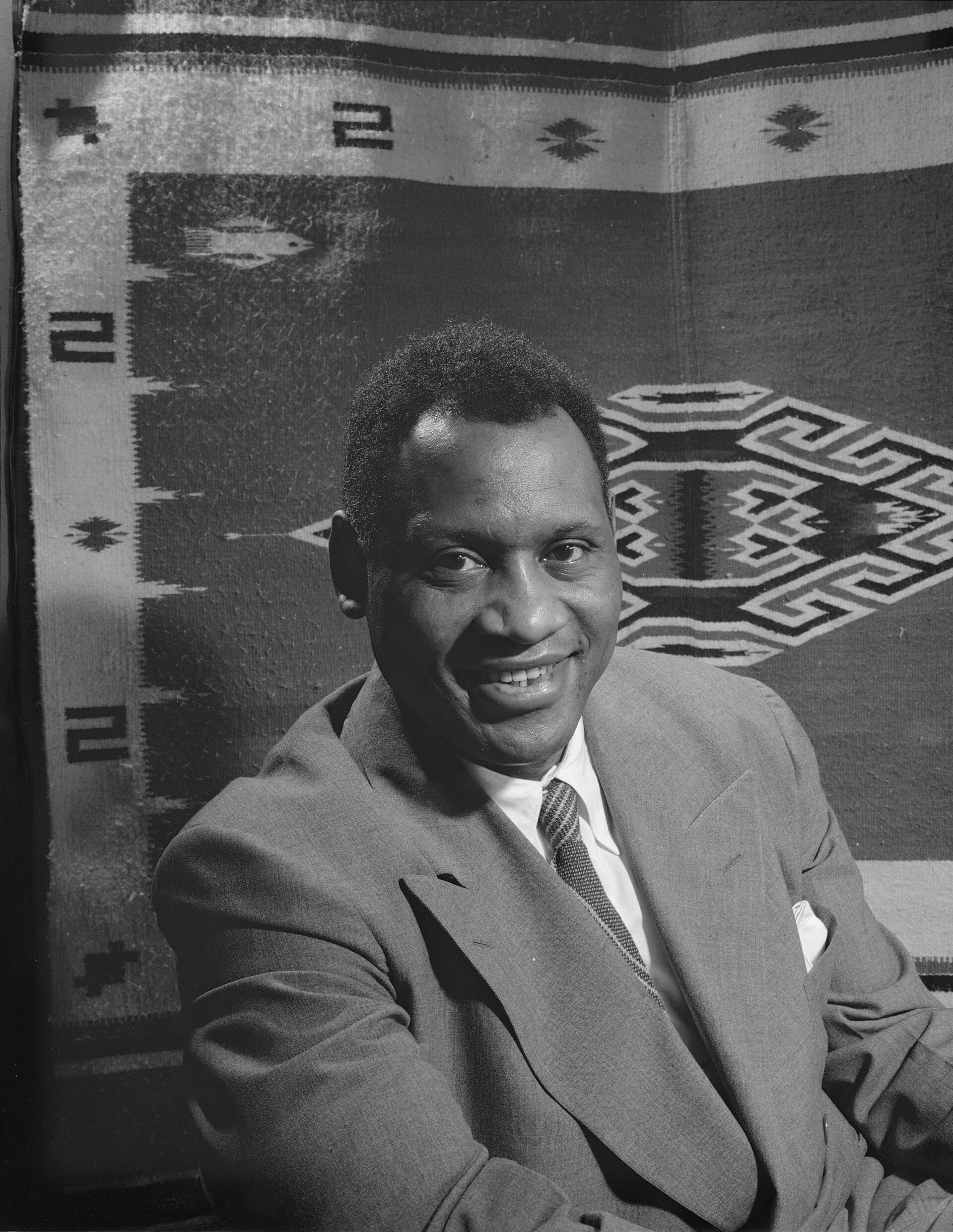

Paul Robeson, born in Princeton, New Jersey, was a concert bass-baritone and a stage and film actor.31 "Increasing political awareness impelled Robeson to visit the Soviet Union in 1934," Britannica records, and from then on he was increasingly identified with radical political causes. In 1950 "the U.S. State Department withdrew his passport because he refused to sign an affidavit disclaiming membership in the Communist Party," and "in 1958 the Supreme Court overturned the affidavit ruling."31 The Haynes index lists him only as a "well-known pro-Soviet Black American singer," with no cover name and no espionage role.1
His own words. Robeson's testimony before the House Committee on Un-American Activities on June 12, 1956, is one of the most quoted of the era. Asked whether he was a party member, he answered: "What is the Communist Party? What do you mean by that?" and "Would you like to come to the ballot box when I vote and take out the ballot and see?" and then, "I stand upon the Fifth Amendment of the American Constitution." Asked why he did not stay in the Soviet Union, he said: "Because my father was a slave, and my people died to build this country, and I am going to stay here, and have a part of it just like you." He told the members, "you are the nonpatriots, and you are the un-Americans, and you ought to be ashamed of yourselves."32
The fair reading. Robeson's admirers and his critics are each right about part of the record. He was a target of the passport and blacklist machinery for his opinions and associations, not for any act of espionage, and the Supreme Court's 1958 ruling restored the right he had been denied. He was also, by the index's description and his own public statements, a defender of the Soviet Union during the years of the Great Terror and after, including public praise of Stalin that the people Stalin imprisoned and killed had no chance to answer; the text of his 1953 tribute to Stalin was not opened for this lesson.
Rating of the main claim (that Robeson was a Soviet agent): Unsupported. Public sympathy for the Soviet Union: Supported. Party membership: Unresolved on the public record; he refused to answer under the Fifth Amendment. In module 81: not covered by name; the passport and blacklist machinery is in 81 lesson 10.
Julius Rosenberg (1918 to 1953) and Ethel Rosenberg (1915 to 1953): the atomic spy case
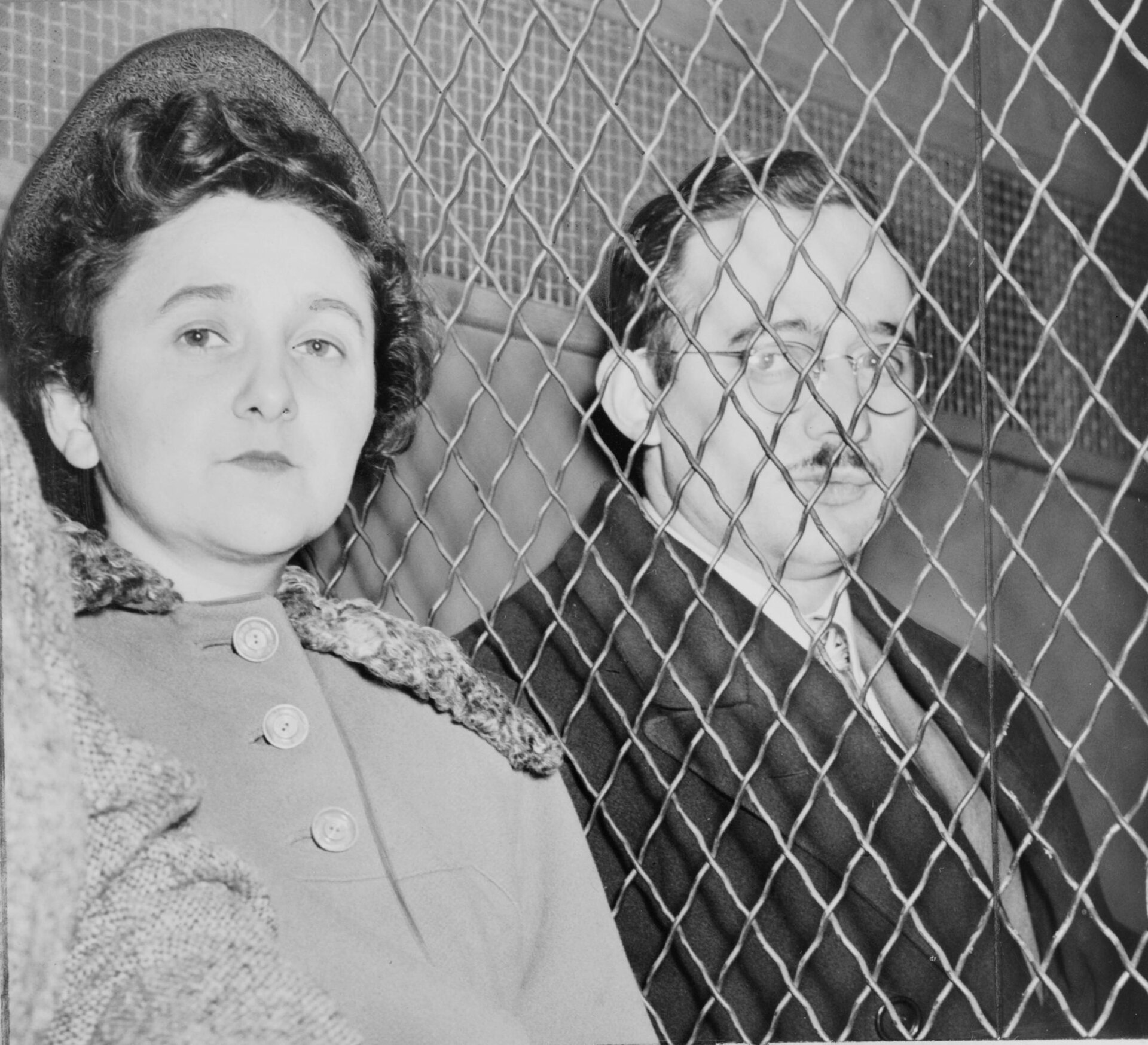

The case. The FBI's history of the case records the sequence. Harry Gold confessed on May 22, 1950, and his confession led to David Greenglass, Ethel's brother, who had worked as an Army machinist at Los Alamos. Julius Rosenberg was arrested at his home in Knickerbocker Village, New York, on July 17, 1950, and Ethel was taken into custody on August 11, 1950. Morton Sobell was apprehended at the International Bridge in Laredo, Texas, on August 18, 1950. The trial opened on March 6, 1951; on March 29 the jury found all three guilty of conspiracy to commit espionage; on April 5 Judge Irving Kaufman sentenced the Rosenbergs to death and Sobell to 30 years. Greenglass, who pleaded guilty, received 15 years. "At 8:05 p.m. on June 19, 1953, Julius Rosenberg was executed at Sing Sing Prison, Ossining, New York," and Ethel minutes later.33
Julius: the archive evidence. The Haynes index identifies Julius as a "Soviet intelligence source/agent. Engineer and chief of an espionage network of Communist engineers," with the cover names "Antenna until September 1944, Liberal (September 1944 to 1950), King (1950 to)," identified in Venona, in the Vassiliev notebooks and by his own KGB officer, Alexander Feklisov.1 The NSA's own exhibit text states: "VENONA messages indicate that her husband, Julius, was heavily involved in providing information to his KGB handler."34 In September 2008 Sobell, then 91, told the New York Times that he had been a spy ("Yeah, yeah, yeah, call it that," he said; "I never thought of it as that in those terms") and that what Julius gave the Soviets about the bomb "was junk."35 The network's members and the rest of what it passed are in lesson 12.
Ethel: the harder question. The index lists Ethel as a "Soviet intelligence contact/informant," a lower category than source or agent, "identified in the Venona decryptions."1 The NSA says: "At least one message shows that Ethel may have known about her husband's activities."34 Sobell's 2008 verdict on her was: "She knew what he was doing, but what was she guilty of? Of being Julius' wife."35 At trial, David and Ruth Greenglass "both testified that Ethel had typed David's notes," a claim David made "only ten days before the start of the trial." In interviews for Sam Roberts's 2001 book The Brother, David said: "I frankly think my wife did the typing, but I don't remember." The CIA reviewer John Ehrman called this "David's admission of what has long been suspected: that his wife, Ruth, testified falsely," and reported Radosh and Milton's conclusion that Ethel "had not been deeply involved in espionage and her role had not warrented a capital charge."36 When David Greenglass's grand jury testimony was released on July 15, 2015, by order of Judge Alvin Hellerstein, it showed that he had told the grand jury, "I never spoke to my sister about this at all."37
The scholars. Radosh and Milton's The Rosenberg File (1983) concluded that Julius was guilty and that the government knowingly used weak evidence against Ethel to pressure him. Haynes and Klehr's work on Venona and the notebooks confirmed Julius's network in detail. The Rosenbergs' sons, Michael and Robert Meeropol, have campaigned for Ethel's exoneration; their statements are reported in press accounts not opened for this lesson. The death sentences remain the most argued part of the case.
Rating of the main claims. That Julius Rosenberg ran a Soviet espionage network: Supported. That Ethel knew of and assisted her husband's work: Partly supported (knowledge is supported; the typing testimony that sent her to the electric chair was withdrawn by the witness who gave it). That the Rosenbergs gave the Soviets "the secret of the atomic bomb": Partly supported: the Greenglass material was real but of limited value next to Klaus Fuchs's and Theodore Hall's (see lessons 06 and 07). In module 81: lesson 01, lesson 02 and lesson 10.
Who accused whom, and how the accusations held up
Most of the people in this lesson entered the public record because someone named them. The diagram below traces thirteen accusations made by seven accusers to the people they named, colored by what the evidence available in 2026 shows. It makes the central pattern visible: accusations that came from people inside the Soviet networks (Bentley, Chambers, Massing, Greenglass) mostly held up, with the important exception of the typing testimony against Ethel Rosenberg; accusations built on lists and inference (McCarthy on Marshall) or invented for pay (Matusow) did not.
What the record shows and what it does not
Documented fact. Soviet intelligence had sources in the American government and defense industry in the 1930s and 1940s, and several of them are in this lesson: Victor Perlo, William Remington, Robert T. Miller, Mary Price, J. Peters and Julius Rosenberg, with Lee Pressman as a contact. For each, at least two independent kinds of evidence agree: a defector's statement to the FBI, a Venona decryption, a KGB file copied by Vassiliev, a trial verdict or the person's own admission.13
The person's own words. Pressman admitted his Ware group membership under oath in 1950.27 Sobell admitted espionage in 2008.35 Matusow admitted his false testimony in 1955.14 Robeson refused to answer and told the committee its members were "the un-Americans."32
The accusation. McCarthy accused Marshall of conspiracy, demanded who promoted Peress, and asked who had placed Moss in code work.96 Each accusation contained a real question (China policy, Army security procedure, the loyalty program's records) wrapped in a charge the evidence did not carry.
The archive evidence. The opened archives corrected the record in both directions. They confirmed Bentley's sources, and they removed Oppenheimer and (for ARENA) Mary Price from Venona identifications that had stood for decades.3 They gave Marshall only a "benign identification."10
Scholarly reading. Haynes, whose archival work underlies most of this lesson's espionage findings, found substantial evidence against nine of McCarthy's 159 names and judged others to be security risks but some, Marshall among them, "certainly" not.10 The historians of the harm (Schrecker, Oshinsky) and of McCarthy's defense (Evans, Herman) read the same lists to opposite ends.
Open questions. Whether Irving Peress was a party member; whether Oppenheimer formally joined the party in the late 1930s; how much of the Moss record means more than a name on a 1944 list; and how far Ethel Rosenberg's role went beyond knowledge.
Claims checked
| Claim | Where it comes from | Rating | Evidence |
|---|---|---|---|
| "George Marshall was part of a conspiracy on a scale so immense." | McCarthy, Senate speech, June 14, 1951 | Refuted | Venona and the Soviet archives show no such role; Haynes calls his Venona identification benign.91011 |
| "Annie Lee Moss was a case of mistaken identity." | The standard account from 1954 into the 1990s | Refuted | The Subversive Activities Control Board confirmed her name on the rolls in 1958.6 |
| "A Communist was working in Pentagon code work." | McCarthy, 1954 | Partly supported | Name on the 1944 rolls; her job handled "unintelligible code messages"; no evidence of espionage.6 |
| "Oppenheimer was a Soviet spy." | Accusations of 1953 to 1954; some later books | Unsupported | The Venona VEKSEL identification was corrected to Fermi; KGB attempts to contact him failed; the AEC itself never questioned his loyalty.326 |
| "Ethel Rosenberg typed the atomic notes." | David and Ruth Greenglass at trial, 1951 | Unsupported | David later said he did not remember who typed them; his grand jury testimony did not implicate her.3637 |
| "The Rosenbergs were innocent victims." | Defense campaigns from 1951 onward | Refuted for Julius | Venona, the notebooks, Feklisov and Sobell's admission.13435 |
| "Paul Robeson was a Soviet agent." | Popular charge of the 1950s | Unsupported | No cover name or espionage role in the Haynes index; he is listed as a pro-Soviet singer.1 |
| "McCarthy never named a real spy." | Common in later accounts | Refuted | Remington and Robert T. Miller were on his list; both were Bentley sources confirmed by KGB files.10 |
| "McCarthy uncovered the spies." | Common in his defense | Unsupported | Remington and Miller, two of Haynes's nine, had been named to the FBI by Bentley in 1945, five years before Wheeling.10 |
| "Harvey Matusow's testimony helped prove Communist conspiracies." | Prosecutors, 1951 to 1954 | Refuted | He admitted false testimony and was convicted of perjury.14 |
| "The McCarran Act would help the communists." | Truman's veto message, September 22, 1950 | Unresolved | A prediction, not a checkable fact; the act's later history is in lesson 11.16 |
| "Arthur Miller was convicted for defying HUAC." | Common summary | Partly supported | Convicted in 1957; the conviction was reversed with an order of acquittal in 1958.1819 |
Hard questions and answers
An anti-communist asks: if Perlo, Remington, Price and the Rosenbergs were guilty, why spend so much space defending Moss, Peress and Oppenheimer?
Because the same evidence standard that convicts the guilty clears the others, and a reference book that applied it only one way would be useless to readers on either side. The cases against Perlo or Remington are strong because Bentley's statements, Venona and the KGB files agree.1 The cases against Moss and Peress rest on a name on a list and on a refusal to testify, and the case against Oppenheimer was weakened, not strengthened, when the archives opened.63 Treating weak cases as strong ones did practical damage to anti-communism: it let defenders of the real spies point to the false accusations and claim that all of them were false.
A civil liberties advocate asks: is it fair to count Robeson's or Peress's refusal to answer as evidence of anything?
No, and this lesson does not. The Fifth Amendment privilege is a right, and a refusal to answer is not proof of membership. Robeson's own testimony shows another reason for refusal: he treated the question itself as illegitimate.32 The ratings above rest on documents and admissions. Where the only evidence is a refusal, as with Peress, the rating is Unresolved.
A skeptic asks: if Venona misidentified Oppenheimer and Mary Price, why trust it for anyone else?
Because the errors were found by checking Venona against an independent source, and the same check confirmed far more than it corrected. Haynes and Klehr report "only four cases where Venona analysts made incorrect identifications" against hundreds confirmed by the Vassiliev notebooks.3 The right practice is the one this lesson follows: state the basis of each identification, and treat a Venona name alone as strong but correctable.
A historian asks: was the death penalty for the Rosenbergs justified by what the archives now show?
The archives settle Julius's guilt and leave the sentences open to judgment. Sobell, the co-defendant, called the atomic material Julius passed "junk," and Ethel's conviction leaned on testimony her brother later disowned.3536 Radosh and Milton, who established Julius's guilt in 1983, concluded that Ethel's role "had not warrented a capital charge."36 A reader can hold that Julius committed a grave crime against his country and that the execution of Ethel rested on false testimony; the record supports both statements.
A reporter asks: why were Perlo, Robert T. Miller and Mary Price never prosecuted while Remington went to prison?
The government's best evidence could not be used in court. Venona was secret until 1995, and Bentley's word alone, without documents, was weak evidence before a jury. Remington was convicted of perjury, the charge available when a person denied under oath what the government could prove by other means.30 Module 81 lesson 10 tells this "perjury as proxy" pattern in full.
A reader asks: what is the most useful habit to take from these 33 entries?
Ask which of the four claims the evidence supports before deciding what a person was. Molotov signed a secret protocol dividing Eastern Europe; Robeson praised the system that Molotov served; Perlo spied for it; Moss may have joined its American party for a year; Marshall fought it and was accused of serving it.201610 Those are five different things, and the era's worst errors came from treating them as one.
Related lessons and modules
- The other people lessons: A to F, G to L, S to Z.
- The networks these people belonged to: lesson 12, Spy Networks and Venona Cover Names.
- The organizations: lesson 10 (the KGB line, the GRU, Amtorg) and lesson 11 (the CPUSA, HUAC, SISS, the PSI, Americans for Democratic Action).
- The American year-by-year timeline: lesson 05. The world timelines: lesson 02 and lesson 03.
- The numbers and the reading guide: lesson 14.
- Module 81, Joseph McCarthy, the Committees and the Communist Threat, especially lesson 07, The Cases, and lesson 11, The Assertions Assessed from 2026.
- Idaho's part in the story: module 74, lesson 06. The economics of communism: module 51, lesson 07. The ordered liberty framework: module 52.
Still open
These items could not be confirmed against a primary source before publication. The lesson states them as open, and they stay on the fact-check list.
- Birth and death years for members of Congress (McCarran, Mundt, Rankin, Nixon aside) could not be checked on bioguide.congress.gov, which blocked automated access; they were checked against Wikidata and, for Mundt, McCarthy, Matthews, Markward and Moss, against the Senate's 2003 edition. Rankin (1882 to 1960), Rauh (1911 to 1992), Steve Nelson (1903 to 1993), Peress (1917 to 2014), Perlo (1912 to 1999), J. Peters (1894 to 1990), Mary Price (1909 to 1980), Pressman (1906 to 1969), Massing (1900 to 1981), Morros (1891 to 1963), Ovakimian (1898 to 1967), Matusow (1926 to 2002), Molotov (1890 to 1986), Maclean (1913 to 1983), Murrow (1908 to 1965), Arthur Miller (1915 to 2005), Oppenheimer (1904 to 1967), Mao (1893 to 1976) and the Rosenbergs rest on Wikidata or general reference only. Robert T. Miller's dates were not found.
- The dates of Arthur Miller's plays (Death of a Salesman, 1949; his Salem play, 1953) were not checked against a primary source.
- Steve Nelson's Spanish Civil War service and the wartime FBI surveillance linking him to Soviet officials and Berkeley scientists rest on standard accounts; House committee material on them was not opened.
- J. Peters's departure for Hungary in 1949 under a deportation order, and his later life, were not verified.
- Victor Perlo's later career as a CPUSA economist, and the statement that he was never charged, rest on standard accounts. Chambers's 1948 naming of Perlo and Pressman, and Bentley's naming of 'the Perlo group,' are taken from module 81 lessons 01 and 02, which quote the HUAC hearings; the hearing volume was not reopened for this lesson.
- Mary Price's work as secretary to Walter Lippmann, and the statements that Price, Perlo and Robert T. Miller were never prosecuted, were not checked against primary documents.
- Polina Zhemchuzhina's arrest date: the Haynes index gives 1948; other accounts give January 1949. Not resolved.
- The Mundt-Nixon bill's House passage in May 1948 is taken from module 81 lesson 03 (Voteview), not reopened here.
- McCarthy's April 1954 filmed reply to Murrow on See It Now, and Andrea Friedman's 2007 reading of the Moss case, are reported from module 81 lesson 07; neither text was opened for this lesson. Robert Novak's 2007 review of Evans, on Marshall and Moss, is likewise reported through module 81.
- Nixon's 1950 campaign tactics against Helen Gahagan Douglas and his efforts to mediate between McCarthy and the Eisenhower administration rest on standard biographies.
- Oppenheimer's party membership: the Haynes index calls him a secret CPUSA member; Oppenheimer denied it. The AEC hearing transcript (In the Matter of J. Robert Oppenheimer, 1954) was not opened.
- Joseph Rauh's role as a founder of Americans for Democratic Action and as counsel to Lillian Hellman in 1952 rest on standard accounts.
- Remington's death date (November 24, 1954) is from Wikidata; the Dartmouth article confirms only that he was murdered by three inmates by 1956 (it spells the prison 'Louisburg').
- The quotation attributed to the CIA history in the Philby entry ('Timely warnings from Philby helped the KGB protect some of its agents') and the statement that Philby received Venona translations are taken from module 81 lesson 02; the CIA monograph was not reopened.
- Robeson's 1953 tribute to Stalin and his Stalin Peace Prize were not checked against a primary source; the entry says so.
- Rankin's attacks on Jews and Black Americans on the House floor are described from general knowledge; the Congressional Record passages were not opened.
- The television series based on Philbrick's book (I Led 3 Lives) was not checked against a primary source.
- Boris Morros's memoir, My Ten Years as a Counterspy (1959), and Hede Massing's This Deception (1951) were not opened.
- The lint word count includes the meta file; the body alone is the larger share.
- The exact title of J. B. Matthews's July 1953 American Mercury article ("Reds in Our Churches" in Ritchie, "Reds and Our Churches" elsewhere) was not checked against the magazine.
Learn more
- John Earl Haynes, Cover Name, Cryptonym, Pseudonym, and Real Name Index: The working reference behind every cover name in this lesson, with the basis of each identification.
- Executive Sessions of the Senate Permanent Subcommittee on Investigations (2003), vol. 5: The Senate's own edition of McCarthy's closed hearings on the Army, with Ritchie's editor's notes on Peress, Zwicker, Moss and Markward.
- Department of Energy order on Oppenheimer (2022): A short official history of the 1954 clearance case and why it was vacated.
- National Security Archive, Rosenberg grand jury transcripts: The 2015 release that showed David Greenglass's grand jury account of his sister.
- Haynes, Senator Joseph McCarthy's Lists and Venona: Every name McCarthy used, checked against Venona and other evidence by the leading archival historian of Soviet espionage.
Notes
- John Earl Haynes, "Cover Name, Cryptonym, Pseudonym, and Real Name Index: A Research Historian's Working Reference," updated April 2009, johnearlhaynes.org (entries for Maclean, Marshall, Massing, Robert Miller, Molotov, Zhemchuzhina, Morros, Hiss, Oppenheimer, Ovakimyan, Perlo, Fitzgerald, Peters, Philby, Pressman, Price, Remington, Robeson and Julius and Ethel Rosenberg) (retrieved Nov. 6, 2026). Read it online. ↩
- Years of birth and death: for members of Congress, the Biographical Directory of the United States Congress (bioguide.congress.gov; the site could not be opened from this task's tools); for McCarthy, Mundt, Matthews, Markward and Moss, the dates printed by the Senate Historical Office in the 2003 edition of the PSI executive sessions; for Marshall, Nobel Prize biography; for Nixon, the Nixon Library; for Philby, Philbrick and Robeson, Encyclopaedia Britannica; for others, cross-checked against Wikidata (query of Nov. 6, 2026). See the unverified list. Read it online. ↩
- John Earl Haynes and Harvey Klehr, "Venona and Alexander Vassiliev's Notebooks: Confirming and Correcting Identified Venona Cover Names and Revealing the Unidentified," johnearlhaynes.org, with Appendix 1 (confirmed identifications, including Raid/Perlo and Storm/Peters) and Appendix 2 (corrections, including Arena and Vector/Veksel), and notes on Henry Ware (retrieved Nov. 6, 2026). Read it online. ↩
- "Kim Philby," Encyclopaedia Britannica, online edition (birth, recruitment in 1933, MI-6 post in Washington from 1949, the 1951 flight of Burgess and Maclean, dismissal in 1955, flight in 1963, death in Moscow May 11, 1988) (retrieved Nov. 6, 2026). Read it online. ↩
- U.S. Department of State, Office of the Historian, "The Chinese Revolution of 1949," Milestones in the History of U.S. Foreign Relations, 1945 to 1952 (retired series) (retrieved Nov. 6, 2026). Read it online. ↩
- Donald A. Ritchie, Introduction and editor's notes ("McCarthy and the Army"; Irving Peress and Gen. Ralph W. Zwicker; Mary Stalcup Markward and Annie Lee Moss), in U.S. Senate, Permanent Subcommittee on Investigations, Executive Sessions of the Senate Permanent Subcommittee on Investigations of the Committee on Government Operations, vol. 5, 83rd Cong., 2nd sess., 1954, S. Prt. 107-84 (Washington: GPO, 2003), including the list of printed Army-McCarthy hearing parts, March 16 to June 17, 1954 (retrieved Nov. 6, 2026). Read it online. ↩
- Editor's note on Mary Stalcup Markward and the Government Printing Office hearings, in U.S. Senate, Permanent Subcommittee on Investigations, Executive Sessions, vol. 2, 83rd Cong., 1st sess., 1953, S. Prt. 107-84 (Washington: GPO, 2003) (retrieved Nov. 6, 2026). Read it online. ↩
- "George C. Marshall: Biographical," from Nobel Lectures, Peace 1951 to 1970, ed. Frederick W. Haberman (Amsterdam: Elsevier, 1972), NobelPrize.org (retrieved Nov. 6, 2026). Read it online. ↩
- Joseph R. McCarthy, speech in the Senate, June 14, 1951, Congressional Record, 82nd Cong., 1st sess., vol. 97, excerpt in the Internet Modern History Sourcebook, Fordham University (retrieved Nov. 6, 2026). Read it online. ↩
- John Earl Haynes, "Senator Joseph McCarthy's Lists and Venona," April 2007, johnearlhaynes.org (entries and notes on Marshall, Robert T. Miller and Remington; the section "Security Risks"; and the concluding assessment) (retrieved Nov. 6, 2026). Read it online. ↩
- John Earl Haynes, "Exchange with Arthur Herman and Venona book talk," remarks at a joint book talk with Arthur Herman, Washington, D.C., February 2000, johnearlhaynes.org (retrieved Nov. 6, 2026). Read it online. ↩
- "The Judiciary: Woman with a Past," Time, December 19, 1949 (Hede Massing's testimony at the second Hiss trial) (retrieved Nov. 6, 2026). Read it online. ↩
- Donald A. Ritchie, Introduction and editor's notes, in U.S. Senate, Permanent Subcommittee on Investigations, Executive Sessions of the Senate Permanent Subcommittee on Investigations of the Committee on Government Operations, vol. 1, 83rd Cong., 1st sess., 1953, S. Prt. 107-84 (Washington: GPO, 2003) (McCarthy's career, the staff, J. B. Matthews, Karl Mundt, Reed Harris and Murrow) (retrieved Nov. 6, 2026). Read it online. ↩
- University of Sussex Library, Special Collections, "Matusow Papers," collection description and biographical history (retrieved Nov. 6, 2026). Read it online. ↩
- National Archives, Center for Legislative Archives, Guide to the Records of the U.S. Senate at the National Archives, chapter 13 (Committee on the Judiciary), paragraphs 13.69 and 13.71 to 13.73 (SISS, S. Res. 366, the Internal Security Act and the McCarran-Walter Act) (retrieved Nov. 6, 2026). Read it online. ↩
- Harry S. Truman, "Veto of the Internal Security Bill," September 22, 1950, Public Papers of the Presidents, no. 254, Harry S. Truman Presidential Library (retrieved Nov. 6, 2026). Read it online. ↩
- U.S. Senate Historical Office, "The Censure Case of Joseph McCarthy of Wisconsin (1954)," senate.gov (Flanders resolution, Watkins select committee, the Zwicker count, censure vote of December 2, 1954) (retrieved Nov. 6, 2026). Read it online. ↩
- "1956 June 21," Today in Civil Liberties History (Arthur Miller's HUAC testimony, contempt conviction of May 31, 1957, reversal of August 7, 1958) (retrieved Nov. 6, 2026). Read it online. ↩
- Arthur Miller v. United States, 259 F.2d 187 (D.C. Cir. 1958) (en banc, per curiam), argued June 11, 1958, decided August 7, 1958 (retrieved Nov. 6, 2026). Read it online. ↩
- "Secret Additional Protocol," Moscow, August 23, 1939, in Nazi-Soviet Relations 1939 to 1941, Avalon Project, Yale Law School (retrieved Nov. 6, 2026). Read it online. ↩
- Federal Bureau of Investigation, FOIA Reading Room, "Jack Soble" file description (the "Mocase" ring and its associates, including Boris Morros; sentences of Myra and Jack Soble), archived by the University of North Texas End of Term Web Archive, 2008 (retrieved Nov. 6, 2026). Read it online. ↩
- Congressional Record, 79th Cong., 1st sess., vol. 91, part 1, January 3, 1945 (Rankin amendment to the resolution adopting the House rules; remarks of Rankin and Mundt; roll call no. 3, yeas 208, nays 186, not voting 40) (retrieved Nov. 6, 2026). Read it online. ↩
- Edward R. Murrow, See It Now, CBS Television, March 9, 1954, closing statement, transcript in Bill of Rights Institute, "Handout I: Edward R. Murrow, See It Now, March 9, 1954" (retrieved Nov. 6, 2026). Read it online. ↩
- Pennsylvania v. Nelson, 350 U.S. 497 (decided April 2, 1956), opinion of Chief Justice Warren; Justices Reed, Burton and Minton dissenting (retrieved Nov. 6, 2026). Read it online. ↩
- Richard Nixon Presidential Library and Museum, "President Nixon" biography and timeline (retrieved Nov. 6, 2026). Read it online. ↩
- U.S. Department of Energy, Secretarial Order, "Vacating 1954 Atomic Energy Commission Decision: In the Matter of J. Robert Oppenheimer," signed by Secretary Jennifer M. Granholm, December 16, 2022, and the Secretary's statement of the same date (retrieved Nov. 6, 2026). Read it online. ↩
- Testimony of Lee Pressman, House Committee on Un-American Activities, August 28, 1950, excerpts as reproduced on algerhiss.com, "Lee Pressman (I)" (a site that argues Hiss's innocence; used here only for the transcript excerpts) (retrieved Nov. 6, 2026). Read it online. ↩
- "Herbert Arthur Philbrick," Encyclopaedia Britannica, online edition (retrieved Nov. 6, 2026). Read it online. ↩
- "Footnotes to a Tragedy," Dartmouth Alumni Magazine, November 1994, on Gary May, Un-American Activities: The Trials of William Remington (New York: Oxford University Press, 1994) (retrieved Nov. 6, 2026). Read it online. ↩
- United States v. Remington, 208 F.2d 567 (2d Cir., decided November 24, 1953; certiorari denied February 8, 1954), opinion of Augustus N. Hand, Learned Hand dissenting, reciting the earlier reversal at 191 F.2d 246 (retrieved Nov. 6, 2026). Read it online. ↩
- "Paul Robeson," Encyclopaedia Britannica, online edition (retrieved Nov. 6, 2026). Read it online. ↩
- Testimony of Paul Robeson before the House Committee on Un-American Activities, June 12, 1956, excerpts in History Matters, American Social History Project and Roy Rosenzweig Center for History and New Media, George Mason University (retrieved Nov. 6, 2026). Read it online. ↩
- Federal Bureau of Investigation, "Atom Spy Case/Rosenbergs," FBI History, Famous Cases and Criminals (retrieved Nov. 6, 2026). Read it online. ↩
- National Security Agency, National Cryptologic Museum, "VENONA and the Rosenbergs," exhibit article (retrieved Nov. 6, 2026). Read it online. ↩
- "At Age 91, Convicted Spy Figure Admits Guilt, Implicates Julius Rosenberg," ABA Journal, September 12, 2008, reporting Morton Sobell's interview with the New York Times of September 11, 2008 (retrieved Nov. 6, 2026). Read it online. ↩
- John Ehrman, review of Sam Roberts, The Brother: The Untold Story of Atomic Spy David Greenglass and How He Sent His Sister, Ethel Rosenberg, to the Electric Chair (New York: Random House, 2001), Studies in Intelligence 46, no. 4 (2002), CIA Center for the Study of Intelligence (retrieved Nov. 6, 2026). Read it online. ↩
- National Security Archive, George Washington University, "New Rosenberg Grand Jury Transcripts Released Wednesday, July 15, 2015," posted July 14, 2015 (David Greenglass's grand jury testimony; order of Judge Alvin Hellerstein) (retrieved Nov. 6, 2026). Read it online. ↩
- "Investigations: Uncheckable Charge," Time, July 13, 1953 (J. B. Matthews's article in the July 1953 American Mercury) (retrieved Nov. 6, 2026). Read it online. ↩
Check yourself
1. Which Venona identification did the Vassiliev notebooks correct for a person in this lesson?
Haynes and Klehr found that Veksel was a decoding error for Vector and that Vector was Fermi; KGB attempts to contact both Fermi and Oppenheimer failed. ANTENNA, RAIDER and HOMER were confirmed.
2. What did the Subversive Activities Control Board find about Annie Lee Moss in 1958?
The Senate's 2003 editors report both the 1958 confirmation of the name on the rolls and the board's caution the following year.
3. On what counts was William Remington convicted at his second trial?
The Second Circuit's 1953 opinion records conviction on counts two (Bentley information) and five (Young Communist League).
4. Why was Arthur Miller's contempt conviction reversed in 1958?
The en banc D.C. Circuit held that after the chairman agreed to postpone the question, Miller could reasonably believe the direction was suspended.
5. What did David Greenglass tell the grand jury, according to the transcripts released in 2015?
The National Security Archive reported that his grand jury testimony said the opposite of his trial testimony against his sister.
6. How many of the 159 people on McCarthy's lists did John Earl Haynes find substantial evidence had assisted Soviet espionage?
Haynes's 2007 study named nine, including Robert T. Miller and William Remington, with David Zablodowsky a tenth ambiguous case.
7. What did the Personnel Security Board find about Oppenheimer's loyalty in May 1954?
The 2022 Department of Energy order quotes the board's finding of no evidence of disloyalty and its 2 to 1 recommendation against reinstatement.
8. Which statement about the January 3, 1945 vote making HUAC a standing committee is correct?
The Congressional Record for January 3, 1945 records Rankin's amendment and roll call no. 3: yeas 208, nays 186.
Terms in this lesson
- Cover name
- The code name a Soviet intelligence service gave a source, officer, place or organization in its messages, such as LIBERAL for Julius Rosenberg or RAIDER for Victor Perlo.
- Vassiliev notebooks
- Notes copied by the former KGB officer Alexander Vassiliev from KGB archives in the 1990s, now at the Wilson Center; they confirmed most Venona identifications and corrected a few.
- Singleton source
- A source handled individually by a courier such as Elizabeth Bentley, outside the organized groups; Remington, Robert T. Miller and Mary Price were singletons.
- Legal station
- A Soviet intelligence post operating under official cover, such as an embassy, consulate or trade agency; Gaik Ovakimian headed the KGB legal station in the United States until 1941.
- Double agent
- A person who appears to work for one intelligence service while secretly working for another, as Boris Morros did for the FBI against the KGB.
- Personnel Security Board
- The three-member Atomic Energy Commission panel that heard Oppenheimer's clearance case in 1954 and recommended, 2 to 1, against restoring it.
- Subversive Activities Control Board
- The board created by the Internal Security Act of 1950 to order the registration of communist organizations; in 1958 it confirmed Annie Lee Moss's name on the party rolls of the mid-1940s.
- Perjury as proxy
- The practice of prosecuting a suspected spy for lying under oath when espionage itself could not be charged, as in the Hiss and Remington cases.
- Professional witness
- A paid informant who testified repeatedly for the government; Harvey Matusow, who later admitted false testimony, is the best-known example.
- Contempt of Congress
- The federal offense (2 U.S.C. 192) of refusing to answer a pertinent question from a congressional committee; Arthur Miller was convicted of it in 1957 and acquitted on appeal in 1958.
- Ware group
- The secret Communist unit among New Deal officials organized by Harold Ware in the early 1930s; Lee Pressman admitted membership in 1950.
- Secret additional protocol
- The attachment to the Nazi-Soviet pact of August 23, 1939, signed by Ribbentrop and Molotov, dividing Eastern Europe into spheres of influence.
Sources
- Haynes, Cover Name, Cryptonym, Pseudonym, and Real Name Index (2009) (2009-04) checked 2026-10
- Haynes and Klehr, Venona and Alexander Vassiliev's Notebooks (2009) checked 2026-10
- Haynes, Senator Joseph McCarthy's Lists and Venona (2007) (2007-04) checked 2026-10
- Haynes, Exchange with Arthur Herman and Venona book talk (2000) (2000-02) checked 2026-10
- Executive Sessions of the Senate Permanent Subcommittee on Investigations, vol. 1 (2003) (2003-01) checked 2026-10
- Executive Sessions of the Senate Permanent Subcommittee on Investigations, vol. 2 (2003) (2003-01) checked 2026-10
- Executive Sessions of the Senate Permanent Subcommittee on Investigations, vol. 5 (2003) (2003-01) checked 2026-10
- Congressional Record, January 3, 1945 (Rankin amendment, roll call no. 3) (1945-01-03) checked 2026-10
- McCarthy, Senate speech on George C. Marshall, June 14, 1951 (Fordham excerpt) (1951-06-14) checked 2026-10
- Senate Historical Office, The Censure Case of Joseph McCarthy (1954) (1954-12-02) checked 2026-10
- Truman, Veto of the Internal Security Bill, September 22, 1950 (1950-09-22) checked 2026-10
- National Archives, Guide to Senate Records, chapter 13 (Judiciary; SISS) (1989) checked 2026-10
- Secret Additional Protocol, August 23, 1939 (Avalon Project) (1939-08-23) checked 2026-10
- Arthur Miller v. United States, 259 F.2d 187 (D.C. Cir. 1958) (1958-08-07) checked 2026-10
- United States v. Remington, 208 F.2d 567 (2d Cir. 1953) (1953-11-24) checked 2026-10
- Pennsylvania v. Nelson, 350 U.S. 497 (1956) (1956-04-02) checked 2026-10
- Department of Energy, Secretarial Order vacating the 1954 AEC decision on Oppenheimer (2022-12-16) checked 2026-10
- Department of Energy, Secretary Granholm statement on the Oppenheimer order (2022-12-16) checked 2026-10
- FBI, Atom Spy Case/Rosenbergs (undated) checked 2026-10
- NSA, VENONA and the Rosenbergs (undated) checked 2026-10
- FBI FOIA file description, Jack Soble (UNT web archive copy) (2008) checked 2026-10
- Ehrman, review of Sam Roberts, The Brother, Studies in Intelligence 46:4 (2002) checked 2026-10
- Robeson testimony before HUAC, June 12, 1956 (History Matters) (1956-06-12) checked 2026-10
- Murrow, See It Now, March 9, 1954 (Bill of Rights Institute transcript) (1954-03-09) checked 2026-10
- Pressman testimony, August 28, 1950 (excerpts, algerhiss.com) (1950-08-28) checked 2026-10
- Nixon Library, President Nixon (undated) checked 2026-10
- Office of the Historian, The Chinese Revolution of 1949 (undated) checked 2026-10
- Nobel Prize, George C. Marshall: Biographical (1953) checked 2026-10
- Time, The Judiciary: Woman with a Past (Dec. 19, 1949) (1949-12-19) checked 2026-10
- University of Sussex, Matusow Papers (undated) checked 2026-10
- Today in Civil Liberties History, 1956 June 21 (1956-06-21) checked 2026-10
- Dartmouth Alumni Magazine, Footnotes to a Tragedy (Nov. 1994) (1994-11) checked 2026-10
- ABA Journal, Sobell admits guilt (Sept. 12, 2008) (2008-09-12) checked 2026-10
- National Security Archive, Rosenberg grand jury transcripts (July 2015) (2015-07-14) checked 2026-10
- Britannica, Kim Philby (undated) checked 2026-10
- Britannica, Herbert Arthur Philbrick (undated) checked 2026-10
- Britannica, Paul Robeson (undated) checked 2026-10
- Investigations: Uncheckable Charge (Time, July 13, 1953) (1953-07-13) checked 2026-10