Lesson 14 of 14 · about 55 minutes
Reading the Record: A Reporter's Guide, Timeline, Glossary, Sources, and Pictures, Numbers and Infographics
Updated October 28, 2026
You'll be able to
- You'll be able to find and request the main primary records of the era, from the bound Congressional Record to the HUAC, SISS and PSI files at the National Archives, and explain their access rules.
- You'll be able to weigh sworn testimony, informants, Venona decrypts, Soviet archival notes and memoirs, and say what corroboration each needs.
- You'll be able to apply a nine-step method that tests membership, espionage, sympathy and association as separate claims.
- You'll be able to state the censure vote by party from the roll call and explain why it was not a party-line act.
- You'll be able to place the module's events on a single timeline from 1917 to 1957 and cite a source for the key numbers.
- You'll be able to name the main books on each side of the McCarthy argument and summarize what each contends.
Start here: the short version
The argument over Joseph McCarthy and the communist threat is now an argument about documents, and most of the documents are public. The Congressional Record prints every floor speech and roll call, including the December 2, 1954 vote of 67 to 22 to condemn McCarthy.1 The Senate made public the closed executive session transcripts of McCarthy's subcommittee in 2003.2 The National Security Agency released about 3,000 translated Venona messages in six releases beginning in July 1995.3 The National Archives holds the records of HUAC and of the Senate Internal Security Subcommittee under access rules set by each house.4 Presidential libraries, court opinions, the Vassiliev notebooks and university archives fill in the rest, though some files, including McCarthy's own private Senate papers at Marquette University and many investigative case files of his subcommittee, were still closed when last reported.56
This closing lesson is a working tool. It shows where each kind of record lives and how to get it, how to weigh sworn testimony, informants, decrypts and memoirs, and a step-by-step method for testing any claim that a named person was a communist or a spy. It keeps four claims apart that the era often blurred: membership in the Communist Party, espionage for the Soviet Union, sympathy with communist ideas, and association with communists. It then gives a master timeline from 1917 to 1957, a glossary of the module's terms, a table of key numbers with a source for each, a gallery of the module's pictures with drawn infographics, and a catalog of the main primary sources and of the main books on every side of the argument.
The thirteen lessons before this one each take a piece of the story: why the fear was real (lesson 01), what Venona and the Moscow archives show (lesson 02), the investigative machinery before McCarthy (lesson 03), McCarthy's rise (lesson 04), Wheeling and the list (lesson 05), the three committees (lesson 06), the cases (lesson 07), the Army-McCarthy hearings (lesson 08), censure and the courts (lesson 09), the costs (lesson 10), the assertions assessed claim by claim (lesson 11), method against mission (lesson 12) and foreign influence today (lesson 13). This lesson does not retell them. It hands a reader, a student or a working reporter the tools to check them, and to check anything else written about the era, including what is written in this module.
The approach follows the module's rule. Start with what was real. Soviet intelligence did run sources inside the United States government in the 1930s and 1940s, and the anti-communists who said so were right about the fact, whatever one concludes about their methods and their particular accusations. Then test each claim against the record now available, attribute every judgment to the person who made it, and mark as unresolved whatever the record does not settle.
A reporter's guide to the record: where it lives and how to get it
The records of the McCarthy era fall into about ten families. Each has its own keeper, its own rules of access and its own strengths and blind spots. A careful researcher knows which family a document belongs to before deciding how much weight it can bear.
The Congressional Record and the bound volumes on govinfo.gov
What it is. The Congressional Record is the official printed account of the proceedings and debates on the floor of the House and Senate. For the 1950s the reliable version is the permanent bound edition, which the Government Publishing Office has scanned and placed on govinfo.gov as the "Congressional Record (Bound Edition)." Each year is split into numbered parts, and each part into daily sections. Volume 100 covers 1954.
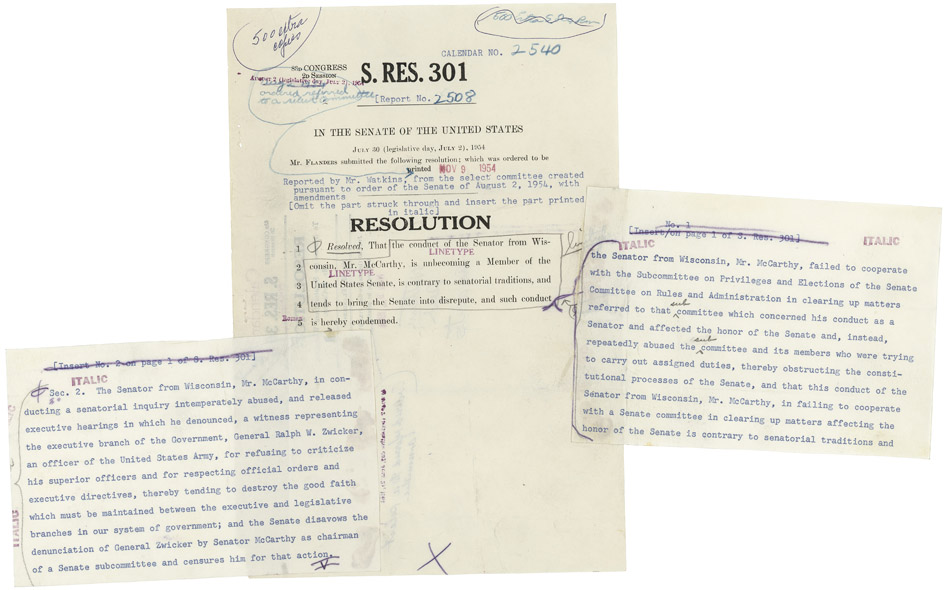
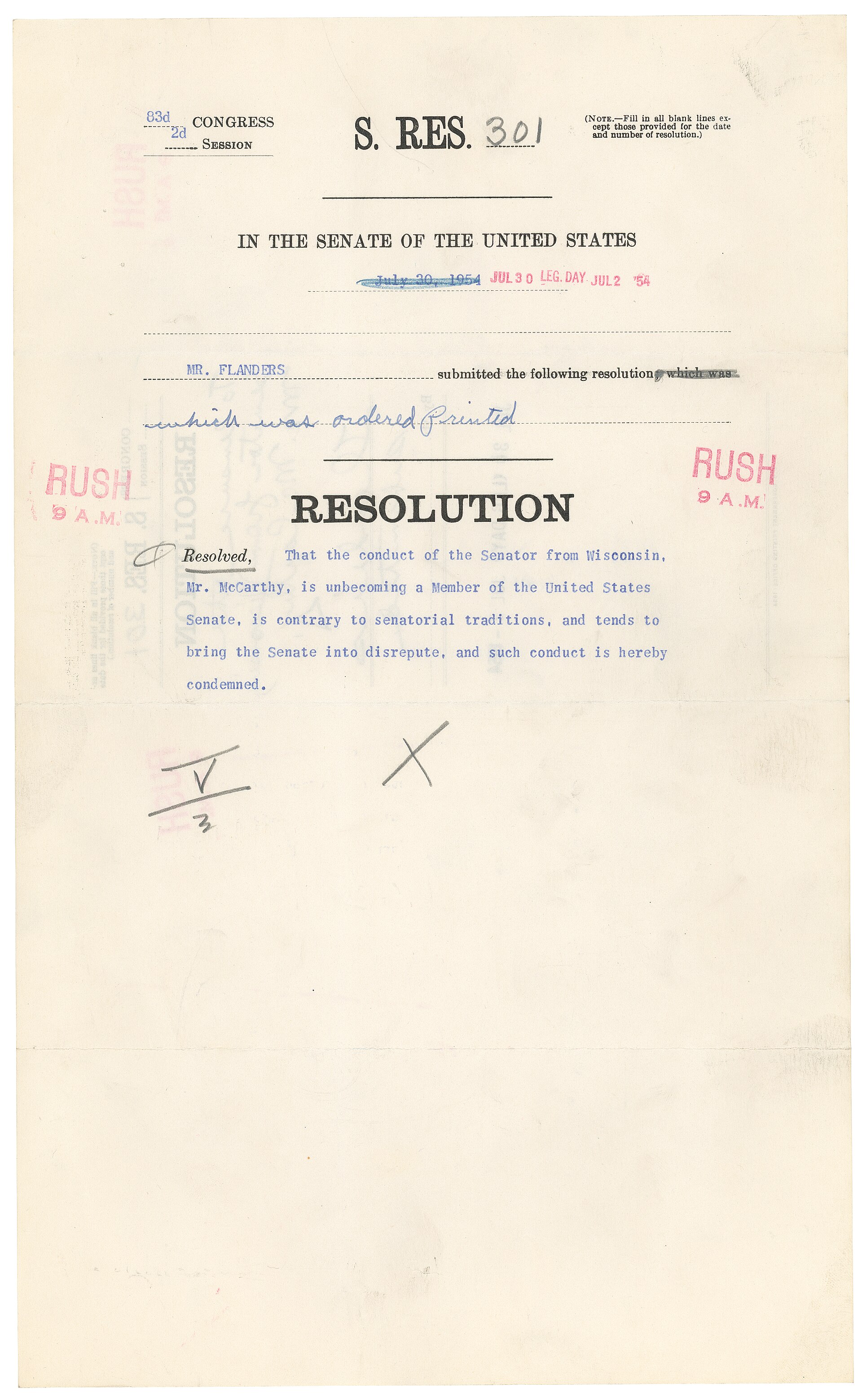
What it holds for this module. Floor speeches by McCarthy and his opponents, the texts of resolutions as debated and amended, and every recorded vote by name. The censure vote is a good example of how much a single page can settle. On page 16392 of volume 100, part 12, the clerk recorded the result of the vote on S. Res. 301 on Thursday, December 2, 1954: "yeas 67, nays 22," with six senators not voting and McCarthy answering "present."1 The same page lists every senator by name on each side. On the same page, Senator Styles Bridges of New Hampshire asked whether the word "censure" appeared in the resolution, and the Vice President, presiding, answered that "the word "censure" does not appear in the body of the resolution."1 The resolution as adopted used the word "condemned." Anyone who has read that the Senate "censured" McCarthy is reading a fair summary that the Senate's own historians use, and the Senate Historical Office files the case among its censure cases, but the precise wording matters when a source quotes the resolution.7
How to get it. On govinfo.gov, browse the Congressional Record (Bound Edition) by year and part. The daily sections are PDF scans with machine-read text, so a word search works but misses words the scanner misread. For the censure, the Senate session of December 2, 1954 begins a new section of part 12.1 Remember that members could revise and extend remarks before the bound edition was printed, and the "Extensions of Remarks" pages hold material that was never spoken aloud. A speech inserted into the Record proves that a member chose to publish it, not that the Senate heard it.
Limits. The Record does not contain committee hearings, closed sessions or the evidence on which a member relied. McCarthy's Senate floor speech on his cases in February 1950, for example, is in the Record, but the files he read from are not. Lesson 05 deals with those numbers (Wheeling and the List).
Committee hearings and reports
What they are. Printed hearings are the transcripts of public sessions, usually corrected by witnesses and members before printing, with exhibits. Committee reports state findings and recommendations and usually carry the majority's view, sometimes with minority views attached. Committee prints are other documents a committee chose to publish, such as staff studies or, decades later, the McCarthy executive session transcripts.
The finding aid every reporter should know. The National Archives' guide to House records points researchers to Senate Document 148 of the 84th Congress, Congressional Investigations of Communism and Subversive Activities: Summary Index, 1918-1956, which indexes the published hearings and reports of HUAC, of SISS and of the many smaller select and special committees and subcommittees that investigated communism from 1918 to 1956.8 It is the fastest way to find out whether a named person or organization appeared in a printed congressional investigation, and where.
How to get them. Many printed hearings of the era are scanned in HathiTrust and Google Books from depository library copies, and many university libraries hold the paper volumes in their government documents collections. The Senate's own site posts the McCarthy executive session volumes and their index as PDFs.9 The 1954 report of the select committee that considered censure, chaired by Arthur Watkins of Utah, was officially printed on November 8, 1954, after its release to the press on September 27.7
Limits. A printed hearing is a public performance as well as a record. What a witness said in public may differ from what the same witness said in a closed session days earlier, and the printed version may have been edited. Reports state conclusions a committee majority reached, not neutral findings of fact.
The McCarthy executive session transcripts, published in 2003
What they are. When McCarthy chaired the Senate Permanent Subcommittee on Investigations of the Committee on Government Operations in 1953 and 1954, he held many hearings behind closed doors, in "executive session." Under the Senate's rule sealing investigative records for 50 years, those transcripts stayed closed until the subcommittee prepared them for publication. The project began under Senator Susan Collins of Maine, who authorized it in January 2001, continued under Senator Carl Levin of Michigan, and was completed under Senator Norm Coleman of Minnesota. The subcommittee released the five-volume set on May 5, 2003.10 The volumes are a Senate print (S. Prt. 107-84) whose cover reads "Made public January 2003."2 The Senate's own web page describing the set gives its publication date as 2004, a discrepancy this lesson notes without resolving; the print itself and the May 2003 press release both point to 2003.9
What they hold. The introduction by Donald A. Ritchie, then associate historian of the Senate, who guided the two-year project of obtaining the records from the National Archives, reports that McCarthy held 117 executive sessions in 1953, compared with six held by his predecessor in 1952, and that "the subcommittee took testimony from 395 witnesses in executive sessions and staff interrogatories" during his first year as chairman. Ritchie adds: "About a third of the witnesses called in executive session did not appear at any public hearing."2 The 2003 press release gives larger totals for both years of McCarthy's chairmanship: "161 closed hearings" and "nearly 500 witnesses."10 The Senate's current web page gives 160 closed executive sessions during the 83rd Congress and 395 witnesses questioned in the closed sessions.9 The differences come from counting different spans and categories; a reporter citing a figure should name the source and the span it covers.
How to read them. Ritchie warns that "neither senators nor witnesses reviewed their remarks," so stenographers' errors, misspelled names and misheard words stand uncorrected, and that "No transcripts were made of "off the record" discussions."2 The transcripts are therefore raw. They let a reader compare what a witness said privately with what McCarthy later said publicly about that witness, which is the single most useful test the release made possible. Lesson 07 applies that test to the Fort Monmouth and Voice of America cases (The Cases).
How to get them. Volumes 1 to 4 (1953) and volume 5 (1954) and a separate index are posted as PDFs on senate.gov, and the same print is on govinfo.gov as Senate Print 107-84 in HTML and PDF.92
The National Archives: HUAC, SISS and subcommittee records and their access rules
Who keeps them. The records of Congress are not federal agency records. The Center for Legislative Archives at the National Archives in Washington holds them as Record Group 233 (House) and Record Group 46 (Senate), and each house sets the rules for its own papers. The Freedom of Information Act does not apply to Congress.
The access rules. According to the Center, "House Rule VII opens most House records when they are 30 years old," while records involving personal privacy, information closed by statute and executive sessions stay closed for 50 years. "Senate Resolution 474 from the 96th Congress opens most Senate records when they are 20 years old," with privacy-protected files, statutorily restricted information and executive nomination records closed for 50 years.4
HUAC. The House Committee on Un-American Activities was created in 1945 "as a permanent standing committee to replace the temporary Select Committee on Un-American Activities (also known as the Dies Committee) that had existed since 1938," according to the Archives' guide to House records. It was renamed the Committee on Internal Security in 1969 and abolished in 1975. Its records are filed by section: Administrative (138 feet), Files and Reference (1,301 feet), Investigative (464 feet), Legal (139 feet), Research (3 feet), Finance (13 feet) and Editorial (139 feet), about 2,197 feet in all, and "At least 444 feet of the records consist of investigative files on individuals and organizations along with a set of related index cards." A 21-page inventory is available from the Center.8 Important HUAC records stayed closed for more than 50 years. In July 2001, after a request from the National Coordinating Committee for the Promotion of History, the Clerk of the House wrote that access was governed by House Rule VII, that "some of these records are not available for public review pursuant to the rule," and that the Archives would screen records case by case, as the historian R. Bruce Craig reported in September 2001.11
SISS. The Senate Internal Security Subcommittee of the Judiciary Committee was authorized by S. Res. 366 of the 81st Congress, approved December 21, 1950, to study the administration of the Internal Security Act of 1950 (the McCarran Act) and other internal security laws and the extent of subversive activities. Its records, 1951 to 1977, run to 547 feet, among the largest subcommittee holdings in the Senate records. They include, among much else, the Amerasia materials: in 1956 and 1957 the Justice Department delivered 1,260 documents from that case to the subcommittee.12
The Permanent Subcommittee on Investigations. The Archives' guide to Senate records states that the records of the Permanent Subcommittee on Investigations, 1948 to 1982, total 1,087 feet and "consist largely of closed investigative case files." The guide's description of the Government Operations Committee's records adds that the subcommittee's investigative case files "are not currently open to research."6 The guide is updated only from time to time, so a researcher should ask the Center for the current status of a specific file.
How to get them. Write to the Center for Legislative Archives (legislative.archives@nara.gov) with the committee, the years and the subject or name, and ask whether the records are open, need screening, or are closed. Expect screening to take time. Records of individuals can be withheld for privacy, and the Center cannot release what the House or Senate has not opened.411
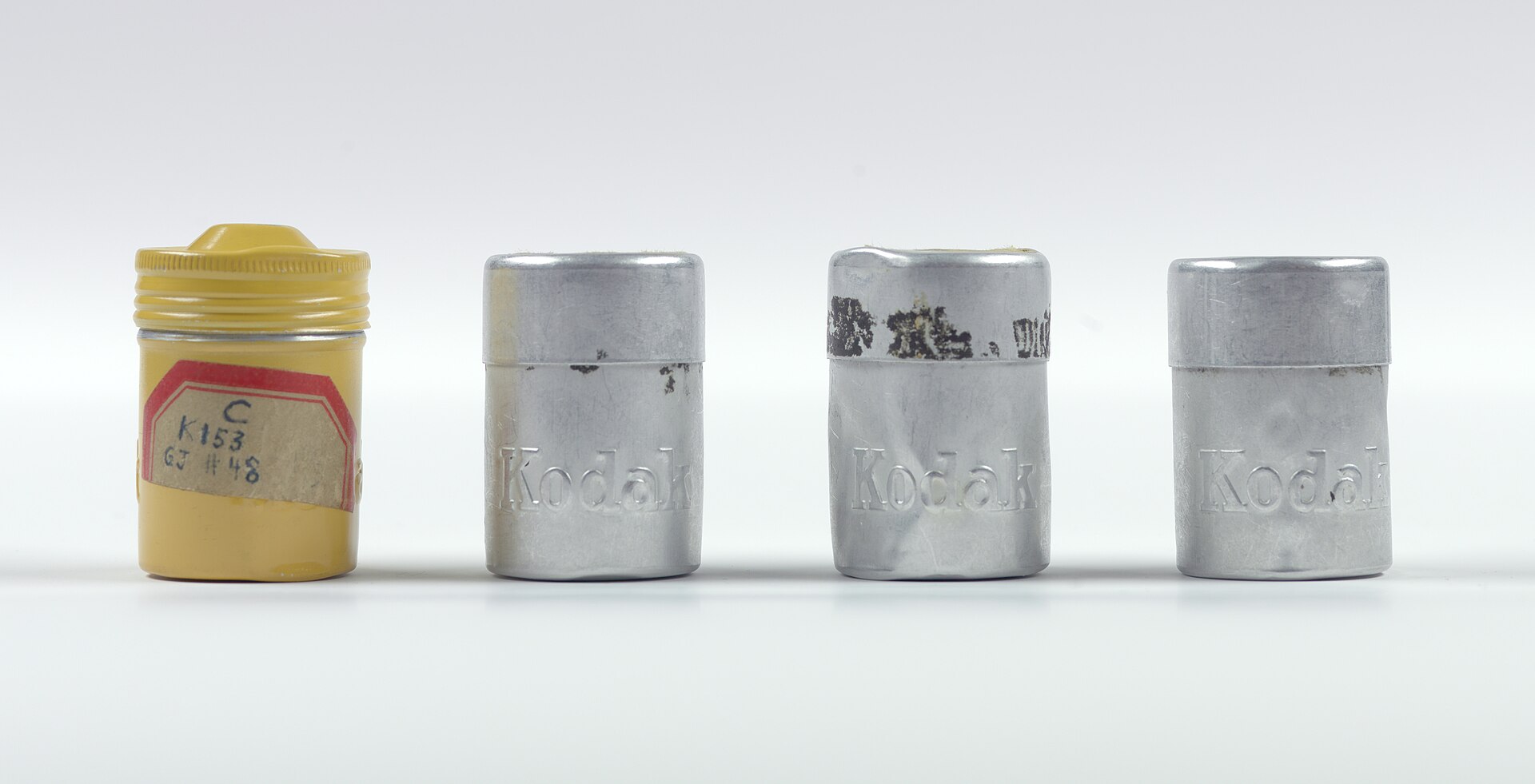

NSA Venona releases
What they are. Venona was the code name for a secret program begun in February 1943 by the U.S. Army's Signal Intelligence Service to read Soviet diplomatic and intelligence cable traffic. It ran until it was canceled in 1980. According to the National Security Agency, "The first of six public releases of translated VENONA messages was made in July 1995 and included 49 messages," and over five more releases "all of the approximately 3,000 VENONA translations were made public."3 Yale University Press, describing John Earl Haynes and Harvey Klehr's 1999 study, says American codebreakers "attempted to decode more than twenty-five thousand intercepted Soviet intelligence telegrams," with "the decryption of nearly three thousand of the messages," and that the decrypts gave "indications that more than three hundred Americans had assisted in the Soviet theft" of information.13
How to get them. NSA posts the translations as individual PDFs on its historical releases pages, listed alphabetically by title and paginated, with some entries labeled by release number. There are no topic categories, so searching by the cover name (for example "LIBERAL" or "ALES") or by the date of the cable is more productive than browsing.3 The Wilson Center's Cold War International History Project has published a concordance that ties Venona cover names to names in the Vassiliev notebooks, which saves weeks of work.
How to read them. A Venona translation is a fragment. Many messages were only partly broken, and the translators marked gaps. People appear under cover names, and the identification of a cover name with a real person was made by analysts, often years later, using travel dates, job details and other evidence in the message. Some identifications are certain, because the message gives facts that fit only one person. Others are probable or disputed. A responsible use of Venona names the message, quotes the translator's notes on the identification and says whether other evidence (FBI files, testimony, the Vassiliev notebooks) agrees. Lesson 02 shows how that works for specific cases (Venona and the Archives).
The companion volume. In 1996 the NSA and the CIA's Center for the Study of Intelligence published Venona: Soviet Espionage and the American Response, 1939-1957, edited by Robert Louis Benson and Michael Warner, a documentary collection that reprints selected decrypts with FBI and other U.S. documents. Library catalogs list it as a joint NSA and CIA publication (Open Library record).
The FBI Vault and Freedom of Information Act requests
What it is. The FBI Vault (vault.fbi.gov) is the Bureau's electronic reading room, where it posts files already released under the Freedom of Information Act, often in many PDF parts. Files on major cases of the era, such as the Rosenberg atomic espionage case, have been posted there. Large FBI files on the era are also available on microfilm from commercial publishers and in research libraries; the FBI's file on the Silvermaster group, built largely on Elizabeth Bentley's information, is one heavily used example.14
How to get more. A file not already in the Vault can be requested under FOIA. Files on a deceased person are generally easier to obtain than files on the living; proof of death (an obituary is often enough) speeds the request. Many FBI files of the era were transferred to the National Archives and are requested there instead. Expect redactions, especially of informant identities.
How to read them. An FBI file collects what the Bureau was told, which is not the same as what the Bureau verified. A report that "a confidential informant of known reliability" said someone attended a meeting records the informant's claim. Look for corroboration within the file, for the Bureau's own evaluation, and for whether the information was ever tested under oath.
The Truman and Eisenhower Libraries
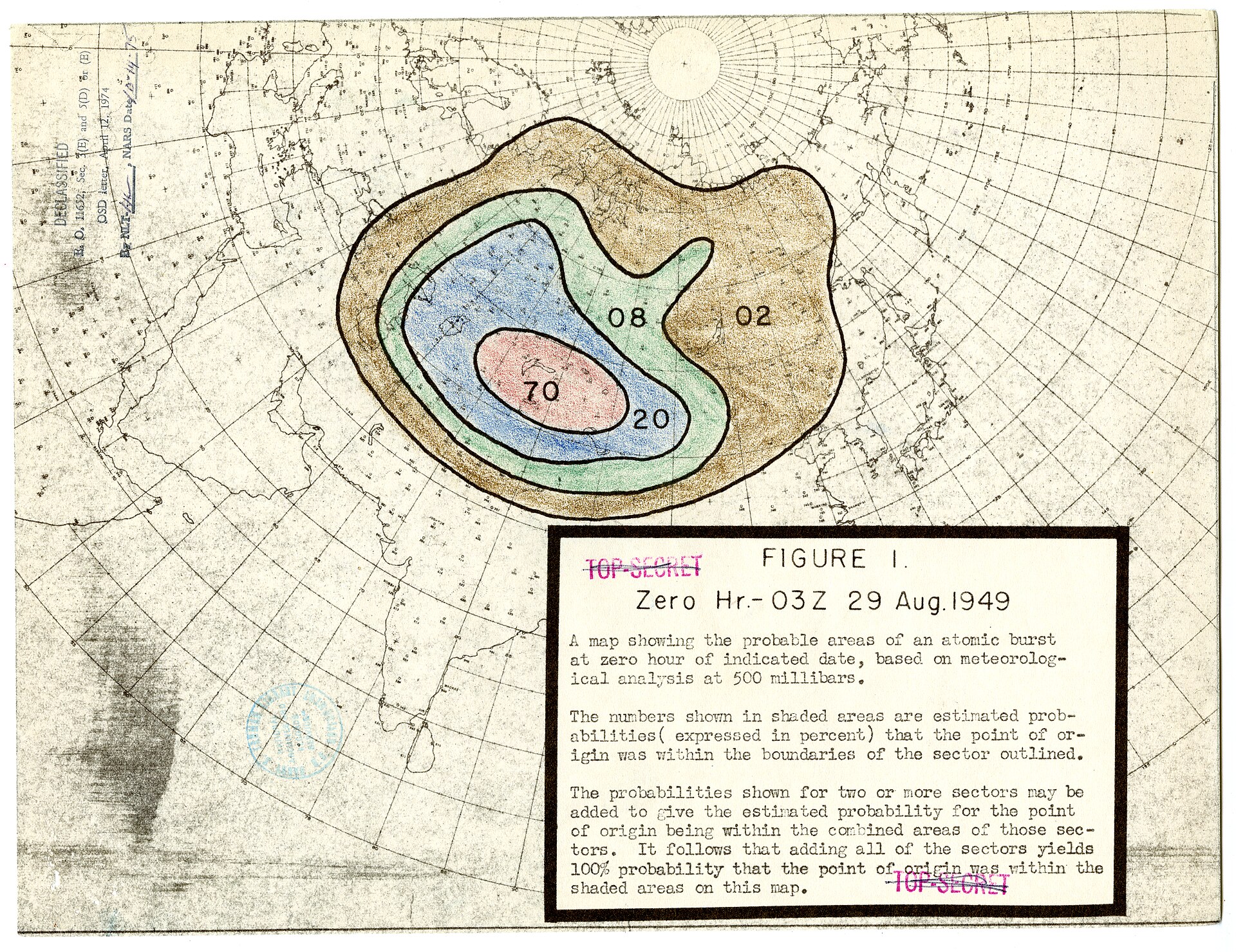
Truman Library. The library posts the text of Executive Order 9835, the federal employee loyalty program, signed at the White House on March 21, 1947.15 Its background essay on the loyalty program, drawing on the historian Richard S. Kirkendall, says that "over five million federal workers underwent screening" during the program's peak years, 1947 to 1956, that an estimated 2,700 were dismissed, and that roughly 12,000 resigned.16 The library's online collections also include the Weather Bureau charts from September 1949 used to locate the first Soviet atomic test, one of which appears in the gallery below.
Eisenhower Library. The library's online collection on McCarthyism and the Red Scare posts selected documents: drafts of Eisenhower's October 3, 1952 Milwaukee speech on "Communism and Freedom," a February 3, 1953 letter from McCarthy on James B. Conant, diary entries of press secretary James C. Hagerty from February to June 1954, Eisenhower's May 17, 1954 letter to the Secretary of Defense on testimony by Defense Department employees (the basis of the executive branch's refusal to let its officials testify about internal advice during the Army-McCarthy dispute), and a memo by Ann Whitman dated December 7, 1954 on events leading to McCarthy's break with the President.17 A separate collection posts the Rosenberg clemency file, including the application for executive clemency denied by Eisenhower, dated January 10, 1953, and letters and telephone memoranda from June 1953.18
How to get more. The online selections are a small fraction of the holdings. Both libraries take reference questions by email and admit researchers to their reading rooms; finding aids for the White House Central Files and the staff files list folder titles.
The Wilson Center's Vassiliev notebooks
What they are. In the 1990s the former KGB officer and journalist Alexander Vassiliev took detailed notes during two years of research in KGB archives in Moscow for a book project. The Cold War International History Project at the Wilson Center published the notebooks online on April 20, 2009, describing them as a 1,115-page collection of notes on Soviet intelligence activities in the United States from 1930 to 1950, "published in original and translation for the first time in their entirety." They became the basis of Spies: The Rise and Fall of the KGB in America (Yale University Press, 2009) by Haynes, Klehr and Vassiliev.19
How to read them. The Wilson Center itself notes that Vassiliev's access "was not unfettered." The notebooks are handwritten notes and extended verbatim quotations from files that outside scholars cannot inspect in Moscow. The originals were donated to the Library of Congress, where, the Center says, there are "no restrictions on access."19 The Wilson Center does not endorse any one reading of them. Scholars who defend Alger Hiss have challenged particular entries; Haynes and Klehr regard the notebooks as strong corroboration of Venona. The fair practice is to cite the notebook and page, say what it quotes, and say what independent evidence agrees or disagrees.
Court opinions and trial records
What they are. Supreme Court opinions are the most accessible and the most precisely worded records of the era. They are free at Justia, Cornell's Legal Information Institute, the Library of Congress (the bound United States Reports) and supremecourt.gov. The key cases for this module:
- Dennis v. United States, 341 U.S. 494, decided June 4, 1951, upheld the Smith Act convictions of the Communist Party's national leaders.20
- Pennsylvania v. Nelson, 350 U.S. 497, decided April 2, 1956, held that federal law displaced state sedition prosecutions of this kind.21
- Yates v. United States, 354 U.S. 298, decided June 17, 1957, read the Smith Act narrowly. The Court wrote: "The distinction between advocacy of abstract doctrine and advocacy directed at promoting unlawful action is one that has been consistently recognized in the opinions of this Court."22
- Watkins v. United States, 354 U.S. 178, decided the same day, limited congressional inquiry: "There is no general authority to expose the private affairs of individuals without justification in terms of the functions of the Congress," and "We have no doubt that there is no congressional power to expose for the sake of exposure."23
- Barenblatt v. United States, 360 U.S. 109, decided June 8, 1959, upheld a contempt conviction of a witness who refused to answer HUAC's questions about Communist Party membership, and showed how far the Court would retreat from the broadest reading of Watkins.24
- Rosenberg v. United States, 346 U.S. 273: in a special term the Court vacated, on June 19, 1953, the stay of execution Justice William O. Douglas had granted on June 17.25
Lesson 09 discusses these cases in full (Censure, Watkins, Yates, Barenblatt and the Courts).
Trial records. Trial transcripts and exhibits of federal criminal cases of the era (the Hiss perjury trials, the Dennis trial, the Rosenberg trial, the Coplon cases) are in the records of the U.S. District Courts at the National Archives regional facilities, chiefly the New York facility for the Southern District of New York. Many have also been published or microfilmed. Grand jury records are secret by rule, though courts have ordered some historic grand jury testimony released; in 2008 a federal judge ordered much of the Rosenberg grand jury testimony made public, a fact this lesson has not confirmed against the order itself.
University archives and the Marquette McCarthy papers
The McCarthy papers. Marquette University's Raynor Library in Milwaukee holds the Joseph R. McCarthy Papers, 1930 to 1957. Its finding aid lists series that include general correspondence (1939 to 1946), court records, speeches, sound recordings, film, press photographs and press clippings, and lists other series, including Senate subject files, desk calendars, telephone logs and personal subject files, as "in process."26 According to a February 2017 report in the student newspaper, the Marquette Wire, Marquette first received the papers in 1961; McCarthy's widow asked that they be closed; in 1988 her second husband gave the remaining papers on condition that McCarthy's private files stay closed for the lifetime of the couple's adopted daughter; and the public files (press clippings, speech recordings) and pre-Senate materials given by a nephew in 1990 are open, while the private files, including his Senate files, manuscripts, Marine Corps records and campaign records, are closed.5 The author Alexis Coe wrote in 2015 that a Marquette archivist told her "all post-1946 correspondence is sealed."27 Whether any of these restrictions has changed since 2017 is unverified; a researcher should ask Marquette's archivists directly.
Other university and private archives. Collections of the era's senators, witnesses, journalists and lawyers are scattered across many institutions. The Hoover Institution at Stanford holds large anti-communist and Russian collections; the Tamiment Library at New York University holds Communist Party records and papers of party members; the Library of Congress holds the papers of many members of Congress and, as noted, the Vassiliev notebooks. The finding aid is the first stop: it tells you what exists, what is closed and on what terms.

How to weigh testimony, informants, decrypts and memoirs
Every kind of evidence in this story has a characteristic strength and a characteristic way of going wrong. The anti-communists of the era relied heavily on defectors and informants, and some of those witnesses, Whittaker Chambers and Elizabeth Bentley above all, have been substantially corroborated by Venona and by the Moscow archives (see lesson 02 and lesson 03). Other witnesses of the same era, paid informants who testified in many cases, were later shown to have lied. The lesson for a reader in 2026 is that the type of source does not settle the question. Corroboration does.
Sworn testimony
Testimony under oath before a committee or at trial carries the risk of a perjury prosecution, which gives it weight. Alger Hiss was convicted of perjury for denials he made under oath. But sworn testimony is still one person's account. Ask: Was the witness in a position to know? Did the witness's story stay consistent from first statement to last? Did the witness have a motive, such as a plea bargain, a payment, a grudge, or a need to protect someone? Was the testimony cross-examined? Congressional hearings rarely allowed cross-examination by the person accused, which is why testimony at a criminal trial, tested by opposing counsel, usually carries more weight than the same claim made before a committee.
Informants and defectors
A defector who was inside an espionage network can describe it as no outsider can. Igor Gouzenko, the Soviet cipher clerk who left the embassy in Ottawa in September 1945 carrying documents, gave Canada evidence that led to prosecutions; that the documents existed is what gave his account its force. A paid informant who reports on meetings is another matter. Informants could inflate what they saw to keep their value, and some named people they barely knew. The standard test is the same: Does a document, a second witness, or the target's own conduct confirm the account? Does the account contain details the informant could not have invented and that were later checked?
Decrypts
Venona messages were written by Soviet intelligence officers to their own headquarters, with no thought that Americans would read them. That makes them unusually candid. They are also fragmentary, depend on identifications of cover names, and record what the officers reported, which could include boasting or errors. A Venona message that names a source by cover name, gives that source's job and travel, and matches FBI surveillance and a confession is very strong evidence. A message that mentions a cover name once, with no identifying detail, is a lead and nothing more.
Memoirs and later accounts
Memoirs, including Chambers's Witness (1952), are written to persuade. They can contain facts found nowhere else and are indispensable for motive and atmosphere. They should not be the only support for a fact. Interviews conducted decades later, including oral histories, suffer from memory drift and from the influence of everything the speaker has read since.
Soviet archives
The Moscow archives opened in the 1990s, especially the Comintern files and the records of the Communist Party of the United States held in Moscow, documented Soviet funding of the American party and its links with Soviet intelligence. Access has since narrowed. Material copied by scholars in the 1990s (the Vassiliev notebooks, the documents published in Yale's Annals of Communism series) is often the only form in which outside researchers can see these files today. The fair way to describe such material is to say exactly how the copy was made and by whom.
Testing any claim that a person was a communist or a spy: a step-by-step method
The single most common error in writing about this era, made by accusers then and by defenders and accusers since, is to treat four different claims as one. They require different evidence and lead to different judgments.
- Membership. The person belonged to the Communist Party of the United States (or the Young Communist League, or a party unit). Membership was legal for most of the period, though after Dennis active membership with knowledge of the party's aims could be prosecuted under the Smith Act's membership clause.
- Espionage. The person passed secret information, or acted as a courier or recruiter, for a foreign intelligence service, here Soviet intelligence (the NKVD and its successors, or the GRU, military intelligence). This was a crime.
- Sympathy. The person agreed with some communist ideas, admired the Soviet Union, or supported causes the party also supported. This was legal and widespread in the 1930s and during the wartime alliance.
- Association. The person knew communists, worked with them, joined an organization in which communists were active, or signed a petition the party promoted. This was legal and often unknowing.
With those four claims kept apart, the method has nine steps. They work for a historical figure in this module and for an accusation made in 2026.
- Write the claim down exactly. Who said it, when, in what document, and in what words? "X was a communist" may mean any of the four claims above. Quote the original; do not rely on a summary.
- Classify it. Is it a claim of membership, espionage, sympathy or association? If the accuser blurred two, test each separately.
- Find the accuser's evidence. What did the accuser rely on at the time: an informant, a file, a decrypt, the person's own words? Find that evidence in the record (the Congressional Record, a hearing, an executive session transcript, an FBI file). An accusation with no traceable evidence stays an accusation.
- Find the person's own answer. What did the person say under oath, in executive session, in public, in memoirs? Note whether the person invoked the Fifth Amendment. A refusal to answer protected a witness from self-incrimination, and many invoked it to avoid naming others; a refusal is not evidence of membership or espionage, though it leaves a question open.
- Check the documents that did not exist then. Search Venona by the person's name and known cover names, the Vassiliev notebooks and their concordance, the Moscow party records published by scholars, and FBI files released later. Many questions that were unresolvable in 1954 are settled now, in both directions.
- Check identifications. If a decrypt or notebook names a cover name, how was it tied to this person? Does more than one identifying fact fit? Has any scholar disputed it, and on what grounds?
- Look for independent corroboration. Two sources that both depend on one informant are one source. A decrypt, a defector's account and a confession, each independent of the others, are strong.
- Read the leading scholars on both sides. Haynes and Klehr, Evans or Herman on one side; Schrecker, Oshinsky or the defenders of the particular person on the other. Attribute each judgment by name, and note what new evidence each did or did not have when writing.
- State the verdict with its grade. Supported, partly supported, unsupported, refuted or unresolved, for each of the four claims separately. A person can be a proven party member and not a spy (many were), a proven spy who denied membership, or neither, despite years of accusations.
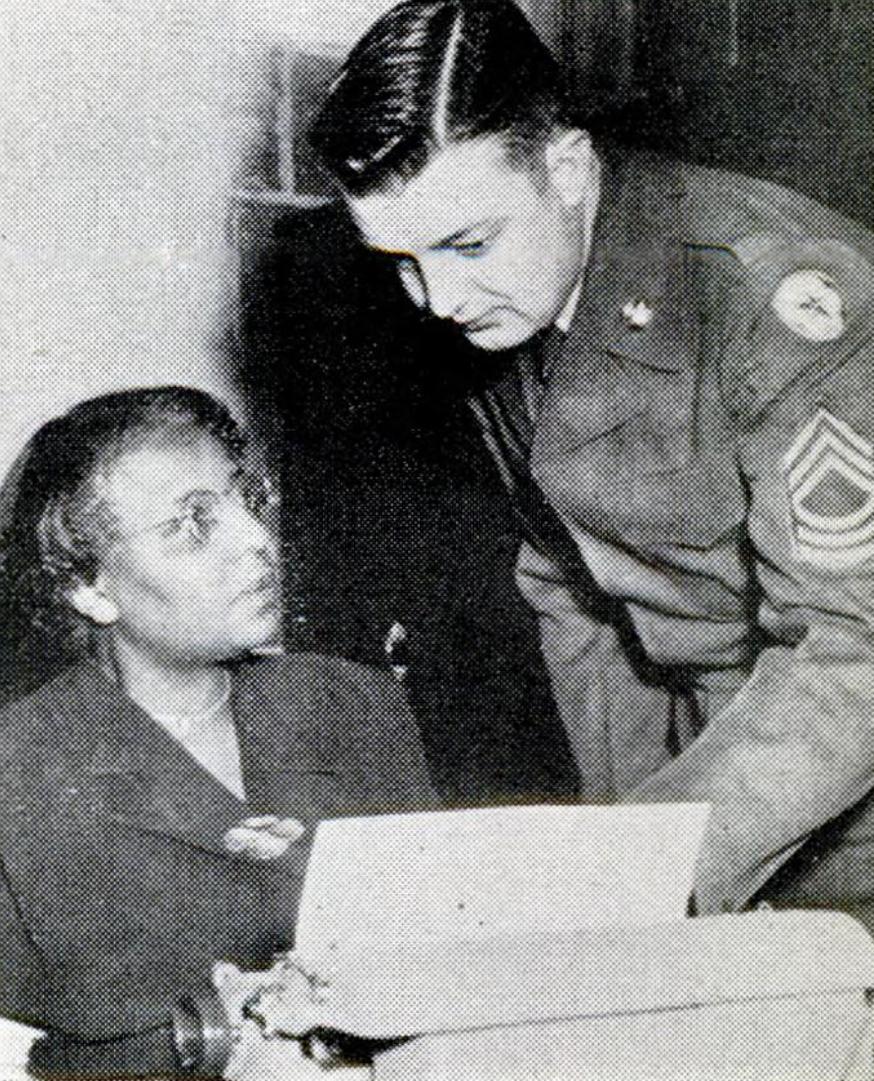
Applied to the cases in this module, the method gives different results for different people, which is its point. For Harry Dexter White, a senior Treasury official, Bentley's and Chambers's accounts and later Venona and Vassiliev material are read by Haynes and Klehr as establishing that he assisted Soviet intelligence; defenders of White dispute the strength of the identifications (see lesson 02). For Annie Lee Moss, the Army code room clerk McCarthy accused in 1954, the question was membership, and it turned on records and testimony discussed in lesson 07. For Owen Lattimore, whom McCarthy in 1950 called the top Soviet espionage agent in the country, the espionage claim has not been supported by Venona or by the archives opened since, while the separate question of his political sympathies remains argued (see lesson 07 and lesson 11).
Master timeline, 1917 to 1957
The timeline below gathers the module's dates in one place. The infographic shows the sequence at a glance; the list after it gives the same events with notes and sources. Exact days are given only where this lesson confirmed them against a cited record; other entries give the year or month, and the dates not separately confirmed here are listed in the lesson's unverified notes for the editor.
The timeline as a list, with notes
- 1917. The Bolshevik Revolution in Russia creates the first communist state. Lesson 01 explains why its founding aims, world revolution through national parties directed from Moscow, mattered to Americans (lesson 01; for communist theory itself see module 51, lesson 07 and module 58, lesson 09).
- 1919. American communist parties are founded, later uniting as the Communist Party of the United States, affiliated with the Communist International (Comintern) in Moscow.
- 1938. The House creates the Special Committee on Un-American Activities, chaired by Martin Dies of Texas, the forerunner of HUAC.8
- 1939. Internal party records put national membership at about 66,000, according to the University of Washington's Mapping American Social Movements project, which also reports that membership "surpassed 75,000" at the start of 1947 and gives a 1947 total of 75,388.28
- 1940. The Alien Registration Act, known as the Smith Act, makes it a crime to advocate the violent overthrow of the government or to organize or knowingly join a group that does.
- February 1943. The Army's Signal Intelligence Service begins the program later code-named Venona.3
- 1945. HUAC becomes a permanent standing committee of the House.8 In Ottawa, the Soviet cipher clerk Igor Gouzenko defects with documents on Soviet espionage. In the United States, Elizabeth Bentley goes to the FBI with an account of the networks she served as courier.
- 1946. Joseph McCarthy, a Wisconsin circuit judge and Marine veteran, defeats Senator Robert La Follette Jr. in the Republican primary and wins the Senate seat (lesson 04).
- March 21, 1947. President Truman signs Executive Order 9835, the federal employee loyalty program.15
- 1947. HUAC holds its Hollywood hearings; ten writers and directors who refuse to answer questions about party membership, the Hollywood Ten, are cited for contempt of Congress (lesson 03).
- 1948. Elizabeth Bentley testifies before HUAC; an Associated Press photograph of her at the hearing is dated July 31, 1948.29 Whittaker Chambers testifies and names Alger Hiss. Late in the year Chambers produces the "Pumpkin Papers" microfilm. Twelve national leaders of the Communist Party are indicted under the Smith Act.
- 1949. The Soviet Union tests its first atomic bomb; the U.S. Weather Bureau charted the likely test site in September 1949 for the White House.30 Eleven party leaders are convicted in the Dennis trial in New York.20
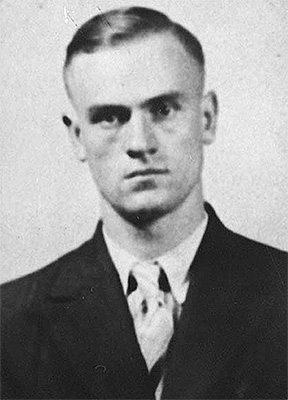
- 1950. Alger Hiss is convicted of perjury in January. In Britain, the physicist Klaus Fuchs admits that he had spied for the Soviet Union since 1942, according to the National Archives (UK) description of his police photograph.31 On February 9, McCarthy speaks at Wheeling, West Virginia, and claims a list of Communists in the State Department.32 A Senate Foreign Relations subcommittee chaired by Millard Tydings investigates his charges (lesson 05). In June, the Korean War begins. Congress passes the Internal Security Act (Public Law 81-831, the McCarran Act), and on December 21 the Senate approves S. Res. 366 authorizing the Senate Internal Security Subcommittee.12
- June 4, 1951. The Supreme Court upholds the Dennis convictions.20 SISS, chaired by Pat McCarran of Nevada, holds hearings on the Institute of Pacific Relations in 1951 and 1952 (lesson 06).
- 1953. With Republicans in control of the Senate, McCarthy becomes chairman of the Committee on Government Operations and its Permanent Subcommittee on Investigations, and shifts its focus from waste and fraud to communists in government.33 He holds 117 executive sessions that year.2 On June 19 the Supreme Court vacates the stay of execution of Julius and Ethel Rosenberg; they are executed that month.2518
- February 18, 1954. McCarthy questions Brigadier General Ralph W. Zwicker in a closed session; his treatment of Zwicker becomes one of the censure charges.7
- April 22 to June 17, 1954. The Army-McCarthy hearings are broadcast "gavel to gavel" on ABC and DuMont over 36 days, with 188 hours of broadcast time and "an audience of some 20 million Americans," according to the Museum of Broadcast Communications.34
- June 9, 1954. Joseph Welch, the Army's special counsel, tells McCarthy: "Let us not assassinate this lad further, senator. You have done enough. Have you no sense of decency?" as the Senate Historical Office quotes him.33
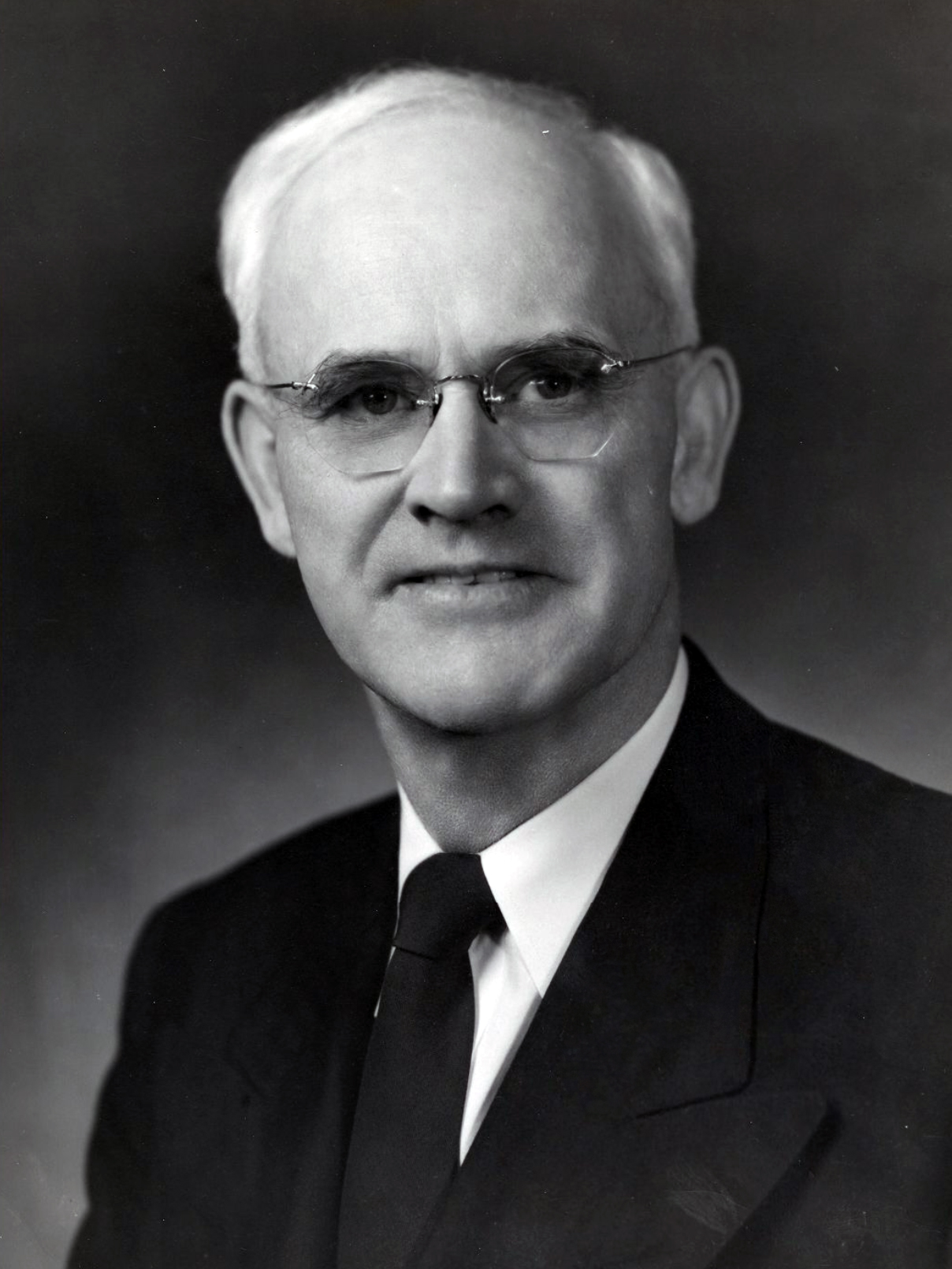
- July 30, 1954. Senator Ralph Flanders of Vermont introduces the censure resolution, S. Res. 301. On August 2 the Senate refers it to a select committee of three Republicans and three Democrats chaired by Arthur Watkins, which holds hearings from August 31 to September 13 and reduces 46 counts to five categories.7
- December 2, 1954. The Senate adopts S. Res. 301 as amended, 67 to 22, condemning McCarthy's conduct toward the 1952 Privileges and Elections subcommittee and the 1954 select committee.17
- 1955. Democrats organize the new Senate and McCarthy loses his chairmanship.
- April 2, 1956. Pennsylvania v. Nelson.21
- May 2, 1957. McCarthy dies.17
- June 17, 1957. The Supreme Court decides Watkins and Yates the same day.2322
- After 1957. Barenblatt (1959).24 NSA's Venona releases, July 1995 onward.3 HUAC records opened for case-by-case screening, 2001.11 The PSI executive session transcripts made public, 2003.10 The Vassiliev notebooks published online, 2009.19
Idaho readers will find the state's part of this timeline, Senator Glen Taylor's 1948 campaign and Senator Herman Welker's role as one of McCarthy's closest allies, in module 74, lesson 06, and the record of Idaho's own communists in module 74, lesson 04. The Congressional Record roll call shows both Idaho senators, Henry Dworshak and Herman Welker, voting against the censure resolution.1
Module glossary
These are the terms used across the fourteen lessons. Definitions describe how the term was used at the time and how this module uses it; where a term was itself a weapon in the argument, the definition says so.
- Army-McCarthy hearings
- The televised 1954 hearings of the Permanent Subcommittee on Investigations into the Army's charges that McCarthy and his counsel Roy Cohn sought favors for G. David Schine, and McCarthy's countercharges. Held April 22 to June 17, 1954, over 36 days (lesson 08).
- Attorney General's list
- The list of organizations the Justice Department designated as subversive for purposes of the federal loyalty program. Membership in or sympathetic association with a listed group could be considered in a loyalty case.
- Blacklist
- An informal or formal refusal by employers, especially in film, broadcasting and education, to hire people accused of communist ties or who refused to answer questions about them (lesson 10).
- Censure (condemnation)
- The Senate's formal disapproval of a member's conduct. The resolution adopted against McCarthy on December 2, 1954 used the word "condemned," and the presiding officer ruled that the word "censure" did not appear in its body; the Senate Historical Office lists the case among its censure cases.
- Comintern
- The Communist International, founded in Moscow in 1919, which directed national communist parties, including the American party, until Stalin dissolved it in 1943.
- Communist Party of the United States (CPUSA)
- The American communist party, affiliated with the Comintern and funded in part by Moscow, as documents from the Moscow archives show. Its membership peaked in the 1940s.
- Congressional Record
- The official record of floor proceedings in Congress. The bound edition is the permanent, corrected version and is the one to cite for the 1950s.
- Contempt of Congress
- The federal crime of refusing to answer pertinent questions or produce documents demanded by a committee. Used against the Hollywood Ten and many other witnesses.
- Cover name
- The code name Soviet intelligence used for a source, officer or place in its cables. Venona decrypts identify people only by cover names, which analysts must then match to real people.
- Declaration of Conscience
- The June 1950 Senate speech in which Margaret Chase Smith of Maine, joined by six other Republican senators, criticized the methods McCarthy had introduced without naming him.
- Dies Committee
- The House Special Committee on Un-American Activities, 1938 to 1944, chaired by Martin Dies of Texas. The forerunner of HUAC.
- Espionage
- Gathering or passing secret information for a foreign power. A federal crime under the Espionage Act of 1917. Different from party membership, sympathy or association.
- Executive session
- A closed committee meeting. McCarthy's subcommittee held most of its questioning in executive session; the transcripts were made public in 2003.
- Fellow traveler
- A term of the period for a person who supported communist causes without joining the party. Used loosely, it blurred sympathy and association with membership.
- Fifth Amendment
- The constitutional privilege against self-incrimination. Many witnesses invoked it rather than answer questions about party membership; critics of those witnesses called them "Fifth Amendment Communists," a phrase that treated a constitutional right as an admission.
- Front organization
- A group created or controlled by the Communist Party that presented itself as independent in order to attract non-communists to a cause.
- FBI Vault
- The FBI's online reading room of files already released under the Freedom of Information Act.
- GRU
- Soviet military intelligence, which ran its own networks in the United States alongside the NKVD.
- Hollywood Ten
- Ten screenwriters and directors cited for contempt of Congress in 1947 after refusing to answer HUAC's questions about Communist Party membership. All were convicted and served prison terms.
- House Rule VII
- The House rule governing access to its archived records: most open at 30 years, records involving privacy, statute or executive sessions at 50 years.
- HUAC
- The House Committee on Un-American Activities, a standing committee from 1945, renamed the Committee on Internal Security in 1969 and abolished in 1975. McCarthy was never a member.
- Informant
- A person who reported to the FBI or testified about others' political activity, sometimes for pay. Some were reliable and corroborated; some were shown to have lied.
- Internal Security Act of 1950 (McCarran Act)
- Public Law 81-831, which required communist organizations to register and created the Subversive Activities Control Board. It passed over President Truman's veto.
- Loyalty program
- The federal employee screening program created by Executive Order 9835 on March 21, 1947, and replaced in 1953 by the security program of Executive Order 10450.
- McCarthyism
- A term coined in 1950 for public accusations of disloyalty made with insufficient regard to evidence. The Eisenhower Library cites the American Heritage Dictionary's definition along those lines. Defenders of McCarthy argue the term was used to discredit anti-communism as a whole.
- NKVD (later KGB)
- The Soviet state security and foreign intelligence service, under successive names, which ran most of the espionage networks described in Venona.
- One-time pad
- A cipher system that is unbreakable when each pad page is used only once. Soviet duplication of some pad pages during the war made the Venona breaks possible.
- Permanent Subcommittee on Investigations (PSI)
- The investigating subcommittee of the Senate Committee on Government Operations. McCarthy chaired it in 1953 and 1954.
- Popular Front
- The Comintern's policy from the mid-1930s of alliance with non-communist groups against fascism, which brought the American party its largest growth and many sympathizers.
- Pumpkin Papers
- Microfilm of State Department documents that Whittaker Chambers hid in a pumpkin on his Maryland farm and produced in 1948 as evidence against Alger Hiss.
- Red Monday
- June 17, 1957, when the Supreme Court decided Watkins, Yates and other cases limiting congressional inquiry and Smith Act prosecutions.
- S. Res. 474 (96th Congress)
- The Senate resolution governing access to Senate records at the National Archives: most open at 20 years, privacy-protected and some other records at 50.
- Security risk
- Under Executive Order 10450 (1953), a federal employee whose retention was judged not clearly consistent with national security, a broader category than disloyalty that included personal conduct.
- SISS
- The Senate Internal Security Subcommittee of the Judiciary Committee, authorized December 21, 1950 by S. Res. 366, first chaired by Pat McCarran of Nevada.
- Smith Act
- The Alien Registration Act of 1940, which made it a crime to advocate violent overthrow of the government or knowingly to organize or join a group that did. Upheld in Dennis (1951), narrowed in Yates (1957).
- Tydings committee
- The 1950 Senate Foreign Relations subcommittee chaired by Millard Tydings of Maryland that investigated McCarthy's State Department charges and called them a fraud and a hoax; its Republican members disputed that conclusion.
- Vassiliev notebooks
- Notes and transcriptions from KGB archives made by Alexander Vassiliev in the 1990s, published online by the Wilson Center in 2009, originals at the Library of Congress.
- Venona
- The U.S. program, begun in February 1943 and ended in 1980, that decrypted part of the Soviet intelligence cable traffic. About 3,000 translations were released from 1995.
Key numbers, each with its source
Numbers travel farther than sentences, and the numbers of this era have been misquoted for seventy years. Each figure below carries its source and the span it covers. Where sources give different figures for what looks like the same thing, both are shown.
| Subject | Number | What it measures | Source |
|---|---|---|---|
| Venona translations released | About 3,000 | All translations made public in six releases, the first in July 1995 | NSA3 |
| First Venona release | 49 messages | July 1995 | NSA3 |
| Venona program | February 1943 to 1980 | Life of the program | NSA3 |
| Soviet intelligence telegrams attacked | More than 25,000 | Intercepted telegrams American codebreakers attempted to decode; nearly 3,000 decrypted | Yale University Press description of Haynes and Klehr, Venona13 |
| Americans indicated in Venona | More than 300 | Americans the decrypts indicate assisted Soviet intelligence (Haynes and Klehr's reading) | Yale University Press13 |
| Communist Party membership, 1939 | About 66,000 | Registered members, from internal party records | University of Washington, Mapping American Social Movements28 |
| Communist Party membership, 1947 | 75,388 | Total members for 1947 (the project says membership "surpassed 75,000" at the start of the year) | University of Washington28 |
| Federal workers screened | Over 5 million | Loyalty and security screening, 1947 to 1956 | Truman Library, citing Richard S. Kirkendall16 |
| Dismissed under the programs | About 2,700 | Estimated dismissals, 1947 to 1956 | Truman Library16 |
| Resigned | Roughly 12,000 | Estimated resignations, 1947 to 1956 | Truman Library16 |
| Dennis trial | 9 months; 16,000-page record | Length of the 1949 trial of the party's national leaders | Dennis v. United States20 |
| Dennis defendants convicted | 11 | Party leaders convicted in 1949 whose convictions the Court upheld in 1951 | Free Speech Center, Middle Tennessee State University35 |
| McCarthy executive sessions, 1953 | 117 | Closed sessions in his first year as chairman (his predecessor held six in 1952) | Ritchie, introduction, S. Prt. 107-842 |
| Executive session witnesses, 1953 | 395 | Witnesses in executive sessions and staff interrogatories, 1953 | Ritchie2 |
| Witnesses never heard in public | About one third | Executive session witnesses who did not appear at any public hearing | Ritchie2 |
| Closed hearings and witnesses, 1953 to 1954 | 161 hearings; nearly 500 witnesses | Both years of McCarthy's chairmanship | PSI press release, May 5, 200310 |
| Closed sessions, 83rd Congress | 160 sessions; 395 witnesses | As given on the Senate's current web page | senate.gov9 |
| Army-McCarthy hearings | 36 days; 188 hours; about 20 million viewers | April 22 to June 17, 1954, broadcast on ABC and DuMont | Museum of Broadcast Communications34 |
| Censure counts | 46 counts to 5 categories | Charges in the original resolution, reduced by the Watkins select committee | Senate Historical Office7 |
| Censure vote | 67 yea, 22 nay | S. Res. 301 as amended, December 2, 1954; 6 not voting; McCarthy answered "present" | Congressional Record1 |
| Yeas by party | 44 Democrats, 22 Republicans, 1 independent | The independent was Wayne Morse of Oregon | Charlotte News, Dec. 3, 1954; checked against the roll call names361 |
| Nays by party | 22 Republicans, 0 Democrats | Republicans divided 22 to 22 | Charlotte News; Congressional Record361 |
| HUAC records at the Archives | About 2,197 feet; at least 444 feet of files on individuals and organizations | Sum of the seven section series listed in the guide | National Archives guide to House records8 |
| SISS records | 547 feet | 1951 to 1977 | National Archives guide to Senate records12 |
| PSI records | 1,087 feet | 1948 to 1982, largely closed investigative case files | National Archives guide to Senate records6 |
| Amerasia documents | 1,260 | Delivered by the Justice Department to SISS in 1956 and 1957 | National Archives guide12 |
| Vassiliev notebooks | 1,115 pages | Notes on Soviet intelligence in the U.S., 1930 to 1950 | Wilson Center19 |
Two figures often quoted are not in the table because this lesson could not confirm them against a primary record. Secondary accounts commonly say party membership peaked at about 80,000 around 1944, a figure that traces to the party's own claims. Secondary accounts also commonly give a total for all Smith Act prosecutions of Communist Party members by 1958 of about 144 indicted and about 105 convicted. Both are listed in the lesson's unverified notes. Readers should also be wary of any precise count of people "named" by McCarthy or by HUAC: the numbers in McCarthy's own speeches changed from occasion to occasion, as lesson 05 shows.
Pictures, numbers and infographics
This gallery gathers photographs and documents from across the module, each with its archival credit and a link to its Wikimedia Commons page, where the full catalog record and the public domain basis are given. Captions state only what the archival record supports; where a record's date could not be confirmed, no date is given. Three summary infographics drawn for this lesson follow: the master timeline (above, in the timeline section), a comparison of the three committees, and the censure vote by party.
Gallery: the threat and the evidence


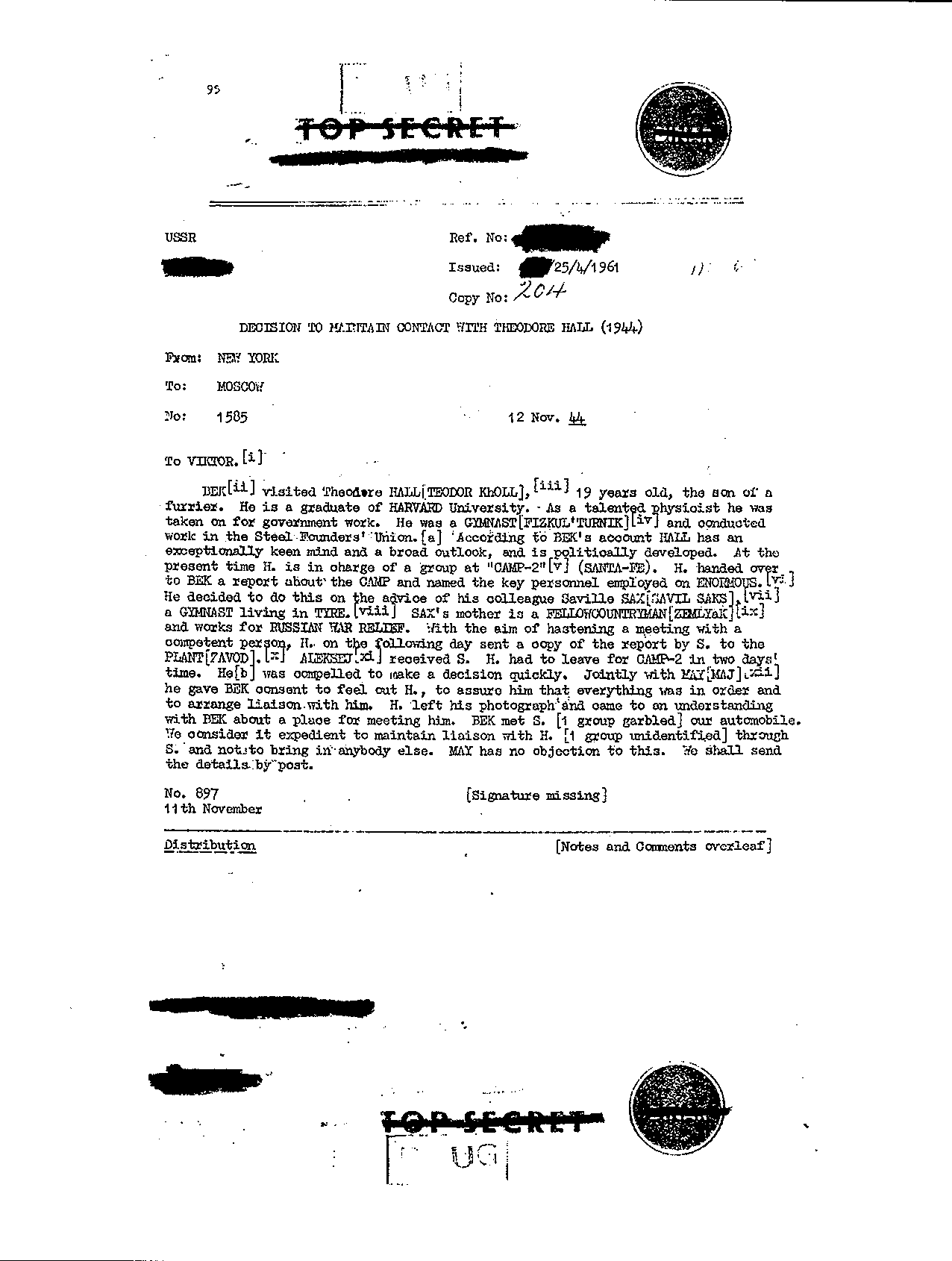

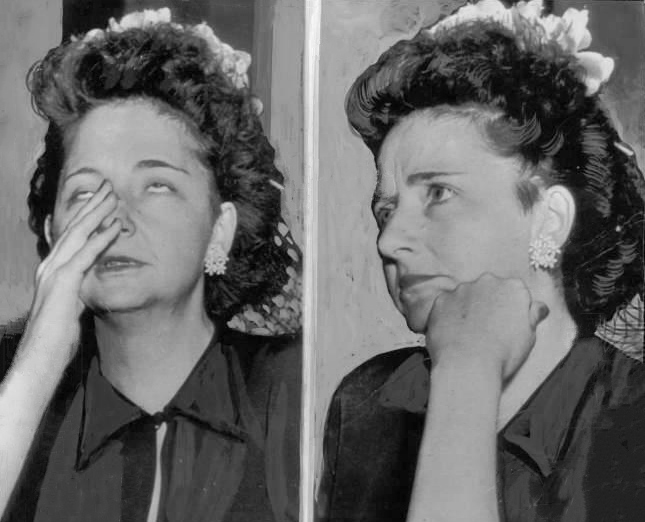

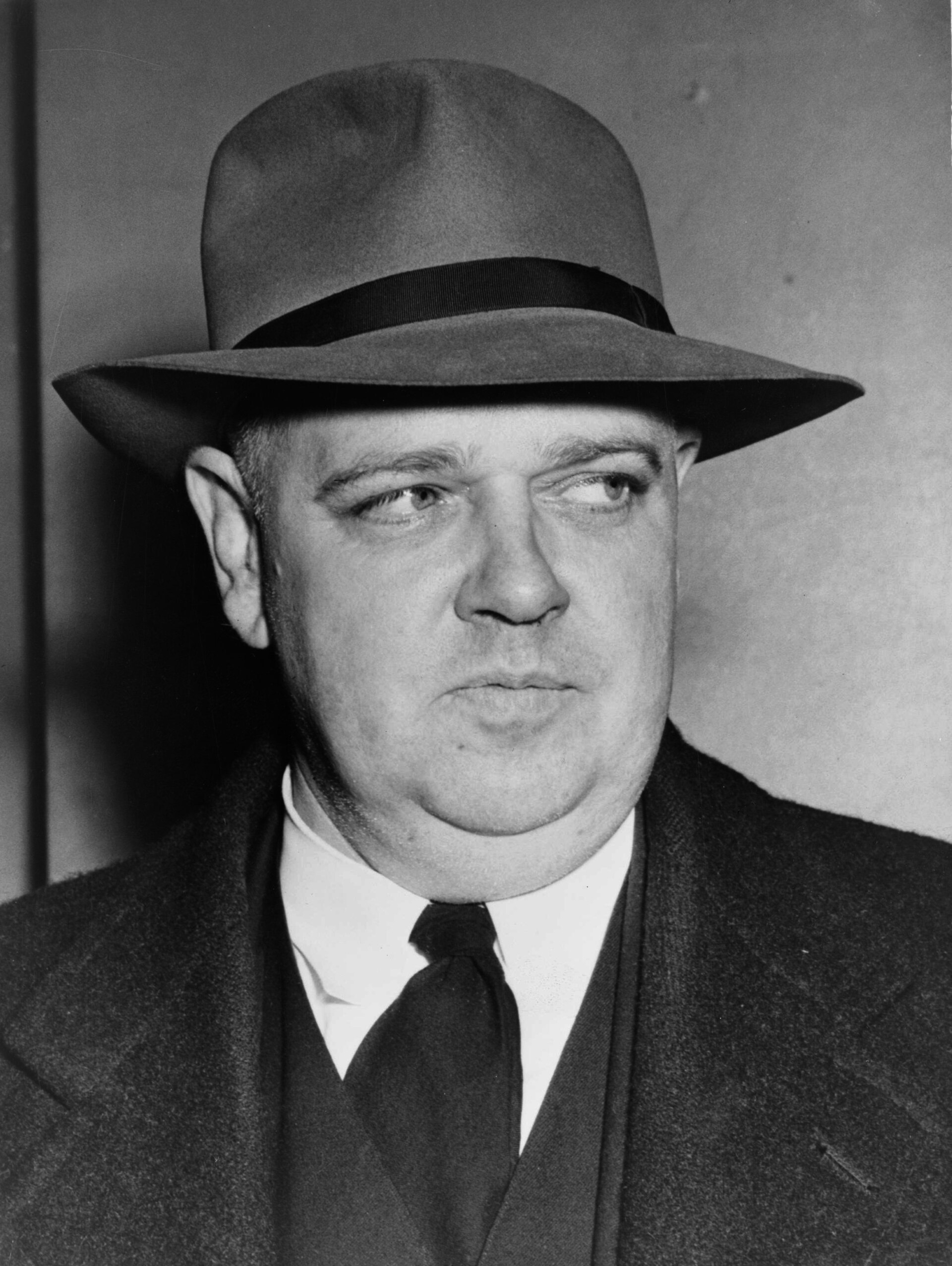

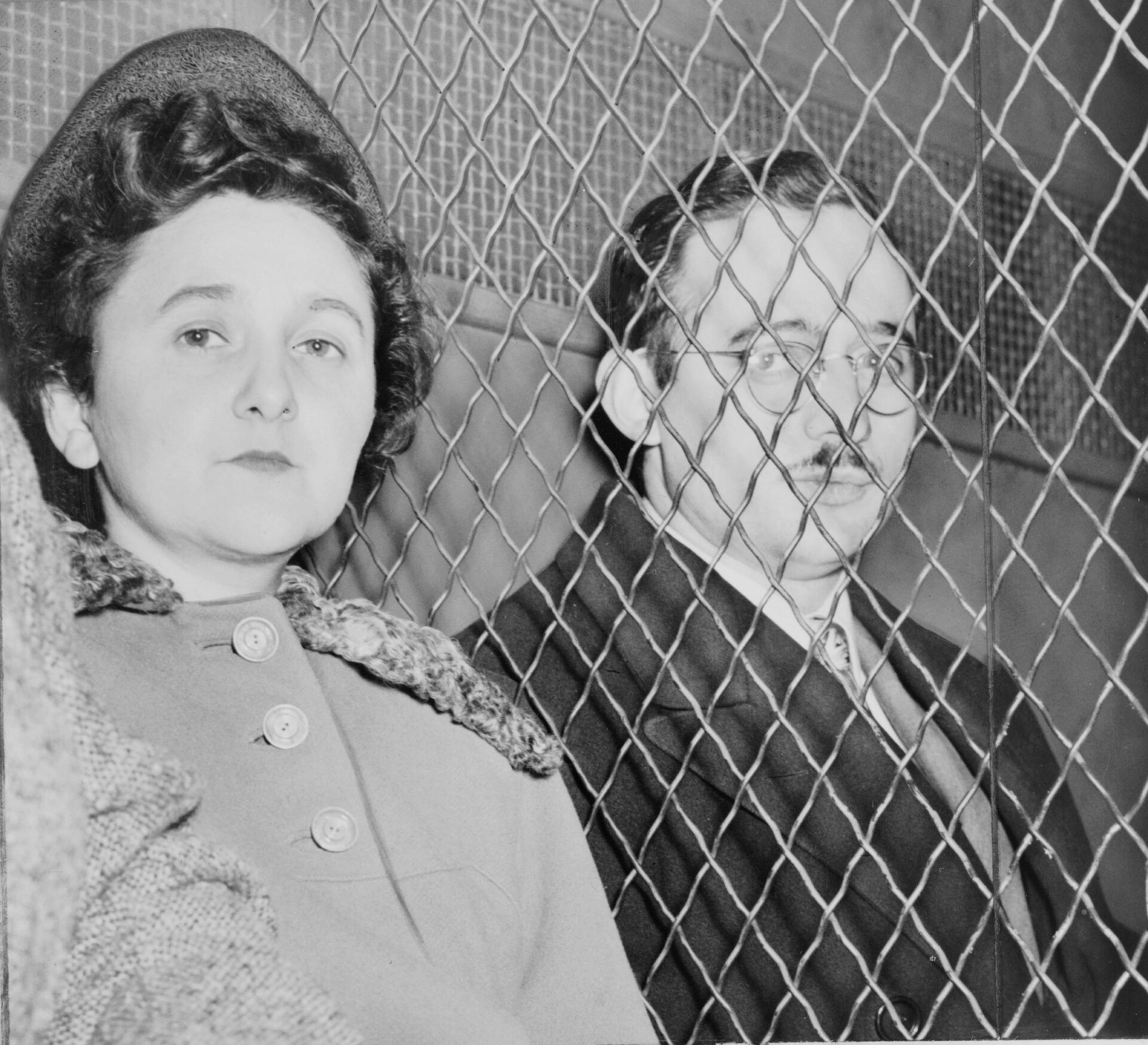

Gallery: the committees and the senator
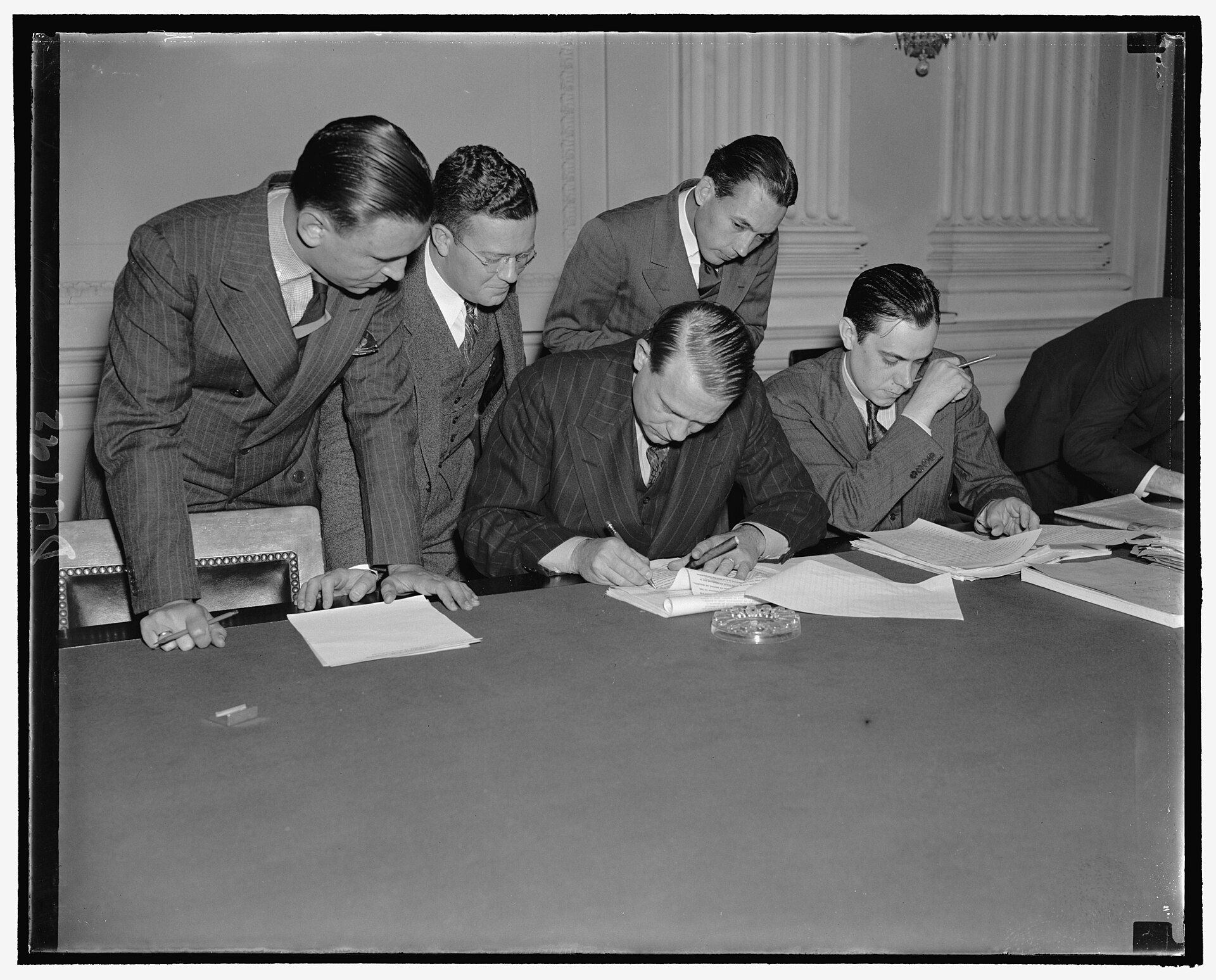

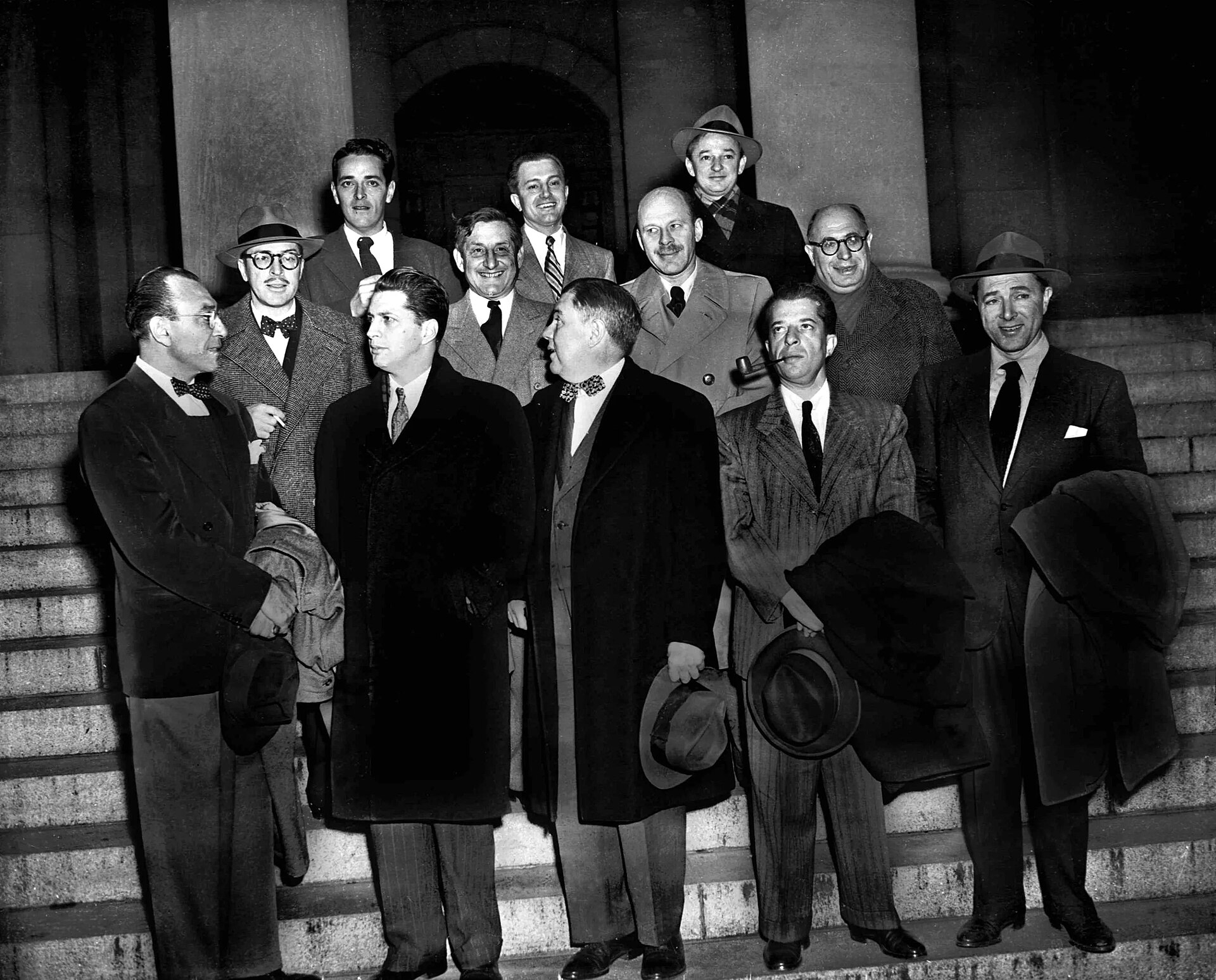

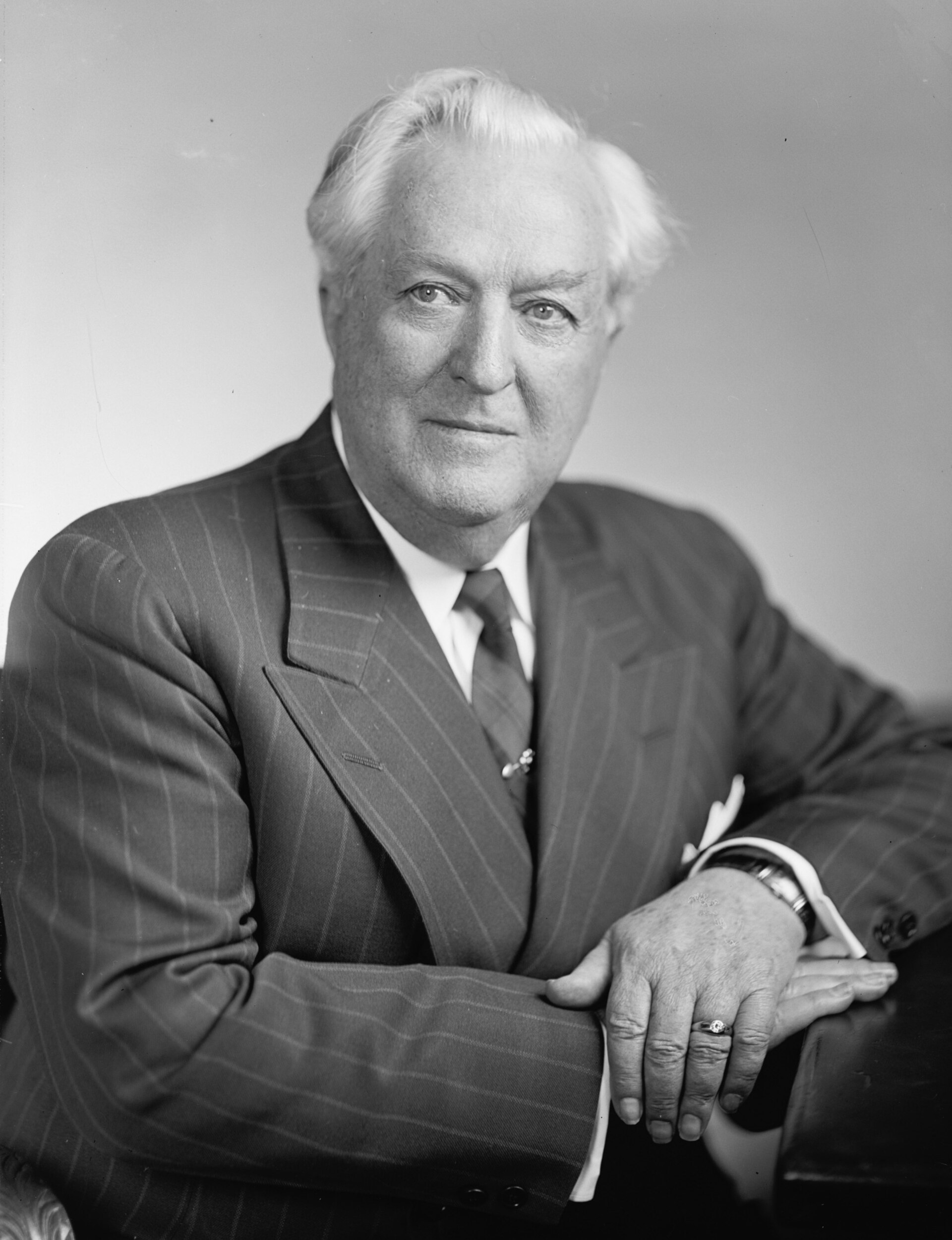

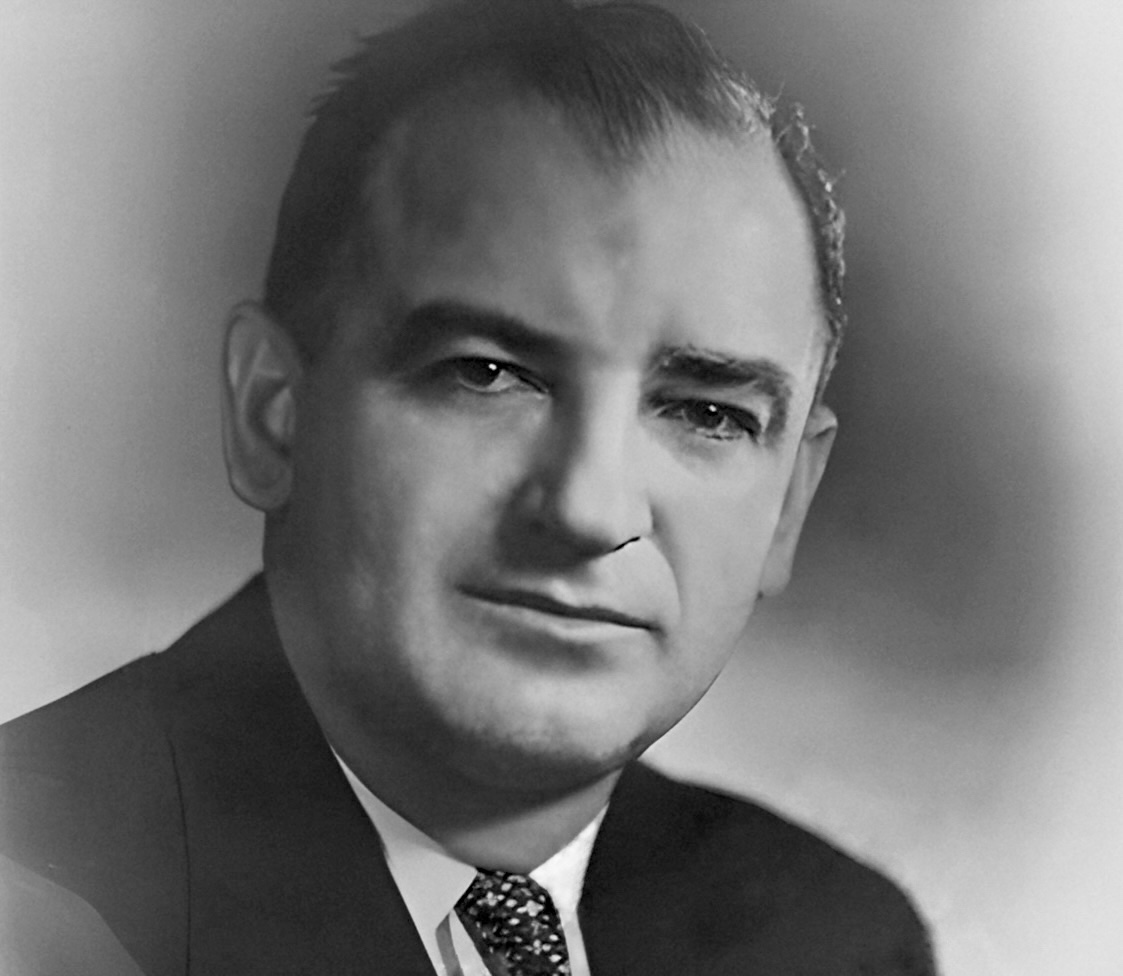





Infographic: the three committees side by side
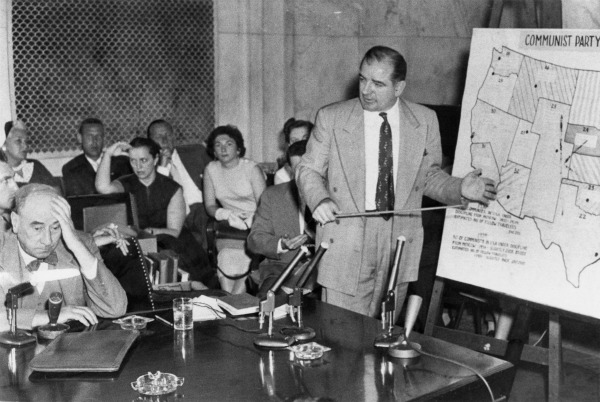
The three bodies are confused constantly, in 1954 and in 2026. McCarthy never sat on HUAC. SISS was a Senate Judiciary subcommittee led first by Pat McCarran. McCarthy's committee was the Permanent Subcommittee on Investigations of the Government Operations Committee. Lesson 06 compares them in depth (Three Committees Compared); this summary gives the facts a reporter most often needs.
Infographic: the censure vote by party
The party breakdown of the December 2, 1954 vote is often misstated as a party-line Democratic act. The roll call in the Congressional Record lists the 67 senators voting yea and the 22 voting nay by name; the Associated Press report printed in the Charlotte News the next day gave the breakdown: "All 44 Democrats voted for the resolution, as did independent Senator Wayne Morse of Oregon," with "Republicans dividing evenly, 22 for and 22 against."36 Checking the roll call names against party membership confirms the count: every nay was a Republican, and the six senators not voting were three Republicans (John Bricker of Ohio, Homer Capehart of Indiana and Alexander Wiley of Wisconsin) and three Democrats (Albert Gore of Tennessee, John F. Kennedy of Massachusetts and George Smathers of Florida). McCarthy answered "present."1
Sources catalog
The catalog lists the main primary sources and the main books on every side of the argument. Book links go to Open Library catalog records, which list editions and library holdings; this site does not reproduce the texts. The one-line descriptions summarize each author's argument as the author states it; they are summaries for orientation, and the books themselves should be read before any of them is quoted.
Primary sources
- Congressional Record (Bound Edition), govinfo.gov. Floor debate and roll calls; for the censure vote, volume 100, part 12, page 16392. Senate, December 2, 1954 (PDF).1
- Executive Sessions of the Senate Permanent Subcommittee on Investigations, 1953-54 (S. Prt. 107-84), five volumes, made public 2003. Volume 1 on govinfo; all volumes and the index are linked from the Senate's McCarthy hearings page.29
- Senate Historical Office, "The Censure Case of Joseph McCarthy of Wisconsin (1954)." Dates, committee membership and charges. senate.gov.7
- National Archives, Senate Resolution 301 (Milestone Documents). Text and image of the resolution as adopted. archives.gov.32
- NSA, Venona historical releases. The translations, as PDFs. nsa.gov.3
- National Archives guides to House and Senate records. HUAC (House guide, chapter 14), SISS (Senate guide, chapter 13), PSI (Senate guide, chapter 11), and the rules of access.81264
- Truman Library: Executive Order 9835 and the loyalty program. EO 9835 text.15
- Eisenhower Library: McCarthyism and the Red Scare; the Rosenbergs. McCarthyism documents; Rosenberg documents.1718
- Wilson Center, Vassiliev Notebooks. Digital Archive collection.19
- FBI Vault. Released FBI files. vault.fbi.gov.14
- Supreme Court opinions. Dennis; Rosenberg; Nelson; Watkins; Yates; Barenblatt.202521232224
- Marquette University, Joseph R. McCarthy Papers. Finding aid.26
- Whittaker Chambers, Witness (Random House, 1952). The memoir of the former courier whose testimony began the Hiss case; a primary source for his own account, to be weighed as a memoir. Open Library.
Books on the espionage evidence
- John Earl Haynes and Harvey Klehr, Venona: Decoding Soviet Espionage in America (Yale University Press, 1999). Argues that the decrypts show Soviet espionage in the United States was extensive, that the Communist Party assisted it, and that many people accused in the 1940s were in fact sources. Open Library; publisher.
- John Earl Haynes, Harvey Klehr and Alexander Vassiliev, Spies: The Rise and Fall of the KGB in America (Yale University Press, 2009). Uses the Vassiliev notebooks to confirm and extend the Venona identifications, including the authors' conclusion that Alger Hiss was a Soviet source. Open Library.
- Robert Louis Benson and Michael Warner, eds., Venona: Soviet Espionage and the American Response, 1939-1957 (National Security Agency and Central Intelligence Agency, 1996). A government documentary collection pairing selected decrypts with FBI and other U.S. records, with an introductory history. Open Library.
- Allen Weinstein, Perjury: The Hiss-Chambers Case (Knopf, 1978; later revised editions). Weinstein began his research expecting, by his own account, to find for Hiss, and concluded that Hiss had lied and had worked with Soviet intelligence. Open Library.
- Allen Weinstein and Alexander Vassiliev, The Haunted Wood: Soviet Espionage in America, the Stalin Era (Random House, 1999). An earlier book from the same KGB research that produced the notebooks. Open Library.
Books favorable to McCarthy or to his cause
- William F. Buckley Jr. and L. Brent Bozell, McCarthy and His Enemies (Henry Regnery, 1954). A contemporary defense of McCarthy's purpose and many of his cases that also identifies statements of his the authors judged exaggerated or unjustified. Open Library.
- M. Stanton Evans, Blacklisted by History: The Untold Story of Senator Joe McCarthy and His Fight Against America's Enemies (Crown Forum, 2007). Argues from archival research that McCarthy's security cases were largely well founded and that the standard account of him rests on errors and omissions. Open Library.
- Arthur Herman, Joseph McCarthy: Reexamining the Life and Legacy of America's Most Hated Senator (Free Press, 2000). Argues that the communist threat was real and that many of McCarthy's targets had real security problems, while judging McCarthy himself reckless and harmful to the anti-communist cause. Open Library.
Books critical of McCarthy and of the investigations
- Richard H. Rovere, Senator Joe McCarthy (Harcourt, Brace, 1959). A journalist's portrait of McCarthy as a demagogue driven by publicity more than conviction. Open Library.
- Robert Griffith, The Politics of Fear: Joseph R. McCarthy and the Senate (University Press of Kentucky, 1970). Explains McCarthy's power through Senate institutions and party politics and studies how the Senate finally acted. Open Library.
- Thomas C. Reeves, The Life and Times of Joe McCarthy (Stein and Day, 1982). A detailed biography drawing on extensive interviews and records, critical of McCarthy's methods and record. Open Library.
- David M. Oshinsky, A Conspiracy So Immense: The World of Joe McCarthy (Free Press, 1983). A biography that finds McCarthy's charges largely unsupported and his methods destructive. Open Library.
- Ellen Schrecker, No Ivory Tower: McCarthyism and the Universities (Oxford University Press, 1986). Studies dismissals of faculty and the role universities played. Open Library.
- Richard M. Fried, Nightmare in Red: The McCarthy Era in Perspective (Oxford University Press, 1990). A short synthesis placing McCarthy within a longer and wider anti-communist effort. Open Library.
- Ellen Schrecker, Many Are the Crimes: McCarthyism in America (Little, Brown, 1998). Argues that a network of government agencies and private groups, of which McCarthy was only the most visible part, did lasting damage, while accepting that some American communists spied for the Soviet Union. Open Library.
- Landon R. Y. Storrs, The Second Red Scare and the Unmaking of the New Deal Left (Princeton University Press, 2013; some catalog records give 2012). Uses loyalty case files to argue that the loyalty program drove reform-minded economists and administrators out of federal policy work. Open Library.
What the record shows and what it does not
- Documented fact: the Senate adopted S. Res. 301 on December 2, 1954 by 67 to 22, with Republicans split 22 to 22 and all voting Democrats and the one independent in favor.136
- Documented fact: McCarthy's subcommittee held 117 closed sessions in 1953 and questioned 395 witnesses that year, about a third of whom never appeared in public.2
- Documented fact: about 3,000 Venona translations are public, released from July 1995.3
- Documented fact: large parts of the record remain closed or restricted, including much of the PSI's investigative case files and, as last reported, McCarthy's private Senate files at Marquette.65
- Interpretation: Haynes and Klehr read Venona as identifying more than 300 Americans who assisted Soviet intelligence; some identifications are disputed by other scholars.13
- Allegation, often repeated: precise counts of people "named" or "ruined" by the investigations. No single primary source supplies such a count.
- Open question: what McCarthy's closed private files would add about his sources, his staff and his own beliefs. They have not been available to researchers.
Assessed from 2026
The claims assessed here are claims about the record itself, the kind a reader meets in arguments about this era. Lesson 11 assesses McCarthy's own assertions one by one (The Assertions Assessed from 2026).
Claim: Soviet espionage in the United States was largely a myth of the Red Scare
Refuted. The NSA's release of about 3,000 Venona translations, the Vassiliev notebooks and the Moscow archives document Soviet intelligence networks with American sources, several of whom were also identified by Bentley and Chambers at the time.319 Even Schrecker, a leading critic of the investigations, accepts that some American communists spied. The argument among scholars now concerns how many, who, how much harm they did, and what that implies about the methods used against others.
Claim: the new evidence vindicates McCarthy
Partly supported. The new evidence vindicates the anti-communists' central claim that Soviet espionage reached into the government, a claim made before McCarthy by Bentley, Chambers, the FBI and HUAC. Whether it vindicates McCarthy's own accusations depends on the case. Evans argues that many of McCarthy's security cases were well founded; Herman agrees the threat was real while judging McCarthy reckless; Haynes and Klehr, whose evidence is often cited in McCarthy's defense, separate the espionage they document from McCarthy's own accusations, many of which their evidence does not reach. The executive session transcripts show the gap, case by case, between what witnesses said in private and what McCarthy said about them in public.2 The fair verdict has to be given case by case, as lessons 07 and 11 do.
Claim: the censure was a partisan Democratic act
Refuted. The resolution was introduced by a Republican, Ralph Flanders; the select committee was chaired by a Republican, Arthur Watkins, and had three members from each party; and the vote split the Republicans 22 to 22.7136 Democratic leaders did shape the floor debate: the Senate Historical Office records that Minority Leader Lyndon Johnson urged Democratic liberals to remain quiet and let moderate and conservative Republicans carry the fight against McCarthy.7
Claim: McCarthy was censured for fighting communism
Refuted as a description of the resolution's text. The resolution as adopted condemned his conduct toward the 1952 Privileges and Elections subcommittee and toward the 1954 select committee and its chairman.17 Whether senators' motives included disapproval of his anti-communist campaign is a separate question that the text does not answer, and on which historians differ.
Claim: the closed sessions were routine screening and changed nothing
Partly supported. Closed sessions to screen witnesses before public hearings are an ordinary congressional practice, and Ritchie's figure means about two thirds of McCarthy's executive session witnesses later appeared in public. But about a third did not, and what they said stayed sealed for fifty years.2
Claim: the whole record is now open
Refuted. PSI investigative case files are described by the Archives as largely closed, House records are screened case by case under Rule VII, much Soviet archival material is again inaccessible, and McCarthy's private papers were reported closed as of 2017.6115
Claim: a name in Venona proves a person was a spy
Unresolved as a general rule. Venona names cover names, not people, and identifications range from certain to doubtful. A Venona reference combined with independent corroboration can be decisive; standing alone, it is a lead.3
Hard questions and answers
If the spies were real, why does the method matter so much?
Because the method decided who was accused. The record now shows both real Soviet sources who were correctly identified and people who were accused on weak evidence and harmed. A method that could not tell them apart wasted the credibility of the case against the real spies, as Herman argues, and injured people the evidence does not touch. The Supreme Court's statement in Watkins that "there is no congressional power to expose for the sake of exposure" is a statement about method, written by a Court that did not deny the threat.23 Pierson's framework of ordered liberty treats this as the question of legitimate authority and its limits (module 52, lesson 02).
Isn't taking the Fifth a confession?
No, as a matter of law and of evidence. The privilege protects anyone from being compelled to incriminate himself, and after Dennis admitting party membership could expose a witness to prosecution. Many witnesses invoked it to avoid naming friends. A refusal leaves a question open; it does not answer it. A reporter should report the refusal accurately and look for other evidence.
Why trust documents written by Soviet intelligence officers?
Because they were not written for an American audience. Officers reporting to their headquarters had reasons to exaggerate their own successes but no reason to frame Americans who were not their sources. Their reports are strongest when they contain checkable detail and agree with independent American evidence. The Wilson Center itself declines to endorse any single reading of the Vassiliev notebooks, and readers should follow the same discipline.19
Why are some records still closed seventy years later?
Because Congress and donors set the rules. The legislative branch is not covered by the Freedom of Information Act, each house sets access rules for its own records, and privacy protections apply to files on individuals.4 Private papers given to a university are governed by the donor's terms, as the Marquette restrictions show.5 Researchers can and do ask for review of closed files.
Which single source should a beginner read first?
Read two at once, from opposite sides, with the primary documents open beside them: for example, Haynes and Klehr's Venona with Schrecker's Many Are the Crimes, or Evans's Blacklisted by History with Oshinsky's A Conspiracy So Immense. Then check one case yourself in the executive session transcripts and the Venona releases, using the nine-step method above.
How does any of this apply to accusations made today?
The same four claims (membership, espionage, sympathy, association) and the same nine steps apply to modern accusations of foreign influence, which lesson 13 treats on its own terms (Foreign Influence and Espionage in 2026). Real espionage cases exist today, as they did then. The lesson of the record is to separate the claims, follow the evidence, and say plainly what is proven and what is not. Pierson's discussion of lawful resistance and of the Japanese American incarceration shows how the same tests apply to other times when fear of foreign threat pressed on liberty (module 52, lesson 08; module 52, lesson 06).
The whole module and related modules
- 01. Why the Fear Was Real, 1917 to 1950
- 02. Venona and the Archives: What We Know Now
- 03. The Machinery Before McCarthy: Dies, HUAC, the Hollywood Ten, the Loyalty Program, the Smith Act and the Hiss Case
- 04. Joseph McCarthy: Wisconsin, the Marines and the 1946 Senate Race
- 05. Wheeling and the List: The Claim, the Changing Numbers and the Tydings Hearings
- 06. Three Committees Compared: HUAC, SISS and the Permanent Subcommittee on Investigations
- 07. The Cases: State, Fort Monmouth, Voice of America, Peress, Lattimore, Annie Lee Moss and George Marshall
- 08. The Army-McCarthy Hearings and the Fall
- 09. Censure, Watkins, Yates, Barenblatt and the Courts
- 10. What It Cost: Blacklists, Loyalty Oaths and Careers, Real Spies Caught and Real People Harmed
- 11. The Assertions Assessed from 2026, Claim by Claim
- 12. Method Versus Mission: Congressional Investigation, Due Process and Accountable Government
- 13. Foreign Influence and Espionage in 2026: What Is Real Today
Related modules: Economic Systems: Communism, Socialism and Comparing the Record; Ordered Liberty: What Ordered Liberty Means; Marx and the Theory of Class; Communists in Idaho: What the Evidence Shows; Glen Taylor, Herman Welker and the Red Scare.
Still open
These items could not be confirmed against a primary source before publication. The lesson states them as open, and they stay on the fact-check list.
- Senate.gov says the five executive session volumes were published in 2004; the print's cover says 'Made public January 2003' and the PSI press release is dated May 5, 2003. The lesson uses 2003 and notes the discrepancy.
- Counts of McCarthy's closed hearings and witnesses differ by source: 117 sessions and 395 witnesses in 1953 (Ritchie); 161 hearings and nearly 500 witnesses for 1953 to 1954 (2003 press release); 160 sessions and 395 witnesses for the 83rd Congress (senate.gov). Not reconciled.
- Party breakdown of the censure vote (44 D, 22 R, 1 I yea; 22 R nay) comes from the AP report in the Charlotte News of December 3, 1954 (a transcription on wjcash.org). The fact checker re-read the roll call names on Congressional Record p. 16392 (Oct. 28, 2026) and the names agree with that breakdown; the party of each senator was assigned from standard Senate membership records, since the Record does not print party.
- The FBI Vault (vault.fbi.gov) refused automated access during preparation; its current file listings, including the Rosenberg file, were not confirmed live. The statement that the FBI Silvermaster file is a heavily used microfilm source was not separately confirmed.
- The 2008 court order releasing much of the Rosenberg grand jury testimony is stated from general knowledge and was not confirmed against the order.
- Whether the Marquette restrictions on McCarthy's private papers have changed since the February 2017 Marquette Wire report is unknown.
- Commonly cited figures not confirmed against a primary source: party membership peak of about 80,000 around 1944; Smith Act totals of about 144 indicted and 105 convicted by 1958; twelve party leaders indicted in 1948.
- Timeline dates not separately confirmed for this lesson: 1919 party founding, Gouzenko's defection in September 1945, Bentley's 1945 approach to the FBI, the Hollywood hearings and contempt citations in 1947, Chambers naming Hiss in August 1948, the Soviet test date in August 1949, Hiss's perjury conviction in January 1950, Korean War start in June 1950, the Internal Security Act's passage over Truman's veto in September 1950, the SISS Institute of Pacific Relations hearings in 1951 to 1952, the Declaration of Conscience in June 1950, EO 10450 in 1953, and McCarthy's loss of his chairmanship in January 1955.
- Glossary details stated from general knowledge and not reconfirmed in this task: Comintern founded 1919 and dissolved 1943; Hollywood Ten convicted and imprisoned; reused one-time pad pages as the basis of the Venona breaks; Tydings subcommittee's conclusions; the Popular Front dates.
- Book subtitles and the one-line summaries of each book's argument are given from general knowledge; Open Library records confirmed main titles, authors, publishers and years only. Herman's book is dated 1999 in some catalog records and Storrs's 2012.
- McCarthy's 1950 description of Owen Lattimore as the top Soviet espionage agent is paraphrased, not quoted; exact wording not verified here.
- The statement that Haynes and Klehr separate the espionage they document from McCarthy's own accusations is a summary of their published position, not a verified quotation.
- Alt text for the gallery photographs was written from the archival catalog descriptions; the images were not viewed during writing because the module folder could not be staged for viewing.
Learn more
- Venona Project and Vassiliev Notebooks Index and Concordance (Wilson Center): Ties Venona cover names to the Vassiliev notebook entries; the fastest way to cross-check a name.
- Index to the McCarthy executive session transcripts (senate.gov PDF): Find every witness and subject across the five volumes.
- NSA Venona historical releases: The translations themselves.
- Congressional Record, December 2, 1954 (govinfo PDF): Read the censure debate and the roll call by name.
- National Archives, Rules of Access to the Records of Congress: Know what is open before you ask.
- Eisenhower Library, McCarthyism and the Red Scare documents: The White House side of 1953 and 1954.
Notes
- Congressional Record (Bound Edition), vol. 100, part 12, 83rd Congress, 2d session, Senate, December 2, 1954, p. 16392 (roll call on S. Res. 301 as amended, list of yeas, nays, not voting and present, and the parliamentary inquiry on the word "censure"). Read it online. ↩
- U.S. Senate, Permanent Subcommittee on Investigations of the Committee on Government Operations, Executive Sessions of the Senate Permanent Subcommittee on Investigations, vol. 1, S. Prt. 107-84 (Government Printing Office, made public January 2003), introduction by Donald A. Ritchie. Read it online. ↩
- National Security Agency, "Venona," Declassification and Transparency Initiatives, Historical Releases. Read it online. ↩
- National Archives, Center for Legislative Archives, "Rules of Access to the Records of Congress." Read it online. ↩
- Matthew Harte, "Raynor Library's McCarthy papers remain closed to the public," Marquette Wire, February 21, 2017. Read it online. ↩
- National Archives, Guide to the Records of the U.S. Senate at the National Archives (Record Group 46), chapter 11, Committee on Governmental Affairs and related committees, paragraphs 11.17 and 11.23 to 11.28 (Permanent Subcommittee on Investigations). Read it online. ↩
- Senate Historical Office, "The Censure Case of Joseph McCarthy of Wisconsin (1954)," United States Senate, Powers and Procedures: Censure. Read it online. ↩
- National Archives, Center for Legislative Archives, Guide to the Records of the U.S. House of Representatives at the National Archives, chapter 14, "House Un-American Activities Committee, 79th to 94th Congresses (1945 to 1975)," paragraphs 14.107 to 14.112. Read it online. ↩
- U.S. Senate, "McCarthy and Army-McCarthy Hearings," senate.gov (description of the executive session volumes, with links to volumes 1 to 5 and the index). Read it online. ↩
- Office of Senator Susan Collins, "Permanent Subcommittee on Investigations Releases McCarthy-Era Records," press release, May 5, 2003. Read it online. ↩
- R. Bruce Craig, "HUAC Records Opened to Public Scrutiny," Perspectives on History (American Historical Association), September 1, 2001, quoting a July 26, 2001 letter from Clerk of the House Jeff Trandahl. Read it online. ↩
- National Archives, Guide to the Records of the U.S. Senate at the National Archives (Record Group 46), chapter 13, Committee on the Judiciary, paragraphs 13.71 (Senate Internal Security Subcommittee) and 13.82 to 13.83 (Amerasia records). Read it online. ↩
- Yale University Press, catalog description of John Earl Haynes and Harvey Klehr, Venona: Decoding Soviet Espionage in America (1999). Read it online. ↩
- Federal Bureau of Investigation, The Vault (vault.fbi.gov), "Rosenberg Case" file page, as preserved in the University of North Texas web archive, 2012. The live site refused automated access during preparation of this lesson. Read it online. ↩
- Harry S. Truman, Executive Order 9835, "Prescribing Procedures for the Administration of an Employees Loyalty Program in the Executive Branch of the Government," March 21, 1947, Harry S. Truman Library and Museum. Read it online. ↩
- Harry S. Truman Library and Museum, "Loyalty Program Background" (education resource), citing Richard S. Kirkendall, Civil Liberties and the Legacy of Harry S. Truman. Read it online. ↩
- Dwight D. Eisenhower Presidential Library, "McCarthyism / Red Scare," online documents (document list and introduction). Read it online. ↩
- Dwight D. Eisenhower Presidential Library, "Julius and Ethel Rosenberg," online documents. Read it online. ↩
- Wilson Center, Cold War International History Project, "CWIHP Publishes the Vassiliev Notebooks Online," April 20, 2009; collection at the Wilson Center Digital Archive. Read it online. ↩
- Dennis v. United States, 341 U.S. 494 (1951), decided June 4, 1951. Read it online. ↩
- Pennsylvania v. Nelson, 350 U.S. 497 (1956), decided April 2, 1956. Read it online. ↩
- Yates v. United States, 354 U.S. 298 (1957), decided June 17, 1957. Read it online. ↩
- Watkins v. United States, 354 U.S. 178 (1957), decided June 17, 1957. Read it online. ↩
- Barenblatt v. United States, 360 U.S. 109 (1959), decided June 8, 1959. Read it online. ↩
- Rosenberg v. United States, 346 U.S. 273 (1953), Special Term, June 1953 (per curiam order of June 19, 1953 vacating the stay granted June 17, 1953). Read it online. ↩
- Marquette University, Raynor Memorial Libraries, Special Collections and University Archives, "Joseph R. McCarthy Papers, 1930 to 1957," finding aid. Read it online. ↩
- Alexis Coe, "My losing battle to see the official papers of Sen. Joe McCarthy," History News Network, October 27, 2015 (reprinted from the New York Times). Read it online. ↩
- James Gregory, Mapping American Social Movements Project, University of Washington, "Communist Party USA membership by state and year" (sources: internal party records, FBI files, Comintern archive files). Read it online. ↩
- Associated Press, press photograph of Elizabeth T. Bentley at a House committee hearing, dated July 31, 1948, Wikimedia Commons file record. Read it online. ↩
- U.S. Weather Bureau, chart predicting the location of the first Soviet atomic test, September 1949, Harry S. Truman Library, President's Secretary's Files (Wikimedia Commons file record). Read it online. ↩
- The National Archives (United Kingdom), police photograph of Klaus Fuchs with archival description (Wikimedia Commons file record). Read it online. ↩
- National Archives, Milestone Documents, "Senate Resolution 301: Censure of Senator Joseph McCarthy (1954)," SEN 83A-B4, Records of the U.S. Senate, Record Group 46. Read it online. ↩
- Senate Historical Office, "Have you no sense of decency?" United States Senate. Read it online. ↩
- Museum of Broadcast Communications, "Army-McCarthy Hearings," Encyclopedia of Television. Read it online. ↩
- Alec Thomson, "Smith Act of 1940," Free Speech Center at Middle Tennessee State University, 2009, updated July 10, 2024. Read it online. ↩
- Associated Press report on the censure vote, The Charlotte News, December 3, 1954, as transcribed at wjcash.org. Read it online. ↩

Check yourself
1. What was the recorded result of the Senate vote on S. Res. 301 on December 2, 1954?
The Congressional Record, vol. 100, pt. 12, p. 16392, records yeas 67, nays 22, with 6 not voting and McCarthy answering present.
2. How did Republican senators divide on the censure resolution?
The AP report in the Charlotte News of December 3, 1954, checked against the roll call, shows 22 Republicans for and 22 against; all 22 nays were Republicans.
3. Which committee did McCarthy chair in 1953 and 1954?
McCarthy chaired the PSI. He was never on HUAC, and SISS was first chaired by Pat McCarran.
4. According to Donald Ritchie's introduction to the 2003 transcripts, about what share of McCarthy's 1953 executive session witnesses never appeared at a public hearing?
Ritchie wrote that about a third of the witnesses called in executive session did not appear at any public hearing.
5. How many Venona translations has the NSA made public?
NSA says the first release in July 1995 had 49 messages and that over five more releases all of the approximately 3,000 translations were made public.
6. Under House Rule VII, when do most House records at the National Archives open?
The Center for Legislative Archives says most House records open at 30 years, with privacy, statutory and executive session records at 50.
7. Which of these claims is legally and evidentially the most serious, and needs the strongest proof?
Espionage was a federal crime and requires evidence such as corroborated decrypts, defector testimony or confession; sympathy and association were legal.
8. What did the Supreme Court say in Watkins v. United States (1957)?
The Court wrote: "We have no doubt that there is no congressional power to expose for the sake of exposure."
Terms in this lesson
- Army-McCarthy hearings
- The televised 1954 hearings of the Permanent Subcommittee on Investigations into the Army's charges against McCarthy and Roy Cohn and McCarthy's countercharges, April 22 to June 17, 1954, over 36 days.
- Attorney General's list
- The Justice Department's list of organizations designated as subversive for purposes of the federal loyalty program.
- Blacklist
- A refusal by employers, especially in film, broadcasting and education, to hire people accused of communist ties or who refused to answer questions about them.
- Censure (condemnation)
- The Senate's formal disapproval of a member's conduct. The 1954 resolution against McCarthy used the word "condemned"; the Senate Historical Office lists it among censure cases.
- Comintern
- The Communist International, founded in Moscow in 1919, which directed national communist parties until it was dissolved in 1943.
- Communist Party of the United States (CPUSA)
- The American communist party, affiliated with the Comintern and funded in part by Moscow.
- Congressional Record
- The official record of floor proceedings in Congress; the bound edition is the permanent version to cite.
- Contempt of Congress
- The federal crime of refusing to answer pertinent questions or produce documents demanded by a committee.
- Cover name
- The code name Soviet intelligence used for a source or officer in its cables; Venona identifies people only by cover names.
- Declaration of Conscience
- Margaret Chase Smith's June 1950 Senate speech, joined by six other Republican senators, criticizing the methods McCarthy had introduced without naming him.
- Dies Committee
- The House Special Committee on Un-American Activities, 1938 to 1944, chaired by Martin Dies of Texas, forerunner of HUAC.
- Espionage
- Gathering or passing secret information for a foreign power; a federal crime, and a different claim from membership, sympathy or association.
- Executive session
- A closed committee meeting. McCarthy's subcommittee questioned most witnesses in executive session; the transcripts were made public in 2003.
- Fellow traveler
- A term of the period for a person who supported communist causes without joining the party.
- Fifth Amendment
- The privilege against self-incrimination, invoked by many witnesses; invoking it is not proof of membership or espionage.
- Front organization
- A group created or controlled by the Communist Party that presented itself as independent.
- FBI Vault
- The FBI's online reading room of files already released under the Freedom of Information Act.
- GRU
- Soviet military intelligence, which ran its own networks alongside the NKVD.
- Hollywood Ten
- Ten screenwriters and directors cited for contempt of Congress in 1947 after refusing to answer HUAC's questions about party membership.
- House Rule VII
- The House rule on access to archived House records: most open at 30 years, privacy, statutory and executive session records at 50.
- HUAC
- The House Committee on Un-American Activities, standing from 1945, renamed the Committee on Internal Security in 1969, abolished in 1975. McCarthy was never a member.
- Informant
- A person who reported to the FBI or testified about others' political activity, sometimes for pay; reliability varied and needs corroboration.
- Internal Security Act of 1950 (McCarran Act)
- Public Law 81-831, requiring communist organizations to register and creating the Subversive Activities Control Board; passed over Truman's veto.
- Loyalty program
- Federal employee screening created by Executive Order 9835 on March 21, 1947, replaced in 1953 by the security program of Executive Order 10450.
- McCarthyism
- A term for public accusations of disloyalty made with insufficient regard to evidence; defenders of McCarthy argue it was used to discredit anti-communism as a whole.
- NKVD (later KGB)
- The Soviet state security and foreign intelligence service, under successive names, which ran most networks described in Venona.
- One-time pad
- A cipher system unbreakable when each pad page is used once; Soviet reuse of some pages made the Venona breaks possible.
- Permanent Subcommittee on Investigations (PSI)
- The investigating subcommittee of the Senate Government Operations Committee, chaired by McCarthy in 1953 and 1954.
- Popular Front
- The Comintern's mid-1930s policy of alliance with non-communist groups against fascism.
- Pumpkin Papers
- Microfilm Whittaker Chambers hid on his Maryland farm and produced in 1948 as evidence against Alger Hiss.
- Red Monday
- June 17, 1957, when the Supreme Court decided Watkins, Yates and other cases limiting congressional inquiry and Smith Act prosecutions.
- S. Res. 474 (96th Congress)
- The Senate resolution on access to Senate records: most open at 20 years, some categories at 50.
- Security risk
- Under Executive Order 10450 (1953), an employee whose retention was judged not clearly consistent with national security, a broader category than disloyalty.
- SISS
- The Senate Internal Security Subcommittee of the Judiciary Committee, authorized December 21, 1950 by S. Res. 366, first chaired by Pat McCarran.
- Smith Act
- The Alien Registration Act of 1940, upheld in Dennis (1951) and narrowed in Yates (1957).
- Tydings committee
- The 1950 Senate Foreign Relations subcommittee chaired by Millard Tydings that investigated McCarthy's State Department charges.
- Vassiliev notebooks
- Notes from KGB archives made by Alexander Vassiliev in the 1990s, published online by the Wilson Center in 2009; originals at the Library of Congress.
- Venona
- The U.S. program, February 1943 to 1980, that decrypted part of the Soviet intelligence cable traffic; about 3,000 translations released from 1995.
Sources
- Senate Historical Office, "The Censure Case of Joseph McCarthy of Wisconsin (1954)," United States Senate, Powers and Procedures: Censure. (1954) checked 2026-10
- Congressional Record (Bound Edition), vol. 100, part 12, 83rd Congress, 2d session, Senate, December 2, 1954, p. 16392 (roll call on S. Res. 301 as amended, list of yeas, nays, not (1954-12-02) checked 2026-10
- U.S. Senate, Permanent Subcommittee on Investigations of the Committee on Government Operations, Executive Sessions of the Senate Permanent Subcommittee on Investigations, vol. 1, (2003-01) checked 2026-10
- Office of Senator Susan Collins, "Permanent Subcommittee on Investigations Releases McCarthy-Era Records," press release, May 5, 2003. (2003-05-05) checked 2026-10
- U.S. Senate, "McCarthy and Army-McCarthy Hearings," senate.gov (description of the executive session volumes, with links to volumes 1 to 5 and the index). (current page) checked 2026-10
- National Archives, Center for Legislative Archives, Guide to the Records of the U.S. House of Representatives at the National Archives, chapter 14, "House Un-American Activities Co (1989, updated) checked 2026-10
- National Archives, Guide to the Records of the U.S. Senate at the National Archives (Record Group 46), chapter 13, Committee on the Judiciary, paragraphs 13.71 (Senate Internal Sec (1989, updated) checked 2026-10
- National Archives, Guide to the Records of the U.S. Senate at the National Archives (Record Group 46), chapter 11, Committee on Governmental Affairs and related committees, paragra (1989, updated) checked 2026-10
- National Archives, Center for Legislative Archives, "Rules of Access to the Records of Congress." (current page) checked 2026-10
- R. Bruce Craig, "HUAC Records Opened to Public Scrutiny," Perspectives on History (American Historical Association), September 1, 2001, quoting a July 26, 2001 letter from Clerk of (2001-09-01) checked 2026-10
- National Security Agency, "Venona," Declassification and Transparency Initiatives, Historical Releases. (1995 to 1996 releases) checked 2026-10
- Yale University Press, catalog description of John Earl Haynes and Harvey Klehr, Venona: Decoding Soviet Espionage in America (1999). (1999) checked 2026-10
- Federal Bureau of Investigation, The Vault (vault.fbi.gov), "Rosenberg Case" file page, as preserved in the University of North Texas web archive, 2012. The live site refused autom (2012 archived page) checked 2026-10
- Harry S. Truman, Executive Order 9835, "Prescribing Procedures for the Administration of an Employees Loyalty Program in the Executive Branch of the Government," March 21, 1947, Ha (1947-03-21) checked 2026-10
- Harry S. Truman Library and Museum, "Loyalty Program Background" (education resource), citing Richard S. Kirkendall, Civil Liberties and the Legacy of Harry S. Truman. (undated) checked 2026-10
- Dwight D. Eisenhower Presidential Library, "McCarthyism / Red Scare," online documents (document list and introduction). (1952 to 1955 documents) checked 2026-10
- Dwight D. Eisenhower Presidential Library, "Julius and Ethel Rosenberg," online documents. (1953 documents) checked 2026-10
- Wilson Center, Cold War International History Project, "CWIHP Publishes the Vassiliev Notebooks Online," April 20, 2009; collection at the Wilson Center Digital Archive. (2009-04-20) checked 2026-10
- Dennis v. United States, 341 U.S. 494 (1951), decided June 4, 1951. (1951-06-04) checked 2026-10
- Yates v. United States, 354 U.S. 298 (1957), decided June 17, 1957. (1957-06-17) checked 2026-10
- Watkins v. United States, 354 U.S. 178 (1957), decided June 17, 1957. (1957-06-17) checked 2026-10
- Barenblatt v. United States, 360 U.S. 109 (1959), decided June 8, 1959. (1959-06-08) checked 2026-10
- Pennsylvania v. Nelson, 350 U.S. 497 (1956), decided April 2, 1956. (1956-04-02) checked 2026-10
- Rosenberg v. United States, 346 U.S. 273 (1953), Special Term, June 1953 (per curiam order of June 19, 1953 vacating the stay granted June 17, 1953). (1953-06-19) checked 2026-10
- Marquette University, Raynor Memorial Libraries, Special Collections and University Archives, "Joseph R. McCarthy Papers, 1930 to 1957," finding aid. (current page) checked 2026-10
- Matthew Harte, "Raynor Library's McCarthy papers remain closed to the public," Marquette Wire, February 21, 2017. (2017-02-21) checked 2026-10
- Alexis Coe, "My losing battle to see the official papers of Sen. Joe McCarthy," History News Network, October 27, 2015 (reprinted from the New York Times). (2015-10-27) checked 2026-10
- Senate Historical Office, "Have you no sense of decency?" United States Senate. (current page) checked 2026-10
- Museum of Broadcast Communications, "Army-McCarthy Hearings," Encyclopedia of Television. (current page) checked 2026-10
- James Gregory, Mapping American Social Movements Project, University of Washington, "Communist Party USA membership by state and year" (sources: internal party records, FBI files, (current page) checked 2026-10
- Associated Press report on the censure vote, The Charlotte News, December 3, 1954, as transcribed at wjcash.org. (1954-12-03) checked 2026-10
- National Archives, Milestone Documents, "Senate Resolution 301: Censure of Senator Joseph McCarthy (1954)," SEN 83A-B4, Records of the U.S. Senate, Record Group 46. (1954-12-02) checked 2026-10
- Associated Press, press photograph of Elizabeth T. Bentley at a House committee hearing, dated July 31, 1948, Wikimedia Commons file record. (1948-07-31) checked 2026-10
- U.S. Weather Bureau, chart predicting the location of the first Soviet atomic test, September 1949, Harry S. Truman Library, President's Secretary's Files (Wikimedia Commons file r (1949-09) checked 2026-10
- The National Archives (United Kingdom), police photograph of Klaus Fuchs with archival description (Wikimedia Commons file record). (circa 1940) checked 2026-10
- Alec Thomson, "Smith Act of 1940," Free Speech Center at Middle Tennessee State University, 2009, updated July 10, 2024. (2009, updated 2024-07-10) checked 2026-10
- Haynes and Klehr, Venona: Decoding Soviet Espionage in America (Yale, 1999) (1999) checked 2026-10
- Haynes, Klehr and Vassiliev, Spies: The Rise and Fall of the KGB in America (Yale, 2009) (2009) checked 2026-10
- Benson and Warner, eds., Venona: Soviet Espionage and the American Response, 1939-1957 (NSA and CIA, 1996) (1996) checked 2026-10
- Weinstein, Perjury: The Hiss-Chambers Case (Knopf, 1978) (1978) checked 2026-10
- Weinstein and Vassiliev, The Haunted Wood (Random House, 1999) (1999) checked 2026-10
- Buckley and Bozell, McCarthy and His Enemies (Regnery, 1954) (1954) checked 2026-10
- Evans, Blacklisted by History (Crown Forum, 2007) (2007) checked 2026-10
- Herman, Joseph McCarthy (Free Press, 2000) (2000) checked 2026-10
- Rovere, Senator Joe McCarthy (1959) (1959) checked 2026-10
- Griffith, The Politics of Fear (University Press of Kentucky, 1970) (1970) checked 2026-10
- Reeves, The Life and Times of Joe McCarthy (Stein and Day, 1982) (1982) checked 2026-10
- Oshinsky, A Conspiracy So Immense (Free Press, 1983) (1983) checked 2026-10
- Schrecker, No Ivory Tower (Oxford, 1986) (1986) checked 2026-10
- Fried, Nightmare in Red (Oxford, 1990) (1990) checked 2026-10
- Schrecker, Many Are the Crimes (Little, Brown, 1998) (1998) checked 2026-10
- Storrs, The Second Red Scare and the Unmaking of the New Deal Left (Princeton, 2013) (2013) checked 2026-10
- Chambers, Witness (Random House, 1952) (1952) checked 2026-10
- Wilson Center Digital Archive, Vassiliev Notebooks collection (2009) checked 2026-10
- National Archives, Guide to House Records: table of contents (current page) checked 2026-10