Lesson 8 of 14 · about 55 minutes
The Army-McCarthy Hearings and the Fall
Updated October 28, 2026
You'll be able to
- Explain what was real in the Fort Monmouth concern that led to the Army-McCarthy quarrel
- Lay out the Army's charges of March 11, 1954 and McCarthy's counter-charges, and how each fared
- Use the printed hearing record to check the cropped photograph, the FBI 'letter' and the June 9 Fisher exchange
- Describe Eisenhower's behind-the-scenes strategy and his May 17, 1954 executive privilege letter from Eisenhower Library documents
- Read McCarthy's Gallup ratings for 1953 and 1954 and judge what the hearings did and did not cause
- Weigh the defenders' and critics' readings and rate each charge against the evidence
Start here: the short version
In the spring of 1954 the United States Army and Senator Joseph R. McCarthy accused each other of misconduct in front of a national television audience. On March 11, 1954 the Army released a chronology charging that McCarthy's chief counsel, Roy M. Cohn, had pressed the Army for months to give special treatment to Private G. David Schine, a former unpaid consultant to McCarthy's subcommittee. McCarthy, Cohn and staff director Francis Carr answered that the Army was holding Schine as a "hostage" to stop their investigation of security at Fort Monmouth, New Jersey.1 McCarthy stepped aside, Senator Karl Mundt of South Dakota took the chair, Senator Henry Dworshak of Idaho took McCarthy's seat, and the Permanent Subcommittee on Investigations heard the case in public on 36 days between April 22 and June 17, 1954.2
The record those days produced is still readable: a cut-down photograph, a "copy" of an FBI letter that J. Edgar Hoover said his bureau never sent, transcripts of monitored telephone calls, a White House order on May 17 that barred testimony about advice inside the executive branch, and, on June 9, Army counsel Joseph N. Welch asking McCarthy, "Have you no sense of decency, sir, at long last?"3 The subcommittee's August 31 report split along party lines. Gallup's published polling showed McCarthy at 50 percent favorable and 29 percent unfavorable in January 1954 and 34 percent favorable and 45 percent unfavorable in June.4 This lesson lays out what was real in the anti-communist case that led to the clash, what each side charged, what the documents now show, how rival historians read it, and how each charge holds up in 2026.

What was real, and what the investigators got right
The Army-McCarthy hearings are usually told as a morality play, so it helps to start where the anti-communists stood on firm ground. The quarrel grew out of an investigation of the Army Signal Corps laboratories at Fort Monmouth, New Jersey, and that investigation did not come from nowhere. Julius Rosenberg, executed in June 1953 for atomic espionage, had worked for the Signal Corps during the Second World War, and several of the engineers questioned in 1953 had studied with him at the City College of New York. The Senate Historical Office's introduction to the 2003 edition of the subcommittee's closed-door transcripts states the point plainly: "Since Rosenberg had worked at Fort Monmouth during the Second World War, suspicions arose that he had operated a spy ring within the laboratories."5 The Venona decrypts released from 1995 to 1996 and the work of John Earl Haynes and Harvey Klehr later confirmed that the Rosenberg network recruited engineers with defense-electronics access in the 1940s6 (lesson 02 and lesson 07 take up the Fort Monmouth evidence in detail). The fear that a wartime ring had left people behind in a laboratory doing radar and communications work was a reasonable fear for a security officer or a senator in 1953.
The Army's own security officers had acted on that fear before McCarthy arrived. The same Senate introduction records that in the autumn of 1953 "Security officers abruptly suspended forty-two employees as security risks," and that McCarthy then began calling them as witnesses.5 Army officials, including Secretary of the Army Robert T. Stevens and the Army's counselor John G. Adams, at first attended the subcommittee's closed sessions and cooperated.
A second real grievance concerned access to records. President Dwight D. Eisenhower "refused to allow army security board members to be identified and questioned by the subcommittee," and withheld other requested material on grounds of executive privilege.5 For a congressional investigator, a refusal to let a committee learn who had cleared whom is a serious obstacle, and Senator Karl Mundt, a Republican who would chair the hearings, testified under oath on May 14, 1954 that "he felt inclined always to be on the side of a congressional committee endeavoring by subpena or any other device to get all of the available information."7 The question of how much Congress may demand from the executive branch is a live constitutional question to this day, and the McCarthy side was not wrong to raise it.
A third real point: the Army had in fact mishandled at least one case. Irving Peress, an Army dentist who had refused on Fifth Amendment grounds to answer questions about Communist Party membership, was promoted to major and then honorably discharged, and McCarthy's question "Who promoted Peress?" exposed a genuine failure of coordination inside the Army.5 Lesson 07 covers Peress and the McCarthy treatment of Brigadier General Ralph Zwicker; what matters here is that the Peress affair set the Army and the subcommittee against each other by February 1954.
So the starting position of the McCarthy side had substance: a known espionage network had touched the Signal Corps, the Army had suspended dozens of employees on its own, the executive branch was withholding records, and the Army had promoted and released a man who would not answer questions about party membership. The Army-McCarthy hearings were about something else, the conduct of the people on both sides of that investigation, and that is where the record turned against McCarthy.
How the quarrel began: Schine, Cohn and the Army
Schine, Cohn and the draft
G. David Schine was the son of Junius Myer Schine, whose family business held hotels, theaters and other properties; the Senate's editors note that the family's interests included "real estate, hotels, theaters and broadcasting."8 David Schine served the subcommittee as an unpaid consultant and was a close friend of Roy Cohn, the subcommittee's chief counsel. Drawing on the recollections of the subcommittee's longtime chief clerk, Ruth Young Watt, the Senate Historical Office writes that Cohn and Schine "operated outside the normal rules for Senate staff," that they rented their own office space, and that Schine "once signed Senator McCarthy's name to a letter to the Senate Rules Committee asking permission for Cohn and Schine to have access to the 'Senators' Baths.'"5
Schine was drafted in November 1953.1 The Senate Historical Office's summary of what followed is direct: "Schine made numerous requests for passes and release from basic training, which Cohn demanded of army officials."5 The Army's first witness at the public hearings, Major General Miles Reber, testified on April 22, 1954 that the requests had begun before Schine was drafted, with telephone calls in July 1953 seeking a direct commission for him.9
McCarthy's own position on Schine
The documents show McCarthy pulling in two directions. The Army monitored many of Secretary Stevens's telephone calls, which was a common practice for senior officials at the time, and one of those transcripts, from November 1953, caught McCarthy telling Stevens: "For God's sake, don't put Dave in service and assign him back to my committee. If he could get off weekends--Roy--it is one of the few things I have seen him completely unreasonable about. He thinks Dave should be a general and work from the penthouse of the Waldorf."5 The Senate's editors read that call as showing McCarthy "seemed indifferent to special treatment for Schine." McCarthy also produced a letter he had written to the Army asking, in Mundt's sworn summary, "that Schine be given just the regular treatment of any other prospective draftee."7 Yet McCarthy stood by Cohn throughout, and when the Army made its charges public he answered with charges of his own rather than with discipline.
The Army's chronology of March 11, 1954
On March 11, 1954 the Army issued a detailed chronology of what it called Cohn's improper intrusions into Schine's military career.1 The document was prepared under John Adams and numbered its entries; on May 7 Senator John McClellan read entry No. 37, for January 13 and 14, 1954, into the hearing record. It said that when Adams told Cohn that most inductees went overseas and that Schine probably would too, "Mr. Cohn, upon hearing this said, 'This would wreck the Army' and cause Mr. Stevens to be 'through as Secretary of the Army!'" Stevens testified that Adams had reported the remark to him and that he considered it a threat.10
The counter-charges
McCarthy, Cohn and Carr replied within days. Senator Henry M. Jackson, a Washington Democrat on the subcommittee, read their charges into the record on May 4 so that, as he put it, no one would "think that these original charges were light." He quoted an Associated Press story of March 13, 1954 in which McCarthy said that Adams, "while he didn't say so in so many words, warned me, McCarthy, that unless the investigation of the Communists in the Army was discontinued, we would be embarrassed by a report that was being prepared. No investigation will be ended because of threats of blackmail." Jackson listed the rest of the counter-charges as they stood: Cohn's claim that the Army "was holding G. David Schine as a hostage in order to force the subcommittee to terminate their investigations into the Army"; the claim that Stevens and Adams "attempted to divert the investigation of the subcommittee into the Army to an investigation of the Air Force and the Navy"; and Cohn's claim that Adams had offered information about an Air Force base in return for ending the Army inquiry.11
McCarthy's formal countercharges were filed with the subcommittee on April 10, 1954 and the Army's formal "specifications" on April 13. Mundt summarized the two sides at the opening session: the Army charged that McCarthy, Cohn "as well as other members of its staff, sought by improper means to obtain preferential treatment for one Pvt. G. David Schine," and McCarthy's side charged that Stevens, Adams and Assistant Secretary of Defense H. Struve Hensel "attempted to discredit what is generally referred to as the McCarthy Investigating Committee and to force a discontinuance of further attempts by that committee to expose Communist infiltration in the Army," and that Stevens and Adams "made constant attempts to trade off preferential treatment for Private Schine as an inducement to the subcommittee to halt its exposition of the mishandling of Communist infiltration in the military."9 Those two paragraphs are the cleanest statement of what the hearings were supposed to decide.
Before the chronology became public, the conflict had already passed through one public humiliation for the Army. On February 24, 1954, at a lunch in Senator Everett Dirksen's Capitol office, Stevens signed a memorandum of agreement to let General Zwicker testify. The Senate's editors record that the agreement "made no reference to Stevens' demand for courteous treatment of witnesses," that McCarthy afterward boasted that Stevens "could not have surrendered more if he had crawled on his hands and knees," and that newspapers "uniformly portrayed the 'chicken luncheon' as a surrender on Stevens' part."12 That episode matters for the defenders' case below: the Army had reasons of its own to want McCarthy's investigation stopped.
Setting up the hearings: Mundt in the chair
The subcommittee met in closed session on March 16, 1954 and agreed to hold a full inquiry. The Senate's editors summarize the terms: McCarthy "agreed to step aside temporarily as chairman of the subcommittee and to allow Senator Karl Mundt to preside," and "At Senator McCarthy's request, the subcommittee would hold public hearings and hire a new counsel and staff for its duration, with Roy Cohn and other staff members remaining on the subcommittee's payroll."13 The Senate Historical Office gives the formal title of the inquiry as the "Special Senate Investigation on Charges and Countercharges Involving: Secretary of the Army Robert T. Stevens, John G. Adams, H. Struve Hensel and Senator Joe McCarthy, Roy M. Cohn, and Francis P. Carr," and lists the panel: Mundt as acting chairman, Henry Dworshak of Idaho "temporarily seated as a member in McCarthy's place," Everett Dirksen of Illinois and Charles Potter of Michigan for the Republicans, and John McClellan of Arkansas, Henry Jackson of Washington and Stuart Symington of Missouri for the Democrats.2 (For Idaho readers: Dworshak's role is separate from the Idaho senators taken up in module 74; see Glen Taylor, Herman Welker and the Red Scare.)
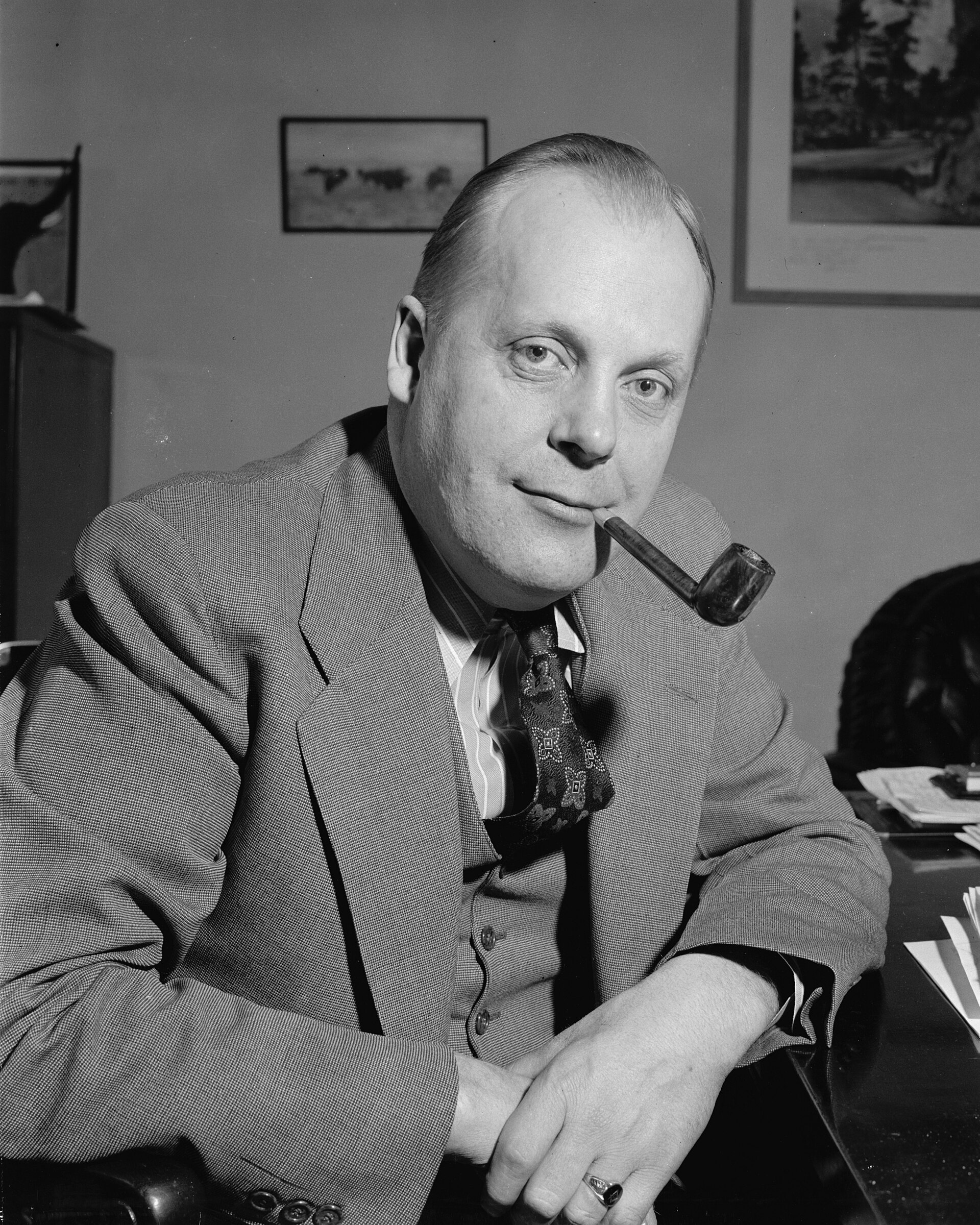

Mundt opened the public hearings at 10:30 a.m. on Thursday, April 22, 1954, in the caucus room of the Senate Office Building. He said the subcommittee had held "well over 25 meetings and long conferences," that every decision had been unanimous except two, "the vote by which this committee assumed the responsibility for conducting the investigation, which I opposed, and the vote by which Senator Dworshak was named on the subcommittee to replace Senator McCarthy during these hearings which was opposed by Senator Dworshak." He announced "a series of nine special rules" adopted for this inquiry alone, said that one member present would legally be a quorum but pledged, "I shall not conduct these hearings at any time that both of our political parties are not represented on the subcommittee," and warned the crowd that there must "be no demonstrations of approval or disapproval of any kind at any time."9 The record lists the participants that morning: Ray H. Jenkins as the subcommittee's chief counsel, with Thomas R. Prewitt as assistant counsel and Ruth Y. Watt as chief clerk; as "principal participants," McCarthy, Cohn, Carr, Stevens, Adams and Hensel; and Joseph N. Welch and James D. St. Clair as "special counsel for the Army."9
The rules gave McCarthy something no ordinary defendant has. Although he was a party, he kept the right to cross-examine witnesses, and he used it from the first minute. Before Jenkins could call a witness, McCarthy rose: "A point of order, Mr. Chairman. May I raise a point of order?" He objected that the Army's charges were labeled "Filed by the Department of the Army" and called the officials who filed them "a few Pentagon politicians, attempting to disrupt our investigations."9 The phrase "point of order" became the most remembered line of the spring; Cohn himself later wrote that McCarthy used it "so often they were taken up by countless comedians and had a vogue as a national catch-phrase."5
The people at the table
Robert T. Stevens, Secretary of the Army, was the Army's principal witness and testified longer than anyone; White House press secretary James Hagerty recorded on May 12 that Eisenhower said Stevens "has been on the stand for 13 days."14 John G. Adams, counselor to the Army, a South Dakotan who had known Mundt for years, had handled the daily contacts with Cohn and prepared the Army's written account of them;14 his memoir, Without Precedent (1983), is one of the main insider accounts.5 H. Struve Hensel, Assistant Secretary of Defense, was made a party after McCarthy accused him of misconduct in a wartime ship-supply business; he denied it and was never called in public.15
Ray H. Jenkins was hired as the special chief counsel and conducted the direct examination of most witnesses; Mundt described him as "representing as he does neither side of this dispute."9 Joseph N. Welch, a senior partner of the Boston firm Hale and Dorr, served as the Army's special counsel, assisted by James D. St. Clair of the same firm. Welch had originally planned to bring a second young associate, Fred Fisher, and sent him home before the hearings began, a decision that became the center of the June 9 exchange.3 Robert F. Kennedy, a former subcommittee staff member, had returned in January 1954 as counsel to the Democratic minority.5
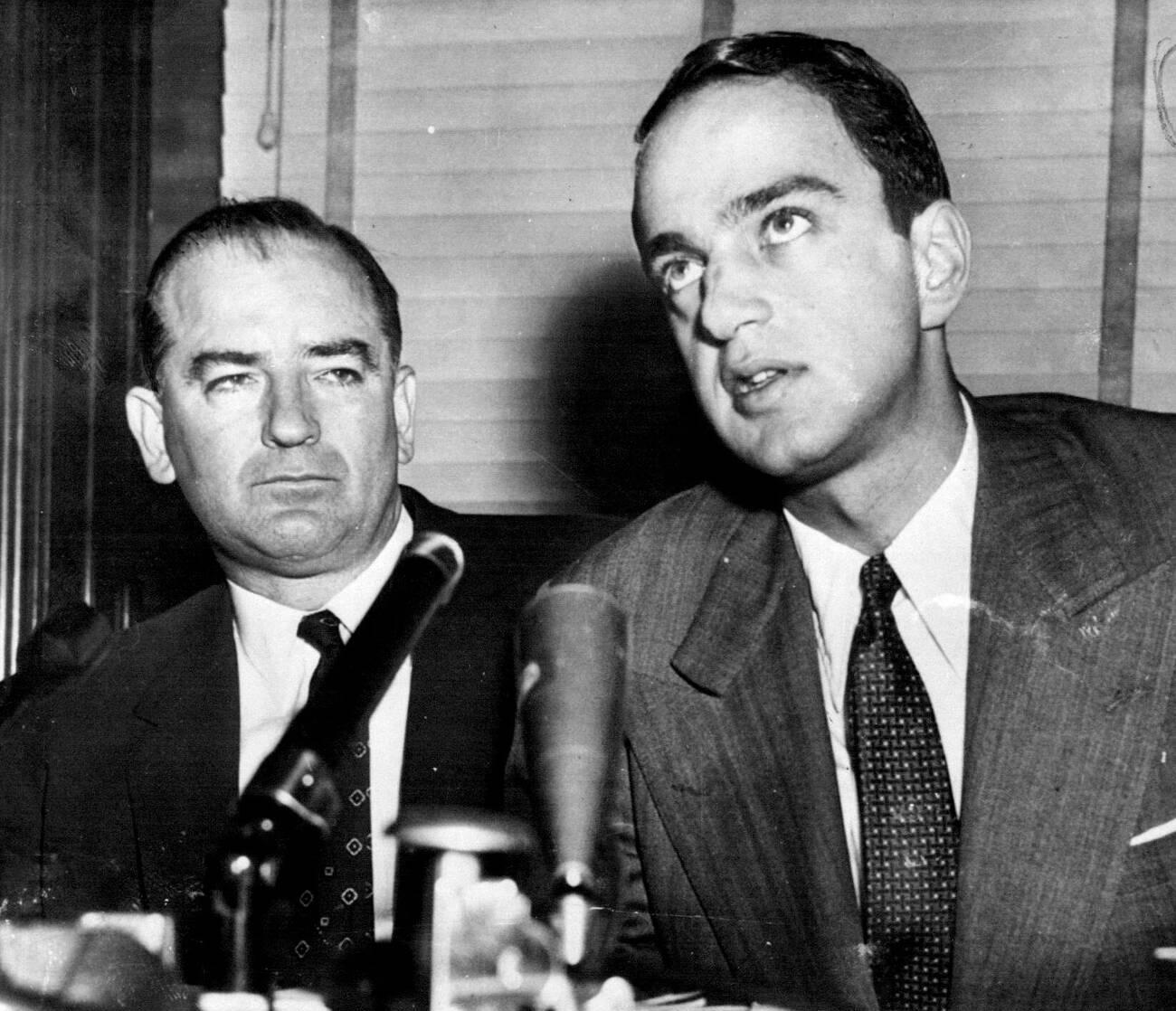
On the other side sat Roy M. Cohn, chief counsel to the subcommittee; Francis P. Carr, its executive director; and McCarthy. G. David Schine testified briefly on April 29 and 30.16
Thirty-six days on television
The hearings ran from April 22 to June 17, 1954. The Senate Historical Office dates the inquiry "March 16 to June 17, 1954," counting the closed March 16 session, and the printed public record begins on April 22.2 The printed hearings fill 71 numbered parts, each with a date on its cover, and those covers show public sessions on 36 weekdays. McCarthy himself, in a closed session on July 15, 1954, referred to "the thirty-six days of hearings."17 The Museum of Broadcast Communications' Encyclopedia of Television gives the same count and adds that "188 hours of broadcast time were given over to telecasts originating from the Senate Caucus Room."1
Coverage was uneven. According to the same encyclopedia entry, CBS declined live coverage before the hearings began; NBC dropped live coverage after the second day and ran late-night summaries; ABC carried the sessions live "gavel to gavel," with the network feed coming from the facilities of ABC's Washington station, WMAL-TV, and the DuMont network was also formally committed to live coverage; and some cities, Los Angeles among them, saw no live coverage because local stations declined the feed. The entry estimates "an audience of some 20 million Americans."1 That number is an estimate of typical viewership, and other popular accounts give much larger figures for the number of people who saw some part of the hearings. No audience measurement from 1954 was located for this lesson, so any audience figure should be treated as approximate.
The calendar below lays out every weekday from April 19 to June 18, 1954. Each numbered square is a day with a public session, numbered in order; the notes at right are taken from the printed record and the sources cited.
The evidence fights
Most of the 36 days were spent on who said what to whom about Private Schine. Four episodes, all on the printed record, did the most to shape what the public and the senators concluded.
The cropped photograph
During the examination of Stevens on April 26, Jenkins showed the Secretary a photograph of Stevens standing with Schine, which suggested that the Secretary had been friendly with the private and sought his company. The next morning Welch raised what he called "a point of something." He told the subcommittee that "Mr. Jenkins yesterday was imposed upon, and so was the Secretary of the Army, by having a doctored or altered photograph produced in this court room as if it were honest," and he produced the original, charging that "what was offered in evidence yesterday was an altered, shamefully cut-down picture, so that somebody could say to Stevens, 'Were you not photographed alone with David Schine,' when the truth is he was photographed in a group." Jenkins answered that the cut-down print "is the identical photograph that was furnished me by one of the parties in interest in this case, and I might say an adverse party of interest to Mr. Stevens," and that he had "presented it in good faith." Welch said the official photographer at McGuire Air Force Base had been sent for. Stevens identified the man cut from the picture as Colonel Bradley.18
On April 30 Welch questioned James N. Juliana, a subcommittee staff member who had obtained the copy used at the hearing, about why the copy brought to the hearing showed two people when the print that hung in Schine's office showed three. When Juliana said he "had no idea" where Welch's picture came from, Welch asked, "Did you think this came from a pixie?" McCarthy asked Welch to define the word, and Welch answered that "a pixie is a close relative of a fairy."19 In 1954 that answer drew laughter. Later writers have widely read it as a sexual insinuation aimed at Cohn and Schine, and defenders of McCarthy cite it as evidence that Welch's courtly manner covered tactics of his own. The photograph itself was cut down; who decided to crop it and why was argued for days and is discussed in the assessment below.
The purloined FBI letter
On May 4, while cross-examining Stevens, McCarthy produced what he described as a copy of a letter of January 26, 1951 from FBI Director J. Edgar Hoover to Major General Alexander R. Bolling, the Army's intelligence chief, warning of security problems at Fort Monmouth. His point was that the Army had been warned and had done nothing. Senator Jackson immediately asked the question the document raised: "How did it get into the hands of the committee?" Jenkins ruled McCarthy's use of it competent "on the assumption that no party in interest and no counsel would refer to a spurious manufactured document."20
That assumption did not survive the next morning. The subcommittee sent assistant counsel Robert A. Collier, a former FBI employee, to see Hoover. On May 5 Collier testified that Hoover had compared the document with the bureau's files, and he reported Hoover's conclusion in these words: "This is not a carbon copy or a copy of any communication prepared or sent by the FBI to General Bolling on January 26, 1951, or any other date." (The printed record spells the general's name "Boiling," a typesetting error.) The FBI did have, Collier said, a 15-page interdepartmental memorandum of that date to Bolling, the Army's Assistant Chief of Staff, G-2, on an espionage case whose subject line named Aaron Hyman Coleman, and the two documents differed in letterhead, format, salutation, signature line and length: "This carbon copy is two and one-quarter pages in length. The FBI original is 15 pages in length."21 In other words, someone had retyped material drawn from a real FBI memorandum into the form of a letter Hoover had never written. Called as a witness, McCarthy refused to say where he got it: "Mr. Welch, you are not the first individual that tried to get me to betray the confidence and give out the names of my informants. You will be no more successful than those who have tried in the past, period." On May 6 Attorney General Herbert Brownell Jr. wrote Mundt that the 15-page memorandum was classified, that the FBI "has never released or authorized the release of the memorandum or any portion thereof to anyone" beyond the Army and Air Force officials to whom it was delivered, and that Justice Department policy barred disclosing FBI reports.22 Welch's cross-examination fixed the image: he called the document "the hot letter" and asked Collier whether he had found "anywhere in Washington an original letter of which the document before you could be said to be a carbon copy." Collier answered that he had "not found the original of any document purporting to be the original of this document."22
The episode cut both ways. The underlying FBI memorandum was real, and its existence supported McCarthy's claim that the FBI had warned the Army about Fort Monmouth in 1951. But the document McCarthy waved was not what he said it was, it carried a signature line for a letter that did not exist, and it reached him through an officer who had passed classified material outside channels. McCarthy's open invitation to federal employees to give him such material later became one of the counts in the censure debate (lesson 09).
The "monitored" telephone calls
Senior Army officials routinely had secretaries listen to and transcribe their telephone calls, and the Army's case rested partly on those transcripts. The practice embarrassed everyone it touched. The November 1953 transcript in which McCarthy called Cohn "completely unreasonable" about Schine was read into the record.5 On June 4 the appointment clerk to the Secretary of the Army read a transcript of a call of February 20, 1954, in which Stevens told Senator Symington that he would not let General Zwicker testify because he "did not intend to have this abuse of our professional officer corps continued," and Symington told Stevens, "Let me talk to Clifford about it and I will call you," referring to Clark Clifford, a former aide to President Truman. McCarthy charged that Symington had let "one of the top aides to President Truman to run the show" and later said Symington had "got Clark Clifford to mislead a fine, naive, not too brilliant Republican Secretary of the Army." A Democratic motion in executive session to call Clifford was defeated by a Republican substitute motion, and Clifford did not testify in public.23 The subcommittee also learned that Stevens had monitored calls with members of the subcommittee itself, which became one more grievance in a hearing already full of them; in a closed session in July McCarthy remarked to Jackson that Jackson had been "in a peculiarly pleasant position because you had no monitored phone calls."17
The January 21 meeting and the senators under oath
The most important evidence for McCarthy's side came out on May 12 to 14. Adams testified that on January 21, 1954 he had attended a meeting with Attorney General Herbert Brownell, Deputy Attorney General William Rogers, White House Chief of Staff Sherman Adams, United Nations Ambassador Henry Cabot Lodge Jr. and White House counsel Gerald Morgan, and that Sherman Adams had told him to prepare a written account of the Schine matter. Hagerty's diary for May 12 records the testimony and its meaning to the White House: Adams "mentioned the fact that he had conferred with Brownell, Rogers, Governor Adams, Gerry Morgan, and that Governor Adams had told him to prepare a memorandum on case. Believe this to be opening of White House action in case."14 When Symington asked Adams why Lodge had been at the meeting, Welch rose to say that "this witness has been instructed not to testify as to the interchange of views on people at that high level at that meeting."24
Adams also acknowledged that before January 21 he had discussed with the Deputy Attorney General and with Hensel the problem of the subcommittee's subpoenas for members of Army loyalty boards, and when Symington pressed him on how the Schine matter related to that problem, Adams answered that "I did have a feeling then that everything adverse to the committee desires or Mr. Cohn's request with reference to Schine, would result in difficulties for the Army."24 In the days after January 21 Adams visited the subcommittee's senators one by one. Mundt, sworn as a witness on May 14, testified that when Adams called on him on January 22 they first discussed the loyalty-board subpoenas and then "Mr. Adams brought up before me the discussion of Cohn and Schine," adding: "Frankly, I felt a little bit uneasy about the juxtaposition of those topics, which in my opinion were entirely unrelated." Mundt said he told Adams that if he were running the Army he would tell a staff member who kept calling, "I am running the Army. You run your committee," and that, as far as he was concerned, the Army could put Schine "on KP duty for the rest of his natural life."7 Dirksen and Potter gave their own accounts the same day.
This testimony is the strongest documentary support for the McCarthy side's theory. It shows that the Army's complaint about Schine was assembled at the suggestion of the President's chief of staff, at a meeting held while the Army was resisting the subcommittee's subpoenas, and that Adams raised Schine in the same conversations in which he raised the subpoenas. It does not show that the Army offered to trade treatment of Schine for an end to the investigation; Mundt's own words describe a juxtaposition he found unsettling, not an offer.
Eisenhower's hand: executive privilege and the strategy behind the scenes
In public Eisenhower refused to attack McCarthy by name. The private record at the Eisenhower Presidential Library shows a president who had decided by early 1954 to see McCarthy defeated and who directed much of the effort through others.25
What the White House diaries show
James Hagerty, the White House press secretary, kept a daily diary, and the library has published the entries on McCarthy. On February 25, 1954, the day after the "chicken luncheon," Hagerty wrote that the President was "very mad and getting fed up - it's his Army and he doesn't like McCarthy's tactics at all," and recorded Eisenhower saying: "This guy McCarthy is going to get into trouble over this. I'm not going to take this one lying down." The same entry records that Dirksen agreed to work with the subcommittee's members to get Cohn fired and to require a majority vote for subpoenas, and then the plain note: "Dirksen couldn't deliver."26 (Quotations from the diary follow the library's typed transcription; the typing preserves some abbreviations and errors.)
On March 8 Hagerty recorded that the President called McCarthy a "pimple on path of progress" and wrote, "Ike really made up his mind to fight Joe from now on in."27 On March 10, the day before the Army's chronology became public, Hagerty quoted Eisenhower telling his congressional liaison, Wilton Persons, that McCarthy could regain standing only by saying publicly, "I was wrong in browbeating witnesses, wrong in saying the Army is coddling Communists, and wrong in my attack on Stevens. I apologize."28 On March 24, overruling advisers who wanted him to stay out, Eisenhower told his staff: "I've made up my mind you can't do business with Joe and to hell with any attempt to compromise."29
During the hearings the diaries show the White House following each turn. On May 12, after Persons said Stevens had made a mistake in opposing Dirksen's motion to end the public sessions, Eisenhower answered, "I think Stevens did exactly right," because closed sessions would have let McCarthy "come out of the hearings and tell reporters anything he wanted," adding, "Anyway I'm glad the Army is fighting him right down the line."14 On May 14, after Senator McClellan threatened to subpoena White House staff members, Hagerty recorded the President's reaction: "If they want to make a test of this principle, I'll fight them tooth and nail and up and down the country. It is a matter of principle with me and I will never permit it."30
The May 17, 1954 letter
The result was the letter of May 17, 1954 from Eisenhower to Secretary of Defense Charles E. Wilson, released with a memorandum from Attorney General Brownell on the history of presidential refusals to give information to Congress. The library holds the signed copy; the published text in the Public Papers of the Presidents reads in its operative part:
"Because it is essential to efficient and effective administration that employees of the Executive Branch be in a position to be completely candid in advising with each other on official matters, and because it is not in the public interest that any of their conversations or communications, or any documents or reproductions, concerning such advice be disclosed, you will instruct employees of your Department that in all of their appearances before the Subcommittee of the Senate Committee on Government Operations regarding the inquiry now before it they are not to testify to any such conversations or communications or to produce any such documents or reproductions. This principle must be maintained regardless of who would be benefited by such disclosures."
The letter grounded the order in "the proper separation of powers between the Executive and Legislative Branches," said that "throughout our history the President has withheld information whenever he found that what was sought was confidential or its disclosure would be incompatible with the public interest or jeopardize the safety of the Nation," and left open testimony about communications "directly between any of the principals in the controversy within the Executive Branch on the one hand and a member of the Subcommittee or its staff on the other."31 The practical effect was to close the door on testimony about the January 21 meeting with Brownell and the White House staff, the one subject on which McCarthy's counter-charges had real evidence behind them.
Hagerty's account of the morning shows how deliberately it was done. The President approved the letter at a 7:15 breakfast; it was agreed that he would tell the congressional leaders about it "as an accomplished fact so that they would not have an opportunity either to oppose it or to offer changes." At the leaders' meeting he said, in Hagerty's notes, "Any man who testifies as to the advice he gave me won't be working for me that night," and, of his chief of staff, "Governor Adams' official job is really a part of me and he's not going up on the Hill."32 The staff secretary's notes of the same meeting record Eisenhower recalling "his efforts to 'stay out of this damn business on the Hill'" and saying he "had long thought the particular Committee had gotten way out of line but that he couldn't presume to tell the Senate about its own business."33 The public hearings did not meet again until May 24.
The May 17 letter outlived the hearings. The principle it stated, that a president may shield internal advice from Congress, is what later came to be called executive privilege, and its scope remains contested in court and in Congress. Lesson 12 takes up that question as a matter of method: the same principle that frustrated McCarthy has been invoked against investigators of every persuasion since.
Historians on the hidden hand
Political scientist Fred I. Greenstein, in The Hidden-Hand Presidency: Eisenhower as Leader (1982), was among the first to argue from the Eisenhower papers that the President's public restraint toward McCarthy was a strategy, with the work done by aides and allies. David A. Nichols, in Ike and McCarthy: Dwight Eisenhower's Secret Campaign against Joseph McCarthy (Simon and Schuster, 2017), carried the argument further, contending from the Hagerty diaries, the staff notes and the Army and Justice Department files that the White House helped shape the Army's chronology, chose the moment of its release and used executive privilege to keep its own role out of the hearing room.34 Nichols writes as an admirer of Eisenhower, and he presents the campaign as a defense of the Army and of the presidency. Writers sympathetic to McCarthy, notably M. Stanton Evans in Blacklisted by History (2007), read the same January 21 meeting and the May 17 order as proof that the Army's charges were a political operation from the start.35 On the facts, the two readings agree more than either side usually admits: the White House was deeply involved. They disagree on whether that involvement was a legitimate defense against an abusive investigation or an improper effort to stop a legitimate one.
June 9, 1954: Fred Fisher and "Have you no sense of decency?"
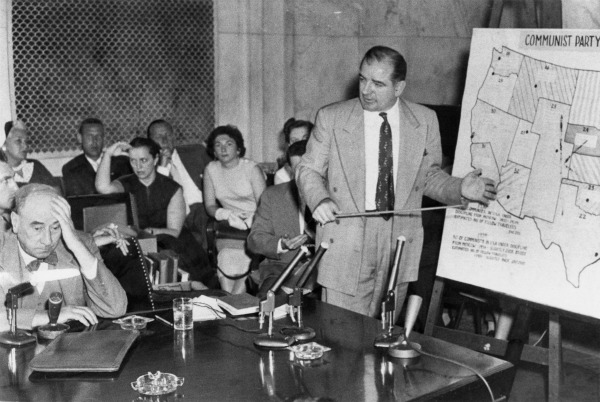
On the afternoon of June 9, the 30th day, Welch was cross-examining Cohn about a list of people McCarthy had described as Communists in defense plants. Welch pressed Cohn to give such names to the authorities at once: "May I add my small voice, sir, and say whenever you know about a subversive or a Communist or a spy, please hurry. Will you remember those words?" McCarthy then took the floor. The exchange that followed is quoted here from the official printed record, Part 59, pages 2426 to 2430 (an em dash in the printed transcript is rendered as "--").3
Senator McCarthy. Not exactly, Mr. Chairman, but in view of Mr. Welch's request that the information be given once we know of anyone who might be performing any work for the Communist Party, I think we should tell him that he has in his law firm a young man named Fisher whom he recommended, incidentally, to do work on this committee, who has been for a number of years a member of an organization which was named, oh, years and years ago, as the legal bulwark of the Communist Party, an organization which always swings to the defense of anyone who dares to expose Communists. ...
Senator Mundt. Mr. Welch, the Chair should say he has no recognition or no memory of Mr. Welch's recommending either Mr. Fisher or anybody else as counsel for this committee. ...
Mr. Welch. You won't need anything in the record when I have finished telling you this. Until this moment, Senator, I think I never really gaged your cruelty or your recklessness. Fred Fisher is a young man who went to the Harvard Law School and came into my firm and is starting what looks to be a brilliant career with us.
When I decided to work for this committee I asked Jim St. Clair, who sits on my right, to be my first assistant. I said to Jim, "Pick somebody in the firm who works under you that you would like." He chose Fred Fisher and they came down on an afternoon plane. That night, when he had taken a little stab at trying to see what the case was about, Fred Fisher and Jim St. Clair and I went to dinner together. I then said to these two young men, "Boys, I don't know anything about you except I have always liked you, but if there is anything funny in the life of either one of you that would hurt anybody in this case you speak up quick."
Fred Fisher said, "Mr. Welch, when I was in law school and for a period of months after, I belonged to the Lawyers Guild," as you have suggested, Senator. He went on to say, "I am secretary of the Young Republicans League in Newton with the son of Massachusetts' Governor, and I have the respect and admiration of my community and I am sure I have the respect and admiration of the 25 lawyers or so in Hale & Dorr."
I said, "Fred, I just don't think I am going to ask you to work on the case. If I do, one of these days that will come out and go over national television and it will just hurt like the dickens."
So, Senator, I asked him to go back to Boston.
Little did I dream you could be so reckless and so cruel as to do an injury to that lad. It is true he is still with Hale & Dorr. It is true that he will continue to be with Hale & Dorr. It is, I regret to say, equally true that I fear he shall always bear a scar needlessly inflicted by you. If it were in my power to forgive you for your reckless cruelty, I will do so, I like to think I am a gentleman, but your forgiveness will have to come from someone other than me. ...
Mr. Welch. Senator, may we not drop this? We know he belonged to the Lawyers Guild, and Mr. Cohn nods his head at me. I did you, I think, no personal injury, Mr. Cohn.
Mr. Cohn. No, sir.
Mr. Welch. I meant to do you no personal injury, and if I did, I beg your pardon.
Let us not assassinate this lad further, Senator. You have done enough. Have you no sense of decency, sir, at long last? Have you left no sense of decency?
Senator McCarthy. I know this hurts you, Mr. Welch. But I may say, Mr. Chairman, on a point of personal privilege, and I would like to finish it--
Mr. Welch. Senator, I think it hurts you, too, sir. ...
Mr. Welch. Mr. McCarthy, I will not discuss this with you further. You have sat within 6 feet of me, and could have asked me about Fred Fisher. You have brought it out. If there is a God in heaven, it will do neither you nor your cause any good. I will not discuss it further. I will not ask Mr. Cohn any more questions. You, Mr. Chairman, may, if you will, call the next witness.
The printed record spells the word "gaged," an older spelling of "gauged"; the Senate Historical Office's page on the exchange modernizes it to "gauged."36 Between Welch's two speeches, McCarthy read into the record the description of the National Lawyers Guild that the House Committee on Un-American Activities had published: "The foremost legal bulwark of the Communist Party, its front organizations, and controlled unions, and which, since its inception, has never failed to rally to the legal defense of the Communist Party, and individual members thereof, including known espionage agents." He insisted, "Now, that is not the language of Senator McCarthy. That is the language of the Un-American Activities Committee," and twice said he believed Welch had not known of Fisher's membership when he chose him. Mundt again said that the subcommittee's records showed no recommendation of Fisher by Welch.3

Reading June 9 fairly
Several facts complicate the familiar story, and a fair reader should hold them alongside it. First, Fisher's membership in the National Lawyers Guild was real; Welch confirmed it ("We know he belonged to the Lawyers Guild"), and McCarthy said on the record that there was a news story about it ("Jim, will you get the news story to the effect that this man belonged to this Communist-front organization?"), which suggests the matter was not secret.3 Second, the Guild had been described by HUAC in the terms McCarthy read, and Attorney General Brownell had moved in 1953 to designate it as a subversive organization; the Guild contested that designation, and the Justice Department abandoned the effort in 1958. (Those last two points come from standard histories of the Guild and were not checked against Justice Department records for this lesson.) Third, the Museum of Broadcast Communications entry states that McCarthy acted "Ignoring a prehearing agreement between Welch and Cohn," an understanding, reported in several later accounts, that Fisher's name would not be raised if the Army side did not raise certain matters about Cohn; Cohn himself is said to have urged McCarthy not to do it, and McCarthy said on the record, "I know Mr. Cohn would rather not have me go into this. I intend to, however."37
None of that changes what happened on the floor. McCarthy did not accuse Fisher of Communist Party membership or espionage; he tied him to what he called "that Communist organization" and named a young private lawyer who held no government job and was not a party to the dispute, on national television, to wound the Army's counsel. The witness at the time was Cohn, and the subject was whether the subcommittee moved quickly against suspected Communists; Fisher had nothing to do with either. Welch's reply, which may have been partly prepared given the advance understanding, was effective because the attack was gratuitous. Fisher's later career bore out Welch's prediction about Hale and Dorr: he remained with the firm for decades. (His later career is reported in obituaries and bar histories and was not checked against primary records for this lesson.)
Before the hearings: Murrow's See It Now, March 9, 1954
Two days before the Army's chronology became public, the CBS program See It Now, produced by Edward R. Murrow and Fred W. Friendly, devoted its half hour on March 9, 1954 to "a report on Senator Joseph R. McCarthy told mainly in his own words and pictures." The program, sponsored by Alcoa, was built almost entirely from film of McCarthy's speeches and hearings, with Murrow's commentary between clips; Murrow opened by offering McCarthy time to reply on the program.38 Its close, quoted here from the transcription published by the University of California, Berkeley's Media Resources Center (transcribed in 2006 from the Edward R. Murrow Collection DVD), is the most quoted passage:
"No one familiar with the history of this country can deny that congressional committees are useful. It is necessary to investigate before legislating, but the line between investigating and persecuting is a very fine one and the junior Senator from Wisconsin has stepped over it repeatedly. His primary achievement has been in confusing the public mind, as between the internal and the external threats of Communism. We must not confuse dissent with disloyalty. We must remember always that accusation is not proof and that conviction depends upon evidence and due process of law."
Murrow ended: "He didn't create this situation of fear; he merely exploited it -- and rather successfully. Cassius was right. 'The fault, dear Brutus, is not in our stars, but in ourselves.' Good night, and good luck."38 The Senate Historical Office notes another effect: when Annie Lee Moss appeared before McCarthy's subcommittee on March 11, "The hearing was replayed on Edward R. Murrow's popular See It Now television program and proved a public relations blow to the chairman" (lesson 07 covers the Moss case, including the 1958 finding that her name had appeared on Communist Party rolls).5
Murrow's broadcast was a work of advocacy, and its defenders and critics both said so at the time. It assembled McCarthy's own words, which gave it force, and it selected them, which gave it a point of view. Its central sentence, that "accusation is not proof," is a statement of due process that any side of the argument can accept. Its claim that McCarthy confused the internal and external threats is a judgment that later evidence partly qualifies: the Venona decrypts showed the internal espionage threat of the 1940s was larger than Murrow's audience knew (lesson 02), even though McCarthy himself identified very few of the people the decrypts later exposed (lesson 11).
The findings: majority and minority, August 31, 1954
The hearings ended on June 17 without a vote on any charge. The special subcommittee filed its report, Senate Report No. 2507 of the 83rd Congress, Charges and Countercharges Involving: Secretary of the Army Robert T. Stevens, John G. Adams, H. Struve Hensel and Senator Joe McCarthy, Roy M. Cohn, and Francis P. Carr, "with minority and individual views," on August 31, 1954; the Government Printing Office catalog lists it at iv and 130 pages.39 The full text of the report was not available online to be opened for this lesson. Its conclusions are summarized below from contemporary press accounts of the released text, as reported in later histories, and the wording should be checked against the printed report before any phrase is quoted as the report's own.
The four Republicans (Mundt, Dirksen, Potter and Dworshak) signed the majority report. As summarized in the press, it found that McCarthy had not himself exerted improper influence on Schine's behalf but should have exercised firmer control of his staff and appeared to have known of and tolerated Cohn's efforts; that Cohn had been unduly aggressive and persistent on Schine's behalf; that Stevens and Adams had made efforts to end or influence the subcommittee's investigation of the Army and had dealt with McCarthy and Cohn by placating and appeasing them rather than standing firm; and that the charge that the Army had held Schine as a hostage to stop the investigation was not proved. Individual views were also filed; the catalog title of the report lists "minority and individual views," and their content was not checked for this lesson.40
The three Democrats (McClellan, Jackson and Symington) filed minority views finding that McCarthy had fully acquiesced in and condoned Cohn's conduct, that both men deserved severe criticism, and that Stevens had been inexcusably indecisive in dealing with the subcommittee.40 On the two central charges the senators therefore agreed more than their party split suggests: everyone found that Cohn had pressed for Schine improperly, and everyone found that the Army's leadership had handled McCarthy weakly. They split on how much of the blame belonged to McCarthy himself.
By the time the report appeared, events had moved on. Cohn resigned from the subcommittee staff on July 20, 1954, and Carr on October 8; Republican leader William Knowland declined to approve further public hearings by the subcommittee for the rest of the session.41 On July 30 Senator Ralph Flanders of Vermont introduced the censure resolution, and on August 2 the Senate sent it to a select committee chaired by Arthur Watkins of Utah, which opened hearings on the same day the Army-McCarthy report was filed, August 31.42 When the Senate censured McCarthy on December 2, 1954, by a vote of 67 to 22, both counts concerned his treatment of Senate committees that had examined his own conduct, the Subcommittee on Privileges and Elections in 1952 and the Watkins committee in 1954; a proposed count on his abuse of General Zwicker was dropped.42 The story of the censure is lesson 09.
The fall in the polls
The hearings coincided with the steepest drop in McCarthy's public standing. The chart below uses the Gallup Poll's results for the question of whether respondents had a favorable or unfavorable opinion of McCarthy, as tabulated from Gallup's published releases by the political scientist Nelson W. Polsby in "Towards an Explanation of McCarthyism," Political Studies 8, no. 3 (1960), page 252.4 Two cautions apply. The figures were checked against a reproduction of Polsby's table, not against Gallup's original 1953 and 1954 releases, which were not available to be opened. And the polls were taken at irregular intervals, so the points in the chart are evenly spaced for legibility, not placed to scale in time.
Three things stand out. First, McCarthy's best month in the Gallup series was January 1954, after a year of chairing the subcommittee and on the eve of the Army quarrel: 50 percent favorable, 29 percent unfavorable. Second, the turn came in the spring, between the Zwicker hearing, the Murrow broadcast and the Army's chronology in February and March and the first weeks of televised hearings in April and May; by April unfavorable opinion already exceeded favorable. Third, the fall was large but not a collapse. About a third of the public kept a favorable view of McCarthy through the end of 1954.4 The Senate Historical Office's statement that "Overnight, McCarthy's immense national popularity evaporated" after June 9 is a fair description of his standing among the press and his colleagues but overstates what the polls measured: the slide had begun months earlier and did not end in a single night.36

The defenders' case
McCarthy's defenders, in 1954 and since, make an argument that the hearing record supports in part. The fullest modern statement is M. Stanton Evans's Blacklisted by History (2007); Arthur Herman's Joseph McCarthy: Reexamining the Life and Legacy of America's Most Hated Senator (2000) makes a more qualified version.35 Its main points, set against the documents:
- The Army used Schine to blunt the Fort Monmouth investigation. The Army's complaint was not filed when the requests were made in 1953. It was assembled in early 1954, after the subcommittee had subpoenaed members of Army loyalty boards and after a January 21 meeting with the Attorney General and White House officials, held while the Army was resisting those subpoenas, at which the President's chief of staff told Adams to write up the Schine record.24 Adams then raised Schine with senators in the same conversations in which he raised the subpoenas, and Mundt testified that he "felt a little bit uneasy about the juxtaposition of those topics."7 McCarthy's March 13 statement that Adams had warned of an embarrassing report "unless the investigation of the Communists in the Army was discontinued" fits that sequence.11
- The White House was a hidden party. The Hagerty diaries and the May 17 order show that the executive branch's highest officials were directing one side of a dispute that was presented to the public as a quarrel between a senator and an Army secretary, and then barred testimony about their own role.32
- The underlying security concern was real. The FBI memorandum of January 26, 1951 existed; the Army had suspended dozens of Fort Monmouth employees on its own; and Peress had been promoted and honorably discharged after refusing to answer questions about party membership.5
- Welch was not the gentle figure of legend. Defenders point to the "pixie" remark, to the reported prehearing understanding about Fisher, and to Welch's skill in turning each procedural fight into theater.19
William F. Buckley Jr. and L. Brent Bozell's McCarthy and His Enemies: The Record and Its Meaning (Regnery, 1954) belongs to this tradition but should be read for what it is. It was published in 1954 and defends McCarthy's 1950 to 1953 record, especially the State Department cases, and was written before the hearings concluded; it is not an account of the Army-McCarthy hearings. Its argument, that the country was entitled to a vigorous effort to remove security risks even at some cost to individuals, is the general case on which later defenders of McCarthy's conduct in 1954 build.43 (The month of its release and whether its authors addressed the opening weeks of the hearings were not confirmed for this lesson.)
The critics' case
The historians who judge McCarthy most severely, among them Richard Rovere (Senator Joe McCarthy, 1959), David Oshinsky (A Conspiracy So Immense, 1983) and Ellen Schrecker (Many Are the Crimes, 1998), read the same record differently.44 Their main points, again set against the documents:
- The Schine pressure was real whatever the Army's motives. Reber's testimony about the 1953 commission request, the chronology's entries, the monitored calls, and Cohn's own later admissions establish a campaign of pressure by a Senate staff member on behalf of a friend. Why the Army chose to make it public does not change whether it happened, and all seven senators agreed that it did.40
- The McCarthy side's evidence was repeatedly tainted. The photograph shown to Stevens had been cut down, and the "letter" McCarthy produced had been retyped into the form of a letter Hoover never sent.21 Neither episode required anyone to believe the Army's version; both came out of the McCarthy side's own exhibits.
- The hostage charge never found evidence. No witness and no document showed the Army offering to go easy on Schine, or threatening to be hard on him, in exchange for an end to the investigation. The Republican majority did not sustain it.40
- McCarthy's conduct, seen whole, was the issue. The hearings let a national audience watch the methods that closed sessions had hidden. Cohn's own judgment, written in 1968, is that McCarthy "was verbally brutal where he should have been dexterous and light" and "tended to sensationalize the evidence he had."5 June 9 showed those traits turned on a private citizen.
Oshinsky in particular treats the hearings as the point at which McCarthy's tactics, effective in the short news cycles of 1950 to 1953, failed under continuous exposure. Rovere, who covered McCarthy for The New Yorker, emphasized that his power had always rested on the press's willingness to print accusations, and that sustained television took that advantage away. Schrecker places the hearings in a longer story in which McCarthy was the most visible but not the most important part of a broad anti-communist effort run largely by the executive branch, the FBI and employers (lesson 10). Haynes and Klehr, whose work on Venona most strengthened the anti-communist case on espionage, do not defend McCarthy's conduct in 1954; their argument is that the espionage was real and that McCarthy's recklessness discredited the effort to deal with it.6
What the record shows and what it does not
- Documented fact: Cohn repeatedly sought special treatment for Schine from the Army in 1953 and early 1954 (hearing testimony, Army chronology, monitored calls; agreed by all seven senators).
- Documented fact: The Army's written account was prepared after a January 21, 1954 meeting with the Attorney General and senior White House officials, and Adams raised Schine in the same conversations as the loyalty-board subpoenas (Adams and Mundt testimony, May 14; Hagerty diary, May 12).
- Documented fact: The photograph used on April 26 had been cut down from a group picture, and the January 26, 1951 "letter" was not a copy of any FBI communication (hearing record, April 27 and May 5).
- Documented fact: Eisenhower's May 17, 1954 letter barred Defense Department employees from testifying about internal advice, and Hagerty's diary shows the President directing the strategy against McCarthy from February 1954.
- Documented fact: McCarthy named Fred Fisher's former membership in the National Lawyers Guild on June 9; Welch had sent Fisher home before the hearings because of it.
- Allegation never proved: that the Army held Schine "hostage" or offered a trade to stop the investigation.
- Allegation never proved: that McCarthy personally ordered the photograph cropped to deceive.
- Open question: who retyped the FBI material into the 2 1/4-page "letter," and who gave it to McCarthy; he refused to name his source under oath.
- Open question: exactly how much the hearings, as against the Murrow broadcast, the Zwicker affair and the Army's chronology, caused the fall in McCarthy's standing; the Gallup decline began before the hearings.
Assessed from 2026
Each charge and counter-charge is rated against the evidence now available: the printed hearing record, the executive session transcripts released in 2003, the Eisenhower Library's published documents, and the subcommittee's report as summarized. Ratings: Supported, Partly supported, Unsupported, Refuted, Unresolved.
Army charge: Cohn sought preferential treatment for Schine by improper means
Supported. The requests began before Schine was drafted (Reber, April 22), continued through his training (chronology entries read into the record), and are confirmed by McCarthy's own monitored call calling Cohn "completely unreasonable" on the subject. Both the majority and the minority found Cohn's conduct improper. Cohn's 1968 memoir concedes his own performance but not the substance; the documentary weight is against him.95
Army charge: McCarthy himself sought preferential treatment
Partly supported. McCarthy wrote asking that Schine get regular treatment, told Stevens in a monitored call not to assign Schine back to the subcommittee, and joked about Cohn's demands. He also backed Cohn publicly once the charges were made and never disciplined him. The majority cleared him of improper influence; the minority found he condoned Cohn's conduct. The record supports the minority's narrower point, that he tolerated what he knew, more than the Army's broader charge that he personally applied pressure.740
Army charge: Cohn threatened to "wreck the Army"
Partly supported. The words come from the Army's contemporaneous chronology entry for January 13 and 14, 1954, and Stevens testified under oath that Adams reported them to him at the time. No recording exists, Cohn denied under oath that he ever "threatened to wreck the Army,"45 and the remark reached the record through Adams, an interested party. It is consistent with the rest of the documented pressure but rests on one witness.10
Counter-charge: the Army held Schine "hostage" to stop the investigation
Unsupported. No document or testimony shows an offer to trade Schine's treatment for an end to the inquiry, and the Republican majority, sympathetic to McCarthy, did not sustain the charge. What the record does show, Adams raising Schine alongside the loyalty-board subpoenas, is evidence of pressure tactics by the Army, not of a hostage bargain.740
Counter-charge: Stevens and Adams tried to end or limit the Fort Monmouth investigation
Supported. Adams's own testimony about the loyalty-board subpoenas, his visits to the senators in January 1954, and the majority's finding that Stevens and Adams tried to terminate or influence the investigation all support this charge. Whether that was improper is a separate question: an executive department may lawfully resist subpoenas it believes exceed a committee's authority, and the President did so openly on May 17.2440
Counter-charge: the Army tried to divert the inquiry to the Air Force and Navy
Unresolved. Cohn's claim that Adams offered information about another service in return for ending the Army inquiry was read into the record as a charge; the sworn testimony on it conflicts, and no document resolves it.11
Counter-charge (developed later): the White House was behind the Army's case
Supported. Adams's May 14 testimony, Hagerty's diary for February 25 to May 17, the staff notes of May 17 and the May 17 letter establish that senior White House officials prompted the Army's written account, followed the hearings closely and acted to keep their own role out of testimony. Historians differ on whether this was a legitimate defense of the Army or an improper political operation; that is a judgment, not a fact in dispute.143134
Army counter-attack: the photograph was "doctored" to mislead
Supported as to the alteration: the print shown to Stevens omitted a third person present in the original. Unresolved as to intent and authorship: subcommittee staff testified that the enlargement was made for display, and no testimony established that McCarthy directed the crop.1819
McCarthy's exhibit: the January 26, 1951 letter was a copy of an FBI letter
Refuted. Hoover, through Collier, stated it was "not a carbon copy or a copy of any communication prepared or sent by the FBI." Partly supported is the narrower claim behind it, that the FBI had warned Army intelligence about a Fort Monmouth espionage case in a memorandum of that date; the 15-page memorandum existed. Whether the Army acted adequately on it is taken up in lesson 07.21
June 9: Fred Fisher had belonged to a group the House committee called the "legal bulwark" of the Communist Party
Supported as to membership and HUAC's description; Welch confirmed the first and McCarthy read the second. Unsupported as to any suggestion that Fisher served the Communist cause; no evidence of that was offered then or has appeared since. Refuted as to McCarthy's statement that Welch had recommended Fisher "to do work on this committee"; the acting chairman twice said the subcommittee had no such recommendation on file.3
Common claim: the June 9 exchange destroyed McCarthy overnight
Partly supported. His standing fell sharply in 1954, and June 9 is the moment the public remembers. The Gallup series shows the decline under way in the March and April polls, around the time the hearings opened (the exact field dates of the April poll were not confirmed), and shows about a third of the public still favorable at year's end. The hearings as a whole, together with the Zwicker affair, the Murrow broadcast and the Army's chronology, are a better explanation than any one exchange.4
Common claim: Eisenhower stayed above the fight
Refuted. In public, he declined to name McCarthy; in private, the Hagerty diaries record him deciding in March 1954 to fight McCarthy "from now on in," directing the response to the Army controversy and personally ordering the May 17 restriction on testimony.2732
Hard questions and answers
If the White House prompted the Army's report, wasn't the whole case a setup?
The White House's role is documented, and McCarthy's defenders are right that the public was not told about it at the time. But the timing of a complaint is a different question from its truth. The facts in the Army's account, the requests for a commission, passes and duty changes for Schine, were confirmed by witnesses and documents the White House did not control, including McCarthy's own words in a monitored call, and senators of both parties concluded that Cohn's pressure was improper. A complaint can be both politically timed and true. The fair reading is that the Army had a genuine grievance and used it as a weapon in a separate fight over subpoenas.
Was Welch fair to McCarthy on June 9?
Welch had spent the afternoon baiting Cohn with demands that every Communist be reported "before sundown," and McCarthy called that "phony" in his reply; there was theater on both sides. Welch also made the "pixie" remark in April, which was a cheap shot by any standard. But on June 9 the person attacked was neither Welch nor a party to the dispute; it was a young lawyer who had already been sent home precisely so that his old Guild membership would not become an issue. McCarthy himself said on the record that Cohn "would rather not have me go into this." Welch's response may have been partly prepared in advance; it was still accurate.
Was Eisenhower right to use executive privilege against the subcommittee?
Two principles collide. Congress cannot oversee what it cannot see, and Mundt, no friend of McCarthy's tactics, believed committees were entitled to the facts. The President, for his part, needs candid advice, and his letter limited the order to internal advice while leaving dealings with the subcommittee open to testimony. The difficulty in 1954 was that the advice being shielded was advice about the very dispute under investigation, which meant the order protected one party's account of its own conduct. Readers who approve of the order against McCarthy should ask whether they would approve of the same order against investigators they favor; lesson 12 takes up that test directly.
Did the hearings hurt the real effort against Soviet espionage?
Probably, though that is a judgment. The serious work on Soviet intelligence in the United States was being done by the FBI, Army and NSA cryptanalysts on Venona, and the courts, largely out of public view (lessons 02 and 03). The hearings tied the cause of internal security in the public mind to a quarrel over a private's weekend passes, a doctored photograph and a retyped letter. Haynes and Klehr make the general version of this argument: McCarthy's recklessness made it easier for later writers to dismiss real espionage as hysteria.
Why did television matter so much here when McCarthy had used the press so well?
McCarthy's earlier power rested on short news items: a charge, a number, a headline, before the facts could be checked. The Army-McCarthy hearings put him on screen for hours at a time, interrupting, repeating "point of order," and reacting to witnesses. Cohn, who admired him, wrote afterward that he "frequently spoke before thinking of the effect of his words" and was "repetitious to the point of boredom." Those are weaknesses a print story can hide and a live broadcast cannot.5
What should a reporter check before repeating the standard story?
The date of the decency exchange (June 9, 1954, day 30 of 36); the fact that it came during Cohn's testimony, not McCarthy's; that Fisher had already been sent home; that the Guild membership was real; that the polls had turned before June; that the White House's role is documented in its own files; and that the subcommittee's report, which no one remembers, found against Cohn, Stevens and Adams alike. The full printed record is public and searchable, and lesson 14 explains how to use it.
Related lessons
- Lesson 07, The Cases: Fort Monmouth, Peress, Zwicker and Annie Lee Moss, the investigations that led to this quarrel.
- Lesson 09, Censure, Watkins, Yates, Barenblatt and the Courts: what the Senate did next.
- Lesson 12, Method Versus Mission: congressional investigation, executive privilege and due process as questions of method.
- Lesson 06, Three Committees Compared: why the Permanent Subcommittee on Investigations, not HUAC, held these hearings.
- Module 52, Legitimate Authority and Its Limits: Pierson's framework for judging when an investigating power exceeds its warrant.
- Module 74, Glen Taylor, Herman Welker and the Red Scare: the Idaho senators of the period.
Still open
These items could not be confirmed against a primary source before publication. The lesson states them as open, and they stay on the fact-check list.
- The text of the subcommittee's report, S. Rept. 2507 (August 31, 1954), was not available online and was not opened; the majority and minority findings are paraphrased from press summaries as repeated in later histories. Phrases such as 'unduly aggressive and persistent,' 'placation, appeasement and vacillation,' 'fully acquiesced in and condoned' and 'severe criticism' are commonly quoted from it but were not confirmed and are not quoted in the lesson. The content of the individual views (often said to include Senator Potter's) was not checked.
- Gallup figures were checked against a reproduction of Nelson Polsby's 1960 table, not against Gallup's original 1953 and 1954 releases or The Gallup Poll: Public Opinion 1935 to 1971.
- The television audience figure (some 20 million) is an estimate from the Encyclopedia of Television; no 1954 audience measurement was located. Larger figures in popular accounts were not verified.
- Dates of hearing Parts 28 to 31 (May 12 and 13, 1954) were not opened; they are inferred from adjacent parts and from Hagerty's May 12 diary entry. The other 34 hearing days are confirmed from the dated covers of the printed parts.
- The date and setting of the image 08-mccarthy-and-cohn-1954.jpg (Commons: March 12, 1954, 'at the Army-McCarthy hearings') are inconsistent, since public hearings began April 22; the June 7, 1954 date of 08-mccarthy-cohn-schine-june-1954.jpg and the June 9 date of 08-welch-and-mccarthy-june-9-1954.jpg are as given on Commons and the Senate page, not independently confirmed.
- The arguments attributed to Nichols (2017), Greenstein (1982), Evans (2007), Herman (2000), Buckley and Bozell (1954), Rovere (1959), Oshinsky (1983), Schrecker (1998) and Haynes and Klehr are summarized from their published theses; the books were not opened and no page numbers are given.
- The month of publication of McCarthy and His Enemies (1954) and whether it addressed the opening weeks of the hearings were not confirmed.
- The Justice Department's 1953 move to list the National Lawyers Guild as subversive and its abandonment of the effort in 1958 come from standard histories of the Guild and were not checked against Justice Department records.
- Fred Fisher's later career at Hale and Dorr is from obituaries and bar histories and was not checked against primary records.
- The details of the 'prehearing agreement' between Welch and Cohn about Fisher are from the Encyclopedia of Television and later accounts; its exact terms were not found in the hearing record.
- The diary quotations follow the Eisenhower Library's typed transcription, read by OCR for this lesson; minor OCR and typing errors were corrected only where the reading was unambiguous.
- The location of the January 21, 1954 meeting (often described as the Attorney General's office) was not confirmed in the documents opened; the hearing record and Hagerty's diary confirm the participants named.
- The statement that the Rosenberg network recruited engineers with Signal Corps and defense-electronics access rests on Haynes and Klehr and on lessons 02 and 07, not on documents opened for this lesson.
- The Senator Symington line 'The American people have had a look at you for six weeks. You are not fooling anyone' (reported by the Encyclopedia of Television) was not located in the hearing record and is not quoted in the lesson.
- The executive session volume gives two dates for Roy Cohn's resignation: the editor's note at p. 294 says July 20, 1954 (the date used in this lesson), while the volume's introduction says August 1954. The resignation letter itself was not opened.
- The dates given in the calendar infographic for individual witnesses after May 24 (Carr on June 14 to 15, McCarthy on June 10 to 11 and June 16 to 17) were not checked against the printed parts for those days in the independent fact check; the Senate editors' note in volume 5 gives Cohn's public testimony as May 26 to 28, June 1 to 4, 8 to 9 and 15, 1954.
Learn more
- Senate Historical Office: McCarthy and Army-McCarthy Hearings: The Senate's own summary, with links to all five volumes of the 2003 executive session transcripts and two staff oral histories.
- Executive Sessions, vol. 5 (2003), Introduction by Donald A. Ritchie: The best short account of 1954 from inside the subcommittee, with the closed sessions of the Army-McCarthy inquiry and editor's notes on each episode.
- Eisenhower Library: McCarthyism / The 'Red Scare': Scans of Hagerty's diary, staff notes and the May 17 letter; read them to see the White House strategy in its own words.
- Hearing Part 59, June 9, 1954: Read the whole afternoon, not only the famous lines, to see what Welch and Cohn were arguing about before McCarthy spoke.
- Hearing Part 32, May 14, 1954: Adams on the January 21 meeting and three senators testifying under oath about Adams's visits: the strongest record for McCarthy's side.
- Encyclopedia of Television: Army-McCarthy Hearings: How the networks covered the hearings and why television mattered.
Notes
- Museum of Broadcast Communications, Encyclopedia of Television, "Army-McCarthy Hearings" (March 11 chronology; Schine drafted November 1953; 36 days; 188 hours; network coverage; audience estimate of some 20 million; prehearing agreement on Fisher). Read it online. ↩
- U.S. Senate Historical Office, "McCarthy and Army-McCarthy Hearings," senate.gov (panel membership, Mundt as acting chairman, Dworshak seated in McCarthy's place, hearings March 16 to June 17, 1954, report August 31, 1954). The 36-day count is from notes 1 and 17. Read it online. ↩
- Special Subcommittee on Investigations of the Committee on Government Operations, U.S. Senate, Special Senate Investigation on Charges and Countercharges Involving: Secretary of the Army Robert T. Stevens, John G. Adams, H. Struve Hensel and Senator Joe McCarthy, Roy M. Cohn, and Francis P. Carr, Hearings, 83rd Cong., 2nd sess., pursuant to S. Res. 189 (Washington: GPO, 1954), Part 59, June 9, 1954, pp. 2426 to 2430 (Fisher exchange). Boston Public Library copy digitized by the Internet Archive. Read it online. ↩
- Nelson W. Polsby, "Towards an Explanation of McCarthyism," Political Studies 8, no. 3 (1960): 252, table of Gallup Poll (American Institute of Public Opinion) results on opinion of Senator McCarthy, August 1952 to November 1954. Figures checked against a reproduction of the table, not the original Gallup releases. Read it online. ↩
- U.S. Senate, Executive Sessions of the Senate Permanent Subcommittee on Investigations of the Committee on Government Operations, vol. 5 (83rd Cong., 2nd sess., 1954), ed. Donald A. Ritchie and Elizabeth Bolling, S. Prt. 107-84 (Washington: GPO, 2003), Introduction, pp. XI to XVII (Fort Monmouth suspensions; executive privilege; Peress; Ruth Watt's recollections; McCarthy's monitored call of November 1953, quoting the hearings, Part 10, pp. 377 to 378; Roy Cohn, McCarthy, New American Library, 1968; Annie Lee Moss and See It Now). Read it online. ↩
- John Earl Haynes and Harvey Klehr, Venona: Decoding Soviet Espionage in America (New Haven: Yale University Press, 1999); John Earl Haynes, Harvey Klehr and Alexander Vassiliev, Spies: The Rise and Fall of the KGB in America (Yale University Press, 2009). Cited for their general findings on the Rosenberg network and on McCarthy; not page-checked for this lesson. ↩
- Special Senate Investigation on Charges and Countercharges, Hearings (GPO, 1954), Part 32, May 14, 1954, pp. 1185 to 1188 (sworn testimony of Senator Karl E. Mundt on Adams's visit of January 22, 1954). Read it online. ↩
- Executive Sessions of the Senate Permanent Subcommittee on Investigations, vol. 5, S. Prt. 107-84 (GPO, 2003), editor's notes, pp. 195 to 197 (March 16, 1954 executive session; the Schine family). Read it online. ↩
- Special Senate Investigation on Charges and Countercharges, Hearings (GPO, 1954), Part 1, March 16 and April 22, 1954, pp. 27 to 40 (Mundt's opening statement; list of participants; charges of April 13 and countercharges of April 10; McCarthy's first point of order; testimony of Maj. Gen. Miles Reber). Read it online. ↩
- Special Senate Investigation on Charges and Countercharges, Hearings (GPO, 1954), Part 23, May 7, 1954, pp. 879 to 880 (Senator McClellan reads chronology item No. 37; Stevens's answers). Read it online. ↩
- Special Senate Investigation on Charges and Countercharges, Hearings (GPO, 1954), Part 17, May 4, 1954, pp. 662 to 663 (Senator Jackson's summary of the charges and countercharges, quoting an Associated Press story of March 13, 1954). Read it online. ↩
- Executive Sessions of the Senate Permanent Subcommittee on Investigations, vol. 5, S. Prt. 107-84 (GPO, 2003), editor's note, pp. 244 to 245 (the February 24, 1954 lunch and memorandum of agreement). Read it online. ↩
- Executive Sessions of the Senate Permanent Subcommittee on Investigations, vol. 5, S. Prt. 107-84 (GPO, 2003), editor's note, pp. 208 to 209 (terms agreed at the closed meeting of March 16, 1954). Read it online. ↩
- James C. Hagerty, diary entry, May 12, 1954, James C. Hagerty Papers, Box 1, Dwight D. Eisenhower Presidential Library, NAID 16703022 (library's typed transcription). Read it online. ↩
- Executive Sessions of the Senate Permanent Subcommittee on Investigations, vol. 5, S. Prt. 107-84 (GPO, 2003), editor's note, pp. 259 to 260 (McCarthy's accusation against H. Struve Hensel). Read it online. ↩
- Special Senate Investigation on Charges and Countercharges, Hearings (GPO, 1954), Parts 12 and 13, April 29 and 30, 1954 (testimony of Pvt. G. David Schine). Read it online. ↩
- Executive Sessions of the Senate Permanent Subcommittee on Investigations, vol. 5, S. Prt. 107-84 (GPO, 2003), executive session of July 15, 1954, pp. 307 to 308 (McCarthy on "the thirty-six days of hearings" and "monitored phone calls"). Read it online. ↩
- Special Senate Investigation on Charges and Countercharges, Hearings (GPO, 1954), Part 7, April 27, 1954, pp. 255 to 257 and following (Welch's point of order on the photograph; Jenkins's statement; identification of Colonel Bradley). Read it online. ↩
- Special Senate Investigation on Charges and Countercharges, Hearings (GPO, 1954), Part 14, April 30, 1954, pp. 542 to 543 (testimony of James N. Juliana). Read it online. ↩
- Special Senate Investigation on Charges and Countercharges, Hearings (GPO, 1954), Part 18, May 4, 1954, pp. 703 to 704 (the January 26, 1951 document introduced). Read it online. ↩
- Special Senate Investigation on Charges and Countercharges, Hearings (GPO, 1954), Part 19, May 5, 1954, pp. 720 to 723 (testimony of Robert A. Collier reporting J. Edgar Hoover's statements). Read it online. ↩
- Special Senate Investigation on Charges and Countercharges, Hearings (GPO, 1954), Part 20, May 5, 1954, pp. 756 to 767 (Collier; McCarthy on his source), and Part 21, May 6, 1954, pp. 819 to 820 (Mundt to Brownell, May 5, 1954; Attorney General Herbert Brownell Jr. to Mundt, May 6, 1954). Read it online. ↩
- Executive Sessions of the Senate Permanent Subcommittee on Investigations, vol. 5, S. Prt. 107-84 (GPO, 2003), editor's note, pp. 272 to 273 (the monitored Stevens-Symington call of February 20, 1954, read into the record June 4, and the Clifford dispute). Read it online. ↩
- Special Senate Investigation on Charges and Countercharges, Hearings (GPO, 1954), Part 32, May 14, 1954, pp. 1168 to 1169 (Adams on the loyalty-board subpoenas and the January 21, 1954 meeting; Welch on the instruction not to testify). Read it online. ↩
- Dwight D. Eisenhower Presidential Library, "McCarthyism / The 'Red Scare'," online documents (index of diary entries, staff notes and correspondence, 1952 to 1955). Read it online. ↩
- James C. Hagerty, diary entry, February 25, 1954, James C. Hagerty Papers, Box 1, Dwight D. Eisenhower Presidential Library, NAID 16703016 (library's typed transcription). Read it online. ↩
- James C. Hagerty, diary entry, March 8, 1954, James C. Hagerty Papers, Box 1, Dwight D. Eisenhower Presidential Library, NAID 16703018 (library's typed transcription). Read it online. ↩
- James C. Hagerty, diary entry, March 10, 1954, James C. Hagerty Papers, Box 1, Dwight D. Eisenhower Presidential Library, NAID 16703019 (library's typed transcription). Read it online. ↩
- James C. Hagerty, diary entry, March 24, 1954, James C. Hagerty Papers, Box 1, Dwight D. Eisenhower Presidential Library, NAID 16703020 (library's typed transcription). Read it online. ↩
- James C. Hagerty, diary entry, May 14, 1954, James C. Hagerty Papers, Box 1, Dwight D. Eisenhower Presidential Library, NAID 16703025 (library's typed transcription). Read it online. ↩
- Dwight D. Eisenhower, "Letter to the Secretary of Defense Directing Him To Withhold Certain Information From the Senate Committee on Government Operations," May 17, 1954, Public Papers of the Presidents, via the American Presidency Project (text quoted); signed copy, DDE's Papers as President, Administration Series, Box 25, McCarthy Letters, Eisenhower Library, NAID 16702983. Read it online. ↩
- James C. Hagerty, diary entry, May 17, 1954, James C. Hagerty Papers, Box 1, Dwight D. Eisenhower Presidential Library, NAID 16703026 (library's typed transcription). Read it online. ↩
- L. Arthur Minnich, "Staff Notes on the McCarthy Hearings and the Privacy of Personal Advice," May 17, 1954, White House Office of the Staff Secretary, Minnich Series, Box 1, Eisenhower Library, NAID 16703046. Read it online. ↩
- Fred I. Greenstein, The Hidden-Hand Presidency: Eisenhower as Leader (New York: Basic Books, 1982); David A. Nichols, Ike and McCarthy: Dwight Eisenhower's Secret Campaign against Joseph McCarthy (New York: Simon and Schuster, 2017). Arguments summarized from the books' published theses; not page-checked for this lesson. ↩
- M. Stanton Evans, Blacklisted by History: The Untold Story of Senator Joe McCarthy and His Fight against America's Enemies (New York: Crown Forum, 2007); Arthur Herman, Joseph McCarthy: Reexamining the Life and Legacy of America's Most Hated Senator (New York: Free Press, 2000). Arguments summarized; not page-checked for this lesson. ↩
- U.S. Senate Historical Office, "'Have You No Sense of Decency?'" senate.gov (June 9, 1954). Read it online. ↩
- Museum of Broadcast Communications, Encyclopedia of Television, "Army-McCarthy Hearings" ("Ignoring a prehearing agreement between Welch and Cohn"); Special Senate Investigation on Charges and Countercharges, Hearings (GPO, 1954), Part 59, June 9, 1954, p. 2429 ("I know Mr. Cohn would rather not have me go into this"). Read it online. ↩
- "Edward R. Murrow: A Report on Senator Joseph R. McCarthy," See It Now, CBS-TV, March 9, 1954, transcript published by the Media Resources Center, University of California, Berkeley (transcribed July 20, 2006 by G. Handman from the DVD The McCarthy Years, Edward R. Murrow Collection); archived copy of November 10, 2015. Read it online. ↩
- Senate Report No. 2507, 83rd Cong., 2nd sess., Charges and Countercharges Involving: Secretary of the Army Robert T. Stevens, John G. Adams, H. Struve Hensel and Senator Joe McCarthy, Roy M. Cohn, and Francis P. Carr, report with minority and individual views of the Special Subcommittee on Investigations, filed August 31, 1954, iv and 130 pp.; catalog record, Monthly Catalog of U.S. Government Publications (University of North Texas). Read it online. ↩
- Summary of the majority and minority findings of S. Rept. 2507 as reported in the press on release (New York Times, September 1, 1954, which printed the text of the reports) and repeated in later histories. The report and the Times text were not opened for this lesson; the findings are paraphrased, and exact wording should be confirmed from the printed report. ↩
- Executive Sessions of the Senate Permanent Subcommittee on Investigations, vol. 5, S. Prt. 107-84 (GPO, 2003), editor's note, p. 294 (Cohn resigned July 20, 1954; Carr October 8, 1954; Knowland and further public hearings). Read it online. ↩
- U.S. Senate Historical Office, "The Censure Case of Joseph McCarthy of Wisconsin (1954)," senate.gov (Flanders resolution July 30; select committee August 2; hearings from August 31; censure December 2, 1954, 67 to 22, on two counts). Read it online. ↩
- William F. Buckley Jr. and L. Brent Bozell, McCarthy and His Enemies: The Record and Its Meaning (Chicago: Henry Regnery, 1954). Characterized from its published scope; not page-checked for this lesson. ↩
- Richard H. Rovere, Senator Joe McCarthy (New York: Harcourt, Brace, 1959); David M. Oshinsky, A Conspiracy So Immense: The World of Joe McCarthy (New York: Free Press, 1983); Ellen Schrecker, Many Are the Crimes: McCarthyism in America (Boston: Little, Brown, 1998). Interpretations summarized; not page-checked for this lesson. ↩
- Special Senate Investigation on Charges and Countercharges, Hearings (GPO, 1954), Part 46, June 1, 1954, p. 1771 (Cohn: "I never, I never threatened to wreck the Army"); see also Part 33, May 14, 1954 (Senator Jackson reads Cohn's denial on Meet the Press, March 14, 1954). Read it online. ↩
Check yourself
1. On what date did the Army release its chronology charging that Roy Cohn had sought special treatment for Private G. David Schine?
The Army issued its detailed chronology on March 11, 1954. January 21 was the White House and Justice Department meeting that prompted it; April 22 was the first public hearing day; May 17 was Eisenhower's letter on executive privilege.
2. Who chaired the Army-McCarthy hearings, and who took McCarthy's seat on the panel?
McCarthy stepped aside; Karl Mundt of South Dakota served as acting chairman and Henry Dworshak of Idaho was temporarily seated in McCarthy's place. Watkins and Flanders belong to the censure story in lesson 09.
3. According to the printed hearing record, how many days of public sessions were held between April 22 and June 17, 1954?
The dated covers of the 71 printed parts show 36 days of public sessions, the figure McCarthy himself used in July 1954 and the Encyclopedia of Television gives.
4. What did J. Edgar Hoover, through subcommittee counsel Robert Collier, say about the January 26, 1951 'letter' McCarthy produced on May 4?
Collier testified that Hoover said the 2 1/4-page document was not a copy of any FBI communication; the FBI had sent a different, 15-page memorandum to Bolling that day, so the underlying warning was real but the 'letter' was not.
5. What did Eisenhower's letter of May 17, 1954 to the Secretary of Defense instruct?
The letter barred testimony about advice exchanged within the executive branch while leaving open testimony about direct dealings between the principals and the subcommittee or its staff.
6. On June 9, 1954, who was on the witness stand when McCarthy raised Fred Fisher's name?
Welch was cross-examining Cohn about reporting suspected Communists quickly when McCarthy interjected with Fisher's former membership in the National Lawyers Guild.
7. What does the Gallup series tabulated by Polsby show about McCarthy's standing in 1954?
January 1954 was his high point (50 favorable, 29 unfavorable); by June it was 34 favorable, 45 unfavorable, with the decline visible by April. About a third remained favorable through November.
8. Which statement about the subcommittee's August 31, 1954 report is accurate?
The four Republicans and three Democrats filed separate views, but both found Cohn's conduct improper and criticized Stevens and Adams; they differed on McCarthy's personal responsibility. The hostage charge was not sustained.
Terms in this lesson
- Army-McCarthy hearings
- The televised inquiry, April 22 to June 17, 1954, by the Senate Permanent Subcommittee on Investigations (acting as a special subcommittee) into the Army's charges against McCarthy and his staff and their counter-charges against Army officials.
- Army chronology
- The Army's detailed account, released March 11, 1954, of Roy Cohn's requests on behalf of Private G. David Schine; prepared under Army counselor John G. Adams after a January 21, 1954 meeting with White House and Justice Department officials.
- Counter-charges
- McCarthy, Cohn and Carr's accusations, formalized April 10, 1954, that Army officials used Schine as a hostage and tried to stop or redirect the investigation of the Army.
- Special counsel
- Ray H. Jenkins served as the subcommittee's chief counsel for the inquiry; Joseph N. Welch and James D. St. Clair of Hale and Dorr served as special counsel for the Army.
- Point of order
- A parliamentary objection; McCarthy's repeated use of the phrase during the hearings made it a national catchphrase.
- Monitored telephone call
- A call that a secretary listened to and transcribed, a practice of senior Army officials in 1953 and 1954; several such transcripts became evidence in the hearings.
- Executive privilege
- The principle that a president may withhold certain internal communications from Congress; Eisenhower's May 17, 1954 letter applied it to advice within the executive branch about the dispute.
- January 21, 1954 meeting
- A meeting at which John Adams conferred with Attorney General Herbert Brownell, Deputy Attorney General William Rogers, White House Chief of Staff Sherman Adams and White House counsel Gerald Morgan (with Henry Cabot Lodge Jr. present), and Sherman Adams told him to prepare a written account of the Schine matter.
- National Lawyers Guild
- A lawyers' organization that the House Committee on Un-American Activities described as a legal bulwark of the Communist Party; Fred Fisher had belonged to it in and after law school.
- See It Now
- CBS documentary program produced by Edward R. Murrow and Fred W. Friendly; its March 9, 1954 broadcast was a critical report on McCarthy built from his own words and film.
- S. Rept. 2507
- The subcommittee's report on the charges and counter-charges, filed August 31, 1954, with minority and individual views.
- Fred Greenstein's term for Eisenhower's practice of exercising influence through aides while avoiding open confrontation, applied by historians to his campaign against McCarthy.
Sources
- Special Senate Investigation on Charges and Countercharges (hearings), Parts 1 to 71 (1954) checked 2026-10
- Hearing Part 59, June 9, 1954 (Fisher exchange) (1954-06-09) checked 2026-10
- Hearing Part 7, April 27, 1954 (photograph) (1954-04-27) checked 2026-10
- Hearing Part 14, April 30, 1954 (1954-04-30) checked 2026-10
- Hearing Part 17, May 4, 1954 (1954-05-04) checked 2026-10
- Hearing Part 18, May 4, 1954 (1954-05-04) checked 2026-10
- Hearing Part 19, May 5, 1954 (Collier and Hoover) (1954-05-05) checked 2026-10
- Hearing Part 20, May 5, 1954 (1954-05-05) checked 2026-10
- Hearing Part 21, May 6, 1954 (Brownell letter) (1954-05-06) checked 2026-10
- Hearing Part 23, May 7, 1954 (1954-05-07) checked 2026-10
- Hearing Part 32, May 14, 1954 (Adams; senators sworn) (1954-05-14) checked 2026-10
- Hearing Parts 41 to 46, May 26 to June 1, 1954 (Cohn) (1954) checked 2026-10
- Executive Sessions of the Senate Permanent Subcommittee on Investigations, vol. 5 (S. Prt. 107-84) (2003) checked 2026-10
- Senate Historical Office, McCarthy and Army-McCarthy Hearings (n.d.) checked 2026-10
- Senate Historical Office, 'Have You No Sense of Decency?' (n.d.) checked 2026-10
- Senate Historical Office, The Censure Case of Joseph McCarthy (1954) (n.d.) checked 2026-10
- Eisenhower to the Secretary of Defense, May 17, 1954 (American Presidency Project) (1954-05-17) checked 2026-10
- Eisenhower to the Secretary of Defense, May 17, 1954 (Eisenhower Library signed copy, NAID 16702983) (1954-05-17) checked 2026-10
- Hagerty diary, February 25, 1954 (1954-02-25) checked 2026-10
- Hagerty diary, March 8, 1954 (1954-03-08) checked 2026-10
- Hagerty diary, March 10, 1954 (1954-03-10) checked 2026-10
- Hagerty diary, March 24, 1954 (1954-03-24) checked 2026-10
- Hagerty diary, May 12, 1954 (1954-05-12) checked 2026-10
- Hagerty diary, May 14, 1954 (1954-05-14) checked 2026-10
- Hagerty diary, May 17, 1954 (1954-05-17) checked 2026-10
- Minnich staff notes, May 17, 1954 (1954-05-17) checked 2026-10
- Eisenhower Library, McCarthyism / The 'Red Scare' online documents (n.d.) checked 2026-10
- S. Rept. 83-2507 catalog record (UNT Monthly Catalog) (1954-08-31) checked 2026-10
- Encyclopedia of Television, 'Army-McCarthy Hearings' (Museum of Broadcast Communications) (n.d.) checked 2026-10
- See It Now, 'A Report on Senator Joseph R. McCarthy,' transcript (UC Berkeley Media Resources Center, archived) (1954-03-09) checked 2026-10
- Polsby, 'Towards an Explanation of McCarthyism,' Political Studies 8 (1960) (1960) checked 2026-10
- Nichols, Ike and McCarthy (2017) (2017) checked 2026-10
- Greenstein, The Hidden-Hand Presidency (1982) (1982) checked 2026-10
- Evans, Blacklisted by History (2007) (2007) checked 2026-10
- Herman, Joseph McCarthy (2000) (2000) checked 2026-10
- Buckley and Bozell, McCarthy and His Enemies (1954) (1954) checked 2026-10
- Rovere, Senator Joe McCarthy (1959) (1959) checked 2026-10
- Oshinsky, A Conspiracy So Immense (1983) (1983) checked 2026-10
- Schrecker, Many Are the Crimes (1998) (1998) checked 2026-10
- Haynes and Klehr, Venona (1999); Haynes, Klehr and Vassiliev, Spies (2009) (1999) checked 2026-10