Lesson 9 of 14 · about 75 minutes
Censure, Watkins, Yates, Barenblatt and the Courts
Updated October 28, 2026
You'll be able to
- Explain what the two adopted counts of S. Res. 301 charged and why neither judged the truth of McCarthy's accusations.
- Name the six members of the Watkins select committee and describe how it ran its hearings.
- Describe how and why the Zwicker count was dropped on the Senate floor, using the Congressional Record.
- Break down the December 2, 1954 vote by party and account for every senator who did not vote, including John F. Kennedy and both Idaho senators.
- State the holding, vote and author of the major internal security cases from Dennis to Brandenburg and explain the 1957 Red Monday decisions and the Jenner-Butler response.
- Weigh Justice Black's absolutist reading of the First Amendment against Justice Harlan's balancing approach, with the strongest argument for each.
Start here: the short version
On December 2, 1954, the United States Senate voted 67 to 22 to condemn Senator Joseph R. McCarthy of Wisconsin. The resolution, S. Res. 301, began as a one-sentence motion by a Republican, Ralph Flanders of Vermont, and ended as two specific counts: that McCarthy had refused to cooperate with and had abused the Senate subcommittee that investigated him in 1951 and 1952, and that he had abused the select committee, chaired by Republican Arthur Watkins of Utah, that studied the censure charges in 1954. A third count, for his treatment of Brigadier General Ralph Zwicker, was recommended by the Watkins committee and then dropped on the floor.1 The final text says McCarthy's conduct "is hereby condemned"; the word "censure" was struck from the title before the vote was over, though the Senate's own records count the case as a censure.2 Every Democrat who voted, the one independent, and exactly half of the voting Republicans (22 of 44) voted yes. Neither count judged whether McCarthy's charges about communists in government were true. He died on May 2, 1957.
The second half of this lesson follows the Supreme Court. In Dennis v. United States (1951) it upheld the Smith Act convictions of the Communist Party's national leaders. In the middle 1950s it began to set limits: on state sedition laws (Pennsylvania v. Nelson), on punishing people for invoking the Fifth Amendment (Quinn, Slochower), on congressional committees (Watkins), on state investigations (Sweezy) and on prosecutions for teaching doctrine (Yates). Congress answered with the Jenner-Butler bill, which the Senate tabled 49 to 41 in August 1958. The Court then upheld a House committee's questions in Barenblatt (1959), the registration of the Party in Communist Party v. Subversive Activities Control Board (1961) and the membership clause in Scales (1961), before Keyishian (1967) and Brandenburg v. Ohio (1969) drew the line most courts use today: the government may punish incitement to imminent lawless action, conspiracy and espionage, and may not punish belief, abstract advocacy or membership without specific intent.
Why this lesson matters
The censure and the court cases answer the same question from two directions. The Senate asked what a senator owes the institution when he investigates other people. The courts asked what the government may do to a person who belongs to, or once belonged to, an organization that the government had good reason to think was directed by a hostile foreign power. Both questions arose from a threat that was real. Lesson 02 sets out what the Venona decrypts and the Moscow archives now show about Soviet espionage in the 1930s and 1940s, and lesson 03 describes the Smith Act and the loyalty program that existed before McCarthy made his first speech about communists in the State Department. This lesson does not retell those facts. It looks at how two American institutions, the Senate and the Supreme Court, decided where the line should fall between defending against a real conspiracy and punishing people for what they believed or whom they knew.
The structure follows the brief for this module. Each part opens with what was real and what the anti-communists got right, moves to what was claimed, then to what the documents show, then to the rival readings, and ends with an assessment from 2026. The primary sources are unusually good. The Congressional Record prints every word of the floor debate, the full text of the Watkins committee report, every amendment and every roll call. The Supreme Court opinions are printed in the United States Reports, which the Library of Congress has digitized page by page. Where this lesson quotes either, the words were checked against those printed pages.
Part one: the censure
What was real in McCarthy's defense
McCarthy's defenders in 1954 made arguments that deserve a fair statement. First, the Senate had never before censured a member for a pattern of conduct stretching across years and across two Congresses; the Senate Historical Office notes that earlier censure cases had dealt with "specific incidents of unacceptable action."1 Second, the main count concerned his conduct during the 82nd Congress, in 1951 and 1952, and Wisconsin's voters had reelected him in November 1952 knowing of the dispute. Senator Everett Dirksen of Illinois offered an amendment on December 1, 1954, declaring that a reasonable doubt existed about the Senate's power to censure acts done during a prior Congress; it failed 21 to 66.3 Third, several senators argued that General Zwicker had in fact been evasive about the promotion and honorable discharge of Major Irving Peress, the Army dentist who had refused to answer questions about Communist Party membership, and that the Army had mishandled the Peress case. The Secretary of the Army, Robert Stevens, conceded in a letter of November 24, 1954, to Senator Francis Case of South Dakota, himself a member of the select committee, that "The Peress case was handled badly," and Case read the passage to the Senate.4 (The Peress affair is told in lesson 07.) Fourth, McCarthy's allies argued that a censure would chill vigorous investigation of communist infiltration, which was a real problem.
The Senate took those arguments seriously enough to change its own resolution twice. It dropped the Zwicker count, the one most closely tied to the Army security fight. It did not adopt any count that rested on whether McCarthy's accusations were true. The Senate Historical Office's summary is plain on the point: the select committee "based its recommendations on McCarthy's violation of Senate behavioral norms and took no position on his anticommunist crusade."1 That is the first thing to understand about the censure. It judged a senator's conduct toward the Senate, and it left the merits of his security cases to others, including the historians whose work is weighed in lesson 11.
Ralph Flanders and his two resolutions
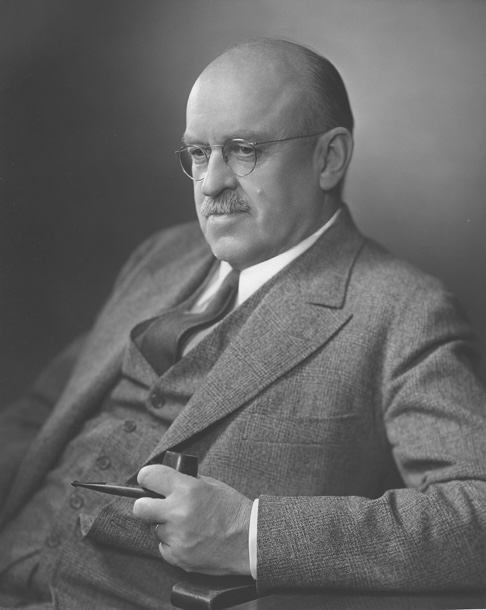

The first move came from inside McCarthy's own party. On June 11, 1954, two days after the exchange between McCarthy and the Army's counsel Joseph Welch described in lesson 08, Ralph Flanders rose in the Senate and attacked McCarthy's refusal to answer the charges of the 1952 subcommittee. "It is no defense to call the charges a smear," he said, and he argued that "a smear" could be "removed by a dry-cleaning process which involves a vigorous application of the truth," a process McCarthy "was unwilling to apply." He then offered a motion, printed as S. Res. 261, resolving "That Senator McCarthy be separated from the chairmanship of the Senate Committee on Government Operations" and that he be barred from serving as chairman or vice chairman of any of its subcommittees. It was ordered to lie on the table.5 Senator Herman Welker of Idaho interrupted Flanders during that speech to defend McCarthy, an exchange taken up in the Idaho module (74, lesson 06).
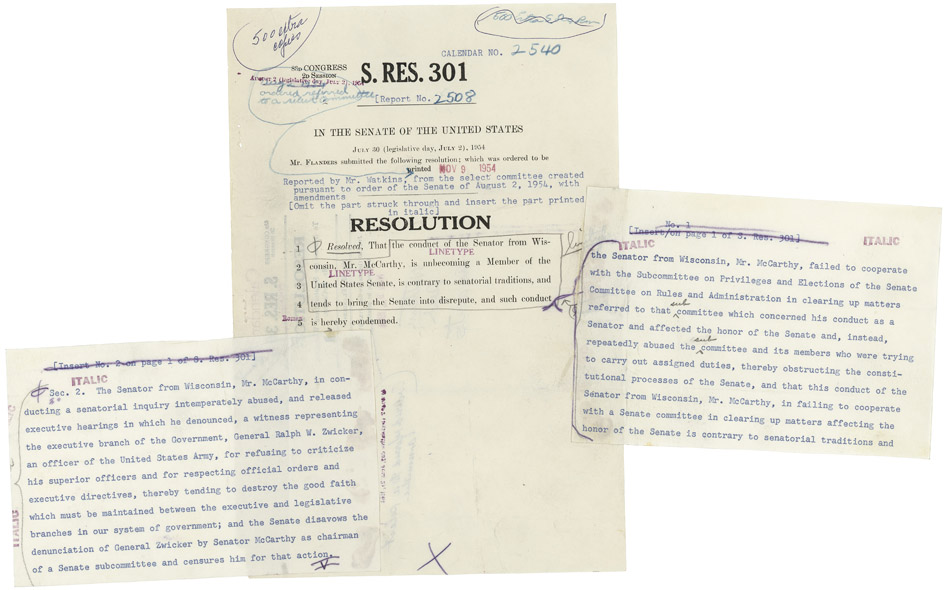
Removing a chairman was a direct attack on the Senate's seniority system, and other senators told Flanders it could not pass. The Senate Historical Office records that "consultation with other senators had indicated that censure would be easier to achieve, since many members objected to undercutting the seniority system of choosing committee chairmen."1 On the evening of July 30, 1954, Flanders called up a new resolution. The chief clerk read it into the Record as S. Res. 301:
Resolved, That the conduct of the Senator from Wisconsin [Mr. McCarthy] is unbecoming a Member of the United States Senate, is contrary to senatorial traditions, and tends to bring the Senate into disrepute, and such conduct is hereby condemned.6
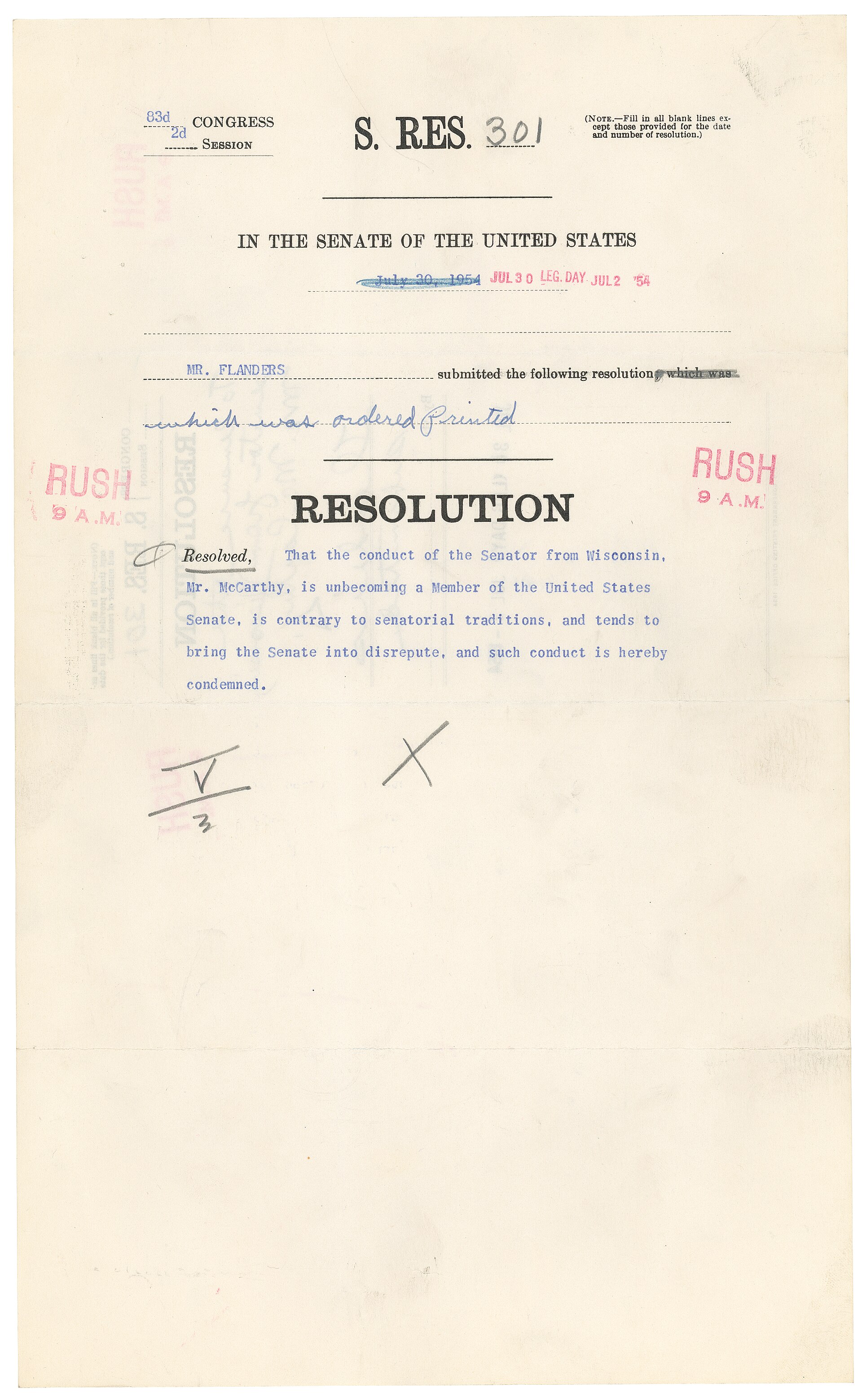

The resolution named no specific act. That was its weakness, and senators of both parties said so. Over the following days senators filed amendments listing particular charges. The Senate Historical Office counts 46 specific charges of misconduct added to the original resolution; the Watkins committee's own report describes "some forty-and-odd alleged instances of misconduct"; and Senator Price Daniel of Texas, in a statement printed in the Record on December 1, referred to "the 46 specific charges leveled against Senator McCarthy."173 Among the senators who filed specific charges were Flanders himself, J. William Fulbright of Arkansas and Wayne Morse of Oregon, then the Senate's only independent. Morse told the Senate on August 2 that he had "filed" a "bill of particulars" in the case and would present his materials to the select committee instead of in a floor speech.8
The referral, August 2, 1954
The Senate's leaders, Majority Leader William Knowland of California and Minority Leader Lyndon Johnson of Texas, did not want a floor trial on 46 charges in the last week of a session. Knowland moved to refer the resolution "together with all amendments proposed thereto, to a select committee to be composed of 3 Republicans and 3 Democrats, who shall be named by the Vice President," with power to subpoena witnesses and records and an instruction to report before the Senate adjourned sine die at the end of the 83rd Congress. On August 2, 1954, the Senate agreed, 75 to 12. McCarthy, when his name was called, said: "I vote 'present.'" Eight senators did not vote.8
The twelve senators who voted against the referral were not McCarthy's defenders. The list in the Record is Chavez, Cooper, Douglas, Duff, Flanders, Fulbright, Hennings, Hill, Humphrey, Lehman, Magnuson and Monroney. Flanders, the resolution's author, was among them, and all twelve would vote for the final resolution in December. Every senator who would later vote against censure on December 2 and who voted on August 2 voted for the referral.8 The referral was the leadership's way to take the matter out of the summer's heat and to give it the form of a judicial proceeding.
The six-member select committee
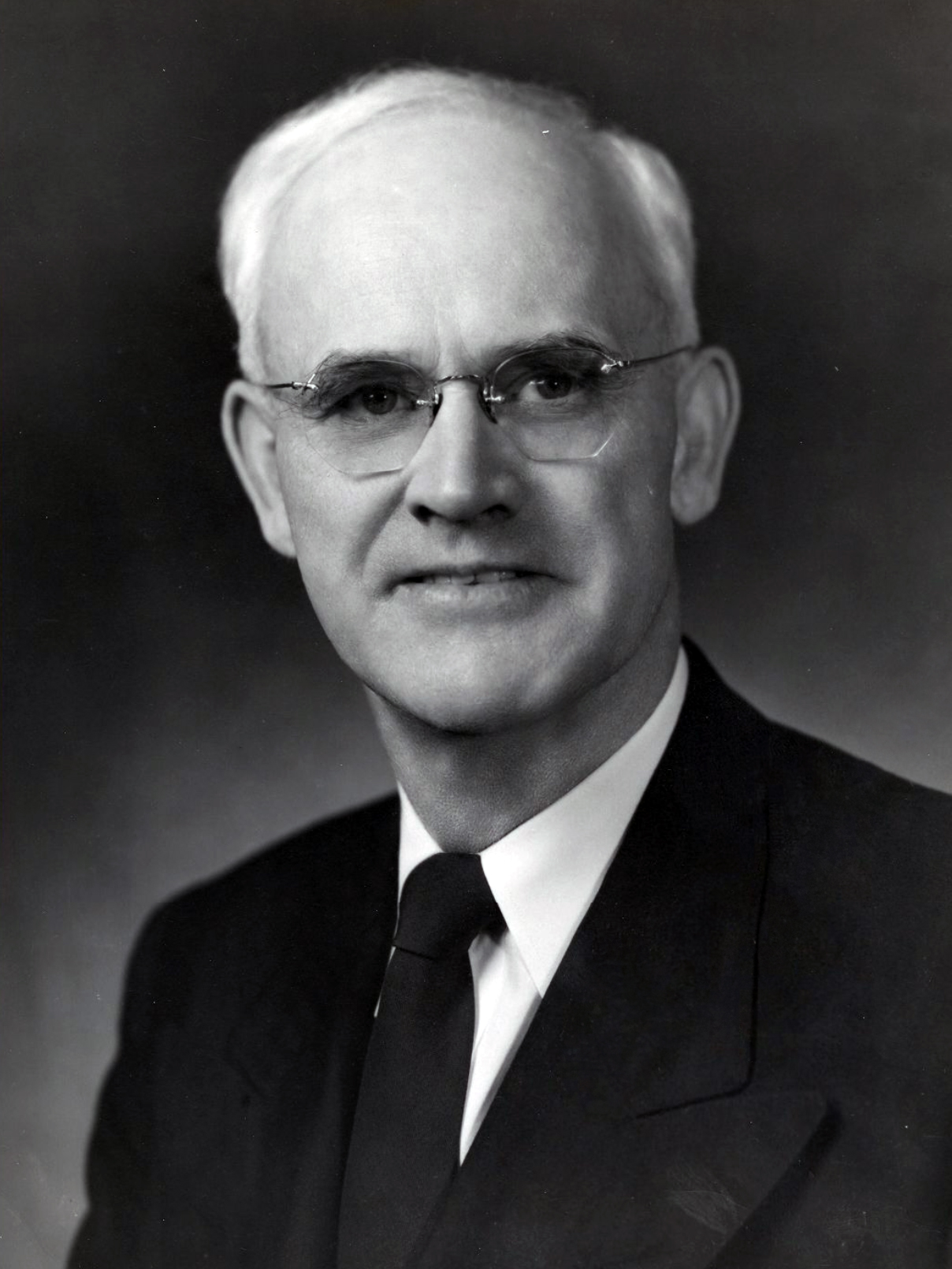

Vice President Richard Nixon named the committee on August 5, 1954, acting, as the committee's report says, "on the recommendations of the majority leader and the minority leader." The report lists the six members:7
- Arthur V. Watkins, Republican of Utah, chairman.
- Frank Carlson, Republican of Kansas.
- Francis Case, Republican of South Dakota.
- Edwin C. Johnson, Democrat of Colorado, vice chairman.
- John C. Stennis, Democrat of Mississippi.
- Sam J. Ervin, Jr., Democrat of North Carolina.
The Senate Historical Office describes the group as chosen for "impeccable reputations and legal expertise": three former judges (Watkins, Stennis and Ervin), two former governors (Johnson and Carlson) and a newspaper publisher and editor (Case). None was identified with the fight over McCarthy. "Only Joseph McCarthy complained about the composition of the panel," the Historical Office notes.1 The choice was deliberate. The leadership wanted a panel that could not be called partisan and could not be called a pack of McCarthy's enemies, and it largely got one. McCarthy later accused three members of the committee of "deliberate deception" and "fraud" for failing to disqualify themselves, an accusation that became part of the second count against him.2
How the committee worked
The committee decided early that it was conducting a proceeding "judicial or quasi-judicial in nature" that "should be conducted in a judicial manner and atmosphere." It allowed McCarthy to be present, to be represented by counsel, to cross-examine and to present witnesses and documents, rights the report concedes were "somewhat contrary to the practice by Senate committees in the past." It ruled that McCarthy or his counsel, "but not both," could object to testimony or examine a given witness. It excluded television cameras. It did not call Flanders or the other sponsors as witnesses, which, as the Senate Historical Office puts it, offered "McCarthy no targets for personal attacks."71 McCarthy's counsel was Edward Bennett Williams, whom McCarthy asked the Senate on November 8 to let sit beside him during the floor debate.7
On August 24, 1954, the committee served McCarthy with a notice of hearings that reduced the forty-odd charges to "5 categories containing 13 specifications." The Senate Historical Office names the five categories this way: "contempt of the Senate or a senatorial committee"; encouraging federal employees to violate the law by giving him classified material; "receipt or use of confidential or classified document"; abuse of fellow senators; and abuse of General Zwicker. Public hearings were held on August 31 and September 1, 2, 7, 8, 9, 10, 11 and 13, 1954. All testimony was taken in public except the testimony of the Senate Parliamentarian, which was taken in executive session at McCarthy's request and with his counsel's knowledge and consent.71
Watkins ran the hearings tightly and ruled many of McCarthy's interruptions out of order. The committee released its report to the press on September 27, 1954. It was formally filed and printed as Senate Report 2508 when the Senate returned on November 8, and the Senate ordered the whole report printed in the Congressional Record that day.17
What the committee recommended
The committee was unanimous. It recommended censure on two of the five categories: McCarthy's conduct toward the Subcommittee on Privileges and Elections in 1951 and 1952, and his conduct toward General Zwicker on February 18, 1954. It strongly criticized his conduct in the other three categories but concluded that it did not "constitute a basis for censure."1 On the category of encouraging federal employees to give him classified material, for example, the report quoted McCarthy's statement during the Army hearings that he wanted "to notify those 2 million Federal employees that I feel it is their duty to give us any information which they have about graft, corruption, communism, treason," and that there was "no loyalty to a superior officer which can tower above and beyond" that duty. The committee called the statement improper but declined to make it a ground for censure.9
The Gillette subcommittee count
The count that survived to the end grew out of an earlier fight. In 1951 Senator William Benton, Democrat of Connecticut, introduced S. Res. 187, a resolution directed at McCarthy's conduct. The Senate never voted on it, but the matter was referred to the Subcommittee on Privileges and Elections of the Committee on Rules and Administration, chaired first by Guy Gillette, Democrat of Iowa, and later by Thomas Hennings, Democrat of Missouri. McCarthy answered with a resolution of his own, S. Res. 304, aimed at Benton. The subcommittee's final report, known from its signers as the Hennings-Hayden-Hendrickson report, was filed on January 2, 1953, the last week of the 82nd Congress. It raised questions about McCarthy's finances and campaign funds that McCarthy never answered under oath.10
The Watkins committee was careful about what it was and was not deciding. "As stated by the chairman," the report says, "the select committee did not construe this category as involving in any way the truth or falsity of any of the charges against Senator McCarthy considered by that subcommittee."10 The question was how McCarthy had treated the subcommittee. The facts, the report says, were not disputed. McCarthy had been invited to testify "on five separate occasions extending from September 25, 1951, to November 7, 1952," and formally requested to appear by letter and telegram of November 21, 1952. He did not appear to answer the matters concerning his own conduct, although he did appear once in support of his resolution against Benton. He accused the subcommittee of acting without power, of "wasting vast amounts of public money for improper partisan purposes," of "proceeding dishonestly," and of "aiding the cause of communism." When the subcommittee's jurisdiction and its members' integrity were attacked, the full Senate voted 60 to 0, in S. Res. 300, to affirm both.10
The committee also considered McCarthy's attack on one subcommittee member. Flanders's amendment number 30 charged that McCarthy had "ridiculed and defamed Senator Hendrickson in vulgar and base language, calling him: 'A living miracle without brains or guts.'" Robert Hendrickson was a Republican from New Jersey. The report found that McCarthy had given the press "an abusive and insulting statement concerning Senator Hendrickson, calculated to wound a colleague, solely because Senator Hendrickson was a member of the subcommittee and performing services required by the Senate."10
McCarthy's counsel argued that the specifications were legally insufficient on their face; his defenders on the floor added that no rule required a senator to accept a subcommittee's invitation and that Wisconsin's voters had reelected him in 1952. The committee answered the last point in one of the report's most direct passages: "The people of Wisconsin can only pass upon issues before them; they cannot forgive an attack by a Senator upon the integrity of the Senate's processes and its committees. That is the business of the Senate." Its conclusion on the category was that McCarthy's conduct toward the subcommittee, its members and the Senate "was contemptuous, contumacious, and denunciatory, without reason or justification, and was obstructive to legislative processes. For this conduct, it is our recommendation that he be censured by the Senate."11
On the floor, this became section 1 of the resolution. Watkins modified its wording on behalf of the committee, the Senate rejected Dirksen's prior-Congress amendment 21 to 66, rejected a substitute by Karl Mundt of South Dakota, which would have replaced censure with a statement disapproving McCarthy's intemperate statements, 15 to 74, rejected an amendment by Styles Bridges declaring that no rule or precedent was violated when a senator declined an invitation to appear before a subcommittee 20 to 68, and adopted section 1 on December 1, 1954, by 67 to 20.312 The language finally adopted reads:
Resolved, That the Senator from Wisconsin, Mr. McCarthy, failed to cooperate with the Subcommittee on Privileges and Elections of the Senate Committee on Rules and Administration in clearing up matters referred to that subcommittee which concerned his conduct as a Senator and affected the honor of the Senate and, instead, repeatedly abused the subcommittee and its members who were trying to carry out assigned duties, thereby obstructing the constitutional processes of the Senate, and that this conduct of the Senator from Wisconsin, Mr. McCarthy, is contrary to senatorial traditions and is hereby condemned.2
The Zwicker count and why it was dropped
The second count recommended by the committee concerned February 18, 1954, when McCarthy questioned Brigadier General Ralph W. Zwicker, commander of Camp Kilmer, New Jersey, about the promotion and honorable discharge of Irving Peress. Zwicker was under executive orders not to disclose the contents of personnel files or internal Army discussions. The committee found that he had "manifested great patience and candor" when it examined him, and that McCarthy's conduct "in reprimanding and ridiculing him, in holding him up to public scorn and contumely, and in disclosing the proceedings of the executive session in violation of the rules of his own committee, was inexcusable." Its conclusion: "the conduct of Senator McCarthy toward General Zwicker was reprehensible, and that for this conduct he should be censured by the Senate."13
That count ran into trouble on the floor for reasons that were partly principled and partly political. The Army had in fact mishandled the Peress case. Francis Case, one of the six committee members, told the Senate on December 2: "I wish to make it clear that I do not approve of the language which the junior Senator from Wisconsin used, but I do not think the Zwicker matter can be separated from the Peress matter." He quoted the Secretary of Defense, Charles Wilson, who had written to the Armed Services Committee in March 1954 that "this judgment was faulty," and Secretary of the Army Stevens, who had written to Case on November 24 that "The Peress case was handled badly." "The two matters cannot be separated," Case said.4 In a letter to Stevens dated November 30, which Case had printed in the Record on December 1, he wrote that he had "originally concurred in the opinion of the other members who heard General Zwicker testify (I did not) that censure was warranted on that ground," but that the opinion had rested on an impression gained from an Army letter of February 16 about what McCarthy had asked for in the Peress case.3 Richard Russell of Georgia, one of the most senior Democrats, said that when he first read the report "I decided that I could not support the part of the resolution which is embraced in section 2 unless something was brought to my attention convincing me that I should do so," and announced he would vote against the count even as modified.4
The committee tried to save the count by modifying it. Watkins sent to the desk new language charging that McCarthy had "intemperately abused, and released a resume of executive hearings in which he denounced" General Zwicker, and deleting the words that would have censured him for it; the Senate would instead disavow and condemn "the denunciation of General Zwicker by Senator McCarthy as chairman of a Senate subcommittee."4 Bridges moved to table the modified section 2. The motion failed, 33 to 55, so the Senate did not simply bury the count.14 Instead Senator Wallace Bennett, Watkins's Republican colleague from Utah, offered an amendment that, as he put it, "because of a happy accident of language, it will be, in effect, a complete substitute, even though it is offered in the form of an amendment."4 Bennett's text replaced the Zwicker count with a count condemning McCarthy's attacks on the select committee itself. The Senate adopted the Bennett amendment 64 to 23 and then adopted section 2, as amended, 64 to 24.15 Knowland asked the Chair to confirm that under this procedure "there would then be no direct vote on charge No. 2," and the Vice President said he was correct.4
So the Zwicker count was dropped because enough senators, including at least one committee member and one of the Senate's most respected Democrats, were unwilling to condemn McCarthy over a witness whose superiors had admitted the underlying case was handled badly. The substitute let them condemn instead something every senator had watched: McCarthy's public attacks on six colleagues doing a job the Senate had given them.
The second count: abuse of the select committee
McCarthy supplied the material for the new count himself. Between the report's release and the vote he attacked the committee in terms the final resolution quotes at length. Section 2, as adopted, condemns him for writing to Watkins after the report was issued and charging three committee members with "deliberate deception" and "fraud" for failing to disqualify themselves; for telling the press on November 4, 1954, that the special session beginning November 8 was a "lynch party"; for "repeatedly describing this special Senate session as a 'lynch bee' in a nationwide television and radio show on November 7, 1954"; for telling the press on November 13 that Watkins was guilty of "the most unusual, most cowardly thing I've heard of" and adding "I expected he would be afraid to answer the questions, but didn't think he'd be stupid enough to make a public statement"; and for characterizing the committee as the "unwitting handmaiden," "involuntary agent," and "attorneys in fact" of the Communist Party and charging that it had "imitated Communist methods." Those statements, the resolution says, "acted contrary to senatorial ethics and tended to bring the Senate into dishonor and disrepute, to obstruct the constitutional processes of the Senate, and to impair its dignity; and such conduct is hereby condemned."2
A note for readers who compare texts: the National Archives transcript of the resolution renders the Watkins quotation as "the most unusual, most cowardly things I've ever heard of," while the resolution as printed in the Congressional Record on December 2 reads "the most unusual, most cowardly thing I've heard of." This lesson follows the Record.162 The Senate session itself was interrupted when McCarthy went into the hospital with an elbow injury; the Senate recessed for ten days until he could return.1
December 2, 1954: the vote
On December 2, the presiding officer put the question on the resolution as amended. When the clerk reached McCarthy's name, he answered "Present." Saltonstall of Massachusetts and Clements of Kentucky announced the absent senators and the pairs. The clerk announced the result, 67 yeas and 22 nays, and the Record then prints the resolution "as agreed to."2
Styles Bridges immediately asked whether the word "censure" appeared anywhere in the resolution. Vice President Nixon answered that "the word 'censure' does not appear in the body of the resolution," and that "The title will be appropriately amended." The chief clerk read the new title: "Resolution relating to the conduct of the Senator from Wisconsin, Mr. McCarthy." Bridges pressed: "Then the resolution which has been agreed to is not a censure resolution?" The Vice President declined to treat that as a parliamentary inquiry and finally said that "the Senator from New Hampshire or other Senators may place upon the resolution such interpretation as they desire."2
This exchange is the source of a dispute that still appears in popular arguments: was McCarthy "censured" or only "condemned"? The Senate's own answer is that it was a censure. The Senate Historical Office lists the case among the Senate's censure cases, describes the result as "Censured," and says the Senate "censured Joseph McCarthy" by 67 to 22.1 The word in the resolution is "condemned," the title was changed to remove "censure," and McCarthy's defenders were entitled to say so. In the Senate's practice, a resolution condemning a member's conduct is the censure; there is no separate penalty attached to the word.
The party breakdown
The roll call printed in the Congressional Record lists 67 yeas and 22 nays. Comparing the names with the party division of the 83rd Congress gives the breakdown: all 44 Democrats who voted said yes; Wayne Morse, the Senate's only independent, said yes; the Republicans who voted split exactly in half, 22 yes and 22 no.217 The Republicans who voted yes were Abel, Aiken, Beall, Bennett, Bush, Carlson, Case, Cooper, Cotton, Duff, Ferguson, Flanders, Hendrickson, Ives, Payne, Potter, Saltonstall, Margaret Chase Smith, H. Alexander Smith, Thye, Watkins and Williams. The 22 nays were all Republicans: Barrett, Bridges, Brown, Butler, Cordon, Dirksen, Dworshak, Goldwater, Hickenlooper, Hruska, Jenner, Knowland, Kuchel, Langer, Malone, Martin, Millikin, Mundt, Purtell, Schoeppel, Welker and Young.2
Two facts stand out. The Republican floor leader, Knowland, voted no, while the Republican chairman of the select committee voted yes; the Senate leadership of McCarthy's own party was divided. And the vote was bipartisan only in part: the Democrats supplied 44 of the 67 votes, and the Republicans supplied 22, including the resolution's author and the select committee's chairman. A reader who calls the censure "a Democratic act" has to explain the 22 Republicans who voted for it and the Republican who wrote it; a reader who calls it "a bipartisan rebuke" has to explain that the Republican half of the Senate was split down the middle.
A practical lesson for anyone checking roll calls: the widely used Voteview database of congressional votes, maintained at the University of California, Los Angeles, records this roll call with the same totals but, at the time of writing, transposes the two Nebraska senators, showing Roman Hruska as voting yes and Hazel Abel as voting no. The Congressional Record of December 2, 1954, prints Abel among the yeas and Hruska among the nays. The Record is the controlling source.182
Who did not vote
Seven of the 96 senators were not recorded as voting yea or nay. The Record accounts for each:2
- Joseph McCarthy (Republican, Wisconsin) answered "Present."
- John W. Bricker (Republican, Ohio) and Homer Capehart (Republican, Indiana) were "absent by leave of the Senate on official business." Each was paired against the resolution: Bricker with Albert Gore of Tennessee and Capehart with George Smathers of Florida. Under a pair, an absent senator who would vote one way is matched with an absent senator who would vote the other, and the Record announces how each would have voted.
- Albert Gore (Democrat, Tennessee) and George Smathers (Democrat, Florida) were "absent by leave of the Senate on official business" and paired for the resolution.
- Alexander Wiley (Republican, Wisconsin), McCarthy's senior colleague from his own state, was "absent by leave of the Senate on official business." He was not paired and his position was not announced.
- John F. Kennedy (Democrat, Massachusetts) was, in the words of Senator Clements, "absent by leave of the Senate because of illness." He was not paired, and no announcement of how he would have voted was made.
Kennedy was the only Democratic senator who neither voted nor was paired on the final question. The Record establishes only the official reason, illness. Why he made no arrangement to be paired or to have his position announced is a question the Record does not answer, and accounts of his reasons written later by biographers and by Kennedy's critics are interpretation, not record. On the December 1 vote adopting section 1 he was announced in the same terms, "absent by leave of the Senate because of illness."3
Idaho's senators
Both of Idaho's senators, Henry Dworshak and Herman Welker, both Republicans, voted against the resolution on December 2.2 Welker spoke for McCarthy repeatedly on the floor; he had interrupted Flanders's June 11 speech, and in the December debate he argued that the Senate was acting as "some sort of judicial body" while changing the charge without giving the accused time to answer.4 The Idaho story, including Welker's own claims about communists and the contrast with Glen Taylor, is told in the Idaho module, lesson 06, "Glen Taylor, Herman Welker and the Red Scare". The evidence on communist activity in Idaho itself is in lesson 04 of that module.
Margaret Chase Smith and the early warning
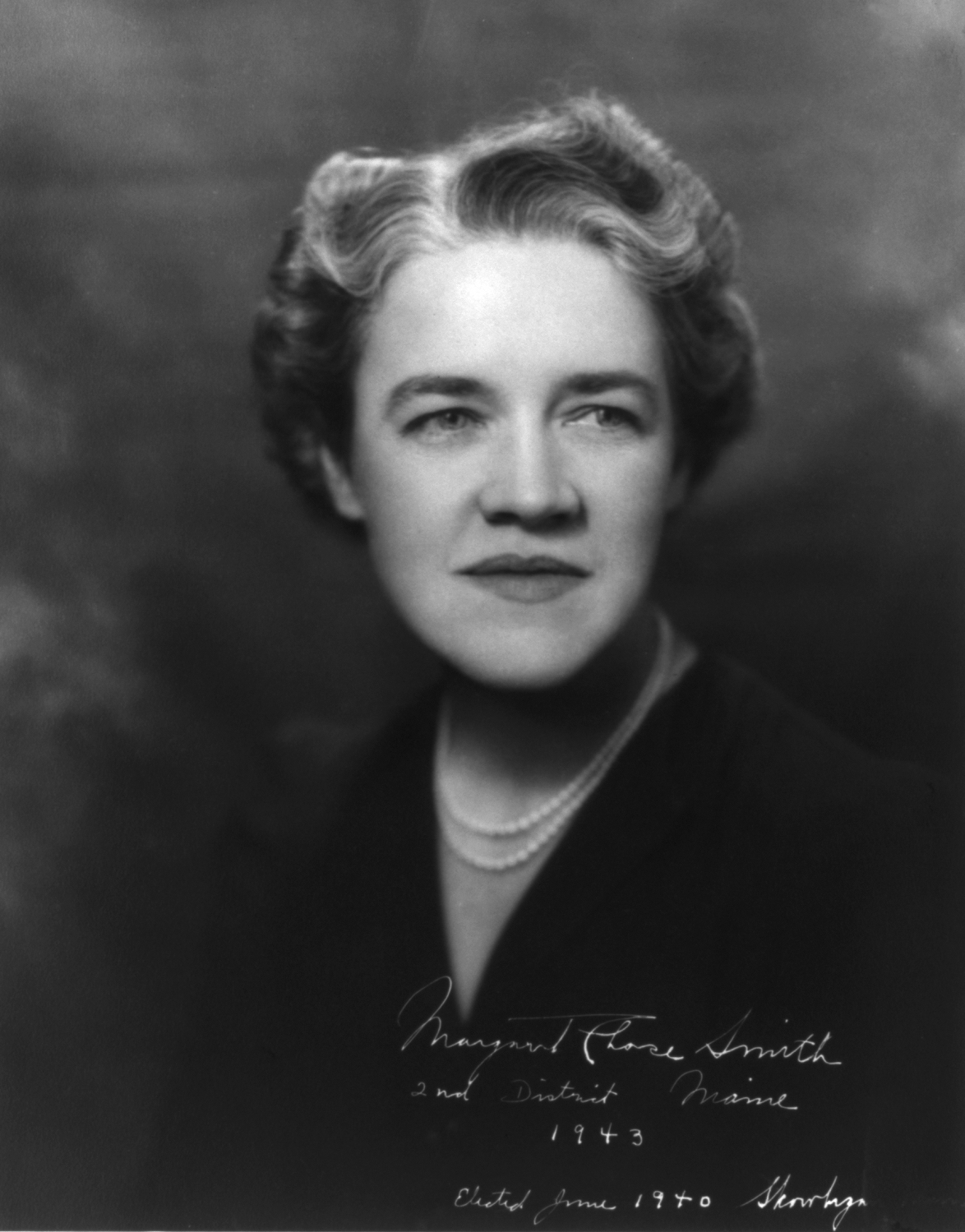

The censure did not come from nowhere. Four years earlier, in June 1950, Senator Margaret Chase Smith of Maine and six fellow Republicans issued a "Declaration of Conscience" that, in the National Archives' summary, asserted that because of McCarthy's tactics the Senate had been "debased to the level of a forum for hate and character assassination."16 The National Archives names Flanders, Watkins and Smith as the Republicans who "led the efforts to discipline McCarthy."16 Smith's speech and what it said about congressional method are taken up in lesson 12. The point here is narrower: the senators who finally moved against McCarthy were not his ideological opponents on communism. Smith, Watkins, Flanders and Bennett were Republicans, and what they said they objected to, in the debates and in the resolution's text, was the way McCarthy treated witnesses, colleagues and the Senate's own processes.

What the censure decided, and what it did not
The Senate decided three things on December 2, 1954. It decided that a senator's refusal to cooperate with a duly constituted Senate subcommittee investigating his own conduct, coupled with abuse of its members, was punishable conduct even though it happened in a previous Congress and even though the senator had since been reelected. It decided that a senator's public attacks on a Senate committee carrying out the Senate's orders, including calling it an agent of the Communist Party, were punishable. And it decided, by dropping the Zwicker count, that it would not condemn McCarthy for his treatment of a witness from the executive branch, at least not in a case where the executive branch itself had admitted error.
The Senate did not decide whether McCarthy's accusations were true. It did not decide whether communists had served in the State Department or the Army, and it did not decide whether any person McCarthy named was or was not a security risk. Those questions were not before the Watkins committee and are not in the resolution. They are the subject of lesson 07 and lesson 11. The censure also imposed no formal penalty. McCarthy kept his seat, his vote and his committee assignments. What he lost was the deference of his colleagues and the attention of the press. When the 84th Congress convened in January 1955, the Democrats held a majority of the Senate, 48 to 47 with one independent, and McCarthy's chairmanship of the Government Operations Committee and its Permanent Subcommittee on Investigations passed to the new Democratic majority.17
McCarthy's last years and death
The Senate Historical Office's summary is brief: "McCarthy tried to appear unaffected by the censure, but it became apparent that the Senate vote had robbed him of his power and status. As his political fortunes waned, so did his health. He died in 1957."1 He remained in the Senate until his death. His biographers agree on the decline and differ on the emphasis. David Oshinsky's A Conspiracy So Immense (1983) describes a man whose drinking worsened as his influence collapsed. Arthur Herman's Joseph McCarthy (2000) treats the last years more briefly and argues that the damage McCarthy did to the anticommunist cause outlived him. Richard Rovere, writing in 1959, described the collapse of his influence after the censure as nearly total.19
McCarthy died on Thursday, May 2, 1957, at the Bethesda Naval Hospital outside Washington. Contemporary press reports, such as the account in the Harvard Crimson the next day, gave the cause as acute hepatitis and the time as 6:02 p.m.20 On Monday, May 6, Senator Wiley formally announced to the Senate "the death on Thursday, May 2, of our colleague the junior Senator from Wisconsin," and the Senate held a funeral service for him in the Senate Chamber that day; the Record of May 6 prints the chaplain's prayer, Wiley's announcement and the arrangements.21 Wiley's statement summarized the record without judging it: "It is still too early to know the place which history will, in the long run, accord to him. For the moment, suffice it to say that he made a tremendous impression on the consciousness of the American people."21 His age was reported inconsistently. Wiley told the Senate that McCarthy was born on November 14, 1909, which agrees with the Crimson's age of 47, while another senator speaking the same day said, "He died at 48." Many later reference works give his birth year as 1908; this lesson did not resolve the discrepancy.21
Part two: the courts
What the government got right
The court cases of the 1950s are often taught as a story of a frightened government and a Court that slowly found its courage. That story leaves out what the government knew. The Communist Party of the United States was not an ordinary political party. The decrypted Soviet cables and the Moscow archives described in lesson 02 show that the Party's leadership cooperated with Soviet intelligence, that the Party received money from Moscow, and that a secret apparatus inside the Party helped recruit sources in the federal government. John Earl Haynes and Harvey Klehr, the historians most associated with that evidence, argue in Venona (1999) and, with Alexander Vassiliev, in Spies (2009) that the Party's subordination to Moscow was a fact and not a slander.22
The Supreme Court accepted that factual picture as early as 1951 and reaffirmed it ten years later. In Dennis, Chief Justice Fred Vinson wrote of "the development of an apparatus designed and dedicated to the overthrow of the Government, in the context of world crisis after crisis."23 In 1961, in Communist Party v. Subversive Activities Control Board, the Court upheld findings that the Party was "substantially directed, dominated, or controlled" by the Soviet Union and operated "primarily to advance the objectives of" the world Communist movement.24 Even the justices who voted most often against the government did not deny that espionage could be punished. Justice William O. Douglas, dissenting in Dennis, wrote that if the defendants had been "teaching the techniques of sabotage, the assassination of the President, the filching of documents from public files, the planting of bombs, the art of street warfare, and the like," he "would have no doubts."23
The hard question for the courts was never whether a conspiracy existed. It was what the government could do to the people around it: the teachers who had once joined the Party, the union officials who had cooperated with it, the witnesses who would talk about themselves but not about others, the professor who lectured on socialism, the dentist who invoked the Fifth Amendment. The cases below are the Court's answers, in order.
Dennis v. United States (1951)
Holding: The Smith Act's provisions making it a crime to conspire to teach and advocate the overthrow of the government by force and violence, and to organize a group that did so, were constitutional as applied to the national leaders of the Communist Party. Vote: 6 to 2. Chief Justice Vinson wrote for himself and Justices Stanley Reed, Harold Burton and Sherman Minton; Justices Felix Frankfurter and Robert Jackson concurred separately; Justices Black and Douglas dissented; Justice Tom Clark took no part. Decided June 4, 1951.23
Vinson adopted the test Judge Learned Hand had written for the court of appeals: "In each case [courts] must ask whether the gravity of the 'evil,' discounted by its improbability, justifies such invasion of free speech as is necessary to avoid the danger." He reasoned that the danger need not be immediate: "Certainly an attempt to overthrow the Government by force, even though doomed from the outset because of inadequate numbers or power of the revolutionists, is a sufficient evil for Congress to prevent." Justice Jackson's concurrence put the case on the ground of conspiracy law: "The Constitution does not make conspiracy a civil right." Black's dissent, the most quoted passage in the case, was a prediction: "There is hope, however, that in calmer times, when present pressures, passions and fears subside, this or some later Court will restore the First Amendment liberties to the high preferred place where they belong in a free society."23 The trial that produced Dennis is described in lesson 03.
Quinn v. United States (1955)
Holding: A witness before the House Committee on Un-American Activities who refused to answer questions about Communist Party membership and referred to the Fifth Amendment had sufficiently invoked the privilege against self-incrimination; and he could not be convicted of contempt under 2 U.S.C. section 192 because the committee never clearly overruled his objection and directed him to answer. Vote: The judgment of acquittal was joined by every justice but Justice Reed, who dissented; Justice John Marshall Harlan concurred in the result but dissented from part of the reasoning. Chief Justice Earl Warren wrote for the Court. Decided May 23, 1955.25
Warren wrote that "no ritualistic formula is necessary in order to invoke the privilege," and that the privilege deserved generous reading: "Such liberal construction is particularly warranted in a prosecution of a witness for a refusal to answer, since the respect normally accorded the privilege is then buttressed by the presumption of innocence accorded a defendant in a criminal trial."25 Quinn did not limit what committees could ask. It limited how they could convert a refusal into a crime: they had to rule on the objection and tell the witness plainly that an answer was demanded.
Pennsylvania v. Nelson (1956)
Holding: The federal government, through the Smith Act and related laws, had occupied the field of sedition against the United States, so Pennsylvania's sedition act could not be enforced against sedition aimed at the national government. Vote: 6 to 3. Chief Justice Warren wrote for the Court; Justice Reed, joined by Justices Burton and Minton, dissented. Decided April 2, 1956.26
Steve Nelson, whom the opinion calls "an acknowledged member of the Communist Party," had been sentenced in Allegheny County to twenty years in prison and a $10,000 fine. The Court adopted the Pennsylvania Supreme Court's reasoning: "Sedition against the United States is not a local offense. It is a crime against the Nation."26 The decision did not free Nelson from federal law; the Pennsylvania court noted that he had in fact been prosecuted and convicted in federal court. Its practical effect was to cast doubt on the sedition statutes of many states. Senator Jenner told the Senate in 1958 that the decision had made the antisubversive statutes of "42 States and Alaska and Hawaii" unenforceable.27 That figure is Jenner's; it was not tested by the Court.
Slochower v. Board of Higher Education (1956)
Holding: New York City could not summarily dismiss a tenured college teacher, without notice or hearing, solely because he invoked the Fifth Amendment before a congressional committee. Vote: 5 to 4. Justice Clark wrote for the Court; Justice Reed, joined by Justices Burton and Minton, dissented, and Justice Harlan dissented separately. Decided April 9, 1956.28
Harry Slochower, an associate professor at Brooklyn College, testified on September 24, 1952, before the Senate Internal Security Subcommittee, the committee described in lesson 06. He stated that he was not a member of the Communist Party and was willing to answer questions about his associations since 1941, but invoked the Fifth Amendment on questions about membership in 1940 and 1941, and section 903 of the city charter ended his employment automatically. Justice Clark, who had been Truman's Attorney General, wrote for the Court: "The privilege against self-incrimination would be reduced to a hollow mockery if its exercise could be taken as equivalent either to a confession of guilt or a conclusive presumption of perjury."28 The opinion left room for a school board to ask questions and dismiss a teacher for refusing relevant inquiries in a fair proceeding; it struck down the automatic inference.
Red Monday, June 17, 1957
On Monday, June 17, 1957, the Court announced four decisions that went against the government in internal security cases: Watkins v. United States, Yates v. United States, Sweezy v. New Hampshire and Service v. Dulles.29 Opponents of the decisions called the day "Red Monday," and the historian Arthur J. Sabin used the phrase in the title of his study, In Calmer Times: The Supreme Court and Red Monday (1999), which takes its main title from Black's Dennis dissent.30 Justice Charles Whittaker, newly appointed, took no part in Watkins, Yates or Sweezy, and Justice Clark, who dissented in those three, took no part in Service.29
Watkins v. United States (1957)
Holding: A witness convicted of contempt of Congress for refusing to answer a House Un-American Activities subcommittee's questions about other people's past Party membership had not been given a fair opportunity to know whether the questions were pertinent to the subject under inquiry, so his conviction violated the Due Process Clause of the Fifth Amendment. Vote: 6 to 1. Chief Justice Warren wrote for the Court; Justice Frankfurter concurred; Justice Clark dissented; Justices Burton and Whittaker took no part.31
The witness was John T. Watkins, a labor organizer who had been an officer of the Farm Equipment Workers union and had joined the United Automobile Workers as an organizer in 1953. He appeared before the subcommittee on April 29, 1954. He was not an innocent bystander, and the opinion does not pretend he was. He admitted that from 1942 to 1947 he had "cooperated with the Communist Party," and told the committee: "Since I freely cooperated with the Communist Party I have no motive for making the distinction between cooperation and membership except the simple fact that it is the truth. I never carried a Communist Party card." He answered questions about himself and about people he believed were still Party members, but he refused to say whether others he had known in the past were members: "I am not going to plead the fifth amendment, but I refuse to answer certain questions that I believe are outside the proper scope of your committee's activities."31
Warren's opinion affirmed that the power of inquiry is broad. It then set limits that the committees had never had to state: "There is no general authority to expose the private affairs of individuals without justification in terms of the functions of the Congress." "Nor is the Congress a law enforcement or trial agency." "We have no doubt that there is no congressional power to expose for the sake of exposure." The opinion criticized the House resolution that authorized the committee to investigate "un-American" propaganda: "Who can define the meaning of 'un-American'?"31 Clark, who had served in the executive branch as Truman's Attorney General, dissented: "As I see it the chief fault in the majority opinion is its mischievous curbing of the informing function of the Congress."31
The narrow holding was about pertinency and fair notice; the broad language was about exposure. Congress could, and did, respond to the narrow holding by making the subject of an inquiry clear on the record before demanding answers, which is what the subcommittee did in Barenblatt.
Yates v. United States (1957)
Holding: The Smith Act does not prohibit "advocacy and teaching of forcible overthrow as an abstract principle, divorced from any effort to instigate action to that end"; the trial judge's instructions failed to distinguish advocacy of doctrine from advocacy of action; and the "organizing" charge was barred by the three-year statute of limitations because the Communist Party "came into being in 1945" and the indictment came in 1951. The convictions of fourteen California Party leaders were reversed, five with directions to acquit and nine with leave for a new trial. Vote: 6 to 1. Justice Harlan wrote for the Court; Justice Burton concurred in the result; Justice Black, joined by Justice Douglas, concurred in part and dissented in part, saying he would have acquitted all of the defendants; Justice Clark dissented; Justices Brennan and Whittaker took no part.32
Harlan did not overrule Dennis. He read it. The key sentence is this: "The essential distinction is that those to whom the advocacy is addressed must be urged to do something, now or in the future, rather than merely to believe in something."32 Under that standard, a Party leader who urged members to prepare for violent action could still be convicted; a teacher who explained Marxist-Leninist theory of revolution could not be convicted for the teaching alone. Clark's dissent stated the government's view with force: the Yates defendants were part of the same conspiracy as the Dennis defendants, though they "occupied a lower echelon in the party hierarchy." "They, nevertheless, served in the same army and were engaged in the same mission."32 Secondary accounts report that the government did not retry the remaining nine and that Smith Act advocacy prosecutions became very difficult to win after Yates; this lesson could not confirm the retrial history from a court record, and it is listed as unverified.
Sweezy v. New Hampshire (1957)
Holding: New Hampshire could not hold in contempt a witness who, in an investigation by the state attorney general acting for the legislature, refused to answer questions about the contents of a lecture he had given at the University of New Hampshire and about the Progressive Party and its members. Vote: 6 to 2. Chief Justice Warren announced the judgment in an opinion joined by Justices Black, Douglas and Brennan; Justice Frankfurter, joined by Justice Harlan, concurred in the result; Justice Clark, joined by Justice Burton, dissented; Justice Whittaker took no part.33
Paul Sweezy had answered most questions, including whether he was a Communist, and did not invoke the Fifth Amendment. He refused the rest on First Amendment and pertinency grounds. Warren wrote: "Teachers and students must always remain free to inquire, to study and to evaluate, to gain new maturity and understanding; otherwise our civilization will stagnate and die." Frankfurter's concurrence, joined by Harlan, quoted the "four essential freedoms" of a university, "to determine for itself on academic grounds who may teach, what may be taught, how it shall be taught, and who may be admitted to study."33
Service v. Dulles (1957)
The fourth decision of June 17 involved John S. Service, the Foreign Service officer whose case appears in lesson 07. The State Department's own Loyalty Security Board had repeatedly cleared him; the Civil Service Commission's Loyalty Review Board then found "reasonable doubt" as to his loyalty, and Secretary of State Dean Acheson discharged him on December 14, 1951, on the strength of that finding alone. The Court, in an opinion by Justice Harlan, held the discharge invalid because the Secretary had not followed the Department's own regulations. The vote was 8 to 0, with Justice Clark taking no part.29 The case decided nothing about Service's loyalty. It held that an agency that writes rules for removing employees must follow them.
Congress answers: the Jenner-Butler bill and H.R. 3
The congressional reaction was swift. Senator William Jenner, Republican of Indiana, introduced S. 2646 on July 26, 1957. In his own words on the Senate floor a year later, it was "a bill to withdraw appellate jurisdiction from the Supreme Court in 5 specified areas," relying on the power the Constitution gives Congress in article III, section 2, to make "exceptions" to the Court's appellate jurisdiction. Witnesses at the Judiciary Committee hearings told him the bill was too broad, and Senator John Marshall Butler, Republican of Maryland, offered amendments that Jenner accepted. As reported by the Judiciary Committee, the Jenner-Butler bill had four sections: section 1 withdrew the Court's appellate jurisdiction over state bar admissions; section 2 let a congressional committee settle pertinency for itself, answering Watkins; section 3 restored the enforceability of state antisubversive statutes, answering Nelson; and section 4 amended the Smith Act, answering Yates.27
On August 20, 1958, Jenner offered the bill as an amendment to an unrelated House bill on court procedure. Thomas Hennings of Missouri, the same senator who had chaired the 1952 subcommittee whose treatment by McCarthy formed the first censure count, moved to table it. He compared the bill to the Reconstruction Congress's withdrawal of habeas corpus jurisdiction in 1868 and to the 1937 Court-packing plan. The Senate tabled the Jenner amendment, 49 to 41, with 6 not voting.27 In the House, H.R. 3, a bill providing that no act of Congress should be read to displace state law in the same field unless Congress said so, passed on July 17, 1958, by 241 to 155. A Senate version, offered by John McClellan of Arkansas as an amendment to S. 654, a bill on state antisubversive laws, was sent back to committee on August 21, 1958, by 41 to 40.34 Neither measure became law. Congress's attack on the Court failed, narrowly.
Barenblatt v. United States (1959)
Holding: A former graduate student and college instructor who refused, on First Amendment grounds and without invoking the Fifth Amendment, to tell a House Un-American Activities subcommittee whether he was or had been a Party member could be convicted of contempt; the subject of the inquiry (Communist infiltration into education) had been made clear, the questions were pertinent, and the government's interest outweighed his. Vote: 5 to 4. Justice Harlan wrote for the Court; Justice Black, joined by Chief Justice Warren and Justice Douglas, dissented, and Justice Brennan dissented separately. Decided June 8, 1959.35
Lloyd Barenblatt, according to Black's dissent, was 31 and a teacher of psychology at Vassar College when the subcommittee summoned him on May 28, 1954; his contract with Vassar expired and was not renewed before he appeared on June 28, so he came before the committee "as a private citizen without a job."35 Harlan announced the method that would govern the next decade: "Where First Amendment rights are asserted to bar governmental interrogation resolution of the issue always involves a balancing by the courts of the competing private and public interests at stake in the particular circumstances shown." He grounded the government's side of the balance in "the right of self-preservation, 'the ultimate value of any society,'" quoting Dennis, and wrote that Congress's power "to legislate in the field of Communist activity in this Country, and to conduct appropriate investigations in aid thereof, is hardly debatable."35 Black's dissent rejected balancing as a method that would always favor the government when it described its interest as self-preservation, and it ended with the sentence that frames this whole lesson: the question was "whether we as a people will try fearfully and futilely to preserve democracy by adopting totalitarian methods, or whether in accordance with our traditions and our Constitution we will have the confidence and courage to be free."35
Read together, Watkins and Barenblatt say that a congressional committee may ask about Party membership if it states a legislative subject, keeps its questions pertinent to that subject and does not pursue exposure for its own sake. Whether the Court changed its mind between 1957 and 1959 because of the Jenner-Butler fight is one of the long-running disputes in the history of the Court. The political scientist Walter Murphy argued in Congress and the Court (1962) that the Court retreated under pressure; others read Barenblatt as a straightforward application of the pertinency rule Watkins had announced. The documents support both readings in part and settle neither.36
Communist Party v. Subversive Activities Control Board (1961)
Holding: The registration provisions of the Subversive Activities Control Act of 1950 (Title I of the Internal Security Act of 1950) were constitutional as applied to an order requiring the Communist Party to register as a "Communist-action organization," and the Board's findings that the Party was "substantially directed, dominated, or controlled" by the Soviet Union were supported. Questions about penalties that would follow registration, including self-incrimination claims of individual members, were not yet ripe. Vote: 5 to 4. Justice Frankfurter wrote for the Court; Chief Justice Warren and Justices Black, Douglas and Brennan dissented in separate opinions, Warren joining Brennan's. Decided June 5, 1961.24
Frankfurter rejected the claim that the First Amendment protected the Party's members from disclosure in these circumstances. Where anonymity served "the double purpose of protecting them from popular prejudice and of enabling them to cover over a foreign-directed conspiracy, infiltrate into other groups, and enlist the support of persons who would not, if the truth were revealed, lend their support," he wrote, "it would be a distortion of the First Amendment to hold that it prohibits Congress from removing the mask."24 Black's dissent opened with a sentence that has been quoted ever since: "I do not believe that it can be too often repeated that the freedoms of speech, press, petition and assembly guaranteed by the First Amendment must be accorded to the ideas we hate or sooner or later they will be denied to the ideas we cherish."24
The registration scheme won in principle and failed in practice. In Albertson v. Subversive Activities Control Board, decided November 15, 1965, a unanimous Court of eight (Justice Byron White taking no part), in an opinion by Justice Brennan, held that requiring individual members to register violated the privilege against self-incrimination, because the statute did not prevent "the use of the admission as an investigatory lead, a use which is barred by the privilege," and the information the registration statement demanded "might be used as evidence in or at least supply investigatory leads to a criminal prosecution."37 The Court had upheld the theory that the Party was a foreign-directed conspiracy, and then held that the government could not force its members to confess membership while membership itself could be prosecuted under the Smith Act.
Scales v. United States (1961)
Holding: The membership clause of the Smith Act, which made it a felony to hold "knowing membership" in an organization advocating violent overthrow, was constitutional when construed to reach only active members who knew of the organization's illegal advocacy and specifically intended to bring about violent overthrow; Scales's conviction was affirmed. Vote: 5 to 4. Justice Harlan wrote for the Court; Justices Black and Douglas dissented separately, and Justice Brennan, joined by Chief Justice Warren and Justice Douglas, dissented. Decided June 5, 1961, the same day as the registration case.38
Harlan's construction did most of the work. "The clause does not make criminal all association with an organization which has been shown to engage in illegal advocacy," he wrote. A member "for whom the organization is a vehicle for the advancement of legitimate aims and policies does not fall within the ban of the statute," and "Such a person may be foolish, deluded, or perhaps merely optimistic, but he is not by this statute made a criminal."38 The same day, in Noto v. United States, a companion case, the Court reversed a membership conviction for insufficient evidence, and Brandenburg later quoted Noto for the rule that "the mere abstract teaching ... of the moral propriety or even moral necessity for a resort to force and violence, is not the same as preparing a group for violent action and steeling it to such action."39
Keyishian v. Board of Regents (1967)
Holding: New York's teacher loyalty laws and regulations, including the Feinberg Law provision making membership in a listed "subversive" organization prima facie evidence of disqualification, were unconstitutionally vague and overbroad; "Mere knowing membership without a specific intent to further the unlawful aims of an organization is not a constitutionally adequate basis for exclusion from such positions as those held by appellants." The Court recognized that the reasoning of Adler v. Board of Education (1952), which had upheld part of the same scheme, had been rejected by later decisions. Vote: 5 to 4. Justice Brennan wrote for the Court; Justice Clark, joined by Justices Harlan, Potter Stewart and White, dissented. Decided January 23, 1967.40
The appellants were faculty members of the State University of New York. Brennan wrote: "Our Nation is deeply committed to safeguarding academic freedom, which is of transcendent value to all of us and not merely to the teachers concerned. That freedom is therefore a special concern of the First Amendment, which does not tolerate laws that cast a pall of orthodoxy over the classroom." Clark's dissent was as sharp as anything in this line of cases: "No court has ever reached out so far to destroy so much with so little."40 The loyalty oath programs at issue are part of the story of costs told in lesson 10.
Brandenburg v. Ohio (1969)
Holding: Ohio's criminal syndicalism statute, which punished advocating violence as a means of political reform and assembling with a group formed to advocate it, was unconstitutional because it punished "mere advocacy" without distinguishing incitement to imminent lawless action. Whitney v. California (1927) was overruled. Vote: Unanimous, in an unsigned opinion for the Court (per curiam); Justices Black and Douglas each wrote concurrences. Decided June 9, 1969.39
The appellant was not a communist. He was "a leader of a Ku Klux Klan group," convicted after a Klan rally at a farm in Hamilton County, Ohio, was filmed by a reporter from a Cincinnati television station. The rule the Court announced protected him on the same terms it protects anyone else: "the constitutional guarantees of free speech and free press do not permit a State to forbid or proscribe advocacy of the use of force or of law violation except where such advocacy is directed to inciting or producing imminent lawless action and is likely to incite or produce such action."39 The Court did not overrule Dennis. It read Dennis, as Yates had, to rest on that principle, citing Dennis and the Yates pages (320 to 324) that drew the line between advocacy of doctrine and advocacy of action.39 Black, endorsing Douglas's concurrence, wrote that the "clear and present danger" doctrine "should have no place in the interpretation of the First Amendment." Brandenburg remains the Court's test for advocacy.
Rival readings
Rival readings of the censure
Historians who defend McCarthy's cause and historians who condemn it agree on more about the censure than about anything else in his career. The counts were about his conduct toward the Senate. Where they differ is on what that means.
M. Stanton Evans, in Blacklisted by History (2007), and Arthur Herman, in Joseph McCarthy (2000), both stress that the censure did not adjudicate whether McCarthy's security cases had merit, and that many of his specific charges were never refuted by the Senate. Evans in particular argues that McCarthy's targets included people whom later evidence showed to be security risks, and that the censure has been used ever since as if it had proved the opposite. Herman, more critical of McCarthy personally, argues that McCarthy's methods discredited a legitimate cause and that the Senate's action, however procedural its counts, was a judgment on those methods. On this point the documents support both of them: the resolution says nothing about whether McCarthy was right, and the select committee's report expressly declined to decide the truth of the 1952 subcommittee's charges.4110
David Oshinsky, in A Conspiracy So Immense (1983), Richard Rovere, in Senator Joe McCarthy (1959), and Ellen Schrecker, in Many Are the Crimes (1998), read the censure as the Senate's belated recovery of its own standards after four years in which it had tolerated what it finally condemned. Schrecker's larger argument is that McCarthy was the most visible part of a much broader system of political repression that had begun before him and outlasted him, so that his censure changed less than it seemed. Oshinsky and Rovere treat the censure as the end of McCarthy as a political force. That last point is the least disputed claim in the whole debate, and the Senate Historical Office states it in nearly the same words.191
Black and Harlan: two ways to draw the line
The court cases are best understood as an argument between two justices who respected each other and disagreed at the root. Justice Black read the First Amendment's "Congress shall make no law" as close to absolute for speech, press and association. In Barenblatt he wrote: "I do not agree that laws directly abridging First Amendment freedoms can be justified by a congressional or judicial balancing process." He accused the majority of a balance that "reduces 'balancing' to a mere play on words," because the government's side was always labeled self-preservation.35 On Black's view, the government could punish espionage, sabotage and conspiracies to commit them, and could not punish anyone for joining, teaching or refusing to talk about a political party, however odious. His strongest argument is historical: every restriction on belief or association in American history, from the Sedition Act of 1798 forward, was defended as necessary to self-preservation at the time.
Justice Harlan read the same amendment as requiring courts to weigh the government's need against the individual's interest in each setting. He wrote Yates, which made Smith Act advocacy prosecutions very hard to win, and Barenblatt and Scales, which upheld congressional questioning and membership prosecutions on narrow terms. His strongest argument is that the Communist Party presented a real and unusual problem, an organization that was partly a political party and partly an instrument of a hostile foreign intelligence service, and that a rule which could not tell the difference between a Party organizer recruiting for an underground apparatus and a professor lecturing on Marx would fail in one direction or the other. His construction of the membership clause in Scales, requiring active membership, knowledge and "specific intent," is the method's best product: it let the government reach the conspiracy without reaching the "foolish, deluded, or perhaps merely optimistic."38
Black's critics reply that his absolutism would have left the government unable to investigate an organization the Court itself found to be directed from Moscow. Harlan's critics reply that balancing let five justices uphold the conviction of a psychology instructor for declining to discuss his student politics, a result that is hard to connect to any spy ring. By 1969, Brandenburg had settled on a rule closer to Black's for advocacy, while conspiracy and espionage law stayed where Harlan and Jackson had put them.
Scholars on the courts
Ellen Schrecker treats the Court's record as a slow retreat that came too late for most of the people harmed: by 1957 the blacklists, firings and loyalty dismissals described in lesson 10 had already done their work. Landon Storrs, in The Second Red Scare and the Unmaking of the New Deal Left (2013), shows how the loyalty program reshaped the federal civil service long before any court intervened, which supports the view that the courts were a weak check on the executive's internal loyalty machinery. Haynes and Klehr, while agreeing that the loyalty-security system harmed innocent people, argue that the Party's ties to Soviet intelligence made it reasonable for the government to treat Party membership as a security concern in sensitive jobs, which is the core of what Communist Party v. SACB accepted.4222 Walter Murphy's argument that the Court retreated in 1959 under congressional pressure, noted above, is contested by scholars who see Barenblatt as an application of Watkins rather than a reversal of it.36
What the record shows and what it does not
- Documented fact: S. Res. 301 passed 67 to 22 on December 2, 1954. Every Democrat who voted, the independent, and 22 of the 44 Republicans who voted were in favor; all 22 nays were Republicans, including both Idaho senators. McCarthy answered "present." Kennedy was absent for illness and was not paired.
- Documented fact: The adopted counts concern McCarthy's non-cooperation with and abuse of the 1951 to 1952 Subcommittee on Privileges and Elections, and his abuse of the 1954 select committee. The resolution uses the word "condemned"; the title was amended to remove "censure"; the Senate Historical Office classifies the case as a censure.
- Documented fact: The Watkins committee recommended censure for the Zwicker episode; the Senate rejected a motion to table that count, 33 to 55, and then replaced it by the Bennett amendment, 64 to 23.
- Documented fact: Neither the resolution nor the committee report decided whether McCarthy's charges about communists in government were true.
- Documented fact: The Supreme Court upheld the Smith Act in Dennis (1951), limited it in Yates (1957), upheld its membership clause on narrow terms in Scales (1961), and announced the incitement test in Brandenburg (1969). The Senate tabled the Jenner-Butler bill 49 to 41 on August 20, 1958.
- Allegation: That the Zwicker count was dropped because senators feared the Army or the administration. The Record shows doubts about the Peress case and Case's change of view; motives beyond those stated are not in the Record.
- Allegation: That the Court reversed course in Barenblatt because of the Jenner-Butler threat. This is a scholarly inference, not a documented fact.
- Open question: Why Kennedy made no arrangement to be paired or announced. The Record gives only the illness.
- Open question: Whether a rule like Brandenburg's would have allowed the government to deal adequately with the Party in 1948, when the evidence of espionage was largely secret. The courts never had to answer that question with the Venona evidence before them.
Assessed from 2026
Each claim below is one that circulated in 1954 to 1969 or circulates today. Each is rated against the documents cited in this lesson.
- "The Senate censured McCarthy for fighting communism." Refuted. The two adopted counts concern his treatment of two Senate committees. The Watkins committee "took no position on his anticommunist crusade," in the Senate Historical Office's words, and the resolution's text says nothing about communism except to quote McCarthy calling the select committee the Communist Party's "unwitting handmaiden."12
- "The censure was a party-line Democratic vote." Refuted. The resolution was written by a Republican, the select committee was chaired by a Republican, and 22 of the 44 Republicans who voted supported it. Democrats were unanimous, which makes the vote partly partisan, but the Republican conference split evenly.2
- "McCarthy was not really censured, only condemned." Partly supported. The word "censure" was removed from the title and does not appear in the text. The Senate's own historical records nonetheless classify the case as a censure and report that the Senate "censured" him. In Senate practice the distinction carries no penalty.21
- "The Senate dropped the Zwicker count because McCarthy had been right about the Army." Partly supported. Senators who opposed the count, including committee member Case, said the Zwicker matter could not be separated from the Army's admitted mishandling of the Peress case. But Case and others said they did not approve of McCarthy's language, and the Senate refused to table the count before replacing it. The Record supports "the Army's own error made the count unfair" more than "McCarthy was right."43
- "The Senate could not punish conduct from a previous Congress." Refuted as a matter of Senate practice. The Senate considered exactly that argument in the Dirksen amendment and rejected it 21 to 66. Whether the Senate was wise to do so is a separate question on which reasonable people still differ.3
- "The Supreme Court protected spies." Refuted. None of the cases in this lesson involved espionage charges. They concerned advocacy, membership, refusals to testify, loyalty dismissals and state sedition laws. Espionage law was untouched, and the Court repeatedly accepted that the Party was foreign-directed.2423
- "The 1957 decisions crippled the government's internal security program." Partly supported. Yates made advocacy prosecutions much harder, Nelson displaced state sedition laws, and Watkins imposed procedural limits on committees. But within four years the Court upheld committee questioning (Barenblatt), Party registration (Communist Party v. SACB) and membership prosecutions of active members (Scales).32352438
- "Dennis was wrongly decided." Unresolved. The Court has never overruled it. Brandenburg cited it as resting on the incitement principle, while Black and Douglas said in Brandenburg that its "clear and present danger" reasoning should have no place in First Amendment law. With the Venona evidence now public, the factual premise of Dennis, that the Party was a disciplined organization tied to a hostile power, looks stronger than it did to its critics in the 1960s; whether that premise justified punishing advocacy is a question of law and judgment, not of fact.3922
- "Congress tried to strip the Court of jurisdiction in response." Supported. Jenner's S. 2646 as introduced would have withdrawn appellate jurisdiction in five areas; as amended it would have withdrawn jurisdiction over bar admissions and overridden Watkins, Nelson and Yates. It was tabled 49 to 41.27
Hard questions and answers
If the counts were only about Senate manners, was the censure really a cover for punishing McCarthy's anticommunism?
The documents do not show that. The Senate had a choice of 46 charges, many of them about his investigations, and it narrowed them to conduct toward its own committees. The one count that touched his investigations directly, Zwicker, was dropped. The senators who carried the case, Watkins and Bennett among them, were Republicans from McCarthy's own party. It is fair to say that many senators were glad to be rid of McCarthy for reasons beyond the counts. It is not fair to say the counts were invented: McCarthy's refusal to appear before the 1952 subcommittee and his "lynch party" and "handmaiden" statements are in the record in his own words.102
Wisconsin reelected McCarthy in 1952. Why should the Senate overrule the voters?
The Senate did not unseat him; it condemned his conduct and he kept his seat. The Watkins committee's answer to the voter argument was that the voters "can only pass upon issues before them; they cannot forgive an attack by a Senator upon the integrity of the Senate's processes and its committees."11 The opposing view, pressed by Dirksen, was that an institution that can punish a member for a prior Congress's conduct can be used against any unpopular member. The Senate chose the first view by 66 to 21; the second view remains a respectable argument.
Didn't Watkins hamstring Congress just when it was investigating a real conspiracy?
Less than its critics feared. Watkins required committees to make the subject of an inquiry clear and the questions pertinent to it, and it denied a power "to expose for the sake of exposure." It did not deny the power to ask about Communist Party membership. Two years later, when a House subcommittee did what Watkins required, the Court upheld its questions in Barenblatt. The case that worried committee chairmen most, Quinn, required only that a committee clearly overrule an objection before treating silence as contempt.313525
If the Party really was directed from Moscow, why was Yates right to reverse?
Yates did not deny that the Party was a conspiracy or that its leaders could be punished for advocating action. It held that the jury had not been told the difference between advocating action and teaching a doctrine, and that the "organizing" charge was too late. Five defendants were ordered acquitted because the Court found the evidence against them "so clearly insufficient." On the government's side, Clark's dissent made the strongest case: the defendants "served in the same army and were engaged in the same mission" as the Dennis defendants. The answer depends on whether one thinks the criminal law should punish membership in an army of ideas or only the acts that army's soldiers commit or prepare.32
Was Justice Black right that balancing always favors the government?
The record of these cases gives evidence on both sides. Balancing produced Barenblatt and Scales, where the government won by one vote. It also produced Yates, written by the Court's leading balancer, which ended most advocacy prosecutions. Black's own absolutism did not win a majority in any case in this lesson; the rule that finally prevailed in Brandenburg is a test, not an absolute, though one that protects most speech. The fair conclusion is that balancing favored the government when the government framed its interest as self-preservation and the individual's interest as private, which is the point Black made, and that Harlan's careful drafting limited the damage.353839
What does any of this mean for investigations today?
The censure set the precedent that the Senate may discipline a member for obstructing or abusing its own committees, and the courts set the rule that the government may punish espionage, conspiracy and incitement to imminent lawless action but not belief or membership without specific intent. Both lines remain in force. How they apply to foreign influence operations in 2026 is the subject of lesson 13, and how congressional investigations should be run is the subject of lesson 12.
Where to go next
- Lesson 03: the Smith Act, the Dennis trial, HUAC and the loyalty program before McCarthy.
- Lesson 06: HUAC, the Senate Internal Security Subcommittee and the Permanent Subcommittee on Investigations compared; the committees whose witnesses appear in Watkins, Barenblatt and Slochower.
- Lesson 08: the Army-McCarthy hearings that preceded the censure.
- Lesson 10: blacklists, loyalty oaths and careers, the human cost the courts addressed late.
- Lesson 12: method versus mission, due process and accountable government.
- Pierson's framework of ordered liberty: legitimate authority and its limits and forms of lawful resistance.
- Idaho's senators in the McCarthy era: Glen Taylor, Herman Welker and the Red Scare.
- What communism taught and how it worked in practice: Economic Systems, lesson 07.
Still open
These items could not be confirmed against a primary source before publication. The lesson states them as open, and they stay on the fact-check list.
- Who coined the name "Red Monday" for June 17, 1957. The lesson attributes the usage to opponents of the decisions and to Arthur Sabin's 1999 book title; the original coinage was not traced to a dated document.
- That the government did not retry the nine Yates defendants remanded for new trials. This is reported in secondary accounts but was not confirmed from a court record.
- Characterizations of the arguments of Evans, Herman, Oshinsky, Rovere, Schrecker, Storrs, Haynes and Klehr, Sabin and Walter Murphy are summaries of their published books and were not re-checked page by page in this session; none is quoted directly.
- The House passage of H.R. 3 (241 to 155, July 17, 1958) and the Senate recommittal of S. 654 (41 to 40, August 21, 1958) were taken from the Voteview database and not checked against the Congressional Record page. That neither the Jenner-Butler bill nor H.R. 3 became law was not checked against the Statutes at Large.
- McCarthy's birth year: Senator Wiley told the Senate on May 6, 1957, that McCarthy was born November 14, 1909 (age 47 at death, as the Harvard Crimson reported), while another senator said he died at 48; many reference works give 1908. The Senate Biographical Directory could not be reached from this session.
- The cause of death (acute hepatitis) and time (6:02 p.m.) come from the Harvard Crimson's report of May 3, 1957, not from a medical or government record.
- Brandenburg v. Ohio: the opinion is per curiam with no dissent, but the number of participating justices is not stated in the printed opinion; the eight-member bench is from secondary accounts.
- Image captions: dates for the Watkins, Flanders and Margaret Chase Smith portraits were not independently verified, so no dates are stated in those captions. The Wikimedia Commons pages could not be opened from this session.
- The exact page for the Watkins committee's category I conclusion (the "people of Wisconsin" passage) lies between pp. 15859 and 15863 of the Record of November 8, 1954; the page headers are illegible in the scan.
Learn more
- Congressional Record, Senate, December 2, 1954: The full last day of the debate, the Zwicker votes, the Bennett substitute and the final roll call, in the senators' own words.
- S. Rept. 2508 as printed in the Congressional Record, November 8, 1954: The Watkins committee's complete report, including the categories it declined to make grounds for censure.
- Senate Historical Office: The Censure Case of Joseph McCarthy: The Senate's own short account, with the chronology.
- Watkins v. United States (1957), full opinion: Read Warren's history of congressional investigation and Clark's dissent side by side.
- Barenblatt v. United States (1959), full opinion: Harlan's balancing method and Black's dissent against it, the central argument of this lesson.
- Brandenburg v. Ohio (1969), full opinion: A short opinion that still governs advocacy cases, with the Black and Douglas concurrences.
Notes
- Senate Historical Office, "The Censure Case of Joseph McCarthy of Wisconsin (1954)," adapted from Anne M. Butler and Wendy Wolff, United States Senate Election, Expulsion, and Censure Cases, 1793-1990, S. Doc. 103-33 (Washington: GPO, 1995). Read it online. ↩
- Congressional Record, Senate, December 2, 1954, vol. 100, pt. 12, pp. 16392 to 16393: roll call on S. Res. 301 as amended (yeas 67, nays 22, not voting 6, answered present 1), announcements of absences and pairs by Senators Saltonstall and Clements, text of the resolution as agreed to, amendment of the title, and the Bridges parliamentary inquiries. Read it online. ↩
- Congressional Record, Senate, December 1, 1954, vol. 100, pt. 12, pp. 16328 (Dirksen amendment rejected, 21 to 66), 16334 (Mundt substitute rejected, 15 to 74; Bridges amendment rejected, 20 to 68), 16340 to 16341 (section 1 adopted, 67 to 20; Kennedy absent because of illness; Case to Stevens letter of November 30, 1954), and Senator Price Daniel's statement printed in the Record referring to "the 46 specific charges." Read it online. ↩
- Congressional Record, Senate, December 2, 1954, vol. 100, pt. 12, pp. 16366 to 16368: remarks of Senators Case (quoting Secretary Wilson and Secretary Stevens), Russell, Welker, Knowland and Bennett; Watkins's modification of section 2; Vice President's rulings. Read it online. ↩
- Congressional Record, Senate, June 11, 1954, vol. 100, pt. 6, p. 8033: Flanders's remarks and the text of S. Res. 261. Read it online. ↩
- Congressional Record, Senate, July 30, 1954, vol. 100, pt. 10, p. 12728: S. Res. 301 as read by the chief clerk. Read it online. ↩
- Select Committee to Study Censure Charges, Report on Resolution to Censure, S. Rept. No. 2508, 83d Cong., 2d sess. (November 8, 1954), as printed in the Congressional Record, Senate, November 8, 1954, vol. 100, pt. 12, pp. 15851 to 15852 (membership, appointment on August 5, 1954, procedures, notice of hearings with 5 categories and 13 specifications, hearing dates), with McCarthy's request that his attorney sit with him in the chamber. Read it online. ↩
- Congressional Record, Senate, August 2, 1954, vol. 100, pt. 10, pp. 12988 to 12989: Knowland motion to refer S. Res. 301 to a select committee, agreed to 75 to 12, McCarthy voting present, 8 not voting; remarks of Senator Morse on his bill of particulars. Read it online. ↩
- S. Rept. No. 2508, category II (incitement of federal employees), as printed in the Congressional Record, Senate, November 8, 1954, pp. 15859 to 15864. Read it online. ↩
- S. Rept. No. 2508, category I (contempt of the Senate or a senatorial committee), findings of fact, as printed in the Congressional Record, Senate, November 8, 1954, pp. 15853 to 15854. Read it online. ↩
- S. Rept. No. 2508, category I, discussion and conclusions, as printed in the Congressional Record, Senate, November 8, 1954, between pp. 15859 and 15863 (page headers in this stretch are not legible in the digitized scan). Read it online. ↩
- Congressional Record, Senate, December 1, 1954, vol. 100, pt. 12, p. 16340: adoption of section 1 as modified, 67 to 20. Read it online. ↩
- S. Rept. No. 2508, category V (General Zwicker), findings and conclusions, as printed in the Congressional Record, Senate, November 8, 1954, p. 15870. Read it online. ↩
- Congressional Record, Senate, December 2, 1954, vol. 100, pt. 12, p. 16370: Bridges motion to table section 2 as modified, rejected 33 to 55. Read it online. ↩
- Congressional Record, Senate, December 2, 1954, vol. 100, pt. 12, pp. 16379 to 16381: Bennett amendment agreed to, 64 to 23; section 2 as amended agreed to, 64 to 24. Read it online. ↩
- National Archives, Milestone Documents, "Senate Resolution 301: Censure of Senator Joseph McCarthy (1954)," with transcript; citation: Senate Resolution 301, December 2, 1954; SEN 83A-B4, Records of the United States Senate, Record Group 46. Page last reviewed February 8, 2022. Read it online. ↩
- Senate Historical Office, "Party Division" table: 83rd Congress (48 Republicans, 47 Democrats, 1 Independent) and 84th Congress (48 Democrats, 47 Republicans, 1 Independent). Read it online. ↩
- Voteview: Congressional Roll-Call Votes Database (UCLA), Senate roll call 271, 83rd Congress (S. Res. 301, passage), record RS0830271, retrieved October 28, 2026. Totals match the Congressional Record; member positions for Abel and Hruska are transposed relative to the Record. Read it online. ↩
- Interpretation: David M. Oshinsky, A Conspiracy So Immense: The World of Joe McCarthy (New York: Free Press, 1983); Arthur Herman, Joseph McCarthy: Reexamining the Life and Legacy of America's Most Hated Senator (New York: Free Press, 2000); Richard H. Rovere, Senator Joe McCarthy (New York: Harcourt, Brace, 1959). Summaries of their arguments; no direct quotation. ↩
- "McCarthy, 47, Succumbs to Hepatitis in Bethesda," Harvard Crimson, May 3, 1957. Read it online. ↩
- Congressional Record, Senate, May 6, 1957, vol. 103, pt. 5, pp. 6348 to 6350: prayer, Senator Wiley's announcement of McCarthy's death on May 2, 1957, remarks of senators, and arrangements for the service in the Senate Chamber. Read it online. ↩
- Interpretation: John Earl Haynes and Harvey Klehr, Venona: Decoding Soviet Espionage in America (New Haven: Yale University Press, 1999); John Earl Haynes, Harvey Klehr and Alexander Vassiliev, Spies: The Rise and Fall of the KGB in America (New Haven: Yale University Press, 2009). Summaries of their arguments; no direct quotation. ↩
- Dennis v. United States, 341 U.S. 494 (1951), decided June 4, 1951: opinion of Vinson, C.J., at 509 to 511; Jackson, J., concurring, at 572; Black, J., dissenting, at 581; Douglas, J., dissenting, at 581; Clark, J., took no part (at 517). Read it online. ↩
- Communist Party of the United States v. Subversive Activities Control Board, 367 U.S. 1 (1961), decided June 5, 1961: syllabus at 1 to 3; opinion of Frankfurter, J., at 102 to 103; Black, J., dissenting, at 137; Brennan, J., joined by Warren, C.J., dissenting in part. Read it online. ↩
- Quinn v. United States, 349 U.S. 155 (1955), decided May 23, 1955: opinion of Warren, C.J., at 162 and 164; Harlan, J., concurring; Reed, J., dissenting (Minton, J., joining Reed's dissent only as to Emspak v. United States). Read it online. ↩
- Pennsylvania v. Nelson, 350 U.S. 497 (1956), decided April 2, 1956: opinion of Warren, C.J., at 499 and 505; Reed, J., joined by Burton and Minton, JJ., dissenting. Read it online. ↩
- Congressional Record, Senate, August 20, 1958, vol. 104, pt. 14, pp. 18636 to 18637 (Senator Jenner's description of S. 2646, introduced July 26, 1957, and of the Judiciary Committee's version) and pp. 18686 to 18687 (Senator Hennings's motion to table; tabled 49 to 41, 6 not voting). Read it online. ↩
- Slochower v. Board of Higher Education of New York City, 350 U.S. 551 (1956), decided April 9, 1956: opinion of Clark, J., at 553 to 554 and 557; Reed, J., joined by Burton and Minton, JJ., dissenting; Harlan, J., dissenting. Read it online. ↩
- Service v. Dulles, 354 U.S. 363 (1957), decided June 17, 1957, opinion of Harlan, J.; Clark, J., took no part. The same decision date appears on Watkins, 354 U.S. 178, Sweezy, 354 U.S. 234, and Yates, 354 U.S. 298. Read it online. ↩
- Arthur J. Sabin, In Calmer Times: The Supreme Court and Red Monday (Philadelphia: University of Pennsylvania Press, 1999). Cited for the use of the term; not quoted. ↩
- Watkins v. United States, 354 U.S. 178 (1957), decided June 17, 1957: opinion of Warren, C.J., at 182 to 185, 187, 200 and 202; Clark, J., dissenting, at 217; Burton and Whittaker, JJ., took no part. Read it online. ↩
- Yates v. United States, 354 U.S. 298 (1957), decided June 17, 1957: syllabus at 298 to 300; opinion of Harlan, J., at 318 and 324 to 325; Burton, J., concurring in the result; Black, J., joined by Douglas, J., concurring in part and dissenting in part; Clark, J., dissenting, at 344 to 345; Brennan and Whittaker, JJ., took no part. Read it online. ↩
- Sweezy v. New Hampshire, 354 U.S. 234 (1957), decided June 17, 1957: opinion of Warren, C.J., at 250; Frankfurter, J., joined by Harlan, J., concurring in the result, at 263; Clark, J., joined by Burton, J., dissenting; Whittaker, J., took no part. Read it online. ↩
- Voteview roll calls RH0850164 (House, July 17, 1958, H.R. 3 passed as amended, 241 to 155) and RS0850296 (Senate, August 21, 1958, S. 654, motion to recommit adopted, 41 to 40), retrieved October 28, 2026. Not checked against the Congressional Record page. Read it online. ↩
- Barenblatt v. United States, 360 U.S. 109 (1959), decided June 8, 1959: syllabus at 109 to 110; opinion of Harlan, J., at 126 to 128 and 134; Black, J., joined by Warren, C.J., and Douglas, J., dissenting, at 134, 141, 145 and 162; Brennan, J., dissenting. Read it online. ↩
- Interpretation: Walter F. Murphy, Congress and the Court: A Case Study in the American Political Process (Chicago: University of Chicago Press, 1962). Summary of the argument; not quoted. ↩
- Albertson v. Subversive Activities Control Board, 382 U.S. 70 (1965), decided November 15, 1965: opinion of Brennan, J. (discussion of section 4(f) and Forms IS-52 and IS-52a; the shorter wording in the syllabus is the Reporter's, not the Court's); White, J., took no part. Read it online. ↩
- Scales v. United States, 367 U.S. 203 (1961), decided June 5, 1961: opinion of Harlan, J., at 229 to 230; Black, J., and Douglas, J., dissenting; Brennan, J., joined by Warren, C.J., and Douglas, J., dissenting. Read it online. ↩
- Brandenburg v. Ohio, 395 U.S. 444 (1969), decided June 9, 1969, per curiam, at 444 to 449 (including the quotation of Noto v. United States, 367 U.S. 290, 297 to 298, at 448); Black, J., concurring; Douglas, J., concurring. Read it online. ↩
- Keyishian v. Board of Regents of the University of the State of New York, 385 U.S. 589 (1967), decided January 23, 1967: syllabus at 589 to 591; opinion of Brennan, J., at 603 and 606 (the "imposing sanctions" wording sometimes quoted is from the Reporter's syllabus, not the opinion); Clark, J., joined by Harlan, Stewart and White, JJ., dissenting, at 622. Read it online. ↩
- Interpretation: M. Stanton Evans, Blacklisted by History: The Untold Story of Senator Joe McCarthy and His Fight Against America's Enemies (New York: Crown Forum, 2007); Arthur Herman, Joseph McCarthy (2000). Summaries of their arguments; no direct quotation. ↩
- Interpretation: Ellen Schrecker, Many Are the Crimes: McCarthyism in America (Boston: Little, Brown, 1998); Landon R. Y. Storrs, The Second Red Scare and the Unmaking of the New Deal Left (Princeton: Princeton University Press, 2013). Summaries of their arguments; no direct quotation. ↩
Check yourself
1. What did section 1 of S. Res. 301, as adopted, condemn?
Section 1 condemns his non-cooperation with and abuse of the Gillette-Hennings subcommittee. No count judged the truth of his accusations.
2. What happened to the Zwicker count recommended by the Watkins committee?
The motion to table failed 33 to 55; the Senate then adopted Wallace Bennett's amendment, 64 to 23, which in effect substituted a count on McCarthy's abuse of the select committee.
3. How did Republican senators vote on final passage on December 2, 1954?
The Congressional Record roll call shows 22 Republicans for and 22 against; all 44 Democrats voting and the independent voted yes.
4. According to the Congressional Record, why did John F. Kennedy not vote?
Senator Clements announced that Kennedy was absent by leave of the Senate because of illness. He was not paired and no position was announced.
5. Which 1957 case held that the Smith Act does not reach advocacy of forcible overthrow as an abstract doctrine?
Justice Harlan's opinion in Yates distinguished advocacy of doctrine from advocacy of action.
6. What did Watkins v. United States say about the power to expose?
Chief Justice Warren wrote: "We have no doubt that there is no congressional power to expose for the sake of exposure."
7. What happened to the Jenner-Butler bill on August 20, 1958?
Senator Hennings moved to table Jenner's amendment and the Senate agreed, 49 to 41.
8. Which test did Brandenburg v. Ohio (1969) announce?
The per curiam opinion held that a State may not forbid advocacy of force except where it is directed to inciting or producing imminent lawless action and is likely to do so.
Terms in this lesson
- Censure
- A formal expression of the Senate's disapproval of a member's conduct, adopted by majority vote. It carries no automatic penalty; the member keeps his seat and vote.
- S. Res. 301
- Ralph Flanders's resolution of July 30, 1954, condemning McCarthy's conduct; rewritten into two specific counts and adopted December 2, 1954.
- Select Committee to Study Censure Charges
- The six-member bipartisan committee chaired by Arthur Watkins that held hearings from August 31 to September 13, 1954, and recommended censure on two counts.
- Subcommittee on Privileges and Elections
- The Rules Committee subcommittee, chaired by Guy Gillette and later Thomas Hennings, that investigated McCarthy in 1951 and 1952; his refusal to cooperate formed the first count.
- Pair
- An arrangement by which two absent senators on opposite sides of a question agree not to vote, with their positions announced in the Record.
- Smith Act
- The Alien Registration Act of 1940, which made it a crime to advocate violent overthrow of the government, to organize a group that does so, or knowingly to belong to such a group.
- Pertinency
- The requirement that a question asked by a congressional committee relate to the subject under inquiry; Watkins held a witness must be able to know the subject and the question's connection to it.
- Red Monday
- June 17, 1957, when the Supreme Court decided Watkins, Yates, Sweezy and Service v. Dulles against the government; the name was used by opponents of the decisions and by later historians.
- Jenner-Butler bill
- S. 2646 (85th Congress), Senator William Jenner's bill to curb the Supreme Court's appellate jurisdiction and reverse several 1956 and 1957 decisions, amended by Senator John Marshall Butler; tabled 49 to 41 in August 1958.
- Balancing
- Justice Harlan's method in Barenblatt and later cases of weighing the government's interest against the individual's First Amendment interest in each setting.
- Communist-action organization
- The category created by the Subversive Activities Control Act of 1950 for organizations found to be directed by a foreign communist government; the Party was ordered to register under it.
- Incitement test
- The Brandenburg rule that advocacy of force or law violation may be punished only when directed to inciting imminent lawless action and likely to produce it.
Sources
- The Censure Case of Joseph McCarthy of Wisconsin (1954) (1995 (adapted text)) checked 2026-10
- Congressional Record, Senate, June 11, 1954 (S. Res. 261) (1954-06-11) checked 2026-10
- Congressional Record, Senate, July 30, 1954 (S. Res. 301 introduced) (1954-07-30) checked 2026-10
- Congressional Record, Senate, August 2, 1954 (referral to select committee) (1954-08-02) checked 2026-10
- Congressional Record, Senate, November 8, 1954 (S. Rept. 2508 printed in full) (1954-11-08) checked 2026-10
- Congressional Record, Senate, December 1, 1954 (1954-12-01) checked 2026-10
- Congressional Record, Senate, December 2, 1954 (final vote) (1954-12-02) checked 2026-10
- Congressional Record, Senate, May 6, 1957 (death of Senator McCarthy) (1957-05-06) checked 2026-10
- Congressional Record, Senate, August 20, 1958 (Jenner-Butler tabled) (1958-08-20) checked 2026-10
- National Archives Milestone Documents: Senate Resolution 301 (1954-12-02) checked 2026-10
- Senate Historical Office: Party Division (current) checked 2026-10
- Voteview roll call RS0830271 (S. Res. 301 passage) (1954-12-02) checked 2026-10
- Voteview roll calls RH0850164 and RS0850296 (H.R. 3 and S. 654) (1958) checked 2026-10
- Harvard Crimson, McCarthy, 47, Succumbs to Hepatitis in Bethesda (1957-05-03) checked 2026-10
- Dennis v. United States, 341 U.S. 494 (1951) (1951-06-04) checked 2026-10
- Quinn v. United States, 349 U.S. 155 (1955) (1955-05-23) checked 2026-10
- Pennsylvania v. Nelson, 350 U.S. 497 (1956) (1956-04-02) checked 2026-10
- Slochower v. Board of Higher Education, 350 U.S. 551 (1956) (1956-04-09) checked 2026-10
- Watkins v. United States, 354 U.S. 178 (1957) (1957-06-17) checked 2026-10
- Sweezy v. New Hampshire, 354 U.S. 234 (1957) (1957-06-17) checked 2026-10
- Yates v. United States, 354 U.S. 298 (1957) (1957-06-17) checked 2026-10
- Service v. Dulles, 354 U.S. 363 (1957) (1957-06-17) checked 2026-10
- Barenblatt v. United States, 360 U.S. 109 (1959) (1959-06-08) checked 2026-10
- Communist Party v. Subversive Activities Control Board, 367 U.S. 1 (1961) (1961-06-05) checked 2026-10
- Scales v. United States, 367 U.S. 203 (1961) (1961-06-05) checked 2026-10
- Albertson v. Subversive Activities Control Board, 382 U.S. 70 (1965) (1965-11-15) checked 2026-10
- Keyishian v. Board of Regents, 385 U.S. 589 (1967) (1967-01-23) checked 2026-10
- Brandenburg v. Ohio, 395 U.S. 444 (1969) (1969-06-09) checked 2026-10
- Oshinsky, A Conspiracy So Immense (1983) (1983) checked 2026-10
- Herman, Joseph McCarthy (2000) (2000) checked 2026-10
- Rovere, Senator Joe McCarthy (1959) (1959) checked 2026-10
- Evans, Blacklisted by History (2007) (2007) checked 2026-10
- Schrecker, Many Are the Crimes (1998) (1998) checked 2026-10
- Storrs, The Second Red Scare and the Unmaking of the New Deal Left (2013) (2013) checked 2026-10
- Haynes and Klehr, Venona (1999); Haynes, Klehr and Vassiliev, Spies (2009) (1999; 2009) checked 2026-10
- Sabin, In Calmer Times: The Supreme Court and Red Monday (1999) (1999) checked 2026-10
- Murphy, Congress and the Court (1962) (1962) checked 2026-10