Lesson 2 of 14 · about 60 minutes
Venona and the Archives: What We Know Now
Updated October 28, 2026
You'll be able to
- Explain how Army codebreakers broke Soviet one-time pad messages and what share of the traffic they could actually read.
- Identify the major Soviet sources Venona exposed, including LIBERAL (Julius Rosenberg), MLAD (Theodore Hall), JURIST (Harry Dexter White), PAGE (Lauchlin Currie), KOCH (Duncan Lee) and SIMA (Judith Coplon), and say how firm each identification is.
- Describe why Venona was kept secret from the public and probably from President Truman, why it was never used in court, and what that secrecy cost.
- Weigh the ALES identification of Alger Hiss using the arguments on both sides.
- Use Haynes's check of McCarthy's lists to separate what the archives confirm about Soviet espionage from what they do not confirm about McCarthy's accusations.
- Compare the readings of Haynes and Klehr, Schrecker, Evans and Herman, and the skeptics, and state where the evidence supports or strains each.
Start here: the short version
Venona was a secret American codebreaking project that began at Arlington Hall, Virginia, on February 1, 1943, and ran until October 1, 1980. Army cryptanalysts found that the Soviet agency that printed one-time pads had duplicated more than 35,000 pages of key in early 1942, a mistake that let them read parts of about 3,000 Soviet intelligence and diplomatic messages sent in the 1940s.12 The messages confirmed that Soviet intelligence had run large networks of American sources, many of them secret Communist Party members, inside the Treasury, the State Department, the Office of Strategic Services, the War Production Board, the White House staff and the Manhattan Project. Julius Rosenberg (LIBERAL), Theodore Hall (MLAD), Harry Dexter White (JURIST, later RICHARD), Lauchlin Currie (PAGE), Duncan Lee (KOCH) and Judith Coplon (SIMA) all appear under cover names that American analysts identified. The government kept Venona secret from the public, never used it as evidence in court, and, by most accounts, never told President Truman. The files were released in six batches beginning in July 1995. On the espionage question, the anti-communists were right, and the scale was larger than most of their opponents believed. On the separate question of whether Joseph McCarthy's particular accusations were right, the same archives mostly say no: John Earl Haynes, one of the leading historians of Venona, found substantial evidence of Soviet espionage for only nine of the 159 people on McCarthy's lists.3
Lesson 01 of this module, Why the Fear Was Real, 1917 to 1950, traced what Americans could see at the time: the Comintern, the Gouzenko defection, the Soviet atomic test, the fall of China and Korea. This lesson looks at what Americans could not see. For almost fifty years a small group of codebreakers, FBI agents and senior officers held evidence that settled many of the most bitter arguments of the McCarthy years, and they kept it locked away. When it came out in 1995 and 1996, together with notes from the KGB's own archives and the papers of a KGB archivist who defected to Britain, it changed what historians on every side could honestly say. It did not settle everything, and it settled some things in ways neither side expected. The lesson follows the module's pattern: what was real, what was claimed, what the evidence now shows, the rival readings, and a 2026 assessment.
What was real: the problem Venona answered
Start with what the anti-communists of the 1940s and 1950s got right, because the documents now show they got a great deal right. Soviet intelligence agencies, the NKVD (later KGB) and the GRU (military intelligence), ran espionage networks inside the United States government during and after the Second World War. Those networks drew most of their recruits from the Communist Party of the United States (CPUSA). They reached into the Treasury Department, the State Department, the War Production Board, the Office of Strategic Services (the wartime forerunner of the CIA), the Justice Department, the White House staff and the atomic bomb project at Los Alamos. Haynes and Klehr, writing in 1999 after studying the decrypted cables, put it bluntly: the messages "expose beyond cavil the American Communist party as an auxiliary of the intelligence agencies of the Soviet Union."4 They added that "while not every Soviet spy was a Communist, most were."4
Elizabeth Bentley and Whittaker Chambers, the two defectors whose testimony before the House Committee on Un-American Activities in 1948 set off years of argument, were telling the truth about the core of what they described. People who denied the charges under oath, and the defenders who called the accusers liars or fantasists, were in many cases wrong. The joint NSA and CIA history of Venona, edited by Robert Louis Benson of the National Security Agency and Michael Warner of the CIA, says the translated messages "corroborated various charges made by Elizabeth Bentley and Whittaker Chambers."5 William P. Crowell, then deputy director of NSA, wrote in his foreword to the 1996 conference volume that "There can no longer be any doubt about the widespread and successful Soviet espionage operations" against the United States and Britain in the 1940s.6
That is the first thing a fair reader has to accept. The second is that knowing a threat was real does not tell a reader whether a particular accusation against a particular person was true, or whether a particular method of investigation was fair. Venona is evidence about specific people under specific cover names in specific years, mostly 1942 to 1945. It has to be read that way.
How the project began at Arlington Hall
Since 1939, American cable companies, at the direction of the Army, had been turning over copies of the enciphered telegrams that Soviet offices in the United States sent home.7 NSA's almanac says there was "no serious effort against the traffic until 1 February 1943."7 The Soviet Union had been a wartime ally since June 1941, and the Army's codebreakers were concentrating on Germany and Japan.
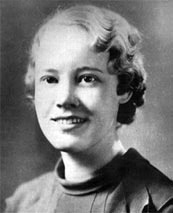
NSA's history records the start precisely: "On 1 February 1943 the U.S. Army's Signal Intelligence Service" began "a small, very secret program, later codenamed VENONA."1 The work was done at Arlington Hall in Arlington, Virginia, the Army's codebreaking headquarters. The first person assigned was Gene Grabeel, whom NSA's historian Robert L. Benson describes as "a young Signal Intelligence Service employee who had been a schoolteacher only weeks earlier."1 (The CIA chronology uses the service's later name, the Signal Security Agency, for the February start.5 The name VENONA itself came later.)

The flaw: duplicate one-time pads
Soviet intelligence messages were protected twice. A code clerk first turned the words into four-digit groups from a codebook. Then the clerk added a string of random digits, the "key," taken from a one-time pad, a booklet whose pages were supposed to exist in only two copies, one for the sender and one for the receiver, and to be used once and destroyed. Used correctly, a one-time pad cannot be broken. NSA's Cryptologic Almanac calls one-time pads "one of the most difficult manual cryptosystems to exploit."7
The Soviets did not use them correctly. Cecil James Phillips of NSA, one of the analysts who broke the system, explained in the CIA volume: "For a few months in early 1942, a time of great strain on the Soviet regime, the KGB's cryptographic center in the Soviet Union for some unknown reason printed duplicate copies of the 'key' on more than 35,000 pages of additive and then assembled and bound these in one-time pads."2 Each page carried 60 five-digit groups. The duplicate pages began showing up in messages in mid-1942 and still appeared on one circuit as late as June 1948, though most were used between 1942 and 1944.2 Phillips stressed that the Arlington Hall breakthrough "was a purely analytic accomplishment, achieved without the benefit of either Soviet codebooks or plain-text copies of original messages."2
The sequence of discovery took years. In the autumn of 1943 Lieutenant Richard Hallock, studying messages from Soviet trade offices, found evidence that key pages had been used twice.2 In November 1944, Arlington Hall analysts solved a new indicator system the KGB had adopted that May. The CIA history credits Genevieve Feinstein, Cecil Phillips, Frank Lewis, Frank Wanat and Lucille Campbell, and Benson calls Phillips's work "a fundamental break into the cipher system used by the KGB."51 Finding a duplicate page made a message only potentially readable. The codebook still had to be rebuilt, word by word.
Meredith Gardner and the codebook
That job fell mainly to Meredith Gardner, a crypto-linguist. Benson calls him the "principal translator and analyst on the VENONA program," and says he spent "the next twenty-seven years on the project."1 On December 20, 1946, Gardner broke into a 1944 KGB message that listed leading scientists working on the atomic bomb.15 That was the moment the Army understood it had found something far bigger than diplomatic chatter. In 1953 NSA added a partly burned Soviet codebook recovered in Germany in April 1945. More than half of it proved usable against KGB messages from 1941 to 1943.5
Robert Lamphere and the FBI
Codebreakers can read a message. They cannot knock on a door. Around September 1947, Carter Clarke briefed the FBI's liaison officer on the break into Soviet diplomatic traffic, and on October 19, 1948, Gardner and FBI Special Agent Robert J. Lamphere met at Arlington Hall and began full-time liaison.5 Benson writes that Lamphere stayed "in constant touch with Gardner and his associates" until he left the FBI in 1955.1 The pattern that followed was simple. Gardner and his colleagues produced translations full of cover names and scraps of biography (a job title, a travel date, a spouse's name). Lamphere and other agents matched the scraps against FBI files, employment records and surveillance until a cover name became a person. Lamphere's memoir, The FBI-KGB War (1986), was one of the first public accounts of the partnership. The Moynihan Commission noted that "It was not until 1986 that the existence of the VENONA project first was made public."8
Two cautions run through the rest of this lesson. First, most messages were never read, and most of those read were read only in part. Second, the identifications were made by analysts working from clues. NSA's own annotations use words like "probably" and "possibly" when the clues were thin. Readers who treat every footnote as a verdict make the same mistake as readers who dismiss all of them.
Venona by the numbers
The numbers matter because both sides have misused them. Some writers speak as if Venona read the whole of Soviet espionage traffic. It read a sliver. Others speak as if a sliver proves little. It proved a great deal, because the sliver kept naming names.
NSA's history gives the core figures. "There were about 3,000 VENONA messages translated," Benson writes.1 The NSA Cryptologic Almanac says "only about 3,000 of the many thousands of VENONA messages sent from 1940 through 1948 were even partially read and translated."7 The CIA volume puts the public total at "Some 2,900 Soviet intelligence messages."5 The official figures differ slightly by source. The share that could be read varied enormously by year and by circuit. For the busiest circuit, KGB New York to Moscow, NSA reports 49 percent of the 1944 messages read, 15 percent of the 1943 messages and 1.8 percent of the 1942 messages. For KGB Washington to Moscow in 1945, the figure was 1.5 percent. About half of the 1943 messages between Moscow and the GRU's naval office in Washington were read, and only a few from any other year.1 The work went on long after the messages were old: "In 1978 NSA decided to end the program by 1 October 1980."1
The Moynihan Commission gave a sense of the raw volume: "By 1945, some 200,000 messages had been transcribed, a measure of Soviet activity."8 Not all of those were intelligence traffic, and the commission did not break the figure down, so it should be read as a rough measure of how much was collected, not of how much was readable.
The cases Venona opened
From 1948 to 1951, Venona leads produced a chain of investigations that the CIA history describes as "an intense series of investigations and prosecutions."5 The chain mattered for the McCarthy era because it ran at exactly the same time as the loudest accusations, and because the public could see only half of it.
Judith Coplon (SIMA)
In December 1948 the FBI identified a KGB source with the cover name SIMA as Judith Coplon, a young Justice Department analyst. A KGB message of January 8, 1945, had reported her transfer from New York to the department's headquarters in Washington, and Lamphere later wrote that the date of that transfer clinched the identification.5 The CIA history states that "Coplon would become the first person arrested on the basis of a Venona lead."5 On March 4, 1949, FBI agents arrested her in New York with Valentin Gubitchev, a Soviet employee of the United Nations. Her purse held documents the FBI had routed through her office as bait.5
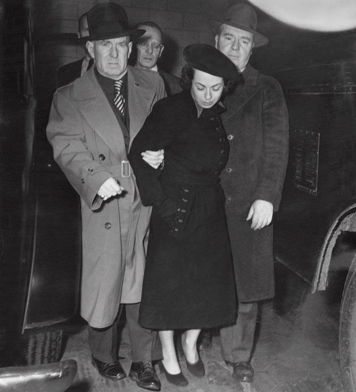

Then the problem that haunts this whole lesson appeared. The government would not put the decrypts in front of a jury. The CIA history says "Director Hoover or (less likely) someone higher in the Truman administration forbade FBI officials testifying at her trial from introducing the translated messages as evidence."5 Prosecutors and witnesses were pushed into "elaborate circumlocutions"; Lamphere testified that suspicion had fallen on Coplon because of information from a reliable "confidential informant" that was not a wiretap.5 Both of Coplon's convictions were overturned on appeal. The CIA history adds that later prosecutions followed the same pattern, "with the too-sensitive codebreaking secrets obscured behind mounds of corroborating evidence."5
Fuchs, Gold, Greenglass and the Rosenbergs
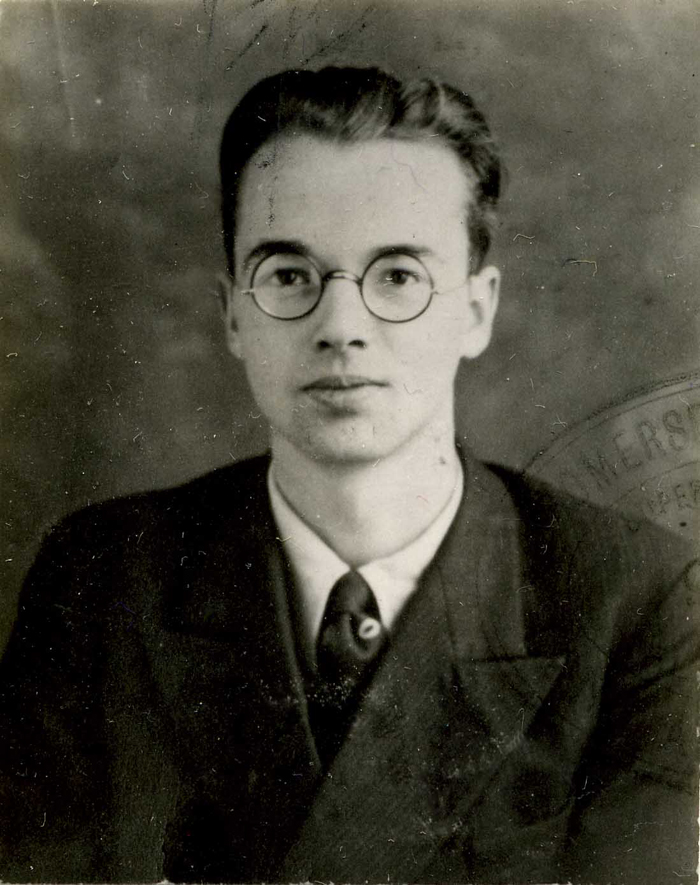
In September 1949 the FBI determined that the cover names REST and CHARLES, both used for a scientist in the Manhattan Project, referred to the German-born British physicist Klaus Fuchs, author of a paper quoted in one message.5 British authorities questioned Fuchs, and he confessed on January 24, 1950.5 His information led the FBI to his courier, Harry Gold, arrested in Philadelphia on May 22, 1950.5 Gold's information and further Venona analysis led to David Greenglass, an enlisted man at the Manhattan Project's Los Alamos laboratory during the war, who confessed on June 15, 1950, and implicated his brother-in-law, Julius Rosenberg.5

In late June 1950 the FBI found that information about a source code-named LIBERAL, earlier ANTENNA, who collected technical secrets, matched the known facts about Julius Rosenberg, a New York engineer. "Two messages also implicated his wife, Ethel," the CIA history states.5 Julius Rosenberg was arrested on July 17, 1950.5 PBS's NOVA, working from the released files, counted "Twenty-one deciphered KGB cables" that discuss him.9
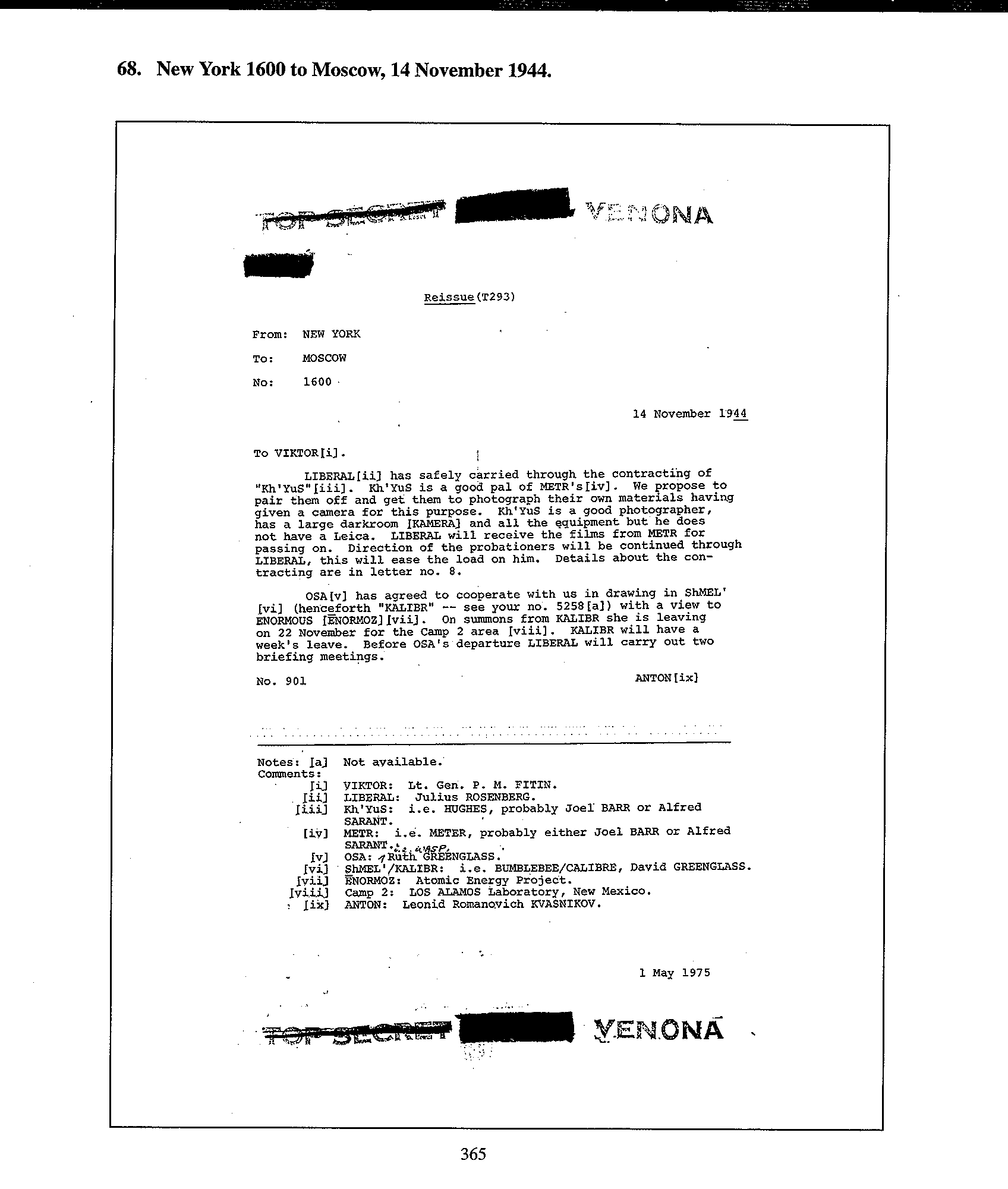
One of those cables shows how ordinary the work could sound. In New York message 1600 of November 14, 1944, the KGB station reported to Moscow that "LIBERAL has safely carried through the contracting" of a new source, a "good photographer" who "has a large darkroom," and proposed that the new pair "photograph their own materials." The same cable reported that Ruth Greenglass (OSA, "wasp") had agreed to help draw in her husband David (earlier ShMEL', "henceforth KALIBR") "with a view to ENORMOUS," the atomic project, and that she was leaving on November 22 "for the Camp 2 area," which the NSA annotation identifies as Los Alamos.10

The Rosenbergs were convicted in 1951 on the testimony of Greenglass, Gold and others, with Venona kept out of the case, and were executed at Sing Sing on June 19, 1953.11 The Moynihan Commission wrote that "Ethel Rosenberg was an accomplice, not a principal," and noted that the government "had not asked for a death sentence; a Federal judge took it on his own to impose it."11 The trial, the sentence and what the case cost are the subject of lesson 10.
Theodore Hall (MLAD)
The most striking case is the one that never reached a court. Theodore Alvin Hall was a physics prodigy who graduated from Harvard at 18 and was sent to Los Alamos. On November 12, 1944, the KGB's New York station cabled Moscow that its officer BEK had "visited Theodore HALL," described as "19 years old, the son of a furrier," a Harvard graduate taken on "as a talented physicist" for government work. The cable reports that Hall "handed over to BEK a report about the CAMP and named the key personnel employed on ENORMOUS," the KGB's name for the bomb project, and that he had acted "on the advice of his colleague Saville SAX."12 Hall's later cover name was MLAD ("youngster"), paired with Sax's STAR ("old one"), a play on a Russian saying.13
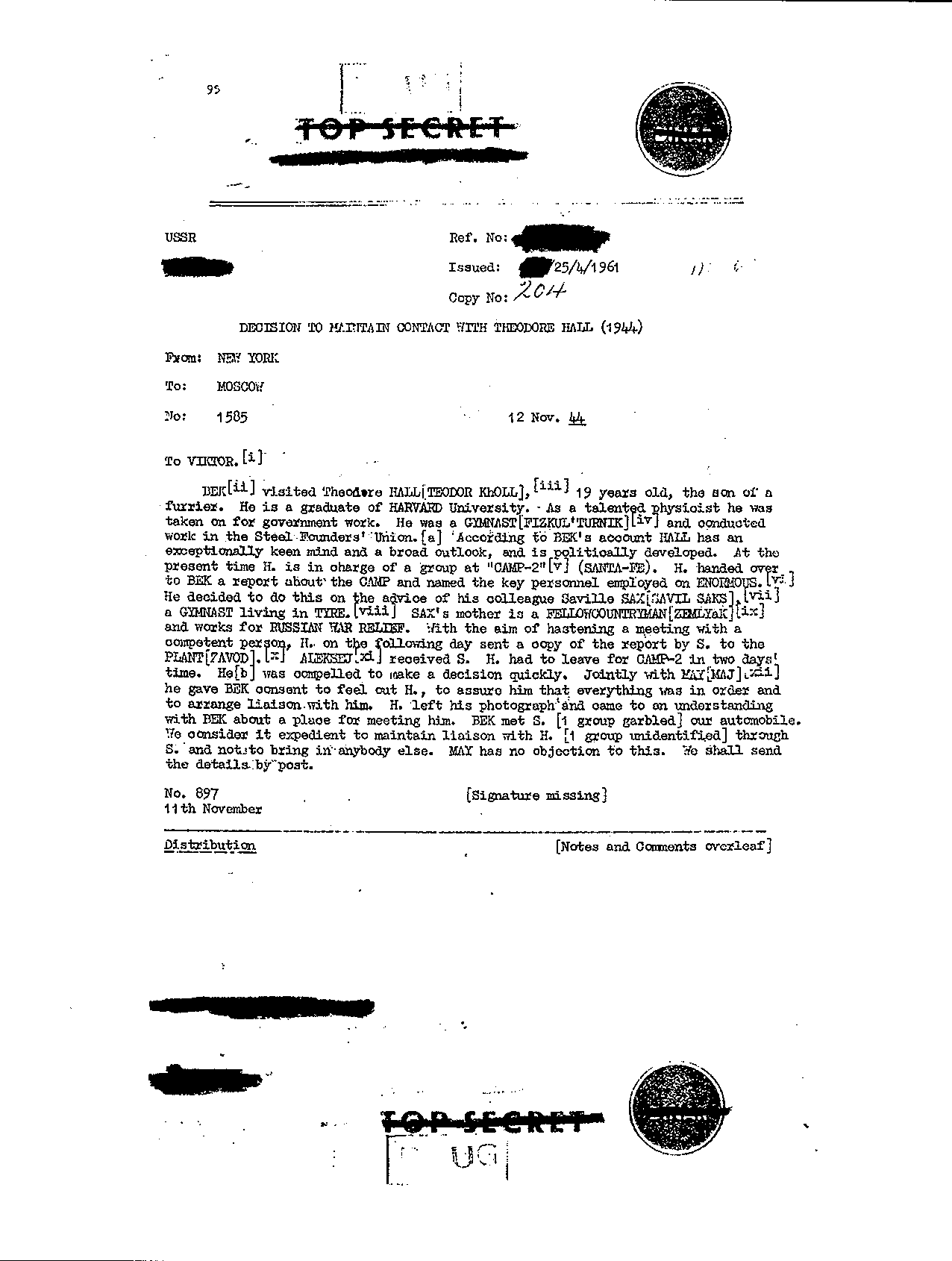

Sometime in 1949 or 1950 Gardner translated the message, and the FBI matched MLAD to Hall. Agents questioned Hall in 1951, "but he was never prosecuted (probably because a case could not have been made without revealing AFSA's program)," the CIA history states.5 The Moynihan Commission was blunter: the government "was evidently unwilling to pursue" a prosecution "if it would have meant revealing the existence of the VENONA project."11 He is the clearest example of a real atomic spy whom secrecy protected, and of why anti-communists who suspected that some spies "remained at large" were right.5
HOMER and the British connection
Venona also exposed spies outside the United States. In February 1949 analysts noticed that messages containing "Material G" quoted British Foreign Office telegrams sent to the British Embassy in Washington during the war. By May 1951 the suspects had narrowed to Donald Maclean of the Foreign Office, who soon fled to the Soviet Union with Guy Burgess.5 The Maclean case matters to this module for one reason: it shows that the Soviets had sources who could warn them about Venona itself. That is the next part of the story.
Washington: Bentley's networks and the cover names
The atomic cases were the most dangerous. The Washington cases were the most political, because they reached the senior economic and foreign policy staff of the Roosevelt and Truman administrations, and because they were the ones that the congressional committees, and later McCarthy, fought over.
Elizabeth Bentley
Elizabeth Bentley was a Communist who served Soviet intelligence as a courier and handler, first through Jacob Golos and then on her own. FBI agents interviewed her at length for the first time on November 7, 1945,5 and she signed a long deposition on November 30, 1945, that named the people she had dealt with.3 In public, she testified before the House Committee on Un-American Activities on July 31, 1948.514 Asked whether there were other groups besides the one run by Nathan Gregory Silvermaster, a government economist, she answered: "I had one other group that I handled, and I had every reason to believe there were other groups also." She went on: "We called it the Perlo group," after "the ostensible leader of it," Victor Perlo of the War Production Board.14 The committee's annual report for 1948 summarized: "Miss Bentley named the participating members of the two espionage groups with which she had contact, namely, the Silvermaster group and the Perlo group."15
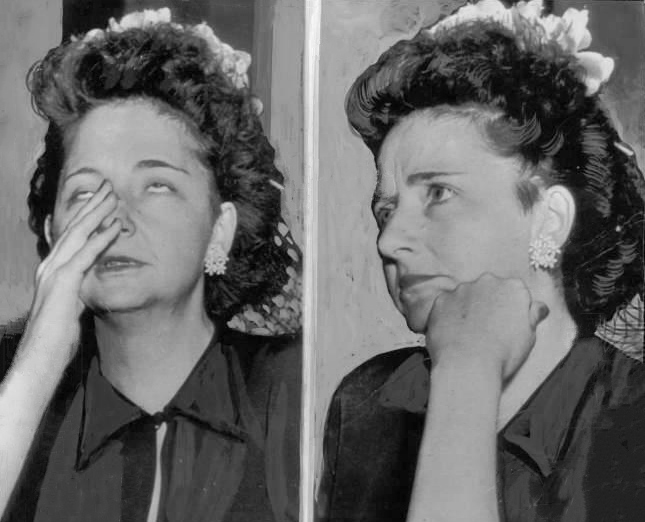

The committee's report noted that some of those she named "refused to answer all questions" about their participation and party membership "on the grounds of self-incrimination."15 Others, White among them, denied everything. For decades much academic writing, in Haynes's description, treated most of the accused "as innocents maligned by wicked perjurers egged on by American security agencies."16 Venona changed that. Bentley's own cover names appear in the decrypts, and NSA's Cryptologic Almanac lists her among the figures Venona identified, under the name "GOOD GIRL."7 Haynes and Klehr later corroborated her later cover name MYRNA and her earlier "Clever Girl" (UMNITSA) through the KGB notebooks discussed below.13 Many of the people she named appear in the cables too, under cover names the FBI matched to them.
Harry Dexter White
Harry Dexter White was the most senior. He was the Treasury's Director of Monetary Research, rose to Assistant Secretary of the Treasury, and was later appointed by Truman to the International Monetary Fund.5 Bentley told the committee he "gave information to Mr. Silvermaster which was relayed on to me," while saying she did not know whether he was "a card-carrying Communist."14 Chambers named him as well. White appeared before the committee in August 1948, denied the charges, and died suddenly a few days later.5
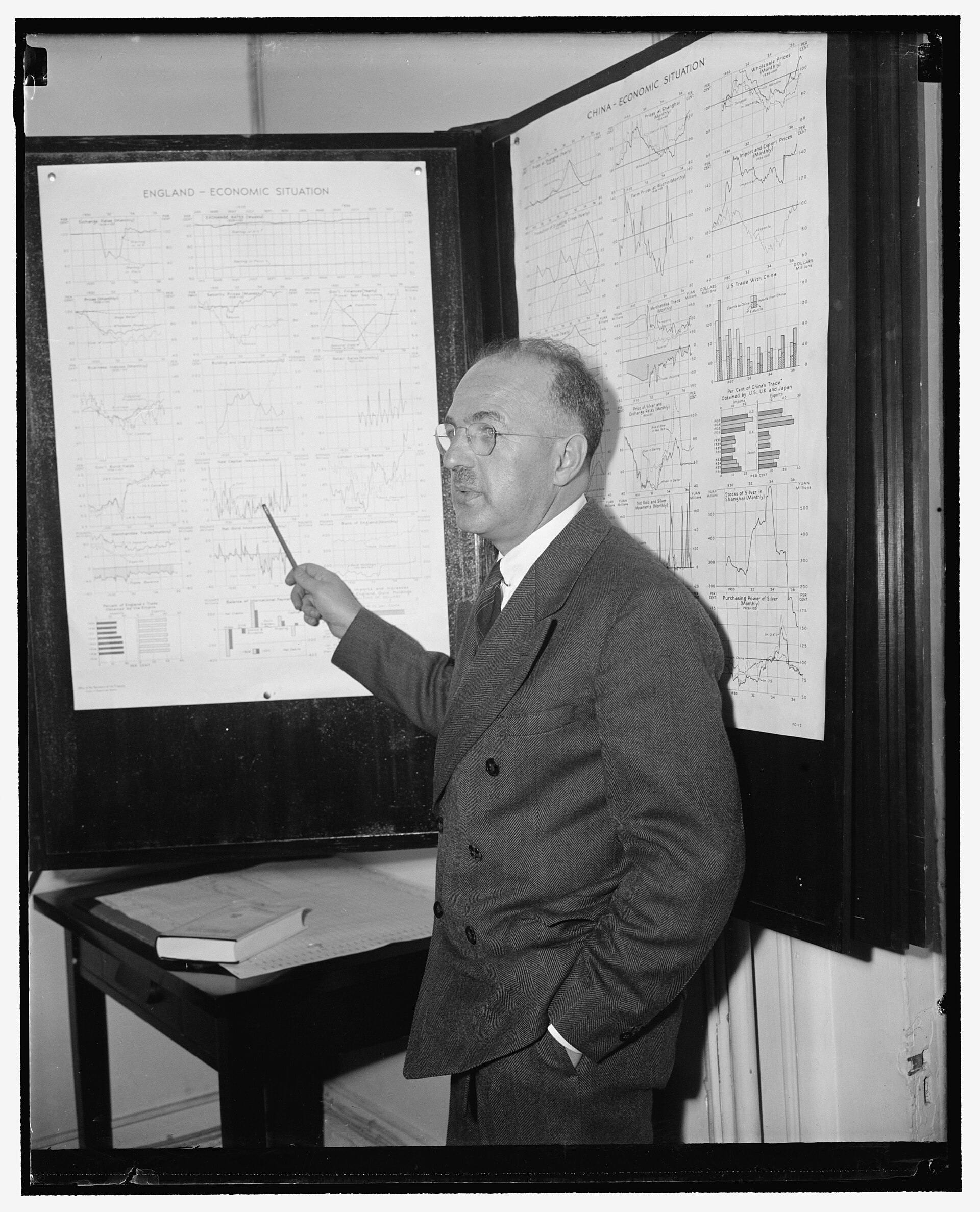

The CIA history says that "covername JURIST meant Harry Dexter White, a former Assistant Secretary of the Treasury," and lists the key messages, including New York to Moscow cables of August 4 and November 20, 1944, and January 18, 1945. It also notes candidly that "It remains unclear which messages led the FBI to the White identification."5 The KGB notebooks discussed below give White three cover names: JURIST from 1941 to August 1944, LAWYER briefly in August 1944, and RICHARD from September 1944.13 Haynes and Klehr summarize what the cables show him doing: he "had advised the KGB about how American diplomatic strategy could be frustrated."4
White's case is also the clearest case of political damage from secrecy. In November 1953 Eisenhower's Attorney General, Herbert Brownell, charged that Truman had appointed White to the IMF despite FBI warnings that White was a Soviet agent. The CIA history notes that Brownell and Eisenhower "almost certainly had seen translated messages about White (and probably about Hiss as well)," and reproduces one FBI warning, J. Edgar Hoover's letter to the White House of February 1, 1946.5 The evidence existed. The public was told only that it existed.
Lauchlin Currie
Lauchlin Currie was an economist on Franklin Roosevelt's White House staff. Bentley told the committee: "The man was not a Communist but he did give information," and explained that "being in the position he was in, he had inside information on Government policy."14 Venona's PAGE was identified as Currie, and the KGB notebooks use the same cover name from 1942 to 1948.13 Haynes and Klehr write that Currie "warned the KGB that the FBI had started an investigation of one of the Soviets' key American agents."4 The CIA history adds that Bentley later testified about "Lauchlin Currie's alleged distress over US efforts to read wartime Soviet telegrams," which, if true, means a White House aide tipped off Soviet intelligence about the very codebreaking effort described in this lesson.5 The dissent on Currie is real: John Lowenthal wrote in 2001 that "Haynes and Klehr use Venona decrypts of Soviet World War II cablegrams to traduce Currie as a spy for the Soviet Union."17 The KGB notebooks, published eight years later, carry the same cover name for him across six years, which weakens the case that the identification was a mistake.13
Duncan Lee
Duncan Chaplin Lee was, during the war, an executive assistant in the Office of Strategic Services, the intelligence agency headed by General William Donovan. The CIA history lists "OSS executive assistant Duncan Lee" among those accused by defectors.5 Bentley named him. Venona's KOCH was identified as Lee, and the KGB notebooks confirm it.13 The Moynihan Commission wrote that it would "appear from the VENONA messages" that Lee was a Soviet agent.11 His position gave Soviet intelligence a source inside America's own wartime intelligence service.
The Silvermaster and Perlo groups
Bentley's 1948 testimony named about a dozen people in or around the Silvermaster group and seven in the Perlo group.14 The chart below compares her list with the cover names that NSA and FBI analysts identified in Venona and that Haynes and Klehr later found corroborated in the KGB notebooks. It adds the atomic sources discussed above. It includes only identifications published in the sources cited here, and it marks what remains open.
Three cautions apply to the chart. It is not a full census. Bentley named others outside these two groups, and Venona names many sources outside these networks. The gray dots are not findings of innocence. They mean only that the sources used for this lesson do not show a Venona cover name for that person. And identification is not the same as proof of what each person did. Some sources passed documents for years. Others were contacts the KGB hoped to develop. Haynes and Klehr's broader count, discussed below, uses the phrase "covert relationship" to cover that range.
ALES and the Hiss dispute
No single cable has drawn more argument than Washington message 1822 of March 30, 1945. Anatoly Gorsky, the KGB chief in Washington (signing as VADIM), reported to Moscow on a conversation with a GRU source code-named ALES. In the translation Haynes and Klehr give, the first point reads: "Ales has been continuously working with the neighbors since 1935." ("Neighbors" was KGB slang for the GRU, Soviet military intelligence.) The cable says that ALES led "a small group of probationers of the neighbors, for the most part drawn from his relatives," that the group worked on "obtaining only military information," and that after the Yalta conference, "back in Moscow," a very high-ranking Soviet official, whom ALES implied was Andrei Vyshinsky, conveyed the GRU's thanks.18 An NSA briefing deck released in 2024 renders the first line slightly differently: "ALES has been working with the NEIGHBORS continuously since 1935."19
The NSA and FBI annotation said ALES was "probably" Alger Hiss, the State Department official who attended Yalta and then flew to Moscow with Secretary of State Edward Stettinius. Benson writes that "Analysts later identified ALES as probably Hiss."1 The CIA history states that by June 1950 the FBI had determined that ALES referred to Hiss.5
The case for the identification, as Haynes and Klehr make it, is a process of elimination. Most of the American delegation at Yalta went home by way of the Middle East. Only a small party went on to Moscow with Stettinius, and among its State Department members only four could plausibly be ALES: Stettinius himself, H. Freeman Matthews, Alger Hiss and Wilder Foote, an assistant to Stettinius. Of those, only Hiss had a documented history with Soviet military intelligence in the 1930s, through the testimony of Chambers and of Hede Massing.18 John Ehrman, writing in the CIA's journal Studies in Intelligence in 2007, reviewed the challenges and concluded that "Hiss alone remains the best candidate to be ALES." He quoted the historian Eduard Mark's 2003 judgment that "ALES was very probably Hiss."20
The dissent is serious and has to be stated fairly. John Lowenthal, a member of Hiss's legal team, argued in a 2001 letter to The Nation that Haynes and Klehr "assert that Venona confirms his guilt because he was 'Ales,'" while ignoring facts that "virtually preclude such an identity."17 In 2007 Kai Bird and Svetlana Chervonnaya argued in The American Scholar that "we have found evidence to suggest that Hiss could not have been Ales," and that an alternative candidate existed. Their candidate was Wilder Foote.21 Their strongest point concerns timing: a separate Gorsky cable of March 5, 1945, says ALES had not yet come back from Mexico City, while Hiss had flown home and was in Washington by late February. They also argue that the cable's ALES supplied only military information, which fits a State Department diplomat poorly, and that the Hiss identification began with a May 1950 FBI memo saying only that it "would appear likely" that ALES was Hiss.21
Haynes and Klehr replied that the March 5 cable shows only what Gorsky believed: "the most sensible conclusion is that Gorsky simply did not know that Hiss had returned early." The same cable named Harold Glasser (RUBLE) as the KGB's "only key" to ALES and reported that Glasser gave ALES "an exceptionally good political reference as a member of the Comparty," details they read as fitting Hiss. They added that Foote spent the 1930s, until 1941, editing local newspapers in Vermont, and that "There is no evidence whatsoever that GRU" had any operations in rural Vermont.18 Ehrman judged Bird and Chervonnaya's chain of inference weak: "One supposition follows another in their paper."20 Vassiliev's own notebook concordance lists ALES as "likely Alger Hiss," based on a marginal note.13
Two things are true at once. The identification of ALES as Hiss is the majority view among historians who have worked with the documents, and it rests on a reasonable chain of evidence. It has never been as firm as the identifications of Rosenberg, Hall or Fuchs, which rest on biographical details and later confessions. The broader question of whether Hiss spied in the 1930s rests on separate evidence (the Baltimore documents, the Pumpkin Papers and two trials), which lesson 03 covers. Readers should keep the two questions separate: Venona 1822 bears on whether Hiss was still working for Soviet intelligence in 1945.
How many Americans?
The most quoted number from the Venona literature comes from Haynes and Klehr's 1999 book: "The deciphered Venona cables identify 349 citizens, immigrants, and permanent residents of the United States who had had a covert relationship with Soviet intelligence agencies." Of those, they wrote, "less than half could be identified by their real names and nearly two hundred remained hidden behind cover names."4 The count covers a range of relationships, from active agents who passed documents to people the KGB was cultivating, and it includes immigrants and permanent residents as well as citizens.
Official counts are framed differently. Benson writes that the translations name "Several hundred named or covernamed persons" as KGB and GRU assets or contacts, and that "over one hundred Americans, most of them Communists, are mentioned" in the 1944 to 1945 release alone.1 The NSA Cryptologic Almanac says the decrypts identified "over 200 individuals connected with the GRU or KGB."7 The numbers do not conflict so much as count different things: identified versus unidentified, Americans versus all persons, assets versus contacts.
Ten years later, the KGB notebooks let Haynes and Klehr test the analysts' work. They reported corroboration "for the real names identified by the Venona project for 177 cover names," found "only four cases where Venona analysts made incorrect identifications," and attached real names to 63 cover names that Venona had left unidentified.13 For a project built on fragments, that is a strong record, and it answers the old objection that the identifications were guesses.
Betrayal: Weisband, Philby and "Black Friday"
The Soviets learned about Venona early, from inside. William Weisband was born in Egypt in 1908 to Russian parents, came to the United States in the 1920s, and became a citizen in 1938.5 He served in Army signals intelligence in North Africa and Italy and then joined Arlington Hall's Russian section. He was not a cryptanalyst, but as a fluent Russian speaker and "linguist adviser," the CIA history says, "the gregarious and popular Weisband had access to all areas of Arlington Hall's Soviet work." Meredith Gardner later recalled that Weisband had watched him pull the list of atomic scientists out of the December 1944 message.5 NSA's internal history describes him as "a stroller" who "wandered around, chatting and picking up bits of gossip" and was "adept at getting himself on distribution for documents that did not directly concern the work of his section."22
NSA's history says Weisband "had handled other agents passing defense information to the Soviets even before he entered the Army."22 He was exposed in 1950 by a chain of Venona leads: a source code-named NICK led the FBI to Jones Orin York (NEEDLE), a West Coast aircraft worker who said he had passed secrets to the KGB since the mid-1930s and that his handler in 1941 and 1942 had been "one Bill Weisband."5 NSA's history records that the FBI was "aghast to learn in 1950 that Weisband was employed at Arlington Hall, the very place whence the venona decrypts were coming."22 He was suspended in May 1950. He was never charged with espionage. He skipped a federal grand jury hearing on Communist Party activity, and "in November 1950 Weisband was convicted of contempt and sentenced to a year in prison," the CIA history says. He died in 1967.5
NSA calls him "the U.S. cryptologic effort's first traitor" and says he "almost certainly provided information critical to the Soviet COMSEC effort."22 In late October 1948, in the journalist Steve Vogel's account, the Soviets began changing their cryptographic systems "almost overnight and without warning," and moved much of their military, intelligence and diplomatic traffic in Germany and Austria off the radio and onto landlines.23 Western codebreakers lost much of what they had been reading. Inside the American codebreaking agencies the event became known as "Black Friday." The exact date is often given as October 29, 1948, but NSA's declassified histories redact the passage, so that date is not confirmed here. NSA's own history is careful about blame: "Many AFSA employees believed, rightly or wrongly, that he was single-handedly responsible for 'Black Friday.'" It notes that "No history of Black Friday was compiled at the time," and the declassified versions still redact the details.2224 Another NSA almanac article concludes that "it was probably linguist William Weisband who alerted the Soviets to American and British successes against their cryptosystems."24
Weisband was not the only leak. Kim Philby, the British intelligence officer who was secretly a Soviet agent, arrived for duty in Washington in the autumn of 1949 and, the CIA history says, "received actual translations and analyses on a regular basis." It concludes that Moscow learned of the flaw "through agents William W. Weisband and Kim Philby," and that "Timely warnings from Philby helped the KGB protect some of its agents."52 The CIA history adds an important limit: by the time the Soviets understood the damage, "most of the duplicate one-time pad pages had already been used."2 The Soviets could stop new leaks. They could not recall the old messages sitting in Arlington Hall's files.
That leads to the strangest fact in the whole story, stated by the Moynihan Commission: "The Soviets now knew that we were 'reading their mail.' We knew that they knew." The commission went on: "Only the American public was denied this information."11
Why Venona was kept secret, even from the President
The Bradley decision and Truman
Knowledge of Venona was held to a tiny circle. Moynihan, who chaired the 1997 Commission on Protecting and Reducing Government Secrecy, wrote in his foreword to its report that decrypted material "was passed to the Federal Bureau of Investigation" beginning in 1948 and "it was in the main kept in the Director's vault." He added: "The Central Intelligence Agency was not informed about VENONA until 1952."25 And: "Nor was President Truman himself informed of VENONA."25 The appendix on the atomic era goes further, saying "the entire VENONA project was kept secret from Harry S Truman and his Attorney General, Tom Clark."8
The clearest evidence comes from an FBI memorandum of October 18, 1949, recording the account of Brigadier General Carter W. Clarke of the Armed Forces Security Agency. Michael Warner, deputy CIA historian, reported that, according to Clarke, General Omar Bradley, then chairman of the Joint Chiefs of Staff, said he "would personally assume the responsibility of advising the President or anyone else in authority" if "the contents of any of this material so demanded."26 Haynes and Klehr write that "Army Chief of Staff Omar Bradley, mindful of the White House's tendency to leak," decided "to deny President Truman direct knowledge of the Venona Project."4
The evidence on Truman is circumstantial, and honest historians say so. The CIA history notes that Hiss, White and others whose guilt Truman repeatedly denied all appeared under cover names in messages translated before he left office in January 1953, and that "Truman's repeated denunciations of the charges against Hiss, White, and others" therefore "suggest that Truman either was never briefed on the Venona program or did not grasp its significance." It adds: "Although it seems odd that Truman might not have been told, no definitive evidence has emerged to show he was."5 Warner, writing in 2000, weighed the alternatives and said he "votes for the former interpretation": that Truman was not informed about the Venona messages that implicated White.26 Truman himself wrote in his 1956 memoirs that the security agencies "had kept us almost totally free of sabotage and espionage during the war."5 On the Venona record, that sentence was wrong.
Truman's White House did receive FBI reports that named White and others, and the CIA history reproduces Hoover's February 1946 warning about White.5 What Truman apparently did not receive was the decrypted proof, in the Soviets' own words, that would have shown how much of those reports was true.
Never used in court
The government never introduced a Venona decrypt as evidence in any trial. The Coplon case set the pattern, described above: FBI witnesses were forbidden to mention the messages and had to describe their source as a "confidential informant."5 The CIA history names the main reason, protection of "the cryptanalytic breakthrough," and notes a second handicap: in the Bentley investigation, which "produced many leads but led to no espionage prosecutions," FBI agents "could not use evidence gathered by wiretaps in court."5 A third problem follows from the documents themselves. The messages were fragments full of cover names, and putting them before a jury would have meant explaining how they were read. The result was that real spies such as Theodore Hall were never prosecuted, while cases that did reach court were built on confessions and witness testimony, which defenders of the accused could and did attack as perjury.
The CIA history gives a balanced judgment of the trade-off: "The tacit decision to keep the translated messages secret carried a political and social price for the country." Debates over the extent of Soviet espionage "were polarized in the dearth of reliable information then in the public domain." Yet "Given the dangerous international situation and what was known by the government at that time, however, continued secrecy was not illogical," because with the Korean War raging, military and intelligence leaders "almost certainly believed that any cryptologic edge that America gained over the Soviets was too valuable to concede," even if Moscow already knew of it.5
What secrecy did to the McCarthy fight
Moynihan drew a harder conclusion. "A compelling question is why the United States Government never let the American public know what it knew," the commission wrote. "It was the American public that did not know."8 In the commission's account, secrecy left a vacuum: "Anyone knowledgeable of the Communist apparat could have predicted that the Government 'secrets' would be attacked as spurious and contrived," while at the same time "innocent persons were being harassed and worse by a political mob."11
Haynes and Klehr make a parallel argument from the other direction. Keeping Venona secret, they write, "denied the public the incontestable evidence afforded by the messages of the Soviet Union's own spies." The sources the public did have, defectors and congressional hearings, "are inherently more ambiguous than the hard evidence of the Venona messages," and "this ambiguity had unfortunate consequences for American politics." Because the messages were unknown to the public, "demagogues such as McCarthy had the opportunity to mix together accurate information about betrayal by men such as Harry White and Alger Hiss with falsehoods about Acheson and Marshall that served partisan political goals."4 And: "Had Venona been made public, it is unlikely there would have been a forty-year campaign to prove that the Rosenbergs were innocent."4 Both readings agree on the mechanism: the truth was locked up, and a public argument went on without it for four decades.
Opening the files, 1995 to 1996
The end of the Soviet Union had removed much of the argument for silence, and the Moynihan Commission, created by Congress in 1994, was at work on government secrecy. On July 11, 1995, at a ceremony at CIA headquarters attended by Senator Moynihan and FBI Director Louis Freeh, Director of Central Intelligence John Deutch released the first group. The CIA press release stated: "The 49 messages being released today reveal extensive Soviet espionage activities directed at the US atomic bomb program." It called the batch "the first of several releases of over 2200 translations from the VENONA project."27 NSA director Vice Admiral John Michael McConnell and his deputy William P. Crowell spoke, and the historian David Kahn discussed the release's significance.27
NSA's history describes six releases in all.1 The first (July 1995) covered atomic espionage. The second covered KGB New York to Moscow traffic for 1942 and 1943; NSA's release records date it to September 1995. The third, with "more than 500 translations," covered more New York and Washington KGB traffic. Its analytical notes are dated February 1996. The fourth, "some 850 message translations," covered San Francisco, Mexico City and the GRU. Its notes are dated July 1996. The fifth, "well over 1,000 messages," covered Europe, Latin America and Australia, with notes dated September 1996. A sixth restored messages and some names left out of the first five.128 The released translations, with NSA's monographs and analytical notes, are posted on NSA's website and on several mirrors.
In October 1996 CIA, NSA and the Center for Democracy cosponsored a public conference on Venona in Washington, D.C., and CIA and NSA produced the handbook Venona: Soviet Espionage and the American Response, 1939 to 1957, edited by Benson and Warner, for it.29 The first release came at the July 1995 ceremony. The conference followed in October 1996, and NSA released the first of Meredith Gardner's special reports there.291
Beyond Venona: the Moscow archives, Vassiliev and Mitrokhin
Venona came out at the same moment that Russian archives briefly opened. The two bodies of evidence check each other, which is why the post-1995 consensus is stronger than either would be alone.
The Comintern and CPUSA files
In the early 1990s Haynes and Klehr worked in the newly opened records of the Communist International and of the CPUSA held in Moscow. Haynes later explained that what they found there changed their own view. In 1992 they had written that "in practice few American Communists were spies." After Moscow and Venona they concluded that "not a few" but "hundreds of American Communists had assisted Soviet espionage" and that "espionage was a regular activity of the American Communist party."30 The CIA history cites one example from those files: an October 19, 1944, request from the KGB's Pavel Fitin to Georgi Dimitrov of the Comintern for information on Judith Coplon.5
The Vassiliev notebooks and Spies (2009)
Alexander Vassiliev was a former KGB officer who, during an authorized research project in the 1990s, copied long extracts from KGB archival files by hand. In March 2009 he gave nine notebooks, 1,115 pages, to the Library of Congress, with Russian transcriptions, English translations and a concordance of cover names. All three versions were also posted online. At the same time Yale University Press published Spies: The Rise and Fall of the KGB in America by Haynes, Klehr and Vassiliev.1331 The notebooks quote documents with archival file and page numbers, titles, authors and dates.13
Their value for Venona is that they are independent. They came from KGB file rooms, not from intercepted cables. Haynes and Klehr's tally (177 confirmed identifications, 4 errors, 63 previously unidentified cover names now named) is the closest thing to an audit the Venona analysts have had.13 Some of the new names were surprising. Source "19," who reported on a 1943 conversation involving Roosevelt and Churchill and whom some scholars had suspected was Harry Hopkins, turned out to be Laurence Duggan of the State Department. QUANTUM, an atomic source who met Soviet officials in Washington in June 1943, was the physicist Boris Podolsky, whom the KGB soon dropped. FOGEL, later PERSIAN, a source on the Oak Ridge plant, was Russell McNutt, an engineer recruited by Julius Rosenberg.13
The notebooks also corrected Venona in ways that cut against some anti-communist claims. The cover name Venona analysts had read as VEKSEL and tied to J. Robert Oppenheimer was, according to the notebooks, VECTOR, and it meant Enrico Fermi. Haynes and Klehr report that KGB attempts to contact Fermi failed, "as did its attempts to contact Oppenheimer."13 And one Venona identification, ARENA as Mary Price, appears to have been wrong. The notebooks tie ARENA to Gerald Graze.13
The notebooks are not beyond challenge. They are handwritten notes, made by one person during an SVR-authorized project, and the originals they summarize remain closed in Moscow. The historian Amy Knight, reviewing Spies in the Times Literary Supplement in June 2009, wrote that its "main purpose" seemed to be "to silence those who still voice doubts about the guilt of people like Alger Hiss, Harry Dexter White, I.F. Stone and others." She disputed the dating and reliability of a December 1948 memo by Anatoly Gorsky that lists Alger Hiss, by his real name and his 1948 cover name LEONARD, among the sources Chambers had exposed. Haynes and Klehr replied that the memo is "a stand-alone document signed by Gorsky and dated December 1948," and that a senior intelligence official had no reason to inflate the damage defectors had done.32 Haynes and Klehr's broader answer is that the notebooks match Venona, FBI files and other independent sources in hundreds of details.13 A reader should treat a fact found only in the notebooks with somewhat more caution than one confirmed by two sources.
The Mitrokhin archive
Vasili Mitrokhin was a KGB archivist who "defected to the West" in 1992, bringing notes he had made from KGB foreign intelligence files. The Churchill Archives Centre at Cambridge now preserves the full collection, the Mitrokhin Papers.33 The British historian Christopher Andrew and Mitrokhin published a history drawn from the notes, The Sword and the Shield (1999).34 For the 1940s Washington networks this lesson relies on Venona and the Vassiliev notebooks. The Mitrokhin material is a third, separate body of KGB file notes, and any specific claim drawn from it should be checked against The Sword and the Shield and the papers themselves.
What the archives do not show
The same documents that confirm the espionage also mark its limits, and this is where the McCarthy argument turns.
In 2007 Haynes went through every name he could connect to McCarthy's accusations from 1950 to 1952: the 81 numbered cases in McCarthy's Senate speech of February 20, 1950, the "Lee list" of State Department security cases that McCarthy drew on, the further names McCarthy gave the Tydings subcommittee, names from his speeches collected by William F. Buckley Jr. and L. Brent Bozell, and the names in his June 14, 1951 speech attacking George Marshall and Dean Acheson. He checked each against Venona and against other evidence, including Bentley's 1945 FBI deposition, Anatoly Gorsky's December 1948 memo from the Vassiliev notes, and Weinstein and Vassiliev's The Haunted Wood. His conclusion: "Of the 159 persons listed above, there is substantial evidence that nine assisted Soviet espionage against the United States." The nine were Lauchlin Currie, Harold Glasser, Gerald Graze, Stanley Graze, Mary Jane Keeney, David Karr, Robert T. Miller, Franz Neumann and William Remington. He called David Zablodowsky "a tenth ambiguous case."3
Most of the famous names do not appear. Haynes lists Owen Lattimore, John Stewart Service, John Carter Vincent, Philip Jessup, John Paton Davies, Oliver Edmund Clubb, Dorothy Kenyon and Harlow Shapley as "Not identified in Venona." He notes that Service had been "Identified by FBI bugging in 1945 as having deliberately leaked" State Department information to Amerasia, a pro-Communist journal, which is a security failure, not espionage for Moscow.3 Dean Acheson and George Marshall appear only in "benign" references, as the officials whose policies Soviet intelligence was trying to learn. Haynes and Klehr write that "There is no basis in Venona for implicating Acheson or Marshall in a Communist conspiracy."43 Drew Pearson, whom McCarthy also attacked, appears only benignly.3
Haynes did not conclude that everyone else on the lists was blameless. "My own view," he wrote, "is that a number of those on the lists above, perhaps a majority, likely were security risks, but others, a minority but a significant one, likely were not, and some, Drew Pearson, Dean Acheson, and George Marshall for example, certainly were not."3 He stressed that a security risk is a person who should not hold a sensitive job, which "is not to say that that person is a proven or even most likely a Soviet espionage source."3
Two further limits matter. Silence in Venona proves little, because most messages were never read. That point cuts in favor of McCarthy's defenders, who can say that some of his targets might appear in unread traffic. But Haynes also drew on sources that are not limited to the readable cables, such as Gorsky's 1948 memo listing sources exposed by defectors, and those sources confirmed only a few names on McCarthy's lists (Gerald and Stanley Graze, Robert T. Miller and Franz Neumann among them).3 And the espionage Venona documents was concentrated in 1942 to 1945. By the time McCarthy spoke at Wheeling in February 1950, the Bentley defection, Venona leads, FBI pressure and the loyalty program had broken up most of the wartime networks. Haynes put it this way in 2000: "by 1950 the shockingly high level of Soviet infiltration of U.S. government agencies that had existed during World War II was largely gone."30 McCarthy's charges and the documented espionage overlapped only at the edges, in names like Currie and Remington that Bentley had already given the FBI in 1945. The detailed checks of McCarthy's numbers and cases are in lesson 05 and lesson 11.
The readings side by side
Since 1995 historians have agreed on more than their arguments suggest. Almost no serious scholar now denies that the Rosenberg ring, Hall, Fuchs and the Silvermaster and Perlo groups were real. The disagreements are about weight, about particular people, and about what the espionage says about McCarthy and the anti-communist effort as a whole. Four readings stand out. Each is presented here in its authors' own terms, with the evidence that supports or strains it.
Haynes and Klehr: the espionage was real, McCarthy was not vindicated
John Earl Haynes and Harvey Klehr did more than anyone to read Venona against the Moscow archives. Their 1999 book Venona: Decoding Soviet Espionage in America and their 2009 Spies (with Vassiliev) make three main claims. First, Soviet espionage in the 1940s was large, successful and run largely through the CPUSA. Second, the decrypts and the notebooks confirm most of the specific charges made by Bentley and Chambers, including those against White, Currie and Hiss. Third, none of that vindicates McCarthy.
Haynes stated the third point plainly in 2000, in a joint appearance with Arthur Herman. "McCarthy in my view threatened that anti-Communist consensus," he said. "He attempted to make anticommunism a partisan weapon." The Truman administration's officials, including some "very high ones," had been naive, he granted, but "there is no evidence that would justify McCarthy's charge of administration complicity." He called McCarthy "a minor devil" and concluded: "In my view the new evidence in general vindicates the broad anti-Communist consensus of American politics in the late 1940s and 1950s but does not vindicate Joseph McCarthy in the particular."30
Haynes was equally firm that the anti-communist measures of the late 1940s worked and were needed. Soviet intelligence stopped using the CPUSA for espionage, he argued, "not because they had ethical objections to this strategy," but "because it had become risky," and it became risky because of the loyalty program, FBI pressure and the decision by unions and liberal groups to exclude Communists. "Had the U.S. government not adopted these policies, the KGB, GRU and CPUSA would have happily continued as before."30 That argument gives the loyalty-security system real credit while denying McCarthy any.
Schrecker: real spies, and a much larger repression
Ellen Schrecker wrote one of the leading modern histories of the era, Many Are the Crimes: McCarthyism in America (1998). Haynes himself called it "easily the most impressive revisionist book of recent years."35 Schrecker accepted that the new evidence showed real espionage. With Maurice Isserman she wrote in The Nation in July 2000, as Haynes quotes them, that "it is now abundantly clear that most of those who were identified as Soviet agents in the forties and fifties really were," that "most of them belonged to the Communist Party," and that "as Venona and the Moscow sources reveal, the party recruited dozens, perhaps hundreds, of its members to spy for the Soviet Union."16
Her broader argument, summarized here, is that the espionage, though real, was mostly over by the time the broad purge of the late 1940s and 1950s began, and that the anti-communist campaign punished thousands of people (teachers, union members, screenwriters, civil servants) for political beliefs and associations that had nothing to do with spying. She and Isserman also insisted that the CPUSA had a dual nature: it was "a rigid, secretive and undemocratic sect whose leaders followed the Soviet line and recruited for the KGB," and at the same time "the vehicle through which hundreds of thousands of Americans sought to create a more democratic and egalitarian society."16 (The exact wording of the Nation essay is quoted here as Haynes reproduced it. The original essay was not available for checking.) Schrecker's case for the cost of the purge is taken up in lesson 10.
Haynes's reply accepted the factual concessions as "a major advance" but rejected the moral frame. A movement that took Stalin's state as its model, he wrote, "was not a vehicle for making American more democratic but for making it less."16 The two sides now agree on many facts and still disagree on what the facts mean.
Evans and Herman: Venona as vindication
Arthur Herman, in Joseph McCarthy: Reexamining the Life and Legacy of America's Most Hated Senator (2000), and M. Stanton Evans, in Blacklisted by History: The Untold Story of Senator Joe McCarthy and His Fight Against America's Enemies (2007), used the new evidence to argue that McCarthy had been far more right than his opponents admitted. Herman's book was, in Haynes's words, a "defense, albeit a qualified one," of McCarthy, and a needed correction to "the excessive, indeed hysterical demonization of McCarthy that has been typical of far too many historical accounts."30 Evans went further, presenting McCarthy, in Kirkus Reviews' summary, as having exposed a "vast red conspiracy" in the federal government and as a truth-teller whose reputation had been destroyed by the people he exposed.36 Evans also shared his research with other scholars; Haynes credits him with supplying a list of 25 additional names McCarthy gave the Senate Foreign Relations Committee.3
The strongest form of the Evans and Herman argument, as it can fairly be summarized, runs like this. McCarthy's opponents said there were no spies, or very few, and that the accused were victims of hysteria. Venona proved the opposite. Several people McCarthy named (Currie, Glasser, Keeney, Remington, Karr and others) did help Soviet intelligence. Many others on his lists had Communist associations that made them real security risks, and even Haynes grants that internal security policies "until the late 1940s were notably weak."30 McCarthy was crude, but on the central question he was right and the establishment was wrong.
The weakest point in that argument is the evidence Haynes compiled. Nine of 159 names with substantial evidence of espionage is not a vindication of the lists. Four of the nine (Currie, Glasser, Miller and Remington) had already been named by Bentley to the FBI in 1945, so McCarthy did not discover them. And the men McCarthy attacked hardest, Lattimore, Marshall, Acheson, Service and Jessup among them, do not appear in Venona as Soviet sources, and Haynes found no other evidence of espionage by any of them.3 Kirkus's reviewer called Evans's book "exhaustively researched and impeccably sourced" and also "marred by ideological blinders."36 The fair summary is that Evans and Herman are right about the threat and about the failures of the security system, and they overreach when they extend Venona's findings to McCarthy's particular targets.
The skeptics of particular identifications
A fourth group accepts some or most of Venona but disputes particular identifications. Morton Sobell, convicted with the Rosenbergs, questioned whether NSA's decryptions and identifications were reliable at all. He noted that one set of cover names had been "initially assigned to one Joseph Weichbrod" before NSA revised the identification.17 John Lowenthal disputed the cases of Currie, White and Hiss, and quoted the Soviet intelligence veteran Pavlov as saying White was "never one of our agents."17 Bird and Chervonnaya proposed Wilder Foote as ALES.21 Amy Knight challenged the Gorsky memo's listing of Hiss.32
The skeptics have scored real points. Venona's analysts did make mistakes: the Oppenheimer and Mary Price identifications appear to have been wrong, and the analysts' tentative suggestion that the one-legged SERB might be Morton Sobell was mistaken, as Haynes and Klehr themselves report.13 The identification of ALES rests on a chain of inference, not a name in the clear. And the difference between a Soviet "source" who passed classified documents and a "contact" who talked to a Soviet diplomat is real. Against that, the notebooks' 177 confirmations and four corrections suggest the analysts were right far more often than wrong, and most of the skeptics' cases (White, Currie, Hiss) are confirmed by more than one independent channel.13 Each disputed case has to be judged on its own documents.
What the record shows and what it does not
- Documented fact: Army codebreakers began Venona at Arlington Hall on February 1, 1943, exploited duplicated one-time pad pages printed in early 1942, and read about 3,000 messages in whole or part. The project ended October 1, 1980 (NSA, CIA).
- Documented fact: Venona identified Julius Rosenberg (LIBERAL), Theodore Hall (MLAD), Klaus Fuchs (CHARLES), Judith Coplon (SIMA), Harry Dexter White (JURIST), Lauchlin Currie (PAGE) and Duncan Lee (KOCH), among others. The KGB notebooks independently confirm all of these cover names except Coplon's SIMA, which the Haynes and Klehr concordance used here does not list.
- Documented fact: Venona was never used as evidence in court; Hall was never prosecuted. The CIA learned of the program in 1952.
- Documented fact: Haynes and Klehr count 349 U.S. residents with covert ties to Soviet intelligence in the decrypts, fewer than half identified by real name.
- Documented fact: Of 159 people connected to McCarthy's 1950 to 1952 accusations, Haynes found substantial evidence of espionage for nine.
- Strong but contested: ALES was Alger Hiss (NSA and FBI: "probably". Disputed by Lowenthal, Bird and Chervonnaya).
- Probable, not proven: Truman was never briefed on Venona (Moynihan Commission says he was not; CIA historians say no definitive evidence shows he was).
- Probable, not proven: Weisband's betrayal caused the 1948 "Black Friday" code change (NSA: "rightly or wrongly").
- Not shown: Any Venona evidence, or other evidence in Haynes's 2007 check, that Owen Lattimore, George Marshall, Dean Acheson, John Stewart Service or Philip Jessup were Soviet agents.
- Open question: Who stood behind the nearly 200 Venona cover names that remain unidentified, and what the still-closed Russian files would show.
Assessed from 2026
Each claim below was made, in some form, during the 1940s and 1950s or in the arguments since. The rating reflects the evidence available in 2026: the Venona releases, the KGB notebooks, the Mitrokhin papers, FBI and congressional records, and the scholarship built on them.
- "Soviet intelligence ran extensive espionage inside the U.S. government during the 1940s." Rating: Supported. Venona, the KGB notebooks and the Comintern files agree. NSA's deputy director wrote in 1996 that there "can no longer be any doubt."6 Haynes and Klehr count 349 U.S. residents with covert ties to Soviet intelligence in the decrypts alone.4
- "The American Communist Party served Soviet espionage." Rating: Supported. Haynes and Klehr call the party "an auxiliary of the intelligence agencies of the Soviet Union";4 Schrecker and Isserman concede that it "recruited dozens, perhaps hundreds, of its members to spy for the Soviet Union."16 Most party members had no part in espionage, a point both sides accept.
- "Elizabeth Bentley's accusations were largely true." Rating: Supported. Most of the Silvermaster and Perlo group members she named in 1948 appear under Venona cover names confirmed by the KGB notebooks.1413
- "Julius Rosenberg ran a Soviet espionage ring." Rating: Supported. LIBERAL (earlier ANTENNA) was identified by the FBI in 1950 and appears in some 21 decrypted cables. The notebooks confirm it and add Russell McNutt as another Rosenberg recruit.5913
- "Ethel Rosenberg was a full partner in the espionage." Rating: Partly supported. Two messages implicate her, but she had no cover name of her own, and the Moynihan Commission judged her "an accomplice, not a principal."511 Lesson 10 takes up the sentence.
- "Theodore Hall gave atomic secrets to the Soviets." Rating: Supported. New York message 1585 of November 12, 1944, records his first contact; MLAD was identified as Hall. He was never prosecuted, probably because the case rested on Venona.125
- "Harry Dexter White served Soviet intelligence." Rating: Supported, with a dissent on record. JURIST and RICHARD were identified as White by the FBI and are confirmed in the notebooks; Lowenthal and others dispute the reading.51317
- "Lauchlin Currie, a White House aide, helped Soviet intelligence." Rating: Supported, with a dissent on record. PAGE was identified as Currie in Venona and the notebooks; Bentley testified to it in 1948.131417
- "Alger Hiss was the GRU agent ALES in 1945." Rating: Partly supported. NSA and FBI called it probable. Most historians who have studied the documents agree. A serious minority dissents, and no document names Hiss as ALES in plain text.12021 (Whether Hiss spied in the 1930s is a separate question with separate evidence. See lesson 03.)
- "Venona shows that McCarthy's lists were full of Soviet agents." Rating: Refuted. Haynes's check of 159 names found substantial evidence of espionage for nine, four of whom Bentley had already named in 1945.3
- "Venona vindicates McCarthy." Rating: Partly supported. It vindicates the claim that Soviet espionage was serious and that the government had been lax. It does not vindicate his particular charges or his conspiracy theory about Marshall and Acheson.304
- "George Marshall and Dean Acheson were part of a Communist conspiracy." Rating: Refuted. They appear in Venona only as officials whose policies Soviet intelligence wanted to learn.43
- "Owen Lattimore was a Soviet espionage agent." Rating: Unsupported. He is not identified in Venona, and Haynes's 2007 check found no other evidence of espionage.3 His case is examined in lesson 07.
- "J. Robert Oppenheimer was a Soviet agent." Rating: Unsupported. The notebooks show KGB attempts to contact him failed, and the Venona cover name once tied to him appears to have meant Enrico Fermi, whom the KGB also failed to recruit.13
- "President Truman was never told about Venona." Rating: Unresolved (probable). The Moynihan Commission says he was not; CIA historians say no definitive evidence shows he was and lean the same way.25265
- "William Weisband's betrayal caused Black Friday." Rating: Partly supported. NSA says he "almost certainly" helped Soviet communications security and that staff believed, "rightly or wrongly," that he caused it. The full NSA account remains redacted.2224
- "Secrecy about Venona made the McCarthy era worse." Rating: Supported as an interpretation shared across the spectrum: the Moynihan Commission, the CIA's own historians and Haynes and Klehr all reach it, while the CIA history also judges the secrecy "not illogical" given the Korean War.854
Hard questions and answers
If the government knew who the spies were, why didn't it say so?
Because it valued the source more than the prosecutions. The decrypts were a working intelligence asset through the early 1950s, and the officials who controlled them feared that public use would tell Moscow exactly what had been read. The irony, documented by the Moynihan Commission and the CIA's own historians, is that Moscow already knew through Weisband and Philby, so secrecy protected the secret mainly from the American public.115 The CIA history still calls the choice "not illogical" in wartime conditions. A reasonable reader can accept both points: the decision was defensible in 1950 and costly in its effects.
Doesn't Venona prove that McCarthy was right?
It proves that McCarthy was right about the existence of serious Soviet espionage and about the government's earlier laxity. It does not prove that he was right about the people he named. His lists overlapped with the real networks in only a handful of names, mostly people Bentley had identified years earlier, and his most famous targets do not appear as Soviet sources in Venona or in the KGB notebooks.3 Haynes, who spent decades proving the espionage case, concluded that the evidence "does not vindicate Joseph McCarthy in the particular."30
Could the KGB officers have been boasting or inventing sources?
Some inflation is possible. Field officers had reasons to make their work look productive, and a cable can describe a hoped-for recruit as a source. That is why historians distinguish agents from contacts and look for corroboration. But the cables were secret internal traffic, never meant to be read by Americans, and their details (job titles, transfer dates, a physicist's paper, an enlisted man's posting to Los Alamos) were checked against FBI investigations and, later, against independent KGB file notes. Of the identifications tested against the notebooks, Haynes and Klehr found 177 confirmed and four wrong.13 Fabrication on the scale needed to produce that pattern is not plausible.
Is "not appearing in Venona" proof of innocence?
No. In the best year on the busiest circuit, half the messages went unread. In most years almost nothing was read.1 Absence from Venona is weak evidence. It becomes stronger when other independent sources, such as Gorsky's 1948 memo on exposed sources and Bentley's 1945 FBI deposition, also turn up nothing. Haynes's 2007 check found no evidence of espionage from any source he used for Lattimore, and only benign references to Marshall and Acheson in Venona.3 Even then, it shows only that the evidence opened so far does not support the charge, which is the standard any fair accusation has to meet.
Is it fair to name people on cover-name identifications they never answered?
It is a real problem. Many of the people identified had died before 1995, and none could cross-examine the cables. That is why careful historians mark the strength of each identification, keep "probably" when the analysts wrote "probably," and accept corrections when new evidence arrives, as Haynes and Klehr did in reporting the notebooks' corrections on Oppenheimer, Mary Price and SERB.13 The same standard is the one this module applies to McCarthy: evidence first, specific to the person, with the doubts stated.
Why should a reader in 2026 care?
Because the pattern repeats. A real foreign intelligence threat, secret evidence the public cannot see, and politicians who use the gap to make accusations the evidence does not support: each part of that pattern exists today. Venona shows that the threat can be worse than skeptics believe and that the accusations can still be wrong. Lesson 13, on foreign influence and espionage in 2026, takes up the modern version.
Where to go next
- Back: Lesson 01, Why the Fear Was Real, 1917 to 1950, for what Americans could see before Venona was known.
- Next: Lesson 03, The Machinery Before McCarthy, for HUAC, the loyalty program, the Smith Act and the Hiss case, including the 1930s evidence against Hiss.
- Lesson 10, What It Cost, for the Rosenberg sentence, the blacklist and the people harmed, alongside the spies caught.
- Lesson 11, The Assertions Assessed from 2026, for McCarthy's specific claims tested one by one.
- Background on what Soviet communism was: Module 51, Communism, and on Marx's theory: Module 58, Marx and the Theory of Class.
- On the limits of government power that the secrecy question raises: Module 52, Legitimate Authority and Its Limits.
- The Idaho angle: Communists in Idaho: What the Evidence Shows.
Still open
These items could not be confirmed against a primary source before publication. The lesson states them as open, and they stay on the fact-check list.
- The exact date of 'Black Friday' (commonly given as October 29, 1948) could not be confirmed from a primary source; NSA's declassified histories redact the passage. The lesson says 'late October 1948' and cites Steve Vogel for the description.
- The date of the sixth Venona release could not be confirmed; NSA's history describes it without a date, and the NSA document list shows notes for releases two through five only (September 1995 to September 1996). Some accounts place the last release in 1997.
- The CIA and NSA public conference on Venona took place in October 1996 (National Counterintelligence Center; NSA). The July 11, 1995 event was a release ceremony at CIA headquarters, not a conference. The assignment's reference to a '1995 CIA/NSA conference' appears to conflate the two.
- Quotations from Schrecker and Isserman's July 2000 Nation essay 'The Right's Cold War Revision' are taken as reproduced by John Earl Haynes; the original Nation page could not be retrieved.
- The summary of Ellen Schrecker's broader argument in Many Are the Crimes is a paraphrase from general knowledge of the book and Haynes's description; no direct quotation from the book was verified.
- M. Stanton Evans's and Arthur Herman's books were not opened directly; their arguments are summarized from Haynes's 2000 remarks and the Kirkus review of Evans. David Oshinsky's New York Times review of Evans could not be opened and is not quoted.
- The description of what Vasili Mitrokhin copied and of The Sword and the Shield's content is general; only the 1992 defection and the Churchill Archives holding were confirmed from the Churchill Archives Centre.
- The FBI's own Venona and famous-case pages (vault.fbi.gov, fbi.gov) blocked automated access; FBI facts are cited through FBI documents and chronology reproduced in Benson and Warner and through NSA histories.
- The year of the Harris and Ewing photograph of Harry Dexter White (Commons gives 1939) and the date of the Klaus Fuchs police photograph were not independently verified and are not stated as fact in captions.
- Lowenthal's 2000 article in Intelligence and National Security was not opened; only his 2001 letter in The Nation is quoted.
- Ethel Rosenberg's exact role in the two Venona messages that 'implicate' her is stated only as the CIA history describes it; the messages themselves were not reread for this lesson.
- Fact check 2026-10-28: the KGB notebooks' confirmation of Judith Coplon's cover name SIMA was not found in Haynes and Klehr's 2009 concordance (Appendix 1); the lesson now says so.
- Fact check 2026-10-28: NSA's declassified VENONA document 36 (Crowell foreword) could not be opened; the Crowell quotation was verified word for word in the same text printed in the front matter of Benson and Warner, eds., Venona (1996).
Learn more
- NSA, The VENONA Story: NSA's own short history, with the readability figures, the six releases and the major cases.
- CIA, Venona: Soviet Espionage and the American Response (full volume): The 1996 conference handbook: a careful introduction plus facsimiles of FBI memos and a selection of decrypted cables.
- Moynihan Commission report, Appendix A: The Senate commission's account of how secrecy about Venona shaped the McCarthy era.
- John Earl Haynes, Senator Joseph McCarthy's Lists and Venona: Every name on McCarthy's lists checked against Venona and the KGB notebooks, by a leading Venona historian.
- Bird and Chervonnaya, The Mystery of Ales: The strongest case against the Hiss identification; read with Ehrman's reply in Studies in Intelligence.
- John Ehrman, The Mystery of ALES: Once Again, the Alger Hiss Case: A CIA analyst's review of the ALES dispute, concluding Hiss remains the best candidate.
Notes
- Robert L. Benson, The VENONA Story (Fort George G. Meade, Md.: National Security Agency, Center for Cryptologic History, 2001; reprinted 2012 and 2019), pp. 2 to 6, 9, 12, 32 to 33, and chronology. Read it online. ↩
- Cecil James Phillips, "What Made Venona Possible?" sidebar in Robert Louis Benson and Michael Warner, eds., Venona: Soviet Espionage and the American Response, 1939 to 1957 (Washington: National Security Agency and Central Intelligence Agency, 1996), p. xv. Read it online. ↩
- John Earl Haynes, "Senator Joseph McCarthy's Lists and Venona," April 2007, with tables of McCarthy's February 20, 1950 numbered list, the Lee list, the Tydings subcommittee names, the Buckley and Bozell list and the June 14, 1951 speech, and notes citing Elizabeth Bentley's FBI deposition of November 30, 1945, and Anatoly Gorsky's December 1948 memo "Failures in the U.S.A. (1938 to 1948)." Read it online. ↩
- John Earl Haynes and Harvey Klehr, Venona: Decoding Soviet Espionage in America (New Haven: Yale University Press, 1999), chapter 1, "Venona and the Cold War." Read it online. ↩
- Robert Louis Benson and Michael Warner, eds., Venona: Soviet Espionage and the American Response, 1939 to 1957 (Washington: NSA and CIA, 1996), Preface and Introduction, pp. vii to xxx, inset "Who Was William Weisband?" p. xxviii, and Chronology, pp. xxxvii to xliv, including references to FBI Documents 16, 24, 28 and 31. Read it online. ↩
- William P. Crowell, Deputy Director, National Security Agency, foreword to the Venona conference volume Soviet Espionage and the American Response, 1939 to 1957 (1996), NSA declassified VENONA document 36. Read it online. ↩
- National Security Agency, Center for Cryptologic History, "VENONA: An Overview," Cryptologic Almanac 50th Anniversary Series (approved for release 2009). Read it online. ↩
- Report of the Commission on Protecting and Reducing Government Secrecy (Senate Document 105-2, 1997), Appendix A, "Secrecy: A Brief Account of the American Experience," section "The Experience of the Bomb." Read it online. ↩
- PBS, NOVA, "Secrets, Lies, and Atomic Spies: Did You Know?" (WGBH, 2002). Read it online. ↩
- KGB New York to Moscow, No. 1600, November 14, 1944 (NSA reissue, May 1, 1975), Document 68 in Benson and Warner, eds., Venona (NSA and CIA, 1996), p. 365. Read it online. ↩
- Report of the Commission on Protecting and Reducing Government Secrecy (1997), Appendix A, section "The Cold War." Read it online. ↩
- KGB New York to Moscow, No. 1585, November 12, 1944 (NSA translation issued April 25, 1961), as reproduced in the CIA Center for the Study of Intelligence Venona monograph. Read it online. ↩
- John Earl Haynes and Harvey Klehr, "Venona and Alexander Vassiliev's Notebooks: Confirming and Correcting Identified Venona Cover Names and Revealing the Unidentified," paper, 2009 Symposium on Cryptologic History, with Appendixes 1 to 4. Read it online. ↩
- U.S. House of Representatives, Committee on Un-American Activities, Hearings Regarding Communist Espionage in the United States Government, 80th Cong., 2d sess., July 31 to September 9, 1948, testimony of Elizabeth Terrill Bentley, July 31, 1948, pp. 503 to 520. Read it online. ↩
- U.S. House of Representatives, Committee on Un-American Activities, Annual Report for the Year 1948 (December 31, 1948), pp. 15 to 16. Read it online. ↩
- John Earl Haynes, "Reflections on Ellen Schrecker and Maurice Isserman's essay, 'The Right's Cold War Revision'" (2000), quoting Schrecker and Isserman, The Nation, July 24/31, 2000. Read it online. ↩
- Morton Sobell, John Lowenthal and Stephen Schwartz, letters, "Three Gentlemen of Venona," The Nation, April 2, 2001. Read it online. ↩
- John Earl Haynes and Harvey Klehr, "Ales is Still Hiss: The Wilder Foote Red Herring," paper, Symposium on Cryptologic History, Center for Cryptologic History, October 19, 2007, quoting Venona 1822, KGB Washington to Moscow, March 30, 1945. Read it online. ↩
- National Security Agency, declassified Venona briefing slides, DOCID 6605201 (released September 2024), ALES entry dated 30 March 1945. Read it online. ↩
- John Ehrman, "The Mystery of 'ALES': Once Again, the Alger Hiss Case," Studies in Intelligence 51, no. 4 (2007). Read it online. ↩
- Kai Bird and Svetlana Chervonnaya, "The Mystery of Ales," The American Scholar, Summer 2007. Read it online. ↩
- Thomas R. Johnson, American Cryptology during the Cold War, 1945 to 1989, Book I: The Struggle for Centralization, 1945 to 1960 (Fort George G. Meade, Md.: NSA Center for Cryptologic History, 1995; declassified), pp. 168 and 277 to 278. Read it online. ↩
- Steve Vogel, Betrayal in Berlin: The True Story of the Cold War's Most Audacious Espionage Operation (New York: Custom House, 2019), excerpt published by CrimeReads. Read it online. ↩
- National Security Agency, Center for Cryptologic History, "The Days of BOURBON," Cryptologic Almanac 50th Anniversary Series (approved for release 2009). Read it online. ↩
- Report of the Commission on Protecting and Reducing Government Secrecy (1997), Chairman's Foreword by Senator Daniel Patrick Moynihan. Read it online. ↩
- Michael Warner, "Did Truman Know about Venona?" Center for the Study of Intelligence Bulletin, no. 11 (Summer 2000). Read it online. ↩
- Central Intelligence Agency, "Press Release on VENONA Documents," July 11, 1995. Read it online. ↩
- National Security Agency, VENONA declassification documents list (Docs 11 to 37, August 1995 to September 1996), including Doc 14, "Second VENONA Release" (September 22, 1995), Doc 23, "Analytical Notes for Third VENONA Release" (February 21, 1996), Doc 31 (July 8, 1996) and Doc 37 (September 24, 1996). Read it online. ↩
- National Counterintelligence Center, A Counterintelligence Reader, vol. 2, chapter 4, "VENONA." Read it online. ↩
- John Earl Haynes, "Exchange with Arthur Herman and Venona book talk," remarks at a joint book talk, Borders Books, Washington, D.C., February 2000. Read it online. ↩
- John Earl Haynes, Harvey Klehr and Alexander Vassiliev, Spies: The Rise and Fall of the KGB in America (New Haven: Yale University Press, 2009). Read it online. ↩
- John Earl Haynes and Harvey Klehr, "Comment on Amy Knight's review of Spies in the Times Literary Supplement" (2009), quoting Knight's review of June 26, 2009. Read it online. ↩
- Churchill Archives Centre, University of Cambridge, "A Spy Turned Academic: Tracing the hidden footprints of Iosif Grigulevich inside the Mitrokhin Papers" (news post on the Mitrokhin Papers, MITN). Read it online. ↩
- Christopher Andrew and Vasili Mitrokhin, The Sword and the Shield: The Mitrokhin Archive and the Secret History of the KGB (New York: Basic Books, 1999). Book; the characterization of its contents here is general and was not checked page by page for this lesson. Read it online. ↩
- John Earl Haynes, "Response to Schrecker's Commentary on H-Diplo," December 18, 2000, discussing Ellen Schrecker, Many Are the Crimes: McCarthyism in America (Boston: Little, Brown, 1998). Read it online. ↩
- Kirkus Reviews, review of M. Stanton Evans, Blacklisted by History: The Untold Story of Senator Joe McCarthy and His Fight Against America's Enemies (New York: Crown Forum, 2007). Read it online. ↩
Check yourself
1. On what date did the Army's Signal Intelligence Service begin the program later code-named Venona at Arlington Hall?
NSA's history states that on February 1, 1943, the Army's Signal Intelligence Service began the small secret program later code-named VENONA, with Gene Grabeel as its first analyst.
2. What Soviet mistake made the Venona messages readable?
Cecil Phillips explained in the CIA volume that for a few months in early 1942 the KGB's cryptographic center printed duplicate key pages, which Arlington Hall analysts learned to detect and exploit.
3. According to NSA, about what share of the 1944 KGB New York to Moscow messages could be read?
NSA reports 49 percent for 1944, 15 percent for 1943 and 1.8 percent for 1942 on the New York to Moscow circuit, and only 1.5 percent for 1945 Washington to Moscow.
4. Which Venona cover name was identified as Julius Rosenberg?
The FBI matched LIBERAL, earlier ANTENNA, to Julius Rosenberg in 1950. MLAD was Theodore Hall, JURIST was Harry Dexter White, and ALES was identified as probably Alger Hiss.
5. Why was Theodore Hall never prosecuted?
The CIA history says he was never prosecuted, probably because a case could not have been made without revealing the codebreaking program; the Moynihan Commission reached the same conclusion.
6. How many Americans and U.S. residents with covert relationships to Soviet intelligence do Haynes and Klehr count in the decrypted cables?
Haynes and Klehr wrote that the cables identify 349 citizens, immigrants and permanent residents with covert relationships to Soviet intelligence, fewer than half identified by real name.
7. Of 159 people connected to McCarthy's 1950 to 1952 accusations, how many did John Earl Haynes find substantial evidence had assisted Soviet espionage?
Haynes's 2007 check found substantial evidence for nine (Currie, Glasser, Gerald and Stanley Graze, Keeney, Karr, Miller, Neumann and Remington), with Zablodowsky a tenth ambiguous case.
8. Which statement best describes what the archives show about William Weisband?
The CIA history and NSA's internal history describe Weisband's access, his exposure in 1950, his contempt conviction and one-year sentence, and the belief inside AFSA that he caused Black Friday.
Terms in this lesson
- Venona
- The code name, adopted after the work began, for the U.S. Army and later NSA program, 1943 to 1980, that decrypted and translated Soviet intelligence and diplomatic cables from the 1940s.
- Arlington Hall
- The Army's codebreaking headquarters in Arlington, Virginia, where the Venona work began on February 1, 1943.
- One-time pad
- A booklet of random numbers used to encipher coded messages, secure only if each page is used once; the Soviets' duplication of pages in 1942 made Venona possible.
- Cover name
- A code name Soviet intelligence used in cables for a person, place or project, such as LIBERAL for Julius Rosenberg or ENORMOUS for the atomic bomb project.
- KGB and GRU
- The Soviet civilian intelligence and security service (then called the NKVD or NKGB) and Soviet military intelligence; in KGB cables the GRU is called the 'neighbors.'
- Silvermaster group
- A network of federal employees, centered on economist Nathan Gregory Silvermaster, that Elizabeth Bentley said passed information to Soviet intelligence during the war.
- Perlo group
- A second network Bentley handled from about March 1944, named for its leader Victor Perlo of the War Production Board.
- ALES
- The cover name of a GRU source described in a March 30, 1945 KGB cable; NSA and FBI analysts identified ALES as probably Alger Hiss, an identification still disputed by some writers.
- Black Friday
- NSA's name for the sudden late-1948 change in Soviet cryptographic systems that cut off much of the traffic Western codebreakers had been reading.
- Vassiliev notebooks
- Nine notebooks (1,115 pages) of notes on KGB archival files made by former KGB officer Alexander Vassiliev in the 1990s and given to the Library of Congress in 2009.
- Mitrokhin Papers
- Notes on KGB foreign intelligence files brought out by archivist Vasili Mitrokhin, who defected in 1992; the collection is held at the Churchill Archives Centre, Cambridge.
- Moynihan Commission
- The Commission on Protecting and Reducing Government Secrecy, chaired by Senator Daniel Patrick Moynihan, whose 1997 report used Venona as a case study in the costs of secrecy.
- Gorsky memo
- A December 1948 KGB memo by Anatoly Gorsky, preserved in the Vassiliev notebooks, listing Soviet sources likely exposed by defectors such as Bentley and Chambers.
Sources
- Robert L. Benson, The VENONA Story (NSA Center for Cryptologic History) (2001, reprinted 2019) checked 2026-10
- Benson and Warner, eds., Venona: Soviet Espionage and the American Response, 1939 to 1957 (front matter, introduction, chronology) (1996) checked 2026-10
- Benson and Warner, eds., Venona: Soviet Espionage and the American Response (full volume with documents) (1996) checked 2026-10
- NSA, VENONA: An Overview (Cryptologic Almanac) (approved for release 2009) checked 2026-10
- NSA, The Days of BOURBON (Cryptologic Almanac) (approved for release 2009) checked 2026-10
- NSA, VENONA declassification documents list (1995 to 1996 documents) checked 2026-10
- NSA, Crowell foreword to Venona conference volume (declassified doc 36) (1996) checked 2026-10
- NSA, declassified Venona briefing slides, DOCID 6605201 (released September 2024) checked 2026-10
- NSA National Cryptologic Museum, Cold War: Venona exhibit (2021-08-04) checked 2026-10
- Thomas R. Johnson, American Cryptology during the Cold War, Book I (NSA) (1995 (declassified)) checked 2026-10
- CIA, Press Release on VENONA Documents (1995-07-11) checked 2026-10
- Michael Warner, Did Truman Know about Venona? (CSI Bulletin) (Summer 2000) checked 2026-10
- John Ehrman, The Mystery of ALES: Once Again, the Alger Hiss Case (Studies in Intelligence) (2007) checked 2026-10
- National Counterintelligence Center, CI Reader vol. 2, ch. 4, VENONA (undated, after 1996) checked 2026-10
- Report of the Commission on Protecting and Reducing Government Secrecy, Chairman's Foreword (1997) checked 2026-10
- Moynihan Commission report, Appendix A, The Experience of the Bomb (1997) checked 2026-10
- Moynihan Commission report, Appendix A, The Cold War (1997) checked 2026-10
- HUAC, Hearings Regarding Communist Espionage in the United States Government (Bentley testimony, July 31, 1948) (1948) checked 2026-10
- HUAC, Annual Report for the Year 1948 (1948-12-31) checked 2026-10
- Venona, KGB New York to Moscow No. 1585 (Theodore Hall), Commons file page (1944-11-12) checked 2026-10
- Venona, KGB New York to Moscow No. 1600 (LIBERAL), Commons file page (1944-11-14) checked 2026-10
- Haynes and Klehr, Venona: Decoding Soviet Espionage in America, chapter 1 (1999) checked 2026-10
- Haynes and Klehr, Venona and Alexander Vassiliev's Notebooks (2009 symposium paper) (2009) checked 2026-10
- Haynes and Klehr, Ales is Still Hiss: The Wilder Foote Red Herring (2007-10-19) checked 2026-10
- Haynes, Senator Joseph McCarthy's Lists and Venona (April 2007) checked 2026-10
- Haynes, Exchange with Arthur Herman and Venona book talk (February 2000) checked 2026-10
- Haynes, Reflections on Schrecker and Isserman's The Right's Cold War Revision (2000) checked 2026-10
- Haynes, Response to Schrecker's Commentary on H-Diplo (2000-12-18) checked 2026-10
- Haynes and Klehr, Comment on Amy Knight's review of Spies (2009) checked 2026-10
- Haynes, Klehr and Vassiliev, Spies: The Rise and Fall of the KGB in America (Yale, 2009) (2009) checked 2026-10
- Bird and Chervonnaya, The Mystery of Ales (The American Scholar) (Summer 2007) checked 2026-10
- Sobell, Lowenthal and Schwartz, Three Gentlemen of Venona (letters, The Nation) (2001-04-02) checked 2026-10
- Kirkus Reviews, review of Evans, Blacklisted by History (2007) checked 2026-10
- Kirkus Reviews, review of Haynes and Klehr, Venona (1999) checked 2026-10
- PBS NOVA, Secrets, Lies, and Atomic Spies: Did You Know? (2002) checked 2026-10
- Steve Vogel, Betrayal in Berlin (excerpt, CrimeReads) (2019) checked 2026-10
- Churchill Archives Centre, post on the Mitrokhin Papers (undated) checked 2026-10