Lesson 7 of 14 · about 70 minutes
The Cases: State, Fort Monmouth, Voice of America, Peress, Lattimore, Annie Lee Moss and George Marshall
Updated October 28, 2026
You'll be able to
- Explain what was real in each of the seven cases, from the 1945 Amerasia leaks to the Rosenberg network's reach into the Signal Corps laboratories.
- Quote McCarthy's own words in the Marshall, Fort Monmouth, Zwicker and Moss cases and identify where each claim went beyond the evidence.
- Trace the Lattimore case through the Tydings report, the SISS report, the perjury indictment and its dismissal, and keep the three investigating bodies distinct.
- Use the 2003 executive session transcripts and the Venona record to separate documented fact, allegation and open question.
- Compare the readings of Evans and Herman with those of Oshinsky, Schrecker, Rovere and the Senate Historical Office, and explain where Haynes and Klehr stand.
- Rate each claim as Supported, Partly supported, Unsupported, Refuted or Unresolved, and defend the rating from primary sources.
Start here: the short version
From 1950 to 1954 Senator Joseph McCarthy built his reputation on named cases. Seven of them carry most of the weight of his record: the State Department and John Stewart Service, Owen Lattimore, George C. Marshall, the Voice of America and the overseas libraries, the Army Signal Corps laboratories at Fort Monmouth, the Army dentist Irving Peress and General Ralph Zwicker, and the Pentagon clerk Annie Lee Moss. In each case something real lay underneath: classified reports really did leak to a pro-Communist magazine in 1945, the Institute of Pacific Relations really was entangled with Communists, Julius Rosenberg's wartime spy ring really did include an engineer from the Signal Corps laboratories, the Army really did promote a suspected Communist officer over its own intelligence staff's objection, and Annie Lee Moss's name really did appear on Communist Party rolls in the 1940s. In each case McCarthy also claimed far more than the evidence would carry: a "top Soviet espionage agent," a conspiracy reaching George Marshall, sabotage at the Voice of America, a spy ring that "may still be in operation." The Venona decrypts, the Vassiliev notebooks and the 2003 release of McCarthy's closed-door transcripts now let a reader test each claim. The result is mixed, which is why this lesson rates each case separately rather than passing one verdict on the man.
How to read the cases
The cases in this lesson come from three different bodies, and the reader should keep them apart. The 1950 State Department charges, including Lattimore and Service, were first tested by a special subcommittee of the Senate Foreign Relations Committee chaired by Millard Tydings (lesson 05, Wheeling and the List). Lattimore's longest ordeal came before a different body, the Senate Internal Security Subcommittee (SISS) of the Judiciary Committee under Pat McCarran, which held the Institute of Pacific Relations hearings from July 25, 1951 to June 20, 1952.1 McCarthy was not a member of that subcommittee. The 1953 and 1954 cases (the Voice of America, the libraries, Fort Monmouth, Peress, Zwicker and Moss) were McCarthy's own, run through the Permanent Subcommittee on Investigations of the Government Operations Committee, which he chaired from January 1953. Lesson 06, Three Committees Compared, explains how the three bodies differed. McCarthy was never a member of the House Committee on Un-American Activities.
The single most important new source for the 1953 and 1954 cases is the five-volume set of the subcommittee's executive session transcripts, sealed for fifty years and published by the Senate in January 2003, edited by Senate Historian Donald A. Ritchie. In their preface, Senators Carl Levin and Susan M. Collins, the subcommittee's chairman and ranking member, wrote that McCarthy's "zeal to uncover subversion and espionage led to disturbing excesses" and that "His browbeating tactics destroyed careers of people who were not involved in the infiltration of our government."2 Ritchie's introduction supplies the numbers. Where his predecessor held six executive sessions in 1952, McCarthy held 117 in 1953. In that first year the subcommittee "took testimony from 395 witnesses in executive sessions and staff interrogatories (by comparison to 214 witnesses in the public sessions), and compiled 8,969 pages of executive session testimony (compared to 5,671 pages of public hearings)."3 About a third of the witnesses called in closed session never appeared in public.3
Ritchie's overall judgment is the anchor for the reading on one side: the subcommittee's investigations "exposed examples of lax security in government agencies and defense contractors, but they failed to substantiate the chairman's accusations of subversion and espionage."3 He adds a fact that every defender of McCarthy has to reckon with: "no witness who appeared before the subcommittee during his chairmanship was imprisoned for perjury, contempt, espionage, or subversion. Several witnesses were tried for contempt, and some were convicted, but each case was overturned on appeal."3
The rival readings line up as follows. M. Stanton Evans, in Blacklisted by History (2007), argues that McCarthy was right far more often than his reputation allows and that famous episodes such as the Annie Lee Moss hearing have been retold as legends. Arthur Herman, in Joseph McCarthy: Reexamining the Life and Legacy of America's Most Hated Senator (2000), offers what the historian John Earl Haynes called a "defense, albeit a qualified one."4 On the other side, David Oshinsky's A Conspiracy So Immense (1983), whose title is taken from McCarthy's speech about George Marshall, Richard Rovere's Senator Joe McCarthy (1959) and Ellen Schrecker's Many Are the Crimes (1998) treat McCarthy's cases as a record of reckless accusation. Schrecker states her own vantage point plainly: "I do not think that I conceal my sympathy for many of the men and women who suffered during the McCarthy era nor my agreement with much (though not all) of their political agenda."5 Between them stand John Earl Haynes and Harvey Klehr, whose work on the Venona decrypts did more than anyone's to prove that Soviet espionage was real, and who have repeatedly refused to extend that vindication to McCarthy. Haynes put it this way in 2000: "the new evidence in general vindicates the broad anti-Communist consensus of American politics in the late 1940s and 1950s but does not vindicate Joseph McCarthy in the particular."4 What the Venona program and the Soviet archives revealed is set out in lesson 02, Venona and the Archives.
Each case below follows the same order: what was real and what the anti-communists got right, what McCarthy alleged in his own words, what the evidence showed then and shows now, the rival readings, and a 2026 rating. The chart that follows gives the whole set at a glance.
Case 1: The State Department, Amerasia and John Stewart Service
What was real
The State Department case begins with a real security breach. In April 1945, John Stewart Service, a Foreign Service officer who had served in China since 1935, gave copies of some of his own reports to Philip Jaffe, the editor of the magazine Amerasia. Two months later Service and others were arrested.6 The historians Harvey Klehr and Ronald Radosh later reconstructed the episode in The Amerasia Spy Case (1996). John Earl Haynes summarizes their finding without softening it: Service "was engaged in certainly unethical and probably illegal leaking of sensitive American diplomatic information to Amerasia in order to promote his preferred policy positions and undercut the policies of superiors in the Department of State and the White House who were pursuing policies he opposed."7 FBI bugging in 1945 caught Service, in Haynes's words, "having deliberately leaked DOS information to the pro-Communist journal Amerasia."7 The anti-communists who said the 1945 case was handled too gently, and that the State Department's security system had been slack, had a factual foundation.
The State Department's own records gave investigators other reasons to worry. In January and February 1953, acting on information from John E. Matson, a special agent in the department's Division of Security, McCarthy's subcommittee held four executive sessions (January 26 to 29) and five public hearings (February 4 to 20) on the department's filing system.8 Matson charged that personnel files had been "looted" of derogatory information to protect disloyal employees.3 The department's answer was that its files were organized to protect employees' rights in matters of evaluation and promotion. Matson's former supervisor, John W. Ford, told the subcommittee in writing that Matson had "a cloak and dagger concept of security work" and had "in some very serious situations not testified accurately because he was not in possession of the full facts."8 Both points can be true at once: the files were disorderly, and the man who raised the alarm was not a reliable witness.
What McCarthy alleged
McCarthy named Service in 1950 as one of his State Department cases. The editors of the 2003 transcripts record that McCarthy "had cited him as a 'known associate and collaborator with Communists.'"9 McCarthy used the case to argue that the Truman administration's State Department had shaped a China policy favorable to Mao Zedong's Communists. Another China hand on McCarthy's lists, John Carter Vincent, was cited in 1950 as one of eighty-one "security risks."10 The larger charge, set out in lesson 05, was that known Communists were still at work in the department.
What the evidence showed then and shows now
The record in 1945 to 1951 went back and forth. A federal grand jury, in August 1945, "refused to indict Service," and he was restored to duty.6 State Department loyalty boards cleared him again and again: the Supreme Court later listed "successive 'clearances'" in 1945, 1946 and 1947, a fourth in 1949, and further clearances on October 6, 1950 and July 31, 1951.6 The editors of the 2003 transcripts count six clearances in all.9 Then, in December 1951, the Loyalty Review Board found "that there was a reasonable doubt as to Service's loyalty" and advised that he "should be forthwith removed from the rolls of the Department of State." Secretary of State Dean Acheson discharged him effective December 14, 1951.6
In 1957 the Supreme Court set the dismissal aside. In Service v. Dulles, decided June 17, 1957, Justice John Marshall Harlan's opinion held that the discharge violated the State Department's own regulations, which bound the Secretary. Justice Tom Clark took no part.6 The decision did not rule on Service's loyalty; it held that the government had broken its own rules in firing him. Service returned to the department in a minor post and retired in 1962.9
The closed transcripts add a small, revealing scene. Service came before McCarthy in executive session on September 3, 1953, as a private businessman in what he called "steam specialties." He asked "the record to show that I am appearing voluntarily." McCarthy told him that "we didn't just pick Mr. Service's name out of a hat," because the subcommittee had "reliable information that he has been working for a government agency." After consulting his counsel, Service answered: "The answer is no, I have not been employed by either army intelligence or any other government agency. I have received no pay from them, have done no jobs for them, have not been approached by them to do any."11 The "reliable information" was never produced, and Service did not testify in public.9
The evidence released since 1995 is clear on the narrow question. Service is "Not identified in Venona," Haynes reports, and Haynes adds, "There is no indication that he believed he was in contact with Soviet intelligence or that Amerasia was a conduit for Soviet intelligence."7 John Carter Vincent, whom the Loyalty Review Board voted 3 to 2 in December 1952 to dismiss and whom Secretary of State Dulles then asked to resign "on the grounds of bad judgment rather than disloyalty," is likewise "Not identified in Venona."107
The rival readings
Evans treats Service as a case where McCarthy was substantially right about the policy damage. As summarized by the columnist Robert Novak, Evans "has obtained 1,200 pages of Services's dispatches," including one asserting that "the Communist political program is simple democracy . . . much more American than Russian," and depicts Service in wartime Chungking reporting in ways that degraded Chiang Kai-shek and praised Mao's movement.12 The reading on the other side, represented by the Senate's 2003 editors, stresses the six clearances and the unanimous Supreme Court ruling: Service lost his career on a "reasonable doubt" finding reached under procedures the Court held unlawful.9 Klehr and Radosh occupy the middle, and they make a point that both sides tend to skip: "precisely because Senator McCarthy was reckless and made false charges, actual Communists who engaged in and contemplated espionage sought to claim the status of victims."13
Rated from 2026
Partly supported. The leak was real and serious, State Department security in 1945 was lax, and Service showed poor judgment that a security system was entitled to weigh. The charge McCarthy actually made, that Service was a "collaborator with Communists" in the sense of serving the Communist cause or Soviet intelligence, is not supported by Venona or any later release, and the government's own grand jury and repeated loyalty boards did not find it. Whether Service's China reporting was wise policy advice is a historical argument about judgment, not a question of loyalty.
Case 2: Owen Lattimore

What was real
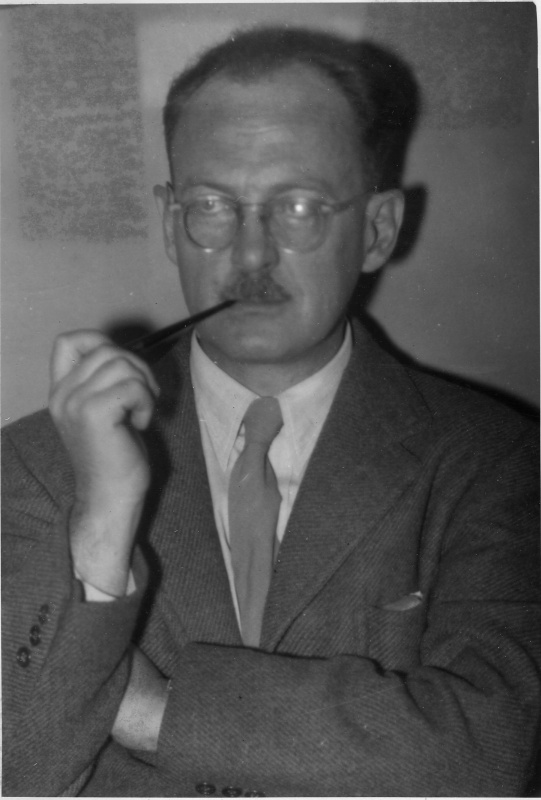
Owen Lattimore was not a State Department employee. He was a Johns Hopkins professor, an expert on China and Mongolia, and an editor of the Institute of Pacific Relations journal Pacific Affairs. The Institute of Pacific Relations (IPR) was a real and legitimate concern for anti-communists. The Senate Internal Security Subcommittee's 1952 report documented the IPR's ties to Communists and its official connection, from 1934, with G. N. Voitinski, a Soviet official.1 Lattimore's record also contained material that his critics fairly pressed: a 1936 visit to Moscow, contact with Soviet officials, and his long public advocacy of accommodating the Chinese Communists. The SISS report listed, among its grounds, "his conference with the Soviet agent, Rogoff," his dealings with a Soviet embassy official, and "his subservience to Soviet officials in Moscow in 1936."1 The Venona decrypts confirm separately that Soviet intelligence did penetrate the American government's China policy circles: Lauchlin Currie, another man McCarthy named, is "Identified in Venona as a Soviet Espionage Source."7
What McCarthy alleged
In March 1950, in closed session before the Tydings subcommittee, McCarthy charged that Lattimore was the top Soviet espionage agent in the United States. The charge leaked to the press almost at once. The exact words vary in the reports this lesson could open: a 1955 report in The Spectator recalled that McCarthy had called him the "top Russian espionage agent in the US," and Johns Hopkins Magazine paraphrased the charge as "the Soviet Union's top espionage agent in the United States."1415 Lattimore called the charge "moonshine."15 McCarthy soon retreated from the espionage label but kept attacking Lattimore as the architect of a pro-Communist China policy.
What the evidence showed then and shows now
The record has four stages.
The Tydings report, July 1950. The majority report, issued July 17, 1950, stated: "We find no evidence to support the charge that Owen Lattimore is the 'top Russian spy,'" and called McCarthy's case "a fraud and a hoax."1516 Lesson 05 covers the Tydings hearings in full.
The McCarran hearings and report, 1951 to 1952. The SISS took up Lattimore in its long IPR inquiry. Its report, ordered printed July 2, 1952, reached a much harsher conclusion than the Tydings majority. On page 224 it stated: "Owen Lattimore was, from some time beginning in the 1930's, a conscious articulate instrument of the Soviet conspiracy." It recommended "that the Department of Justice submit to a grand jury the question of whether perjury has been committed by Owen Lattimore before the subcommittee."1 The report rested in part on testimony from Louis Budenz, a former editor of the Daily Worker, who described five episodes involving Lattimore between 1937 and 1945, and from Alexander Barmine, a former brigadier general in Soviet military intelligence, who said he had been told in 1935 that Lattimore was one of "our men."1 The SISS did not find that Lattimore was a spy. Its language described an advocate who served Soviet purposes, which is a different charge from espionage.
The perjury prosecution, 1952 to 1955. A federal grand jury indicted Lattimore on December 16, 1952, on seven counts of perjury in his SISS testimony.1517 Roy Cohn, then a special assistant to the Attorney General, helped prepare the indictment.3 On May 2, 1953, Judge Luther Youngdahl of the District Court for the District of Columbia dismissed four of the seven counts, Counts I, III, IV and VII.17 The first count had charged that Lattimore lied in denying that he was a sympathizer or promoter of communism. On July 8, 1954, the Court of Appeals reinstated two of the dismissed counts but upheld the dismissal of Count I, which, as Judge Youngdahl later summarized, "violated the Sixth Amendment to the Constitution."1817 The Justice Department then obtained a new two-count indictment on October 7, 1954, charging that Lattimore lied in denying that he was a "follower of the Communist line" and a "promoter of Communist interests." On January 18, 1955, Youngdahl dismissed both counts as too vague, writing that a trial on them "would make a sham of the Sixth Amendment and the Federal Rule requiring specificity of charges." He concluded: "The indictment will therefore be dismissed."18 On June 14, 1955, the Court of Appeals affirmed "by an equally-divided Court," without opinions.1916 The government then abandoned the case: the perjury charges, as Johns Hopkins Magazine put it, "were finally dropped in 1955."1520 Lattimore was never tried.
The archives, 1995 to 2009. The decisive new evidence is negative. In his 2007 review of every person McCarthy named from 1950 through 1952, Haynes lists "Lattimore, Owen: Not identified in Venona."7 Lattimore also does not appear in Haynes's 2009 index of cover names and real names drawn from Venona and from the KGB archival notebooks copied by Alexander Vassiliev, an index that does list Currie, the Rosenberg network and many lesser sources.21 Absence from these sources cannot prove that a man had no contact at all with Soviet officials. It does mean that the specific charge, that Lattimore was the top Soviet espionage agent in the country, has no support in the very archives that confirmed so many other espionage cases.
The rival readings
The pro-McCarthy reading rests on the SISS report. Evans defends McCarthy's pursuit of Lattimore, arguing that the IPR record, Lattimore's policy advice and his false or evasive testimony justified the suspicion even if the word "spy" overreached. Herman's account likewise gives the McCarran findings more weight than the Tydings report did. The other reading, found in Oshinsky and in the Senate Historical Office's 2003 introduction, emphasizes that McCarthy staked his credibility on a spy charge he could not support, that the government's best effort to convict Lattimore of lying collapsed on constitutional grounds, and that the SISS's "instrument" language was a political judgment about opinions. Lattimore's own law firm, Arnold, Fortas and Porter, has published its account of the defense, which is partisan in the plain sense: it was written by his advocates.16 The archival reading of Haynes and Klehr sides with neither on everything: they credit the IPR concern but find nothing in Venona or the KGB notebooks to make Lattimore a Soviet agent.7
Rated from 2026
Unsupported for McCarthy's actual claim, that Lattimore was the top Soviet espionage agent in the United States. No decrypt, no KGB notebook entry and no trial supports it, and McCarthy himself backed away from it. The narrower SISS judgment, that Lattimore's writing and editing served Soviet policy aims, is a contested assessment of opinion and influence that the archives neither confirm nor refute, and it is best rated Unresolved.
Case 3: George C. Marshall and "a conspiracy so immense"

What was real
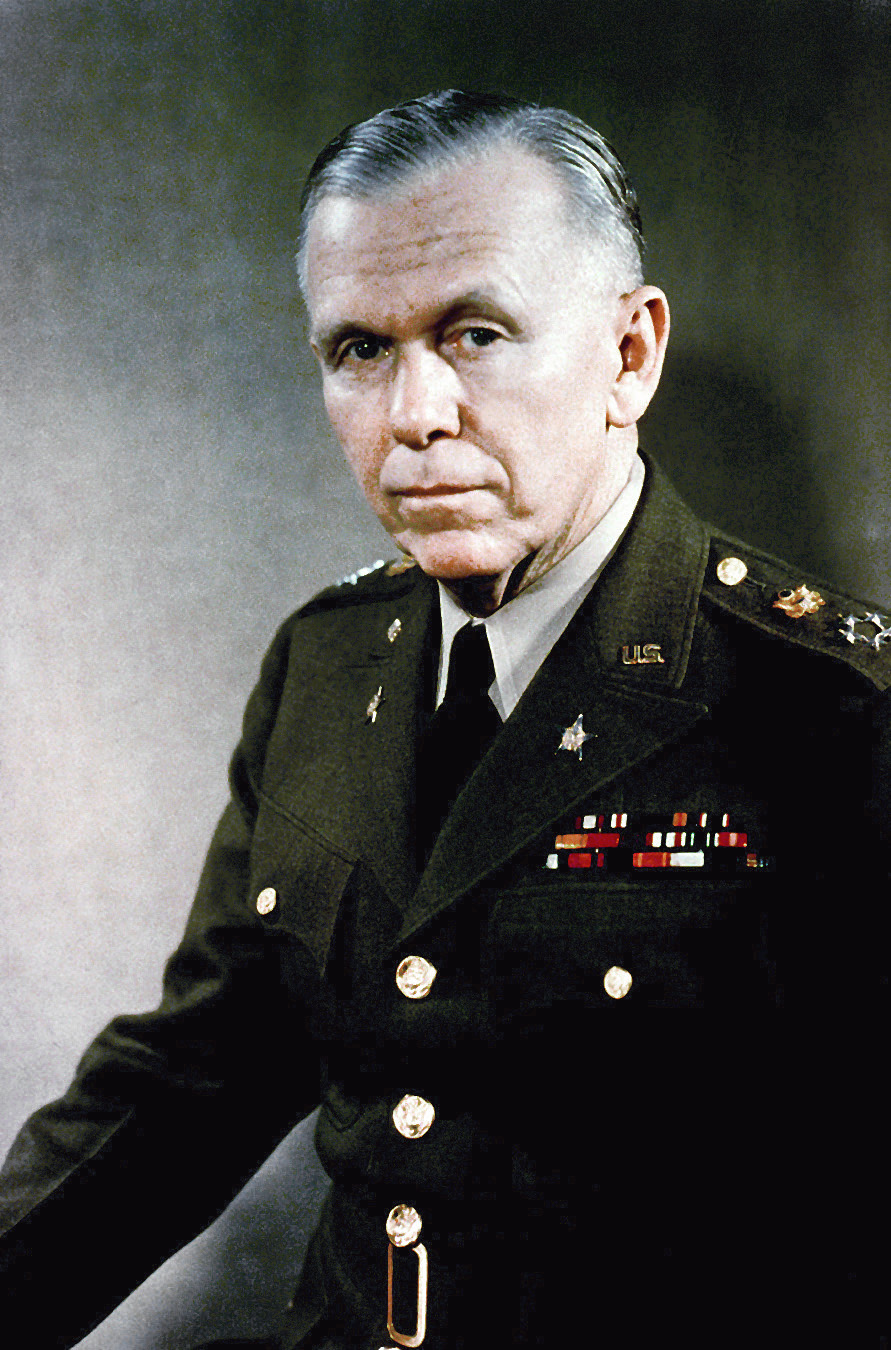
McCarthy's attack on Marshall came in June 1951, in the second year of the Korean War and soon after General Douglas MacArthur's return from Korea, which the speech itself invokes. Real failures lay behind the anger. The Communists had won China's civil war, and critics of the 1945 Yalta agreements, McCarthy among them, charged that the agreements had restored Soviet power in Manchuria.22 Soviet espionage inside the wartime government, from the atomic program to the Treasury, was being exposed in the courts and before Congress (lessons 01 and 02). Marshall had led the postwar mission to China, which the speech calls "the disastrous Marshall mission."22 Critics of that policy, then and since, have argued in good faith that it was a mistake. Haynes, no friend of McCarthy, concedes that "some officials, including some very high ones, in those administrations displayed naivete toward Soviet espionage, and internal-security policies until the late 1940s were notably weak."4
What McCarthy alleged
On June 14, 1951, McCarthy rose in the Senate with a long indictment of Marshall's career, printed in the Congressional Record for the 82nd Congress, first session, volume 97, part 5, pages 6556 to 6603, and published the same year as the book America's Retreat from Victory: The Story of George Catlett Marshall.227 Its most quoted passage reads, word for word:
"How can we account for our present situation unless we believe that men high in this Government are concerting to deliver us to disaster? This must be the product of a great conspiracy, a conspiracy on a scale so immense as to dwarf any previous such venture in the history of man. A conspiracy of infamy so black that, when it is finally exposed, its principals shall be forever deserving of the maledictions of all honest men."22
The speech then walked through Marshall's career in a chain of sentences beginning "It was Marshall who," and asked: "What can be made of this unbroken series of decisions and acts contributing to the strategy of defeat? They cannot be attributed to incompetence. If Marshall were merely stupid, the laws of probability would dictate that part of his decisions would serve this country's interest." It named Dean Acheson, "who steadfastly serves the interests of nations other than his own," as "high on the roster" of the conspiracy, and it said of the State Department leadership: "They belong to a larger conspiracy, the world-wide web of which has been spun from Moscow. It was Moscow, for example, which decreed that the United States should execute its loyal friend, the Republic of China. The executioners were that well-identified group headed by Acheson and George Catlett Marshall."22 McCarthy did say, "I do not believe that Mr. Truman is a conscious party to the great conspiracy," while calling the President "their captive."22
The text is not a slip of the tongue. The "laws of probability" sentence turns policy disagreement into proof of intent: if Marshall's decisions were wrong too often to be chance, they must have been treason. That reasoning is examined in lesson 11, and it is the reason the Marshall speech is the clearest single test of McCarthy's judgment.
What the evidence showed then and shows now
No investigation then or later found evidence that Marshall served Soviet interests. The Venona decrypts mention Marshall, but, as Haynes records, "As Army Chief of Staff, General Marshall was mentioned a number of times in Venona messages, but all were reports about him, not by him, and none indicated any relationship with Soviet intelligence." Haynes gives the same verdict on Acheson.7 In his 2000 remarks alongside Arthur Herman, Haynes was categorical: "There is no basis in Venona or in the Soviet archives for implicating Acheson or Marshall as participants in a Communist conspiracy or for describing either the Roosevelt or the Truman administrations as the instrument of a Soviet conspiracy."4 In his 2007 review of McCarthy's names, he placed Marshall among those who "certainly were not" security risks.7 The Senate Historical Office's 2003 introduction records that McCarthy "continued to make accusations that such prominent officials as General George C. Marshall had been part of an immense Communist conspiracy" after the Korean War and the Hiss and Rosenberg cases "lent new credibility" to his charges.3
The political consequences were real. In the 1952 campaign Dwight Eisenhower defended Marshall at many stops, according to the George C. Marshall Foundation, but not in Wisconsin.23 The Eisenhower Presidential Library holds the "Sixth Draft" of Eisenhower's October 3, 1952 speech in Milwaukee on "Communism and Freedom," with a deleted paragraph referring to "accusations made by McCarthy against General George C. Marshall." The library's description says the paragraph was removed "to avoid causing bad feelings in McCarthy's home state of Wisconsin."24 According to the George C. Marshall Foundation, President Truman responded, "I had never thought the man who is now the Republican candidate would stoop so low."23
The rival readings
Defenders of McCarthy have found the Marshall speech the hardest part of his record. Robert Novak, reviewing Evans's book in 2007, identified the speech as the clearest instance of McCarthy accusing rivals of treason, reported that the text was a journalist's manuscript McCarthy read into the record, and summarized Evans's argument that McCarthy "had a point" because he charged Marshall with being swayed by Soviet agents and sympathizers rather than with pro-Communist sentiment of his own.25 That is a thin defense, since the text itself calls Marshall one of the "executioners" acting on Moscow's decree. Oshinsky took his book's title from the speech. Haynes, whose own work did much to document Soviet espionage, is equally blunt, and frames McCarthy's broader failing in these terms: "He attempted to make anticommunism a partisan weapon."4
Rated from 2026
Refuted. The charge that Marshall and Acheson led a conspiracy directed from Moscow is contradicted by the Venona decrypts, which mention Marshall only as a subject of Soviet reporting, and by every archival study since. Criticism of Marshall's China policy remains a legitimate historical argument. Treating that policy as treason was not supported then and is refuted now.
Case 4: The Voice of America, Raymond Kaplan and the overseas libraries
What was real
The Voice of America (VOA) was created during the Second World War inside the Office of War Information and relied heavily on refugee broadcasters. The Senate's 2003 editors describe an agency divided between those who wanted to use its broadcasts "primarily to attack international communism and those who wanted to broadcast objective news." Dissident employees had formed an "Anti-Communist Underground" that collected files on suspected Communist sympathizers and leaked them to members of Congress.26 The new Secretary of State in 1953, John F. Dulles, was himself "dubious about mixing foreign policy and propaganda," viewed the VOA "as an unwanted appendage and was not unsympathetic to some housecleaning."3 The overseas libraries of the U.S. Information Service did stock books by Communist authors under a "balanced presentation" policy meant to show the range of American opinion. In 1952, the Truman administration itself judged several books by the Communist novelist Howard Fast to be propaganda and removed them.27 Whether a government propaganda service should shelve Communist authors at public expense was a fair question for Congress to ask.
What McCarthy alleged
The investigation broke into the press before any public hearing. On February 13, 1953, the Chicago Tribune reported under the headline "Uncover Plot in 'Voice' to Sabotage U.S." that a Senate investigation "has uncovered amazing evidence of a conspiracy to subvert American policy in this nation's radio propaganda broadcasts abroad," and that "the closed door questioning has developed a picture of such appalling proportions" that more executive sessions had been ordered.26 The specific engineering charge concerned two planned transmitter sites, Baker East in North Carolina and Baker West in Washington State. The subcommittee's later report said that "the whole pattern occasioned an examination into the Voice personnel on the engineering side, to see if light could be shed on the reason for the colossal blunders" at the two sites.28 The subcommittee's annual report for 1953 went further, asserting that the magnitude of waste and mismanagement at the stations suggested "deliberate sabotage as a possible alternative to hopeless incompetence."26 The public hearings opened in mid-February 1953 and ran into March, with witnesses heard on February 16, 17, 18 and 20, March 2, March 3 to 5, and March 13.2829
The death of Raymond Kaplan
On March 5, 1953, Raymond Kaplan, a VOA engineer who had worked on the Baker sites, "threw himself under a moving truck near the Massachusetts Institute of Technology in Cambridge, Massachusetts." The coroner ruled that he had killed himself "because he feared he would be called before the Senate Subcommittee on Investigations," basing that finding on a letter Kaplan left for his wife and son. The New York Times printed the letter on March 7.30 In it Kaplan wrote: "I have not done anything in my job which I did not think was in the best interest of the country or of which I am ashamed of. And the interest of my country is to fight communism hard." He explained that the choice of sites "was not done deliberately to place them in poor locations but were done on what we thought was competent advice." And he wrote: "You see once the dogs are set on you, everything you have done since the beginning of time is suspect."30 Kaplan had not been accused of communism. He was afraid of being made, in his own word, "the patsy" for an engineering decision.30 In a televised hearing on the libraries, a witness named William Marx Mandel told McCarthy that he had "murdered Raymond Kaplan by forcing him, driving him to the point where" he took his life.27 The accusation was rhetoric, but the coroner's finding and the letter are documents.
Reed Harris and the end of the inquiry
The most prominent VOA witness was Reed Harris, deputy administrator of the International Information Administration, questioned in public from March 3 to 5, 1953. The subcommittee's report stressed that Harris had written "blatantly pro-Communist material" as a Columbia student in the early 1930s and had later sponsored a Communist front activity. Harris denied ever being a Communist or sympathizer, said he had been smeared with innuendo and half-truths, and resigned. In 1961 Edward R. Murrow, then head of the U.S. Information Agency, reinstated him.29 Engineering chief George Herrick, whom the subcommittee found to lack formal engineering education, was relieved of his post.28 The subcommittee's VOA report was filed February 3, 1954.31 Richard Rovere, who covered the hearings for the New Yorker, described the end: "It just stopped--its largest possibilities for tumult had been exhausted, and it trailed off into nothingness."3 (The double hyphen is in the Senate's printing of Rovere's sentence.)
Cohn and Schine in Europe and the books
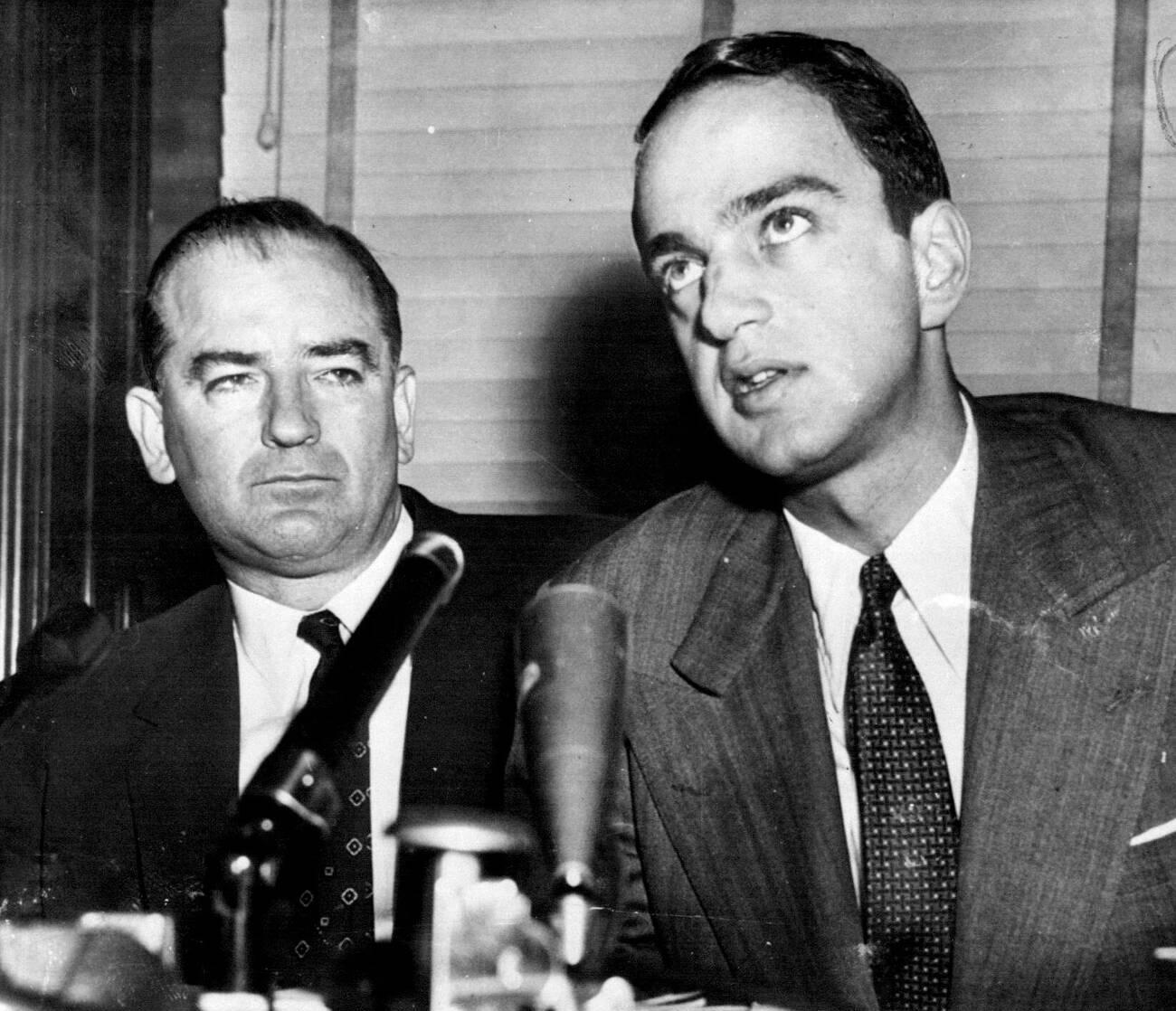
From April 4 to 21, 1953, during a congressional recess, chief counsel Roy Cohn and his friend G. David Schine, the subcommittee's unpaid "chief consultant," toured the U.S. information libraries in Paris, Bonn, Berlin, Frankfurt, Munich, Vienna, Belgrade, Athens, Rome and London.32 In Bonn, Cohn told reporters that Theodore Kaghan, deputy director of public affairs for the U.S. High Commission in Germany, had such strong Communist inclinations that he should be called before the subcommittee. Kaghan answered by calling the pair "junketeering gumshoes." After his hearings the State Department asked for his resignation, although it later cleared him of Communist sympathies.32
While the tour was under way, the State Department ordered the removal of any books by Communist authors or Communist sympathizers from the libraries' shelves. In the words of the Senate's editors, "Hundreds of works of fiction and non-fiction were discarded, and some were burned." At Dartmouth College on June 14, 1953, President Eisenhower told the graduating class: "Don't join the book burners. Don't think you are going to conceal faults by concealing evidence that they ever existed. Don't be afraid to go in your library and read every book, as long as that document does not offend our own ideas of decency. That should be the only censorship."27 The subcommittee, rather than question the officials who ran the libraries, subpoenaed the authors of the books and scholars who had traveled on Fulbright grants. As Cohn complained, "we subpoena maybe fifty and five show up."3

The rival readings
McCarthy's defenders argue that the VOA really was poorly run, that the Baker sites were a costly error, and that the libraries had shelved openly Communist propaganda under a policy that the Truman administration itself had begun to tighten. The 2003 record supports each of those points. The other reading, which the Senate Historical Office's introduction adopts, holds that the subcommittee called no administrators to explain the policy, turned an engineering dispute into a sabotage charge it never proved, and helped create a climate in which a frightened engineer took his life and embassies discarded books. Ritchie quotes Robert F. Kennedy, then an assistant counsel on McCarthy's own staff: "No real research was ever done. Most of the investigations were instituted on the basis of some preconceived notion by the chief counsel or his staff members and not on the basis of any information that had been developed."3
Rated from 2026
Unsupported for the charge of a conspiracy to sabotage the Voice of America. The subcommittee's own reports spoke of "colossal blunders" and raised sabotage only as "a possible alternative to hopeless incompetence," and no one was charged with sabotage. Supported for the narrower factual point that the overseas libraries stocked works by Communist authors. The remedy, a hurried purge in which some books were burned, was condemned by the President of McCarthy's own party.
Case 5: Fort Monmouth and the Signal Corps laboratories

What was real
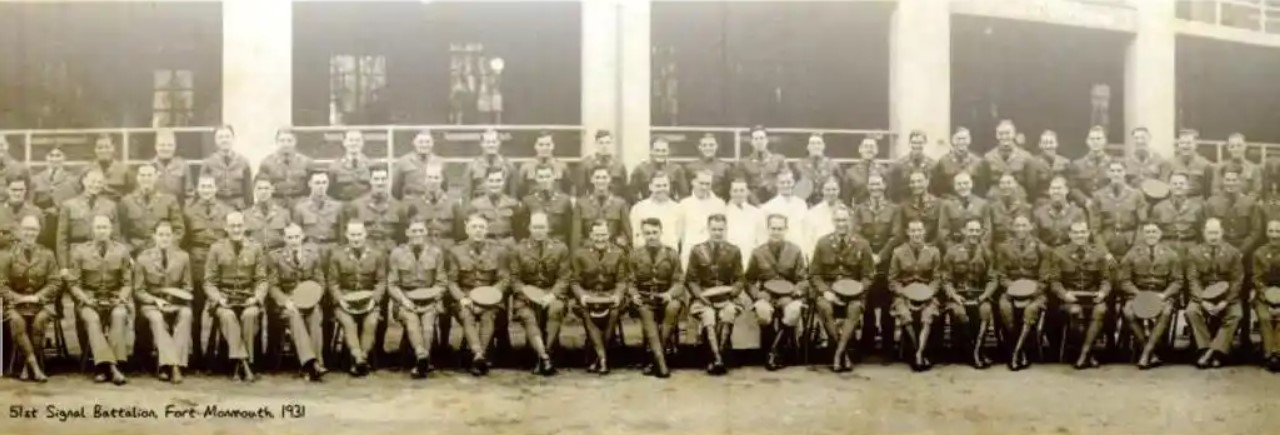
Fort Monmouth is the case in which McCarthy's suspicion had the strongest root. Julius Rosenberg, executed with his wife Ethel in June 1953 for espionage, had worked at Fort Monmouth during the Second World War.33 The Venona decrypts and the KGB notebooks show that Rosenberg ran "an espionage network of Communist engineers," in Haynes's words.21 At least one member of that network worked inside the Signal Corps laboratories. Joel Barr was a "Secret Communist, electrical engineer with Army Signal Corps laboratories" and a "Member of Julius Rosenbergs technical intelligence apparatus," identified in Venona, who "Secretly defected to the USSR when Julius Rosenberg was arrested." Alfred Sarant, another member of the apparatus, also fled to the Soviet Union.21 William Perl, an aeronautical scientist, was a third.21 Lesson 02 describes the network in full.
Security problems at Fort Monmouth were not invented in 1953. The Senate's editors write that "During the years following World War II, the FBI and military security had periodically investigated allegations of espionage at the Army Signal Corps laboratories." Aaron H. Coleman, a radar specialist, had been officially reprimanded in 1946 for taking home classified documents.3435 In executive session on October 15, 1953, Colonel John V. Mills told McCarthy of an intelligence report about a defector who had worked in a Soviet development laboratory in East Germany from January 1949 to September 1950 and who claimed to have seen microfilm of documents bearing the name of the Evans Signal Laboratory.36 McCarthy also read Mills an Air Force intelligence evaluation stating that the defector "actually had seen it," but that passage concerned a film about the atomic installation at Oak Ridge, Tennessee. McCarthy conceded that it "does not have to do with the Signal Corps, but with atomic energy," adding, "but I assume the Signal Corps made the film." Asked whether the defector had information from an American source that he should not have had, Mills answered, "The indications are all there, sir."36
What McCarthy alleged
On October 6, 1953, the Army announced the suspension of several Fort Monmouth employees for security reasons. McCarthy cut short his honeymoon, returned to New York to hold hearings, and told reporters that Julius Rosenberg had organized a spy ring that stole radar secrets from the laboratories, that the case had "all the earmarks of extremely dangerous espionage," and that the ring "may still be in operation."34 After the October 15 executive session he said Rosenberg had formed the ring while working at Fort Monmouth in 1942 and 1943.37 At a press conference he linked Aaron Coleman to Signal Corps documents that had surfaced in East Germany and announced that the subcommittee would refer Coleman to the Justice Department for possible indictment for espionage and perjury.35
What the evidence showed then and shows now
The suspensions eventually reached forty-two civilian employees, including fifteen section chiefs.34 Many had studied engineering at the City College of New York, where some had been classmates of Rosenberg.33 The questioning reached far beyond espionage. Ritchie's introduction describes witnesses held to account for having "signed a nominating petition years earlier, belonged to a union whose leadership included alleged Communists, bought an insurance policy through an organization later designated a Communist front organization, belonged to a Great Books club that read Karl Marx among other authors, had once dated a Communist, had relatives who were Communists, or simply had the same name as a Communist."3 The closed transcript of November 5, 1953 shows McCarthy questioning the suspended engineer Stanley Berinsky about his mother, who had once been a Communist: "If somebody told me my mother was a Communist, I'd get on the phone and say, 'Mother is this true'?" and then, "Was she still a Communist at heart in 1952?"3
The outcome is not in dispute. "Since no evidence of espionage was produced, the Justice Department took no action" against Coleman. He regained his federal employment rights in 1958, returned to Fort Monmouth and retired in 1978.35 "Of the forty-two civilian employees suspended, the army later reinstated all but two, although most chose not to return to their former jobs."34 Ritchie adds that the witnesses against whom strong evidence of Communist activity existed "tended to be involved in labor organizing," and that "none corroborated any claims of subversion and espionage."3 No charge ever connected the documents seen in East Germany to a 1953 employee. Aaron Coleman does not appear in Haynes's index of Venona and KGB notebook names.21
Ritchie made one argument that the later archives complicate. He wrote that because the Soviet Union had been a wartime ally with "openly designated representatives at the laboratories," espionage there was "superfluous."3 Venona and the KGB notebooks show that the Soviets nevertheless ran a covert source, Joel Barr, inside the Signal Corps laboratories.21 McCarthy and Cohn were right that the Rosenberg ring had reached into the Signal Corps. Where they went wrong was in the date. By 1950 Barr and Sarant had fled, and by October 1953 Rosenberg had been executed. The subcommittee's own 1953 annual report said the inquiry began "since it was reported that Communists and their sympathizers and supporters were employed by the Army at the time of commencement of the investigation," which was a charge about the present, not the past.34
The rival readings
McCarthy's defenders, Evans among them, read Fort Monmouth as proof that McCarthy's targets were not imaginary: a known spy ring had operated there, a radar specialist had been reprimanded for taking classified papers home, and the Army's own security officers had acted before McCarthy arrived. The editors of the 2003 transcripts read it as the clearest example of a "dragnet" that suspended dozens of engineers, many of them Jewish graduates of City College, on the strength of association. Ritchie records that when B'nai B'rith provided lawyers to the suspended engineers on the assumption of anti-Semitism, Cohn answered: "Well, that is an outrageous assumption. I am a member and an officer of B'nai B'rith."3 Army counsel John G. Adams, who attended the Fort Monmouth sessions, recalled a "windowless storage room in the bowels of the courthouse, unventilated and oppressively hot," crowded with the senator's staff, friends and favored reporters, and concluded: "The 'secret' hearings were, after all, quite a show."3 The Army-McCarthy hearings of 1954, the subject of lesson 08, grew directly out of this inquiry.
Rated from 2026
Partly supported. The wartime espionage at and around the Signal Corps laboratories was real and is now documented. McCarthy's 1953 claim, that a spy ring "may still be in operation" at Fort Monmouth, is unsupported: the Justice Department brought no case, the Army reinstated forty of the forty-two suspended employees, and no evidence released since has shown a postwar spy ring at the laboratories.
Case 6: Irving Peress and General Ralph Zwicker
What was real
The Peress case exposed a genuine failure in the Army's security system. Irving Peress, an Army dentist stationed at Camp Kilmer, New Jersey, "had been under military surveillance as a suspected member of the Communist party." In September 1953, when Captain Peress applied for a promotion under the Doctor Draft Act, the First Army's G-2 (intelligence) staff recommended against it. The processing officers judged the case on his professional qualifications, and the promotion to major went through on October 23, 1953.38 Camp Kilmer's new commander, Brigadier General Ralph W. Zwicker, urged that Peress be relieved, and on January 18, 1954, the Army ordered him discharged within ninety days. Called before McCarthy's subcommittee in executive session on January 30, Peress invoked the Fifth Amendment. He then asked for immediate release and received an honorable discharge on February 2, 1954.38 An officer whom Army intelligence suspected of party membership had been promoted and then honorably discharged, and the Army could not say who was responsible. McCarthy's question was a fair one, and it became famous: "Who promoted Peress?"33
What McCarthy alleged
On February 1, 1954, the day before the discharge, McCarthy wrote to Secretary of the Army Robert Stevens suggesting a court-martial for both Peress and whoever was responsible for his promotion.38 On February 18, after Peress testified in public that morning, Zwicker appeared in executive session that afternoon. When Zwicker cited the executive order that barred him from naming the personnel involved in Peress's promotion and discharge, McCarthy said:
"Then, General, you should be removed from any command. Any man who has been given the honor of being promoted to general and who says, 'I will protect another general who protected Communists,' is not fit to wear that uniform, General. I think it is a tremendous disgrace to the army to have this sort of thing given to the public. I intend to give it to them. I have a duty to do that. I intend to repeat to the press exactly what you said."38
The 2003 edition reprints the exchange that came just before Zwicker's testimony, with Lieutenant Colonel Chester T. Brown, in which McCarthy used the same language: "any man in the uniform of his country, who refuses to give information to a committee of the Senate which represents the American people, that that man is not fit to wear the uniform of his country."33
What the evidence showed then and shows now
Zwicker was the officer who had tried to get Peress out of the Army. He had also, according to the subcommittee staff, been the one who identified Peress to them as a Communist.38 His refusal to name names rested on a 1948 executive order of President Truman, which President Eisenhower continued to rely on, barring officials from discussing specific loyalty board cases.39 McCarthy's charge that Zwicker was protecting Communists therefore turned the facts upside down.
The transcript was made public on February 22, 1954, and "caused some alarm even among the senator's strongest supporters." An editorial in the Chicago Tribune advised him to "distinguish the role of investigator from the role of avenging angel." Army counsel John G. Adams recalled that McCarthy's supporters on the committee first tried to strike the exchange from the record, but they had "underestimated the efficiency of the stenographic company," and the Army already had copies.33 The Senate's 2003 editors call the episode "a precipitating event in the Army-McCarthy hearings."38 The select committee chaired by Senator Arthur Watkins later recommended censure on two counts, one of them McCarthy's "conduct on February 18, 1954, when he publicly abused and defamed General Zwicker." On December 2, 1954, the Senate exchanged the Zwicker count for one about McCarthy's abuse of the Watkins committee and censured him by a vote of 67 to 22 (lesson 09).40
Whether Peress was in fact a Communist Party member has never been settled in the public record this lesson could examine. The Army's intelligence staff suspected it, Zwicker believed it, and Peress declined to answer under the Fifth Amendment, which is a constitutional right and not proof of guilt.38
The rival readings
McCarthy's defenders argue that the Peress case proved his point about the Army: its machinery promoted and honorably discharged a suspected Communist over its own G-2's objection. That point stands on the documents. Yet even Evans, according to Novak's review, considers the clash with Zwicker a "grievous error."25 The opposing reading, in the Senate's 2003 introduction and in the censure record, treats the Zwicker exchange as the moment McCarthy's method turned on the very officers trying to fix the problem he had identified, and as the point at which the Eisenhower administration and the Senate stopped deferring to him.3340
Rated from 2026
Partly supported. The charge that the Army mishandled a security case is supported by its own records: a suspected Communist was promoted against intelligence advice and honorably discharged. The charge that General Zwicker protected Communists, and the claim that he was "not fit to wear that uniform," are unsupported: Zwicker had pressed for Peress's removal and was obeying a presidential order. Whether Peress was a party member remains unresolved in the public record.
Case 7: Annie Lee Moss
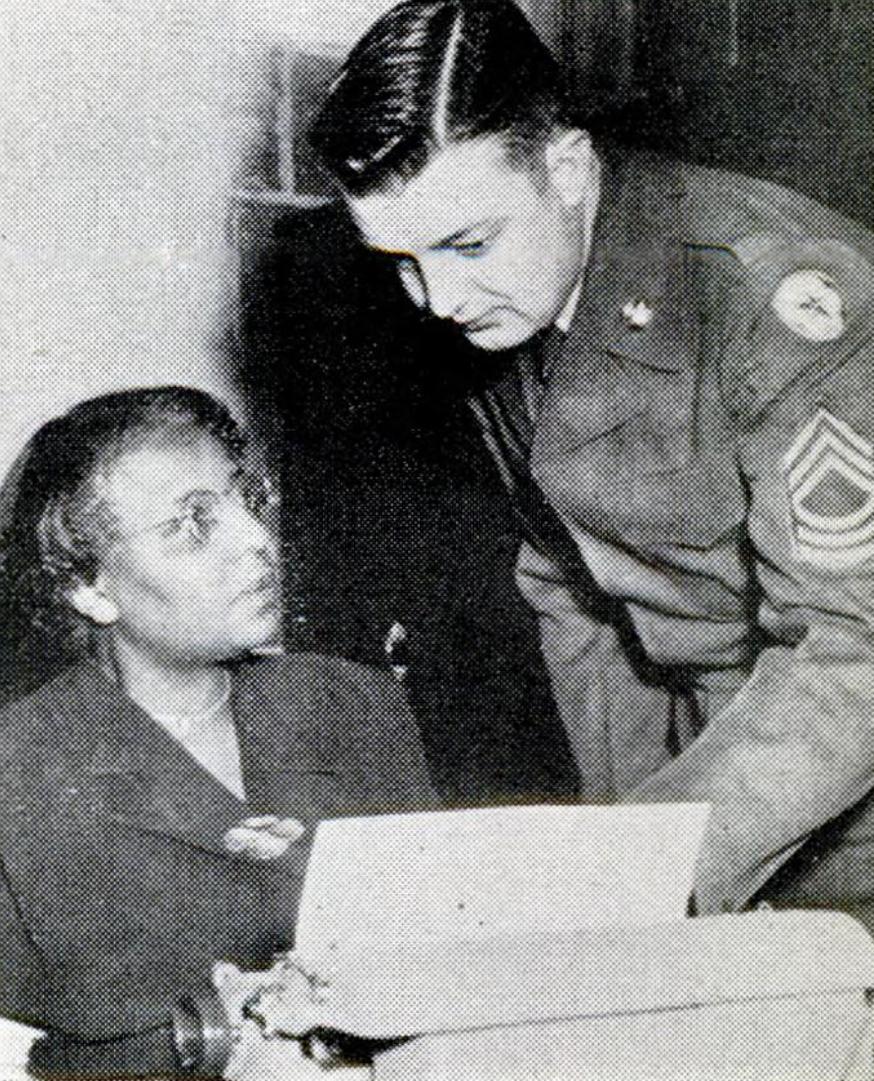

What was real
The Moss case began with a credible source. Mary Stalcup Markward "operated undercover for the FBI from 1943 to 1950." Recruited by the Bureau at twenty-one while her husband served in Europe, she joined the Communist Party in Washington, D.C., and "advanced through the party ranks to become treasurer and membership director."41 Markward told the subcommittee that she had seen "a woman by the name of Annie Lee Moss on the list of card-carrying, dues-paying members."33 The Communist Party did campaign hard in Black neighborhoods in those years, a fact that the African American reporter Ethel Payne, who covered the case for the Chicago Defender, described in a 1987 oral history.33 Moss had been cleared by loyalty boards of the General Accounting Office in October 1949 and by the Army in January 1951. In September 1951 the FBI raised questions about her and offered Markward's testimony, but the Army did not reopen the case.33
What McCarthy alleged
McCarthy described Moss herself as "not of any great importance" but demanded to know: "Who in the military, knowing that this lady was a Communist, promoted her from a waitress to a code clerk?"33 Moss, who had worked in a government cafeteria before becoming an Army Signal Corps communications clerk at the Pentagon in 1950, was too ill to attend an executive session. She made her first appearance at a televised public hearing on March 11, 1954.33
The hearing and the broadcast
The Army described her job as relay machine operator, receiving and transmitting "unintelligible code messages." When the charges became public, the Army moved her to a supply room and then suspended her. At the hearing Moss denied having been a member of the Communist Party, having paid dues or having attended meetings. She testified that her late husband had received the Daily Worker, and that she had paid dues to a cafeteria workers' union in 1943. "Appearing frail and perplexed at the hearing, she seemed an unlikely espionage agent even to Senator McCarthy, who left midway through her testimony."33 According to later accounts of the hearing, Senator Stuart Symington openly questioned the proceeding and raised the possibility of mistaken identity. Edward R. Murrow's CBS program See It Now rebroadcast the hearing the following week, on March 16, 1954. Time called the program "nearly as devastating an indictment as the previous show," Murrow's broadcast on McCarthy himself.42 The Senate's editors call it "a public relations blow to the chairman."33
What the evidence showed then and shows now
The Army eventually reinstated Moss, placing her in its finance and accounts office.33 For decades the case was told as one of mistaken identity: the wrong Annie Lee Moss, a humble widow dragged before television cameras. Later evidence changed that account. The Senate's 2003 editors state: "In 1958 the Subversive Activities Control Board confirmed Markward's assertion that Moss' name had appeared on the Communist party rolls in the mid-1940s." They add the counterweight in the same passage: "But the board conducted no further investigation of Moss, and the following year it concluded that 'Markward's testimony should be assayed with caution.'"33
The fullest scholarly study, Andrea Friedman's article "The Strange Career of Annie Lee Moss: Rethinking Race, Gender, and McCarthyism" in the Journal of American History (September 2007), reexamined her life and record. As summarized by Matthew Wills in JSTOR Daily, Friedman judged that Moss was most likely "a casual recruit to the [Communist Party]," drawn by its social and economic justice politics, and that she was a union member, tenants' rights advocate and community organizer and, after her husband's death in 1947, her family's main breadwinner.4344 Friedman also argued that Murrow's broadcast, by presenting Moss as a helpless innocent, flattened a real woman with real convictions into a symbol, and that Moss's own cooperation with that portrayal was an "effective act of self-preservation" that was also "tragic."44
The dispute over the party records
This is the most fought-over case in the revisionist literature. M. Stanton Evans calls the standard account "The Legend of Annie Moss." As summarized by Robert Novak, Evans argues that "there was no other Annie Lee Moss," and that "The woman testifying was a Communist, the Army belatedly admitted," citing a "party membership book number 37269."12 Herman also discusses the case at length, and the Senate's 2003 editors cite his account alongside Oshinsky's and Thomas Reeves's.33
The counter-arguments are of three kinds, and a careful reader should keep them separate.
- On identity, Evans is substantially right. The 1958 Subversive Activities Control Board finding, reported by the Senate's own editors, and Friedman's conclusion that Moss was most likely a casual party recruit both point to the same woman. The mistaken-identity defense offered in 1954 does not hold up.3344
- On the weight of the records, there is real doubt. The board that confirmed the name on the rolls also warned the following year that Markward's testimony "should be assayed with caution," and it did no further investigation of Moss.33 Markward herself "could not recall having met Moss personally."33 A name on a recruiting or dues list in the mid-1940s, which Friedman reads as a casual recruitment, is evidence of a brief membership, not of a Communist working in secret a decade later.
- On the security charge, McCarthy was wrong. His claim was that a Communist had been promoted into the Pentagon's code work. The Army's description of the job, a relay machine operator handling "unintelligible code messages," means she could not read the traffic she handled. McCarthy himself said she was "not of any great importance."33 No evidence then or since shows that Moss passed anything to anyone.
The exact wording and date of the Army statement that Evans describes as an admission, with the membership book number, could not be checked against a primary document for this lesson. It is listed as unverified in the notes.
Rated from 2026
Partly supported. That Annie Lee Moss's name was on Communist Party rolls in the mid-1940s is supported by the 1958 board finding and by Friedman's study, and the long-told story of mistaken identity is refuted. That she was a security threat in a sensitive code job, the point of McCarthy's question, is unsupported. The case shows two truths that partisans of both sides have found hard to hold together: the informant was largely right about the name, and the hearing was still an unfair use of a clerk's life to score a point against the Army.
Timeline of the cases, 1950 to 1954
What the record shows and what it does not
- Documented fact: John Stewart Service gave copies of his reports to Amerasia in 1945, was arrested, was not indicted, was cleared repeatedly, was fired in December 1951 on a "reasonable doubt" finding, and won reinstatement in the Supreme Court in 1957.6
- Documented fact: The SISS called Lattimore "a conscious articulate instrument of the Soviet conspiracy" in 1952, and every perjury count against him was dismissed or dropped by 1955. He is not identified in Venona.1187
- Documented fact: McCarthy's June 14, 1951 speech placed Marshall and Acheson at the head of a conspiracy directed from Moscow. Venona mentions Marshall only as a subject of Soviet reports.227
- Documented fact: Raymond Kaplan's death on March 5, 1953 was ruled a suicide prompted by fear of being called before the subcommittee.30
- Documented fact: Joel Barr, a Signal Corps laboratories engineer, belonged to the Rosenberg network, and forty of the forty-two Fort Monmouth employees suspended in 1953 were reinstated.2134
- Documented fact: The Army promoted Peress over its G-2's objection, and McCarthy told Zwicker he was "not fit to wear that uniform."38
- Allegation, not proven: sabotage at the Voice of America, a spy ring still operating at Fort Monmouth in 1953, Moss's access to readable secret traffic.
- Open questions: whether Irving Peress was a party member, how long and how actively Annie Lee Moss was one, and the full contents of FBI and Army files still not public in full.
Assessed from 2026
The verdicts below apply this module's scale to the specific claims made in each case. Lesson 11 gathers these with McCarthy's other assertions.
- "Service was a known associate and collaborator with Communists" (1950). Partly supported. His 1945 leaks to a pro-Communist magazine are documented, and Klehr and Radosh judge them unethical and probably illegal. Collaboration with Soviet intelligence is not supported: Service is not in Venona, and Haynes finds no sign he believed he was dealing with Soviet intelligence.76
- "Lattimore is the top Soviet espionage agent in the United States" (March 1950). Unsupported. Not in Venona or the Vassiliev-based index; the Tydings majority found no evidence; the perjury case failed.7211520
- "Lattimore was a conscious articulate instrument of the Soviet conspiracy" (SISS, 1952; not McCarthy's own subcommittee). Unresolved. A judgment about advocacy and influence that the archives neither confirm nor refute.1
- "Marshall and Acheson led a conspiracy so immense" (June 14, 1951). Refuted. Venona mentions both only as subjects of Soviet reporting, and no later archive supports the charge.227
- "A conspiracy to sabotage the Voice of America" (February 1953). Unsupported. The subcommittee's own reports spoke of "colossal blunders" and raised sabotage only as "a possible alternative to hopeless incompetence," and no one was charged.2628
- "U.S. overseas libraries stocked books by Communist authors" (1953). Supported as a fact; the "balanced presentation" policy placed them there, and the Truman administration had already pulled some Howard Fast titles.27
- "Rosenberg organized a spy ring at the Signal Corps laboratories" (October 1953). Supported for the wartime period: Barr and Sarant were members of Rosenberg's apparatus.21
- "The Fort Monmouth spy ring may still be in operation" (October 1953). Unsupported. No espionage was produced, the Justice Department took no action, and the Army reinstated forty of forty-two.3534
- "The Army promoted and honorably discharged a suspected Communist" (Peress, 1954). Supported. The G-2 recommendation against promotion was overridden.38
- "General Zwicker protected Communists and is not fit to wear that uniform" (February 18, 1954). Refuted. Zwicker had pressed for Peress's removal and was bound by a presidential order; the Watkins committee recommended censure on this count.3840
- "Annie Lee Moss was a Communist Party member" (1954). Supported for the mid-1940s, on the 1958 board finding and Friedman's study, with the board's own caution about Markward noted.3344
- "A Communist was promoted into Pentagon code work" (Moss, 1954). Unsupported. Her job handled "unintelligible code messages," and McCarthy called her "not of any great importance."33
Hard questions and answers
If Annie Lee Moss's name was on the party rolls, wasn't McCarthy vindicated?
On the narrow point of identity, the record now favors McCarthy's informant over the 1954 defense. On the point of the hearing, it does not. McCarthy's charge was that a Communist had been promoted into code work, and the Army's description of the job shows she handled messages she could not read. The board that confirmed the 1940s listing also warned that Markward's testimony "should be assayed with caution."33 A fair verdict holds both findings at once, which is why the case is rated partly supported rather than vindicated or refuted.
Didn't the Venona decrypts prove McCarthy right after all?
Venona proved that Soviet espionage was extensive in the 1940s, which the anti-communists had said and many of their opponents had denied. It did not confirm McCarthy's particular cases. Of the names he put forward from 1950 through 1952, Haynes found a handful identified as Soviet sources, among them Lauchlin Currie and Mary Jane Keeney, many not identified at all, and some, including Marshall, Acheson and Lattimore, not implicated.7 Haynes's own summary is that "a number of those on the lists above, perhaps a majority, likely were security risks, but others, a minority but a significant one, likely were not, and some, Drew Pearson, Dean Acheson, and George Marshall for example, certainly were not."7
Was Fort Monmouth a witch hunt if Rosenberg really had a ring there?
The wartime ring was real, and investigators were right to examine the laboratories. The trouble lay in the timing and the method. The ring's known members had fled or been executed before McCarthy's hearings began, and the subcommittee's questioning turned on petitions, union membership, relatives and reading clubs.321 Forty of the forty-two suspended employees were reinstated, and no espionage case followed.34
Did the Lattimore prosecution vindicate McCarthy or fail him?
It was brought on the recommendation of the SISS, not McCarthy's subcommittee, and it charged lying, not espionage. Its collapse turned on vagueness: a federal judge held that charging a man with falsely denying he was a "follower of the Communist line" gave him no fair notice of what he was accused of, and an evenly divided appeals court let that ruling stand.1819 The collapse proves the government could not convict Lattimore of perjury. It does not settle every question about his views, and it says nothing in favor of the espionage charge McCarthy made in 1950.
Why does the Zwicker exchange count for more than the Peress promotion?
The Peress promotion was a bureaucratic failure that the Army could explain and correct. The Zwicker exchange was a senator telling a brigadier general, who had tried to remove Peress and was obeying a presidential order, that he was unfit to wear the uniform. It caused alarm among McCarthy's own supporters, became a recommended count of censure, and helped bring on the Army-McCarthy hearings.3340 Method, in this case, overwhelmed mission. Lesson 12 takes up that question in general terms.
Were the closed hearings fairer than the public ones?
Roy Cohn argued that executive sessions protected witnesses by excluding the press and letting them bring counsel. Army counsel John Adams answered that "executive" meant "that Joe could do anything he wanted," since McCarthy admitted friends and favored reporters and then told the press his own version afterward.3 The 2003 transcripts show McCarthy could be courteous in private and harsh in public, and that about a third of closed-session witnesses were never called in public, often because the evidence against them was thin or they had been called by mistake.3
Related lessons and modules
- Lesson 02, Venona and the Archives: the Rosenberg network and the decrypts.
- Lesson 05, Wheeling and the List: the 1950 State Department charges and the Tydings hearings.
- Lesson 06, Three Committees Compared: HUAC, the SISS and the Permanent Subcommittee on Investigations.
- Lesson 08, The Army-McCarthy Hearings and the Fall: how Fort Monmouth, Schine and Zwicker led to the televised hearings.
- Lesson 11, The Assertions Assessed from 2026: all of McCarthy's main claims, rated.
- Module 51, Communism: what the Communist movement taught and did.
- Module 52, Legitimate Authority and Its Limits: Pierson's framework for judging the limits of investigative power.
- Module 74, Glen Taylor, Herman Welker and the Red Scare: the Idaho side of these years, including Senator Welker, who voted against censure.
Still open
These items could not be confirmed against a primary source before publication. The lesson states them as open, and they stay on the fact-check list.
- The exact wording of McCarthy's March 1950 charge against Lattimore could not be confirmed from a primary transcript. The lesson gives two later renderings (The Spectator, 1955; Johns Hopkins Magazine, 2000).
- The Court of Appeals' July 8, 1954 Lattimore ruling is described from Judge Youngdahl's 1955 summary (two dismissed counts reinstated, the dismissal of Count I upheld) because the full 1954 opinion could not be opened. Which two counts were reinstated is not stated.
- The exact 1955 date on which the Justice Department dropped the remaining Lattimore charges is not given. Johns Hopkins Magazine says only that the charges were finally dropped in 1955; the Britannica entry cited for the same point could not be reopened during the fact check.
- Characterizations of Evans's and Herman's arguments on Lattimore and Fort Monmouth come from secondary summaries (Novak's reviews, Haynes's remarks, the Senate's 2003 citations) and were not checked against the books.
- Evans's claim, as summarized by Novak, that the Army 'belatedly admitted' Moss was a Communist with party membership book number 37269: the underlying Army statement (reportedly of August 1954) was not located or read.
- Senator Stuart Symington's remarks at the March 11, 1954 Moss hearing are described from later accounts. The printed hearing (Army Signal Corps: Subversion and Espionage, part 8) was not opened.
- Andrea Friedman's article was not read in full. Her conclusions are given as summarized in JSTOR Daily (Wills, 2021); which government files she used (for example, Moss's FBI file) was not confirmed.
- Novak's statement that the Marshall speech text was a journalist's manuscript McCarthy read into the record is Novak's claim and was not independently confirmed.
- Whether Irving Peress was a Communist Party member is not established in any public source opened for this lesson.
- The Owen Lattimore photograph's date (around 1945) and the Marshall portrait's date (1945 or 1946) come from Wikimedia Commons descriptions only. The Jet photograph of Annie Lee Moss is marked public domain on Commons; its copyright status was not independently checked.
- The Jet magazine date (April 8, 1954) and the identification of Sergeant Donald Pritchard in the Annie Lee Moss photograph caption, and the 1931 date of the Fort Monmouth photograph, come from Wikimedia Commons descriptions and were not independently checked.
- The March 16, 1954 air date of the See It Now broadcast on Annie Lee Moss is consistent with Time's March 29, 1954 report that the program aired the previous week, but Time does not give the exact date.
Learn more
- Executive Sessions of the Senate Permanent Subcommittee on Investigations, 1953 to 1954, volume 1 (senate.gov PDF): The closed-door transcripts themselves, with Donald Ritchie's introduction and editor's notes. Volume 3 holds Fort Monmouth and volume 5 covers Peress, Zwicker and Moss.
- John Earl Haynes, Senator Joseph McCarthy's Lists and Venona: Every name McCarthy put forward from 1950 to 1952, checked against Venona by the historian who did most to document Soviet espionage.
- Service v. Dulles (1957): The Supreme Court's account of Service's clearances and dismissal, and why the dismissal broke the State Department's own rules.
- United States v. Lattimore, 127 F. Supp. 405 (1955): Judge Youngdahl's opinion on why a charge of falsely denying being a follower of the Communist line was too vague to try.
- Andrea Friedman, The Strange Career of Annie Lee Moss (2007): The scholarly study of Moss's life and record, which concludes that she was most likely a casual party recruit while rejecting the image of her as a mistaken-identity victim with no politics.
- McCarthy's June 14, 1951 speech (excerpt): The conspiracy passage and the case against Marshall in McCarthy's own words.
Notes
- U.S. Senate, Committee on the Judiciary, Institute of Pacific Relations: Report of the Committee on the Judiciary (hearings held July 25, 1951 to June 20, 1952 by the Internal Security Subcommittee), S. Rept. 2050, 82nd Cong., 2nd sess., July 2, 1952, pp. 217 to 218 (Budenz and Barmine testimony) and 223 to 224 (Lattimore findings and perjury recommendation) and summary conclusions. Read it online. ↩
- Carl Levin and Susan M. Collins, Preface, in U.S. Senate, Permanent Subcommittee on Investigations, Executive Sessions of the Senate Permanent Subcommittee on Investigations of the Committee on Government Operations, S. Prt. 107-84, ed. Donald A. Ritchie (Washington: Government Printing Office, made public January 2003), vol. 1. Read it online. ↩
- Donald A. Ritchie, Introduction, in U.S. Senate, Permanent Subcommittee on Investigations, Executive Sessions of the Senate Permanent Subcommittee on Investigations of the Committee on Government Operations, S. Prt. 107-84, ed. Donald A. Ritchie (Washington: Government Printing Office, made public January 2003), vol. 1 (statistics on sessions and witnesses, Cohn's appointment, Adams and Kennedy quotations, Rovere quotation, Fort Monmouth summary, executive session of November 5, 1953). Read it online. ↩
- John Earl Haynes, "Exchange with Arthur Herman and Venona book talk," remarks at a joint book talk with Arthur Herman, Borders Book Store, Washington, D.C., February 2000, posted on johnearlhaynes.org. Read it online. ↩
- John Earl Haynes, "Response to Schrecker's Commentary on H-Diplo," December 2000, johnearlhaynes.org, quoting Ellen Schrecker, Many Are the Crimes: McCarthyism in America (Boston: Little, Brown, 1998), p. xviii. Read it online. ↩
- Service v. Dulles, 354 U.S. 363 (1957), decided June 17, 1957, opinion of Justice Harlan. Read it online. ↩
- John Earl Haynes, "Senator Joseph McCarthy's Lists and Venona," April 2007, johnearlhaynes.org (entries and notes 24, 27 and 28 on Service, Acheson and Marshall, and concluding assessment). Read it online. ↩
- Editor's note on the State Department filing system hearings (John E. Matson, executive sessions of January 26 to 29 and public hearings of February 4 to 20, 1953, and the written statement of John W. Ford), in U.S. Senate, Permanent Subcommittee on Investigations, Executive Sessions of the Senate Permanent Subcommittee on Investigations of the Committee on Government Operations, S. Prt. 107-84, ed. Donald A. Ritchie (Washington: Government Printing Office, made public January 2003), vol. 1. Read it online. ↩
- Editor's note on John Stewart Service, in U.S. Senate, Permanent Subcommittee on Investigations, Executive Sessions of the Senate Permanent Subcommittee on Investigations of the Committee on Government Operations, S. Prt. 107-84, ed. Donald A. Ritchie (Washington: Government Printing Office, made public January 2003), vol. 2 (executive session of September 3, 1953). Read it online. ↩
- Editor's note on John Carter Vincent, in U.S. Senate, Permanent Subcommittee on Investigations, Executive Sessions of the Senate Permanent Subcommittee on Investigations of the Committee on Government Operations, S. Prt. 107-84, ed. Donald A. Ritchie (Washington: Government Printing Office, made public January 2003), vol. 1. Read it online. ↩
- Testimony of John Stewart Service, executive session, September 3, 1953, New York, in U.S. Senate, Permanent Subcommittee on Investigations, Executive Sessions of the Senate Permanent Subcommittee on Investigations of the Committee on Government Operations, S. Prt. 107-84, ed. Donald A. Ritchie (Washington: Government Printing Office, made public January 2003), vol. 2. Read it online. ↩
- "Conservative author tries to rehabilitate reputation of Joe McCarthy," History News Network, November 23, 2007, quoting Robert Novak's review of M. Stanton Evans, Blacklisted by History, in the Weekly Standard. Read it online. ↩
- John Earl Haynes, "An Essay on Historical Writing on Domestic Communism and Anti-Communism," johnearlhaynes.org, quoting Harvey Klehr and Ronald Radosh, The Amerasia Spy Case: Prelude to McCarthyism (Chapel Hill: University of North Carolina Press, 1996). Read it online. ↩
- The Spectator, June 17, 1955, p. 6, commentary on the Lattimore appeal. Read it online. ↩
- Joanne Cavanaugh Simpson, "Seeing Red," Johns Hopkins Magazine, September 2000 (Tydings report quotation, indictment of December 16, 1952, charges dropped in 1955). Read it online. ↩
- Arnold and Porter, "Fighting Joe McCarthy: The Owen Lattimore Case," firm publication, January 1996 (the firm, then Arnold, Fortas and Porter, defended Lattimore). Read it online. ↩
- United States v. Lattimore, 215 F.2d 847 (D.C. Cir., decided July 8, 1954) (seven-count indictment; district court dismissal of Counts I, III, IV and VII). Read it online. ↩
- United States v. Lattimore, 127 F. Supp. 405 (D.D.C., January 18, 1955), Judge Luther W. Youngdahl (history of the 1952 indictment; dismissal of the October 7, 1954 indictment). Read it online. ↩
- United States v. Lattimore, 232 F.2d 334 (D.C. Cir., June 14, 1955), affirmed by an equally divided court. Read it online. ↩
- "Owen Lattimore," Encyclopaedia Britannica, online edition, consulted October 2026. Read it online. ↩
- John Earl Haynes, "Cover Name, Cryptonym, Pseudonym, and Real Name Index: A Research Historian's Working Reference," updated April 2009, johnearlhaynes.org (entries for Joel Barr, Alfred Sarant, William Perl, Julius Rosenberg). Read it online. ↩
- Joseph R. McCarthy, speech in the Senate, June 14, 1951, Congressional Record, 82nd Cong., 1st sess., vol. 97, part 5, pp. 6556 to 6603, excerpt as reprinted in the Internet Modern History Sourcebook (Fordham University), "The History of George Catlett Marshall." Read it online. ↩
- George C. Marshall Foundation, "Always serving to the best of his ability," January 24, 2023. Read it online. ↩
- Dwight D. Eisenhower Presidential Library, "McCarthyism / The 'Red Scare'," online documents, description of the "Sixth Draft" of the October 3, 1952 Milwaukee speech (Stephen Benedict Papers, Box 4). Read it online. ↩
- Robert D. Novak, "McCarthy=Bad," Washington Examiner (magazine), November 26, 2007, review of M. Stanton Evans, Blacklisted by History (New York: Crown Forum, 2007). Read it online. ↩
- Editor's note on the Voice of America inquiry, quoting the Chicago Tribune, February 13, 1953, and the subcommittee's 1953 annual report on the Baker stations, in U.S. Senate, Permanent Subcommittee on Investigations, Executive Sessions of the Senate Permanent Subcommittee on Investigations of the Committee on Government Operations, S. Prt. 107-84, ed. Donald A. Ritchie (Washington: Government Printing Office, made public January 2003), vol. 1. Read it online. ↩
- Editor's note on the U.S. Information Service libraries (balanced presentation policy, removals, Eisenhower's Dartmouth address, testimony of William Marx Mandel), in U.S. Senate, Permanent Subcommittee on Investigations, Executive Sessions of the Senate Permanent Subcommittee on Investigations of the Committee on Government Operations, S. Prt. 107-84, ed. Donald A. Ritchie (Washington: Government Printing Office, made public January 2003), vol. 2. The editors date the Dartmouth address June 13; the date (June 14, 1953) and the wording of the quotation in this lesson follow Dwight D. Eisenhower, Remarks at the Dartmouth College Commencement Exercises, Hanover, New Hampshire, Public Papers of the Presidents, 1953, via the American Presidency Project. Read it online. ↩
- Editor's note on the Voice of America engineering inquiry (Baker East and Baker West; George Herrick; public hearing dates), in U.S. Senate, Permanent Subcommittee on Investigations, Executive Sessions of the Senate Permanent Subcommittee on Investigations of the Committee on Government Operations, S. Prt. 107-84, ed. Donald A. Ritchie (Washington: Government Printing Office, made public January 2003), vol. 1. Read it online. ↩
- Editor's note on Reed Harris, in U.S. Senate, Permanent Subcommittee on Investigations, Executive Sessions of the Senate Permanent Subcommittee on Investigations of the Committee on Government Operations, S. Prt. 107-84, ed. Donald A. Ritchie (Washington: Government Printing Office, made public January 2003), vol. 1. Read it online. ↩
- Editor's note on Raymond Kaplan, with the text of his letter as published in the New York Times, March 7, 1953, in U.S. Senate, Permanent Subcommittee on Investigations, Executive Sessions of the Senate Permanent Subcommittee on Investigations of the Committee on Government Operations, S. Prt. 107-84, ed. Donald A. Ritchie (Washington: Government Printing Office, made public January 2003), vol. 1. Read it online. ↩
- Editor's note on Fernand Auberjonois, citing the subcommittee's Voice of America report filed February 3, 1954, in U.S. Senate, Permanent Subcommittee on Investigations, Executive Sessions of the Senate Permanent Subcommittee on Investigations of the Committee on Government Operations, S. Prt. 107-84, ed. Donald A. Ritchie (Washington: Government Printing Office, made public January 2003), vol. 1. Read it online. ↩
- Editor's note on Theodore Kaghan and the Cohn and Schine tour of April 4 to 21, 1953, in U.S. Senate, Permanent Subcommittee on Investigations, Executive Sessions of the Senate Permanent Subcommittee on Investigations of the Committee on Government Operations, S. Prt. 107-84, ed. Donald A. Ritchie (Washington: Government Printing Office, made public January 2003), vol. 2. Read it online. ↩
- Donald A. Ritchie, Introduction, "McCarthy and the Army," in U.S. Senate, Permanent Subcommittee on Investigations, Executive Sessions of the Senate Permanent Subcommittee on Investigations of the Committee on Government Operations, S. Prt. 107-84, ed. Donald A. Ritchie (Washington: Government Printing Office, made public January 2003), vol. 5 (Peress, Zwicker, Lt. Col. Chester T. Brown, Annie Lee Moss, Mary Stalcup Markward, Ethel Payne, Subversive Activities Control Board). Read it online. ↩
- Editor's note, "Army Signal Corps: Subversion and Espionage," staff interrogatory of October 8, 1953, in U.S. Senate, Permanent Subcommittee on Investigations, Executive Sessions of the Senate Permanent Subcommittee on Investigations of the Committee on Government Operations, S. Prt. 107-84, ed. Donald A. Ritchie (Washington: Government Printing Office, made public January 2003), vol. 3. Read it online. ↩
- Editor's note on Aaron H. Coleman, in U.S. Senate, Permanent Subcommittee on Investigations, Executive Sessions of the Senate Permanent Subcommittee on Investigations of the Committee on Government Operations, S. Prt. 107-84, ed. Donald A. Ritchie (Washington: Government Printing Office, made public January 2003), vol. 3. Read it online. ↩
- Testimony of Col. John V. Mills, executive session, October 15, 1953, New York (including McCarthy's reading of the Air Force evaluation of the Oak Ridge film), in U.S. Senate, Permanent Subcommittee on Investigations, Executive Sessions of the Senate Permanent Subcommittee on Investigations of the Committee on Government Operations, S. Prt. 107-84, ed. Donald A. Ritchie (Washington: Government Printing Office, made public January 2003), vol. 3. Read it online. ↩
- Editor's note on the executive session of October 15, 1953 (Rosenberg, Elitcher, Perl, Barr), in U.S. Senate, Permanent Subcommittee on Investigations, Executive Sessions of the Senate Permanent Subcommittee on Investigations of the Committee on Government Operations, S. Prt. 107-84, ed. Donald A. Ritchie (Washington: Government Printing Office, made public January 2003), vol. 3. Read it online. ↩
- Editor's note on Irving Peress and Gen. Ralph W. Zwicker, in U.S. Senate, Permanent Subcommittee on Investigations, Executive Sessions of the Senate Permanent Subcommittee on Investigations of the Committee on Government Operations, S. Prt. 107-84, ed. Donald A. Ritchie (Washington: Government Printing Office, made public January 2003), vol. 5. Read it online. ↩
- Editor's note on Sherrod East and the executive order on loyalty board testimony, in U.S. Senate, Permanent Subcommittee on Investigations, Executive Sessions of the Senate Permanent Subcommittee on Investigations of the Committee on Government Operations, S. Prt. 107-84, ed. Donald A. Ritchie (Washington: Government Printing Office, made public January 2003), vol. 4. Read it online. ↩
- U.S. Senate Historical Office, "The Censure Case of Joseph McCarthy of Wisconsin (1954)," senate.gov. Read it online. ↩
- Editor's note on Mary Stalcup Markward, in U.S. Senate, Permanent Subcommittee on Investigations, Executive Sessions of the Senate Permanent Subcommittee on Investigations of the Committee on Government Operations, S. Prt. 107-84, ed. Donald A. Ritchie (Washington: Government Printing Office, made public January 2003), vol. 2. Read it online. ↩
- "Radio: The Baited Trap," Time, March 29, 1954. Read it online. ↩
- Andrea Friedman, "The Strange Career of Annie Lee Moss: Rethinking Race, Gender, and McCarthyism," Journal of American History 94, no. 2 (September 2007): 445 to 468. Read it online. ↩
- Matthew Wills, "How Annie Lee Moss Survived McCarthyism," JSTOR Daily, February 13, 2021, summarizing Friedman (2007). Read it online. ↩
Check yourself
1. Which body issued the 1952 report calling Owen Lattimore "a conscious articulate instrument of the Soviet conspiracy"?
The Institute of Pacific Relations report (S. Rept. 2050, July 2, 1952) came from Pat McCarran's Internal Security Subcommittee. McCarthy was not a member of it, and the Tydings majority had cleared Lattimore in 1950.
2. What happened to the perjury charges against Lattimore?
Judge Youngdahl dismissed four counts on May 2, 1953 and the whole second indictment on January 18, 1955. The Court of Appeals affirmed by an equally divided court on June 14, 1955, and the Justice Department dropped all charges that year.
3. What does the Venona record show about George C. Marshall, according to John Earl Haynes?
Haynes writes that Marshall was mentioned a number of times, but all were reports about him, not by him, and none indicated any relationship with Soviet intelligence.
4. How did Raymond Kaplan die, and what did the coroner find?
The 2003 editors record the coroner's ruling, based on Kaplan's letter to his wife and son, which the New York Times printed on March 7, 1953.
5. Of the forty-two civilian employees suspended at Fort Monmouth in 1953, how many did the Army later reinstate?
The Senate's 2003 editors state that the Army reinstated all but two, although most chose not to return to their former jobs.
6. Which member of Julius Rosenberg's network was an electrical engineer with the Army Signal Corps laboratories?
Haynes's index identifies Joel Barr as a secret Communist and Signal Corps laboratories engineer in Rosenberg's apparatus who defected to the USSR. Coleman was never charged.
7. Why did General Ralph Zwicker decline to name the officers involved in Irving Peress's promotion and discharge?
Zwicker cited the executive order, and he had himself pressed for Peress's removal. McCarthy's response, that he was not fit to wear the uniform, became a recommended censure count.
8. What did the Subversive Activities Control Board find about Annie Lee Moss in 1958, and what caution did it add?
The Senate's 2003 introduction reports both the 1958 confirmation and the board's caution the following year, which is why the case is rated partly supported.
Terms in this lesson
- Executive session
- A closed committee hearing. McCarthy's 1953 to 1954 executive session transcripts were sealed for fifty years and published by the Senate in 2003.
- Amerasia case
- The 1945 arrest of the editor of the magazine Amerasia and others, including John Stewart Service, after Service passed copies of his reports to the magazine. A grand jury declined to indict Service.
- Loyalty Review Board
- The federal board that reviewed loyalty cases under the Truman loyalty program. In December 1951 it found a reasonable doubt as to Service's loyalty.
- Institute of Pacific Relations (IPR)
- A private research body on Asian affairs whose ties to Communists were the subject of the SISS hearings of 1951 to 1952.
- Senate Internal Security Subcommittee (SISS)
- The Judiciary Committee subcommittee chaired by Pat McCarran, which investigated the IPR and Lattimore. It was separate from McCarthy's subcommittee.
- Permanent Subcommittee on Investigations
- The Government Operations Committee subcommittee McCarthy chaired in 1953 and 1954, which held the Voice of America, Fort Monmouth, Peress and Moss hearings.
- Voice of America (VOA)
- The government's overseas radio service, created during the Second World War inside the Office of War Information. McCarthy's 1953 hearings alleged sabotage in its transmitter planning.
- Baker East and Baker West
- Planned VOA transmitter sites in North Carolina and Washington State whose selection the subcommittee called colossal blunders.
- Balanced presentation
- The U.S. Information Service policy of stocking overseas libraries with books reflecting a range of American opinion, including some by Communist authors.
- Signal Corps laboratories
- The Army's communications and radar research laboratories at Fort Monmouth, New Jersey, the target of McCarthy's 1953 espionage inquiry.
- Doctor Draft Act
- The law under which Irving Peress, a dentist, served and applied for promotion in 1953.
- Subversive Activities Control Board (SACB)
- The federal board created by the Internal Security Act of 1950 to decide, after hearings, whether organizations were Communist-action or Communist-front groups required to register with the Attorney General. In 1958 it confirmed that Annie Lee Moss's name appeared on mid-1940s party rolls.
- See It Now
- Edward R. Murrow's CBS television program, which rebroadcast the Annie Lee Moss hearing on March 16, 1954.
- Vagueness
- The principle that a criminal charge must be specific enough to give fair notice. Judge Youngdahl relied on it, under the Sixth Amendment, in dismissing the Lattimore indictments.
Sources
- Executive Sessions of the Senate Permanent Subcommittee on Investigations, vol. 1 (1953), S. Prt. 107-84 (2003) checked 2026-10
- Executive Sessions, vol. 2 (1953), S. Prt. 107-84 (2003) checked 2026-10
- Executive Sessions, vol. 3 (1953), S. Prt. 107-84 (2003) checked 2026-10
- Executive Sessions, vol. 4 (1953), S. Prt. 107-84 (2003) checked 2026-10
- Executive Sessions, vol. 5 (1954), S. Prt. 107-84 (2003) checked 2026-10
- Institute of Pacific Relations: Report of the Committee on the Judiciary, S. Rept. 2050, 82nd Cong., 2nd sess. (1952-07-02) checked 2026-10
- Service v. Dulles, 354 U.S. 363 (1957-06-17) checked 2026-10
- United States v. Lattimore, 215 F.2d 847 (D.C. Cir.) (1954-07-08) checked 2026-10
- United States v. Lattimore, 127 F. Supp. 405 (D.D.C.) (1955-01-18) checked 2026-10
- United States v. Lattimore, 232 F.2d 334 (D.C. Cir.) (1955-06-14) checked 2026-10
- McCarthy, speech on George C. Marshall, Congressional Record vol. 97 pt. 5, pp. 6556 to 6603 (Fordham Modern History Sourcebook excerpt) (1951-06-14) checked 2026-10
- U.S. Senate Historical Office, The Censure Case of Joseph McCarthy of Wisconsin (1954) (1954) checked 2026-10
- Eisenhower Presidential Library, McCarthyism / The Red Scare online documents (1952 to 1955) checked 2026-10
- John Earl Haynes, Senator Joseph McCarthy's Lists and Venona (2007-04) checked 2026-10
- John Earl Haynes, Cover Name, Cryptonym, Pseudonym, and Real Name Index (2009-04) checked 2026-10
- John Earl Haynes, Exchange with Arthur Herman and Venona book talk (2000-02) checked 2026-10
- John Earl Haynes, An Essay on Historical Writing on Domestic Communism and Anti-Communism (about 2000) checked 2026-10
- John Earl Haynes, Response to Schrecker's Commentary on H-Diplo (2000-12) checked 2026-10
- Andrea Friedman, The Strange Career of Annie Lee Moss, Journal of American History 94, no. 2 (2007-09) checked 2026-10
- Matthew Wills, How Annie Lee Moss Survived McCarthyism, JSTOR Daily (2021-02-13) checked 2026-10
- Robert D. Novak, McCarthy=Bad, Washington Examiner (2007-11-26) checked 2026-10
- History News Network, Conservative author tries to rehabilitate reputation of Joe McCarthy (2007-11-23) checked 2026-10
- Joanne Cavanaugh Simpson, Seeing Red, Johns Hopkins Magazine (2000-09) checked 2026-10
- Arnold and Porter, Fighting Joe McCarthy: The Owen Lattimore Case (1996-01) checked 2026-10
- The Spectator, June 17, 1955, p. 6 (1955-06-17) checked 2026-10
- Time, Radio: The Baited Trap (1954-03-29) checked 2026-10
- Encyclopaedia Britannica, Owen Lattimore (consulted 2026-10) checked 2026-10
- George C. Marshall Foundation, Always serving to the best of his ability (2023-01-24) checked 2026-10