Lesson 2 of 10 · about 20 minutes
Legitimate Authority and Its Limits
You'll be able to
- Describe three historic readings of Romans 13 and say where Jonathan Mayhew's reading came to rest
- Explain what Rutherford, Locke and the Declaration of Independence say about a ruler who exceeds the law
- State the framework's account of legitimate authority and why legality is not the same as legitimacy
- Define civil anti-authoritarianism and a breach of ordered liberty, and tell a breach from an ordinary political disagreement
Boston, the winter of 1750. On the hundredth anniversary of the execution of Charles I, a twenty-nine-year-old minister named Jonathan Mayhew climbed into his pulpit and took a text that kings had been quoting against their subjects for generations. "Let every soul be subject unto the higher powers," Paul had written to the Romans. "For there is no power but of God." Mayhew's sermon was printed within the year, sold well in Boston and London, and, according to the introduction to a modern edition, John Adams credited it decades later with helping shape colonial opinion on whether resistance could ever be legitimate.12
Mayhew's answer was a careful no to the question of unlimited submission. Paul had told Christians to obey rulers, and Mayhew did not dispute it. He asked what kind of ruler Paul had in mind. The answer sat in the next verses, where rulers are "not a terror to good works, but to the evil." From that Mayhew drew a conclusion that would echo across the Atlantic for a quarter century: "Common tyrants, and public oppressors, are not entitled to obedience from their subjects, by virtue of anything here laid down by the inspired apostle."3
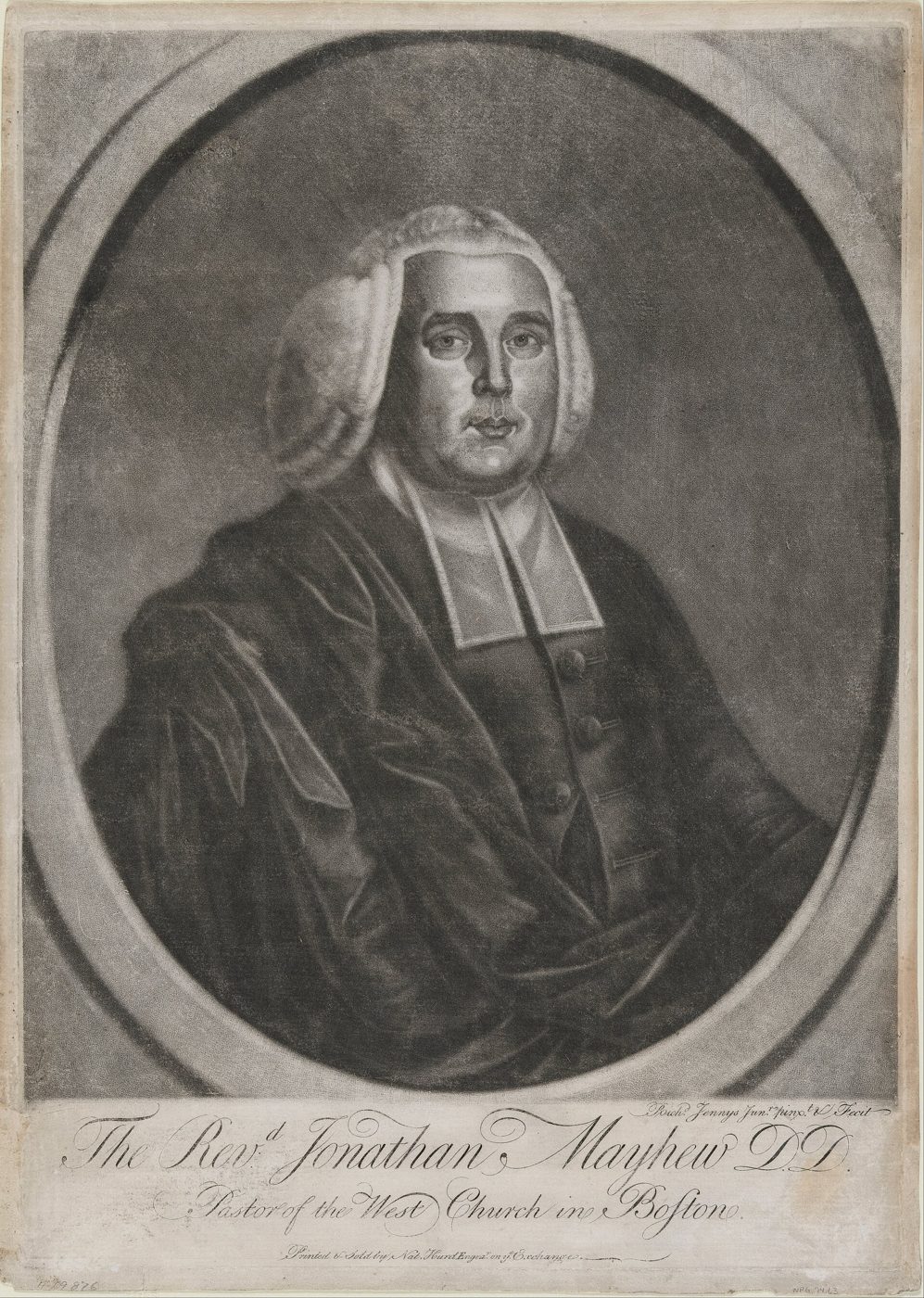
This lesson follows that question through the three centuries before the Revolution and into the Ordered Liberty framework. When does a ruler's claim on your obedience hold, and when does it lapse? The answer shapes the framework's treatment of accountability, support for government, and what it calls a breach of ordered liberty.
Romans 13 and Its Readers
The text
The passage is short. In the King James Version that colonial ministers preached from, Paul writes that "whosoever therefore resisteth the power, resisteth the ordinance of God," and that "rulers are not a terror to good works, but to the evil. Wilt thou then not be afraid of the power? Do that which is good, and thou shalt have praise of the same: for he is the minister of God to thee for good." And then: "he beareth not the sword in vain."4 Read alone, the first verses sound like a command to submit to anyone holding power. Read whole, they describe a ruler by his function: he praises the good and punishes the evil.
Three ways of reading it
One reading, common in the Middle Ages and again among the defenders of divine-right kings in the seventeenth century, takes the command at its widest. A tyrant is still the ruler God has placed over you, and the remedy is prayer and patience. Peter and the apostles supply the limit that nearly every reader accepts: "We ought to obey God rather than men."5 A believer may refuse to sin at a ruler's command. Whether he may do more than refuse is where readers part.
A second reading comes from the Reformation. John Calvin taught that private Christians must submit even to bad rulers. But he allowed that some communities have "popular magistrates" appointed to curb the tyranny of kings, and that such officers betray the people's liberty if they look the other way.6 That is the doctrine of the lesser magistrate: resistance is lawful when it comes through an officer whose own office carries responsibility for the people.
The third reading is Mayhew's. He asks what Paul's argument is for obedience and finds one answer: rulers rule for the public good. If that is the reason to obey, he says, then a ruler who destroys the public good has taken away the reason. He makes the point with a parent gone mad and trying to cut his children's throats. The children obeyed him because his care served the family. That reason cannot require them to submit when he turns on them. He also admits that "turbulent, vicious-minded men" will abuse the principle, then notes that every true principle can be abused.78
The framework and Romans 13
The framework cites Romans 13:3-4 as a biblical foundation for rightful authority: rulers are ministers for good, "not a terror to good works."9 The Concord Principle of Resistance takes up the objection directly. Romans 13, it states, warns against resisting legitimate authority, but when authority becomes lawless, resistance becomes "a defense of divine order" and not a violation of it. It adds that resistance that is self-serving, reckless or contrary to truth is rebellion against divine order.10 The framework's reading is Mayhew's, with an added weight on motive and restraint that later lessons take up.
Rutherford: The Law Is Above the King
Mayhew did not invent his argument. A century earlier, in 1644, a Scottish Presbyterian minister named Samuel Rutherford had published Lex, Rex, or The Law and the Prince, a long, scholastic reply to a royalist pamphlet defending absolute kingship. It argued, with a mountain of scriptural and legal citation, that a king is made by the people and is bound by law. Rutherford argued from nature that "no man is born king of men," and from the shape of royal office that the king holds his power as a trustee. "The law is not the king's own," he writes, "but given to him in trust."11
Rutherford paid for it. After the Restoration of the monarchy, Parliament ordered Lex, Rex burned in Edinburgh and St Andrews by the public hangman. He was cited to answer a charge of treason, and he died on March 29, 1661, before he could appear.12 The book's argument outlived the burning. The idea that law stands above the one who administers it has a short name in the title: Lex, Rex, the law is king.
The line from Rutherford to Locke to the Declaration is one argument made four ways: a ruler holds authority as a trust, the trust has a purpose, and a ruler who works against the purpose has broken the trust.
Locke on Tyranny and Trust
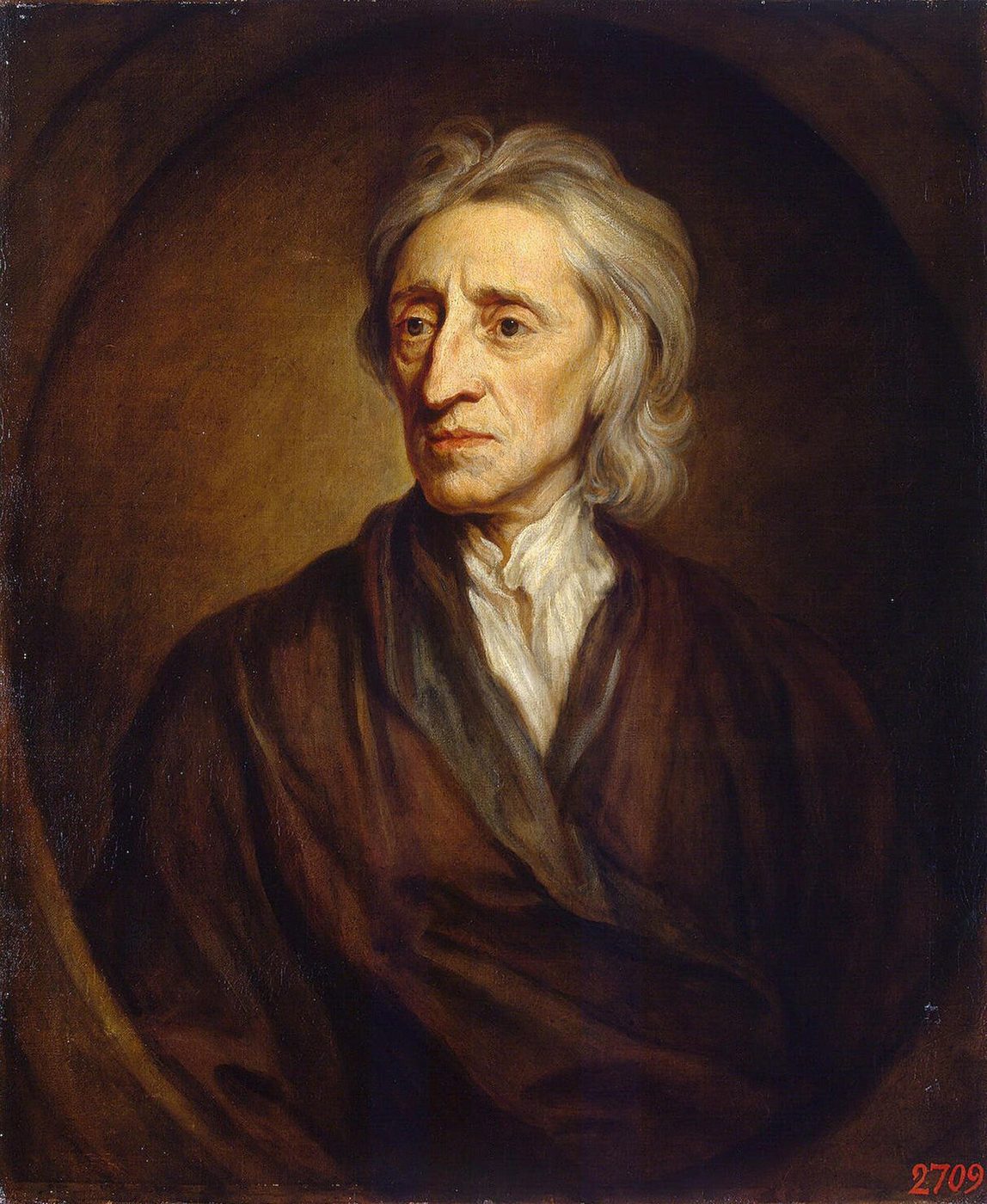
John Locke put the argument in the plain English that eighteenth-century Americans read. In the Second Treatise of Government (1689) he defines tyranny in a sentence: "tyranny is the exercise of power beyond right, which no body can have a right to." The tyrant, he adds, uses power "not for the good of those who are under it, but for his own private separate advantage," making "not the law, but his will, the rule."13
Two sections later comes the line that Americans of every party have quoted: "Where-ever law ends, tyranny begins, if the law be transgressed to another's harm." An official who goes beyond the power the law gives him, Locke continues, "ceases in that to be a magistrate; and, acting without authority, may be opposed, as any other man, who by force invades the right of another."13 Notice the test: an official stepping outside what the law allows, to the harm of someone's rights. A policy a citizen dislikes does not qualify.
The brake built into Locke
Locke was no friend of casual revolt. People, he notes, are "more disposed to suffer than right themselves by resistance." Revolutions, he says, "happen not upon every little mismanagement in public affairs. Great mistakes in the ruling part, many wrong and inconvenient laws, and all the slips of human frailty, will be born by the people without mutiny or murmur." What changes that is "a long train of abuses, prevarications and artifices, all tending the same way," when they make the design visible to the people.14 Jefferson's committee borrowed the phrase "long train of abuses" eighty-seven years later.
Locke also answers the question who judges whether a ruler has broken his trust. "The people shall be judge," he writes, "for who shall be judge whether his trustee or deputy acts well, and according to the trust reposed in him, but he who deputes him?"15 The framework takes the same answer in its own terms when it asks who decides if an order is unjust, as the later sections show.
The Declaration's Long Train
The Declaration of Independence is Locke's argument turned into a bill of particulars. It declares that "The history of the present King of Great Britain is a history of repeated injuries and usurpations," then adds: "To prove this, let Facts be submitted to a candid world." What follows is a list of facts, specific enough to check. The King "has made Judges dependent on his Will alone, for the tenure of their offices, and the amount and payment of their salaries." He "has kept among us, in times of peace, Standing Armies without the Consent of our legislatures." The King, with others, gave assent to acts "For Quartering large bodies of armed troops among us" and "For depriving us in many cases, of the benefits of Trial by Jury." Each of those items names an act and an actor.16
The text insists on prudence too. "Prudence, indeed, will dictate that Governments long established should not be changed for light and transient causes," and mankind is "more disposed to suffer, while evils are sufferable, than to right themselves." It insists on redress first: "In every stage of these Oppressions We have Petitioned for Redress in the most humble terms: Our repeated Petitions have been answered only by repeated injury."1718 The framework leans on those sentences in two ways. They supply the standard that resistance comes late and only after redress fails, and they set the pattern for how a grievance should be argued: name the act, the actor and the harm.
Voices on a ruler who exceeds his right
| Voice | Date | What it says about a ruler who abuses power |
|---|---|---|
| Romans 13:1-4 | First century | Be subject to the higher powers; rulers are "not a terror to good works, but to the evil." |
| Acts 5:29 | First century | "We ought to obey God rather than men." |
| John Calvin, Institutes | 1559 | Private persons submit; "popular magistrates" appointed to curb kings must not betray the people's liberty. |
| Samuel Rutherford, Lex, Rex | 1644 | The king holds the law in trust; "no man is born king of men." |
| John Locke, Second Treatise | 1689 | "Where-ever law ends, tyranny begins." The people judge whether the trust is broken. |
| Jonathan Mayhew | 1750 | Tyrants are not owed obedience by virtue of Paul's words. |
| Declaration of Independence | 1776 | A long train of abuses justifies change, after prudence and petitions have been tried. |
What Makes Authority Legitimate
Taken together, the sources give a working account. Authority is legitimate when the people it governs have consented to it, when it acts within law, and when it acts for the good of those under it. The Declaration says governments derive "their just powers from the consent of the governed." Locke says the law, and not the ruler's will, must be the rule. Mayhew says the end of government is the public good. The framework puts the three together in its own terms.
"Authority is not self-justifying. It becomes lawful only when it is restrained by morality, limited by law, and directed toward justice."
Jeff A. Pierson, "Ordered Liberty Reclaimed," v3.1, 2025. 19
On consent the framework adds a condition the older writers took for granted. "All legitimate authority derives from the consent of the governed, but consent alone does not legitimize power. Consent must be conditioned by justice, truth, and constitutional order." A majority vote cannot make a wrong right. And on the officeholder: "Public officeholders are not rulers but stewards, bound by oath to uphold the Constitution and the natural rights of the people."19 The steward is Locke's trustee in modern dress.
The sharpest line is the one that separates the framework from legal positivism. Authority "that punishes truth, shelters injustice, or violates conscience loses its legitimacy. It ceases to be authority and becomes oppression."19 The appendix on the founders and resistance says so in a sentence that fits the whole tradition: "legality is not the same as legitimacy."20 A statute can be properly enacted and still lack the moral authority to bind.
Civil Anti-Authoritarianism
The framework's name for the citizen's part in all this is civil anti-authoritarianism, also written as civic anti-authoritarianism. It is defined as "the organized defense of liberty through moral vigilance rather than political violence." The citizen's role is stewardship, and the citizen is described as "the moral auditor of government." Institutions "are to be questioned, not worshiped." And it is "not a movement of chaos but of disciplined independence."21
The point of the label is to say what the posture opposes and what it does not. It opposes arbitrary power, whoever holds it. It does not oppose government, law or order. The framework calls it "Ordered Liberty in motion," the answer to the question of what a citizen must do when rulers or institutions violate the balance between freedom and law. It calls for "vigilance, scrutiny, dissent, and resistance whenever authority becomes unjust," and it is careful to add that it is not anarchy, since it affirms law and principle, and not passivity, since it makes scrutiny and dissent obligations.22
One consequence is that the posture binds officials as much as citizens. Asked whether public officials may practice civil disobedience, the framework answers no: "Civil disobedience is an individual moral witness. Public officials have sworn oaths to uphold the law. When they defy it, they violate their duty. That is not protest, it is a breach of office."23 On this reading a sheriff who refuses to enforce a law he dislikes is not a dissenter. He has broken his oath.
What a Breach Is
The word breach carries the structure of this module. In the framework's usage a breach of ordered liberty is an act by an official outside lawful authority, in violation of the oath to uphold the Constitution and the natural rights of the people. The framework's paper on the subject is addressed to the oversight of elected officials who violate that oath by aiding, shielding or refusing to act against unlawful behavior, and it is explicit that identifying a breach is not a finding of guilt in any legal proceeding. It supports inquiry, censure, reform and public redress.24 A breach is therefore a question of fact about conduct: what did the official do, under what authority, with what result?
How a breach differs from a bad policy
Locke's rule applies. Voters will live with "wrong and inconvenient laws" and "all the slips of human frailty." A tax that is too high, a school board decision that parents hate, a regulation that costs jobs: these are disagreements, and the remedy is argument and elections. A breach is what happens when an official reaches past what the law lets him do and harms someone's rights in the process.
Cases from the record
The oldest is Clause 39 of Magna Carta in 1215, which, in the words of the Magna Carta Project's commentary, forbids royal action against any free man except by "the lawful judgment of his peers or by the law of the land."25 The principle is that an official acts on a person only through the law.
The second is closer to the American founders. On November 11, 1762, the King's messengers broke into the home of John Entick, a Grub Street writer, and searched his papers on the strength of a warrant from the Secretary of State. Entick sued. In 1765 Lord Camden held for him, and rejected the government's claim that its practice made it law with a sentence Americans memorized: "If it is law, it will be found in our books."26 The Fourth Amendment grew from cases like this one.
The third is American and it was done by Americans. In July 1798 Congress passed, and President Adams signed, an act making it a crime to "write, print, utter or publish" any "false, scandalous and malicious writing" against the government, either house of Congress or the President with intent to bring them "into contempt or disrepute." The act expired by its own terms on March 3, 1801.27 It was properly enacted. Whether it was a breach of the First Amendment is a question the framework puts to the individual conscience first, then the Constitution, then natural law, then the public.
Who decides
The framework's answer to the question of who decides if an order is unjust runs from the inside out. The individual conscience comes first. The Constitution supplies the legal standard, and natural law the moral one. Public protest tests the order before the public. Courts are guardrails, not the last word: "Courts may review and overturn unjust orders, but they can also err." The framework lists Dred Scott and Korematsu as rulings that were wrong. In the end, it states, "That responsibility begins with the individual and is tested against moral law, constitutional order, and the public record."28 The framework describes an unjust order as one that demands suppression of protected speech, religion, property or due process, forces a person to act against conscience without lawful cause, or compels participation in unlawful enforcement or discrimination.29
Objection: such a standard puts every citizen in the judge's chair. Response: the framework does not deny it, and the weight of that responsibility is the reason the older sources insist on prudence, petition first and proportion last. Locke warned that "a busy head, or turbulent spirit" may stir whenever it pleases, but "only to their own just ruin and perdition" until the mischief is general. Mayhew said an abuse of a principle does not disprove it.
- 1215 Magna Carta, Clause 39: no action against a free man except by lawful judgment or the law of the land.
- 1644 Rutherford publishes Lex, Rex; it is burned after the Restoration.
- 1689 Locke's Second Treatise: tyranny is power beyond right; the people judge the trustee.
- 1750 Mayhew preaches that Romans 13 gives tyrants no claim to obedience.
- 1762-65 Entick's home is searched; Lord Camden holds the general warrant unlawful.
- 1776 The Declaration lists a long train of abuses and the petitions that went unanswered.
- 1798 The Sedition Act makes criticism of the government a crime; it expires in March 1801.
Learn more
- Mayhew's 1750 sermon: The full text of the sermon John Adams later credited with shaping colonial opinion. The passage on children and a parent gone mad is the source of the parent analogy in this lesson.
- Locke, Second Treatise: Chapters 18 and 19, on tyranny and the dissolution of government, are short and plain.
- Rutherford, Lex, Rex: Long and dense, but the questions are numbered and the opening questions on the origin of power repay a skim.
- The Declaration of Independence: Read the list of grievances as a list of specific acts, one by one.
- Magna Carta Project, Clause 39: Scholars' commentary on the clause every later liberty claim leans on.
- The Sedition Act of 1798: Four short sections. Read what it punishes, then read the First Amendment.
- Jeff A. Pierson: The author's own site, with the papers quoted in this module.
Notes
- Jonathan Mayhew, A Discourse Concerning Unlimited Submission and Non-Resistance to the Higher Powers (Boston, 1750), with David Tucker's introduction, Teaching American History. The introduction says the sermon was delivered on the hundredth anniversary of the execution of Charles I, was "an immediate publishing success both at home and in London," and was credited by John Adams, reflecting in retirement, with helping shape opinion on the legitimacy of resistance. Read it online. ↩
- Jonathan Mayhew (1720-1766) was minister of the West Church in Boston. See "Jonathan Mayhew," Wikipedia, for dates and church. Read it online. ↩
- Mayhew, Discourse (1750), argument on Romans 13:3-4: "Common tyrants, and public oppressors, are not entitled to obedience from their subjects, by virtue of anything here laid down by the inspired apostle." Read it online. ↩
- Romans 13:1-4 (King James Version), as printed in Mayhew's Discourse, Teaching American History edition. Read it online. ↩
- Acts 5:29 (KJV): "Then Peter and the other apostles answered and said, We ought to obey God rather than men." Read it online. ↩
- John Calvin, Institutes of the Christian Religion, Book IV, chapter 20, section 31 (final Latin edition 1559). For the "popular magistrates" passage see the overview at "Lesser magistrate," Wikipedia, quoting Calvin. Read it online. Full text of the Institutes: Christian Classics Ethereal Library. ↩
- Mayhew, Discourse (1750), the passage on a parent "run distracted" and the children's duty to resist. Same edition. ↩
- Mayhew, Discourse (1750). He grants that "turbulent, vicious-minded men" may abuse the principle and answers that no true principle is safe from abuse. Same edition. ↩
- Jeff A. Pierson, "Ordered Liberty Reclaimed: A Foundation for Liberty," v3.1 (July 13, 2025), Appendix "External Reference Sources by Section," which cites Romans 13:3-4 for rightful authority. Read it on this site. ↩
- Jeff A. Pierson, "The Concord Principle of Resistance," Draft 7 (2025), Appendix: Questions and Answers, "Can resisting government ever become rebellion against divine order?" Read it on this site. ↩
- Samuel Rutherford, Lex, Rex: or, The Law and the Prince (London, 1644). Quotations from the Internet Archive scan of the Princeton Theological Seminary copy, in the argument against hereditary right ("no man is born king of men") and the discussion of the king as fiduciary ("the law is not the king's own, but given to him in trust"). Read it online. ↩
- "Samuel Rutherford," Wikipedia: Scottish Presbyterian minister and commissioner to the Westminster Assembly; after the Restoration Lex, Rex was ordered burned at Edinburgh and St Andrews, and he was cited on a charge of treason but died on March 29, 1661. Read it online. ↩
- John Locke, Second Treatise of Government (1689), chapter 18, sections 199 and 202. Read it online (Project Gutenberg). ↩
- Locke, Second Treatise, chapter 19, sections 225 and 230. Read it online. ↩
- Locke, Second Treatise, chapter 19, section 240: "The people shall be judge." Read it online. ↩
- Declaration of Independence (1776), National Archives transcript: "The history of the present King of Great Britain is a history of repeated injuries and usurpations" and the list of facts that follows. Read it online. ↩
- Declaration of Independence: "Prudence, indeed, will dictate that Governments long established should not be changed for light and transient causes." Read it online. ↩
- Declaration of Independence: "In every stage of these Oppressions We have Petitioned for Redress in the most humble terms: Our repeated Petitions have been answered only by repeated injury." Read it online. ↩
- Pierson, "Ordered Liberty Reclaimed," v3.1, section II, "The Core Structure of Ordered Liberty": "Consent of the Governed" and "Rightful Use of Authority." Read it on this site. ↩
- Pierson, "Ordered Liberty Reclaimed," v3.1, Draft Appendix "The Founders' View of Protest and Resistance," commentary on James Otis. Read it on this site. ↩
- Jeff A. Pierson, The Ordered Liberty Papers (2025), part III, "Civic Anti-Authoritarianism (CAA)." Download it from this site (Word). ↩
- Pierson, The Ordered Liberty Papers, "Ordered Liberty in Motion" and "Authoritarianism and the Elite Assumption." Download it from this site (Word). ↩
- Pierson, "Ordered Liberty Reclaimed," v3.1, Appendix "Interrogatories and Answers Pt. 1," "Can public officials practice civil disobedience?" Read it on this site. ↩
- Jeff A. Pierson, "The Breach of the Ordered Liberty Framework: A Standard for Identifying and Responding to Constitutional Violations by Public Officials and Private Citizens and Organization Supported or Incited by Public Officials" (July 10, 2025), Abstract and Author's Statement. Read it on this site. ↩
- Magna Carta Project, University of East Anglia, commentary on Clause 39 of the 1215 charter, which forbids royal action against a free man except by "the lawful judgment of his peers or by the law of the land." Read it online. ↩
- Entick v Carrington, 19 Howell's State Trials 1029 (K.B. 1765), decided November 2, 1765. On November 11, 1762, the King's messengers broke into John Entick's home in Stepney. Camden's line is reported in Howell's as "If it is law, it will be found in our books" and in Wilson's Reports as "If this is law it would be found in our books, but no such law ever existed in this country." See "Entick v Carrington," Wikipedia. Read it online. ↩
- An Act in Addition to the Act, Entitled "An Act for the Punishment of Certain Crimes against the United States" (Sedition Act), July 14, 1798, sections 2 and 4. Read it online (Avalon Project). ↩
- Pierson, "Ordered Liberty Reclaimed," v3.1, section VIII, "Who Decides When an Order Is Unjust?" and its summary answer. Read it on this site. ↩
- Pierson, "Ordered Liberty Reclaimed," v3.1, section VIII, "Unjust Orders." Read it on this site. ↩
Terms in this lesson
- Legitimacy
- The rightful exercise of authority. In the framework, authority is legitimate when it rests on consent conditioned by justice, is limited by law, and is directed toward the good of the governed.
- Romans 13
- The passage in Paul's letter to the Romans, verses 1 to 7, telling Christians to be subject to the governing authorities. Its meaning for tyrannical rulers has been argued for centuries.
- Lesser magistrate
- An official below the supreme ruler (a town officer, a provincial assembly, a noble) who, in Reformation-era teaching, may resist a tyrant on the people's behalf when private persons may not.
- Tyranny
- In Locke's words, the exercise of power beyond right, used for the ruler's private advantage instead of the good of those under it.
- The framework's name for the organized defense of liberty through moral vigilance rather than political violence: refusing arbitrary power while upholding lawful order.
- Breach
- An act by an official outside lawful authority, in violation of an oath to uphold the Constitution and the natural rights of the people.
- General warrant
- A warrant that names no particular person or place, letting officers search wherever they wish. English courts condemned it in the 1760s and the Fourth Amendment forbids it.
Sources
- Jonathan Mayhew, A Discourse Concerning Unlimited Submission and Non-Resistance to the Higher Powers (1750), Teaching American History checked 2026-10
- Samuel Rutherford, Lex, Rex, or The Law and the Prince (1644), Internet Archive checked 2026-10
- John Locke, Second Treatise of Government (1689), Project Gutenberg checked 2026-10
- Declaration of Independence, National Archives transcript checked 2026-10
- Magna Carta Project, University of East Anglia, commentary on Clause 39 checked 2026-10
- Entick v Carrington (1765), summary and citations checked 2026-10
- Sedition Act of 1798, Avalon Project checked 2026-10
- Acts 5:29 (KJV), BibleGateway checked 2026-10
- Lesser magistrate, overview with Calvin passage checked 2026-10