Lesson 1 of 10 · about 19 minutes
What Ordered Liberty Means
You'll be able to
- State the definition of ordered liberty and the two duties it joins
- Explain what Justice Cardozo meant by the phrase in Palko v. Connecticut and how Ordered Liberty keeps the name but changes the meaning
- Describe the three relationships (self, neighbor, government) and the nine duties that anchor liberty in the Ordered Liberty papers
- Tell liberty as a system of restraint and duty from license, using the founders' own words on virtue
In 1935 Frank Palko, cornered by police after a break-in at a music store, shot and killed two officers.1 A Fairfield County jury found him guilty of second-degree murder and the judge sent him to prison for life. Connecticut thought that was too little and appealed, which a state law from 1886 let it do. It won. At the second trial the jury returned first-degree murder and Palko was sentenced to die.2 His lawyers took the case to Washington, arguing that a second trial for the same crime broke the Fifth Amendment ban on double jeopardy as applied to the states by the Fourteenth. On December 6, 1937, Justice Benjamin Cardozo wrote for an eight-to-one Court that it did not.
In the middle of that opinion sits a phrase that Americans have argued about ever since. Rights that the Bill of Rights guards against Congress, Cardozo said, may also bind the states when they have been found "implicit in the concept of ordered liberty." Others, he wrote, "are not of the very essence of a scheme of ordered liberty."3 Frank Palko was executed in Connecticut's electric chair on April 12, 1938.4
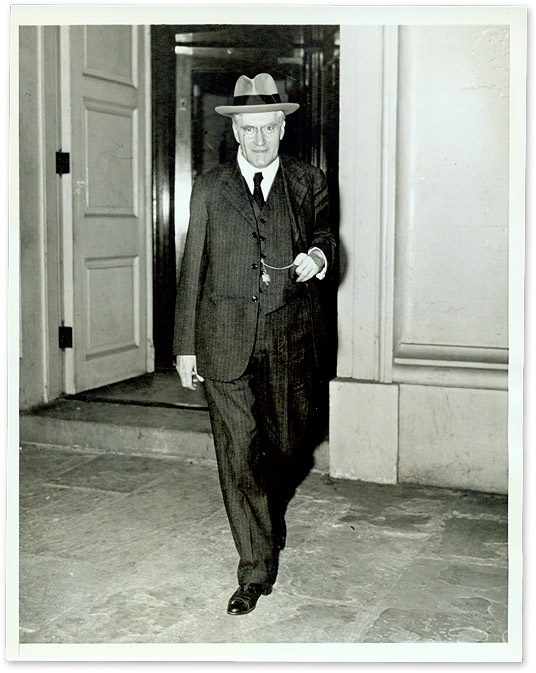
This module takes the same two words and builds something else with them. Ordered Liberty keeps the phrase as the name of a framework and defines it as a moral structure that belongs to a free people, not a test that belongs to judges. The first lesson sets the two meanings side by side, then lays out the framework's.
What the Court Meant
A sorting rule for the Fourteenth Amendment
In 1937 the Bill of Rights, by long habit, restrained only the national government. The Fourteenth Amendment, ratified in 1868, said that no state may "deprive any person of life, liberty, or property, without due process of law." The question for the Court was which of the rights in the first ten amendments the word "liberty" swept in. Cardozo's answer was a sorting rule. Some rights, such as freedom of thought and speech or the right to counsel, belong to a scheme of ordered liberty because "neither liberty nor Justice would exist if they were sacrificed." Others, such as indictment by grand jury and trial by jury, are valuable but a state could drop them and still be a fair and enlightened system of justice.3
So the phrase works as a filter. A judge asks whether a given right is fundamental enough to be forced on the states. If yes, it comes through the Fourteenth Amendment. If no, the state keeps its own rule. Palko's claim fell on the wrong side of the line. The Court rejected it and Connecticut carried out the sentence.
The sorting rule did not last on its own terms
Within a few decades the Court had incorporated most of the Bill of Rights, one right at a time, and in 1969 it overruled Palko itself on the question of double jeopardy.4 Defenders of the method point out that it protected a great many people from state abuses, and that it gave judges a way to apply old guarantees to new problems. The framework's answer to the method is that the filter put the question of which liberties count into the hands of judges.
How Ordered Liberty Keeps the Name and Changes the Meaning
Ordered Liberty does not claim that Cardozo invented the idea. The words carry a long history, and the concern is what happened to them in the case law. "Ordered Liberty Reclaimed: A Foundation for Liberty" (v3.1, July 2025) states that the term appears "throughout American constitutional history, particularly in judicial language," but "too often, it has been reduced to an abstraction, defined by courts and removed from public conscience."5 It adds: "Properly understood, Ordered Liberty is not a legal theory. It is a living standard for self-governing people."5
A second essay is more pointed. It notes that Palko turned the phrase into a test of which rights are "fundamental" enough to bind the states, and that the Court rejected Palko's own claim. The framework's argument follows: once courts decide what liberty contains, liberty stops being something that exists before government and that government must respect. It turns into something government grants, "the logic of positive liberty wearing a judicial robe." The framework uses the term "in its original sense: the sense the founders inherited from Scripture, common law, and centuries of Christian political thought, before any court needed a phrase for it."6
Ordered Liberty uses the name as a masthead, and the content it carries comes from the founders, the natural law tradition and the Ordered Liberty papers. The Court's meaning is a rule for sorting rights. The framework's meaning is a description of how a free people has to behave, and how its government has to behave toward it.
Two uses of one phrase. The Court's: a test, applied by judges, for which rights bind the states. Ordered Liberty's: a moral structure of duties, shared by citizens and officials, in which liberty is sustained by restraint on both sides.
The Definition in the Framework's Own Words
The definition has an ordinary-language form and a longer one. The short form, the one this module uses, is that ordered liberty is liberty that recognizes a shared duty of holding government accountable and supporting legitimate government. The longer forms come from the papers. The 2025 essay on the two views of liberty states:
"Ordered liberty is the moral structure of a free people: freedom exercised within just law, sustained by conscience, and bound by the Constitution."
Jeff A. Pierson, "Two Fundamentally Different Views of 'Liberty'," 2025. 7
The Ordered Liberty Papers put the balance this way: liberty "is neither license nor control but harmony between law and conscience." The papers set out an order of authority that explains the rest of the framework: "moral truth commands conscience, conscience informs law, and law restrains power." Reverse that order and liberty dies.8
Three relationships, one covenant
The structure runs through three relationships. The first is the individual and himself: conscience, discipline, moral agency. The second is neighbor and neighbor, where liberty becomes a shared trust and citizens owe each other restraint and a way to seek redress when wronged. The third is citizen and government, which the framework calls the constitutional covenant. Citizens give voluntary obedience to just law. Government protects rights it did not create, enforces law without favorites, keeps open the paths of redress, and restrains its own power.9 The line that holds the third relationship together is this one: "The individual is restrained by conscience, the citizen by law, and the government by both."9
Citizens as participants in legitimacy
The detail that separates the framework from a plain defense of limited government is the place it gives the citizen. "Citizens are not mere subjects of state power," the framework states; "they are active participants in its legitimacy."10 That sentence carries both duties in the definition. A participant in legitimacy supports the government that earns it, which means obeying just law and not treating every officeholder as an enemy. A participant also watches, and says so when the government steps outside its authority. In the framework's phrase, voluntary obedience is "a sign of moral health in a republic."11 So is scrutiny. Lesson 2 takes up what makes an authority legitimate to begin with.
Liberty as a System and Not a License
The second essay opens with a claim about the word itself: Americans post about freedom every Fourth of July, almost none of them say which freedom they mean, and beneath the one word sit two opposed ideas.12 The first treats liberty as protection. You are free when no one stops you, and government exists to guard your rights and otherwise stand aside. The second treats liberty as provision. You are free when you can actually do the thing, and so government must supply the means. Philosophers call these negative and positive liberty, a distinction Isaiah Berlin made famous in 1958.
Ordered Liberty takes the first view and holds that the founders did too, and that they knew it could not stand alone. The Bill of Rights is written as a restraint ("Congress shall make no law"), and that restraint is, in the framework's words, "the government's clause" of a larger covenant, a real clause but "one clause, not the whole document."9 Read only the government's clause and "you mistake a covenant for a muzzle." The citizens' side of the bargain is virtue: governing themselves, treating their neighbors fairly, and obeying just law without being forced to.
Defenders of the provision view would answer that a person with an empty stomach and a locked door is not helped by the ban on censorship. Franklin Roosevelt made roughly that case in the Four Freedoms speech of January 6, 1941, adding freedom from want and freedom from fear to freedom of speech and worship.13 Ordered Liberty reads that speech as the American turning point, the moment liberty began to be defined by what government supplies. The structure the framework builds on the first view is the subject of the rest of this lesson.
What the founders said about virtue
The framework leans on a short list of founding-era statements that tie liberty to the character of the people. They are given here in their own words, since they are often paraphrased.
"Men are qualified for civil liberty, in exact proportion to their disposition to put moral chains upon their own appetites."
Edmund Burke, A Letter to a Member of the National Assembly, 1791. 14
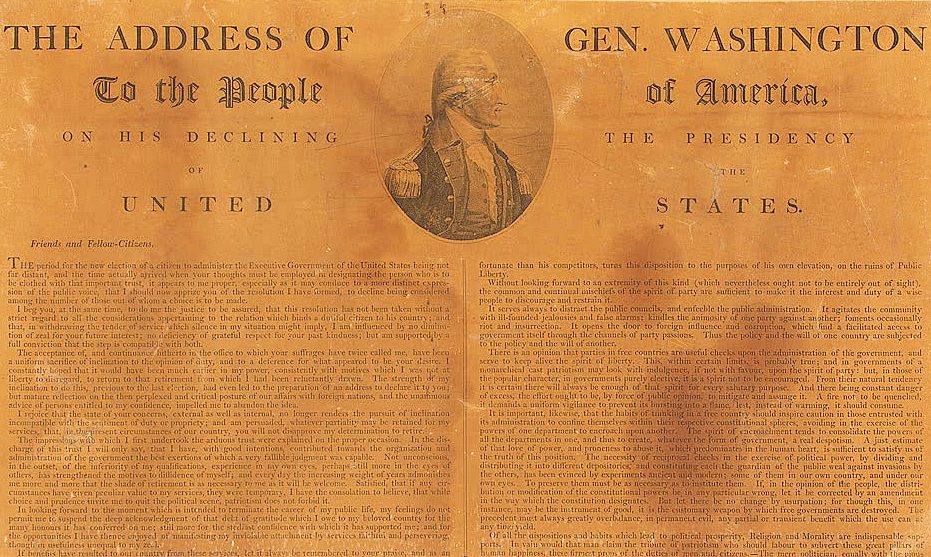
"Of all the dispositions and habits which lead to political prosperity, religion and morality are indispensable supports."
George Washington, Farewell Address, 1796. 15
"Our Constitution was made only for a moral and religious People. It is wholly inadequate to the government of any other"
John Adams to the Massachusetts militia officers, October 11, 1798. 16
"To suppose that any form of government will secure liberty or happiness without any virtue in the people, is a chimerical idea."
James Madison, Virginia Ratifying Convention, June 20, 1788. 17
Madison could be hard on human nature too. In Federalist No. 51 he asks what government is "but the greatest of all reflections on human nature" and concludes: "If men were angels, no government would be necessary." Four essays later he argues the other side of the ledger. Because people are not wholly depraved, "Republican government presupposes the existence of these qualities in a higher degree than any other form."1819 A republic needs checks on power because men are flawed and needs a virtuous people because the checks cannot do all the work. The framework builds on that pair of ideas and compresses them into the maxim used throughout the papers, Constitutio a Virtute Populi Sustinetur, "the Constitution is sustained by the virtue of the people."9
License and its cost
Burke's sentence goes on to say that society cannot exist unless a controlling power on will and appetite is placed somewhere, and "the less of it there is within, the more there must be without."14 That is the arithmetic of ordered liberty. A town whose people keep their word, pay what they owe and tell the truth needs fewer inspectors. A town that has lost those habits will get more of them, whether it votes for them or not.
The Duties That Anchor Liberty
The Ordered Liberty papers do not treat liberty as a set of claims. They treat it as a set of duties, because "rights without duties become hollow claims, easily twisted into excuses for selfishness or tyranny."20 The papers name nine, and for each they pair a voice from the tradition: prudence, conscience, justice, fidelity, stewardship, defense, charity, scrutiny and dissent.20 The table gives the duty, its one-line gloss, and the author cited for it.
| Duty | What it asks | Voice cited |
|---|---|---|
| Prudence | Foresight and discipline; weigh timing and consequence before acting | The Declaration of Independence (1776) |
| Conscience | Refuse to silence the inner moral voice for convenience, fear or gain | Jefferson, Notes on the State of Virginia |
| Justice | Give each what is rightly theirs; apply to rulers and neighbors alike | Augustine, City of God |
| Fidelity | Keep your word, honor contracts, respect covenants | Grotius, On the Law of War and Peace |
| Stewardship | Care for what is entrusted to you, including power | Locke, Second Treatise |
| Defense | Protect life, liberty and the innocent from unjust harm, proportionately | Locke, Second Treatise |
| Charity | Love your neighbor by free choice, not compulsion | Cicero, On Duties |
| Scrutiny | Examine policies, test claims, question leaders | Madison, Federalist No. 51 |
| Dissent | Call a nation back to its principles when power drifts toward abuse | The Declaration of Independence |
Some of the nine can be read directly in the sources the papers cite. On prudence, the Declaration itself says that "Prudence, indeed, will dictate that Governments long established should not be changed for light and transient causes."21 On conscience, Jefferson wrote in 1785 that "our rulers can have authority over such natural rights only as we have submitted to them. The rights of conscience we never submitted, we could not submit. We are answerable for them to our God."22 And on justice, Augustine asked in the early fifth century, in the Dods translation, "Justice being taken away, then, what are kingdoms but great robberies?"23
The last two duties on the list are the ones that make the framework a civic one. Scrutiny is the daily habit. "Authority is never exempt from judgment," the papers state, and the citizen becomes what they call a "moral auditor of government." Dissent is the rarer duty, reserved for the moment when scrutiny reveals corruption.2024 The first seven build the person who can do the last two without turning into a crank or a mob.
Two Halves of One Duty
Everything above comes down to the sentence this lesson started from. Ordered liberty is liberty that recognizes a shared duty of holding government accountable and supporting legitimate government. The two halves are easy to pull apart, and most political fights do pull them apart. One camp hears only "hold accountable" and treats every official as a suspect. The other hears only "support" and treats every question as disloyalty. Ordered Liberty requires both, and each depends on the other.
Accountability without support is how a free people ends up with a government nobody can govern with: officials who dread every public meeting, laws nobody obeys, and a standing contempt for any institution. Support without accountability is how it ends up with a government nobody can correct. The appendix on the Anti-Federalists makes the point. Institutions, it states, are "never morally superior to the people who created them."25
The rule for balancing the two is moral parity: the same moral standard for the governed and the governors. "No person is beneath the law's protection, and no official is above its restraint."9 That is why the second essay holds that the covenant can be broken from either side, and why ordered liberty "judges the mob and the magistrate by one standard." When citizens drop their duties, liberty decays into license and the public starts asking for control. When government drops its duties, whether by overreach or by the quieter betrayal of enforcing the law selectively, authority turns into oppression and loses its claim to obedience.9
Neither authoritarian nor institutionalist
The framework anticipates the charge that all this is a cover for either side. "Ordered Liberty rejects authoritarianism outright, and does not place blind trust in institutions," runs the answer to one of the interrogatories in Ordered Liberty Reclaimed. Authoritarianism demands obedience by force. Ordered liberty asks for obedience to just law, freely given. Institutions, in the framework, are not the guardians of liberty. People are.26 That answer prepares the ground for the next lesson, where the question turns from duty to authority: when does a government that asks for obedience actually have the right to it, and when has it gone beyond that right?
- 1788 Madison tells the Virginia convention that no form of government can secure liberty "without any virtue in the people."
- 1791 Burke writes that men are qualified for civil liberty in proportion to their disposition to put moral chains on their own appetites.
- 1796 Washington's Farewell Address calls religion and morality "indispensable supports" of political prosperity.
- 1798 John Adams tells the Massachusetts militia that the Constitution was made only for a moral and religious people.
- 1937 Palko v. Connecticut makes "ordered liberty" a test of which rights bind the states.
- 2025 Ordered Liberty Reclaimed (v3.1, July 13) and The Ordered Liberty Papers, by Jeff A. Pierson, reclaim the phrase as a moral structure of duties.
Learn more
- Pierson, Ordered Liberty Reclaimed (PDF): The foundation document for this module, with the definitions, the covenant and the stages of protest.
- Pierson, The Concord Principle of Resistance (PDF): The framework for self-defense and violent defensive resistance covered in Lesson 9.
- Pierson, The Breach of the Ordered Liberty Framework (PDF): The standard for deciding when an official has breached the order.
- Pierson, The Ordered Liberty Papers (Word): The collected papers.
- Pierson, The Doctrine of Ordered Liberty: A Civic Primer (PDF): The short version.
- Pierson, Ordered Liberty: The Forgotten Christian Foundation of American Freedom (PDF): The religious roots of the idea.
- Pierson, Two Fundamentally Different Views of Liberty (PDF): Liberty as a system against liberty as license.
- Pierson, CPoR Brief No. 1: Sovereignty and Immigration (PDF): The Concord Principle applied to immigration enforcement, covered in Lesson 7.
- Pierson, Civic Conscience Workbook (PDF): A self-assessment on motives, values and the role each reader might take in public life.
- Palko v. Connecticut in full: Short enough to read in one sitting. Look for the paragraph where Cardozo sorts rights into those that are "of the very essence" of ordered liberty and those that are not.
- Burke, Letter to a Member of the National Assembly: The source of the line about moral chains, in the full run of Burke's argument with the French revolutionaries.
- Washington's Farewell Address: Read the passage on religion and morality in context, next to his warnings about faction.
- Federalist No. 51: Madison on why a government of men needs both outside checks and inside ones.
- Adams to the Massachusetts militia, 1798: The whole letter, with Founders Online's notes on who the officers were and why they wrote.
- The Declaration of Independence: The sentence about prudence is the Declaration's statement of the duty of prudence.
- Jeff A. Pierson: The author's own site, where the papers discussed in this module are published.
Notes
- "Palko v. Connecticut," Wikipedia, "Background," summarizing the facts of the 1935 case. Read it online. The Supreme Court opinion itself addresses only the procedural history. ↩
- Palko v. Connecticut, 302 U.S. 319, 320-23 (1937). Argued November 12, decided December 6, 1937; Justice Cardozo wrote for the Court and Justice Butler dissented without opinion. Read it online. ↩
- Palko, 302 U.S. at 324-25. Cardozo wrote that rights protected against the federal government by specific amendments "have been found to be implicit in the concept of ordered liberty" and so apply to the states, and that the jury trial and the indictment requirement, though valuable, "are not of the very essence of a scheme of ordered liberty." Read it online. ↩
- Palko was executed in Connecticut on April 12, 1938. The Court overruled Palko on the double jeopardy point in Benton v. Maryland, 395 U.S. 784 (1969). See "Palko v. Connecticut," Wikipedia, citing the decision and execution records. Read it online. ↩
- Pierson, "Ordered Liberty Reclaimed," v3.1, section I; and the interrogatory "Didn't the Supreme Court already define Ordered Liberty?" in the appendix "Interrogatories and Answers Pt. 2." Read it on this site. ↩
- Jeff A. Pierson, "Two Fundamentally Different Views of 'Liberty'" (2025), section "The system the founders built." His argument is explicitly offered "as argument and not as settled law." Read it on this site. ↩
- Pierson, "Two Fundamentally Different Views of 'Liberty'," sections "The system the founders built" and "The covenant." Read it on this site. ↩
- Jeff A. Pierson, The Ordered Liberty Papers (2025), "The Structure of Ordered Liberty: A Framework for Conscience, Authority, and Resistance," part I, "The Concept of Ordered Liberty." Download it from this site (Word). ↩
- Pierson, "Two Fundamentally Different Views of 'Liberty'," section "The covenant." Read it on this site. ↩
- Pierson, "Ordered Liberty Reclaimed," v3.1, section I (Covenantal Structure) and section III, "Ordered Liberty as a Relational and Constitutional Framework." Read it on this site. ↩
- Pierson, "Ordered Liberty Reclaimed," v3.1, section V, "Person-to-Government: The Constitutional Covenant of Lawful Authority." Read it on this site. ↩
- Pierson, "Two Fundamentally Different Views of 'Liberty'," sections "The two views" and "The replacement on offer." Berlin's classic statement is Isaiah Berlin, "Two Concepts of Liberty" (1958), reprinted in Four Essays on Liberty (Oxford University Press, 1969). Read it on this site. ↩
- Franklin D. Roosevelt, Annual Message to Congress, January 6, 1941 (the Four Freedoms speech), Franklin D. Roosevelt Presidential Library. Pierson's reading of it is in "Two Fundamentally Different Views of 'Liberty',", section "The record." Read it on this site. ↩
- Edmund Burke, A Letter to a Member of the National Assembly (1791), in The Works of the Right Honourable Edmund Burke, Online Library of Liberty edition. Read it online. Pierson's Papers attribute the sentence to Burke's Reflections on the Revolution in France (1790); the Letter of 1791 is the source I checked. ↩
- George Washington, Farewell Address (September 19, 1796). Avalon Project text: "Of all the dispositions and habits which lead to political prosperity, religion and morality are indispensable supports." Read it online. ↩
- John Adams to the Officers of the First Brigade of the Third Division of the Militia of Massachusetts, Quincy, October 11, 1798, Founders Online. Read it online. ↩
- James Madison, speech in the Virginia Ratifying Convention, June 20, 1788, in The Founders' Constitution, vol. 1, ch. 13, p. 410. Read it online. ↩
- The Federalist No. 51 (Madison), February 6, 1788: "If men were angels, no government would be necessary." Read it online. ↩
- The Federalist No. 55 (attributed to Madison): "Republican government presupposes the existence of these qualities in a higher degree than any other form." Read it online. Some of the Federalist essays were once disputed between Madison and Hamilton; No. 55 is now generally attributed to Madison. ↩
- Pierson, The Ordered Liberty Papers, part II, "The Duties That Anchor Liberty," and the later section "Duties Defined." Download it from this site (Word). ↩
- Declaration of Independence (1776), National Archives transcript. Read it online. ↩
- Thomas Jefferson, Notes on the State of Virginia (1785), Query XVII. Read it online. ↩
- Augustine, The City of God, Book IV, chapter 4, trans. Marcus Dods. Read it online. Pierson's Papers cite the line in a different translation and give the location as Book XIX; the passage appears in Book IV, chapter 4. ↩
- Pierson, The Ordered Liberty Papers, part III, "Civic Anti-Authoritarianism (CAA)." He also describes it as "Ordered Liberty in motion." Download it from this site (Word). ↩
- Pierson, "Ordered Liberty Reclaimed," v3.1, "Appendix: The Anti-Federalist Warning: Institutional Power and the Fragility of Liberty." Read it on this site. ↩
- Pierson, "Ordered Liberty Reclaimed," v3.1, Interrogatories, "Is Ordered Liberty authoritarian or institutionalist?" Read it on this site. ↩
Terms in this lesson
- Ordered liberty
- The moral structure of a free people: freedom exercised within just law, sustained by conscience, and bound by the Constitution, with a shared duty to hold government accountable and to support legitimate government.
- Incorporation
- The process by which the Supreme Court applied parts of the Bill of Rights to the states through the Fourteenth Amendment. Palko v. Connecticut (1937) asked which rights were fundamental enough to be incorporated.
- Natural law
- The idea that certain moral truths about right and wrong bind everyone and can be known by reason and conscience, whatever a government enacts.
- Covenant
- A mutual, binding promise with duties on both sides. The relation of citizen and government is described as a covenant, not a one-way contract of administration.
- Moral parity
- The rule that citizens and officials are held to the same moral standard. No person is beneath the law's protection and no official is above its restraint.
- License
- Freedom with no restraint on appetite or harm to others. The founders and Ordered Liberty both treat it as liberty's counterfeit.
- Negative and positive liberty
- Isaiah Berlin's terms. Negative liberty is freedom from interference. Positive liberty is the capacity to act, which in political form often means goods or services a government supplies.
Sources
- Palko v. Connecticut, 302 U.S. 319 (1937) checked 2026-10
- Edmund Burke, A Letter to a Member of the National Assembly (1791), Online Library of Liberty checked 2026-10
- Washington's Farewell Address (1796), Avalon Project checked 2026-10
- John Adams to the Massachusetts Militia, 11 October 1798, Founders Online checked 2026-10
- James Madison, Virginia Ratifying Convention, 20 June 1788, The Founders' Constitution checked 2026-10
- The Federalist No. 51, Avalon Project checked 2026-10
- The Federalist No. 55, Avalon Project checked 2026-10
- Declaration of Independence, National Archives transcript checked 2026-10
- Thomas Jefferson, Notes on the State of Virginia, Query XVII checked 2026-10
- Augustine, The City of God, Book IV, chapter 4 (Dods translation) checked 2026-10