Lesson 4 of 10 · about 22 minutes
Concord: Why the Resistance Was Lawful in Their Eyes
You'll be able to
- Explain why Massachusetts patriots in 1775 believed the Government Act and the troops that enforced it stood outside the lawful constitution of the province
- Read the Suffolk Resolves and the Continental Congress's endorsement of them as a program of defense, not conquest
- State the British government's opposing case, including the charge of treason against the Provincial Congress, and weigh it fairly
- Describe the race of the schooner Quero to London and why both sides fought for the first account
- Summarize in prose what the Concord Principle of Resistance asks of those who would resist, and where Concord fits and does not fit
On the night of April 28, 1775, nine days after the shooting at Lexington and Concord, a 62-ton schooner called the Quero slipped out of Salem harbor carrying ballast, a bundle of sworn statements and a letter. Her captain, John Derby, had orders from Dr. Joseph Warren to make for Ireland, cross to England and "hasten to London." His postscript told him to keep the order "a profound secret from every person on earth."12 The crew did not learn their destination until they were on the Grand Banks.
The colonists were in a hurry to tell the world what had happened, under oath, before the government in London told it differently. That tells you what they thought they were doing. People who believe they are plotting treason hide the paperwork. These people put theirs on the fastest boat they could find and sent it to the Secretary of State's front door.
The question for this lesson is why. Why did the farmers and mechanics of Massachusetts believe, on April 19, that standing in a road with a musket was lawful, and that the soldiers of their own king were the ones acting outside the law? Their answer was not sentimental. It was a legal and constitutional argument, built over eleven months, and it is the argument behind the name of the Concord Principle of Resistance.
A Charter Rewritten by Statute
Start with the constitution Massachusetts thought it had. The province lived under a royal charter of 1691. Under it the council, the upper house that advised the governor and shared in the legislature, was elected by the General Court. Towns governed themselves in town meeting, a habit older than the charter.
In the spring of 1774 Parliament answered the Boston Tea Party with a series of measures the colonists called the Intolerable Acts. The one that mattered most for the countryside was the Massachusetts Government Act, which received the royal assent on May 20.3 It revoked the part of the charter that gave the General Court the choice of the council and made the councillors royal appointments, serving at the king's pleasure. It put the naming of a long list of officers in the governor's hands. And it reached into the one institution every village used:
"no meeting shall be called by the select men, or at the request of any number of freeholders of any township, district, or precinct, without the leave of the governor"
Massachusetts Government Act, 1774, with an exception for the annual election of town officers. 4
The statute gave its reason. Town meetings, it said, had been "misled to treat upon matters of the most general concern, and to pass many dangerous and unwarrantable resolves."4 Lord North put the aim more bluntly in Parliament, calling Massachusetts "in a distempered state of disturbance and opposition to the laws of the mother country."3
Look at that from Parliament's side first, because it was not a foolish position. Parliament held that it was the sovereign legislature of the empire. Tea had been destroyed in Boston by a crowd that no one had punished. A government that cannot enforce its laws in its chief port has a problem, and a ministry could fairly say that town meetings were being used as machinery for organized defiance. If Parliament was sovereign, the Act was law, and refusing to obey it was refusing to obey law.
The colonists denied the premise. They held that their charter was their constitution, a compact between the Crown and the people of the province that a statute could not simply rewrite. If so, then an act that took away the charter's guarantees was a nullity, and any official who enforced it was acting without lawful authority. That is the idea of breach this module has been building: an official who steps outside the authority the constitution gave him, in violation of the terms on which he holds office. In the colonists' view the gap between what the charter allowed and what the Act demanded was where the law ended and mere force began.
The Suffolk Resolves
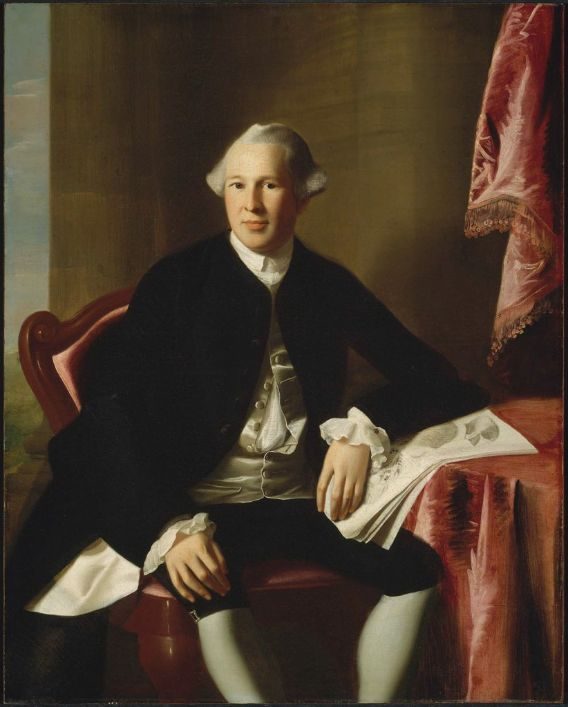
The first formal answer came from Suffolk County, which included Boston. Delegates from its towns met at Dedham, then at the Daniel Vose house in Milton, and on September 9, 1774 adopted resolves drafted chiefly by Dr. Joseph Warren.5 Paul Revere carried them to the First Continental Congress in Philadelphia.
Read the document before you read about it. It acknowledges King George III as "our rightful sovereign."6 Its target is Parliament and the ministry, and it keeps that distinction through every paragraph. It then declares the Coercive Acts "gross infractions of those rights to which we are justly entitled by the laws of nature, the British constitution, and the charter of the province," and goes on:
"That no obedience is due from this province to either or any part of the acts above-mentioned, but that they be rejected as the attempts of a wicked administration to enslave America."
The Suffolk Resolves, September 9, 1774. 6
Notice the structure of the argument. Natural law, the English constitution and the provincial charter are cited together, as three layers of one legal order. The Acts are set against that order, not against the Crown. The Resolves then told the people what to do. Tax collectors and other officers holding public money were to keep it and not pay it to the provincial treasurer until the government stood again "upon a constitutional foundation." Councillors who had accepted appointments by royal writ were to resign. The county called for a "provincial Congress." And the towns were to prepare. On the militia the text is plain. Men "who are qualified" should "acquaint themselves with the art of war as soon as possible" and "appear under arms at least once every week."6
Then comes the sentence that shows the intent, and that answers any view of Concord as a rebellion looking for an excuse:
"we are determined to act merely upon the defensive, so long as such conduct may be vindicated by reason and the principles of self-preservation, but no longer."
The Suffolk Resolves, September 9, 1774. 6
That is a conditional promise, and it contains a theory of when force becomes permitted: when the defense can be "vindicated by reason" and by "self-preservation," and not past that point. The same document told the county that if officials tried to arrest "sundry persons" for defending the people's rights, the county should "seize and keep in safe custody, every servant of the present tyrannical and unconstitutional government" until the men arrested were "liberated" and "restored safe and uninjured."6 In other words, the colonists were already preparing for the arrest that Dartmouth would order seven months later, and they stated in advance how they would answer it.
On September 17 the Continental Congress, meeting in Carpenters' Hall, resolved unanimously that it "most thoroughly" approved "the wisdom and fortitude, with which opposition to these wicked ministerial measures has hitherto been conducted," and urged Massachusetts to persevere in "the same firm and temperate conduct."6 That vote turned a county's resolution into the position of the continent. John Adams wrote in his diary that it "was one of the happiest days of my life" and that he was convinced "America will support the Massachusetts or perish with her."5 Whatever else the British government thought of the Resolves, it could no longer treat them as the work of a mob in Suffolk.
A Government Without a Governor
The Government Act was supposed to produce a more obedient Massachusetts. It produced two governments. Gage had called a session of the General Court at Salem for October, then cancelled the writs on September 28 because of the "tumults and disorders" in the province. By then many towns had already elected their representatives. Ninety of them met at Salem on October 5 anyway, chose John Hancock as chairman, and on October 7 resolved themselves into a Provincial Congress, a body whose aim was "to consult and determine on such measures as they shall judge will tend to promote the true interest of his majesty, and the peace, welfare and prosperity of the province."7
The Park Service, which tells this story fairly and in detail, describes the formation of that Congress as "essentially a coup d'état: a sudden, violent, and unlawful seizure of power."8 The legal charge in that sentence is the substantive one. The adjectives do not match the record, because nothing violent happened in the formation of the Provincial Congress. The charge rests on the fact that a body that meets against the governor's order and then exercises the powers of government is, from the Crown's side, unlawful. That is why Dartmouth later called its proceedings "acts of treason and rebellion."
The colonists' reply was the one Locke and the lesser magistrate tradition had prepared. The governor had thrown away the constitution by suspending the legislature and obeying an Act that dissolved the charter. The representatives, who held their seats by election under that constitution, were its remaining lawful officers. They had not seized authority. They had picked it up where it had been dropped.9 Anyone who finds that persuasive should notice that it is exactly the move the Declaration of Independence later made at the level of the whole continent. Anyone who finds it a convenient excuse should notice that every revolution has made it.
What the Congress did next is the heart of the question about Concord. It appointed a Committee of Safety to oversee the militia, voted more than 20,000 pounds for arms and ammunition, and by the end of October recommended that towns form companies that "shall equip and hold themselves in readiness, on the shortest notice."7 In February it told its Committee of Supplies to buy "all kinds of warlike stores, sufficient for an army of fifteen thousand men to take the field."7 It stored the stores at Concord and Worcester, and set up a network of watchers to carry the alarm.
The Militia Was the Law
Here the opposing case raises an objection from scale. A regular officer would say that an army of 15,000 is not a defensive posture. The answer begins with the militia itself, which was neither a new thing nor a private army. In Massachusetts every able-bodied man from 16 to 60 was required by law to belong to his town's militia company. Selecting some of them for rapid turnout dates to 1645, and the companies of minute men that the Provincial Congress asked for in the fall of 1774 were about a quarter of the militia, generally younger and quicker, still organized by town.10 A farmer who drilled on the common was carrying out an obligation that provincial law laid on him, with his neighbors, under officers his town had chosen. The Suffolk Resolves had advised that officers friendly to the people be elected in each town after Gage cancelled the old commissions, which the colonists regarded as another act outside lawful authority.6
The collecting of stores was a different matter, because the province had no sanction from London for it. The question is what it was for. In December 1774 the militia of New Hampshire overran the garrison at Fort William and Mary, in Portsmouth, before Gage's expedition could remove the cannon and powder there. In February 1775 the townspeople of Salem raised their drawbridge before a detachment sent to seize stored artillery could cross, and the regulars went back empty-handed.11 Each case followed the same pattern. The British moved to take arms the colonists considered theirs, the colonists got there or stopped them first, and no one was killed. It is what the Suffolk Resolves had said they would do. The Concord stores were another case of it, and the stakes were higher because the powder alarm of September had already shown how fast the country would rise.
Taken together, the preparations had two faces. To Gage they were an army forming against the Crown. To the Provincial Congress they were the ordinary militia of the province, organized to prevent a repeat of the powder seizure. Both descriptions had something to them. What the colonists were not doing, by their own record and the record of the day, was marching on Boston.
| Question | The Crown's answer | The colonists' answer |
|---|---|---|
| What law governs Massachusetts? | Acts of Parliament, including the Government Act of 1774 | The charter of 1691, the English constitution and the law of nature, together |
| Who is the lawful government? | The governor and the council he names | The elected representatives, once the governor had suspended the legislature |
| What is the Provincial Congress? | An illegal body, whose leaders may be arrested for treason | The province's remaining lawful assembly |
| What are the stores at Concord? | Rebel arsenals, to be seized and destroyed | The militia's supplies, kept for self-defense |
| What is the march of April 19? | A police action to restore order | An armed incursion by troops acting under an unlawful Act |
What Gage Was Told to Do
The dispatch that put the question to the test reached Gage on April 14. William Legge, Earl of Dartmouth, the Secretary of State for the colonies, wrote that "it is the opinion of the King's servants, in which His Majesty concurs, that the essential step to be taken toward re-establishing government would be to arrest and imprison the principal actors and abettors in the Provincial Congress, whose proceedings appear in every light to be acts of treason and rebellion." Dartmouth thought the thing could be done quietly, "with due precaution," and "perhaps be accomplished without bloodshed."12 He also judged that "any efforts on their part to encounter a regular force cannot be very formidable."12
Gage did not move against the Congress as such. On April 18 he ordered Lieutenant Colonel Smith to seize and destroy "all artillery, Ammunition, Provisions, Tents, Small Arms, and all Military Stores whatever" at Concord, a mission lesson 03 followed hour by hour.13 Whether he also meant to arrest Hancock and Samuel Adams at Lexington is debated. What is not debated is that the expedition had been prepared in secret, that it marched at night, and that it arrived in towns that had not been told it was coming.
Set that beside the colonial view. In their eyes the troops were on the road for one purpose: to carry out, by force, measures that Parliament had no constitutional authority to impose. English law, as Entick v Carrington held in 1765 and lesson 02 showed, treated an officer without lawful authority as a trespasser, and every village knew the argument. An officer who comes to your house with no right to be there is, in law, a trespasser. An army on the king's road with orders to take the people's powder, under an act that dissolved the charter, was the same thing on a larger scale.
That is what "lawful in their eyes" means. It does not mean the colonists were certainly right in every detail. Parliament's claim to legislate for the colonies had real support in English law and in the Declaratory Act of 1766, and loyal Americans made the case for it at the time. It means the colonists acted on a coherent legal theory they had stated publicly, in writing, in advance, and in terms that kept faith with their oath to the king while rejecting the ministry's reading of the constitution. They held that the Crown's servants had broken the compact first. The Declaration of Independence later said it in so many words: the king had "affected to render the Military independent of and superior to the Civil power," had kept "Standing Armies" among them "without the Consent of our legislatures," and had joined with others "to subject us to a jurisdiction foreign to our constitution, and unacknowledged by our laws."14 The same text records what the colonists said they had tried first: "In every stage of these Oppressions We have Petitioned for Redress in the most humble terms: Our repeated Petitions have been answered only by repeated injury."14
The Race to London
The Provincial Congress understood that facts do not travel on their own. On April 22, from Watertown, it ordered a committee "to take depositions, in perpetuam, from which a full account of the transactions of the troops, under general Gage, in their route to and from Concord, &c., on Wednesday last, may be collected, to be sent to England, by the first ship from Salem."15 Parker's deposition, which lesson 03 read, was one of them. Dr. Warren's address "To the Inhabitants of Great Britain" went in the same packet, together with copies of the Essex Gazette, and a letter of instruction for the colonies' agent in London.2
Derby disobeyed the secrecy order in one respect and obeyed it in the rest. He sailed straight for the Isle of Wight, reached London on May 29, and put the papers into the hands of Arthur Lee, since Franklin had already sailed for home.1 The news was in the papers within days. Hutchinson, the former governor of Massachusetts and now an adviser to the ministry, carried it to Dartmouth himself and wrote that the first accounts "were very unfavorable, it not being known that they all came from one side."16 The next day Dartmouth had a notice published in a government gazette that no advices had yet arrived "of any such event," and that Gage's dispatches were expected aboard the Sukey. Lee answered that anyone who wished could inspect the original affidavits at the Lord Mayor's Mansion House.17
Gage's own account had sailed four days before the Quero and did not reach Southampton until June 9. Captain Brown handed it to Dartmouth's office on June 10.18 Derby had left London on June 1 and was beyond the ministry's reach, even though Dartmouth's men searched the harbors for him and had summoned him three times. Hutchinson, writing to Gage on May 31, put the cost of this plainly: "It is unfortunate to have the first impression made from that quarter."16
The colonists won that race by eleven days. It did not decide the war, but it did something that mattered for the question of this lesson. It placed the colonists' account before the British public as a sworn record, with names and places, under the heading of a defense against unlawful force. The ministry's counter had to answer a story it had not written. The argument that the colonists had been the aggressors, which Gage maintained, lost ground in London in that fortnight and was never wholly recovered. Whether it should have lost ground, given the dispute over the first shot at Lexington, is one of the real questions historians still ask.
- May 20, 1774 Royal assent to the Massachusetts Government Act.
- Sept. 1, 1774 The Powder Alarm.
- Sept. 9, 1774 Suffolk Resolves adopted at Milton.
- Sept. 17, 1774 The Continental Congress approves them unanimously.
- Sept. 28, 1774 Gage cancels the General Court.
- Oct. 7, 1774 The Provincial Congress is formed; the Committee of Safety follows.
- Late Oct. 1774 The Congress recommends that towns form minute companies.
- Dec. 1774 and Feb. 1775 Fort William and Mary; the Salem drawbridge.
- Apr. 14, 1775 Dartmouth's dispatch reaches Gage.
- Apr. 19, 1775 Lexington and Concord.
- Apr. 22, 1775 The Provincial Congress orders depositions sent to England.
- Apr. 28, 1775 The Quero sails from Salem.
- May 29, 1775 Derby reaches London.
- June 10, 1775 Gage's dispatches reach Dartmouth.
Why the Principle Is Named for Concord
Everything above explains a choice made in "The Concord Principle of Resistance," Draft 7 (Draft 8 is on this site). The document states that the principle takes its name from the Battle of Concord, "the first organized act of armed American resistance to British military power." In the document's words, that moment "is not remembered as rebellion, but as a disciplined stand for self-government against unlawful coercion."19 A reader who stopped at the poetry of Emerson might expect a call to arms. The document says the opposite. Its opening disclaimer states that the principle "is a philosophical and civic framework. It is not legal advice, a call to violence, or a justification for unlawful conduct."20
The principle uses Concord as a measure. Its claim is that the force used there was defensive, tightly limited and morally accountable, and that other proposed acts of resistance should be judged against it. The same draft states that "Concord is the standard by which all other acts of resistance should be judged,"21 and "Ordered Liberty Reclaimed" states that "Concord represents the outer boundary of justified defensive resistance."22 The operative word is "boundary." It describes the edge of what is permissible, which is a very different thing from describing a goal.
The principle is built on questions anyone who has studied self-defense will recognize, borrowed and adapted from the work of Andrew Branca, who has not endorsed the doctrine.23 The result is called the Five Core Standards: Innocence, Imminence, Proportionality, Avoidance and Reasonableness. The principle asks whether the people resisting started the trouble or merely met it, whether the danger in front of them was real and close or only feared, whether the force they used matched the force that threatened them, whether lawful and peaceful remedies had been tried or deliberately closed off, and whether an impartial, informed observer would call the decision reasonable rather than merely heated. All of these must hold together before force can count as what the framework calls violent defensive resistance, and a good motive does not stand in for any of them. Lesson 9 takes each standard in turn. As the document puts it, "Partial alignment may explain an individual's motive or a movement's frustration, but motive alone does not confer moral legitimacy."23
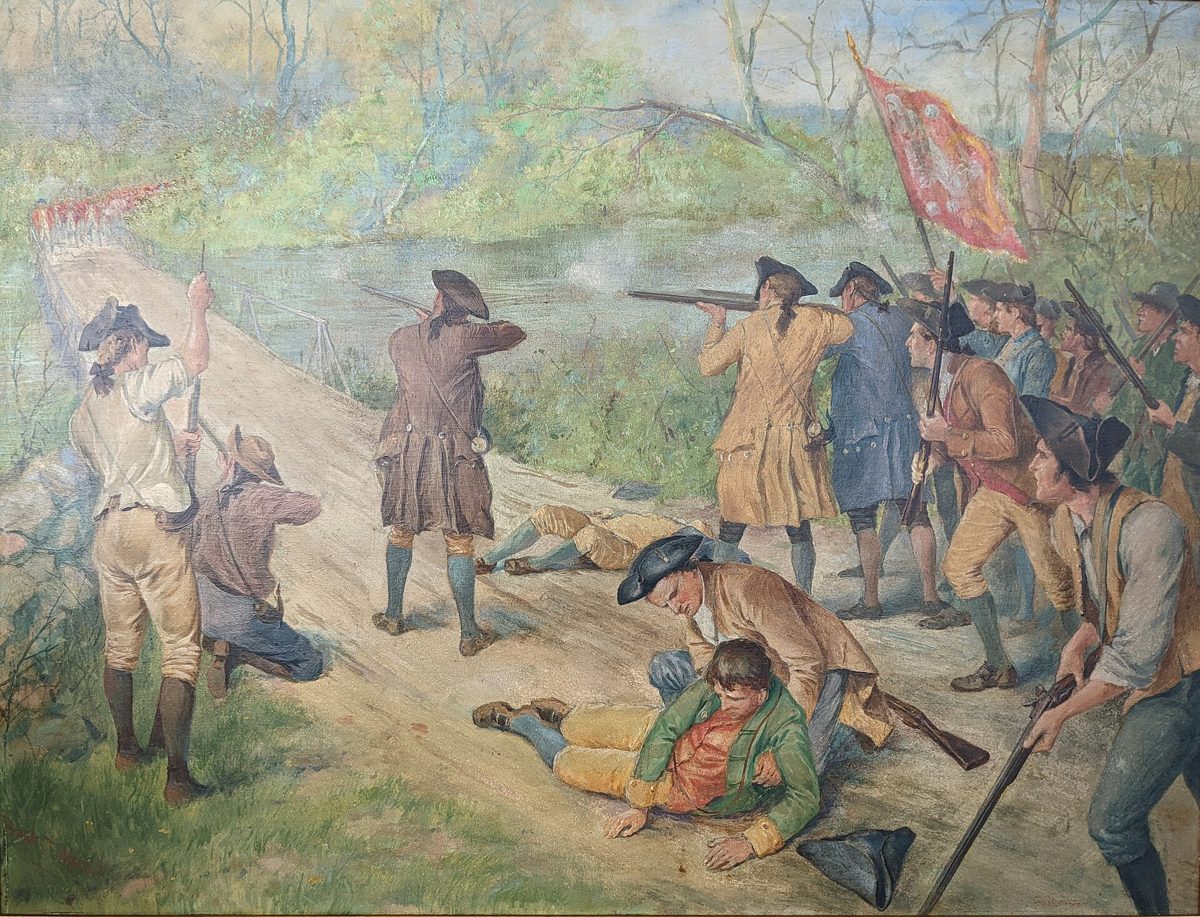
Concord fits that description well, and the eleven months before it explain why. The colonists petitioned for redress and were refused. They stated their terms of resistance publicly in the Suffolk Resolves and promised to stay on the defensive. They did not march on Boston, they left the stores in the country, and when the regulars came out they were met by militia, not by an ambush. At Lexington their captain, John Parker, said his company would not meddle with the regulars "unless they should insult or molest us."24 At the North Bridge the militia held fire until the regulars had fired and two of their men had fallen.25 That is the sequence behind the statement that the colonists "did not initiate force."22
Two objections are raised against treating Concord as the standard. First, the claim that the colonists "only" fired after being fired upon rests on a disputed morning at Lexington, where eyewitnesses on both sides swore the other had fired first, and where historians still cannot say who did. The framework's response is that the North Bridge sequence, in which the militia held fire until the regulars had fired, does not carry that dispute, and that the weight of the case rests on the preparation, petition and restraint that came before. Second, the Provincial Congress was, as the Park Service says, a body with no standing under the Crown, and the collection of 15,000 men's worth of stores was a deliberate act of preparation. The framework's response is that the Concord Principle of Resistance rests on the colonists' view that the Crown's servants had already breached the constitution. On that premise the colonists were a people who did what the oldest law of resistance allows, in the order it allows it: petition first, organize lawfully second, defend third.
The last piece of the framework is the one that distinguishes it from a justification for any grievance. It holds that "Violence in the name of justice must never become injustice itself," that "The goal is not to replace tyranny with chaos, or oppression with disorder but to preserve liberty through restraint, truth, and accountability," and that "Resistance must serve justice and does not replace it."2619 Even a justified defense, the draft adds, does not promise safety. Those who take it up must be ready to face "jail or death, openly and without vengeance."27 Concord matches that description in another way. The men on the green and at the bridge were known. They had names, towns and captains, and many of them swore to what they had done within days, and the Provincial Congress collected the statements. They did not hide.
That is why the lesson's title uses the words "in their eyes." Concord was lawful because the colonists argued, openly and in advance, that the government coming down the road had left the constitution, and because they limited what they did about it. Whether any later cause has earned the same description is a question the rest of this module takes up case by case, and honestly, since some have and many have not. For now, the narrow point is enough. The first battle of the Revolution was fought by men who believed they were defending the law of their province against officers who had stepped outside it, and who put their account on a ship to London before they had finished burying their dead.
Learn more
- The Suffolk Resolves, full text: The resolves and the Continental Congress's endorsement, in a single page. Read the militia paragraph and the paragraph that begins with the promise to act on the defensive.
- The Massachusetts Government Act of 1774: The statute itself. The clause on town meetings is short and worth reading in full.
- NPS, Warlike Preparations, 1774 to 1775: The park's account of the Provincial Congress, the Committee of Safety and Dartmouth's April 14 dispatch, written from the British point of view as well as the colonists'.
- National Archives, Who Fired the Shot Heard 'Round the World?: The Provincial Congress order of April 22, Parker's deposition and classroom questions on the competing accounts.
- A Fast Ship from Salem: The voyage of the Quero and the search for it in England, with the diary of Thomas Hutchinson.
- The Declaration of Independence: Read the list of grievances again after this lesson. Several of them describe what Massachusetts lived through in 1774 and 1775.
Notes
- "A Fast Ship from Salem: Carrying News of War," Journal of the American Revolution (April 2015): the Quero, a 62-ton schooner owned by Richard Derby Jr. and commanded by his brother John Derby, sailed from Salem on the night of April 28 with ballast only; Derby reached London on May 29; the voyage took four weeks. Read it online. ↩
- Orders of Joseph Warren to Captain Derby, April 27, 1775, quoted in "A Fast Ship from Salem" (note 1 above): "Resolved, That Capt. Derby be directed and he hereby is directed to make for Dublin or any other good port in Ireland, and from thence to cross to Scotland or England and hasten to London." The postscript told him "You are to keep this order a profound secret from every person on earth." Read it online. ↩
- "Massachusetts Government Act," Wikipedia: royal assent May 20, 1774 (14 Geo. 3 c. 45); Lord North called Massachusetts "in a distempered state of disturbance and opposition to the laws of the mother country" (May 2, 1774), a quotation the article sources to Ira D. Gruber, "The American Revolution as a Conspiracy: The British View," William and Mary Quarterly 26, no. 3 (1969): 360-372; the act revoked parts of the 1691 charter, made the council a royal appointment, and put the choice of many officers in the governor's hands. Read it online. ↩
- Massachusetts Government Act (1774), text at the Avalon Project, Yale Law School. The town-meeting clause reads: "no meeting shall be called by the select men, or at the request of any number of freeholders of any township, district, or precinct, without the leave of the governor," with an exception for the annual election of town officers and representatives. The preamble says the meetings had "been misled to treat upon matters of the most general concern, and to pass many dangerous and unwarrantable resolves." Read it online. ↩
- John Adams, Diary, September 17, 1774, Diary and Autobiography of John Adams, vol. 2 (Cambridge, MA: Harvard University Press, 1961), Founders Online, National Archives: "This was one of the happiest Days of my Life. . . . This Day convinced me that America will support the Massachusetts or perish with her." Read it online. For the Resolves' drafting by Joseph Warren, the adoption at Milton on September 9 and Paul Revere's ride to Philadelphia: "Suffolk Resolves," Wikipedia. Read it online. ↩
- The Suffolk Resolves (1774) and the Continental Congress resolution of Sept. 17, 1774, Wikisource, from the Journals of the Continental Congress. All quotations from the Resolves in this lesson are from this text. Read it online. ↩
- National Park Service, Minute Man National Historical Park, "Organization" page, on the Provincial Congress (formed October 7, 1774, after Gage cancelled the writs on September 28), the Committee of Safety, the call for companies to "equip and hold themselves in readiness, on the shortest notice," the order of February 1775 for "all kinds of warlike stores, sufficient for an army of fifteen thousand men to take the field," and Dartmouth's dispatch of April 14. Read it online. ↩
- The Park Service text calls the establishment of the Provincial Congress "essentially a coup d'état: a sudden, violent, and unlawful seizure of power." (NPS, "Organization," as above). The word "violent" is the Service's and is hard to square with the record, in which no one was hurt; the legal point, that the body met against the governor's order, is fair. Read it online. ↩
- Lesson 02 of this module covers the lesser magistrate doctrine of Calvin and Samuel Rutherford's Lex, Rex (1644), and Locke on the dissolution of government. ↩
- "Minutemen," Wikipedia: in Massachusetts Bay all able-bodied men from 16 to 60 were required to serve in their local militia company; the practice of selecting some for rapid deployment dates to 1645; minute companies were about a quarter of the militia. Read it online. ↩
- NPS, "Organization": in December 1774 Gage prepared to remove artillery and powder from Fort William and Mary at Portsmouth, New Hampshire, but the militia overran the small garrison first, with shots fired and no one hurt; in February 1775 townspeople at Salem raised their drawbridge before a detachment sent for stored artillery could cross, and the regulars returned empty-handed. Read it online. ↩
- Earl of Dartmouth to General Gage, secret dispatch received April 14, 1775, quoted in NPS, "Organization": "it is the opinion of the King's servants, in which His Majesty concurs, that the essential step to be taken toward re-establishing government would be to arrest and imprison the principal actors and abettors in the Provincial Congress, whose proceedings appear in every light to be acts of treason and rebellion." He added that the step could "perhaps be accomplished without bloodshed." Read it online. ↩
- General Thomas Gage to Lt. Col. Francis Smith, April 18, 1775, quoted in NPS, "Rebellion": the expedition was to "seize and destroy all artillery, Ammunition, Provisions, Tents, Small Arms, and all Military Stores whatever." Read it online. ↩
- Declaration of Independence, July 4, 1776, transcript, National Archives. Read it online. ↩
- Journals of the Provincial Congress, April 22, 1775, quoted in National Archives, "Prequel to Independence: Who Fired the Shot Heard 'Round the World?": the committee was "to take depositions, in perpetuam, from which a full account of the transactions of the troops, under general Gage, in their route to and from Concord, &c., on Wednesday last, may be collected, to be sent to England, by the first ship from Salem." Read it online. ↩
- Thomas Hutchinson, diary and letter, May 29 to June 10, 1775, quoted in "A Fast Ship from Salem." Hutchinson wrote that the first accounts "were very unfavorable, it not being known that they all came from one side," and to Gage on May 31 that it was "unfortunate to have the first impression made from that quarter." Read it online. ↩
- Earl of Dartmouth, bulletin of May 30, 1775, quoted in "A Fast Ship from Salem": "it is proper to inform the publick that no advices have as yet been received in the American Department of any such event." Arthur Lee's notice that the affidavits were "deposited in the Mansion House" of the Lord Mayor for inspection follows in the same article. Read it online. ↩
- "A Fast Ship from Salem": Gage's dispatches sailed on the Sukey, which left four days before the Quero and reached Southampton on June 9; Captain Brown delivered them to Dartmouth's office on June 10; Derby had left London on June 1 and Dartmouth's men searched for him in vain. Read it online. ↩
- Jeff A. Pierson, "The Concord Principle of Resistance," Draft 7 (2025), "Introduction to the Concord Principle of Resistance." Read it on this site. ↩
- Jeff A. Pierson, "The Concord Principle of Resistance," Draft 7 (2025), opening disclaimer: the principle "is a philosophical and civic framework. It is not legal advice, a call to violence, or a justification for unlawful conduct." Read it on this site. ↩
- Jeff A. Pierson, "The Concord Principle of Resistance," Draft 7 (2025), "Battle of Concord (1775)" in the section on applying the principle. Read it on this site. ↩
- Jeff A. Pierson, "Ordered Liberty Reclaimed: A Foundation for Liberty," v3.1 (July 13, 2025), section "Concord, 1775." Read it on this site. ↩
- Jeff A. Pierson, "The Concord Principle of Resistance," Draft 7 (2025), section on the core standards. The five he names are innocence, imminence, proportionality, avoidance and reasonableness, which he adapts from the work of the self-defense author Andrew Branca. Pierson notes that Branca has not endorsed the doctrine. Read it on this site. ↩
- Deposition of Captain John Parker, Lexington, April 25, 1775, National Archives, Identifier 595246. Read it online. ↩
- National Park Service, Minute Man National Historical Park, "Rebellion," for the events of April 18 and 19, 1775. Read it online. ↩
- Jeff A. Pierson, "The Concord Principle of Resistance," Draft 7 (2025), on the moral limits of resistance. Read it on this site. ↩
- Jeff A. Pierson, "The Concord Principle of Resistance," Draft 7 (2025), the question and answer on whether defensive resistance can lead to jail or death. Read it on this site. ↩
Terms in this lesson
- Massachusetts Government Act
- A May 1774 act of Parliament that revoked parts of the 1691 charter, made the governor's council a royal appointment and forbade town meetings without the governor's leave.
- Suffolk Resolves
- Resolutions adopted by delegates of Suffolk County, Massachusetts, on September 9, 1774, rejecting the Coercive Acts and endorsed by the First Continental Congress on September 17.
- Provincial Congress
- The extralegal assembly the elected representatives of Massachusetts formed on October 7, 1774, after Gage cancelled the General Court. It governed most of the province outside Boston.
- Committee of Safety
- A body of the Provincial Congress that oversaw the militia and gathered supplies and an alarm system.
- Militia
- The body of able-bodied men, in Massachusetts those from 16 to 60, required by colonial law to train and turn out in defense of their towns.
- Lesser magistrate
- A lower officer or body that, on this Protestant doctrine, may lawfully resist a higher authority acting unjustly. Lesson 02 introduced it.
- Quero
- The 62-ton Salem schooner, commanded by Captain John Derby, that carried the colonists' depositions to London in May 1775.
Sources
- Suffolk Resolves (1774), Wikisource text, including the Continental Congress resolution of Sept. 17, 1774 checked 2026-10
- Massachusetts Government Act (1774), Avalon Project, Yale Law School checked 2026-10
- National Park Service, Minute Man National Historical Park, Organization checked 2026-10
- National Park Service, Minute Man National Historical Park, Rebellion checked 2026-10
- Declaration of Independence, transcript, National Archives checked 2026-10
- National Archives, Prequel to Independence: Who Fired the Shot Heard 'Round the World? checked 2026-10
- A Fast Ship from Salem: Carrying News of War, Journal of the American Revolution checked 2026-10
- Massachusetts Government Act, Wikipedia overview checked 2026-10
- Suffolk Resolves, Wikipedia overview checked 2026-10
- Minutemen, Wikipedia overview checked 2026-10