Lesson 9 of 10 · about 28 minutes
Self-Defense and Violent Defensive Resistance
You'll be able to
- Explain how the Concord Principle of Resistance grows out of the law of individual self-defense and Andrew Branca's five elements, and what changes when they are applied to a community
- Name and define the Five Core Standards, Innocence, Imminence, Proportionality, Avoidance and Reasonableness, and explain why all five must be met together
- State the definition of violent defensive resistance and list what it excludes, including retaliation, property destruction and assassination
- Place violent defensive resistance at the top of the four stages of lawful protest and civic defense, and describe what must happen at each stage below it
- Apply the five standards to Concord, the Oberlin-Wellington Rescue, the incarceration of Japanese Americans and the Battle of Athens, and to the cases the framework finds fail
The earlier lessons in this module told the story of Concord and named the principle built on it. This lesson opens the principle itself. Its full title says what it is for: "The Concord Principle of Resistance: A Framework for Violent, Defensive Resistance." Its first line asks the question directly: when is violent, defensive resistance against government power justified?1
The Concord Principle's answer is narrow by design. Force is justified only when five standards are all met, only in defense, and only after every lawful remedy has been tried or shut off. The document opens with a disclaimer that it "is a philosophical and civic framework. It is not legal advice, a call to violence, or a justification for unlawful conduct."1 Read the rest of the lesson with that sentence in mind. The five standards are a test that most claims of justified force fail, and they are written so that the failure is easy to see.
Where the Principle Starts: The Law of Self-Defense
The Concord Principle does not begin with revolution. It begins with the ordinary law of self-defense, the rules a jury applies when someone says, "I had to." The CPoR brief states, "The development of CPoR began with a study of the legal principles of individual self-defense, particularly those articulated by attorney Andrew Branca."2 Branca, a lawyer who writes and teaches on the law of self-defense, holds that a claim of self-defense rests on five elements: innocence, imminence, proportionality, avoidance and reasonableness.3 If any one of them fails, the claim fails.
The borrowing is stated carefully. The CPoR brief says Branca "has not participated in the development of the Concord Principle of Resistance (CPoR) and has not endorsed this doctrine. His self-defense framework is cited solely as a legal reference point, adapted for civic application by the author of this work."4
The five elements and where each one is lost
For each element the CPoR brief records the point where a defender loses it, and what that means for a citizen facing government power.4
| Element | Where the claim is lost | What it means for a citizen |
|---|---|---|
| Innocence | The defender provoked the fight or escalated it on purpose. | "You cannot start a conflict and then claim self-defense unless you first attempt to withdraw and communicate that withdrawal clearly." |
| Imminence | The threat is hypothetical, future or general. | "You cannot lawfully respond to a vague fear of future oppression or generalized danger." |
| Proportionality | The force used is more than it takes to stop the threat. | "Using deadly force to stop non-lethal harassment would exceed this standard." |
| Avoidance | A safe escape was available and not taken, unless a stand-your-ground rule applies or retreat would raise the danger. | "If legal alternatives exist, they must be pursued. Only when escape is impossible or unsafe may resistance escalate." |
| Reasonableness | The belief in danger was honest but unreasonable. | "A belief based on paranoia, misinformation, or irrational fear does not meet this test." |
From one person to a community
The next step is the one that distinguishes the Concord Principle. It applies the same five tests to a group, "treating acts of civil defiance as a form of collective self-defense requiring the same level of ethical rigor and moral restraint."2 A citizen does not get looser rules because the threat comes from an official, and a crowd does not get looser rules because it is large. If anything the bar is higher, because a community that uses force against its own government puts far more at risk than one person on a porch.
He ties this to the Second Amendment. The right to keep and bear arms, he writes, rests on "the natural right to self-defense, including the defense of liberty against tyranny,"5 and his framework supplies the discipline that keeps that right from becoming chaos: "the Second Amendment provides the capacity, and CPoR provides the conscience."6
The Five Core Standards
The term for the five tests, once adapted for civic life, is the Five Core Standards. The Concord Principle "defines violent, defensive resistance as morally and legally justifiable only when all five core standards are satisfied," and "Each must be met in full for violent, defensive resistance to be considered legitimate."7
1. Innocence
"Those resisting must not be the aggressors. They must not provoke, initiate, or escalate the conflict unlawfully. Violence is only justifiable in defense not retaliation or political offense."7 The standard asks who moved first. A group that goes looking for a confrontation, then claims to be defending itself when one comes, fails here before the other four are reached.
2. Imminence
"The threat must be direct, real, and immediate. It cannot be hypothetical, anticipated, or rooted solely in historical grievance. Force is justified only when a clear and present danger to life, liberty, or essential rights is unfolding or about to unfold."7 Bad laws, bad elections and old wrongs do not meet it. Officers at the door to take a person or property without lawful authority might.
3. Proportionality
"The level of force used must match the level of threat. Lethal force is only justified to counteract a threat of lethal or severe harm. Symbolic injury or institutional pressure cannot morally justify disproportionate violence."7 Proportion also limits what comes after. Force that stops a threat is defense. Force that keeps going once the threat has stopped is something else.
4. Avoidance
"All reasonable, lawful, and peaceful alternatives must have been attempted or actively denied. If legal redress is possible and available, violent, defensive resistance is not morally defensible. Escape, appeal, delay, or lawful protest must be exhausted."7 In a working republic this is the standard almost every claim fails. Courts, legislatures, newspapers and elections are all forms of redress. While they work, force is off the table.
5. Reasonableness
"The decision to resist with force must not only feel justified to the individual it must be judged as reasonable and restrained by an impartial, informed observer. Emotional urgency, ideological certainty, or cultural grievance alone are not sufficient. The act must stand under scrutiny."7 This is the public test. The framework returns to it in answering the charge that it could be abused: it "demands not personal conviction, but public justification."8
All five, or none
There is no partial credit. "Partial alignment may explain a protestor's motive, but it does not grant moral legitimacy to violence," the CPoR brief states. If only some standards are met, "peaceful resistance, legal redress, or civil disobedience may still be appropriate, but the use of force is not morally authorized."6 A good cause does not fill in a missing standard.
What Violent Defensive Resistance Means
"Ordered Liberty Reclaimed" gives the term its formal definition: "Violent defensive resistance is the use of limited, targeted physical force by citizens in response to clear, imminent, and unlawful harm that cannot otherwise be redressed through lawful means. It is not rebellion, revenge, or ideological warfare it is the final act of a self-governing people seeking to restore justice, not dismantle order."9
Each word in that sentence narrows it. The force is limited and targeted, so it does not spread to bystanders or property. It answers harm that is clear, imminent and unlawful, so a lawful act of government does not qualify however much a person dislikes it. And it comes only when the harm "cannot otherwise be redressed through lawful means," which is Avoidance stated a second time. The definition closes with two sentences that set its tone: "Under Ordered Liberty, violent resistance is always a tragedy, not a tactic. It is the last resort of moral conscience. Its legitimacy ends the moment it becomes vengeful, excessive, or directed at innocent parties."9
What it does not include
The same chapter defines violence that is never justified under the banner of protest. It lists aggression, meaning threats or menacing meant to frighten or silence; destruction of property; forceful obstruction of buildings, roads or services; and assault, which includes throwing objects and spitting.10 None of those is defensive, so none of them can be violent defensive resistance.
The framework rejects assassination outright. The document says assassination "is categorically rejected under CPoR," and the reasons follow the standards: assassination is "a lethal, premeditated, and irreversible act," it skips every lawful avenue, and it "replaces public defense with private retribution." It adds, "Assassinations are not defensive."6 That holds, the document states, "even when the target is a known tyrant or enforcer of injustice."
He also refuses to romanticize the risk. Defensive resistance "does not guarantee legal protection in the moment," and those who take it up must be ready for "jail or death, openly and without vengeance."6 The resister acts in public, under his own name, and answers for it.
The Ladder Before Force
Violent defensive resistance is the top rung of a ladder, and the lower rungs come first. "Ordered Liberty Reclaimed" lays out four stages of lawful protest and civic defense.11
| Stage | What it is | Limits |
|---|---|---|
| 1. Expression and dissent (protected) | Speech, publication, assembly, petition, boycotts, symbolic protest. | Fully protected by natural rights and the First Amendment. |
| 2. Nonviolent civil disobedience (conditional) | Open, nonviolent breaking of a specific law to expose injustice, such as sit-ins or refusing an unconstitutional mandate. | No blocking public services, businesses or safe travel. Leave when ordered. Do not resist arrest. Accept the legal consequence. |
| 3. Active obstruction of injustice (grave protest) | Peaceful but assertive disruption of an unjust act, such as a human chain to stop an unlawful seizure. | No violence. No blocking essential services. Comply with lawful orders. Must be provably defensive. |
| 4. Defensive self-protection (threshold of force) | Physical restraint or force only when life, liberty or property is directly and unlawfully threatened. | "Protestors who initiate confrontation are not considered defenders; violence in such cases loses moral justification." |
He sums up the scale in one line: "The moral duty of protest rises with the collapse of lawful redress."11 The higher rungs only open as the lower remedies are closed. Lesson 8 covered the first three stages in American history. This lesson is about the fourth.
Cases That Pass, and Cases That Fail
The standards are tested against the record. The CPoR brief states that while many events came close, "only four events meet all five CPoR standards": Concord in 1775, the Oberlin-Wellington Rescue in 1858, the incarceration of Japanese Americans in 1942, where force was not used, and the Battle of Athens, Tennessee, in 1946.12 It states that the assessments are not meant to endorse or condemn the people or causes involved, only to measure them.
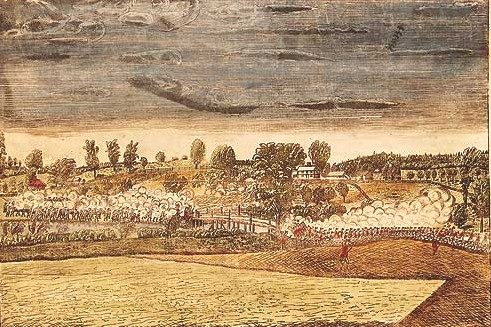
Concord, 1775
The CPoR brief calls Concord "the clearest historical example of fully justified violent, defensive resistance under CPoR."12 Lessons 3 and 4 showed why. The colonists petitioned and were refused, published their defensive terms in the Suffolk Resolves, and met the regulars with militia at their own bridge. They fired after the regulars fired. Every standard has an event in the record to point to.
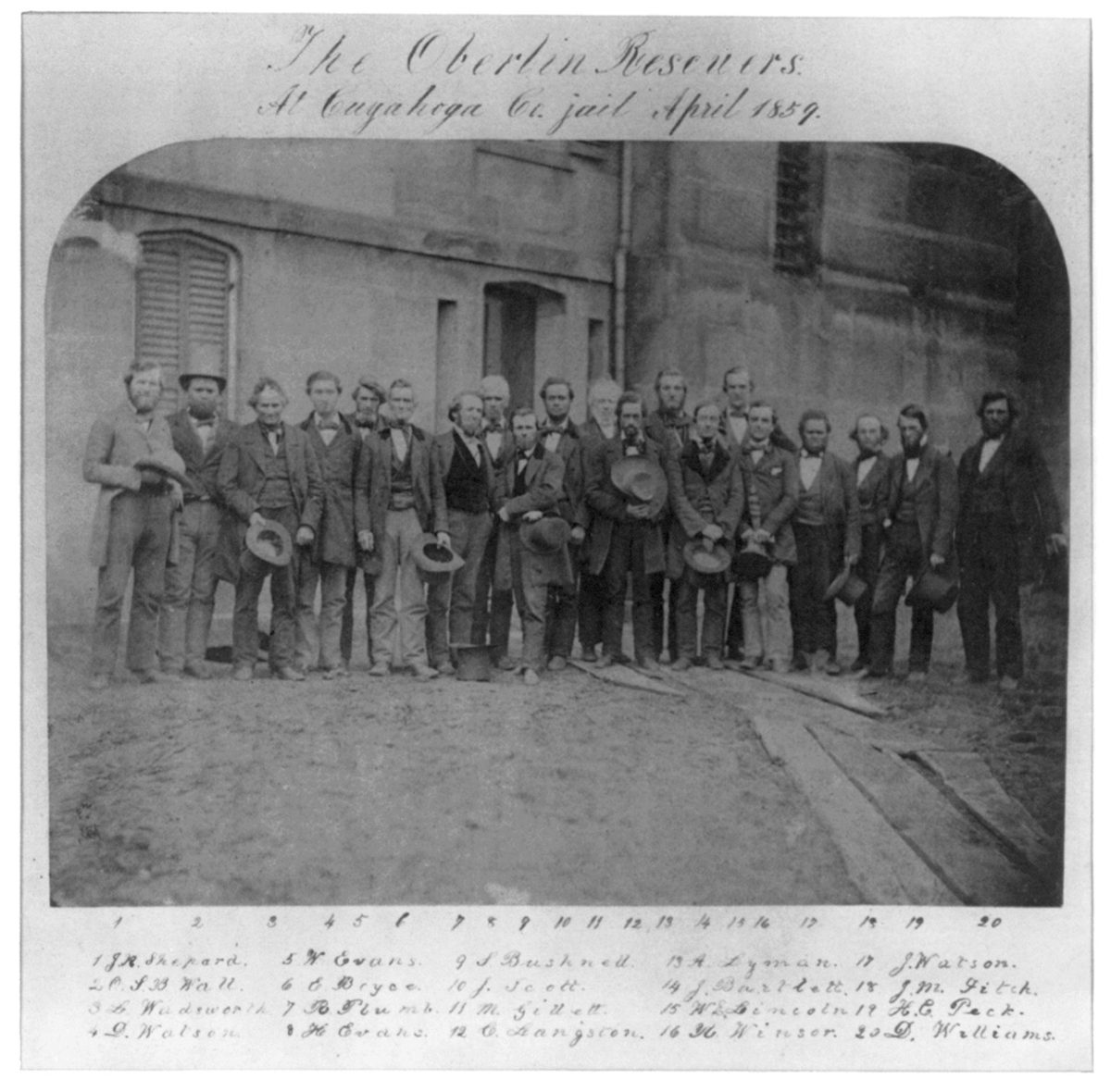
The Oberlin-Wellington Rescue, 1858
Abolitionists took John Price, a man seized under the Fugitive Slave Act, away from federal officers at Wellington, Ohio. The CPoR brief states that "an innocent man was about to be returned to bondage," that the action "was restrained, non-lethal, and clearly defensive," and that peaceful remedies had been denied by Congress and the courts. It broke a federal statute, and the framework still finds that it met all five standards.12 Lesson 5 tells the rest of the story.
The incarceration of Japanese Americans, 1942
This is the case that teaches the most, because force was not used. The CPoR brief concludes that defensive force "may have been morally justifiable," especially against imminent detention or seizure of property, and that Innocence, Imminence and Proportionality were arguably met. But Avoidance and Reasonableness "carry special weight," because resistance would almost certainly have ended in mass tragedy. "That it was not used reflects the extraordinary restraint of the Japanese American community under extreme injustice."12 The lesson drawn is that the absence of violence "preserved a moral high ground," and that the high ground led in time to national reckoning, apology and legal reform. Permission is not obligation. Lesson 6 covers Minidoka and the reckoning.
The Battle of Athens, Tennessee, 1946
Returning veterans in McMinn County armed themselves on election day after deputies of a corrupt county machine carried off ballot boxes. The CPoR brief states that the veterans had tried peaceful appeals, that their aim was to restore lawful voting, and that "Far from insurrection, Athens was an act of civic restoration."12 The Tennessee Encyclopedia's account of the same events records that the veterans took weapons from the local National Guard armory, that the shooting at the jail lasted several hours and ended with dynamite, that rioting went on afterward, and that many residents at the time "abhorred the violent, extralegal actions of the veterans."13 These facts are the ones the Proportionality standard is applied to, and the CPoR brief lists the case among the four that meet all five standards.
Ruby Ridge, Idaho, 1992
Draft 8 of the Concord Principle placed Ruby Ridge beside Waco and said it "approaches full justification."12 Pierson's later assessment, made with the whole record that came out after 1992 in view, goes further. It holds that the Weaver family was justified in defending themselves and their home in the first hours: the exchange of fire at the "Y" on August 21, 1992, and the night and morning that followed, through the sniper shots of August 22. That record is now long. It includes a Justice Department task force report, a Senate subcommittee report, a federal jury's verdicts, a $3.1 million settlement, an FBI official's guilty plea and an en banc opinion of the Ninth Circuit.
The case began with guns and a court date. On October 24, 1989, Randy Weaver handed Kenneth Fadeley, a confidential informant working for the Bureau of Alcohol, Tobacco and Firearms, two shotguns, one with a 13-inch barrel and the other with a 12-3/4-inch barrel. The indictment that followed charged him with making and possessing an unregistered firearm.14 In June 1990 ATF agents asked Weaver to become an informant, and he refused to become a "snitch." He was indicted in December 1990, arrested by agents posing as stranded motorists in January 1991, and told his trial would begin on February 19. The clerk moved it to February 20. Then the U.S. Probation Office sent Weaver a letter giving the date as March 20, 1991. He did not appear on February 20, a bench warrant issued, and on March 14, six days before the date in the letter, a grand jury indicted him for failure to appear. The task force found that the U.S. Attorney's Office "improvidently sought an indictment before March 20, 1991" and "erred in failing to inform the grand jury of the erroneous letter."14 For eighteen months the Marshals Service watched the ridge and planned an arrest away from the cabin.
On the morning of August 21, 1992, six deputy marshals in camouflage scouted the property. "The officers were armed but wore no visible law enforcement identification," the Ninth Circuit later wrote.15 The family's dog, Striker, found them. Kevin Harris, a family friend, Randy Weaver and his son Sammy, 14, followed the dog, armed, and Weaver later said they thought it was after a large animal. At the trail junction called the Y, gunfire broke out. Deputy Marshal Roderick shot Striker. Sammy fired at Roderick. Sammy was hit twice, "once in the arm and once, fatally, in the back," as he ran up the trail toward the cabin.15 Deputy U.S. Marshal William Degan was shot and killed.14
Who fired first is disputed, and the sources say so. The marshals told investigators that Degan and Deputy Marshal Cooper rose to identify themselves and that Harris "wheeled and fired at Degan," after which Roderick shot the dog. Weaver and Harris said the first shot was Roderick's at the dog, that Sammy fired back, that the marshals then shot at Sammy, and that Harris shot Degan to defend the boy. The task force could not settle it: "we have been unable to determine conclusively who fired the first shot during the exchange of gunfire."14 The Senate subcommittee concluded that Harris shot Degan. It also wrote that "the scenario testified to by Harris does seem more plausible than the testimony of the Marshals," and that "It seems plausible that a 14-year old boy, on seeing his dog shot, would have opened fire at the person who shot his dog."16 The Ninth Circuit, sitting en banc in 2001, wrote that the first shot "remains a mystery."15 The task force found no proof that Sammy's shooting was anything other than an accident and found that the marshals did not know he had been hit until the FBI found his body.14
Weaver and Harris went back to the cabin. Later Randy and Vicki Weaver carried Sammy's body to a small building near the cabin, the birthing shed. The FBI's Hostage Rescue Team arrived the next morning and was briefed on special rules of engagement. The version in force on August 22 read, in its first rule: "If any adult male is observed with a weapon prior to the announcement, deadly force can and should be employed, if the shot can be taken without endangering any children."14 The task force found that the sniper who fired on August 22 was operating under these rules. At about 6 p.m. on August 22, Randy Weaver, Harris and Weaver's daughter Sara, 16, walked out toward the shed where Sammy's body lay. FBI sniper Lon Horiuchi, about 200 yards away, fired and hit Randy Weaver in the back. As the three ran for the cabin, Horiuchi fired again at Harris. The bullet went through the glass of the door and struck Vicki Weaver, "who had been standing behind the door cradling an infant in her arms," killing her, and then wounded Harris.15 The infant was her daughter Elisheba, 10 months old.17
The disclosures came over the next nine years. The task force, in its June 10, 1994, report, found that parts of the rules of engagement departed from FBI deadly force policy and "contravened the Constitution of the United States." It found that the first shot met the constitutional standard of objective reasonableness and that the second shot did not, and it concluded the sniper meant to hit Harris and did not see Vicki Weaver behind the curtained door.14 The Senate subcommittee went further on both shots. It found "a reasonable basis to conclude that the Rules of Engagement, more than any fear for the safety of the helicopter, prompted Horiuchi to take the first shot," and it wrote: "The Subcommittee concludes without reservation that the second shot should not have been taken."16 By 2001 the Ninth Circuit could write of the rules, "Everyone now seems to agree that they were clearly unconstitutional."15 The FBI's own after-action critique of Ruby Ridge was destroyed. E. Michael Kahoe, chief of the FBI's Violent Crimes and Major Offenders Section, was charged in October 1996 and pleaded guilty to obstruction of justice for destroying it.18
The trial came first, in Boise in 1993. After 20 days of deliberation, on July 8, 1993, the jury acquitted Harris on all counts. It acquitted Weaver of the murder of Degan, of conspiracy and of the original firearms charge, and convicted him only of failure to appear and of committing an offense while on release. He was sentenced to 18 months.1419 The trial judge, Edward Lodge, fined the government the defense's attorney fees for a lost trial day. The task force records that the court also issued an order fining the FBI and criticizing it for its failure to produce discovery, its failure to obey the court's orders and "its indifference to the rights of the defendant and to the administration of justice."14 Weaver's lawyer, Gerry Spence, pointed to the acquittal on the gun charge and called the case entrapment. ATF Director John Magaw told the Senate in 1995, "Mr. Weaver was not entrapped." The task force had found insufficient evidence that Weaver was illegally entrapped. The Senate subcommittee concluded that the informant's conduct in getting Weaver to sell the shotguns came perilously close to entrapment, if it was not outright entrapment.201421
In August 1995 the Justice Department agreed to pay Weaver and his three daughters $3.1 million to settle their claim over the deaths of Vicki and Sammy.17 In September 2000 the government paid Harris $380,000, without admitting liability.22 In August 1997 the Justice Department declined to bring federal charges against Horiuchi, and on August 21, 1997, Boundary County Prosecutor Denise Woodbury charged him with involuntary manslaughter under Idaho law, along with a separate charge against Harris.1823 A federal district court dismissed the case against Horiuchi on Supremacy Clause immunity. The Ninth Circuit, en banc, reversed on June 5, 2001, and directed that the criminal complaint be reinstated.15 That June the new county prosecutor, Brett Benson, moved to dismiss the charge, and the prosecution ended.24
- October 24, 1989 Weaver gives ATF informant Kenneth Fadeley two sawed-off shotguns.
- June 1990 ATF agents ask Weaver to become an informant. He refuses.
- December 13, 1990 A federal grand jury indicts Weaver on the firearms charge.
- January to February 1991 Weaver is arrested and arraigned. Trial is set for February 19, then moved to February 20. A probation office letter gives the date as March 20.
- February 20, 1991 Weaver does not appear. A bench warrant issues, and on March 14 he is indicted for failure to appear.
- August 21, 1992 At the Y, marshals kill Striker and Sammy Weaver, 14, who is shot in the back. Deputy U.S. Marshal William Degan is killed.
- August 22, 1992 Under the special rules of engagement, an FBI sniper wounds Randy Weaver, then fires into the cabin door, killing Vicki Weaver as she holds her 10-month-old daughter and wounding Kevin Harris.
- August 28 to 31, 1992 Bo Gritz talks with Weaver. Harris surrenders on August 30, the Weavers on August 31.
- July 8, 1993 A Boise jury acquits Harris on all counts and Weaver of murder, conspiracy and the gun charge. Weaver is convicted of failure to appear and an offense while on release.
- October 1993 Weaver is sentenced to 18 months.
- June 10, 1994 The Justice Department's Ruby Ridge Task Force finds parts of the rules of engagement unconstitutional and the second shot unreasonable.
- August 1995 The government agrees to pay the Weaver family $3.1 million.
- September 1995 The Senate subcommittee on terrorism, technology and government information holds hearings.
- December 21, 1995 The subcommittee's report concludes the second shot "should not have been taken."
- October 1996 FBI official E. Michael Kahoe is charged with obstruction for destroying the after-action critique and pleads guilty.
- August 1997 The Justice Department declines to prosecute. Boundary County charges Horiuchi with involuntary manslaughter.
- September 2000 The government settles with Harris for $380,000.
- June 2001 The Ninth Circuit, en banc, reinstates the Idaho case on June 5. The new county prosecutor moves to dismiss it.
Innocence. Pierson's later assessment holds that the family did not start the confrontation of August 21. Armed men without visible identification were on their land. The marshals killed Striker and Sammy, and on the account the Senate subcommittee found more plausible, the first shot was a marshal's, at the dog. On August 22 the family was not fighting anyone. Three people were walking to the shed that held a dead boy's body when the shots came from the ridge. The arrest warrant was lawful process. The framework treats the lawful warrant and the manner of the August 21 and 22 shootings as separate questions, and the Innocence standard is applied to the second.
Imminence. A 14-year-old shot in the back is about as direct and immediate as a threat to a family gets. The next evening, under rules that told snipers they "can and should" kill armed adult men before any call to surrender, a father was shot beside the shed that held his son's body and a mother was killed in her own doorway with a baby in her arms. Nothing about that threat was hypothetical.
Proportionality. Lethal force at the Y answered lethal force, in an exchange of fire in which a boy was shot in the back. After the Y, the family went back inside. The Senate subcommittee described Weaver, Sara and Harris on August 22 as "individuals fleeing headlong into a cabin after they had been shot at."16 Holding a house against people who are shooting into it is defense of the home in its plainest form.
Avoidance. On the trail and in the cabin there was no lawful remedy to try. A family under rifle fire cannot file a motion. The family retreated. The Senate subcommittee found there was "not the kind of immediate or imminent threat of real harm to others that could have justified deadly force" when they ran back to the cabin.16 The framework applies Avoidance to the choices open in those hours, and in those hours the family's choice was retreat.
Reasonableness. This standard asks what an impartial, informed observer would conclude, and at Ruby Ridge that observer now has the record. A federal jury acquitted Harris of every count, including the murder of Degan. The Justice Department's own task force found the second shot failed the constitutional standard and parts of the rules contravened the Constitution. A Senate subcommittee agreed and went further. The government paid $3.1 million to the Weavers and $380,000 to Harris. An FBI section chief pleaded guilty to destroying the bureau's own critique. A public that reads those findings can call the family's defense of its home reasonable without stretching.
The assessment has limits, and Pierson states them. It covers the first hours, from the Y through the shots of August 22. The nine days of standoff that followed, which ended after talks with Bo Gritz and two other private citizens, with Harris surrendering on August 30 and the Weavers on August 31, are a separate question the framework does not decide here.14 The framework does not count the earlier choices as resistance. Selling sawed-off shotguns to an informant is no act of civic defense, and neither is missing a court date. It does note the record on both: a jury acquitted Weaver of the gun charge, the Senate subcommittee found the informant's conduct close to entrapment, and the date in the probation office's letter was wrong. Deputy U.S. Marshal William Degan was killed at the Y while on duty, and a finding that the family's defense was justified does not lessen that loss.
Near misses and failures
The framework assesses several other events. It calls the Boston Massacre tragic but "not structured defensive resistance," because the crowd failed Avoidance and Reasonableness that night. Ruby Ridge in 1992, which Draft 8 grouped with these cases as one that "approaches full justification," is now assessed as justified in its first hours, as the section above sets out. The Branch Davidians at Waco in 1993, in the brief's words, "nears the threshold." It finds that January 6, 2021, "fails to meet the core CPoR standards," with Imminence and Reasonableness unmet and the breach of the Capitol lacking restraint, and that the 2025 riots at federal buildings in Los Angeles fail as well, because arson and vandalism were neither defensive nor proportionate and lawful channels stayed open.12
The near miss needs the full record beside it. At Waco, four ATF agents and six Branch Davidians died in the February 28 raid, and the siege ended on April 19 with the deaths of most of those inside, children among them; in all, 86 people died.25 A student applying the standards should weigh those facts against Innocence and Avoidance and decide whether "near" is the right word. That is the kind of work the framework is meant to force.
Preparing Without Provoking
The framework separates preparation from provocation. Owning firearms, training in civil defense and forming lawful networks of mutual aid "are not in themselves violations of CPoR," so long as the preparation is defensive, transparent and legal. Stockpiling weapons "with the intent to provoke confrontation, intimidate others, or undermine lawful authority violates the Innocence and Reasonableness standards."6 Readiness is lawful. Looking for the fight is not.
Objections and Responses
The Concord Principle includes its own list of objections and responses, set out in full in the document. Four are addressed here.8
It can be twisted. One person's imminent threat is another's conspiracy theory. The framework responds that this is why Reasonableness is public: force "must make moral and civic sense to a just and informed public, not just the resister," and anyone who invokes the principle "without transparency, restraint, and public accountability is not upholding the doctrine they are violating it."
It undermines the rule of law. The response is that the principle exists for the case where the state has abandoned the rule of law, and that while lawful redress works, Avoidance forbids force.
Violence begets violence. The response agrees that it does, which is why force is "a last resort, not a first tool," justified only "when the danger of inaction exceeds the risk of escalation."
It romanticizes Concord. The response is that the examples are rare "precisely because the standard is so demanding," and the principle "warns unless your cause matches the clarity, restraint, and necessity of Concord, you have no license to act."
What the Law Says Today
The five standards are a moral test. They are not a legal defense, and the framework does not claim they are. Idaho, like every state, punishes anyone who "wilfully resists, delays or obstructs any public officer, in the discharge, or attempt to discharge, of any duty of his office," with up to a year in county jail and a $1,000 fine, and more serious charges follow any use of force.26 The ordinary law of self-defense, the source the framework started from, still governs what happens when charges are filed. A citizen who believes an official has crossed the line has the remedies of Lesson 8 first: the petition, the press, the jury, the ballot and the lawsuit. The Concord Principle asks that every one of them be used.
That is the shape of the whole framework. Ordered Liberty teaches that free people keep the right to defend life and liberty against unlawful force, including force wearing a badge. The Concord Principle then sets five standards around that right, and all five must hold.
Learn more
- Pierson, The Concord Principle of Resistance (PDF): The full framework, with Branca's five elements, the Five Core Standards, the historical cases, the questions and answers, and the counterpoints.
- Pierson, Ordered Liberty Reclaimed (PDF): Read section VII, the stages of lawful protest and civic defense, and section VIII, where violent defensive resistance is defined.
- Pierson, The Breach of the Ordered Liberty Framework (PDF): The standard for deciding when an official has breached the order, which is the question that comes before any talk of resistance.
- Pierson, The Doctrine of Ordered Liberty: A Civic Primer (PDF): The short version of the whole framework.
- Tennessee Encyclopedia, Battle of Athens: A two-minute account of McMinn County in 1946, including the parts that make the case hard.
- The Oberlin-Wellington Rescue: The rescue of John Price and the trials that followed.
- Idaho Code 18-705: The state's resisting and obstructing statute, one sentence long.
- Justice Department, Report of the Ruby Ridge Task Force, 1994 (PDF): The department's own review, with both accounts of the Y, the full rules of engagement and its findings on the two shots.
- Idaho v. Horiuchi, 253 F.3d 359 (9th Cir. 2001): The en banc opinion on Idaho's manslaughter case against the FBI sniper. Its notes quote the Senate subcommittee report at length.
- Justice Department release, August 15, 1997: Why no federal charges were brought, and the guilty plea of E. Michael Kahoe.
- Douglas O. Linder, Ruby Ridge Chronology, Famous Trials: A dated timeline from the shotgun sale through 2001, with links to trial documents.
Notes
- Jeff A. Pierson, "The Concord Principle of Resistance: A Framework for Violent, Defensive Resistance," Draft 8, title page and disclaimer. Read it on this site. ↩
- Pierson, "The Concord Principle of Resistance," Draft 8, "Foundations in Legal Self-Defense." Read it on this site. ↩
- Andrew F. Branca, The Law of Self Defense: Principles (Law of Self Defense Press, 2021), as cited in the Concord Principle's citations. ↩
- Pierson, "The Concord Principle of Resistance," Draft 8, "Branca's Five Principles of Self-Defense," including the note on Branca's non-participation and each principle's boundary and implication. Read it on this site. ↩
- U.S. Constitution, Amendment II: "A well regulated Militia, being necessary to the security of a free State, the right of the people to keep and bear Arms, shall not be infringed." Pierson's reading is in the Concord Principle's questions and answers. Read it online. ↩
- Pierson, "The Concord Principle of Resistance," Draft 8, "Appendix: Questions and Answers," including the answers on the Second Amendment, lawful preparation, partial standards, jail or death, and assassination. Read it on this site. ↩
- Pierson, "The Concord Principle of Resistance," Draft 8, "The Five Core Standards for Justified Violent Resistance." Read it on this site. ↩
- Pierson, "The Concord Principle of Resistance," Draft 8, "Appendix: Counterpoints and Responses." Read it on this site. ↩
- Jeff A. Pierson, "Ordered Liberty Reclaimed: A Foundation for Liberty," Rev. 3.21, section VIII, "Violent Defensive Resistance." Read it on this site. ↩
- Pierson, "Ordered Liberty Reclaimed," Rev. 3.21, section VIII, "Violence." Read it on this site. ↩
- Pierson, "Ordered Liberty Reclaimed," Rev. 3.21, section VII, "The Stages of Lawful Protest and Civic Defense." Read it on this site. ↩
- Pierson, "The Concord Principle of Resistance," Draft 8, "Applying CPoR," with the assessments of the Boston Massacre, Concord, the Oberlin-Wellington Rescue, the relocation of Japanese Americans, the Battle of Athens, Ruby Ridge, the Waco siege, January 6 and the 2025 Los Angeles riots. Read it on this site. ↩
- Jennifer E. Brooks, "Battle of Athens," Tennessee Encyclopedia (Tennessee Historical Society). Read it online. ↩
- U.S. Department of Justice, "Report of the Ruby Ridge Task Force to the Office of Professional Responsibility of Investigation of Allegations of Improper Governmental Conduct in the Investigation, Apprehension and Prosecution of Randall C. Weaver and Kevin L. Harris," June 10, 1994, executive summary and sections IV.A and IV.B, for the shotgun sale, the indictment, the trial dates and the probation office letter, both accounts of the Y, the rules of engagement, the findings on the rules and the two shots, the verdict, sentencing and court orders, and the surrender. Read it online. ↩
- Idaho v. Horiuchi, 253 F.3d 359 (9th Cir. 2001) (en banc), decided June 5, 2001, opinion by Judge Kozinski, including notes 1, 2, 5, 6, 19 and 28. Read it online. ↩
- Subcommittee on Terrorism, Technology and Government Information, Senate Committee on the Judiciary, "Ruby Ridge: Report of the Subcommittee," in The Federal Raid on Ruby Ridge, ID: Hearings Before the Subcomm. on Terrorism, Tech., and Gov't Info. of the Senate Comm. on the Judiciary, 104th Cong. 1107 (1995), at 1111 and 1118 to 1120, as quoted in Idaho v. Horiuchi, 253 F.3d 359, notes 1, 2, 19 and 28. Read the quoted passages online. ↩
- The Spokesman-Review (Spokane), September 7, 1995, for Elisheba Weaver's age and the $3.1 million settlement with Randy Weaver and his three daughters. Read it online. ↩
- U.S. Department of Justice, press release 97-337, August 15, 1997, on the decision not to prosecute and on E. Michael Kahoe's obstruction charge and guilty plea. Read it online. ↩
- Associated Press, "White Separatist Randy Weaver Sentenced To 18 Months In Jail," The Seattle Times, October 19, 1993. Read it online. ↩
- Associated Press, report on the Senate Ruby Ridge hearings, The Michigan Daily, September 8, 1995, page 10, for the statements of John Magaw and Gerry Spence. Read it online. ↩
- National Association of Criminal Defense Lawyers, news release, December 21, 1995, summarizing the conclusions of the Senate subcommittee report released that day, including its conclusion on the informant and entrapment. Read it online. ↩
- Michael J. Sniffen, Associated Press, "Settlement reached in Ruby Ridge lawsuit," The Seattle Times, September 23, 2000; and The Spokesman-Review (Spokane), September 23, 2000. Read it online. ↩
- U.S. Department of Justice, press release, August 21, 1997, on the Boundary County complaint against Lon Horiuchi and the separate charge against Kevin Harris. Read it online. ↩
- Associated Press, Daily Herald (Provo, Utah), June 15, 2001; and Douglas O. Linder, "Ruby Ridge Chronology," Famous Trials, entry for June 14, 2001. Read it online. ↩
- "Waco siege," Wikipedia, for the February 28 raid and the April 19, 1993, end of the siege, 86 deaths in all. Read it online. ↩
- Idaho Code 18-705, Resisting and obstructing officers. Read it online. ↩
Terms in this lesson
- Violent defensive resistance
- As defined in Ordered Liberty Reclaimed, the use of limited, targeted physical force by citizens in response to clear, imminent and unlawful harm that cannot otherwise be redressed through lawful means. It is justified only when all Five Core Standards are met.
- Five Core Standards
- The five tests of the Concord Principle of Resistance, adapted from Andrew Branca's elements of lawful self-defense: Innocence, Imminence, Proportionality, Avoidance and Reasonableness. Each must be met in full.
- Innocence (CPoR standard)
- Those resisting must not be the aggressors. They may not provoke, start or unlawfully escalate the conflict.
- Imminence (CPoR standard)
- The threat must be direct, real and immediate, not hypothetical, anticipated or rooted only in historical grievance.
- Proportionality (CPoR standard)
- The force used must match the threat. Lethal force answers only a threat of lethal or severe harm.
- Avoidance (CPoR standard)
- All reasonable, lawful and peaceful alternatives must have been tried or actively denied. If legal redress is available, force is not justified.
- Reasonableness (CPoR standard)
- The decision to use force must be judged reasonable and restrained by an impartial, informed observer, not only felt to be justified by the person acting.
- Threshold of force
- The name for the line that must be crossed before limited, defensive force by citizens is justified. It sits at the top of the four stages of lawful protest and civic defense.
- Rules of engagement
- The written instructions that tell armed agents or soldiers when they may use deadly force. At Ruby Ridge the FBI's special rules said deadly force "can and should" be used against any armed adult male seen before a surrender announcement. The Justice Department task force found parts of them contravened the Constitution.
- Supremacy Clause immunity
- A defense that shields a federal officer from state prosecution when the officer was acting under federal law and did "no more than is necessary and proper in the performance of his duty," in the words the Ninth Circuit quoted. The Ninth Circuit held in 2001 that disputed facts kept Lon Horiuchi from claiming it at that stage.
- Defensive self-protection
- The fourth of the stages of lawful protest: physical restraint or force only when life, liberty or property is directly and unlawfully threatened. Those who start the confrontation are not defenders.
Sources
- Jeff A. Pierson, The Concord Principle of Resistance: A Framework for Violent, Defensive Resistance, Draft 8 (PDF on this site) checked 2026-10
- Jeff A. Pierson, Ordered Liberty Reclaimed: A Foundation for Liberty, Rev. 3.21 (PDF on this site) checked 2026-10
- Jeff A. Pierson, The Breach of the Ordered Liberty Framework (PDF on this site) checked 2026-10
- Idaho Code 18-705, Resisting and obstructing officers checked 2026-10
- Second Amendment, Cornell Legal Information Institute checked 2026-10
- Jennifer E. Brooks, Battle of Athens, Tennessee Encyclopedia checked 2026-10