Lesson 5 of 10 · about 24 minutes
Slavery: The Founding Breach
You'll be able to
- Explain why slavery was a standing contradiction of the Declaration's principles from the first day of the Republic
- Describe what Jefferson, Washington and Franklin each said or did about slavery and where each fell short
- Read the Constitution's three clauses on slavery and the opposing readings of them, including Frederick Douglass's
- Trace the Fugitive Slave Acts of 1793 and 1850 and the forms of resistance they provoked, from jury refusals to the Oberlin-Wellington Rescue
- Say why the framework counts slavery as a breach of ordered liberty and what its view of the courts implies about Dred Scott
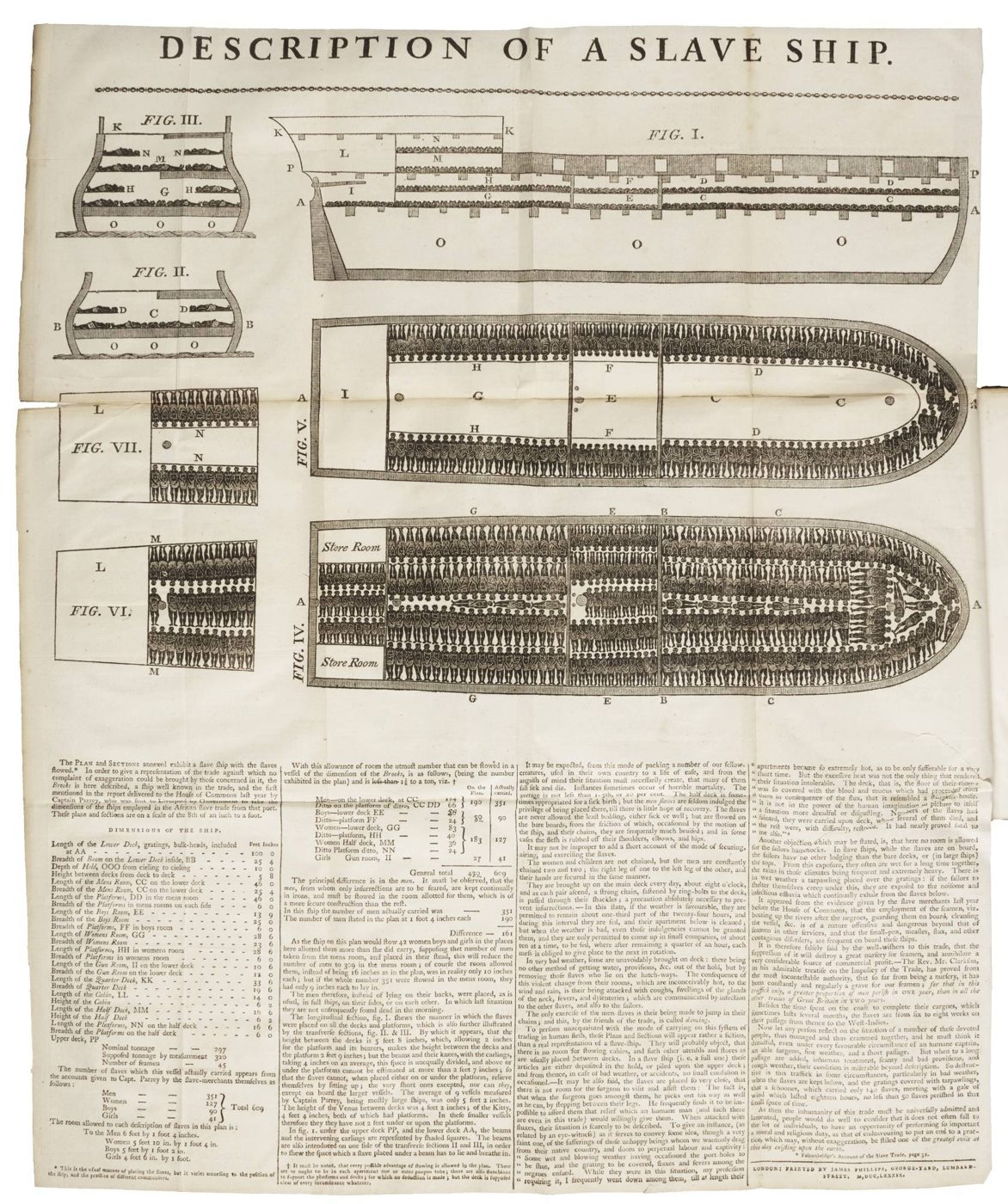
In June 1776, in Philadelphia, Thomas Jefferson wrote a paragraph accusing the King of Great Britain of a crime. The King, he wrote, "has waged cruel war against human nature itself, violating it's most sacred rights of life & liberty in the persons of a distant people who never offended him, captivating & carrying them into slavery in another hemisphere." The King was "determined to keep open a market where MEN should be bought & sold."1
Congress struck the paragraph. Jefferson, looking back in 1821, said why. It was removed, he wrote, "in complaisance to South Carolina and Georgia, who had never attempted to restrain the importation of slaves." He added that "our northern brethren also I believe felt a little tender under those censures; for tho' their people have very few slaves themselves yet they had been pretty considerable carriers of them to others."2
That small episode contains the whole problem of this lesson. A Virginia slaveholder wrote the charge. A Congress of delegates from slaveholding and slave-trading colonies deleted it. What stayed in the document was the sentence the Republic would be measured by for the next two and a half centuries: "all men are created equal."3 This lesson asks what to call the distance between that sentence and the country that existed under it. The framework calls it a breach, in the sense it gives the word, and the lesson shows why it was the gravest one in American history.
What a Breach Means Here
Earlier lessons gave the framework's definition. A breach of ordered liberty is an act by an official outside lawful authority, in violation of the oath to uphold the Constitution and the natural rights of the people.4 Slavery presents a harder case than the ones the framework usually addresses, because for most of American history it was legal. State statutes defined it. Federal statutes protected it. Courts upheld it. If a breach requires an act outside the law, then slavery might seem to fall outside the idea.
It does not, and the reason is the heart of the framework. Its standard for judging power is not law alone but law measured against the Constitution and, above both, against natural law. "Ordered Liberty Reclaimed" states that unjust orders "may appear procedurally legal" and adds: "Obedience to unjust orders may appear lawful, but it is morally disordered."5 Lord Mansfield had said the same thing about slavery in 1772, in a different vocabulary. Slavery, he held, was "so odious, that nothing can be suffered to support it, but positive law."6 In other words, it was never natural or self-justifying. It existed only because officials made statutes to hold it up. Every official who did so, and every law-maker who voted for a fugitive clause, was exercising power past the limit that the Declaration set for any government: to "secure these rights," the rights of "Life, Liberty and the pursuit of Happiness."3
The framework's standard is open to an objection. Some readers hold that a historian should not judge the 1780s by the standards of the 2020s, and that the men of 1787 worked inside political limits that a modern reader can hardly feel. The response is the evidence of this lesson: the men of 1787 did not need later generations to tell them it was wrong. They said so themselves, in writing, in their own time.
The Numbers That Frame Everything
The first census, in 1790, counted 697,681 enslaved people in a nation of 3,929,214. By 1860 the number had grown to 3,953,760 in a population of 31,443,321.7 Slavery did not fade away with the Revolution. It multiplied. The share of the population fell because the free population grew faster.
| Census year | Enslaved | Total population | Enslaved share |
|---|---|---|---|
| 1790 | 697,681 | 3,929,214 | 17.8% |
| 1800 | 893,602 | 5,308,483 | 16.8% |
| 1810 | 1,191,362 | 7,239,881 | 16.5% |
| 1820 | 1,538,022 | 9,638,453 | 16.0% |
| 1830 | 2,009,043 | 12,860,702 | 15.6% |
| 1840 | 2,487,355 | 17,063,353 | 14.6% |
| 1850 | 3,204,313 | 23,191,876 | 13.8% |
| 1860 | 3,953,760 | 31,443,321 | 12.6% |
Read the table as a record of what a standing breach looks like when nobody repairs it. Each decade the number of people held in bondage rose. Each decade the law that held them grew more detailed.
Three Founders, Three Kinds of Failure
Jefferson: Seeing It and Not Acting
Jefferson did not hide from the contradiction. In Notes on the State of Virginia he wrote that "the whole commerce between master and slave is a perpetual exercise of the most boisterous passions, the most unremitting despotism on the one part, and degrading submissions on the other," and that the habit passed to the children who watched it.8 In the same book he wrote the sentence people quote when they want to know whether the founders understood what they were doing: "Indeed I tremble for my country when I reflect that God is just: that his justice cannot sleep for ever."9
Jefferson held people in bondage all his life. The honest summary of him is that he diagnosed the disease more clearly than almost anyone of his generation and did little to cure it. A reader who wants a reason to dismiss the Declaration will find one in that fact. A reader who wants a reason to take it seriously should notice something else. The man who wrote "all men are created equal" saw that his own words condemned the system he lived by, and he said so in print, in a book he wrote in the early 1780s.
Washington: Acting Late and Alone
George Washington's will went further than anything Jefferson did, though not far. It freed the 123 people who were legally his, with one man, William Lee, freed at once, and the rest on Martha's death. The executors were told to carry out these terms "without evasion, neglect or delay." The will did not reach the 153 others who belonged to the estate of Martha's first husband and could not be his to free. Martha Washington signed a deed freeing his people effective January 1, 1801.10
The facts support two readings, and both are fair. Washington did something few planters of his standing did. He also waited until he was dead, and his act freed no one while he lived, and it left the larger system untouched. One lesson of Mount Vernon is that private conscience, however sincere, does not repair a public breach. A republic that depends on the individual consciences of its largest slaveholders to end slavery will wait a long time.
Franklin: The Last Public Act
Franklin had owned slaves as a young man and run advertisements for their sale in the Pennsylvania Gazette. In his last years he became president of the Pennsylvania Society for Promoting the Abolition of Slavery. On February 3, 1790 he signed the Society's petition to the first Congress, asking it to "devise means for removing the Inconsistency from the Character of the American People" and to "promote mercy and justice toward this distressed Race."11
Pro-slavery members denounced it. The House sent it to a committee, which reported on March 5 that the Constitution barred Congress from prohibiting the importation of slaves, or emancipating them, before 1808. The petition was tabled. Franklin died on April 17, 1790.11 Look at that sequence once more. The first Congress under the new Constitution received a petition from the nation's most famous living citizen to consider the "Inconsistency" at the heart of the country. It looked at the clauses described below, said it had no power, and moved on.
When a State Court Says No
The other path was open in the same decade, and it is worth seeing because it shows slavery was not inevitable. In England, in June 1772, Lord Mansfield decided Somerset v Stewart. The decision as reported held that "The state of slavery is of such a nature, that it is incapable of being introduced on any reasons, moral or political; but only positive law," and, because England had no such statute, "the black must be discharged." Scholars disagree about how far the judgment reached, and it had no direct effect in the colonies.6 But it announced a principle, and the principle was that slavery is a creature of statute, not of nature.
Massachusetts applied it. Its Constitution of 1780 declared that "all men are born free and equal." In 1781 Elizabeth Freeman, known as Mum Bett, an enslaved woman in western Massachusetts, sued for her freedom on that language and won. In the Quock Walker cases that followed, which ran from 1781 to 1783, Chief Justice William Cushing instructed a jury in the criminal case: "I think the idea of slavery is inconsistent with our own conduct and Constitution; and there can be no such thing as perpetual servitude of a rational creature, unless his liberty is forfeited by some criminal conduct or given up by personal consent or contract."12 The 1790 census recorded no enslaved people in Massachusetts.12
Here is a court doing what the framework asks courts to do, reading the positive law in light of the higher law and finding that the first cannot lawfully override the second. Notice the comparison with Concord. The same Massachusetts that took the Declaration's language seriously in 1775 took its own constitution's language seriously in 1781. A people who had just fought to keep their own liberty found, in their own law, the reason to free the people in their own households. Most states did not follow. That fact is the story of the next seventy years.
Three Clauses Without the Word
The Constitution of 1787 never uses the word "slave." It does something more careful. Three clauses address the subject in indirect terms.13
Article I, section 2 apportions seats in the House and direct taxes by adding "the whole Number of free Persons" and "three fifths of all other Persons." The enslaved were counted partly, which swelled the representation of the slaveholding states. Article I, section 9 forbade Congress to prohibit "the Migration or Importation of such Persons as any of the States now existing shall think proper to admit" before 1808, and allowed a tax on it of "not exceeding ten dollars for each Person." Article IV, section 2 provided that "no Person held to Service or Labour in one State, under the Laws thereof, escaping into another, shall, in Consequence of any Law or Regulation therein, be discharged from such Service or Labour, but shall be delivered up on Claim of the Party to whom such Service or Labour may be due."
These clauses invite two readings. One holds that they were concessions to slavery, written because the slaveholding delegates would not join a union without them. On this account the clauses are slavery's constitutional protection under euphemism. The 1790 House committee that read the importation clause as a bar to emancipation shows how this reading was understood within a year of ratification.
The other reading belongs to Frederick Douglass. He argued, first in Rochester in 1852 and then at greater length in Glasgow in 1860, that the document has to be read as written, and that as written it does not authorize slavery. He found it "singular that, if the Constitution were intended to be, by its framers and adopters, a slave-holding instrument, why neither slavery, slave-holding, nor slave can anywhere be found in it?" And he declared: "take the Constitution according to its plain reading, and I defy the presentation of a single pro-slavery clause in it."14 In Glasgow he put the rule of interpretation in plain terms: "where human liberty and justice are at stake, the case falls under an entirely different class of rules. There must be something more than history, something more than tradition." And: "Where a law is susceptible of two meanings, the one making it accomplish an innocent purpose, and the other making it accomplish a wicked purpose, we must in all cases adopt that which makes it accomplish an innocent purpose."15
Douglass's argument was legally serious and historically hopeful, and it was not the way most judges read the text in his time. But note what it shares with the framework. Both hold that the Constitution must be read in light of the principles it was written to secure, and that a reading which turns the document against those principles is a misreading, whatever the intentions of some who drafted it. The framework holds that an order that violates "the plain meaning of the Constitution" is unjust by legal definition, which is Douglass's rule of reading turned into a test for orders.16 Douglass's reading concerns what the Constitution ought to mean, and the opposing reading concerns what the framers meant. Both are part of the record.
Law Against Conscience: The Fugitive Slave Acts
Congress put the fugitive clause into force twice. The first act, signed by Washington on February 12, 1793, empowered the claimant "to seize or arrest such fugitive from labour, and to take him or her before any judge of the circuit or district courts of the United States" or before a local magistrate, who on proof of ownership would certify the claim.17
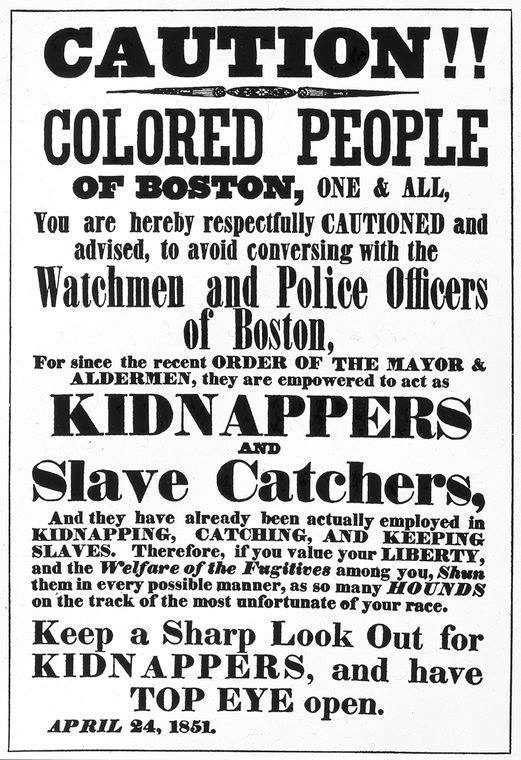
The second, signed by Millard Fillmore on September 18, 1850, was harsher in every respect. The alleged fugitive had no jury and could not testify. The commissioner who heard the case was paid $10 if he ruled for the claimant and $5 if he ruled against. Anyone who helped a fugitive with food or shelter risked six months in prison and a fine of up to $1,000.18 Read the fee schedule twice. A commissioner was paid double to find a person a slave.
This is where the framework's treatment of unjust orders comes into focus. It holds that such orders "violate higher moral law, natural rights, or constitutional limits," and that although they "may appear procedurally legal," the citizen who obeys them is acting in a "morally disordered" way.5 The Act of 1850 fits that description closely. It required citizens to take part in enforcement against their conscience. It denied the accused the most basic protections of a hearing. And it gave the hearing officer a financial reason to rule for the claimant.
Resistance, Lawful and Otherwise
Northerners answered in several ways, from the most lawful to the least. The mildest was legislative: the personal liberty laws that some free states passed, requiring jury trials or forbidding state officers and jails to be used in returns.18 The next was jury refusal. Where a defendant was prosecuted for helping a fugitive, juries sometimes declined to convict, and those refusals undercut the law's enforcement. The third was open rescue.
On September 11, 1851, at Christiana, Pennsylvania, a Maryland slaveholder named Edward Gorsuch came with a federal marshal's party to recover four escaped slaves at the home of William Parker, himself a former slave. Armed Black residents and others met them. Gorsuch was killed. The federal government indicted 41 people for treason. Castner Hanway, a white man, was tried first, and the jury acquitted him after about fifteen minutes. The other charges were dropped.19 On October 1, 1851, in Syracuse, New York, during an antislavery convention, a crowd freed a man named William Henry, called "Jerry," who had been arrested that day under the Act.20 In Boston in 1854 the arrest of Anthony Burns set off demonstrations and violence, and federal troops were used to carry Burns to the ship that took him back to Virginia. Boston sympathizers later bought his freedom.21
Each of these cases raises the question that the Concord Principle of Resistance was written to answer. Is resistance to a law that is itself unjust a defense of order, or an attack on it? The framework's answer is cautious and specific. It does not endorse resistance in general. Violent, defensive resistance is justified only in the rarest circumstances, and "The Concord Principle of Resistance" places only four American episodes in that category. One of them is the Oberlin-Wellington Rescue of 1858.22
Oberlin and Wellington
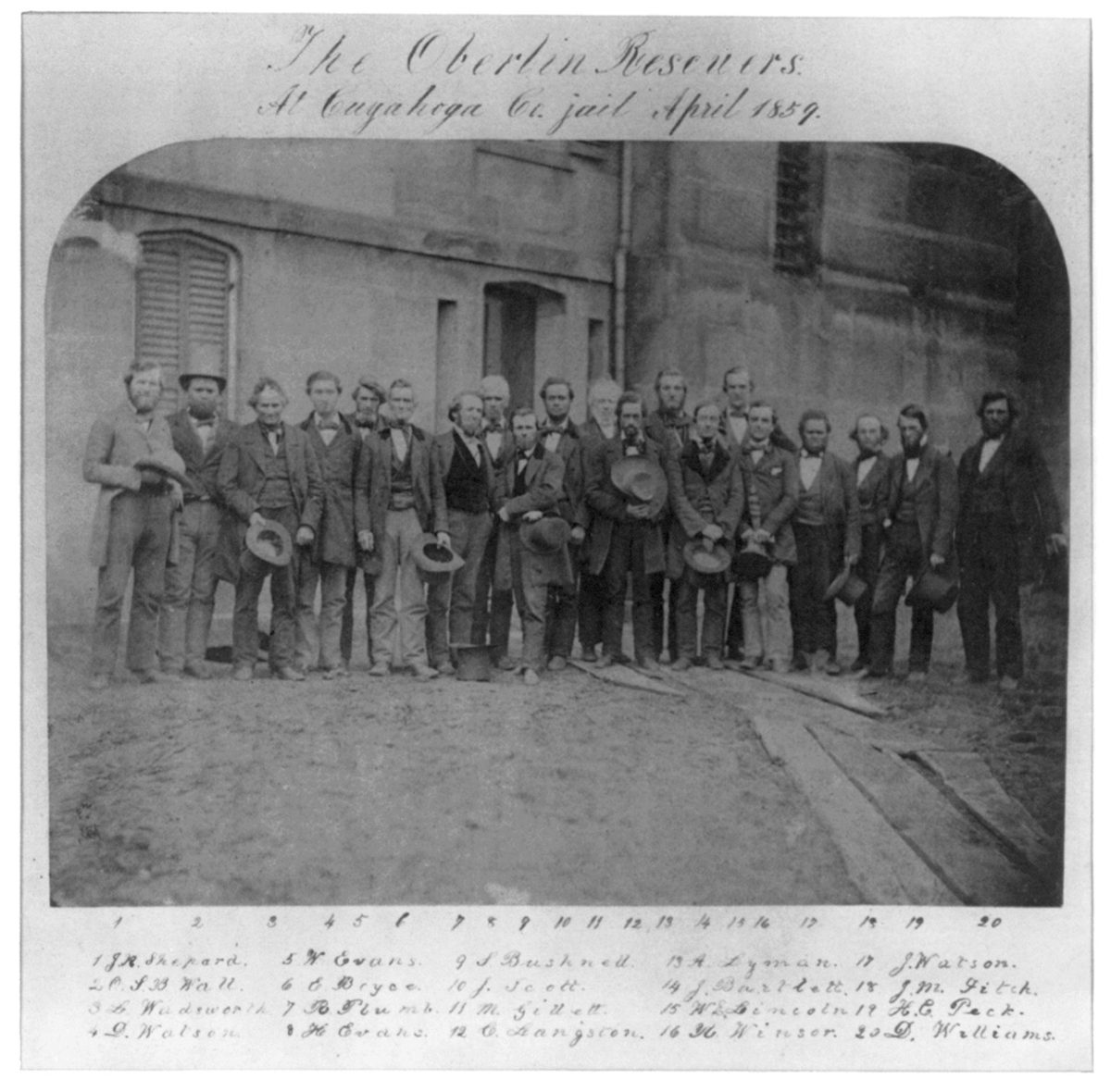
John Price, an escaped slave, was seized at Oberlin, Ohio. To avoid trouble with a town known for its abolitionism, the marshal's party took him to Wellington, the first train stop south. On September 13, 1858 rescuers from Oberlin followed, took him from the officers and sent him on to Canada. Thirty-seven were indicted. Two went to trial, a white man named Simeon Bushnell and a Black man named Charles Henry Langston. The jury convicted both. The judge sentenced Bushnell to 60 days and Langston to 20. The Ohio Supreme Court, by a vote of three to two, upheld the Fugitive Slave Law.23
Before sentence, Langston told the court what he would do: "I must take upon my self the responsibility of self-protection; and when I come to be claimed by some perjured wretch as his slave, I shall never be taken into slavery."24 Here was a Black man, standing before a federal court, saying the law of his country had given him no protection and that he would protect himself.
The framework's assessment of the rescue is plain. It holds that "the moral injustice of slavery and the brutality of the law placed the rescuers on firm ethical grounds," that the threat was direct and immediate because an innocent man was about to be returned to bondage, and that the action was "restrained, non-lethal, and clearly defensive." It adds that the abolitionist movement had long pursued peaceful remedies and had been repeatedly denied by Congress and the courts, and that the rescue would stand up to the judgment of an informed public "both then and now."22 That is a conclusion about a single act, set out in the framework's terms.
The conclusion carries a caution that the framework states openly. The Oberlin rescuers did take a man from federal officers by force, and they violated a federal statute that two courts upheld. The weight of the case rests on what the statute was and on the fact that no one was killed. Christiana, seven years earlier, rested on much the same moral ground, and a man died there. The Concord Principle of Resistance does not list it among its four. The difference between them is exactly the sort of line the framework is built to draw. Moral clarity about the cause does not settle the question of how much force a person may use for it.
Douglass on the Fourth of July
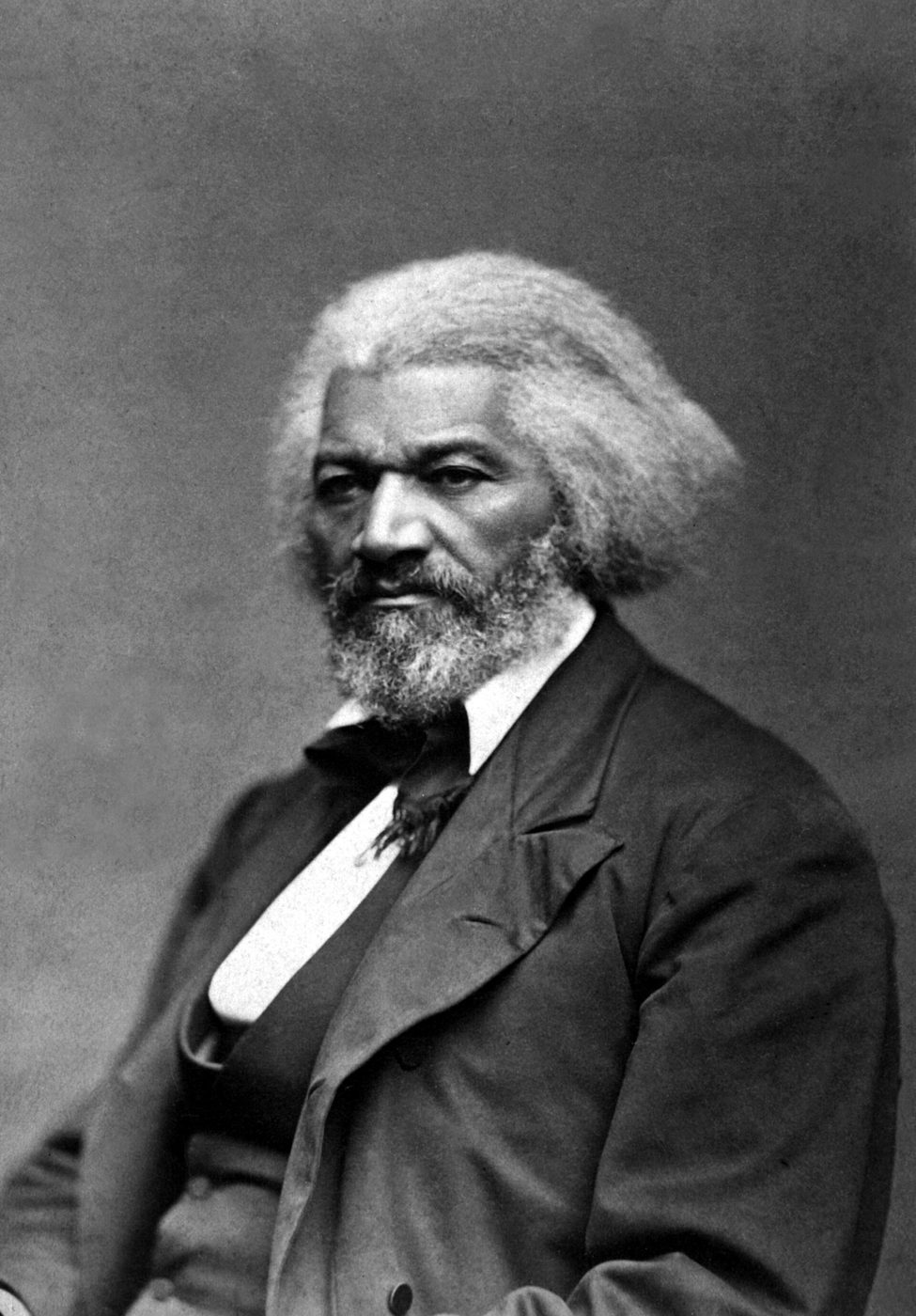
The sharpest indictment of the founding breach came from a man who had escaped it. On July 5, 1852, Douglass spoke to an audience in Rochester, New York, on the meaning of the Fourth for those who were not free. "What, to the American slave, is your 4th of July?" he asked. "I answer: a day that reveals to him, more than all other days in the year, the gross injustice and cruelty to which he is the constant victim."14 He said the celebration was, to the slave, "a sham," the "boasted liberty" an "unholy license," the "shouts of liberty and equality" a "hollow mockery."
And he told his listeners why argument was no longer what was needed: "it is not light that is needed, but fire; it is not the gentle shower, but thunder."14
Note what Douglass did not do. He did not reject the Declaration. He held the country to it. In the same speech, and at greater length in 1860, he argued that the Constitution, rightly read, was no ally of slavery, and that the nation had betrayed its own founding. That is how the framework treats the founders as well. "Ordered Liberty Reclaimed" asks whether the founders were flawed and answers, "Yes. But they also built the architecture that allowed future generations to abolish slavery, expand rights, and correct injustice, without burning the structure down."25 Douglass's career illustrates that sentence. The architecture worked because men like Douglass forced it to.
The Court Fails: Dred Scott
The institution that should have been the last guard of the higher law failed. On March 6, 1857, the Supreme Court decided Dred Scott v. Sandford. Chief Justice Roger Taney held that Black people could not be citizens of the United States and that Congress had no power to bar slavery from the territories. In support of the first holding he described the view that, in his account, prevailed when the Constitution was written: Black people had "for more than a century before been regarded as beings of an inferior order," and "so far inferior, that they had no rights which the white man was bound to respect."26
The sentence deserves a careful reading. Taney was stating what he claimed the framers believed, and his history was contested even then. Two justices dissented, and Justice Benjamin Curtis disputed his history. But Taney was the Chief Justice, and he rested a ruling about the country's fundamental law on it.
The framework names this case as a warning. On the courts, it states that "Judicial rulings are not always morally correct" and points to Dred Scott and Korematsu. Then: "When courts fail, the people retain the right and duty to resist tyranny through nonviolent means or, if all lawful redress is denied, through measured and principled resistance."16 That is the framework's reading of Dred Scott. The case did not end the argument about slavery. It ended the argument that the Court could end it. After 1857 the people of the free states had good reason to doubt that any lawful avenue remained to them, and the resistance of the following years, in Kansas, at Harpers Ferry and in the election of 1860, can be understood as the answer to that doubt. Which acts of that resistance were justified is a question this lesson cannot settle. The Court's failure is the precondition for asking it.
Repair, at a Price
The structure that outlasted the breach was a Constitution amended three times in five years. The Thirteenth Amendment, ratified by December 6, 1865, declared that "Neither slavery nor involuntary servitude, except as a punishment for crime whereof the party shall have been duly convicted, shall exist within the United States, or any place subject to their jurisdiction."27 The Fourteenth, ratified July 9, 1868, made citizens of "All persons born or naturalized in the United States." The Fifteenth, ratified February 3, 1870, barred the denial of the vote on the ground of race.28
Those amendments reversed, in order, the three things the original text had protected: the legal status of the enslaved, their exclusion from citizenship under Dred Scott, and their exclusion from the political community. They did it by amendment, through the ordinary constitutional process, not by an extra-legal act. That is the framework's teaching that the system can be repaired from within. The record also shows that the process needed a war, and that the repair stayed incomplete for a century. That too is a lesson about the cost of leaving a breach alone.
Why This Is the Gravest Breach
The module is built on a claim that a breach of ordered liberty is a wrong committed by those who hold power against those under it, in violation of the terms on which they hold it. By that measure slavery stands alone, for four reasons.
The first is its scale. It held nearly four million people in 1860, and for them every right the Declaration named was denied by law. The second is its duration. It ran from the colonial period through 1865, and its heirs, in law and custom, ran on for another century. The third is that it was lawful. Most breaches discussed in this module were acts that officials took outside the law, and others could point to the law they broke. Slavery was done through the law, with statutes, magistrates, fees and enforcement, and it required ordinary officials to take part in a wrong that most of them could see. The fourth is that the people who made the Republic knew it. Jefferson wrote it down, Franklin petitioned about it, Washington freed his own people at his death, and Massachusetts ended it in its courts. The breach was not a failure of knowledge. It was a failure of will, joined to a political arrangement that rewarded it.
The framework supplies the tools for thinking about this, and the lesson is not that every old wrong justifies new force. It is something quieter. A republic can write its own breach into its law. When it does, the corrective has to come from people who hold the law to its own stated principles, as Douglass did, as Cushing did, as the rescuers at Oberlin did, at a cost to themselves, publicly and without disguise. The next lesson turns to another case in which the government itself was the party at fault, the incarceration of Japanese Americans in 1942, and asks what ordered liberty required of ordinary citizens when it happened.
- June 1772 Lord Mansfield decides Somerset v Stewart.
- June 1776 Jefferson's draft charges the King with the slave trade; Congress strikes it.
- 1781 to 1783 Freeman and the Quock Walker cases in Massachusetts.
- 1787 The Constitution's clauses on apportionment, importation and fugitives.
- Feb. 3, 1790 Franklin signs the abolition petition; the House committee tables it on March 5.
- Feb. 12, 1793 Washington signs the first Fugitive Slave Act.
- 1799 to 1801 Washington's will; Martha Washington frees his people on January 1, 1801.
- Sept. 18, 1850 The second Fugitive Slave Act.
- 1851 to 1854 Christiana, the Jerry Rescue and the Burns case.
- July 5, 1852 Douglass speaks in Rochester.
- Mar. 6, 1857 Dred Scott v. Sandford.
- Sept. 13, 1858 The Oberlin-Wellington Rescue.
- 1865 to 1870 The Thirteenth, Fourteenth and Fifteenth Amendments.
Learn more
- Jefferson's rough draft of the Declaration: The Library of Congress transcription, including the paragraph on the slave trade that Congress struck.
- Franklin's anti-slavery petitions to Congress: The last public act of Benjamin Franklin's life, with the petition and what the House did with it.
- Douglass, What to the Slave Is the 4th of July?: The 1852 Rochester speech in full. Read the whole of it before you read any summary.
- Douglass in Glasgow, 1860: His argument that the Constitution, properly read, is not a pro-slavery document.
- The Oberlin-Wellington Rescue: The rescue, the trials and Charles Langston's speech to the court.
- Dred Scott v. Sandford: The National Archives page with the text of the decision.
- The Thirteenth Amendment: Passage, ratification and text.
Notes
- Thomas Jefferson, "Original Rough draught" of the Declaration of Independence (June 1776), transcription at the Library of Congress. The deleted passage includes: "he has waged cruel war against human nature itself, violating it's most sacred rights of life & liberty in the persons of a distant people who never offended him, captivating & carrying them into slavery in another hemisphere" and "determined to keep open a market where MEN should be bought & sold, he has prostituted his negative for suppressing every legislative attempt to prohibit or to restrain this execrable commerce." Spelling is Jefferson's. Read it online. ↩
- Thomas Jefferson, Autobiography (written 1821), on the Declaration: "The clause too, reprobating the enslaving the inhabitants of Africa, was struck out in complaisance to South Carolina and Georgia, who had never attempted to restrain the importation of slaves, and who on the contrary still wished to continue it. Our northern brethren also I believe felt a little tender under those censures; for tho' their people have very few slaves themselves yet they had been pretty considerable carriers of them to others." Text from the Avalon Project. Read it online. ↩
- Declaration of Independence, July 4, 1776, transcript, National Archives. Read it online. ↩
- Jeff A. Pierson, "The Breach of the Ordered Liberty Framework: A Standard for Identifying and Responding to Constitutional Violations by Public Officials and Private Citizens and Organization Supported or Incited by Public Officials" (July 10, 2025), Abstract and the section on oaths of office and Article VI. Read it on this site. ↩
- Jeff A. Pierson, "Ordered Liberty Reclaimed: A Foundation for Liberty," v3.1 (July 13, 2025), section "Unjust Orders." Read it on this site. ↩
- Somerset v Stewart (K.B. 1772), Lofft 1, 98 Eng. Rep. 499, as printed in "The 1772 Somerset Case," House Divided, Dickinson College: "The state of slavery is of such a nature, that it is incapable of being introduced on any reasons, moral or political; but only positive law, which preserves its force long after the reasons, occasion, and time itself from whence it was created, is erased from memory: it's so odious, that nothing can be suffered to support it, but positive law. . . . the black must be discharged." Reports of the judgment differ in wording. Scholars disagree over its exact reach, and it had no direct effect in the colonies. Read it online. ↩
- Free, enslaved and total population of the United States, 1790 to 1860, from United States census data via the Historical Census Browser, University of Virginia Geospatial and Statistical Data Center, as reproduced by NCpedia. Percentages are computed from those totals. Read it online. ↩
- Thomas Jefferson, Notes on the State of Virginia, Query XVIII, "Manners": "There must doubtless be an unhappy influence on the manners of our people produced by the existence of slavery among us. The whole commerce between master and slave is a perpetual exercise of the most boisterous passions, the most unremitting despotism on the one part, and degrading submissions on the other." Text from the Avalon Project. Read it online. ↩
- Jefferson, Notes on the State of Virginia, Query XVIII: "Indeed I tremble for my country when I reflect that God is just: that his justice cannot sleep for ever." Avalon Project text. Read it online. ↩
- Mount Vernon, "The Status of Slaves in Washington's Will": 123 people were legally Washington's property and covered by the will, with William Lee freed immediately; 153 others belonged to the estate of Daniel Parke Custis and were held for Martha's lifetime use; Martha freed Washington's people by deed, effective January 1, 1801. The will told executors to carry out its terms "without evasion, neglect or delay." Read it online. ↩
- National Archives Center for Legislative Archives, "Benjamin Franklin's Anti-Slavery Petitions to Congress": the petition of the Pennsylvania Society for Promoting the Abolition of Slavery, signed February 3, 1790, asked Congress to "devise means for removing the Inconsistency from the Character of the American People" and to "promote mercy and justice toward this distressed Race"; the House committee reported on March 5, 1790 that the Constitution restrained Congress from prohibiting the importation or emancipation of slaves until 1808, and the petition was tabled; Franklin died April 17, 1790. Read it online. ↩
- "Quock Walker," Wikipedia: a series of three cases from 1781 to 1783 under the Massachusetts Constitution of 1780, which declared "all men are born free and equal"; Elizabeth Freeman (Mum Bett) won her freedom in county court in 1781 on that ground; in the criminal case Commonwealth v. Jennison Chief Justice William Cushing told the jury: "I think the idea of slavery is inconsistent with our own conduct and Constitution; and there can be no such thing as perpetual servitude of a rational creature, unless his liberty is forfeited by some criminal conduct or given up by personal consent or contract." The 1790 census recorded no enslaved people in Massachusetts. Read it online. ↩
- Constitution of the United States, transcript, National Archives: Article I, section 2 ("three fifths of all other Persons"); Article I, section 9 ("The Migration or Importation of such Persons as any of the States now existing shall think proper to admit, shall not be prohibited by the Congress prior to the Year one thousand eight hundred and eight, but a Tax or duty may be imposed on such Importation, not exceeding ten dollars for each Person"); Article IV, section 2 ("No Person held to Service or Labour in one State, under the Laws thereof, escaping into another, shall, in Consequence of any Law or Regulation therein, be discharged from such Service or Labour, but shall be delivered up on Claim of the Party to whom such Service or Labour may be due"). Read it online. ↩
- Frederick Douglass, "What to the Slave Is the 4th of July?" delivered July 5, 1852 to the Rochester Ladies' Anti-Slavery Society. Text: Teaching American History. Read it online. ↩
- Frederick Douglass, "The Constitution of the United States: Is It Pro-Slavery or Anti-Slavery?" Glasgow, March 26, 1860. Text: Teaching American History. Read it online. ↩
- Jeff A. Pierson, "Ordered Liberty Reclaimed: A Foundation for Liberty," v3.1 (July 13, 2025), section on unjust orders and "Who Decides When an Order Is Unjust?", item on the courts. Read it on this site. ↩
- "An Act respecting fugitives from justice, and persons escaping from the service of their masters," 1 Stat. 302 (February 12, 1793), section 3, signed by George Washington: the claimant "is hereby empowered to seize or arrest such fugitive from labour, and to take him or her before any judge of the circuit or district courts of the United States, residing or being within the state, or before any magistrate of a county, city or town corporate." Transcription at Teaching Legal History, University of Nebraska-Lincoln. Read it online. ↩
- "Fugitive Slave Act of 1850," Wikipedia (signed September 18, 1850 by Millard Fillmore): no jury; the alleged fugitive could not testify; commissioners were paid $10 if they found for the claimant and $5 if they did not; anyone aiding a fugitive faced up to six months in prison and a fine of up to $1,000. The article notes that Northern juries acquitted men accused under the law. Read it online. ↩
- "Christiana Resistance," Wikipedia: on September 11, 1851 a federal marshal's party seeking four escaped slaves owned by Edward Gorsuch of Maryland was met with armed resistance at the home of William Parker in Christiana, Pennsylvania; Gorsuch was killed; 41 people were indicted for treason; Castner Hanway, tried first, was acquitted after about 15 minutes of jury deliberation and the other charges were dropped. Read it online. ↩
- "Jerry Rescue," Wikipedia: on October 1, 1851, during the Liberty Party's state convention in Syracuse, New York, a crowd freed William Henry, a 40-year-old cooper from Missouri known as "Jerry," who had been arrested that day under the Fugitive Slave Act. Read it online. ↩
- "Anthony Burns," Wikipedia: arrested May 24, 1854 in Boston under the Fugitive Slave Act of 1850; his case brought large demonstrations and violence; federal troops were used in Boston to escort him to a ship for Virginia; Boston sympathizers later purchased his freedom; he attended Oberlin and became a Baptist preacher. Read it online. ↩
- Jeff A. Pierson, "The Concord Principle of Resistance," Draft 7 (2025), "Oberlin-Wellington Rescue (1858)" in the section on applying the principle. Read it on this site. ↩
- "Oberlin-Wellington Rescue," Wikipedia: John Price, an escaped slave, was arrested in Oberlin, Ohio under the Fugitive Slave Law; on September 13, 1858 rescuers followed the marshal's party to Wellington, took Price from them and sent him on to Canada; 37 rescuers were indicted, two tried (Simeon Bushnell and Charles Henry Langston); Bushnell received 60 days and Langston 20; the Ohio Supreme Court upheld the law by a vote of three to two. Read it online. ↩
- Charles Henry Langston, address to the court, quoted in "Oberlin-Wellington Rescue," Wikipedia: "I must take upon my self the responsibility of self-protection; and when I come to be claimed by some perjured wretch as his slave, I shall never be taken into slavery." Read it online. ↩
- Jeff A. Pierson, "Ordered Liberty Reclaimed: A Foundation for Liberty," v3.1 (July 13, 2025), the answer to the question whether the Founders remain relevant. Read it on this site. ↩
- Dred Scott v. Sandford, 60 U.S. 393 (1857), decided March 6, 1857; Chief Justice Roger B. Taney, describing the view he said prevailed when the Constitution was framed, wrote that Black people "had for more than a century before been regarded as beings of an inferior order ... and so far inferior, that they had no rights which the white man was bound to respect." Quoted in "Dred Scott v. Sandford," Wikipedia (60 U.S. at 407). Read it online. See also National Archives. Read it online. ↩
- Thirteenth Amendment, National Archives: ratified by the necessary three-fourths of the states by December 6, 1865; "Neither slavery nor involuntary servitude, except as a punishment for crime whereof the party shall have been duly convicted, shall exist within the United States, or any place subject to their jurisdiction." Read it online. ↩
- National Archives milestone documents: the Fourteenth Amendment, passed June 13, 1866 and ratified July 9, 1868, grants citizenship to "All persons born or naturalized in the United States"; the Fifteenth, passed February 26, 1869 and ratified February 3, 1870, granted African American men the right to vote. Read it online. ↩
Terms in this lesson
- Positive law
- Law as enacted by a legislature or announced by a court, as distinct from natural law. Lord Mansfield held in 1772 that slavery could exist only by positive law.
- Three-fifths clause
- The rule in Article I, section 2 that counted three fifths of all 'other Persons' in apportioning representatives and direct taxes.
- Fugitive Slave Acts
- Federal laws of 1793 and 1850 that put the Constitution's fugitive clause into force by empowering claimants and federal officers to seize and return escaped slaves.
- Personal liberty laws
- Northern state laws that, among other things, required jury trials or barred state officials from helping return alleged fugitives.
- Jury nullification
- A jury's refusal to convict a defendant who plainly broke a law because the jury finds the law unjust.
- Dred Scott v. Sandford
- The 1857 Supreme Court decision holding that persons of African descent could not be citizens and that Congress could not bar slavery from the territories.
- Reconstruction Amendments
- The Thirteenth (1865), Fourteenth (1868) and Fifteenth (1870) Amendments, which ended slavery, defined citizenship and equal protection, and barred racial limits on voting.
Sources
- Jefferson's rough draft of the Declaration of Independence, Library of Congress checked 2026-10
- Declaration of Independence, transcript, National Archives checked 2026-10
- Constitution of the United States, transcript, National Archives checked 2026-10
- Jefferson, Notes on the State of Virginia, Avalon Project checked 2026-10
- Mount Vernon, The Status of Slaves in Washington's Will checked 2026-10
- National Archives, Benjamin Franklin's Anti-Slavery Petitions to Congress checked 2026-10
- Somerset v Stewart (1772), Wikipedia overview with the reported judgment checked 2026-10
- Quock Walker, Wikipedia overview with Chief Justice Cushing's charge checked 2026-10
- Frederick Douglass, What to the Slave Is the 4th of July? (1852), Teaching American History checked 2026-10
- Frederick Douglass, The Constitution of the United States: Is It Pro-Slavery or Anti-Slavery? (1860), Teaching American History checked 2026-10
- Fugitive Slave Act of 1850, Wikipedia overview checked 2026-10
- Oberlin-Wellington Rescue, Wikipedia overview checked 2026-10
- Dred Scott v. Sandford, Wikipedia overview and National Archives milestone document checked 2026-10