Lesson 10 of 10 · about 22 minutes
Supporting Legitimate Government
You'll be able to
- Explain why Ordered Liberty treats voluntary obedience to just rule as a duty that sits beside the duty to resist injustice
- Summarize what Washington's Farewell Address, Jefferson's first inaugural and Lincoln's Lyceum Address ask of a citizen in a republic
- Describe five everyday duties of citizenship (jury service, voting, taxes, military service, and watching public officials) and the law or text behind each
- Show how accountability and support work together, using Madison's statement of the problem in Federalist No. 51
- Describe how Minoru Yasui challenged a law he thought unjust while offering to serve the country that enforced it
The first lessons in this series asked what limits legitimate authority and when a free people may resist. This one asks what a free people owes a government that stays inside those limits. Resistance is half of ordered liberty, and the other half is much more common in the daily life of a republic: serving on the jury, casting the ballot, paying what is owed, obeying a law one disagrees with and watching the people who administer it.
The Other Half of the Duty
Ordered Liberty puts the two halves in one sentence. In the Ordered Liberty Reclaimed framework, "Obedience is a civic virtue only when the law is just, the authority is legitimate, and the conscience is free."1 The final paragraph of the same appendix reads: "citizens must submit to rightful law, and they must resist unlawful power. The measure of a free people is not whether they obey it is what they are willing to obey, and why."1 The first clause, the duty to submit to rightful law, is as much a part of the framework as the Concord Principle of Resistance.
The framework calls the first clause voluntary obedience to just rule. Citizens, it states, "are not morally bound to every law simply because it is codified, they are bound to obey only those laws that are just." It adds that voluntary obedience "is a sign of moral health in a republic: it means people still recognize just authority and submit to it freely, not under duress."2 A citizen who obeys because a police officer is watching has not yet done anything that distinguishes a free country from a prison. A citizen who stops at a red light at two in the morning on an empty road has.
The obligation runs in both directions. Ordered Liberty lists five core expectations, and the first is moral parity: "Neither side has a moral exemption, rights and duties apply equally and are judged by the same ethical standard."3 Another is mutual restraint. "The strength of a free republic lies not in uniform agreement, but in mutual restraint, when neighbors do not exploit one another, when leaders serve rather than rule, and when law protects without overreaching."4 Citizens who tear down the order that protects them break the covenant, as do officials who ignore their oaths. The framework counts violence for political gain as a breach of duty "whether from the mob, the magistrate, or the algorithm," and holds the mob to the same measure as the magistrate.5
Christian readers will recognize the two halves in scripture. Paul wrote to the Romans: "Let every person be subject to the governing authorities. For there is no authority except from God, and those that exist have been instituted by God."6 He gave a reason beyond fear: "one must be in subjection, not only to avoid God's wrath but also for the sake of conscience."6 Elsewhere in the New Testament, Peter and the apostles answered the authorities of their day, "We must obey God rather than men."7 Ordered Liberty does not choose one verse over the other. It reads them together, with a presumption of obedience that conscience can overcome only when a law or order is actually unjust. The rest of this lesson concerns the presumption.
What Washington and Jefferson Asked
Washington on the duty to obey
George Washington's Farewell Address of September 19, 1796 is better known for its warnings about foreign entanglements, but it also contains one of the plainest statements of civic duty in American writing. "The basis of our political systems is the right of the people to make and to alter their constitutions of government. But the Constitution which at any time exists, till changed by an explicit and authentic act of the whole people, is sacredly obligatory upon all." Then comes the sentence that links the two halves: "The very idea of the power and the right of the people to establish government presupposes the duty of every individual to obey the established government."8
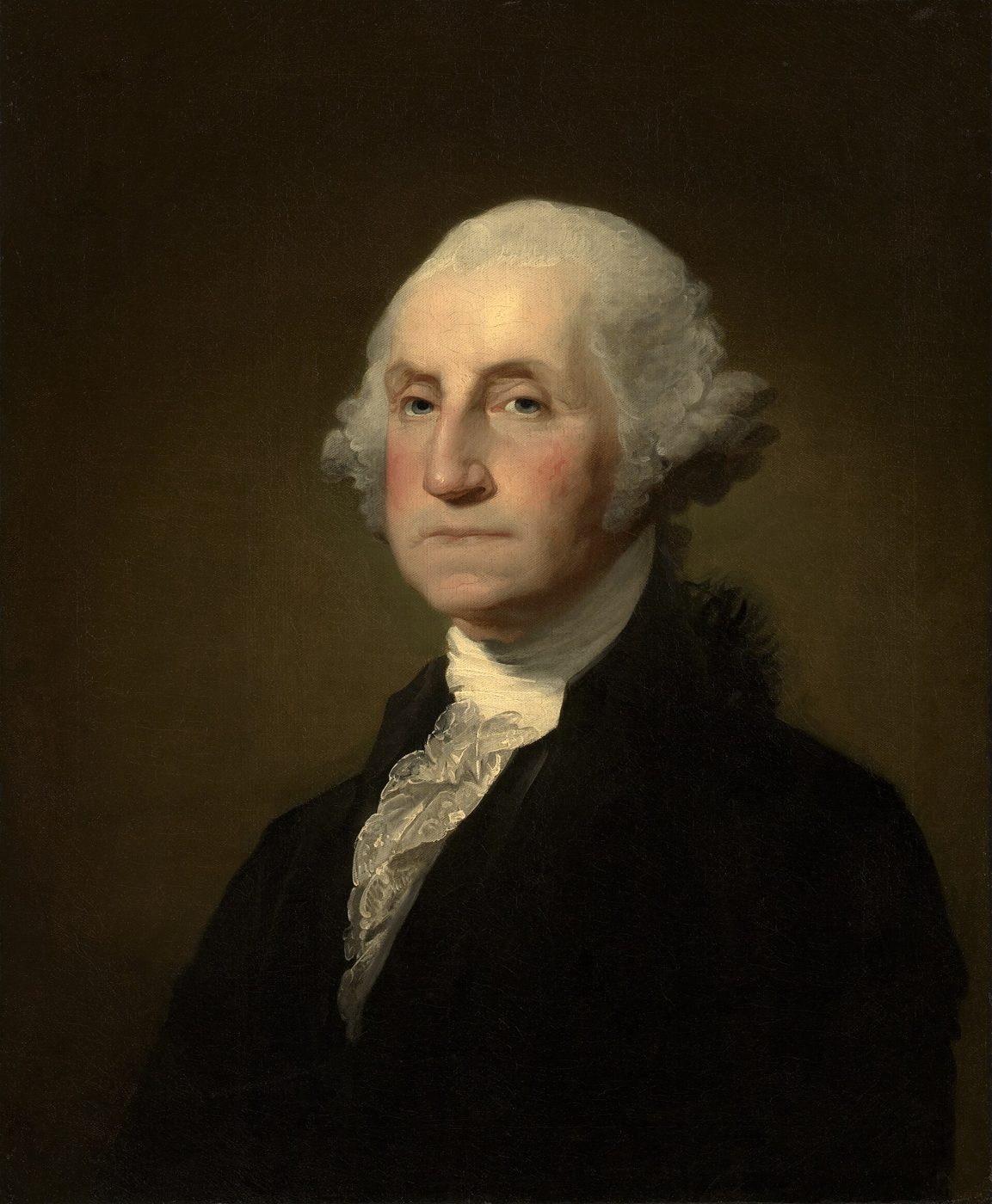
Washington drew two practical conclusions. The first concerned change. If the people believe the distribution of constitutional powers is wrong, "let it be corrected by an amendment in the way which the Constitution designates. But let there be no change by usurpation; for though this, in one instance, may be the instrument of good, it is the customary weapon by which free governments are destroyed."10 A bad law can be repealed and an inadequate constitution can be amended. A citizen who takes the power to rewrite either one without asking the people has done what Washington feared even when the cause is attractive.
The second conclusion concerned faction. He warned against "combinations and associations, under whatever plausible character, with the real design to direct, control, counteract, or awe the regular deliberation and action of the constituted authorities," because they "serve to organize faction" and "to put, in the place of the delegated will of the nation the will of a party, often a small but artful and enterprising minority of the community."11 It is worth reading the sentence with care. The target of the passage is pressure that stands in for the regular process.
Ordered Liberty adds one condition to Washington's. The duty to obey the established government presupposes that the government is acting within the limits the people set for it. Washington's own wording points the same way, since the Constitution he called "sacredly obligatory upon all" is a text that binds officials as well as citizens. A public servant who exceeds the text has stepped outside the thing the duty was owed to.
Jefferson on losing an election
On March 4, 1801 Thomas Jefferson took the oath after a hard contest. His first inaugural acknowledged that "the animation of discussions and of exertions has sometimes worn an aspect which might impose on strangers," and it did not gloat. He said the contest "being now decided by the voice of the nation, announced according to the rules of the Constitution, all will, of course, arrange themselves under the will of the law, and unite in common efforts for the common good."12
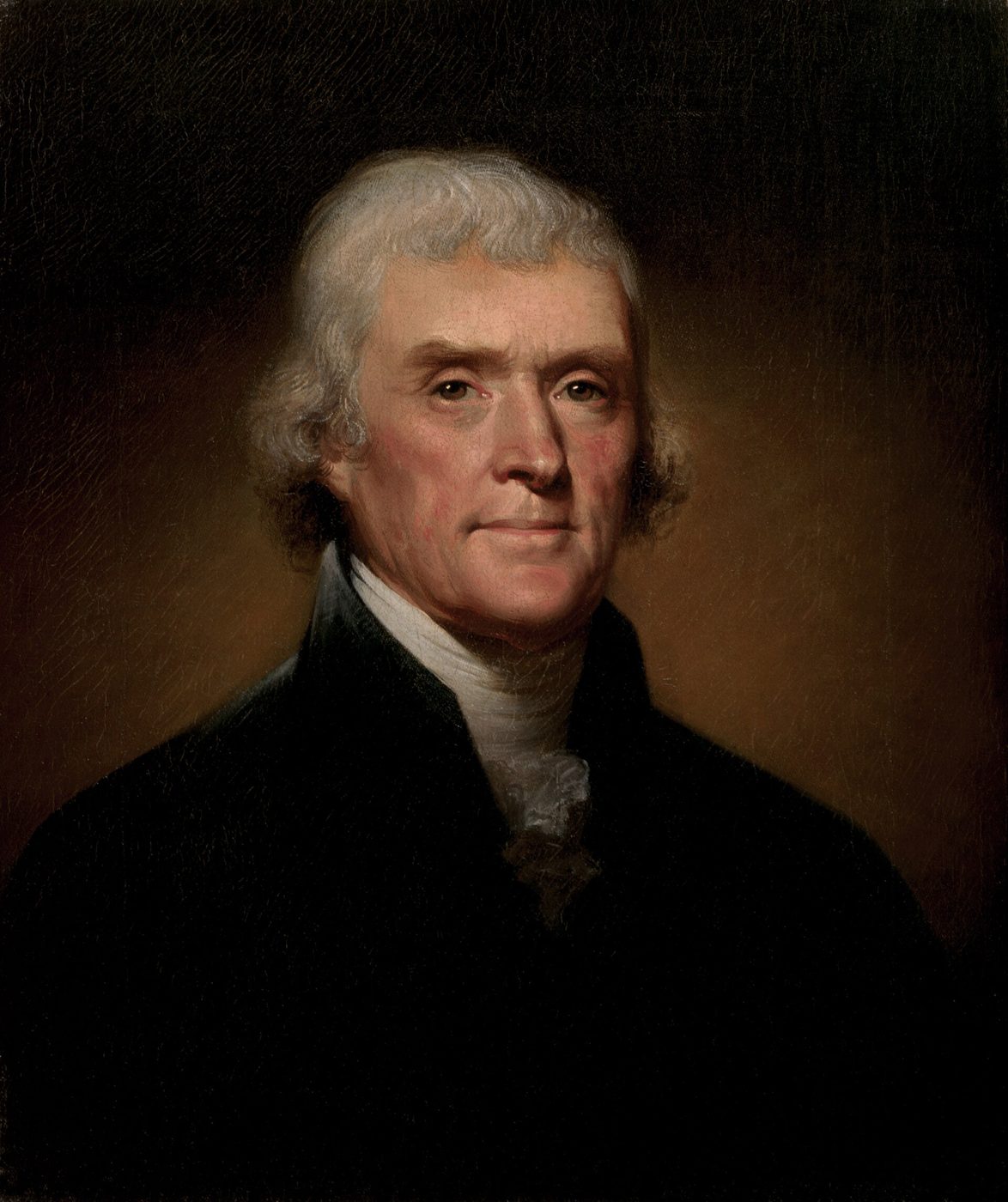
He put two things in the same breath. The majority must prevail, and the majority must be restrained. "Though the will of the majority is in all cases to prevail, that will to be rightful must be reasonable; that the minority possess their equal rights, which equal law must protect, and to violate would be oppression."12 He listed the essential principles of the government as he understood them, and two bear on this lesson. One was "a jealous care of the right of election by the people," which he called "a mild and safe corrective of abuses." The other was "absolute acquiescence in the decisions of the majority, the vital principle of republics, from which is no appeal but to force."12 A republic runs on a bargain. Losers accept the result because they can try again, and winners rule gently because they might lose next time.
Jefferson's line for the day was "We are all Republicans, we are all Federalists."12 The sentence is nearly always quoted without its context. He had just said that "every difference of opinion is not a difference of principle," and in the next breath he allowed that anyone who wished to dissolve the Union or change its form could "stand undisturbed as monuments of the safety with which error of opinion may be tolerated where reason is left free to combat it."12 Loyalty to the system did not mean agreement. He proposed to answer disagreement with argument.
He also gave the citizen a job in the system's defense. A republican government, he said, was the one "where every man, at the call of the law, would fly to the standard of the law, and would meet invasions of the public order as his own personal concern."12 Public order was not something delegated to a police force and then forgotten. It belonged to everyone.
The Everyday Duties
None of that is abstract. The duties of a free citizen are mostly small, mostly unglamorous and mostly written into law, and they are the way a republic's legitimacy gets renewed.
The jury box
Lesson 08 opened with Edward Bushell, jailed for a verdict. His jurors performed the oldest civic duty in the common-law tradition. Federal law today puts the duty in plain words: "It is the policy of the United States that all litigants in Federal courts entitled to trial by jury shall have the right to grand and petit juries selected at random from a fair cross section of the community." It also says that "all citizens shall have the opportunity to be considered for service on grand and petit juries in the district courts of the United States, and shall have an obligation to serve as jurors when summoned for that purpose."14 The statute states the right and the obligation in the same sentence. A defendant's right to be judged by neighbors means nothing unless the neighbors come when called.
The ballot and the tax bill
Jefferson's "jealous care of the right of election" is, in modern terms, turnout.
Taxes are the duty people like least, and the oldest text on the subject is blunt. After telling Christians to be subject to the authorities, Paul wrote: "For because of this you also pay taxes, for the authorities are ministers of God, attending to this very thing. Pay to all what is owed to them: taxes to whom taxes are owed, revenue to whom revenue is owed, respect to whom respect is owed, honor to whom honor is owed."6 A secular reader can drop the theology and keep the logic: services that protect everyone have to be paid for by someone. Jefferson's inaugural supplies the limit. He wanted "a wise and frugal Government, which shall restrain men from injuring one another, shall leave them otherwise free to regulate their own pursuits of industry and improvement, and shall not take from the mouth of labor the bread it has earned."12 A citizen can pay promptly and also ask what the money is for. The duties of paying and of watching do not conflict.
Service
A citizen's service in uniform is the highest form of the duty, and the Japanese American example from lesson 06 shows what it can cost. The Commission on Wartime Relocation and Internment of Civilians records that approximately 33,000 Nisei served in the military during World War II, many of them from families still confined in the camps. Of the 442nd Regimental Combat Team, the commission wrote that in seven major campaigns it "took 9,486 casualties," including 600 killed, and that more than 18,000 men served with the unit. It added that "their valor and the public tributes heaped upon them did much to hasten the acceptance of ethnic Japanese released from the camps."15
The 442nd's record did not make the incarceration just. The unit has a counterpart in the Heart Mountain resisters of lesson 08: sixty-three Nisei resisted the draft there, fifty-one saying they would serve if their citizenship rights were restored. They were convicted and sentenced to three years in federal prison.16 Both groups were citizens answering a government that had wronged them. One group offered service and the other refused it, and each was acting on a view of what the Constitution required. A fair reader should resist ranking them by neat formula. It is enough to see that a country can be served well by people who have good reason to resent it.
Watching the people in charge
A citizen who pays, votes and serves still has the work of watching. Ordered Liberty makes this a named duty. In The Ordered Liberty Papers it is the duty of scrutiny: "Authority is never exempt from judgment." The duty means citizens "must examine policies, test claims, and question leaders in light of truth," and it keeps rulers from becoming "untouchable."17 It is paired with a duty of fidelity, which is the duty to keep one's word, and with a duty of justice, which is described as respecting "life, property, promises, and reputation."18 Keeping one's word and checking whether officials keep theirs are, in this view, parts of one habit.
Idaho law gives scrutiny its tools. The Public Records Act says: "Every person has a right to examine and take a copy of any public record of this state and there is a presumption that all public records in Idaho are open at all reasonable times for inspection except as otherwise expressly provided by statute."19 The Open Meetings Law begins with a statement of principle that reads like a statement of the duty of scrutiny: "The people of the state of Idaho in creating the instruments of government that serve them, do not yield their sovereignty to the agencies so created. Therefore, the legislature finds and declares that it is the policy of this state that the formation of public policy is public business and shall not be conducted in secret."20 A citizen who attends a school board meeting, reads a budget or files a records request is performing the duty in its most literal form.
| Duty | Where it is written | What it supports |
|---|---|---|
| Obeying just law | Washington, Farewell Address8 | The established government |
| Serving on a jury | 28 U.S.C. section 186114 | Trial by neighbors |
| Voting and accepting the result | Jefferson, First Inaugural12 | Peaceful change of rulers |
| Paying taxes | Romans 13:6-76 | Common protection |
| Military service | The 442nd Regimental Combat Team15 | Defense of the country |
| Watching officials | Idaho Code 74-102 and 74-2011920 | Accountability |
Support Without Servility
Someone may fairly object here. A lesson about supporting government can sound like a lesson in deference, and the earlier lessons in this series, on slavery and on the incarceration of Japanese Americans, show that obedience has not always been safe. The objection has force. Lincoln's own Lyceum Address, for example, urged that "reverence for the laws" be "breathed by every American mother to the lisping babe that prattles on her lap," and that it "become the political religion of the nation."21 That language was meant to answer the lynch mobs Lincoln described in the same speech. Read in a different context it could be used to demand silence from people with real grievances.
Lincoln anticipated part of the problem. He added that bad laws, "if they exist, should be repealed as soon as possible, still while they continue in force, for the sake of example, they should be religiously observed."21 A citizen was to obey while working to change the law. Ordered Liberty agrees on the order, and it adds the conditions in lesson 08 for the rare case in which a law is so unjust that conscience forbids compliance. Even then it asks for an open, nonviolent act with the penalty accepted. The presumption of obedience is what keeps civil disobedience meaningful. When nobody normally obeys, a refusal makes no statement.
Madison supplied the reason the two duties belong together. In Federalist No. 51 he wrote: "If men were angels, no government would be necessary. If angels were to govern men, neither external nor internal controls on government would be necessary. In framing a government which is to be administered by men over men, the great difficulty lies in this: you must first enable the government to control the governed; and in the next place oblige it to control itself."22 The sentence has two verbs, enable and oblige, and a citizen who gives only one of them the whole attention produces either a tyranny or a mess. Citizens who cheat the tax collector, evade jury service and treat every official as an enemy weaken the first. Citizens who never read a budget, never attend a meeting and never ask a question weaken the second.
The Ordered Liberty Papers make the same point in their own terms, and quote Madison's line about ambition under the duty of scrutiny.17 The framework holds that the citizen who supports and the citizen who scrutinizes are the same citizen. Support gives government the authority to act. Scrutiny keeps the authority in the place the people put it. Ordered Liberty Reclaimed states that the covenant "assumes shared accountability and voluntary, not coerced, participation in civic life."3 A government that cannot rely on its citizens cannot protect them. A government that no one watches cannot be trusted with the protection.
A Citizen in Portland
Minoru Yasui is a good person to end with, because he did most of the things this lesson describes and was punished for one. The Supreme Court's summary of his record is short. He was born in Oregon in 1916, attended the public schools there, earned his bachelor's and law degrees at the University of Oregon, and was a member of the Oregon bar and a second lieutenant in the Army Infantry Reserve. He had worked for the Japanese Consulate in Chicago, resigned on December 8, 1941 and "immediately offered his services to the military authorities."23
On March 28, 1942 he broke the curfew that Lieutenant General J. L. DeWitt had imposed on people of Japanese ancestry in Portland. The Court recorded that he "had discussed with an agent of the Federal Bureau of Investigation the advisability of testing the constitutionality of the curfew; and that when he violated the curfew order he requested that he be arrested so that he could test its constitutionality."23 He walked the downtown streets after 8 p.m. so that there would be a case. He was jailed for nine months, and then he was sent to the Minidoka center in Idaho.25
The Supreme Court upheld the curfew as applied to citizens in 1943, and Yasui lost.23 His conviction was later vacated, and he died in 1986. In 2015 he was posthumously awarded the Presidential Medal of Freedom.25 In 1981 he told the Commission on Wartime Relocation and Internment of Civilians what had moved him: "to allow our government to act on the basis of one's ancestry to go unchallenged was to betray all that America and the United States had stood for." He said he "could not permit myself to stand idly by and allow this to be amended by adding 'except in time of war, and if you are of Japanese ancestry.'"25
Yasui resigned a job to offer his service, chose a lawful way to test the order and went to jail rather than flee. He treated the government as one he owed something to and also as one that owed him something. Ordered Liberty describes the conduct in the terms this series has used since lesson 01: obedience to just rule where the rule was just, and nonviolent, public, accepted refusal where it was not. The Supreme Court did not agree with him. The conviction was vacated later, and the country honored him after his death.
Learn more
- Washington's Farewell Address: Read the paragraphs on the duty to obey the established government and on the spirit of party. Both are short.
- Jefferson's First Inaugural: The speech that closed the election of 1800, including the sentence about Republicans and Federalists.
- Lincoln's Lyceum Address: Lincoln at twenty-eight on what keeps free institutions alive.
- Federalist No. 51: Madison on why a government must be strong enough to rule and bound enough to be safe.
- The federal jury policy: Two sentences that state a citizen's right and obligation to serve.
- Idaho's Public Records Act: The right to examine and copy a public record, with the rules for making a request.
- Personal Justice Denied, chapter 10: The commission's account of Nisei military service and the 442nd Regimental Combat Team.
- Yasui v. United States: The short opinion that records Yasui's background and his request to be arrested.
Notes
- Jeff A. Pierson, "Ordered Liberty Reclaimed: A Foundation for Liberty," v3.1 (July 13, 2025), draft appendix, "The Founders' View of Obedience," the concluding paragraph. The appendix also quotes sayings attributed to Jefferson and Franklin without a source citation, and this lesson does not rely on them. Read it on this site. ↩
- Jeff A. Pierson, "Ordered Liberty Reclaimed: A Foundation for Liberty," v3.1 (July 13, 2025), section V, "Mutual Terms of Civic Relationship," the passage on voluntary obedience to just rule. Read it on this site. ↩
- Jeff A. Pierson, "Ordered Liberty Reclaimed: A Foundation for Liberty," v3.1 (July 13, 2025), section I, the list of five core expectations, which includes moral parity, covenantal structure, mutual restraint, and the stages of protest and redress. Read it on this site. ↩
- Jeff A. Pierson, "Ordered Liberty Reclaimed: A Foundation for Liberty," v3.1 (July 13, 2025), section V, the passage on the strength of a free republic and mutual restraint. Read it on this site. ↩
- Jeff A. Pierson, "Ordered Liberty Reclaimed: A Foundation for Liberty," v3.1 (July 13, 2025), concluding section: "violence for political gain whether from the mob, the magistrate, or the algorithm is a breach of duty." Read it on this site. ↩
- Romans 13:1-7, English Standard Version. Read it online. ↩
- Acts 5:29, English Standard Version. Read it online. ↩
- George Washington, Farewell Address (September 19, 1796), the paragraph that begins "The basis of our political systems." Avalon Project. Read it online. ↩
- Gilbert Stuart, portrait of George Washington (the Williamstown portrait), via Wikimedia Commons, file "Gilbert Stuart Williamstown Portrait of George Washington.jpg." ↩
- Washington, Farewell Address, the paragraph on the distribution of constitutional powers, which says a perceived wrong "be corrected by an amendment in the way which the Constitution designates." ↩
- Washington, Farewell Address, the paragraphs on "combinations and associations" and on the spirit of party. Avalon Project. ↩
- Thomas Jefferson, First Inaugural Address, March 4, 1801. Avalon Project. Read it online. ↩
- Rembrandt Peale, portrait of Thomas Jefferson, 1800, White House Historical Association, via Wikimedia Commons, file "Official Presidential portrait of Thomas Jefferson (by Rembrandt Peale, 1800).jpg." ↩
- 28 U.S.C. section 1861, "Declaration of policy." Read it online. ↩
- Commission on Wartime Relocation and Internment of Civilians, Personal Justice Denied, chapter 10, on Nisei military service. The chapter's text, as scanned, gives "approximately 33,000" Nisei in the military, and for the 442nd Regimental Combat Team 9,486 casualties in seven major campaigns, including 600 killed, with more than 18,000 men serving in the unit. Read it online. ↩
- Commission on Wartime Relocation and Internment of Civilians, Personal Justice Denied, chapter 9, on the Heart Mountain draft resisters, discussed in lesson 08. Read it online. ↩
- Jeff A. Pierson, "The Ordered Liberty Papers" (2025), "Duty of Scrutiny," which quotes Federalist No. 51 on ambition. Download it from this site (Word). ↩
- Jeff A. Pierson, "The Ordered Liberty Papers" (2025), "Duty of Fidelity" and "Duty of Justice." Download it from this site (Word). ↩
- Idaho Code section 74-102(1), Public Records Act, "Public records, Right to examine." Read it online. ↩
- Idaho Code section 74-201, Open Meetings Law, "Formation of public policy at open meetings," added 2015. Read it online. ↩
- Abraham Lincoln, Address before the Young Men's Lyceum of Springfield, January 27, 1838. Teaching American History, Ashbrook Center. Read it online. ↩
- James Madison, Federalist No. 51. Avalon Project. Read it online. ↩
- Yasui v. United States, 320 U.S. 115 (argued May 10-11, decided June 21, 1943), Chief Justice Stone for the Court. The facts in this lesson about his birth in 1916, education, bar membership, Army Reserve commission, resignation from the consulate on December 8, 1941, and request to be arrested come from paragraph 3 of the opinion. Read it online. ↩
- Portrait of Minoru Yasui, National Park Service, via Wikimedia Commons, file "Minoru Yasui NPS.jpg." ↩
- Doug Brown, ACLU of Oregon, "When Taking a Walk at Night Was an Act of Civil Disobedience" (March 28, 2019), the source for the nine-month jail sentence, his time at the Minidoka center, the later vacating of the conviction, the 2015 Presidential Medal of Freedom, his death in 1986, and the text of his 1981 testimony. The ACLU of Oregon is an advocacy group that supported the Minoru Yasui Day law. Read it online. ↩
Terms in this lesson
- Voluntary obedience
- In the Ordered Liberty framework, obedience that comes from conscience and from recognizing that a law is just and was made by lawful authority, in place of obedience extracted by fear.
- Mutual restraint
- The shared limit on both sides of the civic covenant: citizens do not exploit liberty for selfish ends, and officials do not stretch their power past its lawful bounds.
- Faction
- Washington's word for a party or combination that puts its own will in place of the will of the nation. He warned that it can use constitutional forms to undermine a government.
- Usurpation
- Taking a power one has not been given. Washington's rule was that a constitution be changed by the amendment process and never by usurpation.
- Petit jury
- The trial jury that decides a case. Federal law says citizens have 'an obligation to serve as jurors when summoned for that purpose.'
- Public record
- A writing held by a public agency. Idaho law gives every person a right to examine and copy one, with a presumption that records are open.
- Duty of scrutiny
- One of the nine duties in The Ordered Liberty Papers: the citizen's task of examining policies, testing claims and questioning leaders in light of truth.
Sources
- Washington's Farewell Address (1796), Avalon Project checked 2026-10
- Jefferson's First Inaugural Address (March 4, 1801), Avalon Project checked 2026-10
- Lincoln, Address before the Young Men's Lyceum of Springfield (1838), Teaching American History checked 2026-10
- Federalist No. 51, Avalon Project checked 2026-10
- Romans 13:1-7, English Standard Version, Bible Gateway checked 2026-10
- Acts 5:29, English Standard Version, Bible Gateway checked 2026-10
- 28 U.S. Code section 1861, Cornell LII checked 2026-10
- Idaho Code 74-102 and 74-201, Idaho State Legislature checked 2026-10
- Personal Justice Denied, chapter 10, National Archives checked 2026-10
- Yasui v. United States, 320 U.S. 115 (1943), Cornell LII checked 2026-10
- ACLU of Oregon, 'When Taking a Walk at Night Was an Act of Civil Disobedience' (2019) checked 2026-10
- The Washington Post, 'A GOP lawmaker supported an immigration crackdown. Her husband paid a price' (May 4, 2026), via Anchorage Daily News checked 2026-10