Lesson 11 of 14 · about 75 minutes
The Assertions Assessed from 2026, Claim by Claim
Updated October 28, 2026
You'll be able to
- Explain what the Venona decrypts, the Vassiliev notebooks, the Moscow archives and the 2003 executive session transcripts each add to the evidence.
- Distinguish the espionage cases built by HUAC, the FBI and defectors from the accusations McCarthy himself made.
- Rate a historical assertion as Supported, Partly supported, Unsupported, Refuted or Unresolved, and defend the rating from primary sources.
- Summarize where M. Stanton Evans and Arthur Herman, where David Oshinsky and Ellen Schrecker, and where John Earl Haynes and Harvey Klehr agree and disagree.
- Identify which claims by McCarthy's opponents the newer evidence has refuted.
- Explain why absence of evidence in Venona is weighed differently from affirmative contradiction.
Start here: the short version
This lesson scores 25 specific assertions from the McCarthy years against the evidence available in 2026: the Venona decrypts the National Security Agency released from 1995, the KGB notes Alexander Vassiliev copied in Moscow, the Soviet party archives opened after 1991, FBI and Army records, court decisions, and the closed-door transcripts of McCarthy's own subcommittee that the Senate published in 2003. Eleven assertions come from McCarthy and his allies, seven from congressional committees, and seven from McCarthy's opponents and later writers. The pattern is plain once the claims are laid side by side. The broad warning that Soviet intelligence had penetrated the federal government in the 1930s and 1940s, with help from the American Communist Party, is supported by the documents. The specific accusations McCarthy made about particular people and agencies mostly are not. And several claims his opponents made for decades, that there was no real espionage problem, that Alger Hiss and Julius Rosenberg were framed, have been refuted by the same documents. Each verdict below names its evidence and the scholars who read it differently.
How the scorecard works
Every assertion below gets its own section with the same parts: the words of the assertion, who made it and when, the evidence for it, the evidence against it, what the newer sources show, how the leading scholars read it, and a rating. The ratings mean exactly this:
- Supported: the documents confirm the assertion in its main points, and no serious body of evidence cuts the other way.
- Partly supported: some of the assertion holds up and some does not, or it was true in a narrower form than the one stated.
- Unsupported: no credible evidence for the assertion has turned up in any of the opened files, though nothing proves the negative beyond doubt.
- Refuted: the evidence affirmatively contradicts the assertion.
- Unresolved: the evidence is incomplete or contradictory, or careful scholars working from the same documents still disagree.
The sources fall into six groups. The Venona decrypts are Soviet intelligence cables of the 1940s that Army codebreakers began attacking in February 1943, under a program the NSA says was later code-named VENONA. The NSA made all of the roughly 3,000 translations public in six releases beginning in July 1995.1 The Vassiliev notebooks are 1,115 pages of detailed notes on Soviet intelligence in the United States from 1930 to 1950 that the former KGB officer Alexander Vassiliev took during two years of research in the KGB archive. The Wilson Center's Cold War International History Project published them online on April 20, 2009, and Vassiliev gave the originals to the Library of Congress.2 The Mitrokhin archive, the notes the KGB archivist Vasili Mitrokhin carried to Britain, concentrates on later decades and adds little to the specific claims of 1950 to 1954, so it is cited here only where it bears on a claim.3 The Moscow party archives, opened after Boris Yeltsin outlawed the Communist Party in Russia in August 1991, document the American party's relationship with Moscow.4 The 2003 executive session transcripts are the closed hearings of McCarthy's Permanent Subcommittee on Investigations for 1953 and 1954, sealed for fifty years and then edited for publication by the Senate Historical Office under Donald A. Ritchie.5 Finally there are court records: the Hiss, Rosenberg and Lattimore cases, among others.
The scholars are named wherever their readings differ. On the side most sympathetic to McCarthy are M. Stanton Evans (Blacklisted by History, 2007), Arthur Herman (Joseph McCarthy: Reexamining the Life and Legacy of America's Most Hated Senator, 2000), and, writing while McCarthy was still in the Senate, William F. Buckley Jr. and L. Brent Bozell (McCarthy and His Enemies, 1954). On the side most critical are Richard Rovere (Senator Joe McCarthy, 1959), Robert Griffith (The Politics of Fear, 1970), David Oshinsky (A Conspiracy So Immense, 1983), Richard Fried (Nightmare in Red, 1990) and Ellen Schrecker (Many Are the Crimes, 1998). In the middle, and the most cited on the espionage evidence itself, are John Earl Haynes and Harvey Klehr (Venona, 1999, and with Vassiliev, Spies: The Rise and Fall of the KGB in America, 2009). Their position is distinctive: they argue that the espionage was real and serious and that McCarthy was a demagogue who damaged the case against it. The detailed history behind each claim lives in earlier lessons: the archives in lesson 02, the numbers and the Tydings hearings in lesson 05, the individual cases in lesson 07, the Army fight in lesson 08 and the human costs in lesson 10. This lesson only weighs them.
What the anti-communists got right
Any fair scorecard has to begin where the documents begin. Haynes and Klehr, summarizing the decrypts, write that the cables "showed that the Soviets had recruited spies in virtually every major American government agency of military or diplomatic importance," and that the Venona traffic alone identifies "349 citizens, immigrants, and permanent residents of the United States who had had a covert relationship with Soviet intelligence agencies."6 Fewer than half of the 349 could be identified by real name, and nearly two hundred remained behind cover names, which meant security officials of the late 1940s knew that unidentified Soviet sources might still be in sensitive posts.6 In Spies, drawing on the Vassiliev notebooks, Haynes, Klehr and Vassiliev suggested that the total of Soviet sources may have exceeded 500, according to John Prados's review of the book for the Wilson Quarterly.7
The atomic case was the gravest. Haynes and Klehr name two physicists, Klaus Fuchs and Theodore Hall, and one technician, David Greenglass, who passed bomb information from inside the Manhattan Project, and they argue that espionage let the Soviet Union build its bomb "several years sooner and at a substantially lower cost than it otherwise would have."6 They also document a senior Treasury official, Harry Dexter White, who "had advised the KGB about how American diplomatic strategy could be frustrated," and a White House assistant, Lauchlin Currie, who "warned the KGB that the FBI had started an investigation" of the Soviet agent Gregory Silvermaster.6 People who said in 1948 that Communists had served Soviet intelligence inside the government were, in those cases, telling the truth, and many of them were mocked for it for forty years. That is where the scorecard starts. Whether McCarthy's own accusations matched that reality is the question the rest of the lesson answers. For the background on why Americans feared communism at all, see lesson 01, and for what communism taught about the state and revolution, see Economic Systems: Communism and Marx and the Theory of Class.

Part one: the large claims about Soviet espionage and the Communist Party
Claim 1. Soviet espionage penetrated the U.S. government in the 1930s and 1940s
The assertion and who made it. From the Dies committee of the late 1930s through the House Committee on Un-American Activities hearings of 1948, where Elizabeth Bentley and Whittaker Chambers named officials who they said had helped Soviet intelligence, anti-communist investigators asserted that Soviet espionage had reached into federal agencies. McCarthy took up the theme in 1950, but the assertion was older than he was, and the committees had made it first. (The committees are kept distinct in lesson 06. McCarthy never sat on HUAC.)
Evidence for. The Venona decrypts are the core. The NSA's own summary says the program gave American leaders insight into Soviet intentions and into treasonous activity by government employees.1 Haynes and Klehr write that the decrypts "identified most of the Soviet spies uncovered by American counterintelligence between 1948 and the mid-1950s," led the FBI and Britain's MI5 to Klaus Fuchs, "unmistakably identified Julius Rosenberg as the head of a Soviet spy ring," and corroborated Elizabeth Bentley's charge that "several dozen mid-level government officials, mostly secret Communists, had assisted Soviet intelligence."6 The Vassiliev notebooks, copied from KGB operational files rather than from intercepted cables, independently confirm many of the same relationships.2
Evidence against. Little remains. The decrypts are fragments: only part of the Soviet traffic was ever broken, and cover names do not always map cleanly onto real people, which leaves room to dispute individual identifications. Some identifications have been argued over for decades, such as the cover name ALES discussed under Claim 13. None of that disturbs the general finding.
What the newer sources show. Venona, Vassiliev and the FBI files converge. The Library of Congress exhibit on the Russian archives adds the party side: the Soviet party archives revealed "the continued financial as well as ideological dependency of the American Communists on the Soviet party."4
Rival readings. On this claim the scholarly fight has largely ended. Haynes and Klehr, Evans and Herman agree the penetration was real. Schrecker, writing in 1998 after the first Venona releases, accepted that some American Communists spied for the Soviet Union while arguing that the domestic anti-communist response did far more damage than the espionage justified. The remaining disagreement is about scale and consequence, not existence.
Rating: Supported. The documents confirm that Soviet intelligence recruited sources inside federal agencies, most of them Communists, in the 1930s and especially during World War II.
Claim 2. The Communist Party USA was directed and funded by Moscow
The assertion and who made it. HUAC, the Senate Internal Security Subcommittee and the Justice Department in the Smith Act prosecutions of 1948 onward all asserted that the Communist Party of the United States was a disciplined arm of an international movement run from Moscow, not an ordinary domestic party. The party denied it.
Evidence for. The Library of Congress exhibit drawn from the Soviet archives records that in 1922 "the Comintern forced the two American parties" (then about 12,000 members combined) "to amalgamate and to follow the party line established in Moscow," and that the opened archives revealed the American party's continuing financial and ideological dependency on the Soviet party "up until its dissolution."4 Haynes and Klehr go further on the espionage side: Venona, they write, exposes "beyond cavil the American Communist party as an auxiliary of the intelligence agencies of the Soviet Union," and "Party leaders were not only aware of the liaison; they actively worked to assist the relationship."6 The party's abrupt reversals in 1939 after the Nazi-Soviet pact, and in 1941 after Germany invaded the Soviet Union, are themselves evidence of outside direction, as lesson 01 sets out.
Evidence against. Most rank-and-file members never knew of the money or the intelligence ties, and many joined over local causes such as unions, evictions and civil rights. The claim describes the leadership and the apparatus, and it should not be read as a statement about the motives of every member.
What the newer sources show. The Moscow archives, the Venona traffic and the Vassiliev notes all point the same way. The amounts and channels of the subsidies are documented in the archival studies by Klehr, Haynes and the Russian archivist Fridrikh Firsov and in the FBI's later SOLO files. Those specific figures were not re-checked for this lesson and are listed as unverified in its notes.
Rival readings. Before 1991 some historians described the party mainly as a home-grown movement of idealists. After the archives opened, that reading survived only in a narrower form: Schrecker and others emphasize members' domestic activism while accepting the leadership's ties to Moscow. Haynes and Klehr regard the archival evidence as decisive. Evans and Herman treat this finding as vindication of the anti-communist position.
Rating: Supported. The party leadership took direction and money from Moscow, and the party apparatus assisted Soviet intelligence.
Claim 3. "There was no real espionage problem" (an opponents' claim common before 1995)
The assertion and who made it. For decades after McCarthy's fall, many writers treated the spy charges of the late 1940s as largely invented. Haynes and Klehr describe the state of opinion by the 1980s: "many commentators, and perhaps most academic historians, had concluded that Soviet espionage had been minor, that few American Communists had assisted the Soviets, and that no high officials had betrayed the United States." They quote one influential book that asserted "There is no documentation in the public record of a direct connection between the American Communist Party and espionage during the entire postwar period," and textbooks that portrayed Americans of the period as "sweat-drenched in fear" of what Haynes and Klehr paraphrase as "a figment of their own paranoid imaginations."6
Evidence for. The claim had a narrow factual basis before 1995. The government kept Venona secret, and the public case rested on defectors such as Bentley and Chambers, on contested trials, and on what Haynes and Klehr call "a mass of circumstantial evidence."6 McCarthy's own reckless charges, many of which failed, made it easy to suppose the whole subject was fantasy. And by the postwar period the narrow form of the quoted sentence had some force: after Bentley went to the FBI in 1945 and the decrypts began to be read, the wartime networks were broken up, prosecuted or eased out of government.6
Evidence against. Everything in Claim 1. The 349 Venona identifications, the atomic spies, White, Currie and the Silvermaster network contradict the broad claim directly.6
What the newer sources show. Venona, Vassiliev, the Moscow archives and the FBI files. Haynes and Klehr argue that government secrecy itself "seriously distorted our understanding of post-World War II history," because the public never saw "the incontestable evidence afforded by the messages of the Soviet Union's own spies."6
Rival readings. Few scholars defend the broad claim in 2026. The live argument, carried on by Schrecker on one side and Haynes and Klehr on the other, is whether the scale of the espionage justified the scale of the domestic response: loyalty programs, blacklists and prosecutions under the Smith Act (see lesson 10).
Rating: Refuted. The decrypts and archives show substantial Soviet espionage with Communist Party help. Writers who denied it were wrong, partly because the decisive evidence was classified.
Part two: the State Department numbers
Claim 4. 205 (or 57) known Communists working in the State Department in 1950
The assertion and who made it. McCarthy, at Wheeling, West Virginia, on February 9, 1950. No recording survives and the wording is disputed (see lesson 05). The Senate Historical Office quotes him this way: "While I cannot take the time to name all the men in the State Department who have been named as members of the Communist Party and members of a spy ring, I have here in my hand a list of 205."8 When he read his speech into the Congressional Record on February 20, 1950, the figure had become 57: "I have in my hand 57 cases of individuals who would appear to be either card carrying members or certainly loyal to the Communist Party, but who nevertheless are still helping to shape our foreign policy."9
Evidence for. The numbers had a documentary source, though it did not say what McCarthy claimed. On the Senate floor McCarthy explained the 205 by reading a 1946 letter from Secretary of State James F. Byrnes, printed in the Congressional Record of August 1, 1946, which reported that of about 4,000 employees transferred from wartime agencies, the case histories of approximately 3,000 had been given a preliminary examination, and "a recommendation against permanent employment has been made in 285 cases." McCarthy added that "only 79 have been removed" and that of the 57, "some are from this group of 205."9 (The record prints 285 and 79, which differ by 206; the number usually quoted from Byrnes's letter is 284, giving 205.) Some people on the 1946 and 1947 screening lists did have genuine security problems, and Evans argues that the State Department's security files of the 1940s contained serious derogatory information that the department did not act on.
Evidence against. The Byrnes letter dealt with a screening recommendation against permanent employment, not a finding of Communist Party membership, and it was four years old. McCarthy himself, on the floor that February 20, retreated from the word "known": "Instead of there being 57 Communists in the State Department, let us say that there are only one or two."9 He never produced a list of 205 or 57 names of current employees who were proven party members. The Tydings subcommittee, examining the charges in 1950, called them "a fraud and a hoax," a verdict the Senate Historical Office quotes in its introduction to the 2003 transcripts.5
What the newer sources show. Venona and the Vassiliev notes do identify State Department sources, but almost all of them (Alger Hiss is the best known, and Laurence Duggan another) had left the department before February 1950. The decrypts give no basis for a figure anywhere near 57 Communists serving in the department in 1950. Haynes and Klehr's general verdict is that McCarthy mixed "accurate information about betrayal by men such as Harry White and Alger Hiss with falsehoods" that "served partisan political goals."6
Rival readings. Evans and Herman argue that the department's security record before 1950 was truly bad and that McCarthy's number, however mishandled, pointed at a real failure. Oshinsky, Rovere and Griffith treat the shifting number as the clearest sign that McCarthy had no list of known Communists at all. Haynes and Klehr side with the critics on the number while agreeing with Evans that wartime security screening had been lax.
Rating: Unsupported. No list of 205 or 57 known Communists then working in the State Department has ever been produced, and none of the opened archives supports one. The underlying concern about lax screening in the 1940s was real.
Claim 5. The "81 cases" were Communists or Communist sympathizers shaping policy
The assertion and who made it. McCarthy, on the Senate floor, February 20, 1950. Speaking into the night, he went through numbered cases ("Case No. 1, case No. 2, and case No. 81," as he put it) without naming names, describing State Department employees and applicants whose files, he said, showed Communist ties.9 The descriptions came largely from summaries of State Department security files prepared in 1947 for a House Appropriations subcommittee, often called the Lee list (see lesson 05).
Evidence for. The files were real State Department security files, and a number of the people in them had documented Communist associations. Evans's Blacklisted by History is built largely on reconstructing these cases from the files, and he argues that several were serious security risks whom the department kept or cleared. A small number of names that later surfaced in McCarthy's cases do appear in Venona or Vassiliev material, but those people had mostly been identified by the FBI or HUAC, or had left government, before 1950.
Evidence against. McCarthy said himself, the same night: "I am not indicting the 81. I have said there is sufficient in the files to show that there is something radically wrong."9 Critics who compared the speech with the 1947 summaries, Griffith and Oshinsky among them, found that many cases were old, that many of the people had already left the department, and that McCarthy embellished several summaries in the retelling. The Tydings majority rejected the charges. Ritchie's introduction notes that McCarthy then complained the department gave only "skeleton files," "purged files," and "phony files," a dispute about file integrity that was never settled to either side's satisfaction.5
What the newer sources show. Nothing in Venona, the Vassiliev notebooks or the 2003 transcripts converts the 81 into a list of agents or proven party members. The documents confirm a handful of individual security cases and leave the great majority uncorroborated.
Rival readings. This is where Evans and the critics are furthest apart. Evans reads the 81 as a mostly valid security list that the Tydings subcommittee buried. Oshinsky and Griffith read it as old material recycled with invented details. Haynes and Klehr, who have written that McCarthy's lists contained some real Soviet sources mixed with many innocent people, fall between them. The case-by-case question can be checked only against files many readers cannot see, and the scholars who have seen them disagree.
Rating: Partly supported. A minority of the 81 were genuine security cases and a few had real Communist or Soviet ties. As a list of Communists shaping foreign policy in 1950, the claim fails, and McCarthy himself declined to stand on it.
Claim 6. The Tydings subcommittee: McCarthy's charges were "a fraud and a hoax"
The assertion and who made it. The Democratic majority of the special subcommittee of the Senate Foreign Relations Committee chaired by Millard Tydings of Maryland, in its report of July 1950. This is a committee claim against McCarthy, and it deserves the same scrutiny as his claims.5
Evidence for. McCarthy never substantiated the 205, the 57 or the 81 as stated (Claims 4 and 5). The specific cases the subcommittee examined in public, Owen Lattimore above all, did not bear out the charge of espionage (Claim 7). Ritchie's summary in the 2003 volumes accepts the core of the finding: the subcommittee "investigated these charges and rejected them."5
Evidence against. The phrase "fraud and a hoax" went beyond rejecting unproven charges, and it implied that nothing in the State Department's security record deserved concern. The decrypts later showed that the department had in fact housed Soviet sources in the 1930s and 1940s, even if not the ones McCarthy named. The subcommittee's two Republican members did not join the majority report, and the inquiry was conducted in an election year with the Senate majority's political interests at stake. Herman and Evans argue the inquiry was designed to clear the department rather than to examine it.
What the newer sources show. The decrypts confirm past penetration of the department and do not confirm McCarthy's 1950 numbers. Both sides were partly right about different things: the department's past was worse than the majority allowed, and McCarthy's present-tense charges were weaker than he claimed.
Rival readings. Oshinsky and Griffith treat the Tydings report as substantially correct about McCarthy. Evans treats it as a whitewash. Haynes and Klehr's distinction between real espionage and McCarthy's wrong targets fits the evidence best.
Rating: Partly supported. Correct that McCarthy's specific charges were unproven. Overstated in suggesting the department had no security problem worth investigating.
Part three: Lattimore, Marshall and "treason"
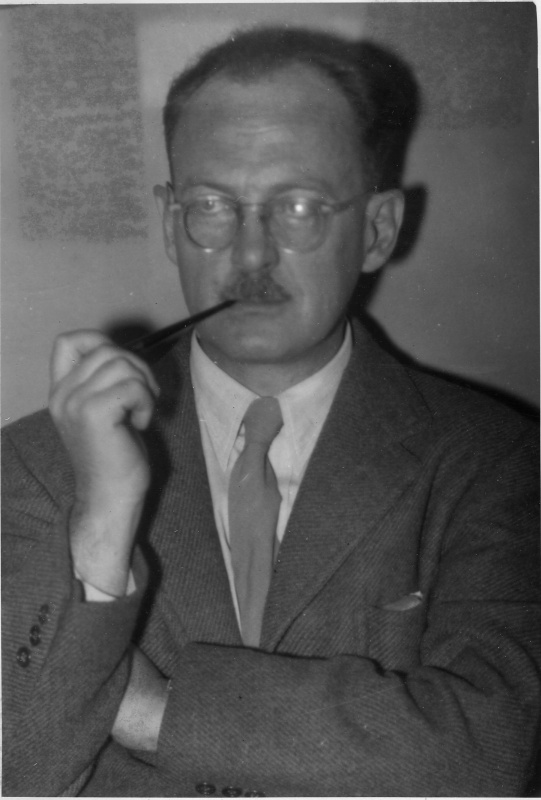

Claim 7. Owen Lattimore was the top Soviet espionage agent in the United States
The assertion and who made it. McCarthy, in late March 1950, first in a closed session of the Tydings subcommittee and then publicly, while Lattimore was abroad on a United Nations mission in Afghanistan. Accounts of his exact words vary. The 1996 history of the case published by Arnold & Porter, the firm whose partners defended Lattimore, records the charge as "top Communist espionage agent."10 McCarthy said he was willing to have his whole case judged by this one.
Evidence for. Lattimore edited the Institute of Pacific Relations journal Pacific Affairs in the 1930s, the IPR did contain Communists and Soviet sympathizers (Claim 8), and his writings at times echoed Soviet positions on Asia and the Soviet Union. The former Soviet military intelligence officer Alexander Barmine testified to the Senate Internal Security Subcommittee that in 1935 General Berzin, his superior in Soviet military intelligence, spoke of Lattimore and the journalist Joseph Barnes as "our men." The SISS report reprints that testimony, along with Lattimore's reply that Barmine was "a conspicuously reluctant witness" whose answers "remained vague, apologetic, and full of qualifications."11
Evidence against. No document in the Venona decrypts identifies Lattimore as a Soviet source. The Vassiliev notebooks, which record the KGB's American operations of 1930 to 1950 in detail, have not been shown to identify him as an agent either, and Haynes, Klehr and Vassiliev, who have every reason to name a major source if they found one, do not do so in Spies. The FBI investigated him for years without bringing an espionage charge. He was indicted only for perjury, and the courts threw out the central counts (Claim 8). McCarthy himself soon shifted his emphasis from espionage to Lattimore's influence on China policy, a shift recorded by Oshinsky and by Evans alike.
What the newer sources show. Silence where, if the charge were true, there should be noise. The cable traffic and KGB files name dozens of lesser sources. A top agent would be very hard to miss.
Rival readings. Evans argues that Lattimore's influence on Far Eastern policy through the IPR was real and damaging, whatever his formal status, and he faults Lattimore's testimony. Herman makes a similar case about influence. Neither argues the archives prove espionage. Oshinsky, Rovere and Griffith treat the charge as McCarthy's most reckless. Haynes and Klehr's work leaves no room for "top agent."
Rating: Unsupported. No espionage evidence against Lattimore has emerged from any opened source. Strictly, absence of evidence falls short of proof, so the rating is Unsupported rather than Refuted, but the case for "top espionage agent" is as weak as any claim on this card.
Claim 8. The Senate Internal Security Subcommittee: Lattimore was "a conscious articulate instrument of the Soviet conspiracy"
The assertion and who made it. The Senate Judiciary Committee, on the report of Pat McCarran's Internal Security Subcommittee, in its report on the Institute of Pacific Relations ordered printed July 2, 1952 (Senate Report 2050, 82nd Congress): "Owen Lattimore was, from some time beginning in the 1930's, a conscious articulate instrument of the Soviet conspiracy."11 Note the committee: this was SISS, not McCarthy's subcommittee.
Evidence for. The SISS hearings ran from July 25, 1951, to June 20, 1952, and assembled the IPR's own files. The same findings section states that the IPR leadership had "by the end of 1934 established and implemented an official connection with G. N. Voitinski, Chief of the Far Eastern Division of the Communist International."11 Communists such as Frederick Vanderbilt Field were active in the IPR. Lattimore's correspondence and editorial choices became the core of the committee's case that he steered the journal toward positions favorable to Moscow.
Evidence against. The perjury case built on the SISS testimony collapsed. A federal grand jury indicted Lattimore on seven counts of perjury in December 1952.12 The first count charged that he lied in testifying that he "had never been a sympathizer or any other kind of promoter of Communism or Communist interests." On July 8, 1954, the Court of Appeals for the District of Columbia Circuit, sitting en banc, held: "We are of opinion that this First Count of the indictment is void for vagueness," and affirmed dismissal of a second count for "a fatal variance in its terms," while reinstating two narrower counts.13 The government then obtained a new two-count indictment charging that Lattimore falsely denied being a "follower of the Communist line" and a "promoter of Communist interests." Judge Luther Youngdahl dismissed both counts as unconstitutionally vague on January 18, 1955.14 The appeals court affirmed by an equally divided court, 4 to 4, on June 14, 1955, and the litigation ended.10 Dismissal of a vague charge is no finding of innocence on the question of sympathy. Still, no court ever found Lattimore guilty of anything.
What the newer sources show. No espionage evidence (Claim 7). The question of whether Lattimore was a "conscious instrument" is a question about intent and influence, and the archives so far say little about it either way.
Rival readings. Evans largely accepts the SISS view. Oshinsky and Griffith regard the report as an extension of McCarthyism by McCarran. Lattimore's defenders note the courts' rulings. Haynes and Klehr, who have been willing to name names where the files support it, have not added Lattimore to the list of Soviet sources.
Rating: Unresolved. The IPR had real Communist ties. Whether Lattimore knowingly served Soviet purposes, as distinct from holding views that overlapped with Moscow's, is not settled by any opened document, and scholars who have read the record still disagree.
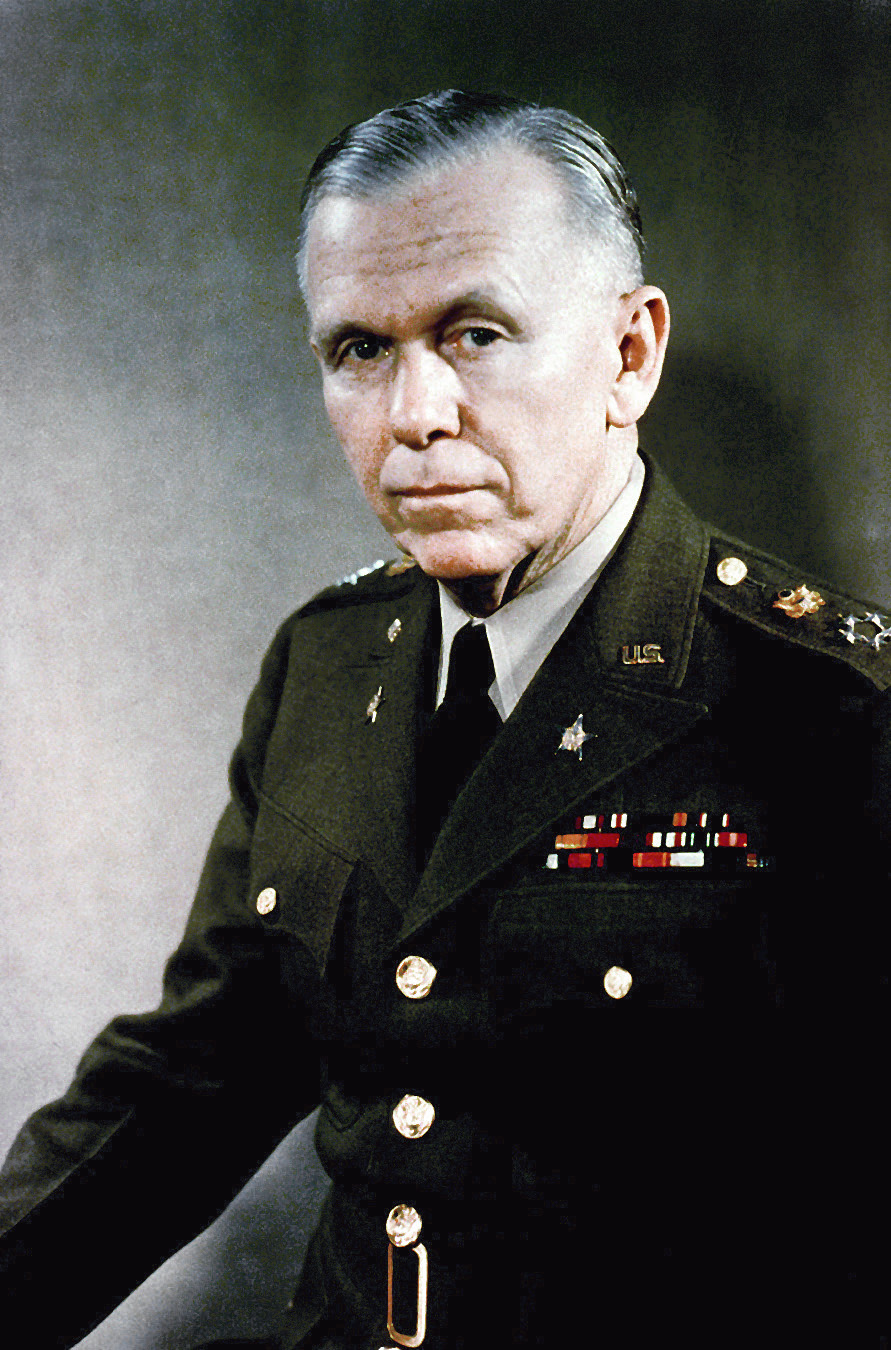

Claim 9. George Marshall was part of "a conspiracy so immense"
The assertion and who made it. McCarthy, on the Senate floor, June 14, 1951, in a speech that fills pages 6556 to 6603 of the Congressional Record and was later published as a book. Explaining American setbacks in China and Korea, he said: "This must be the product of a great conspiracy, a conspiracy on a scale so immense as to dwarf any previous such venture in the history of man. A conspiracy of infamy so black that, when it is finally exposed, its principals shall be forever deserving of the maledictions of all honest men." Marshall stood at the center of the account.15
Evidence for. American policy in China did fail, Marshall's 1946 mission to China did not produce a settlement, and some officials around China policy had been Soviet sources or Communist sympathizers. Policy judgments about Marshall's decisions in China, at Yalta and in Korea were and remain open to argument.
Evidence against. Every source. Haynes and Klehr, the most thorough readers of the decrypts, state flatly: "There is no basis in Venona for implicating Acheson or Marshall in a Communist conspiracy."6 Nothing in the Vassiliev notebooks or the FBI files suggests Marshall was anything but what he appeared to be, the chief architect of the military victory over Germany and Japan and of the Marshall Plan that rebuilt Western Europe against Soviet pressure.
What the newer sources show. The archives that confirmed White and Hiss clear Marshall. That contrast matters: the same documents that vindicate the anti-communists on real spies refute McCarthy here.
Rival readings. Even McCarthy's strongest defenders rarely defend this speech. Herman treats the Marshall attack as a serious error that cost McCarthy allies, and Buckley and Bozell did not build their 1954 defense on it. Oshinsky took his book's title from it. Dwight Eisenhower, Marshall's protégé, notoriously cut a defense of Marshall from a 1952 campaign speech in Wisconsin, an episode recounted in lesson 07.
Rating: Refuted. The documentary record contradicts the charge, and the leading Venona scholars say so in plain words.
Claim 10. The Democratic administrations were "twenty years of treason"
The assertion and who made it. McCarthy, in Lincoln Day speeches of February 1954. At Charleston, West Virginia, on February 4, 1954, recorded on tape and replayed by Edward R. Murrow on See It Now on March 9, 1954, he said: "The issue between the Republicans and Democrats is clearly drawn. It has been deliberately drawn by those who have been in charge of twenty years of treason. The hard fact is ... that those who wear the label, those who wear the label Democrat wear it with the stain of a historic betrayal."16
Evidence for. Soviet sources did serve in the Roosevelt and Truman administrations (Claims 1, 11, 12 and 13), and Haynes and Klehr write that in late 1945 and 1946 the White House "had reacted with a mixture of indifference and skepticism" to FBI reports of Soviet espionage.6
Evidence against. Treason is a specific constitutional crime, and the charge was made against a party and its leaders as a whole. Those leaders created the loyalty program in March 1947, created the CIA, prosecuted the Communist Party's leaders under the Smith Act from 1948, and fought the Korean War against Soviet-backed armies. Haynes and Klehr record the first three.6 In the same broadcast Murrow played McCarthy's own words from Milwaukee seventeen months earlier warning that if the fight against communism became "a fight between America's two great political parties," one party would be destroyed and "the Republic cannot endure very long as a one party system."16
What the newer sources show. Venona and the archives show individual traitors inside the administrations and leadership that was slow and complacent in 1945 and 1946 (Claim 17). They do not show a party or its presidents committing treason.
Rival readings. No major historian on either side defends the phrase as accurate. Evans and Herman defend McCarthy's broader point about administration negligence, not the treason charge. Oshinsky and Fried cite the phrase as the point where McCarthy's partisanship became undeniable.
Rating: Refuted. Individuals betrayed the country. The evidence contradicts the claim that the administrations themselves were treasonous.
Part four: the spies the committees named, and the trials
The strongest anti-communist claims of the period came before McCarthy's Wheeling speech, from HUAC's 1948 hearings with Elizabeth Bentley and Whittaker Chambers and from the FBI and Justice Department cases that followed. Those claims belong on the scorecard because McCarthy's defenders cite them, and because his opponents spent decades denying them. The background is in lesson 02 and lesson 03.
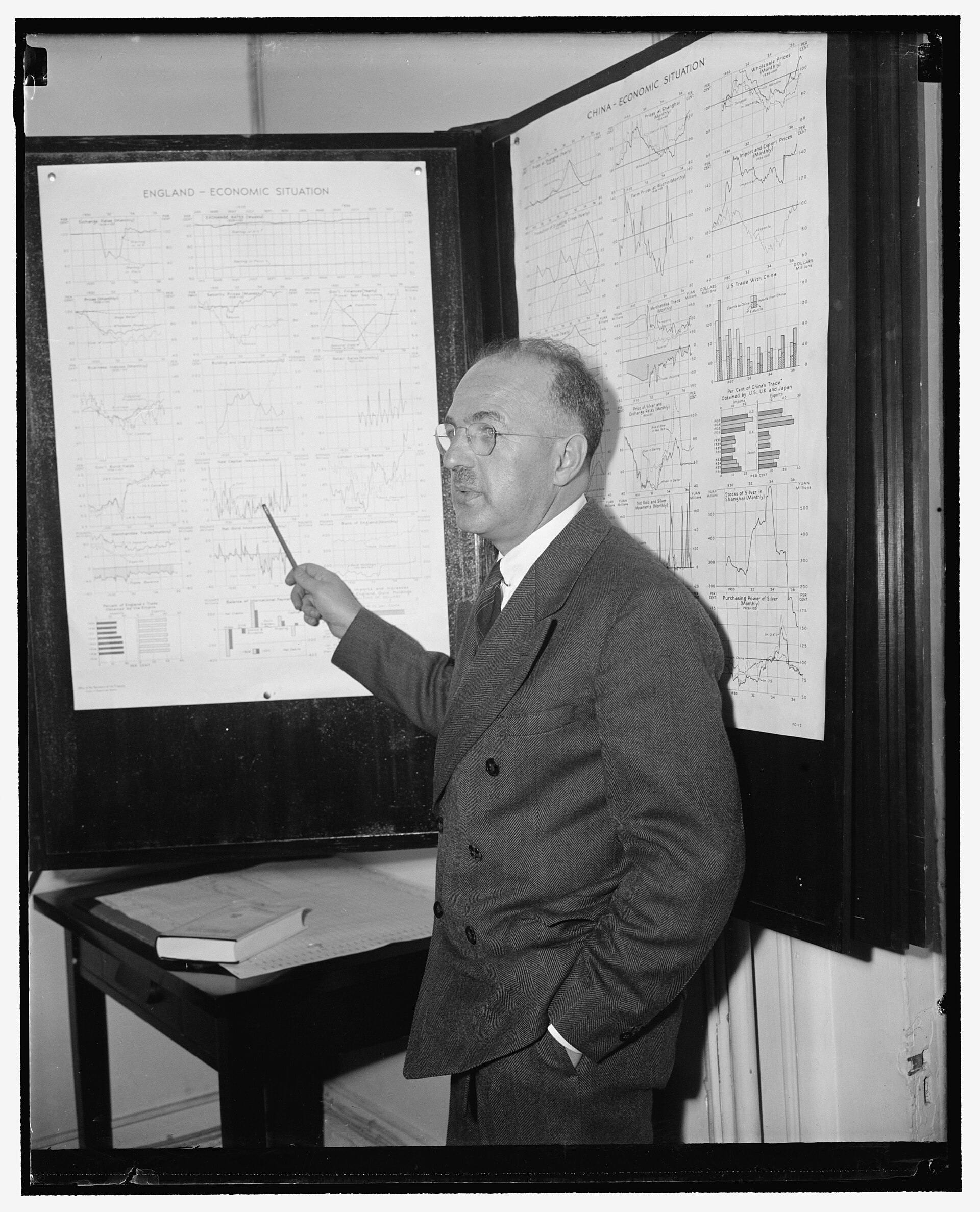

Claim 11. Harry Dexter White was a Soviet source
The assertion and who made it. Elizabeth Bentley and Whittaker Chambers, before HUAC in the summer of 1948, and later Attorney General Herbert Brownell, who in November 1953 accused the Truman administration of promoting White despite FBI warnings. White, who had been the first U.S. executive director of the International Monetary Fund and was out of government by 1948, denied the charges before HUAC in August 1948 and died of a heart attack days later.
Evidence for. Haynes and Klehr describe White as "the second most powerful official in the U.S. Treasury Department, one of the most influential officials in the government, and part of the American delegation at the founding of the United Nations," and write that he "had advised the KGB about how American diplomatic strategy could be frustrated."6 Venona messages corroborate Bentley's account of the Silvermaster group, through which White's information flowed, and the Vassiliev notebooks add KGB file material on him. The CIA's deputy historian Michael Warner writes that a 1950 FBI memorandum to J. Edgar Hoover reported that Venona identified White as a Soviet source.17
Evidence against. White was never charged with a crime. He was an architect of the Bretton Woods system and of the IMF and World Bank, institutions that served American interests and that the Soviet Union refused to join. Some economists and historians, among them the IMF historian James Boughton, have argued that White saw his contacts with Soviet officials as legitimate diplomacy and that the evidence of conscious espionage is weaker than Haynes and Klehr contend.
What the newer sources show. Venona, the FBI files and the Vassiliev notes point the same way. Prados notes in his review of Spies that the Russian intelligence service refused Vassiliev access to some key files, including White's own file, so the KGB record on him is incomplete.7
Rival readings. Haynes and Klehr, Evans and Herman agree White was a Soviet source. Boughton and a minority of economic historians dissent on his intent. Critics of McCarthy who wrote after 1995 have mostly stopped defending White on the facts and instead stress that McCarthy had nothing to do with exposing him.
Rating: Supported. The convergence of Bentley, Chambers, Venona, FBI files and KGB notes makes White's covert relationship with Soviet intelligence the established reading. The dissent concerns his motives more than the facts.
Claim 12. Lauchlin Currie, a White House assistant, helped Soviet intelligence
The assertion and who made it. Elizabeth Bentley, in testimony to the FBI and before HUAC in 1948, named Lauchlin Currie, an economist who had served as an administrative assistant to President Roosevelt. Currie appeared before HUAC and denied it.
Evidence for. Haynes and Klehr write that "A trusted personal assistant to President Franklin Roosevelt, Lauchlin Currie, warned the KGB that the FBI had started an investigation of one of the Soviets' key American agents, Gregory Silvermaster. This warning allowed Silvermaster, who headed a highly productive espionage ring, to escape detection and continue spying."6 Venona cables reporting Currie's information support Bentley's account.
Evidence against. Currie was never charged. He left the United States to work in Colombia, where he remained. His biographer, the economist Roger Sandilands, has argued that Currie's dealings were indiscreet but not those of a recruited agent.
What the newer sources show. Venona and the Vassiliev notes, as read by Haynes, Klehr and Vassiliev, treat Currie as a Soviet source. No newer document has cleared him.
Rival readings. Haynes and Klehr, Evans and Herman accept the identification. Sandilands dissents. Most critics of McCarthy who wrote after 1995 have not contested Currie's case.
Rating: Supported. The documentary case is strong. A minority dispute about his intent remains.
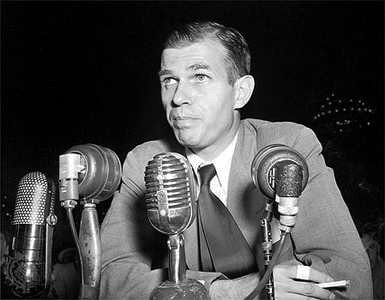

Claim 13. Alger Hiss was a Soviet agent (HUAC's case, not McCarthy's)
The assertion and who made it. Whittaker Chambers, before HUAC in August 1948, with Representative Richard Nixon pressing the case. Chambers at first described Hiss as a secret Communist and later produced State Department documents and notes he said Hiss had passed to him in the 1930s, including the microfilm known as the Pumpkin Papers. The statute of limitations had run on espionage, so Hiss was tried for perjury for denying he had passed documents. His first trial ended in a hung jury, and the second convicted him in January 1950.5 McCarthy invoked "the convicted Alger Hiss" in his Senate speech of February 20, 1950, but the Hiss case was HUAC's and the Justice Department's, not his.9
Evidence for. The documents Chambers produced, shown at trial to have been typed on a typewriter that had belonged to the Hiss family, and the jury's verdict. After 1995, a Venona cable about a Soviet military intelligence source code-named ALES, who had attended the Yalta conference, was read by the NSA analysts and by Haynes and Klehr as referring to Hiss. Anne Applebaum's review of Spies reports that Vassiliev "found a number of archival documents clearly listing Hiss, by his real name, as a Soviet intelligence source," specifically of the GRU, Soviet military intelligence, in the 1930s, and that the book's first chapter is titled "Alger Hiss: Case Closed." Applebaum found "the evidence of his collaboration is overwhelming."18
Evidence against. Hiss denied the charge until his death in 1996, and a small group of writers has continued to defend him. Their main argument since 1995 concerns ALES: some researchers have argued the cover name fits another State Department official better. Prados, reviewing Spies, notes that disputes over the cryptonyms said to refer to Hiss continue.7
What the newer sources show. Even setting ALES aside, the Vassiliev material and the 1930s documents Chambers produced point to Hiss. The weight of the evidence has moved further against Hiss with each release.
Rival readings. Haynes, Klehr and Vassiliev, Evans, Herman and most historians who have examined the newer evidence regard Hiss's guilt as settled. A minority, including writers associated with the Hiss defense, dissent, chiefly on ALES.
Rating: Supported. The conviction, the Chambers documents and the KGB material together support HUAC's charge. The remaining dispute concerns one cover name, not the case as a whole.
Claim 14. Hiss was framed (an opponents' claim)
The assertion and who made it. Hiss, his lawyers and his defenders from 1948 onward argued that Chambers was a liar or mentally unstable and that the typewriter evidence was forged. Haynes and Klehr record that Truman administration aides were taken in by "the disinformation being spread by the American Communist party and Alger Hiss's partisans that Chambers had at one time been committed to an insane asylum."6
Evidence for. Chambers changed his story over time, admitting late that espionage, not only party membership, was involved, which gave the defense real grounds to attack his credibility.
Evidence against. No evidence of forgery has ever been produced, and the post-1991 archival evidence points the other way (Claim 13). The asylum story was false.
What the newer sources show. Vassiliev's notebooks and Venona support Chambers's core account.
Rival readings. Haynes and Klehr list the story of Hiss "thrown into prison on the perjured testimony" of Chambers as part of a "sinister but widely accepted portrait of America in the 1940s and 1950s" that the evidence has overturned.6 The defense of Hiss survives as a minority position focused on ALES.
Rating: Refuted. The forgery theory has no evidence behind it, and the archival record supports the prosecution's case.
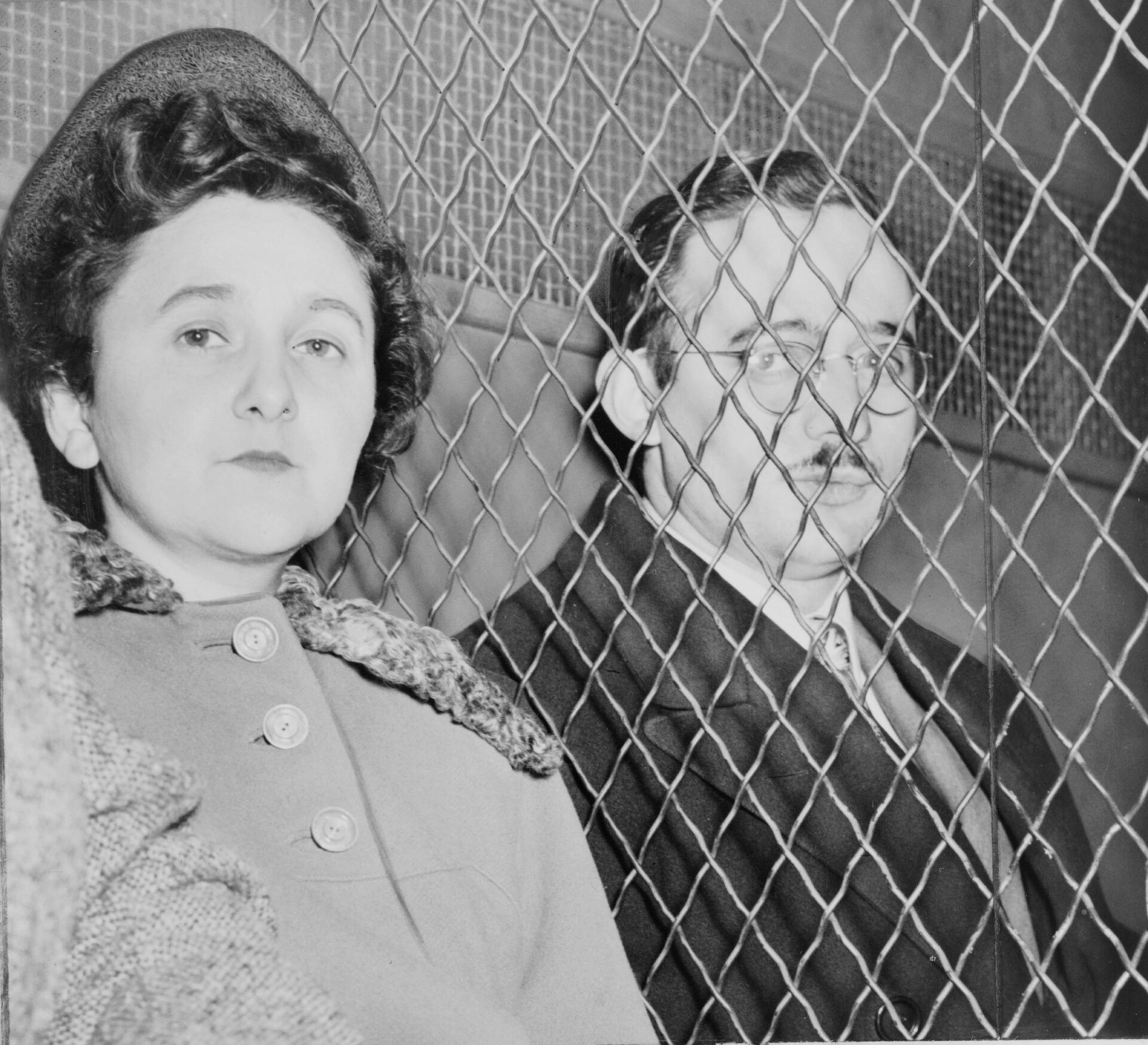

Claim 15. Julius Rosenberg was framed (an opponents' claim)
The assertion and who made it. From the trial in 1951 through the 1980s, a large campaign argued that the Rosenbergs were innocent victims of Cold War hysteria and anti-Semitism. Haynes and Klehr call it "a forty-year campaign to prove that the Rosenbergs were innocent."6
Evidence for. The trial was flawed in ways the defenders correctly identified: the government relied heavily on the testimony of David Greenglass, Ethel's brother, who had his own motives, and the death sentences were extraordinary for spying for a wartime ally.
Evidence against. Haynes and Klehr: "The Venona messages clearly display Julius Rosenberg's role as the leader of a productive ring of Soviet spies," and they "document his recruitment of his brother-in-law, David Greenglass, as a spy."6 Rosenberg's co-defendant Morton Sobell, who had maintained his innocence for decades, acknowledged in 2008 interviews that he and Rosenberg had passed military information to the Soviets (an admission reported in the press and not re-checked for this lesson against the original interviews).
What the newer sources show. Venona decisively, and the Vassiliev notes in support.
Rival readings. Since 1995, few scholars defend Julius Rosenberg's innocence. The debate has moved to the fairness of the trial and the death penalty, where Haynes and Klehr themselves argue that, had Venona been public, Rosenberg "would assuredly have been convicted, but his penalty might well have been life in prison rather than execution."6
Rating: Refuted. Julius Rosenberg ran a Soviet spy ring. The claim that he was framed is contradicted by the Soviet cables themselves.
Claim 16. Ethel Rosenberg was framed (an opponents' claim)
The assertion and who made it. The same defenders, and in recent years Ethel Rosenberg's sons and others seeking her posthumous exoneration, have argued that she was convicted and executed on false testimony to pressure her husband.
Evidence for. Haynes and Klehr agree that her execution would have been unlikely had Venona been known: the messages "suggest that she was essentially an accessory to her husband's activity, having knowledge of it and assisting him but not acting as a principal."6 David Greenglass later told a journalist that his trial testimony that Ethel typed espionage notes was not true to his memory; this widely reported recantation was not re-checked for this lesson against the original source.
Evidence against. Haynes and Klehr: "The Venona messages do not throw her guilt in doubt; indeed, they confirm that she was a participant in her husband's espionage and in the recruitment of her brother for atomic espionage."6
What the newer sources show. She knew of and assisted the espionage. The specific testimony used to send her to the electric chair was weaker than the jury was told.
Rival readings. Haynes and Klehr, and most scholars after 1995, hold that she was guilty as an accessory and that her death sentence was unjust. Her defenders argue the trial evidence against her was manufactured. Both can be partly right.
Rating: Partly supported. The evidence used against her at trial was partly false and the sentence was disproportionate. The claim that she was innocent is contradicted by Venona.
Claim 17. The Truman administration ignored warnings about Soviet espionage
The assertion and who made it. McCarthy and his allies from 1950 onward, and Attorney General Brownell in November 1953 over the White promotion. Ritchie notes that McCarthy blamed failures in American foreign policy on Communist infiltration of the government, which by implication meant a negligent administration.5
Evidence for. Haynes and Klehr: "In late 1945 and in 1946, the White House had reacted with a mixture of indifference and skepticism to FBI reports indicating significant Soviet espionage activity," and officials "even whitewashed evidence pointing to the theft of American classified documents in the 1945 Amerasia case."6 Warner writes that "Hoover had been forwarding allegations about White to the Oval Office since 1945," and that in 1946 Truman nominated White to be the first U.S. executive director of the IMF.17
Evidence against. The same scholars record that the indifference ended by early 1947. Truman issued the loyalty order in March 1947, created the CIA, and had the Communist Party's leaders prosecuted under the Smith Act in 1948.6 And Truman was kept in the dark about the strongest evidence. Senator Daniel Patrick Moynihan, who chaired the Commission on Protecting and Reducing Government Secrecy, concluded that "President Truman was never told of the Venona decryptions," and Warner, examining the question for the CIA, leans to the view that Truman "was not informed about the Venona messages that implicated White."17 Haynes and Klehr write that it appears Army Chief of Staff Omar Bradley "decided to deny President Truman direct knowledge of the Venona Project."6
What the newer sources show. Real complacency in 1945 and 1946, followed by a strong security program after 1947, under a president who was denied the decrypts that would have confirmed what Hoover was telling him.
Rival readings. Evans and Herman stress the early failures and the White promotion. Fried and Schrecker stress the loyalty program as an overreaction and the administration's later severity. Haynes and Klehr hold both points: the early failure was real, and the later program rested on real evidence.
Rating: Partly supported. True of 1945 and 1946, and of the White promotion. False as a description of the administration after early 1947, and complicated by the fact that the military withheld Venona from the president.
Part five: McCarthy's own investigations, 1953 and 1954
In January 1953 McCarthy became chairman of the Government Operations Committee and of its Permanent Subcommittee on Investigations. The 2003 transcripts show how he used it. Ritchie counts six executive sessions under his predecessor in 1952 and 117 under McCarthy in 1953. In McCarthy's first year as chairman the subcommittee "took testimony from 395 witnesses in executive sessions and staff interrogatories (by comparison to 214 witnesses in the public sessions), and compiled 8,969 pages of executive session testimony."5 Those closed records are the newest evidence on the claims below, and they were unavailable to every scholar who wrote before 2003, including Rovere, Griffith, Oshinsky and Herman.
Claim 18. Fort Monmouth harbored an active spy ring in 1953
The assertion and who made it. McCarthy and his chief counsel Roy Cohn, in the autumn of 1953, about the Army Signal Corps laboratories at Fort Monmouth, New Jersey. Ritchie writes that McCarthy had "predicted to the press that his inquiry into conditions at Fort Monmouth would uncover espionage."5
Evidence for. The suspicion had a real starting point. Julius Rosenberg had worked at Fort Monmouth during World War II, and many of the employees investigated had studied engineering at City College of New York alongside him.19 Rosenberg's wartime ring was real (Claim 15). The inquiry was also spurred, Ritchie writes, by "reports of information from the Army Signal Corps laboratories turning up in Eastern Europe."5 Some witnesses had genuine Communist histories, mostly in union organizing.
Evidence against. The 2003 transcripts are decisive here. Ritchie, summarizing them for the Senate: "Those witnesses who named names of Communists with whom they had associated invariably described union activities, and none corroborated any claims of subversion and espionage." Security officers suspended forty-two civilian employees during the inquiry, and "After the investigations, all but two were reinstated in their former jobs." Ritchie adds that during the war the Soviet Union, then an ally, had "openly designated representatives at the laboratories, making espionage there superfluous."5 The dragnet reached people who had signed a petition years earlier, belonged to a Great Books club that read Marx, "had once dated a Communist, had relatives who were Communists, or simply had the same name as a Communist."5 No one was charged with espionage at Fort Monmouth as a result.
What the newer sources show. The closed hearings found no 1953 spy ring. Venona confirms Rosenberg's wartime activity. Neither it nor any other opened source shows a later network at the laboratories.
Rival readings. Evans argues the Army's own security concerns about Fort Monmouth predated McCarthy and were justified by the Rosenberg history. Oshinsky and Griffith treat the inquiry as the clearest case of McCarthy damaging innocent careers. The Senate's own historian, summarizing the subcommittee's records, concluded that its investigations "failed to substantiate the chairman's accusations of subversion and espionage."5
Rating: Unsupported. The wartime Rosenberg link was real. No evidence of an active ring in 1953 has ever been produced, and McCarthy's own closed records contain none.
Claim 19. The Voice of America was sabotaged from within
The assertion and who made it. McCarthy's subcommittee and its staff, beginning in February 1953. On February 13, 1953, the Chicago Tribune reported that the investigation had "uncovered amazing evidence of a conspiracy to subvert American policy" and evidence that "indicates deliberate sabotage of American objectives." The focus became two shortwave transmitter projects, Baker West at Port Angeles, Washington, and Baker East at Wilmington, North Carolina, which a former VOA engineer testified were badly sited. The subcommittee's annual report later said the waste suggested "deliberate sabotage as a possible alternative to hopeless incompetence."20
Evidence for. The siting decisions were disputed inside the agency, and the government did halt construction of both stations on February 17, 1953, and canceled the contracts a month later.20 The VOA did have internal factions, including a self-described "Anti-Communist Underground" of employees who gathered files on colleagues they suspected, and some programming choices were open to criticism.
Evidence against. No evidence of deliberate sabotage was produced. The subcommittee's own phrasing offered sabotage only as "a possible alternative to hopeless incompetence." Rovere, who covered the hearings, wrote that the investigation "just stopped," and "trailed off into nothingness."5 On March 5, 1953, Raymond Kaplan, a VOA engineer who had worked on the transmitter projects, killed himself in Cambridge, Massachusetts; the coroner found he had feared being called before the subcommittee. His letter to his wife and son, printed in the New York Times and reproduced in the 2003 volumes, says: "I have not done anything in my job which I did not think was in the best interest of the country," and adds that "the selection of what may turn out to be relatively poor sites for the stations was not done deliberately to place them in poor locations."20
What the newer sources show. The closed transcripts show an engineering dispute and an agency feud, not a plot. Nothing in Venona or the KGB notes touches the transmitter decisions.
Rival readings. Herman treats the VOA inquiry as exposing genuine mismanagement. Oshinsky, Rovere and Griffith treat it as a smear that cost a life and wrecked an agency's morale. On sabotage specifically, no scholar has found support.
Rating: Unsupported. Mismanagement and a real technical dispute, yes. Deliberate sabotage, no evidence.
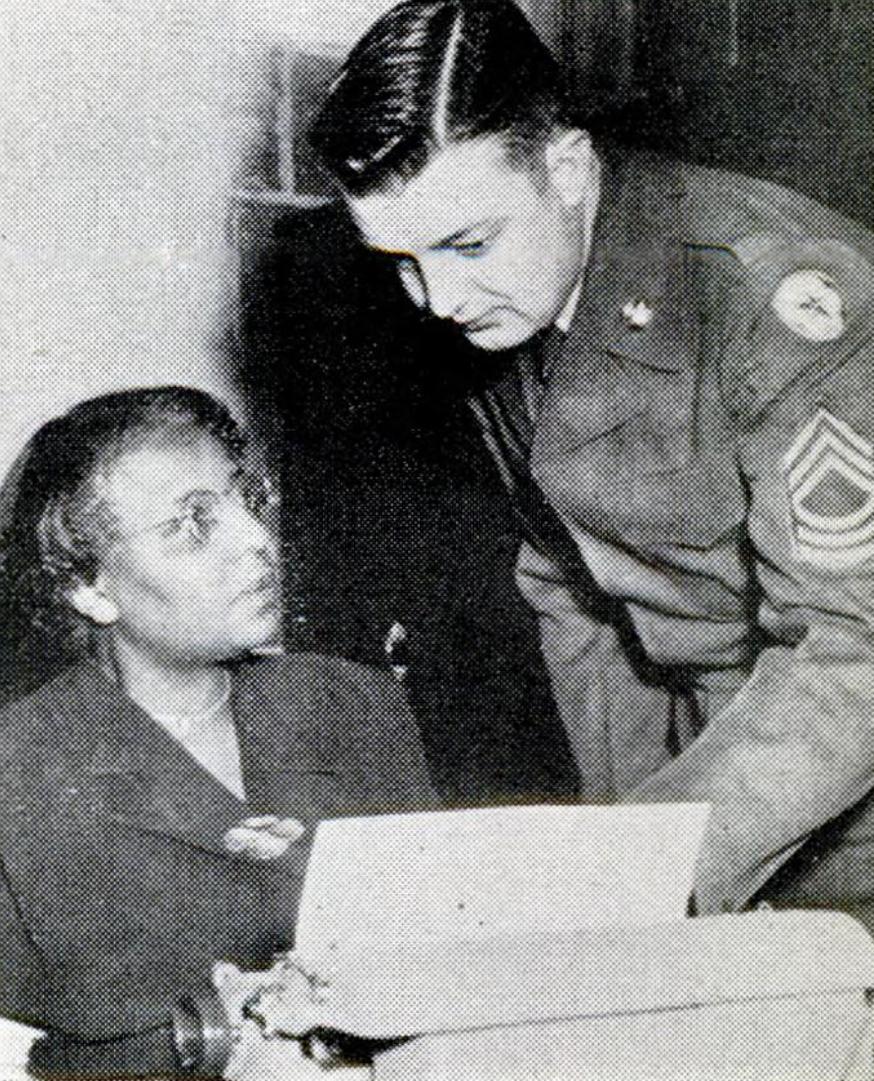

Claim 20. Annie Lee Moss was a Communist working in a sensitive Army post
The assertion and who made it. McCarthy and the subcommittee, February and March 1954, on the word of the FBI informant Mary Stalcup Markward, who said she had seen "a woman by the name of Annie Lee Moss on the list of card-carrying, dues-paying members." McCarthy called Moss herself "not of any great importance" but demanded: "Who in the military, knowing that this lady was a Communist, promoted her from a waitress to a code clerk?"19
Evidence for. In 1958, Ritchie records, the Subversive Activities Control Board "confirmed Markward's assertion that Moss' name had appeared on the Communist party rolls in the mid-1940s."19 Moss testified that her late husband had received the Daily Worker. Evans and Herman cite the 1958 finding as vindication of McCarthy on Moss.
Evidence against. Markward "could not recall having met Moss personally." Moss had been cleared by loyalty boards of the General Accounting Office in October 1949 and by the Army in January 1951. Her job was described by the Army as a relay machine operator who handled "unintelligible code messages." At the public hearing she denied membership, dues or meetings, and she "seemed an unlikely espionage agent even to Senator McCarthy, who left midway through her testimony." The same board that confirmed the name on the rolls concluded the next year that "Markward's testimony should be assayed with caution," and conducted no further investigation of Moss.19 The Army reinstated her. The Chicago Defender reporter Ethel Payne, who covered the case, described Moss as a widow of limited education whose late husband had been sent free subscriptions to the party paper, which "piled up on her back porch, some with the wrappings still on them."19
What the newer sources show. No Venona or KGB material mentions Moss. The 2003 volumes, whose introduction cites Reeves, Oshinsky and Herman on the case, set out both the 1958 finding and the 1959 caution.19
Rival readings. Evans and Herman: McCarthy was right that a Communist had held the post. Oshinsky and Reeves: whatever her name on a 1940s roll meant, she was no security threat, and the hearing was a cruel spectacle. Both sides agree she was not a spy.
Rating: Partly supported. Party records of the mid-1940s apparently listed her, which supports the narrow claim of past membership. The implied claim that she was a security danger in a code room was never supported, and the informant's reliability was itself questioned by the board that confirmed the listing.
Claim 21. Moss was a case of mistaken identity (an opponents' claim)
The assertion and who made it. McCarthy's critics in 1954, including the televised suggestion during her hearing that there might be more than one Annie Lee Moss in Washington, and Edward R. Murrow's See It Now, which replayed the hearing to a national audience.19
Evidence for. The informant had never met her, Moss denied membership, and identity confusion was a documented problem in McCarthy's inquiries: Ritchie writes that some witnesses "were called as witnesses out of mistaken identity."5
Evidence against. The 1958 Subversive Activities Control Board finding that her name appeared on party rolls in the mid-1940s.19 Evans and other defenders argue the records matched her address.
What the newer sources show. Nothing beyond the 1958 and 1959 board findings, which point in different directions.
Rival readings. Evans treats the mistaken-identity story as a myth. Oshinsky and Reeves treat the evidence of her membership as thin and her role as trivial. The record supports neither side's strongest form.
Rating: Unresolved. A listing on the rolls is documented. Whether that listing reflected real, knowing membership by this woman is not established, and the board itself cautioned against its informant.
Claim 22. Irving Peress was a Communist whom the Army knowingly promoted
The assertion and who made it. McCarthy, from January 1954, in the question "Who promoted Peress?" and in his clash with Brigadier General Ralph Zwicker on February 18, 1954, when he told Zwicker he was "not fit to wear that uniform."19
Evidence for. The editor's note in the 2003 volumes records that Peress, an Army dentist at Camp Kilmer, New Jersey, "had been under military surveillance as a suspected member of the Communist party," that the First Army's intelligence office "recommended against" his promotion in September 1953, and that the promotion went through anyway on October 23, 1953. When the subcommittee staff contacted General Zwicker, he "identified Major Peress as a Communist." Called before the subcommittee on January 30, 1954, Peress invoked the Fifth Amendment. He then requested and received an honorable discharge on February 2, 1954, even though McCarthy had written the day before to the secretary of the Army urging a court-martial.21 The case showed a real failure in the Army's security processing.
Evidence against. The promotion was routine. The processing officers "judged Peress' case on his professional qualifications" under the Doctor Draft Act, which raised drafted physicians and dentists in rank according to their professional standing.21 No one in the Army promoted Peress because of his politics. He was a dentist with no access to secrets. Invoking the Fifth Amendment is a constitutional right and is not proof of membership, a point the Supreme Court later stressed in the cases discussed in lesson 09.
What the newer sources show. The closed transcripts confirm the Army's bureaucratic failure and McCarthy's treatment of Zwicker, which, the editors note, "caused some alarm even among the senator's strongest supporters."19 Nothing in Venona or the KGB notes concerns Peress.
Rival readings. Evans and Herman argue McCarthy was right to ask how a suspected Communist was promoted and honorably discharged. Oshinsky and Griffith argue the case was trivial and that McCarthy's abuse of Zwicker began his downfall (lesson 08).
Rating: Partly supported. The Army did promote and honorably discharge a suspected Communist despite its own intelligence office's objection. "Knowingly promoted a Communist" overstates a routine, automatic process, and Peress's membership was never proved in any forum.
Claim 23. McCarthy's investigations exposed real lax security (a defenders' claim)
The assertion and who made it. McCarthy's defenders, from Buckley and Bozell in 1954 to Evans in 2007, have argued that whatever his excesses, McCarthy's inquiries exposed genuine failures in government security that officials preferred to hide.
Evidence for. The Senate's own historian, hardly a partisan of McCarthy, writes in the 2003 volumes: "The subcommittee's investigations exposed examples of lax security in government agencies and defense contractors." The Peress case is one example. Ritchie also records that security officers who could not act inside their own agencies leaked files to McCarthy.5
Evidence against. The same sentence continues: "but they failed to substantiate the chairman's accusations of subversion and espionage." Ritchie writes that the leaked files "shifted his attention to lower-level civil servants," who "lacked the freedom to fight back" and became "easier targets to bully." And although McCarthy threatened witnesses with prison, "no witness who appeared before the subcommittee during his chairmanship was imprisoned for perjury, contempt, espionage, or subversion."5
What the newer sources show. Lax procedures, yes. Spies, none.
Rival readings. Evans and Herman put the weight on the lapses. Oshinsky and Griffith put it on the damage. Ritchie's summary accepts both halves.
Rating: Partly supported. The investigations found real procedural failures. They found no espionage, which was what McCarthy said he was looking for.
Part six: two claims about McCarthy himself
Claim 24. McCarthy never exposed a single Communist (an opponents' claim)
The assertion and who made it. A staple of McCarthy's critics since the 1950s, repeated in textbooks and journalism: for all his noise, he never found one Communist.
Evidence for. He never uncovered a spy. Every major espionage case of the period (Hiss, the Rosenbergs, Fuchs, Coplon, the Bentley networks) was developed by the FBI, the codebreakers, defectors or HUAC, mostly before February 1950. Haynes and Klehr credit Venona with identifying "most of the Soviet spies uncovered by American counterintelligence between 1948 and the mid-1950s," which leaves little room for McCarthy.6 No one his subcommittee examined went to prison for espionage, subversion, perjury or contempt.5
Evidence against. Taken literally, the claim is false. Ritchie writes of the 1953 witnesses that "Some of the witnesses who came before the permanent subcommittee in 1953 had been Communists," and that witnesses "against whom strong evidence of Communist activities existed tended to be involved in labor organizing."5 Annie Lee Moss's name was on party rolls in the 1940s (Claim 20), and some of the names on McCarthy's 1950 lists were later found in the Venona or Vassiliev material, though they had generally been identified by others first.
What the newer sources show. McCarthy brought before the public some current and former Communists, most of them minor and many already known. He did not discover anyone of consequence in the Soviet networks.
Rival readings. Evans argues the "never found one" line is a falsehood that shields the State Department's record. Oshinsky and Rovere treat the absence of any significant discovery as the central fact of McCarthy's career. Haynes and Klehr agree with the critics that McCarthy's contribution to catching spies was negligible, and with Evans that some of his targets were real Communists.
Rating: Partly supported. True that McCarthy exposed no spy and no significant Communist who had not been identified by others. False as literally stated.
Claim 25. McCarthy's methods discredited legitimate anti-communism
The assertion and who made it. Made in the 1950s by anti-communists in both parties, among them the Republican senator Margaret Chase Smith of Maine, and later by historians of every persuasion, including Haynes and Klehr, who are themselves sharp critics of Communism.
Evidence for. Haynes and Klehr: "A number of liberals and radicals pointed to the excesses of McCarthy's charges as justification for rejecting the allegations altogether," and by the 1980s much of the academy had concluded the espionage was minor (Claim 3).6 Anne Applebaum, reviewing their work in 2009, notes that in their earlier documentary history The Secret World of American Communism (1995) Haynes and Klehr "went out of their way to condemn McCarthy for having used anti-communism 'as a partisan weapon,'" and that, in their view, his "excesses" still distort the debate about the history of American communism.18 Senators Collins and Levin, in their 2003 preface, wrote that McCarthy's "zeal to uncover subversion and espionage led to disturbing excesses. His browbeating tactics destroyed careers of people who were not involved in the infiltration of our government."5 The word "McCarthyism" itself, coined by the cartoonist Herblock in 1950, became shorthand for "any investigation that flouts the rights of individuals," and was later "applied collectively to all congressional investigations of suspected Communists," including HUAC and SISS.5
Evidence against. The domestic security program did not collapse with McCarthy's censure in December 1954: the loyalty-security system, the FBI's work and anti-communist foreign policy continued for decades under both parties. Evans argues that the collapse in anti-communism's reputation came later and owed more to the Vietnam era than to McCarthy, and Haynes and Klehr themselves note that "Anticommunism further lost credibility in the late 1960s" over Vietnam.6 Buckley and Bozell argued in 1954 that McCarthy's cause was sound even where his tactics were not.
What the newer sources show. The archives cannot settle a counterfactual about what American opinion would have been without McCarthy. They do show that the real espionage record was hidden while McCarthy's false charges were public, a combination Haynes and Klehr blame for decades of confusion.
Rival readings. Haynes and Klehr, Herman, Oshinsky and Rovere all, for different reasons, regard McCarthy as harmful to the anti-communist case. Evans dissents most strongly. The lesson's method question, how investigations can serve accountability without destroying due process, is taken up in lesson 12 and, through Pierson's framework of ordered liberty, in Legitimate Authority and Its Limits.
Rating: Partly supported. Strong evidence shows his excesses gave opponents a reason to dismiss real espionage, and most scholars on both sides say so. How much of the later decline of anti-communism he caused is a counterfactual the evidence cannot fully settle.
What the record shows and what it does not
- Documented fact: Soviet intelligence recruited hundreds of American sources in the 1930s and 1940s, most of them Communists, including Harry Dexter White, Lauchlin Currie and Julius Rosenberg. The Communist Party leadership took direction and money from Moscow and assisted Soviet intelligence.
- Documented fact: McCarthy's specific numbers (205, 57, 81) never matched a list of proven Communists then in the State Department, and his 1953 subcommittee, by the Senate Historical Office's reading of its own sealed records, "failed to substantiate the chairman's accusations of subversion and espionage."
- Documented fact: The leading Venona scholars find "no basis" for implicating Marshall or Acheson in a conspiracy.
- Documented fact: Writers who denied any real espionage problem, or who argued Hiss and Julius Rosenberg were framed, were contradicted by the decrypts and the KGB notes.
- Allegation never proved: Lattimore as a Soviet agent, a 1953 spy ring at Fort Monmouth, sabotage at the Voice of America.
- Open question: Lattimore's intent, Annie Lee Moss's knowing membership, the identity behind the cover name ALES (disputed by a minority), and how much McCarthy's methods changed the later reputation of anti-communism.
Assessed from 2026
The full card, in the order examined above, with the principal evidence for each verdict. "M" marks claims by McCarthy and his allies, "C" claims by congressional committees, and "O" claims by McCarthy's opponents and later writers.
- 1. Soviet espionage penetrated the government, 1930s and 1940s (C): Supported. Venona, Vassiliev notes, FBI files (Haynes and Klehr).
- 2. The CPUSA was directed and funded by Moscow (C): Supported. Moscow party archives, Venona.
- 3. There was no real espionage problem (O): Refuted. Venona: 349 covert relationships identified.
- 4. 205 (or 57) known Communists in State, 1950 (M): Unsupported. No such list ever produced, McCarthy retreated on the floor.
- 5. The "81 cases" were Communists shaping policy (M): Partly supported. Some real security cases, "I am not indicting the 81".
- 6. Tydings: the charges were "a fraud and a hoax" (C): Partly supported. Charges unproven, department past penetration real.
- 7. Lattimore was the top Soviet espionage agent (M): Unsupported. Absent from Venona and the KGB notes, no espionage charge.
- 8. SISS: Lattimore a "conscious articulate instrument" (C): Unresolved. Perjury counts dismissed, intent still disputed.
- 9. Marshall was part of a "conspiracy so immense" (M): Refuted. "No basis in Venona" (Haynes and Klehr).
- 10. "Twenty years of treason" (M): Refuted. Same administrations built the security program.
- 11. Harry Dexter White was a Soviet source (C): Supported. Bentley, Chambers, Venona, FBI, Vassiliev.
- 12. Lauchlin Currie helped Soviet intelligence (C): Supported. Venona and Bentley, warned KGB about Silvermaster.
- 13. Alger Hiss was a Soviet agent (C): Supported. Conviction, Chambers documents, KGB notes.
- 14. Hiss was framed (O): Refuted. No evidence of forgery, archives support Chambers.
- 15. Julius Rosenberg was framed (O): Refuted. Venona shows him leading a spy ring.
- 16. Ethel Rosenberg was framed (O): Partly supported. Trial evidence weak, Venona shows she assisted.
- 17. Truman ignored espionage warnings (M): Partly supported. True of 1945 and 1946, strong program from 1947, Venona withheld.
- 18. Fort Monmouth had an active spy ring in 1953 (M): Unsupported. 42 suspended, all but 2 reinstated, no charges.
- 19. Voice of America sabotage (M): Unsupported. Engineering dispute, inquiry "trailed off".
- 20. Annie Lee Moss was a Communist (M): Partly supported. Name on 1940s rolls (SACB 1958), no security threat.
- 21. Moss was mistaken identity (O): Unresolved. Board confirmed listing, then cautioned on informant.
- 22. The Army knowingly promoted a Communist (Peress) (M): Partly supported. Real security lapse, promotion was automatic.
- 23. The investigations exposed lax security (M): Partly supported. Senate historian: lax security yes, espionage no.
- 24. McCarthy never exposed a single Communist (O): Partly supported. No spy found, some witnesses had been Communists.
- 25. His methods discredited legitimate anti-communism (O): Partly supported. Haynes and Klehr agree, counterfactual unsettled.
Read as a whole, the card does not sort neatly by side. The committees' cases against White, Currie and Hiss, built on Bentley and Chambers, hold up best of all. McCarthy's own cases against named individuals and agencies hold up worst, with no claim of his rated Supported. The opponents' broadest denials (no espionage, Hiss framed, Julius Rosenberg framed) are refuted, while their narrower criticisms of his methods and evidence mostly stand. That is the pattern Haynes and Klehr described in 1999 when they wrote that demagogues "had the opportunity to mix together accurate information about betrayal by men such as Harry White and Alger Hiss with falsehoods about Acheson and Marshall that served partisan political goals."6
Hard questions and answers
If the spies were real, why not give McCarthy credit for being right?
Because being right about a general danger is different from being right about the people accused. The spies the documents confirm were identified by the FBI, the Army codebreakers, defectors and HUAC, mostly before Wheeling. McCarthy's own named targets, from Lattimore to Marshall to the Fort Monmouth engineers, are the claims the documents fail to support. The Senate's historian, writing from McCarthy's sealed records, found that his investigations "failed to substantiate" his accusations of subversion and espionage.5 Credit belongs to those who found the actual spies.
Did McCarthy's critics owe anyone an apology after Venona?
Some did, to Elizabeth Bentley and Whittaker Chambers, whom many writers portrayed for decades as liars, and to the security officials whose concerns about Hiss, White and the Rosenbergs were mocked. Haynes and Klehr document the reputation Bentley acquired as a smearer and the false story that Chambers had been committed to an asylum.6 That correction does not extend to McCarthy's own cases, which the same documents do not bear out.
Isn't "no evidence in Venona" just an argument from silence?
Partly, which is why Lattimore, Fort Monmouth and the Voice of America are rated Unsupported rather than Refuted. Venona covers only part of the traffic, and the Russian service denied Vassiliev some files.7 But silence is weighty when the sources name hundreds of lesser figures and the person accused was said to be the most important of all. Where the documents affirmatively contradict a claim, as with Marshall, the rating is Refuted.
Why trust the Senate Historical Office on McCarthy?
The 2003 volumes are useful because they are primary records, not because of the editor's opinions. The transcripts themselves are printed in full, with Ritchie noting that the editing sought "to reproduce the transcripts as closely to their original form as possible, deleting no content."5 Readers who doubt the summary can read the hearings, and the specific facts relied on here (42 suspended at Fort Monmouth, all but two reinstated; no witness imprisoned) are checkable against them.
What about the people McCarthy hurt who really were Communists?
Party membership was not a crime in 1953, as McCarthy himself told witnesses, and Ritchie records that he nonetheless encouraged agencies and private employers to fire anyone who took the Fifth Amendment.5 A free society can bar people from sensitive posts on real evidence through fair procedures, and it can also protect the rights of those whose beliefs it rejects. The costs of failing at the second task are set out in lesson 10, and the comparison with the wartime incarceration of Japanese Americans is drawn in Ordered Liberty.
Are any of these verdicts likely to change?
The Unresolved ratings could. Russian intelligence files on White and others remain closed, and Prados notes that Vassiliev was refused White's and Rosenberg's files.7 A future opening could sharpen the Lattimore and ALES questions. The Supported and Refuted ratings rest on several independent sources each and are unlikely to move.
Related lessons and modules
Idaho's part in this story, from Senator Glen Taylor to Senator Herman Welker, who voted against McCarthy's censure and made his own "87 communists" claim, is told in Glen Taylor, Herman Welker and the Red Scare, and the evidence about Communists in Idaho in Communists in Idaho: What the Evidence Shows. The lawful ways citizens resisted the excesses of the period are discussed in Forms of Lawful Resistance. For the comparison with foreign influence and espionage today, see lesson 13, and for a timeline, glossary and source guide, lesson 14.
Still open
These items could not be confirmed against a primary source before publication. The lesson states them as open, and they stay on the fact-check list.
- The amounts and channels of Soviet subsidies to the CPUSA (Klehr, Haynes and Firsov; the FBI SOLO files) were not re-checked; the FBI Vault page could not be retrieved. The Library of Congress exhibit confirms the financial dependency in general terms only.
- The Mitrokhin archive is characterized from general knowledge (coverage mainly of later decades); the book was not opened for this lesson.
- Characterizations of the positions of M. Stanton Evans, Arthur Herman, Buckley and Bozell, Rovere, Griffith, Oshinsky, Fried and Schrecker are summaries of their published theses and were not re-checked against the books for this lesson; no quotation from those books is used.
- The statement that Haynes and Klehr have written that McCarthy's lists contained some real Soviet sources mixed with many innocent people (from Haynes's essay on McCarthy's lists and Venona) could not be retrieved and verified.
- The exact words McCarthy used about Lattimore in March 1950 vary among accounts; the Arnold & Porter history gives "top Communist espionage agent." His later shift of emphasis from espionage to policy influence, the detail that he first made the charge in a closed Tydings session, and his statement that he would stand or fall on the case are stated from secondary accounts.
- That the two Republican members of the Tydings subcommittee (Lodge and Hickenlooper) did not join the majority report was not re-checked against the report.
- The figure 284 (rather than the 285 printed in the Congressional Record) as the number in Byrnes's 1946 letter, and the arithmetic 284 minus 79 equals 205, are from standard secondary accounts.
- Morton Sobell's 2008 admission and David Greenglass's later statement that his testimony about Ethel Rosenberg typing notes was untrue are widely reported but were not checked against the original interviews.
- James Boughton's and Roger Sandilands's dissents on White and Currie, the ALES cable's Yalta detail, and the alternative identification of ALES are stated from general knowledge of the literature.
- Attorney General Brownell's November 1953 charge about White, White's HUAC testimony and death in August 1948, and Eisenhower's 1952 omission of a defense of Marshall in Wisconsin were not re-checked against primary sources here.
- The suggestion at the Moss hearing that more than one Annie Lee Moss lived in Washington, and Evans's argument that party records matched her address, are from secondary accounts.
- Web search budget ran out during research; remaining items above were not searched further.
- Independent check (2026-10-28): the date of Anne Applebaum's New Republic review (June 17, 2009), the details in the Annie Lee Moss photograph caption (Jet, April 8, 1954; Sgt. Donald Pritchard), and Haynes, Klehr and Vassiliev's treatment of Lattimore in Spies were not re-checked; the web search budget was exhausted during the check.
Learn more
- Executive Sessions of the Senate Permanent Subcommittee on Investigations, 1953 to 1954 (all five volumes): The closed-door record itself, with Donald Ritchie's introductions. The single best primary source for judging McCarthy's own investigations.
- Haynes and Klehr, Venona, chapter 1: The clearest short statement of what the decrypts prove, from scholars who condemn both Soviet espionage and McCarthy.
- The Vassiliev Notebooks (Wilson Center): The KGB file notes in original and translation, for readers who want to check identifications themselves.
- Michael Warner, Did Truman Know about Venona?: A short CIA history of who in government saw the decrypts and who did not.
- Congressional Record, February 20, 1950: McCarthy's own account of the 57 and the 81, with the floor exchanges, in the official record.
Notes
- National Security Agency, "VENONA," historical release page (program begun February 1943; first of six public releases July 1995; approximately 3,000 translations released). Read it online. ↩
- Cold War International History Project, Woodrow Wilson International Center for Scholars, "CWIHP Publishes the Vassiliev Notebooks Online," April 20, 2009 (1,115-page collection of notes on Soviet intelligence in the United States, 1930 to 1950; originals donated to the Library of Congress). Read it online. ↩
- Christopher Andrew and Vasili Mitrokhin, The Sword and the Shield: The Mitrokhin Archive and the Secret History of the KGB (New York: Basic Books, 1999). Characterization of the archive's coverage is a summary not re-checked against the book for this lesson (see unverified list). Read it online. ↩
- Library of Congress, "Revelations from the Russian Archives: Soviet Union and the United States," online exhibit (Comintern-forced merger of 1922; financial and ideological dependency of the American party revealed after August 1991). Read it online. ↩
- U.S. Senate, Permanent Subcommittee on Investigations of the Committee on Government Operations, Executive Sessions of the Senate Permanent Subcommittee on Investigations of the Committee on Government Operations, vol. 1, 83rd Cong., 1st sess., 1953, S. Prt. 107-84 (Washington: Government Printing Office, 2003), Preface by Carl Levin and Susan M. Collins, and Introduction by Donald A. Ritchie, Senate Historical Office. Read it online. ↩
- John Earl Haynes and Harvey Klehr, Venona: Decoding Soviet Espionage in America (New Haven: Yale University Press, 1999), chapter 1, "Venona and the Cold War." Read it online. ↩
- John Prados, review of John Earl Haynes, Harvey Klehr and Alexander Vassiliev, Spies: The Rise and Fall of the KGB in America (Yale University Press, 2009), Wilson Quarterly, Summer 2009, "Frustrated Spy Catchers." Read it online. ↩
- U.S. Senate Historical Office, "Communists in Government Service," senate.gov (on McCarthy's Wheeling speech of February 9, 1950). Read it online. ↩
- Congressional Record, 81st Cong., 2nd sess., vol. 96, pt. 2 (February 20, 1950), 1952 to 1981 (McCarthy's speech begins at 1952; Byrnes letter and "group of 205," 1953 to 1954; "57 cases," 1956; "not indicting the 81," 1968). Read it online. ↩
- Arnold & Porter, "Fighting Joe McCarthy: The Owen Lattimore Case," 1996 (history of the firm's defense of Lattimore; dates of the 1950 accusation and the June 14, 1955, appellate affirmance). Read it online. ↩
- U.S. Senate, Committee on the Judiciary, Institute of Pacific Relations: Report of the Committee on the Judiciary pursuant to S. Res. 366 (81st Congress), S. Rept. No. 2050, 82nd Cong., 2nd sess., ordered printed July 2, 1952, findings at 223 to 224 (Lattimore and Voitinski findings) and 26 to 29 (Barmine testimony and Lattimore's reply). Catalog record linked. Read it online. ↩
- "U.S. Grand Jury Indicts Lattimore," Harvard Crimson, December 17, 1952 (seven counts of perjury). Read it online. ↩
- United States v. Lattimore, 215 F.2d 847 (D.C. Cir. 1954) (en banc), decided July 8, 1954. Read it online. ↩
- United States v. Lattimore, 127 F. Supp. 405 (D.D.C. 1955), decided January 18, 1955 (Youngdahl, J.). Read it online. ↩
- Joseph R. McCarthy, speech in the Senate, June 14, 1951, Congressional Record, 82nd Cong., 1st sess., vol. 97, pt. 5, 6556 to 6603, as reproduced in the Fordham University Internet History Sourcebooks. Read it online. ↩
- See It Now, CBS, "A Report on Senator Joseph R. McCarthy," March 9, 1954, transcript (including McCarthy's recorded remarks at Charleston, West Virginia, February 4, 1954), as transcribed by The Authentic History Center. Read it online. ↩
- Michael Warner, "Did Truman Know about Venona?" Center for the Study of Intelligence Bulletin (CIA), no. 11, Summer 2000 (quoting the 1997 Commission on Protecting and Reducing Government Secrecy). Read it online. ↩
- Anne Applebaum, "Now We Know," review of Haynes, Klehr and Vassiliev, Spies, The New Republic, June 17, 2009. Read it online. ↩
- U.S. Senate, Executive Sessions of the Senate Permanent Subcommittee on Investigations, vol. 5, 83rd Cong., 2nd sess., 1954, S. Prt. 107-84 (2003), Introduction by Donald A. Ritchie, section "McCarthy and the Army" (Fort Monmouth, Peress, Zwicker, Annie Lee Moss, Subversive Activities Control Board findings of 1958 and 1959, Ethel Payne oral history). Read it online. ↩
- U.S. Senate, Executive Sessions, vol. 1, S. Prt. 107-84 (2003), editor's notes to the Voice of America hearings of February and March 1953 (Chicago Tribune report of February 13, 1953; Baker East and Baker West; annual report language; Raymond Kaplan's letter as printed in the New York Times, March 7, 1953). Read it online. ↩
- U.S. Senate, Executive Sessions, vol. 5, S. Prt. 107-84 (2003), editor's note to "Army Signal Corps: Subversion and Espionage" (Irving Peress: promotion of October 23, 1953; testimony of January 30, 1954; discharge of February 2, 1954). Read it online. ↩
Check yourself
1. According to Haynes and Klehr, how many U.S. citizens, immigrants and permanent residents do the Venona decrypts identify as having had a covert relationship with Soviet intelligence?
Haynes and Klehr count 349 in the deciphered cables, fewer than half identified by real name. 205 is the number usually attributed to McCarthy's Wheeling speech, 57 the number he gave in the Senate on February 20, 1950, and 81 his case count that day.
2. What did McCarthy say on the Senate floor on February 20, 1950, about his 81 cases?
The Congressional Record shows him saying "I am not indicting the 81. I have said there is sufficient in the files to show that there is something radically wrong."
3. Which rating does this lesson give McCarthy's June 1951 charge that George Marshall was part of "a conspiracy so immense"?
Haynes and Klehr state there is "no basis in Venona for implicating Acheson or Marshall in a Communist conspiracy," and no other source supports the charge.
4. What did the Senate Historical Office conclude about the Fort Monmouth investigation from the 2003 transcripts?
Ritchie writes that 42 civilians were suspended and all but two reinstated, and that witnesses who named names "invariably described union activities, and none corroborated any claims of subversion and espionage."
5. Which court decision held that the first perjury count against Owen Lattimore was "void for vagueness"?
The en banc D.C. Circuit, on July 8, 1954, affirmed dismissal of the count charging he lied in denying he was a "sympathizer or any other kind of promoter of Communism."
6. What did the Subversive Activities Control Board find about Annie Lee Moss in 1958 and 1959?
The 2003 volumes record both findings, which is why the lesson rates the claim that she was a Communist Partly supported and the mistaken-identity claim Unresolved.
7. Why does the lesson rate the claim that Julius Rosenberg was framed as Refuted?
Haynes and Klehr write that the decrypts "clearly display Julius Rosenberg's role as the leader of a productive ring of Soviet spies" and document his recruitment of Greenglass.
8. According to the CIA historian Michael Warner and the Moynihan Commission, what did President Truman know about Venona?
Warner reports that Senator Moynihan, who chaired the commission, concluded that "President Truman was never told of the Venona decryptions" and leans toward the view that Truman was not informed of the messages about White.
Terms in this lesson
- Venona
- The U.S. Army and later NSA program, begun in February 1943, that partially decrypted Soviet intelligence cables of the 1940s. About 3,000 translations were released starting in July 1995.
- Vassiliev notebooks
- 1,115 pages of notes on Soviet intelligence in the United States, 1930 to 1950, copied by the former KGB officer Alexander Vassiliev from KGB files and published online by the Wilson Center in 2009.
- Mitrokhin archive
- Notes from KGB foreign intelligence files made by the archivist Vasili Mitrokhin and brought to Britain, published with Christopher Andrew in 1999. It mainly concerns later decades.
- Executive session
- A closed congressional hearing. The executive sessions of McCarthy's subcommittee for 1953 and 1954 were sealed for fifty years and published by the Senate in 2003.
- Permanent Subcommittee on Investigations
- The investigating subcommittee of the Senate Government Operations Committee, which McCarthy chaired in 1953 and 1954. It is distinct from HUAC and from SISS.
- SISS
- The Senate Internal Security Subcommittee of the Judiciary Committee, created in 1951 under Pat McCarran. It produced the 1952 Institute of Pacific Relations report.
- HUAC
- The House Committee on Un-American Activities, a standing committee from 1945, which heard Elizabeth Bentley and Whittaker Chambers in 1948. McCarthy was never a member.
- Cover name
- The code name a Soviet intelligence cable used for a source or officer, such as ALES. Matching cover names to real people is the central interpretive problem of Venona.
- Lee list
- Summaries of State Department security files prepared in 1947 for a House Appropriations subcommittee, the main source of McCarthy's 81 cases.
- Subversive Activities Control Board
- A federal board created by the Internal Security Act of 1950 to require registration of Communist organizations. In 1958 and 1959 it issued findings bearing on Annie Lee Moss.
- Doctor Draft Act
- The law under which drafted physicians and dentists such as Irving Peress were commissioned and promoted according to professional qualifications.
- Void for vagueness
- The legal doctrine that a criminal charge too indefinite for a defendant to know what is forbidden cannot stand. It defeated the central perjury counts against Owen Lattimore.
- Unsupported versus Refuted
- In this lesson, Unsupported means no credible evidence has been found for a claim. Refuted means the evidence affirmatively contradicts it.
Sources
- Executive Sessions of the Senate Permanent Subcommittee on Investigations, vol. 1 (S. Prt. 107-84) (2003 (hearings of 1953)) checked 2026-10
- Executive Sessions of the Senate Permanent Subcommittee on Investigations, vol. 5 (S. Prt. 107-84) (2003 (hearings of 1954)) checked 2026-10
- Executive Sessions, Index (S. Prt. 107-84) (January 2003) checked 2026-10
- Congressional Record, February 20, 1950 (vol. 96, pt. 2) (1950-02-20) checked 2026-10
- McCarthy speech on George C. Marshall, June 14, 1951 (Congressional Record text via Fordham Sourcebook) (1951-06-14) checked 2026-10
- Institute of Pacific Relations, S. Rept. No. 2050 (catalog record) (1952-07-02) checked 2026-10
- United States v. Lattimore, 215 F.2d 847 (D.C. Cir. 1954) (1954-07-08) checked 2026-10
- United States v. Lattimore, 127 F. Supp. 405 (D.D.C. 1955) (1955-01-18) checked 2026-10
- NSA, VENONA historical release (1995 onward) checked 2026-10
- Senate Historical Office, Communists in Government Service (undated web essay) checked 2026-10
- Library of Congress, Revelations from the Russian Archives: Soviet Union and the United States (1992 exhibit, web version) checked 2026-10
- Michael Warner, Did Truman Know about Venona? (CIA CSI Bulletin 11) (Summer 2000) checked 2026-10
- Haynes and Klehr, Venona, chapter 1 (1999) checked 2026-10
- Wilson Center, CWIHP Publishes the Vassiliev Notebooks Online (2009-04-20) checked 2026-10
- John Prados, review of Spies, Wilson Quarterly (Summer 2009) checked 2026-10
- Anne Applebaum, Now We Know, The New Republic (2009-06-17) checked 2026-10
- See It Now, A Report on Senator Joseph R. McCarthy, transcript (1954-03-09) checked 2026-10
- Arnold & Porter, Fighting Joe McCarthy: The Owen Lattimore Case (1996) checked 2026-10
- Harvard Crimson, U.S. Grand Jury Indicts Lattimore (1952-12-17) checked 2026-10
- Andrew and Mitrokhin, The Sword and the Shield (1999) checked 2026-10