Lesson 3 of 14 · about 55 minutes
The Machinery Before McCarthy: Dies, HUAC, the Hollywood Ten, the Loyalty Program, the Smith Act and the Hiss Case
Updated October 28, 2026
You'll be able to
- You'll be able to put the McCormack-Dickstein committee, the Dies committee, HUAC, the loyalty program, the Smith Act trial, the Hiss case and the Internal Security Act in correct order, and show that each came before McCarthy's first speech on communism in government.
- You'll be able to explain how a loyalty case moved under Executive Order 9835, what the 1947 and 1951 standards said, and what the program's own numbers show.
- You'll be able to describe the Hollywood Ten's legal position, their contempt convictions, and how the Waldorf Statement turned a congressional dispute into a private blacklist.
- You'll be able to summarize the evidence in the Hiss case, from the August 1948 testimony through the pumpkin papers, the typewriter and the later Venona and KGB archive material.
- You'll be able to separate what the pre-1950 investigators got right about Soviet influence from the methods that harmed people who had done nothing wrong.
- You'll be able to compare how Evans, Herman, Schrecker, Storrs, Haynes and Klehr read the same record.
Start here: the short version
Almost everything people now call "McCarthyism" was built before Joseph McCarthy said a word about communists in government. A House committee on Nazi and communist propaganda sat in 1934. Martin Dies's special committee ran from 1938 to 1944 and became the standing House Committee on Un-American Activities (HUAC) on January 3, 1945. President Truman created a loyalty program for every federal worker in March 1947. HUAC questioned Hollywood in October 1947, and the studios answered with a blacklist pledge in November. The Justice Department indicted the Communist Party's national leaders under the Smith Act in July 1948 and won convictions on October 14, 1949. Elizabeth Bentley and Whittaker Chambers testified in the summer of 1948, and Alger Hiss was convicted of perjury on January 21, 1950. McCarthy, elected to the Senate from Wisconsin in 1946, made his Wheeling speech in February 1950.1 He never sat on HUAC, played no part in any of these events, and walked onto a stage others had already built.
This lesson takes each piece of that machinery in turn. For each it asks what was real, what the investigators got right, what methods they used and what those methods cost, and how historians on different sides read the record today. Court doctrine (Dennis, Watkins, Yates, Barenblatt) belongs to lesson 09, the human costs of the blacklist to lesson 10, the Venona decrypts to lesson 02, and the side-by-side comparison of the three committees to lesson 06.
Why start with the machinery
Public memory compresses the years 1938 to 1954 into one man. The record does not. When the Senate Historical Office published McCarthy's closed hearing transcripts in 2003, its introduction noted that the label "McCarthyism," coined by the Washington Post cartoonist Herblock in 1950, came to be applied "collectively to all congressional investigations of suspected Communists," including those of HUAC and the Senate Internal Security Subcommittee, "which bore no direct relation" to McCarthy's own subcommittee.1 Three separate bodies did that work: HUAC in the House (the Dies committee from 1938 to 1944, permanent from 1945), the Senate Internal Security Subcommittee (SISS) of the Judiciary Committee under Pat McCarran from 1951, and the Senate Permanent Subcommittee on Investigations of the Government Operations Committee, which McCarthy chaired only in 1953 and 1954. This lesson concerns the first of them and the executive branch and courts of the late 1940s. Lesson 06 sets the three committees side by side.
Starting with the machinery also corrects a second misunderstanding. The anti-communist effort of the 1940s did not begin as a hunt for phantoms. The Communist Party of the United States was a section of the Communist International directed from Moscow, a fact a House committee found and published in 1935. A secret apparatus inside the party did place members in federal agencies, and some of them did pass information to Soviet intelligence, as the Venona decrypts released from 1995 to 1996 confirmed (covered in lesson 02). The investigators of the 1930s and 1940s were right about much of that, often before the executive branch was willing to act. They were also, at times, careless, partisan, cruel and wrong. Both halves of that sentence are documented, and a fair account has to carry both. Lesson 01 explains why the fear itself was rational.
The McCormack-Dickstein committee, 1934 to 1935
What the first committee found
The House adopted House Resolution 198 on March 20, 1934, creating a "Special Committee on Un-American Activities Authorized To Investigate Nazi Propaganda and Certain Other Propaganda Activities." It was known by the names of its chairman and vice chairman, John W. McCormack of Massachusetts and Samuel Dickstein of New York. The National Archives' guide to House records describes it as the forerunner of HUAC. It held public and closed hearings between April 26 and December 29, 1934, in Washington, New York, Chicago, Los Angeles, Newark and Asheville, examined hundreds of witnesses and took more than 4,300 pages of testimony, giving "particular attention" to the Friends of New Germany and the Silver Shirts of America.2
Its report, House Report 153 of the 74th Congress, was filed on February 15, 1935. The committee found that the Nazi movement in the United States took orders from Germany, that German consuls paid for propaganda in cash, and that German shipping lines helped subsidize Nazi newspapers here. It reached a parallel finding about the other side: the Communist Party of the United States was a section of the Communist International, took its direction from Moscow, and had endorsed at its April 1934 convention a Comintern program calling for the overthrow of capitalism. The committee judged the party too small to threaten American institutions yet, while warning that unchecked growth could make it a menace. It also took the testimony of Major General Smedley Butler about an alleged plan to raise a private army and reported that it had been able to verify "all the pertinent statements made by General Butler" except the direct proposal itself, which it found corroborated in letters of one of the men involved.3
The report's first legislative recommendation was that publicity and propaganda agents of foreign governments, parties or commercial organizations be required to "register with the Secretary of State of the United States," disclosing whom they worked for and what they were paid. It also recommended making it unlawful to urge members of the armed forces to disobey regulations and to advocate the forcible overthrow of the government "in a manner that incites," two ideas that would return in the Smith Act five years later.3
The Foreign Agents Registration Act of 1938
Congress turned the registration recommendation into law on June 8, 1938, in an act "to require the registration of certain persons employed by agencies to disseminate propaganda in the United States and for other purposes" (52 Stat. 631, Public No. 583).4 The Foreign Agents Registration Act (FARA) still operates. The Justice Department describes it as requiring agents of foreign principals who engage in political activities to make "periodic public disclosure" of the relationship, their activities and their money, so that the government and the public can evaluate their work "in light of their function as foreign agents."5 Lesson 13 follows FARA into the present.
FARA deserves a place in this story for a reason that is easy to miss. It is the cleanest example of the method that many defenders of civil liberties in the period endorsed: disclosure of foreign direction, with no punishment for holding an opinion. It aimed at agency and money, and it applied to Nazi and Soviet propagandists alike.
The Dickstein irony
One detail from the Soviet archives belongs here because it shows how tangled the period was. Allen Weinstein and Alexander Vassiliev, working from notes on KGB files opened in the 1990s, reported in The Haunted Wood that Samuel Dickstein, the committee's vice chairman and a leading advocate of an investigating committee, took payments from Soviet intelligence in the late 1930s, and that his Soviet handlers were disappointed with what he delivered.6 The claim rests on Vassiliev's notes, which this lesson could not inspect directly; it is listed as not independently verified here. If accurate, the man who pressed hardest for a committee on foreign propaganda was himself on a foreign payroll.
The Dies committee, 1938 to 1944
Creation and mandate
The House created the Special Committee on Un-American Activities on May 26, 1938, by House Resolution 282, which authorized the Speaker to appoint seven members to investigate "un-American activities in the United States," the diffusion of such propaganda, and related questions. It was renewed by resolution in February 1939, January 1940, February 1941, March 1942 and February 1943, and Martin Dies Jr. of Texas chaired it the whole time.7 The House never voted against it. Roll-call data compiled by the Voteview project at UCLA show renewal votes of 344 to 35 in February 1939, 344 to 21 in January 1940, and 302 to 94 in February 1943.8
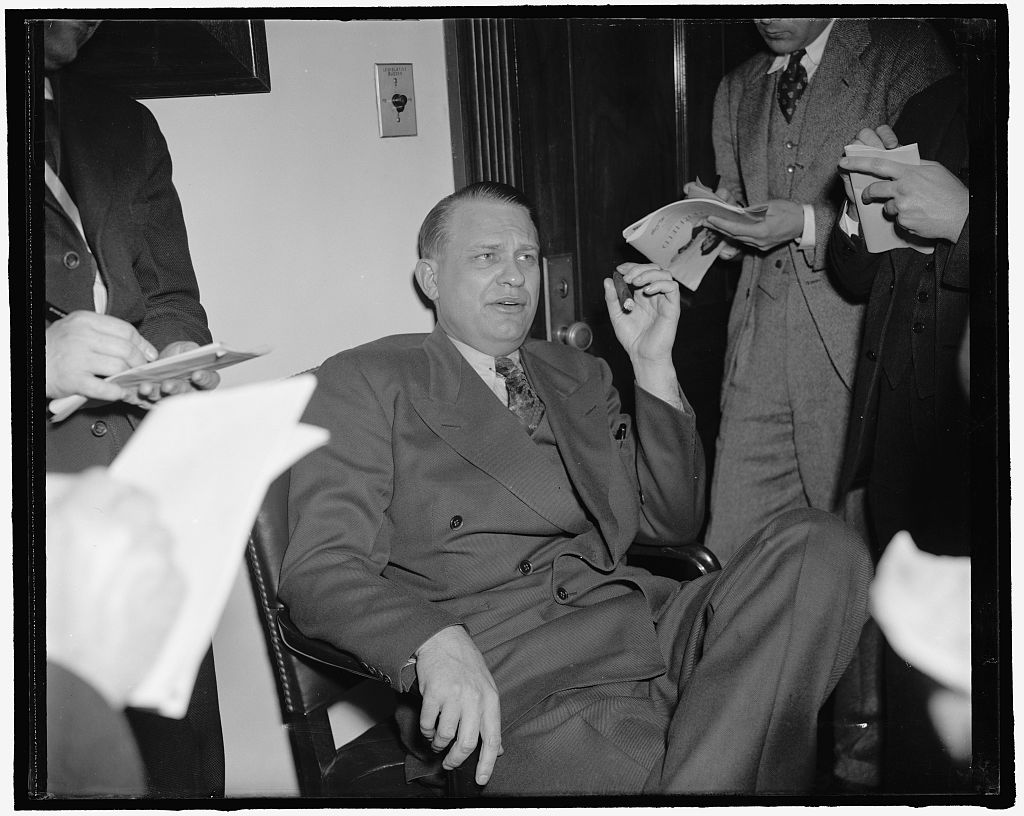

The committee's output was large. The National Archives inventory of its records counts seventeen printed volumes of public testimony (10,387 pages) and seven volumes of executive testimony later made public. Its files include individual and organizational card indexes, investigators' reports, and 54 feet of Communist Party membership records from 1937 and 1938, mostly from West Coast party offices: membership stamp books, control cards and registration blanks listing each member's real name, party name, occupation, union and party function.7 Those records are physical evidence that the party kept a membership roll larger and more organized than its public face suggested, and that the committee obtained it.
Targets and methods
The committee investigated the German-American Bund and other Nazi groups, especially in its early years, and the inventory describes Los Angeles and Chicago files on Bund meetings and mailing lists. It gave far more public attention, however, to communist influence in labor unions, in New Deal agencies and in the Works Progress Administration's arts programs. The Federal Theatre Project, one of its early targets, lost its funding in 1939.9
The committee's method was public exposure. Witnesses, many of them former communists or officers of patriotic groups, named organizations and individuals; the committee printed the testimony; newspapers reported the names. People named had little chance to answer in the same forum. The most important staff member in building this method was J. B. Matthews. The Senate Historical Office describes him as a former activist who "boasted of having joined more Communist-front organizations than any other American, although he had never joined the Communist party," turned against his former allies in the mid-1930s, and "served as chief investigator" for the committee from 1939 to 1945.1 Matthews compiled lists of front organizations and their sponsors, the raw material for what later became guilt by association. In 1938 his testimony about Hollywood celebrities whose names had appeared in greetings to a French communist newspaper was ridiculed in the press because the list included the child actress Shirley Temple; the committee answered that it had not called those named communists. That episode is reported in secondary accounts; this lesson did not open the 1938 hearing volume, so the wording is not quoted here.
Matthews later carried the method into the Senate. McCarthy named him executive director of the Permanent Subcommittee on Investigations in June 1953, and he resigned within weeks after an article he wrote on communists in the Protestant clergy caused an uproar; subcommittee records list his service as June 22 to July 18, 1953.1 That is the clearest personal thread between the Dies era and McCarthy, and it ran through a staff member, not through McCarthy himself.
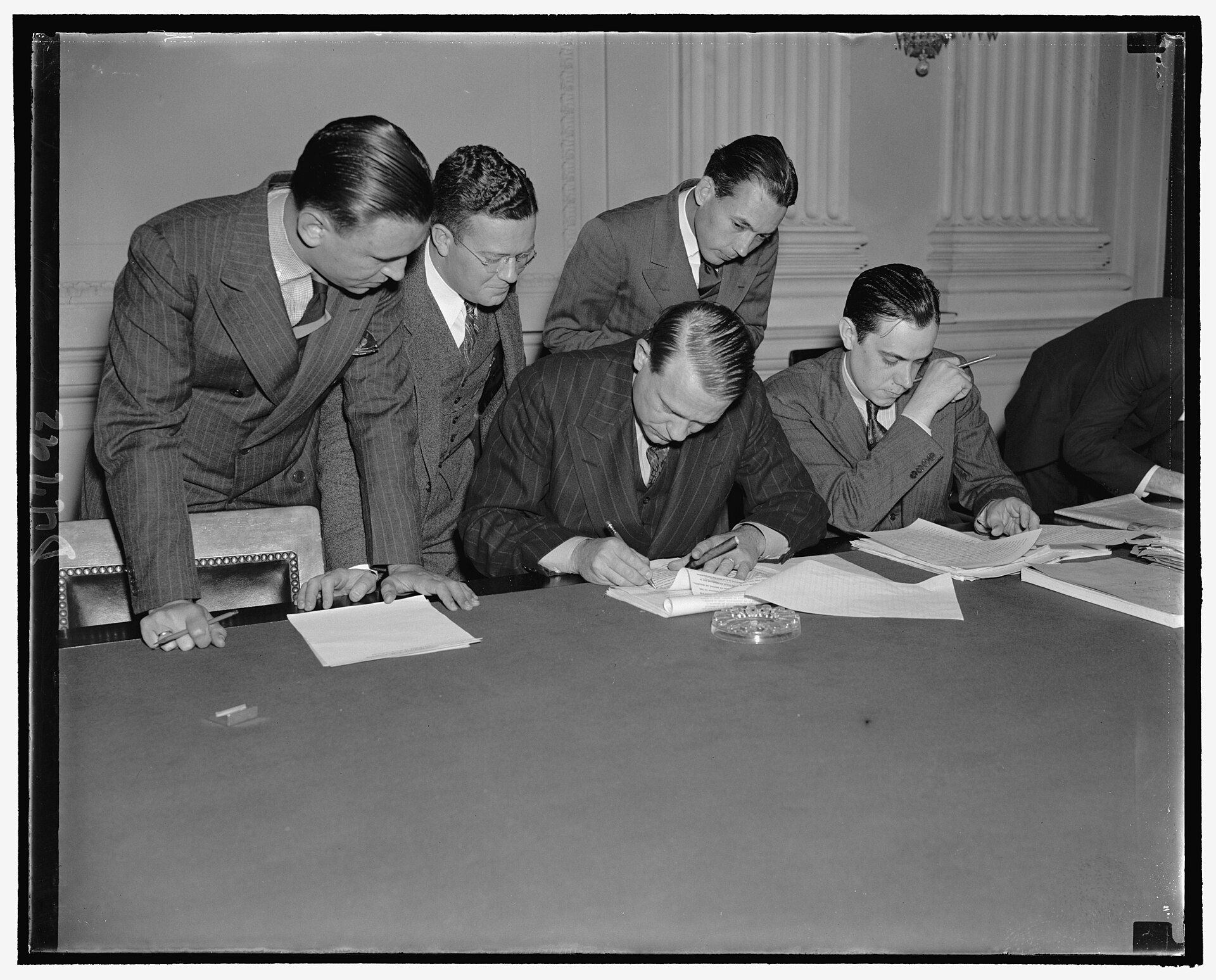

Roosevelt answers Dies
The committee's first great clash with the White House came weeks before the 1938 election. Witnesses before the committee had accused Michigan's governor, Frank Murphy, of near-treasonable conduct for refusing to use force against the sit-down strikers at General Motors in 1937. On October 25, 1938, President Roosevelt issued a statement saying he was "very much disturbed," that the committee "made no effort to get at the truth," and that its conduct was "a flagrantly unfair and un-American attempt to influence an election." He called the charges against Murphy "absurdly false."10 Dies replied the next day.
Roosevelt never moved against the committee directly, and the House kept renewing it by wide margins. The pattern held for the rest of the decade: presidents of both parties disliked the committee's methods, and Congress kept funding it because voters approved of its purpose.
The 1943 attack on named officials and United States v. Lovett
The Dies committee's most consequential overreach came in 1943. In a House speech on February 1, 1943, Dies attacked thirty-nine named federal employees as "irresponsible, unrepresentative, crackpot, radical bureaucrats" and affiliates of "Communist front organizations." The House then attached to an appropriations bill a section (section 304 of the Urgent Deficiency Appropriation Act of 1943) forbidding payment of salary after November 15, 1943, to three of them, Goodwin B. Watson, William E. Dodd Jr. and Robert Morss Lovett, unless the President reappointed them with Senate consent.11 The House approved that rider 318 to 62 on May 18, 1943.8 Their agencies wanted to keep them, and Roosevelt signed the bill while calling the provision unconstitutional.
On June 3, 1946, the Supreme Court agreed. In United States v. Lovett, Justice Hugo Black's opinion held that section 304 was a bill of attainder, a legislative punishment of named persons without a judicial trial, forbidden by Article I of the Constitution.11 The case is the sharpest legal judgment on the Dies committee's method: Congress had tried to act as accuser, jury and paymaster at once. Lesson 09 follows the later court cases.
What the Dies committee got right, and what it got wrong
A fair ledger begins with the committee's accurate claims. The Communist Party was directed from Moscow; the McCormack-Dickstein committee had already said so, and the Comintern archives opened in the 1990s confirmed it (covered in lesson 01). Party members did hold places in New Deal agencies and in some unions, and a secret group of them in Washington did exist in the 1930s; Whittaker Chambers would describe it in 1948, and the Venona decrypts and Soviet archives later corroborated the outline (lesson 02). Nazi organizing in the United States was real and dangerous. The committee raised these issues when much of official Washington preferred not to.
The committee was wrong, often, on individuals. It treated sponsorship of a cause, signing a petition or membership in a "front" as proof of disloyalty. It gave witnesses' accusations wide circulation without testing them. It mixed real communist organizers with liberals, pacifists and New Deal officials whose only offense was disagreeing with Dies, and it timed some hearings for political effect, as Roosevelt charged in 1938. Its signature legislative act, the 1943 rider, was struck down as unconstitutional. Historians who disagree about almost everything else in this module tend to agree on that mixed verdict, though they weigh the halves differently, as the rival readings below show.
HUAC becomes a standing committee, January 1945
Dies did not return to the 79th Congress, and the special committee would have lapsed with him. On the opening day of the new Congress, January 3, 1945, John E. Rankin of Mississippi offered an amendment to the resolution adopting the House rules. He told the House that its object was "to extend the life of the Committee on Un-American Activities, usually referred to as the Dies committee, and to make it one of the standing committees of the House." The Congressional Record shows the amendment carried on a roll call of 208 yeas to 186 nays, with 40 not voting.12 (Contemporary letters and many later histories give the tally as 207 to 186; a March 1945 letter by Oklahoma congressman Lyle Boren, who voted no, used that figure.13 The printed Record is the controlling source.)
The rules language gave the new committee, acting as a whole or by subcommittee, power to investigate "(1) the extent, character, and objects of un-American propaganda activities in the United States, (2) the diffusion within the United States of subversive and un-American propaganda that is instigated from foreign countries or of a domestic origin and attacks the principle or the form of government as guaranteed by our Constitution, and (3) all other questions in relation thereto that would aid Congress in any necessary remedial legislation." The National Archives notes that the committee kept that role, under the HUAC name until 1969 and then as the Committee on Internal Security, until the House abolished it in 1975 and moved its jurisdiction to the Judiciary Committee.14 The Legislative Reorganization Act of 1946 kept it in the permanent structure, and HUAC's 1948 hearings cite "Public Law 601" as their authority.15
The narrow margin matters for interpretation. Nearly half of the members voting opposed the committee in 1945, before the Cold War began. By 1947 the political weather had changed, and the committee's votes grew lopsided again. The same committee that had lost its chairman and almost lost its life became, within three years, the most powerful investigating body in Congress, with a young California Republican named Richard Nixon among its members.
Hollywood, October and November 1947
What was real in Hollywood
The Communist Party did have an active branch among Hollywood screenwriters in the 1930s and 1940s, and it did use its members' positions in the Screen Writers Guild and in political causes of the day. Historians on both sides of the larger debate, from Herman to Schrecker, accept that much.1617 The harder question, then and now, was what the members actually put on screen, and the hearings produced little evidence on that point: HUAC's own report rests its case on party membership and affiliations, not on film content.15
HUAC's annual report for 1948 states the committee's case. It "devoted the final week of October 1947 to an investigation of Communist influence in the motion-picture industry," heard producers, writers, actors and union leaders, and denied any wish to censor the industry. It named ten men as responsible for communist activity: John Howard Lawson, Dalton Trumbo, Albert Maltz, Alvah Bessie, Samuel Ornitz, Herbert Biberman, Edward Dmytryk, Adrian Scott, Ring Lardner Jr. and Lester Cole. "Each of these witnesses refused to affirm or deny membership in the Communist Party, claiming that the committee had no right to inquire into his political beliefs or affiliations." In each case, the report says, the committee presented evidence of affiliations with communist organizations "and a copy of the witness' Communist Party registration card."15
The hearings and the refusals
The hearings ran in the second half of October 1947 under Chairman J. Parnell Thomas of New Jersey. Friendly witnesses, including studio executives and actors, described communist activity in the guilds. The ten unfriendly witnesses took a deliberate legal position: they did not claim the Fifth Amendment privilege against self-incrimination, which would have let them refuse to answer lawfully. They claimed instead that the First Amendment barred the committee from asking about political belief and association at all.
The House voted to cite all ten for contempt of Congress on November 24, 1947. The vote on Albert Maltz, the first, was 346 to 17.8 A federal grand jury in Washington indicted them on December 5, 1947, and they were arraigned on January 9, 1948.15

Convictions and prison
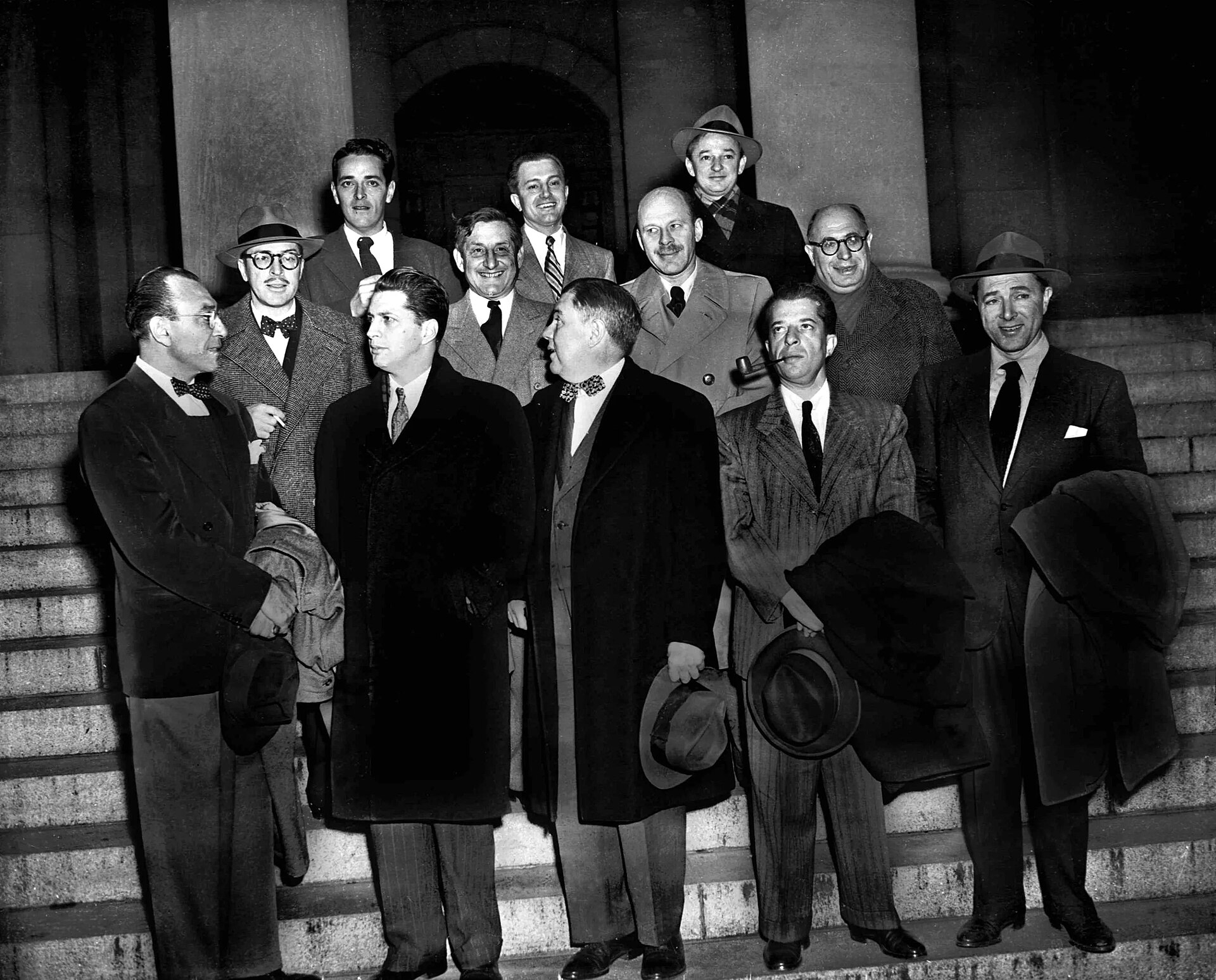
The government tried Lawson and Trumbo first, in April and May 1948, as test cases, and juries convicted both. The other eight agreed to be bound by the outcome. After their appeals failed and the Supreme Court declined to review the convictions, Lawson and Trumbo began their sentences on June 9, 1950; the remaining eight were then sentenced. Eight received one year in prison and a $1,000 fine. Biberman and Dmytryk received six months.18 In 1951 Dmytryk went back before HUAC, said he had been a party member, and named others.18 His later testimony is one of the clearest confirmations that the committee's basic factual claim about the group's party ties was correct, at least for him.
The Waldorf Statement, November 25, 1947
The government did not create the Hollywood blacklist; the industry did. On November 24 and 25, 1947, studio executives met at the Waldorf-Astoria Hotel in New York, and on November 25 Eric Johnston, president of the Motion Picture Association of America, released their statement. Its operative sentences were short. "We will forthwith discharge or suspend without compensation those in our employ" among the ten, it said, "and we will not re-employ any of the 10 until such time as he is acquitted or has purged himself of contempt and declares under oath that he is not a Communist." "We will not knowingly employ a Communist or a member of any party or group which advocates the overthrow of the government of the United States by force or by any illegal or unconstitutional methods." The statement acknowledged the risks of its own policy: "There is the danger of hurting innocent people. There is the risk of creating an atmosphere of fear." And it asked for help: "We request Congress to enact legislation to assist American industry to rid itself of subversive, disloyal elements."19
The Waldorf Statement turned a congressional contempt dispute into an employment rule enforced by private companies, outside any court and without any hearing. Its authors foresaw the cost and accepted it. How large that cost became, in careers lost, pseudonymous writing, and names named, is the subject of lesson 10.
Hollywood assessed
The investigators were right that there was an organized communist group among Hollywood writers, that its members concealed their affiliation, and that the party valued the industry for its money and prestige. The ten's refusal to answer was a legal gamble that failed; under the law as the courts then read it, Congress could ask the question, and refusing to answer was contempt. On the other side of the ledger, the committee never showed that the screen itself had carried meaningful communist propaganda, the hearings produced no legislation, and the practical result was a private blacklist that reached far past the ten. Writers sympathetic to the anti-communist cause, such as Arthur Herman, stress the party's real discipline over its members; critics such as Ellen Schrecker stress the damage done to people who had broken no law.1617
The Truman loyalty program, 1947 to 1953
Why Truman acted
The executive branch built its own machinery in the same years, and it was larger than anything Congress ran. After the 1946 elections gave Republicans control of Congress, Truman announced the President's Temporary Commission on Employee Loyalty on November 25, 1946. The commission reported on March 2, 1947, and Truman acted on its report nineteen days later.20 The pressures behind it were real: the Canadian Gouzenko spy case of 1945 and 1946, the Amerasia documents case, and, inside the government, what the FBI already knew from Elizabeth Bentley, who had come to the Bureau in 1945 (all treated in lesson 01 and lesson 02). Truman also wanted to keep the issue out of congressional hands. Robert Justin Goldstein, writing in the National Archives' journal Prologue, notes that Attorney General Tom Clark told the commission that only about two dozen communists were then employed by the government, while the commission recommended investigating all of the roughly two million federal employees.20

Executive Order 9835, March 21, 1947
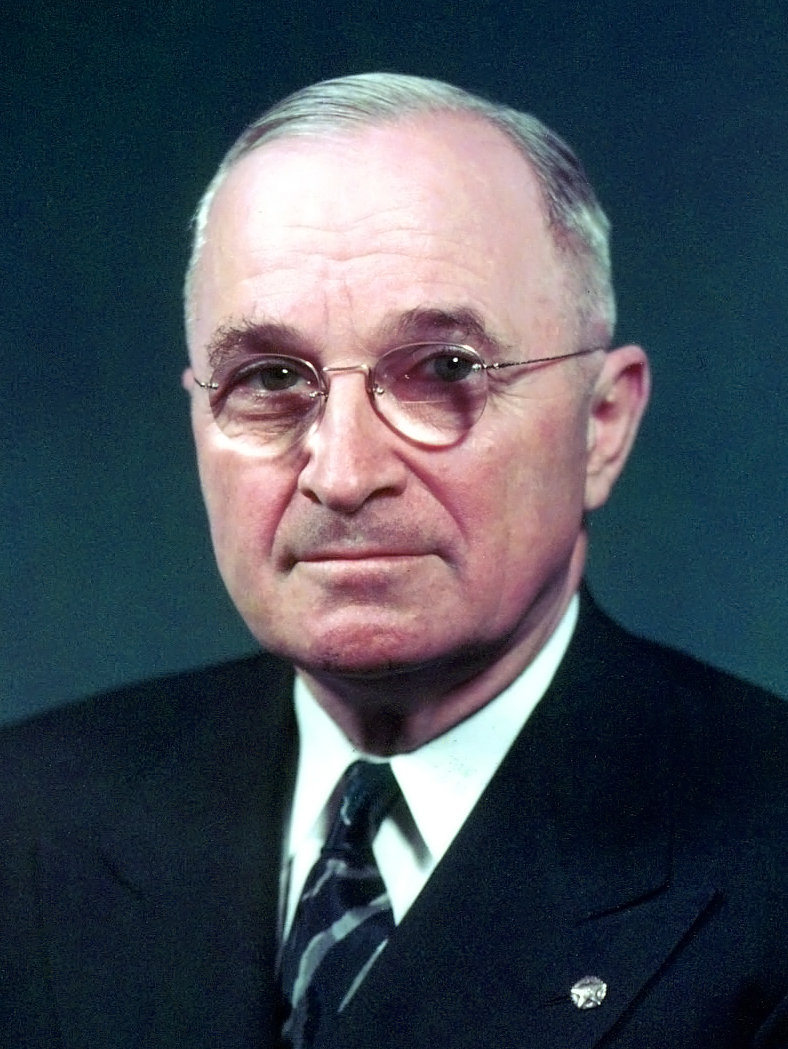
Executive Order 9835, signed March 21, 1947, required a loyalty investigation of every person entering civilian employment in the executive branch and of every incumbent employee. Its preamble declared that federal employees owed "complete and unswerving loyalty to the United States" and, in the same breath, that "equal protection from unfounded accusations of disloyalty must be afforded the loyal employees of the Government." For incumbents, the FBI checked names against its records; for applicants, FBI files were one of the required sources; and "whenever derogatory information with respect to loyalty of an applicant is revealed," a full field investigation followed.21
Each agency head was made personally responsible for keeping disloyal people out. Each agency set up one or more loyalty boards of at least three members. An accused employee was entitled to written notice of the charges, a hearing, the right to counsel, and the right to present evidence; an adverse decision could be appealed to the agency head and then to a Loyalty Review Board in the Civil Service Commission, whose recommendations were advisory.21 Applicants and some others went before regional loyalty boards of the Civil Service Commission; Dorothy Bailey's case, for example, was heard by the Loyalty Board of the Fourth Civil Service Region before she appealed to the Loyalty Review Board in Washington.22
The standard for removal was the heart of the order: removal or refusal of employment required that, "on all the evidence, reasonable grounds exists for belief that the person involved is disloyal to the Government of the United States" (the Truman Library text reads "exists"). The order listed the activities and associations that could count, among them sabotage and espionage, treason or sedition, advocacy of violent overthrow, intentional disclosure of confidential information under circumstances indicating disloyalty, serving a foreign government's interests over American ones, and "membership in, affiliation with or sympathetic association with" any organization the Attorney General designated as totalitarian, fascist, communist or subversive.21
Truman's public defense of the program, issued November 14, 1947, promised fairness in plain terms: "Rumor, gossip, or suspicion will not be sufficient to lead to the dismissal of an employee for disloyalty." Membership in an organization was "simply one piece of evidence." The boards, he said, "are definitely not 'kangaroo' courts," and he did not want loyal employees "to fear they are the objects of any 'witch hunt.'"23
The Attorney General's list
The order's sixth category, association with a designated organization, required a list, and the order directed the Justice Department to furnish one to the Loyalty Review Board for circulation to every agency.21 Goldstein's study of the Attorney General's List of Subversive Organizations finds that the first Truman list, released to the public in December 1947, named about 90 organizations, 47 of which had already been designated under Attorney General Francis Biddle during the war, and that Justice Department lawyers had considered 449 groups by then. The organizations were listed without notice, charges or hearings. Clark told Congress in December 1947 that "we did not have any hearings," and in 1961 he said the groups perhaps should have been heard first. Goldstein argues that publication transformed a screening tool into what scholars came to call an official blacklist, used far outside the federal workforce by employers, licensing boards and private groups.20 The Supreme Court's 1951 decision on the list's procedures is covered in lesson 09.
What the numbers show
The scale was enormous and the yield was small. From 1947 to August 1953, according to the Civil Service Commission's annual report as cited by the law scholar David Fellman, loyalty forms were processed for 4,756,705 persons; loyalty boards cleared 16,503; and 560 were removed or denied employment on loyalty grounds.24 The State Department, the agency McCarthy would attack first, gives a closer view. Its Loyalty Security Board reported that through December 15, 1952, 684 employees had received FBI full field investigations under the loyalty program, all but 18 of the 584 cases that reached a board panel were cleared, and the board had made 30 adverse decisions since 1947: 3 on loyalty grounds, 15 on security grounds in loyalty cases, and 12 in security-only cases.25 Historian Robert Ferrell, in his biography of Truman, adds that none of the discharged cases led to the discovery of espionage; that judgment is reported here from a secondary summary and was not checked against the book.26
Two readings of those numbers compete. One, associated with M. Stanton Evans, holds that small removal counts show the program was too lax: security officers flagged people whom the boards then cleared, and some of those cleared appear in the Venona decrypts or Soviet files.27 The other, associated with Ellen Schrecker, holds that the numbers show the program caught few spies because the Soviet networks had largely been broken up by 1945 and 1946, so that its real effect was to punish and frighten employees for political views and associations.17 Storrs's study of New Deal economists and policy experts, many of them women, argues that loyalty investigations drove a generation of social-democratic reformers out of government or into silence, narrowing what Washington would consider; she also acknowledges that some of those she studied had been closer to the Communist Party in the 1930s than they later admitted.28 Both readings can be partly true at once: the boards could miss a real agent and wrong an innocent employee in the same year, because they used association as a stand-in for conduct.
The 1951 change in the standard
On April 28, 1951, Truman signed Executive Order 10241, amending the standard. Removal no longer required "reasonable grounds" for belief that a person was disloyal; it was enough that "on all the evidence, there is a reasonable doubt as to the loyalty of the person involved to the Government of the United States."29 The change shifted the weight of uncertainty onto the employee. At the State Department, the department's own board made three adverse loyalty findings after the change, and the Loyalty Review Board, taking over cases directly, reversed the department board's clearances of John S. Service and John Carter Vincent.25 President Eisenhower replaced the whole system with a broader "security" program in 1953, which falls outside this lesson.
Method and its costs
The program's procedure was its weakness. Employees were told the substance of the charges but usually not the names of the informants, the dates, or the places. Dorothy Bailey, a federal employee, testified, presented witnesses and denied the charges, yet the appeals court noted that she "was not permitted to face or to cross-examine" those who had informed against her, and the dissenting judge wrote that the informants were not identified even to the board.22 The courts largely allowed that procedure, which lesson 09 explains. The result was a system that promised that "rumor, gossip, or suspicion" would not be enough and then judged people on evidence they could not see.
The Smith Act and the Foley Square trial
The Alien Registration Act of 1940
The Smith Act, named for Representative Howard W. Smith of Virginia, was Title I of "An Act to prohibit certain subversive activities; to amend certain provisions of law with respect to the admission and deportation of aliens; to require the fingerprinting and registration of aliens; and for other purposes," approved June 28, 1940 (54 Stat. 670), and known as the Alien Registration Act. Section 1 made it a crime to urge disloyalty or insubordination in the armed forces. Section 2 made it unlawful "to knowingly or willfully advocate, abet, advise, or teach the duty, necessity, desirability, or propriety of overthrowing or destroying any government in the United States by force or violence," to publish matter advocating it with intent to cause overthrow, or "to organize or help to organize any society, group, or assembly of persons who teach, advocate, or encourage" such overthrow, or to join one "knowing the purposes thereof." Section 3 made it a crime "to attempt to commit, or to conspire to commit" any of those acts. The penalty was a fine of up to $10,000, up to ten years in prison, or both, plus five years' ineligibility for federal employment.30
The law was passed in June 1940, the month France fell, when fear of fascist and communist fifth columns ran high and the Nazi-Soviet pact was in force. Its first major use came in 1941 in Minneapolis against leaders of the Socialist Workers Party, a small Trotskyist group that led a Teamsters local; eighteen were convicted.31 The membership clause in Section 2 would later be the heart of the Supreme Court's 1957 and 1961 cases, which lesson 09 covers.
The 1948 indictments
In July 1948 a federal grand jury in New York indicted twelve members of the Communist Party's national board, among them Eugene Dennis. The indictment charged a conspiracy, running from April 1, 1945, to the date of the indictment, to organize the Communist Party of the United States as a group to teach and advocate the overthrow and destruction of the government by force and violence, and to advocate and teach the duty and necessity of such overthrow.32 The charge did not allege any act of violence, espionage or sabotage. It alleged a conspiracy to teach and advocate, proved largely through the party's own classic texts and the testimony of informants who had joined the party for the FBI. One of the twelve, the party's veteran national leader, was severed from the case because of ill health and never tried.33
Foley Square, 1949
The trial of the remaining eleven took place before Judge Harold R. Medina in the federal courthouse at Foley Square in Manhattan. The Supreme Court later called it "turbulent"34 and noted that it lasted nine months, six of them spent taking evidence, and produced a record of some 16,000 pages.32 On October 14, 1949, the jury convicted all eleven: Eugene Dennis, John B. Williamson, Jacob Stachel, Robert G. Thompson, Benjamin J. Davis Jr., Henry Winston, John Gates, Irving Potash, Gilbert Green, Carl Winter and Gus Hall. They were sentenced on October 21, 1949.35 Ten received five years in prison and a $10,000 fine; Thompson, who had won the Distinguished Service Cross in the Second World War, received three years.33
The Court of Appeals for the Second Circuit affirmed in an opinion by Judge Learned Hand, who described the party as "a highly articulated, well contrived, far spread organization" and framed the test as whether the gravity of the evil, "discounted by its improbability," justified the restriction on speech.35 The Supreme Court affirmed on June 4, 1951, in Dennis v. United States, with Justices Black and Douglas dissenting.32 The doctrine of that decision, and its narrowing in Yates in 1957, are the subject of lesson 09.
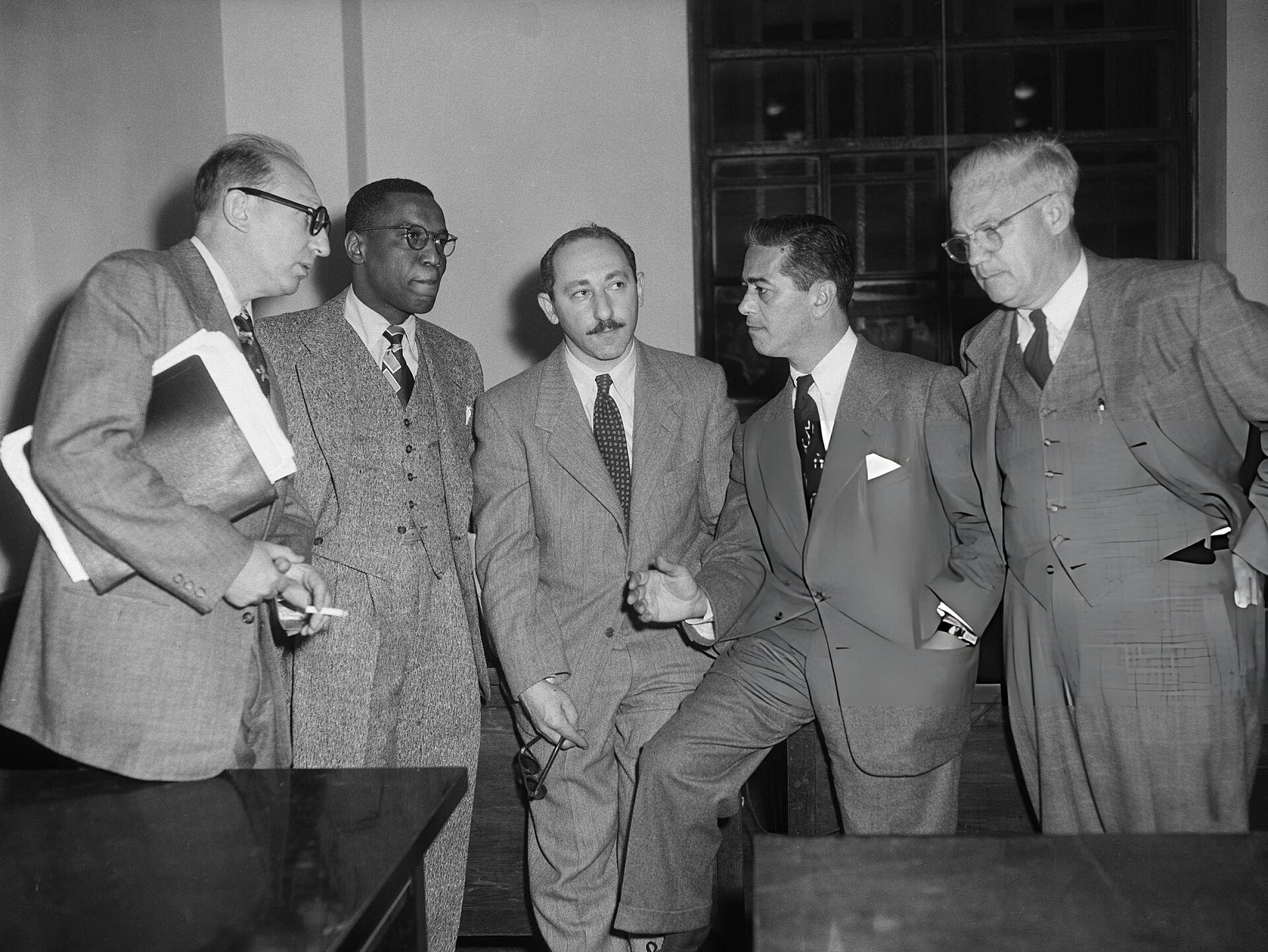

The defense lawyers
Immediately after the verdict, Judge Medina filed a certificate holding the defense lawyers in contempt for their conduct during the trial and sentenced them to jail, without a further hearing. The Supreme Court upheld that summary procedure in Sacher v. United States on March 10, 1952, calling "the integrity and efficiency of the trial process" the overriding consideration.34 Scholars disagree about who provoked whom. The defense filed a stream of objections and motions and attacked the judge's fairness; Medina, by several accounts, came to believe the lawyers were trying to break him or force a mistrial. The contempt sentences ranged from thirty days to six months, according to Michal Belknap's history of the case.33 Lawyers who considered representing communist defendants afterward knew what had happened to these five, a cost the Court's majority considered and rejected.
The Smith Act prosecutions assessed
What was real: the Communist Party's leadership did follow Moscow's line, did run a secret apparatus alongside the open party, and did teach Marxist-Leninist texts that called for revolution. The Comintern archives show that the American party took money and direction from Moscow (lesson 01). The government had grounds to see the party as an arm of a hostile power.
What was charged, though, was advocacy and organization, not espionage. The defendants were not the people running the party's covert contacts with Soviet intelligence, and the trial evidence consisted of books, classes and informants' accounts of what was taught. Defenders of the prosecution, from the Justice Department in 1948 to later writers sympathetic to the anti-communist effort, treated it as a legitimate response to a disciplined organization serving a foreign state. Schrecker treats it as the central example of punishing political belief, and she notes that the convictions made party membership itself dangerous and opened the way for further prosecutions.17 In Yates (1957) the Supreme Court required proof of advocacy of action, not of abstract doctrine. It read the instructions given to the Foley Square jury as meeting that test, so the 1949 convictions stood, while the same test made later Smith Act prosecutions of party members much harder to win.52 Lesson 09 has the details.
None of this involved McCarthy. The indictments were the work of Truman's Justice Department, filed in an election year, and the trial ended four months before the Wheeling speech.
Bentley, Chambers and the Hiss case, 1948 to 1950
Elizabeth Bentley, July 31, 1948
HUAC opened its 1948 espionage hearings on Saturday, July 31, with Elizabeth Terrill Bentley. Before she spoke, Chairman Thomas announced that the committee recommended a special grand jury in Washington to give special attention to espionage in the government, saying the committee regretted "that the matter has not been prosecuted long before this," and other members complained that the administration was slow to prosecute.36 Bentley, a Vassar graduate, testified that she had joined the Communist Party in March 1935 and met Jacob Golos in October 1938; she then described collecting information and party dues from a group of government employees organized around Nathan Gregory Silvermaster, and when asked whether anyone in the Treasury worked with that group she answered, "Yes; Harry Dexter White."36 Under questioning from Karl Mundt she said she had gone to the FBI in August 1945.36
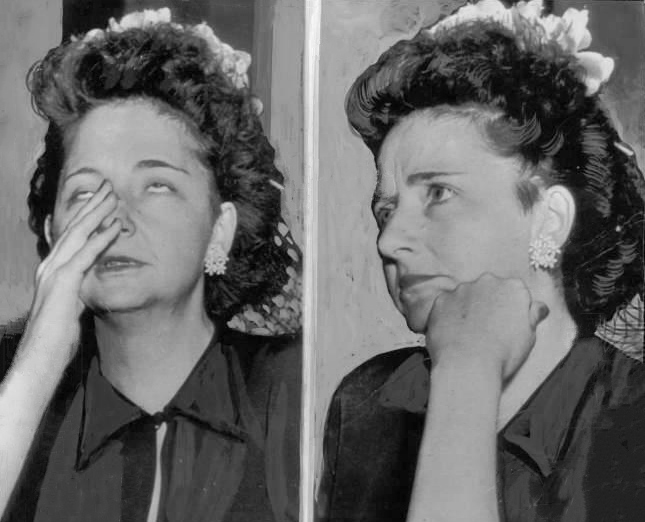

Her testimony was dismissed by many at the time as the story of a "red spy queen" with no documents. The archives later told a different story. Haynes and Klehr concluded from the Venona decrypts that most of the people Bentley named appear in Soviet intelligence traffic under cover names, and that her account was accurate in its essentials; lesson 02 goes through the evidence name by name.37 White appeared before the committee on August 13, 1948, denied the charges, and told it, "My creed is the American creed"; he died days later.36
Whittaker Chambers, August 3, 1948
On Tuesday, August 3, Whittaker Chambers, a senior editor at Time who told the committee he had repudiated "Marx' doctrines and Lenin's tactics" in 1937 and had then lived for a year in hiding after resolving to break with the party, read a statement to the committee. "For a number of years I had myself served in the underground, chiefly in Washington, D. C.," he said. He described an underground organization developed by Harold Ware, led at first by Nathan Witt and later by John Abt, and named its members, including Lee Pressman and "Alger Hiss, who, as a member of the State Department, later organized the conferences at Dumbarton Oaks, San Francisco, and the United States side of the Yalta Conference." He then added a qualification that would matter later: "The purpose of this group at that time was not primarily espionage. Its original purpose was the Communist infiltration of the American Government. But espionage was certainly one of its eventual objectives."36
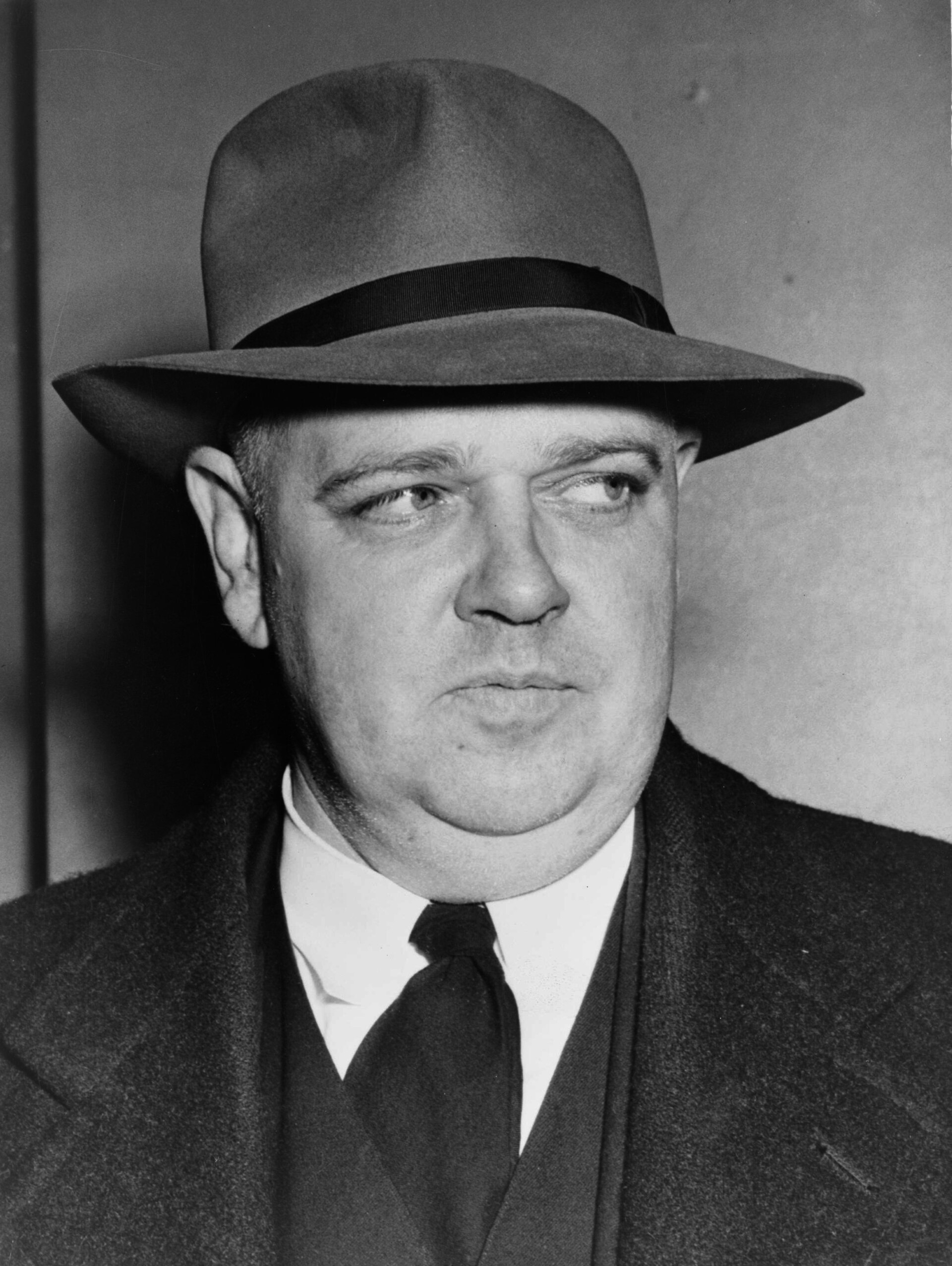

Chambers had told this story before. According to a National Archives account of the Hiss case file, he gave Assistant Secretary of State Adolf Berle a list of eighteen officials in the communist underground, Hiss among them, in September 1939; the information went nowhere at the time, and the FBI interviewed Chambers in 1942 and 1945.38 The government had the name for nine years before the public did.
Hiss denies, August 5
Alger Hiss, by then president of the Carnegie Endowment for International Peace, asked to appear and did so on August 5. "I am not and never have been a member of the Communist Party," he said. "I do not and never have adhered to the tenets of the Communist Party." He said that to the best of his knowledge he "never heard of Whittaker Chambers until in 1947," when the FBI asked him about the name.36 Hiss was poised and well connected, and most of the committee was ready to let the matter drop.
The same afternoon, President Truman was asked at his news conference whether "the Capitol Hill spy scare is a 'red herring' to divert public attention from inflation." He answered "Yes, I do," and read a statement saying that no information had come out of the committees "that has not long since been presented to a Federal grand jury," which had found it "insufficient to justify indictment."39 A week later, asked whether he still thought it a red herring, he said yes: "The first--the strongest type you can smell."40 Truman's remark became a liability once the evidence against Hiss emerged, because it suggested the administration preferred not to know.
Nixon and the confrontation
Richard Nixon, a first-term Republican from California, was the member who would not let the case go. On August 5, acting chairman Karl Mundt appointed a subcommittee, and on Saturday, August 7, Nixon presided over its closed session with Chambers in room 101 of the federal courthouse at Foley Square in New York.36 The committee's strategy, which Nixon pursued, was to test whether Chambers truly knew Hiss by drawing out private details. Asked about Hiss's hobbies, Chambers said Hiss and his wife were amateur bird watchers and recalled that "once they saw, to their great excitement, a prothonotary warbler."36 On August 16, in closed session, a committee member asked Hiss whether he had ever seen a prothonotary warbler, and Hiss answered, "I have right here on the Potomac." Hiss also named a man he had known in the 1930s as "George Crosley."36
On August 17, 1948, a subcommittee met at 5:35 p.m. in room 1400 of the Hotel Commodore in New York with Nixon, McDowell and Thomas present, and brought the two men face to face. After questions about an apartment Chambers had used and a car, Hiss said, "I am now perfectly prepared to identify this man as George Crosley." Chambers made a "positive identification" of Hiss as the man he had known in the party. Hiss then rose and walked toward Chambers and said: "I would like to invite Mr. Whittaker Chambers to make those same statements out of the presence of this committee without their being privileged for suit for libel. I challenge you to do it, and I hope you will do it damned quickly."36 The committee held a public session with both men on August 25.
The libel suit, the Baltimore documents and the pumpkin papers
Chambers repeated the charge outside the committee, as Hiss had challenged him to do, and Hiss sued him for libel in Baltimore. That suit changed the case. In a pretrial deposition in Baltimore in November 1948, Chambers produced copies of State Department documents that he said Hiss had given him; HUAC's chief investigator, Robert Stripling, later told the committee that at a "pretrial examination in Baltimore during the month of November" Chambers had submitted documents "which he alleges under oath were given to him by a person employed in the State Department," and that one of them was a State Department telegram dated February 15, 1938.41 The production also exposed a problem for Chambers: in August he had described the group's purpose as infiltration and had not accused Hiss of espionage. He was now admitting that he had held back.
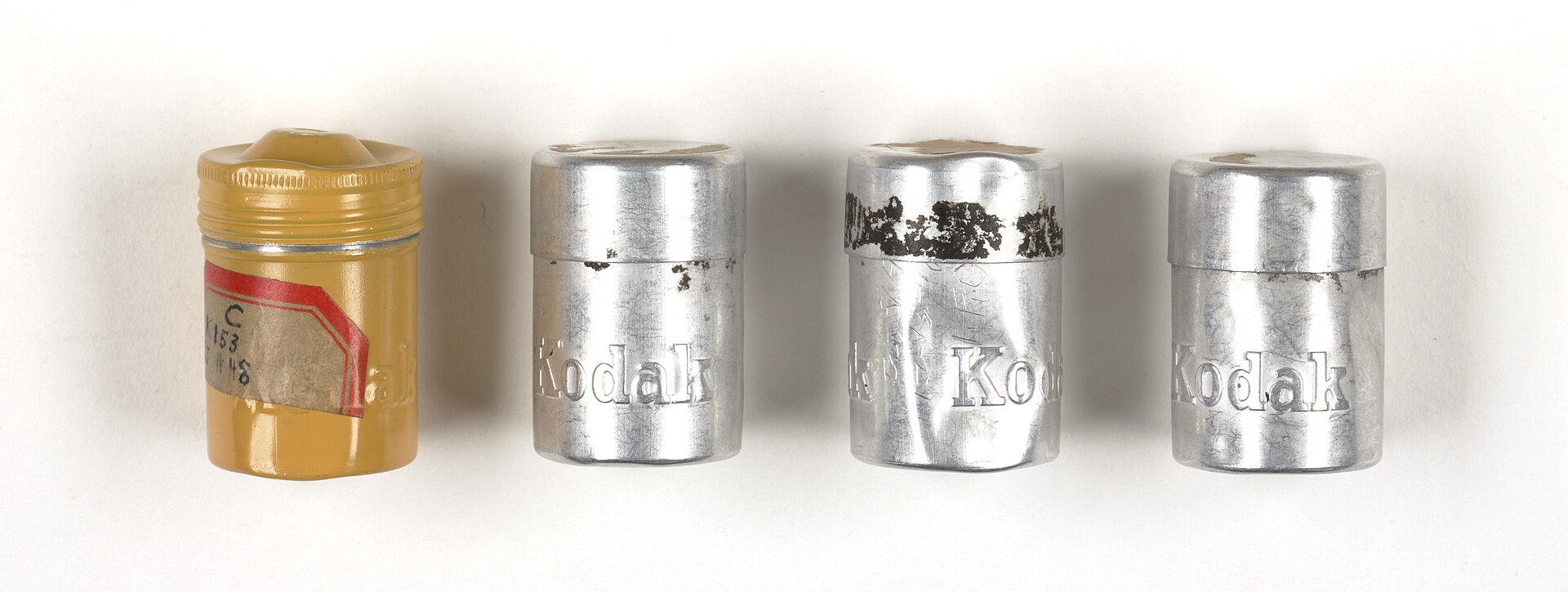
On December 2, 1948, HUAC investigators served a subpoena on Chambers at his farm in Westminster, Maryland. Investigator William Wheeler testified that they arrived at about 10:45 p.m. and that Chambers "produced three aluminum containers that later proved to have film in them," along with two rolls of developed film. Asked where the material had come from, Wheeler said, "It was taken from a pumpkin." Chambers had walked into a field, picked up several pumpkins, chosen one, pulled off the top, and said, "Here is what you are looking for."41 The undeveloped film was processed at a Veterans' Administration laboratory. A manager of Eastman Kodak's Washington office testified that the film had been manufactured in 1937, consistent with Chambers's account of when he had received the documents. Former Under Secretary of State Sumner Welles reviewed some of the documents and told the committee that publishing them even in 1948 would harm the national interest, because, read beside the coded originals, they would help an outsider break codes then in use.41

The indictment and the two trials
The statute of limitations on espionage had run, so the government charged perjury. On December 15, 1948, a federal grand jury in New York indicted Hiss on two counts: that he had lied in testifying that he never turned over State Department documents, or copies of them, to Chambers or any other unauthorized person, and that he had lied in testifying that he did not see Chambers after January 1, 1937.42 The first trial ran from May 31 to July 8, 1949, and ended with a hung jury. The second trial began in November 1949, and on January 21, 1950, the jury convicted Hiss on both counts.43 He was sentenced to five years.44 At sentencing he said he was confident that "the full facts showing how Whittaker Chambers was able to carry out forgery by typewriter will be developed."45
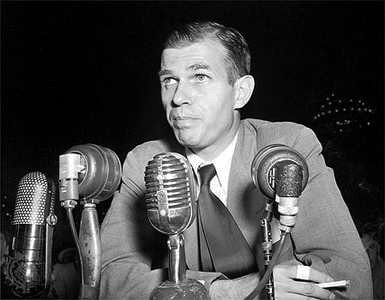

The physical evidence carried the case. The Court of Appeals for the Second Circuit, affirming the conviction on December 7, 1950, summarized it: Chambers had produced forty-three typewritten documents and four pencil memoranda in Hiss's handwriting, and all but one of the typed documents had been typed on a Woodstock typewriter that belonged to the Hisses and was kept in their Washington home. The Hisses said they had given the machine to a former servant before the dates on the documents, but the court held there was enough contrary evidence for the jury to find otherwise.42 The Supreme Court declined to hear the case, and Hiss entered the federal penitentiary at Lewisburg, Pennsylvania, on March 22, 1951; he served three years and eight months.4353
What the evidence now shows about Hiss
Hiss maintained his innocence for the rest of his life, and for decades the case divided Americans along lines that had little to do with the evidence. Three bodies of evidence have accumulated since the trials.
First, the documents and the typewriter, which persuaded the second jury and the appeals court, have never been shown to be forged despite repeated attempts by the defense, including a 1952 motion for a new trial based on typewriter affidavits that Judge Henry Goddard denied.43 Allen Weinstein, who began his research expecting to find for Hiss, concluded in Perjury (1978) that Hiss was guilty.46
Second, the Venona decrypts released in 1995 to 1996 include a March 30, 1945, message from the Soviet military intelligence station in Washington about an agent with the cover name "ALES," whom an American analyst's note identified as probably Hiss. Haynes and Klehr accept that identification.37 Kai Bird and Svetlana Chervonnaya argued in 2007 that ALES was a different State Department official, Wilder Foote. John Ehrman, reviewing the dispute for the CIA's journal Studies in Intelligence, found their case built on assumptions and concluded that Hiss "alone remains the best candidate to be ALES."47
Third, Alexander Vassiliev's notes on KGB files, published in full in Haynes, Klehr and Vassiliev's Spies (2009), contain references that those authors read as identifying Hiss as a Soviet agent of military intelligence.48 The weight of scholarly opinion now holds that Chambers told the truth about Hiss's role in the 1930s underground and the passing of documents. A small number of writers still dispute it, and the specific identification of ALES remains contested in its details. Lesson 02 presents the Venona evidence fully.
Nixon's role assessed
Nixon's part is documented in the hearing record: he presided over the August 7 session, pressed for the confrontation, and was present at the Commodore Hotel. The case made him a national figure. Admirers credit him with refusing to let a well-connected witness's denial end the inquiry, and the later evidence supports him on the central question. His detractors fault the committee's practice of leaking executive testimony and staging public confrontations, and point out that the decisive evidence came from Chambers's documents in a civil lawsuit, not from the committee's questioning. Both accounts fit the record. Nixon was a House member throughout the events of this lesson and moved to the Senate only at the end of 1950; he and McCarthy were separate actors in separate chambers.8
The Internal Security Act of 1950
The last piece of the machinery was statutory. On May 19, 1948, the House passed the Mundt-Nixon bill to require communist organizations to register, by a recorded vote of 319 to 58 (Karl Mundt gave it at the July 31 hearing as 319 to 56); it died in the Senate.836 In September 1950, three months into the Korean War, Congress passed an omnibus measure, H.R. 9490, the Internal Security Act of 1950, often called the McCarran Act after Senator Pat McCarran of Nevada.
Its findings declared that "there exists a world Communist movement" whose purpose was to establish "a Communist totalitarian dictatorship" throughout the world by "treachery, deceit, infiltration into other groups (governmental and otherwise), espionage, sabotage, terrorism," and other means, and that the direction of that movement was "vested in and exercised by the Communist dictatorship of a foreign country." Title I, the Subversive Activities Control Act, required "communist-action" and "communist-front" organizations to register, through a five-member Subversive Activities Control Board. Title II, the Emergency Detention Act of 1950, provided for detaining persons in a declared internal security emergency.49
Truman vetoed it on September 22, 1950. His message said the Justice Department, the Defense Department, the CIA and the State Department had all advised that the bill "would seriously damage the security and the intelligence operations for which they are responsible." Requiring the party to register was "about as practical as requiring thieves to register with the sheriff." The bill would "put the Government of the United States in the thought control business," and its treatment of front organizations posed "the greatest danger to freedom of speech, press and assembly, since the Alien and Sedition Laws of 1798." Yet Truman also wrote that the dangers communism presented "are serious, and must be met."50 The House overrode the veto 286 to 48 on September 22, and the Senate followed, 57 to 10, in a session that ran into September 23, the date the Truman Library gives for final passage.850
The vote counts show how far the consensus had moved. Truman, who had built the loyalty program and prosecuted the party's leaders, now found himself defending civil liberties against a Congress that wanted more. McCarthy voted with the majority on the override, as did most senators of both parties; he was one of fifty-seven, not the author.
The rival readings
Historians who agree on the facts above disagree sharply on their meaning. Their positions are summarized here in this lesson's words, not theirs, and the books are listed in the sources.
M. Stanton Evans, in Blacklisted by History (2007), argues that the security failures of the 1930s and 1940s were worse than the public knew, that the Truman administration and its loyalty boards repeatedly cleared people whom security officers had flagged, and that the earlier investigators, including HUAC in the Hiss case, were vindicated by the later archives.27 Arthur Herman, in Joseph McCarthy (2000), accepts that Soviet penetration was real and that anti-communism was a legitimate cause, while treating McCarthy's methods as damaging to it.16
Ellen Schrecker, in Many Are the Crimes (1998), argues that "McCarthyism" was a broad political repression built mainly by the FBI, HUAC, the loyalty program and private employers before McCarthy arrived, that the espionage of the 1930s and war years was real but largely over by the late 1940s, and that the machinery's main effect was to punish dissent and destroy the communist and allied movements.17 David Oshinsky (A Conspiracy So Immense, 1983) and Richard Rovere (Senator Joe McCarthy, 1959) focus on McCarthy himself, and both present him as exploiting an anti-communist politics that already existed; Oshinsky in particular places him within a Republican and congressional tradition he did not invent.51 Landon Storrs (2013) argues that the loyalty program reshaped American policy by removing social-democratic New Dealers from government.28
John Earl Haynes and Harvey Klehr (Venona, 1999; with Alexander Vassiliev, Spies, 2009) stand somewhat apart. Their work establishes that Bentley and Chambers were substantially truthful, that Soviet espionage in the 1930s and 1940s was extensive, and that Hiss and White were Soviet sources. They have also written that the anti-communist investigators often had the right general picture while getting many individual cases wrong.3748 On the narrow question of this lesson, the machinery before McCarthy, all of these writers agree on the chronology: the tools existed before he did.
What the record shows and what it does not
- Documented fact: HUAC's predecessor committees began in 1934 (McCormack-Dickstein) and 1938 (Dies); HUAC became a standing committee on January 3, 1945, by a recorded vote of 208 to 186. McCarthy never served on it.
- Documented fact: Executive Order 9835 (March 21, 1947) put every federal employee and applicant through a loyalty check; from 1947 to August 1953 about 4.76 million forms were processed and 560 people were removed or denied employment on loyalty grounds.
- Documented fact: The Attorney General's list was published in December 1947 without hearings for the organizations named.
- Documented fact: The House cited the Hollywood Ten for contempt on November 24, 1947, and the studios pledged the next day not to "knowingly employ a Communist."
- Documented fact: Eleven Communist Party leaders were convicted under the Smith Act on October 14, 1949, for conspiracy to teach and advocate overthrow, not for espionage.
- Documented fact: Hiss was convicted of perjury on January 21, 1950, on evidence that included documents typed on his family's typewriter.
- Documented fact: The Internal Security Act became law over Truman's veto in September 1950, with McCarthy among the fifty-seven senators voting to override.
- Allegation, partly confirmed: Bentley's and Chambers's accounts of Soviet networks in Washington. The archives support their substance; some individual identifications remain disputed.
- Allegation, not confirmed here: Samuel Dickstein's paid work for Soviet intelligence rests on Vassiliev's notes as reported by Weinstein and Vassiliev.
- Open question: How many of the people cleared by loyalty boards were in fact Soviet sources, and how many of those removed were wrongly accused. No complete case-by-case accounting exists.
- Open question: The exact identity of "ALES" in the 1945 Venona message, though Hiss remains the leading candidate in the government's own review.
Assessed from 2026
Each claim below was made in the period or is commonly made about it now. The rating reflects the evidence available in 2026.
"The Communist Party of the United States was directed from Moscow." (McCormack-Dickstein committee, 1935; Dies committee; Internal Security Act findings, 1950)
Supported. House Report 153 found that the party was a section of the Communist International; the Comintern archives opened in the 1990s confirm direction and funding from Moscow.3 Lesson 01 sets out the archival evidence.
"Watson, Dodd and Lovett were disloyal and should be removed by Congress." (Dies, 1943)
Unsupported. No court or administrative body found any of the three disloyal, and the Supreme Court held the pay cutoff unconstitutional as a bill of attainder.11
"The Hollywood Ten were members of the Communist Party." (HUAC, 1947)
Partly supported. HUAC introduced party registration records for each, and Dmytryk later testified that he had been a member. This lesson did not verify each of the ten individually against an independent primary source, so the rating stops short of fully supported. The committee's broader claim that their membership endangered national security through films was unsupported by evidence produced at the hearings.1518
"Rumor, gossip, or suspicion will not be sufficient to lead to the dismissal of an employee for disloyalty." (Truman, 1947)
Partly supported. Written charges, hearings and appeals did exist, and most people investigated were cleared. Employees usually could not confront informants, and the 1951 change to a "reasonable doubt" standard moved the burden toward the employee.2229
"The loyalty program let Soviet agents stay in government." (Evans and others)
Partly supported. Some people later identified in Venona or Soviet files had earlier been cleared or had left before action was taken (lesson 02). The program also found no espionage among those it discharged, by the account Ferrell gives, which suggests the networks had been broken by other means, chiefly Bentley's defection and FBI work.2726
"The spy hearings are a red herring." (Truman, August 1948)
Refuted as to Hiss and the substance of Bentley's testimony. Truman was right that the grand jury already had much of the information, but the claim that the hearings revealed nothing of substance did not survive the pumpkin papers, the Hiss conviction and the Venona releases.3937
"Alger Hiss passed State Department documents to Whittaker Chambers for Soviet intelligence." (Chambers, 1948)
Supported by a jury verdict on the perjury counts, the typewriter and handwriting evidence, and the later archival evidence summarized by Haynes, Klehr and Vassiliev and by the CIA's historian. The ALES identification is disputed in detail but not overturned.424748
"The Communist Party's leaders conspired to teach and advocate the overthrow of the government by force, and that made them a danger to the country." (Smith Act prosecution, 1948 to 1951)
Partly supported. The party's doctrine taught revolution and its leadership answered to Moscow, and the jury found the conspiracy to teach and advocate proved, a verdict the Supreme Court upheld. The prosecution did not show a plan or capacity for violence, and the indictment did not charge one. When the Court in Yates (1957) insisted on proof of advocacy of action, it read the Foley Square jury instructions as meeting that test.3252
"McCarthy started the Red Scare." (common belief today)
Refuted. Every institution described in this lesson existed and acted before February 1950. McCarthy joined an effort already in motion and gave it his name.1
Hard questions and answers
If the spies were real, why criticize the methods that went after them?
Because the methods that caught the real spies were mostly different from the ones that harmed the innocent. Bentley's defection, FBI counterintelligence, the Venona codebreakers and Chambers's documents exposed the networks. Public lists of front organizations, loyalty findings based on association, and the Hollywood blacklist did little of that work, and they reached thousands of people who had never been near an espionage ring. A reader can hold both conclusions: the threat was real, and much of the apparatus aimed at it was poorly designed to find it.
Didn't the Hollywood Ten bring their punishment on themselves by refusing to answer?
Legally, yes: under the law as the courts read it, Congress could ask, and refusal was contempt. They chose a confrontational First Amendment strategy in place of the Fifth Amendment privilege, and they lost. The blacklist that followed, though, was the studios' choice, not a sentence of any court, and it reached far beyond these ten men. The Waldorf Statement itself predicted the "danger of hurting innocent people."
Was Truman soft on communism?
The record does not support that description. Truman created the loyalty program, his Justice Department indicted the party's leaders and convicted Hiss, and the Army's Venona codebreaking continued under his administration. He also called the 1948 spy hearings a red herring and vetoed the Internal Security Act as a threat to liberty. Evans and other critics argue that the administration's instinct to protect its own people delayed action on real cases; defenders reply that it built most of the machinery that Congress later used. Both points are documented.
Was HUAC right about Hiss and wrong about everything else?
No. HUAC was right about the existence of a communist underground in Washington and about Bentley's and Chambers's basic accounts. It was wrong in many individual accusations, careless with reputations, and often more interested in publicity than legislation. Its record is mixed in the way most large institutions' records are, and it cannot be summarized by its best or worst case.
If the machinery already existed, what did McCarthy add?
Mainly a style and a target. He accused the State Department and later the Army of knowingly harboring communists, used numbers that kept changing, and attacked senior officials such as George Marshall by name.1 The earlier institutions had procedures, however flawed; McCarthy relied on publicity and the protection of Senate immunity. Lessons 05, 07 and 08 examine what he actually did.
Is there a lesson here for foreign influence today?
Yes, and it runs in two directions. FARA, a disclosure law aimed at foreign direction and money, survived and still works; the 1943 attempt to punish named officials by statute did not. Measures aimed at conduct and foreign control tend to hold up, and measures aimed at belief and association tend to fail in court and in public memory. Lesson 13 takes up the present.
Related reading on this site
- Lesson 01: Why the fear was real, 1917 to 1950
- Lesson 02: Venona and the archives for Bentley, Chambers, White and Hiss in the decrypts
- Lesson 06: Three committees compared for HUAC, SISS and the Permanent Subcommittee side by side
- Lesson 09: Censure, Watkins and the courts for Dennis, Yates, Barenblatt and the loyalty cases
- Lesson 10: What it cost for the blacklist and the careers lost
- Module 51: Communism for what communist economics proposed
- Module 58: Marx and the theory of class
- Module 52: Legitimate authority and its limits, Pierson's framework for judging when government power over belief and association goes too far
- Module 74: Glen Taylor, Herman Welker and the Red Scare. Idaho's Senator Glen Taylor is recorded as paired against the 1950 override of Truman's veto.8
Still open
These items could not be confirmed against a primary source before publication. The lesson states them as open, and they stay on the fact-check list.
- Samuel Dickstein's payments from Soviet intelligence are reported from Weinstein and Vassiliev, The Haunted Wood (1999), which this lesson did not open; the claim rests on Vassiliev's notes.
- J. B. Matthews's 1938 testimony and the Shirley Temple episode are reported from secondary accounts; the 1938 Dies hearing volume was not opened, so no wording is quoted.
- The online location of Schamel's 1995 NARA inventory of the Dies committee records was not confirmed; the citation points to NARA's finding-aids page. The text was read from a copy obtained during research.
- The House vote of January 3, 1945, is 208 to 186 in the printed Congressional Record and in Voteview; a contemporary letter and many histories give 207 to 186.
- The exact dates of the Hollywood hearings (commonly given as October 20 to 30, 1947) were not confirmed from the printed hearing volume; the lesson says only the second half of October 1947, following HUAC's report ('the final week of October 1947').
- The Hollywood Ten fines for Biberman and Dmytryk ($500 according to Ryan) are omitted; the lesson gives only their six-month terms.
- The Smith Act sentences (five years and $10,000 for ten defendants, three years for Robert Thompson), the severance of the twelfth defendant for ill health, the contempt sentence range of thirty days to six months for the defense lawyers, and the use of FBI informants at trial are reported from Belknap and other secondary summaries, not from a primary record opened for this lesson.
- The 1941 Minneapolis Smith Act case (eighteen convictions of Socialist Workers Party members) is reported from a secondary summary of Haverty-Stacke (2013); not checked against a primary record.
- Robert Ferrell's statement that no discharged loyalty case led to the discovery of espionage, and his figure of 378 dismissals by mid-1952, are reported from a secondary summary of his 1994 book.
- The date of the second Hiss verdict is January 21, 1950, per the FBI and the National Archives; the Ryan and Formica trial essay gives January 20. The second trial's opening is given as November 17 by Ryan and November 19 by the National Archives feature, so the lesson says November 1949.
- The date of Hiss's sentencing is given as January 25, 1950, by the Linder chronology (note 53), a secondary source; the lesson says only that he was sentenced to five years.
- Harry Dexter White's death (commonly dated August 16, 1948) is stated as 'days later' after his August 13 testimony; no primary source for the date was opened.
- Hiss's lifelong maintenance of innocence and Chambers's repetition of his charge outside the committee are stated from general knowledge of the case; the specific broadcast (Meet the Press, August 27, 1948) was not verified.
- Characterizations of the views of Evans, Herman, Schrecker, Storrs, Oshinsky, Rovere, Haynes and Klehr are this lesson's summaries; none of their books was opened during this task, and no words from them are quoted.
- Some photograph dates rely on Library of Congress, National Archives, Associated Press or Wikimedia Commons records (Dies, February 17, 1940; Dies with reporters, October 26, 1938; defense lawyers, October 14, 1949; Bentley, July 31, 1948) and were not independently confirmed.
- Checker note (Oct 28, 2026): the Dies committee record counts from Schamel's 1995 NARA inventory (10,387 pages of public testimony; 54 feet of party membership records) were not re-verified by the independent checker because the inventory is not online.
- Checker note (Oct 28, 2026): the Dies committee renewals of February 1941 and March 1942 are stated from the inventory; Voteview shows a March 11, 1942, renewal vote of 331 to 46 (H. Res. 420) and no recorded roll call for 1941.
Learn more
- HUAC, Hearings Regarding Communist Espionage in the United States Government (1948), full text: Read Chambers's August 3 statement, Hiss's August 5 denial and the August 17 Commodore Hotel session in the committee's own printed record.
- Executive Order 9835 at the Truman Library: The full text of the loyalty order, short enough to read in fifteen minutes; compare Part V with Executive Order 10241.
- Goldstein, Prelude to McCarthyism (Prologue, 2006): A National Archives history of how the Attorney General's list was built and why it was released without hearings.
- Truman's veto of the Internal Security Act: A president who built the loyalty program explains why he thought Congress had gone too far.
- Ehrman, The Mystery of 'ALES' (CIA, 2007): The intelligence community's historian weighs the dispute over the Venona cable that may name Hiss.
- Senate Historical Office introduction to the McCarthy executive sessions: Explains how the term McCarthyism came to cover committees McCarthy never sat on.
Notes
- Donald A. Ritchie, Senate Historical Office, introduction to Executive Sessions of the Senate Permanent Subcommittee on Investigations of the Committee on Government Operations, vol. 1 (83rd Congress, 1953), S. Prt. 107-84, U.S. Government Printing Office, 2003, pp. xiii to xxix, including the subcommittee staff list (J. B. Matthews, executive director, June 22 to July 18, 1953). Read it online. ↩
- National Archives and Records Administration, Guide to the Records of the U.S. House of Representatives at the National Archives, 1789 to 1989, chapter 22 (Records of Select Committees), paragraphs 22.86 to 22.87, on the Special Committee on Un-American Activities Authorized To Investigate Nazi Propaganda and Certain Other Propaganda Activities (H. Res. 198, 73rd Congress, adopted March 20, 1934). Read it online. ↩
- U.S. House of Representatives, Special Committee on Un-American Activities, Investigation of Nazi and Other Propaganda, H. Rept. 153, 74th Congress, 1st session, February 15, 1935 (Serial Set 9890). Read it online. ↩
- An Act to require the registration of certain persons employed by agencies to disseminate propaganda in the United States and for other purposes, June 8, 1938, ch. 327, 52 Stat. 631 (Public No. 583, 75th Congress, H.R. 1591), the Foreign Agents Registration Act. Read it online. ↩
- U.S. Department of Justice, National Security Division, "Foreign Agents Registration Act" (FARA Unit home page), accessed October 28, 2026. Read it online. ↩
- Allen Weinstein and Alexander Vassiliev, The Haunted Wood: Soviet Espionage in America, the Stalin Era (New York: Random House, 1999), pp. 140 to 150 (on Samuel Dickstein). Cited from secondary summaries; the book was not opened for this lesson. Read it online. ↩
- Charles E. Schamel, Inventory of Records of the Special Committee on Un-American Activities, 1938 to 1944 (the Dies Committee), Record Group 233, Center for Legislative Archives, National Archives and Records Administration, July 1995 (creation by H. Res. 282 on May 26, 1938; renewals; printed hearings; card files; series 16, Communist Party membership cards and lists, 1935 to 1938). Read it online. ↩
- Jeffrey B. Lewis and others, Voteview: Congressional Roll-Call Votes Database, UCLA, roll-call and member vote files for the 76th, 78th, 79th, 80th and 81st Congresses: House votes of February 3, 1939 (H. Res. 26, 344 to 35), January 23, 1940 (H. Res. 321, 344 to 21), February 10, 1943 (H. Res. 65, 302 to 94), May 18, 1943 (H.R. 2714 amendment, 318 to 62), November 24, 1947 (H. Res. 363, Maltz contempt, 346 to 17), May 19, 1948 (H.R. 5852, Mundt-Nixon bill, passage, 319 to 58), September 22, 1950 (H.R. 9490 override, 286 to 48); Senate vote on H.R. 9490 over the veto (57 to 10), with individual votes of Joseph McCarthy (yea) and Glen Taylor (paired against); Richard Nixon listed in the 81st Senate membership. Read it online. ↩
- Library of Congress, "Federal Theatre Project, 1935 to 1939," About this Collection (project ran 1935 to 1939, when its funding was terminated). Read it online. ↩
- Franklin D. Roosevelt, "Statement on the Sit-Down Strikes in Michigan," October 25, 1938, The American Presidency Project, University of California, Santa Barbara. Read it online. ↩
- United States v. Lovett, 328 U.S. 303 (1946), decided June 3, 1946, opinion of the Court by Justice Black. Read it online. ↩
- Congressional Record, House, 79th Congress, 1st session, vol. 91, part 1, January 3, 1945, pp. 10 to 15 (Rankin amendment to H. Res. 5; roll call no. 3: yeas 208, nays 186, not voting 40). Read it online. ↩
- Lyle H. Boren, correspondence of March 15, 1945, on the vote to make the Committee on Un-American Activities a standing committee (207 to 186), George B. Schwabe Collection, Carl Albert Congressional Research and Studies Center, University of Oklahoma, catalog record. Read it online. ↩
- National Archives and Records Administration, Guide to the Records of the U.S. House of Representatives, chapter 14, section on the House Un-American Activities Committee, 79th to 94th Congresses (1945 to 1975), including the committee's mandate text. Read it online. ↩
- U.S. House of Representatives, Committee on Un-American Activities, Report of the Committee on Un-American Activities to the United States House of Representatives, Eightieth Congress, December 31, 1948 (Hollywood hearings, contempt citations of November 24, 1947, indictments of December 5, 1947, and arraignments of January 9, 1948; indictment of Alger Hiss on December 15, 1948). Read it online. ↩
- Arthur Herman, Joseph McCarthy: Reexamining the Life and Legacy of America's Most Hated Senator (New York: Free Press, 2000). Summarized in this lesson's words, not quoted. Read it online. ↩
- Ellen Schrecker, Many Are the Crimes: McCarthyism in America (Boston: Little, Brown, 1998). Summarized in this lesson's words, not quoted. Read it online. ↩
- Bernard Ryan Jr., "Hollywood Ten Trials: 1948-50," in Great American Trials, via Encyclopedia.com (trial dates, sentences, prison dates of June 9, 1950, and Dmytryk's 1951 testimony). Read it online. ↩
- Association of Motion Picture Producers and Motion Picture Association of America, statement issued by Eric Johnston, November 25, 1947 (the Waldorf Statement), text as reproduced in film studies course materials, Santa Barbara City College. Read it online. ↩
- Robert Justin Goldstein, "Prelude to McCarthyism: The Making of a Blacklist," Prologue (National Archives), vol. 38, no. 3, Fall 2006. Read it online. ↩
- Executive Order 9835, "Prescribing Procedures for the Administration of an Employees Loyalty Program in the Executive Branch of the Government," March 21, 1947, Harry S. Truman Library and Museum. Read it online. ↩
- Bailey v. Richardson, 182 F.2d 46 (D.C. Cir. 1950), decided March 22, 1950, majority opinion and dissent of Judge Edgerton. Read it online. ↩
- Harry S. Truman, "Statement by the President on the Government's Employee Loyalty Program," November 14, 1947, Public Papers of the Presidents, Harry S. Truman Library and Museum. Read it online. ↩
- David Fellman, "The Loyalty Defendants," Wisconsin Law Review, January 1957, citing the U.S. Civil Service Commission Annual Report for 1953 (4,756,705 persons processed, 16,503 cleared by loyalty boards, 560 removed or denied employment, 1947 to August 1953). Read it online. ↩
- Memorandum by the Chairman of the Loyalty Security Board (Snow) to the Secretary of State, "Report on Loyalty Security Performance, 1947 to 1952," in Foreign Relations of the United States, 1952 to 1954, vol. I, part 2, document 200, Office of the Historian, U.S. Department of State. Read it online. ↩
- Robert H. Ferrell, Harry S. Truman: A Life (Columbia: University of Missouri Press, 1994), p. 301, as summarized in secondary sources (378 dismissed or denied employment by mid-1952; no discharged case led to discovery of espionage). The book was not opened for this lesson. Read it online. ↩
- M. Stanton Evans, Blacklisted by History: The Untold Story of Senator Joe McCarthy and His Fight Against America's Enemies (New York: Crown Forum, 2007). Summarized in this lesson's words, not quoted. Read it online. ↩
- Landon R. Y. Storrs, The Second Red Scare and the Unmaking of the New Deal Left (Princeton: Princeton University Press, 2013). Summarized in this lesson's words, not quoted. Read it online. ↩
- Executive Order 10241, "Amending Executive Order No. 9835," April 28, 1951, Harry S. Truman Library and Museum. Read it online. ↩
- An Act to prohibit certain subversive activities (Alien Registration Act, 1940; the Smith Act), June 28, 1940, ch. 439, Title I, sections 1 to 5, 54 Stat. 670 to 671. Read it online. ↩
- Donna T. Haverty-Stacke, "'Punishment of Mere Political Advocacy': The FBI, Teamsters Local 544, and the Origins of the 1941 Smith Act Case," Journal of American History, vol. 100, no. 1 (June 2013), pp. 68 to 93. Cited from a secondary summary; the article was not opened for this lesson. Read it online. ↩
- Dennis v. United States, 341 U.S. 494 (1951), decided June 4, 1951 (indictment and charges, length of trial, record of 16,000 pages, dissents of Justices Black and Douglas). Read it online. ↩
- Michal R. Belknap, Cold War Political Justice: The Smith Act, the Communist Party, and American Civil Liberties (Westport, Conn.: Greenwood Press, 1977), and later editions; cited for the sentences of October 21, 1949, the severance of the twelfth defendant for ill health, and the range of the lawyers' contempt sentences as summarized in secondary sources. The book was not opened for this lesson. Read it online. ↩
- Sacher v. United States, 343 U.S. 1 (1952), decided March 10, 1952. Read it online. ↩
- United States v. Dennis, 183 F.2d 201 (2d Cir. 1950), opinion of Judge Learned Hand, dated August 1, 1950 (verdict of October 14, 1949; sentencing of October 21, 1949; the eleven appellants). Read it online. ↩
- U.S. House of Representatives, Committee on Un-American Activities, Hearings Regarding Communist Espionage in the United States Government, 80th Congress, 2nd session, July 31 to September 9, 1948 (Government Printing Office, 1948): Thomas statement and Bentley testimony, July 31, pp. 501 to 511; Mundt on the Mundt-Nixon bill (319 to 56), p. 502; Chambers statement, August 3, pp. 564 to 565; Hiss testimony, August 5, pp. 642 to 643; Nixon subcommittee, August 7, and the prothonotary warbler, p. 666; Hiss, August 16, p. 961; Commodore Hotel session, August 17, pp. 975 to 989; White testimony, August 13. Read it online. ↩
- John Earl Haynes and Harvey Klehr, Venona: Decoding Soviet Espionage in America (New Haven: Yale University Press, 1999). Summarized, not quoted. Read it online. ↩
- National Archives at New York City, "United States of America v. Alger Hiss," Citizen Archivist newsletter feature, July 26, 2018 (Berle list of September 1939; FBI interviews of 1942 and 1945; indictment of December 15, 1948; trial dates; case file of 149 documents). Read it online. ↩
- Harry S. Truman, "The President's News Conference," August 5, 1948, The American Presidency Project. Read it online. ↩
- Harry S. Truman, "The President's News Conference," August 12, 1948, The American Presidency Project. Read it online. ↩
- U.S. House of Representatives, Committee on Un-American Activities, Hearings Regarding Communist Espionage in the United States Government, Part Two, 80th Congress, 2nd session, December 7 to 14, 1948: testimony of William A. Wheeler, pp. 1381 to 1384; Eastman Kodak witness, p. 1386; Sumner Welles, pp. 1386 to 1389; Stripling on the Baltimore deposition documents, p. 1388. Read it online. ↩
- United States v. Hiss, 185 F.2d 822 (2d Cir. 1950), decided December 7, 1950, opinion of Judge Chase. Read it online. ↩
- Bernard Ryan Jr. and Ron Formica, "Alger Hiss Trials: 1949-50," in Great American Trials, via Encyclopedia.com (trial dates, imprisonment from March 22, 1951 (the essay names the prison as Danbury, Connecticut; Hiss served at Lewisburg, Pennsylvania, per note 53), time served, denial of the 1952 new-trial motion). Read it online. ↩
- Federal Bureau of Investigation, "Alger Hiss," FBI History: Famous Cases and Criminals (conviction on January 21, 1950; five-year sentence). Read it online. ↩
- "National Affairs: The Case of Alger Hiss," Time, February 13, 1950 (Hiss's statement at sentencing). Read it online. ↩
- Allen Weinstein, Perjury: The Hiss-Chambers Case (New York: Alfred A. Knopf, 1978; rev. ed. Random House, 1997). Summarized, not quoted. Read it online. ↩
- John Ehrman, "The Mystery of 'ALES': Once Again, the Alger Hiss Case," Studies in Intelligence, vol. 51, no. 4 (2007), Center for the Study of Intelligence, Central Intelligence Agency. Read it online. ↩
- John Earl Haynes, Harvey Klehr and Alexander Vassiliev, Spies: The Rise and Fall of the KGB in America (New Haven: Yale University Press, 2009). Summarized, not quoted. Read it online. ↩
- Internal Security Act of 1950, September 23, 1950, ch. 1024, Public Law 831, 81st Congress (H.R. 9490), 64 Stat. 987: Title I, Subversive Activities Control Act of 1950, section 2 findings; Title II, Emergency Detention Act of 1950. Read it online. ↩
- Harry S. Truman, "Veto of the Internal Security Bill," September 22, 1950, Public Papers of the Presidents, Harry S. Truman Library and Museum, with editor's note that Congress passed the bill over the veto on September 23. Read it online. ↩
- David M. Oshinsky, A Conspiracy So Immense: The World of Joe McCarthy (New York: Free Press, 1983); Richard H. Rovere, Senator Joe McCarthy (New York: Harcourt, Brace, 1959). Summarized in this lesson's words, not quoted. Read it online. ↩
- Yates v. United States, 354 U.S. 298 (1957), decided June 17, 1957, opinion of the Court by Justice Harlan (contrasting the Yates jury charge with the instructions given to the Dennis jury, which required advocacy "of action"). Read it online. ↩
- Douglas O. Linder, "The Trials of Alger Hiss: A Chronology," Famous Trials, University of Missouri-Kansas City School of Law (sentencing January 25, 1950; Hiss begins his term at the federal penitentiary in Lewisburg, Pennsylvania, March 22, 1951; released after three years and eight months). Read it online. ↩
Check yourself
1. When did the House make the Committee on Un-American Activities a standing committee, and by what recorded vote?
The Rankin amendment to the House rules passed on January 3, 1945; the Congressional Record shows 208 yeas and 186 nays. Some contemporary sources give 207 to 186.
2. Which statement about Joseph McCarthy and HUAC is correct?
HUAC was a House committee. McCarthy entered the Senate in 1947 and chaired the Permanent Subcommittee on Investigations only in 1953 and 1954.
3. What did the Foreign Agents Registration Act of 1938 require?
FARA grew out of the McCormack-Dickstein committee's 1935 recommendation that foreign propaganda agents register and disclose their employers and pay.
4. Why did the Supreme Court strike down the 1943 law cutting off the salaries of Watson, Dodd and Lovett?
In United States v. Lovett (1946), the Court held section 304 of the 1943 appropriations act to be a bill of attainder forbidden by Article I.
5. Under Executive Order 9835 as amended in April 1951, what standard justified removal on loyalty grounds?
Executive Order 10241 replaced the 1947 test of 'reasonable grounds' for belief in disloyalty with 'a reasonable doubt as to the loyalty' of the person, which moved the burden toward the employee.
6. According to Civil Service Commission figures cited by David Fellman, about how many people were removed or denied federal employment on loyalty grounds from 1947 to August 1953?
Fellman cites 4,756,705 persons processed, 16,503 cleared by loyalty boards, and 560 removed or denied employment.
7. What were the eleven Communist Party leaders convicted of at Foley Square on October 14, 1949?
The Smith Act indictment charged conspiracy to organize the party as a group teaching and advocating violent overthrow and to advocate that overthrow; no act of espionage or violence was charged.
8. What was the main physical evidence that convinced the second Hiss jury?
The appeals court described 43 typed documents, all but one typed on the Hisses' Woodstock typewriter, and four pencil memoranda in Hiss's handwriting.
Terms in this lesson
- McCormack-Dickstein committee
- The House special committee of 1934 to 1935 that investigated Nazi and other propaganda and recommended the registration of foreign propaganda agents.
- Dies committee
- The House Special Committee on Un-American Activities, 1938 to 1944, chaired by Martin Dies Jr. of Texas; the predecessor of HUAC.
- HUAC
- The House Committee on Un-American Activities, a standing committee from January 3, 1945, renamed the Committee on Internal Security in 1969 and abolished in 1975. McCarthy never served on it.
- Foreign Agents Registration Act (FARA)
- The 1938 law requiring agents of foreign principals engaged in political activity to register and disclose their work and payments. It remains in force.
- Hollywood Ten
- Ten screenwriters and directors who refused in October 1947 to tell HUAC whether they were Communist Party members, were cited for contempt, and served prison terms in 1950.
- Waldorf Statement
- The November 25, 1947, pledge by studio executives to discharge the Hollywood Ten and not knowingly employ communists; the start of the industry blacklist.
- Executive Order 9835
- Truman's March 21, 1947, order creating loyalty investigations, agency loyalty boards and a Loyalty Review Board for the federal civilian workforce.
- Loyalty Review Board
- The board within the Civil Service Commission that heard appeals and reviewed cases under the Truman loyalty program; its recommendations were advisory.
- Attorney General's list
- The list of organizations designated as totalitarian, fascist, communist or subversive under Executive Order 9835, made public in December 1947 without hearings for the groups named.
- Smith Act
- Title I of the Alien Registration Act of 1940, which made it a crime to advocate or teach the violent overthrow of government, to organize or knowingly join a group that does, or to conspire to do so.
- Pumpkin papers
- Microfilm of 1938 State Department documents that Whittaker Chambers hid in a hollowed pumpkin on his Maryland farm and gave to HUAC investigators on December 2, 1948.
- Perjury
- Lying under oath. Hiss was convicted of two counts of perjury because the statute of limitations had run on espionage.
- Bill of attainder
- A legislative act that punishes named persons without a judicial trial, forbidden by Article I of the Constitution; the ground for United States v. Lovett.
- Internal Security Act of 1950
- The McCarran Act, passed over Truman's veto in September 1950, requiring communist organizations to register and providing for emergency detention.
Sources
- Senate Historical Office introduction, Executive Sessions of the Permanent Subcommittee on Investigations, vol. 1 (S. Prt. 107-84) (2003) checked 2026-10
- NARA Guide to House Records, chapter 22 (select committees) (1989) checked 2026-10
- NARA Guide to House Records, chapter 14 (HUAC records) (1989) checked 2026-10
- H. Rept. 153, 74th Congress: Investigation of Nazi and Other Propaganda (1935-02-15) checked 2026-10
- Foreign Agents Registration Act, 52 Stat. 631 (1938-06-08) checked 2026-10
- Department of Justice, FARA Unit (2026) checked 2026-10
- Schamel, Inventory of Records of the Dies Committee (NARA, 1995) (1995-07) checked 2026-10
- Voteview roll-call data, 76th to 81st Congresses (accessed 2026-10-28) checked 2026-10
- Roosevelt, Statement on the Sit-Down Strikes in Michigan (1938-10-25) checked 2026-10
- United States v. Lovett, 328 U.S. 303 (1946-06-03) checked 2026-10
- Congressional Record, House, January 3, 1945 (1945-01-03) checked 2026-10
- Boren correspondence on the HUAC vote, Carl Albert Center catalog record (1945-03-15) checked 2026-10
- HUAC annual report, 80th Congress (1948-12-31) checked 2026-10
- Ryan, Hollywood Ten Trials: 1948-50 (2002) checked 2026-10
- The Waldorf Statement (text) (1947-11-25) checked 2026-10
- Goldstein, Prelude to McCarthyism: The Making of a Blacklist (Prologue) (2006) checked 2026-10
- Executive Order 9835 (1947-03-21) checked 2026-10
- Executive Order 10241 (1951-04-28) checked 2026-10
- Truman statement on the employee loyalty program (1947-11-14) checked 2026-10
- Bailey v. Richardson, 182 F.2d 46 (1950-03-22) checked 2026-10
- Fellman, The Loyalty Defendants, Wisconsin Law Review (1957-01) checked 2026-10
- FRUS 1952-1954, vol. I, part 2, doc. 200: State Department loyalty security report (1953) checked 2026-10
- Smith Act (Alien Registration Act), 54 Stat. 670 (1940-06-28) checked 2026-10
- Dennis v. United States, 341 U.S. 494 (1951-06-04) checked 2026-10
- United States v. Dennis, 183 F.2d 201 (2d Cir.) (1950-08-01) checked 2026-10
- Sacher v. United States, 343 U.S. 1 (1952-03-10) checked 2026-10
- HUAC, Hearings Regarding Communist Espionage in the United States Government (July to September 1948) (1948) checked 2026-10
- HUAC, Hearings Regarding Communist Espionage, Part Two (December 1948) (1948-12) checked 2026-10
- National Archives at New York City, United States of America v. Alger Hiss (Citizen Archivist feature) (2018-07-26) checked 2026-10
- NARA catalog: Pumpkin Papers canisters (1948) checked 2026-10
- Truman news conference, August 5, 1948 (1948-08-05) checked 2026-10
- Truman news conference, August 12, 1948 (1948-08-12) checked 2026-10
- United States v. Hiss, 185 F.2d 822 (2d Cir.) (1950-12-07) checked 2026-10
- Ryan and Formica, Alger Hiss Trials: 1949-50 (2002) checked 2026-10
- FBI History: Alger Hiss (accessed 2026-10-28) checked 2026-10
- Time, The Case of Alger Hiss (1950-02-13) checked 2026-10
- Ehrman, The Mystery of 'ALES', Studies in Intelligence 51:4 (2007) checked 2026-10
- Internal Security Act of 1950, 64 Stat. 987 (1950-09-23) checked 2026-10
- Truman, Veto of the Internal Security Bill (1950-09-22) checked 2026-10
- Library of Congress, Federal Theatre Project collection (accessed 2026-10-28) checked 2026-10
- Haynes and Klehr, Venona: Decoding Soviet Espionage in America (1999) checked 2026-10
- Haynes, Klehr and Vassiliev, Spies (2009) checked 2026-10
- Weinstein and Vassiliev, The Haunted Wood (1999) checked 2026-10
- Weinstein, Perjury: The Hiss-Chambers Case (1978) checked 2026-10
- Belknap, Cold War Political Justice (1977) checked 2026-10
- Herman, Joseph McCarthy (2000) checked 2026-10
- Evans, Blacklisted by History (2007) checked 2026-10
- Schrecker, Many Are the Crimes (1998) checked 2026-10
- Storrs, The Second Red Scare and the Unmaking of the New Deal Left (2013) checked 2026-10
- Oshinsky, A Conspiracy So Immense; Rovere, Senator Joe McCarthy (1983; 1959) checked 2026-10
- Ferrell, Harry S. Truman: A Life (1994) checked 2026-10
- Haverty-Stacke, Punishment of Mere Political Advocacy (Journal of American History) (2013-06) checked 2026-10
- Yates v. United States, 354 U.S. 298 (1957) (1957-06-17) checked 2026-10
- Douglas O. Linder, The Trials of Alger Hiss: A Chronology (Famous Trials, UMKC) (n.d.) checked 2026-10