Lesson 6 of 10 · about 20 minutes
Socialism
You'll be able to
- Separate three things people mean by the word socialism: social ownership of the means of production, the welfare state, and democratic socialism
- Explain Mises's 1920 calculation argument and Hayek's knowledge argument in plain terms, and state the best reply to them
- Describe what Britain did with nationalization between 1945 and 1979 and how it ended
- Say why the Nordic countries are market economies with large welfare states, using the Danish prime minister's own words
- Read the Venezuelan record with the Maddison data and weigh the explanations offered by both sides
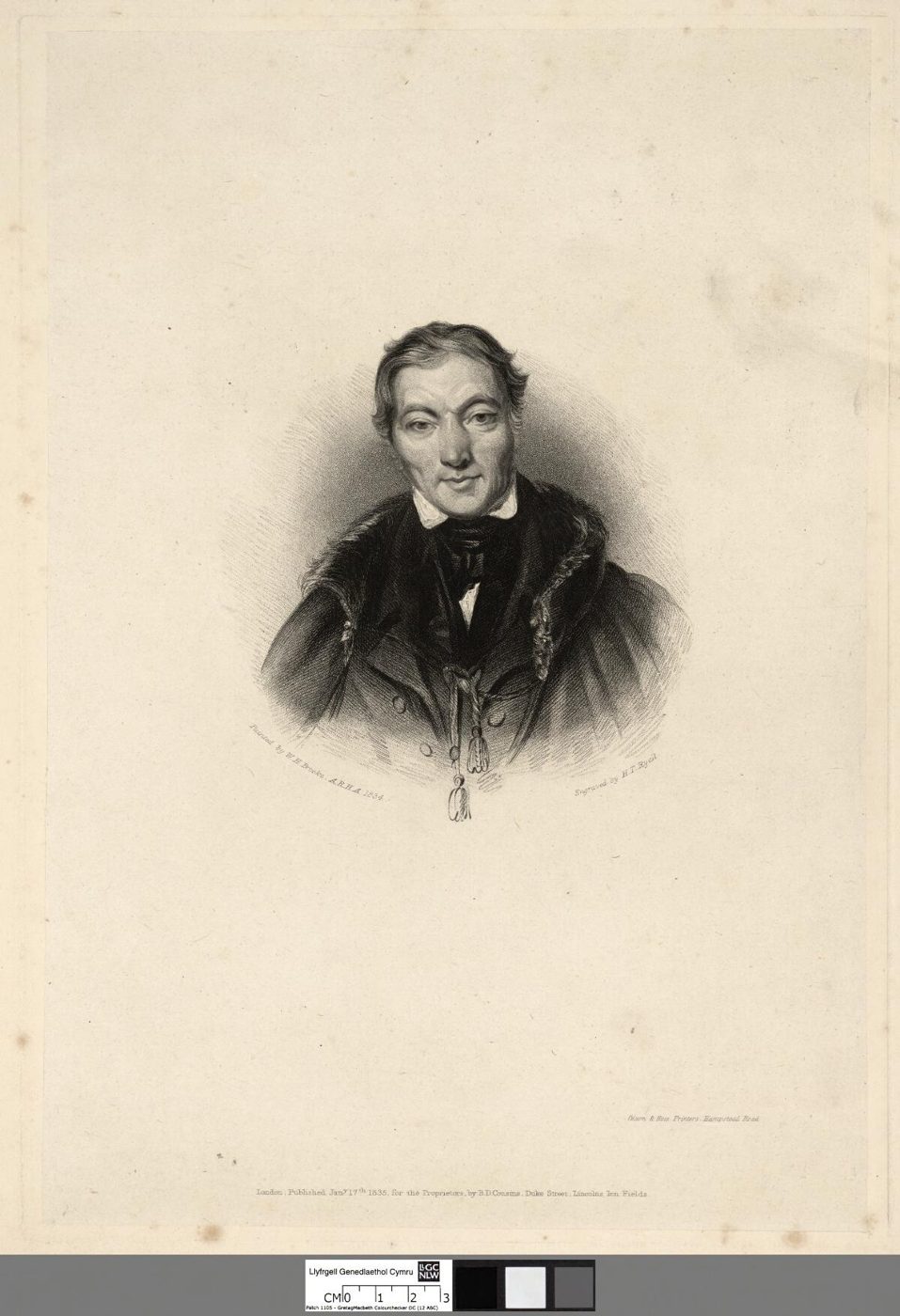
In January 1825 a Welsh-born cotton manufacturer named Robert Owen signed an agreement to buy a town in Indiana. The town was Harmony, on the Wabash River, built by a German religious group, the Harmony Society, who were leaving for Pennsylvania. Owen got roughly 20,000 acres and a set of tidy brick buildings for about $150,000 (sources give figures from $125,000 up).1 He renamed the place New Harmony and invited the world to join him in a community without private property, where people would share work and goods and the old evils of competition would fade.
About 700 to 800 people were living there when Owen returned in the spring of 1825.1 By March 1827 the experiment was regarded as a failure. Members resented the unequal credits given to workers and non-workers, the town was overcrowded and short of housing, skilled craftsmen were scarce, management was inexperienced, and Owen himself spent only a few months on site while the quarrels and splinter groups multiplied.1 By 1828 individualism had replaced socialism, and in 1829 the community was dissolved and its land returned to private use.1
That small Indiana failure holds nearly every argument of this lesson. People who liked the idea of a shared economy tried it. Real men and women then argued about who deserved what, who would do the unpleasant work, and who decided. Those are the questions from Lesson 1, and socialism answers them in a particular way: the community owns, the community decides.
Three things people mean by the word
Arguments about socialism go nowhere until both sides say which of three things they mean. The word has been stretched over all of them, and the stretching explains most of the shouting.
Social ownership of the means of production
This is the strict meaning, and the one Mises, Hayek and Friedman had in mind when they criticized it. The land, factories, railroads and machines belong to society as a whole, usually through the state. Production follows a plan instead of market prices. Marx and Engels put it in one line in 1848: "the theory of the Communists may be summed up in the single sentence: Abolition of private property."2 Lesson 7 takes up the communist version. Here the focus is on socialism as a system that was tried, often by governments that wanted nothing to do with revolutionary violence.
The welfare state
A welfare state taxes income and spends it on pensions, health care, schooling and unemployment benefits. The factories stay in private hands. Many Americans call this socialism, and some of its defenders embrace the label, but it answers a different question. It asks how to redistribute what a market economy produces. Strict socialism asks who should own the machinery that produces it.
Democratic socialism
The third meaning is a tradition that wants democratic control of the economy and gets there through elections. The Democratic Socialists of America describe their goal as "a vision of a more free, democratic and humane society" and say they envision "democratic planning and market mechanisms" to distribute resources fairly.3 That is a real position held by sincere people, and it deserves to be stated in its own words before anyone argues with it. It also shows how loose the term has become, since the DSA's own text leaves room for markets.
| Meaning | Who owns the factories | Who sets most prices | Example |
|---|---|---|---|
| Strict socialism | The state or society | Planners | Soviet Union, Cuba, Venezuela after its nationalizations |
| Welfare state | Private owners | Markets | Denmark, Sweden, the United States (on a smaller scale) |
| Democratic socialism | Mixed; goal is wider public or worker control | Mixed | Britain, 1945 to 1979, in part |
The dreamers and the gradualists
Owen was one of three men now grouped as the founders of "utopian socialism," along with the Frenchmen Henri de Saint-Simon and Charles Fourier. Fourier's followers founded American communities of their own, among them the North American Phalanx in New Jersey in 1843, and won over others, among them Brook Farm in Massachusetts, founded by Transcendentalists in 1841, which adopted Fourier's plan in 1844.4 The label "utopian" came from later socialists. Marx and Engels used it as a rebuke. In the Manifesto they complained that these earlier thinkers "reject all political, and especially all revolutionary action" and hoped to win people over by example.5 For Marx the real work was class struggle, and a model village was a distraction.
A different branch chose patience. The Fabian Society was founded in London on 4 January 1884 and took its name from the Roman general Fabius Maximus, the "Delayer," who wore down Hannibal without fighting a decisive battle.6 Sidney and Beatrice Webb, George Bernard Shaw and Graham Wallas wanted socialism by gradual reform inside a democracy. Fabians helped found the Labour Representation Committee in 1900, and the Labour Party grew out of it.6 That path, ballots and legislation instead of revolution, is the one that produced the British experiment below.
Mises and the calculation problem
In 1920 the Austrian economist Ludwig von Mises published an essay in German with a title that translates as "Economic Calculation in the Socialist Commonwealth." Russia had been under Bolshevik rule since 1917, and many thinkers assumed the only open question was how to run a planned economy. Mises asked whether it could be run rationally at all.
His argument ran like this. A factory manager choosing between building with steel or concrete, or between two routes for a railroad, has to compare costs. In a market, the prices of steel, concrete, land and labor come from millions of bids by people who own those things and can sell them. If the state owns all of them, nobody is buying and selling capital goods, and so no prices for them appear. Mises put it this way, in the translation published by the Mises Institute in Vienna:
"Where free market dealings are absent, there is no formation of prices; without the formation of prices there is no economic calculation."
Ludwig von Mises, Economic Calculation in the Socialist Commonwealth, 1920.7
Notice what he did not say. He did not say socialist managers would be lazy or wicked. He assumed good faith and asked how a planner would know whether a given project used scarce resources well or wasted them.
The best reply
Socialists answered. In the 1930s the Polish economist Oskar Lange proposed what is called market socialism. Firms would be publicly owned, and a Central Planning Board would set prices by trial and error: if a good ran short, the board would raise its price, and if stocks piled up, it would lower it. Managers would be told to set price equal to marginal cost.8 Lange accepted that calculation needed values, but argued those values need not come from private capital markets. In 1993 Paul Cockshott and Allin Cottrell argued that powerful computers could do the job directly, planning in physical units. Skeptics, among them the Hungarian economist Janos Kornai, answered that since perfect equilibrium never exists, a complete production plan cannot be written.8
Hayek's answer
Friedrich Hayek pressed the point further in 1945. The trouble is not only that prices are missing. The knowledge a planner needs is scattered among millions of people and much of it cannot be written down:
"The peculiar character of the problem of a rational economic order is determined precisely by the fact that the knowledge of the circumstances of which we must make use never exists in concentrated or integrated form but solely as the dispersed bits of incomplete and frequently contradictory knowledge which all the separate individuals possess."
Friedrich A. Hayek, "The Use of Knowledge in Society," American Economic Review, September 1945.9
A trial-and-error board might approximate prices for a few hundred standard goods. It would still have to discover, every day, which dock needs a crane, which farmer has spare seed, which shop is running out of a part. A price that moves in an open market tells all those people at once. A price set by a board tells them what the board knew last week. Lesson 4 follows that thread through the case for markets.
Hayek's warning, and what he allowed
In 1944 Hayek published The Road to Serfdom. His claim was that planning the whole economy is more than a technical choice, since money and goods are the means to every end a person pursues:
"Economic control is not merely control of a sector of human life which can be separated from the rest; it is the control of the means for all our ends."
Friedrich A. Hayek, The Road to Serfdom, 1944, chapter 7.10
Milton Friedman made the same claim in 1962 in sharper form. He wrote that "a society which is socialist cannot also be democratic, in the sense of guaranteeing individual freedom," and that he considered the idea of democratic socialism "a delusion."11 He gave a reason as well: competitive capitalism "separates economic power from political power and in this way enables the one to offset the other."11
What Hayek did not claim
Readers who know only the title often miss that Hayek rejected the idea that the alternative to planning was a free-for-all. His summary for chapter 3 says the alternative to a directed economy is "not laissez faire but a rational framework for competition."12 In chapter 9 he wrote that a basic minimum could be guaranteed outside the market: "There is no reason why in a society that has reached the general level of wealth which ours has attained, the first kind of security should not be guaranteed to all without endangering general freedom."13 His "first kind" was "security against severe physical privation, the certainty of a given minimum of sustenance for all." The second was "the security of a given standard of life, or of the relative position which one person or group enjoys compared with others." The second could be given to some only by controlling or abolishing the market, and that was the road he warned against.14
So the argument of the strongest critics of socialism leaves room for a safety net. They object to public ownership of the means of production and to central direction of the whole economy. That distinction matters for the rest of this lesson, because the countries Americans most often cite as socialist are mostly welfare states.
Britain tries it
Britain's Labour government, elected in 1945, did what Fabians had long proposed. It took the Bank of England into public ownership in 1946, then coal and electricity, the railways in 1948, gas in 1949 and steel in 1951. By one count about 20 percent of the economy was nationalized.15 The National Health Service opened in 1948.15 No one was shot and no election was cancelled, which is what makes the case so useful for anyone asking whether democratic socialism can stay democratic. Britain did stay a democracy.
The economic results were less happy. By the mid-1970s inflation was close to 25 percent, and in 1976 James Callaghan's Labour government asked the International Monetary Fund for a loan of $3.9 billion, at the time the largest ever requested from the Fund. The loan came with spending cuts.16 The crisis helped bring Margaret Thatcher to office in 1979.16 In Friedman's reading, Britain showed that planning had failed on its own terms. He pointed to Labour's "control of engagements" order, which would have assigned workers to jobs and which Labour found so contrary to personal liberty that it was repealed after a short time. That repeal, he wrote, "ushered in a decided shift in economic policy."17
A fair defender of Attlee would add that the NHS survived every later Conservative government, that postwar Britain rebuilt a bombed country and broadened access to care and schooling, and that the 1970s slump hit market economies everywhere. All of that is true. The record also shows that a state-owned coal board and a state-owned steel corporation did not deliver what their founders promised, and that the voters who had once elected them chose in 1979 to go another way.
What the Nordic countries are
American politicians on the left often hold up Denmark, Sweden and Norway as proof that socialism works. The Danes disagree. On 30 October 2015 Prime Minister Lars Lokke Rasmussen spoke at Harvard's Kennedy School of Government, and the Copenhagen Post reported his remarks under the headline "No socialists under the mattress":
"I know that some people in the US associate the Nordic model with some sort of socialism. I would like to make one thing clear. Denmark is far from a socialist planned economy. Denmark is a market economy."
Lars Lokke Rasmussen, Harvard Kennedy School, October 2015, as reported by the Copenhagen Post, 2 November 2015.18
Rasmussen called the Nordic model "an expanded welfare state that provides a high level of security to its citizens" inside "a successful market economy."18 That matches what Hayek said was compatible with freedom, and it is a different thing from nationalizing industry. These are rich countries. Maddison's database puts Denmark's GDP per capita at about $50,700 in 2022 and Sweden's at about $47,100, against about $58,500 for the United States, all in 2011 international dollars.19 They pay for large public programs with high taxes on broad bases and keep markets for goods, capital and trade open. Whether Americans want that bargain is a legitimate argument. It is an argument about taxes and benefits, not about socialism in the strict sense.
Venezuela
Venezuela under Hugo Chavez and Nicolas Maduro leaned toward socialism in the strict sense. Chavez's "socialism of the 21st century" is described in standard references as one that "seeks to promote social property," and the state kept heavy control over an economy that earned nearly all its foreign income from oil.20 The government suspended foreign exchange trading on 23 January 2003 and created a currency control board that February.21 Petroleum made up somewhere between 80 and 95 percent of exports, depending on the source and year.21
The Maddison data show what happened to the average Venezuelan. GDP per capita climbed to a peak of about $18,500 in 2012, then fell every year through 2021, when it stood near $4,900 (2011 international dollars). That is a drop of about three quarters.19 More than 7.9 million Venezuelans have left the country since 2015, according to the UN refugee agency's count, the largest displacement in the Americas on record.22
| Year | Venezuela GDP per capita | Brent crude, annual average |
|---|---|---|
| 2008 | $18,019 | $97 |
| 2012 | $18,486 (peak) | $112 |
| 2015 | $16,333 | $53 |
| 2018 | $9,446 | not shown |
| 2021 | $4,897 (low) | not shown |
| 2022 | $5,267 | $99 |
Sources: Maddison Project Database 2023 (2011 international dollars)19; FRED global Brent crude price, annual average of monthly figures.23
The defenders' case
Supporters of the Bolivarian government point to two outside causes. The first is oil. Brent crude averaged about $109 a barrel in 2013 and about $53 in 2015, and a country that lives on oil exports feels such a drop at once.23 The second is American sanctions. Washington banned transactions in Venezuelan state debt on 24 August 2017, and the economist Francisco Rodriguez has estimated that sanctions explain 59 percent of the fall in oil output after August 2017.21 Defenders also note that poverty fell from 48.6 percent to 29.5 percent between 2002 and 2011, according to a UN source cited in reference works.24 Those gains are real. They came during an oil boom.
What the explanations leave out
Oil prices recovered. Brent averaged about $99 in 2022, yet Venezuelan income per person stayed about 70 percent below its 2012 peak.2319 The decline started in 2014 and 2015, before the 2017 sanctions. Colombia, also an oil exporter, saw income per person rise from about $12,100 in 2012 to about $13,600 in 2021, and Chile's rose from about $20,700 to about $22,300.19 The honest summary is that sanctions and low oil prices made Venezuela's position worse, and that the structure of the economy, built on state ownership, price and currency controls and dependence on one commodity, made it fragile enough for those shocks to do so much damage. Which share belongs to which cause is a question economists still argue about.
A Christian note on voluntary sharing
Socialists sometimes point to the early church in Jerusalem, where believers "had all things common" and "distribution was made unto every man according as he had need" (Acts 4:32 and 4:35).25 Read the next chapter before drawing a conclusion. When Ananias and Sapphira sold a field and kept back part of the price, Peter did not charge them with theft from a common store. He asked, "Whiles it remained, was it not thine own? and after it was sold, was it not in thine own power?" (Acts 5:4).26 Their sin was lying about the gift. The property was theirs to keep. Sharing in that community was free, and the church has taught ever since that charity given willingly is a virtue and that the same sharing, taken by force, is something else. That is a point of theology and not an economic proof, but it explains why many believers who care deeply about the poor still hold that the means of production belong in private hands under law.
Weighing the record
Held up against Owen's Indiana experiment, the later history looks consistent. Voluntary communities of true believers have lasted in small numbers, usually under religious discipline. Whole nations organized on the same plan have needed either a fair amount of coercion or a retreat to markets. Britain retreated. The Nordic countries never advanced. Venezuela went furthest and fell furthest. None of this settles every dispute between a market economy with a big safety net and one with a small one, and it was never meant to. It does settle that the strict version of the idea has a poor track record where it has been tried at scale, and that the word is a bad guide to what any given country actually does.
Learn more
- Mises, Economic Calculation in the Socialist Commonwealth: The 1920 essay itself. Short enough to read in one sitting.
- Hayek, The Use of Knowledge in Society: The 1945 article that turned the calculation argument into a theory of dispersed knowledge.
- Hayek, The Road to Serfdom: A scan of the 1944 book. Read chapters 3, 7 and 9 to see both the warning and the safety-net passage.
- Marx and Engels, Manifesto, chapter 3: Their own critique of the utopian socialists, in their words.
- Democratic Socialists of America, About us: The group's own statement of what it wants.
- Copenhagen Post on the Danish prime minister's Harvard remarks: A short report with the full quoted passage.
- Maddison Project Database 2023: Download the data and check any country's income history yourself.
Notes
- "New Harmony, Indiana," Wikipedia, citing the purchase from the Harmony Society in 1825, the population at Owen's return, and the causes of failure. Read it online. The article notes that sources differ on the price ($125,000 to $150,000). ↩
- Karl Marx and Friedrich Engels, Manifesto of the Communist Party (1848; Samuel Moore translation, 1888), chapter 2. Read it online. ↩
- Democratic Socialists of America, "About us." Read it online. ↩
- "Utopian socialism," Wikipedia, on Saint-Simon, Fourier, Owen and the Owenite and Fourierist communities. Read it online. ↩
- Marx and Engels, Manifesto of the Communist Party, chapter 3, section on critical-utopian socialism. Read it online. ↩
- "Fabian Society," Wikipedia, on the founding on 4 January 1884, the origin of the name, and the Labour Representation Committee of 1900. Read it online. ↩
- Ludwig von Mises, "Economic Calculation in the Socialist Commonwealth" (1920), English translation published by the Mises Institute in Vienna (mises.at). Read it online. Other English translations word the passage differently. ↩
- "Socialist calculation debate," Wikipedia, on Lange, Lerner, Mises, Cockshott and Cottrell, and Kornai. Read it online. ↩
- F. A. Hayek, "The Use of Knowledge in Society," American Economic Review 35, no. 4 (September 1945): 519-530. Read it online. ↩
- F. A. Hayek, The Road to Serfdom (London: Routledge, 1944), chapter 7, "Economic Control and Totalitarianism." Read a scan online. ↩
- Milton Friedman, Capitalism and Freedom (Chicago: University of Chicago Press, 1962), chapter 1, "The Relation between Economic Freedom and Political Freedom." Read the chapter online. ↩
- Hayek, The Road to Serfdom, table of contents, summary of chapter 3, "Individualism and Collectivism." Read a scan online. ↩
- Hayek, The Road to Serfdom, chapter 9, "Security and Freedom," pp. 89-90 of the scanned edition. Read a scan online. ↩
- Hayek, The Road to Serfdom, chapter 9, "Security and Freedom," opening pages of the chapter. Read a scan online. ↩
- "First Attlee ministry," Wikipedia, on the nationalization programme (Bank of England 1946, coal 1946, electricity 1947, railways 1948, gas 1949, steel 1951) and the founding of the National Health Service. Read it online. The article says about 20 percent of the economy was nationalized. ↩
- "1976 IMF crisis," Wikipedia, on inflation near 25 percent in 1975, the $3.9 billion loan and the 1979 election. Read it online. ↩
- Friedman, Capitalism and Freedom, chapter 1 (the passage on England and the "control of engagements" order). Read the chapter online. ↩
- "No socialists under the mattress, says Danish PM," The Copenhagen Post, 2 November 2015, reporting a speech given the previous Friday (30 October) at Harvard's Kennedy School of Government. Read it online. ↩
- Jutta Bolt and Jan Luiten van Zanden, "Maddison style estimates of the evolution of the world economy: A new 2023 update," Journal of Economic Surveys (2024), data in the Maddison Project Database 2023, GDP per capita in 2011 international dollars; Venezuela, Denmark, Sweden and United States series, "Full data" sheet. Original source papers for each series are listed in the database. Read it online. ↩
- "Bolivarian Revolution," Wikipedia, on Chavez's "socialism of the 21st century." Read it online. ↩
- "Economy of Venezuela," Wikipedia, on the 2003 currency controls, oil share of exports, the 2017 US ban on transactions in state debt, and sanctions estimates. Read it online. The Rodriguez estimate (59 percent of the oil-output decline after August 2017) is reported in the Wikipedia article "Venezuela." ↩
- "Venezuelan refugee crisis," Wikipedia, citing UNHCR figures of more than 7.9 million Venezuelans emigrating since 2015. Read it online. ↩
- International Monetary Fund, Global price of Brent crude, US dollars per barrel, monthly, retrieved through FRED, Federal Reserve Bank of St. Louis (series POILBREUSDA); annual averages computed from the monthly figures. Read it online. ↩
- "Venezuela," Wikipedia, on poverty falling from 48.6 percent to 29.5 percent between 2002 and 2011 (citing a UN source) and on Francisco Rodriguez's sanctions estimate. Read it online. ↩
- Acts 4:32-35, King James Version. Read it online. ↩
- Acts 5:1-4, King James Version. Read it online. ↩
Check yourself
1. Which description fits socialism in the strict sense used by Mises and Hayek?
The strict meaning is about who owns the factories, land and capital. A welfare state can sit on top of private ownership, which is why the Nordic countries are not socialist in this sense.
2. What did Ludwig von Mises argue in his 1920 essay on economic calculation?
Mises wrote that where free market dealings are absent there is no formation of prices, and without prices there is no economic calculation. His point was about information, not about effort or morals.
3. What did Lars Lokke Rasmussen, Denmark's prime minister, say at Harvard in October 2015?
He answered Bernie Sanders's use of Denmark as a model by saying the Nordic model is an expanded welfare state inside a successful market economy.
4. According to the Maddison Project Database 2023, what happened to Venezuela's GDP per capita between its 2012 peak and 2021?
The series peaks at $18,486 in 2012 and bottoms at $4,897 in 2021, a drop of about 74 percent. Few peacetime economies outside war zones have shrunk that far.
5. Which of these did Hayek say in The Road to Serfdom?
Hayek separated a minimum floor provided outside the market from the security that can only be given to some by controlling or abolishing the market. He accepted the first and warned against the second.
Terms in this lesson
- In the strict sense, an economy in which the means of production are owned socially or by the state and decisions are made by plan instead of by market prices.
- Means of production
- The land, factories, machines and other capital used to make goods and services.
- Nationalization
- Transfer of a private firm or whole industry into state ownership.
- Welfare state
- A system of taxes and public programs (pensions, health care, unemployment benefits) that operates inside an economy where most firms are privately owned.
- A tradition that seeks social ownership or democratic control of major parts of the economy by winning elections instead of by revolution. Its meaning today varies from speaker to speaker.
- Economic calculation problem
- Mises's argument that planners without market prices for capital goods cannot compare the costs of different ways of producing something.
- A proposed system, associated with Oskar Lange, in which firms are publicly owned but a planning board sets prices by trial and error.
Sources
- Mises, Economic Calculation in the Socialist Commonwealth (1920) checked 2026-10
- Hayek, The Use of Knowledge in Society (1945) checked 2026-10
- Hayek, The Road to Serfdom (1944), scan at the Internet Archive checked 2026-10
- Marx and Engels, Manifesto of the Communist Party, chapter 3 checked 2026-10
- Friedman, Capitalism and Freedom, chapter 1 (excerpt) checked 2026-10
- Copenhagen Post, No socialists under the mattress, says Danish PM (2 Nov 2015) checked 2026-10
- Maddison Project Database 2023 (Bolt and van Zanden) checked 2026-10
- Democratic Socialists of America, About us checked 2026-10
- FRED, Global price of Brent crude (IMF series) checked 2026-10
- Wikipedia, New Harmony, Indiana checked 2026-10
- Wikipedia, 1976 IMF crisis checked 2026-10
- Wikipedia, Economy of Venezuela checked 2026-10