Lesson 2 of 10 · about 19 minutes
Mercantilism
You'll be able to
- Define mercantilism and bullionism and explain the balance-of-trade rule in Thomas Mun's own words
- Describe how chartered monopolies like the East India Company and the Navigation Acts of 1651 to 1696 worked
- Connect the Tea Act, the Boston Tea Party and the Declaration's complaint about 'cutting off our trade' to mercantile policy
- Summarize Adam Smith's case against the mercantile system and the best case for its modern descendants
- Weigh the evidence on how heavy the burden on the colonies actually was
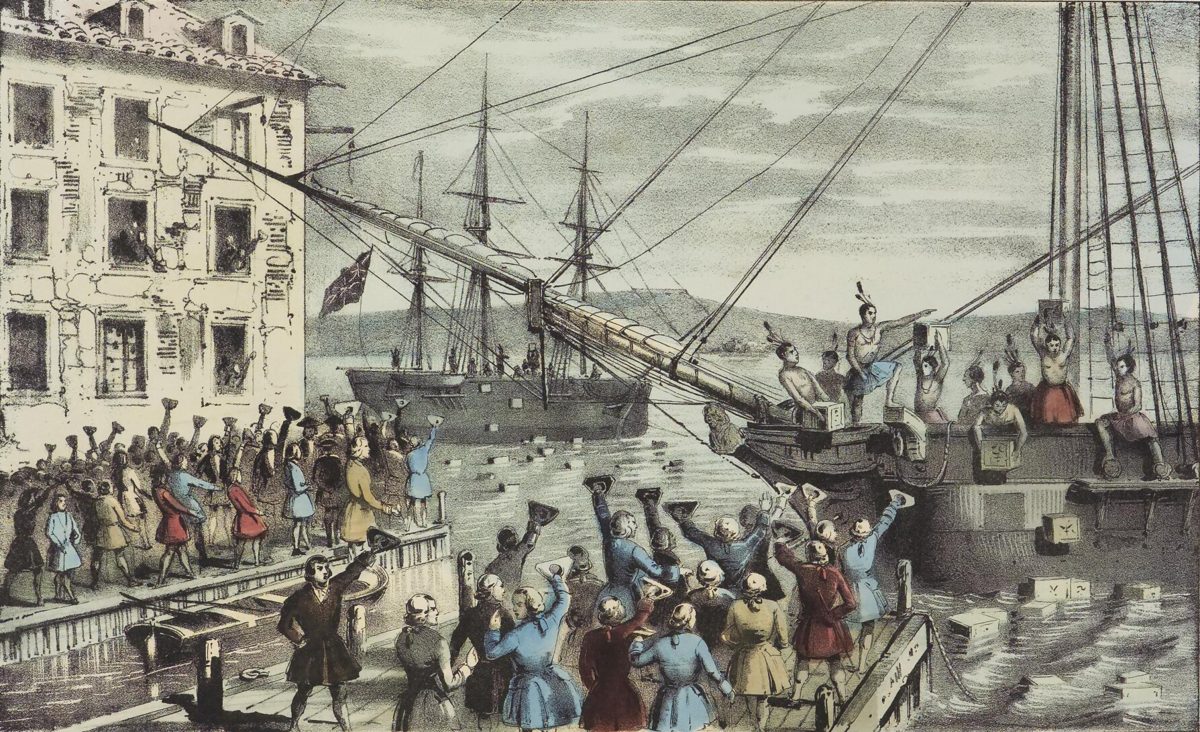
On the night of December 16, 1773, somewhere between thirty and a hundred and thirty men went down to Griffin's Wharf in Boston, boarded three ships and spent about three hours breaking open chests of tea. When they finished, all 340 or 342 chests were in the harbor.1 The East India Company later reported the loss at 92,616 pounds of tea.1 The tea belonged to the most powerful trading company in the British world. The men who dumped it were protesting a system.
That system had a name, though nobody in the harbor used it. Historians call it mercantilism. It was the working economic doctrine of the major European powers for roughly two centuries before Adam Smith, and its rules shaped the colonies in which the founders grew up.
Wealth as treasure
The mercantile idea is easy to state. A kingdom's wealth is its stock of gold and silver. A kingdom without mines gets treasure by selling more abroad than it buys. So the government should push exports up, keep imports down, and never let coin leave for nothing.
The first part of that, the identification of wealth with money, is sometimes called bullionism. Adam Smith knocked it down in a sentence in Book 4: "It would be too ridiculous to go about seriously to prove, that wealth does not consist in money, or in gold and silver; but in what money purchases, and is valuable only for purchasing."2 A farmer who had a bin of gold coins and no food would be poor. But for a seventeenth-century finance minister counting soldiers, ships and fortresses, treasure was more than a theory. It paid for armies.
Thomas Mun and the balance of trade
The best statement of the case came from a working merchant. Thomas Mun (1571 to 1641) was a London trader who made a fortune in Mediterranean commerce, became a director of the East India Company in 1615 and spent the rest of his career defending it.3 In 1621, when the Company's imports from India outran its exports and critics blamed its silver exports for a shortage of coin and a depression, Mun published A Discourse of Trade from England unto the East Indies in its defense. He argued that the loss of silver did no harm in itself, because many of the goods brought back were re-exported at a profit and the trade employed shipwrights and dockhands.3 His longer treatise, England's Treasure by Forraign Trade, was probably written in the 1620s or 1630s and published by his son John in 1664.3 It contains the rule that defined a school of thought:
"The ordinary means therefore to increase our wealth and treasure is by Forraign Trade, wherein wee must ever observe this rule; to sell more to strangers yearly than wee consume of theirs in value."
Thomas Mun, England's Treasure by Forraign Trade (London, 1664), in the modernized text of the Fordham Internet Modern History Sourcebook. 4
Mun did the arithmetic for his reader. Suppose the kingdom exports its cloth, lead, tin, iron and fish to the value of twenty-two hundred thousand pounds and buys foreign wares worth twenty hundred thousand pounds. Then "the kingdom shall be enriched yearly two hundred thousand pounds, which must be brought to us in so much Treasure."4 That is the balance of trade. A surplus is a gain, a deficit a loss, and the difference arrives or departs as bullion.
Mun was an interesting thinker. He grasped that money moved in response to trade, and he warned that laws forcing coin into a kingdom would fail, being "like to violent flouds which bear down their banks, and suddenly remain dry again for want of waters."4 He also meant his rule as a guide for policy: ban imports that could be made at home, discourage luxury goods, and cut duties on exports.3
France: Colbert's version
The French took the doctrine further. Jean-Baptiste Colbert, born in Reims in 1619, served Louis XIV for more than two decades and was Controller-General of Finances from December 1665 until his death in 1683.5 His approach is called Colbertism and is often described as a variant of mercantilism. He raised tariffs, pushed public works, and worked to give the French East India Company access to foreign sources of coffee, cotton, dyewoods, fur, pepper and sugar, aiming at what the sources call a favorable balance of trade.5 He founded or supported royal manufactories, including the royal weaving works at Gobelins, and he issued more than 150 edicts to regulate the guilds.5 The state, in short, would build the industries that the market had not yet produced, and protect them while they grew.
Whether Frenchmen ended up richer than they would otherwise have been is the question Smith later put to the whole system. His answer, given in his chapter on the colony trade, was that capital steered into favored channels is capital taken from other uses.6
Chartered monopolies and the East India Company
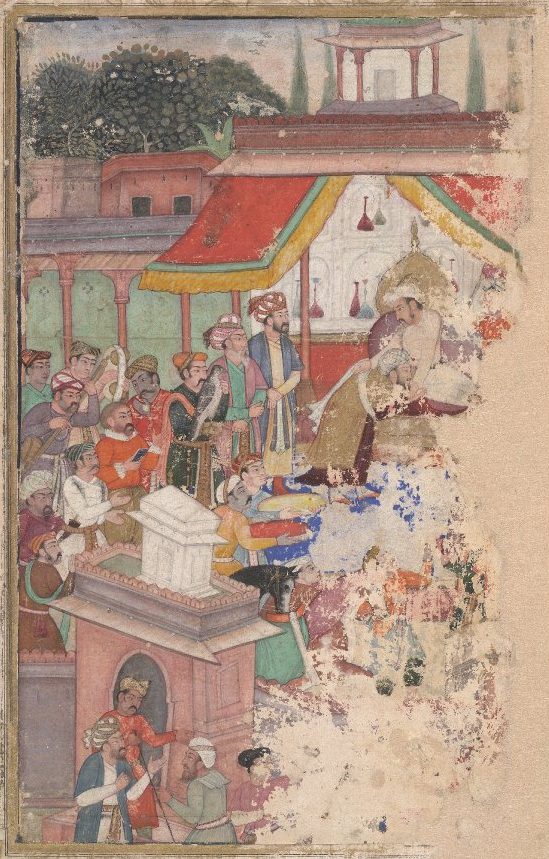
The mercantile state often did its work through companies. The English East India Company was founded on December 31, 1600, with a royal charter to trade in the East.7 Its charter gave it a legal monopoly: English subjects who were not members could not trade in its territory. In 1615 James I sent Sir Thomas Roe to the Mughal emperor Jahangir to arrange a commercial treaty giving the Company exclusive rights to settle and set up trading posts at Surat and other places.7
This is the mercantile bargain in miniature. The crown gave a few men a monopoly. The monopoly gave the crown an instrument of foreign policy. The public, who could have bought from other sellers, paid more. Smith's complaint about legal privilege was general. Of the trade corporations of his day he wrote that a majority "can enact a bye-law, with proper penalties, which will limit the competition more effectually and more durably than any voluntary combination whatever."8
The Navigation Acts and the colonies
England applied the same logic to its American colonies. The colonies would supply raw materials and buy manufactured goods, and the wealth of the arrangement would stay inside the empire.9
1651 and 1660
Parliament's first major act, passed on October 9, 1651 under the Commonwealth, banned foreign ships from bringing goods from Asia, Africa or America to England or its colonies and required that ships have an English owner, master and mostly English crew. The act was aimed at the Dutch, who then carried much of Europe's commerce.9 It is often listed among the causes of the First Anglo-Dutch War.9
The Restoration Parliament tightened it in 1660. Colonial trade was restricted to ships that belonged to people of England or the English possessions, crews had to be 75 percent English, and a list of "enumerated" colonial goods, first sugar, tobacco, cotton wool, indigo, ginger and fustic or other dyeing woods, could be shipped from the colonies only to England or another English colony.9 A planter in Virginia who found a better price for tobacco in Amsterdam was not allowed to take it.
Molasses, sugar and tea
The Molasses Act of 1733 put a tax of six pence a gallon on molasses imported from non-British colonies, passed largely at the insistence of British West Indies planters. It was meant to regulate trade, not raise revenue, and it was widely evaded. Smuggling, bribery and intimidation of customs officers "effectively nullified" it.10 The Sugar Act of 1764, passed after the Seven Years' War had swollen the national debt, halved the molasses duty and promised stricter enforcement. Its language made clear that the aim was now to raise revenue.11
Then the tea. By 1772 the East India Company, hit by a famine in Bengal that cut its revenues and by a pile of unsold tea in its warehouses, was in a financial crisis.1 The Tea Act of May 10, 1773 restored the Company's full refund of the duty on tea imported to Britain and, for the first time, allowed it to export tea to the colonies on its own account, appointing colonial merchants as consignees.1 The act left in place the three-pence Townshend duty on tea in the colonies. Parliament's ministry refused to drop the duty because that might look like retreat from its claim to tax the colonies.1
Here the colonists' objection takes shape, and price had little to do with it. Legally imported bohea tea had sold for about three shillings a pound in 1772. After the Tea Act, consignees could sell it for about two shillings, just under the smugglers' price of two shillings and a penny.1 The tea would be cheaper. But it would come from a state-backed monopoly, sold through chosen agents, with a tax Parliament had voted without American consent still attached. The act undercut the smugglers and also the colonial importers who had paid the duty and got no refund. Samuel Adams called the monopoly "equal to a tax."1 Colonists who hated the Townshend principle saw that buying the cheap tea meant accepting the tax. Boston acted on December 16.
What the Declaration said
When Jefferson drafted the list of grievances against George III, trade restrictions appeared in the charges. One of the clauses reads: "For cutting off our trade with all parts of the world; For imposing taxes on us without our consent."12 The first clause complains of restraints on colonial commerce, though the Declaration names no particular act. The second is the principle that made tea a crisis. Mercantilism, in the colonists' experience, meant two things at once: the empire told them where to sell, and the empire told them what to pay.
Adam Smith's case against the mercantile system
The Declaration and The Wealth of Nations both appeared in 1776, and Smith's Book 4 is the most thorough demolition of the doctrine ever written. Book 4 takes up the "systems of political economy" and goes after the mercantile system chapter by chapter.
His first move was to say that the whole project mistook means for end. In Book 4, chapter 8, summing up, he wrote:
"Consumption is the sole end and purpose of all production; and the interest of the producer ought to be attended to, only so far as it may be necessary for promoting that of the consumer. The maxim is so perfectly self-evident, that it would be absurd to attempt to prove it. But in the mercantile system, the interest of the consumer is almost constantly sacrificed to that of the producer."
Adam Smith, The Wealth of Nations, Book 4, ch. 8. 13
His second move was to name who wrote the laws. Tariffs and monopolies came from merchants and manufacturers asking for them. Of proposals for new commercial rules from that class he warned that they "ought always to be listened to with great precaution, and ought never to be adopted till after having been long and carefully examined, not only with the most scrupulous, but with the most suspicious attention," because it "comes from an order of men, whose interest is never exactly the same with that of the public."14
His third was about the colonies. A great empire, he wrote, "for the sole purpose of raising up a people of customers" may seem a project fit only for a nation of shopkeepers, but it is "altogether unfit for a nation of shopkeepers, but extremely fit for a nation whose government is influenced by shopkeepers."15 The monopoly of colonial trade raised the profits of British merchants, he argued, while pulling capital away from better uses at home.6
What Smith conceded
Smith was no absolutist, and a fair account has to say so. He allowed two cases where a burden on foreign goods is generally advantageous. The first: "when some particular sort of industry is necessary for the defence of the country." He applied it to the shipping acts: "As defence, however, is of much more importance than opulence," he wrote, the shipping rules were "perhaps, the wisest of all the commercial regulations of England."16 The second case was a tax at home on a domestic product, which justified an equal tax on the foreign version.16 He also allowed that retaliation can sometimes pay: "There may be good policy in retaliations of this kind, when there is a probability that they will procure the repeal of the high duties or prohibitions complained of."17
These exceptions are narrow, and each has a test. Does the industry really bear on national defense? Will the retaliation really bring the other side's barrier down? Smith put the burden of proof on the people asking for protection.
How heavy was the burden?
It would make a tidy story if the Navigation Acts had bled the colonies white. They did not seem to. The economic historian Robert Thomas, in a 1965 study, estimated that the burden on the thirteen colonies was small, about 4 pounds per 1,000 pounds of income, when average personal income was around 100 pounds a year.9 Roger Ransom (1968) argued that even a small net burden could shape a growth path by helping some groups and hurting others. Gary Walton (1971) concluded that the political friction mattered more than the economic loss, because the merchants who bore the heaviest costs were politically the most active.9 In 1995 a survey of 178 members of the Economic History Association found that 89 percent would generally agree that "costs imposed on the colonists by the trade restrictions of the Navigation Acts were small."9
So the Revolution owed less to lost money than to the combination Jefferson wrote down: restraints on trade arranged for the benefit of favored interests, joined to taxes imposed without consent. A small cost imposed without your voice is, to a free people, a large insult.
The case for the mercantile instinct
Mercantile ideas did not vanish in 1776, and the best arguments for them deserve a hearing.
The infant industry
Alexander Hamilton, the first Treasury Secretary, presented his Report on Manufactures to Congress on December 5, 1791. He argued for moderate tariffs and for bounties, or subsidies, to American manufacturers, to protect infant industries until they could reach the scale needed to compete with established firms abroad and to make the country independent of foreign sources for defense supplies. The report drew on the practice of Elizabethan England and on Colbert.18 Congress did not take his proposals in 1791, in part because of opposition from Madison and his supporters, though much of the report was later adopted.18
The argument has force. A young firm facing a giant with decades of experience may never get started, even if it would do well in time. That was Hamilton's worry, and it is still the best thing protectionists have to say.
Industrial policy today
The modern version is called industrial policy. The CHIPS and Science Act, signed by President Joe Biden on August 9, 2022, appropriated $52.7 billion for domestic semiconductor research and manufacturing, including $39 billion in subsidies for chip manufacturing on American soil and a 25 percent investment tax credit, with the stated aim of strengthening supply chains and competing with China.19 Supporters see a rescue of a critical industry. A mercantilist of 1650 would have recognized the logic: build national strength by directing capital to the industry that matters, and shut out the competitor.
Smith's reply
Smith's reply to Hamilton, and to the CHIPS Act, is the same: government picks winners with money that came from someone else, and the people who pick are the people who get the money. Grant that semiconductors bear on defense, and Smith's first exception applies. The test he would set is whether the favor stays narrow and temporary, and whether the producers asking for it can show the public pays less than it gains. Friedman held a harder line still. In 1962 he put tariffs on imports and sugar quotas on his list of government activities he could not justify on his principles, a list that lesson 5 examines.20 Lesson 10 returns to a mercantile relic that is still in the statute books today.
A citizen can use the lesson without settling the argument. When a policy asks the public to pay more so that a favored industry can prosper, ask three things. Who gets the money? Who pays? Who bears the loss if the favored firm fails? Mercantilism rarely asks for those answers in public, and that is its oldest habit.
Learn more
- Mun, England's Treasure by Forraign Trade: The mercantile case in its author's own voice, a two-page excerpt.
- Smith, The Wealth of Nations: Book 4 is the attack. Chapter 2 on import restraints and chapter 8 on the conclusion are the best places to start.
- The Declaration of Independence: Read the list of grievances with trade and taxation in mind.
- Boston Tea Party: A detailed account, including the Tea Act background and the aftermath.
- Hamilton's Report on Manufactures: The best American statement of the case for protecting young industries.
- Jean-Baptiste Colbert: The French minister who ran mercantilism as a government program.
- Friedman on Ending Government Programs: Friedman's own list of what he would end, including tariffs and sugar quotas.
Notes
- "Boston Tea Party," overview article. It gives December 16, 1773; the three ships; 340 or 342 chests; the East India Company's reported loss of 92,616 pounds of tea; the background of the 1772 financial crisis; the Tea Act of 1773 and the retention of the three-pence Townshend duty. Read it online. ↩
- Adam Smith, An Inquiry into the Nature and Causes of the Wealth of Nations (1776), Book 4, ch. 1. Read it online. ↩
- "Thomas Mun" (1571 to 1641): career as merchant, director of the East India Company from 1615, and the posthumous publication of England's Treasure by Forraign Trade in 1664 by his son John. Read it online. ↩
- Thomas Mun, England's Treasure by Forraign Trade (London, 1664), excerpt in the Fordham Internet Modern History Sourcebook (modernized text, scanned by J. S. Arkenberg). Read it online. ↩
- "Jean-Baptiste Colbert" (1619 to 1683): Controller-General of Finances from December 12, 1665; Colbertism; tariffs, public works, the French East India Company, the Gobelins weaving works and over 150 edicts regulating guilds. Read it online. ↩
- Smith, Wealth of Nations, Book 4, ch. 7, part 3, on the monopoly of the colony trade raising the rate of profit in that branch and withdrawing capital from others. Read it online. ↩
- "East India Company": founded December 31, 1600; the 1615 mission of Sir Thomas Roe to the Mughal emperor Jahangir to arrange a treaty giving the company exclusive rights. Read it online. ↩
- Smith, Wealth of Nations, Book 1, ch. 10, part 2, on corporations. Read it online. ↩
- Robert Whaples, "Where Is There Consensus Among American Economic Historians? The Results of a Survey on Forty Propositions," Journal of Economic History 55, no. 1 (March 1995): 139-154, on the proposition about the Navigation Acts. Read it online. For the acts themselves (1651, 1660, 1663, 1673, 1696) and the studies by Robert P. Thomas (1965), Roger L. Ransom (1968) and Gary M. Walton (1971): "Navigation Acts," overview article. Read it online. ↩
- "Molasses Act" (Trade of Sugar Colonies Act 1732), royal assent May 17, 1733: six pence per gallon on molasses from non-British colonies; evasion by smuggling and bribery. Read it online. ↩
- "Sugar Act" (1764), royal assent April 5, 1764: halved the molasses tax and was framed to raise revenue. Read it online. ↩
- Declaration of Independence, July 4, 1776, list of grievances. The Avalon Project text prints the lines in lower case. Read it online. ↩
- Smith, Wealth of Nations, Book 4, ch. 8, "Conclusion of the Mercantile System." Read it online. ↩
- Smith, Wealth of Nations, Book 1, ch. 11, concluding paragraph, on proposals from merchants and manufacturers. Read it online. ↩
- Smith, Wealth of Nations, Book 4, ch. 7, "Of Colonies," part 3. Read it online. ↩
- Smith, Wealth of Nations, Book 4, ch. 2, "Of Restraints upon Importation from Foreign Countries of such Goods as can be produced at Home." Read it online. ↩
- Smith, Wealth of Nations, Book 4, ch. 2, on retaliation. Read it online. ↩
- "Report on Manufactures," presented to Congress December 5, 1791; its purposes and its reception. Read it online. ↩
- "CHIPS and Science Act," signed August 9, 2022: $52.7 billion appropriated, including $39 billion in manufacturing subsidies and a 25 percent investment tax credit. Read it online. ↩
- Milton Friedman, Capitalism and Freedom (Chicago: University of Chicago Press, 1962), end of ch. 2, items 1 and 2 of his list, quoted in David Henderson, "Friedman on Ending Government Programs," EconLog, May 28, 2018. Read it online. ↩
Check yourself
1. What rule did Thomas Mun give for growing a kingdom's wealth through foreign trade?
Mun wrote in England's Treasure by Forraign Trade (published 1664) that the rule is to 'sell more to strangers yearly than wee consume of theirs in value,' so that the balance would come home in treasure.
2. Why did Parliament pass the Tea Act of 1773?
The company was nearly bankrupt and sitting on a huge surplus of tea. The act refunded the British duty and let the company export tea to the colonies itself, cutting out middlemen. The colonists still faced the Townshend duty and saw a monopoly with a tax attached.
3. What did Adam Smith say is the sole end and purpose of all production?
In Book 4, chapter 8 of The Wealth of Nations Smith wrote: 'Consumption is the sole end and purpose of all production,' and that the mercantile system almost constantly sacrifices the consumer to the producer.
4. A 1995 survey of Economic History Association members found what about the cost of the trade restrictions to American colonists?
Robert Whaples's survey found 89 percent of 178 economists and historians would generally agree that the costs were small. Robert Thomas had estimated the burden at about 4 pounds per 1,000 pounds of colonial income.
5. Which 1791 document argued for tariffs and bounties to protect young American industries?
Alexander Hamilton presented the Report on Manufactures to Congress on December 5, 1791. It drew on mercantilist practice, and Congress did not adopt it then, though many of its ideas returned later.
Terms in this lesson
- Mercantilism
- The doctrine that a nation grows rich by running a surplus in foreign trade and that government should steer commerce to that end.
- Bullionism
- The belief that wealth consists of gold and silver, so a country should hoard them and keep them from leaving.
- Balance of trade
- The difference between the value of what a country sells abroad and what it buys. Mercantilists wanted it to stay in surplus.
- Chartered monopoly
- A trading company given by the crown the exclusive right to trade in a region, like the East India Company.
- Enumerated goods
- Colonial products, such as sugar and tobacco, that the 1660 act allowed to be shipped only to England or English colonies.
- Infant industry argument
- The claim that a young industry needs temporary protection from foreign competition until it can stand on its own.
- Industrial policy
- Government use of subsidies, tax breaks or protection to build up chosen industries.
Sources
- Thomas Mun, England's Treasure by Forraign Trade (1664), excerpt (Fordham Modern History Sourcebook) checked 2026-10
- Adam Smith, The Wealth of Nations, Book 4 (Project Gutenberg 3300) checked 2026-10
- Declaration of Independence (Avalon Project) checked 2026-10
- English trade and shipping acts, 1651 to 1696 (Navigation Acts overview) checked 2026-10
- Molasses Act of 1733 checked 2026-10
- Sugar Act of 1764 checked 2026-10
- Tea Act of 1773 checked 2026-10
- Boston Tea Party checked 2026-10
- East India Company checked 2026-10
- Thomas Mun checked 2026-10
- Jean-Baptiste Colbert checked 2026-10
- Hamilton's Report on Manufactures checked 2026-10
- CHIPS and Science Act checked 2026-10