Lesson 10 of 10 · about 24 minutes
The American Mix and Economic Freedom Today
You'll be able to
- Read the long record of federal spending as a share of GDP and the Congressional Budget Office's 2026 projection
- Describe what the Federal Register page counts do and do not measure
- Explain how the sugar program works and what the Government Accountability Office found
- Describe Idaho's Occupational Licensing Reform Act and the licensing pattern Friedman criticized in 1962
- Apply three questions to any policy: who decides, who pays, and who bears the loss
Every fall the beets come in by the truckload to the Adelaide receiving station near Rupert, in Idaho's Magic Valley. The station has a capacity of 280,000 tons of sugar beets, and it typically has 8,000 to 10,000 contracted acres feeding it in a given year.1 The beets belong to growers who are member-owners of the Amalgamated Sugar company, a grower-owned cooperative that makes 2.2 billion pounds of sugar a year, about 12 percent of the American total.1 It is honest work, the beets are real and the jobs are local.
The price those beets fetch depends partly on a federal program. In 2023 the Government Accountability Office reported that U.S. consumers, including food manufacturers, paid twice the world price for sugar in 2022.2 Both facts are true at once. That is the American economy in miniature: markets, local enterprise, and a layer of federal policy that helps some people and costs others in ways few of them see.
The United States is not capitalist in the sense of the textbook or socialist in the sense of the last two lessons. It runs on private ownership, prices and contracts, and it spends a large share of output through the government, sets thousands of rules, taxes imports, subsidizes crops and licenses barbers. This lesson measures that mix with the best data available and then asks how a citizen should judge it.
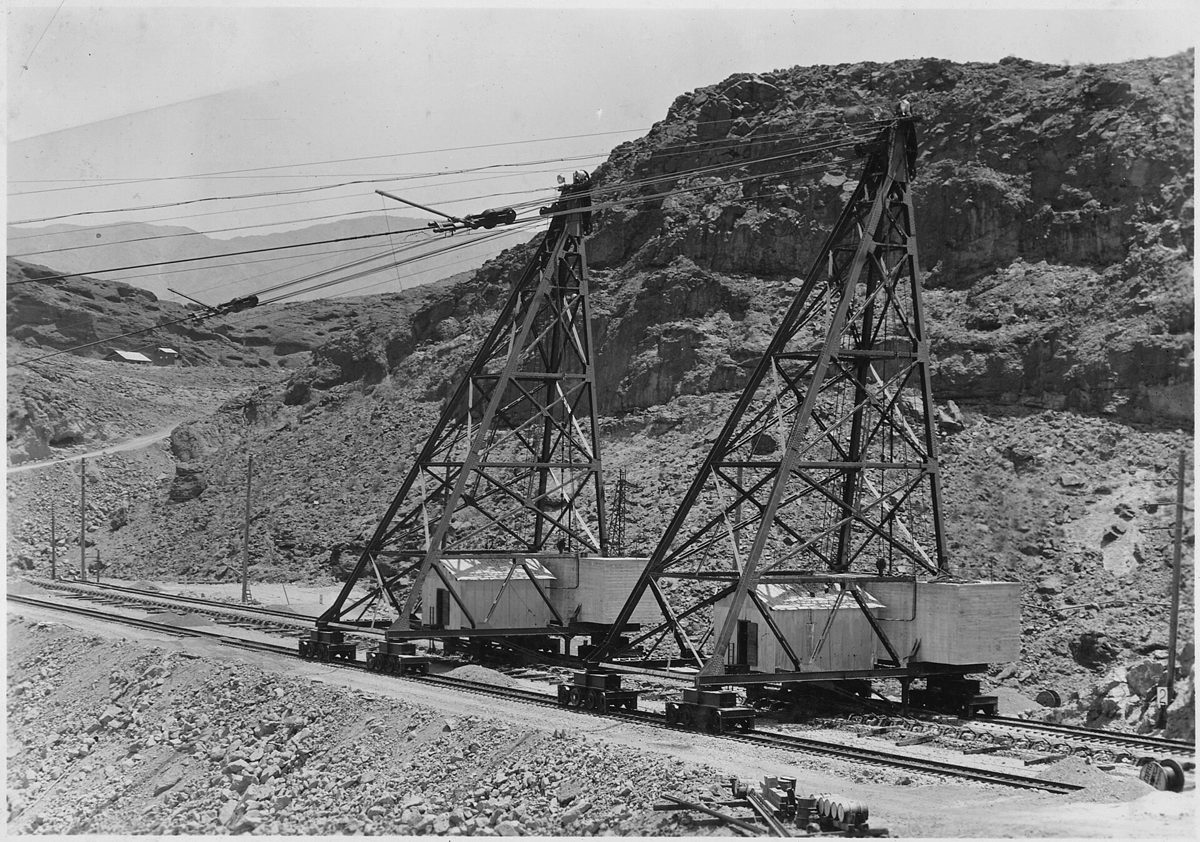
Hoover Dam is a clean example of the mix. The state chose the project and paid for it, and private firms competing for the contract built it. Each side did what it does well.3
How much government: spending since 1930
The broadest measure is federal spending as a share of GDP. The series below comes from the Office of Management and Budget through the Federal Reserve Bank of St. Louis. It counts the federal government only, not state and local governments.4
In 1930 the federal government spent 3.6 percent of GDP. World War II drove the figure to 40.7 percent in 1944. After the war it settled at 14.2 percent in 1950, then rose to 17.0 percent in 1960, 20.7 percent in 1980 and 21.0 percent in 1990. It fell to 17.5 percent in 2000 and rose to 24.3 percent in 2009 in the financial crisis. It reached 30.5 percent in 2020 during the pandemic and was 23.0 percent in 2024.4
The Congressional Budget Office, in testimony on 11 March 2026, projected outlays of 23.3 percent of GDP in 2026 and 24.4 percent in 2036. It projected revenues of 17.5 percent in 2026 and 17.8 percent in 2036, a deficit of 5.8 percent of GDP in 2026 and 6.7 percent in 2036, and debt held by the public growing from 101 percent to 120 percent of GDP.5 Whatever one thinks of the size of government, those numbers say it is being funded in part by borrowing, which moves a cost from the person deciding to a person not yet at the table.
Friedman wrote in his 2002 preface that total government spending in the United States, state and local included, "did decline slightly, from 39 percent of national income in 1982 to 36 percent in 2000," a fall he credited almost entirely to defense.6 His summary of the long run was that the climate of opinion had shifted toward markets without bringing government down to size. The charts bear him out. Since 1960 the line has wandered between about 17 and 24 percent in ordinary years and has spiked in crises.
Rules: the Federal Register
Spending is one lever. The other is regulation. The Federal Register Act was enacted on 26 July 1935, and the first issue of the Federal Register appeared in March 1936. It publishes proposed and final rules, notices of meetings and adjudicatory proceedings, and presidential documents.7
The page count of the Federal Register is a rough gauge of regulatory activity. According to Ballotpedia, the register ran 74,532 pages in 2021, 80,756 pages in 2022 and 90,402 pages in 2023, with the all-time high of 95,894 pages set in 2016.8 The count has limits. A page of notices about a meeting is not a rule. A long rule that frees an industry from an old requirement counts as many pages as one that adds a new burden. Still, it tells you that the rulebook is thousands of pages long and is added to every year, and that Congress has, in practice, handed the writing of many of the rules to agencies.
Friedman's own complaint was about detailed regulation of whole industries. His example in 1962 was the Interstate Commerce Commission, which "had some justification on technical monopoly grounds when initially introduced for railroads," he wrote, "it has none now for any means of transport."9 The thing to ask of any regulation is whether it addresses a problem the market cannot, and whether the people it protects are the public or the regulated.
Tariffs: mercantilism's long shadow
Lesson 2 described the mercantilist belief that a nation gains by selling more than it buys and by shielding its producers. The belief never left American policy. Until 1860, customs duties provided roughly 80 to 95 percent of federal revenue.10 For decades after 1861 the average duty on dutiable imports ran about 50 percent. The Smoot-Hawley tariff of June 1930 raised the average on dutiable imports from about 40 percent to 47 percent, and with deflation the effective rate reached nearly 60 percent by 1932, according to the economic historian Douglas Irwin.10 Today the picture is different. The Yale Budget Lab's tracker, updated on 24 August 2026, puts the average statutory tariff rate at 11.0 percent, headed to 11.8 percent by the end of the year under current law, at an estimated cost of about $1,100 a year per household.11 Those measures use different bases and cannot be set side by side, but they show that tariffs are back as a major tool.
The case for tariffs
Defenders offer reasons that deserve a hearing. A country may want to produce its own steel and chips for security reasons. A young industry may need time to grow. A tariff can give a negotiator something to bargain with. And a tariff raises revenue.
The answer
Friedman did not like tariffs and liked quotas less. He wrote that "a tariff, like a market price, is impersonal and does not involve direct interference by government in business affairs," whereas "a quota is likely to involve allocation and other administrative interferences, besides giving administrators valuable plums to pass out to private interests."9 His 1962 list of government activities he could not justify included "tariffs on imports or restrictions on exports, such as current oil import quotas, sugar quotas, etc."9 The security argument, which he did not dismiss for defense goods, tends to widen: once steel counts, so do ten other industries, and each is defended by people who have a great deal to gain.
Farm programs and the sugar program
The Department of Agriculture's Economic Research Service forecasts that direct government payments to farmers will reach $47.4 billion in 2026, up from $27.9 billion in 2025, against net farm income of $158.4 billion.12 By that forecast, payments are about 30 percent of net farm income. Friedman's 1962 list began with "parity price support programs for agriculture" and "governmental control of output, such as through the farm program."9
The sugar program is an old-fashioned case of protecting producers by restricting imports. It works through three devices. Processors can take nonrecourse loans using sugar as collateral. Tariff-rate quotas limit low-duty imports, with WTO commitments requiring at least 1.11 million tons of raw sugar to enter at the low duty. Marketing allotments cap how much each producer can sell, set at no less than 85 percent of estimated consumption.13 The USDA's price data for fiscal year 2025, as reported in a reference summary, show U.S. sugar at 36.90 cents per pound against 18.58 cents on the world market.13
The GAO found that the program raises prices for domestic sugar and that producers gain between $1.4 billion and $2.7 billion a year, while consumers pay $2.5 billion to $3.5 billion more, a net cost to the economy of about $1 billion a year in the studies it reviewed.2 The people who gain are identifiable: growers and cooperatives like the one near Rupert. The people who pay are everyone who buys a candy bar. That asymmetry is the one Friedman described when he explained why producer groups beat consumer interests in legislatures.9
A fair local view includes the growers. Beet farming is a cornerstone of the Magic Valley's agricultural economy, in the words of one local news report, and a farmer who has built a business around a program is entitled to ask why the rules should change under him.1 The answer a Friedman reader would give is that the rules were never a right, that a transition can be gradual, and that the country should be able to look at the bill honestly. It does not claim the growers are villains.
Licensing: from Friedman to Idaho Code
In 1962 Friedman wrote that "a citizen of the United States who under the laws of various states is not free to follow the occupation of his own choosing unless he can get a license for it, is likewise being deprived of an essential part of his freedom."14 In his chapter on licensure he reported that the board granting licenses "is almost invariably made up largely of plumbers or pharmacists or physicians or whatever may be the particular occupation licensed," and quoted Walter Gellhorn that "seventy-five per cent of the occupational licensing boards at work in this country today are composed exclusively of licensed practitioners in the respective occupations."9
The best case for licensing
A patient cannot judge a surgeon's competence in the waiting room, and a bad electrician can burn down a house. Licensing sets a floor, and defenders say that is the point. That is true for some occupations. The question is how many.
What the data show
The Institute for Justice studied 102 lower-income occupations and found more than 2,700 licenses across the fifty states and the District of Columbia. On average a license required nearly a year of education and experience, at least one exam and $295 in fees. Emergency medical technicians average about 36 days of training, while cosmetologists average 342. Eighty-eight percent of the occupations studied were unlicensed in at least one state, and fourteen had been delicensed by at least one state.15 If the public were at risk, the risk would not stop at the state line.
Idaho acts
Idaho has been moving on the problem. In 2017 an executive order (No. 2017-06) led to a compilation called the Licensing Freedom Act Report and Observations, dated 22 June 2018. In October 2018 the Legislature's committee accepted an invitation to join a multistate Occupational Licensing Policy Learning Consortium. In the 2019 session the Legislature enacted the Occupational Licensing Reform Act, now Title 67, Chapter 94 of the Idaho Code.16 The act declares that no new licensure may be created by administrative rule without express statutory authorization.17 Later additions, recommended by the interim committee, covered universal licensure (a worker licensed in good standing in another state can get an Idaho license through a set procedure), the effect of criminal convictions, licensure by endorsement for military members, spouses and veterans, apprenticeship programs, and sunrise and sunset review.16
Two sections show the change in practice. Section 67-9411 bars a licensing authority from denying or disciplining a license because of a conviction unless it is currently relevant to fitness for the occupation, and it bars denial on "vague or generic terminology," including "moral turpitude" or "moral character."18 Section 67-9414, added in 2023, creates "universal work recognition": a person with at least four years of work experience in another state, or in the military, where no license was required, can obtain an Idaho license in the same line of work without repeating the whole standard path.19 A committee of eight legislators now oversees licensure and conducts sunrise and sunset reviews.16
It is a reform made inside the system. Nobody abolished the licensing boards. The Legislature made them justify themselves and open a door for people who already know how to do the work.
Idaho's own mix
Idaho's economy shows the same blend of private effort and public structure. Its gross state product was $128.1 billion in 2024. Agriculture and food and beverage processing generate about 20 percent of the state's sales. Idaho produces 32 percent of the nation's potatoes and is the third-largest producer of milk and cheese, and Micron Technology in Boise is described as the only U.S. manufacturer of DRAM memory chips.20 The Magic Valley's dairies and sugar beet fields are privately run and depend on federal water, farm and trade policy.
What Friedman would cut and what he would keep
Nobody can say what a man who died in 2006 would say about a 2026 bill. His writing is clear on principles. His list of fourteen activities of the federal government that could not be justified included farm price supports, tariffs and import quotas such as sugar quotas, detailed regulation of industries, occupational licensure, peacetime conscription and the prohibition on carrying mail for profit.9
| Item on Friedman's 1962 list | Status as this lesson found it |
|---|---|
| Sugar quotas and farm price supports | Still in place: the GAO reviewed the sugar program in 2023, and USDA forecasts $47.4 billion in direct payments in 2026 |
| Licensure that restricts occupations | Widespread, but reformed in places such as Idaho since 2019 |
| Peacetime conscription | Ended: induction authority expired in 1973 |
Sources: Friedman, Capitalism and Freedom9; GAO2; USDA ERS12; Idaho Code17; Selective Service System.21
What he would keep is as clear. He called government "essential both as a forum for determining the 'rules of the game' and as an umpire to interpret and enforce the rules decided on," and counted among its duties the protection of citizens from enemies abroad and from each other, law and order, and the enforcement of private contracts.9 He proposed a negative income tax "as a substitute for the present rag bag of measures directed at the same end," and he named the cost of his own idea: it "establishes a system under which taxes are imposed on some to pay subsidies to others. And presumably, these others have a vote."9 A reader who takes Friedman seriously takes that warning seriously as well.
Three questions for any policy
A citizen who has no time to master the economics can still test a policy. The first question is who decides. If the answer is a legislature that can be voted out, the people affected have a remedy. If the answer is an agency or a board made up of the licensed, the remedy is much weaker. The second question is who pays. When the payer is a taxpayer or a consumer, ask whether he knows he is paying. When the payer is a future taxpayer, as with deficit spending, ask who speaks for him. The third question is who bears the loss when the policy fails. A private firm that guesses wrong loses its own money. A program that guesses wrong has a way of being renewed.
The sugar program passes the first test and fails the second. Congress writes it, so the decision is public, but the payers are scattered and the beneficiaries are organized. The Idaho licensing reforms are a case of citizens and a legislature using the first test to pull a lever. Madison's phrase in Federalist 51 covers the whole exercise: "you must first enable the government to control the governed; and in the next place oblige it to control itself."22 The second half of that sentence is the citizen's job. It takes attention and some arithmetic, and nobody else is going to do it.
Learn more
- CBO, Budget and Economic Outlook 2026 to 2036: The official projections of spending, revenue and debt.
- FRED, federal outlays as a share of GDP: Download the whole series back to 1929.
- GAO on the sugar program: A federal watchdog's cost accounting of a farm program.
- Idaho's Occupational Licensing Reform Act: The statute itself; read sections 9402, 9409, 9411 and 9414.
- Institute for Justice, License to Work: National data on the burden of licensing lower-income occupations.
- Yale Budget Lab on U.S. tariffs: A running estimate of current tariff rates and costs.
- Federalist No. 51: Madison on the need to oblige the government to control itself.
Notes
- "We got the beets: a cornerstone of the Magic Valley's ag economy, the 2024 sugar beet harvest wraps up," KIVI-TV, on the Adelaide Receiving Station near Rupert, its capacity, contracted acres and Amalgamated Sugar's output. Read it online. ↩
- U.S. Government Accountability Office, Sugar Program: Alternative Methods for Implementing Import Restrictions Could Increase Effectiveness, GAO-24-106144 (31 October 2023). Read it online. ↩
- "Hoover Dam," Wikipedia, on Six Companies, Inc., its low bid of $48,890,955, the Boulder Canyon Project Act (signed 21 December 1928) and the turnover to the federal government on 1 March 1936. Read it online. Photograph: National Archives and Records Administration, NARA 293826, via Wikimedia Commons. ↩
- Federal Reserve Bank of St. Louis, FRED, "Federal Net Outlays as Percent of Gross Domestic Product" (FYONGDA188S), constructed from Office of Management and Budget and Bureau of Economic Analysis data, annual, updated 9 April 2026. Read it online. ↩
- Phillip L. Swagel, Congressional Budget Office, testimony on The Budget and Economic Outlook: 2026 to 2036, Senate Finance Committee, 11 March 2026. Read it online. ↩
- Milton Friedman, preface to the 2002 edition, Capitalism and Freedom, Fortieth Anniversary Edition (Chicago: University of Chicago Press, 2002). Read a scan online. ↩
- "Federal Register," Wikipedia, on the Federal Register Act (Pub. L. 74-220, 26 July 1935), the first issue (March 1936) and the contents. Read it online. Sources differ on the exact date of the first issue. ↩
- "Federal Register 2023 in review: Biden administration's highest annual page count," Ballotpedia News, 5 January 2024. Read it online. Ballotpedia notes that the 2023 total may fall after the National Archives processes blank pages. ↩
- Milton Friedman, Capitalism and Freedom (Chicago: University of Chicago Press, 1962; Fortieth Anniversary Edition, 2002), chapters 2, 9 and 12. Read a scan online. ↩
- "Tariffs in United States history," Wikipedia, citing Douglas A. Irwin (2020) and Dewey on tariff rates and customs revenue. Read it online. The article notes that its figures are not all measured on the same basis. ↩
- Yale Budget Lab, "The State of U.S. Tariffs" (page updated 24 August 2026). Read it online. The figure is the average statutory tariff rate. ↩
- U.S. Department of Agriculture, Economic Research Service, "Farm Sector Income Forecast" (updated 3 September 2026): direct government payments of $47.4 billion forecast for 2026 and $27.9 billion for 2025; net farm income of $158.4 billion forecast for 2026. Read it online. These are forecasts. ↩
- "U.S. Sugar Program," Wikipedia, on nonrecourse loans, tariff-rate quotas, marketing allotments and the USDA ERS price comparison for fiscal year 2025. Read it online. ↩
- Milton Friedman, Capitalism and Freedom (1962), chapter 1. Read the chapter online. ↩
- Institute for Justice, License to Work, 3rd edition: national findings on 102 lower-income occupations. Read it online. The page gave national findings only, with Idaho figures on a separate state profile. ↩
- Idaho Legislative Services Office, "Occupational Licensing Interim Committee History," 2 October 2023. Read it online. ↩
- Idaho Code, Title 67, Chapter 94, sections 67-9401 and 67-9402 (Occupational Licensing Reform Act; Declaration of Policy), added 2019, ch. 296. Read it online. ↩
- Idaho Code, section 67-9411, "Evaluation of criminal convictions," added 2020, ch. 175, amended 2023. Read it online. ↩
- Idaho Code, section 67-9414, "Universal work recognition," added 2023, ch. 124. Read it online. ↩
- "Economy of Idaho," Wikipedia: gross state product for 2024, agriculture and food processing, potato production, dairy and Micron Technology. Read it online. ↩
- Selective Service System, "History and Records" (induction authority expired in 1973). Read it online. ↩
- James Madison, The Federalist No. 51 (1788). Read it online. ↩
Check yourself
1. According to the Congressional Budget Office's March 2026 testimony, federal outlays in 2026 are about what share of GDP?
CBO projects outlays of 23.3 percent of GDP in 2026, rising to 24.4 percent in 2036, with revenues at 17.5 percent in 2026. The gap is the deficit, 5.8 percent of GDP in 2026.
2. What did the Government Accountability Office report in 2023 about the U.S. sugar program?
GAO reviewed research estimating $1.4 billion to $2.7 billion a year in producer benefits and $2.5 billion to $3.5 billion in consumer costs. In 2022 U.S. consumers, including food manufacturers, paid about twice the world price for sugar.
3. Which of these is part of Idaho's Occupational Licensing Reform Act?
Section 67-9411 of the Idaho Code bars denial on the basis of vague or generic terminology about convictions and requires an evaluation of whether the conviction is currently relevant to fitness for the occupation.
4. What did Friedman say about the makeup of licensing boards in Capitalism and Freedom?
He wrote that the board is almost invariably made up largely of plumbers, pharmacists, physicians or whoever is licensed, and quoted Walter Gellhorn that 75 percent of licensing boards were composed exclusively of licensed practitioners.
5. Which three questions does the lesson suggest for judging a policy?
The test asks who has the authority to decide, whose money or freedom is spent, and who absorbs the damage if the policy fails. A good policy keeps those three people close together.
Terms in this lesson
- Mixed economy
- An economy in which private ownership and markets operate alongside substantial government spending, regulation and ownership.
- Federal outlays
- What the federal government spends in a year. Measured here as a share of GDP.
- Federal Register
- The daily journal of the U.S. government, first published in 1936, containing proposed and final rules, notices and presidential documents.
- Tariff-rate quota
- A system that allows a set volume of imports at a low duty and charges a higher duty on imports above that volume.
- Occupational licensing
- A legal requirement to hold a government license to work in an occupation.
- Universal licensure
- A rule that lets a worker licensed in good standing in another state obtain a license in the new state through a streamlined process.
- Sunrise and sunset review
- Legislative review of whether a new licensing requirement is needed (sunrise) or an existing one should continue (sunset).
Sources
- FRED, Federal Net Outlays as Percent of GDP (FYONGDA188S) checked 2026-10
- CBO, The Budget and Economic Outlook: 2026 to 2036 (testimony, 11 March 2026) checked 2026-10
- Ballotpedia, Federal Register 2023 in review checked 2026-10
- GAO, Sugar Program (GAO-24-106144) checked 2026-10
- USDA ERS, Farm Sector Income Forecast checked 2026-10
- Yale Budget Lab, The State of U.S. Tariffs checked 2026-10
- Idaho Code, Title 67, Chapter 94, Occupational Licensing Reform Act checked 2026-10
- Idaho Legislative Services Office, Occupational Licensing Interim Committee History (2 October 2023) checked 2026-10
- Institute for Justice, License to Work (3rd edition) checked 2026-10
- Friedman, Capitalism and Freedom, Fortieth Anniversary Edition (scan) checked 2026-10
- Madison, Federalist No. 51 (Avalon Project) checked 2026-10
- Wikipedia, Economy of Idaho checked 2026-10