Lesson 11 of 14 · about 60 minutes
American Groups: The CPUSA, Its Fronts and Unions, the Committees and the Anti-Communist Organizations
Updated November 6, 2026
You'll be able to
- Describe how the CPUSA was organized, from shop units to the Political Bureau, and how its open party differed from its secret apparatus.
- Use membership estimates from different kinds of sources with care, and explain what the Moscow subsidies show about the party's direction.
- Explain how the Attorney General's list was made, what the Supreme Court held in Joint Anti-Fascist Refugee Committee v. McGrath (1951), and how to test whether a group was a front.
- Name the eleven unions the CIO expelled in 1949 and 1950, explain the Taft-Hartley affidavit, and show that the CIO acted on its own before Wheeling.
- Place the committees and executive bodies (HUAC, SISS, PSI, the Loyalty Review Board, the SACB, the FBI's COINTELPRO) and the court decisions that limited them.
- Rate the main claims about anti-communist organizations, from the ACLU's 1940 resolution and ADA to Red Channels and the John Birch Society.
Start here: the short version
This lesson is the companion's shelf of American organizations: the Communist Party of the United States of America (CPUSA) itself, the groups it founded or led, the unions its members led until the CIO expelled them, the congressional and executive bodies built to watch it, and the private organizations that fought it. The party was never an ordinary American party. It joined the Communist International on terms that required obedience and a secret apparatus, it took money from Moscow from 1919 until 1988, and the Library of Congress summary of the opened Soviet files speaks of "the continued financial as well as ideological dependency of the American Communists on the Soviet party."1 At its peak, in the late 1930s and the war years, it had roughly 75,000 to 85,000 members by the estimates that most sources repeat.12 By 1958 it had a few thousand. Its fronts drew far more people than the party did, and most of those people joined for the cause printed on the letterhead. The government's answer (the Attorney General's list, the loyalty boards, the Smith Act prosecutions, the Subversive Activities Control Board) and the private answer (union purges, Red Channels, the John Birch Society) are described here group by group, with ratings. One rule governs every entry: ask whether a claim is about party control of the group, party membership of the people in it, or only association with it, and check which of those the evidence actually reaches.
How to use this lesson
Each entry gives what the group was, when it was founded and ended where the record shows it, who led it, what the government or its opponents said about it, and what the evidence available in 2026 supports. The ratings follow the scale used throughout the companion (Supported, Partly supported, Unsupported, Refuted, Unresolved), explained in lesson 01. People named here have their own entries in the people lessons: lesson 06 (Earl Browder, Louis Budenz, Martin Dies Jr., Elizabeth Gurley Flynn, William Z. Foster), lesson 07 (Gus Hall, J. Edgar Hoover), lesson 08 (Pat McCarran, Karl Mundt, J. Peters, Herbert Philbrick, Paul Robeson) and lesson 09 (Harold Velde, Francis Walter, Arthur Watkins, Millard Tydings). The Moscow side of the same machinery (the Comintern, its money service, the Soviet intelligence services) is in lesson 10, the espionage rings that drew on party members are in lesson 12, and the year-by-year story is in lesson 05.
Module 81 tells the story these groups belong to. Its lesson 01 sets out why the fear was real, lesson 03 covers the Dies committee, the loyalty program, the Smith Act and the Hiss case, lesson 06 compares the three investigating committees in detail, and lesson 10 counts what the loyalty programs and blacklists cost. This lesson does not retell those accounts. It describes the organizations so that a reader meeting a name in a hearing transcript, a Venona decrypt or a newspaper of 1950 can place it. The economics of communism are in module 51, lesson 07, and Idaho's part of the story is in module 74, lesson 04.
The Communist Party of the United States of America
Founding and the underground years, 1919 to 1929
American communism began as a split in the Socialist Party of America in the summer of 1919, months after the Bolshevik seizure of power. Two rival parties held founding conventions in Chicago within days of each other: the Communist Labor Party, from August 31 to September 5, 1919, and the Communist Party of America, from September 1 to 7, 1919.3 The Library of Congress exhibit describes one of the two groups as made up mainly of recent Russian and East European immigrants and the other as dominated by native-born American radicals.1 The membership claims of 1919 were large and the counted figures small. Some reference works repeat a claim of 60,000 members for August 1919.4 The party records collected by the Marxists Internet Archive show that the Communist Labor Party had ordered a total of 6,788 charter stamps by October 1919, and that before the parties' May 1920 conventions the Communist Party of America represented 6,119 members and the Communist Labor Party 4,525.3 The drop between the claims and the counts reflects both the inflation of the founding months and the Justice Department raids of November 1919 and January 1920, which drove both parties underground (the raids are in lesson 05).
The underground years were short and quarrelsome. A legal party, the Workers Party of America, held its founding convention in New York City from December 23 to 26, 1921, while the underground Communist Party of America continued to meet in secret. Its second national convention was held at Bridgman, Michigan, from August 17 to 22, 1922.3 Moscow settled the factional fights. The Library of Congress exhibit of documents from the Russian archives states that in 1922 the Comintern forced the two American parties, with about 12,000 members between them, to merge and to follow the line set in Moscow.1 The name changed several times in the 1920s. The House Committee on Un-American Activities' own reference guide dates the name "Communist Party, U. S. A." from March 1929 to May 1944, and again from July 1945 on.5 The gap between May 1944 and July 1945 is the period when Earl Browder dissolved the party into the Communist Political Association, a step reversed after the French Communist Jacques Duclos published his attack on Browder in 1945 (see lesson 05 and Browder's entry in lesson 06). In 1929 Moscow also replaced the American leadership, as module 81's lesson 01 documents.
How the party was built
The party described its own structure in organizers' manuals. The best known, The Communist Party: A Manual on Organization, was issued in July 1935 under the name of J. Peters, the Hungarian-born functionary who appears in Whittaker Chambers's testimony as the head of the party's secret work (his entry is in lesson 08). The manual's chapter on structure builds the party from the bottom up. The basic body was the unit: a shop unit (or "nucleus") wherever three or more members worked in the same place, and street or town units organized by residence. Units in an area formed a section, sections formed a district, and each level had its own convention, committee and bureau. At the top, "The highest Party body is the National Convention," which elected a Central Committee to lead between conventions, and the Central Committee had a Political Bureau of about seven to nine members to act for it between its meetings.6 The whole was run "by the principle of democratic centralism, on which our Party structure and procedure are based," and the manual reminded members that the national communist parties "are called Sections of the Communist International."6
Democratic centralism meant that decisions, once taken above, bound everyone below. The rule came from Moscow. Lenin's terms of admission to the Communist International, written in July 1920, required every member party to be "organised on the principle of democratic centralism" and declared that the decisions of the International's congresses and Executive Committee "are binding on all affiliated parties."7 After the war the American party's leading body between conventions was known as the National Committee, and the companion uses that name for the period from 1945 on. The district structure mattered to the investigators of the 1940s and 1950s because the party's districts matched regions (New York, Chicago, California and so on), and the Smith Act prosecutions after 1951 followed that map, charging district leaders in one city after another (see the Smith Act cases below).
The open party and the secret apparatus
The party ran two organizations at once. The open party published newspapers, ran candidates, held rallies and organized unions. A second, hidden organization kept duplicate records, prepared for illegality and, in some cases, served Soviet intelligence. This too was a condition of membership in the International. Lenin's third condition told communists that they "can place no trust in bourgeois legality" and that "They must everywhere build up a parallel illegal organisation."7 As John Earl Haynes and Harvey Klehr documented from the Comintern's own records in The Secret World of American Communism (1995), and as the Venona decrypts later confirmed, the American party's secret apparatus supplied recruits, safe houses, false papers and couriers to Soviet intelligence in the 1930s and 1940s. That record is set out in module 81, lesson 02, and network by network in lesson 12 (the Ware group, the Silvermaster and Perlo groups, the Golos and Bentley network).
Keeping the two organizations apart is the first step in reading any claim about a party member. Most members belonged only to the open party, paid dues, sold papers and went to meetings. A much smaller number worked in the secret apparatus, and a smaller number still passed government information to Soviet officers. The evidence for each is different: party records and testimony for membership, Venona decrypts, Soviet archive documents, confessions or trial verdicts for espionage. The ratings in this companion keep them separate.
The Daily Worker and the party press
The party's flagship was the Daily Worker, founded in 1924. Its circulation at its peak is usually given as about 35,000.4 Its editors included Louis Budenz, the managing editor who broke with the party in 1945 and became a government witness (his entry is in lesson 06). The paper carried the party line on every question, and it changed with the line: the shifts of August 1939, when the Nazi-Soviet Pact was signed, and of June 1941, when Germany invaded the Soviet Union, can be read day by day in its pages. That made it a source for the investigators too. The private publication Red Channels (1950), described below, said its listings were "taken from records available to the public";8 module 81's lesson 10 notes that these were largely committee reports, the Attorney General's list and the Daily Worker's own reports of who had sponsored or attended which meeting. The party also published the monthly theoretical journal The Communist (later Political Affairs), the weekly New Masses (which the House committee called the "Nationally circulated weekly journal of the Communist Party"),5 and foreign-language papers for the immigrant federations, and it owned a publishing house, International Publishers, which issued the American editions of Marx, Lenin and Stalin.

Membership: how many Communists were there?
No single membership series exists. The party inflated its numbers in some years and hid them in others, and after 1950 it sent part of its membership underground, where nobody counted them openly. The figures that survive come from three kinds of source: the party's own internal reports, the estimates of journalists and officials at the time, and the reconstructions of historians who later read the party's records in Moscow. The chart below sets the best-attested figures side by side and marks which kind each is.
The pattern is clear even where single numbers are soft. The party was tiny in the 1920s (about 12,000 at the 1922 merger).1 The party's own figures, as collected by Ben Rose in 1981, show 7,500 members in 1930, 24,500 in 1934, 31,000 in 1935, 42,000 in 1936 and more than 55,000 at the end of 1937.9 The Library of Congress exhibit gives about 75,000 by 1938, and Encyclopaedia Britannica's article by Victor G. Devinatz puts the peak at 85,000 in 1942.12 A recruiting drive after the war brought the figure back to "over 70,000" in 1946 by Rose's account.9 Then came the fall. Time magazine, in January 1953, estimated "some 54,000" members in 1950 and "less than 30,000" open members at the start of 1953, plus "at least 10,000" in the underground organization.10 West's Encyclopedia of American Law gives about 10,000 by 1957, and the historian Maurice Isserman writes that the party was "reduced to a few thousand members by 1958."411
Membership was never the whole measure. The party's reach ran through people who never joined. J. Edgar Hoover told the House Committee on Un-American Activities on March 26, 1947: "What is important is the claim of the communists themselves that for every party member there are 10 others ready, willing and able to do the party's work."12 Hoover presented the ten-to-one ratio as the party's own boast, and Red Channels repeated the same boast three years later.8 No count supports it as a measured figure. It is best read as a claim about influence.
Moscow money
The money is the plainest evidence that the party was directed from abroad, and it is now documented from both ends. When the Library of Congress opened its microfilm of the party's records from the Moscow archive in 2001, it described a 1924 Comintern letter confirming "a subsidy of $1,282 to send 10 black Americans" to a school in Moscow, and a 1926 memo explaining that different Soviet agencies subsidized different American Communist activities.13 John Earl Haynes, who worked through those records for the Library, summed up what they showed: the Soviet Union's secret subsidies to the party "were much larger and lasted much longer than we expected, only ending in 1988 with a $3 million secret payment."14 The longer account, including the jewels carried by John Reed in 1919 and 1920 and Gus Hall's late requests to Moscow, is in module 81, lesson 01. The fronts and unions described below were not, as a rule, paid for this way. Their money came from their own members and donors, which is part of why so many of those donors did not know whose line the leadership followed.
The Smith Act cases, 1948 to 1957
The government's main legal weapon against the party was the Smith Act of 1940, which made it a crime to conspire to teach or advocate the violent overthrow of the government. The first and largest prosecution was of the party's national leaders. The indictment was returned in July 1948, the trial at Foley Square in New York ran nine months, and the jury returned its verdict of guilty on October 14, 1949.15 The Supreme Court upheld the convictions in Dennis v. United States on June 4, 1951. Chief Justice Fred Vinson's opinion, joined by three other justices, adopted Judge Learned Hand's test, asking "whether the gravity of the 'evil,' discounted by its improbability," justifies "such invasion of free speech as is necessary to avoid the danger." Justices Frankfurter and Jackson concurred, and Justices Black and Douglas dissented.15 The trial itself, the defendants and their lawyers are covered in module 81, lesson 03.
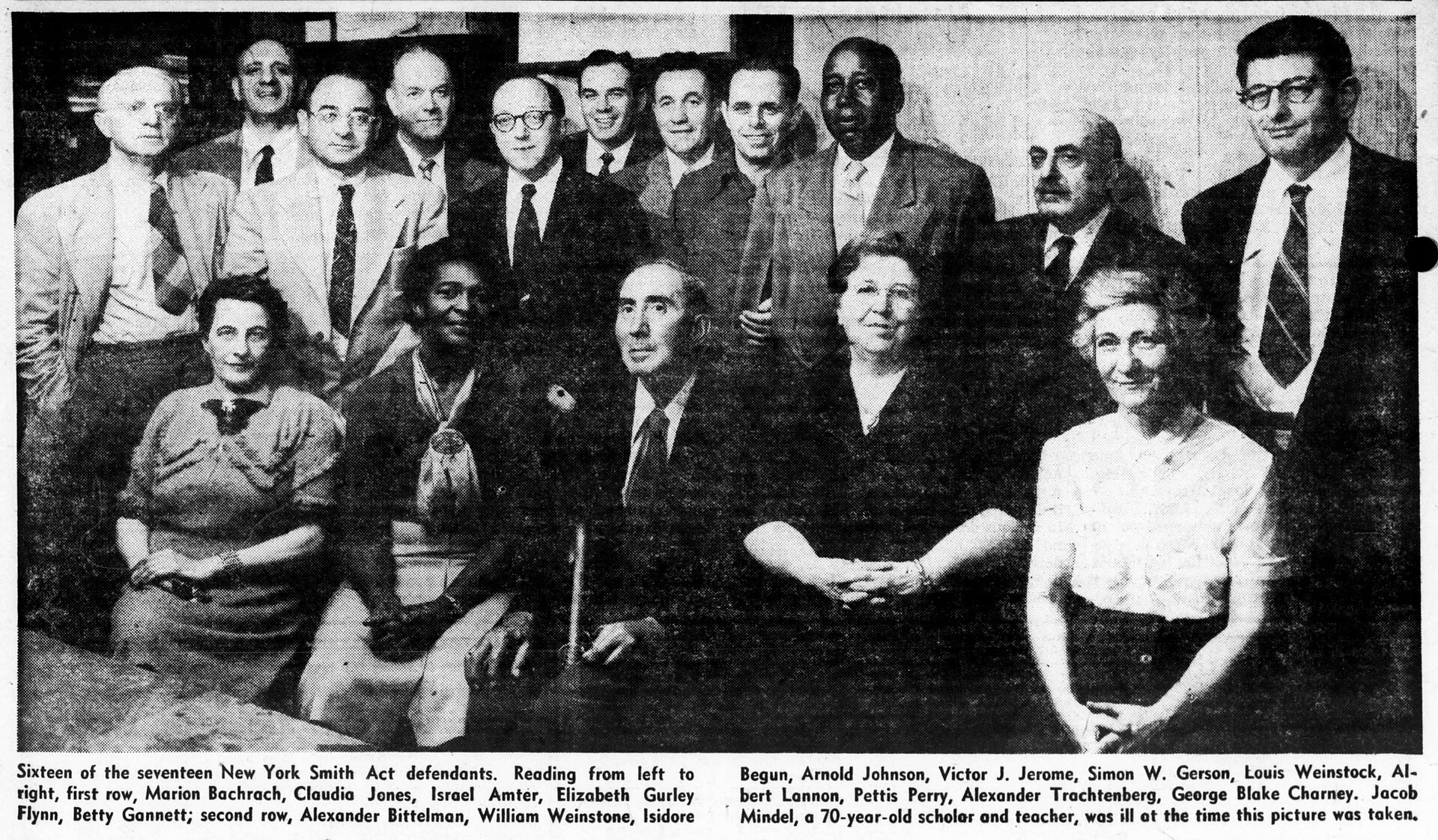
After Dennis the Justice Department indicted the party's second rank, district by district, in New York, California and other centers. The New York group of 1951 included Elizabeth Gurley Flynn, the party's best-known woman leader (her entry is in lesson 06). The run of convictions stopped on June 17, 1957, when the Supreme Court decided Yates v. United States, the appeal of 14 California party leaders. Justice John Marshall Harlan's opinion held that the act did not reach advocacy of overthrow as an abstract doctrine, only "the advocacy and teaching of concrete action for the forcible overthrow of the Government." The Court ordered acquittals for five of the petitioners and new trials for the other nine.16 After Yates, Smith Act conspiracy prosecutions became very hard to win, and the Justice Department abandoned most of the pending cases (the details are in module 81, lesson 09).

Registration, the Subversive Activities Control Board and the Communist Control Act
Congress tried a second approach in 1950: disclosure instead of prosecution. The Subversive Activities Control Act, Title I of the Internal Security Act of 1950 (the McCarran Act), created a Subversive Activities Control Board to decide, after hearings, whether an organization was a "Communist-action" or "Communist-front" organization, and required such organizations to register with the Attorney General and disclose their officers, members and finances. The Board heard the Attorney General's petition against the party and, on April 20, 1953, ordered the party to register.17 Its findings went to the heart of the matter. The Board found that the party had been "under the complete control and direction of the Comintern" and that "The Soviet Union was the leader of the Communist International, exercising control over its policies and activities."17 The Supreme Court upheld the registration order on June 5, 1961, in Communist Party v. Subversive Activities Control Board, in an opinion by Justice Felix Frankfurter, holding that the act was regulatory and that the First Amendment did not require it to be read as reaching only incitement.17
The order could not be enforced against individuals. When the Attorney General moved to make party members register one by one, the Court held in Albertson v. Subversive Activities Control Board (November 15, 1965), in Justice William Brennan's opinion, that compelled registration was "inconsistent with the protection of the Self-Incrimination Clause," because admitting membership could furnish evidence for a Smith Act prosecution.18 The scheme was left with nothing to do. Separately, Congress passed the Communist Control Act, approved August 24, 1954, whose findings declared that the party, "although purportedly a political party, is in fact an instrumentality of a conspiracy," and whose section 3 declared that the party and its successors "are not entitled to any of the rights, privileges, and immunities" of legal bodies.19
The collapse, 1956 to 1958
The party was already shrinking under prosecution when Moscow itself dealt the heavier blow. In February 1956 Nikita Khrushchev's secret speech to the Soviet party congress described Stalin's crimes, and in November Soviet tanks crushed the Hungarian revolution. The Library of Congress exhibit states that many American members left in 1956 for those two reasons, as many had left after the Nazi-Soviet Pact of 1939.1 The party's foreign-language and cultural sections broke up, the Daily Worker lost writers and readers, and by Isserman's account the party had a few thousand members by 1958.11 In the same year that the party began to collapse, the FBI started its counterintelligence program against it, COINTELPRO, which the Bureau's own reading room describes as begun "in 1956 to disrupt the activities of the Communist Party of the United States."20 The program is described under the executive bodies below. Gus Hall, a Smith Act defendant of 1949, led what remained from 1959 until 2000, the year of his death, (his entry is in lesson 07).

Fronts and allied groups
What made a front, and how the government listed them
A front, in the party's own practice, was an organization built around a popular cause (peace, refugee relief, civil rights, youth, friendship with the Soviet Union) whose public face was made up largely of non-communists while party members held the posts that decided policy. The party's term for such groups, as Red Channels reported it, was "transmission belts," a phrase taken from Lenin and Stalin.8 The test historians use today is practical. Was the group founded by party members or on party instructions? Did party members hold the controlling offices? Did the group's positions change when the party line changed, especially in August 1939, when the Nazi-Soviet Pact turned the party against intervention in the European war, and in June 1941, when the German invasion of the Soviet Union turned it back? Groups that passed all three tests were fronts in the strict sense. Many more organizations had communist members, accepted communist help or shared positions with the party without being controlled by it. Those are allied groups, and the evidence for each is different.
The federal government's list began as a tool for the loyalty program. President Truman's Executive Order 9835 of March 21, 1947, told the Department of Justice to furnish the Loyalty Review Board with the name of each organization "which the Attorney General, after appropriate investigation and determination, designates as totalitarian, fascist, communist or subversive," and it made "Membership in, affiliation with or sympathetic association with" any such organization one of the factors a loyalty board could weigh.21 The Attorney General furnished a list to the Board on November 24, 1947. The Board sent it to all federal departments and agencies on December 4, 1947, the list appeared in the press the next day, and it was consolidated, with each group classified (as "Communist," "subversive" and so on), in September 1948.22235 Robert Justin Goldstein, the historian of the list, counts about 90 organizations on that first public list, of which 47 had already been designated in secret under Roosevelt's Attorney General Francis Biddle by May 1942, and he reports Justice Department testimony that the department "considered a total of 449 organizations for AGLOSO designation" (AGLOSO is his abbreviation for the Attorney General's List of Subversive Organizations).23 Goldstein's judgment is that the list became "an official black list" and that publication "severely damaged or destroyed the listed organizations."23
No group was given notice or a hearing before it was listed. Three listed groups (the Joint Anti-Fascist Refugee Committee, the National Council of American-Soviet Friendship and the International Workers Order) sued, and on April 30, 1951, the Supreme Court held in Joint Anti-Fascist Refugee Committee v. McGrath that, taking the groups' allegations as true, their designation without any hearing was arbitrary and beyond what the executive order authorized. The Court did not decide whether the groups were in fact communist.22 The Justice Department then adopted hearing procedures for new designations, and the list continued, through the security program that Executive Order 10450 created in 1953, until President Nixon's Executive Order 11785 of June 4, 1974, declared: "The list of organizations previously designated is hereby abolished and shall not be used for any purpose."24
The entries below cover the groups the brief for this companion names, in rough order of founding. For each, the first citation from the House committee's 1957 Guide to Subversive Organizations and Publications is given, because that guide gathered the official designations in one place.5
American League for Peace and Democracy (1933 to about 1940)
The largest of the 1930s fronts began in 1933 as the United States Congress Against War, became the American League Against War and Fascism, and took the name American League for Peace and Democracy in 1937. Attorney General Tom Clark cited it as "subversive and Communist" in lists released June 1 and September 21, 1948. Attorney General Biddle had told Congress in September 1942 that it was established "in an effort to create public sentiment on behalf of a foreign policy adapted to the interests of the Soviet Union" and was "designed to conceal Communist control, in accordance with the new tactics of the Communist International." The Dies committee had called it "The largest of the Communist 'front' movements in the United States" and noted that "Earl Browder was its vice president."5 The league's call for collective security against Germany fitted the Popular Front line of 1935 to 1939, and it did not survive the Nazi-Soviet Pact, which reversed that line. Rating of the claim that it was a Communist front: Supported, by the presence of the party's general secretary among its officers and by its fate in 1939 and 1940.
American Youth Congress (1934 to the early 1940s)
The American Youth Congress was a federation of youth organizations, church groups, student councils and political clubs, and for several years in the late 1930s it had the public support of prominent officials. Attorney General Biddle told Congress in 1942 that "It originated in 1934 and * * * has been controlled by Communists and manipulated by them to influence the thought of American youth." The special House committee called it "One of the principal fronts of the Communist Party" and recorded that it was "prominently identified with the White House picket line * * * under the immediate auspices of the American Peace Mobilization," the anti-intervention campaign of the Pact period. Attorney General Clark listed it in the releases of December 4, 1947, and September 21, 1948.5 Rating of the claim that its leadership was communist-controlled: Supported for the leadership and its Pact-era line. Its member organizations, most of them ordinary youth and church groups, were not communist, and treating membership in one of them as evidence about a person is Unsupported.
National Negro Congress (1936 to the late 1940s)
The National Negro Congress was founded in 1936 to unite Black civic, church, labor and fraternal groups around civil rights and economic demands. Its first president was A. Philip Randolph of the Brotherhood of Sleeping Car Porters, an opponent of the Communists. Randolph's own account is the key evidence: according to the record quoted in the House guide, he refused to run again in April 1940 "on the ground that it was 'deliberately packed with Communists and Congress of Industrial Organizations members who were either Communists or sympathizers with Communists,'" and its secretary, John P. Davis, admitted that "the Communist Party contributed $100 a month to its support." Attorney General Clark listed it in December 1947 and September 1948.5 Rating of the claim that it was communist-controlled after 1940: Supported, chiefly on the testimony of its own founding president. For its first four years it was a broad coalition with communist participation, and the record supports that description more than the word "front."
National Council of American-Soviet Friendship (1943 on)
The National Council of American-Soviet Friendship described its purpose, in its complaint to the Supreme Court, as "to strengthen friendly relations between the United States and the Union of Soviet Socialist Republics," and said it had worked "by lawful, peaceful and constitutional means."22 The special House committee called it "the Communist Party's principal front for all things Russian," and Attorney General Clark listed it in December 1947 and September 1948.5 It was one of the three petitioners in the 1951 case. Rating of the claim that it served Soviet purposes: Partly supported. The council's wartime sponsors included many public figures with no party ties, and after 1945 its positions followed Soviet foreign policy closely. The published record does not settle how far the party directed it after the war.
Joint Anti-Fascist Refugee Committee (1942 on)
The Joint Anti-Fascist Refugee Committee raised money for Spanish Republicans who had fled Franco's victory in 1939. Its own complaint to the Supreme Court gave its purposes as "to raise, administer and distribute funds for the relief and rehabilitation of Spanish Republicans in exile."22 The House committee recorded that it was "formed in March 1942 through the merger of the American Committee to Save Refugees, the Exiled Writers Committee of the League of American Writers, and the United American Spanish Aid Committee," and called it a "Communist-front organization headed by Edward K. Barsky."5 The most specific accusation came from Louis Budenz, the former Daily Worker editor, who testified to a Senate subcommittee, as Red Channels quoted him, that the committee "was created by the secret fund committee in order to have a wider field of raising money," and that the Comintern representative Gerhart Eisler had "functioned" from it while in the United States.8 Rating of the claim that the committee was a party money channel: Partly supported. Budenz was an insider, but his account rests on his testimony alone in the sources available here, and the refugee relief the committee paid for was real. The committee's chairman, Edward K. Barsky, and members of its board were convicted of contempt of Congress for refusing to give the House committee its records (the contempt process is described in module 81, lesson 06).

International Workers Order (1930 to 1954)
The International Workers Order was a fraternal benefit society: it sold low-cost life and health insurance to working families, organized largely by nationality (Jewish, Slovak, Hungarian, Italian, Ukrainian and other sections), and ran schools, clubs and summer camps. Cornell University's Kheel Center, which holds its records, describes it as founded in 1930 "as an immigrant fraternal order" with about 200,000 members "at its peak right after World War II."25 Attorney General Biddle called it in 1942 "One of the strongest Communist organizations." The special House committee wrote that it "claims a membership of 150,000, bound together through an insurance and social plan," that it "has contributed large sums of money to Communist Party campaigns," and that in 1944 its president and general secretary were William Weiner, a former party treasurer, and Max Bedacht, a former party secretary.5 The order joined the 1951 Supreme Court case, describing itself as operating "for the mutual benefit of its members and their beneficiaries and not for profit."22
The order was destroyed by state insurance law, not by federal prosecution. On December 18, 1950, New York's Superintendent of Insurance, Alfred J. Bohlinger, petitioned the state supreme court for an order "to liquidate the business and dissolve the corporate existence of the International Workers Order, Inc." Justice Greenberg's decision in the case is dated June 25, 1951.26 The order was disbanded as a result of that action. Cornell's guide gives both 1953 and 1954 as the year.25 Rating: the claim that the order's leadership was communist is Supported by the officers' party records. The claim that its members were Communists is Unsupported: most of its tens of thousands of policyholders bought insurance, and the liquidation ended the society that carried their policies along with its leadership.
Civil Rights Congress (1946 to the mid-1950s)
The Civil Rights Congress was formed at a Congress on Civil Rights in Detroit in April 1946 by the merger of two older groups, International Labor Defense (which Attorney General Biddle had called the "Legal arm of the Communist Party") and the National Federation for Constitutional Liberties.5 It ran defense campaigns for Black defendants in the South and for Communist Party leaders under prosecution, and posted bail for the Smith Act defendants. The House committee's 1947 report on it said it was "dedicated not to the broader issues of civil liberties, but specifically to the defense of individual Communists and the Communist Party," and Attorney General Clark listed it in December 1947 and September 1948.5 Rating of the claim that it was a party front: Supported, by its origins in International Labor Defense and its leadership. The defense campaigns it ran for Black defendants also drew support from people with no party ties, and the injustices it publicized in some of those cases were real.
National Lawyers Guild (1937 on)
The National Lawyers Guild was organized at a convention in Washington, D.C., in February 1937 as a bar association open to lawyers excluded from or opposed to the American Bar Association's positions on the New Deal, labor and race.27 Its membership mixed New Deal officials, labor lawyers, Communists and anti-communists, and in 1940 a group of members, including New Deal figures, resigned after the Guild refused to condemn the Soviet Union along with Nazi Germany. On September 17, 1950, the House Committee on Un-American Activities, under its chairman John S. Wood of Georgia, released House Report No. 3123, Report on the National Lawyers Guild: Legal Bulwark of the Communist Party. The report called the Guild "the foremost legal bulwark of the Communist Party" and "an arm of the international Communist conspiracy," and recommended that the Attorney General list it, that it register as an agent of a foreign principal, and that its members be barred from federal employment.27 The report's evidence was the Guild's legal defense of Communists, its attacks on the FBI and the congressional committees, its opposition to the loyalty program, the Smith Act, the Mundt-Nixon bill and the Taft-Hartley affidavit, its affiliation with the International Association of Democratic Lawyers, and the shifts in its positions around 1939 and 1941.27
The designation the committee asked for did not follow. The House committee's own 1957 guide cites the Guild only through committee reports (the special committee's 1944 report, the 1950 report) and a 1956 Senate subcommittee handbook, with no designation by the Attorney General.5 The report was what it was: a committee report, the judgment of a congressional committee about an organization. It was not a finding by a court or by the Subversive Activities Control Board. Rating of the report's central claim that the Guild was "an arm of the international Communist conspiracy": Partly supported. Communists held influential places in the Guild, and its positions often matched the party's. The report did not show that the party controlled the Guild, and the Guild survived, as it still does in 2026, as an independent bar association.
The unions
The CIO and the Communists
The Congress of Industrial Organizations grew out of the organizing drives of the mid-1930s in steel, autos, electrical manufacturing, rubber and other mass-production industries, and Communists were among its most effective organizers. The party's own records, as Ben Rose summarized them in 1981, show party membership in the industries the CIO organized rising sharply in the late 1930s, and Rose wrote that after the CIO's 1946 convention the communist-aligned unions "had one-fourth to one-fifth of the CIO's membership."9 Communists led some of the CIO's largest affiliates, including the electrical workers (UE), the metal miners (Mine Mill) and the West Coast longshoremen (ILWU), and they held office in many locals of unions they did not control.
Two charges were made against them. The first, which the anti-communist union leaders pressed hardest, was that communist officials put the party line ahead of their members' interests, most visibly during the Nazi-Soviet Pact, when strikes in defense plants coincided with the party's campaign against aid to Britain. Congress accepted that charge, and the Supreme Court summarized the evidence Congress had heard, including the 1941 strike at the Allis-Chalmers plant in Milwaukee (the passage is quoted in module 81, lesson 01).28 The second concern, the security of defense industries in the Cold War, lay behind the oath described next. Rating of the first charge: Partly supported. The Pact-period record supports it for some unions and some strikes. Historians still dispute how much of the 1941 strike wave the party directed, and many communist-led locals had good records as bargainers for their members.
The Taft-Hartley affidavit, 1947 to 1965
The Labor Management Relations Act of 1947 (the Taft-Hartley Act) added section 9(h) to the National Labor Relations Act. A union could use the National Labor Relations Board only if each of its officers filed an affidavit "that he is not a member of the Communist Party or affiliated with such party, and that he does not believe in, and is not a member of or supports any organization that believes in or teaches, the overthrow of the United States Government by force or by any illegal or unconstitutional methods."28 The Supreme Court upheld the requirement on May 8, 1950, in American Communications Association v. Douds, in an opinion by Chief Justice Vinson.28 The affidavit split the communist-led unions from the rest. Unions whose officers would not sign lost access to the Board's elections, and rival unions that signed could raid their members. Congress replaced section 9(h) in 1959 with section 504 of the Labor-Management Reporting and Disclosure Act, which made it a crime for a person "who is or has been a member of the Communist Party" to serve as a union officer. The Supreme Court struck that section down as a bill of attainder on June 7, 1965, in United States v. Brown, in Chief Justice Earl Warren's opinion for a five-to-four Court.29
The eleven expelled unions, 1949 to 1950
The CIO purged its communist-led affiliates itself, through its own conventions and trials, months before Senator McCarthy's Wheeling speech of February 1950. At its convention in Cleveland in November 1949 the CIO expelled the United Electrical, Radio and Machine Workers of America (UE) and the Farm Equipment Workers (which had merged with the UE), amended its constitution to bar communist-led affiliates, and set up trial committees to hear charges against others. Within about a year it had expelled nine more: the American Communications Association; the Food, Tobacco, Agricultural and Allied Workers; the International Fishermen and Allied Workers; the International Fur and Leather Workers Union; the International Longshoremen's and Warehousemen's Union; the International Union of Mine, Mill and Smelter Workers; the National Union of Marine Cooks and Stewards; the United Office and Professional Workers of America; and the United Public Workers of America. A twelfth union charged, the United Furniture Workers, complied and was not expelled.30
How many members left with them is disputed. Lisa Kannenberg's account says the eleven "together represented approximately one million members."30 Steve Rosswurm, in the introduction to The CIO's Left-Led Unions (1992), notes that CIO officials used figures "from 675,000 to 1 million," and concludes that the CIO expelled between 17 and 20 percent of its total membership. His union-by-union figures, peak membership and membership at expulsion, are charted below.31 The gap between the peak figures and the expulsion figures shows how far the raids and the affidavit had already cut the communist-led unions before the CIO acted. The UE's membership at expulsion cannot be read in the copy of Rosswurm's text consulted for this lesson and is not given.
After the expulsions
The expelled unions lost members fast, to raids by the CIO's new rival unions, to the affidavit's exclusion from the labor board, and to the investigations of the early 1950s, which called many of their officers before the House and Senate committees. Several merged into other unions within a few years. The UE survived as an independent union and still exists in 2026. The purge also changed the CIO itself: with the communist-led affiliates gone, the obstacle to unity with the American Federation of Labor was smaller, and the two federations merged in 1955. Rating of the claim, common in later accounts, that the CIO expulsions were forced on the labor movement by McCarthy: Refuted. The first two expulsions were voted by the CIO's own convention in November 1949, three months before Wheeling, and the trials that followed were run by the CIO's elected leadership.30
The committees
Five congressional bodies matter most for this companion, and module 81 treats each in depth: the House Committee on Un-American Activities (HUAC), the Senate Internal Security Subcommittee (SISS), the Permanent Subcommittee on Investigations (PSI) that McCarthy chaired, the Tydings subcommittee that heard his Wheeling charges, and the Watkins select committee that recommended his censure. The summary below is for quick reference. The dates, rules, staff and results are in module 81, lesson 06 (the three investigating committees), lesson 05 (Tydings) and lesson 09 (Watkins).32
| Body | Chamber and parent | Years | Chairs named in this companion | Best known for |
|---|---|---|---|---|
| House Committee on Un-American Activities (Dies committee to 1944) | House; special committee from 1938, standing committee from January 3, 1945 | 1938 to 1975 (renamed 1969) | Martin Dies Jr., John S. Wood, J. Parnell Thomas, Harold Velde, Francis Walter | Hollywood (1947), Chambers and Bentley (1948), Hiss, the Guide and its reports on groups |
| Senate Internal Security Subcommittee | Senate Judiciary Committee | 1950 to 1977 | Pat McCarran, William Jenner, James Eastland | Institute of Pacific Relations (1951 to 1952), Lattimore, teachers and the Fifth Amendment |
| Permanent Subcommittee on Investigations | Senate Government Operations Committee | 1948 on; McCarthy chair 1953 to 1954 | Joseph McCarthy, Karl Mundt (acting, 1954) | State Department, Voice of America, Fort Monmouth, the Army |
| Tydings subcommittee | Senate Foreign Relations Committee | 1950 | Millard Tydings | Testing McCarthy's Wheeling charges |
| Watkins select committee | Senate select committee | 1954 | Arthur Watkins | Recommending censure; the Senate voted 67 to 22 on December 2, 1954 |
HUAC's mandate, as the House rules of 1955 printed in its own guide put it, was to investigate "the extent, character, and objects of un-American propaganda activities in the United States" and "the diffusion within the United States of subversive and un-American propaganda that is instigated from foreign countries or of a domestic origin and attacks the principle of the form of government as guaranteed by our Constitution."5 The committee's reports and its Guide were the main source of the "cited as" entries that private blacklists copied, which is why a group's appearance in a HUAC report should always be described as what it is, the judgment of a committee.
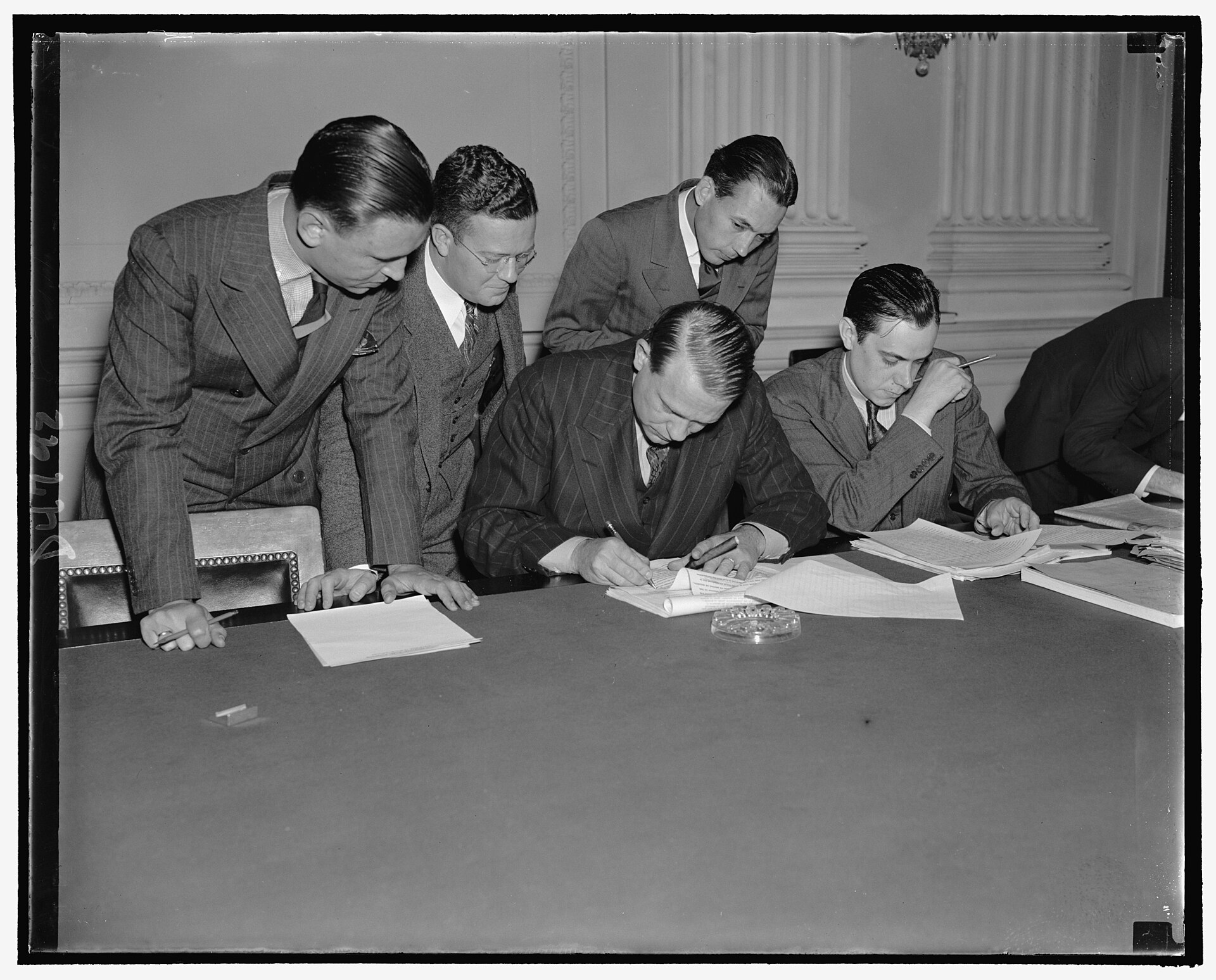

Executive bodies
The Loyalty Review Board, 1947 to 1953
Executive Order 9835 provided: "There shall be established in the Civil Service Commission a Loyalty Review Board of not less than three impartial persons," to review the decisions of the loyalty boards that each agency set up. The order's standard for refusing or removing an employee was that, on all the evidence, reasonable grounds existed for belief that the person was disloyal, and it listed the kinds of conduct a board could weigh, from sabotage and espionage to membership in or "sympathetic association with" a designated organization.21 The Board's case figures, the 1951 tightening of the standard and the arguments over what the program found are in module 81, lesson 10, and the numbers are gathered in lesson 14. President Eisenhower's Executive Order 10450 of April 27, 1953, ended the program: "Executive Order No. 9835 of March 21, 1947, as amended, is hereby revoked." Its replacement asked whether employment was "clearly consistent with the interests of the national security," a wider standard that reached conduct with no connection to communism.33
The Subversive Activities Control Board, 1950 to 1973
The Board created by the McCarran Act is described above under registration. It won its central case against the party in 1961 and lost the means of enforcing it in 1965.1718 It then spent its last years on smaller cases until Congress stopped funding it in 1973. Rating of the claim that the Board protected the country by forcing communists into the open: Unsupported. Its findings about the party's control from Moscow were correct and were upheld, but the registration it was built to compel never took place.
The FBI: the Security Index and COINTELPRO
The FBI kept two kinds of files on the party that mattered to its members. The first was a list of people to be considered for detention in a national emergency, begun in 1939 as the Custodial Detention Index and kept from 1943 as the Security Index. The party's leaders and many ordinary members were on it. The second was COINTELPRO, which the FBI's own reading room describes as begun "in 1956 to disrupt the activities of the Communist Party of the United States," later extended to targets "such as the Ku Klux Klan, the Socialist Workers Party, and the Black Panther Party," and ended in 1971: "All COINTELPRO operations were ended in 1971."20 The program against the party used informants, anonymous letters and leaks designed to set members against one another and to damage them with employers. Its existence became public in 1971, after files were stolen from an FBI office in Media, Pennsylvania, and the Senate's Church Committee described it in detail in 1976. Rating of the claim that the FBI's informants inside the party were numerous: Supported in general terms. Herbert Philbrick, whose book I Led 3 Lives (1952) described nine years as an FBI informant in the party in Boston, was one of many (his entry is in lesson 08). Precise numbers for the 1950s are not public in the sources used here.
Anti-communist organizations
Opposition to the party came from every direction, and the most effective of it came from inside the movements the party tried to lead: unions, civil liberties groups, reform organizations and the intellectual world. The groups below are arranged from those that drew a line inside their own ranks to those that campaigned in public against communists and, in some cases, against people who were nothing of the kind.
Drawing the line inside: the American Civil Liberties Union, 1940
The American Civil Liberties Union was one of the first organizations of its kind to bar Communists from its leadership. Its 1940 resolution declared, in the words quoted in the ACLU's own later account, "It is inappropriate for any person to serve on the governing committees of the Union or on its staff" if that person belonged to a political organization supporting totalitarian dictatorship, naming "(such as the Communist Party)." In May 1940 the board tried Elizabeth Gurley Flynn, a founding board member who was also a member of the Communist Party's national committee, and expelled her "by a single vote, with a tie broken by the new board chair, Rev. John Haynes Holmes."34 The ACLU's later reckoning, written by its former executive Gara LaMarche in 2019, records that the resolution was not repealed until 1967 and that in 1976 the board "posthumously reinstated Elizabeth Gurley Flynn, expelled from the national board 36 years earlier, in the first and only application of the 1940 Resolution." The same account reports that FBI files showed "five men in the leadership of the ACLU in that period" had communicated with the Bureau in the 1950s.34 Rating of the claim that the ACLU was a Communist front in these years: Refuted by its own 1940 resolution. Rating of the claim that it cooperated with the FBI in the 1950s: Supported for some of its leaders, on the evidence of the FBI files the ACLU itself reviewed.
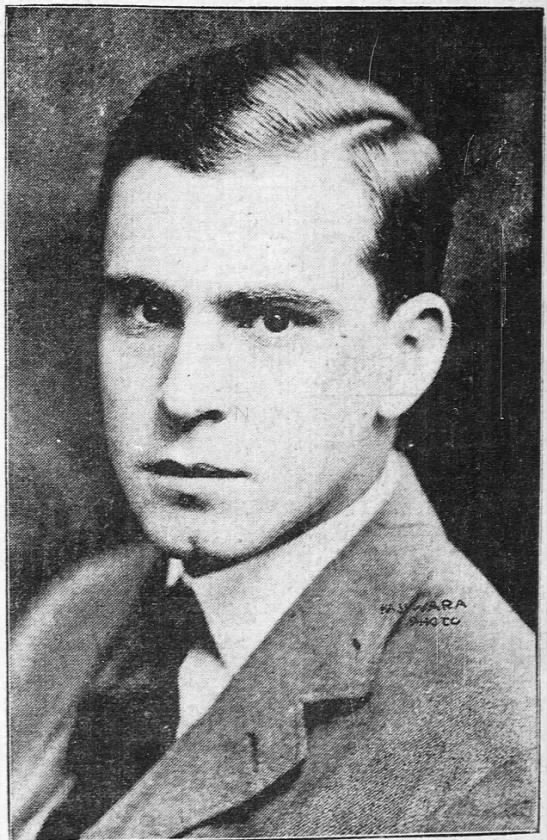

Union for Democratic Action and Americans for Democratic Action, 1941 and 1947
Americans for Democratic Action was founded in January 1947 by New Deal veterans, union leaders and writers who wanted an organization for reform that excluded Communists. The National Park Service's glossary to Eleanor Roosevelt's papers gives January 3, 1947, as the founding date and describes the group as openly anti-communist from the start. It also notes that McCarthy attacked it anyway.35 ADA grew out of the Union for Democratic Action, organized by James Loeb Jr., which a Dartmouth alumni magazine profile of Loeb in early 1947 described as "one of the very few progressive organizations which has successfully barred Communists from membership." The same piece reported that "In January, Dr. Loeb engineered the formation of a new organization called Americans for Democratic Action."36 ADA's founding came weeks after the creation of the Progressive Citizens of America, a rival group that accepted Communists and supported Henry Wallace in 1948 (the Wallace campaign is in lesson 05). Rating of the claim, made by some anti-communist publicists in the 1950s, that ADA was a Communist front: Refuted. Its founding principle was the exclusion of Communists.
The AFL, the American Legion and the Catholic War Veterans
The American Federation of Labor, older and more conservative than the CIO, had excluded Communists from office for decades and fought communist influence in unions abroad as well as at home after 1944. The American Legion, the veterans' organization founded after the First World War, ran an Americanism program that campaigned against communist influence in schools, films and broadcasting, and its posts and publications were among the most active users of the private lists described below. The Catholic War Veterans, founded in the 1930s, took a similar line and joined the Legion in protests against films and performers accused of communist sympathies. These were mass-membership organizations, and their influence came from numbers and local pressure, not from evidence of their own. Their accusations against named individuals were usually drawn from the committee reports and from Counterattack and Red Channels.
American Committee for Cultural Freedom (1951 to 1957)
The American Committee for Cultural Freedom "was formed in 1951 as a result of the dissolution and reorganization of the Committee for Cultural Freedom," a group of 1939, and "was the U.S. affiliate of the international anti-communist organization the Congress for Cultural Freedom," according to the finding aid for its records at New York University's Tamiment Library. Its leaders and correspondents included Daniel Bell, James T. Farrell and Sidney Hook, and its members also included Irving Kristol and Diana Trilling. It disaffiliated from the international Congress in the mid-1950s and folded in 1957.37 The committee argued that Communists, as members of a disciplined movement serving a foreign state, should not teach in universities, and it also criticized McCarthy's methods, a position that split its own membership. The international Congress for Cultural Freedom was later revealed, in 1966 and 1967, to have been funded covertly by the CIA. The finding aid for the American committee's records does not mention that funding.
Counterattack and Red Channels (1947 to 1968)
American Business Consultants, Inc., "was founded in 1947 by former FBI employees" and published the weekly newsletter Counterattack, according to the Tamiment finding aid for the research files it later passed on. Libel suits and money trouble eventually weakened the firm, and in 1968 it transferred its files to the Church League of America.38 In June 1950 the firm published Red Channels: The Report of Communist Influence in Radio and Television, from its offices at 55 West 42 Street in New York, at $1.00 a copy, with discounts for orders of more than 50.8 The book opened with J. Edgar Hoover's 1947 testimony that the party "has taken to the air," argued that "the Cominform (previously known as the Comintern)" sought to use radio and television for propaganda, money and prestige, and then listed people in alphabetical order, each followed by the organizations, petitions and meetings attributed to them.8 Module 81 counts 151 people listed, following Encyclopaedia Britannica, and describes how networks and advertisers used the book to drop performers and writers (lesson 10).
The book's own words are the best evidence of what it did and did not claim. Its index of names begins: "The information set forth in the following report is taken from records available to the public." It gave its purpose as threefold, including "to indicate the extent to which many prominent actors and artists have been inveigled to lend their names, according to these public records, to organizations espousing Communist causes. This, regardless of whether they actually believe in, sympathize with, or even recognize the cause advanced."8 Its introduction added: "In screening personnel every safeguard must be used to protect innocents and genuine liberals from being unjustly labelled."8 By its own account, then, a listing in Red Channels was a record of association, not a finding of party membership. Rating of the popular claim that the people in Red Channels were identified Communists: Unsupported, by the book's own text. Some of those listed were or had been party members; many were not, and the book made no attempt to tell the two apart.
Christian Anti-Communism Crusade (1950s on)
The Christian Anti-Communism Crusade was led by Fred Schwarz, an Australian physician and lay preacher. A brochure in the FBI's file on the organization says Schwarz "became involved in the conflict with Communism, while a student at the University of Queensland, in Australia, in 1940," and a newspaper clipping in the same file calls him "an Australian medical man" and the group's "founder and president."39 The crusade's main work was education: multi-day "schools of anti-communism," of which the FBI file preserves a Washington brochure, teaching Marxist theory, Soviet history and party tactics to church and civic audiences, with Schwarz's book You Can Trust the Communists (to Be Communists) (1960) as its best-known text. It concentrated on communist doctrine and the Soviet record more than on naming Americans.
The John Birch Society (1958 on)
The John Birch Society was founded in Indianapolis on December 9, 1958, by Robert Welch Jr., a retired candy manufacturer.40 The Encyclopedia of Indianapolis records that Welch met at a home on the city's north side on December 8 and 9 with 11 other men from several states, among them Fred Koch, and that membership in the early 1960s was estimated at between 60,000 and 100,000.41 The society was organized in chapters under central direction and campaigned against communism, the United Nations, the civil rights legislation of the 1960s and federal power generally. Its founder's most famous claim drew the sharpest response, including from other anti-communists: in The Politician, Welch called President Dwight Eisenhower "a dedicated, conscious agent of the Communist conspiracy."42 Rating of that claim: Refuted. Nothing in the Venona decrypts, the Soviet archives opened after 1991, the Mitrokhin papers or the Vassiliev notebooks supports it, and Eisenhower's record as president included the expansion of the government's security program and the containment of the Soviet Union in Europe and Asia. The society's charge damaged the cause it claimed to serve, a point made at the time by anti-communist writers who broke with Welch.
What the record shows and what it does not
Documented fact. The CPUSA was a section of the Communist International, bound by its decisions, organized on democratic centralism and required to keep a parallel illegal organization.76 Moscow paid it from its founding years until 1988.1314 The Subversive Activities Control Board found, and the Supreme Court upheld, that the party had operated under the Comintern's control.17 The Attorney General listed about 90 organizations from December 1947, without hearings until the Supreme Court's 1951 decision.522 The CIO expelled 11 unions in 1949 and 1950 by its own votes.30
The groups' own words. The fronts described their purposes in terms of refugee relief, friendship, youth, civil rights and insurance, and in court they denied being communist.22 Red Channels described its listings as records of association drawn from public sources, "regardless of whether" the people listed believed in the causes.8
The accusations. Committee reports such as House Report 3123 on the National Lawyers Guild, the Attorney General's designations, and the private lists named groups and people. These were judgments of committees, officials and publishers, made without the procedures of a trial.2723
The archive evidence. The Comintern records in Moscow, opened in the 1990s and filmed for the Library of Congress, document the party's direction and money from abroad.113 They do not, as a rule, document the internal life of each front, and for most fronts the best evidence of control remains insider testimony (Randolph on the National Negro Congress, Budenz on the refugee committee) and the record of line changes in 1939 and 1941.58
Scholarly reading. John Earl Haynes and Harvey Klehr, working from the Moscow records, concluded that the party was an instrument of Soviet policy whose secret apparatus served Soviet intelligence. Ellen Schrecker, in Many Are the Crimes (1998), accepts much of the espionage evidence but argues that the government's response, especially the lists and the blacklists, punished thousands of people for associations that were lawful. Both readings rest on the same documents, and they differ on what the documents justify.
Open questions. How many people passed through the party (as opposed to belonging at one time) has no agreed figure. How far the party controlled some groups after 1945, such as the National Council of American-Soviet Friendship and the National Lawyers Guild, is not settled by the published record. The full list of designated organizations, and how many groups were added after the first 90, is not given in the sources used here.
Claims checked
The claims below come from speeches, committee reports, private publications, memoirs and later histories on every side. Each is rated on the evidence available in 2026.
| Claim | Who made it | Rating | Evidence |
|---|---|---|---|
| The Communist Party was an ordinary American political party. | The party itself in its public statements; some later defenders | Refuted | Membership in the International required obedience and an illegal apparatus; Moscow paid the party until 1988; the Board's finding of Comintern control was upheld in 1961.71417 |
| Moscow funded and directed the party. | Anti-communists from the 1920s on; confirmed by historians after 1991 | Supported | Comintern letters and memos on subsidies; the 1922 forced merger; the $3 million payment of 1988.11314 |
| "For every party member there are 10 others ready, willing and able to do the party's work." | J. Edgar Hoover, March 26, 1947, attributing it to the party; repeated by Red Channels | Unsupported as a measured ratio | Hoover gave it as the party's own boast. No count supports it. It describes the claimed reach of the fronts, not a number.128 |
| Every group on the Attorney General's list was a Communist front. | Loyalty boards and private blacklists that treated a listing as proof | Partly supported | Many listed groups were fronts by the strict test (ALPD, AYC leadership, CRC). Groups were listed without notice or hearing until 1951, and the Supreme Court held the process arbitrary as pleaded.52223 |
| Membership in a listed group showed that a person was a Communist. | Executive Order 9835's "sympathetic association" factor as applied; private lists | Unsupported | The order made association one factor among several; most members of the fronts and of groups such as the IWO were not party members.2125 |
| The National Lawyers Guild was "the foremost legal bulwark of the Communist Party." | HUAC, House Report 3123, September 1950 | Partly supported | Communists were influential in the Guild and it defended party members; the report did not show party control, and the Attorney General had not designated the Guild as of 1957.275 |
| The CIO purge was forced on labor by McCarthy and the committees. | Common in later popular accounts | Refuted | The CIO's own convention expelled the UE and FE in November 1949, before Wheeling; its own trial committees expelled the other nine.30 |
| Communist union leaders put the party line ahead of their members. | Anti-communist union leaders; Congress in 1947; the Supreme Court in Douds | Partly supported | Strong for the Pact period and some strikes; many communist-led locals bargained well for their members.289 |
| The people listed in Red Channels were identified Communists. | Networks, sponsors and advertisers who used the book; some later popular accounts | Unsupported | The book said its listings showed lent names "regardless of whether they actually believe in, sympathize with, or even recognize the cause advanced."8 |
| Americans for Democratic Action was a Communist front. | Some anti-communist publicists of the 1950s | Refuted | ADA's founding organization barred Communists, and ADA was founded as an anti-communist group.3536 |
| President Eisenhower was "a dedicated, conscious agent of the Communist conspiracy." | Robert Welch, The Politician | Refuted | No evidence in the Venona decrypts or Soviet archives; Eisenhower's record ran the other way.42 |
| COINTELPRO began as a program against the Communist Party. | FBI records; Church Committee | Supported | The FBI's own reading room dates it to 1956 "to disrupt the activities of the Communist Party of the United States."20 |
| The registration scheme of 1950 forced Communists into the open. | Supporters of the McCarran Act | Unsupported | The registration order was upheld in 1961, but compelled registration of members was held unconstitutional in 1965.1718 |
Hard questions and answers
If Moscow directed the party, why did the government not simply ban it?
Congress came close. The Communist Control Act of 1954 declared the party "an instrumentality of a conspiracy" and stripped it of the "rights, privileges, and immunities" of legal bodies, but it did not make membership a crime.19 The government chose two other routes: prosecution of leaders for conspiracy to advocate overthrow, which the Supreme Court allowed in Dennis (1951) and narrowed sharply in Yates (1957), and compelled disclosure through the Subversive Activities Control Board, which the Court allowed against the party in 1961 and blocked against individual members in 1965.15161718 The limits came from the First and Fifth Amendments. A ban that made membership itself a crime would have required proof of each member's knowledge and intent, which is the line the Court drew in Yates between advocacy of doctrine and advocacy of action. The question of where the government's duty to protect itself meets the limits on its power is taken up in module 52, on ordered liberty.
Was it fair to judge people by the groups they joined?
An anti-communist of 1950 would answer that the fronts existed to recruit and use people, that a person who joined five or six of them had at least chosen not to ask who ran them, and that a government employer was entitled to ask. A civil liberties advocate would answer that the list was drawn up without hearings, that it covered groups whose ordinary members joined for refugee relief, insurance or civil rights, and that membership in a lawful organization proves nothing about a person's loyalty. The record supports parts of both. Executive Order 9835 itself treated "sympathetic association" as one factor for a board to weigh, not as proof.21 The private lists dropped that qualification, and Red Channels, by its own account, did not even try to separate belief from a lent name.8 The fairest rule the evidence supports is the one this companion uses: association is evidence of association, and party membership or espionage must be shown by evidence of its own.
How can a reader tell a front from an independent group?
Ask four questions. Who founded it, and on whose instructions? Who held the offices that set policy, and were they party members (party records, admissions, credible insider testimony)? Did its positions change on cue in August 1939 and June 1941, or in 1947 and 1948 with the Cominform's line? Where did its money go? The American League for Peace and Democracy (whose vice president was the party's general secretary) and the Civil Rights Congress (born from the party's legal defense arm) pass those tests. The National Negro Congress passes them after 1940 on the word of its own first president. The National Lawyers Guild and the National Council of American-Soviet Friendship are harder cases.5 A listing by the Attorney General or a citation by HUAC is a starting point for those questions, not an answer to them.
What killed the party: prosecution or Khrushchev?
Both, in sequence. By early 1953, before Khrushchev's speech, Time estimated the open membership at under 30,000, down from about 54,000 in 1950, with part of the remainder underground.10 That decline came during the Smith Act prosecutions, the loss of the CIO unions and the loyalty and security programs. The collapse to a few thousand by 1958 followed Khrushchev's secret speech and the crushing of Hungary in 1956, which the Library of Congress exhibit names as reasons for the mass departures.111 The prosecutions shrank the party, and Moscow's own admissions about Stalin finished its claim on the loyalty of most of the members who were left.
Did the anti-communist organizations help or harm the cause?
The groups that drew a line inside their own ranks (the CIO, the ACLU, ADA, the American Committee for Cultural Freedom) did the most to isolate the party, because they removed it from the movements it needed and they did so on evidence they knew firsthand.30343637 The publications that named individuals by association, of which Red Channels is the clearest example, harmed many people who had never been Communists and gave the party's defenders their strongest argument.8 The John Birch Society's charge against Eisenhower did the anti-communist cause the most damage of all, because it attached a false accusation against a war hero and president to a cause whose central claims were true.42
Does any of this matter in 2026?
The CPUSA still exists in 2026 as a small party, and the five states still ruled by communist parties are described in lesson 04. The methods matter more than the party. Foreign governments still use front organizations, paid influence and covert funding, and the American response still has to choose between disclosure, prosecution and listing. The questions in this lesson (who controls a group, who pays for it, what a member knew) are the questions investigators ask today, as module 81's lesson 13 shows. The record of 1947 to 1974 shows which methods found the truth and which punished association.
Where to go next
For the people named in this lesson, see the people lessons: A to F, G to L, M to R and S to Z. For Moscow's side of the machinery, lesson 10; for the espionage networks that drew on party members, lesson 12; for terms such as front, fellow traveler, democratic centralism and the Attorney General's list, the glossary; and for the numbers in one place, lesson 14. In module 81, start with lesson 03 for the machinery, lesson 06 for the committees and lesson 10 for the cost. For Idaho, module 74's lesson 04 and lesson 06.
Still open
These items could not be confirmed against a primary source before publication. The lesson states them as open, and they stay on the fact-check list.
- The UE's membership at the time of its 1949 expulsion is illegible in the OCR copy of Rosswurm's introduction used here and is not given; the ILWU figures (62,100 peak, 43,900 at expulsion) were read from a garbled passage and should be checked against the printed book; the Marine Cooks and Stewards figure at expulsion is Rosswurm's 'about half' of 14,300 and is drawn at about 7,150.
- CPUSA membership figures are estimates from different sources and methods: the party's own figures for 1930 to 1937 and 1946 come through Ben Rose (1981); the 1950 and 1953 figures come from Time (January 5, 1953), which names no source; the 1957 figure of about 10,000 comes from a reference work (West's Encyclopedia of American Law) and was not traced to a primary record. No figure for 1932 or 1944 was verified, so none is charted. The claim of 60,000 members in August 1919 appears in the same reference work and is given only as a claim.
- The Daily Worker's founding year (1924) and peak circulation (about 35,000) rest on West's Encyclopedia of American Law, not on a primary source. The renaming of The Communist as Political Affairs and the role of International Publishers are stated from general knowledge and were not checked against a source opened for this lesson.
- Gus Hall's leadership from 1959 to 2000 is stated from general knowledge and his UPI obituary as used in lesson 05; Browder's removal in 1945 and expulsion in 1946 are as given in lesson 05 (Encyclopedia of World Biography). Their entries in lessons 06 and 07 should be the check.
- Louis Budenz's break with the party in 1945 is stated from general knowledge; Red Channels confirms only that he was formerly managing editor of the Daily Worker. His testimony about the Joint Anti-Fascist Refugee Committee is quoted as Red Channels quoted it (U.S. Senate, Communist Activities Among Aliens and National Groups, Part 1, p. 224); the Senate hearing itself was not opened.
- The statement that the party's secret apparatus supplied recruits, safe houses, false papers and couriers to Soviet intelligence is attributed to Haynes and Klehr's The Secret World of American Communism (1995) and to module 81 lesson 02; the book was not opened for this lesson.
- The 'National Committee' as the name of the party's leading body after 1945 is stated from general knowledge and not from a document opened here.
- The details of the second-round Smith Act prosecutions (the cities, the abandonment of pending cases after Yates) are summarized from module 81 lessons 03 and 09, not re-verified.
- Haynes's statement about the 1988 $3 million payment is a secondary quotation (Isegoria, 2016) of an interview with the Victims of Communism Memorial Foundation; the original interview page was not opened.
- The vote in Communist Party v. SACB (1961) is not stated in the lesson; the vote in United States v. Brown (1965) is given as five to four from the alignment of the dissenters (White, Clark, Harlan, Stewart) shown on Justia.
- The ending of the Subversive Activities Control Board in 1973 (Congress stopped funding it) and its 'smaller cases' in its last years are stated from general knowledge and not from a document opened here.
- The FBI Security Index history (Custodial Detention Index from 1939, renamed Security Index in 1943), the 1971 Media, Pennsylvania, break-in and the Church Committee's 1976 report are stated from general knowledge; the Church Committee report pages could not be retrieved (image-only or blocked).
- Herbert Philbrick's book I Led 3 Lives (1952) and his nine years as an informant in Boston are stated from general knowledge; check against his entry in lesson 08.
- American League for Peace and Democracy: the 1933 starting date of the United States Congress Against War and the league's end after the Nazi-Soviet Pact (about 1940) were not confirmed from a source opened here; the guide confirms the name sequence and the 1937 successor date.
- American Youth Congress: its support from prominent officials in the late 1930s (notably Eleanor Roosevelt) and its end in the early 1940s were not confirmed from a source opened here.
- National Negro Congress: A. Philip Randolph's union office and his opposition to the Communists, and the congress's end in the late 1940s, are stated from general knowledge.
- National Council of American-Soviet Friendship: the founding year 1943 and the description of its wartime sponsors were not confirmed from a source opened here.
- Joint Anti-Fascist Refugee Committee: the contempt of Congress convictions of Edward K. Barsky and board members are stated from general knowledge and were not checked against the case reports.
- International Workers Order: the list of national sections (Jewish, Slovak, Hungarian, Italian, Ukrainian) is stated from general knowledge; the holding and reasoning of the June 25, 1951 liquidation decision could not be read beyond the opening of the opinion; Cornell's guide gives both 1953 and 1954 as the year of dissolution.
- Civil Rights Congress: its bail and defense work for Smith Act defendants and Black defendants in the South, and its end in the mid-1950s, are stated from general knowledge.
- National Lawyers Guild: the description of its founding membership, the 1940 resignations over its refusal to condemn the Soviet Union, and its continued existence in 2026 are stated from general knowledge. The statement that the Attorney General had not designated it rests on the 1957 HUAC guide's entry, which cites only committee reports and a 1956 Senate handbook; any later designation attempt was not checked.
- The Justice Department's adoption of hearing procedures after the 1951 decision, and the continued use of the list under Executive Order 10450, are stated from general knowledge. The total number of organizations designated over the list's life is not given in the sources used.
- The CIO's founding history, the mergers of expelled unions, the UE's survival to 2026 and the AFL-CIO merger of 1955 are stated from general knowledge.
- The committee table's dates (HUAC renamed 1969 and ended 1975, SISS ended 1977, PSI from 1948) and the list of chairs rely on module 81 lesson 06 and general knowledge; the censure vote of 67 to 22 on December 2, 1954, relies on module 81 lesson 09.
- ACLU: Elizabeth Gurley Flynn's status as a founding board member and as a member of the Communist Party's national committee in 1940 is stated from general knowledge. Roger N. Baldwin's role as longtime ACLU director is stated from general knowledge; the Commons description names only 'Roger N. Baldwin' and the photographer Takuma Kajiwara, and gives a date field of 1910, which is not stated in the caption.
- ADA: the National Park Service glossary gives January 3, 1947; other accounts give January 4. The Progressive Citizens of America's founding weeks earlier is stated from general knowledge.
- AFL, American Legion and Catholic War Veterans: the descriptions (the AFL's exclusion of Communists, the Legion's Americanism program and its use of private lists, the Catholic War Veterans' founding in the 1930s and protests) are stated from general knowledge and were not checked against sources opened for this lesson.
- American Committee for Cultural Freedom: its position on Communists as teachers and the split over McCarthy, and the 1966 to 1967 revelation of CIA funding of the international Congress for Cultural Freedom, are stated from general knowledge.
- Red Channels: the count of 151 people listed is module 81's figure from Encyclopaedia Britannica and was not counted from the scan.
- Christian Anti-Communism Crusade: the founding year (1953 in most accounts) was not confirmed, so the heading says only 1950s; Schwarz as lay preacher and his 1960 book You Can Trust the Communists (to Be Communists) are stated from general knowledge.
- John Birch Society: Welch's career as a candy manufacturer, the society's campaigns against the UN and civil rights legislation, the date of The Politician (privately circulated from about 1958, published 1963), and the break with Welch by other anti-communist writers are stated from general knowledge.
- The ten-to-one ratio: Hoover's 1947 wording was verified from a transcription of excerpts, not from the printed hearing.
- Ellen Schrecker's and Haynes and Klehr's interpretations in the record-check box are paraphrased from general knowledge of their books; no passage from Many Are the Crimes or The Secret World of American Communism was opened for this lesson.
- Image alt text for the Browder and Baldwin portraits was written from the Commons descriptions without viewing the images. The Smith Act group photograph was viewed by the fact checker; its printed newspaper caption, part of the image itself, names all sixteen defendants.
- The founding-period description of the two 1919 parties now follows the Library of Congress exhibit; the Britannica article (note 2) opened by the fact checker gives the 85,000 peak in 1942 but not the split by language federation.
Learn more
- Library of Congress, Revelations from the Russian Archives: Soviet Union and the United States: The Library's exhibit of Soviet documents, including those on the American party; the place to start on Moscow's direction.
- Guide to Subversive Organizations and Publications (HUAC, 1957), Internet Archive: The official compilation of every designation and committee citation; read each entry as a record of who said what about a group.
- Robert Justin Goldstein, "Prelude to McCarthyism: The Making of a Blacklist," Prologue (2006): The best short history of how the Attorney General's list was made, from National Archives records.
- Red Channels (1950), full scan: Read the introduction and a few entries to see what a listing did and did not claim.
- J. Peters, The Communist Party: A Manual on Organization (1935): The party's own description of its structure and discipline.
- FBI Vault: COINTELPRO: The FBI's released files on the program, beginning with the Communist Party.
- Module 81, lesson 06: Three Committees Compared: The full comparison of HUAC, SISS and the PSI that this lesson summarizes.
Notes
- Library of Congress, "Revelations from the Russian Archives: Soviet Union and the United States," online exhibit (1992), section on the American Communist Party (retrieved Nov. 5, 2026). Read it online. ↩
- Victor G. Devinatz and the Editors of Encyclopaedia Britannica, "Communist Party of the United States of America," Encyclopaedia Britannica, online edition (retrieved Nov. 5, 2026). Read it online. ↩
- Marxists Internet Archive, Early American Marxism, "Communist Party of America" organizational page, listing the founding conventions of the Communist Labor Party (Aug. 31 to Sept. 5, 1919), the Communist Party of America (Sept. 1 to 7, 1919), the Workers Party of America (Dec. 23 to 26, 1921) and the Bridgman convention (Aug. 17 to 22, 1922), with membership reports from party documents (retrieved Nov. 5, 2026). Read it online. ↩
- "Communist Party USA," West's Encyclopedia of American Law, 2nd ed., via Encyclopedia.com (updated 2018). Reference work; its 1919 and 1957 membership figures and the Daily Worker circulation figure are not traced to primary records (retrieved Nov. 5, 2026). Read it online. ↩
- U.S. House of Representatives, Committee on Un-American Activities, Guide to Subversive Organizations and Publications (and Appendix), H. Doc. 226, 85th Cong., 1st sess., revised and published as of January 2, 1957, superseding the guide of May 14, 1951. Entries used: Communist Party, U.S.A.; American League for Peace and Democracy; American Youth Congress; National Negro Congress; National Council of American-Soviet Friendship; Joint Anti-Fascist Refugee Committee; International Workers Order; Civil Rights Congress; International Labor Defense; National Lawyers' Guild; New Masses; and the House rules printed at the front. Internet Archive scan (retrieved Nov. 5, 2026). Read it online. ↩
- J. Peters, The Communist Party: A Manual on Organization (July 1935), ch. 3, "Structure and Functions of the Party Organizations," Marxists Internet Archive (retrieved Nov. 5, 2026). Read it online. ↩
- V. I. Lenin, "Terms of Admission into Communist International," written July 1920, conditions 3, 13 and 17, Marxists Internet Archive (retrieved Nov. 5, 2026). Read it online. ↩
- American Business Consultants, Red Channels: The Report of Communist Influence in Radio and Television (New York: Counterattack, June 1950), title page, price page, Part I introduction pp. 1 to 7, and Part II introduction. Scan at World Radio History (retrieved Nov. 5, 2026). Read it online. ↩
- Ben Rose, "The Communist Party and the CIO," Theoretical Review no. 22 (May to June 1981), Encyclopedia of Anti-Revisionism On-Line, Marxists Internet Archive. Rose cites party figures for 1930 to 1937 and 1946; his statement on the left's share of CIO membership after 1946 is not footnoted (retrieved Nov. 5, 2026). Read it online. ↩
- "Communists: How Stands the Party?" Time, January 5, 1953. The article does not name the source of its estimates (retrieved Nov. 5, 2026). Read it online. ↩
- Maurice Isserman, "When New York City Was the Capital of American Communism," New York Times, October 20, 2017, as quoted in Hamilton College News, October 31, 2017 (retrieved Nov. 5, 2026). Read it online. ↩
- J. Edgar Hoover, testimony before the House Committee on Un-American Activities, March 26, 1947 (excerpts), transcription at Vancouver Island University (retrieved Nov. 5, 2026). Read it online. ↩
- "Red Ink: Records of the Communist Party USA Opened," Library of Congress Information Bulletin 60, no. 2 (February 2001) (retrieved Nov. 5, 2026). Read it online. ↩
- John Earl Haynes, interview with the Victims of Communism Memorial Foundation ("Q&A with John Earl Haynes Part I: Soviet Subsidies in America"), as quoted at Isegoria, May 16, 2016. Secondary quotation; the original interview page was not opened (retrieved Nov. 5, 2026). Read it online. ↩
- Dennis v. United States, 341 U.S. 494 (1951), decided June 4, 1951, Justia (retrieved Nov. 5, 2026). Read it online. ↩
- Yates v. United States, 354 U.S. 298 (1957), decided June 17, 1957, Justia (retrieved Nov. 5, 2026). Read it online. ↩
- Communist Party of the United States v. Subversive Activities Control Board, 367 U.S. 1 (1961), decided June 5, 1961, opinion of Justice Frankfurter, Legal Information Institute, Cornell Law School (retrieved Nov. 5, 2026). Read it online. ↩
- Albertson v. Subversive Activities Control Board, 382 U.S. 70 (1965), decided November 15, 1965, Justia (retrieved Nov. 5, 2026). Read it online. ↩
- Communist Control Act of 1954, 68 Stat. 775, approved August 24, 1954, secs. 2 and 3, U.S. Statutes at Large, govinfo (retrieved Nov. 5, 2026). Read it online. ↩
- Federal Bureau of Investigation, FBI Records: The Vault, "COINTELPRO" (retrieved Nov. 5, 2026). Read it online. ↩
- Executive Order 9835, March 21, 1947, Parts III and V, Harry S. Truman Library and Museum (retrieved Nov. 5, 2026). Read it online. ↩
- Joint Anti-Fascist Refugee Committee v. McGrath, 341 U.S. 123 (1951), decided April 30, 1951, Justia (including the petitioners' descriptions of their purposes and the dates the list was furnished and consolidated) (retrieved Nov. 5, 2026). Read it online. ↩
- Robert Justin Goldstein, "Prelude to McCarthyism: The Making of a Blacklist," Prologue 38, no. 3 (Fall 2006), National Archives (retrieved Nov. 5, 2026). Read it online. ↩
- Executive Order 11785, June 4, 1974, sec. 2, The American Presidency Project, University of California, Santa Barbara (retrieved Nov. 5, 2026). Read it online. ↩
- Kheel Center for Labor-Management Documentation and Archives, Cornell University Library, "International Workers Order (IWO)" digital collections guide (retrieved Nov. 5, 2026). Read it online. ↩
- Matter of People (International Workers Order), 199 Misc. 941 (N.Y. Sup. Ct., New York County, June 25, 1951), Greenberg, J., Leagle. Only the opening of the opinion (the superintendent's petition of December 18, 1950) was readable (retrieved Nov. 5, 2026). Read it online. ↩
- U.S. House of Representatives, Committee on Un-American Activities, Report on the National Lawyers Guild: Legal Bulwark of the Communist Party, H. Rept. 3123, 81st Cong., 2d sess. (released September 17, 1950), Serial Set, govinfo (retrieved Nov. 5, 2026). Read it online. ↩
- American Communications Association v. Douds, 339 U.S. 382 (1950), decided May 8, 1950, opinion of Chief Justice Vinson, quoting section 9(h), Justia (retrieved Nov. 5, 2026). Read it online. ↩
- United States v. Brown, 381 U.S. 437 (1965), decided June 7, 1965, Justia (retrieved Nov. 5, 2026). Read it online. ↩
- Lisa Kannenberg, "CIO Anticommunist Drive," St. James Encyclopedia of Labor History Worldwide, via Encyclopedia.com (retrieved Nov. 5, 2026). Read it online. ↩
- Steve Rosswurm, ed., The CIO's Left-Led Unions (New Brunswick, NJ: Rutgers University Press, 1992), introduction, pp. 2 to 3. Read in an OCR copy in which the UE's membership at expulsion is illegible (retrieved Nov. 5, 2026). Read it online. ↩
- Module 81, Joseph McCarthy, the Committees and the Communist Threat, lessons 05, 06 and 09 (Liberty and the Republic, updated October 28, 2026), and the House, Senate and archival sources cited there Read it online. ↩
- Executive Order 10450, April 27, 1953, secs. 2 and 12, National Archives, Federal Register codification (retrieved Nov. 5, 2026). Read it online. ↩
- Gara LaMarche, "The ACLU's Fifth Column?" American Civil Liberties Union, December 4, 2019 (retrieved Nov. 5, 2026). Read it online. ↩
- National Park Service, Eleanor Roosevelt Papers glossary, "Americans for Democratic Action (ADA)," captured by the UNT End of Term Web Archive (retrieved Nov. 5, 2026). Read it online. ↩
- "A Clear Line," Dartmouth Alumni Magazine, February 1947, on James Loeb Jr. '29 (retrieved Nov. 5, 2026). Read it online. ↩
- Tamiment Library and Robert F. Wagner Labor Archives, New York University, finding aid for the American Committee for Cultural Freedom Records (TAM 023), historical note (retrieved Nov. 5, 2026). Read it online. ↩
- Tamiment Library and Robert F. Wagner Labor Archives, New York University, finding aid TAM 148 (research files obtained by the Church League of America from American Business Consultants and others), historical note (retrieved Nov. 5, 2026). Read it online. ↩
- Federal Bureau of Investigation, file on the Christian Anti-Communism Crusade and Fred Schwarz, headquarters file section 7 (memos of 1964, an undated Washington School of Anti-Communism brochure and an undated newspaper clipping), FOIA release at the Internet Archive (retrieved Nov. 5, 2026). Read it online. ↩
- Wiley J. Williams, "John Birch Society," Encyclopedia of North Carolina (2006), NCpedia (retrieved Nov. 5, 2026). Read it online. ↩
- Amy Smith, "John Birch Society," Encyclopedia of Indianapolis (1994, revised March 2021) (retrieved Nov. 5, 2026). Read it online. ↩
- "Robert Welch," Encyclopedia of World Biography, via Encyclopedia.com (retrieved Nov. 5, 2026). Read it online. ↩
Check yourself
1. According to the party's 1935 organizers' manual, what was the highest body of the Communist Party?
The manual states: "The highest Party body is the National Convention," which elected the Central Committee; the Political Bureau acted for the Central Committee between its meetings.
2. What did Lenin's third condition for admission to the Communist International (1920) require of member parties?
Condition 3 told communists they could place no trust in bourgeois legality and must everywhere build up a parallel illegal organisation.
3. What did the Supreme Court hold in Joint Anti-Fascist Refugee Committee v. McGrath (April 30, 1951)?
The Court reversed the dismissals; it did not decide whether the groups were communist. The list itself was abolished only in 1974 by Executive Order 11785.
4. When and by whom were the UE and the Farm Equipment Workers expelled from the CIO?
The CIO's Cleveland convention expelled them in November 1949, three months before Wheeling; nine more were expelled within about a year after internal hearings.
5. What did Red Channels (1950) itself say about the people it listed?
Its Part II introduction says the information was taken from public records and lists lent names regardless of belief, which is why a listing proves association only.
6. Which case held that requiring individual Communist Party members to register violated the privilege against self-incrimination?
Albertson (November 15, 1965) held compelled registration 'inconsistent with the protection of the Self-Incrimination Clause.' Communist Party v. SACB (1961) had upheld the order against the party itself.
7. How did the International Workers Order come to an end?
The superintendent's petition of December 18, 1950, led to a June 1951 ruling and the order's dissolution, which Cornell's guide dates to 1953 or 1954.
8. What was the founding principle of Americans for Democratic Action (January 1947)?
ADA grew out of the Union for Democratic Action, which had barred Communists from membership, and was founded as an openly anti-communist group.
Terms in this lesson
- Front organization
- A group built around a popular cause whose public face was mostly non-communist while party members held the controlling offices; the party's own term was a 'transmission belt.'
- Democratic centralism
- The Leninist rule, required of every Comintern party, that decisions taken by higher bodies bind all lower bodies and members.
- Political Bureau (Politburo)
- The small committee of the party's Central Committee, about seven to nine members in the 1935 manual, that acted for it between meetings.
- Shop unit (nucleus)
- The party's basic body where three or more members worked in the same place; street and town units grouped members by residence.
- Attorney General's list
- The list of organizations designated as totalitarian, fascist, communist or subversive under Executive Order 9835 (1947), sent to federal agencies December 4, 1947, and published in the press the next day, and abolished June 4, 1974.
- Section 9(h) affidavit
- The 1947 Taft-Hartley requirement that union officers swear they were not Communist Party members before their union could use the NLRB; upheld in 1950 and replaced in 1959.
- Subversive Activities Control Board
- The board created by the Internal Security Act of 1950 to order Communist-action and Communist-front organizations to register; its order against the party was upheld in 1961.
- Communist Control Act
- The 1954 law declaring the party an 'instrumentality of a conspiracy' and denying it the rights and privileges of legal bodies, without making membership itself a crime.
- COINTELPRO
- The FBI counterintelligence program begun in 1956 to disrupt the Communist Party, later extended to other groups and ended in 1971.
- Red Channels
- A June 1950 book by the publishers of Counterattack listing people in radio and television with the organizations and causes attributed to them; used as a blacklist.
- Fraternal benefit society
- A nonprofit membership society that sells insurance to its members; the International Workers Order was one, with about 200,000 members at its peak.
- Loyalty Review Board
- The Civil Service Commission board created by Executive Order 9835 to review agency loyalty decisions; ended when Executive Order 10450 revoked the order in 1953.
Sources
- Library of Congress, "Revelations from the Russian Archives: Soviet Union and the United States," online exhibit (1992), section on the American Communist Party (1992) checked 2026-10
- Victor G. Devinatz and the Editors of Encyclopaedia Britannica, "Communist Party of the United States of America," Encyclopaedia Britannica, online edition (undated (online)) checked 2026-10
- Marxists Internet Archive, Early American Marxism, "Communist Party of America" organizational page, listing the founding conventions of the Communist Labor Party (Aug. 31 to Sept. 5, 1919), the Communist Party of America (Sept. 1 to 7, 1919), the Workers Party of America (Dec. 23 to 26, 1921) and the Bridgman convention (Aug. 17 to 22, 1922), with membership reports from party documents (1919 to 1922 documents) checked 2026-10
- "Communist Party USA," West's Encyclopedia of American Law, 2nd ed., via Encyclopedia.com (updated 2018). Reference work; its 1919 and 1957 membership figures and the Daily Worker circulation figure are not traced to primary records (2nd ed., updated 2018) checked 2026-10
- U.S. House of Representatives, Committee on Un-American Activities, Guide to Subversive Organizations and Publications (and Appendix), H. Doc. 226, 85th Cong., 1st sess., revised and published as of January 2, 1957, superseding the guide of May 14, 1951. Entries used: Communist Party, U.S.A.; American League for Peace and Democracy; American Youth Congress; National Negro Congress; National Council of American-Soviet Friendship; Joint Anti-Fascist Refugee Committee; International Workers Order; Civil Rights Congress; International Labor Defense; National Lawyers' Guild; New Masses; and the House rules printed at the front. Internet Archive scan (January 2, 1957) checked 2026-10
- J. Peters, The Communist Party: A Manual on Organization (July 1935), ch. 3, "Structure and Functions of the Party Organizations," Marxists Internet Archive (July 1935) checked 2026-10
- V. I. Lenin, "Terms of Admission into Communist International," written July 1920, conditions 3, 13 and 17, Marxists Internet Archive (July 1920) checked 2026-10
- American Business Consultants, Red Channels: The Report of Communist Influence in Radio and Television (New York: Counterattack, June 1950), title page, price page, Part I introduction pp. 1 to 7, and Part II introduction. Scan at World Radio History (June 1950) checked 2026-10
- Ben Rose, "The Communist Party and the CIO," Theoretical Review no. 22 (May to June 1981), Encyclopedia of Anti-Revisionism On-Line, Marxists Internet Archive. Rose cites party figures for 1930 to 1937 and 1946; his statement on the left's share of CIO membership after 1946 is not footnoted (May to June 1981) checked 2026-10
- "Communists: How Stands the Party?" Time, January 5, 1953. The article does not name the source of its estimates (January 5, 1953) checked 2026-10
- Maurice Isserman, "When New York City Was the Capital of American Communism," New York Times, October 20, 2017, as quoted in Hamilton College News, October 31, 2017 (October 20, 2017) checked 2026-10
- J. Edgar Hoover, testimony before the House Committee on Un-American Activities, March 26, 1947 (excerpts), transcription at Vancouver Island University (March 26, 1947) checked 2026-10
- "Red Ink: Records of the Communist Party USA Opened," Library of Congress Information Bulletin 60, no. 2 (February 2001) (February 2001) checked 2026-10
- John Earl Haynes, interview with the Victims of Communism Memorial Foundation ("Q&A with John Earl Haynes Part I: Soviet Subsidies in America"), as quoted at Isegoria, May 16, 2016. Secondary quotation; the original interview page was not opened (2016) checked 2026-10
- Dennis v. United States, 341 U.S. 494 (1951), decided June 4, 1951, Justia (June 4, 1951) checked 2026-10
- Yates v. United States, 354 U.S. 298 (1957), decided June 17, 1957, Justia (June 17, 1957) checked 2026-10
- Communist Party of the United States v. Subversive Activities Control Board, 367 U.S. 1 (1961), decided June 5, 1961, opinion of Justice Frankfurter, Legal Information Institute, Cornell Law School (June 5, 1961) checked 2026-10
- Albertson v. Subversive Activities Control Board, 382 U.S. 70 (1965), decided November 15, 1965, Justia (November 15, 1965) checked 2026-10
- Communist Control Act of 1954, 68 Stat. 775, approved August 24, 1954, secs. 2 and 3, U.S. Statutes at Large, govinfo (August 24, 1954) checked 2026-10
- Federal Bureau of Investigation, FBI Records: The Vault, "COINTELPRO" (undated (online)) checked 2026-10
- Executive Order 9835, March 21, 1947, Parts III and V, Harry S. Truman Library and Museum (March 21, 1947) checked 2026-10
- Joint Anti-Fascist Refugee Committee v. McGrath, 341 U.S. 123 (1951), decided April 30, 1951, Justia (including the petitioners' descriptions of their purposes and the dates the list was furnished and consolidated) (April 30, 1951) checked 2026-10
- Robert Justin Goldstein, "Prelude to McCarthyism: The Making of a Blacklist," Prologue 38, no. 3 (Fall 2006), National Archives (Fall 2006) checked 2026-10
- Executive Order 11785, June 4, 1974, sec. 2, The American Presidency Project, University of California, Santa Barbara (June 4, 1974) checked 2026-10
- Kheel Center for Labor-Management Documentation and Archives, Cornell University Library, "International Workers Order (IWO)" digital collections guide (undated (online)) checked 2026-10
- Matter of People (International Workers Order), 199 Misc. 941 (N.Y. Sup. Ct., New York County, June 25, 1951), Greenberg, J., Leagle. Only the opening of the opinion (the superintendent's petition of December 18, 1950) was readable (June 25, 1951) checked 2026-10
- U.S. House of Representatives, Committee on Un-American Activities, Report on the National Lawyers Guild: Legal Bulwark of the Communist Party, H. Rept. 3123, 81st Cong., 2d sess. (released September 17, 1950), Serial Set, govinfo (September 17, 1950) checked 2026-10
- American Communications Association v. Douds, 339 U.S. 382 (1950), decided May 8, 1950, opinion of Chief Justice Vinson, quoting section 9(h), Justia (May 8, 1950) checked 2026-10
- United States v. Brown, 381 U.S. 437 (1965), decided June 7, 1965, Justia (June 7, 1965) checked 2026-10
- Lisa Kannenberg, "CIO Anticommunist Drive," St. James Encyclopedia of Labor History Worldwide, via Encyclopedia.com (undated (online)) checked 2026-10
- Steve Rosswurm, ed., The CIO's Left-Led Unions (New Brunswick, NJ: Rutgers University Press, 1992), introduction, pp. 2 to 3. Read in an OCR copy in which the UE's membership at expulsion is illegible (1992) checked 2026-10
- Module 81, Joseph McCarthy, the Committees and the Communist Threat, lessons 05, 06 and 09 (Liberty and the Republic, updated October 28, 2026), and the House, Senate and archival sources cited there (October 28, 2026) checked 2026-10
- Executive Order 10450, April 27, 1953, secs. 2 and 12, National Archives, Federal Register codification (April 27, 1953) checked 2026-10
- Gara LaMarche, "The ACLU's Fifth Column?" American Civil Liberties Union, December 4, 2019 (December 4, 2019) checked 2026-10
- National Park Service, Eleanor Roosevelt Papers glossary, "Americans for Democratic Action (ADA)," captured by the UNT End of Term Web Archive (undated (archived 2009)) checked 2026-10
- "A Clear Line," Dartmouth Alumni Magazine, February 1947, on James Loeb Jr. '29 (February 1947) checked 2026-10
- Tamiment Library and Robert F. Wagner Labor Archives, New York University, finding aid for the American Committee for Cultural Freedom Records (TAM 023), historical note (undated (online)) checked 2026-10
- Tamiment Library and Robert F. Wagner Labor Archives, New York University, finding aid TAM 148 (research files obtained by the Church League of America from American Business Consultants and others), historical note (undated (online)) checked 2026-10
- Federal Bureau of Investigation, file on the Christian Anti-Communism Crusade and Fred Schwarz, headquarters file section 7 (memos of 1964, an undated Washington School of Anti-Communism brochure and an undated newspaper clipping), FOIA release at the Internet Archive (1964 and undated) checked 2026-10
- Wiley J. Williams, "John Birch Society," Encyclopedia of North Carolina (2006), NCpedia (2006) checked 2026-10
- Amy Smith, "John Birch Society," Encyclopedia of Indianapolis (1994, revised March 2021) (1994, revised 2021) checked 2026-10
- "Robert Welch," Encyclopedia of World Biography, via Encyclopedia.com (undated (online)) checked 2026-10
- Wikimedia Commons file page: Earl Browder, 1939 (CPUSA photograph) (see file page) checked 2026-10
- Wikimedia Commons file page: Sixteen of the seventeen New York Smith Act defendants, 1951 (see file page) checked 2026-10
- Wikimedia Commons file page: Gus Hall, Federal Bureau of Prisons photograph (see file page) checked 2026-10
- Wikimedia Commons file page: Spanish War Children (restored) (see file page) checked 2026-10
- Wikimedia Commons file page: Chairman Dies of House Committee investigating Un-American activities, October 26, 1938 (see file page) checked 2026-10
- Wikimedia Commons file page: Roger N. Baldwin portrait (see file page) checked 2026-10