Lesson 7 of 14 · about 75 minutes
People G to L: Spies, Officials, Accusers and the Accused
Updated November 6, 2026
You'll be able to
- Separate the four claims (membership, espionage, sympathy, association) for each person from Gitlow to Lovestone and say which the evidence supports.
- Explain how the atomic spies Harry Gold, David and Ruth Greenglass and Theodore Hall were identified, and why Hall was never prosecuted.
- Weigh the evidence in the Alger Hiss case, from the 1948 testimony and the typewriter to the ALES dispute, and rate each claim separately.
- Show how the Vassiliev notebooks refuted the claim that Harry Hopkins was Soviet source 19, and why the claim that Owen Lattimore was a top Soviet spy is rated Unsupported.
- Compare the answers Hellman, Hammett, Lardner, Lawson, Hughes and Kazan gave to congressional committees and what the record shows about each.
- Use the cover-name identifications (KOCH, RUBLE, MLAD, KALIBR, ARNO, ZVUK, VADIM) and judge how firm each is.
Start here: the short version
This lesson is the second of four reference lessons on the people of the communist movement, Soviet espionage and the American response. It covers surnames from G to L: forty entries, from the Soviet courier Harry Gold and the atomic spy Theodore Hall to the accused diplomat Alger Hiss, the scholar Owen Lattimore, the FBI's J. Edgar Hoover and Robert Lamphere, the Hollywood writers John Howard Lawson and Ring Lardner Jr., the defectors Igor Gouzenko and Walter Krivitsky, and the world communist leaders Lenin, Khrushchev, Kim Il-sung, Ho Chi Minh and Gorbachev. Each entry keeps four questions apart: was the person a member of the Communist Party, did the person pass secrets or work for a Soviet service, did the person sympathize, and was the person merely associated with others who did. The archives opened since 1991 settle several of these cases firmly in both directions. Harry Gold, David Greenglass, Theodore Hall, Duncan Lee, Harold Glasser and Mary Jane Keeney appear in Soviet intelligence traffic as sources, and the identifications rest on decrypts, confessions or KGB archive notes. Owen Lattimore, Harry Hopkins and Langston Hughes do not, and the specific charges made against them are rated Unsupported or Refuted. The Alger Hiss case remains the most argued, with the weight of the evidence on the side of his guilt. Use the ratings as a summary; read the evidence before relying on them.
How to read these entries
Each entry opens with the person's name, years of birth and death, and a one-line role. The paragraphs that follow give what the person did, what the documentary record shows, the person's own words where a source records them, what the scholars on each side have written, and a rating of the main claim made about the person. A closing line points to the lesson of module 81, Joseph McCarthy, the Committees and the Communist Threat, where the case is told as part of the larger story. Lesson 01 of this companion explains the rating scale; the short form is here.
- Supported: the main claim is established by documents, a confession, a trial verdict that has held up, or several independent sources that agree.
- Partly supported: part of the claim holds and part does not, or the claim is true in a narrower form than the one usually stated.
- Unsupported: no evidence found in the archives or the record supports the claim, though nothing proves the opposite.
- Refuted: the evidence shows the claim is false.
- Unresolved: serious evidence exists on more than one side and the dispute is still live.
Three kinds of evidence carry most of the weight. The first is Venona, the U.S. Army and NSA project that broke parts of Soviet intelligence cables sent in the 1940s. A person "named in Venona" is not always a person "identified in Venona": the cables used cover names, and an analyst had to match a cover name to a real person from the details in the message. John Earl Haynes and Harvey Klehr counted that the deciphered cables "identify 349 citizens, immigrants, and permanent residents of the United States who had had a covert relationship with Soviet intelligence agencies," and that fewer than half of those could be matched to real names.1 The second is the set of notebooks the former KGB officer Alexander Vassiliev filled with notes from KGB archive files in the 1990s, given to the Library of Congress in 2009. Haynes and Klehr used them to confirm 177 Venona cover names, correct four mistaken identifications and put real names to 63 cover names Venona had left blank.2 The third is the record made at the time: trial verdicts, confessions, sworn testimony, and the reports of the congressional committees. Testimony is evidence of what a witness said, and it has to be weighed against the archives where they exist. In 2007 Haynes checked every person Joseph McCarthy named from 1950 through 1952 against Venona and the KGB notes and found nine with substantial evidence of assisting Soviet espionage out of 159 names reviewed.3 Several of the people in this lesson are on that list, and several are on it as "Not identified in Venona."
The lesson does not reteach the history told in other places. For the Venona project itself and the Hiss and Hall cables, read 81 lesson 02. For the committees, read 81 lesson 06. For the networks as networks, with handler-to-source diagrams and a cover-name table, read lesson 12 of this companion. For Marxist economics, read module 51, lesson 07. Entries A to F are in lesson 06, M to R in lesson 08 and S to Z in lesson 09.
G
Benjamin Gitlow (1891 to 1965)
Founding leader of American communism, Supreme Court defendant, expelled on Stalin's orders, later a witness against the party.
Benjamin Gitlow belongs to the first generation of American communists, the men and women who left the Socialist Party in 1919 to found the communist movement in the United States (see lesson 05). His name is attached to one of the most cited free speech decisions in American law. New York convicted him under its Criminal Anarchy Law for publishing and circulating "The Left Wing Manifesto" in the paper The Revolutionary Age in 1919, and the Supreme Court upheld the conviction in Gitlow v. New York, decided June 8, 1925.4 The Court assumed, without deciding, that the freedoms of speech and press were protected against the states by the Fourteenth Amendment, and held that a state could still punish advocacy of overthrowing the government by unlawful means. Justice Oliver Wendell Holmes, joined by Justice Louis Brandeis, dissented, writing that "Every idea is an incitement" and that the manifesto posed no present danger.4 The assumption the majority made became the starting point for applying the Bill of Rights to the states.
Gitlow rose to the top of the party in the 1920s as an ally of Jay Lovestone, and his career ended the way many American communist careers ended, in Moscow. In May 1929 Joseph Stalin addressed the American Commission of the Communist International's executive committee and then its Presidium on the American party's factional fight. In his first speech to the Presidium on May 14 he said that "Comrade Lovestone is indisputably an adroit and talented factional wirepuller" and that he doubted Lovestone could remain a party leader, and in his second speech that day he mocked the announcement by "Comrades Gitlow and Lovestone" that their conscience and convictions did not permit them to accept the Comintern's decision.5 Both were expelled. The episode is one of the clearest documents of Moscow's control of the American party, because the man giving the orders put his reasons on paper (see 81 lesson 01). Gitlow later turned against communism altogether and testified about the party's inner life to congressional investigators; his memoirs I Confess (1940) and The Whole of Their Lives (1948) are early insider accounts, to be read as the testimony of a participant with scores to settle.
Rating. Claim: Gitlow was a founding leader of the American communist movement who was removed by Moscow's decision in 1929. Supported by the Supreme Court record and Stalin's own speeches. The details of his later testimony are not reviewed here.
In module 81: lesson 01 (the 1929 Lovestone affair).
Harold Glasser (1905 to 1992)
Treasury Department economist; Soviet source identified in Venona as RUBLE.
Harold Glasser was a senior economist at the Treasury Department in the years when Harry Dexter White ran its monetary research division, and he worked on international finance and on American lending abroad. Elizabeth Bentley named him in the statement she gave the FBI in November 1945 as one of the government employees whose information reached her through the group around Victor Perlo.3 For a long time the case rested on her word. Venona changed that. The cover name RUBLE appears in KGB cables of the 1940s and was identified by NSA and FBI analysts as Glasser, and Haynes and Klehr report that Vassiliev's notebooks confirm the identification.2 The notebooks also record Glasser reporting to the KGB that a contact had approached him after Whittaker Chambers broke with the underground in 1938, which ties him to the older Washington network as well.2 The KGB valued Glasser well beyond the money men. In a cable of March 5, 1945, which Vassiliev copied in the KGB archive, the Washington station chief Anatoly Gorsky called Glasser (RUBLE) "Our only key to him" (meaning ALES; see the Hiss entry below) and reported that "'Ruble' gives 'Ales' an exceptionally good political reference as a member of the Comparty." These lines are in the March 5 cable, not in the decrypted Venona cable 1822 of March 30, 1945.52
Glasser was on the lists McCarthy used in 1950, and Haynes's 2007 table marks him as "Identified in Venona as a Soviet Espionage Source," with a note that Bentley first named him in 1945.3 He was never prosecuted. Like most of the people Bentley named, he could not be tried on her uncorroborated testimony, and Venona was secret until 1995.
Rating. Claim: Glasser passed information to Soviet intelligence. Supported (Bentley's 1945 statement, the Venona identification of RUBLE, the Vassiliev notebooks).
In module 81: lesson 02 (the ALES cable); lesson 11.
Harry Gold (1910 to 1972)
Philadelphia chemist and Soviet courier; carried atomic secrets from Klaus Fuchs and David Greenglass; cover names GOOSE and ARNO.
Harry Gold was born in Bern, Switzerland, on December 12, 1910, and grew up in Philadelphia.7 He was a laboratory chemist, and his espionage began in industry, not in the atomic program. In 1935 an acquaintance, Thomas Black, asked him to help the Soviets with formulas from the Pennsylvania Sugar Company, where Gold worked, and he began stealing industrial processes for Soviet intelligence.7 He spent a decade as a courier who picked up material from sources and handed it to Soviet officers.
His importance comes from the Manhattan Project. Gold was the courier who received information from the British physicist Klaus Fuchs, who was working on the bomb at Los Alamos, and in June 1945 he also collected material in Albuquerque from David Greenglass, an Army machinist at Los Alamos. Venona carried him under the cover name GOOSE until October 1944 and ARNO after; Haynes and Klehr report both identifications as confirmed by the Vassiliev notebooks.2 When Fuchs confessed in Britain in early 1950 and described his American contact, the FBI set out to find the man. In the Bureau's words, "This contact was subsequently identified through FBI investigation as Harry Gold, a Philadelphia chemist," and "On May 22, 1950, Gold confessed his espionage activity to the FBI."8 At the Rosenberg trial, Gold "testified that he was engaged in Soviet espionage from 1935 up to the time of his arrest in May 1950."8 His confession led investigators to Greenglass, and Greenglass led them to his brother-in-law Julius Rosenberg.
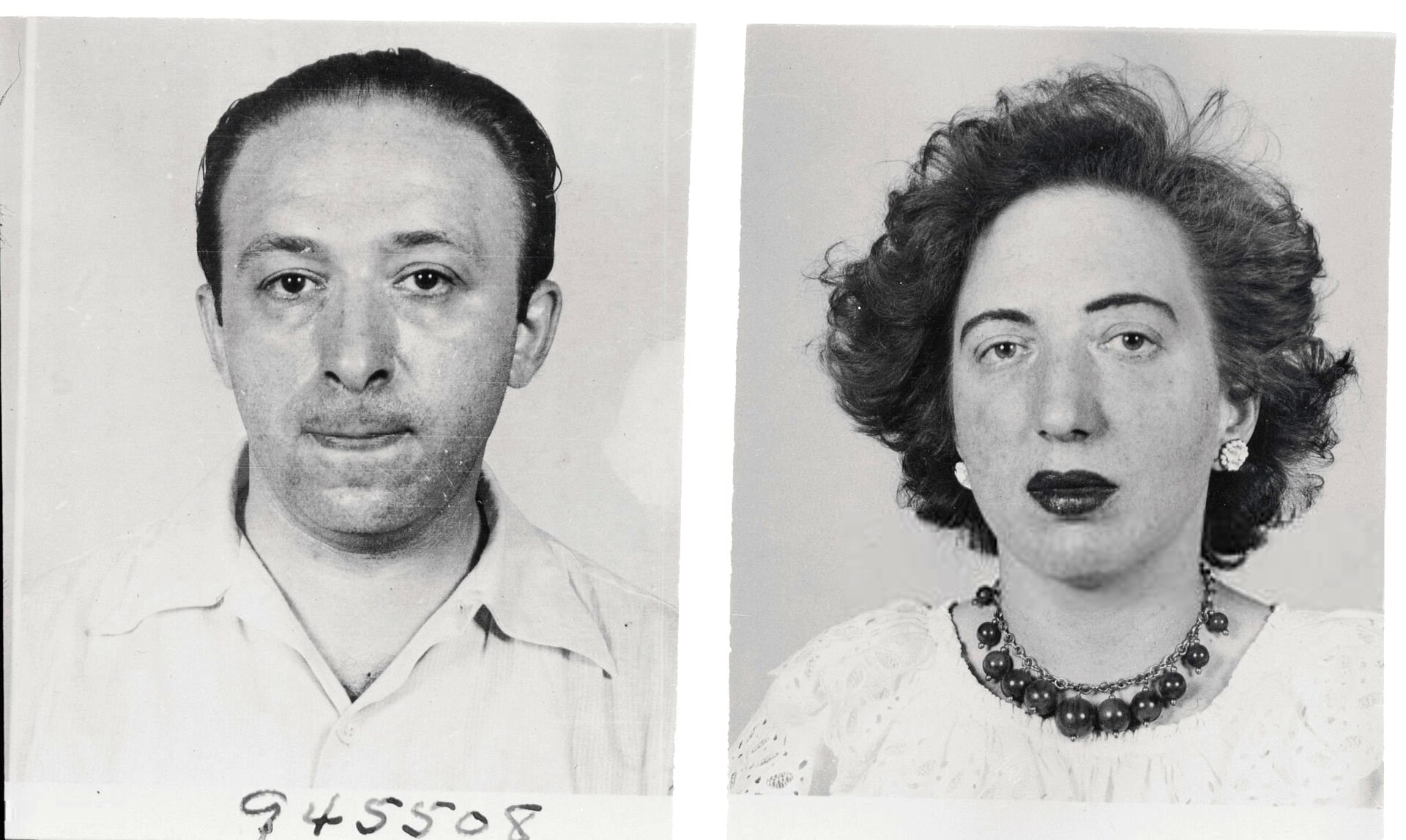
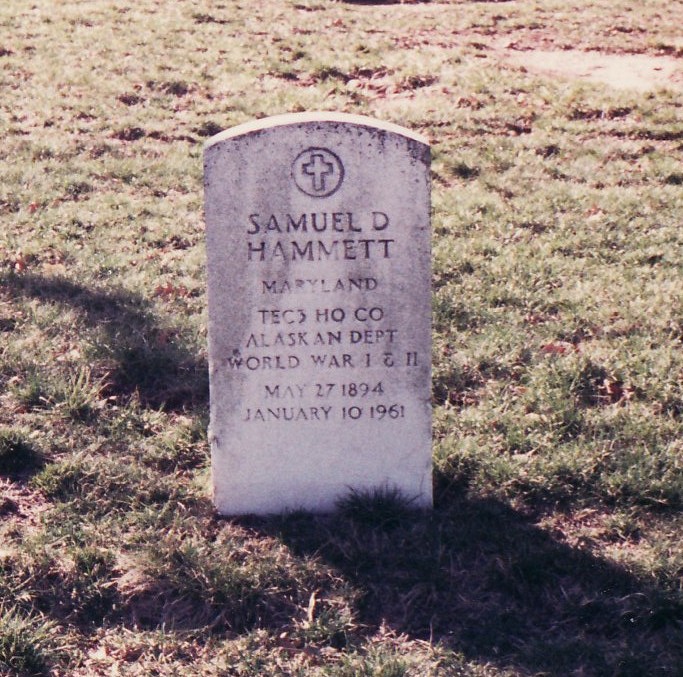
Gold pleaded guilty. He asked for a lawyer who would accept a guilty plea, and he was sentenced to 30 years in the federal penitentiary at Lewisburg, Pennsylvania; the papers of his defense firm list the sentencing in December 1950.9 Sources differ on when he left prison: the Atomic Heritage Foundation says he was paroled in May 1965, and the finding aid to his lawyers' papers says he was released in 1966.79 He died in Philadelphia on August 28, 1972.7 Gold's grand jury testimony also reached his former business associates Abraham Brothman and Miriam Moskowitz, whom the FBI arrested in 1950 on charges of obstructing justice in the atomic espionage investigation (see the photograph below); Moskowitz maintained her innocence for the rest of her life, a point this lesson did not check against a primary source.
Gold's credibility as a witness is the one part of his story still argued. He lied often in his private life, and defenders of the Rosenbergs have pointed to that habit. On the central facts, though, the documentary record supports him: Fuchs independently confirmed that Gold was his courier, the Venona cables carry GOOSE and ARNO in the right places, and the KGB archive notes agree.
Rating. Claim: Gold was a Soviet courier who carried atomic information from Fuchs and Greenglass. Supported (his confession and guilty plea, Fuchs's confession, Venona, the Vassiliev notebooks).
In module 81: lesson 10 (the atomic ring); lesson 01.

Anatoliy Golitsyn (1926 to 2008)
KGB officer who defected to the United States; source of the "monster plot" theory of Soviet deception.
Anatoliy Golitsyn was a KGB officer who defected to the Americans in the early 1960s; the usual account places the defection in Helsinki in December 1961, a date this lesson could not confirm from a primary source. He brought real information. A 2025 report on newly released CIA files says he "revealed that the KGB had agents deeply embedded within Western governments," among them in French military intelligence, and quotes the CIA's counterintelligence chief James Angleton calling him "the most valuable defector ever to reach the West."10 He also brought a theory: that later Soviet defectors were plants, that the Sino-Soviet split was staged, and that Soviet liberalization would be a deception. He set it out in New Lies for Old (1984).10 Angleton's acceptance of the theory is generally blamed for a long hunt for a mole inside the CIA (a point this lesson did not check in the CIA's own histories), and the collapse of the Soviet Union in 1991 is hard to fit into the theory. Golitsyn died on December 29, 2008.10 He belongs to the era after McCarthy, and he matters here as a caution: a defector can be right about particular agents and wrong about the big picture, and the two need separate testing.
Rating. Claim: Golitsyn was a genuine defector who identified real Soviet agents in the West. Supported in that narrow form. His broader claim that Soviet reform was a planned deception: Refuted by the events of 1989 to 1991 and the opened archives (not counted in the chart, which rates the main claim).
In module 81: not covered; see lesson 13 for later counterintelligence.
Jacob Golos (1890 to 1943)
CPUSA liaison to Soviet intelligence; ran World Tourists; Elizabeth Bentley's handler; cover name ZVUK (SOUND).
Jacob Golos was born Yakov Naumovich Tasin in Ekaterinoslav, in Ukraine, in 1890.11 In the United States he became, in the Atomic Heritage Foundation's summary, "the head of the CPUSA's liaison with Soviet intelligence." In 1932 he became president of World Tourists, a travel and shipping agency financed by the party, which arranged trips to the Soviet Union and served as cover for the movement of people, passports and money.11 The FBI investigated Golos and the company in October 1939 and charged World Tourists with failing to register with the Justice Department as an agent of the Soviet Union; Golos pleaded guilty and received a fine and a suspended sentence.11 The case was a small one at the time. In hindsight it was the government brushing against the center of the Soviet network in New York.
Golos recruited and supervised sources in Washington and New York, and from 1938 he worked with Elizabeth Bentley, who became his courier and his lover. A CIA historian describes Bentley's supervisor as "her lover Jacob Raisin, aka Joseph Golos."12 As his health failed, Bentley "took over more responsibility in managing his CPUSA spy networks."11 He died of a heart attack in New York in November 1943 (the Atomic Heritage Foundation gives November 26).11 Venona carries him as ZVUK, translated SOUND, and Haynes and Klehr list that identification as confirmed by the Vassiliev notebooks.2 His death set off the events that ended the network: the KGB moved to take Bentley's sources away from her and run them directly, she resented it, and in the autumn of 1945 she went to the FBI, giving it her long statement in November (see the Bentley entry in lesson 06).
Rating. Claim: Golos ran a Soviet espionage network built from members of the American Communist Party. Supported (his 1939 to 1940 case, Bentley's statement, Venona, the KGB notebooks).
In module 81: lesson 01 (Bentley goes to the FBI).
Mikhail Gorbachev (1931 to 2022)
Last leader of the Soviet Communist Party and the last president of the Soviet Union.
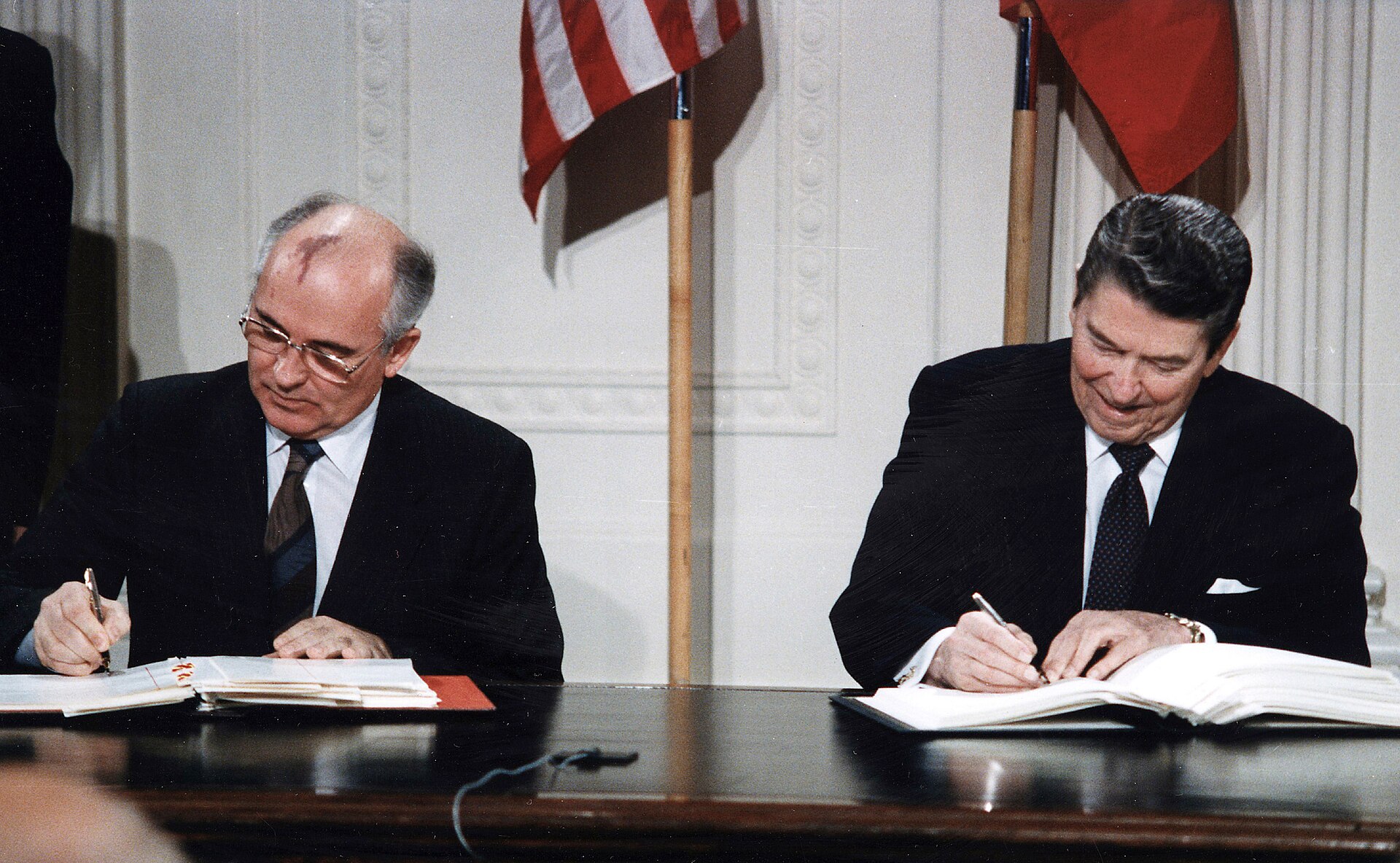
Mikhail Gorbachev was born on March 2, 1931, in Privolnoye in the Stavropol region and died in Moscow on August 30, 2022.13 The Politburo chose him as party leader on March 11, 1985, the day after Konstantin Chernenko died. His policy of glasnost ("openness") widened what could be said and printed, and his policy of perestroika ("restructuring") brought what Britannica calls "the first modest attempts to democratize the Soviet political system."13 He received the Nobel Peace Prize in 1990, and on December 25, 1991, he resigned as president of a country that ceased to exist that day.13 For the subject of this companion, his importance is that glasnost and the collapse that followed opened the archives. The Comintern files, the CPUSA's Moscow records and the KGB material that Vassiliev and others later used became readable because of the political change he started. The full story of his rule is in lesson 03, and the archives in lesson 04.
Rating. Claim: Gorbachev's reforms led to the opening of Soviet records that settled many American espionage cases. Supported in the sense that the openings followed his policies; the specific archive openings are dated in lesson 04.
In module 81: lesson 02 (the archives).

Anatoly Gorsky (1907 to 1980)
KGB station chief in Washington in the 1940s; signed the ALES cable; author of the 1948 list of exposed agents; cover name VADIM.
Anatoly Gorsky was a career Soviet intelligence officer who served in London in the 1930s and then in the United States, where he worked under diplomatic cover with the name Anatoly Gromov. Venona carries him as VADIM, and Haynes and Klehr report the identification "as Gorsky under his diplomatic pseudonym of Anatoly Gromov" as confirmed by the Vassiliev notebooks.2 Two documents make him central to American cases. The first is Washington cable 1822 of March 30, 1945, in which Gorsky reported to Moscow on a conversation about a GRU source called ALES (see the Hiss entry below).6 The second is a memorandum Gorsky wrote in Moscow in December 1948, after Bentley's defection had become public, listing the American sources he judged compromised; Vassiliev copied it, and Haynes used it in 2007 to test McCarthy's names, finding that the brothers Gerald and Stanley Graze were "identified as a Soviet Espionage Source in the Gorsky Memo" even though Venona did not name them.3 The John Ehrman study of the ALES problem also discusses a March 5, 1945 Gorsky cable saying ALES had gone to Mexico City and had not returned, a detail Hiss's defenders use; Ehrman argues the station chief simply had his information wrong.6
Rating. Claim: Gorsky ran Soviet intelligence operations in Washington and documented his American sources. Supported.
In module 81: lesson 02 (ALES and the Hiss dispute).
Igor Gouzenko (1919 to 1982)
Cipher clerk for Soviet military intelligence at the Soviet embassy in Ottawa; his defection in September 1945 exposed a Soviet spy ring in Canada.
Igor Gouzenko was born on January 26, 1919, in Rogachev, Russia, and died on June 25, 1982, in Mississauga, Ontario.14 He was a cipher clerk for the GRU, the Soviet military intelligence service, at the embassy in Ottawa, and learned that he was to be sent home. He prepared his escape by taking documents. In The Canadian Encyclopedia's account he "copied or stole documents he believed would be of great interest to Canadian authorities," often hidden in his clothing, and "On 5 September 1945, he walked out of the Soviet embassy for the last time."14 For more than a day, Canadian officials did not know what to do with him; men from the embassy broke into his apartment that night, and only then did the government take him and his family under protection (the full sequence is in 81 lesson 01).
Prime Minister Mackenzie King appointed two justices of the Supreme Court of Canada to a Royal Commission, whose report is dated June 27, 1946. Using wartime emergency powers, the Royal Canadian Mounted Police "arrested 39 suspects; 18 were convicted."14 Other accounts give other counts, a disagreement 81 lesson 01 records. Among those exposed were a member of Parliament, Fred Rose, and, in Britain, the physicist Alan Nunn May, who had passed information on atomic research. Gouzenko wrote This Was My Choice (1948) and a novel, The Fall of a Titan, which won the Governor General's Award for fiction in 1954, and he appeared in public "always wearing a hood over his face to protect his identity."14
Gouzenko's defection matters to the American story for three reasons. It gave Western governments documentary proof, months after the war ended, that the Soviet Union was running agents inside an allied government. It led to questions about the United States: Gouzenko is reported to have told investigators he had heard that an assistant to the American Secretary of State was a Soviet agent, a claim later read as pointing toward Alger Hiss; he had it at second hand. John Ehrman's 2007 CIA review gives the phrase, as Bird and Chervonnaya cite it, as a spy at the State Department who was an "assistant to Stettinius"; this lesson could not confirm the wording in a primary source.6 And the detention of suspects without counsel under the War Measures Act became an early case in the civil liberties argument about how democracies should meet espionage.
Rating. Claim: Gouzenko's documents exposed a real Soviet espionage network in Canada. Supported (Royal Commission report, convictions). His second-hand statement about an assistant to the Secretary of State is Unresolved as evidence on its own.
In module 81: lesson 01.

Gerald Graze and Stanley Graze
Brothers in government service named by McCarthy; identified as Soviet sources in the Gorsky memorandum; their Venona cover names (ARENA and DAN) were matched to them only in 2009.
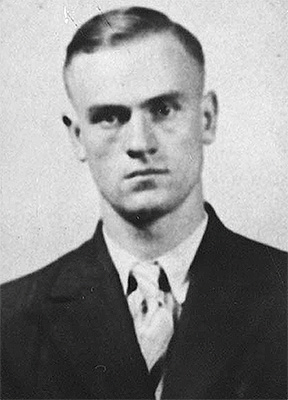
Gerald and Stanley Graze appear on the lists McCarthy used in 1950 and 1951. In Haynes's 2007 table both are marked "Not identified in Venona" but "identified as a Soviet Espionage Source in the Gorsky Memo," the December 1948 KGB list described in the Gorsky entry.3 Haynes counts both among the nine people on McCarthy's lists with substantial evidence of assisting Soviet espionage.3 Haynes's 2007 table predates the full audit of the notebooks. In 2009 Haynes and Klehr reported that the notebooks attach real names to two Venona cover names: ARENA, which NSA and FBI analysts had wrongly identified as Mary Price, was Gerald Graze, and DAN, unidentified in Venona "but in a context that suggests Stanley Graze," was Stanley Graze.2 Their case is a reminder that Venona alone was only part of the record; some identifications became possible only with the KGB files Vassiliev copied. It is also a reminder of the limits of McCarthy's own evidence: he could not have seen the Gorsky memorandum, which sat in Moscow until the 1990s, and his public charges against the people on his lists did not rest on it. Their years of birth and death were not confirmed for this lesson.
Rating. Claim: the Graze brothers were Soviet sources. Supported by the Gorsky memorandum and the notebooks' matching of the Venona cover names ARENA and DAN; the archive evidence comes through Vassiliev's copies.
In module 81: lesson 11.
David Greenglass (1922 to 2014) and Ruth Greenglass (1924 to 2008)
Army machinist at Los Alamos and his wife; Soviet sources in Julius Rosenberg's network; prosecution witnesses against Julius and Ethel Rosenberg; cover names KALIBR (CALIBER) and OSA (WASP).
David Greenglass was born in New York on March 2, 1922, the younger brother of Ethel Rosenberg. In 1943, the Atomic Heritage Foundation's timeline records, he joined the Young Communist League with his wife, Ruth, and entered the Army.15 From 1944 to early 1946 he worked on the Manhattan Project, first at Oak Ridge and then as a machinist at Los Alamos. In November 1944 he began passing information to Julius Rosenberg.15 In the spring of 1945, the FBI's history says, "Ruth Greenglass came to Albuquerque to live, and David visited her apartment on weekends."8 It was there, in June 1945, that Harry Gold collected sketches and notes from him.
Venona carried David Greenglass first as BUMBLEBEE (October 1944) and then as KALIBR, rendered CALIBER, from December 1944; Ruth was OSA, rendered WASP. Haynes and Klehr list both identifications as confirmed in the Vassiliev notebooks.2 Haynes and Klehr also judged him less valuable than he once seemed: "Theodore Hall, a young physicist at Los Alamos, was a far more valuable source than Greenglass, a machinist."1
Gold's confession led the FBI to Greenglass in June 1950. On June 16 the Justice Department filed a complaint in Albuquerque charging him with espionage conspiracy, and "Interrogation of Greenglass and his wife, Ruth, resulted in admissions of espionage activity."8 David pleaded guilty and became the government's main witness against Julius and Ethel Rosenberg in March 1951; Ruth testified too, corroborating him. Ruth was never charged. David received a 15-year sentence, and the FBI records his release from federal prison; 81 lesson 10 gives the date, November 16, 1960.815
The part of his testimony that sent his sister to her death is the part he later took back. At the trial he said he had seen Ethel transcribing information on a portable typewriter in 1945. In interviews for Sam Roberts's book The Brother (2001) and for CBS's 60 Minutes II, broadcast December 5, 2001, he said otherwise: "I don't know who typed it, frankly, and to this day I can't remember that the typing took place."16 He said he had based the typing story on his wife's recollection, and he explained his choice: "I would not sacrifice my wife and my children for my sister."16 He died in New York on July 1, 2014, at 92.17 The grand jury testimony released in July 2015 showed, in the Atomic Heritage Foundation's summary, that he had not specifically mentioned Ethel's role in the delivery of atomic secrets when he first testified.15
Two judgments follow and should be kept apart. On espionage, the Greenglasses' guilt is beyond dispute; they confessed, and the decrypts and the KGB notes confirm it. On the trial, David Greenglass's own later words show that the typing testimony, the most damaging evidence against Ethel, was not his own memory. The question of what Ethel knew and did is taken up in the Rosenberg entry in lesson 08.
Rating. Claim: David and Ruth Greenglass took part in Soviet atomic espionage. Supported. Claim: David Greenglass's trial testimony that he saw Ethel type the notes was true. Refuted by his own later statement (counted under the Rosenberg entry, not here).
In module 81: lesson 10; lesson 02.

H
Theodore Hall (1925 to 1999)
Physicist at Los Alamos who gave the Soviet Union information on the plutonium bomb; cover name MLAD; never prosecuted.
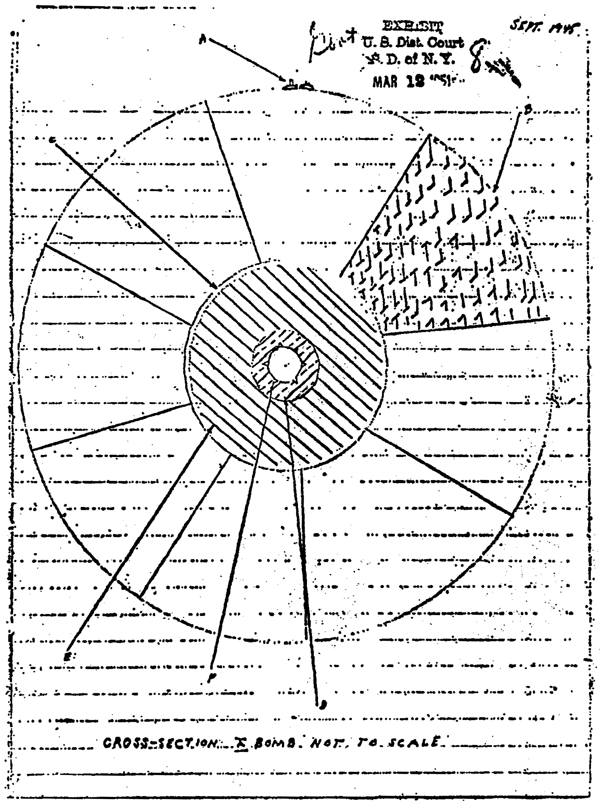
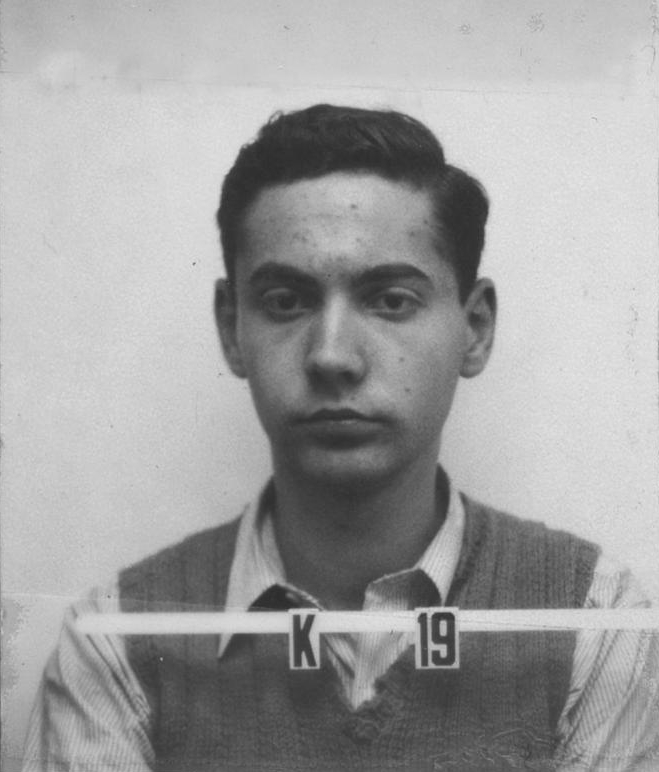
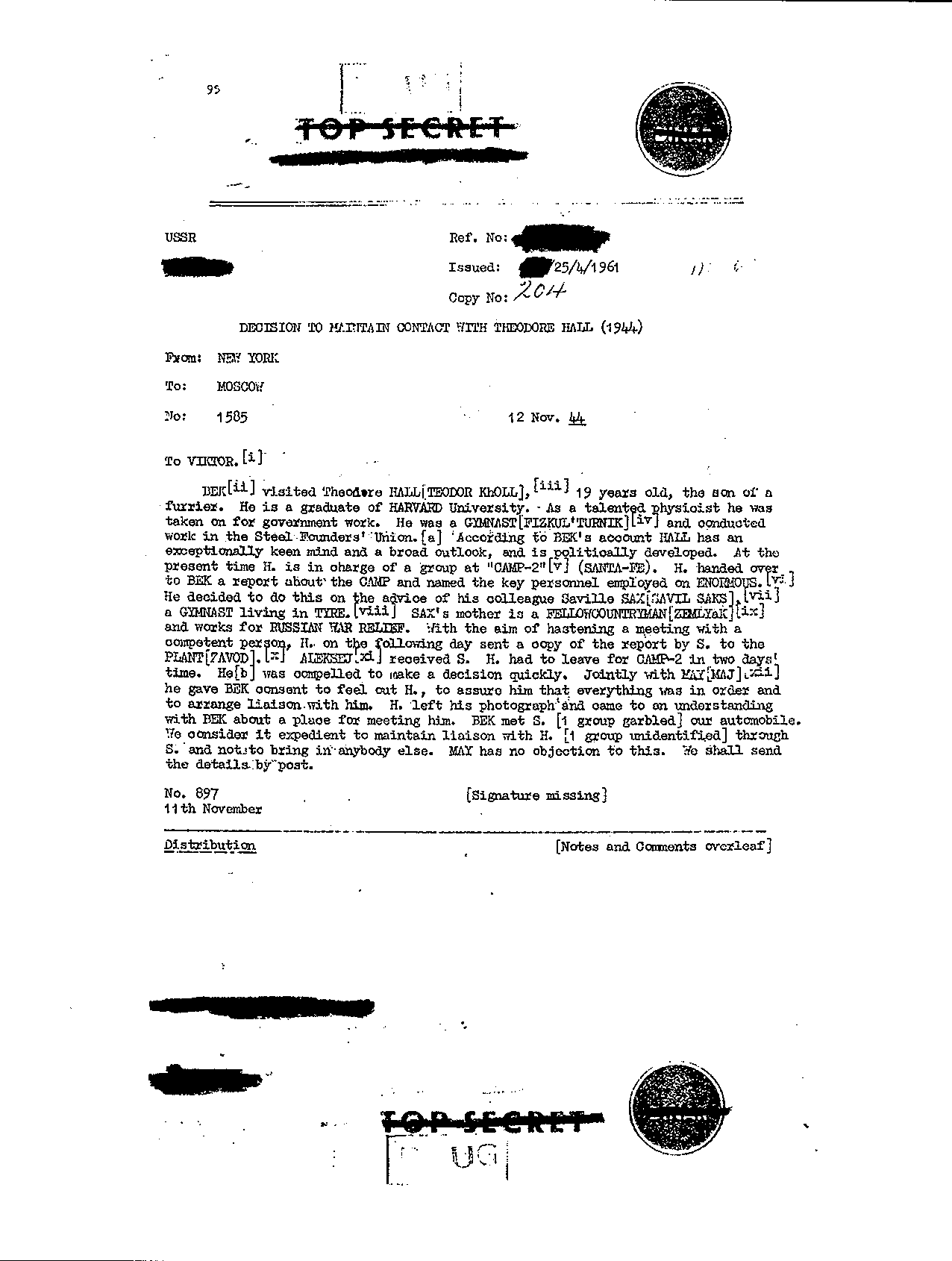
Theodore Hall was born in Far Rockaway, New York, on October 20, 1925, and finished his physics degree at Harvard in 1944, at 18.18 He joined the Manhattan Project at Los Alamos the same year. Haynes and Klehr sum up what came next: "Hall, a physics prodigy and Harvard graduate at age 18, offered his services to the KGB at age 19," with the help of his friend Saville Sax.2 On leave in New York in October 1944, Hall went to the CPUSA's office looking for a way to reach the Soviets, met Sergey Kurnakov, a military writer for a Soviet paper, and gave him a report on the Los Alamos scientists and the basic science of the implosion bomb.18 The KGB's New York station reported the first contact to Moscow in message 1585 of November 12, 1944, one of the most reproduced of all Venona documents.19 Hall and Sax became MLAD ("youngster") and STAR ("old one"), and the Vassiliev notebooks confirm both names.2
Hall's information covered the implosion design used in the plutonium "Fat Man" bomb, which the Soviets also received from Klaus Fuchs; the two sources, unaware of each other, confirmed each other in Moscow's eyes. After the war Hall moved to the University of Chicago and, according to the Atomic Heritage Foundation, continued to pass information.18 The FBI matched MLAD to Hall around 1950 and questioned him in 1951, but he admitted nothing and was never charged.18 Haynes and Klehr explain why: "Hall withstood FBI interrogation, and the government had no direct evidence of his crimes except the Venona messages," and the government would not reveal Venona in court.1 He later moved to England and did respected work in biological physics at Cambridge. After the NSA released the Venona messages in 1995, Hall issued a statement in 1997 that did not deny the charge and explained that he had believed an American monopoly on nuclear weapons was dangerous and that the knowledge should be shared.18 He died in Cambridge, England, on November 1, 1999.18
Hall's case is the strongest single answer to the claim that the espionage of the 1940s was a myth, and also the clearest example of how Venona's secrecy shaped the era: the most valuable American atomic spy walked free while the Rosenbergs were executed, because the evidence against him could not be used.
Rating. Claim: Hall gave atomic secrets to the Soviet Union. Supported (Venona 1585 and later messages, the Vassiliev notebooks, his 1997 statement).
In module 81: lesson 02 (Theodore Hall, MLAD); lesson 10.


Gus Hall (1910 to 2000)
General secretary of the Communist Party USA from 1959; Smith Act defendant; four-time presidential candidate; recipient of Soviet subsidies into the late 1980s.
Gus Hall was born Arvo Mike Halberg on October 8, 1910, "in a log cabin in Iron, Minn.," to Finnish immigrant parents.20 Standard accounts record that he studied at the Lenin School in Moscow in the early 1930s and organized steelworkers in Ohio. He was one of the eleven party leaders convicted in 1949 of conspiring to teach and advocate the overthrow of the government by force, in the Smith Act trial that the Supreme Court upheld in Dennis v. United States (1951) (see 81 lesson 03). Britannica records that he was "sentenced to five years' imprisonment," fled to Mexico in 1951 after his appeal failed, was recaptured, had his sentence extended and was imprisoned until 1957.21 UPI's obituary puts the capture in Mexico City and says he "served five years in the federal penitentiary at Leavenworth, Kan."20
In 1959 Hall was elected general secretary of a party that had collapsed after Khrushchev's 1956 secret speech and the Soviet invasion of Hungary; he led it for four decades.20 He ran for president four times, in 1972, 1976, 1980 and 1984.21 He followed the Soviet line, and he received, in Britannica's words, "the U.S.S.R.'s highest civilian medal, the Order of Lenin," and made "annual trips to Moscow until the fall of the communist regime."21
The archives opened after 1991 show what the loyalty was worth to Moscow. Haynes, who worked through the Comintern and Central Committee files with Harvey Klehr, has said the Soviet subsidies to the American party were "much larger and lasted much longer than we expected," "only ending in 1988 with a $3 million secret payment."22 The party under Hall had long denied taking Soviet money. Hall opposed Gorbachev's reforms, and the party split in 1991. He called the Soviet collapse a "setback" and kept his faith that socialism would win.20 He died in New York on October 13, 2000.21
Rating. Claim: under Hall the CPUSA took secret Soviet funding. Supported (Soviet archive documents as reported by Haynes and Klehr).
In module 81: lesson 03 (the Smith Act trial); lesson 01 (Moscow funding).

Dashiell Hammett (1894 to 1961)
Detective novelist; trustee of the Civil Rights Congress bail fund; jailed in 1951 for refusing to name contributors; witness before McCarthy's subcommittee in 1953.
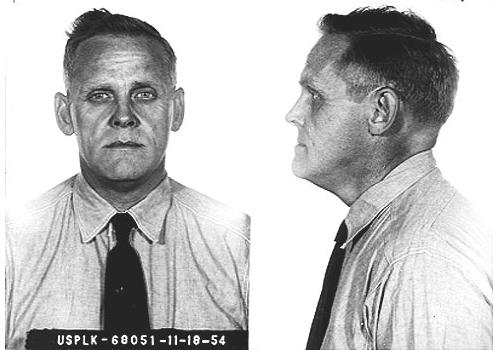
Samuel Dashiell Hammett was born on May 27, 1894, in St. Mary's County, Maryland, and died in New York City on January 10, 1961.23 He served in the Army in World War I, caught tuberculosis, and became a Pinkerton detective before writing Red Harvest, The Maltese Falcon and The Thin Man. He served again as an enlisted man in World War II, in his late forties.23 After 1934, Britannica says, he gave his time to political activity and the defense of civil liberties, and from 1930 until his death he was the companion of the playwright Lillian Hellman.23
Hammett was a trustee of the bail fund of the Civil Rights Congress, an organization on the Attorney General's list (see lesson 11). When four of the convicted Smith Act defendants, Gus Hall among them, jumped bail in 1951, a federal court demanded the names of the fund's contributors. Hammett refused. The Senate's 2003 edition of McCarthy's executive sessions records that "He was convicted of contempt of court for refusing to identify the contributors to the bail fund" and that he served a prison term from July to December 1951.24 On March 24, 1953, in executive session, and on March 26 in public, he appeared before McCarthy's Permanent Subcommittee on Investigations, which was examining whether books by communist authors stood on the shelves of the State Department's overseas information libraries. Asked by Roy Cohn about his political affiliations, Hammett answered, "I decline to answer on the ground that the answer would tend to incriminate me."24
The same Senate edition's editor's note states that "Hammett had joined the Communist party in 1937"; he never admitted it under oath in any record this lesson opened.24 He took the Fifth Amendment to questions about it, which is evidence of nothing either way under the law, though McCarthy and the press treated it as an admission. Venona and the KGB notebooks do not identify him as a source. His books were removed from some overseas libraries in 1953, then restored after President Eisenhower's Dartmouth speech of June 14, 1953, urged Americans not to "join the book burners" (see 81 lesson 07). As a veteran of both world wars he was buried at Arlington National Cemetery.
Rating. Claim: Hammett was jailed for refusing to reveal the names behind a communist-front bail fund. Supported. Claim that he was a party member: Partly supported, resting on the Senate Historical Office's note, testimony and biographers, not on his own admission or archive documents opened for this lesson. No evidence of espionage.
In module 81: lesson 07 (the overseas libraries).

Lillian Hellman (1905 to 1984)
Playwright; refused in 1952 to name others before HUAC while offering to testify about herself; blacklisted.
Lillian Hellman was born in New Orleans on June 20, 1905, and died on Martha's Vineyard on June 30, 1984.25 Her plays, among them The Children's Hour (1934), The Little Foxes (1939) and Watch on the Rhine (1941), made her one of the most successful dramatists in the country. She supported communist causes through the 1930s and 1940s, and the record of those years includes positions many of her admirers have found hard to defend, among them, by many accounts, public support for the Soviet line during the Moscow trials (a point not checked here against the original statements).
Subpoenaed by the House Committee on Un-American Activities in 1952, Hellman wrote to its chairman, John S. Wood, on May 19, 1952. She offered to waive the privilege against self-incrimination and testify fully about herself if the committee would not ask her about others: "I am most willing to answer all questions about myself." She added: "I am not willing, now or in the future, to bring bad trouble to people who" had done nothing wrong in their associations with her, and wrote the sentence that made the letter famous: "I cannot and will not cut my conscience to fit this year's fashions."26 The committee refused the bargain, and when she appeared on May 21, 1952, she invoked the Fifth Amendment. The committee put the letter into its record, which is how the text survives.26 She was blacklisted in Hollywood but was not cited for contempt.25
Hellman told her own story in Scoundrel Time (1976).25 Its success brought an argument with anti-communist writers who thought she had left out her own defense of Stalin, and her memoirs were later found to contain fabrications, notably the story of a friend she called "Julia."25 Two judgments can stand together: her 1952 letter is a principled refusal to inform on others that has held up as a document, and her later account of the era is not a reliable source on herself. Whether she was a party member is disputed; she did not admit it in any record opened for this lesson.
Rating. Claim: Hellman refused to name names while offering to testify about herself. Supported (the letter in the HUAC record). Claim that she was a Soviet agent: not made in the evidence and not supported. Her membership: Unresolved here.
In module 81: lesson 03 (HUAC and Hollywood); lesson 10.
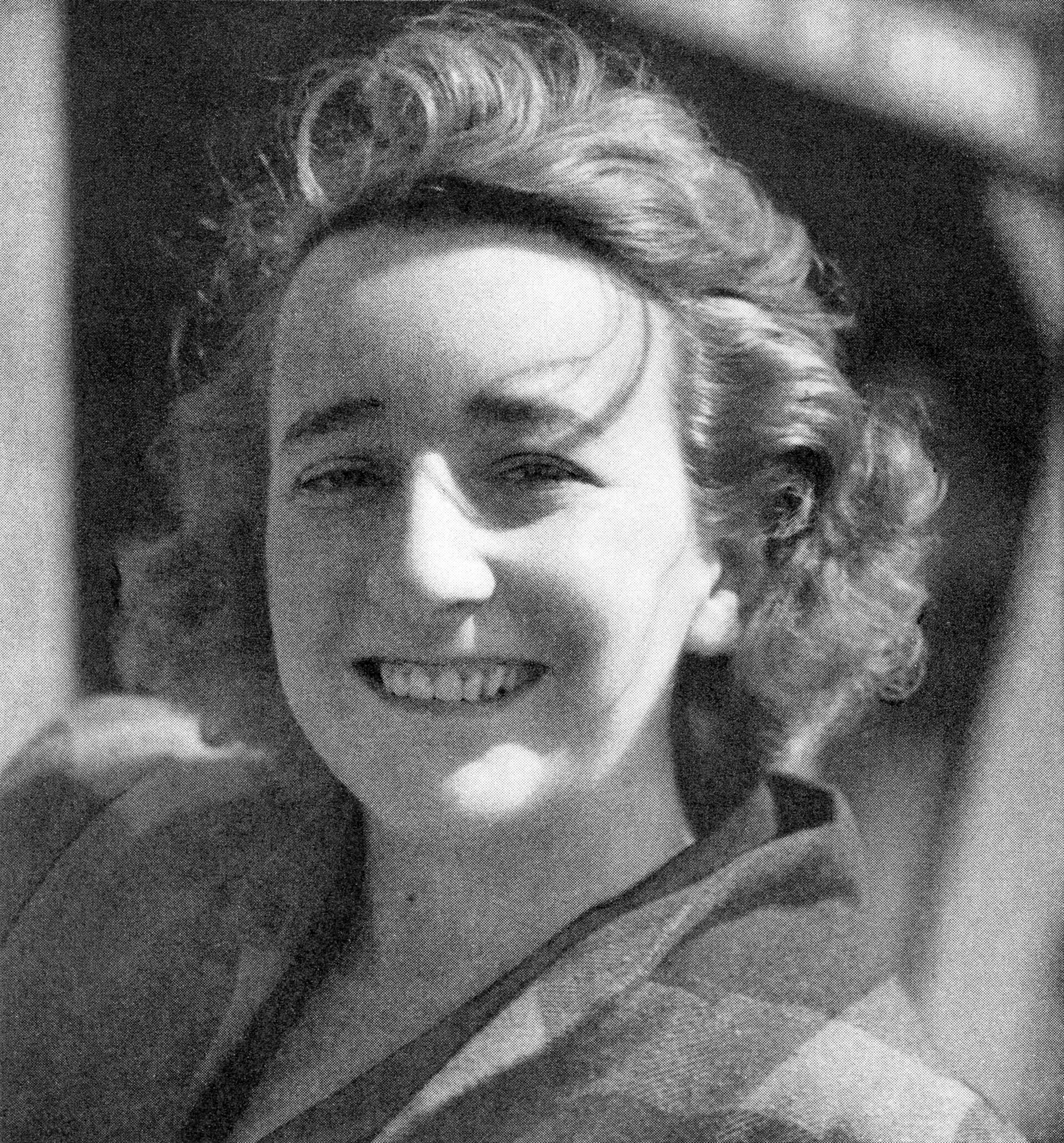

Alger Hiss (1904 to 1996)
State Department official at Yalta and the founding of the United Nations; accused by Whittaker Chambers in 1948; convicted of perjury in 1950; identified by NSA and FBI analysts as probably the GRU source ALES.
Alger Hiss was born in Baltimore on November 11, 1904, and died in New York on November 15, 1996.27 He clerked for Justice Oliver Wendell Holmes in 1929 and 1930, and entered the Roosevelt administration in 1933, serving in the Agriculture, Justice and State Departments.27 He was an adviser at the Yalta Conference in February 1945 and the temporary secretary-general of the San Francisco conference that founded the United Nations, and from 1946 to 1949 he was president of the Carnegie Endowment for International Peace.27 His career was a model of the able, well-connected public servant, which is why the charge against him landed so hard.
The accusation
On August 3, 1948, Whittaker Chambers, a former communist turned magazine editor, told HUAC that he had belonged in the 1930s to an underground group of government employees. "The head of the underground group at the time I knew it was Nathan Witt," he said, and "Other members of the group were Lee Pressman, Alger Hiss, Donald Hiss, Victor Perlo, Charles Kramer."28 He described the group's purpose with care: "The purpose of this group at that time was not primarily espionage. Its original purpose was the Communist infiltration of the American Government. But espionage was certainly one of its eventual objectives."28 Hiss, the FBI history records, "vehemently denied the accusation," and later admitted knowing Chambers in the 1930s under another name while still denying any communist ties.29 The confrontation of August 1948, the prothonotary warbler, and Richard Nixon's part are told in 81 lesson 03.
The documents and the trials
Hiss sued Chambers for libel. In the pretrial process, in November 1948, Chambers produced typed copies and summaries of State Department documents and handwritten notes that he said Hiss had given him in early 1938, and in early December he gave HUAC investigators rolls of microfilm he had hidden in a hollowed pumpkin on his Maryland farm.29 The statute of limitations on espionage had run, so a federal grand jury indicted Hiss for perjury: for denying that he had passed documents to Chambers and for denying that he had seen Chambers after January 1, 1937. The first trial in 1949 ended with a hung jury. On January 21, 1950, a second jury found him "Guilty on two counts of perjury," and he was sentenced to five years.29 The Court of Appeals for the Second Circuit, affirming on December 7, 1950, summarized the core evidence: Chambers had produced "forty-three typewritten documents and four memoranda written with pencil," and the typed documents had been prepared on "a Woodstock typewriter which had belonged to Mr. and Mrs. Hiss."30 The documents dated from the first months of 1938.30 Hiss served more than three years and was released in 1954.27 He denied all of Chambers's charges for the rest of his life.6
The archive evidence
Three kinds of evidence came after the trials. The first is Venona. Washington cable 1822 of March 30, 1945, from the KGB station chief Anatoly Gorsky, describes a long-time GRU source code-named ALES who had attended the Yalta Conference and gone on to Moscow. The NSA and FBI annotation said ALES was "probably" Alger Hiss; Haynes and Klehr's 2009 table reads, "'Ales' was identified in Venona as likely Alger Hiss."2 John Ehrman, reviewing the case for the CIA's journal in 2007, quoted the Air Force historian Eduard Mark's finding that "ALES was very probably Hiss" and concluded that "Hiss alone remains the best candidate to be ALES."6 The second is the KGB archive material Vassiliev copied, which Haynes, Klehr and Vassiliev read in Spies (2009) as placing Hiss among Soviet sources; Vassiliev's own concordance marks ALES as "likely Alger Hiss" (see 81 lesson 02). The third is the testimony of others, including the Washington network figures whose own files tie them to Hiss.
The dissent is serious and should be stated in its strongest form. Kai Bird and Svetlana Chervonnaya argued in 2007 that ALES was another State Department official, Wilder Foote, pointing to a March 5, 1945 cable saying ALES had gone to Mexico City and not returned, while Hiss was back in Washington by then.6 Ehrman answered that the cable reflected the station chief's error, and that Foote fails other tests in the ALES cable.6 Defenders also note that ALES supplied military information, an odd fit for a diplomat, and that no document names Hiss in plain text. These objections have persuaded a minority of writers. They do not touch the trial evidence of 1949 and 1950, which stands on the typewriter and the documents in Hiss's handwriting.
Rating. Claim: Hiss passed State Department documents to Soviet intelligence through Chambers in the 1930s. Supported (the documents, the typewriter, the perjury verdict and its appeal, with the archive material consistent). Claim: Hiss was the GRU source ALES in 1945. Partly supported: the identification is the majority view and rests on a reasonable chain of inference, but it is an inference, and a minority dissents.
In module 81: lesson 03 (the case); lesson 02 (ALES); lesson 11; lesson 14.
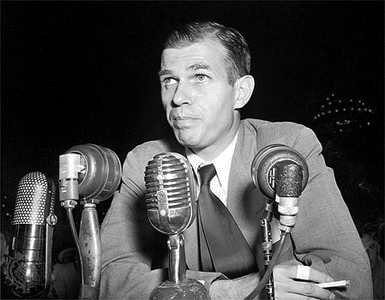

Donald Hiss (1906 to 1989)
Government lawyer, Alger Hiss's younger brother; named by Whittaker Chambers in 1948; denied it under oath; never charged.
Donald Hiss followed his brother into government law in the 1930s and served in the Labor and State Departments. Chambers named him on August 3, 1948, as a member of the Washington underground group.28 Donald Hiss denied it under oath before HUAC. The evidence against him is thinner than the evidence against his brother: Chambers produced no documents from Donald, he was not prosecuted, and the Venona and Vassiliev material reviewed by Haynes and Klehr does not identify him as a source in the 1940s. The fair reading is that Chambers's statement is the testimony of the one witness who had been inside the group, credible on the people he dealt with closely, but uncorroborated in this case. Donald Hiss left government and practised law in Washington until his death.
Rating. Claim: Donald Hiss belonged to the communist underground in the 1930s. Unsupported beyond Chambers's testimony; no espionage claim is supported.
In module 81: lesson 01 (Chambers's August 3, 1948 testimony).
Clarence Hiskey (1912 to 1998)
Manhattan Project chemist; a GRU source; cover name RAMSAY in KGB traffic.
Clarence Hiskey worked on the atomic project at the University of Chicago's Metallurgical Laboratory during the war. The FBI spotted him meeting a GRU agent, and the Army, in which he held a reserve commission, removed him from the project by lifting his exemption from military service and sending him to a remote Army base in northern Canada in 1944.2 He later refused to answer HUAC's questions and was indicted for contempt, then acquitted. The Vassiliev notebooks settled who he was working for: in Haynes and Klehr's words the notebooks "show Ramsay was Clarence Hiskey, a Manhattan Project physicist," and the KGB never recruited him, unaware that he was already working for the GRU.2 The Hiskey case shows that the two Soviet services, the KGB and the GRU, ran separate agents and sometimes competed for the same ones (see lesson 10).
Rating. Claim: Hiskey was a Soviet intelligence source. Supported by the KGB archive notes; his removal from the project is from Haynes and Klehr's 2009 paper; his contempt case is from secondary accounts not opened for this lesson.
In module 81: lesson 02.
Ho Chi Minh (1890 to 1969)
Founder of the Indochinese Communist Party; president of North Vietnam.
Ho Chi Minh was born on May 19, 1890, in Hoang Tru, in what was then French Indochina, and died in Hanoi on September 2, 1969.31 He was the founder of the Indochina Communist Party in 1930 and the president of the Democratic Republic of Vietnam, North Vietnam, from 1945 until his death.31 He worked for years as an agent of the Communist International in Europe and Asia before leading the war against France, which ended at Dien Bien Phu in 1954, and the war against South Vietnam and the United States, which his successors won in April 1975. The land reform campaign of 1953 to 1956 in the North, carried out on the Chinese model, killed thousands of people denounced as landlords; estimates vary widely and are discussed in lesson 03. In the American debate of the McCarthy years, Ho's victory over France fed the fear that communism was advancing in Asia, the same fear that drove the "Who lost China?" charges against Owen Lattimore and John Stewart Service.
Rating. Claim: Ho was a communist leader who served the Comintern and founded a communist state. Supported.
In module 81: lesson 01 (the fear abroad).
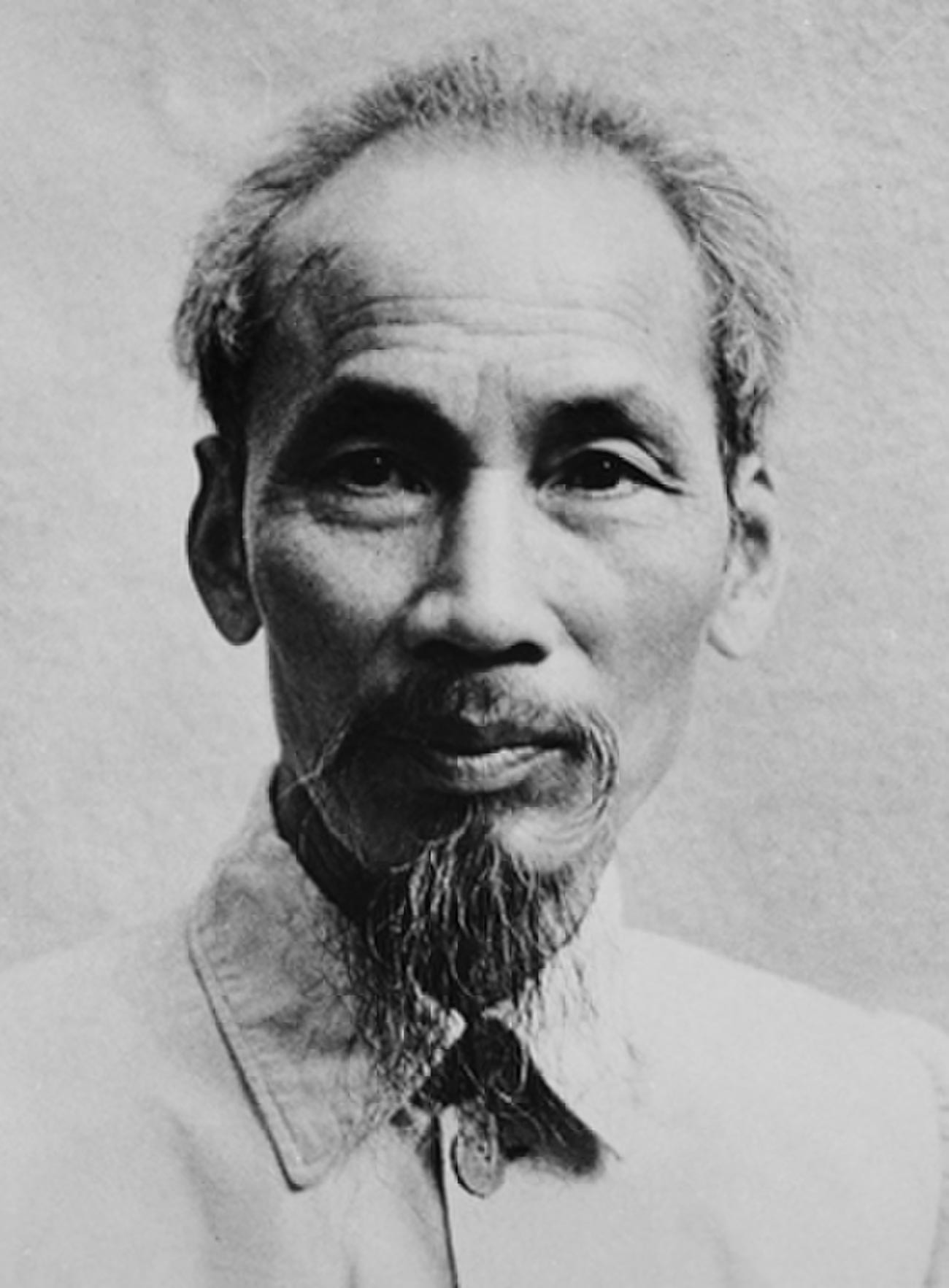

J. Edgar Hoover (1895 to 1972)
Director of the Bureau of Investigation and the FBI, 1924 to 1972; the government's chief investigator of Soviet espionage and of the CPUSA; author of the COINTELPRO programs.
John Edgar Hoover was born in Washington, D.C., on January 1, 1895, and "died in his sleep on May 2, 1972," still in office.32 As a young Justice Department lawyer he led the department's General Intelligence Division, which compiled files on radicals in the period of the Palmer Raids (see lesson 05).32 Attorney General Harlan Fiske Stone made "the 29-year-old Hoover" acting director of the Bureau of Investigation on May 10, 1924, and by the end of the year he was director; he held the post for 48 years.32 The FBI's own history says the Bureau "garnered headlines for its staunch efforts against Nazi and Communist espionage" in the 1940s and 1950s.32
The record of Hoover's FBI on Soviet espionage has two sides, and both are documented. The Bureau broke real cases. It turned Bentley's 1945 statement into a vast investigation; it worked with the Army's codebreakers on Venona from 1948, through the agent Robert Lamphere (see his entry); and it found Harry Gold, the Greenglasses and the Rosenbergs in 1950 (see 81 lesson 10). Hoover also guarded the Bureau's secrets in ways that shaped what the public and even the president knew. The CIA historian Michael Warner, studying whether President Truman was told about Venona, concluded he probably was not, and argued that Hoover "would not have jeopardized FBI access to the precious decrypts" by sharing too much; a Hoover note on a 1950 memo about Harry Dexter White mused, "Wouldn't it be swell to send substance to Ad. Souers for information of the President."33
The other side is the Bureau's conduct toward lawful dissent. The Senate's Church Committee reported in 1976 that "For fifteen years from 1956 until 1971, the FBI carried out a series of covert action programs," beginning with one aimed at the "Communist Party, USA" (1956 to 1971), and that while their stated purpose was to protect national security and prevent violence, their aim was "to covertly disrupt, discredit and harass groups and individuals."34 The programs "ended formally in 1971 with the threat of public exposure."34 They later reached far beyond the party, to civil rights and antiwar groups.
Hoover's relationship with Joseph McCarthy began as quiet help and ended in distance. On May 5, 1954, during the Army-McCarthy hearings, the subcommittee's assistant counsel Robert A. Collier, a former FBI employee, testified on Hoover's authority that a document McCarthy presented as a 1951 Hoover letter "is not a carbon copy or a copy of any communication prepared or sent by the FBI"53 (see 81 lesson 08 and lesson 12). Hoover's 1958 book Masters of Deceit, written with Bureau staff, was the most widely read anti-communist primer of its time.
Rating. Claim: Hoover's FBI exposed real Soviet espionage. Supported. Claim: Hoover's FBI used covert programs to disrupt lawful political activity. Supported (Church Committee). Both belong in the record; neither cancels the other. Counted in the chart as Partly supported for the common claim that his FBI's anti-communist work was justified in its methods.
In module 81: lesson 12 (Hoover's distance); lesson 08.
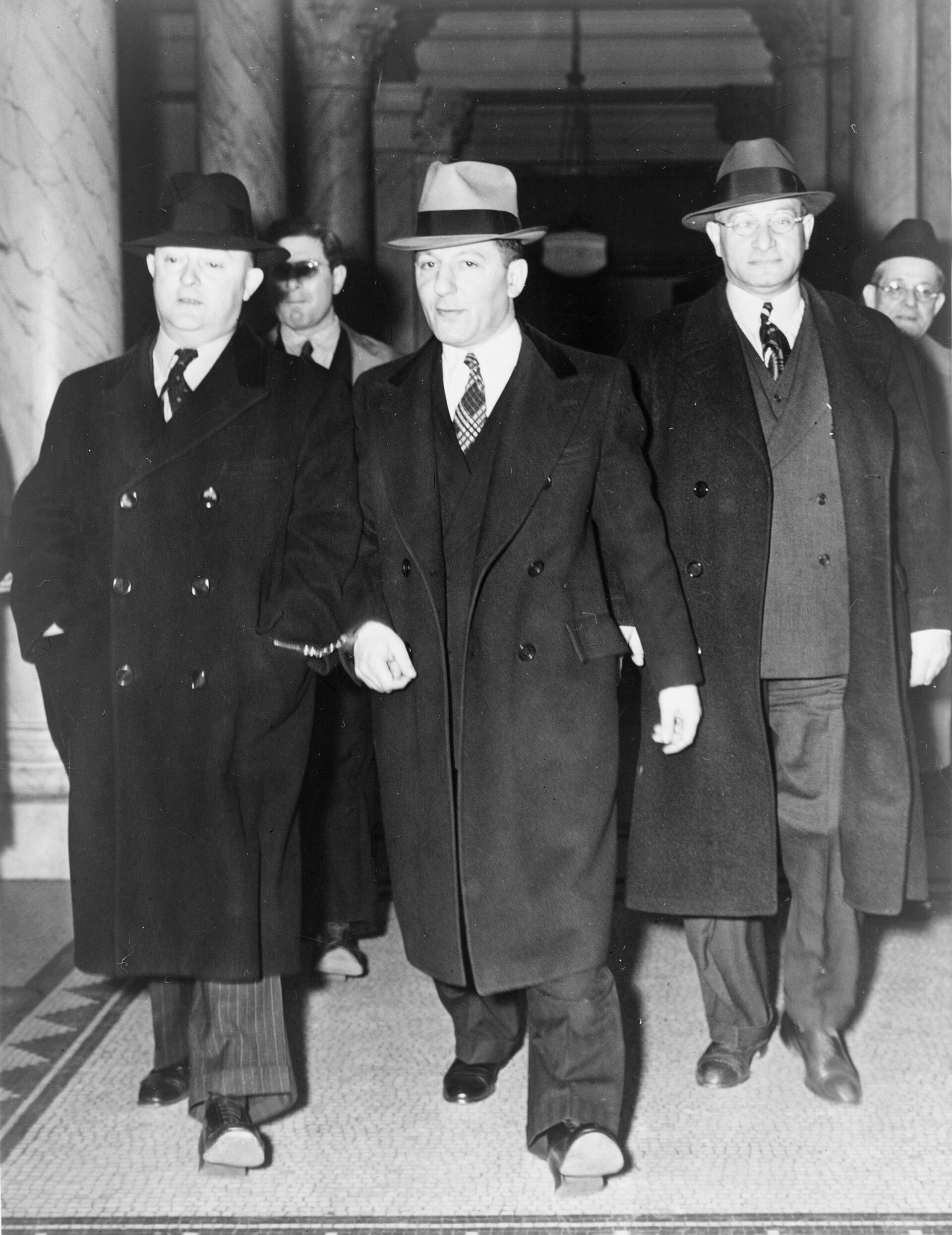

Harry Hopkins (1890 to 1946)
Franklin Roosevelt's closest adviser and wartime emissary to Stalin; accused by later writers of being the Soviet source "19"; the KGB archive notes identify "19" as someone else.
Harry Lloyd Hopkins was born in Sioux City, Iowa, on August 17, 1890, and died in New York City on January 29, 1946.35 A social worker, he ran New York State's emergency relief program for Governor Roosevelt from 1931, came to Washington in 1933 to run the Federal Emergency Relief Administration, then led the Works Progress Administration, served as Secretary of Commerce from 1938, and in 1941 took charge of Lend-Lease.35 During the war he lived in the White House, made trips for Roosevelt to London and Moscow, and after Roosevelt's death in April 1945 he went to Moscow once more to help arrange the Potsdam Conference.35 He was the main channel of American aid to the Soviet Union and an open advocate of generous treatment of the Soviet ally.
The espionage charge against Hopkins came after the archives opened. One Venona message, New York 812 of May 29, 1943, reports that a KGB source designated "19" had passed on what he heard in a conversation involving Roosevelt and Churchill at the Trident Conference in Washington. NSA and FBI analysts had thought the American "deputy" in the message might be Vice President Henry Wallace or, less likely, Hopkins. In a 1998 article the historian Eduard Mark argued that "19" was probably Hopkins, and the claim spread in books and on websites, sometimes joined to a report by the KGB defector Oleg Gordievsky that a senior officer had once called Hopkins an important agent.2
The Vassiliev notebooks answered the Venona question. Haynes and Klehr write that the notebooks show "'19' was not Harry Hopkins, but Laurence Duggan," a State Department official the KGB had recruited in the mid-1930s, and that the 1943 message "was reporting espionage, not back-channel diplomacy."2 Their appendix lists "19" as Duggan from 1935 through August 1944.2 No document reviewed by Haynes and Klehr identifies Hopkins as a Soviet source. What remains is a judgment about policy: whether Hopkins was too trusting of Stalin and too eager to give the Soviet Union what it asked. That is an argument about wartime diplomacy, and it can be had without accusing him of treason.
Rating. Claim: Hopkins was the Soviet agent "19." Refuted by the KGB archive notes. Claim: Hopkins was a Soviet agent in any capacity. Unsupported.
In module 81: lesson 02 (source "19"); lesson 11.
Langston Hughes (1901 to 1967)
Poet; called before McCarthy's subcommittee in March 1953 over books in the overseas libraries.
Langston Hughes, the poet of the Harlem Renaissance, published his first book of poems, The Weary Blues, in 1926, as the Senate's 2003 edition of the executive sessions notes.24 In the 1930s he wrote radical verse and traveled in the Soviet Union, and his name appeared on many front organizations' letterheads. He was summoned with Dashiell Hammett in the overseas libraries inquiry and testified in executive session on March 24, 1953, and publicly on March 26.24 Unlike Hammett, by the standard accounts of the hearing, he answered the subcommittee's questions, denied party membership and disavowed some of his earlier political poems. He was not accused of espionage, and Venona and the KGB notebooks do not name him as a source. His case shows the price the inquiry put on cooperation: a public recantation from one of the country's leading writers about poems written two decades earlier.
Rating. Claim: Hughes was a communist whose books should be removed from American libraries abroad. Unsupported as to party membership (he denied it under oath and no archive evidence contradicts him); the removal question was a policy choice, not a factual claim.
In module 81: lesson 07 (Voice of America and the libraries).
K
David Karr (1918 to 1979)
Journalist and later businessman; attacked by McCarthy in 1950; identified in Venona as a Soviet source.
David Karr worked in the 1940s for the Office of War Information and then as an assistant to the Washington columnist Drew Pearson, one of McCarthy's sharpest press opponents, and McCarthy attacked him in the Senate as a communist. Most accounts of the era treated the attack as one of McCarthy's smears, aimed at Pearson through his aide. The archives complicate that judgment. Haynes's 2007 review lists Karr among the nine people on McCarthy's lists against whom there is substantial evidence of assisting Soviet espionage and marks him "Identified in Venona as a Soviet Espionage Source."3 McCarthy did not have that evidence, which was secret, and his public case against Karr rested on Karr's associations, not on any proof of espionage. Karr's later career as a financier with business in the Soviet Union, and his death in Paris in 1979, were the subject of speculation that this lesson did not check.
Rating. Claim: Karr was a Soviet source. Supported per Haynes's review of Venona. McCarthy's 1950 charge was right about the man and unsupported by any evidence McCarthy possessed.
In module 81: lesson 11.
Joseph Katz (1912 to 2004)
KGB courier and agent handler in New York; cover names INFORMER, X and DOUGLAS.
Joseph Katz was a Lithuanian-born American communist who served the KGB as a courier and talent spotter in the 1940s, handling contacts for several networks, including some of Elizabeth Bentley's sources after the KGB took them over. Haynes and Klehr list three of his Venona cover names as confirmed by the Vassiliev notebooks: "'Informer' was identified in the Venona decryptions as Joseph Katz," "'X' was identified in the Venona decryptions as Katz," and DOUGLAS from August 1944.2 Bentley later said the KGB had considered having her killed after her defection, and that Katz was the man discussed for the job; the KGB notes, as reported by Haynes and Klehr in Spies, record the idea, which was never carried out. Katz left the United States and lived out his life abroad. His birth and death years here are from standard references not opened for this lesson.
Rating. Claim: Katz was a KGB courier and handler. Supported.
In module 81: lesson 02.
Elia Kazan (1909 to 2003)
Stage and film director; former party member who named former comrades before HUAC in 1952.
Elia Kazan was born in Constantinople on September 7, 1909, and died in New York on September 28, 2003.36 He directed the first productions of A Streetcar Named Desire and Death of a Salesman and the films On the Waterfront and East of Eden. He had belonged to a Communist Party unit in the Group Theatre in the mid-1930s and left it. In 1952, after first refusing, he went back to HUAC and "named names," in Britannica's phrase: he identified former members of his party unit.36 He took out an advertisement explaining his choice. His testimony broke friendships for the rest of his life, and when the Academy gave him an honorary award in 1999, part of the audience refused to applaud. Kazan's case is the mirror of Hellman's and Lardner's: all three faced the same question, and the answers each gave are part of the record of the era. Kazan named people who had in fact been party members with him; none was accused of espionage.
Rating. Claim: Kazan had been a party member and identified fellow members to HUAC. Supported.
In module 81: lesson 03 (Hollywood); lesson 10.
Mary Jane Keeney (1898 to 1969) and Philip Keeney (1891 to 1962)
United Nations and government employees; identified in Venona as Soviet sources.
Mary Jane Keeney worked for the government during the war and for the United Nations after it; her husband, Philip, was a librarian who worked for the occupation authorities in Japan. McCarthy named Mary Jane Keeney, and Haynes's 2007 table records her as "Identified in Venona as a Soviet Espionage Source."3 In his notes Haynes identifies Philip Keeney as a GRU agent who later worked with the KGB.3 Haynes counts Mary Jane Keeney among the small group of people on McCarthy's lists who were in fact Soviet sources. Like Karr, she illustrates the point made in 81 lesson 11: a minority of McCarthy's names were real sources, and he had no means of telling them from the many who were not. The couple's years of birth and death were not confirmed for this lesson.
Rating. Claim: Mary Jane Keeney was a Soviet source. Supported (Venona, per Haynes).
In module 81: lesson 07; lesson 11.
Robert F. Kennedy (1925 to 1968)
Assistant counsel to McCarthy's Permanent Subcommittee on Investigations in 1953; counsel to its Democratic minority in 1954; later attorney general and senator.
Robert Kennedy joined the staff of the Permanent Subcommittee on Investigations when McCarthy became its chairman in 1953. The Senate's 2003 edition of the executive sessions lists him as "assistant counsel (January 15, 1953 to August 31, 1953)."37 He had been considered for the post of chief counsel, which went to Roy Cohn.37 Kennedy worked on the inquiry into allied shipping trade with Communist China, which the Senate historian Donald Ritchie judges one of the subcommittee's more substantial investigations. He clashed with Cohn and, in Ritchie's words, "after literally coming to blows with Roy Cohn, resigned in August, telling the chairman that the subcommittee was 'headed for disaster.'"37 He came back after the Democratic members won new rules, as "chief counsel to the minority (February 23, 1954 to January 3, 1955)," and served the Democrats through the Army-McCarthy hearings.37
Kennedy's later verdict on the work is one of the most quoted inside accounts. "No real research was ever done," he wrote in The Enemy Within (1960), adding that "Most of the investigations were instituted on the basis of some preconceived notion by the chief counsel" or his staff, not on information the staff had developed.37 He kept a personal liking for McCarthy, whose family were friends of his own, and he attended McCarthy's funeral in 1957. His brother John, then a senator from Massachusetts, did not vote on the censure resolution in December 1954; he was absent because of illness and was not paired (see 81 lesson 09).
Rating. Claim: Kennedy served on McCarthy's staff and later judged its methods harshly. Supported (Senate staff records, his own book as quoted by the Senate Historical Office).
In module 81: lesson 06 (the staff); lesson 08; lesson 12.
Rockwell Kent (1882 to 1971)
Painter and illustrator; witness before McCarthy's subcommittee in 1953; winner of the 1958 Supreme Court passport case.
Rockwell Kent, a painter and illustrator known for his editions of Moby-Dick and his paintings of Greenland and Alaska, was a supporter of many communist-led causes. He testified before McCarthy's subcommittee in executive session on July 1, 1953, in the inquiry into the overseas libraries, on a day that also heard the writers Richard O. Boyer, Edwin Burgum, Joseph Freeman, George Seldes and Doxey Wilkerson.2437 His lasting mark on the law came from the State Department's refusal to issue him a passport. The Department denied it on the ground that he was a communist who had consistently followed the party line, and Kent refused to sign an affidavit about party membership. In Kent v. Dulles, decided June 16, 1958, the Supreme Court held that Congress had not authorized the Secretary of State to deny passports for those reasons, and wrote that "The right to travel is a part of the 'liberty' of which the citizen cannot be deprived without due process of law" under the Fifth Amendment.38 His autobiography is It's Me O Lord (1955).37
Rating. Claim: the government could deny Kent a passport for his political beliefs and associations. Refuted as a matter of law by Kent v. Dulles. No espionage claim was made.
In module 81: lesson 09 (the courts).
Nikita Khrushchev (1894 to 1971)
First secretary of the Soviet Communist Party, 1953 to 1964; author of the 1956 "secret speech" against Stalin.
Nikita Khrushchev was born on April 17, 1894 (April 5, Old Style), in Kalinovka, Russia, and died in Moscow on September 11, 1971.39 He rose under Stalin, carried out the purges in Moscow and Ukraine as a regional party chief in the 1930s, and after Stalin's death became first secretary in September 1953 and premier in March 1958.39 On the night of February 24 to 25, 1956, at a closed session of the Twentieth Party Congress, he spoke for hours against what he called "the cult of the individual" and its "harmful consequences."40 He gave delegates numbers from the party's own files: "of the 139 members and candidates of the Central Committee who were elected at the 17th Congress, 98 persons, i.e., 70 per cent, were arrested and shot (mostly in 1937-1938)." The transcript records "(Indignation in the hall.)"40
The speech blamed Stalin and spared the system and Lenin, and Khrushchev crushed the Hungarian revolution in November of the same year. For American communists the speech was a catastrophe: it confirmed, from the top of the Soviet party, much of what anti-communists had said for twenty years, and the CPUSA lost most of its remaining members (see lesson 05). His later years brought the Berlin Wall and the Cuban Missile Crisis. On October 14, 1964, the Central Committee accepted his "request" to retire, citing "advanced age and poor health," after a move led by Leonid Brezhnev.39
Rating. Claim: Khrushchev's 1956 speech admitted mass executions of party members under Stalin. Supported by the text of the speech.
In module 81: lesson 10.
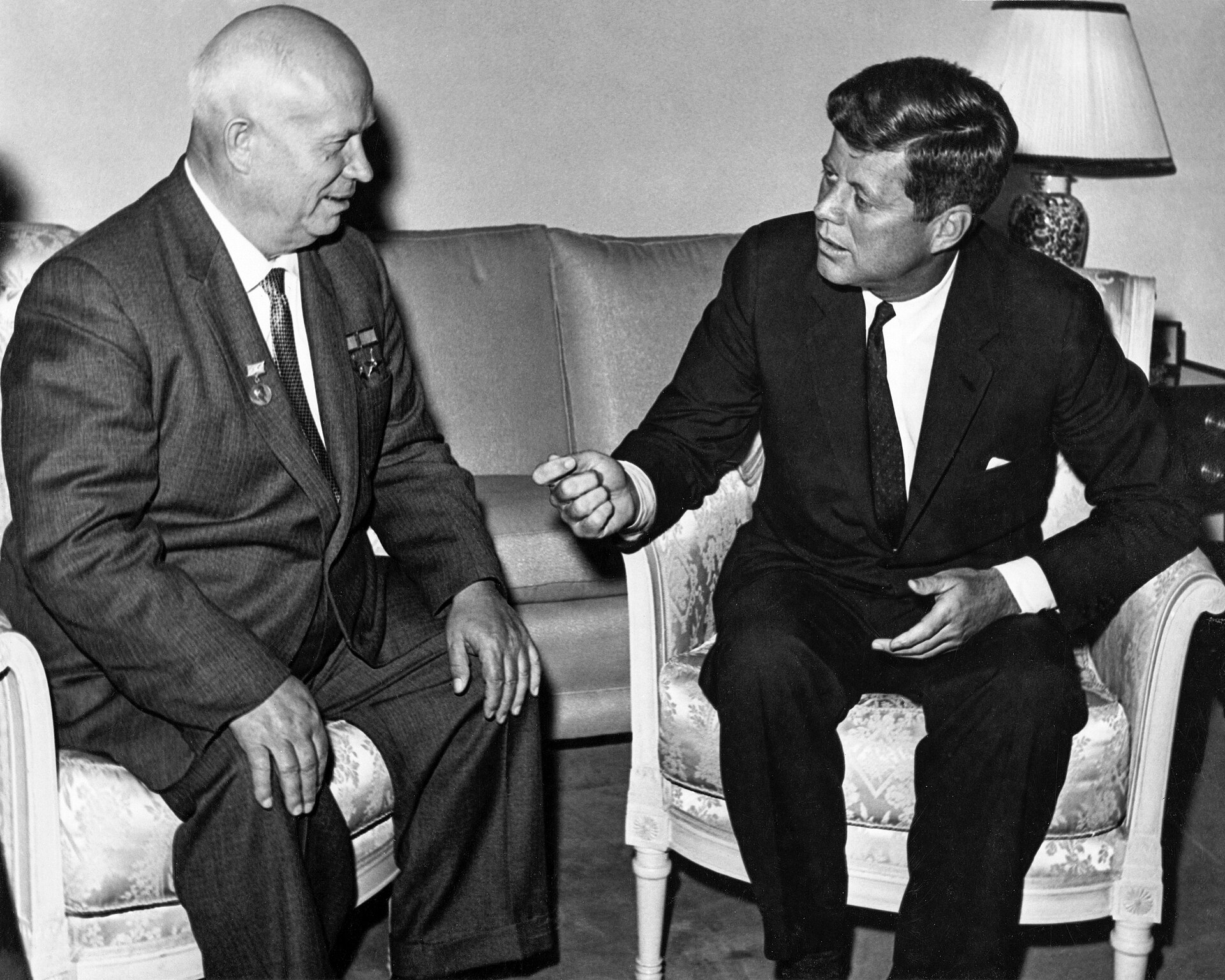

Kim Il-sung (1912 to 1994)
Founder of the North Korean state; launched the invasion of South Korea on June 25, 1950.
Kim Il-sung was born on April 15, 1912, near Pyongyang, and died there on July 8, 1994.41 He fought as a guerrilla against Japan, was installed by the Soviet occupation authorities in the North after 1945, and was premier from 1948 to 1972 and president from 1972, heading the Korean Workers' Party throughout.41 In 1950, Britannica says, "Kim launched an invasion of South Korea," starting the Korean War.41 Soviet documents released after 1991 show that Kim asked Stalin repeatedly for approval and that Stalin gave it in 1950; they are collected by the Wilson Center's Cold War International History Project and discussed in lesson 03. The war began four and a half months after McCarthy's Wheeling speech and made the communist threat concrete for American voters (see 81 lesson 01). Kim founded the dynasty that still rules North Korea; its current leadership is in lesson 04.
Rating. Claim: Kim began the Korean War with Soviet approval. Supported (Soviet archive documents; the details are in lesson 03).
In module 81: lesson 01.
Charles Kramer (1906 to 1992)
Economist and Senate committee staff member; member of the Ware group and the Perlo group; cover names PLUMB and MOLE.
Charles Kramer was an economist who served in New Deal agencies and later on the staffs of Senate committees, a post from which a source could see a great deal of what the government was doing. Whittaker Chambers named him on August 3, 1948, as one of the members of the Washington group of the 1930s, with Witt, Pressman, the Hiss brothers and Victor Perlo.28 Elizabeth Bentley placed him in the Perlo group of the war years. The KGB traffic confirms her: Haynes and Klehr report that "'Plumb' was identified in the Venona decryptions as Kramer," and that the Vassiliev notebooks support reading the cover name MOLE as Kramer as well.2 He refused to answer HUAC's questions in 1948 and was never charged. His birth and death years and his staff posts are from standard references not opened for this lesson.
Rating. Claim: Kramer was a Soviet source in the Perlo group. Supported (Bentley, Chambers, Venona, the Vassiliev notebooks).
In module 81: lesson 01.
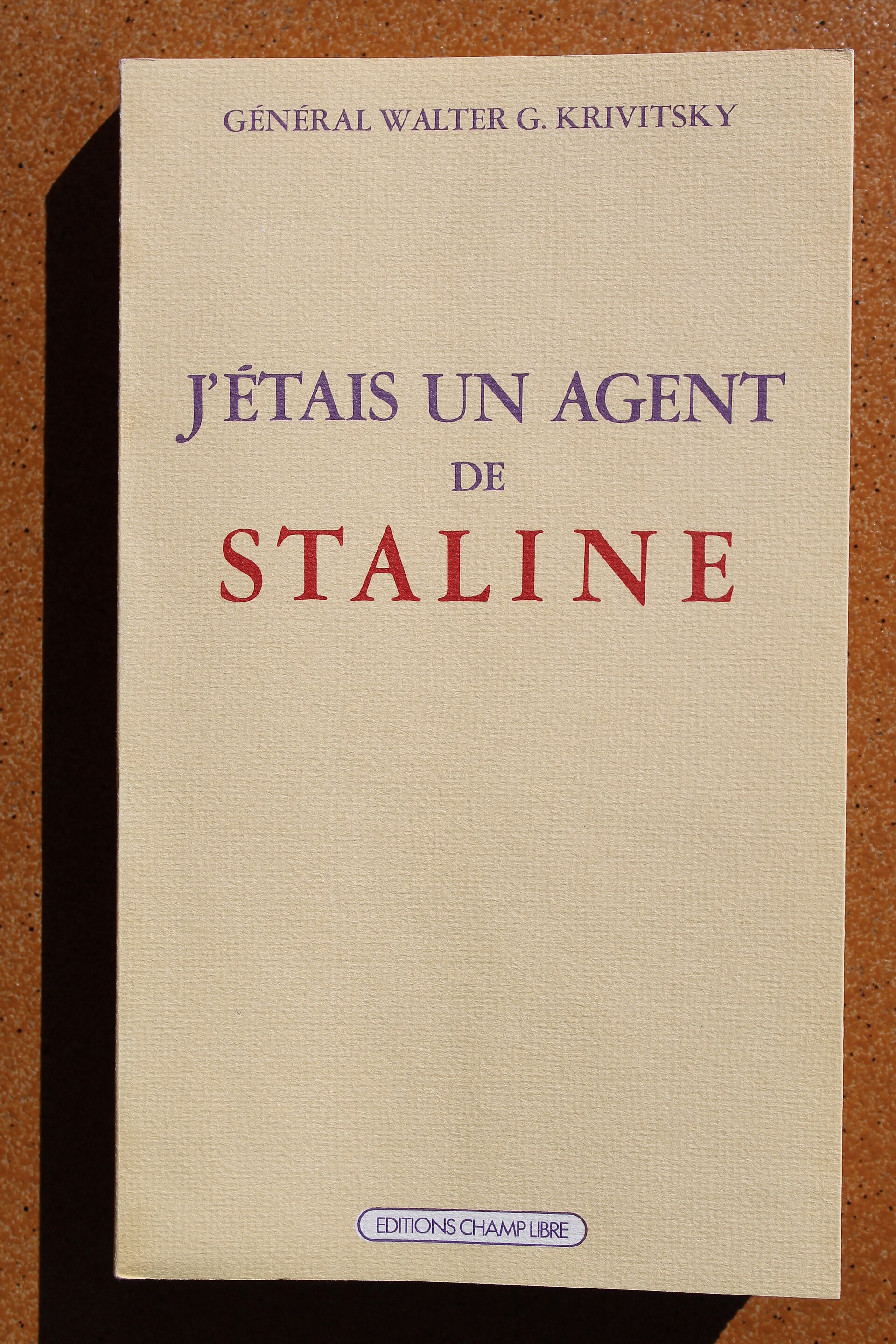
Walter Krivitsky (1899 to 1941)
Soviet military intelligence chief in Western Europe who defected in 1937; author of In Stalin's Secret Service; found dead in Washington in 1941.
Walter Krivitsky was born Samuel Ginsberg in Austria-Hungary in 1899 and took the name Krivitsky when he joined Soviet military intelligence in 1917, according to the International Spy Museum.42 He ran operations in Germany, Austria and Italy, and in 1937 he was posted to The Hague to direct Soviet intelligence in Western Europe.42 The Great Terror was then destroying the Soviet services from within (see lesson 02). When Stalin's agents murdered Krivitsky's friend Ignace Poretsky (Ignace Reiss), who had broken with Moscow, in Switzerland in September 1937, Krivitsky defected in Paris; he reached the United States in 1938.42
In America he published a series of magazine articles and the book In Stalin's Secret Service (1939), testified to the Dies Committee, and, in early 1940, went to London to be questioned by British security officials, to whom he gave fragmentary descriptions of Soviet agents in Britain, including clues later matched to members of the Cambridge ring. Those details come from accounts of the MI5 debriefing that this lesson did not open in full. He is also credited with warning of a coming deal between Stalin and Hitler before the Nazi-Soviet Pact of August 1939. The FBI's file description says he was "the former head of the Soviet Military Intelligence in Western Europe" and was "found dead in the Bellevue Hotel in Washington, D.C., on February 10, 1941"; "his death was declared a suicide."43 Three notes were found beside him.42 Many who knew him believed the NKVD had killed him or forced him to kill himself, a version the Spy Museum calls a "Kremlin suicide"; no document has settled the question.42 (The Spy Museum's article gives February 2 as the date he was found; the FBI file description gives February 10.)
Rating. Claim: Krivitsky was a senior Soviet intelligence officer whose warnings about Soviet espionage were accurate. Supported as to his identity and role; the accuracy of particular warnings is assessed in lesson 12. Claim: he was murdered by the NKVD. Unresolved.
In module 81: lesson 01 (the 1930s).

Leonid Kvasnikov (1905 to 1993)
KGB officer in charge of scientific and technical intelligence in New York; cover name ANTON.
Leonid Kvasnikov was the KGB officer who directed the collection of scientific and technical intelligence from the New York station in the 1940s, the line of work that took in the atomic project (the KGB called it ENORMOZ) and the Rosenberg network's military electronics. Haynes and Klehr report that "'Anton' was identified in the Venona decryptions as Kvasnikov," a KGB officer.2 Kvasnikov's name shows how the handler-to-source chains worked: Americans such as Julius Rosenberg and Harry Gold dealt with younger officers like Alexander Feklisov and Anatoli Yatskov, who reported to officers like Kvasnikov, who reported to Moscow. The chain diagrams are in lesson 12. His dates are from standard references not opened for this lesson.
Rating. Claim: Kvasnikov directed KGB scientific intelligence in New York. Supported.
In module 81: lesson 02.
L
Robert Lamphere (1918 to 2002)
FBI counterintelligence agent from Idaho; the Bureau's liaison to the Venona codebreakers; interrogated Klaus Fuchs.
Robert Lamphere was born in Wardner, Idaho, on February 14, 1918, and joined the FBI in September 1941.44 In 1947 he moved to Bureau headquarters as a supervisory special agent in charge of counterintelligence on the Soviet satellite countries, and in 1948 he began work with the Army's codebreakers on the Venona messages.44 The partnership between Lamphere and the Army's chief linguist and codebreaker, Meredith Gardner, was the engine of Venona's American results: Gardner recovered fragments of text, and Lamphere and other agents matched the fragments against FBI files until a cover name became a person (the method is described in 81 lesson 02). The Atomic Heritage Foundation credits him with supervising "many investigations of Soviet spies during the Cold War," and says that in 1950 "his interrogation of Klaus Fuchs in London led to the identification and arrest of Harry Gold, David Greenglass, and Julius and Ethel Rosenberg."44 He also worked the Judith Coplon case. He left the FBI in 1955 and died of prostate cancer in Tucson, Arizona, on January 7, 2002.44 His memoir, The FBI-KGB War (1986), written with Tom Shachtman, was one of the first public accounts of the Venona partnership. For Idaho readers, Lamphere is the state's most important figure on the counterintelligence side of the era; the state's political figures, Glen Taylor and Herman Welker, are in module 74, lesson 06.
Rating. Claim: Lamphere's Venona work helped identify the atomic spies. Supported.
In module 81: lesson 02; lesson 12.
Ring Lardner Jr. (1915 to 2000)
Screenwriter; one of the Hollywood Ten; imprisoned for contempt of Congress; later won a second Academy Award.
Ring Lardner Jr., the son of the humorist Ring Lardner, was born in Chicago on August 19, 1915, and died in New York on October 31, 2000, the last survivor of the Hollywood Ten.45 He shared the Academy Award for the screenplay of Woman of the Year (1942) with Michael Kanin.45 HUAC called him in October 1947 in its hearings on communist influence in the film industry. The National Archives' description of the record says that "He was removed from the witness stand when he declined to answer if he was a member of the Communist Party," and that he was removed before he was able to read his prepared statement. His answer to Chairman J. Parnell Thomas became famous: "I could answer the question exactly the way you want, Mr. Chairman...but if I did, I would hate myself in the morning."46 The prepared statement, dated October 30, 1947, is now in the House records at the National Archives; Lardner read it aloud in 1997 at an event marking the fiftieth anniversary of the hearings.46
Convicted of contempt of Congress, he was one of eight of the Ten who received "one-year sentences and $1,000 fines" (Herbert Biberman and Edward Dmytryk received six months).47 The National Archives says he "served nearly 10 months in a federal prison."46 One of his fellow inmates at Danbury, by the usual account, was J. Parnell Thomas, the former HUAC chairman, jailed for padding his payroll. Lardner was blacklisted and wrote for years under other names. He came back to win a second Academy Award for M*A*S*H (1970).45 In his later writing he acknowledged that he had been a party member; the hearing question, which he refused to answer, had a true answer of yes. That fact does not change the constitutional issue the Ten raised, which was whether Congress could compel the answer, and it does not make him a spy; no one has claimed he was.
Rating. Claim: Lardner was a party member who refused to say so to HUAC and was jailed for it. Supported (the HUAC record and conviction; his membership from his own later account, not opened for this lesson). No espionage claim.
In module 81: lesson 03 (the Hollywood Ten).
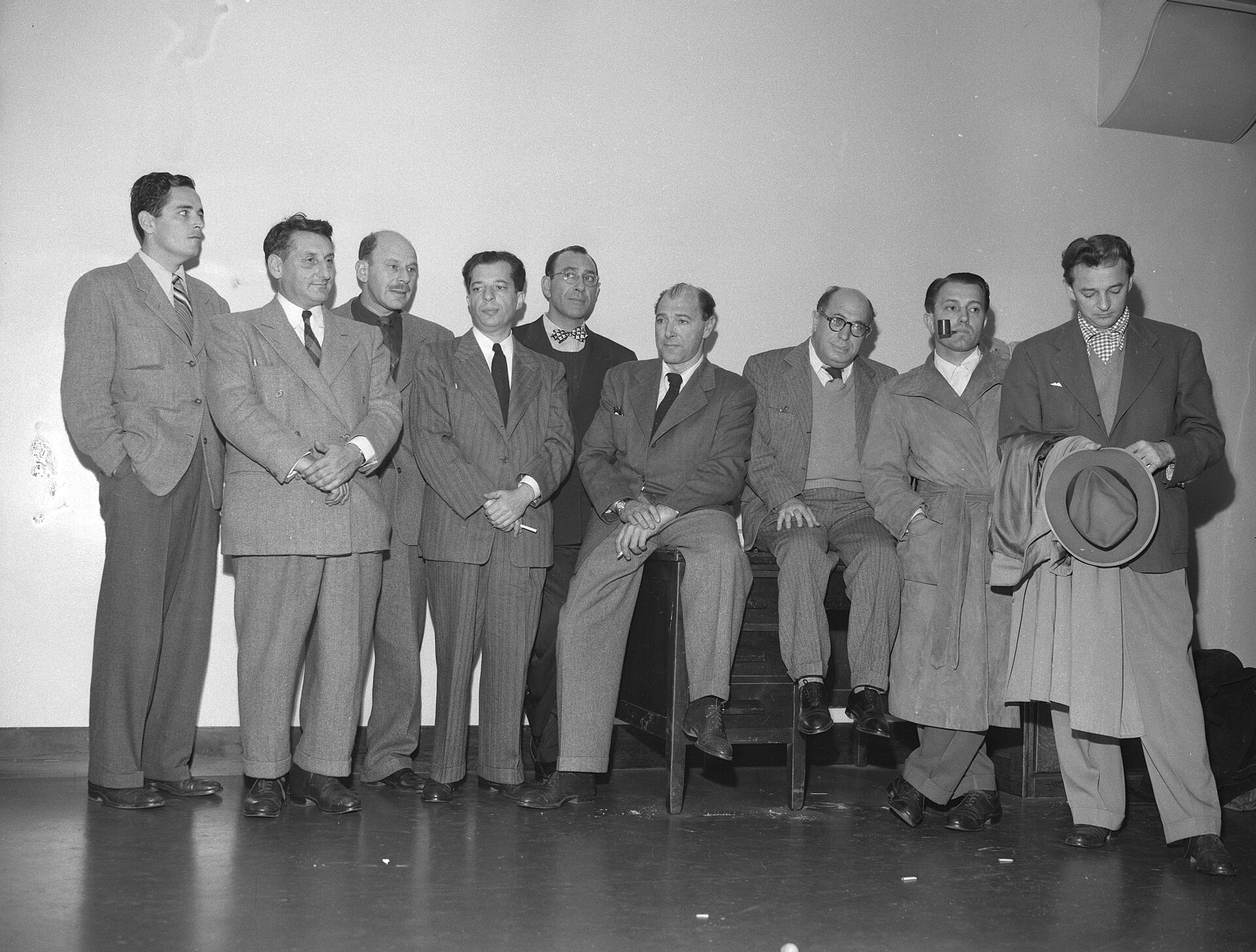

Owen Lattimore (1900 to 1989)
Scholar of China and Inner Asia at Johns Hopkins; named by McCarthy in 1950 as the top Soviet espionage agent in the country; indicted for perjury; never tried.
Owen Lattimore was born in Washington, D.C., in 1900, grew up in China, and became one of the foremost Western authorities on Mongolia, Manchuria and the Chinese frontier without a doctorate.48 He directed the Walter Hines Page School of International Relations at Johns Hopkins and edited Pacific Affairs, the journal of the Institute of Pacific Relations. He was not a State Department employee. During the war Roosevelt sent him as an adviser to Chiang Kai-shek, and in 1944 he accompanied Vice President Wallace on a trip through Soviet Asia that included a tour of the Kolyma gold fields, which were worked by Gulag prisoners; his admiring account of what he was shown is a heavy mark against his judgment.
In March 1950, in a closed session of the Tydings subcommittee, McCarthy called Lattimore, in the words Johns Hopkins Magazine reports, "the Soviet Union's top espionage agent in the United States." Lattimore, then in Afghanistan, cabled the Associated Press: "McCarthy's off record ranting pure moonshine-stop."48 He came home to fight, and his book Ordeal by Slander (1950) opens on his reaction: "My first reaction was an anger so hot and sweeping that it was hard to think."48 The Tydings majority found no evidence that he was the "top Russian spy."48 The case then moved to Pat McCarran's Senate Internal Security Subcommittee, whose 1952 report on the Institute of Pacific Relations called Lattimore "a conscious articulate instrument of the Soviet conspiracy" and recommended a perjury inquiry.49 The ex-communist Louis Budenz testified against him, though, as Johns Hopkins Magazine notes, Budenz had never met him.48 A federal grand jury returned a seven-count perjury indictment on December 16, 1952; the courts dismissed the central counts, a second indictment fared no better, and the Justice Department dropped the case in 1955.48 Lattimore left Johns Hopkins in 1963 to found the Chinese studies program at the University of Leeds in England, and died in 1989.48
The archives bear on two questions. On espionage, Haynes's 2007 table reads simply: "Lattimore, Owen: Not identified in Venona," and Haynes found no evidence of espionage in any source he used.3 On influence, the record is more mixed. Critics fault his public judgments on the Soviet Union in the 1930s and his account of the 1944 Kolyma visit, he favored accommodation with the Chinese communists, and his editorial work drew on writers some of whom were party members. M. Stanton Evans (Blacklisted by History, 2007) argues that this pattern justified the inquiry even if "spy" overreached; Haynes and Klehr credit the concern about the Institute of Pacific Relations but find nothing to make Lattimore an agent; David Oshinsky (A Conspiracy So Immense, 1983) and the Senate Historical Office stress that McCarthy staked his name on a charge he could not support. The full case is in 81 lesson 07.
Rating. Claim: Lattimore was the top Soviet espionage agent in the United States. Unsupported; no evidence in Venona, the KGB notebooks or any other source supports it. Claim: Lattimore's writing and editing served Soviet policy aims. Unresolved, a judgment about opinion.
In module 81: lesson 07 (Case 2); lesson 05; lesson 11.
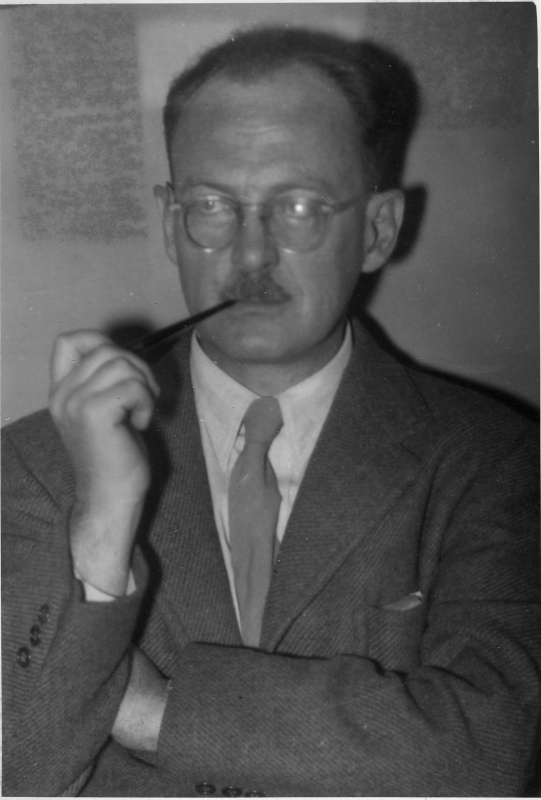

John Howard Lawson (1894 to 1977)
Playwright and screenwriter; first president of the Screen Writers Guild; leader of the communists in Hollywood; first of the Hollywood Ten to testify.
John Howard Lawson was born in New York City on September 25, 1894, and died in San Francisco on August 11, 1977.50 His plays of the 1920s, among them Processional (1925), made him a figure of the experimental theater, and in Hollywood he co-founded the Screen Writers Guild and was its first president.50 He was the intellectual leader of the communist writers in the film industry, the man whose views on the political use of film other members deferred to. When HUAC opened its Hollywood hearings in October 1947, Lawson was the first of the unfriendly witnesses. Denied permission to read his statement, he argued with the chairman; one account records him saying, "The question of Communism is in no way related to the inquiry."47 The committee then put into the record what its investigator said was Lawson's party registration card, a step this lesson could not verify from the hearing record.
Lawson's trial ran from April 12 to 19, 1948. He received a year and a $1,000 fine, and after the Supreme Court declined to review the convictions, "On June 9, 1950, Lawson and Trumbo began their jail terms."47 (Britannica gives his prison years as 1948 to 1949, which does not fit the trial record; the June 1950 date is used here.)50 He never repudiated his views and wrote Marxist criticism for the rest of his life.
Rating. Claim: Lawson was a party leader in Hollywood who refused to answer HUAC and was jailed. Supported as to the refusal and the jailing; his leadership role rests on testimony and historians' accounts. Claim that he put communist propaganda into the films he wrote: Partly supported; the films themselves show little of it, while his writing on film shows the intent.
In module 81: lesson 03.
Duncan Lee (1913 to 1988)
Executive assistant to OSS director William Donovan; Soviet source in the wartime intelligence service; cover name KOCH.
Duncan Chaplin Lee came from a prominent Virginia family, studied at Yale and at Oxford as a Rhodes Scholar, and practised law in the New York firm of William Donovan. When Donovan founded the Office of Strategic Services, the wartime intelligence agency, Lee followed him and became one of his executive assistants, with access to some of the most sensitive material in the American intelligence system. Elizabeth Bentley named him in her 1945 statement as one of her sources. Lee admitted knowing her and denied passing her anything, and he repeated the denial under oath to HUAC in 1948. He was never charged.
The archives settle the question against him. Venona's KOCH was identified by NSA and FBI analysts as Lee, and Haynes and Klehr report that "'Koch' was identified in the Venona decryptions as Lee," confirmed in the Vassiliev notebooks.2 The notebooks go further: their appendix on a list of OSS personnel that the KGB obtained says "Duncan Lee, a Soviet source in the OSS supplied the list to the KGB."2 The material he passed, according to the KGB files as Haynes and Klehr read them, included information on OSS operations and on American suspicions of Soviet agents inside the agency itself. A 2014 biography by Mark A. Bradley, A Very Principled Boy, reaches the same conclusion from the American and Soviet records together. Lee left government, practised law, and died in 1988 without ever admitting it.
Rating. Claim: Lee was a Soviet source inside the OSS. Supported (Bentley, Venona KOCH, the Vassiliev notebooks).
In module 81: lesson 02 (Duncan Lee).
Vladimir Lenin (1870 to 1924)
Founder of the Bolshevik party; leader of the October Revolution; first head of the Soviet state.
Vladimir Ilich Ulyanov, who took the name Lenin, was born on April 10 (April 22, New Style), 1870, in Simbirsk, and died on January 21, 1924, at Gorki near Moscow.51 Britannica calls him the "founder of the Russian Communist Party (Bolsheviks)," the "inspirer and leader of the Bolshevik Revolution (1917)," and the "first head (1917-24) of the Soviet state."51 His theory of a disciplined vanguard party, his founding of the Cheka in December 1917, his dissolution of the Constituent Assembly, the Red Terror, and his creation of the Communist International in 1919 built the system whose agents and members fill this lesson. Each of these is told in lesson 01 and lesson 02, and the Comintern's 21 conditions for national parties, which bound the American party to Moscow, are in lesson 10. Every American communist in this lesson took the party's line from an organization Lenin founded.
Rating. Claim: Lenin created the party, police and international organization that later directed the CPUSA. Supported.
In module 81: lesson 01.
Val Lorwin (1907 to 1982)
State Department labor economist named by McCarthy; not identified in Venona.
Val Lorwin was a labor economist who worked in the State Department after the war and later became a scholar of European labor movements. He appears on the lists McCarthy used, and Haynes's 2007 table gives the verdict in the same words it uses for Lattimore: "Not identified in Venona."3 Lorwin had been a member of the Socialist Party in the 1930s, an anti-communist organization in its leadership at the time, and he denied ever having been a communist. He was indicted for perjury in 1953 on the strength of an informant's testimony, and the case was dropped in 1954 after the Justice Department found that its own prosecutor had misled the grand jury; those details come from published accounts this lesson did not open and are listed as unverified. His case belongs beside Lattimore's and Hughes's: a person McCarthy named for whom the opened archives show nothing.
Rating. Claim: Lorwin was a communist or a Soviet source. Unsupported.
In module 81: lesson 05; lesson 11.
Jay Lovestone (1897 to 1990)
Leader of the CPUSA in the late 1920s; removed on Stalin's orders in 1929; later the AFL's chief international anti-communist organizer.
Jay Lovestone, born Jacob Liebstein in Lithuania, led the majority faction of the American party in the late 1920s. His group was aligned with Nikolai Bukharin, whom Stalin was then removing from the Soviet leadership, and in 1929 Lovestone took his case to Moscow. Stalin told the Presidium of the Comintern's executive committee on May 14, 1929, that "Comrade Lovestone is indisputably an adroit and talented factional wirepuller" and that he doubted Lovestone could remain a party leader; the party's members, who had voted for Lovestone, accepted the Comintern's decision against him.5 In his May 6 speech to the American Commission, Stalin had warned the American comrades against treating American capitalism as "something apart from and above world capitalism," the doctrine later called "American exceptionalism."5
Lovestone and his followers ran a small communist opposition group for a decade and then dissolved it. He turned into one of the most effective anti-communists in the American labor movement: from the 1940s he ran the international work of the American Federation of Labor, helping build non-communist unions in postwar Europe and, according to later accounts, working with the CIA. His life is the clearest case in this lesson of a man who learned what Moscow's control meant from the inside and spent the rest of his career fighting it. The details of his AFL appointment rest on accounts listed as unverified in 81 lesson 01 and here.
Rating. Claim: Moscow removed the elected leader of the American party in 1929. Supported by Stalin's own speeches.
In module 81: lesson 01 (the Lovestone affair).
A note on scope: Joseph Lash, the student leader and later biographer of Eleanor Roosevelt, appears on the brief's starter list "only if relevant." He was never accused of espionage, Venona and the KGB notes reviewed by Haynes and Klehr do not name him, and his public career belongs to the history of the student movement and of Eleanor Roosevelt. He is left out of the ratings here.
Who named whom
Most of the American cases in this lesson began with one person naming another. The chain that ran from Klaus Fuchs to the Rosenbergs was built of confessions, each of which led the FBI to the next person. The Washington cases began with two defectors from the underground, Whittaker Chambers and Elizabeth Bentley, whose testimony was attacked for years and then largely confirmed by Venona and the KGB notes. McCarthy's charges were of a different kind: he named people from lists and files, and the archives confirm a few and clear many. The diagram sets the three patterns side by side.
What the record shows and what it does not
Documented fact. Harry Gold, David and Ruth Greenglass and Theodore Hall gave atomic information to Soviet intelligence; Gold and the Greenglasses confessed, and Hall's role is in Venona message 1585 and the KGB notes.819 Jacob Golos ran a network built from party members, and Harold Glasser, Duncan Lee, Charles Kramer, Mary Jane Keeney, David Karr and Joseph Katz appear in Venona or the KGB notes as sources or couriers.23 Alger Hiss was convicted of perjury on January 21, 1950, on evidence that included documents typed on his family's typewriter.30 The FBI ran covert programs against the CPUSA and other groups from 1956 to 1971.34
The people's own words. Chambers on the Washington group: "not primarily espionage," but espionage "was certainly one of its eventual objectives."28 Hellman: "I cannot and will not cut my conscience to fit this year's fashions."26 Lardner: "I would hate myself in the morning."46 Greenglass in 2001: "I don't know who typed it, frankly."16 Kennedy on McCarthy's staff work: "No real research was ever done."37
The accusations. McCarthy called Lattimore the Soviet Union's top espionage agent; later writers called Hopkins the agent "19."
The archive evidence. Haynes found Lattimore "Not identified in Venona," and the KGB notes identify "19" as Laurence Duggan, not Hopkins.32
Scholarly reading. Haynes and Klehr, Weinstein and Vassiliev, and Ehrman read the evidence as confirming Hiss's guilt; Bird and Chervonnaya dissent on ALES. Evans defends the inquiry into Lattimore; Oshinsky and the Senate Historical Office stress the collapse of McCarthy's charge.
Open questions. Whether ALES was Hiss; whether Krivitsky was murdered; how much Greenglass's sketches mattered next to Fuchs's and Hall's material; and what some lesser figures in this lesson did, where the only evidence is a single cover-name identification.
Claims checked
These are claims about people G to L that circulate in books, documentaries, speeches and websites from every side of the argument, tested against the evidence in the entries above.
| Claim | Where it is heard | Rating | Evidence |
|---|---|---|---|
| "Alger Hiss was framed; the typewriter and the documents were fabricated." | Hiss's own memoirs and defenders through the 1970s and later | Refuted | The appeals court reviewed the typewriter evidence and affirmed; the opened archives, as read by Haynes and Klehr, Weinstein and Vassiliev, and the CIA's Ehrman, point the same way; no evidence of fabrication has been produced.306 |
| "Venona proves Hiss was ALES." | Anti-communist histories and popular summaries | Partly supported | The NSA and FBI said "probably"; the identification is an inference, the majority view among historians, and disputed by a minority.26 |
| "Harry Hopkins was Soviet agent 19." | Books and websites after a 1998 article by Eduard Mark | Refuted | The Vassiliev notebooks identify "19" as Laurence Duggan.2 |
| "Owen Lattimore was the top Soviet spy in America." | McCarthy, March 1950 | Unsupported | Rejected by the Tydings majority; "Not identified in Venona" (Haynes 2007); never charged with espionage.483 |
| "Lattimore was a conscious articulate instrument of the Soviet conspiracy." | Senate Internal Security Subcommittee report, 1952 | Unresolved | A judgment about influence and opinion; the perjury case built on it collapsed, and the archives neither confirm nor refute it.4948 |
| "The atomic spies were a myth invented to justify a witch hunt." | Some defenders of the Rosenbergs, especially before 1995 | Refuted | Gold and the Greenglasses confessed; Hall is in Venona; the KGB notes confirm the cover names.812 |
| "David Greenglass saw his sister type the atomic notes." | His 1951 trial testimony | Refuted | His own statement in 2001: "I don't know who typed it, frankly."16 |
| "Theodore Hall was cleared because there was no evidence." | Popular accounts before 1995 | Refuted | He was not charged because the only direct evidence was Venona, which the government would not use in court.1 |
| "McCarthy never named a real Soviet agent." | Common in histories of the era written before the archives opened | Partly supported | Most of his names were not sources, but Haynes found a small number who were, among them Glasser, Karr and Keeney; McCarthy did not have the evidence that proves it.3 |
| "The CPUSA was independent of Moscow and took no Soviet money." | The party's own statements under Gus Hall | Refuted | Stalin removed Lovestone and Gitlow in 1929 in his own words; Haynes reports Soviet subsidies ending only with a $3 million payment in 1988.522 |
| "The Hollywood Ten were not communists." | Some later defenses of the Ten | Refuted for Lawson and Lardner | Lardner later acknowledged his membership; Lawson led the Hollywood communists. Their constitutional argument against compelled answers is a separate question.4647 |
| "Hoover's FBI only went after real spies." | Admirers of the Bureau | Refuted | The Church Committee documented covert programs to "disrupt, discredit and harass" groups and individuals from 1956 to 1971.34 |
| "Khrushchev's 1956 speech exposed the full scale of Soviet repression." | Popular summaries | Partly supported | It gave real figures on the destruction of the 1934 Central Committee, but it blamed Stalin alone, spared Lenin and the system, and said little about the peasants and nations who were the largest groups of victims.40 |
Hard questions and answers
An anti-communist asks: if Hiss, Lee, Glasser and Kramer were guilty, was McCarthy right after all?
None of these four were McCarthy's discoveries. Chambers named Hiss to Adolf Berle in 1939 and Hiss and Kramer to HUAC in 1948; Bentley named Lee, Glasser and Kramer to the FBI in 1945; Hiss was convicted before McCarthy's Wheeling speech. The archives confirm that the problem those witnesses described was real, and that the government was slow to act on it in the 1930s and early 1940s. They do not confirm McCarthy's own charges. Of the people he named from 1950 through 1952, Haynes found a handful with substantial evidence of espionage, among them Glasser, Karr and Keeney, and many with none, among them Lattimore and Lorwin.3 The fair summary is that the threat was real and McCarthy's method was poor at finding it. Module 81 makes the full argument in lesson 12.
A civil liberties advocate asks: why rate Hammett and Hellman as anything when invoking the Fifth Amendment proves nothing?
The ratings for Hammett and Hellman rest on what each did and wrote, not on the Fifth Amendment. Hammett went to prison for refusing to name the contributors to a bail fund; that is documented in the Senate's own edition of the executive sessions.24 Hellman's offer to testify about herself and her refusal to name others is in the HUAC record.26 The questions of party membership are rated separately, as Partly supported or Unresolved, precisely because a refusal to answer is not an answer. The courts' handling of the privilege in these years is in 81 lesson 09.
A skeptic asks: if the government knew Theodore Hall was a spy, why did it let him go?
Because the only direct evidence was Venona. Haynes and Klehr put it plainly: "Hall withstood FBI interrogation, and the government had no direct evidence of his crimes except the Venona messages."1 Using the decrypts in court would have told the Soviets which messages had been read and how, and the government judged that the codebreaking was worth more than one prosecution. The cost was real: a man who gave the Soviets more than Greenglass ever did lived a long life in freedom, while Greenglass went to prison and the Rosenbergs went to the electric chair. The same secrecy kept the public from knowing, until 1995, how much of what Chambers and Bentley had said was true (see 81 lesson 02).
A historian asks: how firm is a single cover-name identification?
It depends on what supports it. The firmest cases have several kinds of evidence that agree: a confession (Gold, the Greenglasses), a trial (Hiss), a defector's testimony given years before the decrypts were read (Bentley on Lee and Glasser), and a match in both Venona and the KGB notebooks (KOCH, RUBLE, MLAD). Weaker cases rest on one line of evidence: the Graze brothers are identified through Gorsky's memorandum and the notebooks, both known only through Vassiliev's copies, and some cover names are identified only from context.23 Haynes and Klehr themselves corrected four Venona identifications when the notebooks showed them wrong, and the Hopkins case shows a plausible inference overturned.2 Each entry in this lesson names the basis so readers can judge. The cover-name table in lesson 12 does the same for about seventy names.
A skeptic asks: why trust defectors like Krivitsky, Gouzenko and Golitsyn at all?
Trust them where their statements can be checked, and not elsewhere. Gouzenko's documents were tested by a Royal Commission and led to convictions.14 Krivitsky's description of his own role is confirmed by what the FBI recorded about him, but his particular warnings have to be tested one by one.43 Golitsyn is the warning case: right, by the CIA's own account, about particular agents, and wrong about a grand Soviet deception that the collapse of 1991 disproved.10 The same rule applies to the American defectors from the party, Chambers and Bentley: their testimony was attacked for decades and has been largely confirmed where the archives reach.12
A reader asks: were the Hollywood Ten spies?
No evidence says so, and no serious historian claims it. Lawson and Lardner were party members; the question HUAC asked them was about membership, and their refusal to answer was the basis of their contempt convictions.4647 Party membership in the 1940s meant accepting the line set in Moscow, which is a serious matter of judgment and loyalty, but it is a different thing from passing secrets. This lesson keeps the four questions apart for exactly this reason: membership, espionage, sympathy and association are separate claims and need separate evidence.
Where to go next
For the story these people belong to, read module 81 from lesson 01. For the networks and the full cover-name table, go to lesson 12 of this companion; for the organizations, lesson 10 and lesson 11; for the words, the glossary; and for the numbers and the reading list, lesson 14. Idaho's part in the era, through Senators Glen Taylor and Herman Welker, is in module 74, lesson 06, and the evidence on communists in Idaho in lesson 04. For the framework of ordered liberty that this site uses to weigh security against freedom, see module 52.
Still open
These items could not be confirmed against a primary source before publication. The lesson states them as open, and they stay on the fact-check list.
- Anatoliy Golitsyn's defection date and place (usually given as Helsinki, December 1961) were not confirmed in a primary source; the CIA reading room document on Angleton and Golitsyn could not be opened. The CIA mole hunt blamed on Angleton's acceptance of his theory was not checked in the CIA's own histories.
- Harry Gold's release: the Atomic Heritage Foundation says paroled May 1965; the Temple University finding aid says released 1966. Sentencing given as December 1950 (finding aid inventory, December 7 to 9, 1950); the AHF timeline says 1951.
- Walter Krivitsky's death date: the FBI file description says found dead February 10, 1941; the International Spy Museum article says February 2. His Dies Committee testimony, magazine articles, MI5 debriefing in early 1940, pre-Pact warning, and the date and place of Ignace Poretsky's murder were not checked in primary sources.
- Years of birth and death not confirmed from an opened source: Benjamin Gitlow, Harold Glasser, Anatoly Gorsky, Ruth Greenglass, Donald Hiss, Clarence Hiskey, Langston Hughes, David Karr, Joseph Katz, Mary Jane and Philip Keeney, Rockwell Kent, Charles Kramer, Leonid Kvasnikov, Duncan Lee, Val Lorwin, Jay Lovestone; Golitsyn's birth year is derived from Newsweek's age at death.
- Details from standard references not opened: Gitlow's later testimony and memoir titles; Glasser's Treasury posts; Golos's plea date; Gorsky's London service and the December 1948 date of the Gorsky memo; Donald Hiss's posts and sworn HUAC denial; Hiskey's Metallurgical Laboratory work, Army reassignment and contempt acquittal; Karr's OWI and Pearson posts and death in Paris; Katz's background, the KGB idea of killing Bentley, and his later life; Kazan's Group Theatre unit, his advertisement and the 1999 award reception; the Keeneys' posts; Kramer's Senate staff posts and 1948 refusal to answer; Kvasnikov's ENORMOZ role and the Feklisov and Yatskov reporting line; Duncan Lee's family, education, Donovan law firm, 1948 HUAC denial and the Bradley biography; Lovestone's birth name and his AFL and CIA work; Val Lorwin's Socialist Party membership and his 1953 perjury indictment and 1954 dismissal; Robert Kennedy's attendance at McCarthy's funeral; Rockwell Kent's Moby-Dick and Greenland work.
- Gus Hall's study at the Lenin School and steel organizing in Ohio, and the 1991 CPUSA split, were not checked; Britannica's 1959 to 2000 term as general secretary was not checked against party records.
- Dashiell Hammett's party membership is asserted by writers but not confirmed by an admission or archive document opened here; the 1953 removal and restoration of his books in overseas libraries was not checked in a primary source; his Pinkerton work is from general knowledge.
- Lillian Hellman's party membership and her support for the Moscow trial verdicts were not checked against original statements.
- Langston Hughes's March 26, 1953 public testimony was not read; the description of his denial and disavowal follows standard accounts.
- Ring Lardner Jr.'s later acknowledgment of party membership, his blacklist pseudonyms, and the account that J. Parnell Thomas was a fellow inmate at Danbury were not checked in primary sources.
- John Howard Lawson's party registration card read into the HUAC record was not verified from the hearing transcript, nor his leadership role from party documents. Britannica's statement that he was jailed 1948 to 1949 conflicts with Encyclopedia.com's June 9, 1950 date, which is used.
- Owen Lattimore's childhood in China, his wartime advisory role to Chiang Kai-shek and his 1944 Kolyma visit with Henry Wallace were not checked in a primary source; the characterizations of Evans and Oshinsky follow module 81 lesson 07, not the books.
- Venona message 812's date (May 29, 1943), Eduard Mark's 1998 article on source 19, and Oleg Gordievsky's report about Hopkins come from secondary descriptions; the books by Andrew and Gordievsky and by Romerstein and Breindel were not opened.
- Kim Il-sung's requests to Stalin and Stalin's 1950 approval were not read in the Wilson Center documents, whose site could not be reached from this machine; his guerrilla career and installation by Soviet authorities are from general knowledge.
- Ho Chi Minh's Comintern work, Dien Bien Phu and the North Vietnamese land reform deaths were not checked here (pointer to lesson 03).
- Khrushchev's role in the 1930s purges in Moscow and Ukraine and the dating of Hoover's Masters of Deceit (1958) were not checked against a source opened for this lesson.
- Theodore Hall's 1997 statement is paraphrased from the Atomic Heritage Foundation, not quoted from the statement itself.
- Image notes: the Greenglass bomb diagram and Theodore Hall badge rest on Commons file titles only; Commons dates for the Hoover, Gus Hall, Hellman, Gouzenko, Hiss, Lattimore, Khrushchev, Ho Chi Minh, Gorbachev and Hollywood Ten photographs were not independently confirmed.
- Joseph Lash and Victor Kravchenko were left out; no entries were written.
- Gouzenko's second-hand report of an "assistant to Stettinius" is known here only through Ehrman's summary of Bird and Chervonnaya, not a primary Canadian or FBI record.
- Stalin's 1929 speeches were read in one copy (Marxists Internet Archive); a second copy (University of Minnesota Law Library PDF) could not be fetched. The dates were corrected from that copy's own speech headings: the Lovestone "wirepuller" passage is in the first May 14 speech to the Presidium, not the May 6 speech.
- Khrushchev's birth date follows Britannica (April 17, Old Style April 5, 1894); other references give April 15 (April 3, Old Style).
Learn more
- Haynes and Klehr, Venona and the Vassiliev notebooks (2009 paper): The best place to check a cover-name identification and its basis.
- John Earl Haynes, Senator Joseph McCarthy's Lists and Venona (2007): Every person McCarthy named, checked against the archives.
- John Ehrman, The Mystery of 'ALES' (CIA, 2007): A careful review of the strongest dissent in the Hiss case and the answer to it.
- FBI, Atom Spy Case/Rosenbergs: The Bureau's own chronology of how Gold, the Greenglasses and the Rosenbergs were found.
- Senate PSI executive sessions, vol. 1 (2003): McCarthy's closed hearings, with the Senate Historical Office's notes on each witness.
- Church Committee, Book II (1976), COINTELPRO section: The official account of the FBI's domestic covert action.
- Khrushchev's secret speech (1956): The Soviet leader's own account of the destruction of the party under Stalin.
Notes
- John Earl Haynes and Harvey Klehr, Venona: Decoding Soviet Espionage in America (New Haven: Yale University Press, 1999), chapter 1, "Venona and the Cold War" (online excerpt) (retrieved Nov. 5, 2026). Read it online. ↩
- John Earl Haynes and Harvey Klehr, "Venona and Alexander Vassiliev's Notebooks: Confirming and Correcting Identified Venona Cover Names and Revealing the Unidentified," paper, 2009 Symposium on Cryptologic History, with Appendixes 1 to 6 (entries for Arno, Goose, Caliber, Bumblebee, Wasp, Mlad, Star, Ales, 19, Koch, Ruble, Sound, Vadim, Plumb, Mole, Anton, Ramsay, Informer, X and Douglas) (retrieved Nov. 5, 2026). Read it online. ↩
- John Earl Haynes, "Senator Joseph McCarthy's Lists and Venona," April 2007, johnearlhaynes.org, combined List 7 and notes (entries for Glasser, Graze, Karr, Keeney, Lattimore, Lorwin; summary of 159 names reviewed) (retrieved Nov. 5, 2026). Read it online. ↩
- Gitlow v. New York, 268 U.S. 652 (1925), decided June 8, 1925, opinion of the Court and dissent of Justice Holmes (retrieved Nov. 5, 2026). Read it online. ↩
- J. V. Stalin, speeches on the American Communist Party to the American Commission of the Presidium of the ECCI (May 6, 1929) and to the Presidium of the ECCI (May 14, 1929), Marxists Internet Archive (retrieved Nov. 5, 2026). Read it online. ↩
- John Ehrman, "The Mystery of 'ALES': Once Again, the Alger Hiss Case," Studies in Intelligence 51, no. 4 (2007), Center for the Study of Intelligence, CIA (retrieved Nov. 5, 2026). Read it online. ↩
- Atomic Heritage Foundation (National Museum of Nuclear Science and History), "Harry Gold," profile and timeline (retrieved Nov. 5, 2026). Read it online. ↩
- Federal Bureau of Investigation, "Atom Spy Case/Rosenbergs," FBI History: Famous Cases and Criminals (retrieved Nov. 5, 2026). Read it online. ↩
- Temple University Libraries, Special Collections Research Center, finding aid, "Pepper Hamilton LLP Harry Gold Records," biographical note and Series 1 inventory (sentencing, December 7 to 9, 1950) (retrieved Nov. 5, 2026). Read it online. ↩
- "Unredacted JFK Files Reveal Details of Most Valuable Defector of the Cold War," Newsweek, March 19, 2025, on Anatoliy Golitsyn (retrieved Nov. 5, 2026). Read it online. ↩
- Atomic Heritage Foundation, "Jacob Golos," profile and timeline (retrieved Nov. 5, 2026). Read it online. ↩
- Michael Warner, CIA History Staff, review of Kathryn S. Olmsted, Red Spy Queen: A Biography of Elizabeth Bentley (2002), Studies in Intelligence 47, no. 2 (2003) (retrieved Nov. 5, 2026). Read it online. ↩
- "Mikhail Gorbachev," Encyclopaedia Britannica, online edition (retrieved Nov. 5, 2026). Read it online. ↩
- "Igor Sergeievich Gouzenko," The Canadian Encyclopedia (Historica Canada) (retrieved Nov. 5, 2026). Read it online. ↩
- Atomic Heritage Foundation, "David Greenglass," profile and timeline (retrieved Nov. 5, 2026). Read it online. ↩
- CBS News, "Cold War, Colder Brother," December 5, 2001, on the 60 Minutes II interview with David Greenglass and Sam Roberts, The Brother (New York: Random House, 2001) (retrieved Nov. 5, 2026). Read it online. ↩
- Associated Press, "David Greenglass of Rosenberg spying case dies," CBS News, October 2014 (retrieved Nov. 5, 2026). Read it online. ↩
- Atomic Heritage Foundation, "Theodore Hall," profile and timeline (retrieved Nov. 5, 2026). Read it online. ↩
- KGB New York to Moscow, No. 1585, November 12, 1944 (NSA translation issued April 25, 1961), reproduced on Wikimedia Commons as "Decision to maintain contact with Theodore Hall 1944" (retrieved Nov. 5, 2026). Read it online. ↩
- United Press International, "Gus Hall, U.S. Communist Party leader, dies," October 16, 2000 (retrieved Nov. 5, 2026). Read it online. ↩
- "Gus Hall," Encyclopaedia Britannica, online edition (retrieved Nov. 5, 2026). Read it online. ↩
- "John Earl Haynes on Soviet Subsidies in America," Isegoria, May 16, 2016, quoting "Q&A with John Earl Haynes, Part I: Soviet Subsidies in America, Guilty Spies, and Karelian Fever," Victims of Communism Memorial Foundation blog (retrieved Nov. 5, 2026). Read it online. ↩
- "Dashiell Hammett," Encyclopaedia Britannica, online edition (retrieved Nov. 5, 2026). Read it online. ↩
- Editor's notes and testimony of Samuel Dashiell Hammett and James Langston Hughes, executive session of March 24, 1953, and testimony of Rockwell Kent, executive session of July 1, 1953, in Executive Sessions of the Senate Permanent Subcommittee on Investigations, vol. 2 (S. Prt. 107-84, 2003) (retrieved Nov. 6, 2026). Read it online. ↩
- "Lillian Hellman," Encyclopaedia Britannica, online edition (retrieved Nov. 5, 2026). Read it online. ↩
- Lillian Hellman, letter to John S. Wood, chairman, House Committee on Un-American Activities, May 19, 1952, from Hearings Regarding Communist Infiltration of the Hollywood Motion-Picture Industry, 82nd Cong. (May 21, 1952), as reprinted in Ellen Schrecker, The Age of McCarthyism: A Brief History with Documents (1994), pp. 201 to 202; text as reproduced in The American Yawp Reader (the History Matters copy formerly cited no longer loads) (retrieved Nov. 6, 2026). Read it online. ↩
- "Alger Hiss," Encyclopaedia Britannica, online edition (retrieved Nov. 5, 2026). Read it online. ↩
- Testimony of Whittaker Chambers, August 3, 1948, in U.S. House of Representatives, Committee on Un-American Activities, Hearings Regarding Communist Espionage in the United States Government, 80th Cong., 2d sess. (1948), excerpt as reproduced by Hillsdale College (retrieved Nov. 5, 2026). Read it online. ↩
- Federal Bureau of Investigation, "Alger Hiss," FBI History: Famous Cases and Criminals (retrieved Nov. 5, 2026). Read it online. ↩
- United States v. Hiss, 185 F.2d 822 (2d Cir. 1950), decided December 7, 1950 (retrieved Nov. 5, 2026). Read it online. ↩
- "Ho Chi Minh," Encyclopaedia Britannica, online edition (retrieved Nov. 5, 2026). Read it online. ↩
- Federal Bureau of Investigation, "J. Edgar Hoover, May 10, 1924 to May 2, 1972," FBI History: Directors (retrieved Nov. 5, 2026). Read it online. ↩
- Michael Warner, "Did Truman Know about Venona?" Center for the Study of Intelligence Bulletin, no. 11 (Summer 2000) (retrieved Nov. 5, 2026). Read it online. ↩
- U.S. Senate, Select Committee to Study Governmental Operations with Respect to Intelligence Activities (Church Committee), Final Report, Book II, Intelligence Activities and the Rights of Americans (April 26, 1976), section D, "Using Covert Action to Disrupt and Discredit Domestic Groups," text as mirrored online (retrieved Nov. 5, 2026). Read it online. ↩
- "Harry L. Hopkins," Encyclopaedia Britannica, online edition (retrieved Nov. 5, 2026). Read it online. ↩
- "Elia Kazan," Encyclopaedia Britannica, online edition (retrieved Nov. 5, 2026). Read it online. ↩
- Donald A. Ritchie, introduction, staff list and contents, in U.S. Senate, Permanent Subcommittee on Investigations, Executive Sessions of the Senate Permanent Subcommittee on Investigations of the Committee on Government Operations, vol. 1, Eighty-Third Congress, First Session, 1953 (S. Prt. 107-84, 2003), quoting Robert F. Kennedy, The Enemy Within (1960), p. 307 (retrieved Nov. 5, 2026). Read it online. ↩
- Kent v. Dulles, 357 U.S. 116 (1958), decided June 16, 1958 (retrieved Nov. 5, 2026). Read it online. ↩
- "Nikita Khrushchev," Encyclopaedia Britannica, online edition (retrieved Nov. 5, 2026). Read it online. ↩
- N. S. Khrushchev, "On the Cult of Personality and Its Consequences," speech to the closed session of the Twentieth Congress of the CPSU, February 24 to 25, 1956, Marxists Internet Archive (retrieved Nov. 5, 2026). Read it online. ↩
- "Kim Il-Sung," Encyclopaedia Britannica, online edition (retrieved Nov. 5, 2026). Read it online. ↩
- International Spy Museum, "A Strange Death in Washington," blog article on Walter Krivitsky (retrieved Nov. 5, 2026). Read it online. ↩
- Federal Bureau of Investigation, FOIA Reading Room, "Walter Krivitsky" file description, as preserved in the UNT Libraries web archive (captured September 16, 2008) (retrieved Nov. 5, 2026). Read it online. ↩
- Atomic Heritage Foundation, "Robert Lamphere," profile and timeline (born Wardner, Idaho, February 14, 1918; died Tucson, January 7, 2002) (retrieved Nov. 5, 2026). Read it online. ↩
- "Ring Lardner, Jr.," Encyclopaedia Britannica, online edition (retrieved Nov. 5, 2026). Read it online. ↩
- National Archives, DocsTeach, "Statement of Ring Lardner, Jr.," October 30, 1947, Record Group 233, Records of the U.S. House of Representatives, National Archives Identifier 276556588, with description (retrieved Nov. 5, 2026). Read it online. ↩
- Bernard Ryan Jr., "Hollywood Ten Trials: 1948-50," in Great American Trials, via Encyclopedia.com (retrieved Nov. 5, 2026). Read it online. ↩
- Joanne Cavanaugh Simpson, "Seeing Red," Johns Hopkins Magazine, September 2000 (retrieved Nov. 5, 2026). Read it online. ↩
- U.S. Senate, Committee on the Judiciary, Institute of Pacific Relations: Report of the Committee on the Judiciary, 82nd Cong., 2d sess., S. Rept. 2050 (1952), p. 224 ("Owen Lattimore was, from some time beginning in the 1930's, a conscious articulate instrument of the Soviet conspiracy"); the same finding appears elsewhere in the report as "a conscious, articulate instrument" (retrieved Nov. 5, 2026). Read it online. ↩
- "John Howard Lawson," Encyclopaedia Britannica, online edition (retrieved Nov. 5, 2026). Read it online. ↩
- "Vladimir Lenin," Encyclopaedia Britannica, online edition (retrieved Nov. 5, 2026). Read it online. ↩
- John Earl Haynes and Harvey Klehr, "Ales is Still Hiss: The Wilder Foote Red Herring," paper, Symposium on Cryptologic History, October 2007, quoting Anatoly Gorsky's cable of March 5, 1945, from Alexander Vassiliev's notebooks, and comparing it with Venona 1822 of March 30, 1945 (retrieved Nov. 6, 2026). Read it online. ↩
- Liberty and the Republic, Module 81, lesson 08, "The Army-McCarthy Hearings and the Fall" (updated October 28, 2026), section on the purported FBI letter and Robert A. Collier's testimony of May 5, 1954, with its sources. Read it online. ↩
Check yourself
1. Which source identified Venona's source "19" as Laurence Duggan rather than Harry Hopkins?
Haynes and Klehr report that the notebooks show "19" was Laurence Duggan, not Hopkins, and that the 1943 message reported espionage.
2. Why was Theodore Hall never prosecuted?
Haynes and Klehr: Hall withstood interrogation and the government had no direct evidence except the Venona messages.
3. What did David Greenglass say in 2001 about his testimony that Ethel Rosenberg typed the atomic notes?
In the 60 Minutes II interview and Sam Roberts's book The Brother, he said he could not remember the typing and had relied on his wife's account.
4. On what charge was Alger Hiss convicted on January 21, 1950?
The statute of limitations on espionage had run; the jury found him guilty on two counts of perjury.
5. Haynes's 2007 review of McCarthy's lists records Owen Lattimore as:
Haynes's table reads "Lattimore, Owen: Not identified in Venona," and he found no evidence of espionage from any source he used.
6. Which pair of people in this lesson does Haynes count among the small number on McCarthy's lists who were in fact Soviet sources?
Haynes lists Karr and Keeney among the nine people on McCarthy's lists with substantial evidence of assisting Soviet espionage.
7. What did Lillian Hellman offer HUAC in her letter of May 19, 1952?
She wrote that she was "most willing to answer all questions about myself" but would not "cut my conscience to fit this year's fashions."
8. According to the Church Committee, the FBI's covert action programs, beginning with one against the CPUSA, ran:
"For fifteen years from 1956 until 1971, the FBI carried out a series of covert action programs."
Terms in this lesson
- Venona
- The U.S. Army and NSA project that decrypted parts of Soviet intelligence cables of the 1940s; released to the public in 1995 and 1996.
- Cover name
- The code name a Soviet service gave a source or officer in its messages, such as MLAD for Theodore Hall or KOCH for Duncan Lee.
- Vassiliev notebooks
- Notes the former KGB officer Alexander Vassiliev made from KGB archive files in the 1990s; used by Haynes and Klehr to confirm and correct Venona identifications.
- ALES
- The cover name of a GRU source described in a March 30, 1945 KGB cable; identified by NSA and FBI analysts as probably Alger Hiss, an identification still disputed by a minority.
- Source 19
- A KGB source in a 1943 Venona message once suspected to be Harry Hopkins; the Vassiliev notebooks identify him as Laurence Duggan.
- GRU
- Soviet military intelligence, separate from the KGB; Gouzenko and Krivitsky worked for it, and Hiskey and ALES were its sources.
- Courier
- A go-between who carried material from sources to Soviet officers, as Harry Gold did for Fuchs and Greenglass.
- Gorsky memo
- A KGB list by Anatoly Gorsky of American sources he judged compromised after Bentley's defection; copied by Vassiliev and used by Haynes to test McCarthy's names.
- Contempt of Congress
- The crime of refusing to answer a congressional committee's questions or produce documents; the Hollywood Ten were convicted of it.
- Fifth Amendment privilege
- The right not to be compelled to be a witness against oneself; invoked by Hammett, Hellman and many others, and no proof of guilt.
- COINTELPRO
- FBI covert action programs, 1956 to 1971, beginning with one against the CPUSA, that the Church Committee found aimed to disrupt, discredit and harass groups and individuals.
- Hollywood Ten
- Ten screenwriters and directors, including John Howard Lawson and Ring Lardner Jr., convicted of contempt of Congress after refusing HUAC's questions in October 1947.
- Secret speech
- Khrushchev's closed-session address of February 24 to 25, 1956, condemning Stalin's "cult of the individual" and revealing the execution of party leaders.
Sources
- John Earl Haynes and Harvey Klehr, Venona: Decoding Soviet Espionage in America (New Haven: Yale University Press, 1999), chapter 1, "Venona and the Cold War" (online excerpt) (1999) checked 2026-10
- John Earl Haynes and Harvey Klehr, "Venona and Alexander Vassiliev's Notebooks: Confirming and Correcting Identified Venona Cover Names and Revealing the Unidentified," paper, 2009 Symposium on Cryptologic History, with (2009) checked 2026-10
- John Earl Haynes, "Senator Joseph McCarthy's Lists and Venona," April 2007, johnearlhaynes.org, combined List 7 and notes (entries for Glasser, Graze, Karr, Keeney, Lattimore, Lorwin; summary of 159 names reviewed) (2007-04) checked 2026-10
- Gitlow v. New York, 268 U.S. 652 (1925), decided June 8, 1925, opinion of the Court and dissent of Justice Holmes (1925-06-08) checked 2026-10
- J. V. Stalin, speeches on the American Communist Party to the American Commission of the Presidium of the ECCI (May 6, 1929) and to the Presidium of the ECCI (May 14, 1929), Marxists Internet Archive (1929-05-06 and 1929-05-14) checked 2026-10
- John Ehrman, "The Mystery of 'ALES': Once Again, the Alger Hiss Case," Studies in Intelligence 51, no. 4 (2007), Center for the Study of Intelligence, CIA (2007) checked 2026-10
- Atomic Heritage Foundation (National Museum of Nuclear Science and History), "Harry Gold," profile and timeline (2022 (site copyright)) checked 2026-10
- Federal Bureau of Investigation, "Atom Spy Case/Rosenbergs," FBI History: Famous Cases and Criminals (undated (FBI history page)) checked 2026-10
- Temple University Libraries, Special Collections Research Center, finding aid, "Pepper Hamilton LLP Harry Gold Records," biographical note and Series 1 inventory (sentencing, December 7 to 9, 1950) (2022 (site copyright)) checked 2026-10
- "Unredacted JFK Files Reveal Details of Most Valuable Defector of the Cold War," Newsweek, March 19, 2025, on Anatoliy Golitsyn (2025-03-19) checked 2026-10
- Atomic Heritage Foundation, "Jacob Golos," profile and timeline (2022 (site copyright)) checked 2026-10
- Michael Warner, CIA History Staff, review of Kathryn S. Olmsted, Red Spy Queen: A Biography of Elizabeth Bentley (2002), Studies in Intelligence 47, no. 2 (2003) (2003) checked 2026-10
- "Mikhail Gorbachev," Encyclopaedia Britannica, online edition (undated online edition) checked 2026-10
- "Igor Sergeievich Gouzenko," The Canadian Encyclopedia (Historica Canada) (undated reference entry) checked 2026-10
- Atomic Heritage Foundation, "David Greenglass," profile and timeline (2022 (site copyright)) checked 2026-10
- CBS News, "Cold War, Colder Brother," December 5, 2001, on the 60 Minutes II interview with David Greenglass and Sam Roberts, The Brother (New York: Random House, 2001) (2001-12-05) checked 2026-10
- Associated Press, "David Greenglass of Rosenberg spying case dies," CBS News, October 2014 (2014-10) checked 2026-10
- Atomic Heritage Foundation, "Theodore Hall," profile and timeline (2022 (site copyright)) checked 2026-10
- KGB New York to Moscow, No. 1585, November 12, 1944 (NSA translation issued April 25, 1961), reproduced on Wikimedia Commons as "Decision to maintain contact with Theodore Hall 1944" (1944-11-12) checked 2026-10
- United Press International, "Gus Hall, U.S. Communist Party leader, dies," October 16, 2000 (2000-10-16) checked 2026-10
- "Gus Hall," Encyclopaedia Britannica, online edition (undated online edition) checked 2026-10
- "John Earl Haynes on Soviet Subsidies in America," Isegoria, May 16, 2016, quoting "Q&A with John Earl Haynes, Part I: Soviet Subsidies in America, Guilty Spies, and Karelian Fever," Victims of Communism Memorial Fou (2016-05-16) checked 2026-10
- "Dashiell Hammett," Encyclopaedia Britannica, online edition (undated online edition) checked 2026-10
- Editor's notes and testimony of Samuel Dashiell Hammett and James Langston Hughes, executive session of March 24, 1953, in Executive Sessions of the Senate Permanent Subcommittee on Investigations, vol. 2 (S. Prt. 107-84 (2003) checked 2026-10
- "Lillian Hellman," Encyclopaedia Britannica, online edition (undated online edition) checked 2026-10
- Lillian Hellman, letter to John S. Wood, chairman, House Committee on Un-American Activities, May 19, 1952, from Hearings Regarding Communist Infiltration of the Hollywood Motion-Picture Industry, 82nd Cong. (May 21, 195 (1952-05-19) checked 2026-10
- "Alger Hiss," Encyclopaedia Britannica, online edition (undated online edition) checked 2026-10
- Testimony of Whittaker Chambers, August 3, 1948, in U.S. House of Representatives, Committee on Un-American Activities, Hearings Regarding Communist Espionage in the United States Government, 80th Cong., 2d sess. (1948), (undated online edition) checked 2026-10
- Federal Bureau of Investigation, "Alger Hiss," FBI History: Famous Cases and Criminals (undated (FBI history page)) checked 2026-10
- United States v. Hiss, 185 F.2d 822 (2d Cir. 1950), decided December 7, 1950 (1950-12-07) checked 2026-10
- "Ho Chi Minh," Encyclopaedia Britannica, online edition (undated online edition) checked 2026-10
- Federal Bureau of Investigation, "J. Edgar Hoover, May 10, 1924 to May 2, 1972," FBI History: Directors (undated (FBI history page)) checked 2026-10
- Michael Warner, "Did Truman Know about Venona?" Center for the Study of Intelligence Bulletin, no. 11 (Summer 2000) (2000 (Summer)) checked 2026-10
- U.S. Senate, Select Committee to Study Governmental Operations with Respect to Intelligence Activities (Church Committee), Final Report, Book II, Intelligence Activities and the Rights of Americans (April 26, 1976), sect (1976-04-26) checked 2026-10
- "Harry L. Hopkins," Encyclopaedia Britannica, online edition (undated online edition) checked 2026-10
- "Elia Kazan," Encyclopaedia Britannica, online edition (undated online edition) checked 2026-10
- Donald A. Ritchie, introduction, staff list and contents, in U.S. Senate, Permanent Subcommittee on Investigations, Executive Sessions of the Senate Permanent Subcommittee on Investigations of the Committee on Government (2003) checked 2026-10
- Kent v. Dulles, 357 U.S. 116 (1958), decided June 16, 1958 (1958-06-16) checked 2026-10
- "Nikita Khrushchev," Encyclopaedia Britannica, online edition (undated online edition) checked 2026-10
- N. S. Khrushchev, "On the Cult of Personality and Its Consequences," speech to the closed session of the Twentieth Congress of the CPSU, February 24 to 25, 1956, Marxists Internet Archive (1956-02-25) checked 2026-10
- "Kim Il-Sung," Encyclopaedia Britannica, online edition (undated online edition) checked 2026-10
- International Spy Museum, "A Strange Death in Washington," blog article on Walter Krivitsky (undated blog article) checked 2026-10
- Federal Bureau of Investigation, FOIA Reading Room, "Walter Krivitsky" file description, as preserved in the UNT Libraries web archive (captured September 16, 2008) (2008-09-16 (archive capture)) checked 2026-10
- Atomic Heritage Foundation, "Robert Lamphere," profile and timeline (born Wardner, Idaho, February 14, 1918; died Tucson, January 7, 2002) (2022 (site copyright)) checked 2026-10
- "Ring Lardner, Jr.," Encyclopaedia Britannica, online edition (undated online edition) checked 2026-10
- National Archives, DocsTeach, "Statement of Ring Lardner, Jr.," October 30, 1947, Record Group 233, Records of the U.S. House of Representatives, National Archives Identifier 276556588, with description (1947-10-30) checked 2026-10
- Bernard Ryan Jr., "Hollywood Ten Trials: 1948-50," in Great American Trials, via Encyclopedia.com (undated reference entry) checked 2026-10
- Joanne Cavanaugh Simpson, "Seeing Red," Johns Hopkins Magazine, September 2000 (2000-09) checked 2026-10
- U.S. Senate, Committee on the Judiciary, Institute of Pacific Relations: Report of the Committee on the Judiciary, 82nd Cong., 2d sess., S. Rept. 2050 (1952), p. 224 ("Owen Lattimore was, from some time beginning in the (1952) checked 2026-10
- "John Howard Lawson," Encyclopaedia Britannica, online edition (undated online edition) checked 2026-10
- "Vladimir Lenin," Encyclopaedia Britannica, online edition (undated online edition) checked 2026-10