Lesson 9 of 14 · about 75 minutes
People S to Z: Spies, Officials, Accusers and the Accused
Updated November 6, 2026
You'll be able to
- Identify the members of the Silvermaster group in this lesson's range (Silvermaster, Ullmann, White) and say what evidence identifies each one.
- Explain how Venona cover names, the Vassiliev notebooks, defectors' testimony and court records combine to identify a Soviet source, using Weisband, Tenney and Zborowski as examples.
- Describe the roles of Margaret Chase Smith, Millard Tydings, Arthur Watkins and Joseph Welch in the Senate's response to McCarthy, quoting their own words or the official record.
- Distinguish people who were accused without good evidence (Service, Vincent, Wallace, Zwicker) from people the evidence shows served Soviet intelligence.
- Weigh the competing accounts of Truman's handling of Harry Dexter White in 1946 and of Brownell's and Velde's charges in 1953.
- Rate popular claims about these people on the five-grade scale and cite the decisive evidence.
Start here: the short version
This lesson is the last of the four alphabetical people lessons. It covers 39 entries, from Alfred Sarant to Ralph Zwicker: Soviet intelligence officers and their American sources, the senators and congressmen who investigated them, the lawyers and officers who stood up to Senator Joseph McCarthy, people who were accused without good evidence, and three world communist leaders whose decisions shaped the American story. The largest entries are Nathan Gregory Silvermaster and Harry Dexter White, the two men at the center of the biggest wartime spy network in Washington, along with Margaret Chase Smith, Millard Tydings, Arthur Watkins and Joseph Welch, the four people most associated with the Senate's case against McCarthy's methods.
Each entry keeps four questions apart: was the person a member of the Communist Party, did the person work for a Soviet intelligence service, did the person sympathize with the Soviet cause, and was the person merely associated with people in the first three groups. The evidence answers those questions differently for different people. Silvermaster, White, Morton Sobell, William Weisband and Mark Zborowski are documented Soviet sources or agents. John Stewart Service, John Carter Vincent and Henry Wallace were accused of more than the evidence shows. Every entry ends with a rating of the main claim about the person and a pointer to the lesson of module 81 where the story is told in full.
How to read these entries
The entries follow the plan set out in lesson 01 of this companion. Each opens with the name, years of birth and death and a one-line role. The body gives what the person did, what the documents show, the person's own words where they are on record, and what historians on each side have concluded. A rating closes the entry, using the five grades of module 81: Supported, Partly supported, Unsupported, Refuted and Unresolved. The rating applies to the main claim made about the person, and that claim is stated in words before it is graded.
Two kinds of evidence carry most of the weight in the espionage entries. The first is the Venona project, the Army and later National Security Agency effort that read parts of about 3,000 Soviet intelligence and diplomatic messages from the 1940s, released to the public in 1995 and 1996 and described in module 81, lesson 02.1 A cover name in Venona proves that Soviet intelligence had a source or contact under that name. It does not by itself prove who the person was. Identification came from the FBI's matching of details, from defectors such as Elizabeth Bentley and Whittaker Chambers, and later from the notebooks that the former KGB officer Alexander Vassiliev copied from KGB files in the 1990s.2 The working reference used here for cover names and identifications is the index compiled by the historian John Earl Haynes and last updated in April 2009, which lists for each name the source of the identification.3 The full table of cover names is in lesson 12.
The second kind of evidence is the official record of the investigations: hearing transcripts, committee reports, the Congressional Record and court opinions. In 2003 the Senate released the closed-door transcripts of McCarthy's Permanent Subcommittee on Investigations from 1953 and 1954, edited by the Senate historian Donald A. Ritchie, and several entries below rest on those volumes and on the editors' notes that accompany them.4
Birth and death years that are not footnoted separately are standard reference dates; the ones that could not be checked against a primary record for this lesson are listed in the unverified items for the lesson.5 Entries for people in the first half of the alphabet are in lesson 06, lesson 07 and lesson 08.
S
Alfred Sarant (1918 to 1979)
Role: Electrical engineer, member of Julius Rosenberg's technical espionage ring, who fled to the Soviet Union in 1950.
Sarant was one of the young engineers, many of them friends from New York's City College and the Army Signal Corps laboratories, whom Julius Rosenberg organized to pass military electronics information to the KGB during and after the Second World War. The Haynes index records him as a "Soviet intelligence source/agent," a "Member of Julius Rosenberg's technical intelligence apparatus" who was identified in the Venona decryptions under the cover name HUGHES and who "Secretly defected to the USSR when Julius Rosenberg was arrested."3 Vassiliev's notebooks use the same cover name, and the KGB officer Alexander Feklisov, who handled the Rosenberg engineers, later called him "Hugh" in his memoir, as the index also notes.3 Sarant's partner in flight and later work was Joel Barr, another Rosenberg engineer, whose story is told with the Rosenberg ring in lesson 12. Both men built careers in Soviet military electronics under new names, a story told by the journalist Steven Usdin in Engineering Communism (2005).6
Sarant's link to Fort Monmouth matters to the McCarthy story. When McCarthy's subcommittee went after the Signal Corps laboratories in 1953, the real Rosenberg connection it could point to ran through engineers like Sarant and Barr who had left years earlier, as module 81, lesson 07 explains.7
Rating of the main claim (Sarant was a Soviet source in the Rosenberg ring): Supported. Venona, the Vassiliev notebooks and his flight agree. In module 81: lesson 07, lesson 10.
Saville Sax (1924 to 1980)
Role: Harvard student and courier who carried Theodore Hall's atomic information to Soviet intelligence.
Sax was a young Communist and the college roommate and friend of Theodore Hall, the Los Alamos physicist who gave the Soviets information on the plutonium bomb in 1944 and 1945. The Haynes index lists him as a "Soviet intelligence agent," identified in the Venona decryptions under the cover name OLD (in Russian STAR, "old"), and under STAR in Vassiliev's notebooks.3 A Venona cable of November 12, 1944, reproduced as a figure in module 81, records the KGB's decision to keep up contact with Hall.8 Sax was never charged. The NSA and CIA editors of the Venona documents record that the FBI matched the cover name MLAD to Hall after a 1944 message was translated in 1949 or 1950, and that agents questioned Hall in 1951, but that he was never prosecuted, "probably because a case could not have been made without revealing AFSA's program"; Sax was not prosecuted either.1 The case is told in module 81, lesson 10 and in the Hall entry of lesson 07.
Rating of the main claim (Sax was a Soviet courier for Hall): Supported. In module 81: lesson 02.
G. David Schine (1927 to 1996)
Role: Unpaid consultant to McCarthy's subcommittee whose treatment as an Army private became the subject of the Army-McCarthy hearings of 1954.
Gerard David Schine was the son of a wealthy hotel owner. The Senate's 2003 editors describe his father, Junius Myer Schine (1890 to 1971), as a man who "held extensive business interests in real estate, hotels, theaters and broadcasting," and who had made his apartment at the Waldorf-Astoria in New York available to the subcommittee.4 David Schine was a close friend of Roy Cohn, the subcommittee's chief counsel, and served as its consultant without pay. Ruth Watt, the subcommittee's chief clerk since 1947, recalled that Cohn and Schine "operated outside the normal rules for Senate staff": they rented their own office space, and since Schine as a consultant "was not on the subcommittee's payroll" he could not be reimbursed for expenses.4 In April 1953 Cohn and Schine toured the U.S. Information Service libraries in Europe looking for books by Communist authors, a trip widely mocked in the European press and covered in module 81, lesson 07.9
The quarrel that brought McCarthy down began with Schine's draft notice. The Senate's editors summarize it in one sentence: after Schine was drafted into the Army as a private, he "made numerous requests for passes and release from basic training, which Cohn demanded of army officials."4 McCarthy himself was less engaged. In a monitored telephone call of November 1953 he told Secretary of the Army Robert Stevens: "For God's sake, don't put Dave in service and assign him back to my committee. If he could get off weekends--Roy--it is one of the few things I have seen him completely unreasonable about. He thinks Dave should be a general and work from the penthouse of the Waldorf."4 On March 11, 1954 the Army released a chronology of Cohn's pressure, McCarthy answered that the Army was holding Schine "hostage" to stop the Fort Monmouth inquiry, and the Senate's televised public hearings on the charges and countercharges opened on April 22, 1954 and closed on June 17.1011 Schine testified briefly on April 29 and 30.12
All seven senators on the panel found that Cohn had pressed the Army improperly for Schine. The Republican majority found no evidence for the "hostage" countercharge, and the Democratic minority found that McCarthy had condoned Cohn's conduct.11 The photograph that the McCarthy side introduced on April 26 to show Stevens friendly with Schine turned out to have been cropped, an episode that cost the McCarthy side credibility early in the hearings (module 81, lesson 08).13
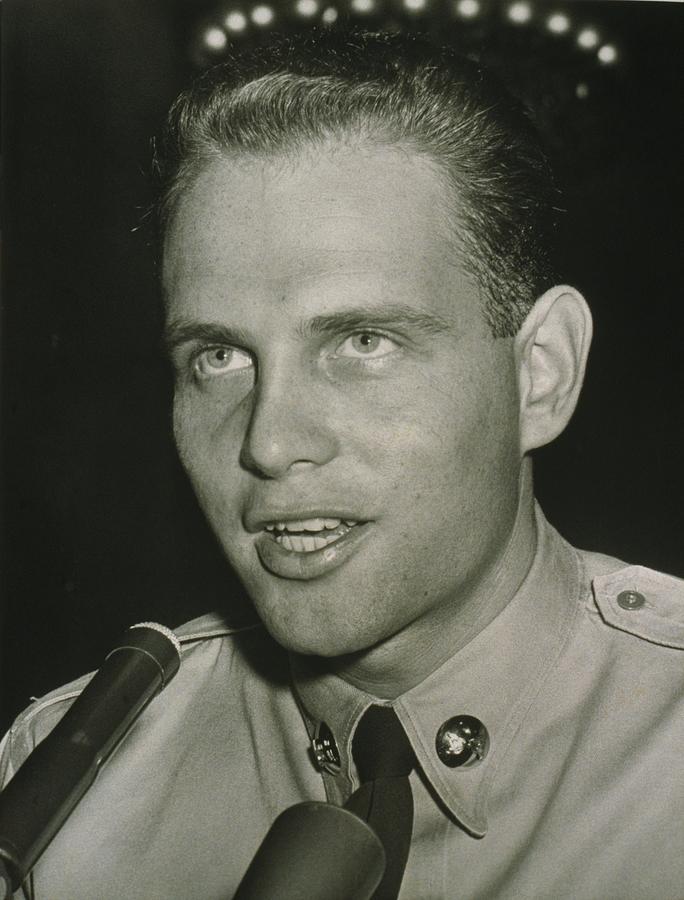

Defenders of McCarthy, including M. Stanton Evans in Blacklisted by History (2007) and Arthur Herman in Joseph McCarthy (2000), argue that the Army used the Schine file as a weapon to stop an investigation it feared; the hearing record shows that the Army's written account was assembled after a January 21, 1954 meeting with the Attorney General and White House officials, at a time when the Army was resisting the subcommittee's subpoenas.14 Historians writing from the other side, such as David Oshinsky in A Conspiracy So Immense (1983), treat the Schine affair as the clearest proof that McCarthy's staff used the subcommittee's power for private favors.15 Both points can be true at once, and module 81 argues that they were.
Rating of the main claim (Cohn sought special treatment for Schine by improper means): Supported. The counterclaim that the Army held Schine hostage is Unsupported. In module 81: lesson 08, lesson 06.
Semyon Semenov (1911 to 1986)
Role: KGB officer in New York who ran industrial and atomic sources, including Harry Gold, in the early 1940s.
Semenov (also transliterated Semyonov) was a scientific and technical intelligence officer working under cover in New York. The Haynes index records that his birth name was Alexander Taubman, that he was "Identified in the Venona decryptions as a Soviet officer/agent," that his cover name in Vassiliev's notebooks was TWAIN (in Russian TVEN), and that he was "Known as Simon to Harry Gold," the chemist who later served as courier for Klaus Fuchs.3 Gold's later confession to the FBI described a series of handlers, and the names he knew them by are the bridge between his testimony and the Venona cover names, as lesson 12 shows in its network diagram of the atomic ring.16
Rating of the main claim (Semenov was a KGB officer who ran American sources): Supported. In module 81: lesson 02.
John Stewart Service (1909 to 1999)
Role: Foreign Service officer and China specialist, arrested in the Amerasia case of 1945 and named by McCarthy in 1950.
Service served in China as a Foreign Service officer from 1935. In April 1945 he gave copies of some of his own reports to Philip Jaffe, editor of the magazine Amerasia, which took a line favorable to the Chinese Communists, and in June he was arrested with Jaffe and others after the Office of Strategic Services found classified government documents in the magazine's office. A federal grand jury declined to indict him in August 1945.17 John Earl Haynes, summarizing the reconstruction of the case by Harvey Klehr and Ronald Radosh in The Amerasia Spy Case (1996), wrote that "Service was engaged in certainly unethical and probably illegal leaking of sensitive American diplomatic information to Amerasia in order to promote his preferred policy positions and undercut the policies of superiors in the Department of State and the White House who were pursuing policies he opposed." Haynes added in the same note: "There is no indication that he believed he was in contact with Soviet intelligence or that Amerasia was a conduit for Soviet intelligence."18
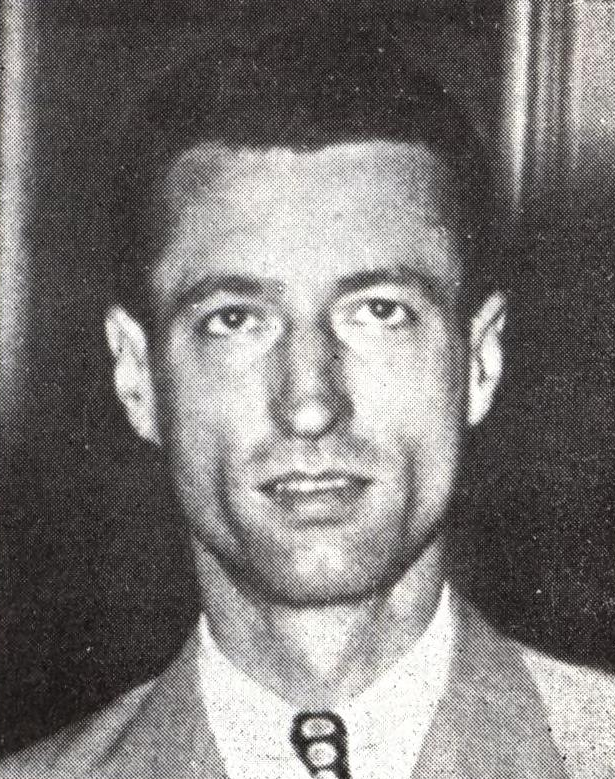

McCarthy named Service in his first State Department charges of 1950. The editors of the 2003 transcripts record that McCarthy "had cited him as a 'known associate and collaborator with Communists.'"9 The State Department's loyalty boards cleared Service repeatedly between 1945 and 1951. Then, in December 1951, the Loyalty Review Board of the Civil Service Commission found a reasonable doubt as to his loyalty, and Secretary of State Dean Acheson dismissed him. On June 17, 1957 the Supreme Court, in an opinion by Justice John Marshall Harlan, held in Service v. Dulles that the dismissal violated the State Department's own regulations; the Court did not rule on his loyalty.17 Service went back to the department in a minor post and retired in 1962.9 When McCarthy's subcommittee questioned him in closed session on September 3, 1953, Service, then working for a private firm, denied any secret government employment and asked that the record show he had appeared voluntarily.9
Haynes's table of the people on McCarthy's lists checks each name against Venona. Its entry reads: "Service, John Stewart: Not identified in Venona."18 M. Stanton Evans, in Blacklisted by History, argues that Service's wartime reporting from China damaged the Nationalist government and that the Amerasia leaks justified the security concern; Evans had obtained a large set of Service's dispatches and quotes them at length.14 Ellen Schrecker, in Many Are the Crimes (1998), treats Service as one of the "China Hands" whose careers were destroyed for honest reporting.19 The two views differ on judgment, and neither claims that Service worked for Soviet intelligence.
Rating of the main claim (Service was a "known associate and collaborator with Communists"): Partly supported. The leak to a pro-Communist editor is documented. Collaboration with Soviet intelligence is not supported by Venona or any later release. In module 81: lesson 07, lesson 09 (the 1957 decisions).
Nathan Gregory Silvermaster (1898 to 1964)
Role: Government economist who ran the largest Soviet espionage network inside the wartime federal government.
Silvermaster was born in the Russian Empire, came to the United States as a young man, became an economist and joined the federal government in the New Deal years, working for the Farm Security Administration and, during the war, for the Board of Economic Warfare and the War Production Board.20 He and his wife Helen, together with William Ludwig Ullmann, who lived in their house, ran a group of sources in the Treasury, the Army Air Forces and other agencies whose documents and reports went to Soviet intelligence through Jacob Golos and then through Elizabeth Bentley. Bentley described the group to the FBI in November 1945 and to the House Committee on Un-American Activities on July 31, 1948.20 Asked whether there were groups besides the Silvermaster group, she said she had handled a second group, which came to be called the Perlo group.20
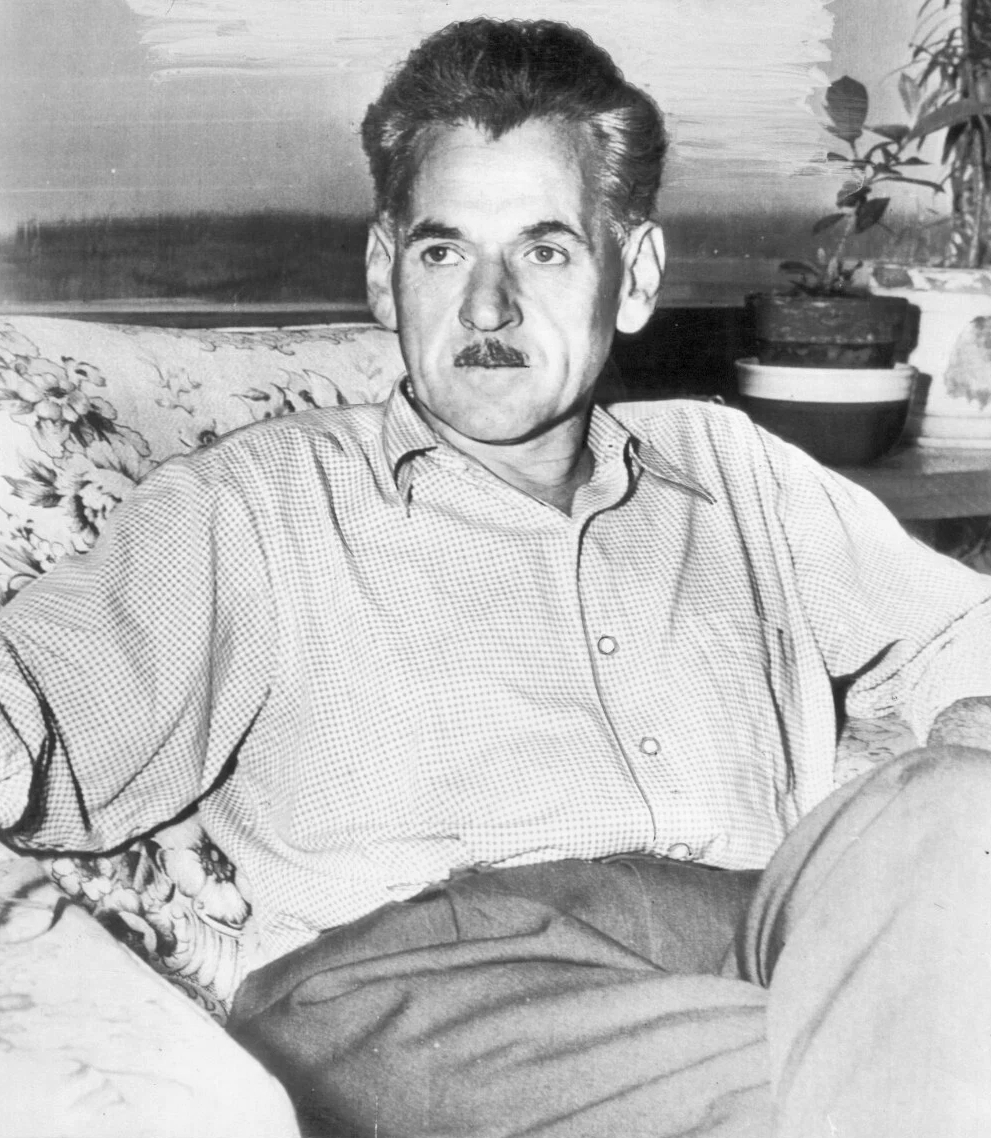

The Venona decryptions and the KGB notebooks later confirmed her account in detail. The Haynes index gives Silvermaster's cover names as PAL (in Russian PEL) and then ROBERT from August 1944, with his wife Helen as DORA and his party name as Sam, and it records that both were "Identified by Elizabeth Bentley as part of the Silvermaster espionage group" and identified in the Venona decryptions.3 The same index lists among the group's sources Abraham George Silverman, a civilian analyst for the Army Air Forces under the cover name AILERON, and William Ludwig Ullmann under the cover names POLO, DONALD and PILOT.3 The NSA's history of Venona notes that Silvermaster was once the only American citizen honored in the KGB's own hall of fame in Moscow.21 The network, its members and its handlers are drawn in lesson 12.
When HUAC called him in August 1948, Silvermaster denied Bentley's charges in a prepared statement and then refused to answer questions, invoking the Fifth Amendment privilege against self-incrimination.20 He was never prosecuted. The FBI's evidence rested on Bentley's word and on Venona, and the government would not use Venona in court; Soviet intelligence had also broken off contact with Bentley's sources after her defection in late 1945.22 Silvermaster left government, went into building and real estate in New Jersey, and died in 1964.5
Scholars on every side now accept the core of the Silvermaster story. Haynes and Klehr, in Venona (1999), and with Vassiliev in Spies (2009), treat the group as the most productive KGB network in wartime Washington.22 Kathryn Olmsted, Bentley's biographer in Red Spy Queen (2002), questions parts of Bentley's later embellishments while accepting that the network existed.23 Schrecker accepted by 1998 that the espionage Bentley described was real.19
Rating of the main claim (Silvermaster ran a Soviet espionage group inside the federal government): Supported. In module 81: lesson 02, lesson 10.
Margaret Chase Smith (1897 to 1995)
Role: Republican senator from Maine whose Declaration of Conscience of June 1, 1950 was the first speech on the Senate floor by a member of McCarthy's own party against his methods.
Margaret Madeline Chase was born in Skowhegan, Maine, on December 14, 1897. She worked as a teacher and newspaper and woolen-company executive, served as secretary to her husband, Representative Clyde Smith, and won his House seat by special election on June 3, 1940 after his death. She served in the House until 1949, won election to the Senate in 1948, and served there from January 3, 1949 to January 3, 1973, the first woman to serve in both houses of Congress.24 In 1964 she became the first woman placed in nomination for president at a major party convention, and she received the Presidential Medal of Freedom in 1989.24
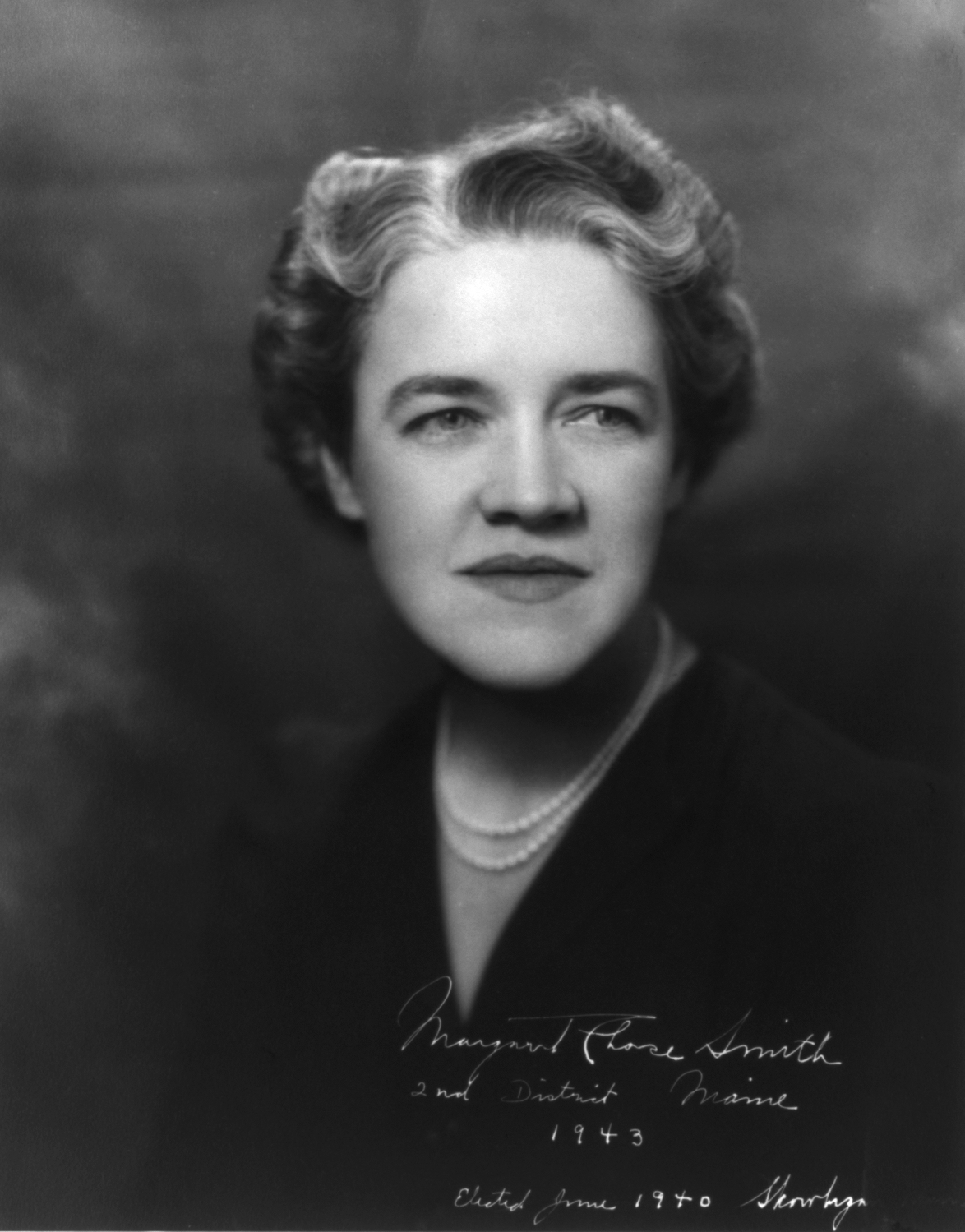

The Senate Historical Office records that Smith, "like many of her colleagues, shared McCarthy's concerns about communist subversion," but grew skeptical "when he repeatedly ignored her requests for evidence to back-up his accusations."25 On June 1, 1950 she rose in the Senate. "Mr. President," she began, "I would like to speak briefly and simply about a serious national condition." She said that the Senate's deliberative character had been "debased to...a forum of hate and character assassination," that "Freedom of speech is not what it used to be in America," and that it "has been so abused by some that it is not exercised by others." She asked her party not to ride to victory on "the Four Horsemen of Calumny--Fear, Ignorance, Bigotry, and Smear."25 (The Senate's page prints a dash between "Calumny" and "Fear"; it is rendered here as two hyphens.) She then read a statement signed by herself and six other Republican senators. She never named McCarthy. He dismissed the seven as "Snow White and the Six Dwarfs."25
The speech did not deny the threat. Smith began by granting that proved cases, including Amerasia, Hiss, Coplon and Gold, had caused "nationwide distrust," as module 81, lesson 05 quotes from the full text.26 Seven weeks later she voted with her party on procedural motions over the Tydings report, a vote that module 81 examines. She later sat on the Privileges and Elections subcommittee when it investigated the 1950 Maryland campaign against Tydings; McCarthy's refusal to cooperate with the same subcommittee's later inquiry into his own conduct, in 1951 and 1952, became the first count of his censure in 1954.2728 She voted for censure on December 2, 1954.29 Her own summary, recorded by the Senate Historical Office, was that she wondered "about the validity... and fairness of Joseph McCarthy's charges."25
Historians on both sides treat her speech as a turning point in tone but not in power: the Senate Historical Office notes that it "did not end McCarthy's reign of power."25 Writers sympathetic to McCarthy, such as Evans, argue that the Declaration's signers were reacting to his manner more than to his evidence, and that some of his 1950 cases deserved inquiry.14
Rating of the main claim (Smith opposed McCarthy's methods while accepting that the communist threat was real): Supported. The text of the Declaration says both. In module 81: lesson 05, lesson 12.
Morton Sobell (1917 to 2018)
Role: Electrical engineer convicted with Julius and Ethel Rosenberg in 1951, who denied spying for 57 years and then admitted it.
Sobell was a college friend of Julius Rosenberg who worked on military electronics, including radar and fire-control projects, during and after the war. When the FBI closed in on the Rosenberg ring in the summer of 1950, Sobell went to Mexico with his family. The FBI's own history records that he was taken into custody at the International Bridge at Laredo, Texas, in August 1950 after Mexican authorities deported him.16 He was tried with the Rosenbergs beginning March 6, 1951 and convicted on March 29, 1951 of conspiracy to commit espionage. The chief witness against him was Max Elitcher, a Navy ordnance engineer and college classmate, who testified that Sobell had drawn him into the Communist Party in 1939, had urged him to stay at the Bureau of Ordnance because Rosenberg needed someone there, and in July 1948 had carried a 35-millimeter film container to Rosenberg late at night. On April 5, 1951 the judge sentenced Sobell to 30 years.16 He was released in 1969.30
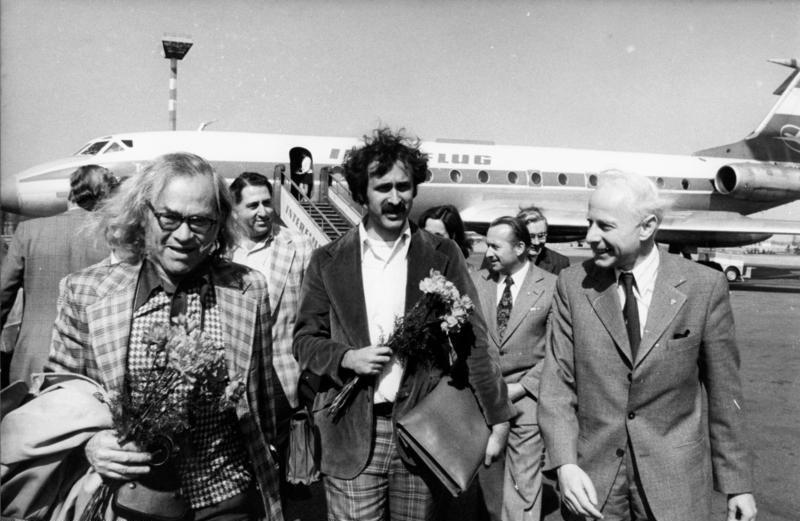

For decades Sobell was the living symbol of the case for innocence. In 2001, writing with John Lowenthal and Stephen Schwartz in The Nation, he questioned whether the NSA's Venona identifications could be trusted at all.31 Then, in an interview published on September 12, 2008, when he was 91, he told Sam Roberts of the New York Times that he had been a Soviet spy. Asked whether Julius Rosenberg was a spy, he answered, "Yeah, yeah, yeah, call it that. I never thought of it as that in those terms." He insisted that what he passed was "simply defensive" and that there is "a big difference between giving that and stuff that could be used to attack our country."32 Ronald Radosh and Steven Usdin, who examined his admission in 2011, conclude that his espionage was real and that there is no evidence he engaged in atomic espionage.32
The Venona and KGB record fits his admission. The Haynes index lists Sobell as a "Soviet intelligence source/agent," an "Engineer and member of Julius Rosenberg's technical intelligence apparatus," with the cover names SENYA (1944 to 1945) and STONE (1951) in Vassiliev's notebooks. It also records a correction: Sobell had once been "considered a candidate for RELAY but rejected," and the notebooks give RELAY to another source, Joseph Chmilevski.3 Skeptics such as Lowenthal pointed to errors of that kind; the notebooks resolved them in a way that confirmed Sobell's role in the ring.2
Rating of the main claim (Sobell was a Soviet spy in the Rosenberg ring): Supported. His 2008 admission, Venona and the notebooks agree. The claim that he passed atomic secrets is Unsupported. In module 81: lesson 10, lesson 02.
Joseph Stalin (1878 to 1953)
Role: General Secretary of the Soviet Communist Party and ruler of the Soviet Union from the late 1920s until his death on March 5, 1953.
Stalin's life and the terror of his rule are told in lesson 02 and lesson 03 of this companion, including the collectivization of agriculture, the famine of 1932 and 1933, the Gulag and the Great Terror of 1936 to 1938. For the American story, his importance is that he governed the American Communist Party directly. In May 1929 he spoke to the American Commission of the Executive Committee of the Communist International and then to its Presidium on what he called the American question, and he removed the party's elected leader, Jay Lovestone. "I think the moment is not far off when a revolutionary crisis will develop in America," he told the Americans. "And when a revolutionary crisis develops in America, that will be the beginning of the end of world capitalism as a whole." To meet that moment, he said, "the American Communist Party must be improved and bolshevized."33 When the American delegates warned that Moscow's decision would make the party "perish," he answered that "The American Communist Party lives and will continue to live," and that it would "grow and flourish" if it drove out "unprincipled factionalism."33
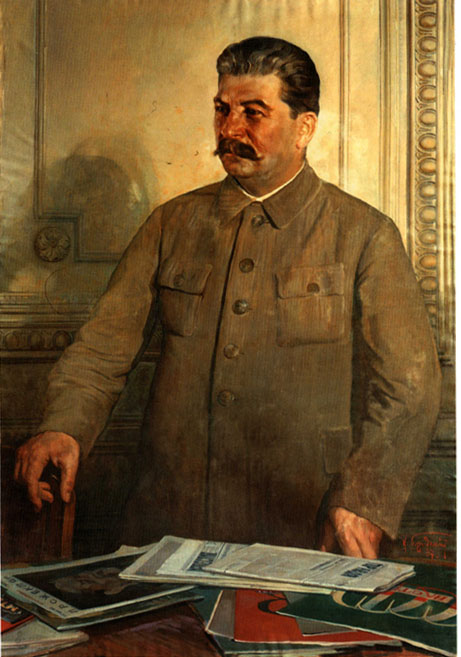

Every reversal of the American party's line in the 1930s and 1940s followed a turn in Moscow: the Popular Front from 1935, the defense of the Nazi-Soviet Pact from August 1939, the return to anti-fascism after the German invasion of June 22, 1941, and the removal of Earl Browder in 1945. The Venona traffic of the war years was the communications of Stalin's intelligence services. The NSA and CIA editors report the claim of a Russian writer, Vladimir Chikov, that Stalin personally issued a set of intelligence requirements in the presence of Vasily Zarubin, probably in the autumn of 1941, without confirming it.1 His death on March 5, 1953 opened the period of the Khrushchev revelations of 1956, which broke the American party, as lesson 05 describes.
Rating of the main claim (Stalin directed the American Communist Party): Supported. His own 1929 speeches show it. In module 81: lesson 01.
Robert T. Stevens (1899 to 1983)
Role: Secretary of the Army in 1953 and 1954, whose dispute with McCarthy and Roy Cohn became the Army-McCarthy hearings.
Stevens was a textile executive whom President Eisenhower made Secretary of the Army in 1953. He tried at first to work with McCarthy over the Fort Monmouth investigation, and the Army's monitored telephone calls show McCarthy, Cohn and Stevens in constant contact through the fall of 1953.4 After McCarthy's treatment of General Ralph Zwicker on February 18, 1954, Stevens ordered Zwicker not to testify again, telling Senator Stuart Symington on February 20 that he "did not intend to have this abuse of our professional officer corps continued," as the monitored transcript records.4 Days later, at a lunch with Republican senators on February 24, he agreed to a memorandum that the press read as a surrender to McCarthy, an episode the Senate's editors describe in their notes.4 The hearings that followed were formally titled the Special Senate Investigation on Charges and Countercharges Involving: Secretary of the Army Robert T. Stevens, John G. Adams, H. Struve Hensel and Senator Joe McCarthy, Roy M. Cohn, and Francis P. Carr.11 The Republican majority found that Stevens and his counsel Adams had tried to placate McCarthy and Cohn instead of standing firm; the Democratic minority found Stevens inexcusably indecisive in dealing with the subcommittee.34
Rating of the main claim (Stevens tried to appease McCarthy before fighting him): Supported. Both the majority and minority reports found it. In module 81: lesson 08.
Michael Straight (1916 to 2004)
Role: American heir, editor of the New Republic, recruited by Anthony Blunt at Cambridge, whose confession in 1963 exposed Blunt.
Straight, son of the wealthy Whitney family, studied at Trinity College, Cambridge in the 1930s, then worked in Washington as an economist for the State Department before the war and later edited and published the New Republic.35 The journalist Neal Ascherson, reviewing Straight's memoir After Long Silence (1983), summarized its central event: "Michael Straight was recruited by Anthony Blunt one day in 1937." In Washington a Soviet contact calling himself "Michael Green" received from Straight what Ascherson describes as "a few mildly private memoranda on general themes prepared for the State Department."36 In 1963, when President Kennedy asked him to serve as chairman of a new federal arts body and an FBI background check loomed, Straight told the authorities what he knew. His information gave Britain's MI5 the evidence that led Blunt, in return for immunity, to confess.36
The record splits on what to call him. The Haynes index lists Straight as a "Soviet intelligence source," with the cover name NIGEL confirmed in Vassiliev's notebooks, in Christopher Andrew and Vasili Mitrokhin's The Sword and the Shield (1999) and in Nigel West and Oleg Tsarev's work on the KGB's British files.3 Ascherson, reading the memoir, concluded: "But, as a matter of fact, Michael Straight never spied at all."36 The difference is one of degree. KGB files counted him as a source; what he passed, on his own account and on the evidence published, was low-grade. The Cambridge network that recruited him is described in lesson 12 and the Philby entry of lesson 08.
Rating of the main claim (Straight was a Soviet spy): Partly supported. He was recruited and counted as a source; the material he passed was minor, and he later gave the evidence that exposed Blunt.
Pavel Sudoplatov (1907 to 1996)
Role: Senior Soviet intelligence officer who organized the murder of Leon Trotsky and later claimed that leading Western atomic scientists had helped Moscow.
Sudoplatov was a career officer of the NKVD and its successors. The Atomic Heritage Foundation's profile states that he "was put in charge of many high-profile assassinations, including Leon Trotsky in Mexico City in 1940," and that he claimed in his memoir to have led a wartime "Department S" concerned with atomic intelligence.37 The Haynes index lists him as a "Senior KGB officer, Moscow Center, early 1940s."3 He was arrested after Lavrenti Beria's fall in 1953 and spent years in prison.38
In 1994 he published Special Tasks: The Memoirs of an Unwanted Witness, written with his son Anatoli and the American journalists Jerrold and Leona Schecter. The book claimed that J. Robert Oppenheimer and his circle, including Niels Bohr, Enrico Fermi and Leo Szilard, had shared atomic information with Soviet intelligence knowingly. The profile reports that the Bulletin of the Atomic Scientists rebutted the claims in July 1994, and that the FBI investigated and found no "credible evidence" that Bohr, Fermi, Oppenheimer or Szilard engaged in espionage for a foreign power.37 Haynes and Klehr, who accept the evidence against Hall, Fuchs and the Rosenbergs, did not accept Sudoplatov's charges against the four scientists either.22 His memoir also suggested that the anonymous 1943 letter denouncing Vasily Zarubin to the FBI was written by Zarubin's own assistant, a point the NSA and CIA editors of the Venona documents note without endorsing.1
Rating of the main claims: that Sudoplatov organized Trotsky's murder, Supported (his own memoir and Soviet records agree); that Oppenheimer, Bohr, Fermi and Szilard were Soviet sources, Unsupported. In module 81: lesson 02.
Stuart Symington (1901 to 1988)
Role: First Secretary of the Air Force and Democratic senator from Missouri, a member of the panel at the Army-McCarthy hearings.
Symington served as the first Secretary of the Air Force from 1947 and entered the Senate in 1953, where he joined McCarthy's subcommittee. He sat on the panel through the Army-McCarthy hearings, which the Senate Historical Office lists with Democrats John McClellan and Henry Jackson and Republicans Karl Mundt, Everett Dirksen, Charles Potter and Henry Dworshak.11 The monitored telephone call of February 20, 1954, in which Stevens told him he would not let Zwicker testify again, was read into the record in June and showed Symington advising the Army against McCarthy in private, a point McCarthy's defenders cite.4 Symington signed the Democratic minority views that found McCarthy had condoned Cohn's conduct.34
Rating of the main claim (Symington worked with the Army against McCarthy behind the scenes): Partly supported. The February 20 call shows private advice; it does not show a plan to fabricate charges. In module 81: lesson 08.
T
Robert A. Taft (1889 to 1953)
Role: Republican senator from Ohio, called "Mr. Republican," majority leader in 1953, and an early defender of McCarthy's right to press his charges.
The Senate Historical Office describes Taft, son of President William Howard Taft, as the man who "became known as 'Mr. Republican' for helping to rebuild his party after the Great Depression and the Democratic dominance of the New Deal years." He chaired the Republican Policy Committee after 1946, sponsored the Taft-Hartley Labor Act of 1947, agreed "reluctantly" to become majority leader in January 1953, and died of cancer seven months later, on July 31, 1953, at 63 (the Senate's biography says 64; he was born September 8, 1889).39 The Taft-Hartley Act matters to this module because of its requirement that union officers seeking the protection of the National Labor Relations Board swear that they were not members of the Communist Party, an affidavit the Supreme Court upheld in 1950, as module 81, lesson 01 describes.40
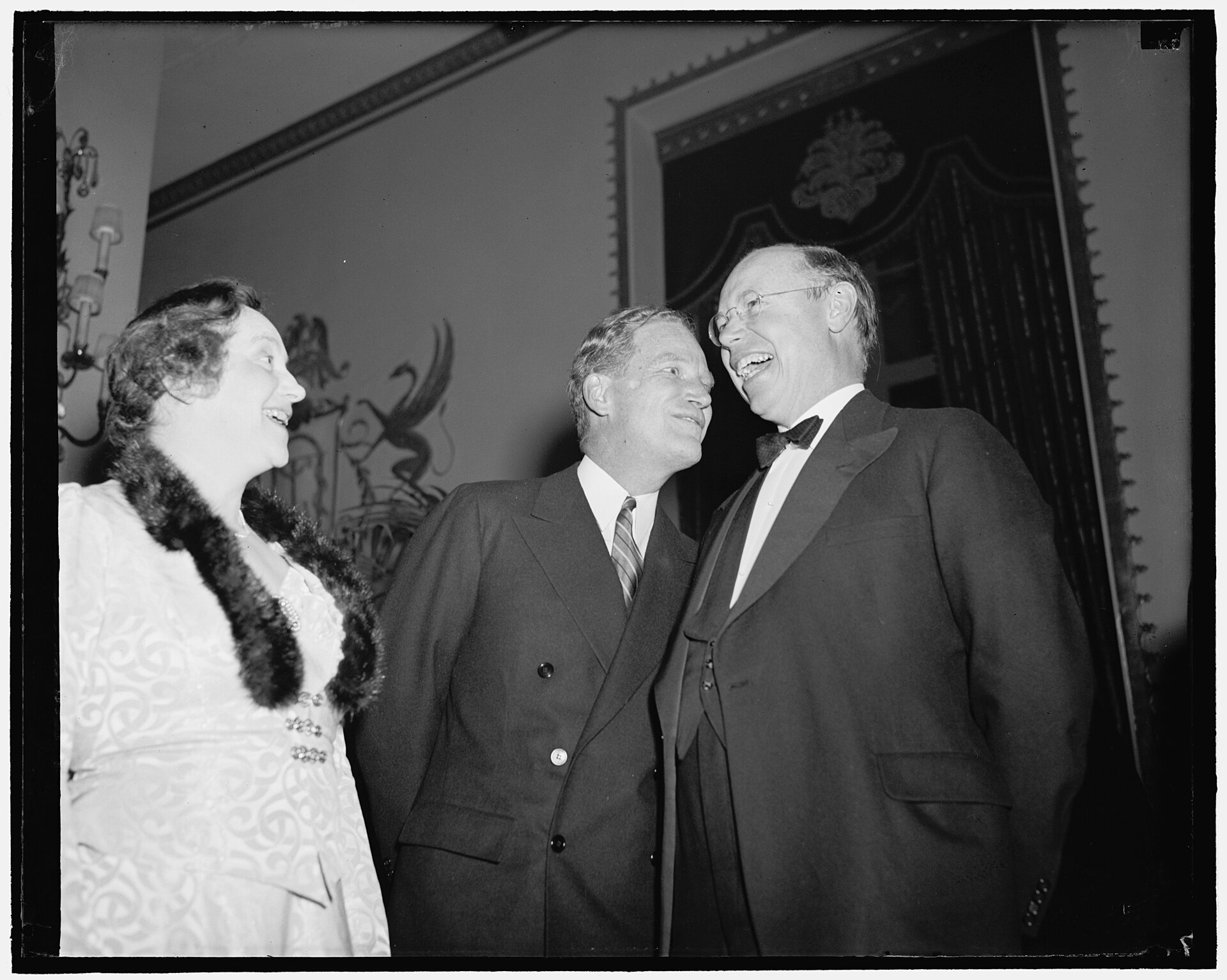

Taft's part in McCarthy's rise is disputed. Many accounts, including Richard Rovere's Senator Joe McCarthy (1959) and Oshinsky's biography, report that Taft encouraged McCarthy in 1950 to keep naming cases, in words often quoted as "if one case doesn't work, try another." The exact wording and the occasion vary from account to account, and no transcript or letter in Taft's own hand has been found for this lesson.4115 Taft endorsed a full inquiry into the State Department in 1950, and as majority leader in 1953 he steered McCarthy to the Government Operations Committee, a step usually read as an attempt to keep him away from internal security work; the evidence for Taft's motive is in later memoirs, not in his papers as cited here.15
Rating of the main claim (Taft urged McCarthy to keep making charges whether or not each held up): Unresolved. The quotation is widely repeated and plausible, but its wording and source are not fixed. In module 81: lesson 05.
Glen H. Taylor (1904 to 1984)
Role: Democratic senator from Idaho, 1945 to 1951, and the Progressive Party's candidate for vice president with Henry Wallace in 1948.
Taylor was a country singer and showman who won Idaho's Senate seat in 1944. In 1948 he broke with President Truman over policy toward the Soviet Union and joined Henry Wallace on the Progressive ticket; the Haynes index notes him simply as "U.S. Senator (D. Idaho, 1945-1950)" and "Progressive Party candidate for vice-president in 1948," with no cover name or Soviet contact recorded.3 On May 1, 1948 he was arrested in Birmingham, Alabama, for entering a meeting hall through a door marked for Black people, an episode retold in module 74, lesson 06. He lost the 1950 Democratic primary and later campaigns in which opponents, including Senator Herman Welker, called him a Communist dupe. Module 74 found no evidence that he was a party member, and nothing in Venona or the notebooks connects him to Soviet intelligence.3
Rating of the main claim (Taylor was a Communist): Unsupported. He opposed the Truman Doctrine and the Marshall Plan in public and ran on a ticket that accepted Communist support; that is a record of opinion and association. In module 81: lesson 09 (the Idaho votes).
Helen Tenney
Role: Office of Strategic Services analyst who passed information to Elizabeth Bentley during the war. Her birth and death years were not established for this lesson.
The Haynes index describes Tenney as a "Soviet intelligence source/agent," an "Analyst of the OSS's Spanish division during World War II," who after the OSS was dissolved worked in the State Department's Strategic Services Unit on Soviet matters, and who was "Identified by Elizabeth Bentley as one of her singleton espionage" sources.3 The Venona traffic speaks of a female source in the OSS under the cover name MUZA (MUSE) whom NSA analysts could not identify; Vassiliev's notebooks name MUSE as Helen Tenney, and Haynes notes that the unidentified Venona source appeared "in a context that would fit Tenney."3 Her case is a good example of how the notebooks closed gaps the codebreakers had left open, discussed in module 81, lesson 02.2
Rating of the main claim (Tenney was a Soviet source inside the OSS): Supported.
J. Parnell Thomas (1895 to 1970)
Role: Republican congressman from New Jersey and chairman of the House Committee on Un-American Activities in 1947 and 1948, later imprisoned for fraud.
John Parnell Thomas served in the House from January 3, 1937 until his resignation on January 2, 1950, and chaired HUAC in the 80th Congress.42 He presided over the Hollywood hearings of October 1947, which led to the contempt citations of the Hollywood Ten, and over the 1948 hearings at which Elizabeth Bentley and Whittaker Chambers first testified in public.43 The official biography of the House records that he was "convicted on December 9, 1949, of conspiracy to defraud United States government and presenting false claims," the charges arising from putting people on his office payroll who returned their salaries to him, and that President Truman granted him a "full pardon" on December 25, 1952.42 He served his sentence in the federal prison at Danbury, Connecticut, where two of the Hollywood Ten, Ring Lardner Jr. and Lester Cole, were also held, a coincidence often noted by historians of the blacklist.44
Rating of the main claim (Thomas, HUAC's chairman, was convicted of defrauding the government): Supported. In module 81: lesson 03, lesson 06.
Josip Broz Tito (1892 to 1980)
Role: Leader of the Yugoslav Communist Party and of Yugoslavia from 1945 to 1980, whose break with Stalin in 1948 split the Soviet bloc.
Tito led the communist Partisans against the German occupation and took power in Yugoslavia without the Red Army's direct help. In June 1948 the Cominform, the Soviet-led bureau of communist parties founded in 1947, expelled the Yugoslav party, and Tito survived Stalin's pressure and purges of suspected "Titoists" across Eastern Europe. The split, told in lesson 03 and in the Cominform entry of lesson 10, mattered in the American debate because it showed that communist states could quarrel with Moscow, a point argued by Owen Lattimore and others and resisted by those who saw a single directed movement.5
Rating of the main claim (Tito was Stalin's obedient puppet): Refuted by the 1948 break.
Leon Trotsky (1879 to 1940)
Role: Organizer of the October 1917 seizure of power and of the Red Army, exiled by Stalin and murdered by a Soviet agent in Mexico in August 1940.
Trotsky's revolutionary career and his defeat by Stalin are told in lesson 02. In the American story he matters for two reasons. His followers formed a small, bitterly anti-Stalinist communist movement in the United States, and Soviet intelligence spent heavily to penetrate it. The Haynes index records that the KGB's cover name for Trotsky in the Venona traffic was OLD MAN (in Russian STARIK) and that Vassiliev's notebooks used OLD MAN and TYUK, with TYUKS for the Trotskyists.3 Mark Zborowski's work against Trotsky's movement, and Sudoplatov's organization of the assassination, are described in their entries in this lesson. Trotsky was struck with an ice axe by Ramon Mercader, a Soviet agent, on August 20, 1940 and died the next day.375
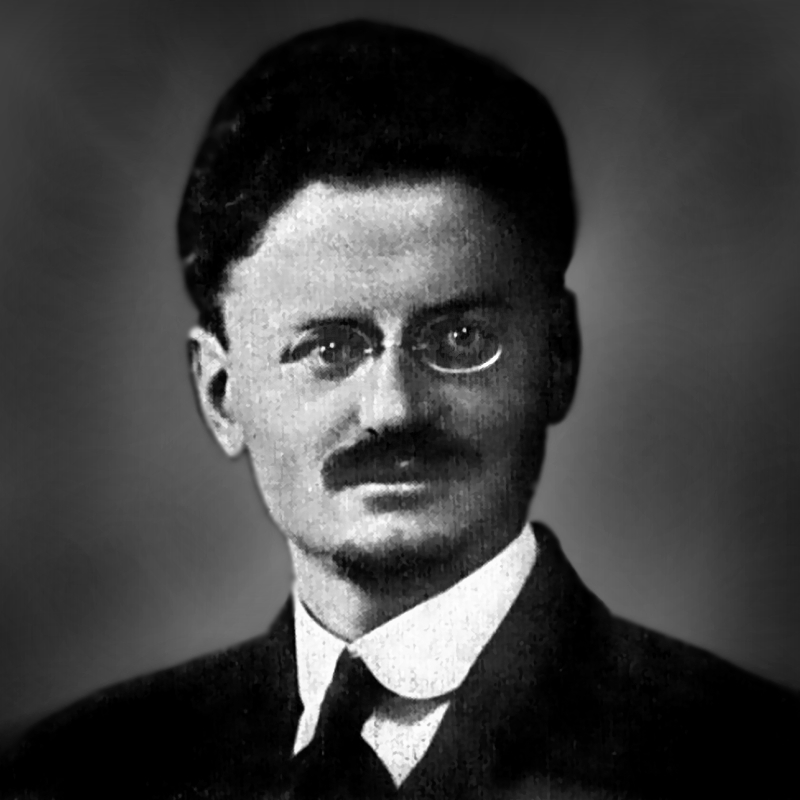

Rating of the main claim (Trotsky was murdered on Stalin's orders by Soviet intelligence): Supported.
Harry S. Truman (1884 to 1972)
Role: President of the United States from April 12, 1945 to January 20, 1953, who created the federal loyalty program, called the 1948 spy hearings a "red herring" and vetoed the Internal Security Act of 1950.
Truman's record on the communist issue runs in two directions, and both are documented. On March 21, 1947 he signed Executive Order 9835, which required a loyalty investigation of every person entering civilian federal employment and of every employee already there. Its preamble declared that each employee owed "complete and unswerving loyalty to the United States," and in the same passage that "equal protection from unfounded accusations of disloyalty must be afforded the loyal employees of the Government."45 His Justice Department prosecuted the leaders of the Communist Party under the Smith Act and prosecuted Alger Hiss for perjury, and the Army's Venona codebreaking went on under his administration, as module 81, lesson 03 describes.
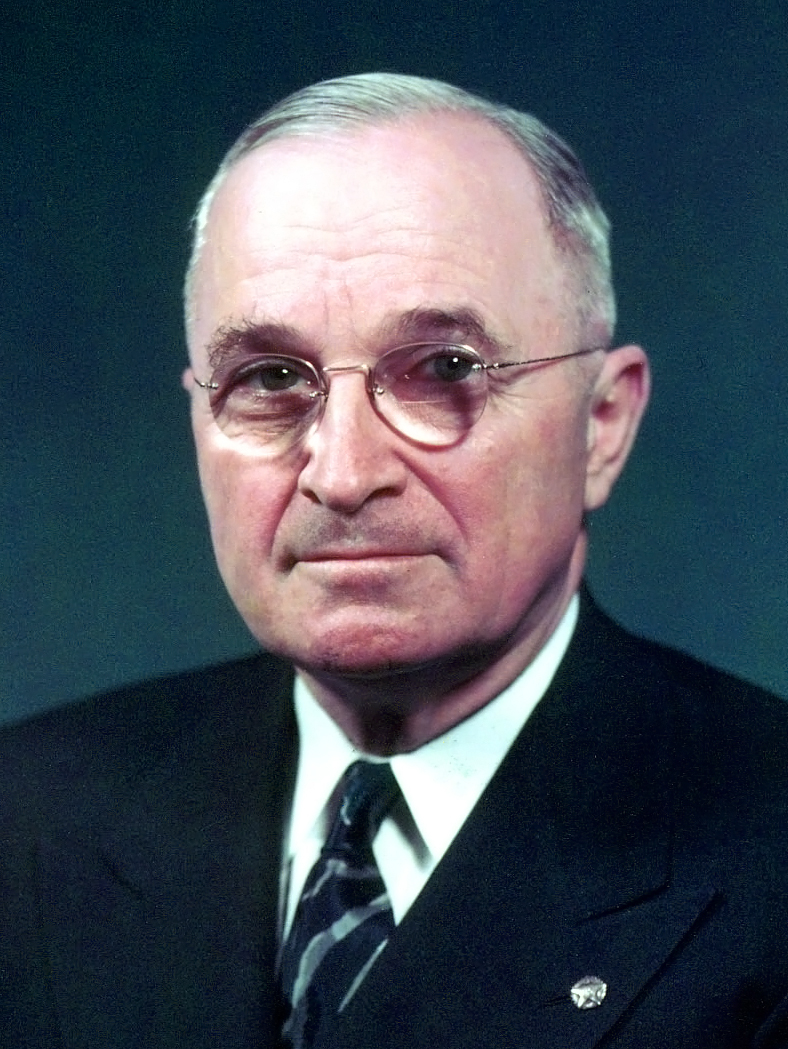

On August 5, 1948, days after Bentley's public testimony, a reporter asked Truman whether he thought "the Capitol Hill spy scare is a 'red herring' to divert public attention from inflation." He answered, "Yes, I do," and read a statement that nothing had come out of the hearings that had not already been presented to a federal grand jury.46 In September 1950 he vetoed the Internal Security Act. "The course proposed by this bill would delight the communists," he wrote, "for it would make a mockery of the Bill of Rights and of our claims to stand for freedom in the world." He warned that the registration requirement for communist-front groups "can be the greatest danger to freedom of speech, press and assembly, since the Alien and Sedition Laws of 1798." Congress overrode the veto on September 23.47
The hardest case against Truman concerns Harry Dexter White. Truman said in 1953 that he had received an FBI report on White on February 6, 1946, after the Senate had confirmed White as the American executive director of the new International Monetary Fund, and that he let the appointment stand so that the FBI's investigation could go forward. In a national broadcast he said the course he chose "protected the public interest and security and ...permitted the intensive FBI investigation then in progress to go forward." J. Edgar Hoover told the Senate Internal Security Subcommittee the next day, as the Harvard Crimson reported, that "At no time was the FBI a party to an agreement to promote White."48 Both statements are in the record, and they cannot both describe the decision fully. The White entry below gives the rest.
Historians divide on how to weigh this. Evans argues that the Truman administration's instinct to protect its own people slowed action on real cases.14 Haynes and Klehr credit Truman's loyalty program and prosecutions while faulting his dismissal of Bentley's and Chambers's testimony.22 Schrecker and others treat Executive Order 9835 as the start of an executive-branch purge that reached far beyond spies.19
Rating of the main claims: that Truman was "soft on communism," Unsupported as a description of his whole record; that he let White take a senior post after an FBI warning, Supported by his own account; that he did so on the FBI's advice, Refuted by Hoover's testimony as reported. The lesson's tally counts the combined claim as Partly supported. In module 81: lesson 03, lesson 05.
Dalton Trumbo (1905 to 1976)
Role: Screenwriter, one of the Hollywood Ten jailed for contempt of Congress, who kept working under false names and broke the blacklist in 1960.
Trumbo was among the highest-paid writers in Hollywood when HUAC subpoenaed him in October 1947. HUAC's report for 1948 names the ten unfriendly witnesses, Trumbo among them, and states that each of them refused to affirm or deny membership in the Communist Party.43 The committee introduced Communist Party registration records for each, which is why module 81 rates the claim that the Ten were party members as Partly supported pending individual checks.43 Trumbo's biographers report that he joined the party in 1943 and left it in 1948; that account was not checked against a primary source for this lesson.5 Trumbo and John Howard Lawson were tried first as test cases in 1948 and convicted; they began their sentences on June 9, 1950 after the Supreme Court declined to review the convictions.44 Turner Classic Movies' account puts his sentence at "almost a year in prison for refusing to cooperate."49
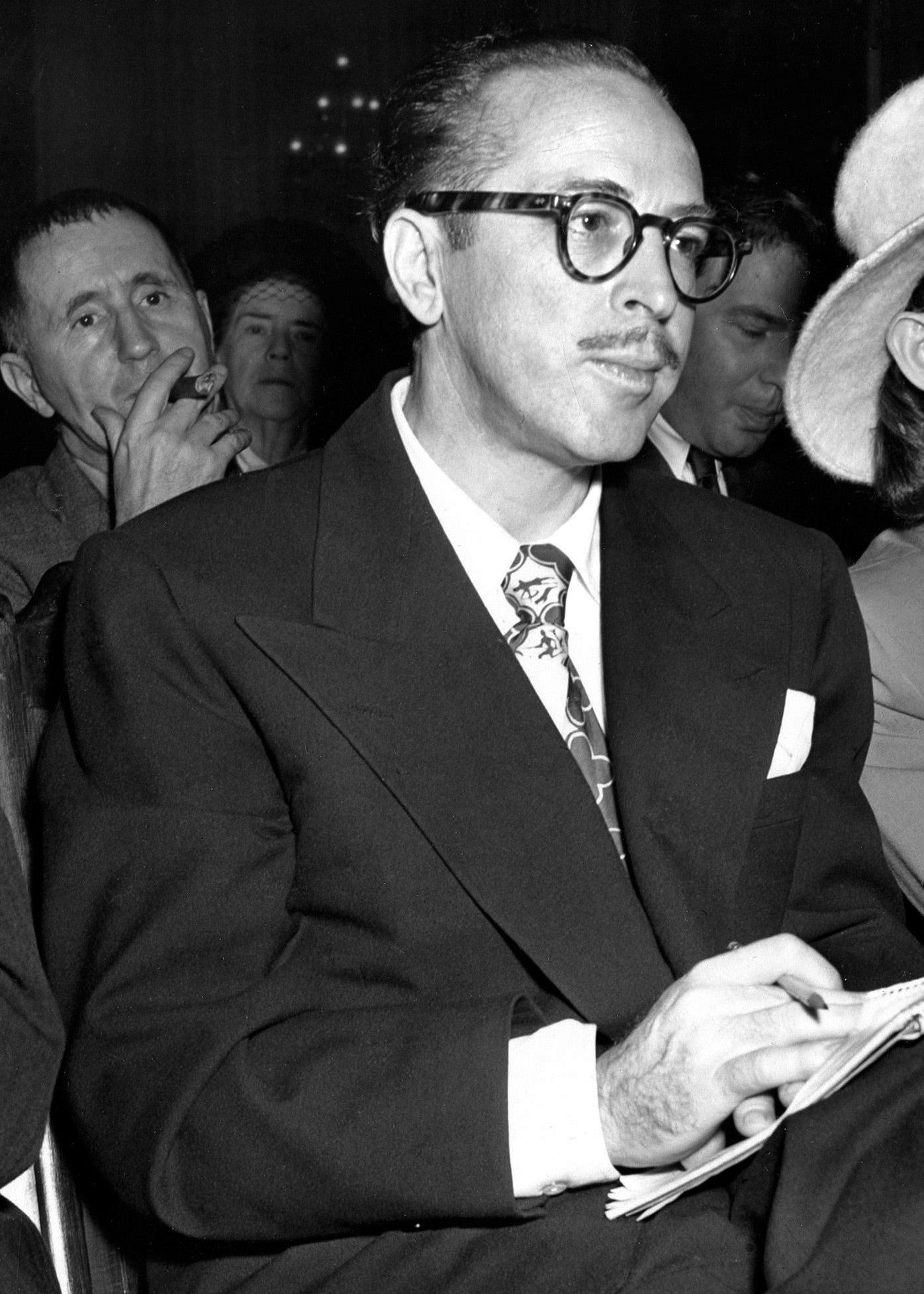

On the blacklist, Trumbo wrote through fronts and false names. The story he wrote for The Brave One (1956) was credited to "Robert Rich," a person who "didn't exist," and won the Oscar for best motion picture story; "in 1975 he received an official Oscar with his name on it."49 His script for Roman Holiday (1953) was credited to his front, Ian McLellan Hunter, who received the Oscar; "In 1993 the Academy issued an Oscar posthumously to Trumbo, and his name was added to the restored version of the film."50 In January 1960 Otto Preminger announced that Trumbo would receive screen credit for Exodus, and Universal gave him credit for Spartacus, released in October 1960.51
Trumbo's films did not carry party propaganda in any way the 1947 hearings demonstrated; HUAC's case rested on membership and refusal to answer.43 Defenders of the committee answer that party members in the screen guilds took direction from the party, as Edward Dmytryk testified in 1951 after breaking with the Ten.44 Both points are part of the record in module 81, lesson 03 and lesson 10.
Rating of the main claims: that Trumbo was a Communist Party member in the 1940s, Supported by HUAC's exhibits and his biographers' accounts; that he put communist propaganda into his films, Unsupported by the hearing record. The lesson's tally counts Trumbo under the propaganda claim, as Unsupported.
Millard Tydings (1890 to 1961)
Role: Democratic senator from Maryland, 1927 to 1951, who chaired the 1950 subcommittee that investigated McCarthy's first charges and called them "a fraud and a hoax."
Millard Evelyn Tydings was born in Havre de Grace, Maryland, on April 6, 1890. He rose from private to lieutenant colonel in the First World War, served two terms in the House, and was elected to the Senate in 1926, 1932, 1938 and 1944, serving from March 4, 1927 to January 3, 1951. He chaired the Armed Services Committee in the 81st Congress.52
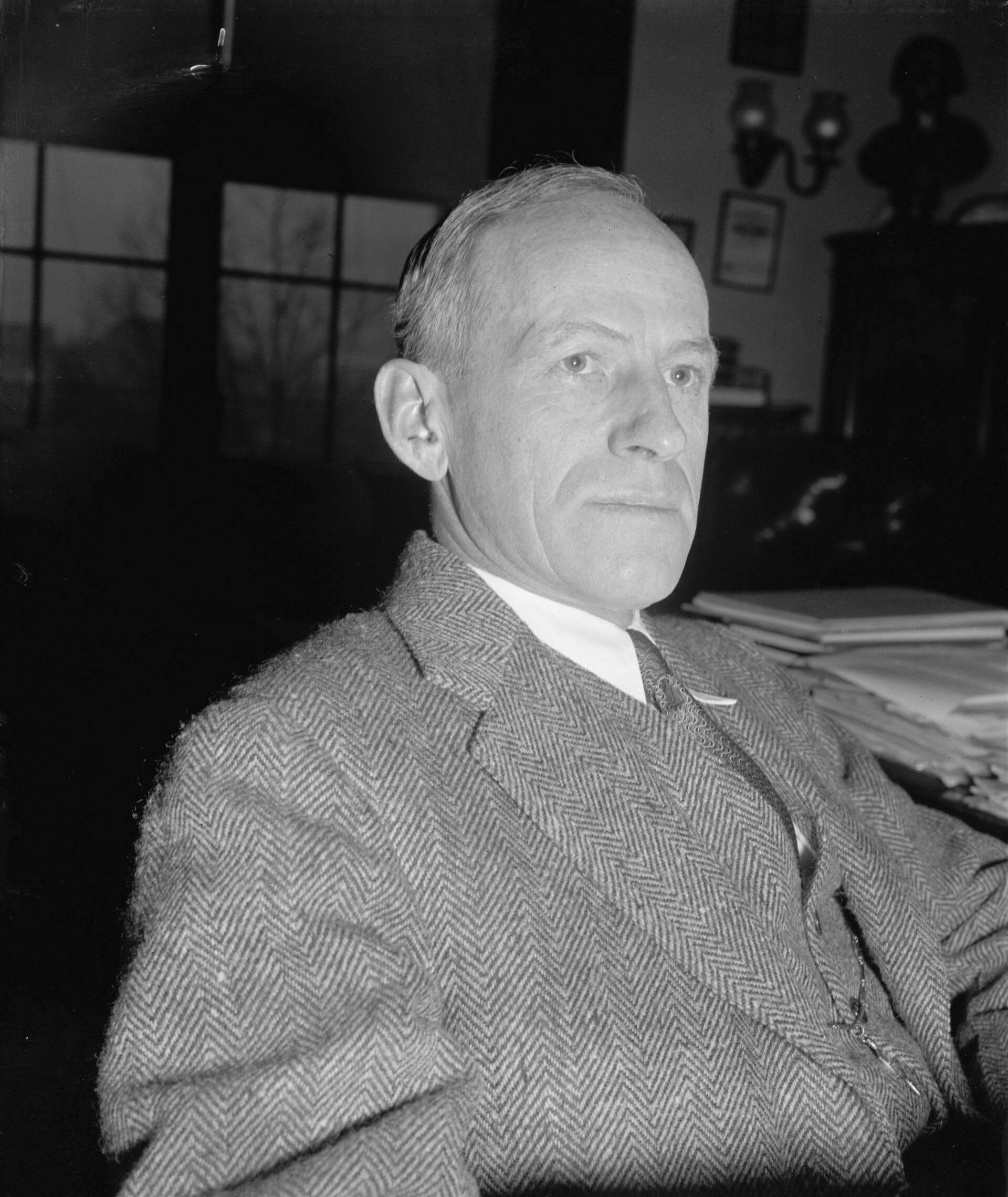

After the Wheeling speech of February 9, 1950, the Senate on February 22 authorized a subcommittee of the Foreign Relations Committee to investigate whether disloyal people worked in the State Department, and Tydings took the chair.53 The hearings ran through the spring. On July 17, 1950 the Democratic majority's report called McCarthy's charges "a fraud and a hoax," while the two Republican members dissented or declined to sign, as module 81, lesson 05 details.54 McCarthy then campaigned against Tydings in Maryland. Tydings lost to John Marshall Butler in November 1950.52
The Senate's Subcommittee on Privileges and Elections later investigated the campaign. Its report of August 20, 1951 described a tabloid called From the Record, falsely attributed to a group of Democrats, which printed a composite photograph joining a 1950 picture of the Communist leader Earl Browder with a 1938 picture of Tydings so that the two men appeared to be in conversation. The subcommittee found that the picture was prepared so as to leave viewers with the impression that it was a real photograph.27 In the Senate Historical Office's summary, the report contrasted Butler's "dignified 'front street'" speeches with "the despicable 'back street' campaign conducted by outsiders."54 McCarthy defended the picture in his individual views, arguing that it did not misrepresent Tydings's attitude toward Browder.27 Tydings died at his farm near Havre de Grace on February 9, 1961.52
Defenders of McCarthy, including Evans, argue that the Tydings subcommittee was itself partisan, that it never examined the State Department's loyalty files closely, and that its conclusion was written before the evidence was in.14 The procedural record supports part of that: the Senate never voted on the report's findings, only on motions about procedure, as module 81, lesson 05 shows from the roll calls of July 20, 1950.54 The composite photograph is another matter, and the Senate's own report condemned it.
Rating of the main claim (McCarthy's defense that the composite photograph did not misrepresent Tydings): Refuted by the Senate subcommittee's findings on how the picture was made. In module 81: lesson 05.
U and V
William Ludwig Ullmann (1908 to 1993)
Role: Treasury official and Army Air Forces officer in the Silvermaster group who photographed documents for Soviet intelligence.
Ullmann lived with Nathan Gregory and Helen Silvermaster in Washington and, by Elizabeth Bentley's account, ran the photographic work of the group in the house's basement.20 The Haynes index lists him as a "Soviet intelligence source/agent" identified in the Venona decryptions, with the cover names POLO before August 1944, DONALD in August 1944 and PILOT from September 1944 in Vassiliev's notebooks.3 During the war he was assigned to the Army Air Forces at the Pentagon, which gave the group access to military aviation material. Like the Silvermasters he refused to answer HUAC's questions in 1948 and was never prosecuted for espionage.20
Rating of the main claim (Ullmann was a Soviet source in the Silvermaster group): Supported. In module 81: lesson 02.
Harold H. Velde (1910 to 1985)
Role: Former FBI agent, Republican congressman from Illinois and chairman of HUAC in 1953 and 1954, who subpoenaed former President Truman.
Harold Himmel Velde was born near Parkland, Illinois, on April 1, 1910. The House's official biography records that he served as a private in the Army Signal Corps in 1942 and 1943 and then as a "special agent of the Federal Bureau of Investigation in sabotage and counter-espionage division 1943-1946." He was a county judge, won election to the House in 1948, served from January 3, 1949 to January 3, 1957, and chaired the Committee on Un-American Activities in the 83rd Congress (1953 to 1955).55
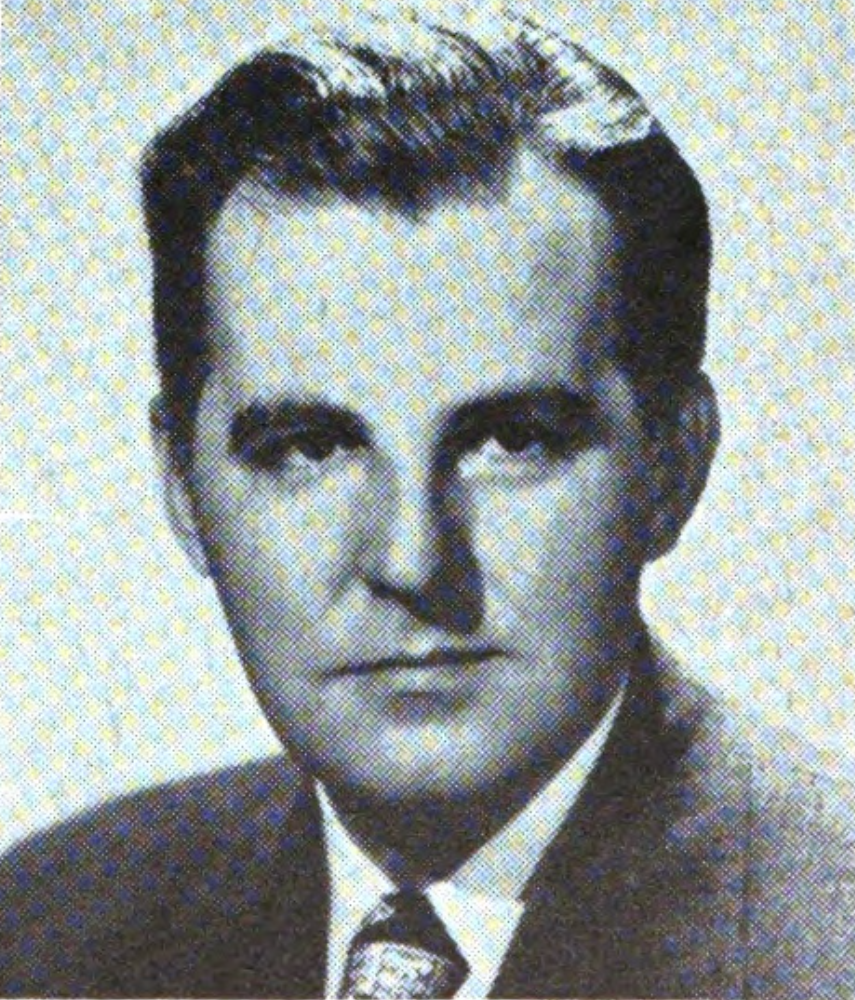

Velde's most famous act came in November 1953. On November 6 Attorney General Herbert Brownell told a Chicago audience that Harry Dexter White "was known to be a Communist spy by the very people who appointed him to the most sensitive and important position he ever held," as the Harvard Crimson quoted the speech a month later (the Crimson prints the sentence twice, once ending "ever hold," evidently a misprint, and once without the word "spy").48 Velde then issued a subpoena to former President Truman to testify before HUAC about the White appointment. The Crimson reported that Velde "rushed to subpoena Truman but he tripped over his Committee's by-laws and popular resentment."48 Truman refused to appear, answered in a national broadcast, and was never compelled to testify. (The refusal letter and broadcast are in the Truman Library's collections; the exact wording of the letter was not checked for this lesson.)
Rating of the main claim (Brownell's charge, which Velde pursued, that White was known to be a spy by those who appointed him): Partly supported. Truman did receive an FBI report on White before the appointment took effect; whether he "knew" White to be a spy, as opposed to having been warned of serious evidence, is a judgment the record leaves open. In module 81: lesson 06.
John Carter Vincent (1900 to 1972)
Role: Foreign Service officer and China specialist named by McCarthy in 1950 and forced out of the State Department in 1953.
Vincent directed the State Department's Office of Far Eastern Affairs after the war and was one of the "China Hands" blamed for the Communist victory in China in 1949. In Haynes's table of McCarthy's 1950 lists he appears as "McCarthy list # 2; Lee list # 52; Not identified in Venona."18 The Senate's 2003 editors record that the Loyalty Review Board voted 3 to 2 in December 1952 to dismiss him, and that the new Secretary of State, John Foster Dulles, then asked him to resign "on the grounds of bad judgment rather than disloyalty."56 He retired in 1953.
Rating of the main claim (Vincent was a Communist or a security risk for disloyalty): Unsupported. He was never identified in Venona, and the Secretary who removed him rejected the disloyalty finding. In module 81: lesson 07.
W
Henry Julian Wadleigh (1904 to 1994)
Role: State Department economist who passed documents to Whittaker Chambers in the 1930s and admitted it under oath in 1949.
Wadleigh worked in the trade agreements section of the State Department. The Haynes index records that "he testified in 1949 that he had furnished Department of State information to Whittaker Chambers' espionage apparatus," that he was on the list of covert Communists that Chambers gave Assistant Secretary of State Adolf Berle in 1939, and that he was "Identified by Chambers as part of his CPUSA/GRU espionage network." Vassiliev's notebooks refer to him as "104th."3 His testimony at the Hiss trials helped confirm that Chambers's apparatus had sources in the State Department. McCarthy listed Wadleigh by name in the Wheeling and Reno script of February 1950, as module 81, lesson 05 shows; by then Wadleigh had long since left the government and had confessed.57
Rating of the main claim (Wadleigh passed State Department documents to Soviet intelligence through Chambers): Supported by his own sworn testimony.
Henry A. Wallace (1888 to 1965)
Role: Vice President from 1941 to 1945, Secretary of Commerce until 1946, and the Progressive Party's candidate for president in 1948.
Wallace was fired from Truman's cabinet in September 1946 after a speech that opposed the administration's hardening line toward the Soviet Union, and he ran for president in 1948 on a platform of accommodation with Moscow, with Glen Taylor as his running mate. Communists played a large organizing role in his campaign, a story told in lesson 05 and lesson 11. In Venona he appears as a person discussed, under the cover name LOTSMAN ("channel pilot"), and in Vassiliev's notebooks as "Captain's deputy," which reflects his position as Roosevelt's vice president; the Haynes index lists no record of Wallace as a source.3 Some of the people around him at the Board of Economic Warfare and the Commerce Department were Soviet sources, among them Silvermaster's associates, and a separate Venona message speaks of a "Deputy" who might have been Wallace or Harry Hopkins.3
Rating of the main claim (Wallace was a Soviet agent): Unsupported. The record shows a public figure whom Soviet intelligence watched and named, surrounded at times by sources, without evidence that he himself served Moscow.
Francis E. Walter (1894 to 1963)
Role: Democratic congressman from Pennsylvania, chairman of HUAC from 1955 until his death, and co-sponsor of the McCarran-Walter Immigration and Nationality Act of 1952.
Francis Eugene Walter was born in Easton, Pennsylvania, on May 26, 1894, served in naval aviation in both world wars, and sat in the House from March 4, 1933 until his death in Washington on May 31, 1963. The House biography records him as "chairman, Committee on Un-American Activities (Eighty-fourth through Eighty-eighth Congresses)" and "co-sponsor of the McCarran-Walter Act of 1952."58 The act, written with Senator Pat McCarran, kept national-origin quotas and added ideological grounds for excluding and deporting aliens; Congress passed it over Truman's veto in June 1952. Under Walter's chairmanship HUAC questioned the playwright Arthur Miller and the singer Paul Robeson in 1956; their entries are in lesson 08.5
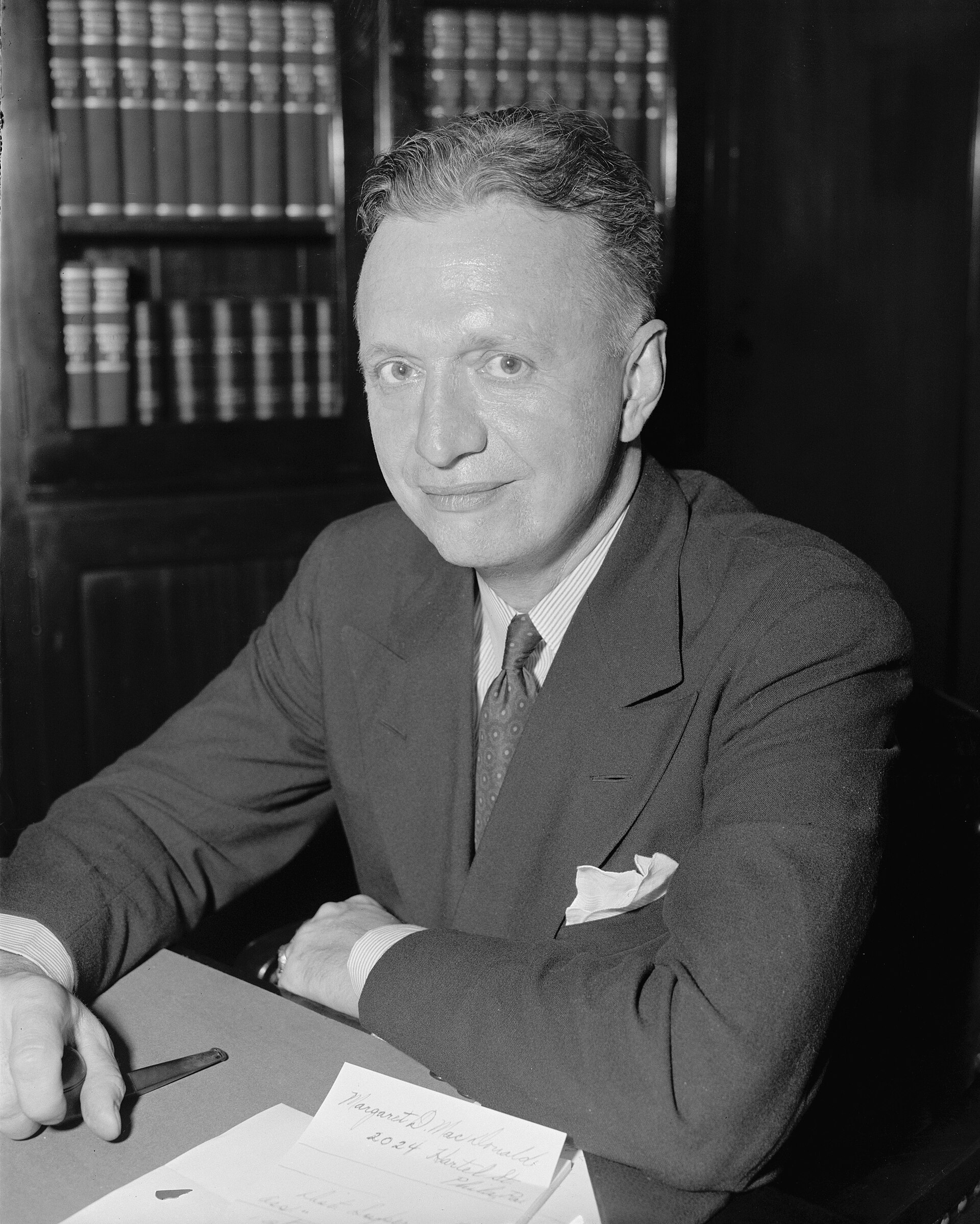

Rating of the main claim (Walter chaired HUAC from 1955 and co-sponsored the 1952 immigration act): Supported. In module 81: lesson 06.
Harold Ware (1889 or 1890 to 1935)
Role: Communist Party agricultural specialist who organized the party's secret groups among New Deal officials in Washington in the early 1930s.
Ware was the son of the Communist organizer Ella Reeve Bloor, worked on agricultural projects in the Soviet Union in the 1920s, and came to Washington in the early New Deal years.59 The Haynes index describes him as a "CPUSA agricultural specialist, organizer of party covert networks in Washington in the early 1930s."3 Whittaker Chambers told HUAC on August 3, 1948 that he had known "an underground organization of the United States Communist Party developed, to the best of my knowledge, by Harold Ware." He added: "The purpose of this group at that time was not primarily espionage. Its original purpose was the Communist infiltration of the American Government. But espionage was certainly one of its eventual objectives." Chambers named Nathan Witt as its head when he knew it and listed Lee Pressman, Alger Hiss, Donald Hiss, Victor Perlo and Charles Kramer among its members.60
Ware died in an automobile accident in 1935, before the group's members began passing documents to Soviet intelligence on a large scale; the standard accounts give August 1935, a date not checked against a primary record for this lesson.59 His group was the seedbed of both later networks: Victor Perlo's group, and through Hiss and others, the apparatus that Chambers ran for Soviet military intelligence. The archival confirmation of Chambers's account, from Comintern records opened in Moscow in the 1990s and from Venona, is discussed in module 81, lesson 01, and the group itself in lesson 12. A Henry Ware, whose relation to Harold Ware the index does not state, appears in the notebooks as a Soviet "informant/contact" under the cover name VICK.3
Rating of the main claim (Ware organized a secret Communist group of federal officials that fed Soviet espionage): Supported. In module 81: lesson 01.
Arthur V. Watkins (1886 to 1973)
Role: Republican senator from Utah, 1947 to 1959, who chaired the select committee that recommended McCarthy's censure in 1954.
On August 2, 1954 the Senate sent Ralph Flanders's censure resolution and the 46 charges that senators had added to it to a select committee of three Republicans and three Democrats. The Senate Historical Office describes its members as "notable for their impeccable reputations and legal expertise": Watkins as chairman, a former judge; John Stennis and Sam Ervin, also former judges; Edwin Johnson and Frank Carlson, former governors; and Francis Case, a newspaper editor.28 The committee reduced the 46 counts to five categories: "contempt of the Senate or a senatorial committee"; encouraging federal employees to violate the law by giving McCarthy classified material; "receipt or use of confidential or classified document"; abuse of fellow senators; and abuse of General Ralph Zwicker.28 Hearings ran from August 31 to September 13, 1954, and "Chairman Watkins exercised strict control and ruled many of McCarthy's interruptions and diversions out of order."28
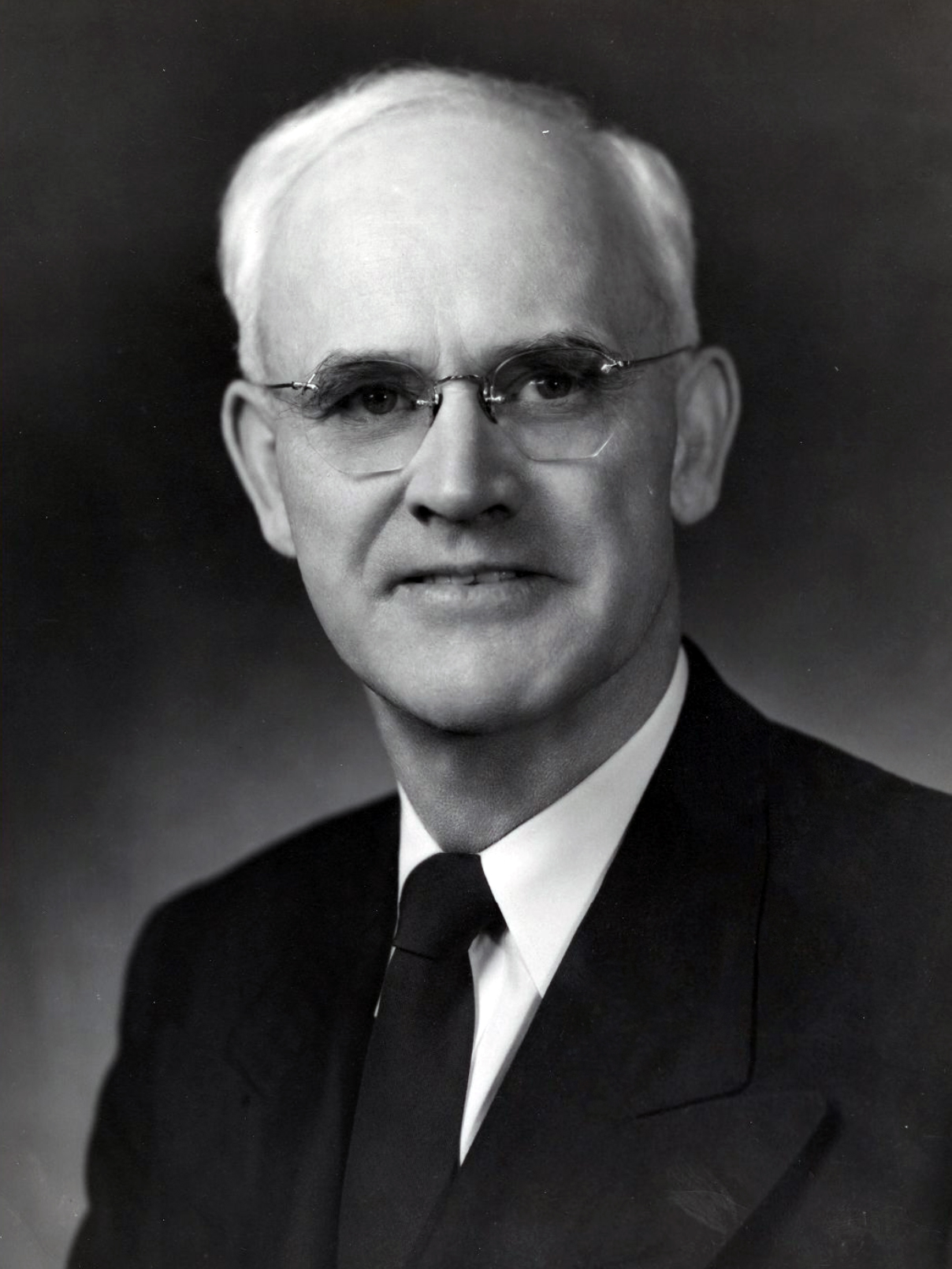

The committee unanimously recommended censure on two counts: McCarthy's refusal to cooperate with the Subcommittee on Privileges and Elections in 1951 and 1952, and his conduct toward General Zwicker on February 18, 1954. It strongly criticized the other three but found that they did not "constitute a basis for censure."28 McCarthy answered by calling the committee the "unwitting handmaiden of the Communist Party," attacking Watkins as "cowardly" and calling the proceeding a "lynch party." Watkins replied on the floor with what the Senate Historical Office calls "an emotional speech about the dignity of the Senate that brought cheers from the galleries."28 On December 2, 1954 the Senate dropped the Zwicker count, replaced it with a count condemning McCarthy's abuse of the Watkins committee itself, and voted 67 to 22 to condemn him.2829 The Senate Historical Office adds that the committee "took no position on his anticommunist crusade."28
A name trap: Watkins v. United States (1957), one of the Supreme Court's decisions of June 17, 1957 limiting congressional investigations, concerns John T. Watkins, a labor organizer who refused to name former associates before HUAC. It has nothing to do with Senator Watkins.61
Rating of the main claim (McCarthy's charge that the Watkins committee served the Communist Party): Refuted. The committee was chaired by a Republican, unanimous, and confined itself to Senate conduct. In module 81: lesson 09.
William Weisband (1908 to 1967)
Role: Russian linguist at the Army's codebreaking center at Arlington Hall who was a long-serving Soviet agent and is believed to have warned Moscow about American codebreaking.
The NSA and CIA editors of the Venona documents give his story in a boxed inset titled "Who Was William Weisband?" In 1950 Jones Orin York, an aircraft worker on the West Coast whom Venona knew as NEEDLE, "told the FBI that he had passed secrets to the KGB since the mid-1930s" and that "his KGB handler during 1941-42 had been one Bill Weisband, who had helped him buy a camera for photographing documents." The editors call the allegation "disturbing news, implying that the KGB had a mole in the sensitive Armed Forces Security Agency (AFSA)." Weisband was "Born in Egypt in 1908 of Russian parents."1 He served in Army signals intelligence during the war and joined Arlington Hall's Russian section as a linguist, where, by the account summarized in module 81, he had access to the Soviet work of the whole building.62
He was never tried for espionage. The editors write: "Weisband always denied involvement in espionage, and the US Government never prosecuted him for it. While suspended from AFSA on suspicion of disloyalty, he skipped a federal grand jury hearing on Communist Party activity. As a result, in November 1950 Weisband was convicted of contempt and sentenced to a year in prison. He died suddenly of natural causes in 1967." They add that the Venona messages "do not hold a definite reference to William Weisband," though three messages mention a source called ZVENO, Russian for "link."1 The Haynes index records that Vassiliev's notebooks settled the point: Weisband was a "Soviet intelligence source/agent from the 1930s to 1950," with the cover names LINK from the 1930s to 1945, ZHORA from 1945 to 1950 and VASIN from 1950.3
The NSA's internal history calls Weisband the American codebreaking effort's first traitor and says he almost certainly gave the Soviets information important to their communications security. In late 1948 the Soviets changed their ciphers and moved traffic off the radio, an event American codebreakers called Black Friday; NSA staff came to believe, by the history's own hedged account, that Weisband was responsible.62 The British officer Kim Philby, who saw Venona material in Washington from 1949, was a second leak.1
Rating of the main claims: that Weisband was a Soviet agent inside American codebreaking, Supported by York's statement and the KGB notebooks; that he caused Black Friday, Partly supported. In module 81: lesson 02.
Joseph N. Welch (1890 to 1960)
Role: Boston lawyer, senior partner at Hale and Dorr, who served as the Army's special counsel at the Army-McCarthy hearings of 1954.
Welch represented the Army through the 36 days of televised hearings, with James St. Clair of his firm assisting. He had planned to bring a second young associate, Fred Fisher, and sent him home before the hearings because Fisher had belonged to the National Lawyers Guild, which HUAC had described as a legal bulwark of the Communist Party, as module 81, lesson 08 records from the hearing transcript.63 In April Welch exposed the cropped photograph of Secretary Stevens and Private Schine, and in a jab at the staff member who had brought it he asked whether it had come from a pixie, and when asked to define the word likened a pixie to a fairy, a remark later widely read as an insinuation about Cohn and Schine.64
On June 9, 1954, Welch was pressing Roy Cohn to hand over the names of suspected Communists in defense plants without delay. McCarthy interrupted to say that Welch had in his own firm a young man named Fisher who had belonged to an organization that HUAC had called the legal bulwark of the Communist Party. The Senate Historical Office gives Welch's answer: "Until this moment, Senator, I think I never really gauged your cruelty or your recklessness." When McCarthy pressed on, Welch said: "Let us not assassinate this lad further, senator. You have done enough. Have you no sense of decency?"65 (The printed hearing record spells the word "gaged" and gives the longer question, "Have you no sense of decency, sir, at long last?")
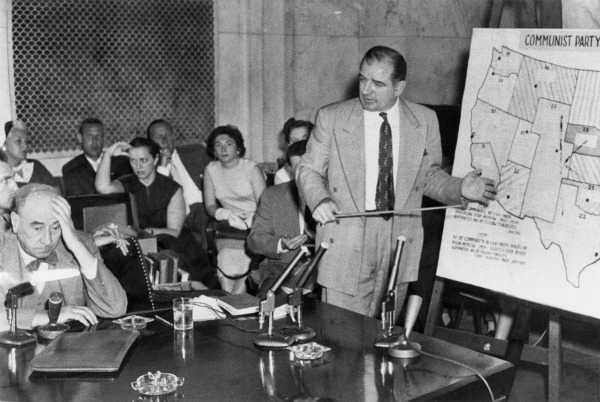

McCarthy's defenders raise three points. Fisher's Guild membership was real, and Welch confirmed it on the record. Welch and Cohn are reported to have had a prehearing understanding that Fisher would not be mentioned, which would make Welch's indignation partly prepared; the terms of any such understanding are not in the hearing record. And Welch's "pixie" remark was a low blow by any standard.63 The Senate Historical Office's account stresses the other side: the target was a young private lawyer with no government job and no part in the dispute.65 McCarthy also told the hearing that Welch had recommended Fisher to work for the committee; the acting chairman, Karl Mundt, answered that he had "no recognition or no memory of Mr. Welch's recommending either Mr. Fisher or anybody else as counsel for this committee." Welch's own account on the record is that he had chosen Fisher, at James St. Clair's suggestion, to assist him as the Army's counsel and had sent him back to Boston before the hearings began.63
Welch went back to private practice and played the judge in the film Anatomy of a Murder (1959); he died in 1960.5
Rating of the main claim (McCarthy's statement on June 9 that Welch had recommended Fisher to work for the committee): Unsupported. The acting chairman had no memory of any such recommendation, and the record shows Fisher was chosen only as Welch's own assistant for the Army and sent home before the hearings. That Fisher had belonged to the Lawyers Guild is Supported. In module 81: lesson 08.
Herman Welker (1906 to 1957)
Role: Republican senator from Idaho, 1951 to 1957, and one of McCarthy's closest allies in the Senate.
Welker defeated D. Worth Clark in 1950 for the seat Glen Taylor had held, sat on the Internal Security Subcommittee, and was called "Little Joe from Idaho," as module 74, lesson 06 reports. He defended McCarthy on the floor throughout 1954, interrupting Ralph Flanders's speech of June 11 and arguing in December that the Senate was changing the charges without giving the accused time to answer.29 He was one of the 22 senators, all Republicans, who voted against censure on December 2, 1954, together with Idaho's other senator, Henry Dworshak.29 Module 74 reports his July 4, 1950 claim66 that there were "87 communists in Idaho," a figure he never explained and that no membership record supports. He lost his seat to Frank Church in 1956 and died on October 30, 1957.5
Rating of the main claim (Welker's assertion of 87 Communists in Idaho): Unsupported. No names, source or record was ever produced. In module 81: lesson 09.
Donald Wheeler (1913 to 2002)
Role: Analyst in the Research and Analysis Branch of the Office of Strategic Services and a member of the Perlo group.
The Haynes index describes Wheeler as a "Soviet intelligence source/agent" who "Worked for the Research and Analysis Division of the Office of Strategic Services," was "Identified by Elizabeth Bentley as part of the Perlo espionage group," and was identified in Venona under the cover name IZRA, the same name used in Vassiliev's notebooks. It notes that the KGB sent the Comintern a vetting inquiry about him in 1944.3 His brother George Shaw Wheeler, an economist who worked for the National Labor Relations Board and the American military government in Germany, was forced out of government service.3
Rating of the main claim (Wheeler was a Soviet source inside the OSS): Supported. In module 81: lesson 02.
Harry Dexter White (1892 to 1948)
Role: Assistant Secretary of the Treasury, chief American designer of the International Monetary Fund and the World Bank at Bretton Woods in 1944, and the highest-placed Soviet source in the wartime American government.
White was a Harvard-trained economist who joined the Treasury in 1934, became its Director of Monetary Research and, under Secretary Henry Morgenthau Jr., the department's most influential official on international finance. He led the American side in designing the postwar monetary order agreed at Bretton Woods in July 1944, rose to Assistant Secretary in 1945, and was appointed by Truman as the first American executive director of the International Monetary Fund in 1946.148
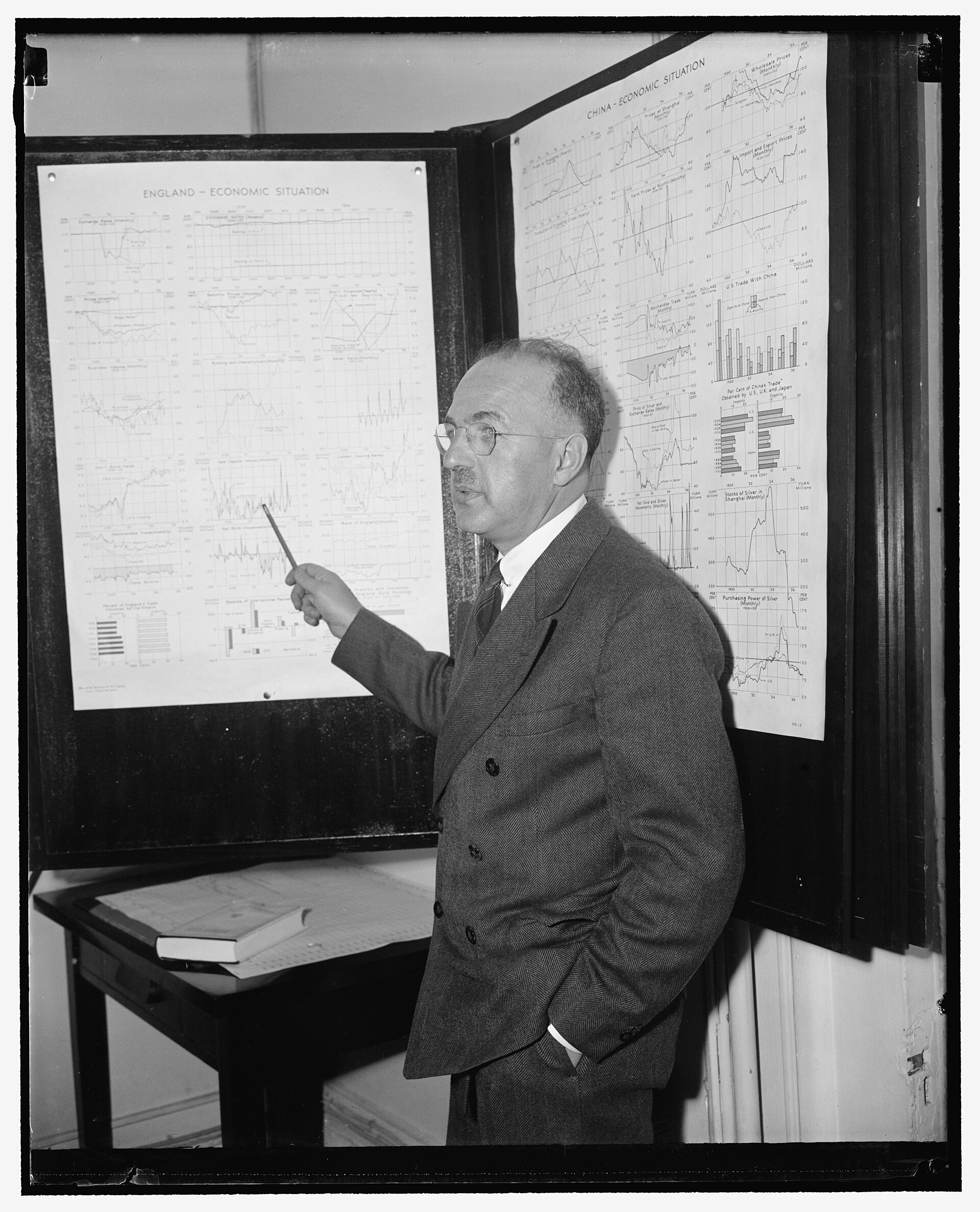

Three independent lines of evidence point to White. Whittaker Chambers identified him as part of his apparatus of the 1930s, and the documents Chambers saved from 1938 and produced in 1948 included several pages in White's handwriting, as the Haynes index summarizes.3 Elizabeth Bentley told HUAC on July 31, 1948 that White gave information to Silvermaster which was relayed to her, while saying she did not know whether he was a card-carrying Communist.20 And the Venona decryptions, read from 1947 on, carried his cover names. The NSA and CIA editors of the Venona documents write that "covername JURIST meant Harry Dexter White, a former Assistant Secretary of the Treasury, who had died suddenly a few days after denying Whittaker Chambers' August 1948 charge before the House Committee on Un-American Activities."1 Vassiliev's notebooks give him the cover names CASHIER, then JURIST from 1941 to August 1944, LAWYER in August 1944, RICHARD from September 1944, and REED in July 1945.32
White appeared before HUAC in August 1948, denied the charges in a forceful statement, and died of a heart attack a few days later, on August 16, 1948.15 His case returned in November 1953, when Attorney General Brownell charged that Truman had promoted him knowing he was a spy; the exchange among Brownell, Truman and Hoover is in the Truman and Velde entries above.48
The disagreement among historians is now narrow. Haynes and Klehr, in Venona, and with Vassiliev in Spies, conclude that White was a Soviet source who advised the KGB on American policy and passed information through the Silvermaster group, while he was not a party member under discipline in the usual sense.2267 Defenders of White, including John Lowenthal in The Nation in 2001, argued that White's contacts with Soviet officials belonged to his official duties, and quoted a retired Soviet intelligence officer, Vitali Pavlov, as saying White was never one of their agents.31 The economist and historian Benn Steil, in The Battle of Bretton Woods (2013), reviewed the record and concluded that White knowingly gave confidential information to Soviet intelligence, though he believed he was serving peace between the two powers.68 Schrecker, writing in 1998, accepted that White had helped Soviet intelligence while arguing that the domestic anti-communist effort did far more harm than such espionage justified.19
Rating of the main claim (White served as a source for Soviet intelligence): Supported, with a minority dissent on record. Whether his policy work at Bretton Woods was shaped by Soviet interest is a separate and Unresolved question. In module 81: lesson 02, lesson 10, lesson 11.
Y and Z
Anatoly Yatskov (1913 to 1993)
Role: KGB officer under consular cover in New York who ran Harry Gold and the atomic courier network, known to Gold as "John."
Yatskov worked in New York under the name Anatoly Yakovlev. The Haynes index records that he was "Identified in the Venona decryptions as a Soviet officer/agent under his pseudonym as Anatoly Antonovich Yakovlev," with the cover name ALEKSEY, and that he was "Known as John to Harry Gold."3 The FBI's history of the Rosenberg case lists "Anatoli Yakovlev" among the defendants in the superseding indictments of October 1950 and January 1951, and records that he was severed from the trial on its first day, March 6, 1951; he had left the United States years before.16
Rating of the main claim (Yatskov ran the atomic courier Harry Gold for the KGB): Supported. In module 81: lesson 10.
Vasily Zarubin (1894 to 1972) and Elizabeth Zarubina (1900 to 1987)
Role: Husband-and-wife KGB officers. Vasily Zarubin was the chief of the KGB's New York station and its senior officer in the United States from January 1942 to August 1944.
The Haynes index gives the essentials of Vasily Zarubin's American service: "Chief of the New York KGB station and senior KGB officer in the U.S., arrived 4 January 1942 and departed 24 August 1944." He worked under diplomatic cover as Vasily Zubilin, used the cover name MAKSIM in Venona, and had earlier posed in Germany as a Paramount talent scout, Edward Joseph Herbert, from 1934 to 1940.3 The NSA and CIA editors record that in April 1943 Zarubin called on the Communist Party official Steve Nelson in Berkeley, California, while the FBI was already listening: "Zarubin's conversation made it obvious to Bureau eavesdroppers that he was an important KGB officer," and the FBI "watched Zarubin from that day until he left the United States in 1944."1 In August 1943 an anonymous letter in Russian "denounced Zarubin and 10 other KGB officers in North America, along with two of their assets"; FBI agents judged it "genuine and largely accurate."1
Elizabeth Zarubina, born Yelizaveta Gorskaya, was an experienced officer in her own right. The Haynes index lists her cover names as ERNA in 1935 and VARDO in the early 1940s and notes her pseudonym in America, Elizabeth Zubilin.3 Accounts drawn from Russian intelligence histories credit her with handling sources among scientists and emigres in the United States; the specific claims about her contacts with atomic scientists rest largely on Sudoplatov's memoir and Russian official histories and have not been confirmed in American records.37 Vasily Zarubin was recalled in 1944 after a subordinate accused him of disloyalty to Moscow; the accusation was later found false, but he was not sent abroad again.5
Rating of the main claims: that Vasily Zarubin ran KGB operations in the United States from 1942 to 1944, Supported; that Elizabeth Zarubina recruited atomic scientists, Unresolved. The pair are counted once in this lesson's tally, as Supported. In module 81: lesson 02.
Mark Zborowski (1908 to 1990)
Role: Soviet agent who penetrated Leon Trotsky's movement in Paris in the 1930s, later an American anthropologist, convicted of perjury about his Soviet work.
Zborowski was a Soviet agent whose work, the Haynes index says, was "largely focused on anti-Trotsky work in the 1930s and early 1940s." He was "Identified in the Venona decryptions as a Soviet source/agent," with the cover names TULIP until September 1944 and then KANT.3 In Paris in the 1930s he became a trusted assistant to Trotsky's son, Lev Sedov, who ran the movement's European operations and died in a Paris clinic in February 1938 under circumstances many have suspected; the details of Zborowski's role in Paris come from later accounts, including Christopher Andrew and Vasili Mitrokhin's The Sword and the Shield, and were not checked against primary documents for this lesson.69 He came to the United States in 1941 and became a respected anthropologist.
The court record of his American case is precise. A federal grand jury in New York, investigating espionage, questioned Zborowski on February 20, 1957. He denied knowing Jack Soble, a Soviet agent who had pleaded guilty. At his perjury trial, the Court of Appeals recorded, "Zborowski admitted that he had met Jack Soble on five or six occasions in the years from 1943 through 1946 and that the purpose of his meetings with Soble was to convey to him for the eventual use of the Russian government information concerning the activities of the supporters of Trotsky doctrines in the United States." The court noted that "Zborowski's first admission that he had known Soble came only after the F.B.I. confronted him with Soble on October 7, 1957."70 The Second Circuit reversed his first conviction on November 10, 1959 because the trial judge had refused to make Soble's grand jury testimony available to the defense, and ordered a new trial.70 He was convicted again and imprisoned in 1962, as the Haynes index records.3
Rating of the main claim (Zborowski worked for Soviet intelligence against Trotsky's movement): Supported by his own admission at trial.
Ralph W. Zwicker (1903 to 1991)
Role: Army brigadier general commanding Camp Kilmer, New Jersey, whom McCarthy told in February 1954 he was not fit to wear his uniform.
Zwicker was a decorated combat officer. In early 1954 he commanded Camp Kilmer, where an Army dentist, Major Irving Peress, had been promoted and then given an honorable discharge despite reports that he was a Communist Party member, as told in module 81, lesson 07. Zwicker had urged that Peress be removed. When McCarthy questioned him in executive session on February 18, 1954, Zwicker cited the executive order that barred him from naming the officials responsible. The Senate's 2003 editors print McCarthy's reply: "Then, General, you should be removed from any command. Any man who has been given the honor of being promoted to general and who says, 'I will protect another general who protected Communists,' is not fit to wear that uniform, General. I think it is a tremendous disgrace to the army to have this sort of thing given to the public. I intend to give it to them. I have a duty to do that. I intend to repeat to the press exactly what you said."4 The editors add that "The senator's treatment of Gen. Zwicker served as a precipitating event in the Army-McCarthy hearings and a subject of consideration during his later censure."4
The Watkins committee recommended censure for the Zwicker episode, but the full Senate replaced that count on December 2, 1954 with one condemning McCarthy's abuse of the Watkins committee. Senators who opposed the Zwicker count, including committee member Francis Case, said it could not be separated from the Army's admitted mishandling of the Peress case.2829
Rating of the main claim (McCarthy's charge that Zwicker protected Communists): Refuted. Zwicker was the officer who had tried to get Peress out, and his silence rested on a presidential order. In module 81: lesson 07, lesson 09.
The people side by side
The two charts below put the entries in time and in relation to one another. The first shows when the main figures were active, so that the gap between the espionage and the investigations is visible at a glance. The second shows who accused whom, colored by what the evidence later showed.
What the record shows and what it does not
Documented fact. Nathan Gregory Silvermaster, Harry Dexter White, William Ludwig Ullmann, Helen Tenney, Donald Wheeler, Julian Wadleigh, Morton Sobell, Alfred Sarant, Saville Sax, William Weisband and Mark Zborowski served Soviet intelligence; each is identified in Venona or the KGB notebooks, and several admitted it (Wadleigh in 1949, Zborowski at trial, Sobell in 2008).37032 Vasily Zarubin ran the KGB's New York station from January 1942 to August 1944.3 The Senate censured McCarthy 67 to 22 on December 2, 1954, after a committee chaired by Arthur Watkins.28
The people's own words. Stalin in 1929: the American party "must be improved and bolshevized."33 Chambers in 1948: the Ware group's purpose "was not primarily espionage," but espionage "was certainly one of its eventual objectives."60 Truman in 1950: the Internal Security Act "would make a mockery of the Bill of Rights."47 Smith in 1950: "Freedom of speech is not what it used to be in America."25 Sobell in 2008: "Yeah, yeah, yeah, call it that."32
The accusations. McCarthy accused Service, Vincent, Zwicker and, through the Maryland campaign, Tydings; the evidence does not support the charges against any of them as made. Brownell accused Truman of knowingly promoting a spy; the record shows a warning ignored, while Hoover denied that the FBI had approved the decision.48
The archive evidence. Venona was released in 1995 and 1996; the Vassiliev notebooks were published in 2009 and are open at the Wilson Center. Together they confirm most of the identifications made by the FBI in the 1940s and 1950s and correct a few, such as the tentative matching of Sobell to the cover name RELAY.23
Scholarly reading. Haynes and Klehr and Vassiliev treat the espionage as large and real; Schrecker accepts much of it while judging the domestic response a greater harm; Evans and Herman argue that McCarthy's targets overlapped more with real security problems than his critics allowed.22191471
Open questions. Whether Elizabeth Zarubina's contacts reached the atomic scientists; what exactly Taft told McCarthy in 1950; whether White's policy work was bent by his Soviet contacts; and whether Weisband alone caused the Soviet cipher change of 1948.
Claims checked
The claims below come from books, speeches, films and polemics of every side. Each is rated on this module's scale with the evidence that decides it.
| Claim and where it comes from | Rating | Evidence |
|---|---|---|
| "Harry Dexter White was an innocent New Dealer smeared by Bentley and Chambers." (White's defenders from 1948 on; Lowenthal, 2001) | Refuted | Chambers's 1938 documents in White's handwriting, Bentley's account, Venona JURIST and the notebooks' cover names agree.3131 |
| "Truman knowingly promoted a Soviet spy." (Brownell, November 1953) | Partly supported | Truman received the FBI report on February 6, 1946 and let the appointment stand; Hoover denied that the FBI approved that course.48 |
| "The 1948 spy hearings were a red herring." (Truman, August 5, 1948) | Refuted | Venona and the notebooks confirm most of what Bentley and Chambers described; Truman himself may never have been briefed on Venona, as the NSA and CIA editors note.461 |
| "Morton Sobell was framed." (Sobell's own case for 57 years; defense committees) | Refuted | Sobell admitted spying in 2008; the notebooks list his cover names.323 |
| "Oppenheimer, Fermi, Bohr and Szilard passed atomic secrets." (Sudoplatov, Special Tasks, 1994) | Unsupported | The FBI found no credible evidence; the claim was rebutted in the Bulletin of the Atomic Scientists.37 |
| "The Tydings committee was a whitewash." (McCarthy, 1950; Evans, 2007) | Partly supported | The report was partisan in tone and the Senate voted only on procedure; it did not examine every file. The charge that it covered up identified spies is not supported: the people later shown to be spies were mostly out of the State Department by 1950.5418 |
| "The composite photograph of Tydings and Browder did not misrepresent him." (McCarthy, 1951) | Refuted | The Senate subcommittee showed how two photographs taken twelve years apart were joined.2754 |
| "Margaret Chase Smith defended Communists." (attacks on the seven signers, 1950) | Refuted | Her speech granted the proved cases and attacked the methods; she later voted for censure.2529 |
| "General Zwicker protected Communists." (McCarthy, February 18, 1954) | Refuted | Zwicker had urged Peress's removal; his silence followed a presidential order.4 |
| "The Army held Schine hostage to stop the Fort Monmouth inquiry." (McCarthy, Cohn and Carr, March 1954) | Unsupported | No witness or document showed a trade; the Republican majority did not sustain it.11 |
| "Welch had recommended Fisher to work for the committee." (McCarthy, June 9, 1954) | Unsupported | The acting chairman said he had "no recognition or no memory" of any such recommendation; Welch had picked Fisher as his own assistant for the Army and sent him home.63 |
| "The Watkins committee was the unwitting handmaiden of the Communist Party." (McCarthy, November 1954) | Refuted | A unanimous bipartisan committee, chaired by a Republican, that took no position on his anti-communist work.28 |
| "John Stewart Service was a Soviet agent." (McCarthy's allies, 1950s) | Unsupported | Not identified in Venona; the leak to Amerasia was policy advocacy, by Haynes's reading.18 |
| "Henry Wallace was a Soviet agent." (popular polemic) | Unsupported | He appears in Venona as a person discussed, with no record as a source.3 |
| "Dalton Trumbo filled his films with communist propaganda." (HUAC's supporters, 1947) | Unsupported | The 1947 hearings rested on membership and refusal to answer.43 |
| "Michael Straight never spied." (Ascherson, 1983) | Partly supported | He passed minor memoranda; the KGB counted him as a source under NIGEL.363 |
| "There were 87 Communists in Idaho." (Welker, July 4, 1950) | Unsupported | No names or source were offered; module 74 traces the claim.66 |
Hard questions and answers
If Silvermaster and White were Soviet sources, doesn't that prove McCarthy right?
It proves that the threat he talked about was real, which Margaret Chase Smith and Truman's own loyalty order also accepted. It does not prove his particular charges. Silvermaster, White, Ullmann, Tenney and Wheeler were named by Bentley to the FBI in 1945, and Silvermaster, White and Ullmann were named in public in 1948, two years before Wheeling; none of them appears on McCarthy's 1950 State Department lists, as Haynes's name-by-name check of those lists shows.2018 Haynes's overall judgment of the lists cuts both ways: "My own view is that a number of those on the lists above, perhaps a majority, likely were security risks, but others, a minority but a significant one, likely were not."18 The people McCarthy did name in this lesson's range, Service and Vincent, are not in Venona.18 The mission was sound; the targeting, in the cases covered here, was mostly wrong. Module 81, lesson 12 develops the point.
Why were so few of the spies in this lesson prosecuted?
Because the best evidence was secret. The FBI knew from Venona that White, Silvermaster, Ullmann, Hall and Sax had worked for Soviet intelligence, but the decrypts were hearsay in a legal sense, written in cover names, and using them would have told Moscow what had been read. The NSA and CIA editors note that Hall was questioned in 1951 but never prosecuted, "probably because a case could not have been made without revealing AFSA's program."1 Prosecutions followed only where a confession or a cooperating witness existed: Gold, Greenglass and the Rosenbergs, Sobell, and Zborowski through Soble. Weisband went to prison for contempt, not espionage.170
Weren't Smith, Tydings, Watkins and Welch simply protecting their side?
The record makes that hard to sustain. Smith and Watkins were Republicans; Watkins chaired a committee of three members of each party that voted unanimously; Tydings was a senior Democrat who had served in the Senate since 1927; Welch was a private lawyer hired by a Republican administration's Army.282452 A sharper version of the question, raised by Evans and Herman, is whether these figures cared more about manners than about security.1471 The censure record gives some support to that reading: the Senate condemned McCarthy for conduct toward its own committees and "took no position on his anticommunist crusade."28
Does Sobell's 2008 admission settle the Rosenberg case?
It settles the existence of the ring and Julius Rosenberg's role in it, which Venona had already shown. It does not settle Ethel Rosenberg's part or whether the death sentences were just. Sobell himself said in 2008 that Ethel knew what her husband was doing but was guilty mainly of being his wife, as module 81, lesson 10 reports, and Radosh and Usdin, who accept the espionage, agree that Sobell's own work did not involve atomic secrets.32 The Rosenberg entry in lesson 08 takes up the rest.
How far should a reader trust the Vassiliev notebooks, which several entries rely on?
They are handwritten notes made by one former KGB officer from files that remain closed, so they cannot be checked against the originals. Their strength is that they were made independently of Venona and yet agree with it on most cover names; Haynes and Klehr report that they confirmed nearly all the identifications the FBI and NSA had made and corrected a handful.2 A civil liberties advocate can fairly insist on the limits; a skeptic of the skeptics can fairly point to the agreement. In this lesson no rating rests on the notebooks alone except Tenney's and Weisband's identifications, and in both cases independent evidence (Bentley's account; York's statement to the FBI) points the same way.31
What happened to the people in this lesson who were wrongly accused?
Their careers were damaged and in most cases ended. Service was fired in 1951 and won reinstatement from the Supreme Court in 1957, but never regained a senior post.17 Vincent was forced to resign in 1953 for "bad judgment."56 Tydings lost his seat after a campaign the Senate itself called a smear.54 General Zwicker's career continued, but the episode followed him. None of them appears in Venona or the notebooks as a Soviet source. The broader count of what the era cost is in module 81, lesson 10.
Where to go next
The networks these people belonged to are drawn in lesson 12, with a full cover-name table. The organizations they served or investigated are in lesson 10 and lesson 11. Terms used here, such as rezident, source, cover name, executive session and censure, are defined in lesson 13, and the numbers are gathered in lesson 14. For the economics of the system these people served or fought, see module 51, lesson 07; for the framework of liberty under law that this site applies, see module 52. Idaho's part, including Glen Taylor and Herman Welker, is in module 74, lesson 04 and lesson 06. The whole story in narrative form starts at the module 81 home page.
Still open
These items could not be confirmed against a primary source before publication. The lesson states them as open, and they stay on the fact-check list.
- Birth and death years were taken from standard reference summaries and not checked against a primary record for: Sarant, Sax, Schine, Semenov, Service, Silvermaster, Sobell (birth date confirmed by the FBI; death 2018 not), Stalin (born December 18, 1878 New Style; Soviet records long gave 1879), Stevens, Symington, Taft (confirmed 1889 to 1953 by senate.gov), Glen Taylor, Tito, Trotsky, Truman, Trumbo, Ullmann, Vincent, Wadleigh, Wallace, Watkins, Welch, Welker, Wheeler, White, Yatskov, the Zarubins, Zborowski, Zwicker. Helen Tenney's years were not established.
- Many facts were taken from module 81's verified text and its citations and were not reopened for this lesson; the footnotes say so where it applies (S. Prt. 107-84 vols. 1 to 3, the Army-McCarthy hearing parts, S. Rep. 647, S. Rep. 2507, the HUAC 1948 hearings and annual report, Ryan on the Hollywood Ten, Service v. Dulles, Watkins v. United States, Johnson's NSA history, the Congressional Record of December 2, 1954).
- Silvermaster's refusal to answer HUAC in August 1948, his later real-estate career, and the statement that Soviet intelligence broke contact with Bentley's sources after her defection were not checked against primary documents.
- The NSA history's remark that Silvermaster was once the only American in the KGB's hall of fame is paraphrased from module 81, lesson 10; the NSA PDF could not be downloaded (403).
- Ullmann's role photographing documents in the Silvermaster basement, his Pentagon assignment and his refusal to answer HUAC in 1948 rest on standard accounts and Bentley's testimony as cited in module 81, not reopened.
- Sobell's release in 1969 and the details of his imprisonment were not checked against a primary record; the New York Times article of September 12, 2008 could not be opened (403), and its quotations are taken from Radosh and Usdin's Hudson Institute article.
- The Taft remark often quoted as 'if one case doesn't work, try another' was not traced to a primary source; Taft's role in steering McCarthy to Government Operations in 1953 rests on secondary accounts.
- J. Parnell Thomas's imprisonment at Danbury alongside Ring Lardner Jr. and Lester Cole was not checked against a primary record.
- Tito's expulsion from the Cominform (June 1948) and Trotsky's murder by Ramon Mercader on August 20, 1940 (died August 21) are stated from standard histories; the Mercader detail was not opened in a source for this lesson.
- Trumbo's Communist Party membership dates (1943 to 1948) come from his biographers' accounts and were not checked.
- Zborowski's role in Lev Sedov's Paris circle and the circumstances of Sedov's death in February 1938, Zborowski's arrival in the United States in 1941, and Jack Soble's guilty plea were not checked against primary documents.
- The claims that Elizabeth Zarubina handled atomic scientists, and that Vasily Zarubin was recalled in 1944 after a subordinate's false accusation, rest on Russian accounts and Sudoplatov's memoir and are unconfirmed.
- Sudoplatov's arrest in 1953 and imprisonment are cited to his memoir, which was not opened; the statement that Haynes and Klehr rejected his charges against the four scientists is a characterization of their published work, not a quotation.
- Benn Steil's conclusion about White (The Battle of Bretton Woods, 2013) and Kathryn Olmsted's reading of Bentley are characterized from their published books, which were not opened.
- Wallace's dismissal from the Commerce Department in September 1946 is a standard fact not checked against a primary source.
- Welker's July 4, 1950 '87 communists' claim rests on Marc C. Johnson's secondary essay as used in module 74; the speech text has not been found.
- Glen Taylor's Birmingham arrest of May 1, 1948 is taken from module 74, lesson 06, whose sources are secondary.
- The Senate Historical Office page says the executive-session transcripts were published in 2004; module 81 and the volumes' own front matter give January 2003 as the date they were made public. The discrepancy was not resolved.
- Photograph captions repeat the dates given by Wikimedia Commons and the Library of Congress; those dates were not independently verified except where stated. The identification of each man in the 1976 Bundesarchiv photograph of Sobell was not verified (checker 7 corrected the alt text: the picture shows an airport arrival, not an indoor event).
- The findings of the Army-McCarthy majority and minority reports on Stevens (S. Rep. 2507) and Schine's testimony on April 30, 1954 were not reopened by the checker; Schine's testimony on April 29 (part 12) and the April 26 to 27 cropped-photograph exchange (part 7) were confirmed.
- Service's denial of secret government employment in the September 3, 1953 executive session was not checked line by line; his request that the record show he appeared voluntarily was confirmed in S. Prt. 107-84, vol. 2.
Learn more
- John Earl Haynes, Cover Name, Cryptonym, Pseudonym, and Real Name Index: The working reference behind most identifications in this lesson; each entry says where the identification comes from.
- Benson and Warner, eds., Venona: Soviet Espionage and the American Response (NSA and CIA, 1996): The official introduction, with the Weisband inset and the story of Zarubin and the anonymous letter.
- Executive Sessions of the Senate Permanent Subcommittee on Investigations, vol. 5 (2003): Read the editors' notes on Schine, Stevens and Zwicker and the Zwicker transcript itself.
- U.S. Senate, A Declaration of Conscience: Smith's speech in context, with her own recollections.
- United States v. Zborowski (2d Cir. 1959): A court record of a Soviet agent's admission about his work against Trotsky's followers in America.
- Harvard Crimson, White Case in Perspective (December 11, 1953): A contemporary account of the Brownell, Truman, Hoover and Velde exchange, with faculty views from several directions.
- FBI, Atom Spy Case/Rosenbergs: The FBI's own summary of the evidence against Sobell, including Max Elitcher's testimony.
Notes
- Robert Louis Benson and Michael Warner, eds., Venona: Soviet Espionage and the American Response, 1939-1957 (Washington: National Security Agency and Central Intelligence Agency, 1996), preface, introduction (including the inset "Who Was William Weisband?" pp. xxvii to xxviii, the account of Zarubin and Steve Nelson, the anonymous letter of August 1943, the identification of JURIST as White, and the note on Hall) and chronology (retrieved Nov. 6, 2026). Read it online. ↩
- John Earl Haynes and Harvey Klehr, "Venona and Alexander Vassiliev's Notebooks: Confirming and Correcting Identified Venona Cover Names and Revealing the Unidentified," paper, Symposium on Cryptologic History, 2009, with appendixes, johnearlhaynes.org (retrieved Nov. 6, 2026). Read it online. ↩
- John Earl Haynes, "Cover Name, Cryptonym, Pseudonym, and Real Name Index: A Research Historian's Working Reference," updated April 2009, johnearlhaynes.org (entries for each person named in the text) (retrieved Nov. 6, 2026). Read it online. ↩
- U.S. Senate, Permanent Subcommittee on Investigations, Executive Sessions of the Senate Permanent Subcommittee on Investigations of the Committee on Government Operations, 1953-1954, S. Prt. 107-84, ed. Donald A. Ritchie (Washington: Government Printing Office, made public January 2003), vol. 5 (1954), editor's notes on the Army hearings, Schine, Zwicker, the monitored telephone calls and the luncheon of February 24, 1954 (retrieved Nov. 6, 2026). Read it online. ↩
- Birth and death years, and some biographical details marked in the lesson's unverified list, are standard reference dates that were not checked against a primary record for this lesson; Wikipedia summaries were used only to locate them. See the unverified list in this lesson's notes. ↩
- Steven T. Usdin, Engineering Communism: How Two Americans Spied for Stalin and Founded the Soviet Silicon Valley (New Haven: Yale University Press, 2005). Book; cited for its subject, not quoted. Read it online. ↩
- U.S. Senate, Permanent Subcommittee on Investigations, Executive Sessions of the Senate Permanent Subcommittee on Investigations of the Committee on Government Operations, 1953-1954, S. Prt. 107-84, ed. Donald A. Ritchie (Washington: Government Printing Office, made public January 2003), vol. 3, editor's notes on the Army Signal Corps inquiry and the executive session of October 15, 1953 (Rosenberg, Elitcher, Perl, Barr). Taken from module 81's citation; not reopened for this lesson. Read it online. ↩
- KGB New York to Moscow, No. 1585, November 12, 1944 (NSA translation), the decision to maintain contact with Theodore Hall, as reproduced on Wikimedia Commons from the CIA Center for the Study of Intelligence Venona monograph. Read it online. ↩
- U.S. Senate, Permanent Subcommittee on Investigations, Executive Sessions of the Senate Permanent Subcommittee on Investigations of the Committee on Government Operations, 1953-1954, S. Prt. 107-84, ed. Donald A. Ritchie (Washington: Government Printing Office, made public January 2003), vol. 2, editor's note and testimony of John Stewart Service, executive session of September 3, 1953, and editor's note on the Cohn and Schine tour of April 1953. Taken from module 81's citation; not reopened for this lesson. Read it online. ↩
- Special Subcommittee on Investigations of the Committee on Government Operations, U.S. Senate, Special Senate Investigation on Charges and Countercharges Involving: Secretary of the Army Robert T. Stevens, John G. Adams, H. Struve Hensel and Senator Joe McCarthy, Roy M. Cohn, and Francis P. Carr, Hearings (Washington: GPO, 1954), Part 1, March 16 and April 22, 1954 (opening of the public hearings). Taken from module 81's citation; not reopened for this lesson. Read it online. ↩
- U.S. Senate Historical Office, "McCarthy and Army-McCarthy Hearings," senate.gov (panel membership; hearing dates March 16 to June 17, 1954) (retrieved Nov. 6, 2026). Read it online. ↩
- Special Subcommittee on Investigations of the Committee on Government Operations, U.S. Senate, Special Senate Investigation on Charges and Countercharges Involving: Secretary of the Army Robert T. Stevens, John G. Adams, H. Struve Hensel and Senator Joe McCarthy, Roy M. Cohn, and Francis P. Carr, Hearings (Washington: GPO, 1954), Parts 12 and 13, April 29 and 30, 1954 (testimony of Pvt. G. David Schine). Taken from module 81's citation; not reopened for this lesson. Read it online. ↩
- Special Subcommittee on Investigations of the Committee on Government Operations, U.S. Senate, Special Senate Investigation on Charges and Countercharges Involving: Secretary of the Army Robert T. Stevens, John G. Adams, H. Struve Hensel and Senator Joe McCarthy, Roy M. Cohn, and Francis P. Carr, Hearings (Washington: GPO, 1954), Part 7, April 27, 1954 (Welch on the cropped photograph). Taken from module 81's citation; not reopened for this lesson. Read it online. ↩
- M. Stanton Evans, Blacklisted by History: The Untold Story of Senator Joe McCarthy and His Fight Against America's Enemies (New York: Crown Forum, 2007). Interpretation attributed to the author; not quoted. Read it online. ↩
- David M. Oshinsky, A Conspiracy So Immense: The World of Joe McCarthy (New York: Free Press, 1983). Interpretation attributed to the author; not quoted. Read it online. ↩
- Federal Bureau of Investigation, "Atom Spy Case/Rosenbergs," FBI History, Famous Cases and Criminals (Sobell's flight and arrest at Laredo, August 18, 1950; Elitcher's testimony; indictments; trial of March 6 to 29, 1951; sentences of April 5, 1951; Yakovlev) (retrieved Nov. 6, 2026). Read it online. ↩
- Service v. Dulles, 354 U.S. 363 (1957), decided June 17, 1957, opinion of Justice Harlan. Taken from module 81's citation; not reopened for this lesson. Read it online. ↩
- John Earl Haynes, "Senator Joseph McCarthy's Lists and Venona," April 2007, johnearlhaynes.org (tables of names; note 24 on Service; concluding assessment) (retrieved Nov. 6, 2026). Read it online. ↩
- Ellen Schrecker, Many Are the Crimes: McCarthyism in America (Boston: Little, Brown, 1998). Interpretation attributed to the author; not quoted. Read it online. ↩
- U.S. House of Representatives, Committee on Un-American Activities, Hearings Regarding Communist Espionage in the United States Government, 80th Cong., 2nd sess., July 31 to September 9, 1948, testimony of Elizabeth Terrill Bentley, July 31, 1948, pp. 503 to 520, and later sessions. Taken from module 81's citation; not reopened for this lesson. Read it online. ↩
- Robert L. Benson, The VENONA Story (Fort George G. Meade, Md.: NSA Center for Cryptologic History, 2001), on Silvermaster, as quoted in module 81, lesson 10. The NSA file could not be downloaded for this lesson and the point is paraphrased. Read it online. ↩
- John Earl Haynes and Harvey Klehr, Venona: Decoding Soviet Espionage in America (New Haven: Yale University Press, 1999). Interpretation attributed to the authors; not quoted. Read it online. ↩
- Kathryn S. Olmsted, Red Spy Queen: A Biography of Elizabeth Bentley (Chapel Hill: University of North Carolina Press, 2002). Interpretation attributed to the author; not quoted. Read it online. ↩
- "SMITH, Margaret Chase," Biographical Directory of the United States Congress, as published by the Office of the Historian, U.S. House of Representatives (history.house.gov) (retrieved Nov. 6, 2026). Read it online. ↩
- U.S. Senate, "A Declaration of Conscience," Investigations: The McCarthy Hearings, senate.gov (quotations from Smith's speech of June 1, 1950 and her recollections) (retrieved Nov. 6, 2026). Read it online. ↩
- Margaret Chase Smith, "Declaration of Conscience," Senate, June 1, 1950, Congressional Record, 81st Cong., 2nd sess., pp. 7894 to 7895, as reprinted by the U.S. Senate. Taken from module 81's citation; not reopened for this lesson. Read it online. ↩
- U.S. Senate, Committee on Rules and Administration, Maryland Senatorial Election of 1950, S. Rep. No. 647, 82nd Cong., 1st sess., August 20, 1951, findings and Individual Views of Mr. McCarthy. Taken from module 81's citation; not reopened for this lesson. Read it online. ↩
- U.S. Senate Historical Office, "The Censure Case of Joseph McCarthy of Wisconsin (1954)," adapted from Anne M. Butler and Wendy Wolff, United States Senate Election, Expulsion, and Censure Cases, 1793-1990 (S. Doc. 103-33, 1995), senate.gov (retrieved Nov. 6, 2026). Read it online. ↩
- Congressional Record, Senate, December 2, 1954, vol. 100, pt. 12, pp. 16366 to 16393 (debate and roll call on S. Res. 301: yeas 67, nays 22). Taken from module 81's citation and roll-call listing; not reopened for this lesson. Read it online. ↩
- Sobell's release in 1969, as stated in module 81, lesson 10 (table of cases); not rechecked against a primary record for this lesson. Read it online. ↩
- Morton Sobell, John Lowenthal and Stephen Schwartz, letters, "Three Gentlemen of Venona," The Nation, April 2, 2001. Taken from module 81's citation; not reopened for this lesson. Read it online. ↩
- Ronald Radosh and Steven Usdin, "The Sobell Confession," Hudson Institute, originally in the Weekly Standard, March 28, 2011, quoting Sam Roberts, "Figure in Rosenberg Case Admits to Soviet Spying," New York Times, September 12, 2008 (the Times article itself could not be opened) (retrieved Nov. 6, 2026). Read it online. ↩
- J. V. Stalin, speeches on the American Communist Party delivered to the American Commission of the Presidium of the ECCI, May 6, 1929, and to the Presidium of the ECCI, May 14, 1929, Marxists Internet Archive (retrieved Nov. 6, 2026). Read it online. ↩
- Senate Report No. 2507, 83rd Cong., 2nd sess. (August 31, 1954), Charges and Countercharges Involving: Secretary of the Army Robert T. Stevens, John G. Adams, H. Struve Hensel and Senator Joe McCarthy, Roy M. Cohn, and Francis P. Carr, majority report and minority views, as summarized in module 81, lesson 08, from the press texts of September 1, 1954. Not reopened for this lesson. Read it online. ↩
- "Straight, Michael (Whitney) 1916-2004," Contemporary Authors, via Encyclopedia.com (birth and death dates, Trinity College, Cambridge, State Department, New Republic) (retrieved Nov. 6, 2026). Read it online. ↩
- Neal Ascherson, "Going Straight," London Review of Books, vol. 5, no. 5 (1983), review of Michael Straight, After Long Silence (1983), and Nigel West, A Matter of Trust (1982) (retrieved Nov. 6, 2026). Read it online. ↩
- Atomic Heritage Foundation, National Museum of Nuclear Science and History, "Pavel Sudoplatov," profile (Trotsky assassination, Department S, Special Tasks, the Bulletin of the Atomic Scientists rebuttal of July 1994, the FBI finding) (retrieved Nov. 6, 2026). Read it online. ↩
- Pavel Sudoplatov and Anatoli Sudoplatov, with Jerrold L. Schecter and Leona P. Schecter, Special Tasks: The Memoirs of an Unwanted Witness, a Soviet Spymaster (Boston: Little, Brown, 1994). Cited for the author's account of his arrest and imprisonment after 1953; not opened for this lesson. Read it online. ↩
- U.S. Senate, "Robert A. Taft: A Featured Biography," senate.gov (retrieved Nov. 6, 2026). Read it online. ↩
- American Communications Association v. Douds, 339 U.S. 382 (1950), decided May 8, 1950, as discussed in module 81, lesson 01. Not reopened for this lesson. Read it online. ↩
- Richard H. Rovere, Senator Joe McCarthy (New York: Harcourt, Brace, 1959). Cited for the reported Taft remark; the passage was not opened for this lesson. Read it online. ↩
- "THOMAS, John Parnell," Biographical Directory of the United States Congress, as published by the Office of the Historian, U.S. House of Representatives (retrieved Nov. 6, 2026). Read it online. ↩
- U.S. House of Representatives, Committee on Un-American Activities, Report for the Year 1948 (December 31, 1948), on the Hollywood hearings of October 1947 and the contempt citations. Taken from module 81's citation; not reopened for this lesson. Read it online. ↩
- Bernard Ryan Jr., "Hollywood Ten Trials: 1948-50," in Great American Trials, via Encyclopedia.com (test cases of Lawson and Trumbo, prison dates, Dmytryk's 1951 testimony). Taken from module 81's citation; not reopened for this lesson. Read it online. ↩
- Executive Order 9835, "Prescribing Procedures for the Administration of an Employees Loyalty Program in the Executive Branch of the Government," March 21, 1947, Harry S. Truman Library and Museum (retrieved Nov. 6, 2026). Read it online. ↩
- Harry S. Truman, "The President's News Conference," August 5, 1948, The American Presidency Project (retrieved Nov. 6, 2026). Read it online. ↩
- Harry S. Truman, "Veto of the Internal Security Bill," September 22, 1950, Public Papers of the Presidents, Harry S. Truman Library and Museum (with the note that Congress passed the bill over the veto on September 23) (retrieved Nov. 6, 2026). Read it online. ↩
- "White Case in Perspective," Harvard Crimson, December 11, 1953 (Brownell's Chicago speech, Truman's broadcast, Hoover's testimony to the Senate Internal Security Subcommittee, Velde's subpoena) (retrieved Nov. 6, 2026). Read it online. ↩
- Turner Classic Movies, "The Brave One," article (Robert Rich credit, the 1956 Oscar, the 1975 statuette, Trumbo's 1950 sentence) (retrieved Nov. 6, 2026). Read it online. ↩
- "Roman Holiday," Encyclopaedia Britannica, online edition (Ian McLellan Hunter as front; the 1993 posthumous Oscar to Trumbo) (retrieved Nov. 6, 2026). Read it online. ↩
- Lisa Reynolds Wolfe, "The End of the Hollywood Black List: Exodus or Spartacus?" Cold War Studies, March 30, 2023, citing the New York Times, January 20, 1960. Taken from module 81's citation; not reopened for this lesson. Read it online. ↩
- "TYDINGS, Millard Evelyn," Biographical Directory of the United States Congress, as published by the Office of the Historian, U.S. House of Representatives (retrieved Nov. 6, 2026). Read it online. ↩
- U.S. Senate, Committee on Foreign Relations, State Department Employee Loyalty Investigation, Part 1 (Washington: GPO, 1950), hearing of March 8, 1950 (S. Res. 231 as adopted February 22, 1950). Taken from module 81's citation; not reopened for this lesson. Read it online. ↩
- U.S. Senate Historical Office, "The Election Case of Millard Tydings v. John M. Butler of Maryland (1951)," adapted from Butler and Wolff, S. Doc. 103-33 (1995), senate.gov (retrieved Nov. 6, 2026). Read it online. ↩
- "VELDE, Harold Himmel," Biographical Directory of the United States Congress, as published by the Office of the Historian, U.S. House of Representatives (retrieved Nov. 6, 2026). Read it online. ↩
- U.S. Senate, Permanent Subcommittee on Investigations, Executive Sessions of the Senate Permanent Subcommittee on Investigations of the Committee on Government Operations, 1953-1954, S. Prt. 107-84, ed. Donald A. Ritchie (Washington: Government Printing Office, made public January 2003), vol. 1, editor's note on John Carter Vincent. Taken from module 81's citation; not reopened for this lesson. Read it online. ↩
- Congressional Record, Senate, February 20, 1950, vol. 96, pt. 2, p. 1956, and the WWVA affidavits of April 25, 1950, as discussed in module 81, lesson 05 (Wadleigh named in the Wheeling and Reno script). Not reopened for this lesson. Read it online. ↩
- "WALTER, Francis Eugene," Biographical Directory of the United States Congress, as published by the Office of the Historian, U.S. House of Representatives (retrieved Nov. 6, 2026). Read it online. ↩
- "Ware, Harold M., 1890-1935," Social Networks and Archival Context (SNAC) record. Cited for the years; another family source gives 1889 for his birth (retrieved Nov. 6, 2026). Read it online. ↩
- Testimony of Whittaker Chambers, August 3, 1948, in U.S. House of Representatives, Committee on Un-American Activities, Hearings Regarding Communist Espionage in the United States Government, 80th Cong., 2nd sess., transcript excerpt reproduced by Hillsdale College (retrieved Nov. 6, 2026). Read it online. ↩
- Watkins v. United States, 354 U.S. 178 (1957), decided June 17, 1957, opinion of Chief Justice Warren. Taken from module 81's citation; not reopened for this lesson. Read it online. ↩
- Thomas R. Johnson, American Cryptology during the Cold War, 1945-1989, Book I: The Struggle for Centralization, 1945-1960 (Fort George G. Meade, Md.: NSA Center for Cryptologic History, 1995; declassified), pp. 168 and 277 to 278, on Weisband and Black Friday. Taken from module 81's citation; not reopened for this lesson. Read it online. ↩
- Special Subcommittee on Investigations of the Committee on Government Operations, U.S. Senate, Special Senate Investigation on Charges and Countercharges Involving: Secretary of the Army Robert T. Stevens, John G. Adams, H. Struve Hensel and Senator Joe McCarthy, Roy M. Cohn, and Francis P. Carr, Hearings (Washington: GPO, 1954), Part 59, June 9, 1954, pp. 2426 to 2430 (McCarthy on Fred Fisher; Mundt on the claimed recommendation; Welch's replies). Taken from module 81's citation; not reopened for this lesson. Read it online. ↩
- Special Subcommittee on Investigations of the Committee on Government Operations, U.S. Senate, Special Senate Investigation on Charges and Countercharges Involving: Secretary of the Army Robert T. Stevens, John G. Adams, H. Struve Hensel and Senator Joe McCarthy, Roy M. Cohn, and Francis P. Carr, Hearings (Washington: GPO, 1954), Part 14, April 30, 1954 (testimony of James N. Juliana and the "pixie" exchange). Taken from module 81's citation; not reopened for this lesson. Read it online. ↩
- U.S. Senate Historical Office, "'Have You No Sense of Decency?'" Investigations: The McCarthy Hearings, senate.gov (Welch's replies of June 9, 1954) (retrieved Nov. 6, 2026). Read it online. ↩
- Marc C. Johnson, "The McCarthy Era in Idaho," Brewminate, October 7, 2016, as used in module 74, lesson 06 (Welker's July 4, 1950 claim). Secondary source; not reopened for this lesson. Read it online. ↩
- John Earl Haynes, Harvey Klehr and Alexander Vassiliev, Spies: The Rise and Fall of the KGB in America (New Haven: Yale University Press, 2009), author's page at johnearlhaynes.org. Interpretation attributed to the authors. Read it online. ↩
- Benn Steil, The Battle of Bretton Woods: John Maynard Keynes, Harry Dexter White, and the Making of a New World Order (Princeton: Princeton University Press, 2013). Interpretation attributed to the author; not quoted and not opened for this lesson. Read it online. ↩
- Christopher Andrew and Vasili Mitrokhin, The Sword and the Shield: The Mitrokhin Archive and the Secret History of the KGB (New York: Basic Books, 1999). Cited for Zborowski's work against Trotsky's movement in Paris; the passage was not opened for this lesson. Read it online. ↩
- United States v. Zborowski, 271 F.2d 661 (2d Cir. 1959), argued October 6, decided November 10, 1959, opinion of Judge Lumbard (retrieved Nov. 6, 2026). Read it online. ↩
- Arthur Herman, Joseph McCarthy: Reexamining the Life and Legacy of America's Most Hated Senator (New York: Free Press, 2000). Interpretation attributed to the author; not quoted. Read it online. ↩

Check yourself
1. Which cover names do Venona and the Vassiliev notebooks give Harry Dexter White?
The Haynes index lists JURIST (1941 to August 1944), LAWYER (August 1944) and RICHARD (from September 1944) for White. PAL and ROBERT were Silvermaster's; LIBERAL and ANTENNA were Julius Rosenberg's.
2. How was William Weisband first exposed in 1950?
The NSA and CIA editors of the Venona documents record York's statement. Weisband was later convicted only of contempt for skipping a grand jury and sentenced to a year.
3. What did the Senate censure resolution of December 2, 1954 condemn McCarthy for?
The Senate replaced the recommended Zwicker count with one on his abuse of the Watkins committee and voted 67 to 22; the committee took no position on his anti-communist work.
4. What did Morton Sobell admit in the interview published on September 12, 2008?
Asked whether Julius Rosenberg was a spy he said 'Yeah, yeah, yeah, call it that,' and he described his own material as 'simply defensive.' Radosh and Usdin find no evidence that he passed atomic secrets.
5. Which statement about John Stewart Service is best supported by the record?
Haynes: Service is 'Not identified in Venona,' and there is 'no indication that he believed he was in contact with Soviet intelligence.' The Supreme Court ordered his reinstatement in Service v. Dulles (1957).
6. What did the Senate subcommittee find about the 1950 Maryland campaign against Millard Tydings?
S. Rep. 647 (1951) described how the composite was made and condemned the campaign, though it did not recommend unseating Butler.
7. What did Mark Zborowski admit at his perjury trial?
The Second Circuit's opinion of November 10, 1959 records the admission; it reversed his first conviction on a disclosure issue, and he was convicted again in 1962.
8. Why did McCarthy's charge that General Ralph Zwicker protected Communists fail?
Zwicker was the officer who tried to get Peress out; his silence rested on a presidential order. McCarthy told him he was 'not fit to wear that uniform.'
Terms in this lesson
- Cover name
- A code name used by Soviet intelligence in its messages for a source, officer, place or organization, such as JURIST for Harry Dexter White. A cover name proves a relationship existed; identifying the person behind it takes other evidence.
- Venona
- The American codebreaking project, begun February 1, 1943, that read parts of about 3,000 Soviet intelligence and diplomatic messages from the 1940s; the decrypts were released in 1995 and 1996.
- Vassiliev notebooks
- Notes copied from KGB archive files by the former KGB officer Alexander Vassiliev in the 1990s, published with Haynes and Klehr in 2009, which confirm or correct many Venona identifications.
- Rezident
- The chief of a Soviet intelligence station abroad, such as Vasily Zarubin in New York from 1942 to 1944.
- Silvermaster group
- The wartime network of federal officials around Nathan Gregory Silvermaster that passed information to the KGB through Jacob Golos and Elizabeth Bentley.
- Black Friday
- American codebreakers' name for the Soviet change of ciphers and communications in late 1948, which NSA historians believe William Weisband helped bring about.
- Executive session
- A closed hearing of a congressional committee; the 1953 and 1954 executive sessions of McCarthy's subcommittee were made public in 2003.
- Censure
- A formal condemnation of a member by the Senate; McCarthy was censured (the resolution says 'condemned') by a vote of 67 to 22 on December 2, 1954.
- Declaration of Conscience
- Margaret Chase Smith's Senate speech of June 1, 1950 and the statement she and six other Republican senators signed against McCarthy's methods.
- Composite photograph
- A picture made by joining separate photographs; the 1950 Maryland tabloid joined a 1950 picture of Earl Browder with a 1938 picture of Millard Tydings.
- Loyalty Review Board
- The Civil Service Commission body under Executive Order 9835 that reviewed loyalty cases government-wide; its 1951 'reasonable doubt' finding led to John Stewart Service's dismissal.
- Perjury
- Lying under oath; Mark Zborowski was convicted of perjury for denying to a grand jury that he knew the Soviet agent Jack Soble.
Sources
- Robert Louis Benson and Michael Warner, eds., Venona: Soviet Espionage and the American Response, 1939-1957 (Washington: National Security Agency and Central Intelligence Agency, 1996), preface, introduction (including t (1996) checked 2026-10
- John Earl Haynes and Harvey Klehr, "Venona and Alexander Vassiliev's Notebooks: Confirming and Correcting Identified Venona Cover Names and Revealing the Unidentified," paper, Symposium on Cryptologic History, 2009, with (2009) checked 2026-10
- John Earl Haynes, "Cover Name, Cryptonym, Pseudonym, and Real Name Index: A Research Historian's Working Reference," updated April 2009, johnearlhaynes.org (entries for each person named in the text) (April 2009) checked 2026-10
- U.S. Senate, Permanent Subcommittee on Investigations, Executive Sessions of the Senate Permanent Subcommittee on Investigations of the Committee on Government Operations, 1953-1954, S. Prt. 107-84, ed. Donald A. Ritchie (2003) checked 2026-10
- Steven T. Usdin, Engineering Communism: How Two Americans Spied for Stalin and Founded the Soviet Silicon Valley (New Haven: Yale University Press, 2005). Book; cited for its subject, not quoted. (2005) checked 2026-10
- U.S. Senate, Permanent Subcommittee on Investigations, Executive Sessions of the Senate Permanent Subcommittee on Investigations of the Committee on Government Operations, 1953-1954, S. Prt. 107-84, ed. Donald A. Ritchie (2003) checked 2026-10
- KGB New York to Moscow, No. 1585, November 12, 1944 (NSA translation), the decision to maintain contact with Theodore Hall, as reproduced on Wikimedia Commons from the CIA Center for the Study of Intelligence Venona mono (1944-11-12) checked 2026-10
- U.S. Senate, Permanent Subcommittee on Investigations, Executive Sessions of the Senate Permanent Subcommittee on Investigations of the Committee on Government Operations, 1953-1954, S. Prt. 107-84, ed. Donald A. Ritchie (2003) checked 2026-10
- Special Subcommittee on Investigations of the Committee on Government Operations, U.S. Senate, Special Senate Investigation on Charges and Countercharges Involving: Secretary of the Army Robert T. Stevens, John G. Adams, (1954) checked 2026-10
- U.S. Senate Historical Office, "McCarthy and Army-McCarthy Hearings," senate.gov (panel membership; hearing dates March 16 to June 17, 1954) checked 2026-10
- Special Subcommittee on Investigations of the Committee on Government Operations, U.S. Senate, Special Senate Investigation on Charges and Countercharges Involving: Secretary of the Army Robert T. Stevens, John G. Adams, (1954) checked 2026-10
- Special Subcommittee on Investigations of the Committee on Government Operations, U.S. Senate, Special Senate Investigation on Charges and Countercharges Involving: Secretary of the Army Robert T. Stevens, John G. Adams, (1954) checked 2026-10
- M. Stanton Evans, Blacklisted by History: The Untold Story of Senator Joe McCarthy and His Fight Against America's Enemies (New York: Crown Forum, 2007). Interpretation attributed to the author; not quoted. (2007) checked 2026-10
- David M. Oshinsky, A Conspiracy So Immense: The World of Joe McCarthy (New York: Free Press, 1983). Interpretation attributed to the author; not quoted. (1983) checked 2026-10
- Federal Bureau of Investigation, "Atom Spy Case/Rosenbergs," FBI History, Famous Cases and Criminals (Sobell's flight and arrest at Laredo, August 18, 1950; Elitcher's testimony; indictments; trial of March 6 to 29, 1951 checked 2026-10
- Service v. Dulles, 354 U.S. 363 (1957), decided June 17, 1957, opinion of Justice Harlan. (1957-06-17) checked 2026-10
- John Earl Haynes, "Senator Joseph McCarthy's Lists and Venona," April 2007, johnearlhaynes.org (tables of names; note 24 on Service; concluding assessment) (April 2007) checked 2026-10
- Ellen Schrecker, Many Are the Crimes: McCarthyism in America (Boston: Little, Brown, 1998). Interpretation attributed to the author; not quoted. (1998) checked 2026-10
- U.S. House of Representatives, Committee on Un-American Activities, Hearings Regarding Communist Espionage in the United States Government, 80th Cong., 2nd sess., July 31 to September 9, 1948, testimony of Elizabeth Terr (1948) checked 2026-10
- Robert L. Benson, The VENONA Story (Fort George G. Meade, Md.: NSA Center for Cryptologic History, 2001), on Silvermaster, as quoted in module 81, lesson 10. The NSA file could not be downloaded for this lesson and the p (2001) checked 2026-10
- John Earl Haynes and Harvey Klehr, Venona: Decoding Soviet Espionage in America (New Haven: Yale University Press, 1999). Interpretation attributed to the authors; not quoted. (1999) checked 2026-10
- Kathryn S. Olmsted, Red Spy Queen: A Biography of Elizabeth Bentley (Chapel Hill: University of North Carolina Press, 2002). Interpretation attributed to the author; not quoted. (2002) checked 2026-10
- "SMITH, Margaret Chase," Biographical Directory of the United States Congress, as published by the Office of the Historian, U.S. House of Representatives (history.house.gov) checked 2026-10
- U.S. Senate, "A Declaration of Conscience," Investigations: The McCarthy Hearings, senate.gov (quotations from Smith's speech of June 1, 1950 and her recollections) checked 2026-10
- Margaret Chase Smith, "Declaration of Conscience," Senate, June 1, 1950, Congressional Record, 81st Cong., 2nd sess., pp. 7894 to 7895, as reprinted by the U.S. Senate. (1950-06-01) checked 2026-10
- U.S. Senate, Committee on Rules and Administration, Maryland Senatorial Election of 1950, S. Rep. No. 647, 82nd Cong., 1st sess., August 20, 1951, findings and Individual Views of Mr. McCarthy. (1951-08-20) checked 2026-10
- U.S. Senate Historical Office, "The Censure Case of Joseph McCarthy of Wisconsin (1954)," adapted from Anne M. Butler and Wendy Wolff, United States Senate Election, Expulsion, and Censure Cases, 1793-1990 (S. Doc. 103-3 checked 2026-10
- Congressional Record, Senate, December 2, 1954, vol. 100, pt. 12, pp. 16366 to 16393 (debate and roll call on S. Res. 301: yeas 67, nays 22). (1954-12-02) checked 2026-10
- Morton Sobell, John Lowenthal and Stephen Schwartz, letters, "Three Gentlemen of Venona," The Nation, April 2, 2001. (2001-04-02) checked 2026-10
- Ronald Radosh and Steven Usdin, "The Sobell Confession," Hudson Institute, originally in the Weekly Standard, March 28, 2011, quoting Sam Roberts, "Figure in Rosenberg Case Admits to Soviet Spying," New York Times, Septe (2011-03-28) checked 2026-10
- J. V. Stalin, speeches on the American Communist Party delivered to the American Commission of the Presidium of the ECCI, May 6, 1929, and to the Presidium of the ECCI, May 14, 1929, Marxists Internet Archive (1929-05) checked 2026-10
- Senate Report No. 2507, 83rd Cong., 2nd sess. (August 31, 1954), Charges and Countercharges Involving: Secretary of the Army Robert T. Stevens, John G. Adams, H. Struve Hensel and Senator Joe McCarthy, Roy M. Cohn, and F (1954-08-31) checked 2026-10
- "Straight, Michael (Whitney) 1916-2004," Contemporary Authors, via Encyclopedia.com (birth and death dates, Trinity College, Cambridge, State Department, New Republic) checked 2026-10
- Neal Ascherson, "Going Straight," London Review of Books, vol. 5, no. 5 (1983), review of Michael Straight, After Long Silence (1983), and Nigel West, A Matter of Trust (1982) (1983) checked 2026-10
- Atomic Heritage Foundation, National Museum of Nuclear Science and History, "Pavel Sudoplatov," profile (Trotsky assassination, Department S, Special Tasks, the Bulletin of the Atomic Scientists rebuttal of July 1994, th checked 2026-10
- Pavel Sudoplatov and Anatoli Sudoplatov, with Jerrold L. Schecter and Leona P. Schecter, Special Tasks: The Memoirs of an Unwanted Witness, a Soviet Spymaster (Boston: Little, Brown, 1994). Cited for the author's account (1994) checked 2026-10
- U.S. Senate, "Robert A. Taft: A Featured Biography," senate.gov checked 2026-10
- American Communications Association v. Douds, 339 U.S. 382 (1950), decided May 8, 1950, as discussed in module 81, lesson 01. Not reopened for this lesson. (1950-05-08) checked 2026-10
- Richard H. Rovere, Senator Joe McCarthy (New York: Harcourt, Brace, 1959). Cited for the reported Taft remark; the passage was not opened for this lesson. (1959) checked 2026-10
- "THOMAS, John Parnell," Biographical Directory of the United States Congress, as published by the Office of the Historian, U.S. House of Representatives checked 2026-10
- U.S. House of Representatives, Committee on Un-American Activities, Report for the Year 1948 (December 31, 1948), on the Hollywood hearings of October 1947 and the contempt citations. (1948-12-31) checked 2026-10
- Bernard Ryan Jr., "Hollywood Ten Trials: 1948-50," in Great American Trials, via Encyclopedia.com (test cases of Lawson and Trumbo, prison dates, Dmytryk's 1951 testimony). checked 2026-10
- Executive Order 9835, "Prescribing Procedures for the Administration of an Employees Loyalty Program in the Executive Branch of the Government," March 21, 1947, Harry S. Truman Library and Museum (1947-03-21) checked 2026-10
- Harry S. Truman, "The President's News Conference," August 5, 1948, The American Presidency Project (1948-08-05) checked 2026-10
- Harry S. Truman, "Veto of the Internal Security Bill," September 22, 1950, Public Papers of the Presidents, Harry S. Truman Library and Museum (with the note that Congress passed the bill over the veto on September 23) (1950-09-22) checked 2026-10
- "White Case in Perspective," Harvard Crimson, December 11, 1953 (Brownell's Chicago speech, Truman's broadcast, Hoover's testimony to the Senate Internal Security Subcommittee, Velde's subpoena) (1953-12-11) checked 2026-10
- Turner Classic Movies, "The Brave One," article (Robert Rich credit, the 1956 Oscar, the 1975 statuette, Trumbo's 1950 sentence) checked 2026-10
- "Roman Holiday," Encyclopaedia Britannica, online edition (Ian McLellan Hunter as front; the 1993 posthumous Oscar to Trumbo) checked 2026-10
- Lisa Reynolds Wolfe, "The End of the Hollywood Black List: Exodus or Spartacus?" Cold War Studies, March 30, 2023, citing the New York Times, January 20, 1960. (2023-03-30) checked 2026-10
- "TYDINGS, Millard Evelyn," Biographical Directory of the United States Congress, as published by the Office of the Historian, U.S. House of Representatives checked 2026-10
- U.S. Senate, Committee on Foreign Relations, State Department Employee Loyalty Investigation, Part 1 (Washington: GPO, 1950), hearing of March 8, 1950 (S. Res. 231 as adopted February 22, 1950). (1950) checked 2026-10
- U.S. Senate Historical Office, "The Election Case of Millard Tydings v. John M. Butler of Maryland (1951)," adapted from Butler and Wolff, S. Doc. 103-33 (1995), senate.gov checked 2026-10
- "VELDE, Harold Himmel," Biographical Directory of the United States Congress, as published by the Office of the Historian, U.S. House of Representatives checked 2026-10
- U.S. Senate, Permanent Subcommittee on Investigations, Executive Sessions of the Senate Permanent Subcommittee on Investigations of the Committee on Government Operations, 1953-1954, S. Prt. 107-84, ed. Donald A. Ritchie (2003) checked 2026-10
- Congressional Record, Senate, February 20, 1950, vol. 96, pt. 2, p. 1956, and the WWVA affidavits of April 25, 1950, as discussed in module 81, lesson 05 (Wadleigh named in the Wheeling and Reno script). Not reopened for (1950-02-20) checked 2026-10
- "WALTER, Francis Eugene," Biographical Directory of the United States Congress, as published by the Office of the Historian, U.S. House of Representatives checked 2026-10
- "Ware, Harold M., 1890-1935," Social Networks and Archival Context (SNAC) record. Cited for the years; another family source gives 1889 for his birth checked 2026-10
- Testimony of Whittaker Chambers, August 3, 1948, in U.S. House of Representatives, Committee on Un-American Activities, Hearings Regarding Communist Espionage in the United States Government, 80th Cong., 2nd sess., trans (1948-08-03) checked 2026-10
- Watkins v. United States, 354 U.S. 178 (1957), decided June 17, 1957, opinion of Chief Justice Warren. (1957-06-17) checked 2026-10
- Thomas R. Johnson, American Cryptology during the Cold War, 1945-1989, Book I: The Struggle for Centralization, 1945-1960 (Fort George G. Meade, Md.: NSA Center for Cryptologic History, 1995; declassified), pp. 168 and 2 (1995) checked 2026-10
- Special Subcommittee on Investigations of the Committee on Government Operations, U.S. Senate, Special Senate Investigation on Charges and Countercharges Involving: Secretary of the Army Robert T. Stevens, John G. Adams, (1954-06-09) checked 2026-10
- Special Subcommittee on Investigations of the Committee on Government Operations, U.S. Senate, Special Senate Investigation on Charges and Countercharges Involving: Secretary of the Army Robert T. Stevens, John G. Adams, (1954) checked 2026-10
- U.S. Senate Historical Office, "'Have You No Sense of Decency?'" Investigations: The McCarthy Hearings, senate.gov (Welch's replies of June 9, 1954) (1954-06-09) checked 2026-10
- Marc C. Johnson, "The McCarthy Era in Idaho," Brewminate, October 7, 2016, as used in module 74, lesson 06 (Welker's July 4, 1950 claim). Secondary source; not reopened for this lesson. (2016-10-07) checked 2026-10
- John Earl Haynes, Harvey Klehr and Alexander Vassiliev, Spies: The Rise and Fall of the KGB in America (New Haven: Yale University Press, 2009), author's page at johnearlhaynes.org. Interpretation attributed to the autho (2009) checked 2026-10
- Benn Steil, The Battle of Bretton Woods: John Maynard Keynes, Harry Dexter White, and the Making of a New World Order (Princeton: Princeton University Press, 2013). Interpretation attributed to the author; not quoted and (2013) checked 2026-10
- Christopher Andrew and Vasili Mitrokhin, The Sword and the Shield: The Mitrokhin Archive and the Secret History of the KGB (New York: Basic Books, 1999). Cited for Zborowski's work against Trotsky's movement in Paris; th (1999) checked 2026-10
- United States v. Zborowski, 271 F.2d 661 (2d Cir. 1959), argued October 6, decided November 10, 1959, opinion of Judge Lumbard (1959-11-10) checked 2026-10
- Arthur Herman, Joseph McCarthy: Reexamining the Life and Legacy of America's Most Hated Senator (New York: Free Press, 2000). Interpretation attributed to the author; not quoted. (2000) checked 2026-10