Lesson 14 of 14 · about 45 minutes
Numbers, Pictures and Infographics, Sources and a Reading Guide
Updated November 6, 2026
You'll be able to
- Give the main Venona, party membership, loyalty program and censure figures with the source and span of each.
- Explain why death tolls for the Gulag, the Great Terror, the Ukrainian and Chinese famines and Cambodia are given as ranges, and what each kind of count measures.
- State what The Black Book of Communism's total of about 100 million is, and how two of its co-authors responded to it.
- Choose the right archive for a question: NSA Venona, the FBI Vault, the National Archives' House and Senate records, the PSI executive sessions, the presidential libraries, the Vassiliev notebooks or the Wilson Center.
- Read a Venona translation: header, cover names, bracketed transliterations, unrecovered groups and analysts' notes.
- Plan a reading path that takes in one book from each school before the primary collections.
Start here: the short version
This last lesson of the companion is the reference desk. It gathers the numbers that matter most to the story of communism and anti-communism in one place, each with its source, its span and its method; it collects the most important photographs of the module family with captions that state only what the archival record supports; it maps the archives where the evidence lives and says what each one holds; and it ends with a reading guide that tells a newcomer where to start, which primary collections are worth the time, and how to read a Venona decrypt line by line.
Three rules run through every table below. A number is given with the name of whoever produced it and the period it covers. Where serious estimates differ, the range is shown, not a single favorite figure. And where a widely repeated number could not be confirmed against a source opened for this lesson, it is labeled as unconfirmed rather than dropped or quietly repeated. The stance is the same as module 81's: Soviet espionage inside the American government was real, the Communist Party of the United States was funded and directed from Moscow, and communist governments killed their own people in the millions. Getting the numbers right is part of taking that record seriously.
How to use this lesson
Module 81's closing lesson, Reading the Record: A Reporter's Guide, already gives a table of key numbers for the McCarthy years, a sources catalog and a step-by-step method for testing whether a person was a communist or a spy. This lesson does not repeat that method. It widens the frame in three directions: to the world communist movement and the count of its dead (the subject of lessons 02, 03 and 04 of this companion), to the American party's membership over time (lesson 05 and lesson 11), and to the espionage record behind the cover names (lesson 12). The terms used here are defined in the glossary, and the people mentioned have entries in lessons 06, 07, 08 and 09.
The lesson is built to be used, not only read. The numbers dashboard and the tables can be checked against the notes, each of which names the document or study behind the figure. The source map tells a reader which archive to open for which kind of question. The reading path gives an order for working through the books and collections, and the decrypt guide uses an actual Venona translation, reproduced in the gallery, as the worked example.
The numbers in one place
Numbers from this era have been bent in both directions for seventy-five years. A total of executions becomes a total of all deaths; a count of people removed from federal jobs becomes a count of people fired for their opinions; a list McCarthy said he held in his hand becomes a list he never produced. The dashboard below gathers the figures most often cited, and the sections after it give each figure's source and limits.
Venona and the Soviet files by the numbers
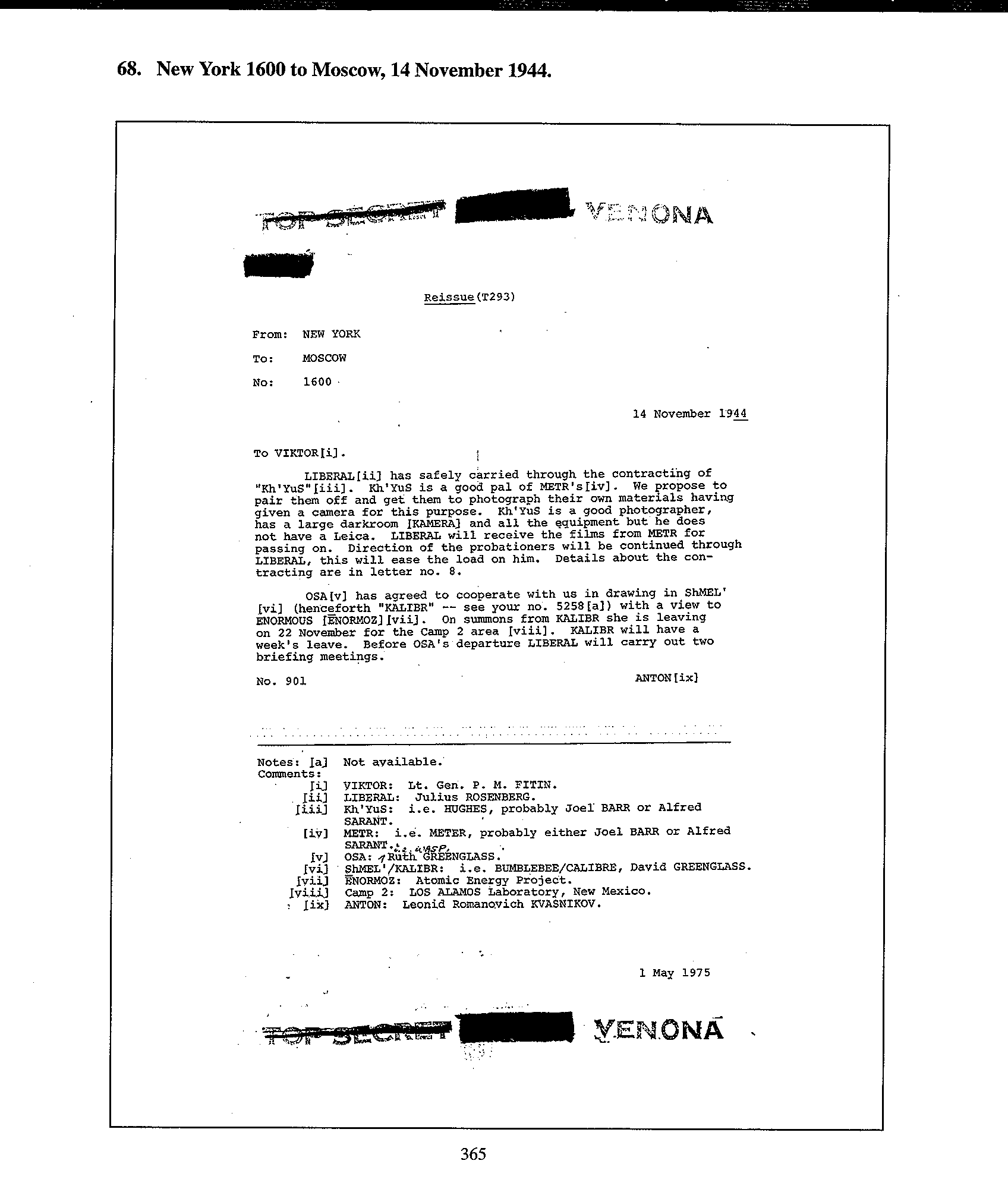
The National Security Agency's own account gives the frame. The Army's Signal Intelligence Service began the program in February 1943, it was canceled in 1980, the first of six public releases came in July 1995 with 49 messages on Soviet efforts to learn about the atomic bomb project, and the remaining releases made all of the approximately 3,000 Venona translations public.1 John Earl Haynes and Harvey Klehr, the historians who did most to read the decrypts against the Moscow archives, wrote that by the time the project shut down it had "decrypted nearly three thousand messages sent between the Soviet Union and its embassies and consulates around the world."2 Their best-known count is this: "The deciphered cables of the Venona Project identify 349 citizens, immigrants, and permanent residents of the United States who had had a covert relationship with Soviet intelligence agencies." They added a caution in the same chapter: "less than half could be identified by their real names and nearly two hundred remained hidden behind cover names."2
Two things follow from those numbers. The first is scale: Venona alone, read only in part, shows hundreds of people inside or near American institutions working with Soviet intelligence in the 1940s. The second is limits: most of the traffic was never read, so absence from Venona proves nothing about a person, and presence under a cover name proves something only when the identification is sound. Lesson 12 works through the cover names one by one, and module 81's lesson 02 tells how the decrypts were made and released.
The second great body of Soviet-origin evidence is the set of notebooks made by Alexander Vassiliev, a former KGB officer who was given two years to work through files in the KGB archive in the 1990s and took notes "including extended verbatim quotes." The Wilson Center's Cold War International History Project published the 1,115-page collection online on April 20, 2009; it covers Soviet intelligence activities in the United States "from 1930-1950," and Vassiliev donated the originals to the Library of Congress.3
| Measure | Figure | Span | Source |
|---|---|---|---|
| Venona program | February 1943 to 1980 | Life of the program | NSA1 |
| First public release | 49 messages | July 1995 | NSA1 |
| Translations released | About 3,000 | Six releases, 1995 onward | NSA1 |
| Messages decrypted | "Nearly three thousand" | 1940s traffic | Haynes and Klehr2 |
| U.S. residents with covert ties in the decrypts | 349 | 1940s | Haynes and Klehr2 |
| Of those, still known only by cover name | Nearly 200 | As of 1999 | Haynes and Klehr2 |
| Vassiliev notebooks | 1,115 pages | Covering 1930 to 1950; online 2009 | Wilson Center3 |
The American party's membership
The Communist Party of the United States was never large, and its numbers are hard to pin down because the party kept them partly secret and because dues counts and registrations measured different things. The Library of Congress exhibit drawn from the opened Soviet archives says that "In 1922 the Comintern forced the two American parties, which consisted of about 12,000 members, to amalgamate," and that membership "rose to about 75,000 by 1938." The same exhibit says the archives revealed "the continued financial as well as ideological dependency of the American Communists on the Soviet party."4
The University of Washington's Mapping American Social Movements project, working from internal party records in the Comintern archive, Earl Browder's papers and FBI files, gives a somewhat different picture: membership "remained below 20,000 until 1933," surged in the late 1930s to "66,000 in 1939," and "surpassed 75,000 at the start of 1947" before its Cold War decline. The project warns that its dues-based counts run low: "Party officials estimated that registered membership exceeded dues collections by 10-20%."5 The gap between the Library of Congress figure for 1938 and the Washington figure for 1939 is probably the gap between registrations and dues payers, though neither source says so directly.
Two figures commonly repeated in secondary works are not confirmed here. One is a wartime peak of about 80,000 around 1944, which traces to the party's own claims and which module 81's lesson 14 also left unconfirmed. The other is the collapse after 1956, when Khrushchev's secret speech and the invasion of Hungary drove out most remaining members; the direction of the change is not in doubt, but no figure for 1957 or 1958 was confirmed against a source opened for this lesson. Lesson 05 gives the year-by-year story.
The loyalty program by the numbers
President Truman's Executive Order 9835 of March 21, 1947, put every federal employee and applicant through a loyalty check.6 Two sets of numbers describe what it produced, and they measure different spans. The first comes from the Civil Service Commission's annual report for 1953, as quoted by the law scholar David Fellman in 1957: "Between 1947 and the end of the program in August 1953, the loyalty forms of 4,756,705 individuals were checked." He continued: "Loyalty boards had cleared 16,503 persons, and 560 had been removed or denied employment on grounds relating to loyalty."7
The second set runs longer, through the Eisenhower security program that replaced Truman's in 1953. The Truman Library, citing the historian Richard S. Kirkendall, says that "During the loyalty-security program's peak years from 1947 to 1956, over five million federal workers underwent screening," resulting "in an estimated 2,700 dismissals and 12,000 resignations," and adds that the program "exerted its chilling effect on a far larger number of employees than those who were dismissed."8
The brief for this companion asked about a figure of roughly 2,900 hearings before loyalty boards. Neither Fellman's article nor the Truman Library page gives a count of hearings, and no Loyalty Review Board total for hearings was confirmed for this lesson, so it is listed as unconfirmed. The figures that are confirmed already make the main point plain: millions were screened, thousands were questioned, and hundreds were removed on loyalty grounds under the Truman order. Module 81's lesson 03 explains how the boards worked and how the two readings of these numbers compete: one holding that the program was too lax because people later found in Soviet files were cleared, the other holding that it punished many for association while the real spies had mostly been cut off by 1945 and 1946.
Wheeling: 205, 57 and 81
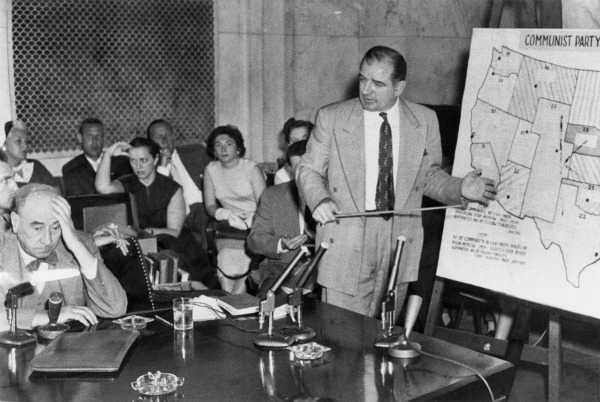
Three numbers from February 1950 started the McCarthy period. At Wheeling, West Virginia, on February 9, McCarthy said he held "a list of 205," according to the next morning's Wheeling Intelligencer and the station that recorded the speech; within two days, in Salt Lake City on February 10 and Reno on February 11, the number had become "57 card-carrying members"; and on the Senate floor on February 20 he presented "approximately 81 cases."910 Module 81's lesson 05 traces each number to its source: 205 to a 1946 letter from Secretary of State James Byrnes about the screening of transferred wartime employees, and 57 and 81 to a 1947 set of House investigators' case summaries. It rates the claim that McCarthy said 205 at Wheeling as supported, and the claim that he held a list of 205 party members known to the Secretary of State as refuted.10
Prosecutions, sentences and the censure vote
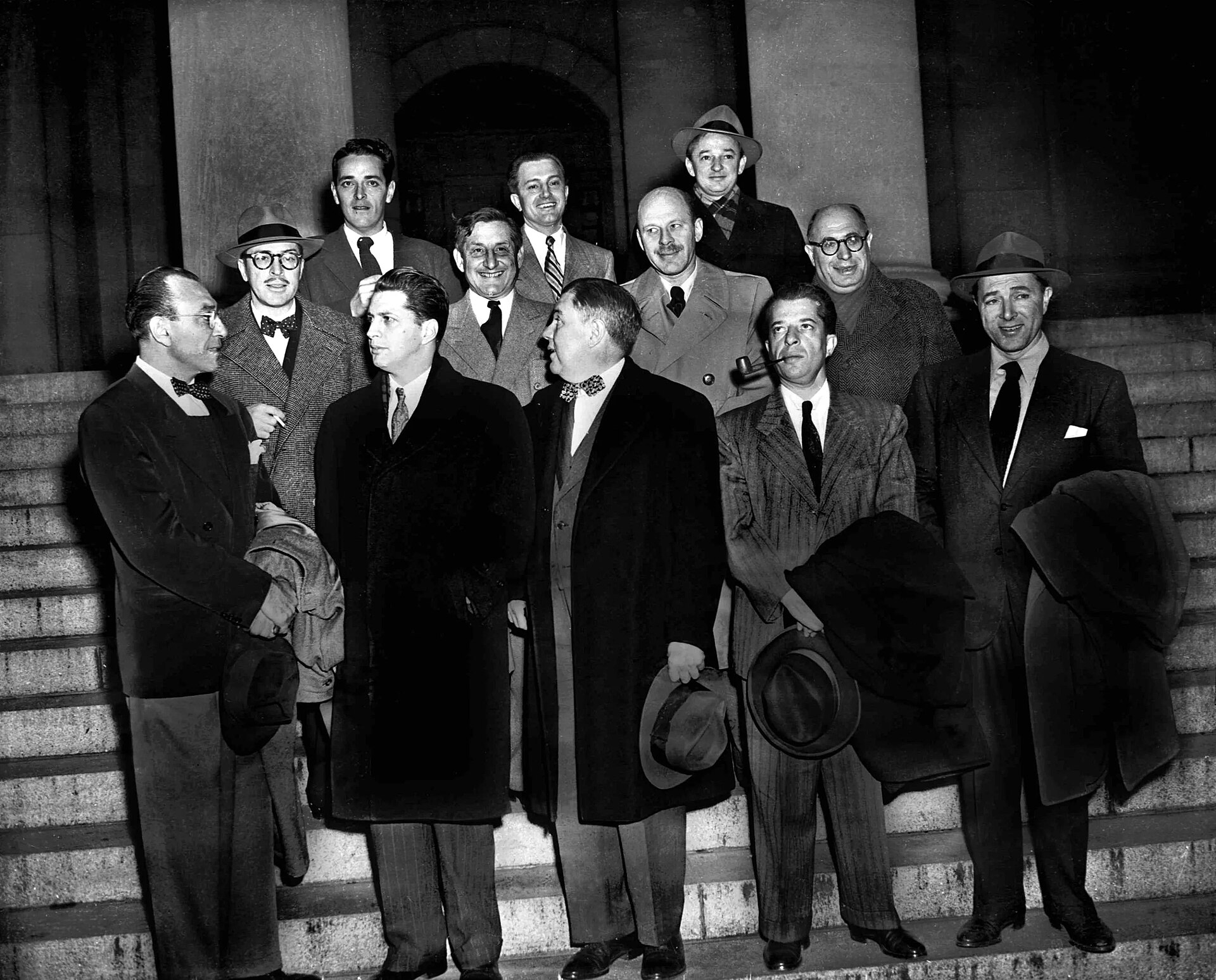
The Hollywood Ten were the screenwriters and directors cited for contempt of Congress after refusing to answer the House Committee on Un-American Activities' questions in October 1947. Bernard Ryan Jr.'s account of the trials says that most received one-year sentences and $1,000 fines, while "Dmytryk and Biberman, however, for reasons never explained, were fined $500 each and jailed for only six months." John Howard Lawson and Dalton Trumbo, whose cases were tried first, began their terms on June 9, 1950.11
The central Smith Act prosecution was the 1949 trial of the party's national leadership. The Free Speech Center at Middle Tennessee State University records that "The 11 convicted defendants appealed their cases to the Supreme Court."12 The Court upheld the convictions in Dennis v. United States in 1951, by a vote of six to two.13 Totals for all Smith Act prosecutions of Communist Party members across the 1950s are commonly given as about 144 indicted and about 105 convicted; that figure did not come from a primary record opened for this lesson and is listed as unconfirmed, as it is in module 81. One related figure needs care: the Free Speech Center says that in the first Smith Act case, the 1941 Minneapolis prosecution of Socialist Workers Party leaders (a Trotskyist group, not the Communist Party), "The 23 defendants found guilty of violating the Smith Act received jail sentences," while module 81's lesson 03 gives eighteen convictions.12 Module 81 is right. The Minnesota Historical Society's account of the trial records that twenty-nine people were indicted, that the trial opened on October 27, 1941 with twenty-eight defendants, that the judge dismissed the charges against five, that the jury acquitted five more, and that the remaining eighteen were sentenced on December 8, 1941; twenty-three was the number who went to the jury, not the number convicted.35
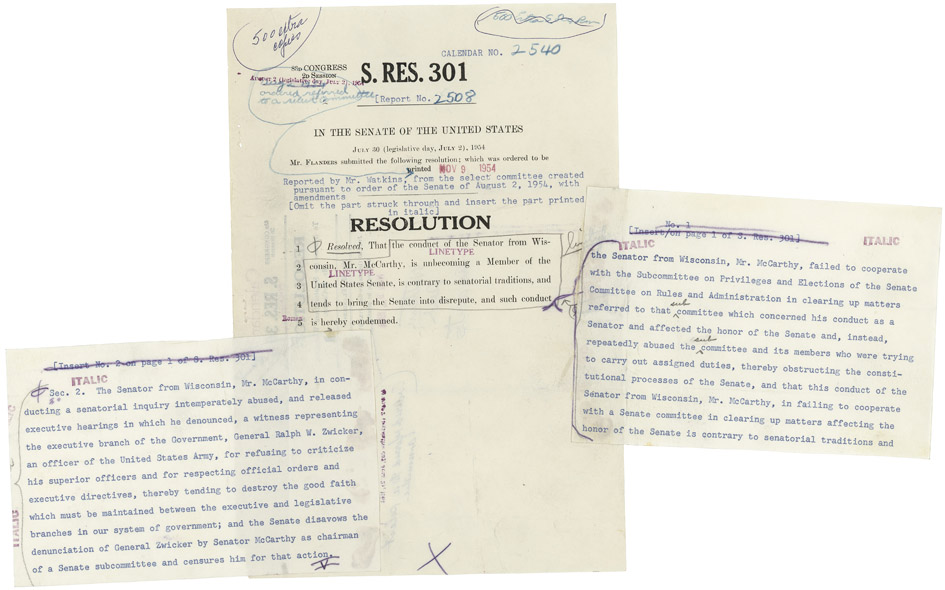
On December 2, 1954, the Senate adopted S. Res. 301 against McCarthy by 67 to 22. The Senate Historical Office lists it among the Senate's censure cases.14 The roll call in the Congressional Record shows 67 yeas and 22 nays, with McCarthy answering "present"; by module 81's count against the party division, all 44 Democrats who voted, the one independent, and 22 of the 44 Republicans who voted were in favor.15 Module 81's lesson 09 gives the full breakdown.
| Measure | Figure | Date or span | Source |
|---|---|---|---|
| Loyalty forms checked | 4,756,705 persons | 1947 to August 1953 | Civil Service Commission via Fellman7 |
| Cleared by loyalty boards | 16,503 | 1947 to August 1953 | Fellman7 |
| Removed or denied employment, loyalty grounds | 560 | 1947 to August 1953 | Fellman7 |
| Screened, loyalty and security programs | Over 5 million | 1947 to 1956 | Truman Library8 |
| Estimated dismissals and resignations | About 2,700 and 12,000 | 1947 to 1956 | Truman Library8 |
| Wheeling, Salt Lake City, Senate floor | 205; 57; about 81 cases | February 9 to 20, 1950 | Intelligencer; Congressional Record910 |
| Hollywood Ten sentences | One year and $1,000 for most; six months and $500 for Biberman and Dmytryk | 1950 | Ryan11 |
| Dennis defendants convicted | 11 | 1949; upheld 1951 | Free Speech Center; Dennis1213 |
| Censure vote, S. Res. 301 | 67 to 22 | December 2, 1954 | Senate; Congressional Record1415 |
The count of the dead
No set of numbers in this field is argued over more than the count of people killed by communist governments, and no set is more often misquoted. The problem is not that the deaths are in doubt. They are documented in the regimes' own records, in demographic data, in mass graves and in the testimony of survivors. The problem is that different counts measure different things: executions recorded by the police, deaths registered in camps, excess deaths calculated by demographers from census gaps, and grand totals that add all of these across a century and a dozen countries. A careful reader asks of every number what it counts, who counted it, from what records, and over what years.
The Soviet camps and the Great Terror. The economist and historian Michael Ellman, writing in 2002 on the archive figures then available, summarized the registered figures: "The number of registered Gulag deaths (camps and colonies) in 1930-56 was 1.6-1.7 million," and in another passage, "1.61-1.74 million." For the Great Terror he cited "the NKVD official figures of 682,000 shot in 1937-38 following sentence on NKVD cases," treating that as a lower bound and using about 850,000 as an assumed upper figure for NKVD killings in those two years when he built an upper bound for the repression deaths of 1937 and 1938.16 The more exact figure of 681,692 executions for 1937 and 1938 is widely quoted from the same NKVD tallies but was not checked against a primary table for this lesson. Ellman was explicit that the archive counts are a floor: the NKVD data "are known to exclude some categories of victims," the official Gulag mortality statistics "understate mortality caused by the camps," and "We do not yet have, however, precise and complete figures for the total number of victims or for some sub-totals."16
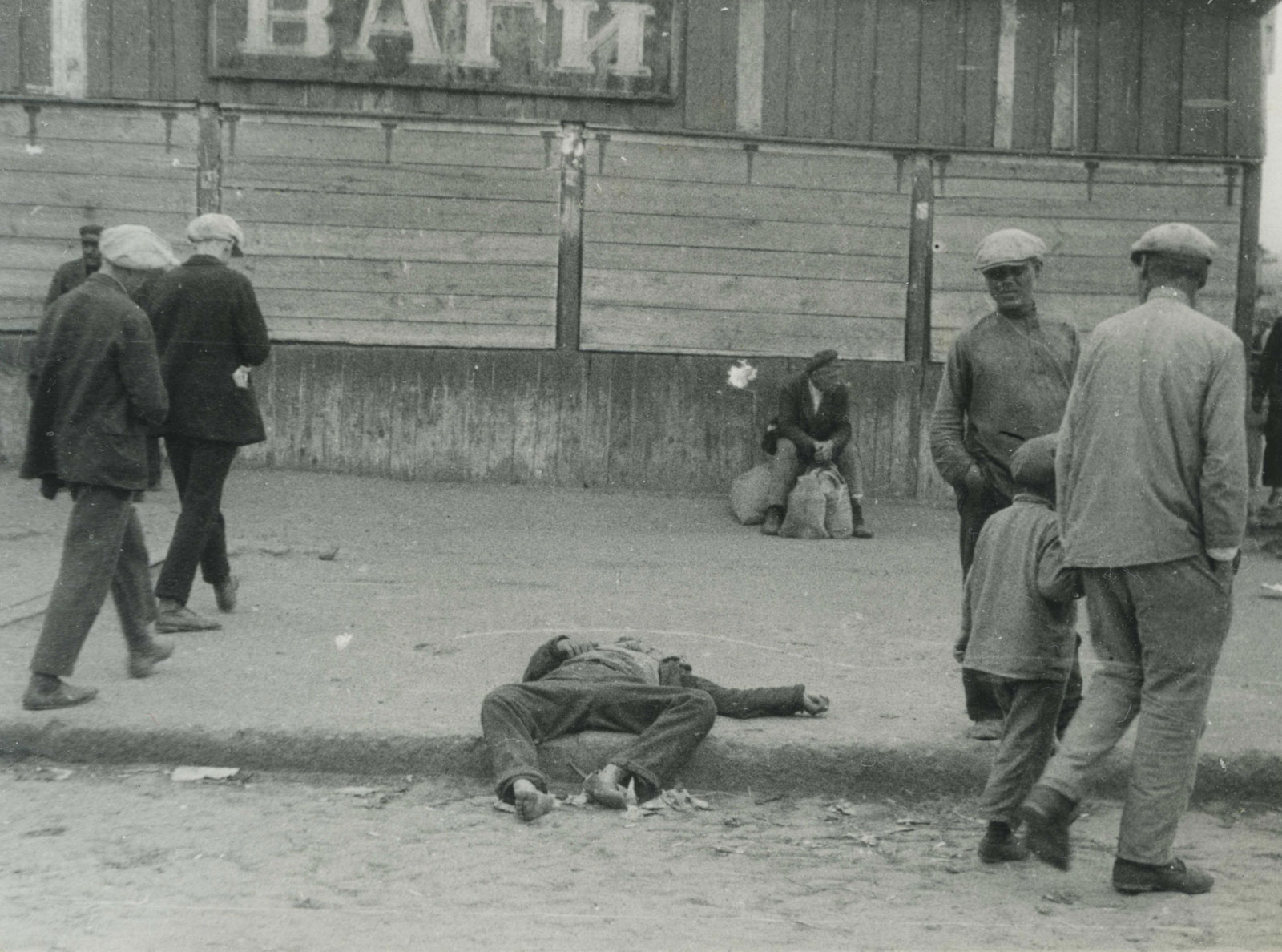
The Ukrainian famine of 1932 and 1933. The Harvard Ukrainian Research Institute's mapping project, working with demographers of the Ptoukha Institute in Kyiv, states: "Excess mortality in 1932-1934 is estimated to be 3.9 million deaths," with a further "birth deficit of 600 thousand people," and concludes that "the number of total Holodomor losses cannot exceed 5 million."17 That is the Ukrainian republic only. The famine struck other Soviet regions as well, so figures for the Soviet Union as a whole are necessarily higher. A reader who meets a much larger figure for Ukraine alone should ask whether it is a count for the Ukrainian republic or for the whole Soviet Union, and whether it includes the birth deficit. Lesson 02 tells the history of collectivization and the famine.
China's Great Leap Forward famine. The political scientist James C. Scott, reviewing the two major recent studies in the London Review of Books in 2012, put the range this way: "Between early 1958 and the spring of 1961, somewhere between 30 and 45 million people died." He noted that Frank Dikotter's figure of 45 million in Mao's Great Famine (2010) was at the top of the range and "no more than" an estimate, and that the Chinese journalist Yang Jisheng's Tombstone was written to commemorate "the 36 million Chinese who died of starvation."18 Some demographic estimates are lower; the brief for this companion gives a range beginning at 15 million, but no study giving that low figure was opened for this lesson. Lesson 03 covers the Leap and the famine.
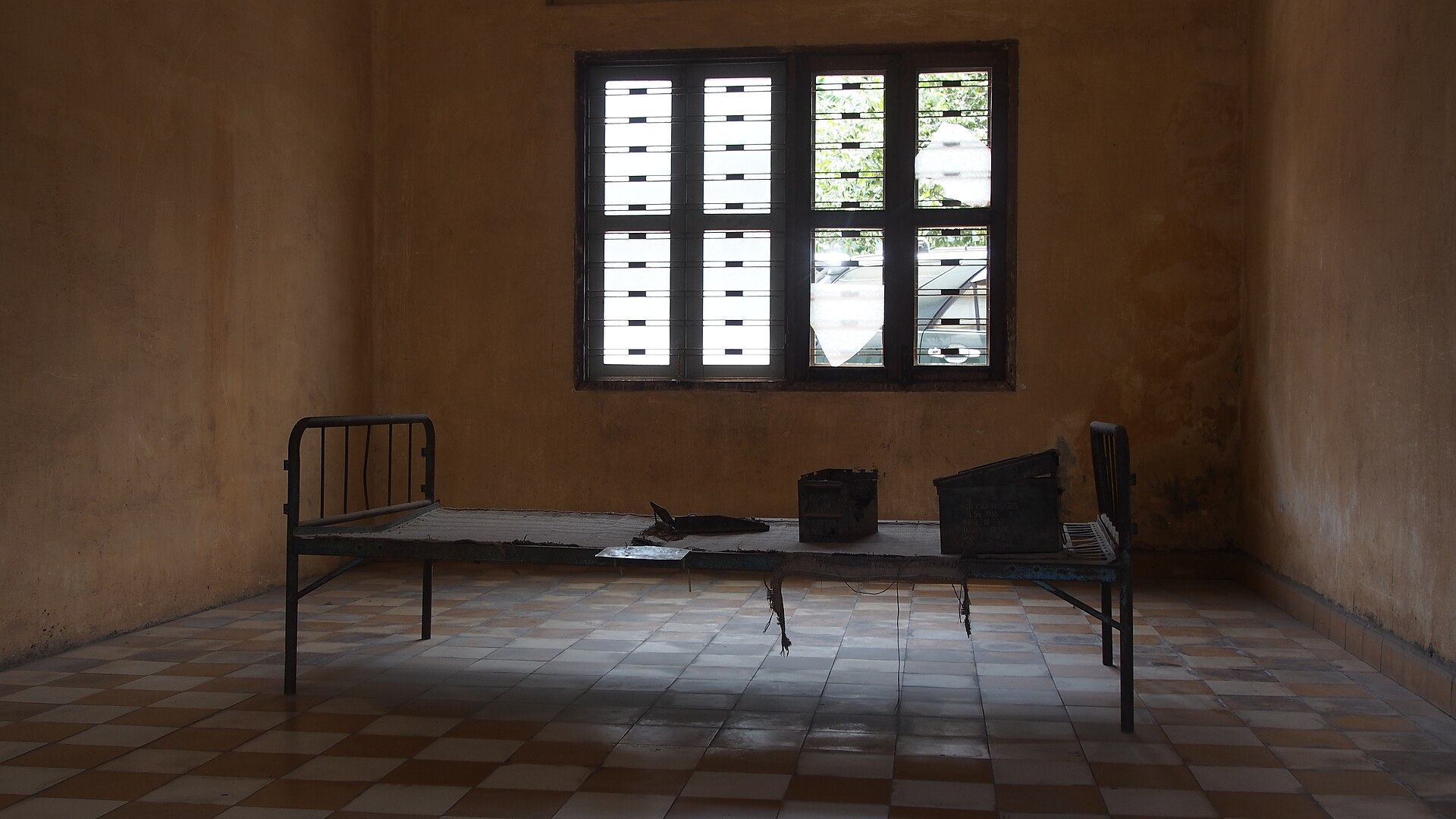
Cambodia under the Khmer Rouge. Yale University's Cambodian Genocide Program says that "approximately 1.7 million people lost their lives (21% of the country's population)" under the Khmer Rouge, which "held power during 1975-1979."19 The researcher Craig Etcheson, summarizing the competing methods, reports a low demographic estimate of 1.05 million excess deaths from analysis of the 1980 census, a high one of 2.2 million from birth cohort data, and a separate count from mass grave mapping of "the remains of an estimated 1.1 million victims of Khmer Rouge execution," and gives an overall range "from 1.7 million to 2.2 million."20
The grand total. The Black Book of Communism, published in French in 1997 and in English in 1999, gave a total near 100 million for the century. Its editor Stephane Courtois broke the figure down by country in his introduction; a review in Partisan Review in 2001 quotes the tally as including "USSR, 20 million (a rather conservative estimate)," "China, 65 million," "Cambodia, 2 million," "North Korea, 2 million," "Afghanistan, 1.5 million," "Eastern Europe, 1 million" and "Latin America, 150,000."21 Two of the book's own authors, Nicolas Werth and Jean-Louis Margolin, publicly objected to Courtois's introduction. Times Higher Education reported in 1998 that they challenged his "glib comparison" of communism with Nazism, and quoted Margolin: "You can't reduce it to a question of numbers," and "How does one compare two million deaths in four years in Cambodia with 3,000 over 40 years in Czechoslovakia?"22 The dispute was about the introduction's arithmetic and comparison, not about whether the individual chapters' crimes happened. The China figure of 65 million, in particular, is well above the range Scott gives for the famine, which is the largest single component.
| Event | Estimate | What it counts | Who, when, method |
|---|---|---|---|
| Great Terror, 1937 to 1938 | About 682,000 shot; perhaps 850,000 | Executions after NKVD sentence | Ellman (2002), from NKVD archive figures; upper figure an assumption he used to build an upper bound16 |
| Gulag, 1930 to 1956 | 1.6 to 1.74 million | Registered deaths in camps and colonies | Ellman (2002), from Gulag registers; an undercount by his own account16 |
| Ukrainian famine, 1932 to 1934 | 3.9 million excess deaths; plus 0.6 million birth deficit; total no more than 5 million | Ukrainian republic only | Ptoukha Institute demographers with HURI, demographic reconstruction17 |
| Chinese famine, 1958 to 1961 | 30 to 45 million (Yang 36 million; Dikotter 45 million) | Famine deaths | Range as summarized by Scott (2012) in a review of the Yang and Dikotter books18 |
| Cambodia, 1975 to 1979 | About 1.7 million; range 1.7 to 2.2 million | Excess deaths; separately about 1.1 million execution victims in mass graves | Yale Cambodian Genocide Program; Etcheson summarizing census, cohort and grave methods1920 |
| All communist regimes, 20th century | Near 100 million | Grand total across countries and causes | Courtois, The Black Book of Communism (1997); total disputed by co-authors Werth and Margolin2122 |
How to read a big number
Five questions sort a sound figure from a careless one. First, what is counted: shootings, camp deaths, famine deaths, all excess deaths, or births that did not happen. Second, whose records: the perpetrators' own registers (which are a floor, since killers undercount), census reconstructions (which depend on the quality of the censuses), grave counts (which find only those buried in known sites), or a writer's judgment. Third, what years. Fourth, what territory: Ukraine or the whole Soviet Union, a province or all of China. Fifth, who added it up, and whether that person's own co-authors or critics accepted the sum.
The answers matter in both directions. The low archive counts do not show that the larger estimates are propaganda, because the archive keepers themselves left out whole categories of victims, as Ellman documents.16 And the high totals do not become more true by repetition; when a co-author of the book that produced a famous figure says the figure reduces history to arithmetic, the reader should know it.22 Module 81 uses the same discipline for McCarthy's numbers in lesson 05.
Pictures: a gallery of the record
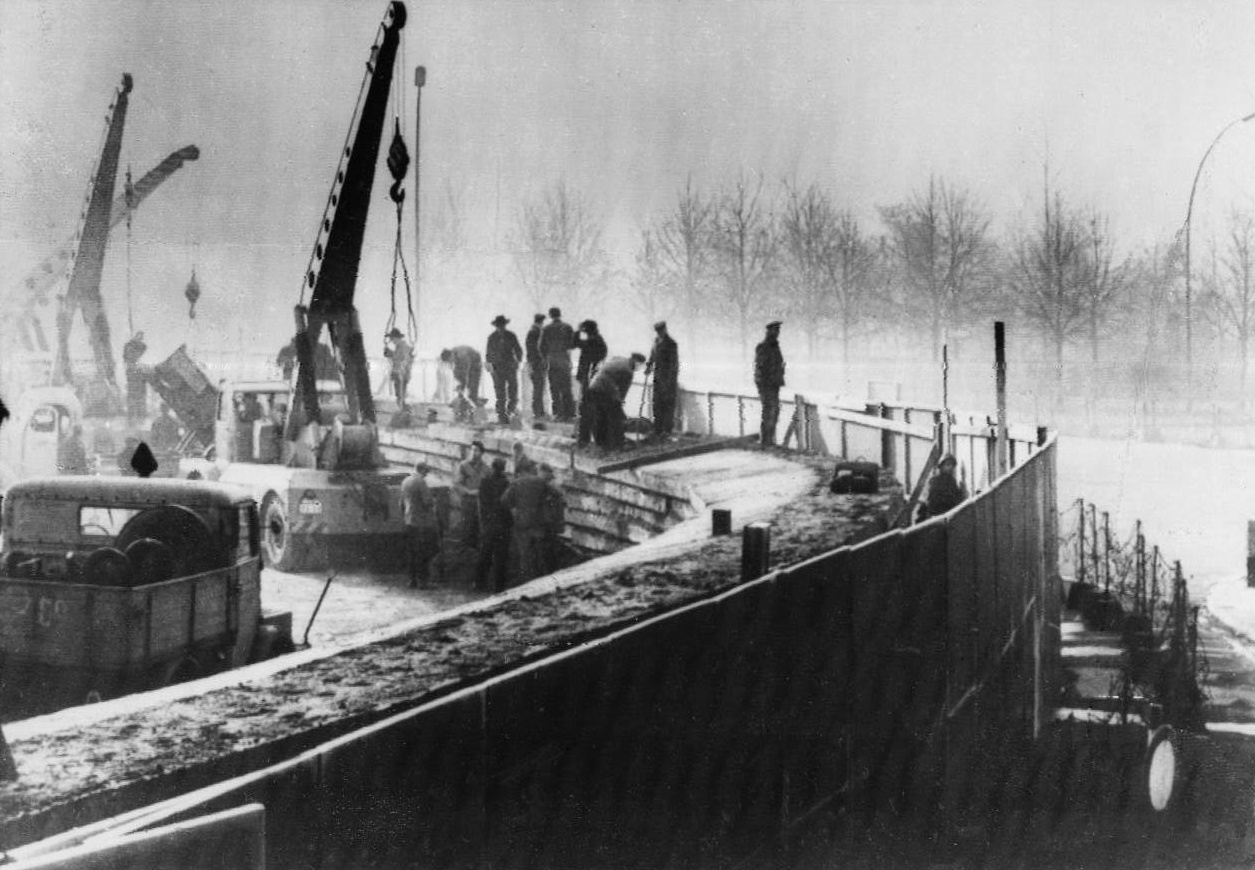
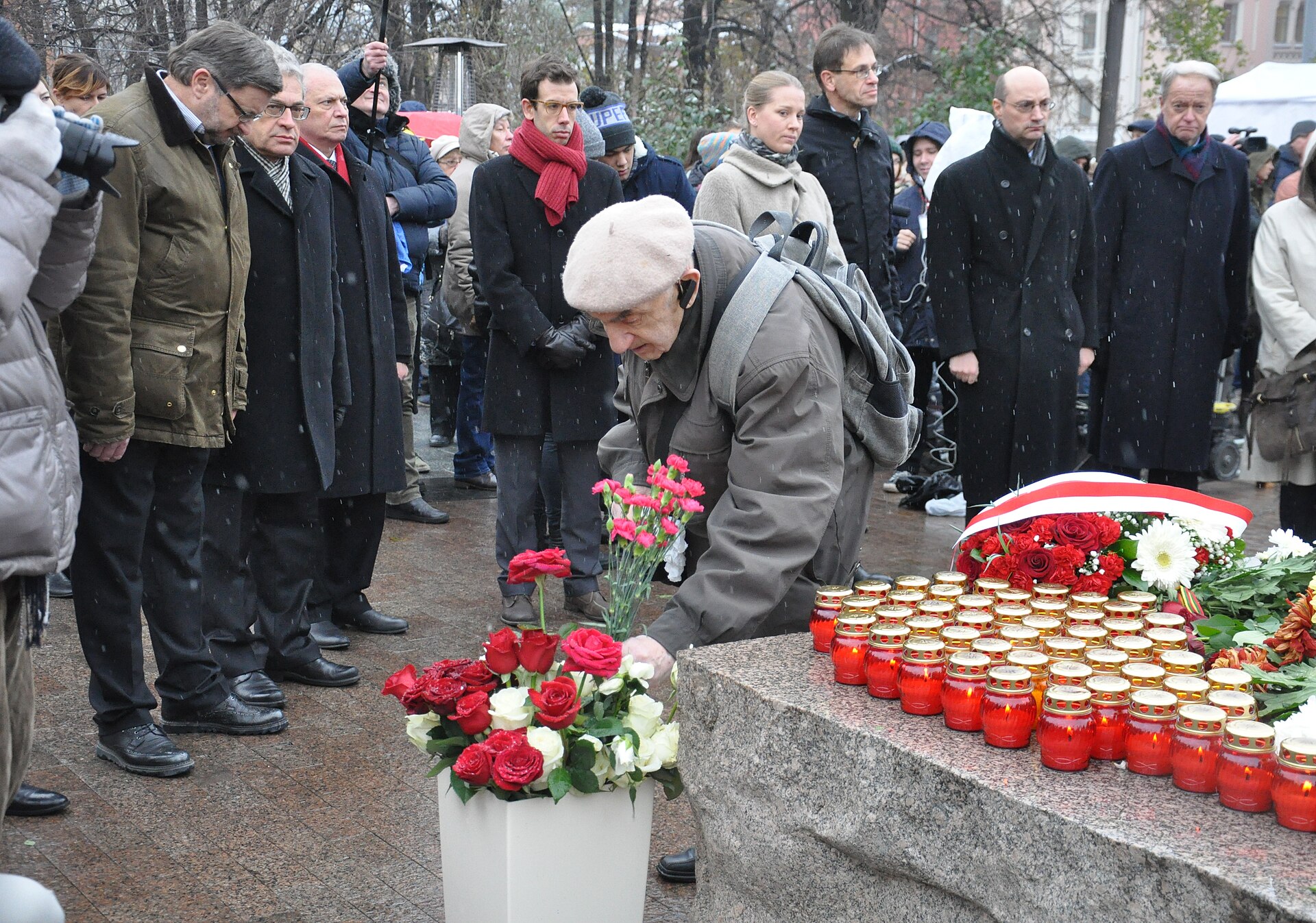
The photographs below are drawn from across this companion and module 81. They are arranged in the order of the story: the evidence of espionage, the accusers and the accused, the American proceedings, the regimes' victims, and the places where the record is kept. Every caption states only what the archival record on Wikimedia Commons supports. Where the record gives no reliable date, none is given. All are public domain or carry the free license named at the end of the caption.
The evidence of espionage




Accusers and accused
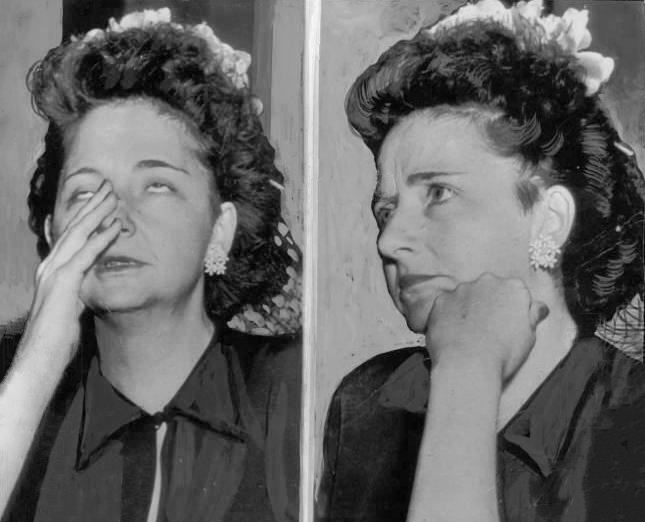

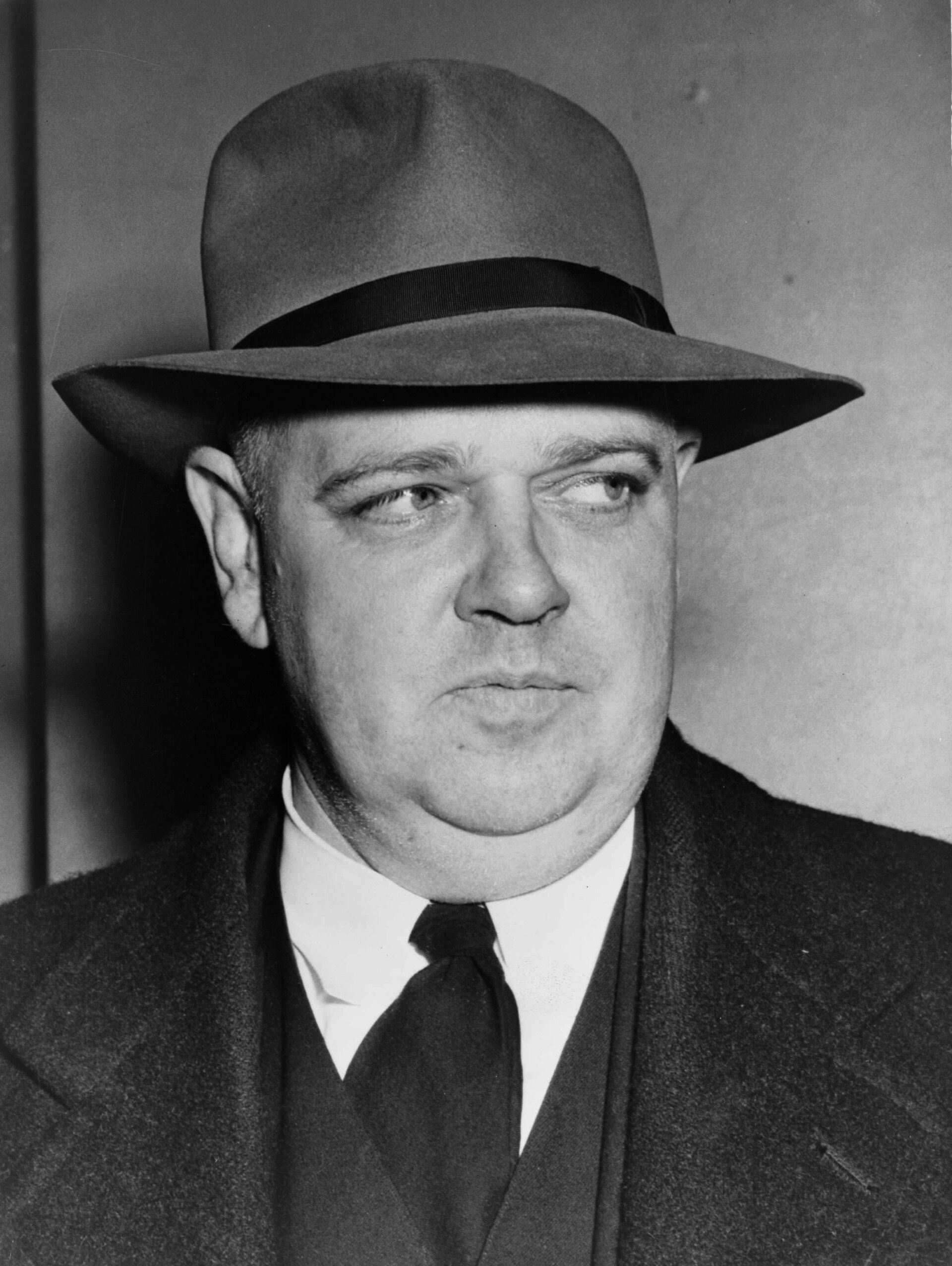

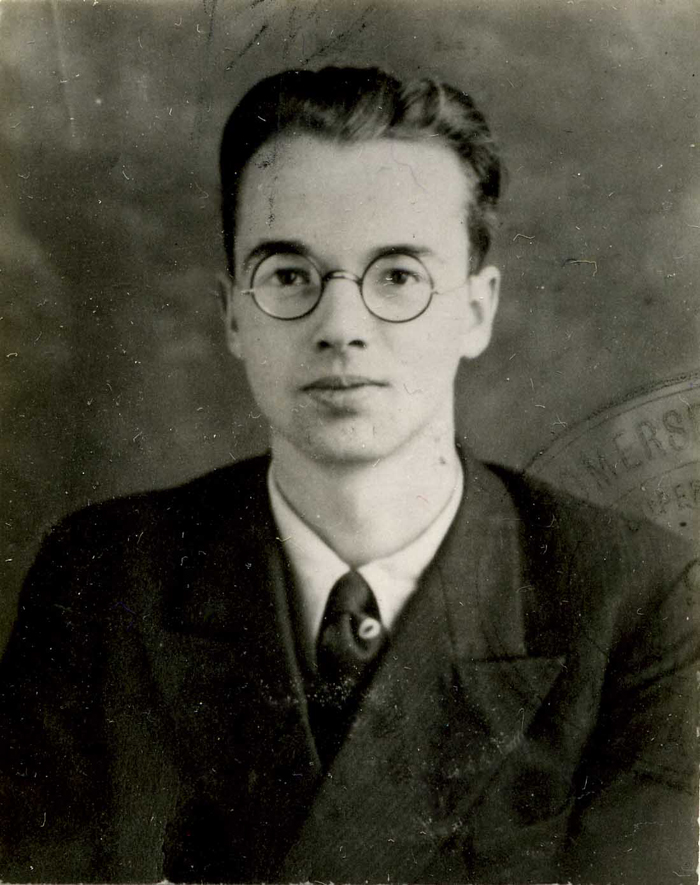

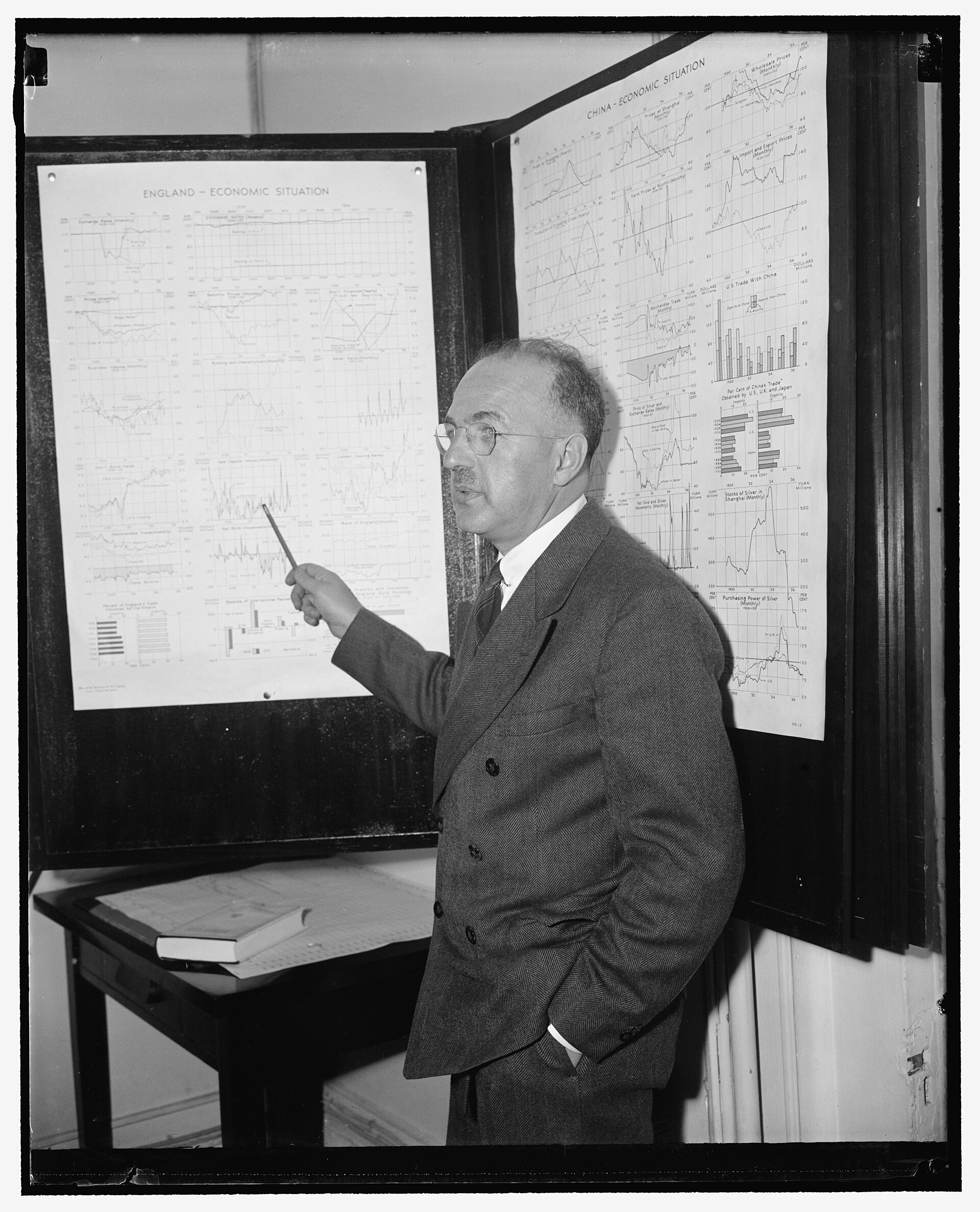

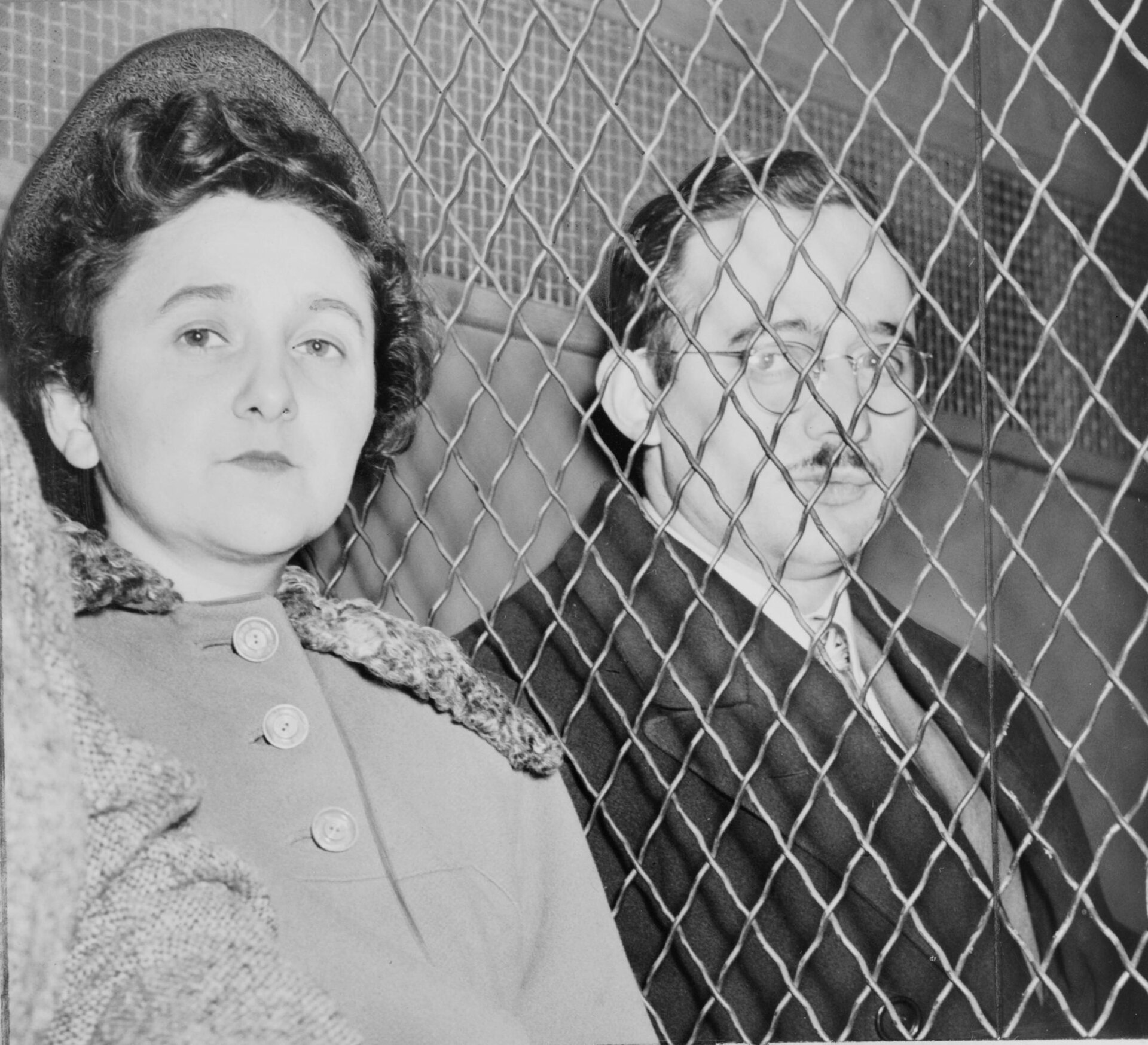

The American proceedings



The regimes and their victims




Where the record is kept
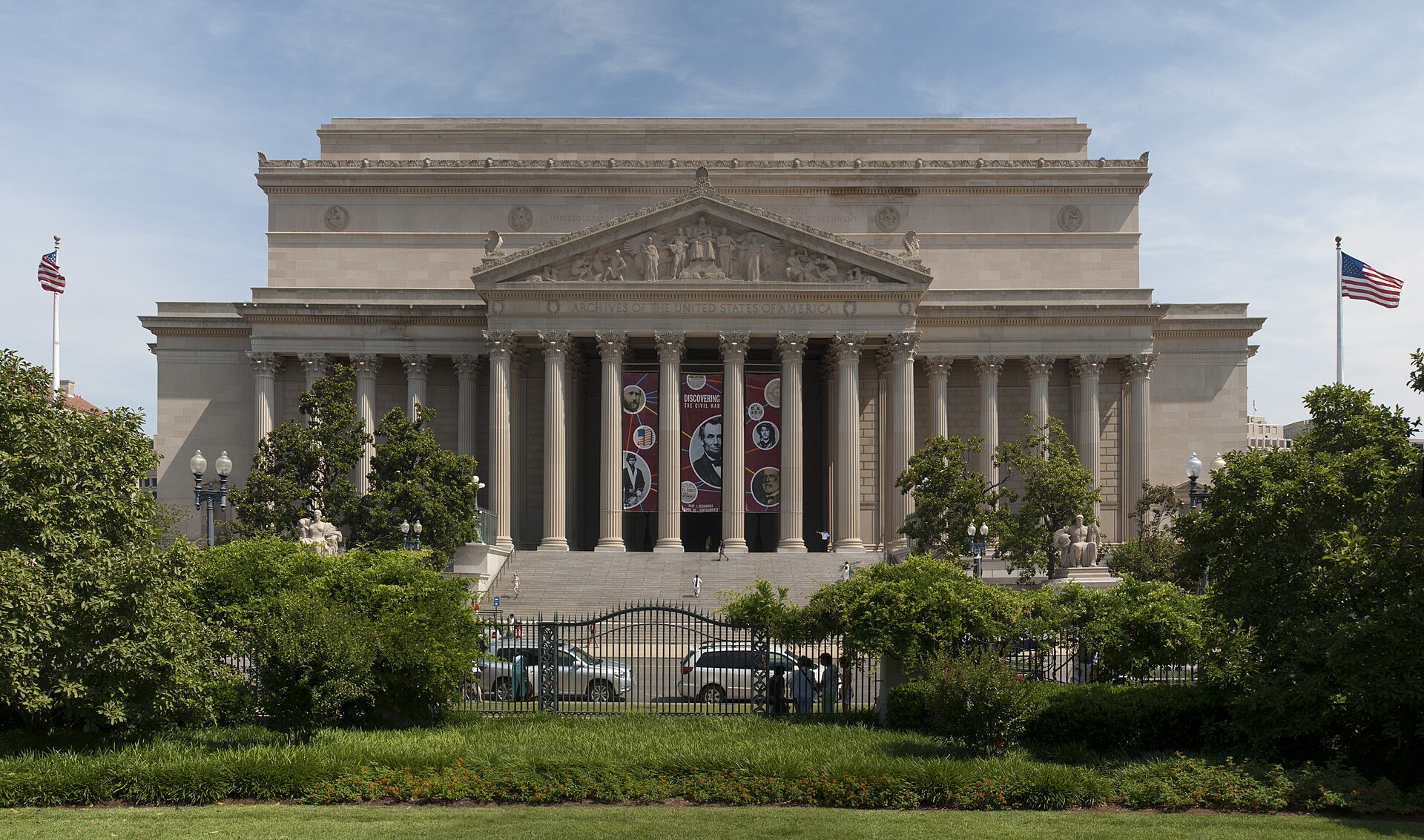

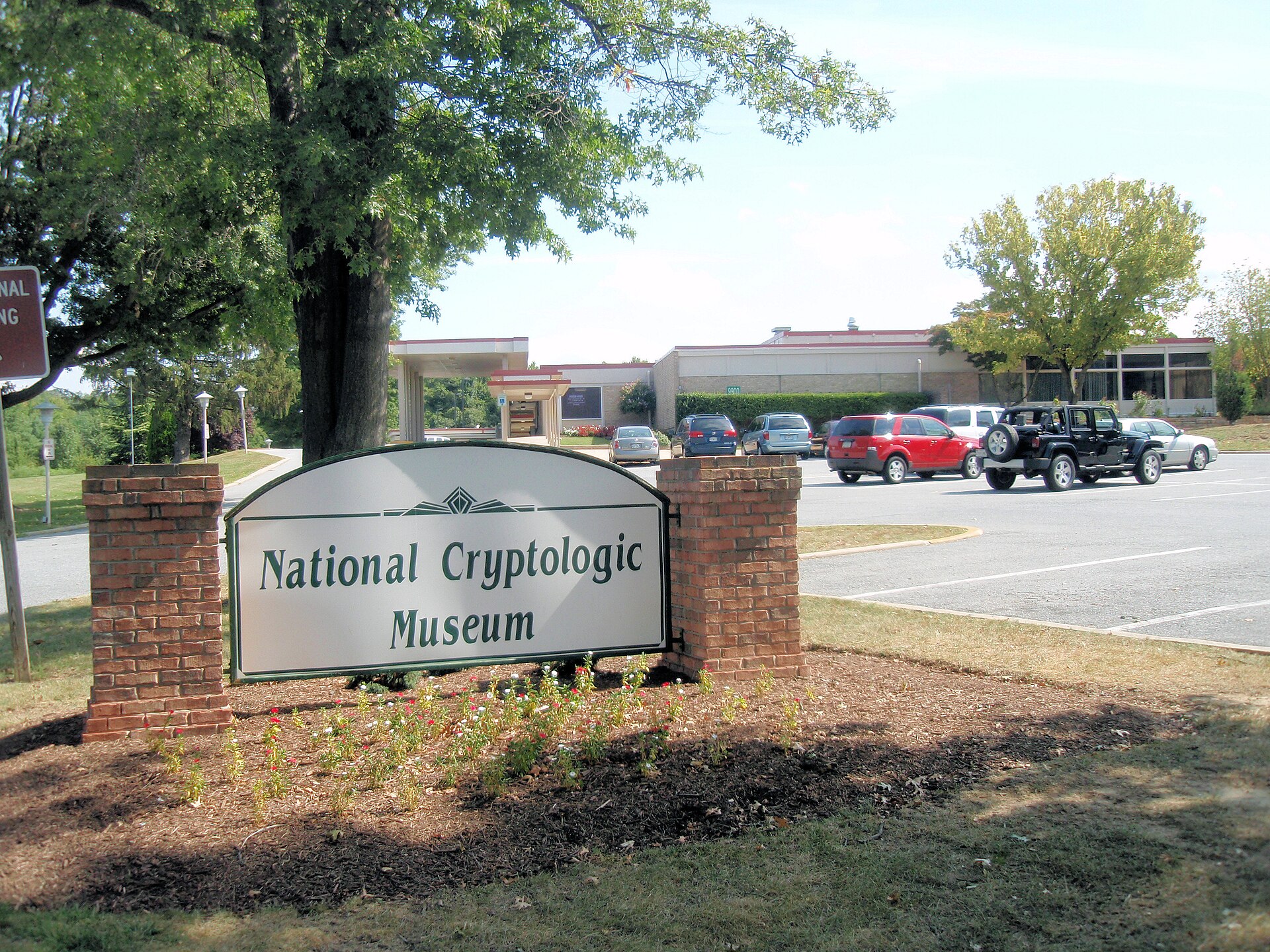

Sources: a map of the archives
The record of this subject is scattered across American government archives, collections drawn from the Soviet side, and libraries of texts. Each answers a different kind of question. A reader who wants to know what a committee was told behind closed doors needs the Senate's executive session transcripts; a reader who wants to know whether a Soviet officer called someone a source needs Venona or the Vassiliev notebooks; a reader who wants to know what Lenin said about terror needs the texts themselves. The map below sorts the main collections by kind and says what each holds.
American government records
NSA Venona releases. The National Security Agency's historical releases page lists the Venona translations as individual documents, titled by subject and date and, for later batches, by release number.1 The translations are the text of the cables as American analysts recovered them, with the analysts' notes. They are the strongest single source for Soviet intelligence relationships in the 1940s and are discussed below under how to read a decrypt.
The FBI Vault. The FBI's online reading room holds files already released under the Freedom of Information Act, including major espionage and investigation files of the period.23 What is in the Vault is what has been released; it is not the whole of the Bureau's records, and many files are released in redacted form.
The National Archives: Record Groups 233 and 46. The records of the House of Representatives (Record Group 233) and of the Senate (Record Group 46) are held by the Center for Legislative Archives. The House guide lists the records of the House Committee on Un-American Activities by section; the seven section series add up to about 2,197 feet, and "At least 444 feet of the records consist of investigative files on individuals and organizations along with a set of related index cards."24 The Senate guide gives the records of the Internal Security Subcommittee as "1951-77" at 547 feet, "Among the largest subcommittee holdings."25 It describes "The records of the Permanent Subcommittee on Investigations, 1948-82 (1,087 ft.)," which "consist largely of closed investigative case files," closed under S. Res. 474 of the 96th Congress "until they are 50 years old."26 Module 81's lesson 14 explains the House and Senate access rules in detail.
The PSI executive session transcripts. In 2003 the Senate published the closed hearings McCarthy's subcommittee held in 1953 and 1954, with an introduction and notes by Senate Historian Donald A. Ritchie, as S. Prt. 107-84 in five volumes.27 These transcripts are the best primary source for what McCarthy and his staff actually asked witnesses, including the many who never appeared in public.
The presidential libraries. The Truman Library holds Executive Order 9835 and the papers of the loyalty program, Truman's veto of the Internal Security Act, and his statements on the cases.6 The Eisenhower Library's online collection on McCarthyism and the Red Scare includes Eisenhower's letters about McCarthy in 1953, James Hagerty's diary entries from February to June 1954, and Ann Whitman's December 7, 1954, memo on the events that led to McCarthy's break with the administration.28
The Congressional Record and the courts. Floor debates and roll calls, including the censure vote, are in the bound Congressional Record on govinfo.gov.15 Supreme Court opinions such as Dennis are on Justia and other free sites.13
Evidence from Soviet files
The Vassiliev notebooks. Described above: 1,115 pages of notes and extended quotations from KGB files on intelligence work in the United States from 1930 to 1950, published online by the Wilson Center in 2009, with the originals at the Library of Congress.3 The Wilson Center Digital Archive hosts the notebooks and also translated documents from many Soviet bloc archives.29
The Library of Congress exhibit. Revelations from the Russian Archives, the Library of Congress's exhibit of documents from the newly opened Soviet archives, includes a section on the Soviet Union and the United States with translated documents on the Comintern's direction and funding of the American party.304 It is a good first sight of what the archives showed.
Soviet repression statistics. The NKVD and Gulag registers that became available in the 1990s are the basis for the archive-based counts discussed above; Ellman's 2002 article is a careful guide to their meaning and their gaps.16
Texts and finding tools
The Marxists Internet Archive at marxists.org holds the writings of Marx, Engels, Lenin and Trotsky in translation, along with documents of the Communist International.31 It is a convenient library of the texts themselves, not a source for interpretation of them. Lesson 01 quotes the Communist Manifesto from it, and lesson 10 the Comintern's conditions of admission.
Books by side
The scholarship falls into schools that read the same evidence differently. The list below names the main books with their years, grouped by what each mainly argues. A reader should read at least one from each of the first two groups before trusting any single account. Module 81's lesson 14 lists further titles.
| Group | Books | What they mainly argue |
|---|---|---|
| The espionage evidence | John Earl Haynes and Harvey Klehr, The Secret World of American Communism (with Fridrikh Firsov, 1995), Venona: Decoding Soviet Espionage in America (1999), In Denial (2003), Spies (with Alexander Vassiliev, 2009); Allen Weinstein and Alexander Vassiliev, The Haunted Wood (1999); Christopher Andrew and Vasili Mitrokhin, The Sword and the Shield (1999); Kathryn Olmsted, Red Spy Queen (2002); Sam Tanenhaus, Whittaker Chambers (1997); Ronald Radosh and Joyce Milton, The Rosenberg File (1983) | Soviet espionage in the 1940s was large and successful, ran largely through the Communist Party, and the main accusers (Bentley, Chambers) were substantially right.2 |
| Critical of the investigations | Ellen Schrecker, Many Are the Crimes (1998); David Oshinsky, A Conspiracy So Immense (1983); Richard Rovere, Senator Joe McCarthy (1959) | The spies were mostly gone by 1950; McCarthy and the wider anti-communist effort harmed many people who were not spies and narrowed American public life. |
| Favorable to McCarthy or his cause | M. Stanton Evans, Blacklisted by History (2007); Arthur Herman, Joseph McCarthy (2000) | McCarthy's cases came from real security files, many of his targets were real security risks, and his reputation was built by opponents. |
| Broad histories of American communism and anti-communism | Ted Morgan, Reds (2003) | A long narrative history of American communism and of the efforts against it, from 1917 on. |
| World communism and its victims | Richard Pipes, The Russian Revolution (1990); Robert Conquest, The Great Terror (1968) and The Harvest of Sorrow (1986); Anne Applebaum, Gulag: A History (2003) and Iron Curtain (2012); Stephane Courtois and others, The Black Book of Communism (1997 French, 1999 English); Frank Dikotter, Mao's Great Famine (2010) | The communist states were founded on and kept in power by terror; the scale of death is documented, though totals differ.18 |
A reading guide
The literature is large and much of it was written to win an argument. A reader who starts with a single polemic, from either school, usually ends up defending it. The path below is built to avoid that: it starts with the short accounts in this companion and module 81, moves to one book from each of the two main schools, then to the primary documents, and only then to the deep archives.
Where to start
For the espionage itself, the opening chapter of Haynes and Klehr's Venona is the shortest serious introduction; it states the 349 figure and its limits in the same pages, which is a good model for any reader.2 For the cost of the investigations, Schrecker's Many Are the Crimes is the fullest statement of the critical case. For McCarthy himself, read Evans and Oshinsky against each other, chapter by chapter where they cover the same events; module 81's lesson 05 shows how the two read the same Wheeling documents. For the world story, Conquest's The Great Terror, Applebaum's Gulag and Dikotter's Mao's Great Famine each cover one regime's worst years; read them with the archive-based figures above in hand.
The best primary collections
Four collections repay the most time. The Venona translations, because they are the Soviet services' own words, recovered at the time and not shaped by later memory.1 The PSI executive sessions, because they show McCarthy's method when no cameras were present.27 The Vassiliev notebooks, because they confirm or disconfirm Venona identifications from a separate set of files.3 And the Congressional Record, because the floor debates of February 20, 1950, and of the censure in 1954 are full transcripts of what was said, not summaries.15 For the world story, the Wilson Center Digital Archive's translated Soviet bloc documents play the same role.29
How to read a Venona decrypt
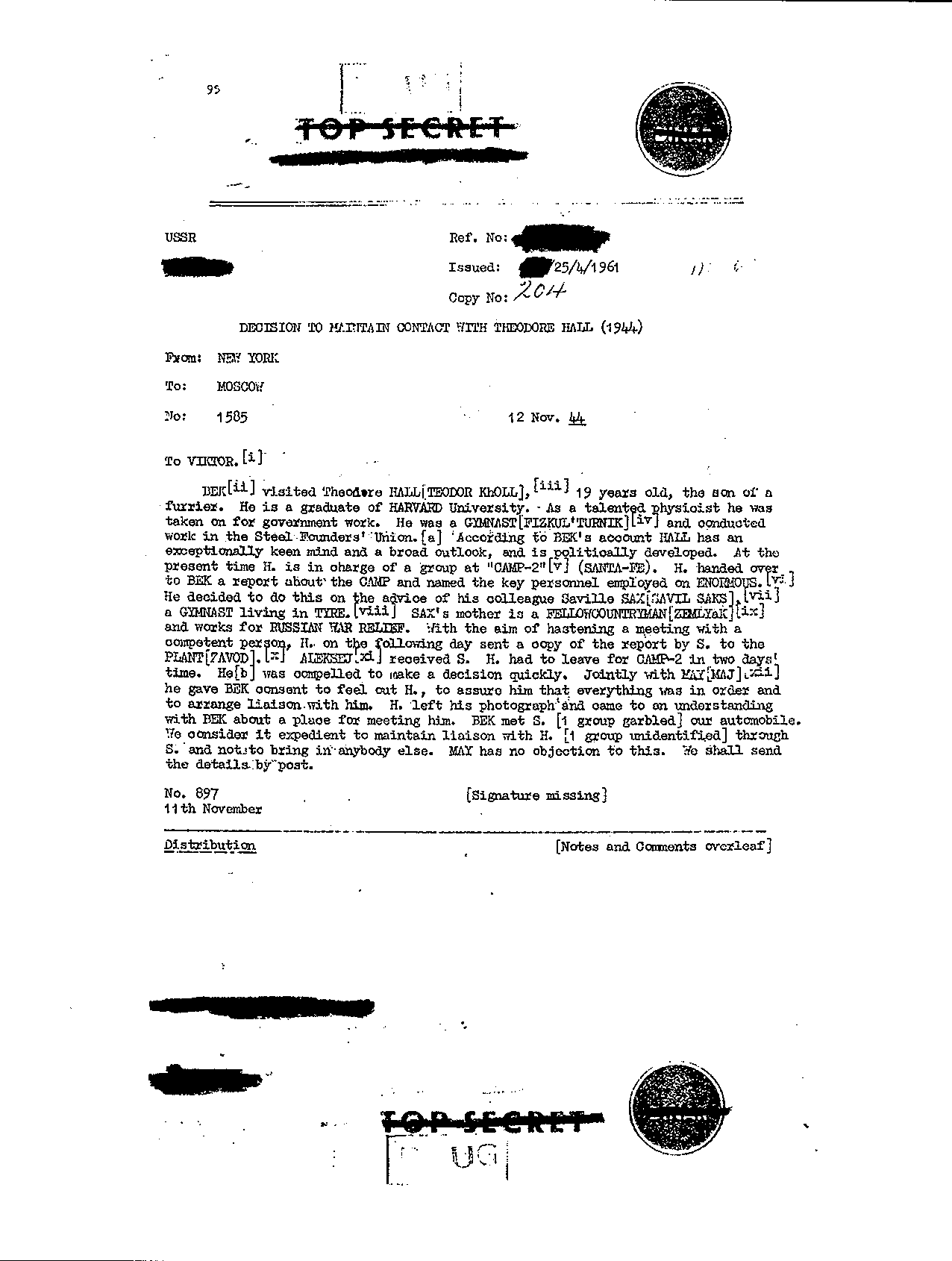
The translation of KGB New York's message No. 1585 of November 12, 1944, reproduced in the gallery above, shows every feature a reader needs to recognize.32
The header. The page is stamped Top Secret and gives an "Issued" date of 25/4/1961, the date of this version of the translation, not of the message. Then come the circuit and serial: "From: NEW YORK," "To: MOSCOW," "No: 1585," dated "12 Nov. 44." The circuit tells the reader which Soviet station sent the cable and to whom.
The addressee and cover names. The text begins "To VIKTOR," followed by a bracketed roman numeral, [i], pointing to a note printed overleaf. Cover names are printed in capitals throughout: VIKTOR, BEK, MAY and ALEKSEJ for people, and code words such as CAMP-2 and ENORMOUS for places and projects. Real names, where they appear in the clear, are also in capitals, with the Russian spelling added in brackets: "Theodore HALL[TEODOR KhOLL]." The bracketed transliteration matters, because it shows that the name was spelled out in the cable itself, not supplied by an American analyst.
The substance. The core sentence reads: "H. handed over to BEK a report about the CAMP and named the key personnel employed on ENORMOUS." ENORMOUS is the cover name that lesson 12's table connects with the atomic bomb project; a reader should check every such identification in the analysts' notes printed overleaf and in a second source.32
The gaps. Bracketed phrases such as "[1 group garbled]" and "[1 group unidentified]" mark places where a code group could not be recovered or understood. In other messages the gaps are far longer. A passage beside a gap should never be read as though the missing words did not exist.
The end. The message closes with "No. 897," the Soviet station's own serial, the date "11th November," "[Signature missing]," and the line "[Notes and Comments overleaf]." Lettered markers in the text, such as [a] and [b], point to the analysts' comments, which explain readings and ambiguities.
Three habits follow. Read the notes before the text, so that every identification is seen as the analyst's judgment, with its "probably" or "possibly" where those words appear. Cite the message by circuit, number and date, not by a book's paraphrase. And look for a second source: the same cover name in the Vassiliev notebooks, an FBI file, testimony or the person's own admission. Module 81's lesson 02 gives the cases where the second source agreed and the cases, such as ALES, where scholars still dispute the identification.
What the record shows and what it does not
Documented fact. About 3,000 Venona translations were released from July 1995; Haynes and Klehr count 349 U.S. residents with covert ties to Soviet intelligence in them, fewer than half identified by real name.12 The loyalty program checked 4,756,705 persons from 1947 to August 1953 and removed or denied employment to 560 on loyalty grounds.7 The Senate voted 67 to 22 on December 2, 1954, to adopt the censure resolution.15 Soviet registers record 1.6 to 1.7 million deaths in camps and colonies from 1930 to 1956 and about 682,000 executions in 1937 and 1938.16
In their own words. McCarthy at Wheeling, as printed the next day: "a list of 205."9 A KGB officer in New York in 1944, as translated: "H. handed over to BEK a report about the CAMP."32 Margolin on his own book's introduction: "You can't reduce it to a question of numbers."22
The accusations. That communism killed about 100 million people, made by Courtois in 1997 and disputed in part by his co-authors.22 That McCarthy held a list of card-carrying communists, which he never produced.10
The archive evidence. The Comintern's direction and funding of the American party, documented in the Library of Congress exhibit.4 The NKVD's own execution and Gulag figures, known to be incomplete.16
The scholarly reading. Haynes and Klehr read Venona as showing espionage that was large and organized through the party.2 Schrecker and Oshinsky read the loyalty and committee numbers as showing far more harm than espionage found. Ellman reads the archive death figures as a floor.16
Open questions. The total number of Smith Act convictions; the party's real wartime peak; the count of hearings before loyalty boards; the exact toll of the Chinese famine; the identity of the Venona sources still known only by cover name (nearly two hundred in Haynes and Klehr's 1999 count, fewer since the Vassiliev notebooks).
Claims checked
"Communism killed 100 million people." Partly supported.
The figure is Courtois's total in the introduction to The Black Book of Communism.22 Its components include a China figure of 65 million, above the 30 to 45 million range for the famine that is its largest part, and a Soviet figure of 20 million that Courtois himself called conservative.2118 Two co-authors publicly objected to the introduction.22 The scale of killing, in the tens of millions across the century, is not in doubt; a precise total of 100 million is one author's sum, not an established count.
"The Soviet archive figures prove the Gulag toll was exaggerated." Unsupported.
The registered figure of 1.6 to 1.7 million camp and colony deaths from 1930 to 1956 is a floor. Ellman, who analyzed the registers, wrote that they "understate mortality caused by the camps" and that the NKVD data "are known to exclude some categories of victims."16 The registers cover camps and colonies, not the famines, deportations or executions, which are counted separately.
"Millions of federal workers lost their jobs in the loyalty purges." Refuted.
Millions were screened. The Civil Service Commission's own report counted 560 removed or denied employment on loyalty grounds from 1947 to August 1953, and the Truman Library estimates about 2,700 dismissals and 12,000 resignations under the loyalty and security programs from 1947 to 1956.78 The harm of the program lay in its reach and its chilling effect, which the Truman Library describes, not in mass firings.8
"The loyalty program removed so few people that there was never a real threat." Refuted.
The number of removals measures what the boards did, not what Soviet intelligence did. Venona shows 349 U.S. residents with covert relationships with Soviet intelligence in the 1940s.2 The decrypts were kept secret and were never introduced as evidence in any trial, so the government's best evidence could not be used in the open, as module 81's lesson 02 explains.33
"Venona's 349 names vindicate McCarthy's lists." Unsupported.
Venona confirms that the threat McCarthy talked about was real. It does not confirm the lists he cited: his numbers at Wheeling and on the Senate floor came from a 1946 letter and a 1947 House memorandum, not from Venona, and module 81's case-by-case review in lesson 11 finds that the documents confirm a handful of his individual security cases and leave the great majority uncorroborated.1034
"The censure was a party-line vote." Refuted.
The roll call was 67 to 22. All 22 nays were Republicans, but 22 Republicans also voted yes, along with every Democrat who voted and the Senate's one independent.1514
"Ten million Ukrainians died in the famine." Unsupported.
The demographic reconstruction by the Ptoukha Institute and Harvard gives 3.9 million excess deaths in Ukraine for 1932 to 1934, plus a birth deficit of 600,000, and states that total losses "cannot exceed 5 million."17 A larger figure should be checked for whether it mixes the whole Soviet famine with the Ukrainian one, or counts births that did not happen as deaths.
Hard questions and answers
An anti-communist reader asks: doesn't giving a range let the regimes off the hook?
No. Every figure in the ranges above is enormous, and the ranges come from scholars who documented the crimes, not from their apologists. A range is how demographers and historians report what the evidence supports. A single round number, when its own co-authors dispute it, gives a critic an easy target and lets an apologist change the subject from the dead to the arithmetic.22 The stronger case is the documented one: the NKVD's own count of about 682,000 shot in two years, as a floor, is harder to argue with than any estimate.16
A skeptic asks: why use the NKVD's own registers at all? Aren't the killers' books the least reliable source?
They are a floor, and they are used as one. Records kept by a police state for its own purposes have a peculiar value: the people who kept them had no reason to exaggerate their victims, so the registers set a minimum that no denier can talk down. Ellman, who analyzed them, stresses that they leave out categories of victims and understate camp mortality.16 The honest use is to say "at least this many, from their own records," and then to add the demographic evidence for the rest.
A civil liberties advocate asks: if only 560 people were removed, wasn't the loyalty program all cost and no benefit?
The numbers support part of that view. The program screened millions to remove hundreds, and the Truman Library notes that its chilling effect reached far more people than it dismissed.78 But the program was built for a real problem: Venona and the Soviet files show that Soviet services had placed sources in federal agencies in the 1930s and 1940s.2 Its weakness, on the evidence, was that it relied on association and informants because the best evidence, the decrypts, could not be used. Module 81's lesson 03 sets out both readings.
A historian of the critical school asks: can a reader trust an identification made by an analyst working from fragments?
Some identifications are near certain and some are not, and the translations themselves say which. In message 1585, Hall's name is spelled out in the cable in Russian transliteration, so no inference is needed.32 Elsewhere the notes say "probably" or "possibly," and those cases need a second source. Haynes and Klehr, who defend the identifications in general, are the ones who report that fewer than half of the 349 people could be named.2 A reader who follows the notes will not overstate the evidence.
A reader asks: why put the dead of the Gulag and the Chinese famine in a companion to a module about an American senator?
Because the people McCarthy's era argued about were arguing about them. The American party took its line and its money from Moscow through those years.4 The anti-communists of the 1940s and 1950s had reason to fear a movement whose governments had done these things. Knowing the real numbers lets a reader judge both the fear and the people who denied its grounds.
A reporter asks: which numbers should never be repeated without a check?
Any count of people "named" by McCarthy, which changed from speech to speech; any total of Smith Act convictions not tied to a court record; any party membership figure without its year and source; any death toll without its territory and method; and any Venona count without the note that most traffic was never read.101 Module 81's lesson 14 gives the reporter's method in full.
Where to go next
This lesson closes the companion. For the story, return to module 81, starting with lesson 01, or to its module page. For the economics of communism, see module 51's lesson on communism; for the framework of ordered liberty that this site uses to weigh security against liberty, see module 52. Idaho's part, including the evidence on communists in the state and the careers of Glen Taylor and Herman Welker, is in module 74's lessons 04 and 06. Within this companion, the people are in lessons 06 to 09, the organizations in 10 and 11, the networks in 12, and the words in 13.
Still open
These items could not be confirmed against a primary source before publication. The lesson states them as open, and they stay on the fact-check list.
- The exact NKVD figure of 681,692 executions in 1937 to 1938 is widely quoted but was not checked against a primary table; the lesson uses Ellman's 682,000.
- A loyalty board figure of about 2,900 hearings (named in the brief) was not found in Fellman or the Truman Library page; no count of hearings or Loyalty Review Board totals was confirmed.
- Totals for all Smith Act prosecutions of Communist Party members (about 144 indicted, about 105 convicted) were not confirmed against a primary record.
- A wartime party membership peak of about 80,000 around 1944 and any membership figure for 1957 or 1958 were not confirmed.
- A low estimate of about 15 million for the Chinese famine (named in the brief) was not found in a source opened for this lesson; the lesson gives the 30 to 45 million range summarized by James C. Scott.
- The Partisan Review page quoting the Black Book tally does not show the reviewer's name in the text retrieved.
- Captions for the Holodomor photograph follow the Commons record (Wienerberger, Innitzer collection); the exact place shown was not confirmed.
- The Venona 1585 caption follows the visible header of the translation (checked by the fact checker against the image); the analysts' notes printed overleaf were not seen. Message 1600 is confirmed as document 68 and message 1585 as document 67 in the table of contents of the 1996 NSA and CIA volume edited by Benson and Warner.
Learn more
- NSA, The VENONA Story (Robert L. Benson): NSA's own short history of the program, its releases and its major cases.
- Wilson Center Digital Archive: Vassiliev Notebooks: The notebooks themselves, with transcriptions and translations.
- Executive Sessions of the Senate PSI, 1953 to 1954 (S. Prt. 107-84): McCarthy's closed hearings, with Donald Ritchie's introduction and notes.
- Ellman, Soviet Repression Statistics: Some Comments (2002): A careful guide to what the archive numbers do and do not count.
- Harvard Ukrainian Research Institute, MAPA demographic research: Maps and estimates of famine losses in Ukraine by region.
- Library of Congress, Revelations from the Russian Archives: Translated Soviet documents, including the Comintern's dealings with the American party.
- Module 81, lesson 14: Reading the Record: The step-by-step method for testing a claim that a person was a communist or a spy.
Notes
- National Security Agency, "Venona," Declassification and Transparency Initiatives, Historical Releases (program begun February 1943 by the Signal Intelligence Service, canceled 1980; first of six releases in July 1995 with 49 messages; about 3,000 translations released in all) (retrieved Nov. 6, 2026). Read it online. ↩
- John Earl Haynes and Harvey Klehr, Venona: Decoding Soviet Espionage in America (New Haven: Yale University Press, 1999), chapter 1, "Venona and the Cold War," copy posted for teaching by Middlebury College (retrieved Nov. 6, 2026). Read it online. ↩
- Cold War International History Project, Woodrow Wilson International Center for Scholars, "CWIHP Publishes the Vassiliev Notebooks Online," April 20, 2009 (1,115 pages; Soviet intelligence in the United States 1930 to 1950; originals donated to the Library of Congress) (retrieved Nov. 6, 2026). Read it online. ↩
- Library of Congress, Revelations from the Russian Archives, exhibit section "Soviet Union and the United States" (about 12,000 members in 1922; about 75,000 by 1938; financial and ideological dependency) (retrieved Nov. 6, 2026). Read it online. ↩
- James Gregory, Mapping American Social Movements Project, University of Washington, "Communist Party USA membership by state and year" (sources: party records in the Comintern archive, Earl Browder papers, FBI files) (retrieved Nov. 6, 2026). Read it online. ↩
- Executive Order 9835, "Prescribing Procedures for the Administration of an Employees Loyalty Program in the Executive Branch of the Government," March 21, 1947, Harry S. Truman Library and Museum (retrieved Nov. 6, 2026). Read it online. ↩
- David Fellman, "The Loyalty Defendants," Wisconsin Law Review, January 1957, citing U.S. Civil Service Commission, Annual Report (1953), pp. 29 to 32 (retrieved Nov. 6, 2026). Read it online. ↩
- Harry S. Truman Library and Museum, "Loyalty Program Background" (education resource), citing Richard S. Kirkendall, ed., Civil Liberties and the Legacy of Harry S. Truman, p. 70 (retrieved Nov. 6, 2026). Read it online. ↩
- Frank Desmond, "McCarthy Charges Reds Hold U.S. Jobs," Wheeling Intelligencer, February 10, 1950, as reprinted in U.S. Senate, Committee on Foreign Relations, State Department Employee Loyalty Investigation, hearings, 81st Cong., 2d sess. (1950), part 2; quoted in module 81, lesson 05. Read it online. ↩
- Module 81, lesson 05, "Wheeling and the List," jeffapierson.com, which quotes the Wheeling Intelligencer, the WWVA affidavits, and the Congressional Record of February 20 and July 20, 1950, for the 205, 57 and 81 figures and rates each claim. Read it online. ↩
- Bernard Ryan Jr., "Hollywood Ten Trials: 1948-50," in Great American Trials, via Encyclopedia.com (sentences and fines; Lawson and Trumbo jailed June 9, 1950) (retrieved Nov. 6, 2026). Read it online. ↩
- Alec Thomson, "Smith Act of 1940," Free Speech Center at Middle Tennessee State University, 2009, updated July 10, 2024 (retrieved Nov. 6, 2026). Its figure of 23 convicted in the 1941 Minneapolis case is wrong; see note 35. Read it online. ↩
- Dennis v. United States, 341 U.S. 494 (1951), decided June 4, 1951, Justia (retrieved Nov. 6, 2026). Read it online. ↩
- U.S. Senate Historical Office, "The Censure Case of Joseph McCarthy of Wisconsin (1954)," senate.gov (retrieved Nov. 6, 2026). Read it online. ↩
- Congressional Record (bound edition), vol. 100, part 12, 83rd Cong., 2d sess., Senate, December 2, 1954, pp. 16392 to 16393 (roll call on S. Res. 301 as amended), govinfo.gov; party breakdown as compiled in module 81, lesson 09. Read it online. ↩
- Michael Ellman, "Soviet Repression Statistics: Some Comments," Europe-Asia Studies 54, no. 7 (2002), pp. 1151 to 1172, at pp. 1153 to 1154, 1164 to 1165, 1169 to 1170 (notes 67 and 75) (retrieved Nov. 6, 2026). Read it online. ↩
- Harvard Ukrainian Research Institute, MAPA: Digital Atlas of Ukraine, "Demographic Research" (estimates by demographers of the Ptoukha Institute for Demography and Social Studies, Kyiv) (retrieved Nov. 6, 2026). Read it online. ↩
- James C. Scott, "Tyranny of the Ladle," review of Yang Jisheng, Tombstone, Frank Dikotter, Mao's Great Famine, and Gail Hershatter, The Gender of Memory, London Review of Books 34, no. 23 (December 6, 2012) (retrieved Nov. 6, 2026). Read it online. ↩
- Yale University, MacMillan Center, Genocide Studies Program, "Cambodian Genocide Program" (retrieved Nov. 6, 2026). Read it online. ↩
- Craig Etcheson, "Khmer Rouge Victim Numbers, Estimating," Encyclopedia of Genocide and Crimes Against Humanity, via Encyclopedia.com (retrieved Nov. 6, 2026). Read it online. ↩
- Review quoting the country tally of Stephane Courtois's introduction to The Black Book of Communism (Cambridge, Mass.: Harvard University Press, 1999), Partisan Review 68, no. 2 (2001), p. 314, Boston University digital edition (retrieved Nov. 6, 2026). Read it online. ↩
- Kate Davenport, "Red, the colour of stars and blood," Times Higher Education, May 15, 1998 (on Le Livre noir du communisme, Courtois's total and the objections of Nicolas Werth and Jean-Louis Margolin) (retrieved Nov. 6, 2026). Read it online. ↩
- Federal Bureau of Investigation, FBI Records: The Vault (online reading room of records released under the Freedom of Information Act) (retrieved Nov. 6, 2026). Read it online. ↩
- National Archives and Records Administration, Guide to the Records of the U.S. House of Representatives at the National Archives, 1789 to 1989, chapter 14, section on the House Un-American Activities Committee, paras. 14.109 and 14.110 (section series of 138, 1,301, 464, 139, 3, 13 and 139 feet, totaling 2,197 feet; at least 444 feet of investigative files) (retrieved Nov. 6, 2026). Read it online. ↩
- National Archives and Records Administration, Guide to the Records of the U.S. Senate at the National Archives, chapter 13, Committee on the Judiciary (Internal Security Subcommittee, 1951 to 1977, 547 feet) (retrieved Nov. 6, 2026). Read it online. ↩
- National Archives and Records Administration, Guide to the Records of the U.S. Senate at the National Archives, chapter 11, section 11.28 (Permanent Subcommittee on Investigations, 1948 to 1982, 1,087 feet; case files closed 50 years under S. Res. 474, 96th Cong.) (retrieved Nov. 6, 2026). Read it online. ↩
- U.S. Senate, Executive Sessions of the Senate Permanent Subcommittee on Investigations of the Committee on Government Operations, 83rd Cong., 1953 to 1954, S. Prt. 107-84, 5 vols., ed. Donald A. Ritchie (Washington: GPO, 2003), vol. 1, introduction, govinfo.gov (retrieved Nov. 6, 2026). Read it online. ↩
- Dwight D. Eisenhower Presidential Library, "McCarthyism / The 'Red Scare'," online documents collection (Eisenhower letters of 1953, Hagerty diary February to June 1954, Whitman memo of December 7, 1954) (retrieved Nov. 6, 2026). Read it online. ↩
- Wilson Center Digital Archive, Cold War International History Project, collection "Vassiliev Notebooks" and related collections of translated Soviet bloc documents. Read it online. ↩
- Library of Congress, Revelations from the Russian Archives, online exhibit, main page (retrieved Nov. 6, 2026). Read it online. ↩
- Marxists Internet Archive, marxists.org (texts of Marx, Engels, Lenin, Trotsky and Comintern documents) (retrieved Nov. 6, 2026). Read it online. ↩
- Venona translation, KGB New York to Moscow, No. 1585, November 12, 1944, "Decision to Maintain Contact with Theodore Hall (1944)," translation issued April 25, 1961; image of the NSA release on Wikimedia Commons, examined for this lesson (retrieved Nov. 6, 2026). Read it online. ↩
- Module 81, lesson 02, "Venona and the Archives: What We Know Now," jeffapierson.com, citing the CIA history in Robert Louis Benson and Michael Warner, eds., Venona: Soviet Espionage and the American Response, 1939 to 1957 (NSA and CIA, 1996), on the decision never to use the decrypts at trial. Read it online. ↩
- Module 81, lesson 11, "The Assertions Assessed from 2026," jeffapierson.com (case-by-case review of McCarthy's named targets against Venona and the Soviet files). Read it online. ↩
- Minnesota Historical Society, MNopedia, "Smith Act Trial, 1941" (29 indicted; trial opened October 27, 1941 with 28 defendants; charges against five dismissed by the judge; five acquitted by the jury; eighteen convicted and sentenced December 8, 1941) (retrieved Nov. 6, 2026). Read it online. ↩
Check yourself
1. According to the NSA, about how many Venona translations were eventually made public?
The NSA says the first release in July 1995 held 49 messages and the remaining five releases made all of the approximately 3,000 translations public. 349 is Haynes and Klehr's count of U.S. residents with covert ties.
2. What does Haynes and Klehr's figure of 349 count?
They wrote that the deciphered cables identify 349 such people, fewer than half by real name.
3. From 1947 to August 1953, how many persons did the Civil Service Commission report as removed or denied employment on loyalty grounds?
Fellman quotes the commission: 4,756,705 checked, 16,503 cleared by loyalty boards, 560 removed or denied employment. The 2,700 estimate covers dismissals under both programs, 1947 to 1956.
4. Why does Michael Ellman treat the registered figure of 1.6 to 1.7 million Gulag deaths as a floor?
Ellman wrote that the official statistics understate mortality caused by the camps and that the NKVD data are known to exclude some categories of victims.
5. The Harvard and Ptoukha Institute estimate of excess deaths in Ukraine in the famine of 1932 to 1934 is:
HURI's page gives 3.9 million excess deaths plus a 600,000 birth deficit and states total losses cannot exceed 5 million.
6. What did Jean-Louis Margolin, a co-author of The Black Book of Communism, say about the book's introduction?
Times Higher Education quoted Margolin: "You can't reduce it to a question of numbers," as he and Nicolas Werth objected to Courtois's comparison and total.
7. In the Venona translation of message 1585, what does the bracketed text in "Theodore HALL[TEODOR KhOLL]" show?
Brackets after a capitalized name give the Russian spelling found in the cable, showing that the name was in the clear and not supplied by an analyst.
8. What was the Senate's vote on S. Res. 301 on December 2, 1954?
The Congressional Record shows 67 yeas and 22 nays; all 22 nays were Republicans and 22 Republicans voted yes.
Terms in this lesson
- Venona
- The U.S. program, begun in February 1943 and canceled in 1980, that decrypted part of the Soviet intelligence and diplomatic cable traffic of the 1940s; about 3,000 translations were released from 1995.
- Cover name
- The code name a Soviet service used in its cables for a source, officer, place or project, such as ENORMOUS for the atomic bomb project.
- Unrecovered group
- A code group in a Venona message that analysts could not read, marked in the translation in brackets, such as [1 group garbled].
- Vassiliev notebooks
- 1,115 pages of notes and quotations from KGB files on Soviet intelligence in the United States, 1930 to 1950, made by Alexander Vassiliev and published online by the Wilson Center in 2009.
- Excess mortality
- Deaths above the number expected in normal conditions, calculated by demographers from census and registration data; the usual measure of famine deaths.
- Birth deficit
- Births that did not occur because of a catastrophe; counted as a population loss, but not as deaths.
- Registered deaths
- Deaths recorded in a regime's own administrative registers, such as the Gulag's; a minimum, since registers leave out categories of victims.
- Executive Order 9835
- Truman's order of March 21, 1947, creating the federal employee loyalty program.
- Record Group 46 and 233
- The National Archives' record groups for the Senate and the House of Representatives, which hold committee records such as those of SISS, PSI and HUAC.
- PSI executive sessions
- The closed hearings of McCarthy's Permanent Subcommittee on Investigations in 1953 and 1954, published by the Senate in five volumes in 2003.
- FBI Vault
- The FBI's online reading room of files already released under the Freedom of Information Act.
- The Black Book of Communism
- A 1997 French collective volume edited by Stephane Courtois (English 1999) documenting communist regimes' crimes; its introduction's total of about 100 million was disputed by two of its co-authors.
Sources
- NSA, Venona historical releases (1995 to 1996 releases) checked 2026-10
- Venona translation, New York to Moscow No. 1585, November 12, 1944 (Commons image) (1944; translation issued 1961) checked 2026-10
- Haynes and Klehr, Venona, chapter 1 (1999) checked 2026-10
- Wilson Center, CWIHP Publishes the Vassiliev Notebooks Online (2009-04-20) checked 2026-10
- Wilson Center Digital Archive, Vassiliev Notebooks collection (2009) checked 2026-10
- Library of Congress, Revelations from the Russian Archives: Soviet Union and the United States (1992) checked 2026-10
- Library of Congress, Revelations from the Russian Archives (main page) (1992) checked 2026-10
- University of Washington, Communist Party USA membership by state and year (undated web project) checked 2026-10
- Executive Order 9835 (1947-03-21) checked 2026-10
- Truman Library, Loyalty Program Background (undated) checked 2026-10
- David Fellman, The Loyalty Defendants, Wisconsin Law Review (1957-01) checked 2026-10
- State Department Employee Loyalty Investigation, hearings, part 2 (archive.org) (1950) checked 2026-10
- Bernard Ryan Jr., Hollywood Ten Trials: 1948-50 (undated) checked 2026-10
- Free Speech Center, Smith Act of 1940 (2009, updated 2024) checked 2026-10
- Dennis v. United States, 341 U.S. 494 (1951-06-04) checked 2026-10
- Senate Historical Office, The Censure Case of Joseph McCarthy (undated) checked 2026-10
- Congressional Record, December 2, 1954, pp. 16392 to 16393 (1954-12-02) checked 2026-10
- Michael Ellman, Soviet Repression Statistics: Some Comments (2002) checked 2026-10
- HURI MAPA, Demographic Research (undated) checked 2026-10
- James C. Scott, Tyranny of the Ladle, London Review of Books (2012) checked 2026-10
- Yale Cambodian Genocide Program (undated) checked 2026-10
- Craig Etcheson, Khmer Rouge Victim Numbers, Estimating (undated) checked 2026-10
- Partisan Review 68:2, p. 314 (Black Book tally) (2001) checked 2026-10
- Kate Davenport, Red, the colour of stars and blood, Times Higher Education (1998-05-15) checked 2026-10
- FBI Records: The Vault (ongoing) checked 2026-10
- NARA, Guide to House Records, chapter 14 (1989) checked 2026-10
- NARA, Guide to Senate Records, chapter 11 (1989) checked 2026-10
- NARA, Guide to Senate Records, chapter 13 (1989) checked 2026-10
- Executive Sessions of the Senate PSI, S. Prt. 107-84, vol. 1 (2003) checked 2026-10
- Eisenhower Library, McCarthyism / The Red Scare (1952 to 1955 documents) checked 2026-10
- Marxists Internet Archive (ongoing) checked 2026-10
- Module 81, lesson 02 (2026) checked 2026-10
- Module 81, lesson 05 (2026) checked 2026-10
- Module 81, lesson 11 (2026) checked 2026-10
- MNopedia (Minnesota Historical Society), Smith Act Trial, 1941 (undated) checked 2026-10