Lesson 6 of 23 · about 40 minutes
Pastor Tony Spell and Life Tabernacle (Central, Louisiana)
Updated November 7, 2026
You'll be able to
- Quote the gathering limits in Louisiana's Orders 30 and 33 and name the secular places they exempted.
- Explain why the Louisiana Supreme Court applied strict scrutiny and why the state's evidence failed it in State v. Spell (May 13, 2022).
- Contrast Spell's win in the criminal case with his loss in the federal damages suit, and explain the waiver the Fifth Circuit relied on.
- Describe what Spell risked and what his stand protected for every congregation in Louisiana.
- State accurately the 2020 bus charge, the 2026 battery arrest, the protective order and their status as of November 2026.
- Summarize the dissent's argument for deference early in an emergency and weigh it against the majority's answer.
Start here: the short version
Tony Spell (legal name Mark Anthony Spell) is the pastor of Life Tabernacle, an Apostolic Pentecostal church in Central, Louisiana, just outside Baton Rouge.12 In March 2020 Gov. John Bel Edwards limited gatherings, first to fewer than 50 people and then to fewer than 10, while airports, office buildings, factories and stores kept running. Spell kept holding services in his sanctuary. On March 31, 2020 he received six misdemeanor summonses, each carrying up to six months in jail and a $500 fine.23 He did not stop. He was arrested a second time in April 2020 in a separate incident with a church bus and a protester, was put under house arrest, and preached anyway.4 Two years later, on May 13, 2022, the Louisiana Supreme Court ruled 5-2 that the orders, as applied to him, "violate his fundamental right to exercise religion, do not survive strict scrutiny, and are thus unconstitutional."2 The court read his request "not as one for special treatment, but for equal treatment." Every criminal charge from 2020 was dismissed on June 15, 2022.5 It took courage because he stood almost alone, under criminal charges, against a governor, a district attorney, much of the press and many neighbors, at the frightening start of a pandemic, on the claim that worship is no less essential than work. The record after 2022 includes a 2026 battery arrest and protective order involving a young neighbor, with no charge filed as of November 2026; this lesson states those facts briefly and plainly.6
Who they were before
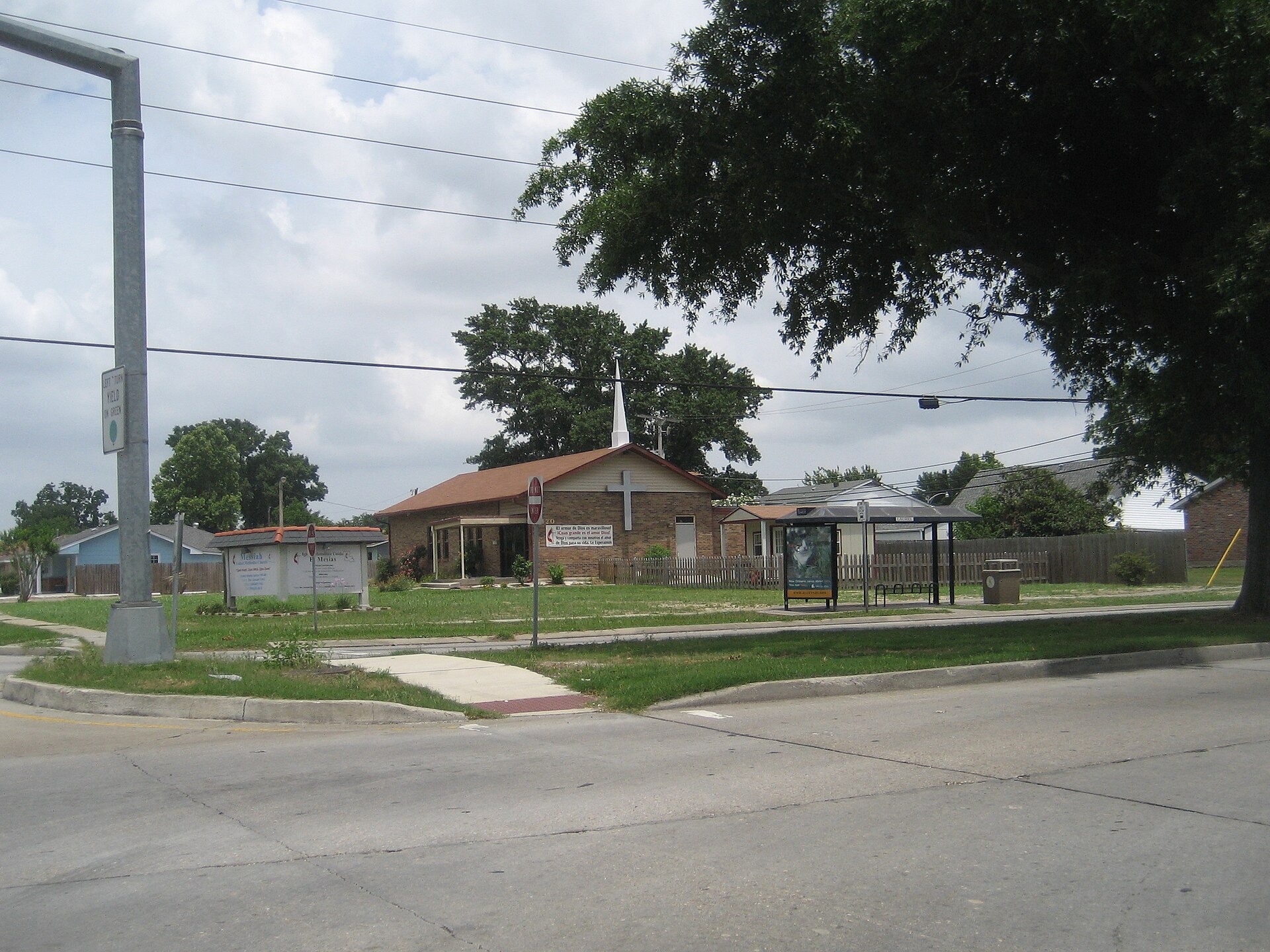
Life Tabernacle is older than its pastor. The church was founded in 1959 by Bishop Bervick A. Spell, whom The Advocate identifies as Tony Spell's grandfather, as the First Pentecostal Church of West Baton Rouge in Port Allen.17 It moved to Plank Road in Baton Rouge in 1967, took the name Life Tabernacle, and in 2005 moved again to a 34-acre site at Hooper and Blackwater roads in the city of Central.1 Its corporate name in federal court filings is First Apostolic Church of East Baton Rouge Parish, doing business as Life Tabernacle Church.8 Bervick Spell pastored the church from 1959 to 2009 and died on Feb. 19, 2022, at 92, three months before the ruling that vindicated his successor.7
Tony Spell did not grow up into the pulpit by an easy road. Before he took the church, The Advocate reports, he spent two years building neighborhoods for the home builder D.R. Horton and worked as a millwright at industrial plants. In 2009 Bervick Spell "handed over the reins" to him.1 Life Tabernacle is an Apostolic Pentecostal congregation: a church in the family that teaches a baptism in the Holy Spirit after conversion and keeps a strong emphasis on assembling in person for worship, prayer and preaching. The movement's history is told in Church History Part C, lesson 02; this lesson does not repeat it.
By 2020 Life Tabernacle was a large working-class church with a bus ministry. Spell told WAFB in March 2020, as NBC News reported, that the church ran 27 buses on Sundays to pick up people across a five-parish area.9 Many riders were children and families without other transportation. The buses matter to this story twice: they were the reason a crowd of more than a thousand could gather in one sanctuary on a Sunday in March 2020, and one of them was at the center of the separate April 2020 charge described below.

The order they faced
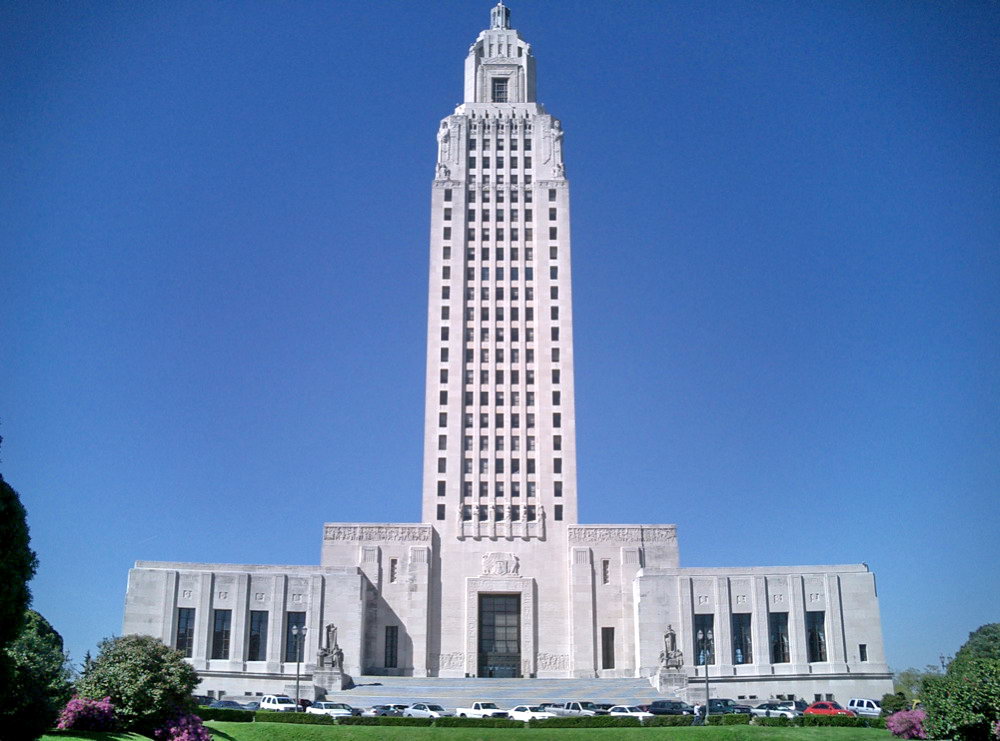
Gov. John Bel Edwards had already declared a public health emergency when he issued Proclamation Number JBE 2020-30 (the Louisiana Supreme Court calls it Order 30) on March 16, 2020.2 He acted under the Louisiana Homeland Security and Emergency Assistance and Disaster Act, La. R.S. 29:721 to 29:739. Section 1 of Order 30 read, word for word:
In an effort to reduce and limit the spread of COVID-19 in Louisiana, and to preserve the health and safety of all members of the public, all gatherings of 50 people or more between 12:00 a.m. Tuesday, March 17, 2020 and Monday, April 13, 2020 shall be postponed or cancelled. This applies only to gatherings in a single space at the same time where individuals will be in close proximity to one another. It does not apply to normal operations at locations like airports, medical facilities, shopping centers or malls, office buildings, factories or manufacturing facilities, or grocery or department stores. This order does not limit the ability of a local jurisdiction or political subdivision from enacting more restrictive limitations.2
Order 30 also closed casinos, video poker establishments, movie theaters, bars, bowling alleys, and fitness centers and gyms, and it limited restaurants to take-out, drive-through and delivery.2 When he announced the 50-person limit on March 16, Edwards said, "Following additional guidance from the CDC, gatherings of more than 50 people are no longer permitted," and that the limits were needed to "slow the spread of COVID-19."9
On Sunday, March 22, 2020, the governor issued Proclamation Number 33 JBE 2020 (Order 33). It cut the gathering limit to 10 people in a single space, again with exceptions for "normal operations" at airports, medical facilities, office buildings, factories and grocery stores (shopping centers, malls and department stores dropped off the list). It imposed a stay-at-home order on "all individuals within the state of Louisiana" unless they were "performing an essential activity," a phrase defined to include buying food and medicine, outdoor activity and "[g]oing to and from an individual's place of worship." As the Louisiana Supreme Court later observed, "Attending or participating in a worship service is not expressly identified as an essential activity."2
The stay-at-home order also exempted anyone traveling to perform "essential worker functions," and it adopted by reference a federal advisory list from the Cybersecurity and Infrastructure Security Agency. The court counted that list: seven pages, 129 job descriptions in 14 sectors, covering everything from "[a]utomotive repair and maintenance facilities" to "manufacturing and distribution of animal . . . bedding" and "[c]ompany cafeterias."2
Violating an order issued under the disaster act was a crime. La. R.S. 29:724(E) made it punishable by "a fine of not more than five hundred dollars or confinement in the parish jail for not more than six months, or both."2 East Baton Rouge Parish District Attorney Hillar Moore confirmed in April 2020 that each count carried up to six months in jail and a $500 fine.3
What they did
Spell kept the doors open and kept preaching. The bills of information later filed against him list the services the state counted: Tuesday, March 17, 2020; Sunday, March 22, 2020, at 11:45 a.m. and 6:50 p.m.; Tuesday, March 24, 2020; and Sunday, March 29, 2020, at 10:00 a.m. and 6:30 p.m. The state's case did not dispute that he "continued to lead in-person worship services in the church's sanctuary building while each of the subject orders was in effect," or that attendance exceeded the limit each time.2
He did it in the open. He told WAFB, as NBC News reported, that 1,170 people attended on Sunday, March 22, the day the stay-at-home order was signed.9 He told CBS News that 1,265 attended the next Sunday.3 He said his reasons in plain words. In an email to CBS News he wrote, "We have a constitutional right to congregate," and "We will continue." Asked why he defied the order, he answered, "Because the Lord told us to." He described the church as "the salvation center of the soul, the sanctuary where we come together and meet," and said of the people who came, "We are needy people. Our souls are lost."3 To WAFB he said, "We hold our religious rights dear and we are going to assemble no matter what someone says."93
On Tuesday, March 31, 2020, Central police served him with six misdemeanor summonses for violating Orders 30 and 33. He was read his rights and fingerprinted but not booked into jail, because parish officials were trying to keep the jail population down. He held an evening service that night; buses and cars filled the parking lot.32
His argument from the first week was the argument that later won: if a store or a factory could stay open with a crowd inside, so could a church. "I'm no more concerned than I would be going to Walmart or Home Depot," he told reporters.3 In April he put it more sharply: "If this is not about religion, then are the Waltons not being issued summons and arrested for keeping Walmart open?" and "Nobody will tell us as God-fearing Christians and Americans that we are non-essential in our society."4
He also went to federal court. Spell and the church sued the governor, Central Police Chief Roger Corcoran and East Baton Rouge Parish Sheriff Sid Gautreaux under 42 U.S.C. 1983 in the U.S. District Court for the Middle District of Louisiana (No. 3:20-cv-282), represented by the Foundation for Moral Law of Montgomery, Alabama.810 When the lower federal courts refused emergency relief, he asked the U.S. Supreme Court for an injunction (No. 20A91). Justice Samuel Alito denied the application on Nov. 27, 2020, two days after the Court ruled for the Catholic Diocese of Brooklyn in a different worship case.10 That federal suit ended badly for him, for reasons explained under "How it ended."
The April 2020 bus incident
One episode in April 2020 has nothing to do with the right to worship and must be told plainly. A man named Trey Bennett had protested in front of the church for weeks, saying he wanted it closed for public health reasons. On Sunday, April 19, 2020, Spell backed a church bus toward Bennett in the driveway; surveillance video showed the bus stopping a few feet from him. Central police obtained a warrant the next day, and on Tuesday, April 21, Spell turned himself in. He was booked into East Baton Rouge Parish Prison on one count of aggravated assault and one of improper backing.114 Spell admitted to WAFB that he was driving. He said the man "has been in front of my church driveway for three weeks now" shouting vulgarities, that he had meant to confront him and ask him to leave, and that his wife talked him out of it; he denied he would have hit him. Bennett denied using profanity and said, "It didn't seem real until it was physically in my face with a bus."114
The outcome: the East Baton Rouge district attorney never prosecuted the bus case. On June 15, 2022, District Attorney Hillar Moore said those charges were "allowed to expire without any action being taken," and they were dismissed at the same hearing as the worship charges.5 No court ever found that Spell assaulted Bennett.
House arrest and the ankle monitor
After the bus arrest, Spell was released on condition that he "refrain from any and all criminal conduct," which the court read to include strict compliance with the governor's orders. At a hearing on Friday, April 24, 2020, the judge asked whether he would comply. According to District Attorney Moore, Spell answered with a Bible verse and then stayed silent when asked again, and the judge took the silence as a refusal.4 He was placed on house arrest with an ankle monitor. On Sunday morning, April 26, he preached anyway; The Advocate reported the monitor was visible at the cuffs of his trousers, and congregants held signs reading "I stand with Pastor Spell."12 The district attorney's motion to revoke his bond was still pending at that point.4

What it cost
The legal cost came first. Spell faced six criminal counts, each punishable by up to six months in jail, for a total exposure of three years and $3,000 in fines if a judge ran every count to the maximum.23 He was fingerprinted in March, booked into the parish jail in April on the bus charge, and placed under house arrest with an ankle monitor.1112 The criminal cases kept him under travel restrictions for months, until they were dismissed. When they were dismissed in June 2022, he told WAFB his first trip would be to Atlanta to see a grandchild for the first time.5 He described the stretch from March 2020 to May 2022 as "27 months."13
The public cost was heavy. An online petition calling for his arrest on "reckless endangerment" charges gathered more than 4,000 signatures within days of the March 22 service.9 Central's assistant police chief said publicly that he was "doing this for publicity" and "putting the citizens of the community at risk."3 Protesters stood at the church driveway for weeks.11
The cost to his church was real and is part of the record. In mid-April 2020 an elderly member, a 79-year-old usher, died; the coroner's report listed acute respiratory distress syndrome, pneumonia and COVID-19. Spell disputed the finding, saying the man died of another condition, and told WAFB, "That is a lie."1415 The same week, WBRZ reported that Jeff Wittenbrink, a lawyer on Spell's legal team, was hospitalized with COVID-19; WAFB reported that the hospitalized lawyer had attended an April 2 news conference and an April 5 service at the church.1514
The civil suit cost him too. He lost it, as told below, after two appeals to the Fifth Circuit and two filings in the U.S. Supreme Court, and recovered nothing.816
The later record (2026)
In 2026 Spell was arrested again, in a matter unrelated to the pandemic. On June 23, 2026, East Baton Rouge Parish sheriff's deputies arrested him on suspicion of second-degree battery after a fight on Hooper Road, across from the church, with a 20-year-old neighbor. Arrest records say the young man, standing outside his home, shouted a profanity at Spell and Spell crossed the road. Video released by the young man's family appears to show Spell running across the street, the young man swinging first, and Spell then pinning him down and striking him repeatedly; arrest records describe the young man curling up on the ground as the blows continued. The young man's father said his son needed five stitches in his chin. Spell bonded out the same day.17186 At a news conference the next day Spell said the neighbor had threatened to rape and kill members of his family, and that "I have a duty and obligation to do what I did." The family denied making any threat. Central Police Chief Roger Corcoran said his department's records showed "only 5 incidents involving Pastor or Mrs. Spell in the past 4 years," only one of them a complaint about the neighbors.196
Two days after the arrest, at about 4:50 a.m. on June 25, 2026, deputies called to a complaint about Spell mowing the church lawn recorded him on body camera using an anti-gay slur twice about the young man, saying he had beaten him, and warning, "And he's next if he comes over here and harasses these boys."2021 On July 10, 2026, a judge of the 19th Judicial District Court issued a protective order that bars Spell from contacting the young man or his family and requires him to stay 50 yards from their home, except to walk to his own mailbox.1821
The status as of this writing: at a bond review on Sept. 15, 2026, his lawyer said, "He's not yet been charged. The case has not been billed." The judge set another review for Dec. 7, 2026, and said the case would leave the review docket if prosecutors had still filed no charge by then. A Nov. 3, 2026 report found no formal charge, dismissal or trial.226 Spell has not been convicted of anything in this matter. He has said, "The truth will come out in court."23
How it ended
In the state courts
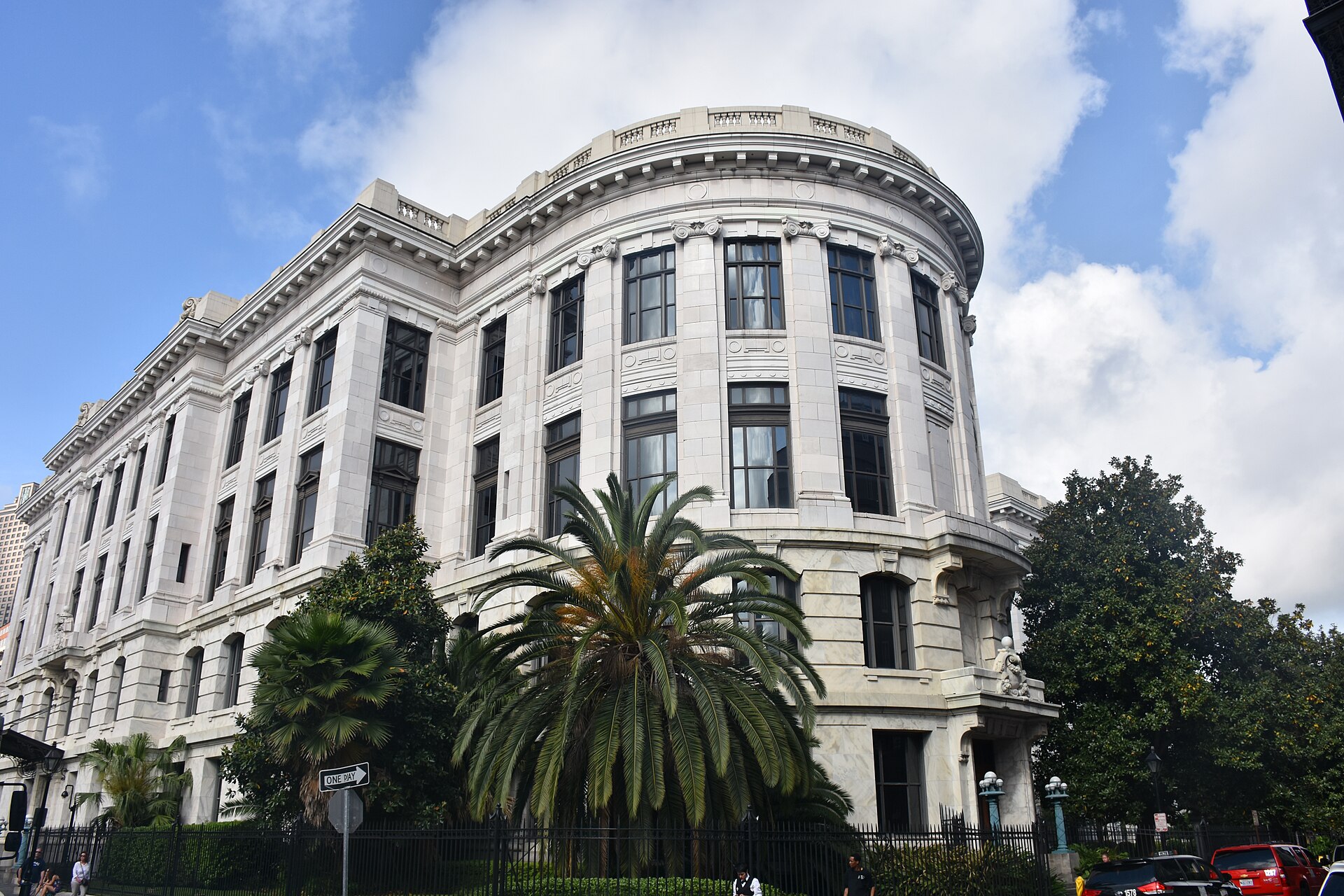
Spell's lawyers moved to quash the bills of information, arguing that the orders violated his right to the free exercise of religion. The trial court denied the motion, and the state court of appeal denied his writ application. On Dec. 7, 2021, the Louisiana Supreme Court agreed to hear the case (State v. Spell, 21-00876, 328 So. 3d 406).2
On May 13, 2022, the court ruled for Spell. Justice William J. Crain wrote the opinion. Chief Justice John L. Weimer dissented, Justice Griffin dissented for the reasons Weimer gave, and Justice Crichton concurred separately, so the vote was 5-2.213 The opinion opens:
In this criminal proceeding, we find certain provisions of two executive orders, as applied to defendant, violate his fundamental right to exercise religion, do not survive strict scrutiny, and are thus unconstitutional.2
The court applied the rule the U.S. Supreme Court had announced in Roman Catholic Diocese of Brooklyn v. Cuomo (2020) and Tandon v. Newsom (2021): an order that treats any comparable secular activity more favorably than worship is not neutral and generally applicable, so it must survive strict scrutiny. (Those cases are lesson 09.) It then compared the church to an office:
Yet under both executive orders, an unlimited number of people were allowed to remain in a single conference room in an office building for an unlimited period of time, all in close proximity, talking, eating, and engaging in any other "normal operations" of the business. However, if ten of these individuals left the conference room, walked across the street to a church, and entered an otherwise empty sanctuary building for a worship service, they were subject to criminal prosecution for violating Order 33.2
It answered the state's claim that Spell wanted to be "a law unto himself":
The state's argument misses a crucial point. The defendant does not argue he is "a law unto himself" or the executive orders violate "his own standards." What defendant seeks--and what our Constitution ensures--is that his religious activities be treated no differently than comparable secular activities. Disparate treatment implicates the Free Exercise Clause. . . . We interpret Pastor Spell's request not as one for special treatment, but for equal treatment.2
On the evidence, the court found the state had offered almost none: "It introduced the bills of information for the criminal charges, the relevant executive orders, and a copy of a federal district court opinion in a civil proceeding filed by the defendant against the governor. No witnesses testified. This evidence fails to establish that measures less restrictive of the First Amendment activity could not address the state's interest in reducing the spread of COVID-19."2 The court accepted that "Reducing the spread of COVID-19 is a compelling government interest," and it granted that officials early in the crisis "had to respond quickly and decisively." It still refused to lower the standard:
We reject any contention that early in a crisis, the Constitution's protection of fundamental rights must always yield to the needs of the state to respond to the crisis. A public health emergency does not relegate the First Amendment to a proposition or allow violations thereof to be judged on a sliding scale of constitutionality. The infringement of the fundamental right of the free exercise of religion, whether in times of crisis or calm, must always be strictly scrutinized by our courts.2
And it closed with the Louisiana Constitution's own words:
Pandemic or not, this court cannot look the other way when the state infringes upon a citizen's fundamental right to exercise his religion. "All government originates with the people, is founded on their will alone and is instituted to protect the rights of the individual and for the good of the whole." La. Const. art. I, §1. . . . As judges, we have no more solemn duty than to protect the fundamental rights reserved by the people from government overreach.2
The decree: "The limits on gatherings in executive order 30 JBE 2020, Section 1; and the limits on gatherings and the stay-at-home mandate in executive order 33 JBE 2020, Sections 2, 3, and 5 are unconstitutional as applied to the defendant. The trial court erred in denying the motion to quash. The trial court's judgment is reversed, and the motion to quash is granted."2
Justice Crichton agreed "that the emergency proclamations were not narrowly tailored," and added a practical point: the Supreme Court had said attendance could be "tied to the size of the church," and "It is undisputed . . . that the capacity of defendant's church permits hundreds of people to gather outside of the pandemic restrictions." The state never showed why a limit tied to the building's capacity would not have served.2
On June 15, 2022, at a hearing before Judge Eboni Johnson Rose of the 19th Judicial District Court, the charges were formally dismissed, together with the bus charges the district attorney had let expire. "They were forced to say that we were right all along," Spell said, calling it "a tremendous win."5 On the day of the ruling he had said, "I cried, because after 27 months [the ruling] says everything we've done was right," and, "We said 27 months ago that we would rather die than kill the church. . . . I'm glad we listened to God and not the governor."13

In the federal courts
The federal suit for damages ended the other way, and the reason is worth knowing. The district court dismissed the damages claims on qualified immunity, the injunction claims as moot and the state-law claims without deciding them. On Feb. 17, 2023, a Fifth Circuit panel (Chief Judge Richman and Judges Elrod and Andrew S. Oldham) affirmed in an unpublished opinion.8 The panel explained that Spell's lawyers had "explicitly waived" the argument that won in Louisiana's highest court (that the orders treated churches worse than comparable businesses) and argued instead that church assembly is "beyond the jurisdiction of the government" altogether. "Pastor Spell is the master of his case, and he cannot prevail on the theory he advances," the panel wrote.8
Judge Oldham, joined by Judge Elrod, wrote separately to say how close Spell had come: "For decades, it has been clearly established that treating houses of worship worse than comparable secular assemblies . . . violates the Constitution. . . . Had Pastor Spell's counsel not affirmatively waived the Lukumi argument, his victory was all but assured. . . . But oddly, Pastor Spell's counsel insisted on taking a loss."8 The U.S. Supreme Court denied review on Oct. 2, 2023 (Spell v. Edwards, No. 22-1093).16
So the score is plain. In the criminal case, where the state tried to punish him for worship, Spell won outright in the state's highest court and every charge was dismissed. In his own damages suit he won nothing, because of the theory his lawyers chose, while two federal judges wrote that the right he claimed was clearly established.
Timeline
| Date | Event |
|---|---|
| Nov. 1, 1959 | Bervick A. Spell founds the First Pentecostal Church in Port Allen, later Life Tabernacle.7 |
| 2005 | Life Tabernacle moves to a 34-acre site at Hooper and Blackwater roads in Central.1 |
| 2009 | Bervick Spell hands the church to Tony Spell.1 |
| March 16, 2020 | Gov. Edwards issues Order 30: gatherings of 50 or more cancelled, with exceptions for airports, offices, factories and stores.2 |
| March 17, 2020 | First service counted against Spell under Order 30.2 |
| March 22, 2020 | Order 33: 10-person limit and statewide stay-at-home order. Spell says 1,170 attend that day's service.29 |
| March 31, 2020 | Six misdemeanor summonses served; Spell fingerprinted, not jailed; evening service held.23 |
| Mid-April 2020 | An elderly church member dies; the coroner lists COVID-19 among the causes; Spell disputes it.14 |
| April 19 to 21, 2020 | Bus incident with protester Trey Bennett; warrant issued; Spell turns himself in and is booked on aggravated assault and improper backing.11 |
| April 24 to 26, 2020 | Hearing on release conditions; house arrest with ankle monitor; Spell preaches Sunday anyway.412 |
| Nov. 27, 2020 | Justice Alito denies Spell's application for an injunction in the federal case (No. 20A91).10 |
| Dec. 7, 2021 | Louisiana Supreme Court grants review of the denial of his motion to quash.2 |
| Feb. 19, 2022 | Bishop Bervick Spell dies at 92.7 |
| May 13, 2022 | State v. Spell: 5-2, the orders are unconstitutional as applied; motion to quash granted.213 |
| June 15, 2022 | All 2020 charges dismissed before Judge Eboni Johnson Rose; travel limits end.5 |
| Feb. 17, 2023 | Fifth Circuit affirms dismissal of the federal damages suit; Oldham concurrence.8 |
| Oct. 2, 2023 | U.S. Supreme Court denies certiorari in Spell v. Edwards, No. 22-1093.16 |
| June 23, 2026 | Spell arrested on suspicion of second-degree battery after a fight with a 20-year-old neighbor; released on bond.176 |
| June 25, 2026 | Body-camera video records Spell using a slur and threatening the young man.206 |
| July 10, 2026 | 19th Judicial District Court protective order: no contact, 50 yards from the neighbors' home.1821 |
| Sept. 15, 2026 | Bond review: no charge filed; next review set for Dec. 7, 2026.226 |
Why it took courage
Courage is easy to praise after a court agrees. Spell's stand deserves praise because he took it before any court agreed, at the worst moment to take it. In late March 2020 Louisiana had, by the governor's count, more coronavirus cases per person than any state except New York and Washington, the governor was asking for a federal disaster declaration, and nobody knew how bad it would get.9 The U.S. Supreme Court had not yet decided a single worship case; its first, South Bay United Pentecostal Church v. Newsom, would not come until May 29, 2020, and it went against the church.24 Every incentive pointed toward closing the doors, streaming the service and waiting. Spell decided that the gathered church was not something a governor could switch off by proclamation, and he said so on camera, by name, week after week, while police wrote him up.
He defended a principle that later became the law of the land and of his state: a government that lets a crowd fill an office, a factory floor or an airport gate cannot make the same crowd a crime when it fills a sanctuary. The Louisiana Supreme Court put it in a sentence worth remembering: "Our fundamental constitutional rights are not so numerous to prevent their consideration when constructing restrictions."2 The governor's staff wrote exemptions for more than 100 job categories and for company cafeterias. They did not write one for the congregation at worship. Spell was the person who made the state answer for that choice in court.
He risked things that were concrete. He risked jail on six counts. He risked his reputation, and lost much of it in the press. He risked his church's standing in his own town, where a petition asked that he be prosecuted for endangering his neighbors.9 He lived under house arrest with an ankle monitor in the spring of 2020 and under travel limits until the charges were dismissed in June 2022.125 He kept going when a member of his church died and the coroner said the cause included COVID-19.14 He fought the charges through the law's procedures: he answered the summonses, appeared in court, moved to quash, and took his case up the ladder of appeals. That is the form of resistance the Ordered Liberty module calls lawful: open, accountable and willing to bear the penalty while the courts decide (Ordered Liberty, lesson 08).
The win also protects people who never heard of him. Because a state supreme court held that a public health emergency does not "relegate the First Amendment to a proposition," a Louisiana governor facing the next emergency has to show evidence, not assume it, before treating worship worse than work. That is a gift to every congregation in the state, including those who disagreed with how Spell went about it.
A true profile also says what the courage does not cover. It does not cover the bus in the driveway in April 2020, which was never prosecuted but was not a defense of anyone's liberty. It does not cover the 2026 fight on Hooper Road or the words recorded on a deputy's camera, which are facts of a later chapter, not of the stand this lesson honors. The admiration here is for what he did between March 2020 and May 2022 for the freedom to worship. That part of the record is true, and it holds.
What the other side said
The State of Louisiana argued in the Louisiana Supreme Court that the exempted businesses involved "consumer interaction . . . of a transient, in-and-out nature, such as Walmart, Target and Home Depot, activities posing markedly different risks from the extended more densely packed environments of churches," that the orders treated churches better than restaurants, bars, casinos and gyms, and that ruling for Spell would let him "become a law unto himself." The governor filed a similar brief as amicus curiae. The state also asked for "greater leniency and deference" because the orders were written "when the pandemic was . . . in its earliest, most uncertain stages, [and] Louisiana was one of the virus hotspots."2
Chief Justice John L. Weimer, dissenting with Justice Griffin, wrote that the record lacked the facts needed to decide: whether there was a treatment, how contagious and lethal the virus was, how it spread, and whether services could have been held outdoors. He wrote that the majority held March 2020 orders "to a standard of scrutiny that has thus far only been applied by the Supreme Court at a much later stage in the pandemic and at a time with much greater evidentiary knowledge," and he would have sent the case back for evidence: "Thus, I very respectfully dissent and would remand this matter to the district court for the introduction of evidence."2
Gov. John Bel Edwards's office said after the ruling that "the Governor disagrees with the Court's ruling and maintains that his orders were both necessary and lawful," while accepting the decision. District Attorney Hillar Moore said, "we believe the dissenting opinion of the Chief Justice is more correct," and that "we had an obligation to protect the public and the rule of law."13
Central Assistant Police Chief Darren Sibley said in March 2020 that Spell was "doing this for publicity" and "putting the citizens of the community at risk."3 In 2026 Scott Sherwin, the father of the young man Spell is accused of beating, said, "This pastor is a bully who gets mad when he does not get his way."19
Still disputed: Whether courts should give officials more room in the first weeks of an emergency (Chief Justice Weimer's view) or apply full strict scrutiny from the first day (the majority's view) remains a live argument in law schools and legislatures. Whether Life Tabernacle's 2020 services spread the virus was never tried in any court; the coroner's finding on the member who died and Spell's denial of it both stand on the record.14 The June 2026 fight is disputed in its causes: Spell says the young man threatened his family, the family denies it, and no court has weighed either account; as of Nov. 3, 2026 no charge had been filed and the next review was set for Dec. 7, 2026.619
Medical note: Spell made statements about the virus that were his own views, not findings of any court or health body. In March 2020 he told WAFB, "The virus, we believe, is politically motivated," and said of the gatherings, "I'm no more concerned than I would be going to Walmart or Home Depot." In April 2020 he called the coroner's finding that a church member died of COVID-19 with pneumonia and respiratory distress "a lie." On May 13, 2022 he said, "The virus does not have a brain. It does not stop at the store of Walmart and come into the church."31413 At the time, the CDC had recommended on March 15, 2020 that gatherings of 50 or more be cancelled for eight weeks, the governor's orders stated that the virus spreads "via personal interactions," and the parish coroner listed COVID-19 among the causes of the member's death.9214 The Louisiana Supreme Court decided the case on equal treatment of worship and secular gatherings and did not rule on any of these medical questions.
Hard questions and answers
Did he win only because the state offered no evidence?
Partly, and that is how strict scrutiny is supposed to work. When a law burdens a fundamental right and favors comparable secular activity, the government carries "a heavy burden" of showing its rule is narrowly tailored.2 The state chose to defend the orders with the bills of information, the orders themselves and a federal opinion, and called no witnesses. But the majority did not rest on evidence alone. It held that the orders, by exempting offices, factories and airports, were not neutral and generally applicable on their face, and that the state could not explain why a sanctuary was more dangerous than a conference room. Justice Crichton, who regretted the thin record, still agreed the state "failed to meet its burden."2
Wasn't holding services of a thousand people in March 2020 a danger to others?
A public health officer would say yes, and the governor's orders were written on that premise. The court did not deny the danger; it called reducing the spread "a compelling government interest." Its point was that the same danger existed in the places the orders left open, and the state did not show otherwise: "The state's disparate treatment of religious gatherings is simply not supported by any evidence."2 The court also noted that less restrictive rules were available, such as limits tied to a building's capacity.2 A reader can grant the risk and still see the unfairness the court saw.
Why did he lose in federal court if he won in state court?
Because his federal lawyers dropped the winning argument. The Fifth Circuit said Spell "explicitly waived" the claim that the orders treated churches worse than comparable secular gatherings, and argued instead that government has no jurisdiction over church assembly at all, a theory that "Controlling precedent directly contradicts." Two of the three judges wrote that, had the equal-treatment argument been kept, "his victory was all but assured."8 The loss was about litigation strategy, not about the right.
Does the 2026 arrest change the story of 2020?
It changes what a reader knows about the man, and that is why it is here. It does not change what happened in 2020 to 2022 or what the court decided. The battery case concerns a fight with a neighbor six years later; as of November 2026 it had produced an arrest, a protective order and a body-camera recording, but no formal charge and no conviction.618 A history that hid those facts would be untrue; a history that let them erase a court's holding on religious liberty would also be untrue.
What happened with the bus charge?
Spell admitted driving the bus and said he meant to confront a protester who had been at the driveway for weeks, then thought better of it; the protester said the bus came within a few feet of him.11 He was booked on aggravated assault and improper backing. The district attorney never prosecuted; the charges "were allowed to expire without any action being taken," and they were dismissed on June 15, 2022.5
Didn't Louisiana treat churches better than some businesses?
Yes. Bars, casinos, gyms and theaters were closed entirely, and restaurants lost their dining rooms, while churches could still gather under the limits. The state made exactly this argument. The court answered with the U.S. Supreme Court's rule from Tandon v. Newsom: "[i]t is no answer that a State treats some comparable secular businesses or other activities as poorly as or even less favorably than the religious exercise at issue." What matters is whether any comparable secular activity was treated better, and offices, factories and airports were.2
Related lessons
- 01 Emergency Power in 2020: the orders and who signed them, state by state.
- 07 Pastor Mike McClure and Calvary Chapel San Jose: a California church that won on contempt and lost on mask fines.
- 08 John MacArthur and Grace Community Church: another pastor who reopened and was sued.
- 09 The Worship Cases at the Supreme Court: Diocese of Brooklyn and Tandon, the rules the Louisiana court applied.
- 22 What the Stands Won and 23 Timeline, Glossary, Sources.
- Ordered Liberty 02: Legitimate Authority and Its Limits and 08: Forms of Lawful Resistance.
- The First Amendment and The Fourteenth Amendment (how the First Amendment binds a state governor).
- Church History Part C, lesson 02: Pentecostal and Charismatic, for the tradition Life Tabernacle belongs to.
Still open
These items could not be confirmed against a primary source before publication. The lesson states them as open, and they stay on the fact-check list.
- The Advocate's June 30, 2026 article gives June 23 as the date of the body-camera recording while also saying it came two days after the fight; the BR Weekly Press gives about 4:50 a.m. on June 25, 2026, which this lesson uses.
- The name of the judge who issued the July 10, 2026 protective order and the judge at the Sept. 15, 2026 bond review were not found.
- The filing date of Spell's federal suit (M.D. La. No. 3:20-cv-282) was not confirmed; the case number shows 2020.
- The Advocate's description of Bervick Spell as Tony Spell's grandfather is reported, not confirmed from a second source.
- No record after Nov. 3, 2026 on the battery matter was found; the Dec. 7, 2026 review had not yet occurred.
Learn more
- State v. Spell, full opinion with dissent and concurrence (Louisiana Supreme Court): Twenty pages of majority opinion, plus Chief Justice Weimer's case for deference early in an emergency. Read both.
- Spell v. Edwards, Fifth Circuit (Feb. 17, 2023): Eight pages on how a winning argument was given away, with Judge Oldham's concurrence.
- South Bay United Pentecostal Church v. Newsom (May 29, 2020): The first Supreme Court worship order of the pandemic, which went the other way; compare it with what the Louisiana court did two years later.
Notes
- Deanna B. Narveson, "Who is Tony Spell?", The Advocate (Baton Rouge), June 25, 2026 (retrieved Nov. 7, 2026). Read it online. ↩
- Supreme Court of Louisiana, State of Louisiana v. Mark Anthony Spell, No. 2021-KK-00876 (May 13, 2022), opinion by Crain, J.; Weimer, C.J., dissenting; Crichton, J., additionally concurring; Griffin, J., dissenting for the reasons assigned by Weimer, C.J.; issued with Clerk's News Release #023 (retrieved Nov. 7, 2026). Read it online. ↩
- CBS News and The Associated Press, "Louisiana church packed for services again despite charges against pastor amid pandemic," April 1, 2020 (retrieved Nov. 7, 2026). Read it online. ↩
- WAFB staff, "La. pastor Tony Spell ministers while wearing ankle monitor despite house arrest order," WAFB (Baton Rouge), April 25, 2020, updated April 27, 2020 (retrieved Nov. 7, 2026). Read it online. ↩
- "With criminal matters dismissed, Tony Spell no longer under travel restrictions," WAFB, June 15, 2022 (retrieved Nov. 7, 2026). Read it online. ↩
- Derek Payne, "Tony Spell's battery case awaits charging decision; Dec. 7 review scheduled," BR Weekly Press, updated Nov. 3, 2026 (retrieved Nov. 7, 2026). Read it online. ↩
- "Bishop Bervick A. Spell Passes Away at 92; Founded Life Tabernacle; A Life of Service," Central City News (Central, La.), Feb. 24, 2022 (retrieved Nov. 7, 2026). Read it online. ↩
- U.S. Court of Appeals for the Fifth Circuit, Spell v. Edwards, No. 22-30075 (Feb. 17, 2023) (per curiam, not designated for publication; Richman, C.J., Elrod and Oldham, JJ.), with Oldham, J., joined by Elrod, J., concurring; appeal from M.D. La. No. 3:20-cv-282 (retrieved Nov. 7, 2026). Read it online. ↩
- NBC News, "Louisiana pastor defies coronavirus order, draws over 1,000 people," March 25, 2020 (retrieved Nov. 7, 2026). Read it online. ↩
- Supreme Court of the United States, docket No. 20A91, Mark Anthony Spell, et al. v. John Bel Edwards, et al. (application for injunctive relief docketed Nov. 18, 2020; denied by Justice Alito Nov. 27, 2020) (retrieved Nov. 7, 2026). Read it online. ↩
- CBS News, "Tony Spell, Louisiana pastor who defied coronavirus ban, arrested for nearly backing up bus into protester," April 21, 2020 (retrieved Nov. 7, 2026). Read it online. ↩
- KATC staff, "Louisiana pastor defies house arrest, state orders in hosting in-person church services," published by WCPO, April 27, 2020, citing The Advocate (retrieved Nov. 7, 2026). Read it online. ↩
- Elizabeth Vowell and WAFB staff, "La. pandemic restrictions violated religious rights, court rules; Pastor Tony Spell takes victory lap," WAFB, May 13, 2022 (retrieved Nov. 7, 2026). Read it online. ↩
- Robb Hays, "Member of Life Tabernacle Church dies of COVID-19, records say," WAFB, April 16, 2020 (retrieved Nov. 7, 2026). Read it online. ↩
- WBRZ (Baton Rouge), report that a defiant Central pastor's attorney was hospitalized with COVID-19 and a church member died of the virus, April 16, 2020 (retrieved Nov. 7, 2026). Read it online. ↩
- Supreme Court of the United States, docket No. 22-1093, Mark Anthony Spell, et al. v. John Bel Edwards, et al. (petition filed May 5, 2023; denied Oct. 2, 2023) (retrieved Nov. 7, 2026). Read it online. ↩
- "Central Pastor Tony Spell arrested, accused of attacking neighbor," WAFB, June 23, 2026 (retrieved Nov. 7, 2026). Read it online. ↩
- WAFB I-TEAM, "Pastor Tony Spell ordered to stay 50 yards from neighbor's home after battery charge," WAFB, July 13, 2026 (URL dated July 14, 2026) (retrieved Nov. 7, 2026). Read it online. ↩
- Logan Cullop, "Central pastor, neighbor and police chief speak day after attack, arrest across street from church," WBRZ, June 24, 2026 (retrieved Nov. 7, 2026). Read it online. ↩
- Patrick Sloan-Turner (Olivia Tees contributing), "New bodycam shows Tony Spell using slur, threatening man two days after arrest," The Advocate, June 30, 2026 (retrieved Nov. 7, 2026). Read it online. ↩
- Evie Richard, "Protective order issued against Pastor Tony Spell," WBRZ, July 13, 2026 (retrieved Nov. 7, 2026). Read it online. ↩
- "Pastor Tony Spell speaks following bond hearing," WAFB, Sept. 15, 2026 (retrieved Nov. 7, 2026). Read it online. ↩
- "'The truth will come out in court': Pastor Tony Spell speaks after bonding out following battery arrest," WAFB, June 23, 2026 (retrieved Nov. 7, 2026). Read it online. ↩
- Supreme Court of the United States, South Bay United Pentecostal Church v. Newsom, No. 19A1044, 590 U.S. ___ (May 29, 2020) (application denied; Roberts, C.J., concurring) (retrieved Nov. 7, 2026). Read it online. ↩
Check yourself
1. Which places did Louisiana's Order 30 (March 16, 2020) exempt from its 50-person gathering limit?
Section 1 said the limit did not apply to normal operations at airports, medical facilities, shopping centers or malls, office buildings, factories or manufacturing facilities, or grocery or department stores. Bars, casinos and gyms were closed outright.
2. What was the vote in State v. Spell (La. May 13, 2022)?
Justice Crain wrote for the court; Chief Justice Weimer and Justice Griffin dissented; Justice Crichton concurred.
3. Why did the court apply strict scrutiny to the orders?
Following Tandon v. Newsom and Diocese of Brooklyn, an order that treats any comparable secular activity better than worship must pass strict scrutiny.
4. What evidence did the state offer to defend the orders at the hearing on the motion to quash?
The court wrote that the state's evidence was minimal and that no witnesses testified.
5. What happened to the April 2020 charges over the church bus and protester Trey Bennett?
District Attorney Hillar Moore said the charges were allowed to expire without any action, and they were dismissed with the worship charges.
6. Why did Spell lose his federal damages suit (Spell v. Edwards, 5th Cir. 2023)?
The panel said he cannot prevail on the theory he advances; Judge Oldham wrote that had the argument not been waived, his victory was all but assured.
7. As of November 2026, what is the status of the 2026 battery matter?
At the Sept. 15, 2026 bond review his lawyer said the case had not been billed; a Nov. 3, 2026 report found no charge, dismissal or trial, with a review set for Dec. 7, 2026.
8. What did the Louisiana Supreme Court say Spell was asking for?
The court wrote: "We interpret Pastor Spell's request not as one for special treatment, but for equal treatment."
Terms in this lesson
- Proclamation (executive order)
- A written order of a governor issued under statutory emergency powers; in Louisiana the 2020 COVID orders were proclamations under the Louisiana Homeland Security and Emergency Assistance and Disaster Act.
- La. R.S. 29:724(E)
- The Louisiana statute that made violating an emergency order punishable by a fine of up to $500, up to six months in parish jail, or both.
- Bill of information
- The written criminal charge a prosecutor files in Louisiana for misdemeanors and many felonies, in place of a grand jury indictment. To say a case has not been billed means no bill of information has been filed.
- Motion to quash
- A defendant's request that a court throw out a charge before trial, for example because the law behind it is unconstitutional.
- As applied
- A ruling that a law is unconstitutional in its application to a particular person or set of facts, without striking it for everyone.
- Free Exercise Clause
- The part of the First Amendment, binding the states through the Fourteenth, that forbids laws prohibiting the free exercise of religion; Article I, Section 8 of the Louisiana Constitution says the same.
- Neutral and generally applicable
- The Employment Division v. Smith test: a law that is neutral toward religion and applies to everyone alike need only be rational; one that is not must pass strict scrutiny.
- Strict scrutiny
- The hardest test in constitutional law: the government must prove a compelling interest and that its rule is the least restrictive way to serve it.
- Most-favored-nation rule
- The principle from Tandon v. Newsom (2021) that a rule treating any comparable secular activity better than worship triggers strict scrutiny.
- Qualified immunity
- A doctrine that shields government officials from personal damages unless they violated a clearly established right; it defeated Spell's federal damages claims.
- Waiver
- A party's intentional giving up of an argument; once waived, a court generally will not decide it, as the Fifth Circuit held in Spell v. Edwards.
- Protective order
- A court order restricting a person's contact with or nearness to another person; the July 10, 2026 order requires Spell to stay 50 yards from a neighbor's home.
- Second-degree battery
- A Louisiana felony battery charge involving serious bodily injury; Spell was arrested on suspicion of it in June 2026 but had not been charged as of November 2026.
- Apostolic Pentecostal
- A branch of the Pentecostal movement to which Life Tabernacle belongs; Church History Part C, lesson 02 covers the movement.
Sources
- State v. Spell, No. 2021-KK-00876 (La. May 13, 2022), opinion, dissent and concurrence (2022-05-13) checked 2026-11-07
- Spell v. Edwards, No. 22-30075 (5th Cir. Feb. 17, 2023) (2023-02-17) checked 2026-11-07
- Supreme Court docket 20A91, Spell v. Edwards (2020-11-27) checked 2026-11-07
- Supreme Court docket 22-1093, Spell v. Edwards (2023-10-02) checked 2026-11-07
- South Bay United Pentecostal Church v. Newsom, No. 19A1044 (May 29, 2020) (2020-05-29) checked 2026-11-07
- The Advocate, Who is Tony Spell? (2026-06-25) checked 2026-11-07
- Central City News, Bishop Bervick A. Spell obituary (2022-02-24) checked 2026-11-07
- NBC News, Louisiana pastor defies coronavirus order, draws over 1,000 people (2020-03-25) checked 2026-11-07
- CBS News and AP, Louisiana church packed for services again (2020-04-01) checked 2026-11-07
- CBS News, Tony Spell arrested over church bus and protester (2020-04-21) checked 2026-11-07
- WAFB, Tony Spell ministers while wearing ankle monitor (2020-04-25) checked 2026-11-07
- WCPO (KATC), Louisiana pastor defies house arrest (2020-04-27) checked 2026-11-07
- WAFB, Member of Life Tabernacle Church dies of COVID-19, records say (2020-04-16) checked 2026-11-07
- WBRZ, pastor's attorney hospitalized; church member dies (2020-04-16) checked 2026-11-07
- WAFB, court rules pandemic restrictions violated religious rights (2022-05-13) checked 2026-11-07
- WAFB, criminal matters dismissed (2022-06-15) checked 2026-11-07
- WAFB, Tony Spell arrested on battery charge (2026-06-23) checked 2026-11-07
- WAFB, The truth will come out in court (2026-06-23) checked 2026-11-07
- WBRZ, pastor, neighbor and police chief speak (2026-06-24) checked 2026-11-07
- The Advocate, new bodycam video (2026-06-30) checked 2026-11-07
- WAFB, protective order 50 yards (2026-07-13) checked 2026-11-07
- WBRZ, protective order issued (2026-07-13) checked 2026-11-07
- WAFB, bond hearing (2026-09-15) checked 2026-11-07
- BR Weekly Press, battery case awaits charging decision (2026-11-03) checked 2026-11-07