Lesson 8 of 23 · about 40 minutes
John MacArthur and Grace Community Church (Sun Valley, California)
Updated November 7, 2026
You'll be able to
- Explain the July 13, 2020 state order and the Los Angeles County order that closed indoor worship, and who issued them.
- Trace the August and September 2020 rulings in the Grace Community Church cases, including the stay and the preliminary injunction.
- Describe the August 31, 2021 settlement and why the county said it settled.
- Connect the church's case to the Supreme Court's rulings in Diocese of Brooklyn, South Bay and Tandon.
- State fairly the illness in the church that MacArthur acknowledged and the county's arguments.
- Evaluate why the stand took courage while the outcome was still unknown.
Start here: the short version
John MacArthur had been the pastor of Grace Community Church in Sun Valley, a neighborhood in the San Fernando Valley section of Los Angeles, since 1969.1 In the spring of 2020 the church obeyed California's early COVID-19 orders and stopped meeting in its sanctuary.2 On July 24, 2020, after the state had again closed indoor worship in Los Angeles County, MacArthur and the elders published a statement titled "Christ, not Caesar, Is Head of the Church," and two days later, on July 26, they opened the sanctuary doors to the congregation.23 Los Angeles County threatened daily fines and arrest, sued the church, won a stay from the Court of Appeal and then a preliminary injunction, and cancelled the church's decades-old lease on a parking lot it rented from the county.453 The church kept meeting every Sunday. After the U.S. Supreme Court ruled in 2020 and 2021 that states could not treat worship worse than comparable secular activity, the county and the state settled: on August 31, 2021 the Los Angeles County Board of Supervisors approved a $400,000 payment, the State of California agreed to pay another $400,000, and the county rescinded the parking lot lease cancellation.67 MacArthur, who also acknowledged that COVID-19 had gone through the church in the winter of 2020 to 2021 and that he and his wife had been sick, died of pneumonia on July 14, 2025, at 86.89 His stand took courage because an elderly pastor put himself, his elders and his church's property on the line, in public and under court order, for the claim that the government has no authority to close a church's worship, and he did it week after week until the government stopped trying.

Who they were before
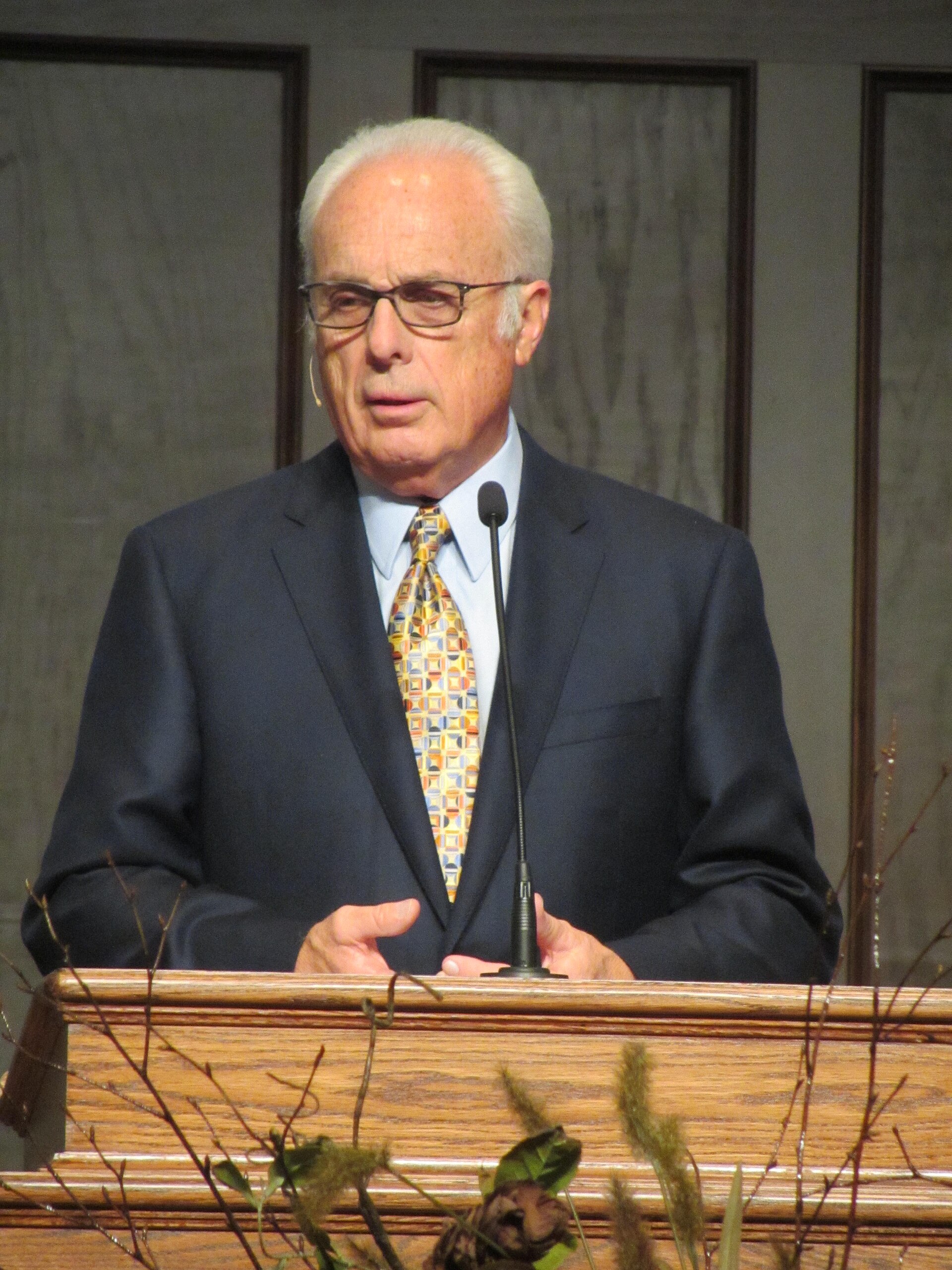
John Fullerton MacArthur Jr. was born in Los Angeles on June 19, 1939.1 In 1969 he became the pastor-teacher of Grace Community Church in Sun Valley, a congregation in the northeast San Fernando Valley, and he stayed in that pulpit for the rest of his life, more than fifty years.1 When he died, the church's elders described his tenure as "56 years of faithful ministry."9
MacArthur was known first as a Bible teacher. He preached through the New Testament verse by verse over decades, and his teaching reached a national and international audience through the ministry Grace to You.1 He helped found The Master's Seminary in 1986 and led The Master's University and Seminary as president for many years; the Christian Post obituary credits him with at least 3,300 sermons and more than 400 books and study guides.1 The Master's Seminary trained pastors who went to churches around the world. One of them, James Coates, became the pastor of GraceLife Church near Edmonton, Alberta, and is the subject of the lesson on Pastor James Coates and GraceLife Church in this module; MacArthur publicly cheered Coates's stand and prayed for him while Coates was in jail in 2021.10
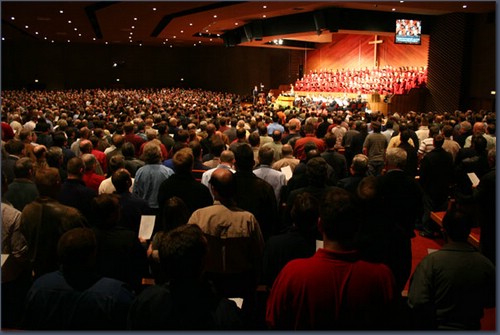
By 2020 MacArthur was 80 years old. His sanctuary in Sun Valley seats about 3,500 people.3 He had been married to Patricia MacArthur for more than sixty years at the time of his death, and the couple had four children, fifteen grandchildren and nine great-grandchildren, according to the obituary published by the Christian Post.1 He was not a political figure. He did not run for office, and his public fights had mostly been theological arguments with other Christians. That matters to this story: the man who led the most visible church challenge to California's 2020 worship orders had spent half a century insisting that the church's business was preaching the Bible, and he defended his 2020 decision on those same terms.
The church's own account of the first months of the pandemic is plain. In its July 24, 2020 statement the elders wrote that, when officials first gave guidance in March, "we voluntarily followed the initial recommendations of our government."2 Grace Community Church moved to online services in the spring of 2020 like most churches in California.1
The order they faced
California's COVID-19 orders came in layers. Gov. Gavin Newsom proclaimed a state of emergency in March 2020 and on March 19, 2020 issued Executive Order N-33-20, which directed Californians to stay home except for work in designated critical sectors and other permitted activities; in practice it ended in-person services for California congregations that spring. (The order's exact wording appears in lesson 01 of this module, which covers the 2020 emergency orders and who signed them.)11 Then, as cases rose in early summer, the state closed indoor worship again in the counties hardest hit.
The order that governed Grace Community Church in late July 2020 was the Statewide Public Health Officer Order dated July 13, 2020. The California Department of Public Health's official summary of that order, under the heading "Actions Taking Effect Immediately," states that it was "Closing, for counties on the Monitoring List for three or more consecutive days, additional indoor operations" for "certain sectors which promote the mixing of populations beyond households and make adherence to physical distancing with face coverings difficult." The sectors listed included "Places of Worship," second on the list after gyms and fitness centers.12 Los Angeles County was on the state's monitoring list, so indoor worship services in the county were forbidden. Worship could continue outdoors or online.
Los Angeles County layered its own order on top of the state's. The county Health Officer's order dated July 18, 2020 also barred indoor worship services; when the state Court of Appeal later stayed a trial judge's ruling in the church's favor, it relied on the county's "July 18, 2020 Health Order."5 The state's guidance for places of worship that remained open outdoors also restricted singing and chanting, a restriction the Supreme Court later declined to lift in February 2021.13
The penalties were real. A letter sent to MacArthur on July 29, 2020, three days after the church reopened, warned of a daily fine of $1,000 or arrest. The Thomas More Society, the legal group that later represented the church, published the letter on its case page and described it as a cease-and-desist demand; Baptist News Global reported that Los Angeles County had "threatened to enforce $1,000-per-day fines and possible imprisonment against MacArthur and other church leaders."45 The Thomas More Society says the letter came from the City of Los Angeles; Baptist News Global attributes the threat to the county. Both governments were later named in the church's lawsuit.47
At the same time, other indoor activities continued under the state's rules for permitted sectors, and the comparison became the center of the later litigation. In February 2021, in South Bay United Pentecostal Church v. Newsom, Justice Amy Coney Barrett wrote in a concurring opinion that "if a chorister can sing in a Hollywood studio but not in her church, California's regulations cannot be viewed as neutral."13 The comparison between what was allowed indoors and what was forbidden at church is the heart of the legal question, and the module's lesson on the worship cases at the Supreme Court explains how the Court resolved it.
What they did
The statement of July 24, 2020
MacArthur did not slip quietly back into the sanctuary. He and the elders explained in writing, in advance, what they were going to do and why. The statement, posted on the church's website on July 24, 2020 and titled "Christ, not Caesar, Is Head of the Church," opened with its thesis: "Christ is Lord of all. He is the one true head of the church."2 It then set out the church's position on civil authority. The elders affirmed that Christians owe obedience to government in its proper sphere, and they acknowledged that the church had complied with the early orders: "we voluntarily followed the initial recommendations of our government."2
The statement drew a line where the elders believed the government's authority ended. "We cannot and will not acquiesce to a government-imposed moratorium on our weekly congregational worship," they wrote, and "faithfulness to Christ prohibits us from observing the restrictions they want to impose on our corporate worship services."2 For the principle they cited the apostles' answer to the Jewish council in the book of Acts: "We must obey God rather than men," and "Whether it is right in the sight of God to give heed to you rather than to God, you be the judge."2 They closed with a decision and an invitation: "Therefore, following the authority of our Lord Jesus Christ, we gladly choose to obey Him," and "Stand with us in support of the biblical mandate to gather for corporate worship."2
The statement is worth reading in full, because it is careful. It does not say the virus was harmless, and it does not tell anyone else what to do with their health. Its claim is jurisdictional. Government, in the elders' view, has real authority over many things, but it does not have authority to tell a church whether it may gather for worship. That argument has a long history in Christian thought and in American constitutional law, and the module on ordered liberty takes it up directly in its lesson on legitimate authority and its limits.
Reopening on July 26, 2020
Two days later, on Sunday, July 26, 2020, Grace Community Church held indoor services in its 3,500-seat sanctuary.3 The church continued to stream services online for those who wanted to stay home.3 Members were not required to wear masks or keep apart, and the church set up an adjacent outdoor tent as well; Baptist News Global reported that the church was gathering "thousands of worshipers" indoors and in the tent during those weeks.5
The lawsuits of August 2020
When the threats came, the church did not wait to be prosecuted. With the Thomas More Society as counsel (Charles LiMandri, Jeffrey Trissell and Paul Jonna), and with Jenna Ellis also appearing for the church in the early weeks, Grace Community Church and MacArthur filed suit on August 13, 2020 against the State of California, Gov. Newsom, Attorney General Xavier Becerra, Los Angeles Mayor Eric Garcetti and Los Angeles County.414 The county answered with its own suit in Los Angeles Superior Court, County of Los Angeles v. Grace Community Church, case number 20STCV30695, asking for an order to stop indoor services.45
What followed was one of the busiest weeks any church has spent in court. On Friday, August 14, Superior Court Judge James C. Chalfant denied nearly all of the county's request for a temporary restraining order. He accepted the church's offer to have congregants wear masks and keep distance between family groups indoors, and he set a full hearing for September 4.1516 MacArthur told the Associated Press: "This vindicates our desire to stay open and serve our people."15
The county went straight to the Court of Appeal. Late on Saturday, August 15, the Court of Appeal for the Second District, in a four-page opinion, stayed Judge Chalfant's order to the extent it kept the county from enforcing its ban on indoor services, finding that "the County has demonstrated a likelihood that it will prevail on the merits."516 The panel applied the ordinary state-court rule that a health order is presumed valid unless its "unconstitutionality clearly, positively and unmistakably appears."16 The order came out hours before the church's Sunday service.5
MacArthur held the service anyway. On Sunday, August 16, he was greeted with a rousing ovation before he said a word, and then he told the congregation: "We're having church."5 He explained the decision in the same terms as the July statement: "We're not meeting because we want to be rebellious. We're meeting because this is what our Lord commanded us to do."5 He also said, plainly and with some humor: "You're here; you're not distancing, and you're not wearing masks."5
The county kept asking for emergency orders, and judges kept declining them. On August 25, Superior Court Judge Mitchell L. Beckloff denied what the church's lawyers called the county's fourth attempt to obtain a temporary restraining order. He ruled that the Court of Appeal's stay had not created new grounds for one and that "the circumstances today are essentially the same as they were on Aug. 14."14 MacArthur filed a sworn declaration in the case describing the church's reasons for meeting.4
The parking lot
Then the county reached for a different lever. Grace Community Church had for decades leased from the county a parking lot next to the church. On August 28, 2020 the county sent the church a letter ending the lease, and the Thomas More Society announced on August 31 that Los Angeles County had pulled the lease, which it described as 45 years old.47 The church's lawyers treated the cancellation as retaliation for the church's worship. The lease cancellation was later rescinded as part of the 2021 settlement.7
The injunction of September 10, 2020, and after
On September 10, 2020, after the full hearing, Judge Beckloff granted the county a preliminary injunction barring indoor services at Grace Community Church. In his written decision he wrote that "the court finds the county health order has a real and substantial relationship to public health and safety," that "the balance of harm tips in favor of the County," and that "the potential consequences of community spread of COVID-19" outweighed the harm of restricting indoor worship.317 He also wrote that the order "does not dictate a ban on worship"; worship "must take place other than indoors."317 The injunction allowed county health officers to enter the property to post notice and check compliance.17 MacArthur called the ruling "inexplicable," and LiMandri said the church would appeal to vindicate what he called its clients' constitutionally protected right to the free exercise of religion.3
The church met indoors again three days later. On Sunday, September 13, MacArthur opened the packed service by reading aloud the list of health requirements the county wanted the church to follow and said the rules would "completely shut the church down." He told the congregation, "Obviously, this is not constitutional, but more importantly, it goes against the will of the Lord of the church."17 The church kept holding indoor services.9 The county sought to have the church and MacArthur held in contempt of court for defying the orders.7 No source consulted for this lesson reports a contempt finding against MacArthur or the church before the case ended in settlement.

What it cost
The cost of the stand came in several currencies.
Legal exposure. From July 29, 2020 onward MacArthur and the church's elders lived under a written threat of $1,000 a day in fines or arrest, and from September 10, 2020 they were defying a court injunction.4517 Defying a court order is a serious matter: it exposes a defendant to contempt, which can carry fines and jail. The county asked the court to use that power.7 For a man in his eighties, the risk was not abstract. Pastors elsewhere in North America were jailed in this period for holding services, including James Coates in Alberta, who spent 35 days in custody in 2021.10
Property and money. The church lost its lease on the parking lot it had used for decades, at least until the settlement restored it.7 It carried a year of litigation in state court on two fronts, as plaintiff and as defendant. The $800,000 the governments agreed to pay in 2021 was a payment of attorney fees, and MacArthur said the money would go to the Thomas More Society, which had represented the church.618 The church itself received nothing for its trouble beyond the end of the case.
Reputation. MacArthur was criticized sharply in print, including by Christian publications. The Baptist News Global headline on the settlement described Grace as a "pastor and church who denied reality of the pandemic."18 Some of that criticism rested on things MacArthur said, which are set out briefly below.
Illness in the church. The hardest cost was the virus itself. On Sunday, August 29, 2021, before his sermon, MacArthur acknowledged from the pulpit that "many people contracted COVID" and that "it probably went through our church in maybe December or January." He said that he and his wife had been sick: "Patricia and I enjoyed our own bout with COVID for about a week and a half."68 He was absent from the pulpit beginning December 27, 2020, for three weekends, and returned January 17, 2021, according to the Roys Report.8 At the time, a staff pastor told the congregation only that MacArthur was "resting."8 The Roys Report also reported that an older Master's Seminary student, a church member in his sixties, died in January 2021 after contracting COVID-19, and that staff pastor Phil Johnson and others in the church were infected.8 MacArthur maintained that "There is no evidence that can be traced back to Grace Church in those situations."8
The facts that reflect poorly on the church are stated here briefly, because a true story includes them. Los Angeles County's health order required places of worship to report to the county when three or more COVID-19 cases were identified among staff or congregants within two weeks, and the county alleged in court that the church had not reported the December 2020 cases; in an April 2021 statement to the court, MacArthur defended the failure to report and said the church had not known at the time that so many people were sick.8 The Roys Report quoted anonymous members and a church leader who said staff were pressured not to report new cases.8 MacArthur also made public statements about the virus and about immunity that public health officials rejected; those are stated once, as his, in the medical note below.
How it ended
The Supreme Court changes the rules
Grace Community Church's own case never reached the U.S. Supreme Court. Other churches' cases did, and they decided the outcome of this one. Between November 2020 and April 2021 the Court issued a series of orders that changed the law governing worship restrictions. The lesson on the worship cases at the Supreme Court covers them in detail; here, three quotations are enough to show what changed.
On November 25, 2020, in Roman Catholic Diocese of Brooklyn v. Cuomo, the Court blocked New York's attendance limits on houses of worship in designated zones. Its unsigned opinion said: "Members of this Court are not public health experts, and we should respect the judgment of those with special expertise and responsibility in this area. But even in a pandemic, the Constitution cannot be put away and forgotten."19
On February 5, 2021, in South Bay United Pentecostal Church v. Newsom, the Court enjoined California's "Tier 1 prohibition on indoor worship services," the rule that applied in Los Angeles County, while leaving in place a 25 percent capacity limit and the ban on singing and chanting.13 Chief Justice John Roberts wrote that the state's determination "that the maximum number of adherents who can safely worship in the most cavernous cathedral is zero" appeared "to reflect not expertise or discretion, but instead insufficient appreciation or consideration of the interests at stake."13 Justice Amy Coney Barrett wrote that "if a chorister can sing in a Hollywood studio but not in her church, California's regulations cannot be viewed as neutral."13 After that ruling, Los Angeles County lifted its ban on indoor worship.6
On April 9, 2021, in Tandon v. Newsom, a case about Bible studies and prayer meetings in private homes, the Court stated the rule in a single sentence: "government regulations are not neutral and generally applicable, and therefore trigger strict scrutiny under the Free Exercise Clause, whenever they treat any comparable secular activity more favorably than religious exercise."20 Under that rule, the indoor worship ban that Judge Beckloff had upheld in September 2020 could not have survived.
The settlement of August 31, 2021
Once the law had changed, the governments chose to settle rather than keep litigating. On Tuesday, August 31, 2021, the Los Angeles County Board of Supervisors voted unanimously, without discussion, to authorize a $400,000 payment to Grace Community Church, and the State of California agreed to pay another $400,000, for a total of $800,000.618 The Thomas More Society described the money as "prevailing party" attorney fees and said that the county's cancellation of the parking lot lease had been rescinded as part of the agreement.7 The county explained its decision by pointing to the Supreme Court: "After the U.S. Supreme Court ruled that some public health safety measures could not apply to houses of worship," officials said, "resolving this litigation is the responsible and appropriate thing to do."618
LiMandri, the church's lead counsel, said: "This was a very hard-fought case every step of the way," and "No longer can the County of Los Angeles and the State of California treat people of faith like second class citizens."7 MacArthur said: "We are very grateful for our Lord's protection and providence throughout this past year."7 In a letter to supporters reported by the Los Angeles Times and quoted by Baptist News Global, he called the result a "monumental victory" and wrote that "there is no circumstance that can cause the church to close."18 The Thomas More Society also noted that state and federal courts in California had by then entered permanent injunctions, in related church cases, barring the state from again imposing discriminatory restrictions on houses of worship.7
MacArthur after the case
MacArthur kept preaching at Grace Community Church for four more years. In July 2025 he contracted pneumonia; the church announced that "Last week, Pastor John unexpectedly contracted pneumonia, and the Lord took him home on Monday, July 14."9 He was 86.91 Grace to You posted: "Our hearts are heavy, yet rejoicing," and "This evening, his faith became sight."1 Local and national obituaries recalled the 2020 stand along with his half century of preaching; ABC7 Los Angeles noted that the church had held indoor services "despite a ban on such gatherings" and later received $800,000 after suing the state and county.9

Timeline
| Date | Event |
|---|---|
| June 19, 1939 | John MacArthur is born in Los Angeles.1 |
| 1969 | MacArthur becomes pastor-teacher of Grace Community Church, Sun Valley.1 |
| March 19, 2020 | Gov. Newsom issues Executive Order N-33-20, the statewide stay-home order. Grace Community Church follows the early orders and moves services online.112 |
| July 13, 2020 | Statewide Public Health Officer Order closes indoor operations of places of worship in counties on the monitoring list, including Los Angeles County.12 |
| July 18, 2020 | Los Angeles County Health Order, later relied on by the Court of Appeal, bars indoor worship in the county.5 |
| July 24, 2020 | MacArthur and the elders publish "Christ, not Caesar, Is Head of the Church."2 |
| July 26, 2020 | The church reopens its 3,500-seat sanctuary for indoor services.3 |
| July 29, 2020 | A cease-and-desist letter warns of a $1,000 daily fine or arrest.4 |
| August 13, 2020 | The church and MacArthur sue the state, the governor, the attorney general, the mayor of Los Angeles and the county; the county sues the church.4514 |
| August 14, 2020 | Judge James Chalfant denies most of the county's request for a restraining order and requires masks and distancing indoors.1516 |
| August 15, 2020 | The Court of Appeal stays Chalfant's order, letting the county enforce its indoor ban.516 |
| August 16, 2020 | MacArthur holds indoor services anyway: "We're having church."5 |
| August 25, 2020 | Judge Mitchell Beckloff denies the county's fourth request for a temporary restraining order.14 |
| August 28 to 31, 2020 | The county ends the church's parking lot lease; the Thomas More Society announces it on August 31.4 |
| September 10, 2020 | Judge Beckloff grants the county a preliminary injunction barring indoor services.317 |
| September 13, 2020 | The church holds a packed indoor service in defiance of the injunction.17 |
| November 25, 2020 | Supreme Court decides Roman Catholic Diocese of Brooklyn v. Cuomo.19 |
| December 27, 2020 to January 17, 2021 | MacArthur is absent from the pulpit; he later says he and his wife had COVID-19 and that it went through the church that winter.8 |
| February 5, 2021 | Supreme Court enjoins California's Tier 1 ban on indoor worship in South Bay United Pentecostal Church v. Newsom; Los Angeles County then lifts its indoor worship ban.136 |
| April 9, 2021 | Supreme Court decides Tandon v. Newsom (the comparable-activity rule).20 |
| August 29, 2021 | MacArthur acknowledges from the pulpit that "many people contracted COVID."8 |
| August 31, 2021 | County supervisors approve $400,000; the state agrees to $400,000; lease cancellation rescinded.67 |
| July 14, 2025 | MacArthur dies of pneumonia at 86.9 |
Why it took courage
It is easy, years later, to say that the Supreme Court eventually agreed with Grace Community Church about the worship bans. In July and August 2020 no one knew that. On July 24, 2020, the same day as Grace's statement, the Supreme Court had rejected, 5 to 4, an appeal by a rural Nevada church against that state's limits on worship.15 The state Court of Appeal had stayed the one favorable ruling Grace won. A Superior Court judge then entered an injunction against the church. Every legal signal that summer said that a church defying the orders would lose. MacArthur and his elders reopened anyway, and they did it with their names on a public statement explaining why.
The liberty they defended is the oldest one in the American constitutional order: the free exercise of religion, protected against the federal government by the First Amendment and against the states through the Fourteenth. Their particular claim went further than a claim of equal treatment. They argued that the gathered worship of a church is outside the jurisdiction of civil government altogether, so that even a neutral rule closing every building could not reach it. Not everyone agrees with that claim, and the courts decided the case on the narrower ground of unequal treatment. The church's willingness to stand on the larger principle, at real risk, is what made the case visible enough that other pastors across the country, and in Canada, took courage from it.
They also defended the principle that people who disagree with an order may contest it openly. Grace did not hide its services or lie about them. It announced what it would do, filed suit, appeared in court, answered every motion and accepted that the court process might go against it. That is the model the ordered liberty module describes in its lesson on forms of lawful resistance: open conscientious refusal, combined with use of the courts, rather than evasion or violence. The church paid for its refusal with exposure to contempt, the loss of its parking lot lease, a year of litigation and a great deal of public scorn.
Finally, the stand mattered to people who never set foot in Sun Valley. A pastor with a national audience said publicly that churches are essential and that a government that lets crowds gather in stores but not in sanctuaries has made a mistake. Within months the Supreme Court said much the same thing in its own vocabulary. Courage is acting rightly before the outcome is known, and MacArthur's congregation did that.
What the other side said
Los Angeles County argued that indoor gatherings without masks or distance threatened the whole community, not only the people who chose to attend. "Los Angeles County's first and only objective is to save lives and protect the health of our residents and communities," the county said in August 2020.15 When the county won its injunction, officials said "we must all work together and modify our activities to contain and slow this virus" and offered to work with church leaders to move services outdoors with distancing and face coverings.3 The Court of Appeal found on August 15, 2020 that "the County has demonstrated a likelihood that it will prevail on the merits."5 Judge Mitchell Beckloff found that the county health order "has a real and substantial relationship to public health and safety," that "the balance of harm tips in favor of the County," and that the order "does not dictate a ban on worship" because worship could continue outdoors and online.317 At the time of the August 16 service, Los Angeles County had recorded more than 5,000 COVID-19 deaths, 576 of them in the previous two weeks, according to Baptist News Global.5 When it settled, the county said it did so because "the U.S. Supreme Court ruled that some public health safety measures could not apply to houses of worship."6
Still disputed: How many people at Grace Community Church were infected in the winter of 2020 to 2021, whether any infections began at church services, and whether the church should have reported cases to the county. MacArthur said there was "no evidence that can be traced back to Grace Church"; the county alleged a failure to report; no public count of cases has been published.8 Also disputed, as a matter of principle rather than fact, is whether civil government has any authority to limit a church's worship gatherings in an emergency (the elders' claim) or only an obligation to treat worship as well as comparable secular activity (the Supreme Court's rule).
Medical note: MacArthur made public statements about the virus that public health authorities rejected. Baptist News Global reported on August 31, 2021 that he had "at one point" declared "there is no pandemic," and quoted statements from his church that "The natural immunity that God has designed is the greatest protection" and "God has a way of taking care of us as we love each other and share our germs."18 Those were his views. Los Angeles County's position throughout was that indoor gatherings without masks and distance spread COVID-19, and Christianity Today noted in reporting the settlement that a CDC report in early August 2021 found that vaccination gave stronger protection than prior infection alone.6 This lesson honors the stand for worship and takes no position on these medical claims.

Hard questions and answers
Didn't MacArthur simply break the law and then get rewarded for it?
He disobeyed a state order, a county order and, from September 10, 2020, a court injunction, and he said so openly.217 The 2021 payment was attorney fees, which governments pay when they settle a civil rights case they are likely to lose, and the county said it settled because the Supreme Court had ruled that some of its measures "could not apply to houses of worship."6 The Supreme Court's February 5, 2021 order enjoined exactly the kind of total indoor worship ban that Los Angeles County had enforced against Grace.13 Under the American system, an unconstitutional order is not valid law, and a citizen who refuses to obey it and then wins in court has been vindicated. A citizen who refuses and loses takes the penalty. MacArthur accepted that risk.
What about the people who got sick?
The illness in the church is a fact, and MacArthur acknowledged it publicly on August 29, 2021: "many people contracted COVID," including himself and his wife.8 The Roys Report reported a death in January 2021.8 No public count of the church's cases, and no public tracing of where its members' infections began, has been published.8 Adults chose to attend, the church streamed every service for those who stayed home, and the courts later held that the government could not close worship while leaving comparable secular gatherings open. The deaths and illnesses are sorrowful facts, recorded here without minimizing them; they do not change the constitutional question.
Why didn't the church just meet outdoors, as the county offered?
The county did offer outdoor services with masks and distance, and Judge Beckloff's injunction allowed them.317 The church did use an outdoor tent along with the sanctuary.5 Its objection was to the government's claim of authority over the manner of worship itself. On September 13, 2020 MacArthur read the county's requirements aloud and said they would "completely shut the church down."17 The elders' July statement made the same point: the church would not accept a "government-imposed moratorium" on its gathered worship.2
Would a civil liberties advocate who is not a Christian care about this case?
Yes. The rule that came out of the 2020 and 2021 worship cases protects everyone: the government may not treat "any comparable secular activity more favorably than religious exercise" unless it satisfies strict scrutiny.20 That protects a synagogue, a mosque or a home prayer meeting exactly as much as an evangelical megachurch. The Diocese of Brooklyn opinion's line that "even in a pandemic, the Constitution cannot be put away and forgotten" is a statement about emergency power in general.19 A case where the government cancels a lease held by a church that is suing it also invites concern about retaliation for protected activity, a concern that does not depend on anyone's religion.7
What would a county health officer say was the hardest part?
A health officer would say that the job is to slow the spread of a contagious disease in a county of millions, that large indoor gatherings with singing and without masks were among the settings officials believed were riskiest (California had concluded that "singing indoors poses a heightened risk of transmitting COVID-19," as Chief Justice Roberts noted)13, and that a rule with exceptions for large, well-known churches is hard to enforce on anyone else. The county's own statements said its "first and only objective is to save lives."15 The lesson for a health officer from this case is the one the Supreme Court gave: an order that closes worship must treat worship no worse than comparable secular activity, and it should be written and defended on that basis from the start. The module's closing lesson on what the stands won sets out what local officials can do differently.
Did the church ever lose in court?
Yes, more than once. The Court of Appeal stayed its one early victory on August 15, 2020, and Judge Beckloff entered a preliminary injunction against it on September 10, 2020.1617 The church won the war through other churches' cases at the Supreme Court and the settlement that followed. That is how many constitutional disputes end: a party loses early rounds under the old law and is vindicated when the higher court changes it.
Related lessons
- Emergency Power in 2020: The Orders, Who Signed Them, and How People Pushed Back
- Pastor Tony Spell and Life Tabernacle (Central, Louisiana)
- Pastor Mike McClure and Calvary Chapel San Jose (California)
- The Worship Cases at the Supreme Court: Diocese of Brooklyn, Agudath Israel, South Bay Pentecostal and Tandon
- Pastor James Coates and GraceLife Church (Alberta), a graduate of the seminary MacArthur founded
- What the Stands Won
- Ordered Liberty: Legitimate Authority and Its Limits and Forms of Lawful Resistance
- The First Amendment and The Fourteenth Amendment
Still open
These items could not be confirmed against a primary source before publication. The lesson states them as open, and they stay on the fact-check list.
- The text of the Los Angeles Superior Court and Court of Appeal orders was not opened directly; the quotations from Judges Chalfant and Beckloff and from the Court of Appeal come from news reports and the Religion Clause summary.
- The official who signed the July 13, 2020 Statewide Public Health Officer Order was not confirmed.
- Whether the July 29, 2020 demand letter came from the City or the County of Los Angeles: the Thomas More Society says the City; Baptist News Global attributes the threat to the County.
- The outcome of the county's request to hold the church and MacArthur in contempt: no contempt finding was found in the sources consulted.
- The 45-year age of the parking lot lease rests on the Thomas More Society alone.
- The death of a church member in January 2021 and the names of others infected rest on the Roys Report alone; no official count of cases at the church was found.
- The date of MacArthur's reported statement "there is no pandemic" was not established; Baptist News Global gives no date.
- The Thomas More Society's statement that permanent injunctions were entered in related cases was not checked against the court records.
- The length of Judge Beckloff's Sept. 10, 2020 decision: City News Service (FOX 11) says 22 pages; The Washington Times says 18 pages.
- The Los Angeles Superior Court case number 20STCV30695 is taken from the Thomas More Society's case filings and was not checked against the court's own index.
Learn more
- Christ, not Caesar, Is Head of the Church (full statement): The church's own reasoning, in full, from July 24, 2020.
- Tandon v. Newsom (per curiam): The four-page statement of the comparable-activity rule.
- South Bay United Pentecostal Church v. Newsom (Feb. 5, 2021): The order that ended California's total indoor worship ban, with separate opinions.
- Thomas More Society case page: The filings and orders from the church's side of the case.
Notes
- Michael Gryboski, "John MacArthur, respected pastor who defied Covid lockdowns, dies at 86," The Christian Post, republished by Christian Today, July 15, 2025 (retrieved Nov. 7, 2026). Read it online. ↩
- Grace Community Church (John MacArthur and the elders), "Christ, not Caesar, Is Head of the Church," statement posted July 24, 2020, gracechurch.org (retrieved Nov. 7, 2026). Read it online. ↩
- The Washington Times, report on the preliminary injunction barring indoor services at Grace Community Church (Judge Mitchell L. Beckloff, Los Angeles Superior Court), Sept. 10, 2020 (retrieved Nov. 7, 2026). Read it online. ↩
- Thomas More Society, case page, Los Angeles County v. Grace Community Church (Los Angeles Superior Court No. 20STCV30695), with dated filings: demand letter of July 29, 2020; complaint of Aug. 13 to 14, 2020; MacArthur declaration; minute order of Aug. 25, 2020; county letter of Aug. 28, 2020; order of Sept. 10, 2020 (retrieved Nov. 7, 2026). Read it online. ↩
- Mark Wingfield, "MacArthur defies late-night court order against indoor worship," Baptist News Global, Aug. 16, 2020 (quoting the Court of Appeal order of Aug. 15, 2020 and MacArthur's remarks of Aug. 16, 2020) (retrieved Nov. 7, 2026). Read it online. ↩
- Christianity Today, report on the $800,000 settlement between Grace Community Church, Los Angeles County and the State of California, with MacArthur's Aug. 29, 2021 remarks, Sept. 1, 2021 (retrieved Nov. 7, 2026). Read it online. ↩
- Thomas More Society, "Big Religious Liberty Win for John MacArthur and Grace Church," Sept. 1, 2021 (retrieved Nov. 7, 2026). Read it online. ↩
- Sarah Einselen, report on the COVID-19 outbreak at Grace Community Church and MacArthur's remarks of Aug. 29, 2021, The Roys Report, Aug. 30, 2021 (modified Aug. 31, 2021) (retrieved Nov. 7, 2026). Read it online. ↩
- "John MacArthur, pastor of Grace Community Church in LA, dies at 86," ABC7 Los Angeles, with City News Service, July 15, 2025 (retrieved Nov. 7, 2026). Read it online. ↩
- Religion News Service, "Protesters rally to cause of jailed Canadian church as pastor awaits trial," Apr. 15, 2021 (retrieved Nov. 7, 2026). Read it online. ↩
- Office of Governor Gavin Newsom, Executive Order N-33-20 (Mar. 19, 2020), the statewide stay-home order (attested copy) (retrieved Nov. 7, 2026). Read it online. ↩
- California Department of Public Health, "Guidance on Closure of Sectors in Response to COVID-19," summary of the Statewide Public Health Officer Order dated July 13, 2020 (retrieved Nov. 7, 2026). Read it online. ↩
- South Bay United Pentecostal Church v. Newsom, No. 20A136, 592 U.S. ___ (Feb. 5, 2021) (order granting application in part; Roberts, C.J., concurring; Barrett, J., concurring), Supreme Court of the United States slip opinion (retrieved Nov. 7, 2026). Read it online. ↩
- City News Service, "Judge denies LA County's 4th bid for restraining order against church's indoor services," NBC Los Angeles, Aug. 25, 2020 (retrieved Nov. 7, 2026). Read it online. ↩
- Associated Press, report on Judge James C. Chalfant's ruling of Aug. 14, 2020, published in The Washington Times, Aug. 15, 2020 (retrieved Nov. 7, 2026). Read it online. ↩
- Religion Clause (blog), post of Aug. 17, 2020 summarizing the Los Angeles Superior Court order of Aug. 14, 2020 and the Court of Appeal stay of Aug. 15, 2020 in County of Los Angeles v. Superior Court (retrieved Nov. 7, 2026). Read it online. ↩
- City News Service, "Sun Valley church defies court order with Sunday service," FOX 11 Los Angeles, Sept. 13, 2020 (quoting Judge Beckloff's 22-page decision of Sept. 10, 2020) (retrieved Nov. 7, 2026). Read it online. ↩
- Mark Wingfield, "LA County and State of California pay settlement to pastor and church who denied reality of the pandemic," Baptist News Global, Aug. 31, 2021 (retrieved Nov. 7, 2026). Read it online. ↩
- Roman Catholic Diocese of Brooklyn v. Cuomo, No. 20A87, 592 U.S. 14 (Nov. 25, 2020) (per curiam), Supreme Court of the United States slip opinion, p. 5 (retrieved Nov. 7, 2026). Read it online. ↩
- Tandon v. Newsom, No. 20A151, 593 U.S. 61 (Apr. 9, 2021) (per curiam), Supreme Court of the United States slip opinion, p. 1 (retrieved Nov. 7, 2026). Read it online. ↩
Check yourself
1. When did Grace Community Church reopen its sanctuary for indoor services in 2020?
The church published its statement on July 24, 2020 and held indoor services on Sunday, July 26, 2020.
2. What did the July 13, 2020 California order do to places of worship in Los Angeles County?
The Statewide Public Health Officer Order closed additional indoor operations, listing places of worship among them, in counties on the monitoring list for three or more days.
3. Which court stayed Judge Chalfant's August 14, 2020 ruling for the church?
The Court of Appeal stayed the ruling late on August 15, 2020, finding the county likely to prevail.
4. What did Los Angeles County do to the church's parking lot in August 2020?
The county sent a letter on August 28, 2020 ending the lease; the cancellation was rescinded in the 2021 settlement.
5. How was the $800,000 settlement of August 31, 2021 divided?
County supervisors approved $400,000 and the state agreed to $400,000, paid as attorney fees.
6. Which Supreme Court case stated that regulations trigger strict scrutiny whenever they treat any comparable secular activity more favorably than religious exercise?
Tandon v. Newsom (Apr. 9, 2021) stated the comparable-activity rule in its per curiam opinion.
7. What did MacArthur acknowledge from the pulpit on August 29, 2021?
He said "many people contracted COVID" and that he and Patricia had a bout of about a week and a half.
8. When did John MacArthur die?
Grace Community Church announced that he died of pneumonia on Monday, July 14, 2025, at 86.
Terms in this lesson
- Statewide Public Health Officer Order
- An order issued by California's public health officials under the governor's emergency; the July 13, 2020 order closed indoor worship in counties on the state monitoring list.
- County Monitoring List
- California's 2020 list of counties with rising COVID-19 indicators; listed counties had to close additional indoor sectors.
- Cease-and-desist letter
- A written demand to stop an activity, usually warning of penalties; the church received one on July 29, 2020 warning of $1,000 a day or arrest.
- Temporary restraining order (TRO)
- A short emergency court order preserving the status quo until a fuller hearing; the county asked for one four times in August 2020.
- Stay
- An appellate court order suspending a lower court's ruling while the appeal proceeds; the Court of Appeal stayed Judge Chalfant's ruling on August 15, 2020.
- Preliminary injunction
- A court order, entered after a hearing, that requires or forbids conduct while a case continues; Judge Beckloff entered one on September 10, 2020.
- Contempt of court
- Willful disobedience of a court order, punishable by fines or jail; the county asked the court to hold the church and MacArthur in contempt.
- Free Exercise Clause
- The First Amendment's guarantee that government shall make no law prohibiting the free exercise of religion, applied to the states through the Fourteenth Amendment.
- Strict scrutiny
- The most demanding test courts apply: the government must show a compelling interest and the narrowest means of serving it.
- Most-favored-nation rule
- Shorthand for the Tandon rule that worship must be treated as well as any comparable secular activity.
- Prevailing party attorney fees
- Fees a government may owe a party who wins, or settles favorably, a civil rights case; the $800,000 was paid on this basis.
- Thomas More Society
- A public interest law firm that represented Grace Community Church and MacArthur from August 2020.
Sources
- Grace Community Church, Christ, not Caesar, Is Head of the Church (2020-07-24) checked 2026-11-07
- CDPH, Guidance on Closure of Sectors in Response to COVID-19 (July 13, 2020 order) (2020-07-13) checked 2026-11-07
- Executive Order N-33-20 (2020-03-19) checked 2026-11-07
- Thomas More Society case page, Los Angeles County v. Grace Community Church (2020-2021) checked 2026-11-07
- Thomas More Society, Big Religious Liberty Win for John MacArthur and Grace Church (2021-09-01) checked 2026-11-07
- Roman Catholic Diocese of Brooklyn v. Cuomo, 592 U.S. 14 (2020-11-25) checked 2026-11-07
- South Bay United Pentecostal Church v. Newsom (Feb. 5, 2021 order) (2021-02-05) checked 2026-11-07
- Tandon v. Newsom, 593 U.S. 61 (2021-04-09) checked 2026-11-07
- Washington Times, Sept. 10, 2020 injunction report (2020-09-10) checked 2026-11-07
- AP via Washington Times, Aug. 15, 2020 (2020-08-15) checked 2026-11-07
- Baptist News Global, Aug. 16, 2020 (2020-08-16) checked 2026-11-07
- Religion Clause blog, Aug. 17, 2020 (2020-08-17) checked 2026-11-07
- NBC Los Angeles / City News Service, Aug. 25, 2020 (2020-08-25) checked 2026-11-07
- FOX 11 Los Angeles / City News Service, Sept. 13, 2020 (2020-09-13) checked 2026-11-07
- The Roys Report, Aug. 30, 2021 (2021-08-30) checked 2026-11-07
- Baptist News Global, Aug. 31, 2021 (2021-08-31) checked 2026-11-07
- Christianity Today, Sept. 1, 2021 (2021-09-01) checked 2026-11-07
- Religion News Service, Apr. 15, 2021 (2021-04-15) checked 2026-11-07
- ABC7 Los Angeles, July 15, 2025 obituary (2025-07-15) checked 2026-11-07
- Christian Today / Christian Post, July 15, 2025 obituary (2025-07-15) checked 2026-11-07