Lesson 19 of 23 · about 40 minutes
The Navy SEALs and the Military Mandate
Updated November 7, 2026
You'll be able to
- Explain the August 2021 Defense Department mandate, the Navy orders that carried it out, and the special operations rule that disqualified religious objectors but not medical ones.
- Describe what Judge Reed O'Connor found about the Navy's accommodation process and what his January 3, 2022 injunction did.
- Quote and compare Justice Kavanaugh's concurrence and Justice Alito's dissent in the March 25, 2022 partial stay.
- Trace how the case ended: the class order, section 525 of the FY2023 NDAA, the January 10, 2023 rescission, mootness and the 2024 settlement terms.
- Weigh the government's argument about military command against the sailors' claim under the Religious Freedom Restoration Act and the First Amendment.
- Explain why the plaintiffs are anonymous and why this course profiles them as a group.
Start here: the short version
In the fall of 2021, thirty-five members of the Navy's special warfare community (26 SEALs, five Special Warfare Combatant-Craft Crewmen, three Navy Divers and one Explosive Ordnance Disposal technician) asked to be excused, for reasons of religious faith, from the order that every service member take the COVID-19 vaccine. Their requests were denied by form letter or left pending, and several were told their careers were over. They sued in federal court in Fort Worth under pseudonyms, and on January 3, 2022, Judge Reed O'Connor found the Navy's accommodation process to be "theater" and barred the Navy from punishing them.1 The Supreme Court on March 25, 2022, let the Navy keep them off deployments while the case went on, over the objection of three justices.2 The judge then widened the protection to a class of about 4,095 sailors.3 Congress ordered the mandate rescinded in December 2022, and in July 2024 the Navy settled: records cleaned, reenlistment codes corrected, promotion boards told to ignore the refusal, a public statement on religious accommodation, new training, and $1.5 million in fees.456 It took courage because these were career operators who stood to lose their warfare pins, their pay and their honor, and who chose to stake all of it, in their own names hidden behind numbers, on the promise that the uniform does not strip a citizen of his faith.


Who they were before
The plaintiffs in this lesson have no names in the public record, and they will have none here. The court allowed them to proceed as "U.S. Navy SEALs 1-26," "U.S. Navy Special Warfare Combatant Craft Crewmen 1-5," "U.S. Navy Explosive Ordnance Disposal Technician 1" and "U.S. Navy Divers 1-3."7 Even the settlement that closed the case in 2024 identifies its class representatives only as "the individuals who have been proceeding in the Civil Action under the pseudonyms United States Navy SEAL 1, United States Navy SEAL 2, United States Navy SEAL 3, and United States Navy Explosive Ordnance Disposal Technician 1."5 The anonymity was not a legal trick. Men who conduct special operations abroad have reasons to keep their names and families out of the news, and the record that follows describes them as a group: what they did for a living, what they believed, and what they risked.
Judge O'Connor described them as "thirty-five Navy Special Warfare servicemembers, including SEALs, Special Warfare Combatant Craft Crewmen, Navy Divers, and an Explosive Ordinance Disposal Technician."1 The Navy's own medical manual explains what that work demands. Article 15-105 of the Manual of the Medical Department, the section on special operations duty, says such duty "takes place in every part of the world under harsh conditions at the extremes of human physical capabilities," that "Medical austerity and the presence of armed opposition are common," and that personnel "routinely engage in high-risk operations including parachuting, high angle activities, high-speed boat and unconventional vehicle operation, weapons operation, demolitions employment, and waterborne activities, to include SCUBA diving." It concludes: "As such, SO duty is among the most physically and mentally demanding assignments in the U.S. military."8 The Solicitor General, arguing against them, added that special warfare personnel "routinely operate in close quarters over long periods in units 'as small as a squad of four.'"9
These were not new recruits who had never been tested. A man becomes a SEAL only after the Basic Underwater Demolition/SEAL course, and the Navy's own photo caption for the picture above records that "All BUD/S students must complete Hell Week before progressing to the next phase of the year-long training program to become Navy SEALs."10 The thirty-five had already passed through that kind of selection and had been trusted with the most demanding missions the Navy has.
They were also men of faith. Judge O'Connor found that the plaintiffs represented "the Catholic, Eastern Orthodox, and Protestant branches of Christianity" and that their objections fell into four categories: "(1) opposition to abortion and the use of aborted fetal cell lines in development of the vaccine; (2) belief that modifying one's body is an afront to the Creator; (3) direct, divine instruction not to receive the vaccine; and (4) opposition to injecting trace amounts of animal cells into one's body."1 (The word "afront" is spelled that way in the order.) The government never argued that the beliefs were insincere. The judge wrote: "Plaintiffs' beliefs about the vaccine are undisputedly sincere, and it is not the role of this Court to determine their truthfulness or accuracy."1 And their own leaders backed them: "In many cases, the Plaintiffs' commanding officers recommended their requests be approved."1
They were, in numbers, a very small group. By early November 2021, the court found, "99.4% of active-duty Navy servicemembers had been fully vaccinated against COVID-19," and "Plaintiffs are part of the remaining 0.6%."1 Standing in a fraction of one percent of a force that prizes unity is its own kind of exposure.
The order they faced
The mandate came from the top. On August 24, 2021, Secretary of Defense Lloyd J. Austin III signed a memorandum titled "Mandatory Coronavirus Disease 2019 Vaccination of Department of Defense Service Members."5 The Solicitor General later described the sequence: "In August 2021, the day after the Food and Drug Administration (FDA) granted full approval to the first COVID-19 vaccine, the Secretary of Defense announced that vaccination against COVID-19 would be added to the required list."9 The Navy followed. Secretary of the Navy Carlos Del Toro issued ALNAV 062/21, which, as the Fifth Circuit quoted it, ordered all "active duty Service Members . . . to be fully vaccinated within 90 days" and "all Reserve Component Service Members . . . to be fully vaccinated within 120 days."7 Judge O'Connor found that the Navy's mandate required "all active-duty Navy servicemembers to be fully vaccinated before November 28 or face the 'full range' of disciplinary action."1
On October 13, 2021, the Chief of Naval Operations issued NAVADMIN 225/21, which named a single disposition authority for sailors who refused and stated the policy plainly: "In order to maximize readiness, it is the policy goal of the U.S. Navy to achieve a fully vaccinated force against the persistent and lethal threat of COVID-19."11 Justice Alito later summarized the stakes the Navy attached to refusal: the Secretary of the Navy "made COVID-19 vaccination mandatory and threatened severe consequences, including dishonorable discharge and confinement, for anyone who refused," citing the Vice Chief of Naval Operations' explanation that refusal would be treated as refusing "a lawful order under Article 92 of the Uniform Code of Military Justice."2
For the special warfare community there was a second order. On September 24, 2021, the Commander of Naval Special Warfare Command issued "Trident Order #12," which, in the Solicitor General's description, "required Special Warfare personnel to receive the first dose of the vaccine or to request an exemption by October 17."9 And a third rule sat in the medical manual. As Judge O'Connor quoted it, the Navy's special operations standard read: "[Special Operations] personnel refusing to receive recommended vaccines . . . based solely on personal or religious beliefs are disqualified. This provision does not pertain to medical contraindications or allergies to vaccine administration."1
That last sentence is the heart of the case. A SEAL who could not take the vaccine for a medical reason stayed deployable. A SEAL who would not take it for a religious reason was "disqualified," and the court found that this meant "permanently nondeployable," even if the Navy granted his religious accommodation: "To regain his 'deployable' status, the religious servicemember must first receive his religious accommodation, and then seek a medical waiver."1 On paper the Navy offered an exemption process. The judge found what that process looked like in practice: "Religious exemptions to the vaccine requirement are virtually non-existent. In the past seven years, the Navy has not granted a religious exemption to any vaccine requirement."1 The Navy's own declarant confirmed the history: between the beginning of 2015 and the summer of 2021, the Navy "received and adjudicated 83 religious accommodation requests for exemption from any required vaccination except COVID-19," and "One of those requests was granted."12


What they did
They asked first
The plaintiffs did what the rules told them to do. All but two of the thirty-five filed religious accommodation requests through the chain of command.12 They "filed their religious accommodation requests as early as August and as late as December," the court found, and "as of December 17, the Navy has summarily denied at least twenty-nine of the thirty-five accommodations requests, the majority of which have been appealed."1 The Navy's declarant, Captain Mery-Angela Sanabria Katson, reported the fleet-wide numbers as of December 9, 2021: "Navy personnel have submitted 3,259 religious accommodation requests seeking to be administratively exempted from the COVID-19 vaccination. There are 300 appeals of denials of religious accommodation requests pending. No appeals have been fully adjudicated as of December 9, 2021."12
What they learned about the process was, in the court's word, "theater." The record showed a "six-phase, fifty-step process," and Judge O'Connor found that "Phase 1 of the Navy guidance document instructs an administrator to update a prepared disapproval template with the requester's name and rank."1 Justice Alito, reviewing the same record, wrote that "during the first 35 steps, none of the various officials who processed requests gave any consideration to their merit," that "a form letter rejecting each request was prepared and sent to seven offices for review," and that the official at step 35 had the "sole task" of recording "pertinent information on a spreadsheet."2
Some of them were told the answer before they asked. The Fifth Circuit's opinion, as Justice Alito quoted it, recorded that Navy SEAL 2 was advised by a superior officer that "all religious accommodation requests will be denied" because "senior leadership . . . has no patience or tolerance for service members who refuse COVID-19 vaccination for religious reasons and want them out of the SEAL community." Navy SEAL 5 was told "there [would] be a blanket denial of all religious accommodation requests regarding COVID-19 vaccination." Navy SEAL 8's "chain of command . . . made it clear that [his] request [would] not be approved and . . . provided [him] with information on how to prepare for separation from the U. S. Navy." And Navy SEAL 11 was told by a command master chief "that anyone not receiving the COVID-19 vaccine is an 'acceptable loss' to the Naval Special Warfare (NSW) community."2 These are the plaintiffs' sworn accounts as the courts summarized them; the Navy did not concede them, and no court made a final finding on each statement.
They sued under numbers
On November 9, 2021, the thirty-five filed suit in the United States District Court for the Northern District of Texas, Fort Worth Division, against President Joseph R. Biden Jr., Secretary Austin, Secretary Del Toro and the Department of Defense.1 Their claims rested on two promises in American law: the Free Exercise Clause of the First Amendment, and the Religious Freedom Restoration Act of 1993, which forbids the federal government to "substantially burden" a person's exercise of religion unless it shows that the burden is the least restrictive means of furthering a compelling interest (42 U.S.C. 2000bb-1).2 Their lawyers came from First Liberty Institute, a religious liberty law firm in Plano, Texas, and from Hacker Stephens LLP of Austin, which the 2024 settlement names as class counsel.5 They moved for a preliminary injunction on November 24, 2021, and the judge held a hearing on December 20, at which three of the plaintiffs testified.1


The judge dismissed President Biden as a defendant, on the settled rule that courts have no power to enjoin the President personally.1 He rejected the government's argument that the sailors had to wait for the Navy to finish its process: "the record indicates the denial of each request is predetermined. As a result, Plaintiffs need not wait for the Navy to engage in an empty formality."1 Then, on January 3, 2022, he granted the injunction. His order opened with a line from George Washington that, as the judge noted, is "carved into the marble of the Memorial Amphitheater in the Arlington National Cemetery": "When we assumed the Soldier, we did not lay aside the Citizen."1 The opinion itself began:
"Our nation asks the men and women in our military to serve, suffer, and sacrifice. But we do not ask them to lay aside their citizenry and give up the very rights they have sworn to protect."1
And a few lines later:
"The Navy provides a religious accommodation process, but by all accounts, it is theater. The Navy has not granted a religious exemption to any vaccine in recent memory. It merely rubber stamps each denial. The Navy servicemembers in this case seek to vindicate the very freedoms they have sacrificed so much to protect. The COVID-19 pandemic provides the government no license to abrogate those freedoms. There is no COVID-19 exception to the First Amendment. There is no military exclusion from our Constitution."1
On the law, the judge held that the medical-versus-religious distinction failed the neutrality the First Amendment requires: "No matter how small the number of secular exemptions by comparison, any favorable treatment (in this case, deployability without medical disqualification) defeats neutrality."1 (The order sets the parenthetical off with dashes, rendered here in parentheses.) He answered the Navy's point that religious requests vastly outnumbered medical ones: "an influx of religious accommodation requests is not a valid reason to deny First Amendment rights."1 The order's operative words were: "Defendants are enjoined from applying MANMED § 15-105(3)(n)(9); NAVADMIN 225/21; Trident Order #12; and NAVADMIN 256/21 to Plaintiffs. Defendants are also enjoined from taking any adverse action against Plaintiffs on the basis of Plaintiffs' requests for religious accommodation."1 The judge also wrote that the order did not require the Navy "to make any particular personnel assignments" and left "[a]ll strategic decisions . . . in the hands of the Navy," as Justice Alito later quoted it.2
They held the ruling on appeal
The government asked Judge O'Connor to stay his own order so the Navy could make assignment decisions based on vaccination status. On February 13, 2022, he refused, writing that "preserving the status quo means maintaining the preliminary injunction (in other words, preventing Plaintiffs from being deprived of pay, training, medical treatment, travel opportunities, and more)."14 (Dashes in the original are rendered as parentheses.) The government went to the United States Court of Appeals for the Fifth Circuit. On February 28, 2022, a panel of Judges Edith Jones, Stuart Kyle Duncan and Kurt Engelhardt refused the stay in an unsigned opinion that put the Navy's record in two sentences: "The Navy has granted hundreds of medical exemptions from vaccination requirements, allowing those service members to seek medical waivers and become deployable. But it has not accommodated any religious objection to any vaccine in seven years, preventing those seeking such accommodations from even being considered for medical waivers. We DENY Defendants' motion."7 The opinion's caption gives the judges only by surname: "Before Jones, Duncan, and Engelhardt, Circuit Judges."7
On March 7, 2022, Solicitor General Elizabeth B. Prelogar filed an application in the Supreme Court for a partial stay.915 She did not ask the Court to let the Navy discipline or discharge the plaintiffs; she asked only for a stay "insofar as the injunction 'precludes the Navy from considering [respondents'] vaccination status in making deployment, assignment, and other operational decisions.'"9 On March 25, 2022, the Court granted that request in exactly those words.2 The order and the separate writings are set out under "How it ended" below.
They carried it to the whole Navy
The thirty-five did not stop at their own protection. On January 24, 2022, Navy SEALs 1 to 3 and the Explosive Ordnance Disposal technician, "on behalf of themselves and all others similarly situated," filed an amended class action complaint.5 On March 28, 2022, three days after the Supreme Court's order, Judge O'Connor certified a Navy-wide class and two subclasses and issued a class-wide preliminary injunction, which he immediately limited to match the Supreme Court's partial stay.5 The class was defined as "all members of the United States Navy who are subject to the Navy's COVID-19 Vaccine Mandate and who have submitted a Religious Accommodation request concerning the Navy's COVID-19 Vaccine Mandate," with subclasses for Naval Special Warfare and Naval Special Operations personnel and for SEALs.5 USNI News reported that the order stopped COVID-19 vaccine separations for 4,095 sailors, active duty and reserve, and quoted the judge: "Without relief, each servicemember faces the threat of discharge and the consequences that accompany it," and "the threat is the same, get the jab or lose your job."3 (USNI printed a dash after "same"; it is rendered here as a comma.) Stars and Stripes, reporting the 2024 settlement, gave the same 4,095 figure.16 Thirty-five men had become a shield for thousands of sailors they had never met.
What it cost
The plaintiffs paid before any court ruled. Judge O'Connor listed what their sworn declarations described: "Plaintiffs testify that they have been barred from official and unofficial travel, including for training and treatment for traumatic brain injuries; denied access to non-work activities, like family day; assigned unpleasant schedules and low-level work like cleaning; relieved of leadership duties and denied opportunities for advancement; kicked out of their platoons; and threatened with immediate separation. At least one Plaintiff has received an email for enrollment in the TAP course, a prerequisite for separation from the Navy."1 (Footnote numbers inside the quotation are omitted.) Treatment for traumatic brain injury is not a small thing to lose for a man whose career is breaching doors and jumping from aircraft.
They risked a great deal beyond that. The penalty structure the Navy announced reached court-martial: Justice Alito noted the Navy's position that refusing the vaccine was refusing "a lawful order under Article 92 of the Uniform Code of Military Justice," which he described as "punishable by dishonorable discharge and confinement for two years."2 Short of that, the Navy's administrative path led to separation, and the court found that a religious objector was "permanently nondeployable" under the special operations medical standard.1 For a SEAL, nondeployable means the end of the job he trained years to do. The court noted that their nondeployable status "reduces pay and advancement opportunities."1
The judge wrote that these injuries, standing alone, could in theory be repaired with money: "They could be reinstated with backpay, retroactively promoted, or reimbursed for lost benefits like medical insurance and the GI Bill." But he held that the deeper harm could not: "The crisis of conscience imposed by the mandate is itself an irreparable harm."1
The cost after the Supreme Court's stay was different but real. From March 25, 2022, the Navy could again consider their vaccination status in "deployment, assignment, and other operational decisions."2 Justice Alito warned that this let the Navy direct them to perform "whatever duties or functions the Navy wants, including sitting alone in a room pushing paper or reading manuals for the duration of the appellate process."2 From that day until the mandate ended, the plaintiffs were protected from discharge but not from being sidelined. The public record found for this lesson does not show what each of them was assigned to do.
Across the fleet, the human cost of the mandate was large. USNI News, reporting the Navy's monthly update on October 26, 2022, counted 1,544 active-duty sailors and 327 reservists separated for refusing the vaccine, out of 3,318 active-duty and 859 reserve religious accommodation requests, of which 50 active-duty requests had been approved.17 The same report noted: "Under a court ruling, the Navy cannot separate anyone who has submitted a religious exemption request."17 In the whole Navy, the first religious exemption from the COVID-19 vaccine came in February 2022, for one member of the Individual Ready Reserve, and it was conditional: the sailor "will need to get vaccinated against COVID-19 if they were to be called up into active-duty or reserve status."18
How it ended
The Supreme Court, March 25, 2022
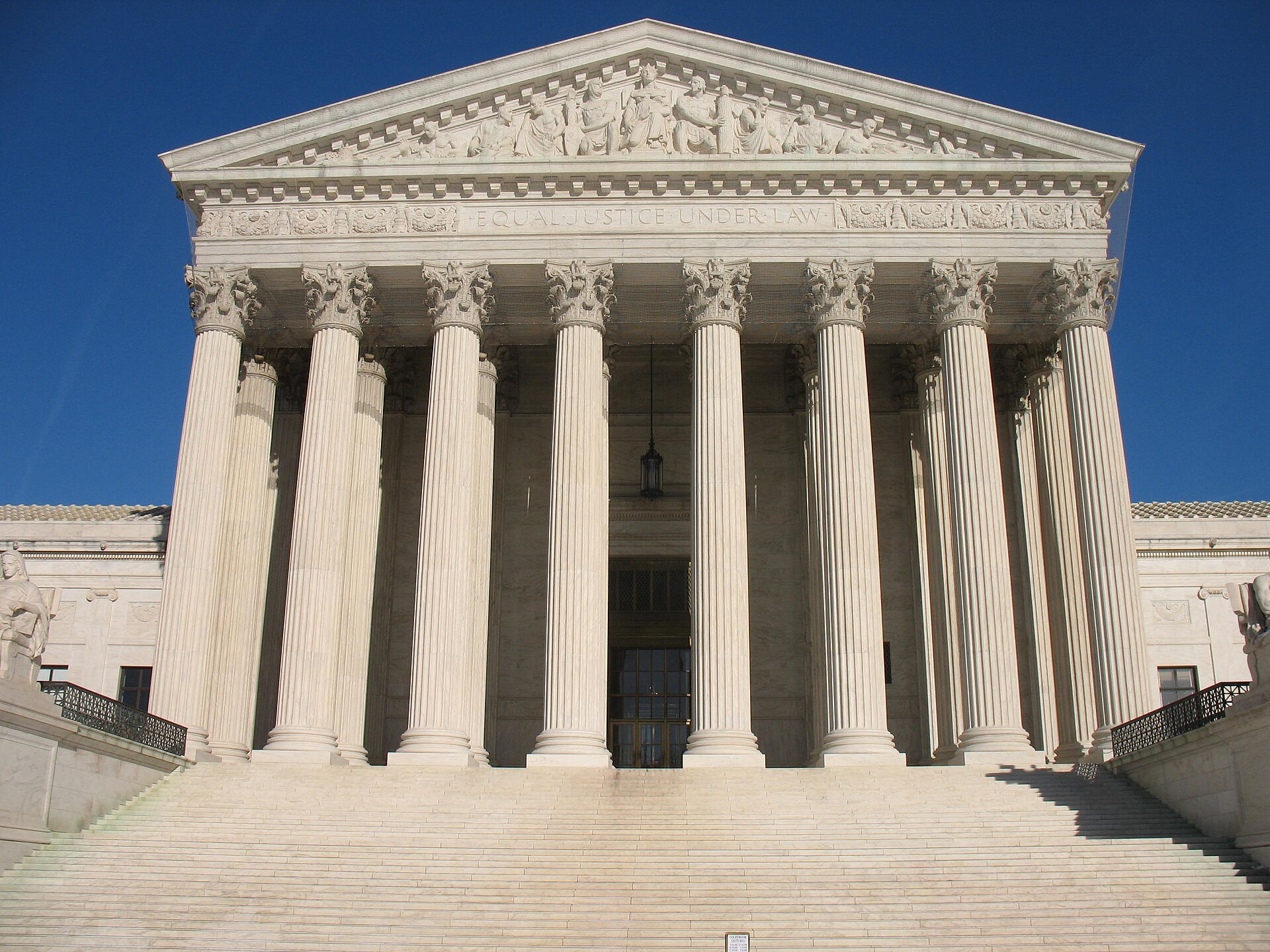
The Supreme Court's order in Austin v. U.S. Navy SEALs 1-26, No. 21A477, reads in full on its operative point: "The application for a partial stay presented to JUSTICE ALITO and by him referred to the Court is granted. The district court's January 3, 2022 order, insofar as it precludes the Navy from considering respondents' vaccination status in making deployment, assignment, and other operational decisions, is stayed pending disposition of the appeal in the United States Court of Appeals for the Fifth Circuit and disposition of the petition for a writ of certiorari, if such writ is timely sought." The order added: "JUSTICE THOMAS would deny the application for a partial stay."2 The rest of the injunction, the part that forbade discipline and discharge, stayed in force.
Justice Brett Kavanaugh wrote a concurrence:
"I concur in the Court's decision to grant the Government's application for a partial stay of the District Court's preliminary injunction for a simple overarching reason: Under Article II of the Constitution, the President of the United States, not any federal judge, is the Commander in Chief of the Armed Forces."2
He continued: "In this case, the District Court, while no doubt well-intentioned, in effect inserted itself into the Navy's chain of command, overriding military commanders' professional military judgments." Accepting for argument's sake that the Religious Freedom Restoration Act applies, he wrote that "the Navy has an extraordinarily compelling interest in maintaining strategic and operational control over the assignment and deployment of all Special Warfare personnel," and that "no less restrictive means would satisfy that interest in this context." He closed: "In sum, I see no basis in this case for employing the judicial power in a manner that military commanders believe would impair the military of the United States as it defends the American people."2
Justice Samuel Alito, joined by Justice Neil Gorsuch, dissented:
"By rubberstamping the Government's request for what it calls a 'partial stay,' the Court does a great injustice to the 35 respondents . . . who have volunteered to undertake demanding and hazardous duties to defend our country. These individuals appear to have been treated shabbily by the Navy, and the Court brushes all that aside. I would not do so, and I therefore dissent."2
(The omitted words describe the respondents as "Navy Seals and others in the Naval Special Warfare community.") Justice Alito agreed that the Navy "has a compelling interest in preventing COVID-19 infection from impairing its ability to carry out its vital responsibilities," but he found the Navy's "summary rejection of respondents' requests for religious exemptions was by no means the least restrictive means of furthering those interests." He put the process in terms anyone could judge: "Suppose, for example, that a federal agency processed employee complaints about discrimination on the basis of race, sex, or disability using a 50-step process in which rejection was presumed until the very last step, and suppose that the record showed that this procedure nearly always resulted in the denial of a claim. We would be outraged." He then asked: "Why, then, is the Court willing to brush aside what appears to have occurred here?"2
He would have kept the Navy free to choose who went on the most dangerous missions, but no more: "Granting a substantial measure of deference to the Navy, I would limit the order to the selection of the Special Warfare service members who are sent on missions where there is a special need to minimize the risk that the illness of a member due to COVID-19 might jeopardize the success of the mission or the safety of the team members." And he would have required equal treatment with medically exempt sailors: "I would therefore specify in the Court's order that the Navy must provide equal treatment for all unvaccinated service members." He ended by comparing the case to Ramirez v. Collier, decided the day before, in which the Court protected a condemned prisoner's request to have his pastor pray aloud and lay hands on him at execution: "The contrast between our decision in Ramirez yesterday and the Court's treatment of respondents today is striking. We properly went to some lengths to protect Ramirez's rights because that is what the law demands. We should do no less for respondents."2

Congress ends the mandate
The case was still on appeal when Congress acted. Section 525 of the James M. Inhofe National Defense Authorization Act for Fiscal Year 2023, Public Law 117-263, signed December 23, 2022, reads in full:
"Not later than 30 days after the date of the enactment of this Act, the Secretary of Defense shall rescind the mandate that members of the Armed Forces be vaccinated against COVID-19 pursuant to the memorandum dated August 24, 2021, regarding 'Mandatory Coronavirus Disease 2019 Vaccination of Department of Defense Service Members'."4
Section 529 of the same law ordered the Secretary to report to the Armed Services Committees every 90 days, while the requirement lasted, on "the number of such exemptions for which members applied," "the number of such religious exemptions denied," "the reasons for such denials," and how many denied members were separated "and with what characterization."4 Congress wanted the numbers on the record.
On January 10, 2023, Secretary Austin signed the rescission. The government told a federal court in Florida the next day that the memorandum "prohibits separations based solely on refusal of the COVID-19 vaccine by service members who sought an exemption from the mandate, and directs the Services to update the records of those service members currently serving to 'remove any adverse actions solely associated with denials of such requests, including letters of reprimand.'"19 Military Times reported the memo's own words on the policy it left behind: "The Department will continue to promote and encourage COVID-19 vaccination for all Service members."20 The settlement agreement later recorded the Navy's follow-through: on January 11, 2023, it cancelled its implementation of the requirement; on February 3, 2023, it changed the medical manual "to remove any distinction between service members who are unvaccinated for religious reasons as opposed to medical reasons"; on February 24, 2023, the Secretary of the Navy directed that sailors and Marines who had sought an exemption "will remain in service with no adverse action related to their COVID-19 vaccine refusal"; and in February 2023 the Navy "permanently discontinued the use of the staffing procedure" that Judge O'Connor had called theater.5
Mootness, and what survived
With the mandate gone, the Fifth Circuit held on July 6, 2023, that the Navy's appeals of the two injunctions were moot. As the settlement agreement quotes the opinion (U.S. Navy SEALs 1-26 v. Biden, 72 F.4th 666), the "default rule of mootness applie[d]" because the Navy, "[o]beying a newly enacted federal statute, . . . rescinded its COVID-19 mandate. Then it revoked each of the implementing policies addressed by the preliminary injunction."5 That was a win for the sailors in substance: the policy they challenged was dead. But the case did not end. On February 26, 2024, Judge O'Connor held that claims aimed at the vaccine mandate itself were moot, while "Plaintiffs' claims for relief arising out of a broader religious accommodations policy may continue."5 That surviving claim gave the sailors the standing to win a settlement about how the Navy treats religious requests in the future.
The settlement, 2024
The parties signed a settlement agreement, filed with the court on June 11, 2024.5 First Liberty Institute reported that the court granted preliminary approval on June 5, 2024, and final approval on July 24, 2024.21 First Liberty announced the approval that day, and Stars and Stripes, in its July 30 story, reported that the settlement had been "approved by a Texas federal judge last week."616 USNI News also reported the settlement on July 24, 2024.22 (The filed copy of the agreement shows a June 11, 2024 filing stamp; the preliminary approval date of June 5 comes from First Liberty's summary and could not be matched to a docket entry for this lesson.) Its terms, in the agreement's own words:
- Records. The Navy agreed "to re-review the personnel records of all Class Members to ensure that the U.S. Navy has permanently removed records indicating administrative separation processing or proceedings, formal counseling, and non-judicial punishment actions taken against the Class Members solely on the basis of non-compliance with the COVID-19 Vaccine Mandate," within nine months.5
- Discharges. For class members who were separated, the Navy will ensure that anyone "discharged solely on the basis of non-compliance with the COVID-19 Vaccine Mandate has a reenlistment code on their DD-214 of RE1 or RE1A (Eligible for Enlistment)" and "will remove any indication from that service member's records that he or she was discharged for misconduct," within one year.5
- Promotions. The precepts for the Fiscal Year 2025, 2026 and 2027 selection boards "shall provide that the boards must not consider any adverse information related solely to COVID-19 vaccine refusal in cases in which a religious accommodation was requested."5
- Policy. The Navy's religious accommodation instruction (BUPERSINST 1730.11A) will be changed to make clear that a denied request "may be resubmitted due to a Sailor's change in physical, operational, or geographical environment, or at any time when there is a change to pertinent policy," and that provision may not be changed for at least three years.5
- A public statement. The Navy will post, for at least a year, a statement that includes these sentences: "Accommodation of sincerely held religious beliefs are a pillar of the Navy's commitment to treating all Sailors with dignity and respect." And: "Discrimination on the basis of religion is contrary to the Navy's core values of honor, courage, and commitment."5
- Transparency and training. The Navy will post information on how to request religious accommodation, including "the numbers of religious accommodation requests granted and denied by the Chief of Naval Personnel," and will create training for "all U.S. Navy supervisors, commanders, and all religious accommodation request decisionmakers" on timelines, individual assessment and "the dignity and respect expected of all U.S. Navy commanders in addressing service members' sincerely held religious beliefs."5
- Fees. "Defendants agree to a payment of $1,500,000.00 in full satisfaction of Plaintiffs' and the Class's claims for attorneys' fees and costs."5
The settlement also says, as such agreements commonly do, that it "does not constitute, and shall not be construed as, an admission of liability or fault on the part of the Defendants."5 First Liberty's summary noted that it resolves only forward-looking relief and provides no money to individual sailors.21 Danielle Runyan, senior counsel at First Liberty, said: "This has been a long and difficult journey, but the Navy SEALs never gave up." Heather Gebelin Hacker, lead class counsel, said: "This was a hard-fought but significant victory for all members of the military and the principle of religious liberty."6 Stars and Stripes reported that the Navy "said it did not have a statement regarding the settlement."16
After the settlement
On January 27, 2025, President Donald J. Trump signed Executive Order 14184, "Reinstating Service Members Discharged Under the Military's COVID-19 Vaccination Mandate." It called the mandate "an unfair, overbroad, and completely unnecessary burden on our service members" and directed the Secretary of Defense to "make reinstatement available to all members of the military (active and reserve) who were discharged solely for refusal to receive the COVID-19 vaccine and who request to be reinstated," with their former rank and "full back pay, benefits, bonus payments, or compensation."23 On April 8, 2025, the Navy invited sailors who had left voluntarily to apply, stating that "Sailors who are reinstated will return to their previous rank at the time of separation," that voluntary returnees must serve "a minimum of two years of active service," and that "Reinstatement will not include back pay, bonuses, credit for lost service, or other forms of compensation" for those who left voluntarily.24 How many sailors have returned, and whether any of the thirty-five plaintiffs are among them, is not in the public record found for this lesson.
Timeline
| Date | Event |
|---|---|
| Aug. 24, 2021 | Secretary of Defense Lloyd Austin signs the memorandum "Mandatory Coronavirus Disease 2019 Vaccination of Department of Defense Service Members."5 |
| Aug. 30, 2021 | Secretary of the Navy issues ALNAV 062/21, the Department of the Navy mandatory vaccination policy (message date-time group 302126Z Aug 21).11 |
| Sept. 24, 2021 | Naval Special Warfare Command issues Trident Order #12: first dose or an exemption request by Oct. 17.9 |
| Oct. 13, 2021 | NAVADMIN 225/21 sets the disposition process for sailors who refuse.11 |
| Nov. 9, 2021 | Thirty-five special warfare sailors file suit in Fort Worth, No. 4:21-cv-01236-O.1 |
| Nov. 28, 2021 | Navy deadline for active-duty sailors to be fully vaccinated.1 |
| Dec. 9, 2021 | Navy reports 3,259 religious accommodation requests; no appeal yet decided.12 |
| Dec. 20, 2021 | Hearing on the motion for a preliminary injunction.1 |
| Jan. 3, 2022 | Judge Reed O'Connor grants the injunction: "There is no COVID-19 exception to the First Amendment."1 |
| Jan. 24, 2022 | Amended class action complaint filed.5 |
| Feb. 13, 2022 | Judge O'Connor denies the government's motion to stay his order.14 |
| Feb. 28, 2022 | Fifth Circuit denies a partial stay (27 F.4th 336).7 |
| Mar. 7, 2022 | Solicitor General applies to the Supreme Court for a partial stay, No. 21A477.15 |
| Mar. 25, 2022 | Supreme Court grants the partial stay; Kavanaugh concurs; Alito and Gorsuch dissent; Thomas would deny.2 |
| Mar. 28, 2022 | Navy-wide class certified and class-wide injunction issued, protecting about 4,095 sailors from discharge.53 |
| Dec. 23, 2022 | FY2023 NDAA signed; section 525 orders the mandate rescinded within 30 days.4 |
| Jan. 10, 2023 | Secretary Austin rescinds the mandate.1920 |
| Feb. 24, 2023 | Secretary of the Navy rescinds subordinate COVID-19 mandates; exemption seekers remain in service with no adverse action.5 |
| July 6, 2023 | Fifth Circuit holds the Navy's appeals moot (72 F.4th 666).5 |
| Feb. 26, 2024 | District court holds mandate claims moot but lets the religious accommodation policy claims continue.5 |
| June 11, 2024 | Settlement agreement filed with the court (ECF 281).5 |
| July 24, 2024 | Court approves the settlement.616 |
| Jan. 27, 2025 | Executive Order 14184 offers reinstatement to those discharged for refusing the vaccine.23 |
| Apr. 8, 2025 | Navy invites former sailors to apply for reentry under the order.24 |
Why it took courage
Courage is the trade these men practice, and it would be easy to say that a lawsuit is a small thing next to what they had already done for the country. The record shows otherwise. A special operator's career rests on the trust of his chain of command and the men beside him. To file a religious accommodation request in the fall of 2021 was to mark oneself, in a force that was more than 99 percent vaccinated, as the man who would not go along. Some of them were told, by their own account under oath, that leadership wanted them "out of the SEAL community" and that they were an "acceptable loss."2 To sue the Secretary of Defense and the President of the United States while still in uniform was harder still. They did it knowing that the Navy treated refusal as disobedience of a lawful order, with a court-martial and a dishonorable discharge at the far end of the road.2
They stood on liberty, not on medicine. Nothing in their case asked a court to decide whether the vaccine worked. The judge found their beliefs sincere and refused to judge their "truthfulness or accuracy."1 What they asked was narrower and older: that the government keep the promise Congress made in the Religious Freedom Restoration Act, which applies to every agency of the federal government including the armed forces, and that a citizen who takes an oath to defend the Constitution keeps the protection of the First Amendment while he does it. As Justice Alito noted, the government "concedes that the statute applies to the military."2 Judge O'Connor put the principle in George Washington's words: "When we assumed the Soldier, we did not lay aside the Citizen."1
They also stood for due process inside an institution that is not built for it. Their complaint was not only that they lost; it was that the answer was written before anyone read their requests. A fifty-step process that begins with a pre-filled denial is a process in name only, and Justice Alito's comparison holds: if a federal agency handled discrimination complaints that way, the country would be outraged.2 These sailors made the Navy explain itself in public, under oath, and that record changed the Navy's practice. The staffing procedure the court called theater was permanently discontinued in February 2023, the medical manual stopped treating religious objectors worse than medical ones, and the Navy agreed in writing that discrimination on the basis of religion "is contrary to the Navy's core values of honor, courage, and commitment."5
And they stood for people they would never meet. The thirty-five could have taken their own injunction and stopped. Instead four of them became class representatives for every sailor who had asked for a religious accommodation, and about 4,095 sailors were protected from discharge because of it.3 The settlement's record corrections run to every class member, including those already separated, whose discharge papers were to show them eligible to reenlist and not discharged for misconduct.5 They did all of it without their names. They will not be thanked in public, and they did not ask to be.
What the other side said
The government's case, made by Solicitor General Elizabeth B. Prelogar, was that courts should not run military deployments. Her application called the district court's order "a preliminary injunction that usurps the Navy's authority to decide which servicemembers should be deployed to execute some of the military's most sensitive and dangerous missions," and reported that "the Navy has informed this Office that the injunction has already compelled it to send one respondent to Hawaii for duty on a submarine against its military judgment."9 The Navy's medical policy treated vaccination as a readiness question; NAVADMIN 225/21 described COVID-19 as a "persistent and lethal threat."11 Admiral William Lescher, Vice Chief of Naval Operations, declared that "ordering unvaccinated personnel into an environment in which they endanger their lives, the lives of others and compromise accomplishment of essential missions" would be like sending ships into combat with deficient equipment, which he called "dereliction of duty," as quoted by Justice Kavanaugh.2 The government argued in the district court that the number of religious requests ("more than three thousand pending") dwarfed the "only seven permanent medical exemptions," which explained the different treatment.1 Justice Kavanaugh agreed with the core of the government's position: the Navy "has an extraordinarily compelling interest" in controlling the assignment of special warfare personnel, and the President, "not any federal judge, is the Commander in Chief."2 Secretary Austin's rescission memorandum, as reported, defended the program's results, stating that the Department's "COVID-19 vaccination efforts will leave a lasting legacy in the many lives we saved."20 And the settlement states that it is not "an admission of liability or fault" by the Navy.5
Still disputed: Whether the Navy's 2021 accommodation process was the predetermined "theater" Judge O'Connor found or a genuine case-by-case review was never decided at trial, because the mandate was rescinded and the appeals were declared moot; the Supreme Court never ruled on the merits; the settlement expressly admits no fault; and the larger question the justices split on, how far the Religious Freedom Restoration Act lets courts reach into military assignments, remains open.25
Hard questions and answers
Did the sailors not give up their rights when they enlisted?
No court in this case said so, and the Supreme Court's precedents say otherwise. Justice Alito quoted two of them: review of military regulations is deferential, but that does not "render entirely nugatory in the military context the guarantees of the First Amendment" (Goldman v. Weinberger, 1986), and "This Court has never held . . . that military personnel are barred from all redress in civilian courts for constitutional wrongs suffered in the course of military service" (Chappell v. Wallace, 1983).2 The government did not argue that the Religious Freedom Restoration Act was inapplicable; Justice Alito noted that "it concedes that the statute applies to the military."2 Even Justice Kavanaugh wrote "even accepting that RFRA applies in this particular military context." The real dispute was how much the courts should defer, not whether the rights exist.2
Did the Supreme Court rule against the SEALs?
Only in part, and only for the time being. The March 25, 2022 order was a partial stay pending appeal, not a decision on the merits. It allowed the Navy to consider vaccination status "in making deployment, assignment, and other operational decisions," but left in force the injunction against discipline and discharge.2 The government had not even asked for more.9 Three justices would have refused the stay entirely or narrowed it. Three days later the district court extended protection from discharge to the whole class.5
Is a commander not entitled to decide who goes on a mission?
Yes, and the sailors largely agreed. Their own brief told the Supreme Court that the injunction "does not require the Navy to deploy any of the thirty-five plaintiffs," as Justice Alito noted.2 Judge O'Connor had written that he was not requiring "any particular personnel assignments."2 The disagreement was about breadth. Justice Alito would have allowed the Navy to keep unvaccinated operators off high-risk missions while forbidding it to use their status as a reason to sideline them in every other way; Justice Kavanaugh would leave the whole question to the chain of command.2 A reader who weighs those views is weighing a real question about civilian courts and military command.
Why should religious objectors be treated like medical ones?
Because the law says government may not treat religious conduct worse than comparable secular conduct without meeting strict scrutiny. Judge O'Connor found that sailors with medical exemptions stayed deployable while religious objectors were "permanently nondeployable," and held that "any favorable treatment" of the secular group "defeats neutrality."1 Justice Alito agreed: "The Navy has no interest in different treatment for accommodation requests that produce otherwise identical outcomes."2 The Navy itself removed the distinction from its medical manual on February 3, 2023.5 The government's answer was numerical: seven permanent medical exemptions against more than three thousand religious requests.1 Whether numbers alone justify different treatment is a question the courts did not finally decide.
What did the sailors actually win?
They won protection from discharge for themselves and about 4,095 class members while the mandate lasted, a public record of how the Navy handled religious requests, and a settlement that cleaned records, corrected discharge papers, protected three years of promotion boards, rewrote a policy, required training and a public statement, and paid $1.5 million in fees.53 They did not win money for lost pay; First Liberty's own summary said the settlement covers forward-looking relief only.21 They did not win a final ruling on the merits, because Congress ended the mandate first.4 In the outcome scoreboard of this module, the case belongs with the settlements, and the policy result belongs with the wins.
Why are their names still secret?
The court let them sue under pseudonyms, and the settlement kept those pseudonyms for the class representatives.5 Special operators have obvious reasons to keep their identities and families out of public view. This course respects that choice and makes no attempt to identify any of them. Their stand can be honored without their names, as the stands of many soldiers have been.
Related lessons
- Jennifer Bridges and the Houston Methodist 117: hospital workers who refused a private employer's mandate and lost in court.
- Dr. Aaron Kheriaty, Fired for Natural Immunity: a university mandate challenged by a professor of medicine.
- Small Businesses and Landlords at the Supreme Court: the civilian vaccine-or-test rule stayed by the Supreme Court in January 2022.
- The Worship Cases at the Supreme Court: Tandon v. Newsom and the rule against treating religious activity worse than comparable secular activity, which Judge O'Connor applied.
- What the Stands Won and Timeline, Glossary, Sources and the Record of Every Ruling.
- Ordered Liberty: Legitimate Authority and Its Limits and Forms of Lawful Resistance: a lawsuit filed from inside the chain of command is lawful resistance in its plainest form.
- The First Amendment: the Free Exercise Clause these sailors invoked.
Still open
These items could not be confirmed against a primary source before publication. The lesson states them as open, and they stay on the fact-check list.
- The March 28, 2022 class certification order is described from the settlement agreement's recitals; the 4,095 figure and the two quotations from that order are as reported by USNI News (Mar. 30, 2022) and repeated by Stars and Stripes (July 30, 2024).
- The Fifth Circuit's mootness opinion of July 6, 2023 (72 F.4th 666) is quoted as the settlement agreement recites it.
- Secretary Austin's January 10, 2023 rescission memorandum is quoted as the Justice Department's court notice of Jan. 11, 2023 and Military Times reported it.
- The preliminary approval date (June 5, 2024) comes from First Liberty Institute's settlement summary; the filed copy of the agreement bears a June 11, 2024 filing stamp.
- No official count of religious requests denied as of March 2022 was found. Justice Alito wrote that more than 4,000 requests had been submitted by Feb. 15, 2022, and USNI News reported 3,369 active-duty and 812 reserve requests in February 2022.
- How many sailors have been reinstated under Executive Order 14184, and whether any plaintiffs are among them, is not in the public record found.
- The date of ALNAV 062/21 (Aug. 30, 2021) is read from its message date-time group (302126Z Aug 21) as cited in NAVADMIN 225/21.
Learn more
- Austin v. U.S. Navy SEALs 1-26 (Supreme Court PDF): Ten pages: the order, Justice Kavanaugh's concurrence and Justice Alito's dissent in full.
- The Supreme Court stay appendix (district court and Fifth Circuit opinions, Navy orders and declarations): The primary record in one file: Judge O'Connor's order, the Fifth Circuit opinion, Trident Order #12, the NAVADMINs and the Navy's own declarations.
- The 2024 settlement agreement: Read paragraphs 17 to 24 for the exact terms.
- FY2023 NDAA, section 525: The one-sentence statute that ended the mandate.
Notes
- U.S. District Court for the Northern District of Texas, Fort Worth Division, Judge Reed O'Connor, U.S. Navy SEALs 1-26 v. Biden, No. 4:21-cv-01236-O, Order on Preliminary Injunction, ECF No. 66 (Jan. 3, 2022), pp. 1 to 26, reprinted in Appendix to the Application for a Partial Stay, Austin v. U.S. Navy SEALs 1-26, No. 21A477, at 31a to 56a (retrieved Nov. 7, 2026). Reported at 578 F. Supp. 3d 822. Read it online. ↩
- Supreme Court of the United States, Austin v. U.S. Navy SEALs 1-26, No. 21A477, 595 U.S. ___ (Mar. 25, 2022) (order granting partial stay; Kavanaugh, J., concurring; Alito, J., joined by Gorsuch, J., dissenting; Thomas, J., would deny), slip op. (retrieved Nov. 7, 2026). Read it online. ↩
- Heather Mongilio, "Navy Stops COVID-19 Vaccine Separations for 4,095 Sailors Who Requested Religious Exemptions," USNI News, Mar. 30, 2022 (reporting Judge O'Connor's class certification order of Mar. 28, 2022) (retrieved Nov. 7, 2026). Read it online. ↩
- James M. Inhofe National Defense Authorization Act for Fiscal Year 2023, Pub. L. No. 117-263, secs. 525 and 529, 136 Stat. 2395, 2571 to 2572 (approved Dec. 23, 2022), U.S. Government Publishing Office (retrieved Nov. 7, 2026). Read it online. ↩
- Settlement Agreement and Release of All Claims, U.S. Navy SEALs 1-26 v. Biden, No. 4:21-cv-01236-O (N.D. Tex.), ECF No. 281 (filed June 11, 2024), paras. 1 to 25 (recitals of the procedural history, class definition and terms), as posted by First Liberty Institute (retrieved Nov. 7, 2026). Read it online. ↩
- First Liberty Institute, "Navy SEALs, Personnel Denied Religious Accommodation from COVID Vaccine Mandate Reach Settlement with Navy," press release, July 24, 2024 (retrieved Nov. 7, 2026). Read it online. ↩
- U.S. Court of Appeals for the Fifth Circuit, U.S. Navy Seals 1-26 v. Biden, No. 22-10077 (Feb. 28, 2022) (per curiam; Jones, Duncan and Engelhardt, Circuit Judges), 27 F.4th 336, slip op. at 1 to 3, reprinted in Appendix to the Application for a Partial Stay, No. 21A477, at 1a to 3a (retrieved Nov. 7, 2026). Read it online. ↩
- U.S. Navy, Manual of the Medical Department (MANMED), art. 15-105, "Special Operations Duty," Change 164 (May 22, 2018), filed as ECF No. 17-2 and reprinted in Appendix to the Application for a Partial Stay, No. 21A477, at 69a (retrieved Nov. 7, 2026). Read it online. ↩
- Elizabeth B. Prelogar, Solicitor General, Application for a Partial Stay of the Injunction Issued by the United States District Court for the Northern District of Texas, Austin v. U.S. Navy SEALs 1-26, No. 21A477 (filed Mar. 7, 2022), pp. 1 to 8 (retrieved Nov. 7, 2026). Read it online. ↩
- U.S. Navy photo caption, "Basic Underwater Demolition/SEAL (BUD/S) students battle through the surf during their last day of Hell Week at Naval Special Warfare Center," Coronado, Calif., June 6, 2008, photo 080606-N-5366K-090 by MC2 Michelle Kapica, as preserved on Wikimedia Commons (retrieved Nov. 7, 2026). Read it online. ↩
- Chief of Naval Operations, NAVADMIN 225/21, "COVID-19 Consolidated Disposition Authority (CCDA)," message R 132050Z Oct 21 (Oct. 13, 2021), paras. 1 and 2 and reference B (ALNAV 062/21, 302126Z Aug 21), reprinted in Appendix to the Application for a Partial Stay, No. 21A477, at 81a (retrieved Nov. 7, 2026). Read it online. ↩
- Declaration of Capt. Mery-Angela Sanabria Katson, U.S. Navy (Dec. 9, 2021), paras. 3 to 5, reprinted in Appendix to the Application for a Partial Stay, No. 21A477, at 138a to 140a (retrieved Nov. 7, 2026). Read it online. ↩
- U.S. District Court for the Northern District of Texas, Court Directory (Fort Worth Division office and Chief Judge O'Connor's court reporter, 501 W. 10th St., Fort Worth) (retrieved Nov. 7, 2026). Read it online. ↩
- U.S. District Court for the Northern District of Texas, Judge Reed O'Connor, U.S. Navy SEALs 1-26 v. Biden, No. 4:21-cv-01236-O, Order denying Motion for Stay, ECF No. 116 (Feb. 13, 2022), reprinted in Appendix to the Application for a Partial Stay, No. 21A477, at 57a to 66a (retrieved Nov. 7, 2026). Read it online. ↩
- Supreme Court of the United States, Docket No. 21A477, Austin v. U.S. Navy SEALs 1-26 (application filed Mar. 7, 2022; order Mar. 25, 2022) (retrieved Nov. 7, 2026). Read it online. ↩
- Alison Bath, "Navy SEAL COVID-19 vaccine suit settlement vindicates religious objectors," Stars and Stripes, July 30, 2024 (retrieved Nov. 7, 2026). Read it online. ↩
- Heather Mongilio, "Navy COVID-19 Vaccine Refusal Separations Nears 2,000," USNI News, Oct. 26, 2022 (reporting the Navy's monthly update) (retrieved Nov. 7, 2026). Read it online. ↩
- "Navy Approves First Religious COVID-19 Vaccine Exemption With Conditions," USNI News, Feb. 16, 2022 (retrieved Nov. 7, 2026). Read it online. ↩
- U.S. Department of Justice, Defendants' Notice of Rescission of DOD COVID-19 Vaccination Requirement, Navy SEAL 1 v. Austin, No. 8:21-cv-2429 (M.D. Fla.), ECF No. 199 (Jan. 11, 2023), with the Secretary of Defense's memorandum of Jan. 10, 2023 attached as Exhibit A (retrieved Nov. 7, 2026). Read it online. ↩
- Meghann Myers, "Austin ends the military's COVID-19 vaccine mandate," Military Times, Jan. 10, 2023 (retrieved Nov. 7, 2026). Read it online. ↩
- First Liberty Institute, "Navy Vaccine Mandate Settlement" (frequently asked questions on the settlement in U.S. Navy SEALs 1-26 v. Biden, giving preliminary approval June 5, 2024 and approval July 24, 2024) (retrieved Nov. 7, 2026). Read it online. ↩
- "Navy Settles Lawsuit With Sailors Who Denied COVID-19 Vaccine," USNI News, July 24, 2024 (retrieved Nov. 7, 2026). Read it online. ↩
- President Donald J. Trump, Executive Order 14184 of January 27, 2025, "Reinstating Service Members Discharged Under the Military's COVID-19 Vaccination Mandate," 90 Fed. Reg. 8761 (Feb. 3, 2025), secs. 1 and 2 (retrieved Nov. 7, 2026). Read it online. ↩
- U.S. Navy Office of Information, "U.S. Navy Invites Former Sailors Who Voluntarily Left to Apply for Reentry under Executive Order 14184," navy.mil, Apr. 8, 2025 (retrieved Nov. 7, 2026). Read it online. ↩
Check yourself
1. Who were the original plaintiffs in U.S. Navy SEALs 1-26 v. Biden?
Judge O'Connor described the plaintiffs as thirty-five Navy Special Warfare servicemembers: 26 SEALs, five combatant-craft crewmen, three divers and one EOD technician, all under pseudonyms.
2. What did Judge O'Connor call the Navy's religious accommodation process in his January 3, 2022 order?
He wrote: "The Navy provides a religious accommodation process, but by all accounts, it is theater."
3. Under the Navy's special operations medical rule, what happened to an operator who declined the vaccine for religious reasons?
The rule disqualified personnel refusing vaccines "based solely on personal or religious beliefs" but not those with medical contraindications, and the court found this made religious objectors permanently nondeployable.
4. How many religious requests to skip any required vaccine did the Navy grant between 2015 and summer 2021, according to its own declarant?
Capt. Katson declared that the Navy received 83 such requests in that period and granted one.
5. What did the Supreme Court's March 25, 2022 order do?
It stayed the injunction only insofar as it barred the Navy from considering vaccination status in operational decisions; the bar on discipline and discharge stayed in force.
6. Which justice wrote that the President, "not any federal judge, is the Commander in Chief"?
Justice Kavanaugh's concurrence rested on that Article II principle.
7. What ended the military COVID-19 vaccine mandate?
Congress ordered the rescission within 30 days in the law signed December 23, 2022, and the Secretary rescinded it on January 10, 2023.
8. Which of these was NOT a term of the 2024 settlement?
The settlement covered forward-looking relief, record corrections, policy, training and fees; it paid no money to individual sailors.
Terms in this lesson
- Religious Freedom Restoration Act (RFRA)
- The 1993 federal law (42 U.S.C. 2000bb et seq.) forbidding the federal government to substantially burden a person's exercise of religion unless the burden is the least restrictive means of furthering a compelling interest.
- Preliminary injunction
- A court order that holds things in place while a case is decided, granted only when the plaintiff shows likely success, irreparable harm, a favorable balance of harms and the public interest.
- Partial stay
- An order suspending part of a lower court's order while an appeal proceeds; here the Supreme Court suspended only the part that limited deployment and assignment decisions.
- Class action
- A lawsuit in which named representatives sue on behalf of everyone in a defined group; here the class was every Navy member subject to the mandate who sought a religious accommodation.
- The Navy's special operations community, including SEALs and Special Warfare Combatant-Craft Crewmen, under Naval Special Warfare Command.
- Trident Order #12
- The September 24, 2021 order of the Commander of Naval Special Warfare Command requiring a first vaccine dose or an exemption request by October 17, 2021.
- A Navy administrative message from the Chief of Naval Operations; NAVADMIN 225/21 and 256/21 set procedures for disciplining and separating sailors who refused the vaccine.
- MANMED
- The Navy's Manual of the Medical Department; article 15-105 sets physical standards for special operations duty.
- Strict scrutiny
- The most demanding test in constitutional law: the government must show a compelling interest pursued by the least restrictive means.
- Mootness
- The doctrine that courts decide only live controversies; the Fifth Circuit held the appeals moot after the mandate was rescinded.
- DD-214
- The Defense Department's Certificate of Release or Discharge from Active Duty, which records a member's reenlistment eligibility code.
- Pseudonym
- A name used in place of a real one; the court let the plaintiffs proceed as Navy SEAL 1, SWCC 1 and so on.
Sources
- Order on Preliminary Injunction, U.S. Navy SEALs 1-26 v. Biden, N.D. Tex. No. 4:21-cv-01236-O, ECF 66 (in Supreme Court stay appendix) (2022-01-03) checked 2026-11-07
- Austin v. U.S. Navy SEALs 1-26, No. 21A477 (order, concurrence and dissent) (2022-03-25) checked 2026-11-07
- Application for a Partial Stay, No. 21A477 (Solicitor General) (2022-03-07) checked 2026-11-07
- Supreme Court docket 21A477 (2022-03-25) checked 2026-11-07
- Pub. L. 117-263, FY2023 NDAA, secs. 525 and 529 (2022-12-23) checked 2026-11-07
- Defendants' Notice of Rescission with Jan. 10, 2023 memorandum, Navy SEAL 1 v. Austin, M.D. Fla. 8:21-cv-2429, ECF 199 (2023-01-11) checked 2026-11-07
- Settlement Agreement, U.S. Navy SEALs 1-26 v. Biden, ECF 281 (2024-06-11) checked 2026-11-07
- Executive Order 14184, 90 FR 8761 (2025-01-27) checked 2026-11-07
- U.S. Navy, reentry under Executive Order 14184 (2025-04-08) checked 2026-11-07
- N.D. Tex. court directory (2026-11-07) checked 2026-11-07
- First Liberty Institute press release on the settlement (2024-07-24) checked 2026-11-07
- First Liberty Institute settlement FAQ (2024-07-24) checked 2026-11-07
- Stars and Stripes, settlement report (2024-07-30) checked 2026-11-07
- USNI News, 4,095 sailors protected (2022-03-30) checked 2026-11-07
- USNI News, first conditional religious exemption (2022-02-16) checked 2026-11-07
- USNI News, separations near 2,000 (2022-10-26) checked 2026-11-07
- USNI News, Navy settles lawsuit (2024-07-24) checked 2026-11-07
- Military Times, Austin ends the mandate (2023-01-10) checked 2026-11-07
- Wikimedia Commons, BUD/S Hell Week photo (U.S. Navy) (2008-06-06) checked 2026-11-07