Lesson 17 of 23 · about 40 minutes
Five Doctors Against California's Speech Law: Hoeg v. Newsom
Updated November 7, 2026
You'll be able to
- You'll be able to quote the definition of "misinformation" in AB 2098 and explain why Judge Shubb found it likely void for vagueness.
- You'll be able to name the five Høeg plaintiffs, the companion Hoang plaintiffs, and the other two federal suits against AB 2098 and how each ended.
- You'll be able to trace the law from its signing on Sept. 30, 2022 to its repeal by Section 19 of SB 815 and the mootness rulings of 2024.
- You'll be able to explain the difference between a preliminary injunction, a ruling on the merits and a dismissal for mootness, and why it mattered for fees after Lackey v. Stinnie.
- You'll be able to state the state's own reasons for AB 2098 in its findings, the Governor's signing message and its court arguments.
- You'll be able to explain why the doctors' pre-enforcement suit took courage and what liberties it defended.
Start here: the short version
In September 2022 California made it "unprofessional conduct" for a licensed physician to give a patient COVID-19 "misinformation," which the new law defined as "false information that is contradicted by contemporary scientific consensus contrary to the standard of care."1 Five California doctors, Tracy Beth Høeg, Ram Duriseti, Aaron Kheriaty, Pete Mazolewski and Azadeh Khatibi, sued in their own names before the law took effect, though suing put them on record against the board that licenses them.2 On January 25, 2023, Senior U.S. District Judge William B. Shubb blocked the law, finding that "the term 'scientific consensus' is so ill-defined" that a doctor could not know what was forbidden.3 Eight months later the Legislature repealed it in Section 19 of Senate Bill 815, signed September 30, 2023 and effective January 1, 2024.4 The courts then dismissed the remaining suits as moot.56 The five doctors won what they asked for: the freedom to tell their patients what they honestly believed without a vague statute hanging over their licenses. It took courage because each of them depended on the very licensing board the law armed against them.
Who they were before
None of the five was a stranger to medicine or to research. Their own sworn declarations, summarized in their complaint, describe who they were in the fall of 2022.2
Dr. Tracy Beth Høeg earned her medical degree in Wisconsin and a Ph.D. in epidemiology and public health from the University of Copenhagen, and she was licensed in both California and Denmark. In 2022 she practiced physical medicine and rehabilitation in Nevada County and Sacramento County and worked as a clinical health and policy researcher and consulting epidemiologist.2 The complaint says she had been first or senior author of nine epidemiological analyses, on subjects including COVID-19 transmission in schools, the effect of mask mandates, and the risks and benefits of mRNA vaccines for children and adults.2 The Food and Drug Administration later described her as a physician and epidemiologist who had worked in spine and sports medicine and had co-authored 45 peer-reviewed papers.7
Dr. Ram Duriseti held a medical degree from the University of Michigan and a Ph.D. in engineering focused on computer modeling of complex medical decisions. He worked as an emergency physician in the Stanford Department of Emergency Medicine and at Mills-Peninsula hospital in Burlingame, and he had treated hundreds of COVID-19 patients since at least March 2020.2 He had testified as an expert before the state Senate Health Committee and volunteered as a data analyst for Urgency of Normal, a group working to return children's lives to normal after the pandemic.2
Dr. Aaron Kheriaty earned his medical degree at Georgetown, trained in psychiatry at the University of California, Irvine, and served for many years there as Professor of Psychiatry and Director of the Medical Ethics Program.2 He co-wrote the University of California's pandemic ventilator triage guidelines, consulted for the California Department of Public Health on rationing scarce resources, and helped write the university's vaccine allocation policy in early 2021.2 By the time of this suit he had already lost his university post after challenging the university's vaccine mandate; lesson 16 tells that story.
Dr. Pete Mazolewski, a graduate of the University of Southern California medical school, had practiced for more than twenty years and worked as a general and trauma surgeon for John Muir Health.2 His complaint offers a story from his own field: in the 1990s he was taught to operate on every appendicitis at once, but around 2000 his clinical experience convinced him that complicated cases did better without immediate surgery, an approach the complaint says is now standard.2
Dr. Azadeh Khatibi holds a medical degree from the University of California, San Francisco, and master's degrees in public health and in health and medical sciences from the University of California, Berkeley.2 She joined the suit in part as a patient: the complaint says she survived a serious, life-threatening disease and lives with lasting immune problems from it and its treatment, and she claimed a right as a patient to hear her own doctors speak freely.2
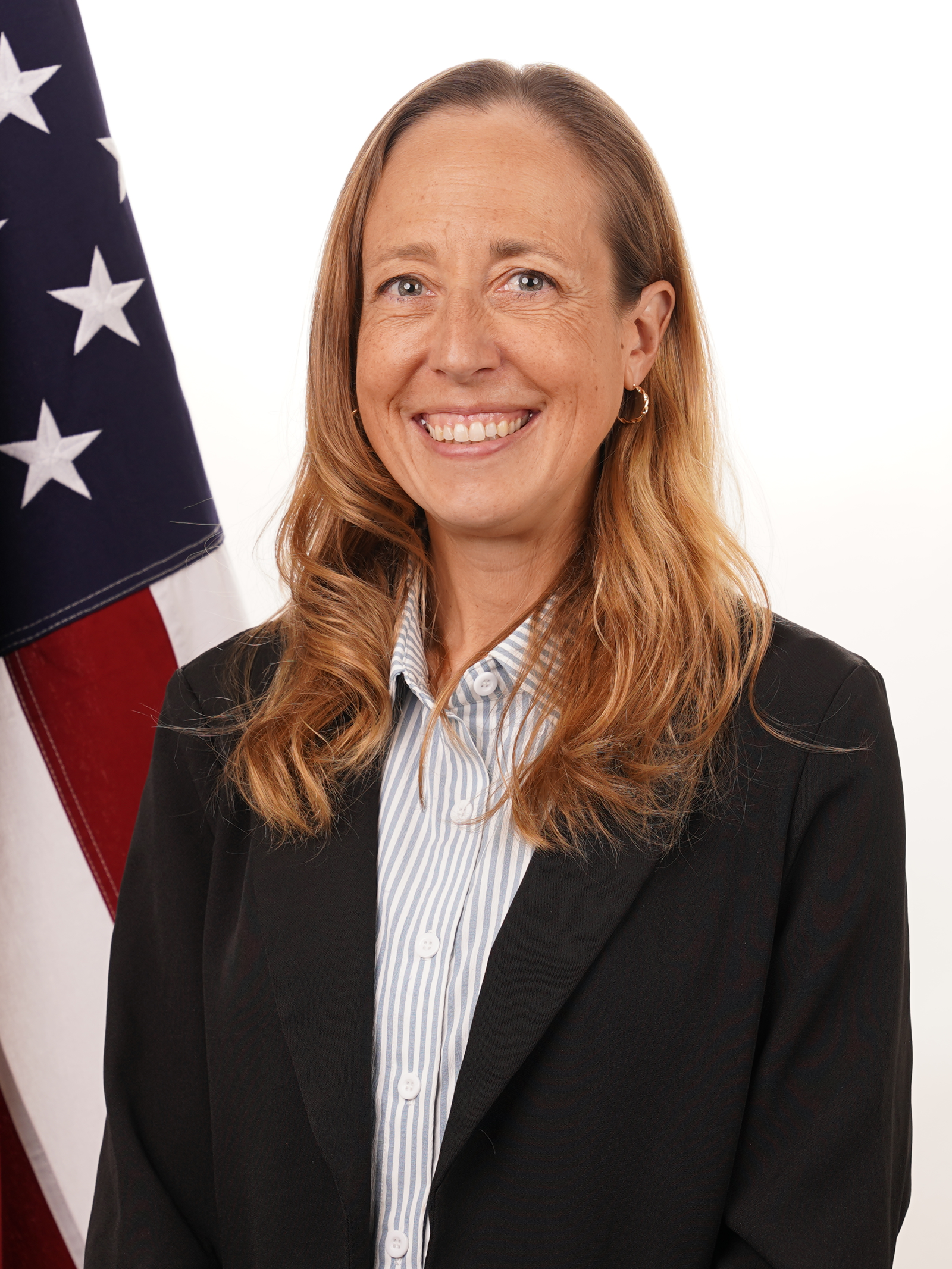

They were represented by the New Civil Liberties Alliance, a nonprofit civil rights law firm in Washington, D.C., with local counsel in California.8 A second suit raised the same challenge in the same court: Dr. Letrinh Hoang, an osteopathic physician, joined by Physicians for Informed Consent and the California chapter of Children's Health Defense, sued the Attorney General and the executive officer of the Osteopathic Medical Board in Hoang v. Bonta, No. 2:22-cv-02147.3 Judge Shubb heard both cases together.
The order they faced
The order these doctors faced was a statute, Assembly Bill 2098, carried by Assemblymember Evan Low, approved by Governor Gavin Newsom on September 30, 2022, and filed the same day as Chapter 938 of the Statutes of 2022.19 It added Section 2270 to the Business and Professions Code, effective January 1, 2023.3 The operative words, quoted from the chaptered bill, were these:1
"(a) It shall constitute unprofessional conduct for a physician and surgeon to disseminate misinformation or disinformation related to COVID-19, including false or misleading information regarding the nature and risks of the virus, its prevention and treatment; and the development, safety, and effectiveness of COVID-19 vaccines.
(b) For purposes of this section, the following definitions shall apply: ... (2) "Disinformation" means misinformation that the licensee deliberately disseminated with malicious intent or an intent to mislead. (3) "Disseminate" means the conveyance of information from the licensee to a patient under the licensee's care in the form of treatment or advice. (4) "Misinformation" means false information that is contradicted by contemporary scientific consensus contrary to the standard of care."
"Unprofessional conduct" was not a mild label. Under the Business and Professions Code it is the ground on which the Medical Board of California and the Osteopathic Medical Board discipline doctors, up to the loss of a license.39 The Ninth Circuit later noted that the California Medical Association sponsored the bill, and that an Assembly committee report named a physician who had promoted hydroxychloroquine and stirred distrust of vaccines as "an illustrative example of the type of behavior that the author of this bill" wanted to address.5
The bill opened with legislative findings. Among them: that COVID-19 had killed "over 6,000,000 people worldwide, including nearly 90,000 Californians"; that "unvaccinated individuals are at a risk of dying from COVID-19 that is 11 times greater than those who are fully vaccinated"; that "the spread of misinformation and disinformation about COVID-19 vaccines has weakened public confidence and placed lives at serious risk"; and that "some of the most dangerous propagators of inaccurate information regarding the COVID-19 vaccines are licensed health care professionals."1
Governor Newsom attached a signing message. "I am signing this bill because it is narrowly tailored to apply only to those egregious instances in which a licensee is acting with malicious intent or clearly deviating from the required standard of care while interacting directly with a patient under their care," he wrote. He added that he was "concerned about the chilling effect other potential laws may have on physicians and surgeons who need to be able to effectively talk to their patients," but was "confident that discussing emerging ideas or treatments including the subsequent risks and benefits does not constitute misinformation or disinformation under this bill's criteria."10 The doctors answered that a signing message has no force of law, so the statute would be read as written.2
What they did
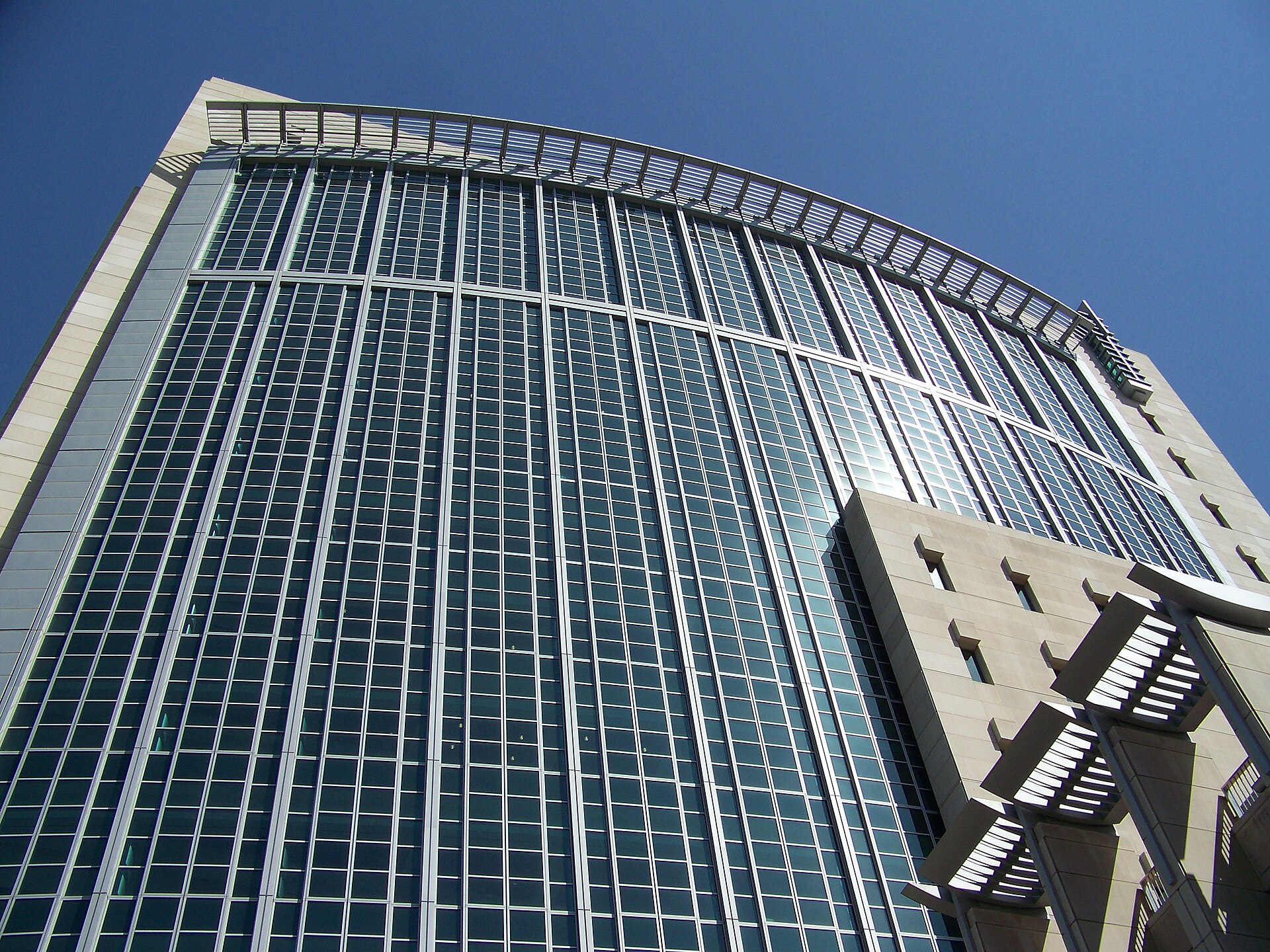
The five doctors did not wait to be charged. On November 1, 2022, two months before the law took effect, they filed Høeg v. Newsom in the U.S. District Court for the Eastern District of California in Sacramento, No. 2:22-cv-01980, against the Governor, the Attorney General and every officer and member of the Medical Board, each in an official capacity.112 They asked the court to declare AB 2098 unconstitutional and filed a motion to stop it from taking effect.8 Their claims rested on two parts of the Constitution: the First Amendment's protection of speech, including speech between a doctor and a patient, and the Fourteenth Amendment's guarantee of due process, which forbids laws so vague that people cannot tell what they prohibit.2 (The amendments themselves are taught in the module's links to the First Amendment and the Fourteenth Amendment.)
The heart of their case was a claim about how science works, made by people who do science. "Plaintiffs strongly believe that the very concept of 'scientific consensus' is problematic and represents a misunderstanding of the scientific process," the complaint said. "What is considered the consensus one day may later turn out to be the incorrect approach."2 Dr. Kheriaty put it in one line: "Yesterday's minority opinion often becomes today's standard of care."2 Dr. Mazolewski described the pressure on a surgeon who departs from the accepted practice of the day: "science is always evolving and starts with the clinician who recognizes an improvement over the standard of care and implements that into his or her practice," he declared, so that "the 'contemporary scientific consensus' lags behind what is being observed by the physician treating patients every day."2 Dr. Khatibi wrote: "In free societies throughout modern history, doctors have had the liberty to go against both informal and formal consensus in treating their individual patients."2
Dr. Høeg described the bind in personal terms. "Because my primary duty is and will always remain the well-being of my patients, I will most certainly continue to tell them the truth about their conditions and treatments to the best of my ability," she declared. "Nevertheless, since the passage of AB 2098 I have found myself in a difficult position. I am afraid of saying something to my patients that I know is consistent with the current scientific literature but may not yet be accepted by the California Medical Board."2
The complaint also reported that several of the plaintiffs "have directly experienced threats from other doctors in response to their exercise of their free speech rights on social media, sometimes with direct references to AB 2098."2 Their lawyers at the New Civil Liberties Alliance announced the suit on November 2, 2022, saying the plaintiffs had faced threats on social media "to use AB 2098 to have their licenses taken away."8
Judge Shubb heard argument on the motions for a preliminary injunction in both Høeg and Hoang on Monday, January 23, 2023.12 By then a different federal judge had gone the other way. In McDonald v. Lawson, a suit by Dr. Mark McDonald, a Los Angeles psychiatrist, and Dr. Jeff Barke, a Newport Beach physician, Judge Fred W. Slaughter of the Central District of California had denied a preliminary injunction on December 28, 2022, holding that the plaintiffs had not shown they were likely to succeed on their speech or vagueness claims.35 A third pair of doctors, Michael Couris and Michael Fitzgibbons, had sued in the Southern District, where Judge Robert Steven Huie stayed their case to wait for the appeal in McDonald.5 So when Høeg and her colleagues stood before Judge Shubb, the only ruling on the books said the law was valid.

What it cost
The record does not show that any of the five lost a license, paid a fine or faced a board case under AB 2098. When Judge Shubb closed the case in 2024 he wrote: "Here, there is no indication that AB 2098 was ever enforced."6 The cost of this stand was of a different kind, and it is easy to underrate.
A physician's license is a livelihood. Every one of these doctors was licensed by the board they sued, and every one of them filed under his or her own name, in public, against the board's president, vice president, secretary and members.2 The law they challenged was written to discipline doctors who held views like theirs; the complaint quoted the bill's sponsor, the California Medical Association, as saying the law was needed because of physicians who "call[] into question public health efforts such as masking and vaccinations."2 To sue was to tell the board, in sworn declarations, exactly what advice they had given patients that the board might call misinformation. Judge Shubb recounted those declarations: advice to particular patients about the risks of vaccines and boosters, discussion of flaws in the research behind universal masking, treating early COVID-19 patients with non-invasive breathing support rather than intubation, and discussion of off-label treatment.3 A doctor who swears to such things in a public filing has handed a regulator a roadmap.
They also paid in reputation. The complaint describes threats from other doctors on social media, some invoking AB 2098 by name.2 Dr. Kheriaty had already lost his post at UC Irvine (lesson 16). For Dr. Høeg the price came later and in a different form: her public stand helped bring her into federal service, and federal service brought its own fall, told under "How it ended" below.
Their case was carried by the New Civil Liberties Alliance, a nonprofit civil rights group.8 No one recovered fees from the state. In April 2024 Judge Shubb put off any fee motion until the Supreme Court decided Lackey v. Stinnie, a case about whether winning only a preliminary injunction makes a plaintiff a "prevailing party."11 On February 25, 2025, the Court held that plaintiffs who won only a preliminary injunction before their case became moot are not prevailing parties under the federal civil rights fee statute, because a plaintiff "prevails" only "when a court conclusively resolves a claim by granting enduring judicial relief on the merits that materially alters the legal relationship between the parties."13 The public docket shows no fee award in Høeg.11
How it ended
The injunction of January 25, 2023
Two days after the hearing, on January 25, 2023, Judge Shubb granted the motions in both cases in a thirty-page Memorandum and Order, reported as Høeg v. Newsom, 652 F. Supp. 3d 1172 (E.D. Cal. 2023).3 He first held that the doctors had standing to sue before any enforcement. Quoting Ninth Circuit precedent, he noted that in a free speech case "the Supreme Court has endorsed what might be called a 'hold your tongue and challenge now' approach rather than requiring litigants to speak first and take their chances with the consequences."3 He also held that Dr. Khatibi, as a patient, had standing because "the Constitution protects the right to receive information and ideas."3
On the merits, he did not reach the First Amendment. He decided the case on vagueness under the Fourteenth Amendment, and his reasoning turned on the words the Legislature chose.3 On the phrase "contemporary scientific consensus," he found that "it appears that the primary term at issue ... does not have an established technical meaning in the medical community," and that the state's own expert declarations were "notably silent on the topic."3 He then set out the questions the statute left open:
"For instance, who determines whether a consensus exists to begin with? If a consensus does exist, among whom must the consensus exist (for example practicing physicians, or professional organizations, or medical researchers, or public health officials, or perhaps a combination)? In which geographic area must the consensus exist (California, or the United States, or the world)? What level of agreement constitutes a consensus (perhaps a plurality, or a majority, or a supermajority)? How recently in time must the consensus have been established to be considered 'contemporary'? And what source or sources should physicians consult to determine what the consensus is at any given time (perhaps peer-reviewed scientific articles, or clinical guidelines from professional organizations, or public health recommendations)?"3
The state had argued that some consensus is plain: that apples contain sugar, that measles is caused by a virus. The judge answered that AB 2098 did not apply to such facts "but rather to COVID-19--a disease that scientists have only been studying for a few years, and about which scientific conclusions have been hotly contested. COVID-19 is a quickly evolving area of science that in many aspects eludes consensus."3 His conclusion on the term: "Because the term 'scientific consensus' is so ill-defined, physician plaintiffs are unable to determine if their intended conduct contradicts the scientific consensus, and accordingly 'what is prohibited by the law.'"3
The state argued that the words "contrary to the standard of care" narrowed the definition. The judge found the opposite: "Put simply, this provision is grammatically incoherent." He added, "By its very nature, the standard of care applies to care, not information."3 He declined the state's proposed reading, which split the definition into three separate requirements, because it would mean rewriting the statute, "a job for the [California] legislature, if it is so inclined, and not for this court."3 In a footnote he wrote that he was "not bound by the McDonald court's decision" and did "not find that decision's reasoning on the vagueness issue persuasive."3
The order closed: "IT IS THEREFORE ORDERED that plaintiffs' motions for preliminary injunction (Høeg Docket No. 5; Hoang Docket No. 4) be, and the same hereby are, GRANTED. Pending final resolution of this action, defendants, their agents and employees, all persons or entities in privity with them, and anyone acting in concert with them are hereby ENJOINED from enforcing Cal. Bus. & Prof. Code § 2270 as against plaintiffs, plaintiffs' members, and all persons represented by plaintiffs."3 The Washington Times reported the ruling the next day and quoted Dr. Kheriaty, who welcomed it as a very positive development.14 The plaintiffs' lawyers announced it the same evening.12
The state waits, then repeals
The state did not appeal the injunction to the Ninth Circuit; the public docket shows no notice of appeal in Høeg.11 Instead, in a joint status report of March 27, 2023, the Attorney General's office asked that the case be stayed until the Ninth Circuit decided the McDonald and Couris appeals, which the parties expected to shape the outcome.15 The Ninth Circuit heard argument in those appeals on July 17, 2023.5 On September 29, 2023, the Høeg plaintiffs moved for summary judgment, asking for a final ruling.11
By then the Legislature was undoing the law. The repeal rode in a long Medical Board bill, Senate Bill 815 by Senator Richard Roth, as one short clause.416 The Los Angeles Times reported on September 13, 2023 that the bill was expected to pass that week and quoted Dr. Monica Gandhi, an infectious disease physician at the University of California, San Francisco, who favored the repeal: "We do not need an extra bill in this state to regulate medical practice."16 Governor Newsom approved SB 815 on September 30, 2023, one year to the day after he signed AB 2098, and it was filed as Chapter 294 of the Statutes of 2023.4 Section 19 reads in full: "Section 2270 of the Business and Professions Code is repealed."4 The Legislative Counsel's Digest explained that the bill "would repeal the above-described provisions that provide that it shall constitute unprofessional conduct for a physician and surgeon to disseminate misinformation or disinformation related to COVID-19."4 The repeal took effect January 1, 2024.517 Fox News reported the repeal on October 4, 2023, quoting the plaintiffs' counsel Jenin Younes, who said the state "saw the writing on the wall after Judge Shubb's grant of a preliminary injunction."18


The Ninth Circuit and the dismissals
On February 29, 2024, the Ninth Circuit decided the consolidated McDonald and Couris appeals, McDonald v. Lawson, 94 F.4th 864, in an opinion by Judge Danielle J. Forrest for a panel with Judge A. Wallace Tashima and District Judge Kathleen Cardone.5 It did not decide whether AB 2098 was constitutional. It held the cases moot. The Executive Director of the Medical Board had sworn that the Board's "employees and agents, including investigators . . . have been instructed not to enforce [AB 2098]" and that after the repeal "the Medical Board will have no legal authority to enforce [AB 2098]."5 The court noted that "SB 815 passed with overwhelming support" and held: "Because there is no indication that California is reasonably likely to reenact AB 2098 or anything substantially similar to it, and because the possibility of California enforcing AB 2098 following its repeal is at best 'remote,' . . . there is no longer an ongoing case or controversy for us to resolve."5 It vacated Judge Slaughter's ruling against the McDonald plaintiffs and sent both cases back to be dismissed. So the only federal ruling upholding AB 2098 was wiped from the books, while Judge Shubb's ruling against it stands as a published opinion.53
Judge Shubb had already raised mootness on his own motion on November 1, 2023, and held a hearing on the repeal on December 18, 2023.11 The state moved to dismiss on January 29, 2024.11 The Høeg plaintiffs opposed; they pointed to a Medical Board proceeding said to have been brought against a physician for advising patients against a COVID-19 vaccine, and to a statement attributed to Assemblymember Low that the Board "will continue to maintain the authority to hold medical licensees accountable for deviating from the standard of care and misinforming their patients about COVID-19 treatments."6 The Hoang plaintiffs did not oppose.6
On April 2, 2024, Judge Shubb granted the motions to dismiss both cases.6 He held the claims for declaratory and injunctive relief moot under McDonald. He found that board discipline under older statutes "cannot sustain a challenge to AB 2098, particularly because the court's prior order showed the peculiar language of AB 2098 to be central to its unconstitutionality."6 He also held that the plaintiffs could not recover nominal damages: the officials sued in their official capacities were immune, "there is no indication that AB 2098 was ever enforced," and the Governor's signature on a bill is protected by legislative immunity.6 Judgment entered the same day.11
Where the five went
Dr. Høeg's later career took her into the federal government. The FDA announced on December 3, 2025 that she "has been appointed acting director of the Center for Drug Evaluation and Research (CDER)," the office that reviews and regulates drugs; she had joined the agency earlier as Senior Advisor for Clinical Sciences in the Office of the Commissioner.7 Five and a half months later she was out. The Associated Press reported that an email to staff on Friday, May 15, 2026 announced her removal and that the deputy director, Dr. Mike Davis, would take over; it came days after FDA Commissioner Marty Makary resigned.19 In a social media post she wrote, "Today marked 6 months as head of CDER at @FDA & today I was fired," and, "I learned so much and leave with no regrets."2019 Her time at the agency drew criticism of its own. The AP reported that she had arrived at the FDA in March 2025 with no previous government or management experience, and that she led an "initial analysis" of vaccine injury reports linking COVID-19 shots to 10 reported deaths in children without providing the supporting evidence, findings the FDA had not formally announced.19 Dr. Kheriaty's story continues in lesson 16.
Timeline
| Date | Event |
|---|---|
| Sept. 30, 2022 | Governor Newsom approves AB 2098 (Low), Chapter 938, with a signing message calling it "narrowly tailored."110 |
| Nov. 1, 2022 | Drs. Høeg, Duriseti, Kheriaty, Mazolewski and Khatibi file Høeg v. Newsom, E.D. Cal. No. 2:22-cv-01980.11 |
| Nov. 2, 2022 | The New Civil Liberties Alliance announces the suit and the motion for a preliminary injunction.8 |
| Dec. 28, 2022 | Judge Fred W. Slaughter denies a preliminary injunction in McDonald v. Lawson (C.D. Cal.).3 |
| Jan. 1, 2023 | AB 2098, codified as Business and Professions Code § 2270, takes effect.3 |
| Jan. 23, 2023 | Judge Shubb hears the Høeg and Hoang motions together.12 |
| Jan. 25, 2023 | Judge Shubb grants preliminary injunctions in both cases, 652 F. Supp. 3d 1172.3 |
| Mar. 27, 2023 | Joint status report: the state asks to wait for the Ninth Circuit's McDonald and Couris appeals.15 |
| July 17, 2023 | Ninth Circuit hears argument in McDonald and Couris.5 |
| Sept. 13, 2023 | The Los Angeles Times reports the repeal clause in a Medical Board bill.16 |
| Sept. 29, 2023 | The Høeg plaintiffs move for summary judgment.11 |
| Sept. 30, 2023 | Governor Newsom approves SB 815 (Roth), Chapter 294; Section 19 repeals § 2270.4 |
| Nov. 1, 2023 | Judge Shubb, on his own motion, sets a hearing on mootness.11 |
| Dec. 18, 2023 | Hearing on the repeal and mootness.11 |
| Jan. 1, 2024 | The repeal takes effect.5 |
| Feb. 29, 2024 | Ninth Circuit holds McDonald and Couris moot and vacates the rulings below, 94 F.4th 864.5 |
| Apr. 2, 2024 | Judge Shubb dismisses Høeg and Hoang as moot and denies nominal damages; judgment enters.611 |
| Apr. 26, 2024 | Fee briefing deferred until the Supreme Court decides Lackey v. Stinnie.11 |
| Feb. 25, 2025 | Lackey v. Stinnie: a preliminary injunction alone does not make a plaintiff a prevailing party for fees.13 |
| Dec. 3, 2025 | FDA names Dr. Høeg acting director of the Center for Drug Evaluation and Research.7 |
| May 15, 2026 | Dr. Høeg is removed from the FDA post; she writes that she was "fired."1920 |
Why it took courage
Most people who disagree with a law keep quiet and hope it is never used against them. These five did the opposite. They put their names, their training and their licenses on the line before the law had touched anyone, so that no doctor in California would have to find out the hard way what "contemporary scientific consensus" meant. That is a public service, and it deserves to be called one.
The liberty they defended is older than any vaccine or virus. It is the freedom of a patient to hear a doctor's honest judgment and the freedom of a doctor to give it. Dr. Høeg's declaration, quoted above, says it plainly: a doctor's duty runs to the patient, and a doctor who must check every sentence against a shifting official line cannot keep a patient's trust.2 It is also the freedom the Fourteenth Amendment protects for everyone: the right to know in advance what the law forbids. A law that punishes people for crossing a line no one can find invites arbitrary power. Judge Shubb's order turned on exactly that point, and the six questions he asked are a lesson in how a free people should read any rule that rests on a word like "consensus."3 The module on legitimate authority and its limits explains why such limits matter.
The way they resisted also deserves praise. They did not defy the Board or break the law. They used the lawful means a free country provides: a petition to a court, sworn evidence and open argument (lesson 08 of Ordered Liberty, forms of lawful resistance, describes these means). They went first, when the only ruling on the books went against them. They won a reasoned ruling in a published opinion, and within a year the Legislature that wrote the law erased it. Few citizens can say they helped end a state law within a year of going to court.
Finally, they spoke as scientists for the humility science demands. The complaint's plea that "what is considered the consensus one day may later turn out to be the incorrect approach" makes no claim about any one drug or shot.2 It draws on the history of medicine, in which progress has often begun with a minority who were willing to be unpopular. Dr. Mazolewski's appendicitis story makes the point without reference to COVID-19 at all.2 A state that punishes doctors for departing from the consensus of the moment risks punishing the next discovery.
What the other side said
The Legislature stated its reasons in the bill itself: that COVID-19 had killed nearly 90,000 Californians, that "the spread of misinformation and disinformation about COVID-19 vaccines has weakened public confidence and placed lives at serious risk," and that "the Federation of State Medical Boards has released a statement warning that physicians who engage in the dissemination of COVID-19 vaccine misinformation or disinformation risk losing their medical license."1 Governor Newsom wrote that the law was "narrowly tailored to apply only to those egregious instances in which a licensee is acting with malicious intent or clearly deviating from the required standard of care."10 In court, the Attorney General argued that some scientific consensus is clear (that apples contain sugar, that measles is caused by a virus, that Down syndrome is caused by a chromosomal abnormality) and that the definition should be read as three separate requirements: false information, contradicted by consensus, and contrary to the standard of care.3 Judge Slaughter accepted that reading in McDonald v. Lawson and held the law neither an unconstitutional restraint on speech nor impermissibly vague.53 After the repeal, the state argued that the cases were moot, and the Medical Board's Executive Director swore that the Board would not and could not enforce the repealed section.56
Still disputed: No appellate court ever decided whether AB 2098 violated the First Amendment or was void for vagueness: Judge Shubb's ruling was a preliminary injunction on vagueness alone, Judge Slaughter's contrary ruling was vacated as moot, and the medical boards keep their older power under Business and Professions Code § 2234 to discipline doctors for departing from the standard of care, which the Høeg plaintiffs pointed to as a continuing risk to the same speech.356
Medical note: In declarations filed in October 2022, Dr. Høeg stated that vaccine effectiveness had decreased "in a way that has been difficult to predict" and that new knowledge of severe adverse reactions and of long-term effects of myocarditis after vaccination had changed the risk-benefit calculation for each age, sex and health group, and Dr. Duriseti stated that real-world evidence showed the mRNA vaccines did not prevent transmission.2 These are their statements. The California Legislature's findings in AB 2098 (2022) said, citing the CDC, that unvaccinated people faced a risk of dying from COVID-19 "11 times greater than those who are fully vaccinated," and that vaccine safety and efficacy "have been confirmed through evaluation by the federal Food and Drug Administration."1 This lesson takes no position on the medical questions; the court's ruling did not depend on them.
Hard questions and answers
The law was never enforced. What did they risk?
They risked being its first test case. Before January 25, 2023, the only court to rule had upheld the law, and the Board they sued was the body that would judge their own files.3 They filed sworn statements describing advice the Board might have called misinformation.3 The courts later found no enforcement, but nobody could have known that in November 2022, and from the law's fourth week the injunction barred its enforcement against them.36
Should a medical board not be able to discipline doctors who give false advice?
It can, and it could before AB 2098. California law already treats gross negligence, repeated negligence, incompetence and dishonesty as unprofessional conduct, and "departure from the applicable standard of care" is a ground for discipline under § 2234.65 The Høeg plaintiffs left discipline for bad care alone and objected to a new, COVID-only standard built on an undefined word. Dr. Monica Gandhi, who favored the repeal, made the same point to the Los Angeles Times: "We do not need an extra bill in this state to regulate medical practice."16
Did the doctors win on the merits?
They won a preliminary ruling that they were likely to succeed, and then the state repealed the law before a final judgment. The case ended in a dismissal for mootness, not a judgment that the law was unconstitutional, and the Supreme Court's 2025 ruling in Lackey v. Stinnie means a preliminary injunction alone does not earn fees.613 In practical terms they won everything they asked for: the law is gone. In legal terms, the published reasoning of Høeg v. Newsom stands, but it was never tested on appeal.35
Why did two federal judges reach opposite results on the same law?
Judge Slaughter accepted the state's reading of the definition as three separate elements, which made it narrower. Judge Shubb rejected that reading as a rewrite of the text, found that "scientific consensus" had no settled meaning in medicine on the record before him, and noted that the state's experts said nothing about it.3 District judges do not bind each other, which is why the Ninth Circuit's review mattered; the repeal ended that review before it reached the merits.5
Were these doctors spreading misinformation, and does that matter?
The court did not decide whether any statement by any plaintiff was true or false, and the vagueness ruling did not depend on it.3 A due process rule protects the careful and the careless alike, because the problem with a vague law is that it gives officials the power to decide after the fact what was forbidden. Readers who want the medical debate itself will find the plaintiffs' statements and the official positions of 2022 in the medical note above.
Who else objected to AB 2098?
The objection crossed the usual lines. The ACLU of Northern California and the ACLU of Southern California filed a friend-of-the-court brief in the McDonald appeal, and the Institute for Justice filed another.5 Chessie Thacher of the ACLU of Northern California told the Los Angeles Times that "that bill was dangerously overbroad and confusing."16 The New Civil Liberties Alliance, which represented the Høeg plaintiffs, also filed a brief in McDonald.5
What happened to the companion plaintiffs in Hoang v. Bonta?
Dr. Letrinh Hoang, Physicians for Informed Consent and the California chapter of Children's Health Defense won the same injunction on the same day.3 The court described Children's Health Defense's stated mission as including "advocating for medical freedom, bodily autonomy, and an individual's right to receive the best information available based on a physician's best judgment."3 The Hoang plaintiffs did not oppose dismissal after the repeal and sought no damages.6
Related lessons
- Dr. Aaron Kheriaty, Fired for Natural Immunity: the earlier stand of one of the five plaintiffs.
- The Great Barrington Three: three scientists who also paid for dissenting from the consensus of 2020.
- Jennifer Bridges and the Houston Methodist 117: health workers who refused a mandate.
- What the Stands Won and the record of every ruling.
- Ordered Liberty: overview, legitimate authority and its limits, forms of lawful resistance.
- The Constitution: the First Amendment and the Fourteenth Amendment.
- Testifying and Public Comment: how citizens can be heard before a bill like AB 2098 passes.
Still open
These items could not be confirmed against a primary source before publication. The lesson states them as open, and they stay on the fact-check list.
- The exact date the Hoang v. Bonta complaint was filed (No. 2:22-cv-02147) was not opened; the lesson says only that it was a later-filed companion case.
- Whether any motion for attorney's fees was filed in Høeg after Lackey v. Stinnie: the CourtListener docket lists no entry after Apr. 29, 2024 (page last updated June 12, 2025); the lesson says the public docket shows no fee award.
- Vote counts for AB 2098 and SB 815 were not opened; the lesson quotes only the Ninth Circuit's statement that SB 815 "passed with overwhelming support."
- The Washington Times report of Jan. 26, 2023, including its quotation of Dr. Kheriaty, could not be reopened during the fact check; the lesson paraphrases it.
Learn more
- Høeg v. Newsom, order granting the preliminary injunction (Jan. 25, 2023): Thirty pages; the vagueness analysis runs from page 15 to page 29, and the six questions are on page 20.
- McDonald v. Lawson, 94 F.4th 864 (9th Cir. 2024): A short opinion on mootness that also quotes AB 2098 and summarizes the four doctors' practices.
- Governor Newsom's AB 2098 signing message: One page; the state's own statement of the law's intended reach.
- SB 815 (2023), California Legislative Information: The repeal in Section 19, and the many other Medical Board changes it carried.
Notes
- California Assembly Bill 2098 (Low), Statutes of 2022, Chapter 938, approved by the Governor and filed with the Secretary of State Sept. 30, 2022: chaptered text, Section 1 (findings) and Section 2 (adding Business and Professions Code Section 2270), as published by LegiScan (retrieved Nov. 7, 2026). Read it online. ↩
- Høeg v. Newsom, No. 2:22-cv-01980 (E.D. Cal.), Complaint for Declaratory and Injunctive Relief, ECF No. 1, filed Nov. 1, 2022, paragraphs 4 to 77 (summarizing the plaintiffs' declarations, Exhibits A to E), CourtListener RECAP archive (retrieved Nov. 7, 2026). Read it online. ↩
- Høeg v. Newsom, No. 2:22-cv-01980 WBS AC, and Hoang v. Bonta, No. 2:22-cv-02147 WBS AC (E.D. Cal.), Memorandum and Order re: Plaintiffs' Motions for Preliminary Injunction, ECF No. 35, Jan. 25, 2023 (Senior Judge William B. Shubb), 30 pages, reported at 652 F. Supp. 3d 1172; standing at 6 to 14, vagueness at 15 to 29, footnote 5 on McDonald v. Lawson, order at 29, CourtListener RECAP archive (retrieved Nov. 7, 2026). Read it online. ↩
- California Senate Bill 815 (Roth), Healing arts, Statutes of 2023, Chapter 294, approved by the Governor and filed with the Secretary of State Sept. 30, 2023: title, Legislative Counsel's Digest and Section 19, California Legislative Information (text read from a print of the official bill page dated Oct. 2, 2023; retrieved Nov. 7, 2026). Read it online. ↩
- McDonald v. Lawson and Couris v. Lawson, Nos. 22-56220 and 23-55069, 94 F.4th 864 (9th Cir. Feb. 29, 2024) (opinion by Judge Danielle J. Forrest; panel with Judge A. Wallace Tashima and District Judge Kathleen Cardone), slip opinion pages 2 to 14 (retrieved Nov. 7, 2026). Read it online. ↩
- Høeg v. Newsom and Hoang v. Bonta (E.D. Cal.), Memorandum and Order re: Motions to Dismiss, ECF No. 68, Apr. 2, 2024 (Senior Judge William B. Shubb), 10 pages, CourtListener RECAP archive (retrieved Nov. 7, 2026). Read it online. ↩
- U.S. Food and Drug Administration, press announcement, "FDA Announces Leadership Appointments at the Center for Drug Evaluation and Research," Dec. 3, 2025 (retrieved Nov. 7, 2026). Read it online. ↩
- New Civil Liberties Alliance, press release, "California Doctors Sue Gov. Newsom and Calif. Medical Board over New Law Censoring Medical Advice," Washington, D.C., Nov. 2, 2022 (retrieved Nov. 7, 2026). Read it online. ↩
- Associated Press, "California: Docs may be disciplined for spreading COVID lies," Sacramento, Sept. 30, 2022 (retrieved Nov. 7, 2026). Read it online. ↩
- Office of the Governor of California, signing message on Assembly Bill 2098 to the Members of the California State Assembly, Sept. 30, 2022, signed by Governor Gavin Newsom (retrieved Nov. 7, 2026). Read it online. ↩
- CourtListener, docket of Høeg v. Newsom, No. 2:22-cv-01980 (E.D. Cal.), entries 1 and 33 to 71 (filed Nov. 1, 2022; terminated Apr. 2, 2024; last known filing Apr. 29, 2024), including the minutes of Jan. 23, 2023 and Dec. 18, 2023, the orders of Nov. 1, 2023 and Apr. 26, 2024, and the judgment of Apr. 2, 2024 (retrieved Nov. 7, 2026). Read it online. ↩
- New Civil Liberties Alliance, press release, "California Judge Grants Injunction to NCLA Clients, Halts Implementation of Law Censoring Doctors," Washington, D.C., Jan. 25, 2023 (retrieved Nov. 7, 2026). Read it online. ↩
- Lackey v. Stinnie, No. 23-621 (U.S. Feb. 25, 2025), opinion of the Court (Roberts, C.J.), Legal Information Institute, Cornell Law School (retrieved Nov. 7, 2026). Read it online. ↩
- The Washington Times, report on Judge Shubb's injunction against California's COVID-19 misinformation law, Jan. 26, 2023 (retrieved Nov. 7, 2026). Read it online. ↩
- Høeg v. Newsom (E.D. Cal.), Joint Status Report, ECF No. 42, Mar. 27, 2023, paragraphs 1 to 8, CourtListener RECAP archive (retrieved Nov. 7, 2026). Read it online. ↩
- Corinne Purtill, Los Angeles Times, report on the planned repeal of AB 2098, Sept. 13, 2023, distributed by Tribune Content Agency and republished by Stars and Stripes (retrieved Nov. 7, 2026). Read it online. ↩
- Medical Board of California, "SB 815" law changes page: "SB 815, signed into law by Governor Newsom on September 30, 2023" and "Unless otherwise noted, these law changes take effect on January 1, 2024" (retrieved Nov. 7, 2026). Read it online. ↩
- Brianna Herlihy, Fox News, "Newsom repeals CA law that 'censored' doctors giving COVID-19 care," Oct. 4, 2023 (retrieved Nov. 7, 2026). Read it online. ↩
- Associated Press, "FDA official who scrutinized COVID shots and antidepressants is out in latest shake-up," Washington, May 16, 2026, as published by WTOP (retrieved Nov. 7, 2026). Read it online. ↩
- Stephanie Weaver, FOX Local, "FDA drug center director removed in latest shake-up," May 18, 2026, quoting Dr. Høeg's post of May 15, 2026 (retrieved Nov. 7, 2026). Read it online. ↩
Check yourself
1. How did AB 2098 define "misinformation"?
Section 2270(b)(4) used exactly those words. The malicious-intent element belonged to the separate definition of "disinformation."
2. On what constitutional ground did Judge Shubb grant the preliminary injunction on Jan. 25, 2023?
He found the plaintiffs likely to succeed on vagueness and said he need not address the First Amendment arguments.
3. Which phrase did the court call "grammatically incoherent"?
The order said it was impossible to parse the relationship between the two clauses and that "the standard of care applies to care, not information."
4. Which bill repealed AB 2098, and in which section?
SB 815 (Roth), Chapter 294 of 2023, Section 19: "Section 2270 of the Business and Professions Code is repealed."
5. What did the Ninth Circuit decide in McDonald v. Lawson on Feb. 29, 2024?
It held there was no reasonable expectation of reenactment, relied on the Medical Board director's sworn statement, and remanded with instructions to dismiss.
6. Which judge denied an injunction against AB 2098 before Judge Shubb ruled?
Judge Slaughter of the Central District denied the McDonald plaintiffs' motion on Dec. 28, 2022; Judge Shubb found that reasoning unpersuasive.
7. Why did the plaintiff Dr. Azadeh Khatibi have standing even though the court treated her claim as a patient's?
The court relied on the right to receive information to hold that a patient could challenge a law restricting what doctors tell patients.
8. What did Lackey v. Stinnie (2025) mean for fee claims by plaintiffs like these?
The Court held such plaintiffs do not qualify because no court conclusively resolved their claims by enduring relief on the merits.
Terms in this lesson
- AB 2098
- California Assembly Bill 2098 (2022), which added Business and Professions Code Section 2270 making COVID-19 misinformation or disinformation by a physician to a patient unprofessional conduct. Effective Jan. 1, 2023; repealed effective Jan. 1, 2024.
- Unprofessional conduct
- The ground on which California's medical boards discipline licensed doctors, up to revocation of a license, under Business and Professions Code Section 2234 and related sections.
- Void for vagueness
- The due process rule that a law is invalid if it fails to give a person of ordinary intelligence fair notice of what is prohibited or is so standardless that it invites arbitrary enforcement.
- Preliminary injunction
- A court order, issued before final judgment, that stops a party from acting while a case proceeds. The plaintiff must show likely success, irreparable harm, a favorable balance of equities and the public interest.
- Pre-enforcement challenge
- A suit filed before a law is enforced against the plaintiff, allowed when the plaintiff has a concrete plan to act and faces a credible threat of enforcement. In speech cases the courts describe it as "hold your tongue and challenge now."
- Standing
- The constitutional requirement that a plaintiff show an injury traceable to the defendant and redressable by the court before a federal court may hear the case.
- Mootness
- The rule that a federal court may not decide a case once there is no longer a live controversy, as when a challenged law is repealed and is not likely to be reenacted.
- Munsingwear vacatur
- The practice, from United States v. Munsingwear (1950), of vacating a lower court's judgment when a case becomes moot on appeal, so the ruling does not bind the parties. The Ninth Circuit used it in McDonald v. Lawson.
- Standard of care
- The degree of skill, knowledge and care ordinarily exercised by members of a profession in similar circumstances, the measure used in malpractice and discipline.
- Signing message
- A statement a governor attaches when signing a bill. It explains the governor's view but does not change the statute's text.
- Prevailing party
- Under the federal civil rights fee statute, a party who may recover its legal fees from the losing side. Lackey v. Stinnie (2025) held that a preliminary injunction alone does not confer this status when the case later becomes moot.
- Nominal damages
- A token award, often one dollar, recognizing a violation of rights. Judge Shubb held them unavailable here because state officials sued officially are immune and the law was never enforced.
Sources
- AB 2098 (Low), Stats. 2022, ch. 938, chaptered text (2022-09-30) checked 2026-11-07
- Høeg v. Newsom, Complaint, ECF 1 (2022-11-01) checked 2026-11-07
- Høeg v. Newsom / Hoang v. Bonta, Memorandum and Order re Preliminary Injunction, ECF 35, 652 F. Supp. 3d 1172 (2023-01-25) checked 2026-11-07
- SB 815 (Roth), Stats. 2023, ch. 294 (Sec. 19 repeals Bus. & Prof. Code 2270) (2023-09-30) checked 2026-11-07
- McDonald v. Lawson, 94 F.4th 864 (9th Cir. 2024), slip opinion (2024-02-29) checked 2026-11-07
- Høeg v. Newsom / Hoang v. Bonta, Memorandum and Order re Motions to Dismiss, ECF 68 (2024-04-02) checked 2026-11-07
- Høeg v. Newsom, Joint Status Report, ECF 42 (2023-03-27) checked 2026-11-07
- CourtListener docket, Høeg v. Newsom, 2:22-cv-01980 (2022-11-01 to 2024-04-29) checked 2026-11-07
- Governor Newsom, AB 2098 signing message (2022-09-30) checked 2026-11-07
- Lackey v. Stinnie, No. 23-621 (U.S. 2025), syllabus via LII (2025-02-25) checked 2026-11-07
- FDA press announcement on CDER leadership (Høeg appointment) (2025-12-03) checked 2026-11-07
- Medical Board of California, SB 815 page (2023) checked 2026-11-07
- NCLA press release on the complaint (2022-11-02) checked 2026-11-07
- NCLA press release on the injunction (2023-01-25) checked 2026-11-07
- Associated Press on the signing of AB 2098 (2022-09-30) checked 2026-11-07
- The Washington Times on the injunction (2023-01-26) checked 2026-11-07
- Los Angeles Times (Purtill) on the planned repeal, via Stars and Stripes (2023-09-13) checked 2026-11-07
- Fox News (Herlihy) on the repeal (2023-10-04) checked 2026-11-07
- Associated Press via WTOP on Høeg's removal from FDA (2026-05) checked 2026-11-07
- FOX Local (Weaver) on Høeg's removal (2026-05-18) checked 2026-11-07
- Photo: Tracy Beth Høeg, FDA (Wikimedia Commons) (2025) checked 2026-11-07
- Photo: Robert T. Matsui U.S. Courthouse, Rojer Wisner (Wikimedia Commons) (2008-08-22) checked 2026-11-07
- Photo: Sacramento skyline, J.smith (Wikimedia Commons) (2008-10-16) checked 2026-11-07