Lesson 7 of 23 · about 40 minutes
Pastor Mike McClure and Calvary Chapel San Jose (California)
Updated November 7, 2026
You'll be able to
- Describe the Santa Clara County orders of 2020 and 2021 and the Nov. 2 and Nov. 24, 2020 restraining orders, quoting their terms.
- Explain why the Sixth District held the injunctions facially unconstitutional and annulled both contempt orders on Aug. 15, 2022.
- Distinguish the contempt sanctions the church defeated from the administrative mask fines it has not, and give the amounts of each.
- Trace the $1,228,700 judgment from the April 7, 2023 order to the pending petition No. 25-703.
- State what McClure risked and the liberty claim his church defended, and weigh the county's strongest facts against it.
- Explain what depublication of the 2022 opinion did and did not change.
Start here: the short version
Mike McClure is the senior pastor of Calvary Chapel San Jose, a large church in California's Santa Clara County.1 From the summer of 2020 to the summer of 2021 the county's health officer forbade indoor worship for months at a time, capped it at other times, banned singing, and required every attendee to wear a mask. McClure and his church kept meeting indoors, singing and unmasked, every week, under a county fine schedule that doubled daily to $5,000 a day, a court injunction, two contempt orders and more than $200,000 in court sanctions.12 On Aug. 15, 2022 the Sixth District Court of Appeal held that the injunctions were "facially unconstitutional" under the U.S. Supreme Court's worship rulings and annulled both contempt orders "in their entirety."1 The California Supreme Court refused to restore the sanctions.34 The county then pursued its own administrative fines, which it put at about $2.87 million. A trial judge cut them to $1,228,700 for refusing to require masks, the same appeals court upheld that amount on April 15, 2025, and the church's petition to the U.S. Supreme Court (No. 25-703) was still undecided on the Court's docket as of Nov. 6, 2026.25 It took courage because a pastor put his own money and his church's finances on the line for more than five years, against a county with unlimited time and lawyers, for the claim that the state may not run a worship service.
Who they were before
Calvary Chapel San Jose is a domestic nonprofit corporation that operates a church in San Jose; Mike McClure is its senior pastor, and in 2020 Carson Atherley served as its administrative pastor.21 The church runs a school, Calvary Christian Academy, on its campus.6 The trial judge in the contempt case described the sanctuary as holding up to 600 people.3 Calvary Chapel Magazine, a nonprofit ministry based in Reno, Nevada, reports that the congregation quadrupled to about 3,000 people after the church stayed open through the lockdowns.7
The church belongs to the Calvary Chapel family of churches that began with Chuck Smith's congregation in Costa Mesa. That history, including the 2016 split between the Calvary Chapel Association and the Calvary Chapel Global Network, is told in Church History Part C, lesson 06: Calvary Chapel Doctrine and Practice and lesson 07: Calvary Chapel Growth and Fault Lines. This lesson does not repeat it.
What matters here is what the church believed about gathering, in McClure's sworn words. In a declaration filed in the Santa Clara County Superior Court on Jan. 10, 2023, he stated: "The Church's religion requires it meet in person for the teaching of God's Word, prayer, worship, baptism, communion, and fellowship." On masks he stated: "The face-mask mandate enforced from July 2020 through May 2021 also conflicted with the Church's religious beliefs. The Church believes that Christians are to approach God with unveiled faces, beholding the glory of the Lord, and being transformed into the same image from one degree of glory to another, as outlined in 2 Corinthians 3:18."8 The county never disputed that these beliefs were sincere; the church's petition calls its religious objections "uncontested."8
McClure's declarations in the fine case, as summarized by the trial court, describe a church with marriage and addiction counseling, prayer meetings, women's teas, a men's breakfast, Bible studies and youth programs, and a school across the street. The church closed its in-person services in March 2020, as the first orders required, and McClure reported a decline in the spiritual, emotional and mental health of the congregation while it was closed. He explained the reopening in Scripture: "Fellowship requires the gathering of ALL church member [sic] together in person, as fellowship represents the Body of Christ," citing Acts 2:42 and Hebrews 10:25. The church reopened for in-person worship on May 31, 2020. From then through May 2021 it held two Sunday services averaging 300 to 500 people, prayer meetings once or twice a week, and, by McClure's count, about 1,000 baptisms a year.8

The order they faced
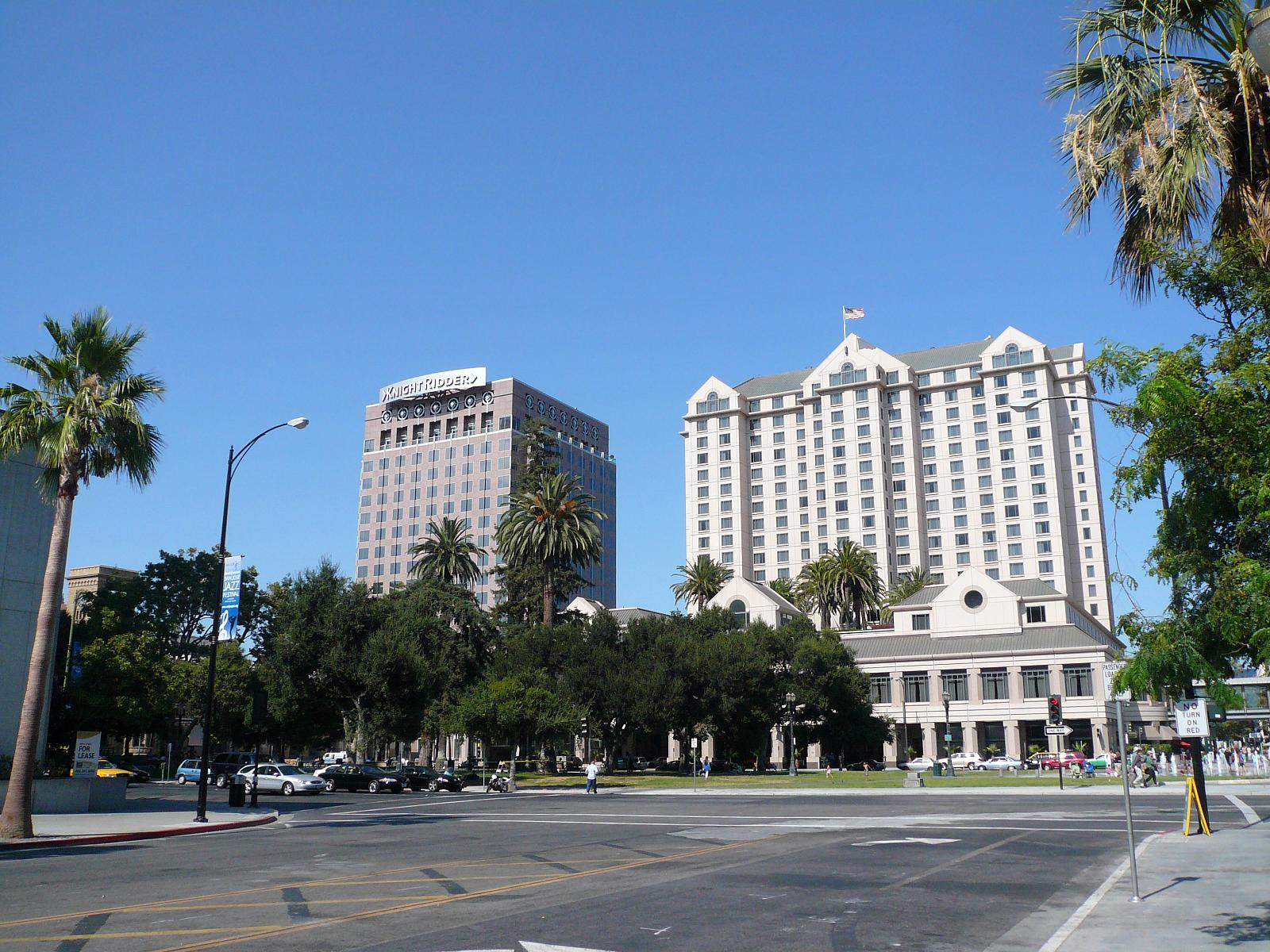
Santa Clara County declared COVID-19 a local health emergency on Feb. 3, 2020, and its health officer, Dr. Sara H. Cody, issued shelter-in-place orders from March through June 2020.2 On July 2, 2020 Cody replaced them with a "risk reduction order" that, effective July 13, applied to every person and business in the county. It required face coverings inside any business and required every business to file an online "social distancing protocol." It defined churches as businesses:
For purposes of this [o]rder, a 'business' includes any for-profit, non-profit, or educational entity, whether a corporate entity, organization, partnership, or sole proprietorship, and regardless of the nature of the service, the function it performs, or its corporate or entity structure.2
Cody's gatherings directives, revised from July 8 through Sept. 8, 2020, prohibited indoor gatherings that brought "together multiple people from separate households in a single space," including religious services. The state's Aug. 28, 2020 "Blueprint for a Safer Economy" sorted counties into tiers; in the most restrictive tier indoor worship was banned outright, and in the tier the county reached in September indoor gatherings were capped at 25 percent of capacity or 100 people, whichever was fewer. Cody's Oct. 5, 2020 revised risk reduction order required face coverings "at all times and by all individuals," and her Oct. 13, 2020 gatherings directive kept the 25 percent or 100-person cap and "continued to prohibit indoor singing."12
To enforce the orders, the Board of Supervisors adopted Urgency Ordinance No. NS-9.921 on Aug. 11, 2020, creating a civil enforcement program "to combat the spread of COVID-19" with a schedule of administrative fines. The ordinance declared that "[f]ailure to comply with any of the of the public health orders . . . constitutes an imminent threat and menace to public health and is a public nuisance" (the doubled "of the" is in the original).12 Under it, the county's first notice to Calvary Chapel, dated Aug. 23, 2020, set fines of $250 a day that "would double each day until corrected, to a maximum fine of $5,000 per day." A Nov. 9, 2020 notice imposed $1,000 a day each for failing to require masks on attendees and on staff, again doubling daily to $5,000.2
Then the county went to court. In October 2020 the People of the State of California, the county and Cody sued the church and McClure for an injunction. The Santa Clara County Superior Court issued a temporary restraining order on Nov. 2, 2020 that forbade the church from:
1. Conducting any gathering that does not fully comply with both the State and County public health orders, including but not limited to: holding gatherings indoors in excess of 100 people or 25% of capacity, whichever is less; holding outdoor gatherings in excess of 200 people; allowing participants to attend gatherings without wearing face coverings; allowing participants to attend gatherings without maintaining adequate social distance; and allowing singing at indoor gatherings; [¶] 2. Operating, whether indoors or outdoors, without the prior submission and implementation of a Social Distancing Protocol.1
The order directed the county to post it on the church's property and authorized county personnel "to enter the Calvary Chapel property to monitor compliance." When the county fell into the most restrictive tier, a Nov. 24, 2020 modified order banned "holding gatherings indoors" altogether and forbade "singing or chanting at indoor gatherings," ordered the church not to remove the posted order, and again authorized county entry. A preliminary injunction followed on Dec. 4, 2020.1
The trial court rejected the church's free exercise claim at that stage. It reasoned that the restrictions on indoor gatherings "are not specifically targeted at non-secular gatherings as they are generally applicable to both secular and non-secular indoor gatherings such as movie theatres, political gatherings, cultural events, community meetings, cardrooms, gyms, weddings, funerals, etc.," and so needed only a rational basis.1
What they did
They kept church. The appeals court summarized it in one line: Calvary Chapel and its pastors "failed to comply with any of these public health orders."1 County code enforcement officers, responding to complaints, documented large indoor services every Sunday without capacity limits, distancing or masks, with singing, and several concerts; the church never filed the social distancing protocol. The county issued a cease-and-desist letter on Aug. 21, 2020 and notices of violation from Aug. 23 through Oct. 25, 2020.1 By the county's count it eventually ignored 70 notices.2
McClure did not hide any of it. He told the San Jose Mercury News that the church would not comply, and in a sworn declaration he admitted that the church had violated the court's orders and intended to keep doing so; the trial court relied on that declaration when it found him in contempt.1 Years later, in another declaration, he put it in one sentence: "As the pastor and the shepherd of the [c]hurch, I did not force my congregation to wear masks."2
From the pulpit he explained why. The county filed recordings of his sermons, and the trial court quoted them in its 2023 order. On Dec. 13, 2020 he thanked the congregation "for coming in this dark time. . . to gather together to obey God's word and we're not here to fight the government but to stand for the freedom that God has given us and the right to worship." In January 2021 he said: "You can't tell a Christian not to preach the name of Jesus Christ, or to praise his name, or to gather in his name, the right from God, And who cares what the cost is . . . ." (the court's order dates that sermon Jan. 10, 2020, apparently a typing error for 2021, and sets the words "the right from God" off with dashes). On Jan. 10, 2021, speaking of the fines, he said: "Your fines are going to go up to $1.5 million. $80,000 and $23,000 for you personally! And that's what they're doing to me now and it's like, OK, but you know. . . I'm willing to die for the truth."8
He also fought in every court open to him, on the law. The church contested the first round of fines before a county hearing officer in October 2020 and appealed to the superior court.2 It sued Cody and the county in federal court (Calvary Chapel San Jose v. Cody, N.D. Cal. No. 20-cv-03794-BLF).8 It filed a friend-of-the-court brief in the U.S. Supreme Court supporting Gateway City Church, another Santa Clara County congregation, which won an order on Feb. 26, 2021 declaring that the Ninth Circuit's "failure to grant relief was erroneous" and that the outcome was "clearly dictated" by the Court's 2021 decision in South Bay United Pentecostal Church v. Newsom.9 It appealed both contempt orders. And when the county turned to its administrative fines, it fought those for five more years, through the Sixth District, the California Supreme Court and a petition to the U.S. Supreme Court.25
Its lawyers were Advocates for Faith and Freedom of Murrieta, California (Robert H. Tyler, Mariah Gondeiro, Erin Mersino, Joel Oster and others), joined at the U.S. Supreme Court by the American Center for Law and Justice (Jay Alan Sekulow, counsel of record).810
What it cost
The trial court's contempt orders carried money penalties under two statutes, Code of Civil Procedure sections 1218(a) (contempt) and 177.5 (violating a court order). The Sixth District opinion lists them:1
- Dec. 17, 2020 order (violations every day from Nov. 2 to Nov. 23, 2020): the church, $1,000 a day for contempt ($22,000) and $1,500 a day in sanctions ($33,000).
- Feb. 16, 2021 order, after a three-day trial (violations every day from Nov. 24, 2020 to Jan. 3, 2021): McClure personally, $15,000 and $22,000; Atherley personally, $11,000 and $16,500; the church, $35,000 and $52,500; plus $13,000 and $19,500 suspended for the missing protocol.
Added together, those orders imposed $207,000 in payable sanctions, with another $32,500 suspended (news reports at the time rounded the figure to about $190,000 or "more than $200,000").1310 McClure's own share was $37,000.
The administrative fines were larger by far. A county hearing officer upheld $327,750 for the notices of August to October 2020, and on April 8, 2021 the superior court affirmed; the church abandoned its appeal of that order on June 25, 2021 after the appeals court questioned whether the order could be appealed at all.2 In its amended complaint of July 2021 the county counted $2,234,000 in mask fines from Nov. 9, 2020 to June 21, 2021 and $1,327,750 in protocol fines, and, "in the exercise of prosecutorial discretion," sought a judgment of $2,868,616.67 plus late fees, staff costs and attorney fees.2
The county has also asked the church and McClure to pay its lawyers. Advocates for Faith and Freedom reports a request for $1,098,244 in attorney fees and $45,753 in costs on top of the fine judgment; the church's petition states that the county seeks "over a million dollars in attorney fees and costs against Calvary Chapel and Pastor McClure," and that the superior court on Sept. 15, 2025 vacated the fee hearing until the U.S. Supreme Court rules.118
The state piled on through a separate agency. California's Division of Occupational Safety and Health (Cal/OSHA) issued 15 citations totaling more than $67,000 against the church and its school after complaints that children were not wearing masks. The church moved to suppress the evidence from the inspections as the product of an overbroad warrant, a superior court agreed, and Cal/OSHA withdrew the remaining citations in late 2025 with no admission of fault by the church.6
The cost in time is the easiest to overlook. The first notice of violation was posted in August 2020. More than six years later, as this lesson is written, the case is still open. For that whole span a pastor of a single congregation has carried the risk of a seven-figure judgment against his church and a personal stake in the fee claim, while continuing to preach every week.
How it ended
The contempt case: a full win
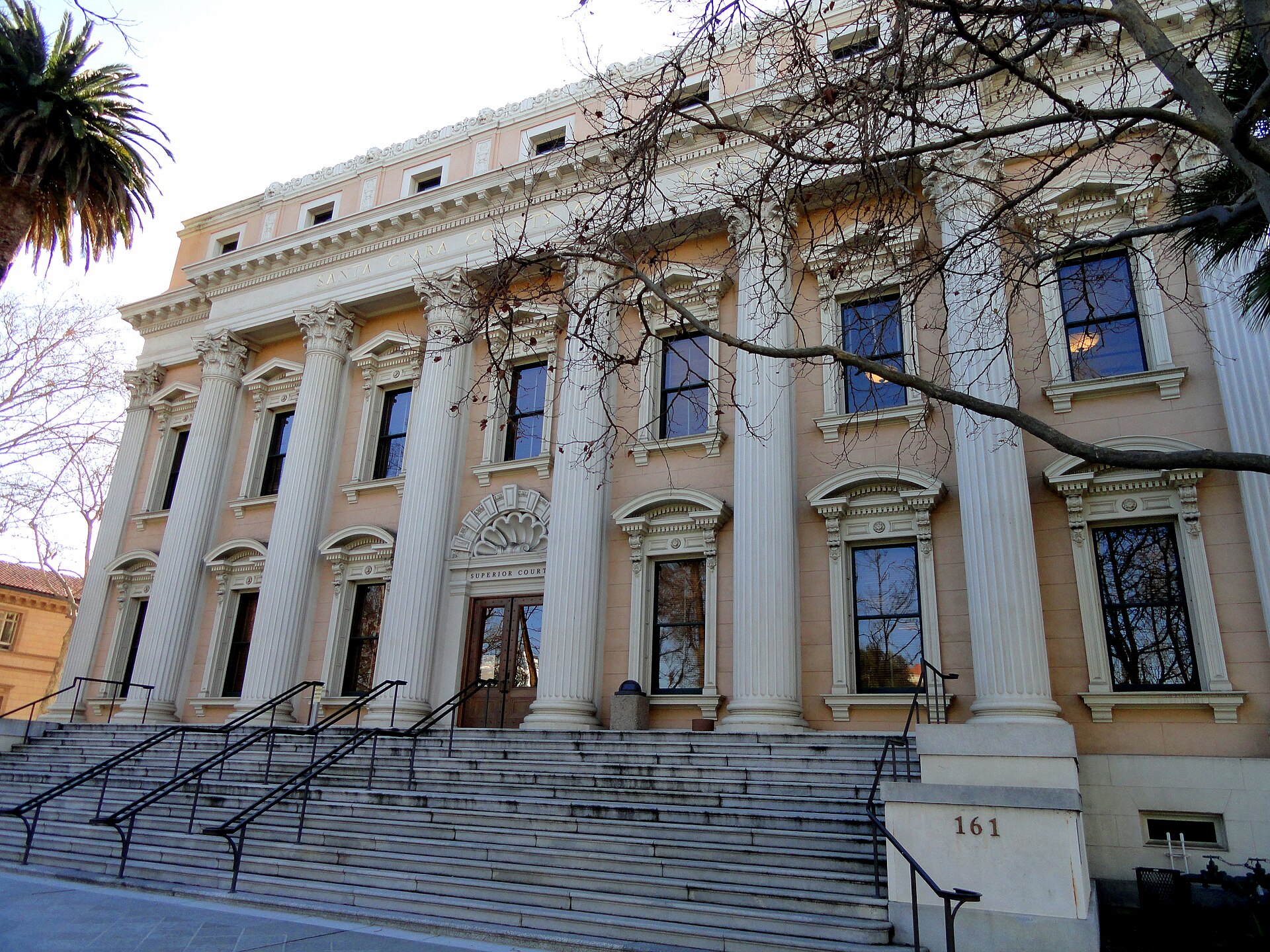
On Aug. 15, 2022 the Court of Appeal for the Sixth Appellate District decided three consolidated cases: People v. Calvary Chapel San Jose (H048708), Calvary Chapel San Jose v. Superior Court (H048734) and McClure v. Superior Court (H048947). Presiding Justice Greenwood wrote the opinion; Justices Bamattre-Manoukian and Danner concurred.1 The court first set out what the U.S. Supreme Court had done in its pandemic worship orders, including the Gateway City order from Santa Clara County itself, and drew this rule from them:
From these decisions, we understand the United States Supreme Court to hold that where a pandemic-related public health order prohibiting indoor gatherings has the effect of prohibiting indoor worship services, the order is not neutral and of general applicability if the public health order permits any other type of indoor secular activity, notwithstanding that secular indoor gatherings are also banned.1
Applying it to the Nov. 2 order, the court held that the part forcing the church to obey the 100-person or 25 percent cap "is unconstitutional because it discriminated against a religious institution in violation of the Free Exercise Clause of the First Amendment."1 Applying it to the Nov. 24 order and the injunction, the court held:
We agree with Calvary Chapel that, as we have discussed, under the most recent Supreme Court rulings the prohibition on indoor gatherings in the November 24, 2020 modified restraining order and the preliminary injunction that effectively prohibited indoor worship services, while allowing certain secular indoor activities to occur, is unconstitutional on its face as a violation of the Free Exercise Clause.1
The county argued that the contempt findings could stand on the mask, distancing and protocol violations alone. The court did not decide whether those parts of the orders were valid. It held that because the trial court had imposed single aggregate penalties, and because "it is not possible to separate Calvary Chapel's violations of the prohibition on indoor gatherings from the violations of the requirements for social distancing, face coverings, and submission of a social distancing protocol," the contempt orders fell in full.1 The legal principle was an old one from California's own high court: "an order unconstitutional on its face is in excess of jurisdiction and cannot sustain a contempt judgment."1 The disposition:
In H048708, People v. Calvary Chapel San Jose, the December 17, 2020 order requiring payment of monetary sanctions is reversed. . . . In H048734, Calvary Chapel San Jose v. Superior Court, the December 17, 2020 order of contempt is annulled in its entirety. . . . In H048947, McClure v. Superior Court, the February 16, 2021 order of contempt is annulled in its entirety.1
"I thank God that our actions have been justified by the Court of Appeal," McClure said.10 The county asked the California Supreme Court to review the decision (No. S276560). On Nov. 30, 2022 the court denied review, leaving the annulment and the reversal of the sanctions in place.34 The appellate firm Horvitz and Levy reported that the court at the same time ordered the Sixth District's opinion depublished, which means it may not be cited as precedent in California courts; the church's own later petition still cites it by its official reporter citation, 82 Cal. App. 5th 235.48

The fine case: cut by more than half, then upheld
The county's administrative fines were a separate track, and on that track the church has lost so far. On April 7, 2023 Judge Evette D. Pennypacker granted the county summary adjudication. She ruled that the mask orders applied to "'all individuals, businesses, and other entities in the County'" and "thus were facially neutral, generally applicable requirements," that the county's notices satisfied due process, and that the fines were not constitutionally excessive.2 She also cut the bill. She threw out the fines from the Aug. 23, 2020 notice, which "had been found to be unconstitutional," and the protocol fines, finding that the church had in effect been fined twice for the same failure to require masks. That left $1,228,700 for refusing to require masks from Nov. 9, 2020 through June 21, 2021. Judgment was entered on Feb. 2, 2024.2
On April 15, 2025 the Sixth District affirmed in an unpublished opinion by Justice Danner, with Presiding Justice Greenwood and Justice Wilson concurring.2 On free exercise, it held the church had not shown a triable question that the mask rules were anything but neutral and generally applicable; declarations that some firefighters and construction workers went unmasked "show only that certain individuals chose not to wear face coverings," and "There is no evidence that the public health orders included a mechanism for the state or County to grant individualized exceptions."2 On the Eighth Amendment, it held:
We therefore determine that the undisputed facts show that Calvary Chapel's level of culpability due to violating the public health orders requiring face coverings is high, and therefore the fines in the amount of $1,228,700 do not violate the excessive fines clause of the Eighth Amendment because the fines are not grossly disproportionate to Calvary Chapel's culpability.2
The court denied rehearing on May 6, 2025, and the California Supreme Court denied review on July 16, 2025 (No. S291092).85 "We answer first and foremost to God," McClure said when the church sought that review.11
At the U.S. Supreme Court: pending
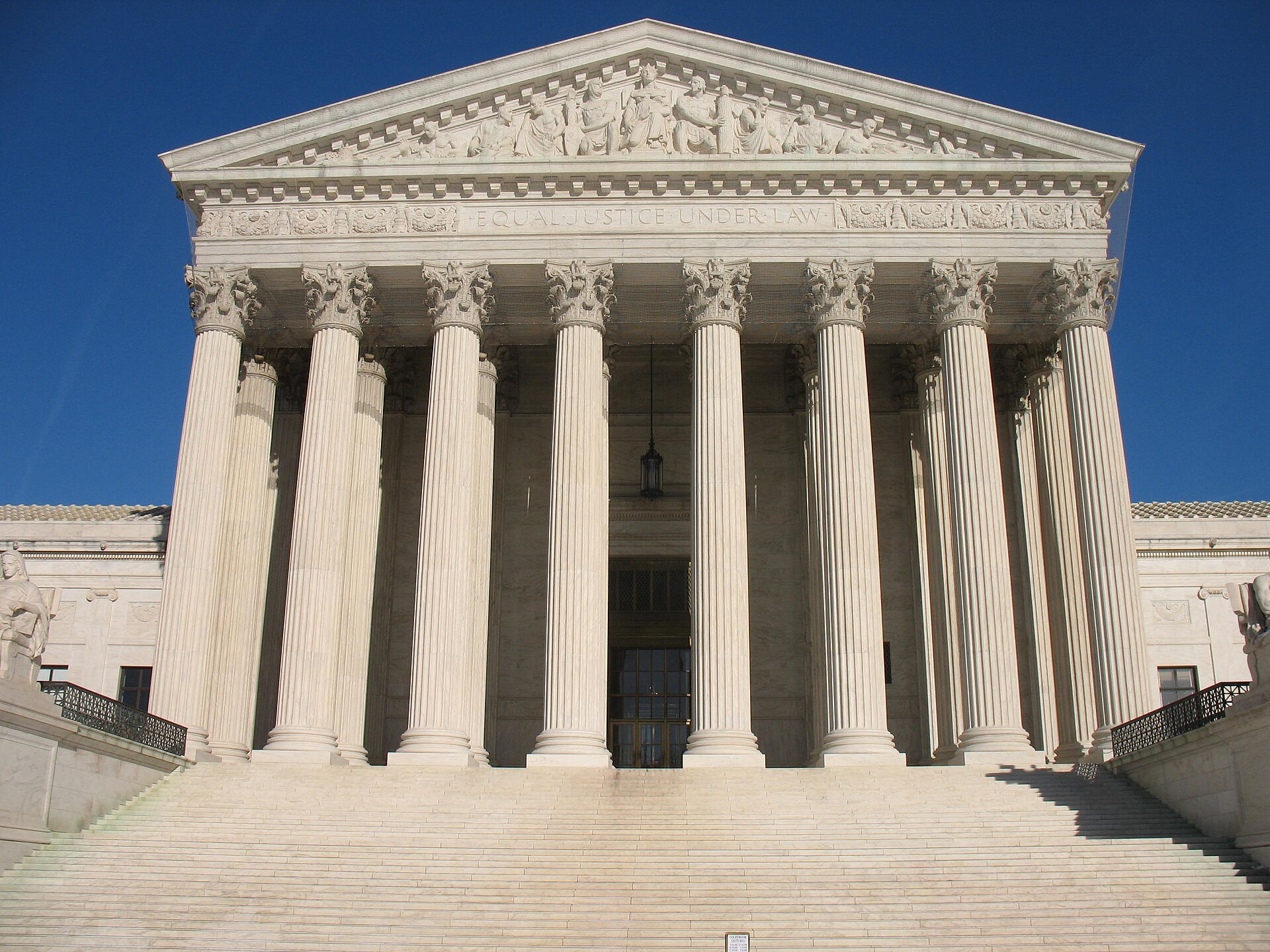
On Dec. 12, 2025 the church and McClure filed a petition for certiorari, Calvary Chapel San Jose v. California, No. 25-703. It asks four questions: whether COVID rules "that contain multiple exceptions, exceptions permitting comparable risks of viral transmission," trigger strict scrutiny as not "generally applicable"; whether the church autonomy doctrine includes a "liturgical exception" protecting the conduct of worship itself; whether, if not, the Court should overrule Employment Division v. Smith; and whether "the imposition of over a million dollars in fines on a church for its adherence to its religious requirements for worship services" violates the Excessive Fines Clause.8 Seven friend-of-the-court briefs supported the petition, including one from West Virginia joined by 19 other states. The county filed its opposition on March 19, 2026, the church replied on April 7, 2026, and the petition was distributed for the Court's conference of April 24, 2026.512
As of Nov. 6, 2026 the Court's docket shows no further action, and the petition does not appear in any of the Court's published order lists from April 27 through Nov. 6, 2026.513 The petition has been neither granted nor denied. That is the honest answer to "how did the $1.2 million fight end": the state courts upheld it, and the last court that can change it has not yet acted.
The other cases
The church's federal suit against Cody and the county (N.D. Cal. No. 20-cv-03794-BLF) did not succeed. By an order of March 10, 2023 the district court dismissed most of it and stayed the rest while the state case went on, and the Ninth Circuit decided the church's appeal (No. 23-15445) on April 12, 2024; The Christian Post reported that the three-judge panel unanimously held that the district court had properly abstained.814 The Cal/OSHA citations, by contrast, ended in the church's favor when the agency withdrew them after a superior court suppressed the inspection evidence.6

Timeline
| Date | Event |
|---|---|
| Feb. 3, 2020 | Santa Clara County declares a local health emergency.2 |
| March 2020 | Calvary Chapel San Jose closes in-person services.8 |
| May 31, 2020 | The church reopens for in-person worship.8 |
| July 2, 2020 | Cody's risk reduction order: masks in businesses, social distancing protocols; churches defined as businesses.2 |
| Aug. 11, 2020 | Board of Supervisors adopts Urgency Ordinance NS-9.921 with daily fines.1 |
| Aug. 21 to 23, 2020 | Cease-and-desist letter; first notice of violation, fines doubling daily to $5,000.12 |
| October 2020 | The People, the county and Cody sue for an injunction.1 |
| Nov. 2, 2020 | Temporary restraining order: 100 people or 25 percent indoors, masks, no indoor singing.1 |
| Nov. 9, 2020 | Mask notice of violation; the fines later reduced to $1,228,700 run from this date.2 |
| Nov. 24, 2020 | Modified order bans indoor gatherings outright.1 |
| Dec. 17, 2020 | First contempt order: $55,000 against the church.1 |
| Feb. 16, 2021 | Second contempt order after a three-day trial, including $37,000 against McClure personally.1 |
| Feb. 26, 2021 | U.S. Supreme Court grants Gateway City Church relief from the county's indoor ban.9 |
| June 21, 2021 | County rescinds the order under which the mask fines accrued.2 |
| Aug. 15, 2022 | Sixth District annuls both contempt orders and reverses the sanctions.1 |
| Nov. 30, 2022 | California Supreme Court denies the county's petition for review (S276560).34 |
| April 7, 2023 | Judge Pennypacker grants the county summary adjudication on mask fines.2 |
| Feb. 2, 2024 | Judgment for $1,228,700.2 |
| April 12, 2024 | Ninth Circuit upholds the federal court's decision to abstain in the church's suit (No. 23-15445).814 |
| April 15, 2025 | Sixth District affirms the fine judgment (H051860).2 |
| July 16, 2025 | California Supreme Court denies review (S291092).8 |
| Late 2025 | Cal/OSHA withdraws its remaining citations against the church and school.6 |
| Dec. 12, 2025 | Petition for certiorari filed, No. 25-703.5 |
| April 24, 2026 | Petition distributed for conference; no ruling through Nov. 6, 2026.513 |
Why it took courage
Most people who stood against a COVID order stood for a few weeks or months. Mike McClure has stood for more than six years, and the bill has grown the whole time. He kept his church open in the fall and winter of 2020, when Santa Clara County was in California's most restrictive tier and the county's order and a judge's injunction both forbade indoor worship of any size.1 He did it after a cease-and-desist letter, with fines doubling every day, with a court order posted on his own church's door and county officers authorized to walk in and watch. He did it after being held in contempt once, and again after a three-day contempt trial that put $37,000 on him personally.1 Few people would keep preaching under those conditions. Fewer still would say from the pulpit, as he did in January 2021 with the fines on his mind, "I'm willing to die for the truth."8
The stand rested on a claim about liberty that is easy to state and was hard to win: that the government may not decide when, how many and in what manner Christians gather to worship, and that a county which lets people fill a store, an office or a gym under one set of rules cannot hold a church to a stricter one. On the central part of that claim he was right, and a California appeals court said so. The orders that banned and capped indoor worship while allowing secular indoor activity were "unconstitutional on its face as a violation of the Free Exercise Clause," and the contempt orders built on them were void.1 By the time that ruling came, the U.S. Supreme Court had already told Santa Clara County, in the Gateway City Church case that Calvary Chapel San Jose supported as a friend of the court, that its indoor ban could not be enforced against worship.9
He fought within the system the whole time. Every step of his resistance went through a hearing officer, a superior court, a court of appeal, a state supreme court or a federal court. He answered every summons, filed every brief, and when he lost he appealed instead of hiding. That is the lawful resistance the Ordered Liberty module describes: open refusal of an order one believes unjust, paired with full acceptance of the courts' jurisdiction to decide.
The mask fight is the part he has not won, and it is the part that took the most stubbornness. The courts have treated masks differently from capacity bans: the county's mask order covered nearly everyone indoors, and the judges found no proof that the county excused secular groups it was punishing the church for. McClure's position is that the church's worship requires "unveiled faces" as a matter of faith and that no county should referee the liturgy.8 Whatever a reader thinks of that position, it is a conviction about worship that he has paid for in years of litigation and that he has asked the highest court in the country to hear. He has asked the courts, not the county, to decide whether the consequences are lawful.
His stand also protects others. The 2022 ruling, although later depublished, stands as a judgment that the contempt sanctions against this church and its pastors were void and that a California court may not punish a pastor for contempt of an injunction that is itself unconstitutional on its face. Every congregation in the county that met during those months, and every pastor who was afraid to, benefits from the fact that one church made the county defend its orders in court and lost.
What the other side said
The County of Santa Clara and Dr. Sara Cody argued in their complaint that "[t]he best way to protect the public from COVID-19 is to undertake risk-mitigation measures to prevent transmission and infection, such as avoiding indoor gatherings, wearing face coverings, keeping sufficient physical distance, and avoiding singing or shouting near others while indoors," and that "[c]hurch gatherings are a common source of 'superspreader' events."1 In the contempt appeal the county argued that the orders "were issued within the trial court's authority" and that the contempt findings could stand on the mask, distancing and protocol violations even if the indoor ban fell.1
Judge Evette D. Pennypacker of the Santa Clara County Superior Court wrote in her April 7, 2023 order: "It should appear clear to all, regardless of religious affiliation, that wearing a mask while worshiping one's god and communing with other congregants is a simple, unobtrusive, giving way to protect others while still exercising your right to religious freedom. Unfortunately, Defendants repeatedly refused to model, much less, enforce this gesture." (The dashes around "regardless of religious affiliation" are shown here as commas.) She found that the church knew "church attendees had contracted Covid-19 and displayed symptoms of the virus" and that its school "had to be closed because of a major outbreak among students and teachers."8
The Sixth District Court of Appeal held in 2025 that "Calvary Chapel's level of culpability due to violating the public health orders requiring face coverings is high."2 County Counsel James R. Williams said after the 2023 ruling, "Calvary's arguments have been rejected at almost every turn," and that the county's health orders "saved thousands of lives and resulted in one of the lowest death rates of any community in the United States."15
In the U.S. Supreme Court, the county's lawyers (County Counsel Tony LoPresti and others) called the petition a request to review "an unpublished state-court decision about a COVID-era face-covering requirement that was rescinded nearly five years ago," and wrote that "Calvary admitted that it knew that multiple congregants had contracted COVID-19 and attended services while symptomatic, that there had been a 'serious outbreak' at its on-campus school; and that there had been at least one COVID-19 death in its community."16
Still disputed: Whether a near-universal indoor mask rule is "generally applicable" when it has exceptions for eating, athletics, certain workers and medical conditions is the question the church has put to the U.S. Supreme Court, and it is unanswered as of Nov. 6, 2026.85 Whether $1,228,700 is a proportionate fine for a church that refused to require masks for seven months is disputed: two California courts said yes; the church and the states that filed in its support say no.212 Whether the church's services spread the virus is disputed: the county points to the church's admissions about sick attendees, a school outbreak and a death in its community, while the church argued in the state courts that "no COVID-19 cases were traced back to the church."162 The county's request for more than $1 million in attorney fees is undecided.8
Medical note: McClure has made statements about the virus and masks that are his own. In a sermon on Nov. 22, 2020 he said, "You have a 99.99% chance of not dying if you catch the virus," and that he could not think with a mask on. In January 2021 he said of COVID-19, "it was all set up. We were played. This whole thing, it's a lie. I mean, not that it's not a disease. But they're using it to take control and to stop you and I from worshipping God." In April 2021 he said he was not afraid of COVID. The church's experts in the fine case disputed the efficacy of face coverings, and the church argued that "it is a myth that church services are superspreader events."82 The county's health orders required face coverings indoors as a measure to slow the spread of COVID-19, the trial court found that church attendees had contracted the virus and that the church's school closed for an outbreak, and Justice Neil Gorsuch, writing in South Bay United Pentecostal Church v. Newsom (2021) on the side of the churches, described masks as a measure "in routine use in religious services across the country today."28 No court in this case ruled on the medical questions themselves.
Hard questions and answers
If the court of appeal ruled for the church in 2022, why does it still owe $1.2 million?
Because there were two different penalties for two different things. The 2022 ruling voided contempt sanctions for violating court orders that banned or capped indoor worship, and those orders were unconstitutional on their face. The $1,228,700 is the county's own administrative fine for not requiring masks, imposed under the urgency ordinance. The 2022 court expressly assumed, without deciding, that the mask rules were valid, and the 2025 court held that they were neutral and generally applicable.21 The trial judge even removed fines tied to the notice that had been found unconstitutional.2
Wasn't the church simply breaking a law that applied to everyone?
On masks, the California courts have said yes. On the indoor ban and capacity caps, the courts said no: those rules treated worship worse than some secular indoor activity, and the U.S. Supreme Court held exactly that about Santa Clara County's indoor ban in the Gateway City case.91 A fair account gives the church the win it earned and the loss it took.
Did the church know people were getting sick?
Yes, according to findings the church did not dispute in the fine case: the trial court found it knew attendees had contracted COVID-19 and that its school had a major outbreak, and the county says the church admitted at least one death in its community.816 The church argued that no cases were traced to its services.2 That is the hardest fact in the profile, and a reader should weigh it. It does not change the constitutional holding on the indoor ban, which turned on unequal treatment, not on outcomes.
Why would a church object to a piece of cloth?
McClure's sworn explanation is theological: the church believes "Christians are to approach God with unveiled faces," citing 2 Corinthians 3:18.8 The county never challenged the sincerity of the belief. Its position is that a neutral, generally applicable rule may burden a sincere belief without violating the Constitution under Employment Division v. Smith (1990), and that is why the church has asked the Supreme Court to recognize a "liturgical exception" or to overrule Smith.816
Is $1.2 million an excessive fine for a church?
The California courts applied the U.S. Supreme Court's test from United States v. Bajakajian (1998), which asks whether a fine is "grossly disproportional to the gravity of a defendant's offense," and found that the church's culpability was high and that it conceded it could pay.216 The church answers that the fines grew to their size only because they doubled daily for a religious practice the county never claimed was insincere, and it has asked the Supreme Court to give lower courts more guidance.8
What does "depublished" mean for the 2022 win?
Under California's rules, a depublished opinion still decides the case between the parties, so the contempt orders against Calvary Chapel San Jose, McClure and Atherley remain annulled. It cannot be cited as precedent by other litigants in California courts.42 The church's win is final; its value as a rule for others in California was limited by the state supreme court.
Related lessons
- Church History Part C, lesson 06: Calvary Chapel Doctrine and Practice and lesson 07: Calvary Chapel Growth and Fault Lines, for the movement Calvary Chapel San Jose belongs to.
- 06 Pastor Tony Spell and Life Tabernacle: a Louisiana pastor who won outright in his state's high court.
- 08 John MacArthur and Grace Community Church: the Los Angeles County case and its 2021 settlement.
- 09 The Worship Cases at the Supreme Court: Diocese of Brooklyn, South Bay and Tandon; Tandon, like Gateway City, arose from Santa Clara County's orders.
- 17 Five Doctors Against California's Speech Law and 22 What the Stands Won.
- Ordered Liberty 08: Forms of Lawful Resistance and The First Amendment.
- Testifying and Public Comment, lesson 05: how residents can speak to a board of supervisors before it adopts an urgency ordinance like NS-9.921.
Still open
These items could not be confirmed against a primary source before publication. The lesson states them as open, and they stay on the fact-check list.
- The California Supreme Court's Nov. 30, 2022 action in S276560: the denial of review is confirmed by two reports (Horvitz and Levy; San Francisco Chronicle), but the depublication order is confirmed only by Horvitz and Levy; the court's own docket was not checked.
- The Ninth Circuit's April 12, 2024 decision in No. 23-15445 is known from The Christian Post's report that the panel unanimously held that the district court properly abstained; the decision itself was not read. The district court's March 10, 2023 order is known only from the trial court's April 7, 2023 order, which says it dismissed most of the federal case and stayed the rest.
- The date of the trial court's summary adjudication order: the court records (H051860 and the petition) say April 7, 2023; an Advocates for Faith and Freedom page says April 12, 2023. The lesson uses April 7, 2023.
- The judgment date: H051860 says Feb. 2, 2024; the petition's list of related proceedings says Feb. 6, 2024. The lesson uses Feb. 2, 2024.
- The court's 2023 order dates one quoted sermon Jan. 10, 2020; the lesson treats it as January 2021 and says so.
- The attorney fee figures ($1,098,244 plus $45,753 in costs) come from the church's lawyers' case page; the petition confirms only 'over a million dollars' and the Sept. 15, 2025 stay.
- Mike McClure's personal background (years in ministry, how he came to the church) was not found in any source opened and is not stated.
- Why petition No. 25-703 has had no docket entry since April 8, 2026 (for example, a hold for another case) is not stated on the docket and is not known.
Learn more
- People v. Calvary Chapel San Jose (Aug. 15, 2022), full opinion: A clear summary of every Supreme Court worship order of the pandemic, then its application to one church's contempt case.
- People v. Calvary Chapel San Jose (Apr. 15, 2025), unpublished opinion: The county's side of the story at its strongest: the mask rule, the fines and the Eighth Amendment analysis.
- Petition and brief in opposition, No. 25-703: Read the church's four questions and the county's answer side by side; the docket links every brief.
Notes
- Court of Appeal of California, Sixth Appellate District, People v. Calvary Chapel San Jose (H048708), Calvary Chapel San Jose v. Superior Court (H048734) and McClure v. Superior Court (H048947), filed Aug. 15, 2022 (certified for publication; Greenwood, P.J., with Bamattre-Manoukian and Danner, JJ.); Santa Clara County Super. Ct. No. 20CV372285 (retrieved Nov. 7, 2026). Read it online. ↩
- Court of Appeal of California, Sixth Appellate District, People v. Calvary Chapel San Jose, H051860, filed April 15, 2025 (not to be published; Danner, J., with Greenwood, P.J., and Wilson, J.) (retrieved Nov. 7, 2026). Read it online. ↩
- San Francisco Chronicle, "San Jose church that defied COVID orders won't have to pay state fines," on the California Supreme Court's refusal to restore about $190,000 in penalties, published the week of Nov. 30, 2022 (retrieved Nov. 7, 2026). Read it online. ↩
- Horvitz and Levy LLP, "Supreme Court depublishes opinion that overturned contempt for violating Covid health orders, takes another ICWA case," California Supreme Court conference report, Dec. 1, 2022 (retrieved Nov. 7, 2026). Read it online. ↩
- Supreme Court of the United States, docket No. 25-703, Calvary Chapel San Jose, et al. v. California, et al. (petition filed Dec. 12, 2025; brief in opposition March 19, 2026; reply April 7, 2026; distributed for conference of April 24, 2026; lower court decision April 15, 2025, rehearing denied May 6, 2025, discretionary review denied July 16, 2025) (retrieved Nov. 7, 2026). Read it online. ↩
- Kim Roberts, "California Drops $67K in Citation Fines Against Calvary Chapel San Jose," MinistryWatch, Dec. 8, 2025 (retrieved Nov. 7, 2026). Read it online. ↩
- Christmas Beeler, "Calvary Chapel San Jose Petitions U.S. Supreme Court," Calvary Chapel Magazine, Nov. 6 (2025, by its content) (retrieved Nov. 7, 2026). Read it online. ↩
- Petition for a Writ of Certiorari, Calvary Chapel San Jose and Mike McClure v. The People of the State of California, et al., U.S. Supreme Court No. 25-703, filed Dec. 12, 2025 (Jay Alan Sekulow, American Center for Law and Justice, and Robert H. Tyler, Advocates for Faith and Freedom), including its statement of related proceedings, footnotes quoting the McClure declaration of Jan. 10, 2023, and Appendix B, Order Granting Plaintiffs' Motion for Summary Adjudication, Santa Clara County Superior Court No. 20CV372285 (Apr. 7, 2023) (Pennypacker, J.) (retrieved Nov. 7, 2026). Read it online. ↩
- Supreme Court of the United States, docket No. 20A138, Gateway City Church, et al. v. Newsom, et al., order of Feb. 26, 2021 granting injunctive relief (Kagan, J., joined by Breyer and Sotomayor, JJ., dissenting), and Feb. 24, 2021 entry for the amicus motion of Calvary Chapel San Jose, et al. (retrieved Nov. 7, 2026). Read it online. ↩
- Steve Warren, "'A Significant Victory for Churches and Pastors': Calvary Chapel San Jose Wins Major Ruling, Legal Battle Still Not Over," CBN News, Aug. 17, 2022 (retrieved Nov. 7, 2026). Read it online. ↩
- Advocates for Faith and Freedom, case page and press releases on Calvary Chapel San Jose and Pastor Mike McClure (first posted Aug. 15, 2022; updated through 2026) (retrieved Nov. 7, 2026). Read it online. ↩
- Northern California Record (Legal Newsline), "San Jose church seeks SCOTUS intervention on Covid fines," January 2026 (retrieved Nov. 7, 2026). Read it online. ↩
- Supreme Court of the United States, Orders of the Court, order lists of October Term 2025 (April 27 to Oct. 1, 2026) and October Term 2026 (Oct. 5 to Nov. 6, 2026), each searched for No. 25-703 (retrieved Nov. 7, 2026). Read it online. ↩
- Michael Gryboski, "Calif. church to appeal $1.2 million fine for breaching COVID-19 lockdown orders," The Christian Post, April 30, 2025 (retrieved Nov. 7, 2026). Read it online. ↩
- County of Santa Clara, "Statement regarding Superior Court Decision in Calvary Church Case," quoting County Counsel James R. Williams (undated statement on the April 2023 ruling) (retrieved Nov. 7, 2026). Read it online. ↩
- Respondents' Brief in Opposition, Calvary Chapel San Jose v. California, U.S. Supreme Court No. 25-703, March 19, 2026 (Tony LoPresti, County Counsel; Robin M. Wall, counsel of record) (retrieved Nov. 7, 2026). Read it online. ↩
Check yourself
1. What did the Sixth District Court of Appeal do on Aug. 15, 2022?
The court held the restraining orders and injunction were facially unconstitutional under the Free Exercise Clause, so the contempt orders were void.
2. How did Santa Clara County's July 2, 2020 risk reduction order treat churches?
Its definition of 'business' covered any non-profit entity regardless of the nature of its service, and the church was treated as one.
3. How much did the trial court finally award in administrative fines, and for what?
Judge Pennypacker removed the fines from the unconstitutional August notice and the duplicate protocol fines, leaving $1,228,700 for the mask violations.
4. Why did the 2022 contempt win not erase the mask fines?
The contempt orders rested on unconstitutional court orders; the fines rested on the county's mask rule, later held neutral and generally applicable.
5. What did the U.S. Supreme Court say in Gateway City Church v. Newsom (Feb. 26, 2021)?
The Court granted the church relief from the county's indoor gathering ban; Calvary Chapel San Jose had filed a friend-of-the-court brief.
6. What happened to the Cal/OSHA citations against the church and its school?
MinistryWatch reported that the 15 citations, over $67,000, were withdrawn with no admission of fault.
7. What is the status of petition No. 25-703 as of Nov. 6, 2026?
The docket's last entry is the distribution for conference, and the petition does not appear in any order list through Nov. 6, 2026.
8. What did McClure's sworn declaration give as the religious reason for refusing masks?
His Jan. 10, 2023 declaration, quoted in the petition, ties the objection to 2 Corinthians 3:18.
Terms in this lesson
- Health officer
- The physician a California county appoints with legal power to issue public health orders; Dr. Sara H. Cody held the post in Santa Clara County.
- Urgency ordinance
- A county ordinance that takes effect at once because of an emergency; NS-9.921 (Aug. 11, 2020) set Santa Clara County's COVID fines.
- Notice of violation
- A county enforcement officer's written finding that a person or business broke an order, which starts fines accruing.
- Temporary restraining order (TRO)
- A short-term court order forbidding conduct until a hearing on a preliminary injunction.
- Preliminary injunction
- A court order that stays in force while a lawsuit is pending; here issued Dec. 4, 2020.
- Contempt of court
- Willful disobedience of a court order, punishable in California by fines under Code of Civil Procedure section 1218.
- Section 177.5 sanctions
- Money sanctions a California court may impose for violating a lawful court order without good cause, separate from contempt.
- Facially unconstitutional
- Unconstitutional on its own terms, not only in how it was applied; under California law such an order cannot support contempt.
- Summary adjudication
- A ruling that decides some claims in a case without trial because the key facts are not disputed.
- Excessive Fines Clause
- The part of the Eighth Amendment that forbids fines grossly disproportional to the offense, applied through the Bajakajian test.
- Depublication
- An order of the California Supreme Court removing a Court of Appeal opinion from the official reports, so it binds the parties but cannot be cited as precedent.
- Petition for certiorari
- A request that the U.S. Supreme Court review a lower court's judgment; the Court grants few.
- Church autonomy doctrine
- The First Amendment principle that churches govern their own internal affairs; the church asks the Court to extend it to a 'liturgical exception.'
- Cal/OSHA
- California's Division of Occupational Safety and Health, the state workplace safety agency that cited the church and its school.
Sources
- People v. Calvary Chapel San Jose, H048708, H048734, H048947 (Cal. Ct. App. 6th Dist. Aug. 15, 2022) (2022-08-15) checked 2026-11-07
- People v. Calvary Chapel San Jose, H051860 (Cal. Ct. App. 6th Dist. Apr. 15, 2025, unpublished) (2025-04-15) checked 2026-11-07
- U.S. Supreme Court docket 25-703, Calvary Chapel San Jose v. California (2026-04-08) checked 2026-11-07
- Petition for certiorari, No. 25-703, with appendix (Superior Court order of Apr. 7, 2023) (2025-12-12) checked 2026-11-07
- Brief in opposition, No. 25-703 (County of Santa Clara) (2026-03-19) checked 2026-11-07
- U.S. Supreme Court docket 20A138, Gateway City Church v. Newsom (2021-02-26) checked 2026-11-07
- U.S. Supreme Court, Orders of the Court (order lists searched for 25-703) (2026-11-06) checked 2026-11-07
- County of Santa Clara statement on the Superior Court decision (2023-04) checked 2026-11-07
- Horvitz and Levy, Supreme Court depublishes opinion that overturned contempt (2022-12-01) checked 2026-11-07
- San Francisco Chronicle, San Jose church won't have to pay state fines (2022-11-30) checked 2026-11-07
- CBN News, Calvary Chapel San Jose wins major ruling (2022-08-17) checked 2026-11-07
- The Christian Post, church to appeal $1.2 million fine (2025-04-30) checked 2026-11-07
- MinistryWatch, California drops $67K in citation fines (2025-12-08) checked 2026-11-07
- Northern California Record, San Jose church seeks SCOTUS intervention (2026-01) checked 2026-11-07
- Calvary Chapel Magazine, Calvary Chapel San Jose petitions U.S. Supreme Court (2025-11-06) checked 2026-11-07
- Advocates for Faith and Freedom, Calvary Chapel San Jose case page (2022-08-15) checked 2026-11-07