Lesson 21 of 23 · about 40 minutes
Tamara Lich, Chris Barber and the Freedom Convoy (Canada)
Updated November 7, 2026
You'll be able to
- Describe who Tamara Lich and Chris Barber were before 2022 and how the Freedom Convoy began.
- Explain the Emergencies Act's definitions of a national emergency and a public order emergency and the measures adopted on February 14 and 15, 2022.
- State the criminal outcome accurately: the April 3, 2025 convictions and acquittals, the October 7, 2025 sentences and the pending appeals.
- Quote and compare the Federal Court (2024 FC 42), the Federal Court of Appeal (2026 FCA 6) and the Public Order Emergency Commission on whether the invocation was lawful.
- Describe the protest's effect on Ottawa residents from the commission's findings.
- Weigh the organizers' stand for the right to protest against the harm and the law they were found to have broken.
Start here: the short version
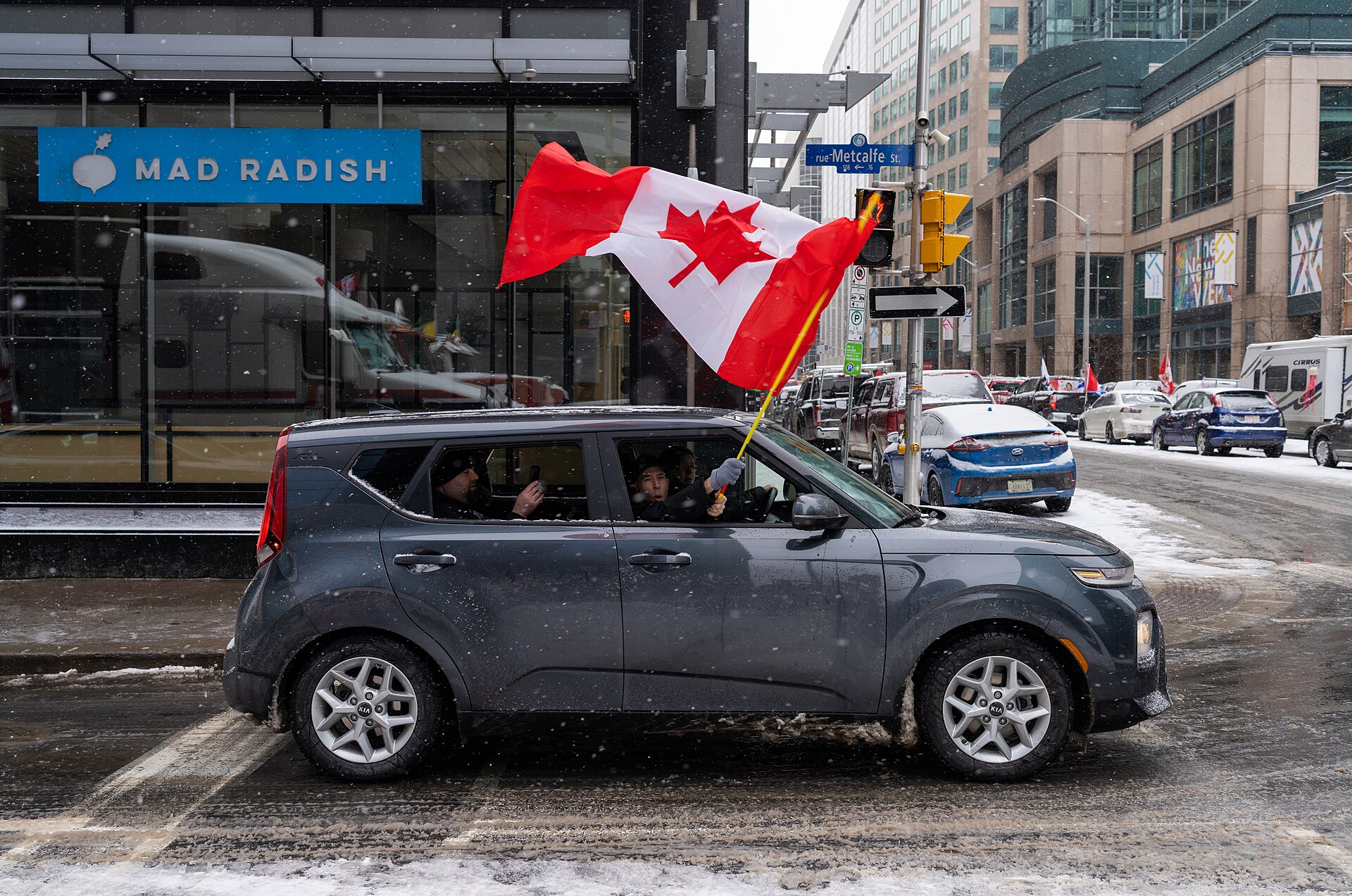
Tamara Lich, a logistics administrator and grandmother from Medicine Hat, Alberta,1 and Chris Barber, a commercial truck driver from Swift Current, Saskatchewan, helped organize the Freedom Convoy that drove across Canada in January 2022 to protest the federal vaccine mandate for cross-border truckers and the wider pandemic rules.2 From January 28 to February 20, 2022, the convoy filled downtown Ottawa with trucks, protest and horns.2 On February 14 the federal government invoked the Emergencies Act for the first time in its history, froze protesters' bank accounts and cleared the streets; Lich and Barber were arrested on February 17.2 Two courts have since held that the invocation was unreasonable and beyond the government's legal authority and that its measures violated the Charter rights to free expression and against unreasonable search and seizure; the Supreme Court of Canada agreed on October 22, 2026, to hear the government's last appeal.345 Lich and Barber themselves were convicted of mischief on April 3, 2025, acquitted of intimidation and obstructing police, and given 18-month conditional sentences served at home; their appeals and the Crown's are pending.671 The convictions stand. So does the courage of two ordinary people who helped lead a protest of thousands, asked their followers for peace, and paid with jail, years of trial and a criminal record for refusing to go home quietly.

Who they were before
Neither Lich nor Barber held office or commanded an organization of any size before January 2022. The Public Order Emergency Commission, the federal inquiry that later examined the whole episode, described them this way. "Tamara Lich lives in Medicine Hat, Alberta, and has worked primarily in oil and gas logistics and administration. She has held leadership positions as a board member of Wexit Alberta and Wexit Canada, political parties intended to promote Western Canadian interests or to seek independence." (The report sets the party description off with dashes.) "Ms. Lich testified that she and most of her colleagues were laid off in early January 2022, when their workplace closed amid the COVID-19 Omicron variant and an economic downturn. Her parents owned a pilot truck business that was impacted by the cross-border vaccine mandate."2
Of Barber, the commission wrote: "Chris Barber is a commercial truck driver based out of Swift Current, Saskatchewan, with a considerable social media following. He is a self-described 'internet troll' and an 'online troublemaker.' During the pandemic, Mr. Barber became increasingly frustrated with provincial and federal public health rules."2 He spoke to his followers on TikTok, where, as the commission found, the convoy began: "Collaboration between the organizers appears to have begun in early January 2022, when Ms. Belton contacted Mr. Barber using TikTok. The pair had no prior relationship."2 Brigitte Belton was an independent trucker from southwestern Ontario.
The organizers were, by the commission's account, people who had been hurt by the rules they protested. Lich had lost her job. Her parents' business was affected. James Bauder, another organizer, "testified that he quit his job because he could not access clients' facilities without proof of vaccination."2 Lich's role came from a skill, not a title. On January 13, 2022, after a Facebook Live discussion among the early organizers, "Ms. Lich reached out to Mr. Barber and offered to help by drawing on her background in logistics and administration. The following day, Ms. Lich created a Facebook page and a GoFundMe campaign for the Freedom Convoy and started raising funds."2
The commission also recorded the company they kept, and it is stated here briefly because the record states it. One early organizer, Patrick King, had made "numerous statements on social media that could reasonably be viewed as racist and violent," in the commission's words, and the report notes that "Ms. Lich and Mr. Barber became concerned with Mr. King's involvement" and that the commissioner "heard evidence that Ms. Lich confronted Mr. King about this prior to the arrival of the convoy in Ottawa," though the two "were not prepared to disavow Mr. King outright because of his large social media following and the support that he brought with him."2 King is not a subject of this lesson; he was tried separately.
The order they faced
The trucker mandate
The protest began with one rule. As CBC News summarized it in January 2022, "The federal government announced in mid-November that by Jan. 15, all foreign nationals working as truckers would have to be fully vaccinated to enter Canada. Those not fully vaccinated are to be turned back to the U.S." And: "All Canadian cross-border essential workers (including truckers) must also show proof of vaccination at a port of entry to avoid stringent testing requirements and quarantine."8 (CBC set "including truckers" off with dashes.) The commission traced the effect: until the fall of 2021, commercial drivers "continued to be permitted to enter Canada without having to be vaccinated. This began to change in October when first the United States, and then Canada announced new rules that would require truckers to be fully vaccinated to cross the border. Unvaccinated Canadian truckers could still enter, but would now have to quarantine. These changes were the spark that ignited the Freedom Convoy movement."2 The text of the federal border order itself was not opened for this lesson, and it is described here from those two sources.
The Emergencies Act
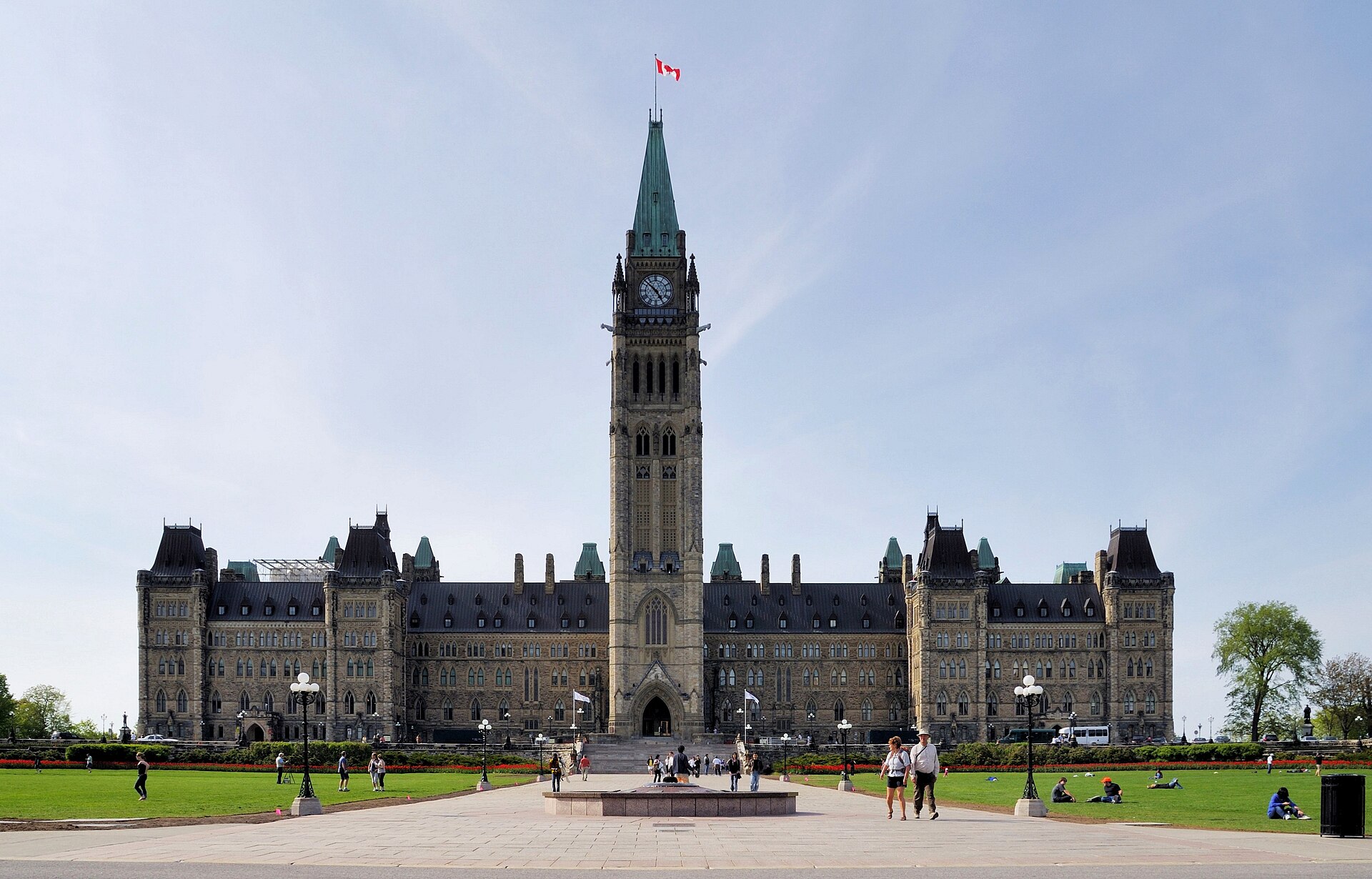
The order that fell on the convoy itself was far larger. On February 14, 2022, in the words of the Federal Court of Appeal, "the Governor General accepted the Prime Minister's recommendation and issued the Proclamation Declaring a Public Order Emergency, as well as related Regulations and an Economic Order."4 The Prime Minister was Justin Trudeau.2 The instruments were Order in Council P.C. 2022-106, the Proclamation (SOR/2022-20), issued under section 17(1) of the Emergencies Act; P.C. 2022-107, the Emergency Measures Regulations (SOR/2022-21); and P.C. 2022-108, the Emergency Economic Measures Order (SOR/2022-22), made on February 15.3
The Act sets a high bar, and its words matter to everything that followed. Section 3 defines a national emergency as "an urgent and critical situation of a temporary nature that (a) seriously endangers the lives, health or safety of Canadians and is of such proportions or nature as to exceed the capacity or authority of a province to deal with it," and that "cannot be effectively dealt with under any other law of Canada." Section 16 defines a public order emergency as "an emergency that arises from threats to the security of Canada and that is so serious as to be a national emergency," and gives "threats to the security of Canada" "the meaning assigned by section 2 of the Canadian Security Intelligence Service Act."3 That borrowed definition, the relevant part of which covers activities directed toward "the threat or use of acts of serious violence against persons or property for the purpose of achieving a political or ideological objective," as the government's own explanation summarized it, became the center of the court fight.3
What the measures did, in the courts' description: the Regulations prohibited participation in public assemblies that could reasonably be expected to lead to a breach of the peace, and, as Justice Mosley found, their scope "captured people who simply wanted to join in the protest by standing on Parliament Hill carrying a placard."3 The Economic Order required banks and other financial institutions to freeze the property of "designated persons" and to disclose it to authorities. The Federal Court of Appeal described its implementation as "ad hoc and fraught with confusion, requiring financial institutions to disclose the existence of property they had 'reason to believe' was owned, held or controlled by a 'designated person', without a warrant or specific procedures."4 The commission found that "approximately 280 accounts worth around CAD$8 million were frozen."2 Lich told The Canadian Press on the day of her arrest that her personal bank account had been frozen.9

What they did
They organized a convoy and asked for peace
The convoy left the West Coast on January 22, 2022, when "two contingents of Freedom Convoy participants departed for Ottawa from Prince Rupert and Vancouver, British Columbia," and crossed the country.2 The commission described the scale plainly: "Convoys measuring kilometres in length moved toward Ottawa. Thousands of supporters cheered them on by the roadside. Millions of dollars were donated to support their cause."2 Lich's GoFundMe campaign had raised more than $4.7 million by January 25, according to CBC News.8
Before the trucks reached Ottawa, Lich told her followers what kind of protest she wanted. In a video posted to the Freedom Convoy 2022 Facebook page and reported by CBC News on January 25, 2022, she said: "If you see participants along the way that are misbehaving, acting aggressively in any way or inciting any type of violence or hatred, please take down the truck number and their licence plate number so that we can forward that to the police." And: "The only way that we are going to overcome this is through love and light, not hate and division. I think as Canadians, we've all seen enough of that. It's time to move past that."8 CBC reported that she said everyone in the convoy had to register with "road captains" and that anyone who did not behave in an orderly fashion "will be immediately removed."8 The commission found that this was the organizers' shared aim: "The organizers appear to have been more united in their intention that the protest be peaceful, or at least that it not become physically violent. Maintaining a peaceful protest was important to many of the organizers, who believed that violence or threats of violence would discredit the movement and drain it of popular support."2
They came to Parliament and stayed
"January 28 was the first day that convoy participants began to arrive in Ottawa," the commission found; by that afternoon "approximately 150 trucks had reached downtown," and that evening "Wellington Street was stacked with vehicles."2 Wellington Street runs in front of Parliament Hill. On January 30, Lich and Barber held a press conference at which, the commission records, "Mr. Barber and Ms. Lich denied that anyone associated with their group was involved in defacing monuments or urinating on war memorials."2
They also answered the people of Ottawa. When residents complained of the noise, Barber issued a written statement, reported by CBC: "We understand your frustration and genuinely wish there was another way for us to get our message across, but the responsibility for your inconvenience lies squarely on the shoulders of politicians who have [preferred] to vilify and call us names rather than engage in respectful, serious dialogue."9 That sentence is both an apology and a refusal to leave, and it captures the stand: the organizers believed that only pressure on Parliament would end the mandates, and they kept up the pressure.
They tried to negotiate a way out
The record shows Lich working, more than once, to reduce the blockade's burden on the city. On February 10, the commission found, "convoy organizer Tamara Lich requested that key organizers and volunteers meet at Rideau and Sussex at 10 a.m. to try to get the truckers to clear the intersection," and together with police liaison officers "they persuaded several truckers to move onto Wellington Street." When the operation drew a crowd, "Despite Mr. Wilson's and Ms. Lich's efforts to calm the growing crowd, it became impossible to carry out the operation."2
Two days later she reached an agreement with the Mayor of Ottawa, Jim Watson. Under the deal, "Some trucks would be moved onto Wellington Street, while others would depart to the nearby town of Arnprior. In exchange, the mayor of Ottawa would meet with Ms. Lich and other protesters. Ms. Lich and Mr. Wilson viewed the deal as a possible exit strategy for protesters." The mayor and Lich exchanged signed letters on February 12, and the commission found that "the protester representatives felt that they were getting significant buy-in from the truckers."2 Others undermined it. "Benjamin Dichter used his Twitter account to deny that a deal existed, even though he had been briefed on it. He caused even more confusion by tweeting a denial from Tamara Lich's Twitter account, to which he had access." Trucks began to move on February 14; by 5 p.m. "102 vehicles had been moved, including 42 heavy trucks."2 That same day the federal government invoked the Emergencies Act.4
They stayed to the end
Lich and Barber did not leave when the Act was invoked. Ottawa police arrested them in separate arrests on February 17, 2022, and charged each with counselling to commit mischief; Barber was also charged with counselling to disobey a court order and counselling to obstruct police.9 CBC News reported that Lich, speaking to The Canadian Press before her arrest, "said she was resigned to the fact that she was going to jail."9 The commission confirms the date: "Chris Barber and Tamara Lich were arrested separately on February 17."2 Police cleared the downtown core between February 18 and 20, making "273 arrests" and laying "422 charges." The commission recorded that "there were no significant injuries sustained by protesters or bystanders during the enforcement operation" and that "No charges were laid under the Emergency Measures Regulations."2 On February 23, "the Public Order Emergency was revoked."2
Afterward, both testified before the commission, and both pleaded not guilty to every charge and stood trial.26 CBC reported that the trial "began in September 2023 and concluded in September 2024," lasting 42 days.610
What it cost
Lich spent time in jail before any verdict. When she was sentenced in October 2025, the court gave her "credit for the 19 days she initially spent in jail, and for another 30 days she spent in custody after breaching her bail conditions," CBC News reported.7 The bail breach is part of the record and is stated as such: she was returned to custody for violating a release condition, and the 30 days were credited to her sentence.7 Her bank account was frozen under the Economic Order, by her own account at the time.9
The trial took three years from charge to verdict. "After a lengthy 42-day trial that ended three years after the pair was charged, an appeal was almost inevitable," CBC wrote.10 The Crown asked for long prison terms: "Crown prosecutor Siobhain Wetscher previously asked Justice Heather Perkins-McVey to impose extraordinary sentences (eight years' imprisonment for Barber and seven for Lich)." (CBC set the terms off with dashes.) Barber's lawyer, Diane Magas, called an eight-year sentence "abusive."7 The Crown also sought to seize the truck Barber drove to Ottawa; CBC reported in November 2025 that those arguments had been delayed.10 The outcome of the truck seizure request was not found in the record available for this lesson.
They now carry criminal records. Their defence had asked for absolute discharges, which, CBC noted, "would have meant no criminal record for Lich." The court refused.7 They spent twelve months confined to home, followed by six months under curfew.711 On September 17, 2026, the sentencing judge refused Lich's request to travel internationally during her sentence, including a Caribbean cruise and press events at the White House that her request described as work: "The fact that an activity can be described as work does not compel permission to leave the jurisdiction," Justice Perkins-McVey said.1
Others paid too, and the record says so. Two of the men who won in the Federal Court, Edward Cornell and Vincent Gircys, did so because the Economic Order touched them directly. Justice Mosley described Cornell as "a Canadian military veteran who also participated in the Ottawa protests. His bank account and credit cards were frozen following the Proclamation and making of the Economic Order." Gircys "is a retired police officer. He participated in the Ottawa protest and his bank account and credit cards were also frozen following the invocation of the Act."3
What the three weeks cost Ottawa
The heaviest cost of the protest fell on people who never joined it, and the record is specific. The commission found that "Throughout the first week of the protests, the honking was almost constant, continuing throughout the day and, at times, into the night. Most of the downtown protest sites had average daytime noise levels of 90 - 110 decibels in the first week." Zexi Li, a downtown resident, "testified that she measured noise levels inside her tenth-floor condo unit as high as 85 - 90 decibels." (The report uses hyphens for these ranges.) "Many of the trucks in the downtown core were left idling. This caused an abundance of diesel fumes to permeate the air, not only on the streets, but also in people's homes."2
City life was disrupted: "This included access to City Hall, local libraries, COVID-19 vaccination clinics, snow removal operations, community and social services, and public transit." "The Children's Hospital of Eastern Ontario reported that its cancer patients had difficulty accessing treatment." "Ottawa's 911 services were overwhelmed." The commission "heard credible reports of residents feeling threatened and being harassed by protesters," particularly residents "who wore masks in public," and found that "Some individuals who lived in the area were too afraid to leave their homes." Residents also "saw symbols of hate in their community, including swastikas and Confederate flags." Businesses closed, and "By some estimates, lost business revenue and lost wages totalled between CAD$150 million and CAD$210 million."2
The city declared an emergency on February 6. Li, as lead plaintiff in a proposed class action against the protesters, "obtained an injunction on February 7, prohibiting protesters from using air or train horns within the city. Initially, the injunction was successful, but eventually the honking resumed."2 Justice Mosley, who ruled against the government, still called the harassment of residents, workers and business owners "highly objectionable."3 None of this is in dispute, and the admiration this course gives the organizers' stand does not erase it.
How it ended
The story has two endings that point in opposite directions, and both are on the record. In the criminal courts, Lich and Barber were convicted. In the courts that reviewed the government's emergency powers, the government lost.
The verdict, April 3, 2025
At the Ottawa courthouse on April 3, 2025, Ontario Court of Justice Justice Heather Perkins-McVey gave her verdict. CBC News reported: "Barber and Lich each faced six charges including mischief, intimidation, obstructing police and counselling others to do the same." The judge "found the pair not guilty of four charges apiece relating to intimidation and obstructing police." "They were both found guilty of committing mischief. Perkins-McVey also found them both guilty of counselling to commit mischief themselves, but that finding was stayed at the request of Crown lawyers." "Barber alone was found guilty of counselling others to disobey a court order. Lich was not charged with this."6 The Canadian Press, in a report carried by CTV News, confirmed that "Freedom Convoy" organizers Tamara Lich and Chris Barber "have been found guilty of mischief for their roles in the 2022 protests."12
CBC summarized the reasoning this way: "In her ruling, Perkins-McVey said protesters had a right to political expression, but ruled they crossed legal lines. The decision focused on the specific actions and statements made by Lich and Barber to encourage ongoing protests that were impacting the city."6 The written reasons (reported as R. v. Lich and Barber in the Ontario Court of Justice) were not available to open for this lesson, so the judge's own words on the verdict are not quoted here.

The sentence, October 7, 2025
On October 7, 2025, "each was given an 18-month conditional sentence: Twelve months at home with limited outings per week, followed by six months under a 10 p.m. curfew," and each was ordered to perform "100 hours of community service," CBC reported.7 The National Post reported the judge's words: "The accused committed a serious crime of mischief." And: "The accused's actions have had a significant detrimental effect on the citizens of Ottawa, who wanted nothing other than to carry on living in their community without having horns honking day and night, the roads impassable, blocked by noising trucks emitting diesel fumes, making it impossible at times to even exit their own building."11 Lich's lawyer, Lawrence Greenspon, said: "The main objective was to make sure she didn't spend one more day in jail, and that was achieved." Barber's lawyer, Diane Magas, said her client "respects the judge's decision and considers it reasonable."7
The appeals, still pending
On November 4, 2025, CBC reported that Lich had appealed her conviction to the Court of Appeal for Ontario. Her lawyer "argues the finding of guilt was unreasonable and not supported by the evidence," that "the judge mistakenly used evidence uniquely admissible against Barber for findings on Lich," and "that Lich promoted peace throughout the protest and her conduct was protected under the Charter of Rights and Freedoms." She asks the court "to set aside her conviction and give her an acquittal, or set aside the finding of guilt and order a new trial."10 As of September 17, 2026, CBC reported: "Crown prosecutors are appealing the judge's findings and sentencing, arguing both should have been found guilty of more crimes than they were as well as given harsher sentences. Barber and Lich have accepted their sentences, but are appealing the judge's initial decision. The Ontario Court of Appeal isn't likely to hear those arguments until early 2027."1 No appellate decision was found as of November 7, 2026. The convictions stand.
The Federal Court, January 23, 2024
Four applications for judicial review challenged the Proclamation, the Regulations and the Economic Order. They were brought by Kristen Nagle and Canadian Frontline Nurses; by the Canadian Civil Liberties Association; by the Canadian Constitution Foundation; and by four protesters, Jeremiah Jost, Edward Cornell, Vincent Gircys and Harold Ristau.3 Justice Richard Mosley gave judgment on January 23, 2024, in reasons cited as Canadian Frontline Nurses v. Canada (Attorney General), 2024 FC 42 (amended reasons dated January 29, 2024).3 He held that Nagle, Canadian Frontline Nurses, Jost and Ristau lacked standing, but heard the others, and ruled:
"In brief, I find that the reasons provided for the decision to declare a public order emergency do not satisfy the requirements of the Emergencies Act and that certain of the temporary measures adopted to deal with the protests infringed provisions of the Canadian Charter of Rights and Freedoms . . . and were not justified under section 1 of the Charter."3
On whether there was a national emergency: "I conclude that there was no national emergency justifying the invocation of the Emergencies Act and the decision to do so was therefore unreasonable and ultra vires."3 He explained why: "The situation at Coutts was dealt with by the RCMP employing provisions of the Criminal Code. The Sûreté du Québec dealt with the protests in that province and the Premier expressed his opposition to the Emergencies Act being deployed there. Except for Ottawa, the record does not indicate that the police of local jurisdiction were unable to deal with the protests."3 On the security threshold he wrote, in the sentence most often quoted from the case: "The harassment of residents, workers and business owners in downtown Ottawa and the general infringement of the right to peaceful enjoyment of public spaces there, while highly objectionable, did not amount to serious violence or threats of serious violence." And: "The harm being caused to Canada's economy, trade and commerce, was very real and concerning but it did not constitute threats or the use of serious violence to persons or property."3
On free expression: "To the extent that peaceful protestors did not participate in the actions of those disrupting the peace, their freedom of expression was infringed."3 On the bank freezes: "I find that the failure to require that some objective standard be satisfied before the accounts were frozen breached s. 8."3 He found the measures failed the test of minimal impairment because "they were applied throughout Canada" and "there were less impairing alternatives available."3
Justice Mosley was candid about his own first impression, and his candor is part of the record's weight:
"At the outset of these proceedings, while I had not reached a decision on any of the four applications, I was leaning to the view that the decision to invoke the EA was reasonable. I considered the events that occurred in Ottawa and other locations in January and February 2022 went beyond legitimate protest and reflected an unacceptable breakdown of public order."3
He concluded otherwise after deliberation: "I have concluded that the decision to issue the Proclamation does not bear the hallmarks of reasonableness (justification, transparency and intelligibility) and was not justified in relation to the relevant factual and legal constraints that were required to be taken into consideration."3 (The parenthesis replaces dashes in the original.)
The Federal Court of Appeal, January 16, 2026
The government appealed. On January 16, 2026, the Federal Court of Appeal dismissed the appeals in Attorney General of Canada et al. v. Canadian Civil Liberties Association et al., 2026 FCA 6. The court's own summary reads: "The Federal Court of Appeal confirms that the federal government's invocation of the Emergencies Act was unreasonable and ultra vires [beyond their legal authority], and that it infringed paragraph 2(b) and section 8 of the Canadian Charter of Rights and Freedoms."4 It continued: "To avoid the excesses and abuses of the War Measures Act, Parliament drafted the Emergencies Act with narrowly defined terms to constrain the executive's use of its extraordinary powers, that amount to a temporary amendment of the Constitution in times of national emergency. The government did not demonstrate that it had reasonable grounds to believe that a threat to national security or a national emergency existed within the meaning of the Act, or that existing laws were unable to resolve the situation."4
On the protest itself, the appeal court wrote words that belong in any account of the convoy: "Freedom of expression is one of the fundamental institutions of representative democracy, and can only be restricted for the most substantial and compelling reasons. The symbolic location of protests at border crossings and in front of Parliament, disruptive though they were, did not fall outside the protection of paragraph 2(b). Because they criminalize these protests, whether or not participants were breaching the peace, the Regulations infringed the protesters' freedom of expression and were not justified under section 1 of the Charter."4 The Canadian Press reported that the three-judge panel was unanimous.5
The Supreme Court of Canada
On March 17, 2026, the deadline, the government sought leave to appeal. A spokesperson for Justice Minister Sean Fraser said: "Our government remains committed to ensuring it has the tools needed to protect the safety and security of Canadians."13 On October 22, 2026, the Supreme Court of Canada agreed to hear the appeal, and also the cross-appeals of the Canadian Civil Liberties Association and the Canadian Constitution Foundation, giving no reasons as is its practice. In its leave application the government argued that the lower courts "applied the wrong principles on judicial review," that their approach "neuters the Act," and that their reasoning amounted to "second-guessing with the benefit of 20/20 hindsight."514 No hearing date had been reported as of November 7, 2026.
The commission reached the opposite conclusion
The Emergencies Act requires a public inquiry after every use. Commissioner Paul S. Rouleau released the report of the Public Order Emergency Commission on February 17, 2023.15 Applying a different question (whether Cabinet had reasonable grounds on the information before it) and a more deferential approach, he found the threshold met:
"I have concluded that in this case, the very high threshold for invocation was met. I have done so with reluctance. The state should generally be able to respond to circumstances of urgency without the use of emergency powers."2
He added: "I do not come to this conclusion easily, as I do not consider the factual basis for it to be overwhelming and I acknowledge that there is significant strength to the arguments against reaching it. It may well be that serious violence might have been avoided, even without the declaration of emergency. That it might have been avoided does not, however, make the decision wrong."2 He laid much of the blame elsewhere: "the response to the Freedom Convoy involved a series of policing failures," and "The events of January and February 2022 can also be seen as a failure of federalism."2 He also found that the Economic Order swept too broadly in one respect: "It is clearly unjust for individuals with no connection to the protests to have their accounts frozen."2 The commission's report and the courts' judgments are both official records. The courts' rulings are the binding legal answer unless the Supreme Court of Canada reverses them.
Timeline
| Date | Event |
|---|---|
| Nov. 2021 | Federal government announces that from Jan. 15, 2022, foreign truckers must be fully vaccinated to enter Canada, and Canadian truckers must show proof of vaccination to avoid testing and quarantine.8 |
| Jan. 13, 2022 | Lich offers Barber her help with logistics after an online organizers' meeting.2 |
| Jan. 14, 2022 | Lich creates the Freedom Convoy Facebook page and GoFundMe campaign.2 |
| Jan. 22, 2022 | Convoy contingents leave Prince Rupert and Vancouver for Ottawa.2 |
| Jan. 25, 2022 | Lich's video asks participants to report anyone inciting violence or hatred to police.8 |
| Jan. 28, 2022 | First trucks arrive in downtown Ottawa; Wellington Street fills by evening.2 |
| Feb. 6, 2022 | City of Ottawa declares an emergency.2 |
| Feb. 7, 2022 | Resident Zexi Li obtains a court injunction against air and train horns downtown.2 |
| Feb. 10, 2022 | Lich organizes volunteers to clear the Rideau and Sussex intersection.2 |
| Feb. 12, 2022 | Lich and Mayor Jim Watson exchange letters on a deal to move trucks.2 |
| Feb. 14, 2022 | 102 vehicles moved under the deal; federal government proclaims a public order emergency.24 |
| Feb. 15, 2022 | Emergency Measures Regulations and Emergency Economic Measures Order made.3 |
| Feb. 17, 2022 | Lich and Barber arrested in separate arrests in Ottawa.29 |
| Feb. 18 to 20, 2022 | Police clear downtown Ottawa: 273 arrests, 422 charges, no significant injuries.2 |
| Feb. 23, 2022 | Public order emergency revoked.2 |
| Feb. 17, 2023 | Commissioner Rouleau releases the inquiry report: threshold met, "with reluctance."152 |
| Sept. 2023 | Trial of Lich and Barber begins; it concludes in September 2024 after 42 days.610 |
| Jan. 23, 2024 | Federal Court (Mosley J.) holds the invocation unreasonable and ultra vires; Charter ss. 2(b) and 8 infringed.3 |
| Apr. 3, 2025 | Lich and Barber convicted of mischief; acquitted of intimidation and obstruction counts; Barber also convicted of counselling disobedience of a court order.612 |
| Oct. 7, 2025 | Each sentenced to an 18-month conditional sentence (12 months at home, 6 months curfew) and 100 hours of community service.711 |
| Nov. 4, 2025 | Lich's appeal of her conviction reported filed in the Court of Appeal for Ontario.10 |
| Jan. 16, 2026 | Federal Court of Appeal dismisses the government's appeals (2026 FCA 6).4 |
| Mar. 17, 2026 | Government seeks leave to appeal to the Supreme Court of Canada.13 |
| Sept. 17, 2026 | Crown and defence appeals pending; Court of Appeal hearing expected early 2027.1 |
| Oct. 22, 2026 | Supreme Court of Canada grants leave to appeal and cross-appeal.514 |
Why it took courage
Lich and Barber were not politicians, lawyers or union leaders. One had just lost her job; the other drove a truck. They took on the national government of Canada in the middle of a pandemic. They did it in the open, under their own names, with their faces on every newscast. When the government reached for the most extraordinary power in Canadian law, a power never used before, they did not run. Lich told reporters she expected to go to jail, and she went.9
The liberty they stood for was the oldest one in a parliamentary democracy: the right of citizens to come to the seat of government and petition it in person. Two federal courts have now said that the government's emergency response to that petition was unlawful. The Federal Court of Appeal wrote that the protests "in front of Parliament, disruptive though they were, did not fall outside the protection of paragraph 2(b)," and that the Regulations unjustifiably infringed "the protesters' freedom of expression."4 Justice Mosley found that the government lacked reasonable grounds and that freezing bank accounts without "some objective standard" violated the Charter.3 Those rulings protect every future protester in Canada, of every cause, and they exist because people like Lich and Barber were willing to be the occasion for them. The men who won those rulings for themselves, a veteran and a retired police officer whose accounts were frozen, stood in the same streets.3
They also asked for peace and, on the record, largely got it. Lich told her followers to report anyone "inciting any type of violence or hatred" to police and called for "love and light, not hate and division."8 The commission found the organizers "more united in their intention that the protest be peaceful."2 Lich was acquitted of intimidation, and when the police finally cleared the streets, the commission recorded "no significant injuries sustained by protesters or bystanders."62 She worked to clear an intersection on February 10 and negotiated a deal with the mayor that began moving trucks on February 14, the day the government chose the Emergencies Act instead.2
And they have kept faith with the courts. They stood trial for three years rather than flee or plead. They accepted their sentences. They are appealing their convictions through the ordinary process, the same process any citizen has.1 A person can believe their verdict was right, or wrong, and still see the courage in that: to lose your liberty for a cause, to be told by a court you crossed a line, and to keep arguing your case through lawful means rather than defiance. That is how the right to protest is defended in a free country, and the Ordered Liberty module treats it at length (Ordered Liberty: Forms of Lawful Resistance).
What the other side said
The sentencing judge, Justice Heather Perkins-McVey, put the case against the organizers in her own words: "The accused committed a serious crime of mischief," and their actions "have had a significant detrimental effect on the citizens of Ottawa, who wanted nothing other than to carry on living in their community without having horns honking day and night, the roads impassable, blocked by noising trucks emitting diesel fumes, making it impossible at times to even exit their own building."11 CBC reported that the Ontario Court of Justice found the protest had been "neither peaceful nor lawful."16 The Crown, through prosecutor Siobhain Wetscher, sought eight years for Barber and seven for Lich, arguing that heavy penalties "would reflect the profound impact the two had on the public," as CBC summarized it, and has appealed for more convictions and longer sentences.71 Commissioner Rouleau concluded that "Lawful protest descended into lawlessness, culminating in a national emergency," and found the invocation justified, though "with reluctance."2 The government's explanation for the Proclamation cited "Violent incidents and threats of violence and arrests related to the protests" and "The RCMP's recent seizure of a cache of firearms with a large quantity of ammunition in Coutts, Alberta," as quoted by the Federal Court.3 In seeking Supreme Court review, the government argued that the lower courts' approach "neuters the Act" and amounts to "second-guessing with the benefit of 20/20 hindsight."5 Even Justice Mosley wrote that he had "considerable sympathy for those in government who were confronted with this situation."3
Still disputed: Whether Lich and Barber's conduct was criminal mischief or protected political expression is before the Court of Appeal for Ontario, with the Crown seeking more convictions and longer sentences and the defence seeking acquittals, a hearing expected in early 2027; whether the Emergencies Act invocation was lawful is before the Supreme Court of Canada, which granted leave on October 22, 2026, after two courts found it unlawful and the public inquiry found it justified.15
Hard questions and answers
How can a person convicted of mischief be a hero of liberty?
The conviction is part of the story, and this lesson states it without softening: the convictions stand as of November 2026.1 But a conviction answers a narrow question, whether particular acts met the elements of a particular offense. It does not answer whether the cause was just or the stand courageous. Lich and Barber were acquitted of intimidation and obstructing police, and two federal courts have found that the government's emergency response to their protest was unlawful.634 People who practice civil disobedience have often accepted a legal penalty as the price of their stand. Lich and Barber accepted their sentences and are appealing through lawful channels.1
What about the people who lived in downtown Ottawa?
Their harm was real and is set out above in their own terms: constant horns, diesel fumes, closed services, harassment, an injunction they had to seek themselves, and lost business revenue the commission estimated at CAD$150 million to CAD$210 million.2 Barber publicly acknowledged their "frustration" while blaming the government.9 Admiring the stand does not require pretending the cost fell only on the protesters. A protest that blocks a city for three weeks puts its burden on people who did not choose it, and a fair account says so.
Did the courts say the protest was peaceful?
Not in those words, and they did not all agree. Justice Mosley found that the harassment in Ottawa, "while highly objectionable, did not amount to serious violence or threats of serious violence," and that peaceful protesters' expression was infringed.3 The trial court, as CBC reported, found the protest "neither peaceful nor lawful."16 The commission found the organizers intended a peaceful protest but that lawful protest "descended into lawlessness."2 All three can be true at once: the organizers asked for peace, there was no serious violence in Ottawa, and the occupation still broke the law against mischief.
Why did the commission and the courts disagree?
They asked different questions under different rules. The commission asked whether Cabinet had a reasonable, credible basis for its belief on the information it had, and stressed that "The standard of reasonable grounds to believe does not require certainty."2 The Federal Court reviewed the legality of the decision against the statute's defined terms, especially the definition of "threats to the security of Canada" borrowed from the CSIS Act, and found the government had no reasonable grounds to believe that definition was met.3 The Supreme Court of Canada will decide which approach is right.5
Was the freezing of bank accounts lawful?
Both courts that ruled said no, under section 8 of the Charter, because no objective standard or warrant stood between a bank and a frozen account.34 The commission, while finding the invocation justified, wrote that "It is clearly unjust for individuals with no connection to the protests to have their accounts frozen," as happened with some joint accounts.2 About 280 accounts holding around CAD$8 million were frozen.2
Why does a Canadian case belong in this course?
Because the questions are the same everywhere: how far emergency power may reach, whether a government may punish protest through the banking system, and what peaceful citizens may do when a legislature will not hear them. Canada's Emergencies Act was written, the Federal Court of Appeal said, "To avoid the excesses and abuses of the War Measures Act."4 Its first use, and the courts' answer to it, is a lesson in how limits on emergency power are enforced after the fact. Lesson 01 of this module covers American emergency power in 2020.
Related lessons
- Pastor James Coates and GraceLife Church: an Alberta pastor jailed in 2021 over public health orders.
- Emergency Power in 2020: the American emergency orders and how people pushed back.
- The Travelers Who Ended the Federal Transit Mask Rule: travelers who challenged a federal transportation rule in court.
- What the Stands Won and Timeline, Glossary, Sources and the Record of Every Ruling.
- Ordered Liberty, especially Forms of Lawful Resistance: where petition and protest end and unlawful obstruction begins.
- The First Amendment: the American counterpart to the Charter's freedoms of expression and peaceful assembly.
- Testifying and Public Comment: the lawful channels for petitioning government in person.
Still open
These items could not be confirmed against a primary source before publication. The lesson states them as open, and they stay on the fact-check list.
- The written reasons of the Ontario Court of Justice in R. v. Lich and Barber (verdict Apr. 3, 2025; sentence Oct. 7, 2025) are not quoted here; the verdict and sentence are stated from CBC News, The Canadian Press (CTV News) and the National Post, and the phrase "neither peaceful nor lawful" is as CBC attributed it to the court.
- Which court order Barber was convicted of counselling others to disobey is not stated in the news reports cited; some summaries say it was the Feb. 7, 2022 horn injunction.
- Some summaries say the judge acquitted on intimidation because the organizers' repeated calls for peace negated menace; that reasoning is not confirmed from the written reasons and is not relied on here.
- The status of the appeals (Crown and defence, Court of Appeal for Ontario, hearing expected early 2027) rests on CBC reporting of Nov. 4, 2025 and Sept. 17, 2026. No appellate decision had been reported as of Nov. 7, 2026.
- The Supreme Court of Canada leave grant of Oct. 22, 2026 rests on Canadian Press reports carried by Global News and CP24. No hearing date had been reported as of Nov. 7, 2026.
- The outcome of the Crown's request to forfeit Barber's truck was not found.
- The text of the federal cross-border trucker vaccination order is described from CBC News (Jan. 25, 2022) and the commission report, not quoted from the order itself.
- The Federal Court of Appeal's holdings are quoted from the court's official plain-language summary of 2026 FCA 6; the names of the three judges on the panel are not given here.
- The Federal Court judgment was released Jan. 23, 2024; the reasons quoted are the amended reasons dated Jan. 29, 2024.
Learn more
- Rouleau Commission report, Volume 1: The fullest official account of the convoy, the organizers, the effect on Ottawa and the decision to invoke the Act.
- 2024 FC 42 (Justice Mosley's reasons): Read paragraphs 254 to 297 on the national emergency and security thresholds and 370 to 372 for his candid conclusion.
- 2026 FCA 6, plain-language summary: A one-page official summary of why the appeal court upheld the Federal Court.
- Ordered Liberty: Forms of Lawful Resistance: Where petition and protest end and unlawful obstruction begins.
Notes
- David Fraser, "Judge denies Tamara Lich's request to travel under house arrest," CBC News, Sept. 17, 2026 (reporting the status of the Crown and defence appeals) (retrieved Nov. 7, 2026). Read it online. ↩
- The Honourable Paul S. Rouleau, Commissioner, Report of the Public Inquiry into the 2022 Public Order Emergency, Volume 1: Overview (Ottawa: Privy Council Office, February 2023), passages cited at pp. 14, 35 to 39, 47, 49 to 53, 59, 65, 70 to 71, 96, 127, 129 to 131, 210, 242 and 247 (retrieved Nov. 7, 2026). Read it online. ↩
- Federal Court of Canada, Mosley J., Canadian Frontline Nurses v. Canada (Attorney General), 2024 FC 42, Dockets T-306-22, T-316-22, T-347-22 and T-382-22, judgment dated Jan. 23, 2024, amended reasons for judgment dated Jan. 29, 2024, paras. 3, 6 to 7, 18 to 19, 254 to 255, 264, 294 to 297, 308 to 309, 341, 353, 370 to 372 and Annex A (Emergencies Act ss. 3 and 16) (retrieved Nov. 7, 2026). Read it online. ↩
- Federal Court of Appeal, plain-language decision summary, Attorney General of Canada et al. v. Canadian Civil Liberties Association et al., 2026 FCA 6, Dockets A-73-24, A-74-24, A-75-24, A-76-24, A-29-23 and A-30-23 (Jan. 16, 2026) (retrieved Nov. 7, 2026). Read it online. ↩
- Jim Bronskill, The Canadian Press, "Supreme Court to hear federal appeal over use of Emergencies Act," Global News, Oct. 22, 2026 (retrieved Nov. 7, 2026). Read it online. ↩
- David Fraser, "Chris Barber, Tamara Lich not guilty on most charges for roles in 2022 convoy protests," CBC News, Apr. 3, 2025 (retrieved Nov. 7, 2026). Read it online. ↩
- "'Freedom Convoy' leaders Tamara Lich, Chris Barber given conditional sentences," CBC News, Oct. 7, 2025 (retrieved Nov. 7, 2026). Read it online. ↩
- Peter Zimonjic, "Organizer behind anti-vaccine mandate convoy says it won't tolerate extremists as online rhetoric heats up," CBC News, Jan. 25, 2022 (retrieved Nov. 7, 2026). Read it online. ↩
- Sara Frizzell and Shaamini Yogaretnam, "Convoy protest organizers Tamara Lich, Chris Barber, Pat King arrested in Ottawa," CBC News, Feb. 17, 2022, with files from The Canadian Press (retrieved Nov. 7, 2026). Read it online. ↩
- David Fraser, "Tamara Lich appealing mischief conviction," CBC News, Nov. 4, 2025 (retrieved Nov. 7, 2026). Read it online. ↩
- "Freedom Convoy organizers Tamara Lich and Chris Barber sentenced to 12 months house arrest," National Post (Postmedia), Oct. 7, 2025 (retrieved Nov. 7, 2026). Read it online. ↩
- The Canadian Press, "'Freedom Convoy' organizers Lich, Barber found guilty of mischief," CTV News, Apr. 3, 2025 (retrieved Nov. 7, 2026). Read it online. ↩
- Stephanie Ha, "Federal government appeals to Supreme Court on ruling over use of Emergencies Act with Freedom Convoy," CTV News via CP24, Mar. 17, 2026 (retrieved Nov. 7, 2026). Read it online. ↩
- Jim Bronskill, The Canadian Press, "Lower courts' reasoning 'neuters' Emergencies Act, government tells Supreme Court," CP24, Oct. 22, 2026 (retrieved Nov. 7, 2026). Read it online. ↩
- Public Order Emergency Commission, "Final Report" (report released by Commissioner Rouleau on Feb. 17, 2023; Order in Council 2022-0392 required tabling by Feb. 20, 2023) (retrieved Nov. 7, 2026). Read it online. ↩
- David Fraser, "Convoy leader Tamara Lich asking court's permission to visit White House, go on cruise," CBC News, July 22, 2026 (retrieved Nov. 7, 2026). Read it online. ↩
Check yourself
1. What rule did the commission call "the spark that ignited the Freedom Convoy movement"?
The commission wrote that the new rules requiring truckers to be fully vaccinated to cross the border "were the spark that ignited the Freedom Convoy movement."
2. What did Tamara Lich ask convoy participants to do in her January 2022 video?
She asked followers to take down the truck and plate numbers of anyone "inciting any type of violence or hatred" so it could be forwarded to police.
3. On what date did the federal government proclaim a public order emergency?
The Proclamation issued February 14, 2022; the Regulations and Economic Order followed on February 15.
4. Of what were Lich and Barber convicted on April 3, 2025?
Both were convicted of mischief; Barber was also convicted of counselling others to disobey a court order. They were found not guilty of the intimidation and obstruction counts.
5. What sentence did each receive on October 7, 2025?
CBC reported 18-month conditional sentences, 12 months at home and 6 months under a 10 p.m. curfew, with 100 hours of community service.
6. What did Justice Mosley hold in 2024 FC 42?
He found no national emergency, no reasonable grounds under the CSIS Act definition, and infringements of ss. 2(b) and 8 not justified under s. 1.
7. What did the Public Order Emergency Commission conclude?
Commissioner Rouleau wrote: "I have concluded that in this case, the very high threshold for invocation was met. I have done so with reluctance."
8. What was the status of the cases as of November 2026?
CBC reported Crown and defence appeals expected to be heard in early 2027, and the Supreme Court of Canada granted leave on Oct. 22, 2026.
Terms in this lesson
- Emergencies Act
- Canada's 1988 law, successor to the War Measures Act, allowing the federal government to declare a national emergency and adopt temporary special measures under defined conditions.
- Public order emergency
- Under section 16 of the Act, an emergency that arises from threats to the security of Canada and is so serious as to be a national emergency.
- Threats to the security of Canada
- A term the Emergencies Act borrows from section 2 of the CSIS Act; the relevant part covers activities directed toward the threat or use of serious violence for a political, religious or ideological objective.
- Proclamation
- The formal declaration of an emergency by the Governor in Council; here Order in Council P.C. 2022-106 (SOR/2022-20) of Feb. 14, 2022.
- Emergency Economic Measures Order
- The Feb. 15, 2022 order requiring financial institutions to freeze property of designated persons; both federal courts held its search provisions violated section 8 of the Charter.
- Ultra vires
- Latin for beyond the powers: a government act outside the authority the law grants.
- Judicial review
- A court's review of whether a government decision was lawful and reasonable.
- Charter section 2(b)
- The guarantee of freedom of thought, belief, opinion and expression in the Canadian Charter of Rights and Freedoms.
- Charter section 8
- The right to be secure against unreasonable search or seizure.
- Mischief
- A Criminal Code offence that includes obstructing, interrupting or interfering with the lawful use, enjoyment or operation of property.
- Conditional sentence
- A Canadian sentence of imprisonment served in the community, often at home, under court-ordered conditions.
- Leave to appeal
- Permission from a higher court, here the Supreme Court of Canada, to hear an appeal.
- Public Order Emergency Commission
- The inquiry the Emergencies Act requires after any use of the Act; led by Commissioner Paul S. Rouleau, it reported on Feb. 17, 2023.
Sources
- Report of the Public Inquiry into the 2022 Public Order Emergency, Vol. 1: Overview (2023-02-17) checked 2026-11-07
- Public Order Emergency Commission, Final Report page (2023-02-17) checked 2026-11-07
- Canadian Frontline Nurses v. Canada (Attorney General), 2024 FC 42 (2024-01-23) checked 2026-11-07
- 2026 FCA 6, plain-language summary (2026-01-16) checked 2026-11-07
- 2026 FCA 6, full reasons (Federal Court of Appeal decisions database) (2026-01-16) checked 2026-11-07
- CBC News, verdict, Apr. 3, 2025 (2025-04-03) checked 2026-11-07
- CTV News (The Canadian Press), verdict, Apr. 3, 2025 (2025-04-03) checked 2026-11-07
- CBC News, sentencing, Oct. 7, 2025 (2025-10-07) checked 2026-11-07
- National Post, sentencing, Oct. 7, 2025 (2025-10-07) checked 2026-11-07
- CBC News, Lich appeal, Nov. 4, 2025 (2025-11-04) checked 2026-11-07
- CBC News, travel request and appeal status, Sept. 17, 2026 (2026-09-17) checked 2026-11-07
- CBC News, travel request hearing, July 22, 2026 (2026-07-22) checked 2026-11-07
- CBC News, Lich video on extremists, Jan. 25, 2022 (2022-01-25) checked 2026-11-07
- CBC News, arrests, Feb. 17, 2022 (2022-02-17) checked 2026-11-07
- Global News (The Canadian Press), Supreme Court leave, Oct. 22, 2026 (2026-10-22) checked 2026-11-07
- CP24 (The Canadian Press), Supreme Court leave, Oct. 22, 2026 (2026-10-22) checked 2026-11-07
- CP24 (CTV News), government seeks leave, Mar. 17, 2026 (2026-03-17) checked 2026-11-07