Lesson 4 of 23 · about 45 minutes
Idaho Takes Back the Special Session: SJR 102 and the 2021 Emergency Powers Fight
Updated November 7, 2026
You'll be able to
- Explain why the Idaho Legislature could not call itself into session in 2020 and what Article IV, Section 9 says.
- Trace the 2021 emergency powers bills from H 135 and S 1136 through the vetoes to the four laws signed May 10, 2021.
- State what SJR 102 changed, with its vote counts in the Senate, the House and the 2022 election.
- Describe the 2021 House recess and the November 2021 return, and why supporters of SJR 102 cited it.
- Weigh the arguments the governor and the amendment's opponents made, in their own words.
Start here: the short version
In 2020 the Idaho Legislature watched a pandemic emergency run for months while it had no lawful way to call itself into session. Only the governor could do that, and he chose the subjects. In the 2021 session a majority of Idaho legislators set out to change the balance. They passed bills to limit how long and how far a governor's emergency orders could reach, saw two of them vetoed, missed overriding one veto in the Senate by a single vote, and came back within weeks with four narrower bills that Gov. Brad Little signed on May 10, 2021. They also passed Senate Joint Resolution 102, a constitutional amendment letting 60 percent of each house call a special session, by 24 to 11 in the Senate and 54 to 15 in the House.1 Then the decision went to the people. On November 8, 2022, Idaho voters approved the amendment, 287,194 to 267,623.2 The heroes of this profile are an institution and an electorate: legislators who took on a governor of their own party, every living former governor, and a well-funded business lobby, and the voters who decided that the people's branch should not have to wait to be summoned in an emergency.
Who they were before
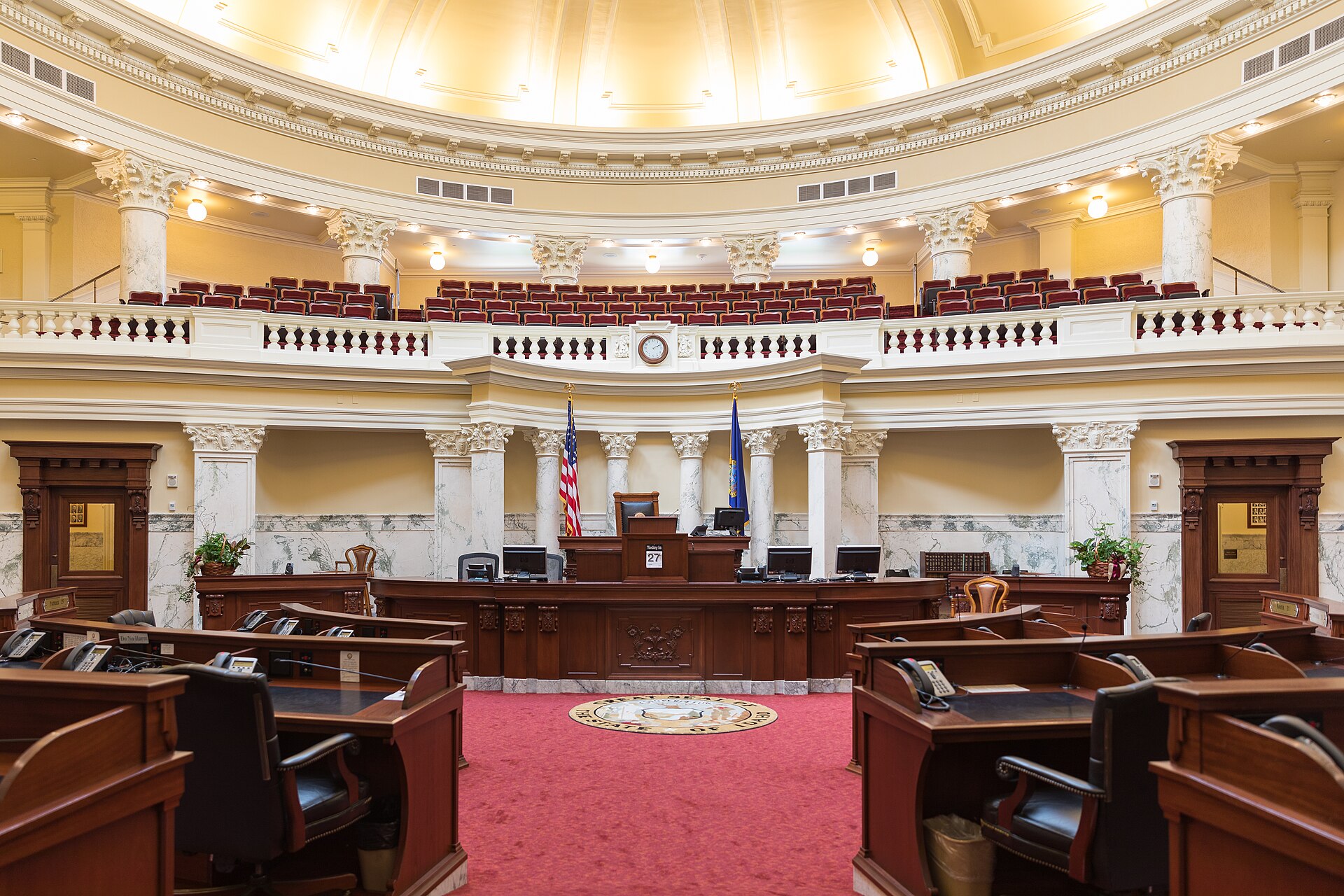
Idaho has a part-time, citizen legislature of 105 members: 35 senators and 70 representatives.6 The amendment this lesson tells about wrote that character into the constitution itself. Its text says the Legislature acts "while remaining a part-time, citizen legislature."3 Its members are not full-time officials, a point the opponents' statement on SJR 102 in the 2022 Voters' Pamphlet stressed when it said part-time legislators have other careers.5 The regular session begins on "the second Monday of January of each year, unless a different day shall have been appointed by law."3
Before 2022 the Idaho Constitution gave the power to call the Legislature back between regular sessions to one person. Article IV, Section 9 reads: "The governor may, on extraordinary occasions, convene the legislature by proclamation, stating the purposes for which he has convened it; but when so convened it shall have no power to legislate on any subjects other than those specified in the proclamation; but may provide for the expenses of the session and other matters incidental thereto."4 That section is still in force. Under it, the governor decides whether lawmakers meet, and he also decides what they may take up when they do.
Idaho was in a small minority of states on this point. The official 2022 Voters' Pamphlet, in the statement written for the amendment, said Idaho was one of 12 states that could not convene its own special session and that 38 states, including all of Idaho's neighbors, allowed it.5 The Idaho Capital Sun reported the count as one of 14 states that allowed only the governor to call a special session.6 The two counts differ, and this lesson reports both as published. Either way, the Idaho arrangement was unusual, and it had gone largely unnoticed until a long emergency made it matter.
The people at the center of this story were known figures at the Capitol. Senate President Pro Tempore Chuck Winder of Boise and Senate Majority Leader Kelly Arthur Anthon of Burley were listed as the contacts on the statement of purpose for SJR 102, the short explanation a sponsor files with every bill.7 The resolution itself was introduced by the Senate State Affairs Committee, and the official record names Winder as its floor sponsor in the Senate and Rep. Jason Monks of Nampa as its floor sponsor in the House.1 Monks carried the emergency powers bills on the House floor, and Anthon carried them on the Senate floor.2022 Sen. Peter Riggs of Post Falls joined Anthon as a contact on the final Senate bill on extreme emergencies.30 These were members of the majority party leadership, men who usually worked with the governor. That is part of what made their stand notable.
Winder explained the reason in plain words on the day the Senate voted. KTVB reported him saying of the power to shut businesses and set emergency rules: "It shouldn't all just be on one person's shoulder." He also told the station: "I think it is a very high bar even at 60%."8

The order they faced
The legislators did not face a single order. They faced a set of powers and a set of orders issued under them, and a constitution that left them no way to meet unless the governor called them.
The emergency statute as it stood in 2020
Idaho's Disaster Preparedness Act gives the governor the power to declare a disaster emergency. On March 13, 2020, Gov. Little declared a state of disaster emergency in response to COVID-19, as the Legislature later recited in its own resolutions.9 The statute then in force, Idaho Code 46-1008, said that "the governor may issue executive orders, proclamations and amend or rescind them. Executive orders and proclamations have the force and effect of law." It allowed a declared emergency to run for thirty days and to be renewed: "no state of disaster emergency may continue for longer than thirty (30) days unless the governor finds that it should be continued for another thirty (30) days or any part thereof." Renewal had no stated limit. The one check the statute gave lawmakers read: "The legislature by concurrent resolution may terminate a state of disaster emergency at any time."10
That check was real, but it could only be used when the Legislature was in session. Between April 2020 and January 2021 the Legislature was not in session unless the governor called it, and the governor's emergency was renewed again and again. The emergency declared on March 13, 2020 stayed in effect until Gov. Little ended it on April 15, 2022, more than two years later.11
The orders under the emergency
Under the emergency the governor and the Department of Health and Welfare issued a statewide stay-home order in the spring of 2020 and later orders in stages (lesson 01 tells the sequence). By the time the 2021 session opened, the order in force was an order of isolation issued on December 30, 2020. The House described its first section in House Concurrent Resolution 2: "on December 30, 2020, the Governor and the Director of the Idaho Department of Health and Welfare issued an order of isolation," and "Section 1 of the order prohibits gatherings, both public and private, of more than 10 people with exceptions for certain activities." The resolution added that "the order states that a violation or failure to comply with a mandatory provision of the order may constitute a misdemeanor punishable by fine, imprisonment, or both."12 A limit on private gatherings in people's own homes, backed by a criminal penalty, was exactly the sort of rule many legislators believed the people's elected lawmakers should have a voice in.
The summer they could not meet
In 2020 the Legislature asked for a special session, and the governor decided when it would come and what it would cover. On August 5, 2020, his office announced that he would "call the Idaho Legislature into a special legislative session the week of Aug. 24."13 On August 19 he issued the proclamation. It covered election law changes for the November election and civil liability standards during the pandemic. His office said: "Governor Little chose not to include two legislative proposals in his proclamation - one related to public health district authorities and another on education funding."14 Under Article IV, Section 9, that choice was his alone. The Legislature's own working group had recommended a bill on public health district powers, and the members could not take it up.
The 2022 Voters' Pamphlet statement in favor of SJR 102 cited 2020 directly, saying the governor had delayed a session the Legislature wanted for COVID-19 matters and federal funds.5 Rep. Monks said it more bluntly on the House floor in April 2021, during the fight over the vetoes: "We are here this length of time because we were not allowed to participate in the summer."15 That was the order they faced in its simplest form: a constitution under which the branch that writes the laws could not convene itself, during the longest emergency in the state's modern history, while the branch that enforces the laws issued orders with the force of law.
What they did
The 2021 session opened on January 11. Over the next ten months, legislators tried every lawful tool the constitution gave them: concurrent resolutions to end the emergency or void parts of the orders, bills to rewrite the emergency statutes, veto overrides, replacement bills, a recess instead of an adjournment, and finally a constitutional amendment sent to the voters. The record of each step is public, and the votes are printed by name in the Legislature's bill histories.
January and February: the resolutions
The first attempts used the check the statute already gave them. House Concurrent Resolution 1, introduced by the House State Affairs Committee on January 13, 2021, recited that "a declared emergency or extreme emergency has been in effect since March 13, 2020, for more than 300 days" and resolved that the emergency "is now ended." It was referred to committee and went no further.16 The Senate's version, Senate Concurrent Resolution 101, would have ended the emergency while protecting federal money. It provided that "the Governor may make or maintain declarations only to the extent required to continue to receive Federal Emergency Management Agency funding" but "may not use any such declaration to impose restrictions on the citizens of the State of Idaho." The Senate State Affairs Committee reported it out with a do-pass recommendation on January 19, and on January 27 it was sent back to that committee, where it stayed.17
The House then aimed narrower. House Concurrent Resolution 2 declared Section 1 of the December 30 order, the limit of ten people on public and private gatherings, "null, void, and of no force and effect." The House adopted it on January 25, 2021, by 55 to 15, with Reps. Barbara Ehardt and Brent Crane as floor sponsors. The Senate referred it to its State Affairs Committee and did not act on it.12 When the governor's office issued new guidelines on February 2 limiting gatherings to 50, the House adopted House Concurrent Resolution 5 on February 10, again 55 to 15, again with Ehardt and Crane as floor sponsors, declaring that limit void. It too stopped in Senate State Affairs.18 A concurrent resolution needs both houses. The House had shown where it stood, and the members turned to bills.
The first emergency powers bills: H 135 and S 1136
House Bill 135, from the House State Affairs Committee, was introduced on February 12, 2021. Its statement of purpose, filed by Rep. Monks, began: "This legislation protects the separation and balance of powers between the executive and legislative branches of government." It said the bill "limits emergency disaster declarations to a maximum of 60 days unless extended under certain provisions," and that "Constitutional rights guaranteed by the United States constitution, and the constitution of the state of Idaho and explicitly the right to assemble for worship are definitively protected in this legislation." It also said the governor "may not alter, adjust or suspend Idaho Code during a disaster declaration," and that federal emergency money could continue past 60 days.19 The House passed it on February 16 by 49 to 20. The Senate amended it and passed it on April 9 by 25 to 10, with Sen. Anthon as floor sponsor, and the House agreed to the amendments and passed the final version on April 15 by 52 to 15.20
Senate Bill 1136 dealt with the governor's other emergency power, the "state of extreme peril" in Title 46, Chapter 6 of the Idaho Code. Its statement of purpose, with Sens. Anthon and Winder as contacts, said it provided "limitations on the amount of time a governor may maintain a declaration of extreme peril without concurrence by the legislature," that it "protects Idaho workers as essential, reaffirms the legislature's authority to end emergency declarations and/or emergency regulations, prevents the suspension of the right to peaceable assemble and free exercise of religion, protects Idahoans' right to bear arms during emergencies, and prohibits a governor from unilaterally altering or suspending Idaho Code."21 The Senate passed it on March 12 by 27 to 7. The House amended it and passed it on April 7 by 54 to 16, and the Senate agreed to the House amendments on April 9 by 28 to 7.22 A report published by the Bonner County Daily Bee described the bill as narrowing the definition of "extreme peril" to exclude epidemics, among other changes.23
The vetoes and the override votes
On Friday, April 16, 2021, Gov. Little announced that he would veto both bills. The Idaho Capital Sun reported his words at the address: "This is just plain irresponsible, let's be honest," and "These bills are an emotional kneejerk reaction because of anger about the pandemic," and "some of my decisions during a very uncertain time last year." He said "The bills not only limit the state, but cities and counties as well," and gave an example: "our ability to evacuate a town in advance of a dam breach is hindered by the bills."24 His office released statements the same day from the four living former governors, C.L. "Butch" Otter, Jim Risch, Dirk Kempthorne and Phil Batt, all supporting the vetoes.25 The record shows S 1136 returned from the governor vetoed on April 16 and H 135 vetoed on April 20.2022
The majority's answer came the same day as the announcement. The House Republican Caucus, through Majority Caucus Chair Rep. Megan Blanksma, said: "This is simply an update to the system and not a commentary on the job performed by any elected official," and "We still believe this legislation is important to appropriately balance the executive and legislative powers in Idaho."24
Overriding a veto takes two-thirds: 24 votes in the 35-member Senate and 47 in the 70-member House when all members are present.23 On April 19 the Senate voted 23 to 12 to override the veto of S 1136. The motion failed by one vote, and the veto was sustained.22 Sen. Anthon told the Senate: "We don't believe as Idahoans that anyone individually should have unlimited power, whether there is an emergency or not."26 On April 21 the House voted 48 to 19 to override the veto of H 135.20 Rep. Monks explained what drove him: "Nothing was more offensive to me than being told that your job was not essential, but somebody's else's job was essential," and "Putting food on the table at my house, that is pretty essential."15 The Senate took up the H 135 override on May 4 and voted 21 to 12, short of two-thirds. That veto was sustained as well.20
The replacement bills that became law
The majority did not quit. On May 3, 2021, the House Ways and Means Committee introduced three short bills, each carrying one piece of the vetoed package, and on May 5 the Senate State Affairs Committee introduced a rewritten extreme emergency bill.
- House Bill 391. Statement of purpose: "This legislation clarifies that constitutional rights can not be suspended because of a declared emergency." It added to the emergency statute that during a disaster emergency no governor or agency may "otherwise limit or suspend any rights guaranteed by the United States constitution or the constitution of the state of Idaho, including but not limited to the right to peaceable assembly or free exercise of religion." House 54 to 13 on May 4; Senate 28 to 7 on May 5.27
- House Bill 392. Statement of purpose: "This legislation clarifies that the power and authority to create and amend laws is reserved to the legislature and that during a declared emergency that the executive branch can not change laws." Its new subsection reads: "During any state of disaster emergency, the governor may not alter, adjust, or create any provision of the Idaho Code." House 56 to 11; Senate 28 to 7, with Sen. Abby Lee as Senate floor sponsor.28
- House Bill 393. The protection for work, added to the first subsection of Idaho Code 46-1008. House 56 to 11; Senate 28 to 7, with Sen. Mark Harris as Senate floor sponsor.29
- Senate Bill 1217. It repealed and replaced Idaho Code 46-601 on extreme emergencies. The statement of purpose listed Sens. Anthon and Riggs as contacts.30 Its legislative intent section says that "As a co-equal branch of the government, the Legislature should assist the Governor during such times of extreme emergency as a proper check and balance of power when restrictions are placed on Idahoans," and lists five aims, including to "Recognize that all Idahoans who work, provide for their families, and pay taxes are essential to Idaho" and to "Prevent the delegation of government power to nonelected officials." It ends the governor's extreme emergency powers on "the ninetieth day" when an emergency covers twelve or more counties, unless the Legislature is in session or is called to vote on them, and it forbids getting around that limit "by redeclaring successive states of extreme emergency for the same conditions."31 Senate 28 to 7 on May 5; House 48 to 8 the same week.30
All four reached the governor on May 6. He signed them on May 10, 2021, and each took effect that day as Session Laws chapters 355, 356, 357 and 359.2730 The Idaho Capital Sun quoted Little on the extreme emergency bill: "Senate Bill 1217 preserves the ability of future governors to take timely and necessary action."32 The legislators had taken the core of what they first passed, broken it into parts the governor would accept, and written it into law within three weeks of losing the override.
SJR 102 in the Legislature
The statutes could limit what a governor does in an emergency. They could not let the Legislature meet when the governor would not call it. That required a change to the constitution, and in Idaho a constitutional amendment must pass each house by two-thirds before it goes to the voters. The Senate State Affairs Committee introduced SJR 102 on February 26, 2021. The committee reported it out on March 1, and on March 3 the Senate adopted it 24 to 11, with Sen. Winder as floor sponsor.1 Twenty-four was exactly the two-thirds needed in a 35-member Senate.8
The House received it on March 4 and held it at the desk for six weeks. On April 14 it was read and sent to House State Affairs, which reported it out the next day. On April 20, the same week as the veto fight, the House adopted it 54 to 15, with one member absent and Rep. Monks as floor sponsor. It was delivered to the Secretary of State on April 22, 2021.1 The Idaho Capital Sun later summed up the vote: SJR 102 passed with all but three House Republicans and all but four Senate Republicans, and all 19 Democrats opposed it.6
The text the Legislature sent to the voters read, in its key part: "The legislature, while remaining a part-time, citizen legislature, must also be convened in special session by the president pro tempore of the senate and the speaker of the house of representatives upon receipt of a joint written petition of at least sixty percent of the membership of each house, specifying the subjects to be considered." The special session must start "no later than fifteen days after the petition is received," and the Legislature "shall have no power to consider or pass any bills or resolutions on any subjects other than those specified in the petition and those necessary to provide for the expenses of the session."33 The fiscal note put the cost of a legislative day at "$21,300 per day" and estimated "$200,000 for the Secretary of State to publish proposed constitutional amendment and arguments as required by law."7
Sen. Riggs told KTVB that in 2020 lawmakers had seen "an all-hands-on-deck situation," and he described their aim this way: "Not to seize power, not to take advantage of the situation but we wanted to help."8
The recess that kept the door open
The amendment would not take effect until the voters approved it in November 2022, if they did. In the meantime the House found a way to keep itself available. In early May, with bills still on the governor's desk, leaders chose to recess for a few days instead of adjourning for the year. House Majority Leader Mike Moyle of Star described the plan on the floor: "recess for a few days, like a week, while we wait to see what the governor does."34 Senate Concurrent Resolution 111 approved a recess from May 6 through May 11, reconvening May 12.35
On May 12 the two houses parted ways. The Senate voted to adjourn sine die, the formal end of a session. The House adopted House Resolution 4 by 41 to 22, approving "the recess of the House of Representatives subject to the call of the Speaker of the House of Representatives no later than December 31, 2021."3637 Day 122 had already made it the longest session in Idaho history, passing the 118-day session of 2003.32 Gov. Little objected the next day: "This is the longest legislative session in Idaho history. That's not something anyone should aspire to happen. This is Idaho, not Washington, D.C." He thanked the Senate "for upholding the spirit of the Idaho Constitution and voting to adjourn."37 He told the Idaho Capital Sun: "This is such uncharted territory," and "It looks to me like there's going to be a constitutional question that's going to show up in the courts sooner or later." He added: "The issue is going to be on the ballot in 2022 anyways, so the public is going to get to weigh in on it." The same report said a May 13 legal analysis by Chief Deputy Attorney General Brian Kane described the situation as unique and unprecedented.38
The House used the open door in the fall. After President Biden announced federal vaccine requirements in September 2021, House Speaker Scott Bedke and Senate President Pro Tem Winder confirmed on October 25 that the Legislature would reconvene on November 15. The Idaho Press reported that "the House never adjourned, merely recessing," which "left this year's session open-ended." Bedke said the House business would be limited to vaccine mandates and an ethics matter: "There's a lot of different ideas out there dealing with vaccine mandates," and "The objective is to get all of the various ideas out into the public domain, to start the process."39
On Monday, November 15, 2021, the 309th day of the 2021 session by the Legislature's count, both houses met. In the Senate, a motion by Sen. Grant Burgoyne to adjourn, on the ground that the May 12 adjournment should stand, failed 6 to 27. Winder said the Attorney General's Office had determined the Legislature was likely at recess.40 The House introduced many bills on vaccine mandates and passed several. The Senate held them in committee. The one measure both houses adopted was Senate Joint Memorial 105, a formal message to the President and Congress, adopted by voice vote in both houses on November 16.41 It stated the Legislature's finding "that inoculation is a personal medical choice," that "Vaccination should not be required as a condition of employment, public or private, and religious exemptions should always be honored," and that "the Idaho Legislature strongly opposes the Biden Administration's vaccine mandate for federal workers and contractors as well as the proposed requirements for large employers and health care employers to require vaccination and testing as erosions of the freedom and liberty of the people of this state and nation."41 On November 17 both houses adjourned sine die. The House vote was 37 to 24.42
The recess was a workaround, and its supporters said so. The statement for SJR 102 in the 2022 Voters' Pamphlet argued that a self-convening power would avoid the need to postpone sine die, as happened in 2021, with its delays to the effective dates of laws and rules.5 The House majority had kept its door open by a parliamentary device. The amendment would put a lawful key in the constitution, with a limit on what could be done once inside.
The 2022 campaign and the vote
SJR 102 went on the November 8, 2022 general election ballot. The Legislative Council's statement of meaning in the Voters' Pamphlet explained that the Legislature then could meet in special session only when the governor called it, and that the amendment would let it convene itself if 60 percent of each house petitioned. The pamphlet's ballot explanation told voters that a yes vote would approve the amendment allowing the Legislature to convene itself in special session, and that a no vote would leave the Idaho Constitution unchanged.5
The opposition was serious and well connected. The Idaho Capital Sun reported that former Gov. Butch Otter urged a no vote and that the Idaho Association of Commerce and Industry spent thousands of dollars opposing the measure.6 The voters said yes anyway. The Secretary of State's official precinct canvass shows 287,194 votes for the amendment and 267,623 against, out of 554,817 votes cast on the question, a margin of 19,571 and a yes share of 51.8 percent.2 The State Board of Canvassers, made up of Secretary of State Lawerence Denney, State Treasurer Julie Ellsworth and State Controller Brandon Woolf, voted 3 to 0 on November 23, 2022 to certify the general election results.43
Winder, asked the night after the election why it mattered, gave the separation-of-powers reason once more: "To me, it's a separation of powers, between the three branches of government," and "The legislature should not be at the mercy of the executive branch or here, in this case, the governor's office." KIVI reported Gov. Little's statement on the result: "The people of Idaho passed SJR 102 allowing the Legislature to call itself back into session for any reason," and "I am committed to working closely with the Legislature to keep doing the work of the people efficiently and transparently."44
What it cost
The legislators in this profile risked no jail cell and no license. What they risked was their standing, their relationships with a governor of their own party, their time away from work and family, and the public's patience. Each of those costs is on the record.
A public rebuke from their own governor. Gov. Little called their work "just plain irresponsible" and "an emotional kneejerk reaction because of anger about the pandemic."24 Every living former governor stood with him. Otter said: "I applaud Gov. Little for vetoing these bad bills."24 To be told by four former governors and the sitting one, on the same day, that a bill is reckless is a heavy thing for a member of the same party to absorb. The majority's reply, through Rep. Blanksma, was that "it's unfortunate that the current Governor seems to take the issue so personally."24
Time and money. The fight made the 2021 session the longest in state history. By May 11 the Idaho Capital Sun reported that the session since the April 6 return from an earlier recess had cost taxpayers almost $450,000.32 The fiscal note put a legislative day at $21,300, and printing the amendment and arguments for the voters at an estimated $200,000.7 Opponents turned cost against the 60-day limit itself. In the House override debate Rep. John Gannon said: "We're going to be really busy if we have to come back every 60 days," and Rep. Scott Syme asked: "Is that a good use of taxpayer dollars?" He answered: "I don't think so."15
Defeat by one vote. The Senate override of S 1136 failed 23 to 12, one vote short.22 After weeks of work, the bill that carried the protections for worship, assembly and work died. The members who voted for it had to start again with smaller bills and accept whatever the governor would sign.
A campaign against well-funded opponents. In 2022 the amendment faced a former governor and a statewide business association.6 Legislators who supported it had to defend it in their own races. It passed by fewer than 20,000 votes out of more than half a million.2
How it ended
It ended with new law in two places: the Idaho Code and the Idaho Constitution.
The statute today
Idaho Code 46-1008, as amended in 2021, now says that the governor's emergency orders "must be essential to protect life or property" and "must be narrowly tailored to effectively protect life or property without placing unnecessary restrictions on the ability for a person or persons, regardless of job type or classification, to work, provide for their families, or otherwise contribute to the economy of the state of Idaho." It forbids any governor or agency during a disaster emergency to "otherwise limit or suspend any rights guaranteed by the United States constitution or the constitution of the state of Idaho, including but not limited to the right to peaceable assembly or free exercise of religion." Its last subsection reads: "During any state of disaster emergency, the governor may not alter, adjust, or create any provision of the Idaho Code."45 The extreme emergency statute rewritten by S 1217 carries the 90-day limit on the governor's extraordinary powers in a large emergency unless the Legislature is in session or is called to vote.31
The COVID-19 emergency itself ended on April 15, 2022. Announcing the date on March 8, 2022, Gov. Little said: "I kept Idaho open, banned vaccine passports, never issued mandates for vaccines or masks," and "The emergency declaration served as an administrative function to recoup FEMA dollars for a variety of needs."11
The constitution today
Article III, Section 8 of the Idaho Constitution now contains the text the voters approved. Subsection (2) begins: "The legislature, while remaining a part-time, citizen legislature, must also be convened in special session by the president pro tempore of the senate and the speaker of the house of representatives upon receipt of a joint written petition of at least sixty percent of the membership of each house, specifying the subjects to be considered."3 The governor's power under Article IV, Section 9 remains as it was.4 The Legislature now has its own key, and the governor keeps his.
The first test
The new power was first tried in 2023, on a subject far from COVID-19. A drafting error in House Bill 138 had removed Idaho's presidential primary, and lawmakers circulated petitions to fix it.4746 Senate leaders announced on September 6, 2023 that they had reached 60 percent in the Senate, and 45 House members signed a different petition by Rep. Lance Clow that would have restored a March primary. The two petitions named different subjects, and neither had 60 percent of both houses for the same session.46 No session was convened, and both major parties held caucuses in 2024.47 The failed attempt showed the amendment working as its sponsors described it: a high bar that a bare majority cannot clear, and a session that only happens when a supermajority of both houses agrees on what it is for.

Timeline
| Date | Event |
|---|---|
| March 13, 2020 | Gov. Little declares a state of disaster emergency for COVID-19.9 |
| August 19, 2020 | Little issues the proclamation for a special session on elections and civil liability; he leaves out a proposal on public health district authorities.14 |
| August 24, 2020 | The special session called by the governor convenes.14 |
| December 30, 2020 | An order of isolation limits public and private gatherings to 10 people, with misdemeanor penalties.12 |
| January 25, 2021 | The House adopts HCR 2, 55 to 15, declaring the 10-person limit void; the Senate does not act.12 |
| February 16, 2021 | The House passes H 135, 49 to 20.20 |
| March 3, 2021 | The Senate adopts SJR 102, 24 to 11.1 |
| March 12, 2021 | The Senate passes S 1136, 27 to 7.22 |
| April 16, 2021 | Little announces vetoes of H 135 and S 1136 and vetoes S 1136; all four living former governors back him.2225 |
| April 19, 2021 | The Senate override of the S 1136 veto fails, 23 to 12, one vote short.22 |
| April 20, 2021 | Little vetoes H 135. The House adopts SJR 102, 54 to 15.201 |
| April 21, 2021 | The House overrides the H 135 veto, 48 to 19.20 |
| May 4, 2021 | The Senate override of the H 135 veto fails, 21 to 12.20 |
| May 10, 2021 | Little signs H 391, H 392, H 393 and S 1217; all take effect that day.2730 |
| May 12, 2021 | The Senate adjourns sine die; the House adopts HR 4 and recesses subject to the Speaker's call.3637 |
| November 15, 2021 | The Legislature reconvenes on day 309 of the 2021 session; a Senate motion to adjourn fails 6 to 27.40 |
| November 16, 2021 | Both houses adopt Senate Joint Memorial 105 opposing federal vaccine mandates.41 |
| November 17, 2021 | Both houses adjourn sine die.42 |
| April 15, 2022 | The COVID-19 disaster emergency ends.11 |
| November 8, 2022 | Voters approve SJR 102, 287,194 to 267,623.2 |
| November 23, 2022 | The State Board of Canvassers certifies the general election results, 3 to 0.43 |
| September 6, 2023 | Senate leaders announce 60 percent support for a special session petition on the presidential primary; competing House and Senate petitions never align and no session convenes.4647 |
Why it took courage
It is easy to admire a lone barber or a pastor who stands up to an order. It is harder to see courage in a committee vote, but this story has it. The legislators who carried these bills and this amendment stood against a governor of their own party, during a crisis, with every living former governor against their bills and a statewide business association against their amendment. They lost the first round, by one vote. They came back with narrower bills and won them. They wrote a constitutional amendment that would bind every future Legislature as much as it freed them, and they handed the final decision to the people.
The liberty they defended is the oldest one in the American design: the separation of powers. A government where one official can declare an emergency, renew it every thirty days without end, issue orders with the force of law, and decide whether the lawmakers may even meet, concentrates power in one place. Sen. Anthon put the principle in one sentence: "We don't believe as Idahoans that anyone individually should have unlimited power, whether there is an emergency or not."26 The 2021 laws wrote specific liberties into the emergency statute itself: the free exercise of religion, peaceable assembly, the right to keep and bear arms, and the right to work and provide for a family.45 Those were the liberties pressed hardest in 2020, and Idaho put them beyond the reach of an emergency order.
The voters showed courage of a quieter kind. Against a former governor and a business lobby, with no single famous face to rally behind, more than 287,000 Idahoans voted to give their own representatives a key to the Capitol.2 They chose a check on power over convenience. That is how self-government is supposed to work, and it deserves to be honored. For how this fits the wider teaching on lawful authority and its limits, see Legitimate Authority and Its Limits and Forms of Lawful Resistance.
What the other side said
Gov. Brad Little argued that the bills went too far and would hurt Idahoans in the next disaster. "The bills not only limit the state, but cities and counties as well," he said, warning that "our ability to evacuate a town in advance of a dam breach is hindered by the bills" and that "The bills politicize our emergency response efforts and jeopardize critical funding."24 Former Gov. Phil Batt said: "Governors need the ability to act quickly during an emergency to protect lives, jobs, and the economy."25 House Minority Leader Ilana Rubel said: "In emergencies, the speed of our response is a matter of life and death for Idahoans."24 Sen. Grant Burgoyne argued that emergency law "needs to, in a sense, to live for the ages," for "Situations that we cannot contemplate."26 Against SJR 102, the official statement of opponents in the 2022 Voters' Pamphlet said the amendment would remove a check and balance from the Idaho Constitution, set no limit on how often or how long special sessions could run, and used a threshold of 60 percent when many states require 67 or 75 percent.5 Rubel told KTVB in 2021: "I'm a little concerned generally about the potential path to a fulltime legislature."8 After the 2022 vote she said: "I fear the citizens of Idaho will regret this outcome."44
Still disputed: Whether a 60 percent petition is a high enough bar, and whether the self-convening power will one day lead toward a full-time Legislature, remain argued; the power had not produced a convened session in its first test in 2023. Whether the House's 2021 recess and November return were lawful was called a "constitutional question" by Gov. Little, and this lesson found no court ruling on it. How the 2021 limits on emergency orders would work in a future disaster is untested.3846

Hard questions and answers
Was this just anger at one governor?
That was Gov. Little's charge: "an emotional kneejerk reaction because of anger about the pandemic" and "some of my decisions."24 The record points another way. The bills' statements of purpose speak of the "separation and balance of powers" and of rights, not of any person.19 The House majority said in writing that the bill was "not a commentary on the job performed by any elected official."24 Most telling, the amendment binds every future governor and every future Legislature, and the legislators asked the voters to approve it rather than acting alone. A measure aimed at one man would not need to wait a year and a half for a statewide vote.
Does a governor not need to move fast in an emergency?
Yes, and the laws that passed leave that power in place. The governor still declares a disaster emergency on his own finding, still renews it in thirty-day steps, and still may order evacuations, control entry to a disaster area and use state resources.45 The extreme emergency statute keeps the governor's power to call out the National Guard "as he may deem proper," and its 90-day limit applies only to the governor's extraordinary police powers in an emergency covering twelve or more counties.31 What changed is that emergency orders must now be "narrowly tailored," may not suspend constitutional rights, and may not rewrite the Idaho Code.45 Speed was kept. Limits were added.
Is sixty percent too low a bar?
The opponents' statement in the Voters' Pamphlet argued that it is, noting that many states require 67 or 75 percent.5 Sen. Winder called 60 percent "a very high bar."8 In practice, 60 percent means 21 of 35 senators and 42 of 70 representatives, and both must sign petitions naming the same subjects.6 The first attempt to use it, in 2023, failed because the two houses could not agree on one petition.46 That result suggests the bar is not trivial. Whether it is high enough is a fair question for citizens to keep watching.
Why did the Legislature not simply end the emergency in January 2021?
The statute already let it do so by concurrent resolution, and the House and Senate both drafted resolutions.1617 The Senate never adopted one. One reason in the record is federal money: SCR 101 itself tried to protect "federal funds, benefits, or resources arising out of the state of disaster emergency."17 When Gov. Little set the end date in 2022, his office said that "FEMA covered $257 million in costs since March of 2020."11 Ending the emergency outright risked that money, so the Legislature chose to limit what could be done under an emergency instead.
Do the 2021 laws reach cities and health districts?
In part. The rights protection in Idaho Code 46-1008 applies to "the governor" and to "any agency of any governmental entity or political subdivision of the state" during a state of disaster emergency.45 Gov. Little objected to the vetoed bills precisely because they reached "cities and counties as well."24 Public health districts also act under their own statutes, which this lesson does not cover. A citizen who wants to know how a local closure would be judged today should read the statute section by section and attend the local board's meetings. Lessons 02 and 03 tell what happened at the city and health district level in 2020 and 2021, and County Commissions and City Councils explains how to be heard there.
Was the 2022 vote close enough to doubt?
The margin was 19,571 votes, 51.8 percent to 48.2 percent, on the Secretary of State's official canvass, and the State Board of Canvassers certified the general election results unanimously.243 The new text is printed today as part of Article III, Section 8.3 A close vote is still a decision of the people, and this one stands.
Related lessons
- 01. Emergency Power in 2020: The Orders, Who Signed Them, and How People Pushed Back, for the orders that set this fight in motion.
- 02. Sara Walton Brady and the Closed Playground, a Meridian mother arrested under a city closure order in April 2020.
- 03. Dr. Ryan Cole, on the Central District Health board.
- 12. Karl Manke, for Michigan, where the state supreme court struck down a governor's emergency law in October 2020.
- 22. What the Stands Won, on how other states changed their emergency laws after 2020.
- 23. Timeline, Glossary, Sources and the Record of Every Ruling.
- Ordered Liberty, especially Legitimate Authority and Its Limits.
- Recalls and the Initiative Process, for how Idaho voters act directly on laws and the constitution.
- Testifying at Idaho Legislature Committees, for how to speak to the committees that heard these bills.
- The Idaho Constitution and The Tenth Amendment.
Still open
These items could not be confirmed against a primary source before publication. The lesson states them as open, and they stay on the fact-check list.
- The count of states that did not allow self-convening before 2022 differs between sources: the 2022 Voters' Pamphlet statement for SJR 102 says 12, the Idaho Capital Sun (Nov. 9, 2022) says 14. Both are reported as published.
- The official canvass report prints the amendment's column under a heading that reads "SJR 2" next to the advisory question; the yes and no grand totals in that column, 287,194 to 267,623, are the amendment's and match published reports for SJR 102.
- No record was found of the Legislature convening itself under Article III, Section 8(2) between the failed 2023 presidential primary petitions and November 2026.
- No court ruling on the lawfulness of the 2021 House recess or the November 2021 return was found.
- The Legislature's bill pages give the Senate floor sponsors of H 392 and H 393 by surname only (Lee, Harris); the first names Abby Lee and Mark Harris come from the 2021 Senate roster.
- The Idaho Capital Sun brief quoting Gov. Little's 'uncharted territory' remarks shows no publication date; it was published after a May 13, 2021 legal analysis it cites.
- Gov. Little's statement after the 2022 vote is quoted as KIVI reported it; the original release was not located on gov.idaho.gov.
- The statements attributed to the 2022 Voters' Pamphlet (the 12-state and 38-state counts, the ballot explanation and the opponents' arguments) could not be re-read against the pamphlet in November 2026 because its online copy had moved; they are given in paraphrase.
Learn more
- SJR 102 bill page, Idaho Legislature: The full roll calls, by name, for both houses.
- Idaho Code 46-1008 today: Read the emergency statute as it stands after 2021.
- 2022 Idaho Voters' Pamphlet: The official arguments for and against, as voters saw them.
- Senate Bill 1217 text: The legislative intent section is a short statement of the principles at stake.
Notes
- Idaho Legislature, SJR 102, 2021 Regular Session, bill status and roll calls: Senate adopted 24-11-0 on March 3, 2021 (floor sponsor Winder); House adopted 54-15-1 on April 20, 2021 (floor sponsor Monks); delivered to the Secretary of State April 22, 2021 (retrieved Nov. 7, 2026). Read it online. ↩
- Idaho Secretary of State, Statewide Election Results by Precinct, General Election November 8, 2022 (official canvass, PDF dated December 16, 2022), constitutional amendment column (headed "SJR 2 Constitutional Amendment" in the report), grand total 287,194 yes and 267,623 no; the totals match those reported for SJR 102 by Ballotpedia, List of Idaho ballot measures (retrieved Nov. 7, 2026). Read it online. ↩
- Constitution of the State of Idaho, Article III, Section 8, Sessions of legislature, as published by the Idaho Legislature (retrieved Nov. 7, 2026). Read it online. ↩
- Constitution of the State of Idaho, Article IV, Section 9, Extra sessions of legislature, as published by the Idaho Legislature (retrieved Nov. 7, 2026). Read it online. ↩
- Idaho Secretary of State, Idaho Voters' Pamphlet, 2022 General Election, section on SJR 102: Legislative Council statement of meaning, effect of adoption, and statements for and against (retrieved earlier; on Nov. 7, 2026 this address returned "not found," and the quoted wording has been paraphrased). Read it online. ↩
- Idaho Capital Sun, "Idaho voters approve amendment allowing Legislature to call itself back for special sessions," November 9, 2022 (retrieved Nov. 7, 2026). Read it online. ↩
- Idaho Legislature, SJR 102 Statement of Purpose and Fiscal Note, RS28699, revised March 3, 2021 (contacts: Sen. Chuck Winder, President Pro Tem; Sen. Kelly Arthur Anthon, Majority Leader) (retrieved Nov. 7, 2026). Read it online. ↩
- KTVB, "Idaho Senate OKs plan for lawmakers to call special sessions," March 3, 2021 (retrieved Nov. 7, 2026). Read it online. ↩
- Idaho Legislature, Senate Concurrent Resolution 101 (2021), text: "on March 13, 2020, the Governor declared a state of disaster emergency"; see also House Concurrent Resolution 1 (2021) (retrieved Nov. 7, 2026). Read it online. ↩
- Idaho Legislature, House Bill 391 (2021), printed bill showing the text of Idaho Code 46-1008 then in force (retrieved Nov. 7, 2026). Read it online. ↩
- Office of the Governor of Idaho, "Public health disaster emergency declaration to end April 15," news release, March 8, 2022 (retrieved Nov. 7, 2026). Read it online. ↩
- Idaho Legislature, House Concurrent Resolution 2 (2021), text and bill status: adopted by the House 55-15-0 on January 25, 2021 (floor sponsors Ehardt and Crane); referred to Senate State Affairs (retrieved Nov. 7, 2026). Read it online. ↩
- Office of the Governor of Idaho, "Gov. Little to call special legislative session," news release, August 5, 2020 (state news list archive) (retrieved Nov. 7, 2026). Read it online. ↩
- Office of the Governor of Idaho, "Special legislative session to address election, civil liability during the pandemic," news release, August 19, 2020 (session convening August 24) (retrieved Nov. 7, 2026). Read it online. ↩
- Clark Corbin, "House votes to override Little's veto of one of the bills limiting emergency declarations," Idaho Capital Sun, April 21, 2021 (retrieved Nov. 7, 2026). Read it online. ↩
- Idaho Legislature, House Concurrent Resolution 1 (2021), text and bill status (introduced January 13, 2021; referred to State Affairs) (retrieved Nov. 7, 2026). Read it online. ↩
- Idaho Legislature, Senate Concurrent Resolution 101 (2021), bill status: reported do pass January 19, 2021; referred back to State Affairs January 27, 2021 (retrieved Nov. 7, 2026). Read it online. ↩
- Idaho Legislature, House Concurrent Resolution 5 (2021), bill status: adopted by the House 55-15-0 on February 10, 2021; referred to Senate State Affairs (retrieved Nov. 7, 2026). Read it online. ↩
- Idaho Legislature, House Bill 135 Statement of Purpose and Fiscal Note, RS28507, February 12, 2021 (contact: Rep. Jason A. Monks) (retrieved Nov. 7, 2026). Read it online. ↩
- Idaho Legislature, House Bill 135 (2021), bill status and roll calls, including veto of April 20, 2021, House override 48-19-3 and Senate override failure 21-12-2 (retrieved Nov. 7, 2026). Read it online. ↩
- Idaho Legislature, Senate Bill 1136 Statement of Purpose and Fiscal Note, RS28638, February 22, 2021 (contacts: Sens. Kelly Arthur Anthon and Chuck Winder) (retrieved Nov. 7, 2026). Read it online. ↩
- Idaho Legislature, Senate Bill 1136 (2021), bill status and roll calls, including veto of April 16, 2021 and Senate override failure 23-12-0 on April 19, 2021 (retrieved Nov. 7, 2026). Read it online. ↩
- "Little blasts Legislature in veto of emergency bills," Bonner County Daily Bee, April 17, 2021 (retrieved Nov. 7, 2026). Read it online. ↩
- Kelcie Moseley-Morris, "Idaho Gov. Little vetoing 'just plain irresponsible' bills to curb emergency power," Idaho Capital Sun, April 16, 2021 (retrieved Nov. 7, 2026). Read it online. ↩
- Office of the Governor of Idaho, "All four living former Idaho Governors support Gov. Little's veto of emergency powers bills," news release, April 16, 2021 (retrieved Nov. 7, 2026). Read it online. ↩
- Clark Corbin, "Idaho Senate fails to override Gov. Little's veto by one vote," Idaho Capital Sun, April 19, 2021 (retrieved Nov. 7, 2026). Read it online. ↩
- Idaho Legislature, House Bill 391 (2021), bill status, Statement of Purpose RS28962 and text; signed May 10, 2021, Session Laws chapter 357 (retrieved Nov. 7, 2026). Read it online. ↩
- Idaho Legislature, House Bill 392 (2021), bill status, Statement of Purpose RS28963C1 and text; signed May 10, 2021, Session Laws chapter 356 (retrieved Nov. 7, 2026). Read it online. ↩
- Idaho Legislature, House Bill 393 (2021), bill status; signed May 10, 2021, Session Laws chapter 355 (retrieved Nov. 7, 2026). Read it online. ↩
- Idaho Legislature, Senate Bill 1217 (2021), bill status and Statement of Purpose RS28982C1 (contacts: Sens. Kelly Arthur Anthon and Peter Riggs); signed May 10, 2021, Session Laws chapter 359 (retrieved Nov. 7, 2026). Read it online. ↩
- Idaho Legislature, Senate Bill 1217 (2021), printed bill text (legislative intent and new Idaho Code 46-601) (retrieved Nov. 7, 2026). Read it online. ↩
- Clark Corbin, "Gov. Little signs four bills dealing with emergency orders into Idaho law," Idaho Capital Sun, May 11, 2021 (retrieved Nov. 7, 2026). Read it online. ↩
- Idaho Legislature, Senate Joint Resolution 102 (2021), printed text (retrieved Nov. 7, 2026). Read it online. ↩
- "Could Idaho's legislative session wrap Wednesday? Leadership pushes for recess," Idaho Capital Sun, May 4, 2021 (retrieved Nov. 7, 2026). Read it online. ↩
- Idaho Legislature, Senate Concurrent Resolution 111 (2021), bill status (recess May 6 through May 11, reconvening May 12) (retrieved Nov. 7, 2026). Read it online. ↩
- Idaho Legislature, House Resolution 4 (2021), bill status: adopted 41-22-6 on May 12, 2021 (retrieved Nov. 7, 2026). Read it online. ↩
- Office of the Governor of Idaho, "Gov. Little comments on 2021 legislative session," news release, May 13, 2021 (retrieved Nov. 7, 2026). Read it online. ↩
- "Little says disagreement over adjourning legislative session could become question for the courts," Idaho Capital Sun, May 2021 (brief; publication date not shown on the page; it cites a May 13 legal analysis) (retrieved Nov. 7, 2026). Read it online. ↩
- Betsy Z. Russell, "Legislature to reconvene Nov. 15 to consider possible legislation on vax mandates, Giddings ethics complaint," Idaho Press, Eye on Boise, October 25, 2021 (retrieved Nov. 7, 2026). Read it online. ↩
- "Idaho Legislature returns to the Statehouse to fight COVID-19 rules from feds, employers," Idaho Capital Sun, November 15, 2021 (retrieved Nov. 7, 2026). Read it online. ↩
- Idaho Legislature, Senate Joint Memorial 105 (2021), bill status and text: adopted by voice vote in both houses November 16, 2021 (retrieved Nov. 7, 2026). Read it online. ↩
- Nicole Camarda, "2021 legislative session comes to an end," KIVI, November 17, 2021 (retrieved Nov. 7, 2026). Read it online. ↩
- "State of Idaho certifies general election results," Idaho Capital Sun, published by KISU, November 23, 2022 (retrieved Nov. 7, 2026). Read it online. ↩
- Nicole Camarda, "Lawmakers look for power to call themselves into special sessions: here's how the votes fell," KIVI, November 9, 2022 (retrieved Nov. 7, 2026). Read it online. ↩
- Idaho Code 46-1008, The governor and disaster emergencies, current text as published by the Idaho Legislature (amended 2021, chapters 355 to 357) (retrieved Nov. 7, 2026). Read it online. ↩
- Clark Corbin, "Idaho House reaches support for special legislative session, but proposal differs from state Senate," Idaho Capital Sun, republished by Boise State Public Radio, September 26, 2023 (retrieved Nov. 7, 2026). Read it online. ↩
- Joel Hroma, "Idaho lawmakers attempted to reinstate presidential primary, but missed the deadline," The Arbiter (Boise State University), October 6, 2023 (retrieved Nov. 7, 2026). Read it online. ↩
Check yourself
1. Before the 2022 amendment, who could call the Idaho Legislature into session between regular sessions?
Article IV, Section 9 gave the governor alone the power to convene the Legislature on extraordinary occasions, limited to the subjects in his proclamation.
2. What does SJR 102 require to convene a special session?
Article III, Section 8(2) requires a joint written petition of at least 60 percent of each house; the session must start within 15 days and is limited to the petition's subjects.
3. By how many votes did the Senate's attempt to override the veto of S 1136 fail on April 19, 2021?
The vote was 23 to 12; 24 votes, two-thirds of 35, were needed.
4. Which bill, signed May 10, 2021, says the governor may not alter, adjust or create any provision of the Idaho Code during a disaster emergency?
House Bill 392 added that subsection to Idaho Code 46-1008.
5. What was the official 2022 statewide vote on SJR 102?
The Secretary of State's canvass shows 287,194 yes and 267,623 no, about 51.8 percent yes.
6. How did the House keep the 2021 session open after May 12, 2021?
HR 4 passed 41 to 22; the Senate adjourned sine die the same day, and both houses returned November 15, 2021.
7. What does Senate Bill 1217 do when an extreme emergency covers twelve or more counties?
S 1217 rewrote Idaho Code 46-601 with a 90-day limit and barred redeclaring successive emergencies for the same conditions.
8. What happened in the first attempt to use the new self-convening power in 2023?
The Senate and House petitions on the presidential primary named different subjects, so neither reached 60 percent in both houses.
Terms in this lesson
- Special session
- A meeting of the Legislature outside the regular session, limited to named subjects. In Idaho it may now be called by the governor or by a 60 percent petition of each house.
- Extraordinary session
- The Idaho Constitution's term (Article IV, Section 9) for a session the governor calls by proclamation.
- Joint resolution (SJR)
- A measure proposing an amendment to the Idaho Constitution. It needs two-thirds of each house and then approval by the voters.
- Concurrent resolution
- A measure adopted by both houses without the governor's signature. Idaho Code 46-1008 lets the Legislature end a disaster emergency this way.
- Disaster emergency
- A state declared by the governor under Idaho Code 46-1008, renewable in 30-day steps, during which executive orders have the force of law within the limits now in the statute.
- Extreme emergency
- The state the governor may proclaim under Idaho Code 46-601, as rewritten by S 1217 in 2021, with a 90-day limit on extraordinary powers in large emergencies.
- Veto override
- A vote of two-thirds of each house to make a bill law over the governor's veto.
- Sine die
- Latin for 'without a day': the formal adjournment that ends a legislative session.
- Recess
- A pause in a session that keeps it open, so members can return without a new call.
- Statement of purpose
- A short explanation filed by a bill's sponsor; Idaho's Joint Rule 18 says it is not an expression of legislative intent.
- State Board of Canvassers
- The Secretary of State, State Treasurer and State Controller, who certify Idaho's statewide election results.
- Separation of powers
- The division of government into legislative, executive and judicial branches so that no one branch holds all power.
Sources
- Idaho Legislature, SJR 102, 2021 Regular Session, bill status and roll calls: Senate adopted 24-11-0 on March 3, 2021 (floor sponsor Winder); House adopted 54-15-1 on April 20, 2021 (floor sponsor Monks); delivered to the Secretary of State April 22, 2021 (2021-04-26) checked 2026-11-07
- Idaho Secretary of State, Statewide Election Results by Precinct, General Election November 8, 2022 (official canvass, PDF dated December 16, 2022), constitutional amendment column (headed "SJR 2 Constitutional Amendment" in the report), grand total 287,194 yes and 267,623 no; the totals match those reported for SJR 102 by Ballotpedia, List of Idaho ballot measures (2022-12-16) checked 2026-11-07
- Constitution of the State of Idaho, Article III, Section 8, Sessions of legislature, as published by the Idaho Legislature (2022) checked 2026-11-07
- Constitution of the State of Idaho, Article IV, Section 9, Extra sessions of legislature, as published by the Idaho Legislature (1890) checked 2026-11-07
- Idaho Secretary of State, Idaho Voters' Pamphlet, 2022 General Election, section on SJR 102: Legislative Council statement of meaning, effect of adoption, and statements for and against (2022) checked 2026-11-07
- Idaho Capital Sun, "Idaho voters approve amendment allowing Legislature to call itself back for special sessions," November 9, 2022 (2022-11-09) checked 2026-11-07
- Idaho Legislature, SJR 102 Statement of Purpose and Fiscal Note, RS28699, revised March 3, 2021 (contacts: Sen. Chuck Winder, President Pro Tem; Sen. Kelly Arthur Anthon, Majority Leader) (2021-03-03) checked 2026-11-07
- KTVB, "Idaho Senate OKs plan for lawmakers to call special sessions," March 3, 2021 (2021-03-03) checked 2026-11-07
- Idaho Legislature, Senate Concurrent Resolution 101 (2021), text: "on March 13, 2020, the Governor declared a state of disaster emergency"; see also House Concurrent Resolution 1 (2021) (2021-01-13) checked 2026-11-07
- Idaho Legislature, House Bill 391 (2021), printed bill showing the text of Idaho Code 46-1008 then in force (2021-05-03) checked 2026-11-07
- Office of the Governor of Idaho, "Public health disaster emergency declaration to end April 15," news release, March 8, 2022 (2022-03-08) checked 2026-11-07
- Idaho Legislature, House Concurrent Resolution 2 (2021), text and bill status: adopted by the House 55-15-0 on January 25, 2021 (floor sponsors Ehardt and Crane); referred to Senate State Affairs (2021-01-25) checked 2026-11-07
- Office of the Governor of Idaho, "Gov. Little to call special legislative session," news release, August 5, 2020 (state news list archive) (2020-08-05) checked 2026-11-07
- Office of the Governor of Idaho, "Special legislative session to address election, civil liability during the pandemic," news release, August 19, 2020 (session convening August 24) (2020-08-19) checked 2026-11-07
- Clark Corbin, "House votes to override Little's veto of one of the bills limiting emergency declarations," Idaho Capital Sun, April 21, 2021 (2021-04-21) checked 2026-11-07
- Idaho Legislature, House Concurrent Resolution 1 (2021), text and bill status (introduced January 13, 2021; referred to State Affairs) (2021-01-13) checked 2026-11-07
- Idaho Legislature, Senate Concurrent Resolution 101 (2021), bill status: reported do pass January 19, 2021; referred back to State Affairs January 27, 2021 (2021-01-27) checked 2026-11-07
- Idaho Legislature, House Concurrent Resolution 5 (2021), bill status: adopted by the House 55-15-0 on February 10, 2021; referred to Senate State Affairs (2021-02-10) checked 2026-11-07
- Idaho Legislature, House Bill 135 Statement of Purpose and Fiscal Note, RS28507, February 12, 2021 (contact: Rep. Jason A. Monks) (2021-02-12) checked 2026-11-07
- Idaho Legislature, House Bill 135 (2021), bill status and roll calls, including veto of April 20, 2021, House override 48-19-3 and Senate override failure 21-12-2 (2021-05-04) checked 2026-11-07
- Idaho Legislature, Senate Bill 1136 Statement of Purpose and Fiscal Note, RS28638, February 22, 2021 (contacts: Sens. Kelly Arthur Anthon and Chuck Winder) (2021-02-22) checked 2026-11-07
- Idaho Legislature, Senate Bill 1136 (2021), bill status and roll calls, including veto of April 16, 2021 and Senate override failure 23-12-0 on April 19, 2021 (2021-04-19) checked 2026-11-07
- "Little blasts Legislature in veto of emergency bills," Bonner County Daily Bee, April 17, 2021 (2021-04-17) checked 2026-11-07
- Kelcie Moseley-Morris, "Idaho Gov. Little vetoing 'just plain irresponsible' bills to curb emergency power," Idaho Capital Sun, April 16, 2021 (2021-04-16) checked 2026-11-07
- Office of the Governor of Idaho, "All four living former Idaho Governors support Gov. Little's veto of emergency powers bills," news release, April 16, 2021 (2021-04-16) checked 2026-11-07
- Clark Corbin, "Idaho Senate fails to override Gov. Little's veto by one vote," Idaho Capital Sun, April 19, 2021 (2021-04-19) checked 2026-11-07
- Idaho Legislature, House Bill 391 (2021), bill status, Statement of Purpose RS28962 and text; signed May 10, 2021, Session Laws chapter 357 (2021-05-10) checked 2026-11-07
- Idaho Legislature, House Bill 392 (2021), bill status, Statement of Purpose RS28963C1 and text; signed May 10, 2021, Session Laws chapter 356 (2021-05-10) checked 2026-11-07
- Idaho Legislature, House Bill 393 (2021), bill status; signed May 10, 2021, Session Laws chapter 355 (2021-05-10) checked 2026-11-07
- Idaho Legislature, Senate Bill 1217 (2021), bill status and Statement of Purpose RS28982C1 (contacts: Sens. Kelly Arthur Anthon and Peter Riggs); signed May 10, 2021, Session Laws chapter 359 (2021-05-10) checked 2026-11-07
- Idaho Legislature, Senate Bill 1217 (2021), printed bill text (legislative intent and new Idaho Code 46-601) (2021-05-05) checked 2026-11-07
- Clark Corbin, "Gov. Little signs four bills dealing with emergency orders into Idaho law," Idaho Capital Sun, May 11, 2021 (2021-05-11) checked 2026-11-07
- Idaho Legislature, Senate Joint Resolution 102 (2021), printed text (2021-02-26) checked 2026-11-07
- "Could Idaho's legislative session wrap Wednesday? Leadership pushes for recess," Idaho Capital Sun, May 4, 2021 (2021-05-04) checked 2026-11-07
- Idaho Legislature, Senate Concurrent Resolution 111 (2021), bill status (recess May 6 through May 11, reconvening May 12) (2021-05-06) checked 2026-11-07
- Idaho Legislature, House Resolution 4 (2021), bill status: adopted 41-22-6 on May 12, 2021 (2021-05-12) checked 2026-11-07
- Office of the Governor of Idaho, "Gov. Little comments on 2021 legislative session," news release, May 13, 2021 (2021-05-13) checked 2026-11-07
- "Little says disagreement over adjourning legislative session could become question for the courts," Idaho Capital Sun, May 2021 (brief; publication date not shown on the page; it cites a May 13 legal analysis) (2021-05) checked 2026-11-07
- Betsy Z. Russell, "Legislature to reconvene Nov. 15 to consider possible legislation on vax mandates, Giddings ethics complaint," Idaho Press, Eye on Boise, October 25, 2021 (2021-10-25) checked 2026-11-07
- "Idaho Legislature returns to the Statehouse to fight COVID-19 rules from feds, employers," Idaho Capital Sun, November 15, 2021 (2021-11-15) checked 2026-11-07
- Idaho Legislature, Senate Joint Memorial 105 (2021), bill status and text: adopted by voice vote in both houses November 16, 2021 (2021-11-17) checked 2026-11-07
- Nicole Camarda, "2021 legislative session comes to an end," KIVI, November 17, 2021 (2021-11-17) checked 2026-11-07
- "State of Idaho certifies general election results," Idaho Capital Sun, published by KISU, November 23, 2022 (2022-11-23) checked 2026-11-07
- Nicole Camarda, "Lawmakers look for power to call themselves into special sessions: here's how the votes fell," KIVI, November 9, 2022 (2022-11-09) checked 2026-11-07
- Idaho Code 46-1008, The governor and disaster emergencies, current text as published by the Idaho Legislature (amended 2021, chapters 355 to 357) (2021) checked 2026-11-07
- Clark Corbin, "Idaho House reaches support for special legislative session, but proposal differs from state Senate," Idaho Capital Sun, republished by Boise State Public Radio, September 26, 2023 (2023-09-26) checked 2026-11-07
- Joel Hroma, "Idaho lawmakers attempted to reinstate presidential primary, but missed the deadline," The Arbiter (Boise State University), October 6, 2023 (2023-10-06) checked 2026-11-07
- Ballotpedia, List of Idaho ballot measures (used to confirm that the canvass column totals are those of SJR 102) (2026) checked 2026-11-07