Lesson 22 of 23 · about 40 minutes
What the Stands Won: Emergency Power, Due Process, Worship and Speech After 2020, and What a Local Official Can Do Differently
Updated November 7, 2026
You'll be able to
- State the Tandon most-favored-nation rule in its own words and apply it to a local order.
- Explain the holdings of the eviction and OSHA cases and the principle that agencies need clear authority from Congress.
- Describe how state legislatures changed emergency powers after 2020, using NCSL's counts and the Idaho, Pennsylvania, Ohio, Kentucky and Indiana examples.
- Name the stands that lost and explain what those losses mean for the law today.
- Read the outcome scoreboard for lessons 02 to 21 and explain the pattern it shows.
- List six practices a local official can adopt before the next emergency.
Start here: the short version
The people in lessons 02 to 21 did not all win, but together they changed American law. Their suits produced a Supreme Court rule that government may not treat worship worse than any comparable secular activity, a line of rulings that agencies may not stretch old statutes into vast new powers, and state rulings that governors may not rule by emergency decree indefinitely.123 Their pressure moved legislatures: lawmakers in 47 states filed more than 300 bills in 2021, and Idaho voters gave their Legislature the power to call itself into session.45 Some lost, and this lesson says so. It ends with what a county commissioner, health board member, mayor, sheriff or school trustee can do differently the next time. The courage of the people in this module is the reason these rules exist; each of them accepted real risk so that the next emergency would meet firmer limits.
What the cases won in law
A ruling in one person's case becomes a rule for everyone when a high court writes it down. The stands in this module produced several such rules. Each is summarized here in a sentence or two, with the full story in the lesson named.
Worship may not come last
In May 2020 the Supreme Court declined to second-guess California's limits on churches, with Chief Justice Roberts writing that officials deserve latitude that "must be especially broad" in "areas fraught with medical and scientific uncertainties."6 By November the Court had blocked New York's worship caps in Roman Catholic Diocese of Brooklyn v. Cuomo, saying "even in a pandemic, the Constitution cannot be put away and forgotten."7 On April 9, 2021, Tandon v. Newsom set the rule that governs today: regulations "are not neutral and generally applicable, and therefore trigger strict scrutiny under the Free Exercise Clause, whenever they treat any comparable secular activity more favorably than religious exercise." The Court added: "It is no answer that a State treats some comparable secular businesses or other activities as poorly as or even less favorably than the religious exercise at issue."1 That second sentence matters most to a local official. A county cannot defend a church closure by pointing to a closed theater if the hardware store down the street is open. Lesson 09 tells these cases in full.
State courts applied the same principle to criminal charges. On May 13, 2022, the Louisiana Supreme Court held that the governor's gathering limits and stay-at-home mandate gave secular gatherings preferential treatment, could not survive strict scrutiny as applied to Pastor Tony Spell, and its decree read: "TRIAL COURT JUDGMENT REVERSED; MOTION TO QUASH GRANTED."8 Lesson 06 tells his story.
Agencies have only the power Congress gave
Two federal agencies tried to use old statutes for new and sweeping purposes, and the Supreme Court stopped both. On August 26, 2021 it ended the CDC's nationwide eviction moratorium: "If a federally imposed eviction moratorium is to continue, Congress must specifically authorize it."9 On January 13, 2022 it stayed OSHA's rule requiring about 84 million workers to be vaccinated or tested weekly. The per curiam opinion said: "Although Congress has indisputably given OSHA the power to regulate occupational dangers, it has not given that agency the power to regulate public health more broadly."2 The principle behind both, quoted in the OSHA case, is that "We expect Congress to speak clearly when authorizing an agency to exercise powers of vast economic and political significance."2 Lesson 20 names the landlords and business owners who brought the cases.
Governors may not rule by decree indefinitely
State supreme courts read their own constitutions. Wisconsin's held on May 13, 2020 that the statewide Safer at Home order was a rule adopted without required procedures, and "Because they were not, Emergency Order 28 is unenforceable."10 Michigan's held on October 2, 2020 that its 1945 emergency statute violated the state constitution because it purported to delegate to the executive branch "the legislative powers of state government-- including its plenary police powers-- and to allow the exercise of such powers indefinitely."3 Kentucky's came at the question from the legislature's side: on August 21, 2021 it unanimously held that a lower court should not have blocked new laws limiting the governor, including one capping his emergency orders at 30 days unless the legislature renewed them.11
Canada reached a similar answer
On January 23, 2024 Canada's Federal Court held that the federal government's invocation of the Emergencies Act against the 2022 convoy protests was unreasonable and that parts of the emergency measures violated the Charter of Rights and Freedoms.12 On January 16, 2026 the Federal Court of Appeal dismissed the government's appeals, finding the proclamation "unreasonable and ultra vires," and holding that the regulations infringed freedom of expression and that parts of the economic order were unreasonable searches.13 In Alberta, Pastor James Coates and GraceLife Church were acquitted of Public Health Act charges on August 30, 2023, after another court found some provincial health orders had been improperly made.1415 Lessons 10 and 21 tell those stories.

What the legislatures changed
Courts decide cases; legislatures write the rules that govern the next case. After 2020 the legislatures moved faster than they usually do. According to the National Conference of State Legislatures, lawmakers filed more than 300 bills in 47 states in 2021 to limit or oversee emergency powers, and by June 2021 such laws had been enacted in 12 states.4 NCSL's brief of February 28, 2022 counted at least nine states that enacted laws "giving the legislature the authority to terminate a state of emergency or executive order," at least seven that "limited the number of times a state of emergency or order can be renewed," and at least ten more that "passed legislation to provide for more legislative oversight or review of emergency orders, rules or regulations."16 It also noted that before the pandemic, "in 14 states only the governor could call a special session."16
Idaho
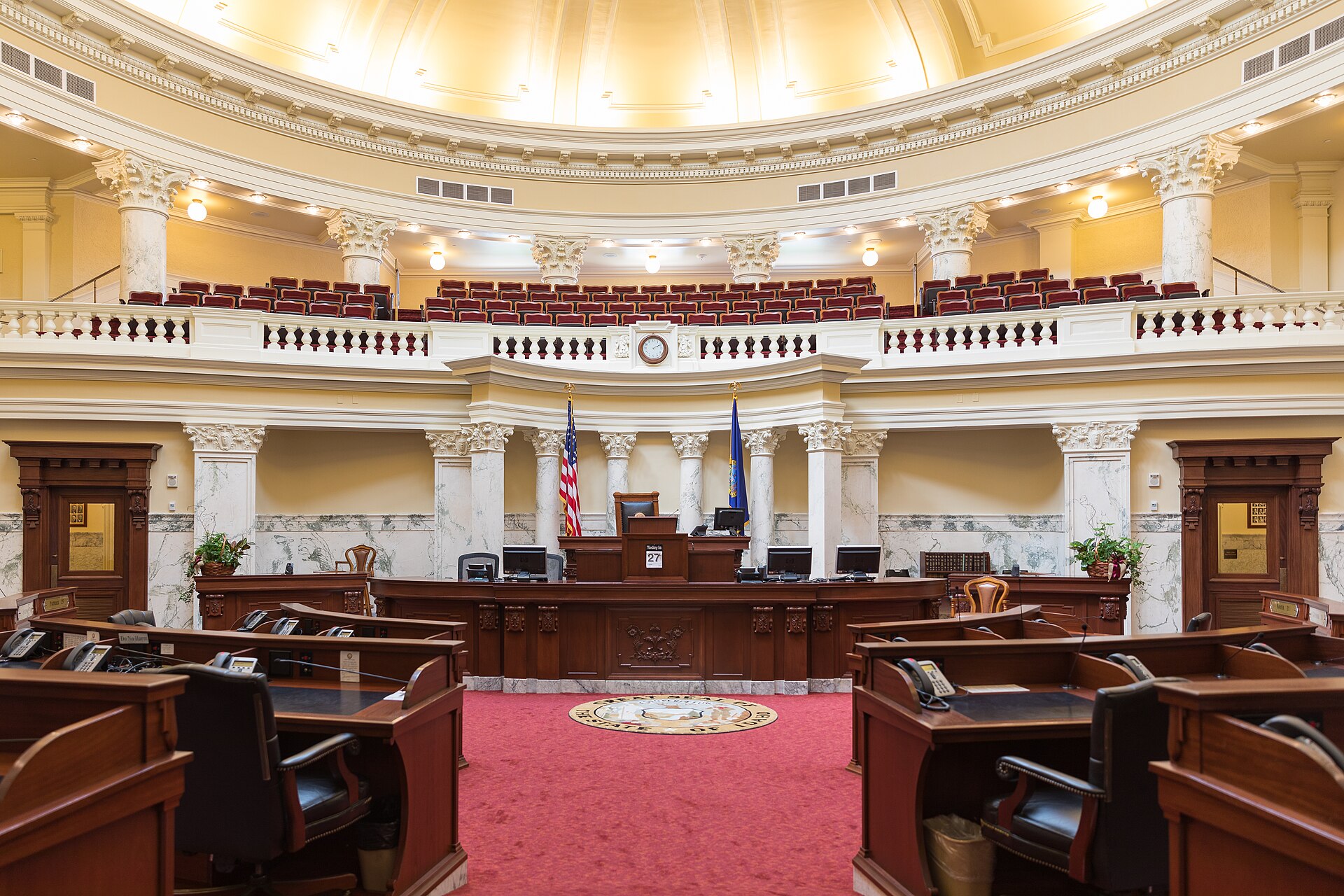
Idaho's fight went through three rounds. Gov. Brad Little vetoed two broad bills in April 2021, and the Senate fell one vote short of overriding each: 23-12 on Senate Bill 1136 on April 19, and 21-12 on House Bill 135 on May 4.1718 Lawmakers then passed narrower bills, and in May 2021 Little signed four: House Bill 391, which bars a governor or agency from limiting constitutional rights, including religious freedom and assembly, during an emergency; House Bill 392, which bars a governor from changing, adjusting or creating laws during an emergency; House Bill 393, which bars "unnecessary restrictions" on people's ability to work and support their families; and Senate Bill 1217, which declares all jobs essential in an extreme emergency, bars quarantining healthy people who are not at risk of spreading the agent, and limits a governor's extreme-emergency powers to 90 days unless the Legislature is in session or called into one.19 The statute now reads: "During any state of disaster emergency, the governor may not alter, adjust, or create any provision of the Idaho Code."20 Finally, on November 8, 2022, voters approved SJR 102, letting the Legislature call itself into special session, 287,194 to 267,623.5 Lesson 04 tells the story and names the sponsors.

Other states
Pennsylvania's voters went first. On May 18, 2021 they approved two constitutional amendments, each with about 54 percent: one lets the legislature extend or end a governor's emergency declaration by a resolution that needs no signature, and the other caps declarations at 21 days unless lawmakers extend them.21 In Ohio the General Assembly overrode Gov. Mike DeWine's veto of Senate Bill 22 on March 24, 2021, 23-10 in the Senate and 62-35 in the House; the law lets lawmakers rescind health orders by concurrent resolution.2223 Ohio also limited a state of emergency to 90 days, and Tennessee shortened the length of an emergency from 60 days to 45.16 Utah created an ad hoc legislative committee to hold public hearings on an emergency and recommend whether to extend it.16 Kentucky's legislature passed laws in 2021 limiting the governor's emergency orders to 30 days without legislative renewal, and its supreme court let them take effect.11
Not every change held, and not every voter agreed. Indiana passed House Enrolled Act 1123 in 2021 to let a legislative council call the General Assembly into emergency session; Gov. Eric Holcomb sued, arguing, in NCSL's summary, that the legislature was "usurping a power given exclusively to the governor," and on June 3, 2022 a unanimous Indiana Supreme Court held the law unconstitutional, ruling that lawmakers may call themselves in only through a law passed in a regular session.1624 In November 2022 Arkansas voters rejected Issue 1, a self-called-session amendment, 60.9 percent to 39.1, and Kentucky voters rejected Amendment 1, which would have let legislative leaders call special sessions.2526 Idaho's SJR 102 was the only one of the three to pass.5
Congress used its own power too
The national emergency declared in Proclamation 9994 on March 13, 2020 did not end on a president's schedule. Congress passed a joint resolution, H.J.Res. 7, to terminate it, and President Joe Biden signed it on April 10, 2023.2728 The federal public health emergency expired a month later, on May 11, 2023.29 Idaho's own public health disaster emergency had ended earlier, on April 15, 2022, after Gov. Little announced the date on March 8, 2022.30 The pattern is the same one the states followed: an emergency declared by one official was, in the end, closed by the officials who answer to voters in larger numbers. The National Emergencies Act lets Congress end a declared emergency by joint resolution, and in 2023 Congress used that power.
That last step matters for a reader who wants to know what the stands won. No court ever ruled that the national emergency itself was unlawful. What changed was the political climate in which legislators acted, and that climate was shaped by the people in this module: the plaintiffs who kept the questions in court, the defendants who refused to plead guilty to orders they thought void, and the citizens who filled hearing rooms. Their stands made it ordinary, by 2023, for legislators to ask when an emergency should end.
What the stands did not win
A true account counts the losses. The 1905 rule of Jacobson v. Massachusetts, which upheld a compulsory smallpox vaccination law, still stands, and the Chief Justice relied on it in 2020.6 On the same day the Court stopped OSHA's rule, it allowed the federal health department's vaccination requirement for workers at Medicare and Medicaid facilities in Biden v. Missouri, reasoning that "there can be no doubt that addressing infection problems in Medicare and Medicaid facilities is what he does."31 Private employers' mandates mostly stood: the Houston Methodist workers lost, and the Fifth Circuit affirmed the dismissal of their suit on June 13, 2022.32 The military mandate ended through Congress's defense authorization law rather than by court order (lesson 19); the Supreme Court had partly stayed the Navy SEALs' injunction on March 25, 2022, with Justice Kavanaugh writing that "the President of the United States, not any federal judge, is the Commander in Chief of the Armed Forces."33 Some wins were erased as moot: the Eleventh Circuit vacated the ruling against the transit mask mandate on June 22, 2023 because the emergency had ended, without deciding who was right.29 In Canada, Tamara Lich and Chris Barber were convicted of mischief on April 3, 2025 and received 18-month conditional sentences on October 7, 2025; their appeals were pending as of November 2026.34 And some state limits were struck down or rejected, as Indiana, Arkansas and Kentucky show.242526
Those losses do not diminish the people who suffered them. A citizen who stands on a principle and loses in court still forces the government to defend its action in public, on the record, under oath. The losses also mark where the next argument will be made.
The scoreboard
The scoreboard below puts every profile in this module in one place. "Won" means the person or group got the relief they sought or the charge against them was dropped; "settled" means the government paid or changed its records by agreement; "mixed" means a real win and a real loss in the same story; "pending" means the courts have not finished. The outcomes are summarized from each lesson's own record; read the lesson before quoting the result.35
Read as a whole, the scoreboard shows a pattern. The stands that rested on equal treatment of worship, on the limits of a statute, or on a legislature's power to make the law mostly won. The stands that challenged private employers, the military chain of command, a barber's licensing case, or the convoy prosecutions mostly lost or remain unsettled. Mary Daniel's stand won in a third way: by changing the law itself. Florida's "No Patient Left Alone Act," CS/CS/SB 988, was approved by Gov. Ron DeSantis on April 6, 2022 as chapter 2022-34, Laws of Florida.36 Lesson 14 tells how a wife's dishwashing job led to a statute. The Navy SEALs' class won by agreement: under a settlement announced July 24, 2024, the Navy agreed to remove adverse vaccine-related material from the records of class members who had sought religious accommodation, to bar promotion boards for three years from weighing vaccine refusal alone where accommodation was sought, and to pay $1.5 million in attorney fees, with no compensation to the plaintiffs and no admission of wrongdoing by either side.37
What a local official can do differently
Many COVID-era orders that touched daily life were made or enforced close to home: by health district boards, county commissioners, mayors, sheriffs and school boards. Those offices will face the next emergency first. The rulings and statutes above point to six practices that any of them can adopt now, before the next crisis, without waiting for a court.
Publish the legal basis
Every order should name the statute that authorizes it. Idaho's 2020 statewide order did: it cited Idaho Code 46-601, 46-1008 and 56-1003(7).38 The Wisconsin order failed in court partly because the agency had used the wrong legal process; the court held it was a rule that required rulemaking procedures.10 An official who cannot name the statute should not sign the order.
Set sunset dates
The Michigan court struck down a statute because it allowed emergency power "indefinitely."3 Idaho's statute now limits a disaster emergency to thirty days unless the governor renews it, and lets the Legislature end it at any time.20 A local board can adopt the same habit: every order carries an end date, and renewal takes a fresh, recorded vote.
Meet in the open
Idaho's open meeting law states that "all meetings of a governing body of a public agency shall be open to the public and all persons shall be permitted to attend any meeting," and that "No decision at a meeting of a governing body of a public agency shall be made by secret ballot."39 Emergency decisions are no exception. When the Central District Health board's December 8, 2020 meeting ended early amid protests, including protests at board members' homes, the public lost its chance to hear the debate.40 Protests at officials' homes and decisions made in private both defeat the purpose of the law. A public meeting, held in order, with the public able to attend and speak, serves it.
Treat worship equally
Under Tandon, a rule that treats "any comparable secular activity more favorably than religious exercise" faces strict scrutiny, and comparability is judged "against the asserted government interest that justifies the regulation at issue."1 A county order that caps a church at ten people while a store fills to fifty would face strict scrutiny under that rule. The practical test is simple: list every activity the order allows, and give worship at least the treatment of the most favored one.
Due process before closure
Idaho's 2020 statewide order contained a model worth keeping: "A closure order may be appealed to the board of county commissioners where the business is located, which shall render a decision in open meeting, in consultation with the local health district."38 Notice, a hearing, a decision in public, and an appeal: those four steps turn an emergency closure from a decree into a process. The Fourteenth Amendment's guarantee of due process applies in an emergency as at any other time; the site's Fourteenth Amendment page explains it.
Take public comment
Public comment is how a board learns what an order costs before it signs it. The Issues family's Testifying and Public Comment teaches citizens how to testify, and its lessons on county commissions and city councils and Idaho legislative committees show where. An official can make it easy: accept written comment by email, hold an evening session, and put renewals on a published agenda.
By office
County commissioners appoint health district board members; every appointment must be approved by a majority vote of all the county commissioners in the district, and the same majority may remove a member.41 A commissioner can ask an appointee, in public, how the six practices above will be applied. A health board member can insist that every order cite its statute and carry an end date. A mayor can publish the legal basis of any city order and put its renewal on the council agenda. A sheriff enforces state law, and Idaho law now provides that during an emergency no agency may "limit or suspend any rights guaranteed by the United States constitution or the constitution of the state of Idaho, including but not limited to the right to peaceable assembly or free exercise of religion."20 A school trustee sits on a board subject to the same open meeting law, and can require that decisions affecting students be made in public with comment from parents.39
Each office also carries a duty of candor. A health board member who is the board's physician, the seat Idaho law asks to be filled by a licensed physician when one is available, can explain to the public in plain terms what an order is meant to do and what it will cost, and can say so on the record when the evidence is uncertain.41 A county commissioner who appoints that member can ask, at a public meeting, whether the board has a written procedure for emergency orders, how renewals are noticed, and how a closed business may appeal. A mayor can refuse to issue an order whose legal basis the city attorney cannot name in writing. A school trustee can insist that any closure or mask rule for students carry its own end date and come back to the board for a vote. None of these steps requires new legislation, and none weakens a community's ability to act fast. Each one makes the action answerable.
The lesson of 2020 for local officials concerns process. Orders made without a named legal basis, without an end date, behind closed doors, or with worse treatment for worship than for commerce invited the challenges that followed, and many of those challenges succeeded. An official who adopts the six practices above gives the next emergency order its best chance to be both effective and lawful, and gives citizens the confidence that their rights did not lapse when the declaration was signed.


Timeline
| Date | Event |
|---|---|
| May 13, 2020 | Wisconsin Supreme Court holds the statewide Safer at Home order unenforceable.10 |
| Oct. 2, 2020 | Michigan Supreme Court holds the 1945 Emergency Powers of the Governor Act unconstitutional.3 |
| Nov. 25, 2020 | U.S. Supreme Court blocks New York's worship caps (Diocese of Brooklyn).7 |
| Mar. 24, 2021 | Ohio General Assembly overrides the veto of Senate Bill 22.22 |
| Apr. 9, 2021 | U.S. Supreme Court sets the most-favored-nation rule in Tandon v. Newsom.1 |
| Apr. 19, 2021 | Idaho Senate falls one vote short of overriding the veto of S 1136.17 |
| May 10, 2021 | Gov. Little signs H 391, H 392, H 393 and S 1217.19 |
| May 18, 2021 | Pennsylvania voters approve two amendments limiting emergency declarations.21 |
| Aug. 21, 2021 | Kentucky Supreme Court lets the legislature's limits on the governor take effect.11 |
| Aug. 26, 2021 | U.S. Supreme Court ends the CDC eviction moratorium.9 |
| Jan. 13, 2022 | U.S. Supreme Court stays the OSHA rule and allows the CMS health-worker rule.231 |
| Mar. 25, 2022 | U.S. Supreme Court partly stays the Navy SEALs injunction.33 |
| Apr. 6, 2022 | Florida's No Patient Left Alone Act (SB 988) approved by the governor.36 |
| May 13, 2022 | Louisiana Supreme Court rules for Pastor Tony Spell.8 |
| June 3, 2022 | Indiana Supreme Court strikes HEA 1123.24 |
| June 13, 2022 | Fifth Circuit affirms dismissal of the Houston Methodist suit.32 |
| Nov. 8, 2022 | Idaho approves SJR 102; Arkansas and Kentucky reject similar amendments.52526 |
| June 22, 2023 | Eleventh Circuit vacates the transit mask ruling as moot.29 |
| Aug. 30, 2023 | Pastor Coates and GraceLife acquitted of Public Health Act charges.14 |
| July 24, 2024 | Navy settlement with the SEALs class announced.37 |
| Oct. 7, 2025 | Lich and Barber receive 18-month conditional sentences.34 |
| Jan. 16, 2026 | Federal Court of Appeal upholds the ruling against the Emergencies Act invocation.13 |
| Oct. 22, 2026 | Supreme Court of Canada agrees to hear the federal government's appeal.44 |
Why it took courage
None of these rules existed in March 2020. Each one required a person to step forward first, often alone, against an order that most institutions supported at the time. Justice Gorsuch described what that meant: officials "forced individuals to fight for their freedoms in court on emergency timetables, and then changed their color-coded schemes when defeat in court seemed imminent."42 The churches in the Supreme Court cases could not know the Court would change course in six months. A small health-freedom group and two travelers could not know a federal judge would end a nationwide mask rule. A Louisiana pastor could not know, when he was charged in 2020, that his state's highest court would quash the charges two years later.
What they won belongs to everyone, including those who disagreed with them. The most-favored-nation rule protects a synagogue, a mosque and a home Bible study alike. The rule that agencies need clear authority from Congress protects against any agency, under any administration. The Idaho Legislature's power to call itself into session can be used by any future majority. That is the mark of a stand on principle: it secures a liberty for people who never took the risk. The people in this module took it, and this module honors them for it.

What the other side said
Governors who opposed the new limits warned that they would hobble the response to the next disaster. Idaho Gov. Brad Little called the broad 2021 bills "just plain irresponsible" and "an emotional, kneejerk reaction because of anger about the pandemic."1917 Ohio Gov. Mike DeWine, after his veto of Senate Bill 22 was overridden, said: "My passion comes from a deep concern and belief that this is not the only crisis we will face."23 Indiana Gov. Eric Holcomb argued that the legislature was "usurping a power given exclusively to the governor," and the Indiana Supreme Court agreed with him.1624 On the federal side, Justices Breyer, Sotomayor and Kagan wrote in the OSHA case: "When we are wise, we know not to displace the judgments of experts, acting within the sphere Congress marked out and under Presidential control, to deal with emergency conditions. Today, we are not wise."43 And in upholding the health-worker rule, the Court's majority wrote that requiring providers to avoid transmitting the virus was "consistent with the fundamental principle of the medical profession: first, do no harm."31
Still disputed: whether the new legislative limits will slow a future emergency response, as Governors Little, DeWine and Holcomb warned, has not been tested by a new statewide emergency of the 2020 kind. Whether the 2020 to 2021 orders saved enough lives to justify their costs is argued by researchers and officials, and this module does not decide that medical question. The Canadian Emergencies Act case continues: on October 22, 2026 the Supreme Court of Canada agreed to hear the federal government's appeal.44
Hard questions and answers
If the courts ruled in the end, why change the statutes?
Because the courts often ruled too late, or not at all. The transit mask case ended without a final answer on the merits when the Eleventh Circuit vacated the ruling as moot after the emergency expired.29 Several worship rulings came months after the services were cancelled. A statute that sets a 30-day limit or lets the legislature end an order protects people while the emergency is still on.20
Do the new limits leave a state unable to respond quickly?
Not on their face. Idaho's governor still declares the emergency and acts first; what changed is how long one person's order can run without review, and what it may not do (suspend constitutional rights, rewrite the Idaho Code, or close lawful work without need).2019 Governors Little, DeWine and Holcomb warned of delay, and the warning deserves a hearing; the answer the legislatures gave is that review and speed can coexist.1723
Does Tandon mean churches can never be limited?
No. It means worship must be treated at least as well as comparable secular activity, judged "against the asserted government interest that justifies the regulation at issue."1 A rule that applies equally to all comparable gatherings is judged by a different standard. The holding protects equality of treatment; it does not exempt worship from every health rule.
What about the people who lost?
Their losses set the boundaries of the law as it stands: the Fifth Circuit held that the Houston Methodist workers' federal-law theories did not fit Texas's narrow public-policy exception to at-will employment, and the Supreme Court allowed the CMS rule for health workers.3231 A loss still forces the government to justify itself in public, and these losses are why later debates turned to statutes and ballots rather than only to courts.
What can a citizen do before the next emergency?
Ask local boards to adopt the six practices in this lesson now, while there is no crisis; testify at the meetings where emergency procedures are set; and follow the appointment of health board members by county commissioners.41 The Issues family's Testifying and Public Comment and Recalls and the Initiative Process teach how.
Did Canada end up in the same place as the United States?
On the emergency power itself, Canadian courts reached a similar result: both the Federal Court and the Federal Court of Appeal held the 2022 invocation of the Emergencies Act unreasonable.13 But the individual convoy organizers were convicted of mischief, and their appeals continue.34 The two outcomes can both be true: a government can overreach, and individuals can still be held to the criminal law for how they protested.
Related lessons
- 01 Emergency Power in 2020
- 04 Idaho Takes Back the Special Session: SJR 102
- 06 Pastor Tony Spell and Life Tabernacle
- 09 The Worship Cases at the Supreme Court
- 14 Mary Daniel, the Dishwasher Who Went Back to Her Husband
- 19 The Navy SEALs and the Military Mandate
- 20 Small Businesses and Landlords at the Supreme Court
- 21 Tamara Lich, Chris Barber and the Freedom Convoy
- 23 Timeline, Glossary, Sources and the Record of Every Ruling
- Ordered Liberty and Forms of Lawful Resistance
- Testifying and Public Comment and Recalls and the Initiative Process
- The First Amendment, the Tenth Amendment and the Idaho Constitution
Still open
These items could not be confirmed against a primary source before publication. The lesson states them as open, and they stay on the fact-check list.
- The appeals of Tamara Lich and Chris Barber in the Court of Appeal for Ontario were pending as of November 2026; no ruling on them had been reported.
- Kentucky's 2021 laws limiting the governor are described from Louisville Public Media's report of the Kentucky Supreme Court's Aug. 21, 2021 order; that order did not decide whether the laws are constitutional, and the case returned to the trial court.
Learn more
- Tandon v. Newsom (2021): Four pages that set the rule every local official should know before limiting worship.
- NCSL, Legislative Actions in Oversight of Executive Emergency Powers: The legislatures' response, with counts and examples.
- Idaho Code 46-1008: The governor's emergency powers as limited in 2021 and 2022.
- Federal Court of Appeal, 2026 FCA 6 summary: A plain-language account of the Canadian appeal ruling on the Emergencies Act.
Notes
- Tandon v. Newsom, No. 20A151, 593 U.S. 61 (Apr. 9, 2021) (per curiam), Supreme Court of the United States (retrieved Nov. 7, 2026). Read it online. ↩
- National Federation of Independent Business v. Department of Labor, OSHA, No. 21A244, 595 U.S. 109 (Jan. 13, 2022) (per curiam), Supreme Court of the United States (retrieved Nov. 7, 2026). Read it online. ↩
- In re Certified Questions from the United States District Court, Western District of Michigan (Midwest Institute of Health, PLLC v. Governor), Michigan Supreme Court No. 161492, decided Oct. 2, 2020, 958 N.W.2d 1, syllabus and opinion of Markman, J., Part V (copy hosted by the Civil Rights Litigation Clearinghouse) (retrieved Nov. 7, 2026). Read it online. ↩
- Stateline (The Pew Charitable Trusts), "More States Rein in Governors' Emergency Powers," June 17, 2021, citing the National Conference of State Legislatures (retrieved Nov. 7, 2026). Read it online. ↩
- Ballotpedia, "Idaho elections, 2022," statewide ballot measure results for SJR 102, 287,194 yes to 267,623 no (retrieved Nov. 7, 2026); the same totals appear in the Idaho Secretary of State's certified canvass of the Nov. 8, 2022 general election (see lesson 04). Read it online. ↩
- South Bay United Pentecostal Church v. Newsom, No. 19A1044, 590 U.S. ___ (May 29, 2020) (Roberts, C.J., concurring in denial of application for injunctive relief), Supreme Court of the United States (retrieved Nov. 7, 2026). Read it online. ↩
- Roman Catholic Diocese of Brooklyn v. Cuomo, No. 20A87, 592 U.S. 14 (Nov. 25, 2020) (per curiam; Gorsuch, J., concurring), Supreme Court of the United States (retrieved Nov. 7, 2026). Read it online. ↩
- State of Louisiana v. Mark Anthony Spell, No. 2021-KK-00876 (La. May 13, 2022) (opinion of Crain, J.; Weimer, C.J., and Griffin, J., dissenting), Supreme Court of Louisiana (retrieved Nov. 7, 2026). Read it online. ↩
- Alabama Association of Realtors v. Department of Health and Human Services, No. 21A23, 594 U.S. 758 (Aug. 26, 2021) (per curiam), Supreme Court of the United States (retrieved Nov. 7, 2026). Read it online. ↩
- Wisconsin Legislature v. Palm, 2020 WI 42, No. 2020AP765-OA (Wis. May 13, 2020), paragraphs 1 to 3 and 6 to 7, Supreme Court of Wisconsin (retrieved Nov. 7, 2026). Read it online. ↩
- Ryland Barton, Louisville Public Media, report on the Kentucky Supreme Court ruling that laws limiting Gov. Beshear's powers should take effect, Aug. 21, 2021 (on Cameron v. Beshear, Ky. No. 2021-SC-0107-I) (retrieved Nov. 7, 2026). Read it online. ↩
- Jim Bronskill, The Canadian Press, "Appeal court finds federal use of Emergencies Act during Freedom Convoy protests unreasonable," CP24, Jan. 16, 2026, describing the Federal Court ruling of Jan. 23, 2024 (Canadian Frontline Nurses v. Canada (Attorney General), 2024 FC 42) (retrieved Nov. 7, 2026). Read it online. ↩
- Federal Court of Appeal, plain-language decision summary, Canada (Attorney General) v. Canadian Civil Liberties Association, 2026 FCA 6 (Jan. 16, 2026) (retrieved Nov. 7, 2026). Read it online. ↩
- CTV News Edmonton, "Edmonton-area pastor, church acquitted in Alberta COVID-19 rules case," August 2023 (retrieved Nov. 7, 2026). Read it online. ↩
- The Canadian Press, with files from Karen Bartko, Global News, report on the end of the Public Health Act charges against Pastor James Coates and GraceLife Church, Global News, Aug. 31, 2023 (retrieved Nov. 7, 2026). Read it online. ↩
- Pam Greenberg and Matthew Sullivan, "Legislative Actions in Oversight of Executive Emergency Powers," National Conference of State Legislatures, brief updated Feb. 28, 2022 (retrieved Nov. 7, 2026). Read it online. ↩
- Clark Corbin, "Idaho Senate fails to override Gov. Little's veto by one vote," Idaho Capital Sun, April 19, 2021 (retrieved Nov. 7, 2026). Read it online. ↩
- Idaho Press, Eye on Boise, "Senate fails to override veto of HB 135aa by one vote," May 4, 2021 (retrieved Nov. 7, 2026). Read it online. ↩
- Idaho Capital Sun, "Gov. Little signs four bills dealing with emergency orders into Idaho law," May 11, 2021 (retrieved Nov. 7, 2026). Read it online. ↩
- Idaho Code section 46-1008, "The governor and disaster emergencies," State Disaster Preparedness Act, current text with history line (1975 to 2022), Idaho Legislature (retrieved Nov. 7, 2026). Read it online. ↩
- Ballotpedia News, "Pennsylvania voters pass constitutional amendments to limit governor's emergency orders without legislative support," May 20, 2021 (retrieved Nov. 7, 2026). Read it online. ↩
- Ohio Capital Journal, "Ohio legislature overrides DeWine veto of pandemic authority bill," March 24, 2021 (retrieved Nov. 7, 2026). Read it online. ↩
- Ohio Capital Journal, "DeWine on veto override: 'This is not the only crisis we will face'," March 26, 2021 (retrieved Nov. 7, 2026). Read it online. ↩
- Brandon Smith, "Holcomb wins lawsuit against legislators over emergency powers law," WFYI Public Media, June 3, 2022 (retrieved Nov. 7, 2026). Read it online. ↩
- Ballotpedia, "Arkansas Issue 1, Legislative Authority to Call a Special Session Amendment (2022)," results of Nov. 8, 2022 (retrieved Nov. 7, 2026). Read it online. ↩
- Louisville Public Media, "Ky. voters reject constitutional amendment giving legislature power to call special sessions," Nov. 9, 2022 (retrieved Nov. 7, 2026). Read it online. ↩
- President Donald J. Trump, Proclamation 9994, "Declaring a National Emergency Concerning the Novel Coronavirus Disease (COVID-19) Outbreak," March 13, 2020, 85 Fed. Reg. 15337 (Mar. 18, 2020), Federal Register (retrieved Nov. 7, 2026). Read it online. ↩
- The White House (archived), "Bill Signed: H.J.Res. 7," April 10, 2023 (retrieved Nov. 7, 2026). Read it online. ↩
- Health Freedom Defense Fund, Inc. v. President of the United States, No. 22-11287 (11th Cir. June 22, 2023) (published opinion of Wilson, J.), slip op. at 2 to 3 and 5 to 6 (retrieved Nov. 7, 2026). Read it online. ↩
- Idaho Capital Sun, "Idaho Gov. Brad Little will end public health emergency on April 15," March 8, 2022 (retrieved Nov. 7, 2026). Read it online. ↩
- Biden v. Missouri, No. 21A240, 595 U.S. 87 (Jan. 13, 2022) (per curiam), Supreme Court of the United States (retrieved Nov. 7, 2026). Read it online. ↩
- Bridges v. Methodist Hospital, No. 21-20311 (5th Cir. June 13, 2022), via Justia (retrieved Nov. 7, 2026). Read it online. ↩
- Austin v. U.S. Navy SEALs 1-26, No. 21A477 (Mar. 25, 2022) (order granting partial stay; Kavanaugh, J., concurring), Supreme Court of the United States, docket and opinion (retrieved Nov. 7, 2026). Read it online. ↩
- Ground News summary of reports (including the Justice Centre for Constitutional Freedoms release and The Epoch Times), "Tamara Lich appeals mischief conviction arising from role in 'Freedom Convoy'," Nov. 2025, reporting the Oct. 7, 2025 conditional sentences and the Nov. 4, 2025 notice of appeal (retrieved Nov. 7, 2026). Read it online. ↩
- Module 107, lessons 02 to 21, each with its own footnoted record of the opinions, orders, statutes and reports behind its outcome; the scoreboard was compared with those lessons on Nov. 7, 2026. Read it online. ↩
- The Florida Senate, CS/CS/SB 988 (2022), "In-person Visitation" ("No Patient Left Alone Act"), approved by Governor April 6, 2022, chapter 2022-34, Laws of Florida (retrieved Nov. 7, 2026). Read it online. ↩
- Patricia Kime, "Navy SEALs, sailors who refused COVID vaccine will have records expunged after legal settlement," Military.com, July 24, 2024 (updated July 30, 2024) (retrieved Nov. 7, 2026). Read it online. ↩
- Idaho Department of Health and Welfare, Order of the Director, "Order to Self-Isolate," April 10, 2020 (copy posted by the Idaho Freedom Foundation) (retrieved Nov. 7, 2026). Read it online. ↩
- Idaho Code section 74-203, "Governing bodies, requirement for open public meetings," Idaho Legislature (retrieved Nov. 7, 2026). Read it online. ↩
- Associated Press, "Idaho health board meeting halted after intense protests," Dec. 8, 2020, as published by The Columbian (Vancouver, Wash.) (retrieved Nov. 7, 2026). Read it online. ↩
- Idaho Code section 39-411, "Composition of district board," Idaho Legislature (retrieved Nov. 7, 2026). Read it online. ↩
- Arizona v. Mayorkas, No. 22-592, 598 U.S. ___ (May 18, 2023), statement of Gorsuch, J., Supreme Court of the United States, slip op. at 4 to 9 (retrieved Nov. 7, 2026). Read it online. ↩
- National Federation of Independent Business v. Department of Labor, OSHA, No. 21A244 (Jan. 13, 2022) (Breyer, Sotomayor and Kagan, JJ., dissenting), Supreme Court of the United States (retrieved Nov. 7, 2026). Read it online. ↩
- Jim Bronskill, The Canadian Press, "Supreme Court to hear federal appeal over use of Emergencies Act," Global News, Oct. 22, 2026 (retrieved Nov. 7, 2026). Read it online. ↩
Check yourself
1. Under Tandon v. Newsom, when does a regulation trigger strict scrutiny under the Free Exercise Clause?
The per curiam opinion says regulations trigger strict scrutiny whenever they treat any comparable secular activity more favorably than religious exercise.
2. A county closes churches but also closes theaters, while hardware stores stay open. Under Tandon, is the theater closure a defense?
Tandon: 'It is no answer that a State treats some comparable secular businesses or other activities as poorly as or even less favorably than the religious exercise at issue.'
3. Why did the Supreme Court stay OSHA's vaccine-or-test rule in January 2022?
The per curiam held Congress gave OSHA power over occupational dangers, not public health more broadly.
4. How many states, by NCSL's February 2022 count, gave the legislature authority to terminate a state of emergency or executive order?
NCSL counted at least nine such states; 47 is the number of states where bills were filed in 2021.
5. What happened to Indiana's HEA 1123?
A unanimous Indiana Supreme Court agreed with Gov. Holcomb that the self-call mechanism violated the state constitution.
6. Which of the three 2022 state amendments to let legislatures call themselves into session passed?
Idaho's SJR 102 passed 287,194 to 267,623; Arkansas and Kentucky voters rejected theirs.
7. Which practice comes from Idaho's own 2020 statewide order?
The April 10, 2020 order provided an appeal of closure orders to the county commissioners, decided in open meeting.
8. How did the Eleventh Circuit dispose of the transit mask case in June 2023?
The court vacated the district court's order and judgment and instructed dismissal as moot after the public health emergency expired May 11, 2023.
Terms in this lesson
- Most-favored-nation rule
- Tandon's rule that a regulation is not neutral and generally applicable if it treats any comparable secular activity more favorably than religious exercise.
- Comparability
- Under Tandon, whether two activities are comparable is judged against the government interest that justifies the regulation, such as the risk of spreading a disease.
- Major questions
- The principle that Congress must speak clearly when it gives an agency powers of vast economic and political significance; applied in the eviction and OSHA cases.
- Mootness
- The end of a live dispute, as when an order expires, after which a court will not decide the merits; the transit mask ruling was vacated as moot.
- Vacatur
- An order setting aside a judgment or a rule; the Tampa court vacated the mask rule, and the Eleventh Circuit later vacated that judgment as moot.
- Sunset date
- A date written into an order or law on which it expires unless renewed.
- Concurrent resolution
- A measure passed by both houses that does not need the governor's signature; Idaho, Ohio and Pennsylvania use it to end or review emergency actions.
- Self-called special session
- A legislature's power to convene itself outside the regular session; Idaho adopted it by SJR 102 in 2022.
- Open meeting law
- A statute requiring a public body's meetings to be open to the public; Idaho's is Idaho Code 74-203.
- Due process
- The constitutional guarantee of notice and a fair hearing before government takes life, liberty or property, including a business license or the right to operate.
- Strict scrutiny
- The test requiring government to show a compelling interest and narrow tailoring; it applies to rules that treat worship worse than comparable secular activity.
- Emergencies Act (Canada)
- The Canadian federal statute invoked on Feb. 14, 2022 against the convoy protests; Canadian courts held the invocation unreasonable.
Sources
- Proclamation 9994, Declaring a National Emergency Concerning the Novel Coronavirus Disease (COVID-19) Outbreak (2020-03-13) checked 2026-11-07
- IDHW Order to Self-Isolate, April 10, 2020 (copy) (2020-04-10) checked 2026-11-07
- Idaho Code 46-1008 (current) checked 2026-11-07
- Idaho Code 39-411 (current) checked 2026-11-07
- Wisconsin Legislature v. Palm, 2020 WI 42 (2020-05-13) checked 2026-11-07
- In re Certified Questions (Midwest Institute of Health v. Governor), Mich. Sup. Ct. No. 161492 (2020-10-02) checked 2026-11-07
- South Bay United Pentecostal Church v. Newsom (Roberts, C.J., concurring) (2020-05-29) checked 2026-11-07
- Roman Catholic Diocese of Brooklyn v. Cuomo (2020-11-25) checked 2026-11-07
- Tandon v. Newsom (2021-04-09) checked 2026-11-07
- Alabama Association of Realtors v. HHS (2021-08-26) checked 2026-11-07
- NFIB v. Department of Labor, OSHA (2022-01-13) checked 2026-11-07
- Arizona v. Mayorkas (statement of Gorsuch, J.) (2023-05-18) checked 2026-11-07
- State v. Spell, La. No. 2021-KK-00876 (2022-05-13) checked 2026-11-07
- Health Freedom Defense Fund v. President of the United States, 11th Cir. No. 22-11287 (2023-06-22) checked 2026-11-07
- Bridges v. Methodist Hospital, 5th Cir. No. 21-20311 (2022-06-13) checked 2026-11-07
- Bill Signed: H.J.Res. 7 (2023-04-10) checked 2026-11-07
- NCSL, Legislative Actions in Oversight of Executive Emergency Powers (2022-02-28) checked 2026-11-07
- Stateline, More States Rein in Governors' Emergency Powers (2021-06-17) checked 2026-11-07
- Idaho Capital Sun, Little will end public health emergency April 15 (2022-03-08) checked 2026-11-07
- AP via The Columbian, Idaho health board meeting halted (2020-12-08) checked 2026-11-07
- Idaho Capital Sun, Senate fails to override veto by one vote (2021-04-19) checked 2026-11-07
- Idaho Press, Senate fails to override veto of HB 135aa (2021-05-04) checked 2026-11-07
- Idaho Capital Sun, Little signs four emergency bills (2021-05-11) checked 2026-11-07
- Ballotpedia, Idaho elections 2022 (SJR 102) (2022-11-08) checked 2026-11-07
- CTV News, Edmonton-area pastor, church acquitted (2023-08) checked 2026-11-07
- Global News, charges dismissed against James Coates (2023-08-31) checked 2026-11-07
- WFYI, Holcomb wins lawsuit over emergency powers law (2022-06-03) checked 2026-11-07
- CP24, Appeal court finds Emergencies Act use unreasonable (2026-01-16) checked 2026-11-07
- Federal Court of Appeal, 2026 FCA 6 plain-language summary (2026-01-16) checked 2026-11-07
- Louisville Public Media, Ky. Supreme Court: laws limiting Beshear powers should take effect (2021-08-21) checked 2026-11-07
- Ballotpedia News, Pennsylvania voters pass emergency-power amendments (2021-05-20) checked 2026-11-07
- Ohio Capital Journal, legislature overrides DeWine veto (2021-03-24) checked 2026-11-07
- Ohio Capital Journal, DeWine on veto override (2021-03-26) checked 2026-11-07
- Ballotpedia, Arkansas Issue 1 (2022) (2022-11-08) checked 2026-11-07
- Louisville Public Media, Ky. voters reject Amendment 1 (2022-11-09) checked 2026-11-07
- Biden v. Missouri (2022-01-13) checked 2026-11-07
- Austin v. U.S. Navy SEALs 1-26, docket No. 21A477 (2022-03-25) checked 2026-11-07
- Ground News, Tamara Lich appeals mischief conviction (2025-11) checked 2026-11-07
- Florida Senate, CS/CS/SB 988 (2022), No Patient Left Alone Act (2022-04-06) checked 2026-11-07
- Military.com, Navy SEALs settlement (2024-07-24) checked 2026-11-07
- Idaho Code 74-203 (open meetings) (current) checked 2026-11-07
- Global News (The Canadian Press), "Supreme Court to hear federal appeal over use of Emergencies Act" (2026-10-22) checked 2026-11-07