Lesson 16 of 23 · about 40 minutes
Dr. Aaron Kheriaty, Fired for Natural Immunity (California)
Updated November 7, 2026
You'll be able to
- Explain what the University of California's 2021 vaccine policy required and how it treated prior infection.
- Describe the course of Kheriaty v. Regents from filing to the Ninth Circuit's November 23, 2022 memorandum.
- Distinguish rational basis review from strict scrutiny and explain why the choice decided the case.
- Explain why the Constitution applied to UC but not to a private hospital like Houston Methodist.
- Summarize Kheriaty's role in Hoeg v. Newsom and Murthy v. Missouri and how each case ended.
- Identify what in the record comes from Kheriaty's own account and what comes from courts and independent reporting.
Start here: the short version
Dr. Aaron Kheriaty was a psychiatrist who had spent almost fifteen years on the faculty of the University of California, Irvine School of Medicine and directed the Medical Ethics Program at UCI Health.1 He had recovered from COVID-19 in 2020.2 When the University of California required its employees to be vaccinated in 2021, he sued the Regents in federal court in August 2021, arguing that a public university could not treat his infection-acquired immunity as worthless and bar him from work.23 The university suspended him without pay in October 2021 and, by his account, dismissed him effective immediately on December 16, 2021.41 The courts ruled against him: the Ninth Circuit affirmed the dismissal of his suit on November 23, 2022, holding that the policy needed only a rational basis.3 He went on to join two other cases against government power over doctors' speech, Hoeg v. Newsom, which blocked California's COVID-19 "misinformation" law for physicians, and Missouri v. Biden, which reached the Supreme Court as Murthy v. Missouri.56 He was the university's own ethicist, and he challenged his employer's rule from inside, under his own name, knowing what it would cost.

Who they were before
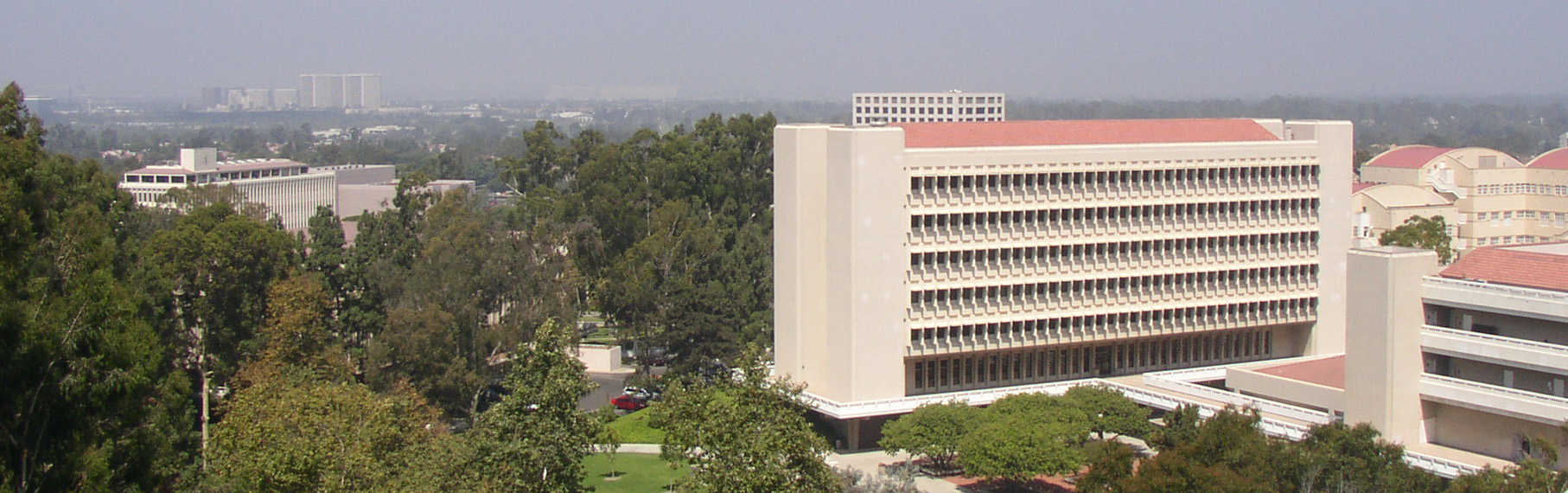
Kheriaty's career before 2021 was spent almost entirely at one institution. According to his biography at the Ethics and Public Policy Center, he graduated from the University of Notre Dame in philosophy and pre-medical sciences, earned his M.D. at Georgetown University, and completed his psychiatry residency at UC Irvine. "For many years he was Professor of Psychiatry at UCI School of Medicine and Director of the Medical Ethics Program at UCI Health, where he chaired the ethics committee," and "For several years he also chaired the Ethics Committee at the California Department of State Hospitals."7 The Orange County Register, as summarized in a USA Today roundup published by UCI News, described him in August 2021 as an associate clinical professor of psychiatry and human behavior at UC Irvine.2 Inside Higher Ed described him as a professor of psychiatry and human behavior and director of the medical ethics program at UCI Health.8
In his own account, published the day after his dismissal, he described the work he did in the first year of the pandemic. "I worked in-person at the hospital every day during the pandemic, seeing patients in our clinic, psychiatric wards, emergency room, and hospital wards, including Covid patients in the ER, ICU, and medicine wards," he wrote. "As our chief ethics consultant, I had countless conversations with families of patients dying of Covid, and tried my best to console and guide them in their grief."1 (The original uses a dash where this lesson uses a comma.) He wrote that when N-95 masks were scarce he "called local construction companies and sourced 600 N-95s from them," supplied some to residents and emergency room colleagues, "then donated the rest to the hospital."1
He also helped write the University of California's own pandemic rules. "In 2020 I worked nights and weekends, uncompensated, helping the UC Office of the President draft the UC policies for triaging scarce resources and allocating vaccines during the pandemic," he wrote, and the Office of the President asked him and the drafting committee's chair to serve as public spokespersons for the ventilator triage policy.1 He directed courses across all four years of the medical curriculum, and he wrote that the deans had asked him to give the White Coat Ceremony keynote to incoming students.1 These details come from his own published statement; the university did not publicly dispute or confirm them in any source found for this lesson.
And in 2020 he caught COVID-19 and recovered. The Register reported in August 2021 that he had had the disease the previous year, which was the foundation of his lawsuit.2
The order they faced
The University of California is a public university; the Regents, whom he sued, appear in the case caption as "a corporation," and the university's president was sued in his official capacity. That made Kheriaty's position different from that of a nurse at a private hospital (compare lesson 15): a public university's rules are government action, and the Fourteenth Amendment applies to them.3
The UC system announced in July 2021 that students, faculty and staff must be vaccinated against COVID-19.2 The Ninth Circuit later described the rule as it applied to him: "That policy required him to receive a COVID-19 vaccine before he could access the school's facilities."3 The policy's treatment of prior infection was the heart of the dispute. As Sinclair Broadcast Group reported on September 1, 2021, the university allowed a temporary medical exemption for people with natural immunity, up to 90 days after a COVID-19 diagnosis and certain treatments, and under the policy such individuals "are not permanently exempt from vaccination."9 Recovery, in other words, bought a short deferral and nothing more.
The defendants he named were the Regents of the University of California and the university's president, Dr. Michael V. Drake, in his official capacity.3
What they did
He sued his own employer
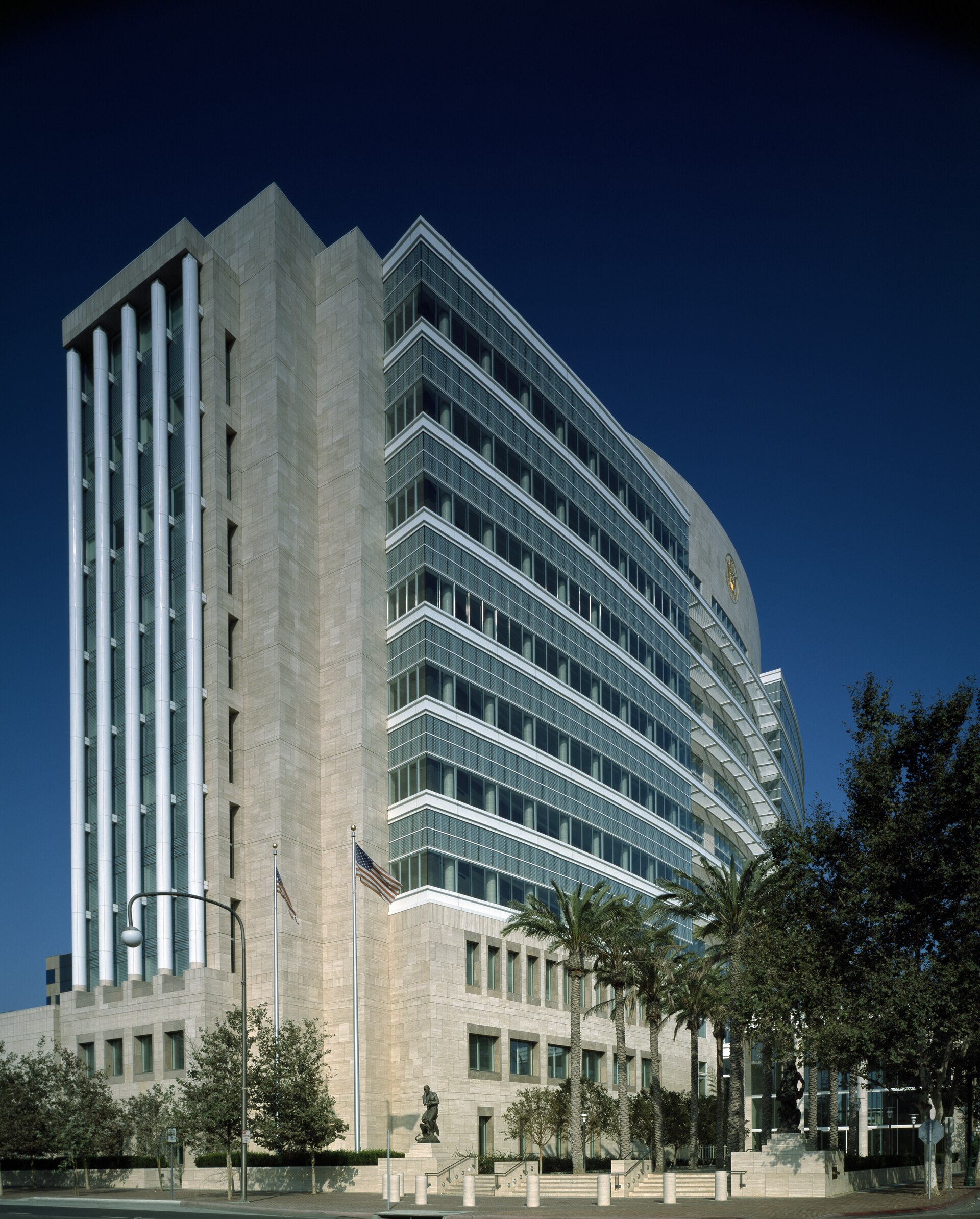
In August 2021 Kheriaty filed suit in the U.S. District Court for the Central District of California, case No. 8:21-cv-01367, assigned to Judge James V. Selna.32 He asked for an injunction letting him keep working unvaccinated and for a ruling that the policy was unconstitutional.2 His claim, as the Ninth Circuit summarized it, was that the policy "violates his rights under the Fourteenth Amendment's equal protection and due process clauses."3
His argument was one of equal treatment. "I feel like I'm being treated unequally," he told Sinclair Broadcast Group. He said he was "advocating for informed consent," and that "The vaccine mandates bypass that whole process of individualized medicine and individualized care."9 The case was unusual because of who brought it. The plaintiff was the university's own medical ethicist, a man who had helped write its pandemic triage and vaccine allocation policies, telling a federal court that one of its pandemic policies was arbitrary.1
He kept going when the first ruling went against him
The university argued that he lacked standing, because the California Department of Public Health's own mandate would still apply to him even if UC changed its policy. Kheriaty reported on September 28, 2021, that the court's tentative order rejected that argument, finding that "Kheriaty has standing to bring a challenge against the UC Vaccine Policy," while tentatively denying a preliminary injunction.10 The Washington Times reported on October 1, 2021, that the judge had denied the preliminary injunction.11 Kheriaty had already written that the preliminary injunction "was a long shot" and that the case would next move to discovery.10 In his later book excerpt he wrote that the day after the judge declined the injunction, UC placed him on "investigatory leave" for alleged noncompliance and barred him from working on campus or from home.12
He spoke for others who could not
Kheriaty wrote publicly throughout. When UC suspended him in October 2021 he published a letter he said a fellow UC professor had sent him, shared with permission, describing how a single-income faculty member "one lost paycheck away from economic precarity" had felt "pressured into remaining silent."4 He wrote: "I am continuing to pursue my lawsuit in federal court not just for myself, but for all those of us who have been adversely impacted by coercive mandates."4 After his dismissal he wrote that he shared his story "not because I am unique but simply because my experience is representative of what many others, who do not necessarily have a public voice, have experienced since these mandates went into effect."1 (The original sets off the middle clause with dashes.)
What it cost
Unpaid suspension
On October 19, 2021, by his account, Kheriaty received a notice from the University of California suspending him without pay. He wrote the next day: "Yesterday I received this notice from the University of California, where I have worked my entire professional career and where I did my residency training," and "I am working on setting up or joining a private practice so that I can continue to treat my patients and earn an income next month."4 He wrote that several other employees had received the same letter.4
He later described the terms. "When I was placed on unpaid suspension I was not permitted to use my paid time off, that is to say, I was ordered to stay off campus because I was not vaccinated, but I also could not take vacation at home because... I was not vaccinated." He wrote that "the University tried to prevent me from doing any outside professional activities while I was on unpaid suspension," and that "In an effort to pressure me to resign, they wanted to restrict my ability to earn an income not only at the University but outside the University as well."1 (A dash in the original is rendered here as a comma.) The suspension notice itself is shown in his post only as an image, and its exact terms are not quoted in this lesson.
Dismissal
On December 17, 2021, he published "Farewell, University of California." It began: "Yesterday I received the following notice from the University of California, effective immediately, where I have served for almost fifteen years as Professor at UCI School of Medicine and Director of the Medical Ethics Program at UCI Health."1 KTLA reported his firing in January 2022, giving December 17 as the effective date from his blog post.13 Inside Higher Ed reported the firing and that "University officials declined to comment on the firing."8
He wrote of the turn in how the institution saw him: "Everyone at the University seemed to be a fan of my work until suddenly they were not. Once I challenged one of their policies I immediately became a 'threat to the health and safety of the community.'"1 And: "Two years ago I never could have imagined that the University would dismiss me and other doctors, nurses, faculty, staff, and students for this arbitrary and capricious reason."1
The losses were concrete: a senior academic post held for almost fifteen years, the direction of a medical ethics program, the teaching of medical students and residents he wrote that he would miss, a university salary, and the professional standing of a senior post at a medical school.1 He did not lose his license to practice; his own words show he planned a private practice so he could keep treating patients.4 He also chose a public fight with the institution that had trained him, which in academic medicine can close doors that never reopen.
He did not write in anger at his colleagues. "I do not regret my time at the University. Indeed, I will miss my colleagues, the residents, and the medical students. I will miss teaching and supervising and doing ethics consults on some of the most challenging cases in the hospital."1
How it ended
The Ninth Circuit: rational basis is enough
The district court granted the Regents judgment on the pleadings and dismissed the suit, and Kheriaty appealed.3 A Ninth Circuit panel of Chief Judge Mary Murguia, Judge Kenneth Lee and Judge Barrington D. Parker Jr. of the Second Circuit, sitting by designation, decided the appeal without oral argument and filed an unpublished memorandum on November 23, 2022, in No. 22-55001.3 It opened with a plain statement of what had happened to him:
"Dr. Aaron Kheriaty, a professor at the University of California, Irvine School of Medicine, lost his job because he refused to be vaccinated under the University of California's COVID-19 vaccination policy."3
The court then held that the lowest level of constitutional scrutiny applied. "Contrary to Kheriaty's claim, rational basis review, not strict scrutiny, applies here."3 (The court set off "not strict scrutiny" with dashes.) A right is "fundamental," and triggers strict scrutiny, only if it is enumerated or "deeply rooted in this Nation's history and tradition," and the court wrote: "Kheriaty fails to offer any appropriate historical example to establish a 'fundamental right' to be free from a vaccine mandate at a workplace. To the contrary, the Supreme Court upheld a much more onerous vaccine requirement in Jacobson v. Massachusetts, 197 U.S. 11, 12-13 (1905)."3
On the science, the court did something unusual. It accepted his evidence as true for purposes of the ruling and said it did not matter under the test:
"He maintains that his scientific studies show that previous COVID-19 infections confer natural immunity and that the school's vaccine policy thus does not advance the health and safety of the university's community. Assuming the validity of his studies' conclusions, as we must, Kheriaty may have a valid policy point in criticizing the school's COVID-19 policy. But under a rational basis review, it is not enough for a party to merely cite scientific studies challenging the government's classification policy."3
It concluded: "Here, the school cited its own studies that support its vaccination policy, and that is enough for the policy to survive rational basis review. AFFIRMED."3 (The court used a dash after "policy.") Under the memorandum's own terms it "is not appropriate for publication and is not precedent except as provided by Ninth Circuit Rule 36-3."3
Kheriaty did not take the case to the Supreme Court. The College Fix reported in February 2023 that he was "currently hesitant" to do so, quoting him: "Perhaps my case is not the best test case to articulate the necessary limits to the Jacobsen precedent," and reporting his view that limiting vaccine mandates "is better dealt with through legislative means."14 (The quotation misspells Jacobson as published.) He also wrote that "the federal courts have never delineated any prima facie limits to vaccine mandates instituted by public or private employers."14
The book: The New Abnormal
In 2022 Regnery Publishing issued his book The New Abnormal: The Rise of the Biomedical Security State.15 The College Fix reported it was published in November 2022.14 His Substack published an excerpt on October 28, 2022, under the title "Book Excerpt: Kheriaty vs. University of California." In it he explained why he sued: "I could not stand by and watch the ethical disaster unfold around me." He argued that one-size-fits-all mandates ignored individual risk and that institutions "stigmatized and punished" those who refused, and he wrote: "With little resistance we abandoned foundational ethical principles."12 The book is his argument, and readers should weigh it as one.
Hoeg v. Newsom: the speech of doctors
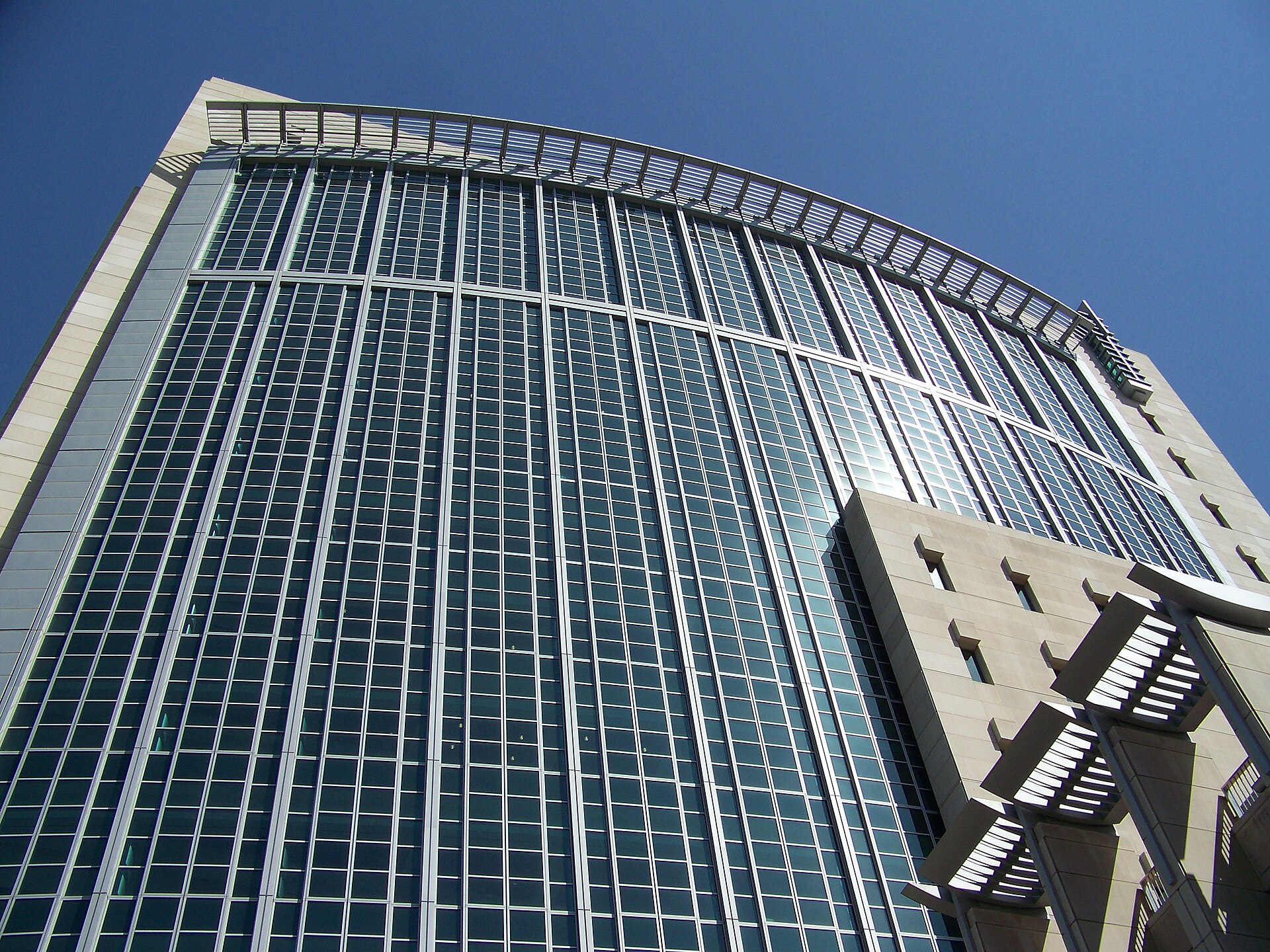
Kheriaty then turned to a second front: the State of California's attempt to discipline physicians for what they told patients about COVID-19. On November 1, 2022, he joined Drs. Tracy Høeg, Ram Duriseti, Pete Mazolewski and Azadeh Khatibi as plaintiffs in Hoeg v. Newsom, No. 2:22-cv-01980, in the Eastern District of California, against Gov. Gavin Newsom, the members of the Medical Board of California and Attorney General Rob Bonta.16 The law they challenged, Assembly Bill 2098, added section 2270 to the Business and Professions Code and defined "misinformation" as "false information that is contradicted by contemporary scientific consensus contrary to the standard of care."5
On January 25, 2023, Judge William B. Shubb granted a preliminary injunction. He found that Kheriaty and his co-plaintiffs had standing because they had "provided specific advice to patients about potential health risks of COVID-19 vaccines and boosters," citing Kheriaty's own declaration, and he ordered the defendants "ENJOINED from enforcing Cal. Bus. & Prof. Code § 2270 as against plaintiffs," because "plaintiffs have established a likelihood of success on the grounds of their Fourteenth Amendment vagueness challenges."5 In a later order the court recorded that "The California Legislature subsequently repealed § 2270, effective January 1, 2024. See Cal. Senate Bill 815 (Sept. 30, 2023)."17 The full story of that case, its parallel case Hoang v. Bonta, and the repeal is told in lesson 17, Five Doctors Against California's Speech Law.

Missouri v. Biden and Murthy v. Missouri
Kheriaty was also one of the five individual plaintiffs, with the States of Missouri and Louisiana, in Missouri v. Biden, the suit alleging that federal officials pressured social media platforms to suppress speech about COVID-19 and elections. The Supreme Court described the individual plaintiffs as "three doctors, the owner of a news website, and a healthcare activist."6 The three doctors were Jayanta Bhattacharya, Martin Kulldorff and Kheriaty (see lesson 18).6 The district court in Louisiana granted a preliminary injunction on July 4, 2023, and the Fifth Circuit, after panel rehearing, affirmed in part and reversed in part, holding that the individual plaintiffs had standing (83 F.4th 350 (2023)).6
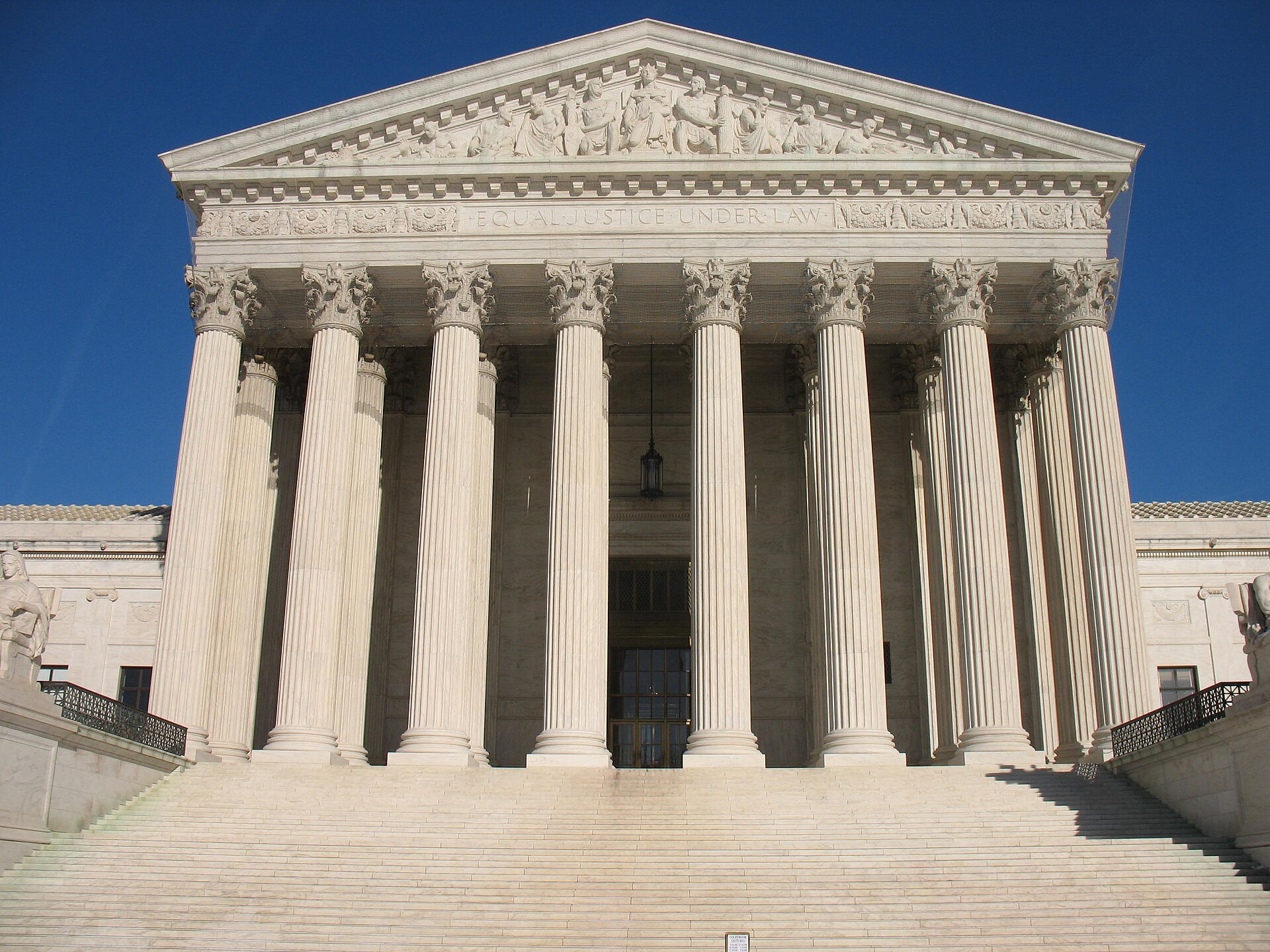
On June 26, 2024, in Murthy v. Missouri, the Supreme Court reversed, 6 to 3, in an opinion by Justice Amy Coney Barrett; Justice Samuel Alito dissented, joined by Justices Clarence Thomas and Neil Gorsuch.6 The Court held that "neither the individual nor the state plaintiffs have established standing to seek an injunction against any defendant."6 On the doctors, the Court wrote that they "questioned the wisdom of then-prevailing COVID-19 policies, including lockdowns and mask and vaccine mandates," that Twitter had restricted the visibility of Kheriaty's "posts about vaccine safety and efficacy, as well as the ethics surrounding vaccine mandates," but that "neither the timing nor the platforms line up (nor, in Dr. Kheriarty's case, does the content), so the plaintiffs cannot show that these restrictions were traceable to the White House officials."6 (The slip opinion misspells his name as "Kheriarty.") The Court sent the case back "for further proceedings consistent with this opinion."6 The ruling decided standing only. In the Court's words: "We therefore lack jurisdiction to reach the merits of the dispute."6

After UC
Kheriaty now directs the Bioethics, Technology, and Human Flourishing Program at the Ethics and Public Policy Center in Washington, and he has continued to write for general readers.7 His most recent book, Making the Cut: How to Heal Modern Medicine, was published by Regnery in 2025.718
Timeline
| Date | Event |
|---|---|
| 2020 | Kheriaty works in person at UCI hospitals and helps the UC Office of the President draft its triage and vaccine allocation policies, by his account.1 |
| 2020 | He contracts COVID-19 and recovers, as reported by the Orange County Register.2 |
| Dec. 11, 2020 | The Pfizer-BioNTech vaccine becomes available under emergency use authorization.19 |
| July 2021 | The University of California announces that students, faculty and staff must be vaccinated.2 |
| Aug. 2021 | Kheriaty sues the Regents and President Michael V. Drake in the Central District of California, No. 8:21-cv-01367.23 |
| Aug. 23, 2021 | The FDA grants full approval to the Pfizer-BioNTech vaccine (Comirnaty).19 |
| Sept. 28, 2021 | Kheriaty reports a tentative order finding he has standing but denying a preliminary injunction.10 |
| Oct. 1, 2021 | The Washington Times reports the preliminary injunction denied.11 |
| Oct. 19, 2021 | He receives notice of unpaid suspension, by his account.4 |
| Dec. 16, 2021 | He receives notice of dismissal "effective immediately," by his account.1 |
| Dec. 17, 2021 | He publishes "Farewell, University of California."1 |
| Jan. 2022 | KTLA and Inside Higher Ed report the firing; university officials decline to comment.138 |
| Oct. 28, 2022 | His Substack publishes a book excerpt, "Kheriaty vs. University of California."12 |
| Nov. 2022 | The New Abnormal is published by Regnery.1415 |
| Nov. 23, 2022 | The Ninth Circuit affirms the dismissal of his suit under rational basis review.3 |
| Dec. 7, 2022 | Hoeg v. Newsom, with Kheriaty as a plaintiff, is related to Hoang v. Bonta before Judge Shubb.16 |
| Jan. 25, 2023 | Judge Shubb enjoins enforcement of the AB 2098 misinformation law against the plaintiffs.5 |
| Feb. 13, 2023 | The College Fix reports he is hesitant to seek Supreme Court review of the UC case.14 |
| July 4, 2023 | The district court in Missouri v. Biden issues a preliminary injunction.6 |
| Sept. 30, 2023 | SB 815, repealing the misinformation law effective January 1, 2024, becomes law.17 |
| June 26, 2024 | Murthy v. Missouri: the Supreme Court reverses for lack of standing, 6 to 3.6 |
| 2025 | Regnery publishes Making the Cut: How to Heal Modern Medicine.18 |
What the record also shows
The record has limits that a true profile must state. Much of what is known about his service during the pandemic and the terms of his suspension comes from his own published account, and the university declined to comment when he was fired.18 No court found that UC acted unlawfully toward him; the only appellate ruling in his case held that the policy survived review.3 In Murthy v. Missouri the Supreme Court found that the restrictions on his social media posts could not be traced to the White House officials he sued, and that in his case even the content did not line up.6 His later writing takes strong positions on contested questions of medicine and politics, and his employer, the Ethics and Public Policy Center, describes Missouri v. Biden as a "successful landmark free speech case" although the Supreme Court reversed it on standing.76
Why it took courage
Some stands are taken by people with little to lose. Kheriaty's was taken by a man with a great deal to lose, from the inside, against the institution that had trained him and employed him for his entire career.4 He was a senior physician with a named leadership post in medical ethics, a teaching record he could point to with pride, and the trust of the UC Office of the President, which had asked him to speak for its triage policy in public.1 He could have kept all of it with one injection. He chose instead to argue, in a federal court and under his own name, that his own university's rule was wrong.
The liberty he defended has two parts. The first is the right to equal treatment by the government. A public university is the state, and the Fourteenth Amendment's command that no state shall "deny to any person within its jurisdiction the equal protection of the laws" applies to it (see The Fourteenth Amendment).20 His claim was that the state was treating two kinds of immunity differently without good reason, and that a person who had recovered from the disease should not be shut out of his work on the ground that the state would only credit one kind.39 The second is the right of a physician to give a patient his honest, individual judgment. That was the thread from his UC suit, where he said mandates "bypass that whole process of individualized medicine and individualized care," to Hoeg v. Newsom, where a federal judge found that California's law telling doctors what they could say was likely unconstitutionally vague.95
He also accepted the lawful consequences of his stand. He did not defy the order by coming to work. He stayed off campus, went unpaid, prepared a private practice, and took his case to the courts and to the public.4 When he lost, he said so plainly and turned to the next lawful forum: he judged that limits on vaccine mandates were "better dealt with through legislative means," and he joined the doctors' challenge to AB 2098, which the California Legislature repealed.1417 That is how ordered liberty is supposed to work, as module 52's lesson on forms of lawful resistance explains: argue, petition, sue, accept the ruling, and keep persuading.
His stand also gave cover to others. He published the words of a colleague who felt "pressured into remaining silent" and wrote that he pursued the lawsuit "not just for myself, but for all those of us who have been adversely impacted by coercive mandates."4 In a hospital or a university, one senior person willing to say a rule is wrong makes it easier for the quiet ones to say so too.
What the other side said
The University of California argued in the district court that Kheriaty lacked standing because the California Department of Public Health's own mandate would still apply to him even if UC changed its policy, an argument the court tentatively rejected.10 Its policy treated recovered people as eligible only for a temporary exemption of up to 90 days, stating that they "are not permanently exempt from vaccination."9 When he sued, the UC Office of the President referred questions to UC Health, which did not respond; when he was fired, "University officials declined to comment on the firing."98
The Ninth Circuit (Chief Judge Murguia and Judges Parker and Lee) held that "rational basis review, not strict scrutiny, applies here," that he had not shown a "fundamental right" to be free from a workplace vaccine mandate, and that "it is not enough for a party to merely cite scientific studies challenging the government's classification policy"; UC "cited its own studies that support its vaccination policy," and "that is enough for the policy to survive rational basis review."3
The Supreme Court, in Murthy v. Missouri, held that he and the other plaintiffs lacked standing because they could not show the platforms' restrictions on their posts were traceable to the federal officials they sued.6
Still disputed: Whether a public employer may refuse to credit prior infection as an alternative to vaccination remains contested. The Ninth Circuit accepted that Kheriaty "may have a valid policy point" while holding the policy constitutional under rational basis review, and Kheriaty has argued that the courts have never set limits on employer vaccine mandates; the memorandum is unpublished and not binding precedent.314 Whether federal pressure on social media platforms violated the First Amendment was not decided in Murthy.6
Medical note: In August and September 2021 Kheriaty said that his infection in 2020 gave him immunity, and told Sinclair Broadcast Group that if his immunity was as good as, "indeed, very likely better" than, that conferred by the vaccine, he should not be treated differently; in court he relied on scientific studies of natural immunity.93 The University of California's policy, citing its own studies, credited prior infection only for a temporary exemption of up to 90 days.93 The FDA granted full approval to the Pfizer-BioNTech vaccine on August 23, 2021.19 The Ninth Circuit assumed the validity of his studies' conclusions for purposes of its ruling and did not decide which side's science was right.3 This lesson takes no position on these medical questions.
Hard questions and answers
The court said the policy was constitutional. Why call this a stand for liberty?
Because the court decided only that the policy passed the lowest test the Constitution uses, and said so in terms that left his argument standing as a matter of policy. The Ninth Circuit wrote that, assuming his studies were valid, "Kheriaty may have a valid policy point in criticizing the school's COVID-19 policy."3 A ruling that a government rule is lawful is different from a finding that it was wise or fair. Many lasting changes in American liberty began with someone who lost in court and kept arguing in public. Kheriaty drew that conclusion himself, saying limits on mandates were better pursued "through legislative means."14
Wasn't a medical ethicist obliged to follow the medical consensus?
A defender of the policy would say a physician leading an ethics program should model compliance with institutional health rules. Kheriaty's answer, in an interview with The Epoch Times as quoted by The College Fix, was that his role required the opposite: "It's precisely during crises, things like pandemics or natural disasters, that it's most important for us to maintain our core ethical principles."14 He framed his claim around informed consent and individualized care, principles medical ethics has long taught.9 Reasonable people can disagree about how those principles applied in 2021. What the record shows is that he raised the disagreement openly and through lawful channels.
Why didn't he just get the shot and keep arguing?
He could have, and many people did exactly that. His position was that the policy treated him unequally and bypassed individual judgment, and complying would have mooted the claim he was asking the court to decide.9 A plaintiff who wants a court to rule on whether a rule may be applied to him generally has to remain subject to it. He accepted the cost of keeping the question alive: suspension without pay, then dismissal.41
Did the university have a legitimate reason?
Yes, under the law as the Ninth Circuit applied it. Protecting the health and safety of a university community is a legitimate purpose; Kheriaty challenged only whether the policy advanced it, and the court held that UC's citation of its own supporting studies was enough.3 The court also leaned on Jacobson v. Massachusetts (1905), which upheld a compulsory vaccination law "that applied to all adults and enforced with financial penalties and criminal charges."3 A civil liberties advocate would answer that Jacobson predates the modern framework of fundamental rights and involved a fine, not the loss of a career; that argument has not yet won in a published appellate opinion found for this lesson.
Did he win anything?
Yes, though not in his own UC case. In Hoeg v. Newsom he and four other doctors won a preliminary injunction on January 25, 2023, against enforcement of California's COVID-19 misinformation law for physicians, and the Legislature repealed that law effective January 1, 2024.517 In Missouri v. Biden he and his co-plaintiffs won an injunction in the lower courts before the Supreme Court reversed on standing.6 His record is a loss on the mandate, a win on doctors' speech, and an unresolved fight over federal pressure on platforms.
What would a public health officer take from this case?
That a public body's health rule is very likely to survive in court if it rests on a legitimate purpose and cites evidence, even when a respected physician offers contrary evidence.3 And also that winning in court is not the end of the matter: losing the trust of a senior ethicist, and the dismissal of a faculty member who had served through the worst of the pandemic, carry costs that a court does not count.1 A health officer who wants public trust has reason to consider exemptions for documented prior infection, to explain the reasons in public, and to hear objections before acting; lesson 22, What the Stands Won, sets out such practices for local officials.
Related lessons
- Five Doctors Against California's Speech Law: Hoeg v. Newsom: the full story of the AB 2098 case Kheriaty joined.
- The Great Barrington Three: Bhattacharya and Kulldorff, his co-plaintiffs in Missouri v. Biden.
- Jennifer Bridges and the Houston Methodist 117: the same refusal at a private hospital, where the Constitution did not apply.
- The Navy SEALs and the Military Mandate and Small Businesses and Landlords at the Supreme Court: other mandate cases.
- What the Stands Won and the record of every ruling.
- Module 52, Ordered Liberty: Legitimate Authority and Its Limits and Forms of Lawful Resistance.
- The Fourteenth Amendment and The First Amendment.
Still open
These items could not be confirmed against a primary source before publication. The lesson states them as open, and they stay on the fact-check list.
- The exact filing date of Kheriaty v. Regents in August 2021 (reports give only August 2021).
- The exact date of Judge Selna's final order denying the preliminary injunction (press reports of Oct. 1, 2021 imply Sept. 30, 2021) and the date of the order granting judgment on the pleadings.
- The dismissal date: his post says he received notice Dec. 16, 2021 effective immediately; KTLA gives Dec. 17, 2021.
- No University of California statement on the firing was found; officials declined to comment (Inside Higher Ed). The text of UC's July 2021 policy itself was not opened; its 90-day provision is taken from Sinclair Broadcast Group's report.
- Details of his pandemic service, the investigatory leave and the suspension terms come from his own published accounts.
- Whether he ever filed a Supreme Court petition in the UC case: none found; The College Fix reported in Feb. 2023 that he was hesitant to do so.
- The course of Missouri v. Biden after the June 2024 remand was not traced for this lesson.
- The Washington Times report of Oct. 1, 2021 on the denial of the preliminary injunction could not be reopened during the fact check; the denial also rests on Kheriaty's own report of the tentative order (Sept. 28, 2021).
Learn more
- Ninth Circuit memorandum, Kheriaty v. Regents (Nov. 23, 2022): Five pages; the clearest statement of why the policy survived.
- Farewell, University of California (Dec. 17, 2021): Kheriaty's own account of his service and dismissal.
- Murthy v. Missouri (2024): The Court's account of the doctors' claims and the standing holding, with the dissent.
- Hoeg v. Newsom preliminary injunction order (Jan. 25, 2023): Why a federal judge found California's doctor misinformation law likely vague.
Notes
- Aaron Kheriaty, "Farewell, University of California," Human Flourishing (Substack), Dec. 17, 2021, republished by the Ethics and Public Policy Center (retrieved Nov. 7, 2026). Read it online. ↩
- USA Today, COVID-19 updates roundup of Aug. 26, 2021 ("California professor sues to avoid vaccine"), citing the Orange County Register of Aug. 25, 2021, as republished by UCI News (retrieved Nov. 7, 2026). Read it online. ↩
- Kheriaty v. Regents of the University of California, No. 22-55001, D.C. No. 8:21-cv-01367-JVS-KES (9th Cir. Nov. 23, 2022) (memorandum; Murguia, C.J., Parker and Lee, JJ.; not for publication) (retrieved Nov. 7, 2026). Read it online. ↩
- Aaron Kheriaty, "Unpaid Suspension from the University," Human Flourishing (Substack), Oct. 20, 2021, republished by the Ethics and Public Policy Center (retrieved Nov. 7, 2026). Read it online. ↩
- Hoeg v. Newsom, No. 2:22-cv-01980 WBS AC, and Hoang v. Bonta, No. 2:22-cv-02147 WBS AC (E.D. Cal. Jan. 25, 2023) (Shubb, J.), Order re: Plaintiffs' Motions for Preliminary Injunction, Document 35; reported at 652 F. Supp. 3d 1172; GovInfo (retrieved Nov. 7, 2026). Read it online. ↩
- Murthy v. Missouri, 603 U.S. 43 (2024), No. 23-411, decided June 26, 2024 (Barrett, J., for the Court; Alito, J., dissenting, joined by Thomas and Gorsuch, JJ.), slip opinion (retrieved Nov. 7, 2026). Read it online. ↩
- Ethics and Public Policy Center, scholar biography, "Aaron Kheriaty, MD" (retrieved Nov. 7, 2026). Read it online. ↩
- Scott Jaschik, "UC Irvine Fires Scholar for Refusing Vaccine," Inside Higher Ed, Jan. 2, 2022 (retrieved Nov. 7, 2026). Read it online. ↩
- Brooke Conrad, Sinclair Broadcast Group, "California professor sues university over vaccine mandate, citing natural immunity," WJLA, Sept. 1, 2021 (retrieved Nov. 7, 2026). Read it online. ↩
- Aaron Kheriaty, "Legal Update 9/27/21," Human Flourishing (Substack), Sept. 28, 2021, quoting the court's tentative order (retrieved Nov. 7, 2026). Read it online. ↩
- The Washington Times, "Judge upholds University of California vaccine mandate" (report of the preliminary injunction denial), Oct. 1, 2021 (retrieved Nov. 7, 2026). Read it online. ↩
- Aaron Kheriaty, "Book Excerpt: Kheriaty vs. University of California," Human Flourishing (Substack), Oct. 28, 2022 (retrieved Nov. 7, 2026). Read it online. ↩
- KTLA, "UC Irvine fires professor who refused to get vaccine, claiming natural immunity to COVID," Jan. 3, 2022 (retrieved Nov. 7, 2026). Read it online. ↩
- Khatiana Perez, "Professor who refused COVID vaccine loses court battle but continues war against mandates," The College Fix, Feb. 13, 2023 (retrieved Nov. 7, 2026). Read it online. ↩
- Aaron Kheriaty, The New Abnormal: The Rise of the Biomedical Security State (Washington, D.C.: Regnery Publishing, 2022), ISBN 9781684513857; Open Library catalog record (retrieved Nov. 7, 2026). Read it online. ↩
- Hoeg v. Newsom, No. 2:22-cv-01980 WBS AC (E.D. Cal.), Order Relating Cases, Document 21, dated Dec. 7, 2022 (listing plaintiffs Hoeg, Duriseti, Kheriaty, Mazolewski and Khatibi); GovInfo; the complaint (ECF No. 1) was filed Nov. 1, 2022, per the CourtListener docket and the Joint Status Report of Mar. 27, 2023 ("Action Filed: 11/01/2022") (retrieved Nov. 7, 2026). Read it online. ↩
- Hoeg v. Newsom, No. 2:22-cv-01980 WBS AC (E.D. Cal.), Order, Document 58, filed Dec. 21, 2023 (noting repeal of Bus. & Prof. Code 2270 by SB 815, Sept. 30, 2023, effective Jan. 1, 2024); GovInfo (retrieved Nov. 7, 2026). Read it online. ↩
- Aaron Kheriaty, Making the Cut: How to Heal Modern Medicine (Regnery Publishing, 2025), ISBN 9781510783522; Open Library catalog record (retrieved Nov. 7, 2026). Read it online. ↩
- U.S. Food and Drug Administration, "FDA Approves First COVID-19 Vaccine," press release, Aug. 23, 2021 (retrieved Nov. 7, 2026). Read it online. ↩
- U.S. Constitution, Amendment XIV, Section 1, transcript, National Archives (retrieved Nov. 7, 2026). Read it online. ↩
Check yourself
1. What positions did Kheriaty hold at UC Irvine before his dismissal, by his own account?
He wrote that he served almost fifteen years as Professor at UCI School of Medicine and Director of the Medical Ethics Program at UCI Health.
2. How did UC's policy treat people who had recovered from COVID-19?
As reported Sept. 1, 2021, the policy allowed a temporary exemption of up to 90 days, and such individuals 'are not permanently exempt from vaccination.'
3. Which constitutional claims did Kheriaty bring?
The Ninth Circuit said he claimed the policy violated the Fourteenth Amendment's equal protection and due process clauses.
4. What level of review did the Ninth Circuit apply?
The court held 'rational basis review, not strict scrutiny, applies here.'
5. What did the Ninth Circuit say about his scientific studies?
The court assumed the studies' conclusions were valid and said he 'may have a valid policy point,' but UC's own studies were enough.
6. On what date did Kheriaty receive notice of his dismissal, by his account?
His Dec. 17, 2021 post says 'Yesterday I received the following notice ... effective immediately.' Oct. 19 was the unpaid suspension notice.
7. What did Judge Shubb do in Hoeg v. Newsom on Jan. 25, 2023?
He granted preliminary injunctions on Fourteenth Amendment vagueness grounds.
8. How did the Supreme Court decide Murthy v. Missouri?
Writing for six Justices, Justice Barrett held the plaintiffs lacked Article III standing and did not reach the merits.
Terms in this lesson
- Natural immunity
- Immunity a person acquires by recovering from an infection, as distinct from immunity from a vaccine; the term Kheriaty used for his protection after his 2020 infection.
- Regents of the University of California
- The governing board of the public University of California system, sued as a corporation in Kheriaty's case.
- Equal protection
- The Fourteenth Amendment guarantee that no state shall deny any person within its jurisdiction the equal protection of the laws.
- Substantive due process
- The doctrine that the Fourteenth Amendment's Due Process Clause protects certain fundamental rights from government interference regardless of the procedures used.
- Fundamental right
- A right enumerated in the Bill of Rights or deeply rooted in the nation's history and tradition; burdens on it trigger strict scrutiny.
- Strict scrutiny
- The most demanding constitutional test, requiring the government to show a compelling interest and a narrowly tailored rule.
- Rational basis review
- The most deferential constitutional test: a rule stands if it has a legitimate purpose and a rational link to it, supported by evidence the government could reasonably rely on.
- Jacobson v. Massachusetts (1905)
- The Supreme Court decision upholding a compulsory smallpox vaccination law enforced by a fine, cited by the Ninth Circuit against Kheriaty.
- Judgment on the pleadings
- A ruling that decides a case on the complaint and answer alone, without trial, because the facts alleged do not entitle the plaintiff to relief.
- Unpublished memorandum
- A short appellate disposition that, under Ninth Circuit Rule 36-3, is not binding precedent.
- Void for vagueness
- The due process rule that a law is unconstitutional if it fails to give fair notice of what it forbids; the ground for the Hoeg injunction.
- Article III standing
- The requirement that a plaintiff show an injury traceable to the defendant and redressable by the court; the ground on which Murthy v. Missouri was decided.
- Investigatory leave
- The status UC placed Kheriaty in after the injunction was denied, by his account, barring him from working on campus or from home.
Sources
- Kheriaty v. Regents, No. 22-55001 (9th Cir. 2022) memorandum (2022-11-23) checked 2026-11-07
- Kheriaty: Farewell, University of California (2021-12-17) checked 2026-11-07
- Kheriaty: Unpaid Suspension from the University (2021-10-20) checked 2026-11-07
- EPPC biography of Aaron Kheriaty (current) checked 2026-11-07
- USA Today / OC Register via UCI News: California professor sues to avoid vaccine (2021-08-26) checked 2026-11-07
- Sinclair/WJLA: California professor sues university over vaccine mandate (2021-09-01) checked 2026-11-07
- Washington Times: judge upholds UC vaccine mandate (2021-10-01) checked 2026-11-07
- Kheriaty: Legal Update 9/27/21 (2021-09-28) checked 2026-11-07
- KTLA: UC Irvine fires professor who refused vaccine (2022-01-03) checked 2026-11-07
- Inside Higher Ed: UC Irvine Fires Scholar for Refusing Vaccine (2022-01-02) checked 2026-11-07
- The College Fix: professor loses court battle but continues fight (2023-02-13) checked 2026-11-07
- The New Abnormal (Regnery, 2022) (2022) checked 2026-11-07
- Hoeg v. Newsom, preliminary injunction order (E.D. Cal. Jan. 25, 2023) (2023-01-25) checked 2026-11-07
- Hoeg v. Newsom, order of Dec. 21, 2023 (repeal noted) (2023-12-21) checked 2026-11-07
- Murthy v. Missouri, 603 U.S. 43 (2024) (2024-06-26) checked 2026-11-07
- Making the Cut (Regnery, 2025) (2025) checked 2026-11-07
- FDA: FDA Approves First COVID-19 Vaccine (2021-08-23) checked 2026-11-07
- Hoeg v. Newsom, order relating cases (Dec. 7, 2022) (2022-12-07) checked 2026-11-07
- Kheriaty: Book Excerpt, Kheriaty vs. University of California (2022-10-28) checked 2026-11-07
- U.S. Constitution, Fourteenth Amendment (National Archives) (1868) checked 2026-11-07
- Commons: UC Irvine panorama across Aldrich Park (photo) (n.d.) checked 2026-11-07
- Commons: Ronald Reagan Federal Building and Courthouse, Santa Ana (photo) (n.d.) checked 2026-11-07
- Commons: U.S. Courthouse and Federal Building, Sacramento (photo) (n.d.) checked 2026-11-07
- Commons: US Supreme Court (photo) (n.d.) checked 2026-11-07