Lesson 14 of 23 · about 35 minutes
Mary Daniel, the Dishwasher Who Went Back to Her Husband (Jacksonville, Florida)
Updated November 7, 2026
You'll be able to
- You'll be able to state what DEM Emergency Orders 20-006 and 20-009 did, who issued them and under what authority.
- You'll be able to tell Mary Daniel's story from her own public words, and say why she went public.
- You'll be able to trace the essential caregiver idea from her July 2020 proposal through the August 2020 task force and the September 2020 order to section 408.823, Florida Statutes.
- You'll be able to give the bill number, votes and signing date of Florida's No Patient Left Alone Act and quote its essential caregiver provision.
- You'll be able to state the State's reasons for the ban fairly, and explain why her lawful stand for the family took courage.
Start here: the short version
Mary Daniel of Jacksonville, Florida had visited her husband Steve every evening at his memory care home until March 11, 2020, when the home called to say she could not come back. A state emergency order had closed Florida's long-term care facilities to nearly all visitors. Steve had early-onset Alzheimer's disease and could not understand why his wife had disappeared.12 After 114 days apart, she found the one door the order left open: she took a part-time job washing dishes at his facility, and after her first evening shift she held him again.32
She did not stop there. She told her story in public, founded a Facebook group called Caregivers for Compromise that grew to thousands of members, pressed Gov. Ron DeSantis for a meeting, and in August 2020 became the only family caregiver on the governor's Task Force on the Safe and Limited Re-Opening of Long-Term Care Facilities.45 On September 1, 2020, Florida's emergency order was rewritten to let every resident name "essential caregivers," the idea she had carried into the room.67 In 2022 Florida made a resident's right to an essential caregiver permanent law in the No Patient Left Alone Act.89 A private woman with no office and no lawyer used her own story, at real cost to her privacy, to change the rules for every family in the state. That is why her stand took courage.


Who they were before
Everything in this lesson about Mary Daniel and her husband comes from what she chose to say in public, in interviews and in the work of the group she founded, and from the public record. Mary Daniel is a private citizen. She became a public figure only because she decided that her family's story could help other families.
By her account in 2020, Mary and Steve Daniel had been married 24 years.13 About seven years earlier Steve had been diagnosed with early-onset Alzheimer's disease; she called him "the love of her life," in the words of the reporter who interviewed her, and he was 66 years old in July 2020.2 In July 2019, she said, she made "the tough decision" (again the reporter's words) to move him into memory care at Rosecastle of Deerwood in Jacksonville, about five miles from their home.2 She explained the choice in a 2020 interview: the move was meant to keep him in social settings and keep his mind active.1 She also explained why she could not simply bring him home: "I can bring him home, but he's back to being inside of a house, and I have to work. I'm only 57-years-old and I have to work to pay for his care, so I can't be here with him."3
She did not stop being his caregiver when he moved. Every night, she said, she went to the facility to help with his bedtime routine. Before the pandemic, she saw him every single day.23 Outside the home she worked full time; she told News4Jax she was used to advocating for patients and had founded a company, ClaimMedic, to help people with their medical bills.3
Two days before the country began closing down, the couple recorded a video for an Alzheimer's researcher. "I saw Steve that night. I saw him the next night," she said in May 2020, "and on Thursday they called me and said you can't come back."1 In another interview she put her last ordinary visit on March 10, 2020 and the call on March 11.2
The order they faced
Gov. DeSantis declared a state of emergency for COVID-19 in Executive Order 20-52 on March 9, 2020, and in it designated the director of the Florida Division of Emergency Management as the State Coordinating Officer with power to suspend statutes and rules.6 On March 14, by that officer's own later account, the governor "directed me, under the powers afforded by Executive Order No. 20-52, to prohibit visitation to certain facilities in the State of Florida."6 The next day, March 15, 2020, Division Director Jared Moskowitz issued DEM Emergency Order 20-006.6
The Florida Senate's staff later summarized what that order did: it "required every facility, as defined in the EO, in Florida to prohibit the entry of any individual to the facility except in specified circumstances." The facilities covered included nursing homes, assisted living facilities, group homes, intermediate care facilities and others. The exceptions were narrow: family members and friends visiting residents "in end-of-life situations," hospice workers, people providing necessary health care, staff, residents, certain lawyers and government representatives.10 A wife who came every night to help her husband into bed was not on the list, unless he was dying.
The ban was not a law passed by the Legislature, and it had no end date of its own. It ran with the governor's emergency declaration. On May 18, 2020, DEM Order 20-007 "reaffirmed and ratified the restrictions" of the March order.6 The governor extended the state of emergency for 60 days on May 8, 2020 and for another 60 days on July 7, 2020.6 In July, as News4Jax reported, the ban had already lasted four months and was extended two more.3
Florida did not act alone. The task force's report later recalled that the federal Centers for Medicare & Medicaid Services issued its first guidance memo on March 13, 2020, "suggesting the restriction of visitation of all non-essential family members and health care personnel," and that the State's order followed two days later "at the direction of Governor DeSantis."5 The report also described the reason for the ban: Florida had 4.5 million people over 65 and over 150,000 people living in congregate settings, "settings that are most vulnerable to rapid transmission of the COVID-19 virus."5
For how emergency orders like this one were made in 2020 across the country, see Emergency Power in 2020.
What she did
Speaking up while locked out
Mary Daniel first tried what the rules allowed. "We tried two window visits, and he cried the entire time," she said. "I mean he was just very rapidly declining. You could see it in his face. You could see it in his demeanor."2 She did not keep quiet about it. On May 22, 2020, she told News4Jax: "That was March 11 that was 72 days ago, but who's counting." She described what the separation had taken: "I have always known that this was going to kill him. I know that. I realized that, but I also have always known that I would be with him. That I would be holding his hand that I would be beside him every step of the way. And that's gone now." And she spoke for others: "I want to see him desperately. He needs to see me desperately. And I'm just speaking for thousands of other people who are in the same exact situation that I am."1
The dishwasher job
She let the facility know she would work or volunteer in any role that would let her inside. The order allowed staff to enter; she would become staff. "They called me out of the blue, and they said we have a position available," she told Spectrum Bay News 9; it was a part-time job. "Would you like to take it and I said yes. And then I said what is it? And they said it's a dishwasher. It didn't matter. It really didn't matter. I mean it was a way for me to get in."2 She was clear that the job was real: "It's mopping the floor. It's cleaning the grill. I mean it's 100 percent, absolutely a dishwasher's job."2 She was trained and tested like the other staff members, worked two shifts a week on top of her full-time job, and told reporters she would give her pay, about $40 a week, back to the facility's caregivers as thanks.23 After a shift, Rosecastle let her visit with residents.3
After 114 days, she worked her first evening shift, and when the last dish was done she went to her husband.2 "He saw me and said, 'Mary.' And we hugged and just like how I thought it would be. Just (to) hold him again after 114 days is just an amazing, amazing feeling," she said.3 To Bay News 9 she said: "Relief. Overwhelming relief. We both cried. And just held each other. Just the longest hug of feeling him."2 Counted from March 11, the 114th day was July 3, 2020. News4Jax first told the story on July 12, 2020, and she said she could already see a difference in him after four days.3
Refusing to walk away
The story spread across the country. Mary Daniel could have kept her job, kept her hugs and let the story fade. She did the opposite. "My story is a happy story. Many people describe it as a love story. But there are many ugly stories out there too," she told Bay News 9 on July 22, 2020. "I can't just walk away and say 'I'm in, good luck everybody.' Our politicians need to see the faces of those stories."4
She founded a Facebook group, Caregivers for Compromise, with the motto "because isolation kills too!" By July 22 it had more than 6,000 members.43 The group's own history says she also started separate groups for all 50 states because every state was writing different rules, and that the national group grew past 14,000 members.11 The group's statement of purpose was measured: "while we understand that the lockdown was done with the best of intentions and we understand that Covid kills, we know that isolation kills too." Its stated goal was "not to 'throw open the doors,'" but to win "a reasonable living condition for long term care residents in a COVID-19 world."12
The group drafted a concrete proposal. Mary Daniel explained it: "If staff members can go under strict guidelines, than we think there can be one caregiver for each resident to do the same." The person, an Essential Family Caregiver, would have a proven record of routine visits, wear protective equipment and be tested regularly, just like staff.4 She asked for a meeting with the governor. When DeSantis mentioned her story at a news conference and called it "an example of resilience in the face of a very difficult situation," she answered: "He knows who we are, but he's using it as a feel good story. I appreciate that. But there's a real conversation that needs to be had. I want 10 minutes of his time. I will meet him anywhere in any city on any day at any time."4
A seat at the table
She got her ten minutes. On August 4, 2020, she met the governor just before a round table on long-term care, and at that round table DeSantis announced a new committee on reopening the facilities and asked her to serve on it. "He did talk and reinforce the reasons behind the actions, which I obviously understand and agree with them, but he obviously knows 5 months is too long," she said afterward.13 On August 6, 2020, the governor formally created the Task Force on the Safe and Limited Re-Opening of Long-Term Care Facilities. Its members were Mary Daniel, listed simply as "Caregiver"; Agency for Health Care Administration Secretary Mary Mayhew; Elder Affairs Secretary Richard Prudom; State Surgeon General Dr. Scott Rivkees; Gail Matillo of the Florida Senior Living Association; Emmett Reed of the Florida Health Care Association; and Michelle Branham of the Alzheimer's Association.5 One wife sat beside three agency heads and the leaders of the two main industry associations.
The task force held five publicly broadcast meetings between August 14 and August 26, 2020.5 Its final recommendations created two new categories of visitor. An "Essential Caregiver" was defined as "an individual who provides health care services or assistance with activities of daily living to help maintain or improve the quality of care or quality of life of a facility resident," and a "Compassionate Care Visitor" was one who gives emotional support at the end of life or in a "[m]ajor upset, difficult transition, or loss." Facilities were to let residents designate two of each and to allow evening and weekend visits "to accommodate work or childcare barriers."5 The essential caregiver was, in substance, the Essential Family Caregiver her group had proposed in July.4

September 1, 2020: the door opens
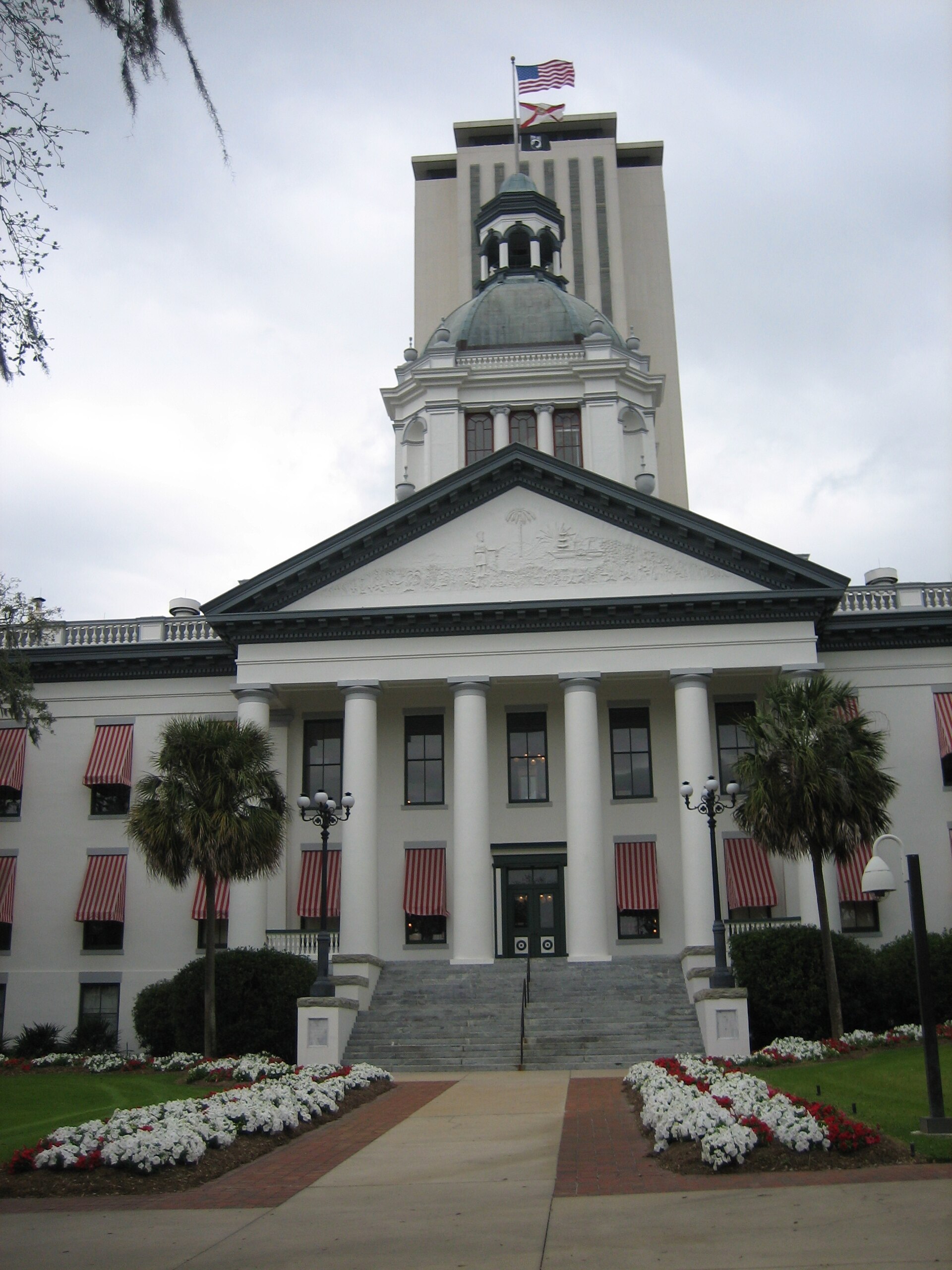
On Tuesday, September 1, 2020, Gov. DeSantis held a news conference in Jacksonville, Mary Daniel's city, and announced that the visitor ban would be scaled back.714 That day Moskowitz executed DEM Emergency Order 20-009, which expressly "supersedes DEM Orders Nos. 20-006 and 20-007."6 Facilities still had to "prohibit the entry of any individual" except listed people, but the list now included, for the first time, "Essential caregivers and compassionate care visitors." The order defined essential caregivers as "those who have been given consent by the resident or his or her representative to provide services and/or assistance with activities of daily living to help maintain or improve the quality of care or quality of life for a facility resident," including "persons who provided services before the pandemic." It added: "Each resident or his or her representative may designate up to two (2) essential caregivers and up to two (2) compassionate care visitors." Facilities had to "[d]evelop an agreeable schedule in concert with the resident and visitor, including evening and weekends, to accommodate work or childcare barriers."6 General visitors could return only to facilities that had gone fourteen days with no new cases.67
News4Jax, reporting for the News Service of Florida, wrote that Mary Daniel "helped inspire the new rules." She told reporters she planned to quit the dishwashing job and go back to "being just a wife."7
Holding the facilities to the rule
The order on paper was not the end of it. Ten days later families were reporting that some facilities had not yet let essential caregivers in. "It's been six long months," Mary Daniel told Spectrum News. "Facilities are making their own rules. They're not following the rules as they've been written." In the station's summary, she "thinks it's a control issue." The Agency for Health Care Administration then sent facilities a clarification telling them to "immediately implement procedures to enable Essential Caregivers and Compassionate Care visitors to visit your residents." She did not claim the job was done, but she could see results: "I am seeing pictures of hugs on the Facebook page, and it allows me to kind of breathe a sigh of relief and say that the biggest part of our mission has been completed."15
The rules kept loosening. DEM Order 20-011 of October 22, 2020 added general visitors under set conditions, and DEM Order 21-001 of March 22, 2021 rescinded the visitation bans and left each facility to keep visitation and infection control policies under state and federal law.10
What it cost
The first cost was the time itself. For 114 days a woman who had been at her husband's side every night could not touch him while his disease moved forward. She described the window visits, where he cried the entire time, and said he was "very rapidly declining." News4Jax reported that he had lost 10 pounds.23 Those were days a couple living with early-onset Alzheimer's could never get back, and she knew it: "I have always known that this was going to kill him," she said in May, "but I also have always known that I would be with him."1
The second cost was work. To get through the door she took a second job, mopping floors and cleaning a grill two evenings a week, while keeping her full-time work and paying for his care.23 She said she was giving the paycheck back to the facility's caregivers.3
The third cost was privacy. Mary Daniel was not a politician or an activist by trade. To change the rules she had to put her marriage, her husband's diagnosis, her grief and her own tears in front of television cameras and newspapers across the country, and then keep doing it for months in meetings with state officials. She chose that exposure on purpose, because, as she said, "Our politicians need to see the faces of those stories."4
The fourth cost was the unpaid work that followed: organizing a national network of caregivers, which by her group's count grew to members in all 50 states.1116 None of it could give back the months already lost.
This lesson does not report on the Daniels' private life after the period covered by her public statements and the public record cited here.
How it ended
Mary Daniel's stand did not end in a court. It ended in an emergency order rewritten in her favor in 2020, in a state statute in 2022, and in a federal bill still pending in 2026.
The No Patient Left Alone Act, 2022
On November 18, 2021, Sen. Ileana Garcia filed Senate Bill 988, later titled "In-person Visitation," with Sens. Berman, Rodriguez and Perry as co-introducers. It created the "No Patient Left Alone Act."8 Every recorded vote on it was lopsided. The Senate Health Policy Committee approved a committee substitute 7 to 0 on January 13, 2022; the Appropriations Subcommittee on Health and Human Services recommended it 11 to 0 on February 2; the full Appropriations Committee approved it 18 to 0 on February 28.8 On March 4, 2022, the Senate passed it 37 to 0, with two senators not voting.817 On March 9, 2022, the House passed it 115 to 2; the roll call shows the two no votes as Rep. Geraldine Thompson and Rep. Angie Nixon, and the record does not state their reasons.818 The identical House bill, HB 987, was laid on the table when the Senate bill passed.8 The bill was presented to the governor on April 5, and Gov. DeSantis approved it on April 6, 2022. It became Chapter 2022-34, Laws of Florida, effective on becoming law.8
The governor's office said the law would "guarantee" Floridians the right to visit loved ones in hospitals, hospices and long-term care facilities. DeSantis said that "family and human connection is one of the most important aspects of physical, mental, and emotional well-being." Sen. Garcia said: "It makes clear that in Florida, at a person's greatest hour of need, there will be a loved one by their side."19 At the signing ceremony, held at a retirement community in Naples, DeSantis said: "Policies (under the new law) cannot prohibit physical contact, such as hugging between their loved ones." Agency for Health Care Administration Secretary Simone Marstiller called it "unthinkable" to keep visitors away from their loved ones and added, "There's nothing that can beat physical contact." Kristen Knapp, a spokeswoman for the Florida Health Care Association, the state's largest nursing home group, said: "We all saw what the pandemic did and how it isolated our residents. It was hard on them, it was hard on their families, and it was difficult on the staff. So, it's a good bill."20
The heart of the law, for families like the Daniels, is section 408.823(2)(b) of the Florida Statutes:
The statute goes further than the 2020 order did. Visitation policies "may not require visitors to submit proof of any vaccination or immunization" and "must allow consensual physical contact between a resident, client, or patient and the visitor." Safety rules for visitors "may not be more stringent than those established for the provider's staff," the same principle Mary Daniel had argued in July 2020: if staff can go in under strict rules, so can one caregiver.94 The law also requires in-person visitation, unless the resident objects, in listed circumstances, among them "[e]nd-of-life situations," a resident who "was living with family before being admitted to the provider's care" and "is struggling with the change in environment and lack of in-person family support," a resident who "needs cueing or encouragement to eat or drink which was previously provided by a family member or caregiver," and one who "used to talk and interact with others" but "is seldom speaking."9 Providers may require visitors to agree in writing to follow their policies and may suspend a visitor who breaks them.9
The bill materials and the governor's announcement found for this lesson do not name Mary Daniel, and this lesson does not claim she drafted the bill. What the record does show is that the law made permanent, for every resident in Florida, the essential caregiver she had proposed in July 2020, carried onto the governor's task force in August 2020 and saw written into DEM Order 20-009 that September.4569
The national fight
Caregivers for Compromise took the cause to Congress. On June 4, 2021, Rep. Claudia Tenney of New York introduced H.R. 3733, the Essential Caregivers Act of 2021, with nine cosponsors from both parties, to require nursing facilities and similar providers in Medicare and Medicaid "to permit essential caregivers access during any public health emergency."21 That September the group reported that it had joined the Essential Caregiver Coalition to publish a book of personal stories from all 50 states, Protecting Them to Death: The Impact of Isolation in Long-Term Care, and had mailed it to every member of Congress; its members were meeting legislative aides every week to win cosponsors.22
The bill did not pass that Congress. On December 16, 2025, the Essential Caregivers Act of 2025 was introduced in both houses: H.R. 6766 by Rep. Tenney with Rep. John B. Larson and four others, and S. 3492 by Sen. Richard Blumenthal with Sen. John Cornyn.2324 The 2025 bills would require access for essential caregivers "during any period in which regular visitation is restricted," not only during a declared public health emergency.23 The group reports that AARP endorsed the bill in letters of January 5, 2026, and that its own membership has passed 17,000 in all 50 states.16 As of November 2026, the Government Publishing Office lists only the introduced versions of both bills.2324
Timeline
| Date | Event |
|---|---|
| March 9, 2020 | Gov. DeSantis declares a state of emergency in Executive Order 20-52.6 |
| March 10, 2020 | Mary Daniel's last ordinary evening visit with Steve, by her account.2 |
| March 11, 2020 | The facility calls to tell her she cannot come back.21 |
| March 13, 2020 | Federal CMS guidance suggests restricting visits by non-essential family members.5 |
| March 15, 2020 | DEM Emergency Order 20-006 bars entry to long-term care facilities except in listed cases.610 |
| May 18, 2020 | DEM Order 20-007 reaffirms and ratifies the ban.6 |
| May 22, 2020 | On News4Jax: "72 days ago, but who's counting."1 |
| About July 3, 2020 (day 114 counted from March 11) | After her first dishwashing shift at Rosecastle of Deerwood, she holds her husband again.32 |
| July 7, 2020 | The governor extends the state of emergency another 60 days.6 |
| July 12, 2020 | News4Jax tells her story; it spreads nationally.3 |
| July 22, 2020 | Her Caregivers for Compromise group passes 6,000 members; she asks to meet the governor.4 |
| August 4, 2020 | She meets DeSantis; he asks her to join a new committee.13 |
| August 6, 2020 | The governor forms the Task Force on the Safe and Limited Re-Opening of Long-Term Care Facilities, with her as its caregiver member.5 |
| August 14 to 26, 2020 | The task force holds five publicly broadcast meetings.5 |
| September 1, 2020 | DeSantis announces the change in Jacksonville; DEM Order 20-009 allows two essential caregivers per resident.67 |
| September 11, 2020 | She reports facilities "making their own rules"; AHCA orders them to implement the change immediately.15 |
| October 22, 2020 | DEM Order 20-011 adds general visitors under conditions.10 |
| March 22, 2021 | DEM Order 21-001 rescinds the visitation bans.10 |
| June 4, 2021 | H.R. 3733, the Essential Caregivers Act of 2021, is introduced in Congress.21 |
| September 9, 2021 | Her group reports a book of caregiver stories mailed to every member of Congress.22 |
| November 18, 2021 | Sen. Ileana Garcia files SB 988, the No Patient Left Alone Act.8 |
| March 4, 2022 | The Florida Senate passes SB 988, 37 to 0.817 |
| March 9, 2022 | The Florida House passes it, 115 to 2.818 |
| April 6, 2022 | Gov. DeSantis signs it; Chapter 2022-34 takes effect.819 |
| December 16, 2025 | The Essential Caregivers Act of 2025 is introduced in both houses of Congress.2324 |

Why it took courage
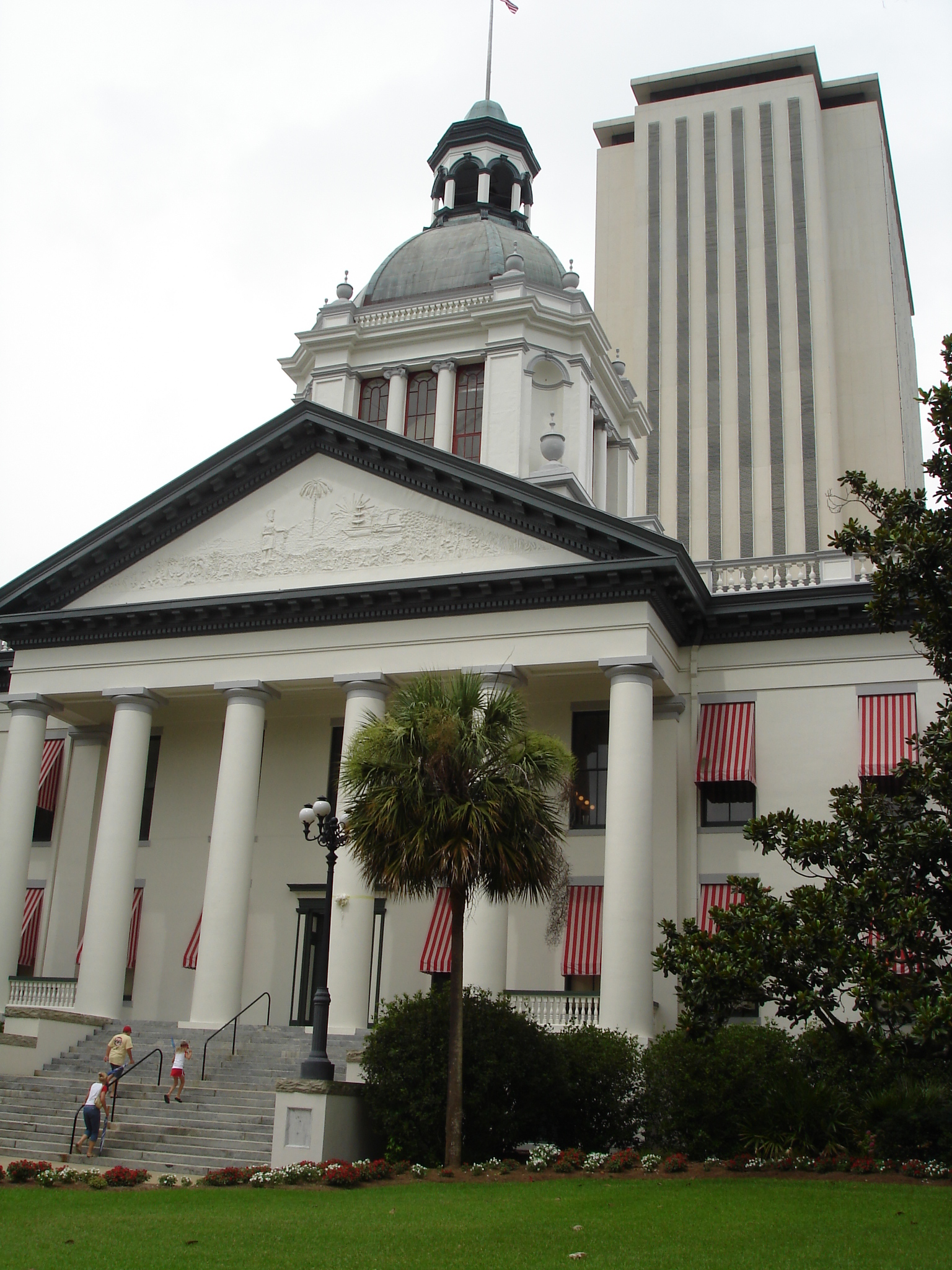
Mary Daniel's courage was of a quieter kind than a protest in a parking lot, and in some ways harder. She did not break the order. She obeyed it to the letter for 114 days, tried every visit it allowed, and when she found a lawful way in, she took it: she became staff, trained like staff, tested like staff and washed dishes like staff. Then, having gotten what she wanted for herself, she refused to stop. "I can't just walk away and say 'I'm in, good luck everybody,'" she said.4 Most people who find a private way out of a public problem take it quietly. She turned her private relief into a public campaign for every family still on the outside of the glass.
The liberty she defended is one of the oldest and most basic: the bond of husband and wife, and the right of a family to be present with its sick and dying. The emergency order allowed family in for "end-of-life situations" but not for the long months of decline before that, when presence matters most to a person with dementia who cannot understand a phone call or a window.10 An emergency order, signed by an appointed official at the governor's direction and kept in force for months without a vote of the Legislature, had put a locked door between a wife and her husband. She did not accept that a free people should leave such a thing to the discretion of administrators, and she took that case to the governor himself.
She also showed what a citizen can do through lawful means. She used interviews, a Facebook group, a written proposal and a request for ten minutes of the governor's time. She did not demand that the doors be thrown open; her group said plainly that "Covid kills" and asked for a "reasonable" rule.12 Her proposal, that one family caregiver be allowed in under the same rules as staff, was modest, concrete and hard to argue with, and within a month of her joining the task force it was in Florida's emergency order. Within two years it was in Florida's statutes by a vote of 152 to 2 across both chambers.68 Few citizens ever change a law. She changed one by telling the truth about her own family in public and refusing to let officials treat it as a "feel good story."4
Finally, she paid for it with her privacy, the one thing a private person most naturally guards. She told the whole country about the tears. She did it so that the faces of the people behind the rules would be seen. That is courage in its plainest form: doing the right thing at a personal cost when no one would have blamed her for staying quiet. Forms of Lawful Resistance in Ordered Liberty describes the petition and public advocacy she used; Testifying and Public Comment teaches how any citizen can do the same before a public body.
What the other side said
Florida's officials did not regard the ban as cruelty; they called it protection. The final report of the task force, whose members included Agency for Health Care Administration Secretary Mary Mayhew and Surgeon General Dr. Scott Rivkees, said: "The cornerstone of Florida's mission in responding to the COVID-19 pandemic has been protection of our most vulnerable residents, including those living in long-term care facilities like nursing homes and assisted living facilities." It noted Florida's 4.5 million residents over 65 and more than 150,000 people in congregate settings "most vulnerable to rapid transmission," and recorded that federal CMS guidance in 2020 stressed "the critical need for ongoing restrictions."5 Even the order that let caregivers back in kept tight limits: one visitor at a time outside end-of-life situations, mandatory masks and protective equipment, infection-control training, testing where the facility required it, and no visits other than compassionate care visits to a resident who was quarantined or had COVID-19 symptoms.6 Mary Daniel herself reported that the governor "did talk and reinforce the reasons behind the actions, which I obviously understand and agree with."13 In 2022, two House members, Rep. Geraldine Thompson and Rep. Angie Nixon, voted against the No Patient Left Alone Act; the roll call records their votes but not their reasons.18
Still disputed: Whether the March to September 2020 ban saved more lives than the isolation cost is still argued, and no official Florida finding weighing the two was found for this lesson. Whether states should ever again be allowed to bar every family caregiver during an emergency is the question before Congress in the Essential Caregivers Act of 2025, which as of November 2026 has not been enacted.2324 Some facilities were slow to admit essential caregivers even after the September 2020 order, and how widely the 2022 statute is followed in practice has not been measured in any record found here.15
Medical note: On July 12, 2020, Mary Daniel said that residents were "being separated and isolated to save their lives, but the isolation is going to kill them," and that "Dementia patients need contact. Their brain needs stimulation to keep alive."3 Her group says isolation caused "hopelessness, loss of appetite, cognitive decline" and deaths.12 These are her and her group's statements. Official bodies acknowledged the harm without measuring it: the Florida task force report recorded that federal CMS guidance in April 2020 recognized "the difficulty of isolation that the limitations on visitation create" while still stressing ongoing restrictions, and the 2022 Florida statute requires visits when a resident needs "cueing or encouragement to eat or drink" or "is seldom speaking."59 This lesson praises her stand for the family and takes no position on these medical claims.
Hard questions and answers
Wasn't the dishwasher job just a way around the rules?
It was a lawful way through them. The order let staff in, and she became real staff: hired for a real job, trained and tested like other employees.2 She did not lie, sneak in or defy the order. A defender of the ban might say that if every family member took a job, the protection would collapse; her answer was the essential caregiver proposal, one designated person per resident under staff rules, which is exactly what the State adopted.46
A public health officer asks: didn't the ban protect the most vulnerable?
That was the State's stated purpose, and Mary Daniel said she understood and agreed with the reasons behind the first closure.513 Her point was about duration and proportion: "5 months is too long," and a single caregiver who followed staff rules posed no greater risk than staff who went home every night.134 The State accepted that reasoning on September 1, 2020, and the Legislature wrote it into law in 2022, providing that visitor safety rules "may not be more stringent than those established for the provider's staff."69
Why is a private citizen's family life in a lesson at all?
Because she put it in the public record herself, deliberately, to change a public rule, and because the change she won affects every family with a loved one in a Florida care facility. This lesson uses only what she said in public and what official records show, and it reports nothing about her husband beyond what she chose to share.
Did she write the No Patient Left Alone Act?
No source found for this lesson says she did. The bill was filed by Sen. Ileana Garcia, and the governor's announcement, including Sen. Garcia's statement in it about families kept apart during the pandemic, does not name her.819 What the record shows is the line of descent: her group's July 2020 proposal, her seat on the August 2020 task force, the September 2020 order and the 2022 statute all rest on the same idea of a designated essential caregiver.4569
A civil liberties advocate asks: why did it take a law?
Because an emergency order can be written, renewed and rewritten by one official at a governor's direction, and the visitor ban ran month after month without a vote of the Legislature.6 A statute can be changed only by the Legislature. Florida's 2022 law turns a permission granted by an emergency order into a right in statute, with a complaint process at the Agency for Health Care Administration.919 Idaho readers will recognize the same question of who holds emergency power in Idaho Takes Back the Special Session.
Related lessons
- Emergency Power in 2020: The Orders, Who Signed Them, and How People Pushed Back
- Sara Walton Brady and the Closed Playground, another private citizen who stood up under a 2020 order
- Idaho Takes Back the Special Session: SJR 102, on who should hold emergency power
- Ian Smith, Frank Trumbetti and Atilis Gym, the previous profile, a stand made by open defiance
- What the Stands Won and Timeline, Glossary, Sources and the Record of Every Ruling
- Ordered Liberty: module home, Legitimate Authority and Its Limits, Forms of Lawful Resistance
- Testifying and Public Comment and Testifying before Idaho Legislature committees, the tools Mary Daniel used
- The Fourteenth Amendment (liberty and due process)
Still open
These items could not be confirmed against a primary source before publication. The lesson states them as open, and they stay on the fact-check list.
- The reunion date of July 3, 2020 is computed: she said she was told on March 11 not to return and that she saw him again after 114 days; no source opened states July 3 in words. News4Jax first reported the story July 12, 2020, saying she saw a difference "after four days," which suggests a later first shift than July 3. The 114-day count is hers.
- The text of DEM Order 20-006 itself has not been located in a public copy; its terms are taken from the Florida Senate staff analysis and the recitals of DEM Order 20-009.
- No official record shows that Mary Daniel drafted, testified for or lobbied for SB 988 (or HB 987) in 2022, and the lesson does not claim it. Her group's resources page lists an April 6, 2022 First Coast News report describing the signed bill as inspired by her; that report was not opened for this lesson.
- No book written by Mary Daniel was confirmed. Her group reports co-publishing Protecting Them to Death with the Essential Caregiver Coalition (2021); whether she is named among its contributors was not confirmed.
- The task force report is quoted from a copy posted by Catholic Health Services; no copy on an official State of Florida website was found.
- The Florida Politics article (News Service of Florida) shows no date in the fetched text; September 2, 2020 is inferred from its reference to the governor's "Tuesday" announcement.
- Membership counts for Caregivers for Compromise (6,000 in July 2020 per Bay News 9; over 14,000 and over 17,000 per the group's own site) are the group's and reporters' figures.
- Whether the federal Essential Caregivers Act of 2025 advanced after introduction: the Government Publishing Office lists only the introduced versions of H.R. 6766 and S. 3492 as of November 2026.
Learn more
- Section 408.823, Florida Statutes: The full text of the No Patient Left Alone Act as it stands in Florida law, including the list of circumstances that require in-person visits.
- DEM Order No. 20-009: The emergency order that first let essential caregivers back in, with every condition on facilities and visitors.
- Task force final recommendations: The State's own account of why the ban was imposed and how the essential caregiver category was designed.
- Caregivers for Compromise: Mary Daniel's group, its mission statement and its work on the federal Essential Caregivers Act.
Notes
- Kent Justice, "72 days and counting: Jacksonville woman desperate to see husband who is fighting Alzheimer's," News4Jax (WJXT), May 22, 2020 (retrieved Nov. 7, 2026). Read it online. ↩
- Cait McVey, "Woman Takes Dishwashing Job to Reunite With Her Husband," Spectrum Bay News 9, July 13, 2020 (retrieved Nov. 7, 2026). Read it online. ↩
- Brittany Muller, "Jacksonville woman gets job as dishwasher at memory care facility so she can see her husband," News4Jax (WJXT), July 12, 2020 (retrieved Nov. 7, 2026). Read it online. ↩
- Cait McVey, "Woman Who Took Dishwashing Job to be With Husband Wants to Meet With DeSantis," Spectrum Bay News 9, July 22, 2020 (retrieved Nov. 7, 2026). Read it online. ↩
- Task Force on the Safe and Limited Re-Opening of Long-Term Care Facilities, Final Recommendations to Governor DeSantis (State of Florida, September 2020), pages 1 to 6; copy of the official report posted by Catholic Health Services (retrieved Nov. 7, 2026). Read it online. ↩
- Florida Division of Emergency Management, DEM Order No. 20-009, Emergency Order (Jared Moskowitz, State Coordinating Officer, executed Sept. 1, 2020), recitals and section 1 (retrieved Nov. 7, 2026). Read it online. ↩
- Kelly Wiley with the News Service of Florida, "Florida releases order on relaxing visitation ban at long-term care facilities," News4Jax (WJXT), Sept. 2, 2020 (retrieved Nov. 7, 2026). Read it online. ↩
- The Florida Senate, CS/CS/SB 988 (2022), In-person Visitation, bill history, votes and related bills (retrieved Nov. 7, 2026). Read it online. ↩
- Section 408.823, Florida Statutes, In-person visitation (History: ss. 2, 3, ch. 2022-34), The Florida Legislature, Online Sunshine (retrieved Nov. 7, 2026). Read it online. ↩
- The Florida Senate, Professional Staff of the Committee on Appropriations, Bill Analysis and Fiscal Impact Statement, CS/CS/SB 988 (Mar. 2, 2022), Present Situation, pages 2 to 4 (retrieved Nov. 7, 2026). Read it online. ↩
- Caregivers for Compromise, "Facebook Groups for Caregivers for Compromise," post dated July 9, 2020 (retrieved Nov. 7, 2026). Read it online. ↩
- Caregivers for Compromise, home page, "Our Mission" (retrieved Nov. 7, 2026). Read it online. ↩
- Cait McVey, "She Washes Dishes to Visit Her Husband. Now, She's Helping the Governor Reopen Nursing Homes," Spectrum Bay News 9, Aug. 4, 2020 (retrieved Nov. 7, 2026). Read it online. ↩
- News Service of Florida, "State lifts nursing home visitation ban," Florida Politics, September 2020 (the article describes the governor's announcement of "Tuesday," Sept. 1, 2020) (retrieved Nov. 7, 2026). Read it online. ↩
- Molly Duerig, "Families say care facilities are slow to follow Florida order to let them see loved ones," Spectrum News, Sept. 11, 2020 (retrieved Nov. 7, 2026). Read it online. ↩
- Caregivers for Compromise, "Essential Caregivers Act of 2025" (retrieved Nov. 7, 2026). Read it online. ↩
- The Florida Senate, roll call, CS/CS/SB 988, third reading, Mar. 4, 2022 (Yeas 37, Nays 0) (retrieved Nov. 7, 2026). Read it online. ↩
- Florida House of Representatives, roll call, CS/CS/SB 988, 1st Eng., third reading, Mar. 9, 2022 (Yeas 115, Nays 2) (retrieved Nov. 7, 2026). Read it online. ↩
- Executive Office of the Governor of Florida, "Governor Ron DeSantis Signs Bill to Guarantee Visitation Rights for Patients and their Families," press release, Apr. 6, 2022 (retrieved Nov. 7, 2026). Read it online. ↩
- Jim Turner and Tom Urban, News Service of Florida, report on the signing of SB 988, Orlando Weekly, Apr. 7, 2022 (retrieved Nov. 7, 2026). Read it online. ↩
- H.R. 3733, 117th Cong., Essential Caregivers Act of 2021 (introduced June 4, 2021, by Rep. Claudia Tenney), U.S. Government Publishing Office (retrieved Nov. 7, 2026). Read it online. ↩
- Caregivers for Compromise, "Caregivers for Compromise joins forces with Essential Caregiver Coalition to publish a book," Sept. 9, 2021 (retrieved Nov. 7, 2026). Read it online. ↩
- H.R. 6766, 119th Cong., Essential Caregivers Act of 2025 (introduced Dec. 16, 2025, by Rep. Claudia Tenney), U.S. Government Publishing Office (retrieved Nov. 7, 2026). Read it online. ↩
- S. 3492, 119th Cong., Essential Caregivers Act of 2025 (introduced Dec. 16, 2025, by Sen. Richard Blumenthal), U.S. Government Publishing Office (retrieved Nov. 7, 2026). Read it online. ↩
Check yourself
1. Which order first barred visitors from Florida long-term care facilities in March 2020?
DEM Emergency Order 20-006, issued March 15, 2020 by the State Coordinating Officer at the governor's direction, prohibited entry except in listed cases. Order 20-52 declared the emergency; 20-009 loosened the ban; Chapter 2022-34 is the 2022 law.
2. How did Mary Daniel get back inside her husband's facility?
The order let staff enter. She accepted a part-time dishwashing job at Rosecastle of Deerwood, was trained and tested like staff, and saw him after her first shift.
3. How many days had she been kept from him when she saw him again?
She said it was 114 days; she had told News4Jax on May 22 that it had been 72 days so far.
4. What was the name of the Facebook group she founded?
She founded Caregivers for Compromise, with the motto "because isolation kills too!" It later joined the Essential Caregiver Coalition in national work.
5. What role did she hold on Gov. DeSantis's August 2020 task force?
The task force report lists her as "Mary Daniel, Caregiver," alongside agency heads and association leaders. AHCA Secretary Mary Mayhew chaired it.
6. What did DEM Order 20-009 of September 1, 2020 allow each resident to designate?
Order 20-009 created the essential caregiver and compassionate care visitor categories, two of each per resident, under infection control rules.
7. What is the bill number of Florida's No Patient Left Alone Act, and when was it approved?
CS/CS/SB 988 passed the Senate 37-0 and the House 115-2 and was approved by the governor on April 6, 2022 as Chapter 2022-34. HB 987 was the identical House bill, laid on the table.
8. Under section 408.823(2)(b), how long must a provider allow an essential caregiver to visit?
The statute says: "The provider must allow in-person visitation by the essential caregiver for at least 2 hours daily in addition to any other visitation authorized by the provider."
Terms in this lesson
- State Coordinating Officer
- The official, in 2020 the director of the Florida Division of Emergency Management, whom the governor's emergency order empowered to suspend statutes and rules and issue emergency orders.
- DEM Emergency Order 20-006
- The March 15, 2020 Florida order that prohibited entry to long-term care and similar facilities except for listed people, such as staff and family in end-of-life situations.
- DEM Emergency Order 20-009
- The September 1, 2020 order that superseded the ban and let each resident designate up to two essential caregivers and two compassionate care visitors.
- Essential caregiver
- A person a resident designates to visit and help with care or emotional support. Under the 2020 order the care was part of the resident's plan; under the 2022 statute the caregiver may visit at least 2 hours daily and need not provide care.
- Compassionate care visitor
- Under Florida's 2020 order, a visitor who gives emotional support to a resident facing end of life, a difficult transition, loss or an upsetting event.
- Memory care
- A residential setting for people with Alzheimer's disease or other dementias, usually within an assisted living community.
- Early-onset Alzheimer's disease
- Alzheimer's disease that begins before about age 65; Steve Daniel's diagnosis, as his wife described it.
- Task Force on the Safe and Limited Re-Opening of Long-Term Care Facilities
- The seven-member panel Gov. DeSantis formed on August 6, 2020 to recommend how to restore visits; Mary Daniel was its caregiver member.
- No Patient Left Alone Act
- Florida's 2022 law, CS/CS/SB 988 (Chapter 2022-34), codified at section 408.823, Florida Statutes, guaranteeing in-person visitation and essential caregivers in covered facilities.
- Agency for Health Care Administration (AHCA)
- Florida's agency that licenses hospitals, nursing homes and assisted living facilities and takes complaints about denied visitation under the 2022 law.
- Essential Caregivers Act
- Federal bills (H.R. 3733 in 2021; H.R. 6766 and S. 3492 in 2025) that would require Medicare and Medicaid facilities to admit essential caregivers when visits are restricted. Not enacted as of November 2026.
- Congregate setting
- A place where many people live or gather closely together, such as a nursing home or group home; officials cited the risk of fast spread in such settings.
Sources
- DEM Order No. 20-009 (Florida Division of Emergency Management) (2020-09-01) checked 2026-11-07
- Task Force on the Safe and Limited Re-Opening of Long-Term Care Facilities, Final Recommendations (2020-09) checked 2026-11-07
- Florida Senate staff analysis, CS/CS/SB 988 (Appropriations) (2022-03-02) checked 2026-11-07
- Florida Senate, CS/CS/SB 988 (2022) bill page (2022-04-08) checked 2026-11-07
- Florida House roll call, CS/CS/SB 988 (2022-03-09) checked 2026-11-07
- Florida Senate roll call, CS/CS/SB 988 (2022-03-04) checked 2026-11-07
- Section 408.823, Florida Statutes (2022-04-06) checked 2026-11-07
- Governor of Florida press release on SB 988 (2022-04-06) checked 2026-11-07
- H.R. 3733 (117th Congress), Essential Caregivers Act of 2021 (2021-06-04) checked 2026-11-07
- H.R. 6766 (119th Congress), Essential Caregivers Act of 2025 (2025-12-16) checked 2026-11-07
- S. 3492 (119th Congress), Essential Caregivers Act of 2025 (2025-12-16) checked 2026-11-07
- News4Jax, "72 days and counting" (2020-05-22) checked 2026-11-07
- News4Jax, dishwasher job report (2020-07-12) checked 2026-11-07
- Spectrum Bay News 9, dishwashing job report (2020-07-13) checked 2026-11-07
- Spectrum Bay News 9, request to meet the governor (2020-07-22) checked 2026-11-07
- Spectrum Bay News 9, round table and committee (2020-08-04) checked 2026-11-07
- News4Jax / News Service of Florida, order relaxing the ban (2020-09-02) checked 2026-11-07
- Florida Politics / News Service of Florida, ban lifted (2020-09) checked 2026-11-07
- Spectrum News, facilities slow to follow the order (2020-09-11) checked 2026-11-07
- Orlando Weekly / News Service of Florida, bill signing (2022-04-07) checked 2026-11-07
- Caregivers for Compromise, mission (2026) checked 2026-11-07
- Caregivers for Compromise, Facebook groups history (2020-07-09) checked 2026-11-07
- Caregivers for Compromise, book announcement (2021-09-09) checked 2026-11-07
- Caregivers for Compromise, Essential Caregivers Act of 2025 (2026) checked 2026-11-07