Lesson 9 of 23 · about 40 minutes
The Worship Cases at the Supreme Court: Diocese of Brooklyn, Agudath Israel, South Bay Pentecostal and Tandon
Updated November 7, 2026
You'll be able to
- Name the congregations and people who brought the Supreme Court worship cases and describe what each asked for.
- Explain what New York's Executive Order 202.68 and California's Blueprint and three-household rule required of houses of worship.
- Trace the votes from the 5 to 4 loss in South Bay (May 2020) to the wins in Brooklyn, South Bay II and Tandon.
- State the four rules of Tandon v. Newsom in your own words and apply them to a local emergency order.
- Describe the strongest arguments of the dissenting Justices and the States, by name.
- Explain why these plaintiffs' persistence, not a single ruling, changed free exercise law.
Start here: the short version
Between May 2020 and April 2021, a Roman Catholic diocese, an Orthodox Jewish organization and two of its synagogues, a Pentecostal church in Chula Vista, a network of churches based in Pasadena, and a pastor and a Bible study host in Santa Clara County asked the Supreme Court of the United States to stop governors from capping, closing or banning their worship. They lost the first round, 5 to 4, on May 29, 2020.1 They kept coming back. On November 25, 2020, the Court ruled for the Roman Catholic Diocese of Brooklyn and Agudath Israel of America and held that New York's 10-person and 25-person caps on houses of worship were not "neutral" toward religion.2 On February 5, 2021, it lifted California's total ban on indoor worship for South Bay United Pentecostal Church and Harvest Rock Church.34 On April 9, 2021, in a case brought by people who wanted to hold Bible studies in their own living rooms, it stated the rule that now governs: a law is not neutral "whenever" it treats "any comparable secular activity more favorably than religious exercise."5 The people in these cases risked fines, criminal letters and public scorn to insist that worship is not less essential than a liquor store. They won, and the rule they won protects every congregation in the country, large or small.

Who they were before
This lesson profiles five sets of people and congregations rather than one person. None of them set out to make constitutional law. Each was a worshiping community that had followed public health rules for months, watched secular businesses reopen first, and finally asked a court to treat prayer at least as well as shopping. The heroes here are ordinary religious people who signed their names to lawsuits against the governors of the two largest states in the country.
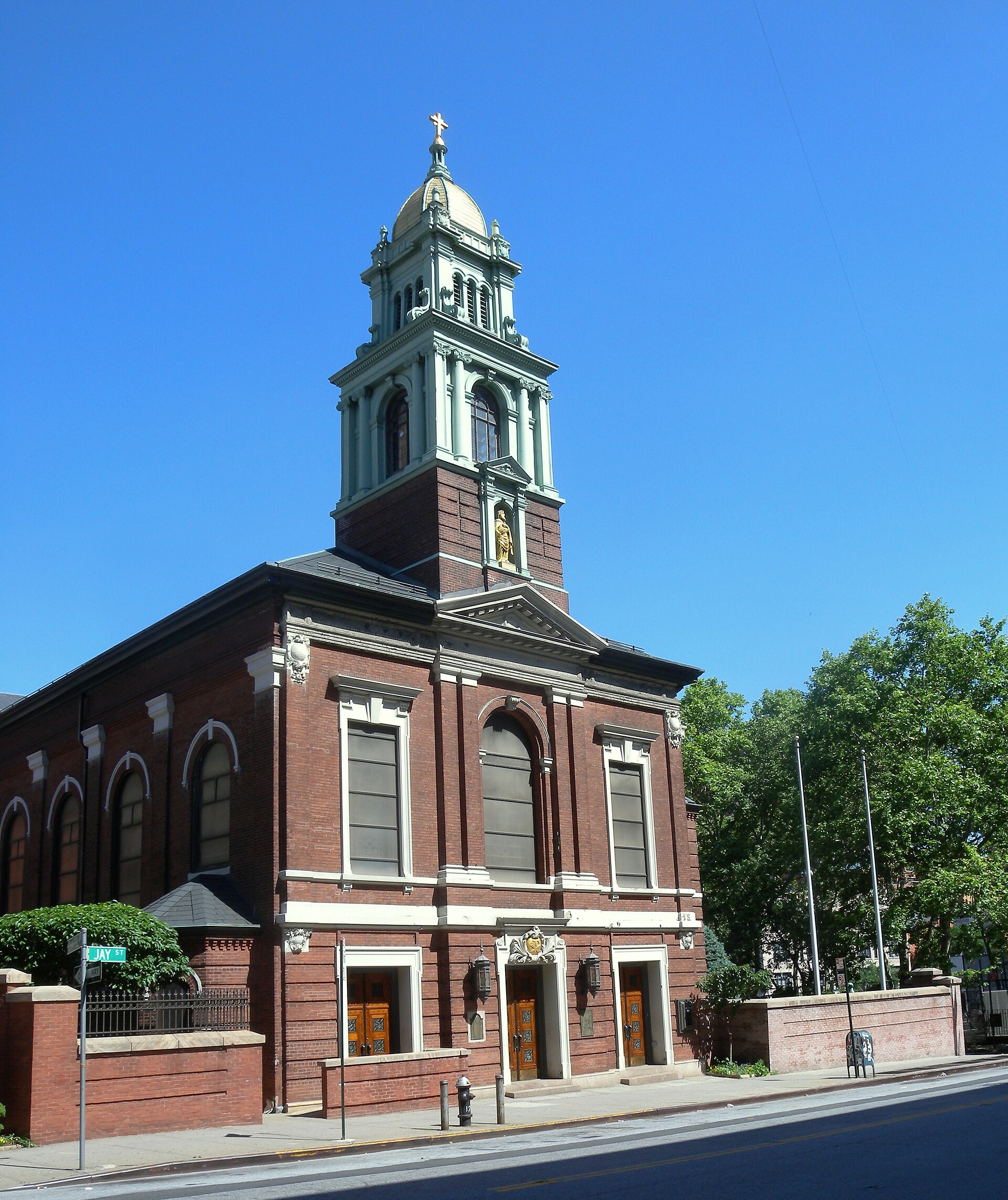
The Roman Catholic Diocese of Brooklyn
The Diocese of Brooklyn told the Court that it was "founded in 1853" and comprised "186 parishes, and 210 total churches, in Brooklyn and Queens, New York." It reported that in 2019 it "had an average weekly attendance of almost 230,000 spread across over 1,000 weekly Sunday Masses," and that Masses were "regularly held in 33 different languages across the Diocese."6 Its bishop at the time was Nicholas DiMarzio, who spoke for the diocese when the ruling came down.7
The diocese did not start as a resister. Its application states that on March 16, 2020, "ahead of any government shutdown orders, the Diocese elected to cancel all public Masses," and that on March 19 it "ordered all of its parishes and churches shuttered altogether."6 When churches reopened, the diocese wrote its own safety protocols. After a hearing in October 2020, the federal district judge who ruled against it nonetheless found that the diocese had "been an exemplar of community leadership" and had been "ahead of the curve, enforcing stricter safety protocols than the State required at the given moment."6 The Most Reverend Raymond Chappetto, the diocese's Vicar General, testified that the months without public Mass "was the heartbreak of our people because that's what defines us as Catholics. . . . We are people of the Mass."6
Agudath Israel of America and its synagogues
The second set of applicants filed together: Agudath Israel of America, Agudath Israel of Kew Garden Hills, Agudath Israel of Madison, Rabbi Yisroel Reisman and Steven Saphirstein.8 Their application described Agudath Israel of America, "founded in 1922," as "a national grassroots Orthodox Jewish organization" with "close to 70" affiliated synagogues in New York State. Agudath Israel of Kew Garden Hills held services "every day" and served "more than 150 men and women each week"; Steven Saphirstein was its Secretary. Agudath Israel of Madison served "more than 300 men and women each week," and Rabbi Yisroel Reisman was its rabbi.8 By the time the case reached the Second Circuit, a third congregation, Agudath Israel of Bayswater, and Rabbi Menachem Feifer had joined as plaintiffs.9
These synagogues had also complied. They told the Court that they split services into several smaller gatherings, required masks for the whole service, and that "the Governor has never disputed that Applicants have rigorously implemented and adhered to all health protocols and that there has been no outbreak in their congregations."8 Because Orthodox Jews do not drive on the Sabbath and holidays, their synagogues are "tightly clustered around where practitioners reside," so a zone drawn around a neighborhood falls on its houses of prayer.8
Bishop Arthur Hodges III and South Bay United Pentecostal Church
Bishop Arthur Hodges III is Senior Pastor of South Bay United Pentecostal Church, which his lawyers described as "a diverse Christian community in Chula Vista, California," in the South Bay region of San Diego County. The church held "three to five worship services" every Sunday in a sanctuary that "can seat up to 600 people" but usually held 200 to 300 congregants.10 During the first shutdown the church kept serving its neighbors: working with the Chula Vista Police Department, it set up a drive-through food line in its parking lot and, according to its filing, distributed "between three and twelve tons of food" in a given week, with masked and gloved volunteers placing groceries directly into car trunks.10
The church's lawyers stressed that it waited before suing: "Plaintiffs here did not join in those lawsuits because they believed it was important to do their part in curbing the pandemic in March and April." It filed suit on Friday, May 8, 2020, the day California entered Stage 2 of its reopening plan and let many businesses reopen while houses of worship stayed in Stage 3.10 The church was represented by the San Diego firm LiMandri & Jonna, the Thomas More Society and the Dhillon Law Group of San Francisco.10
Pastor Che Ahn and Harvest Rock Church
Harvest Rock Church, founded by Pastor Che Ahn, described itself as "a Christian church with multiple campuses in California," including Pasadena, Los Angeles, Irvine and Corona. Its co-applicant, Harvest International Ministry, was "an association of Churches in Pasadena, with 162 member churches throughout California."1112 The churches told the Court they believed they "must assemble for worship, in-person, as a critical requirement of both obedience to the Bible and fulfillment of the church's fundamental purpose, and to do so even more in times of peril and crisis." They also ran a ministry called the Hope Center for people with "financial, familial, emotional, and spiritual needs."11 Liberty Counsel, led by Mathew Staver, represented them.11
Pastor Jeremy Wong, Karen Busch and the Tandon plaintiffs
The last case carries the name of Ritesh Tandon, a congressional candidate who wanted to hold campaign events, but the religious claim belonged to two of his co-plaintiffs. Pastor Jeremy Wong and Karen Busch, residents of Santa Clara County, had hosted small Bible studies and prayer meetings in their homes "regularly for over two years before the pandemic." The application, quoting their declarations, said that "[c]ommunal worship, congregational study, and collective prayer are central tenets of [their] faith[s]" and that "[a]n online or virtual sermon cannot replicate God's presence among an assembled church." Some members of Busch's group had no computers and could only join by telephone.13 The other plaintiffs were Terry and Carolyn Gannon, who wanted to hold political discussions at home, and five small business owners: Julie Evarkiou, Dhruv Khanna, Connie Richards, Frances Beaudet and Maya Mansour.13 They were represented by the firm Eimer Stahl.13
The order they faced
New York: Executive Order 202.68 and the color zones
Governor Andrew Cuomo issued Executive Order 202.68 on October 6, 2020, "in response to an increase in COVID-19 cases," as the Second Circuit later summarized it.9 The order created red, orange and yellow zones. Its text, as quoted in Agudath Israel's application, provided that "[t]he Department of Health shall determine areas in the State that require enhanced public health restrictions based upon cluster-based cases of COVID-19 at a level that compromises the State's containment of the virus." In a red zone, houses of worship were limited "to a capacity limit of 25% of maximum occupancy or 10 people, whichever is fewer." Violators faced "a civil penalty not to exceed $15,000 per day."8 In orange zones the cap was 25 people.2
The applicants pointed to what the governor said while drawing the zones. According to the Agudath application, at an October 5 press conference he said he would "meet with members of the ultra-Orthodox community tomorrow" and warned "we'll close the [religious] institutions down" if "you do not agree to enforce the rules." He later described the new rules as "not a policy being written by a scalpel, this is a policy being cut by a hatchet."8 The State's own witness at the Diocese's hearing, Bryon Backenson of the Department of Health, conceded, according to the Diocese's application, that "decisions about which areas qualified for which zones . . . were made in the Governor's Office."6
California: the reopening stages, the Blueprint and the three-household rule
Governor Gavin Newsom proclaimed a state of emergency on March 4, 2020, and then issued Executive Order N-33-20, which directed all Californians "to immediately heed the []State public health directives."13 By late May 2020, as Chief Justice John Roberts described it, "State guidelines currently limit attendance at places of worship to 25% of building capacity or a maximum of 100 attendees."1 Justice Brett Kavanaugh listed the secular businesses that faced no such cap: "factories, offices, supermarkets, restaurants, retail stores, pharmacies, shopping malls, pet grooming shops, bookstores, florists, hair salons, and cannabis dispensaries."1
California then adopted the "Blueprint for a Safer Economy," a four-tier color system. In Tier 1, which covered most of the State that winter, the Blueprint forbade all indoor worship. Justice Neil Gorsuch noted that the State's own spreadsheet "even assigns places of worship their own row," and that "the State allows most retail operations to proceed indoors with 25% occupancy, and other businesses to operate at 50% occupancy or more." He added, citing an amicus brief, that "[a]pparently, California is the only State in the country that has gone so far as to ban all indoor religious services."3 The Blueprint also banned singing and chanting at indoor services.3
Enforcement was not abstract. Harvest Rock's application reported that on August 11, 2020, its pastor received a letter from the City of Pasadena's Code Enforcement Division "threatening criminal penalties, including fines and imprisonment," and that on August 18, 2020, the Pasadena City Prosecutor's Criminal Division "threatened in a letter daily criminal charges and $1,000 fines against the pastors, staff, and parishioners, including closure of the church."11 The churches said violating the orders was "a misdemeanor criminal offense punishable by up to a $1,000 fine, six months in jail, or both."11
For private homes, California's gatherings guidance limited religious and secular gatherings alike to three households. The Supreme Court later listed what the State allowed elsewhere: "hair salons, retail stores, personal care services, movie theaters, private suites at sporting events and concerts, and indoor restaurants" could "bring together more than three households at a time."5 The Tandon application put it plainly: Pastor Wong and Karen Busch "can sit for a haircut" with others, but could not host more than three households for Bible study in their own homes or backyards.13
What they did
Each set of plaintiffs did the same lawful thing: they sued, put their own declarations and safety records into evidence, lost in the lower courts, and asked the Supreme Court for an emergency injunction. On the steps of this ladder, they made the arguments that later won. The Ordered Liberty module explains why going to court is the first of the lawful forms of resistance; this lesson shows what it looks like when ordinary congregations climb that ladder all the way to the top (see Forms of Lawful Resistance).
The early loss: South Bay, May 2020
South Bay's district court denied a temporary restraining order on May 15, 2020, and the Ninth Circuit denied an injunction pending appeal. The church then asked Justice Elena Kagan, the Circuit Justice for the Ninth Circuit, for relief before Pentecost Sunday, May 31, 2020.10 On Friday, May 29, the full Court denied the application. Justices Clarence Thomas, Samuel Alito, Neil Gorsuch and Brett Kavanaugh would have granted it.1
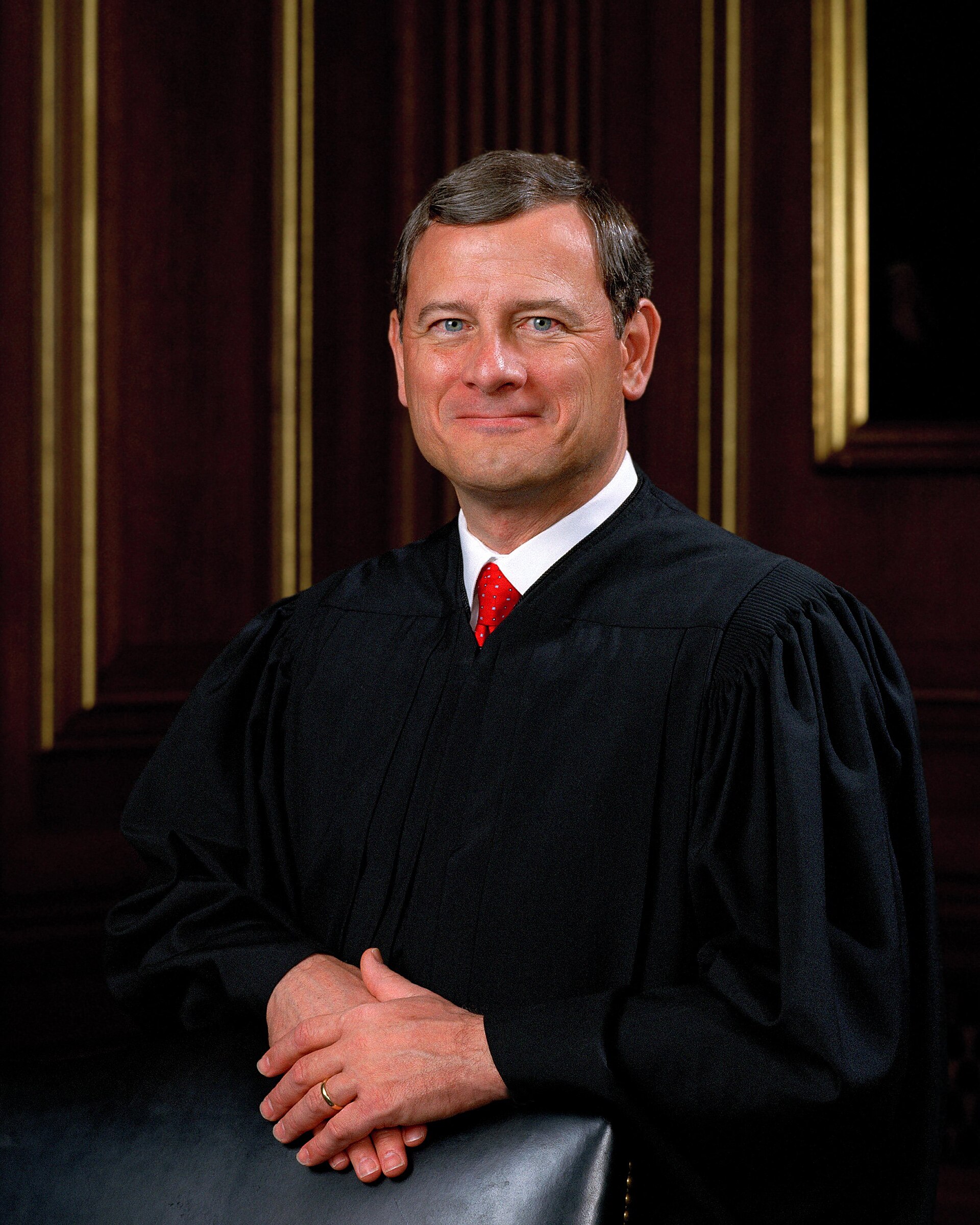
Chief Justice Roberts wrote a short concurrence that became the most quoted opinion of the early pandemic. He found the restrictions "appear consistent with the Free Exercise Clause of the First Amendment" because "[s]imilar or more severe restrictions apply to comparable secular gatherings, including lectures, concerts, movie showings, spectator sports, and theatrical performances." He wrote: "Our Constitution principally entrusts '[t]he safety and the health of the people' to the politically accountable officials of the States 'to guard and protect.'" And he concluded that "[t]he notion that it is 'indisputably clear' that the Government's limitations are unconstitutional seems quite improbable."1
Justice Kavanaugh, joined by Justices Thomas and Gorsuch, dissented and stated the argument the church would eventually win: "The Church and its congregants simply want to be treated equally to comparable secular businesses." Quoting the Sixth Circuit, he asked: "Assuming all of the same precautions are taken, why can someone safely walk down a grocery store aisle but not a pew? And why can someone safely interact with a brave deliverywoman but not with a stoic minister?" He closed: "The Church would suffer irreparable harm from not being able to hold services on Pentecost Sunday in a way that comparable secular businesses and persons can conduct their activities."1 Two months later the Court also denied relief to a Nevada church in Calvary Chapel Dayton Valley v. Sisolak, where worship was limited to 50 people.2
Brooklyn and Queens before the Court
The Diocese of Brooklyn sued on October 8, 2020, two days after the executive order.6 Judge Nicholas Garaufis held a hearing on October 15 and denied a preliminary injunction on October 16; the diocese appealed on October 19, and a Second Circuit motions panel heard argument on November 3 and denied an injunction pending appeal.6 Agudath Israel's separate suit followed the same path.9 The diocese's application was docketed on November 12, 2020, and Agudath Israel's on November 16; both went to Justice Stephen Breyer as acting Circuit Justice for the Second Circuit.1415
The composition of the Court had changed since May. Justice Ruth Bader Ginsburg's service ended on September 18, 2020, and Justice Amy Coney Barrett took her seat on October 27, 2020.16 Before the Court ruled, New York moved the applicants' neighborhoods into yellow zones, where worship could proceed at 50 percent of capacity. The State argued the matter no longer needed an injunction.2
Harvest Rock goes up twice
Harvest Rock and Harvest International Ministry asked Justice Kagan for an injunction in November 2020, before Sunday, November 29.11 On December 3, 2020, eight days after the Brooklyn ruling, the Court treated the application as a petition for certiorari before judgment, vacated the district court's September 2 order, and sent the case back "for further consideration in light of Roman Catholic Diocese of Brooklyn v. Cuomo."17 When the lower courts again refused relief, the churches returned, and their application was decided with South Bay's on February 5, 2021.4
South Bay comes back
Bishop Hodges and his church did not stop after the May 2020 loss. They challenged the Blueprint's Tier 1 ban, lost again in the district court and the Ninth Circuit, and filed a renewed emergency application on January 25, 2021.18 In his statement on that application, Justice Gorsuch wrote that California's "'temporary' ban on indoor worship has been in place since August 2020, and applied routinely since March."3
A Bible study in a living room
Wong, Busch and their co-plaintiffs filed their complaint on October 13, 2020. The district court denied a preliminary injunction on February 5, 2021, while acknowledging that the restrictions irreparably harmed Wong and Busch, and the Ninth Circuit denied an injunction pending appeal on March 30, 2021, over a dissent by Judge Bumatay.13 They applied to the Supreme Court on April 2, 2021.19 By then the State had loosened the home-gathering rule, but, as the Court noted, "the previous restrictions remain in place until April 15th."5
What it cost
The cost of these cases was counted first in Masses, services and holy days. The diocese told the Court that remote viewing could not substitute for the Eucharist: "[t]he priest has no way of bringing [Holy] Communion to every household. It's impossible."6 The Court agreed that "Catholics who watch a Mass at home cannot receive communion, and there are important religious traditions in the Orthodox Jewish faith that require personal attendance."2 Justice Gorsuch observed that the 10-person cap in red zones "might operate to exclude all women, considering 10 men are necessary to establish a minyan, or a quorum," and that the restrictions applied "even to the largest cathedrals and synagogues, which ordinarily hold hundreds."20
The numbers were stark. The per curiam opinion noted that "[a]lmost all of the 26 Diocese churches immediately affected by the Executive Order can seat at least 500 people, about 14 can accommodate at least 700, and 2 can seat over 1,000. Similarly, Agudath Israel of Kew Garden Hills can seat up to 400." Under the order, those buildings could admit 10 or 25.2
For the California churches the cost included the threat of prosecution. Harvest Rock's pastors, staff and parishioners were warned of "daily criminal charges and $1,000 fines," and the church was warned it could be closed.11 By February 2021, Justice Gorsuch noted, California's ban had run through a whole season and now "hovers over a second Lent, a second Passover, and a second Ramadan."3
There was also the cost of litigation itself: months of declarations, hearings, and emergency filings, prepared on weekends against Sunday and Sabbath deadlines. Justice Gorsuch put the point bluntly in the Brooklyn case: "none of us are rabbis wondering whether future services will be disrupted as the High Holy Days were, or priests preparing for Christmas."20 For Pastor Wong and Karen Busch, the cost was more than a year without the home gatherings at the center of their faith.13
How it ended
Roman Catholic Diocese of Brooklyn v. Cuomo (November 25, 2020)
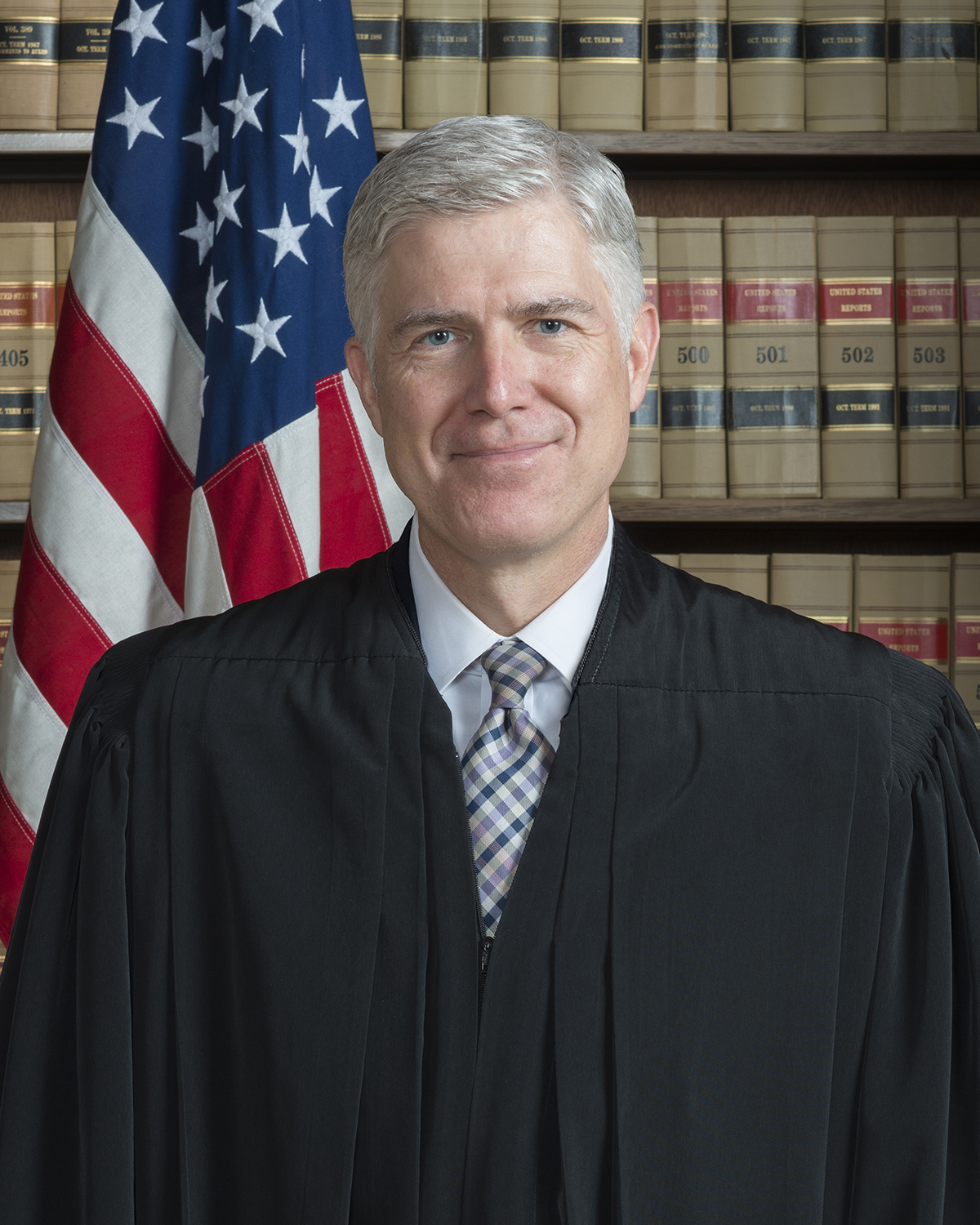
The Court granted the diocese's application in an unsigned per curiam opinion and granted Agudath Israel's application in part the same day, enjoining the 10-person and 25-person caps "on applicants, including Agudath Israel of America's current New York-based affiliates."215 The vote was 5 to 4. Justices Gorsuch and Kavanaugh wrote concurrences. Chief Justice Roberts dissented, and Justice Breyer (joined by Justices Sotomayor and Kagan) and Justice Sotomayor (joined by Justice Kagan) wrote dissents.2 The case is reported at 592 U.S. 14 (2020).2
The per curiam held that the applicants had made "a strong showing that the challenged restrictions violate 'the minimum requirement of neutrality' to religion," and that, even setting aside the governor's comments, "the regulations cannot be viewed as neutral because they single out houses of worship for especially harsh treatment." It explained: "In a red zone, while a synagogue or church may not admit more than 10 persons, businesses categorized as 'essential' may admit as many people as they wish."2 It found the caps were not narrowly tailored, noting "many other less restrictive rules that could be adopted," such as tying attendance to the size of the building.2 And it said, in the sentence most often quoted since: "Members of this Court are not public health experts, and we should respect the judgment of those with special expertise and responsibility in this area. But even in a pandemic, the Constitution cannot be put away and forgotten."2
The Court refused to treat the yellow-zone change as the end of the matter, because "the applicants remain under a constant threat that the area in question will be reclassified as red or orange," and a footnote listed eight dates, from October 21 to November 23, on which the governor had changed zone designations.2
Justice Gorsuch's concurrence began: "Government is not free to disregard the First Amendment in times of crisis." He wrote that, under the governor's list of essential businesses, "it may be unsafe to go to church, but it is always fine to pick up another bottle of wine, shop for a new bike, or spend the afternoon exploring your distal points and meridians." Of the earlier South Bay concurrence, he wrote: "Even if the Constitution has taken a holiday during this pandemic, it cannot become a sabbatical." He ended: "there is no world in which the Constitution tolerates color-coded executive edicts that reopen liquor stores and bike shops but shutter churches, synagogues, and mosques."20 Justice Kavanaugh added: "In an orange zone, the discrimination against religion is even starker: Essential businesses and many non-essential businesses are subject to no attendance caps at all."21
Bishop DiMarzio said, "I am gratified by the decision of the Justices of the United States Supreme Court," and, echoing the Court, "Even in the pandemic, the Constitution cannot be put away and forgotten." Agudath Israel's lawyer, Avi Schick, called it "an historic victory."7 Governor Cuomo said the ruling "doesn't have any practical effect," because the zone had already changed.722
On December 28, 2020, the Second Circuit followed through. It held that the order's regulation of houses of worship "is subject to strict scrutiny and that its fixed capacity limits are not narrowly tailored to stem the spread of COVID-19," and reversed and remanded with directions to issue a preliminary injunction in the diocese's case and, as to the fixed caps, in Agudath Israel's case.9

South Bay and Harvest Rock (February 5, 2021)
In South Bay's second application the Court enjoined "the Blueprint's Tier 1 prohibition on indoor worship services against the applicants." It denied relief, for now, against the 25 percent capacity limit and the ban on singing and chanting, "without prejudice to the applicants presenting new evidence to the District Court that the State is not applying the percentage capacity limitations or the prohibition on singing and chanting in a generally applicable manner."3 The Court entered the same order the same day for Harvest Rock and Harvest International Ministry.4 Six Justices voted to lift the indoor ban: Justices Thomas and Gorsuch would have granted everything, Justice Alito would have granted relief against all the capacity limits and the singing ban subject to a 30-day stay, and the Chief Justice and Justices Kavanaugh and Barrett voted to lift the total ban only. Justice Kagan, joined by Justices Breyer and Sotomayor, dissented.3
The Chief Justice, whose May 2020 concurrence had counseled deference, now wrote that "the State's present determination" that "the maximum number of adherents who can safely worship in the most cavernous cathedral is zero" appeared "to reflect not expertise or discretion, but instead insufficient appreciation or consideration of the interests at stake." He added: "Deference, though broad, has its limits."3 Justice Barrett, joined by Justice Kavanaugh, wrote that "if a chorister can sing in a Hollywood studio but not in her church, California's regulations cannot be viewed as neutral."3 Justice Gorsuch, joined by Justices Thomas and Alito, ended his statement: "if Hollywood may host a studio audience or film a singing competition while not a single soul may enter California's churches, synagogues, and mosques, something has gone seriously awry."3
Tandon v. Newsom (April 9, 2021)
Two months later the Court granted Wong and Busch an injunction pending appeal in an unsigned opinion, reported at 593 U.S. 61 (2021). The Chief Justice "would deny the application," and Justice Kagan, joined by Justices Breyer and Sotomayor, dissented, so the vote was 5 to 4.5 The per curiam set out four rules drawn from the earlier orders. The first is the one that changed free exercise law: "government regulations are not neutral and generally applicable, and therefore trigger strict scrutiny under the Free Exercise Clause, whenever they treat any comparable secular activity more favorably than religious exercise." It added: "It is no answer that a State treats some comparable secular businesses or other activities as poorly as or even less favorably than the religious exercise at issue."5
The second rule fixed how to compare: "Comparability is concerned with the risks various activities pose, not the reasons why people gather." The third put the burden on government: where it "permits other activities to proceed with precautions, it must show that the religious exercise at issue is more dangerous than those activities even when the same precautions are applied. Otherwise, precautions that suffice for other activities suffice for religious exercise too." The fourth addressed shifting rules: a policy change during litigation does not end the case where officials "with a track record of 'moving the goalposts' retain authority to reinstate those heightened restrictions at any time."5 The Court added a pointed sentence: "This is the fifth time the Court has summarily rejected the Ninth Circuit's analysis of California's COVID restrictions on religious exercise."5
Settlements and fees
The California churches also recovered their legal costs. In May 2021 California agreed to pay $1.35 million to settle Harvest Rock's case; Pastor Ahn said "our lawsuit has reached a permanent settlement in our favor."12 On June 1, 2021, a federal court in San Diego gave final approval to a settlement under which the State agreed to pay $1.6 million in attorneys' fees in South Bay's case.2425 The San Francisco Chronicle reported that ten COVID shutdown settlements naming Governor Newsom cost California nearly $4.36 million in attorneys' fees and costs.23

Timeline
| Date | Event |
|---|---|
| March 4, 2020 | Governor Newsom proclaims a state of emergency in California.13 |
| March 16, 2020 | The Diocese of Brooklyn cancels all public Masses, ahead of any government shutdown order; on March 19 it closes its churches.6 |
| May 8, 2020 | South Bay United Pentecostal Church and Bishop Arthur Hodges III sue in the Southern District of California.10 |
| May 15, 2020 | The district court denies South Bay a temporary restraining order; the church appeals to the Ninth Circuit the same day.10 |
| May 29, 2020 | The Supreme Court denies South Bay's application, 5 to 4; Chief Justice Roberts concurs, Justice Kavanaugh dissents.1 |
| August 11 and 18, 2020 | The City of Pasadena sends Harvest Rock Church letters threatening criminal penalties and $1,000 fines.11 |
| October 6, 2020 | Governor Cuomo issues Executive Order 202.68, creating red, orange and yellow zones.9 |
| October 8, 2020 | The Diocese of Brooklyn sues Governor Cuomo.6 |
| October 13, 2020 | Wong, Busch, Tandon and their co-plaintiffs file their complaint in California.13 |
| October 15 and 16, 2020 | Judge Garaufis holds a hearing, finds the diocese "ahead of the curve," and denies a preliminary injunction.6 |
| October 27, 2020 | Justice Amy Coney Barrett takes her seat on the Supreme Court.16 |
| November 12 and 16, 2020 | The diocese's and Agudath Israel's applications are docketed at the Supreme Court.1415 |
| November 25, 2020 | Roman Catholic Diocese of Brooklyn v. Cuomo: the Court enjoins New York's 10- and 25-person caps, 5 to 4.2 |
| December 3, 2020 | The Court vacates the order against Harvest Rock and sends the case back in light of the Brooklyn ruling.17 |
| December 28, 2020 | The Second Circuit applies strict scrutiny and orders preliminary injunctions against the fixed caps.9 |
| January 25, 2021 | South Bay files its renewed emergency application against the Tier 1 indoor ban.18 |
| February 5, 2021 | The Court enjoins California's total ban on indoor worship for South Bay and Harvest Rock; the same day, a district court denies Wong and Busch a preliminary injunction.3413 |
| March 30, 2021 | The Ninth Circuit denies Wong and Busch an injunction pending appeal, over a dissent.13 |
| April 2, 2021 | The Tandon plaintiffs apply to the Supreme Court.19 |
| April 9, 2021 | Tandon v. Newsom: the Court grants the injunction, 5 to 4, and states the "comparable secular activity" rule.5 |
| May 2021 | California agrees to pay $1.35 million to settle Harvest Rock's case.12 |
| June 1, 2021 | A federal court in San Diego approves the South Bay settlement, including $1.6 million in attorneys' fees.2425 |
Why it took courage
It is easy, years later, to forget how lonely these suits were. In 2020 a church that went to court over pandemic rules was told that its request put lives at risk; Justice Sotomayor wrote in the Brooklyn case that granting such applications "will only exacerbate the Nation's suffering."26 The Diocese of Brooklyn had closed its own churches before the State required it, and then had to stand in a federal court and say that the State had gone too far. Agudath Israel and its synagogues sued a governor who had singled out their community by name, knowing that a lawsuit would draw even more attention to them. Bishop Hodges filed in May 2020, before the Supreme Court had ruled for any congregation in a pandemic case, and he lost. He came back eight months later and won. Harvest Rock kept worshiping under letters threatening jail and daily fines, and kept going back to court until it had a permanent settlement.
The liberty they defended is one of the first liberties named in the Bill of Rights: the free exercise of religion (see The First Amendment). They did not ask for special favors. Bishop Hodges's church, in Justice Kavanaugh's words, was "willing to abide by the State's rules that apply to comparable secular businesses, including the rules regarding social distancing and hygiene."1 The diocese and the synagogues showed they had run services at reduced capacity for months without an outbreak.2 They asked only to be treated as well as a hardware store, a hair salon or a film studio. That is a modest request and a profound one, because a government that ranks worship below commerce has made a judgment about what matters in human life that the Constitution does not let it make.
Pastor Wong and Karen Busch deserve special mention. They were not institutions with large legal budgets; they were people who led Bible studies in their homes. By refusing to accept that a living room full of believers is more dangerous than a salon full of customers, they gave every small church, house church and prayer group in the country a rule they can cite. The five orders together moved the Court from deference without limit to a demand for equal treatment, and the people who moved it were congregations willing to keep asking.
What the other side said
New York. In its brief opposing the diocese, filed by Attorney General Letitia James's office on November 18, 2020, the State argued that its cluster restrictions "target the settings that most naturally facilitate COVID-19 spread, namely those in which persons tend to gather closely for an extended period of time," and that they "treat gatherings in houses of worship more favorably than comparable gatherings of a secular nature," since concerts and similar events in red zones were "completely prohibited."27
Chief Justice Roberts (Brooklyn). He agreed the caps "do seem unduly restrictive" but would not have ruled, because the applicants were by then in yellow zones: "An order telling the Governor not to do what he's not doing fails to meet that stringent standard."28
Justice Breyer (Brooklyn), joined by Justices Sotomayor and Kagan. He asked: "Why should this Court act now without argument or full consideration in the ordinary course (and prior to the Court of Appeals' consideration of the matter) when there is no legal or practical need for it to do so?"29
Justice Sotomayor (Brooklyn), joined by Justice Kagan. She argued that religious services, unlike bike shops and liquor stores, involve people "gathering, speaking, and singing in close proximity indoors for extended periods of time," and wrote that "Justices of this Court play a deadly game in second guessing the expert judgment of health officials about the environments in which a contagious virus, now infecting a million Americans each week, spreads most easily."26
Justice Kagan (South Bay II and Tandon), joined by Justices Breyer and Sotomayor. "Justices of this Court are not scientists. Nor do we know much about public health policy." California, she wrote, treated worship the same as lectures, plays and political meetings, and "[t]he Court injects uncertainty into an area where uncertainty has human costs."3 In Tandon she wrote that because California limited all home gatherings to three households, it had complied with the First Amendment, and that "the law does not require that the State equally treat apples and watermelons."5
Still disputed: Whether the shadow-docket orders were the right way to settle a major constitutional question remains argued among judges and scholars; Justice Kagan's dissent objected to a "19-line order" that did not explain itself.3 The epidemiological comparison at the center of the cases (whether a worship service is riskier than a store or salon with the same precautions) was disputed by the States' experts at the time, and the Court did not resolve it as a matter of science; it held that the government bears the burden of proving the difference.5 Whether Governor Cuomo's statements showed targeting of Orthodox Jews was argued by Agudath Israel and denied in Justice Sotomayor's dissent; the per curiam found the rules not neutral "even if we put those comments aside."8262
Hard questions and answers
Did the Court put judges in charge of epidemiology?
That was Justice Kagan's charge, and the majority answered it directly. The per curiam in Brooklyn conceded that "[m]embers of this Court are not public health experts" and said courts "should respect the judgment of those with special expertise," but that the Constitution "cannot be put away and forgotten."2 The rule the Court adopted does not ask judges to decide how the virus spreads. It asks the government to prove, with evidence, that worship is more dangerous than the secular activities it allows "even when the same precautions are applied."5 That is ordinary strict scrutiny, applied in an emergency.
Why did the churches lose in May 2020 and win later?
Three things changed. The facts did: by late 2020 the restrictions had lasted for months, and New York's caps of 10 and 25 were, as the Court put it, "far more restrictive than any COVID-related regulations that have previously come before the Court."2 The record did: the diocese and the synagogues proved months of compliance and no outbreaks.2 And the Court did: Justice Barrett joined in October 2020.16 Even the Chief Justice, who wrote the May concurrence, voted in February 2021 to lift California's total indoor ban.3
Did New York actually favor houses of worship?
New York said so: its brief noted that concerts and similar events were banned outright in red zones while churches could open with caps.27 The majority compared worship instead with what the State called essential businesses, such as a large store in Brooklyn that, a health official testified, could "literally have hundreds of people shopping there on any given day," while a nearby church or synagogue was capped at 10 or 25.2 Tandon later settled which comparison counts: risk, "not the reasons why people gather."5
Were the rulings moot once the zones changed?
No Justice said the Brooklyn case was moot, and the dissenters argued only that relief was unnecessary at that moment.20 The majority pointed to the governor's eight zone changes in five weeks and held that worshipers "remain under a constant threat" of reclassification, often too late in the week to get relief before the Sabbath.2 Tandon made this the fourth of its rules.5
What does this mean for a county or city health order today?
Any local official writing an emergency order must now check every secular exception against worship. If a salon, store or studio may operate with masks and distancing, the order must let worship operate with the same precautions, or the government must prove why worship is different. Officials who attend public hearings on such orders can ask that question on the record (see Testifying and Public Comment). Lesson 22 of this module gathers these rules for local officials.
Did the churches win anything beyond court orders?
Yes. California paid $1.35 million to settle Harvest Rock's case and $1.6 million in fees in South Bay's case, and Christianity Daily reported that, under the South Bay settlement, California agreed not to impose coronavirus rules on church meetings that are stricter than its rules for retail venues.122425
Related lessons
- Lesson 01: Emergency Power in 2020, for the orders and who signed them.
- Lesson 06: Pastor Tony Spell and Life Tabernacle, a state-court worship case.
- Lesson 07: Pastor Mike McClure and Calvary Chapel San Jose, and Lesson 08: John MacArthur and Grace Community Church, two California churches that relied on these rulings.
- Lesson 10: Pastor James Coates and GraceLife Church, the Canadian comparison.
- Lesson 20: Small Businesses and Landlords at the Supreme Court, the other set of emergency rulings.
- Lesson 22: What the Stands Won and Lesson 23: Timeline, Glossary, Sources.
- Ordered Liberty: Legitimate Authority and Its Limits and Forms of Lawful Resistance.
- The First Amendment and The Fourteenth Amendment.
- Church History Part C: Calvary Chapel Doctrine and Practice.
Still open
These items could not be confirmed against a primary source before publication. The lesson states them as open, and they stay on the fact-check list.
- Whether the Tandon plaintiffs (Wong and Busch) received a fee award or settlement was not confirmed. The San Francisco Chronicle lists a $500,000 settlement with 'Santa Clara County pastors' in June 2021 without naming the case, so the lesson does not state one.
- No public statement by Bishop Arthur Hodges III was located for this lesson; his story is told from the court filings.
- The San Francisco Chronicle article on the settlements showed no publication date on the page retrieved.
- The date California adopted the Blueprint for a Safer Economy is not stated; the lesson relies on Justice Gorsuch's statement that the indoor ban had been in place since August 2020.
- Later fee awards or settlements in the Diocese of Brooklyn and Agudath Israel cases after the Second Circuit ruling were not checked.
- Locations of the two Agudath synagogues within Brooklyn and Queens are not stated in the filings; the lesson names Kew Garden Hills only as the synagogue's name.
- The date of the South Bay final judgment: Christianity Daily (June 3, 2021) says a federal court in San Diego granted final approval "on Tuesday," which was June 1, 2021; The Christian Post (June 5, 2021) says the judge acted "on Monday." The court's docket was not checked.
Learn more
- Tandon v. Newsom (full per curiam and dissent): Four pages that state the rule now used in every free exercise challenge to a law with secular exceptions.
- Roman Catholic Diocese of Brooklyn v. Cuomo (all six opinions): Read the per curiam, then the Gorsuch concurrence and the Sotomayor dissent side by side.
- South Bay II (Feb. 5, 2021) opinions: Shows the Chief Justice's move from deference to 'Deference, though broad, has its limits.'
- Second Circuit opinion of Dec. 28, 2020: How a lower court applied the Brooklyn ruling to the merits.
Notes
- Supreme Court of the United States, South Bay United Pentecostal Church v. Newsom, No. 19A1044, 590 U.S. ___ (May 29, 2020), order denying application for injunctive relief; Roberts, C.J., concurring, slip op. at 1 to 3; Kavanaugh, J., joined by Thomas and Gorsuch, JJ., dissenting, slip op. at 1 to 3 (retrieved Nov. 7, 2026). Read it online. ↩
- Supreme Court of the United States, Roman Catholic Diocese of Brooklyn v. Cuomo, No. 20A87, 592 U.S. 14 (2020) (per curiam), 141 S. Ct. 63, decided Nov. 25, 2020, slip op. at 1 to 7 (retrieved Nov. 7, 2026). Read it online. ↩
- Supreme Court of the United States, South Bay United Pentecostal Church v. Newsom, No. 20A136 (20-746), 592 U.S. ___ (Feb. 5, 2021), order granting application in part; Roberts, C.J., concurring; Barrett, J., joined by Kavanaugh, J., concurring; statement of Gorsuch, J., joined by Thomas and Alito, JJ.; Kagan, J., joined by Breyer and Sotomayor, JJ., dissenting (retrieved Nov. 7, 2026). Read it online. ↩
- Supreme Court of the United States, Order List (592 U.S.), Friday, Feb. 5, 2021, Harvest Rock Church v. Newsom, No. 20A137 (retrieved Nov. 7, 2026). Read it online. ↩
- Supreme Court of the United States, Tandon v. Newsom, No. 20A151, 593 U.S. 61 (2021) (per curiam), decided Apr. 9, 2021, slip op. at 1 to 4; Kagan, J., joined by Breyer and Sotomayor, JJ., dissenting, slip op. at 1 to 2 (retrieved Nov. 7, 2026). Read it online. ↩
- Application for Writ of Injunction, Roman Catholic Diocese of Brooklyn v. Cuomo, No. 20A87 (docketed Nov. 12, 2020), Randy M. Mastro, Gibson, Dunn & Crutcher, counsel of record, pp. 6 to 16 (statement of the case, quoting the hearing transcript and the district court's Oct. 16, 2020 order) (retrieved Nov. 7, 2026). Read it online. ↩
- CBS New York and the Associated Press, "U.S. Supreme Court Rules Against New York's Restrictions On Religious Gatherings," Nov. 26, 2020 (retrieved Nov. 7, 2026). Read it online. ↩
- Emergency Application for Writ of Injunction, Agudath Israel of America v. Cuomo, No. 20A90 (docketed Nov. 16, 2020), Avi Schick, Troutman Pepper, counsel of record, with the Becket Fund for Religious Liberty, pp. ii to iii and 3 to 8 (retrieved Nov. 7, 2026). Read it online. ↩
- U.S. Court of Appeals for the Second Circuit, Agudath Israel of America v. Cuomo and Roman Catholic Diocese of Brooklyn v. Cuomo, Nos. 20-3572 and 20-3590 (argued Dec. 18, 2020; decided Dec. 28, 2020) (Livingston, C.J., Park and Menashi, JJ.), opinion pp. 1 to 2 (retrieved Nov. 7, 2026). Read it online. ↩
- Emergency Application for Writ of Injunction, South Bay United Pentecostal Church v. Newsom, No. 19A1044 (docketed May 26, 2020), Charles S. LiMandri, counsel of record, and Thomas More Society, pp. 7 to 10 (retrieved Nov. 7, 2026). Read it online. ↩
- Emergency Application for Writ of Injunction, Harvest Rock Church, Inc. v. Newsom, No. 20A94 (docketed Nov. 24, 2020), Mathew D. Staver, Liberty Counsel, counsel of record, pp. 1 to 17 (retrieved Nov. 7, 2026). Read it online. ↩
- Brie Stimson, "California church wins lawsuit against Gov. Newsom over pandemic closures," Fox News, May 26, 2021 (updated May 27, 2021) (retrieved Nov. 7, 2026). Read it online. ↩
- Emergency Application for Writ of Injunction, Tandon v. Newsom, No. 20A151 (docketed Apr. 2, 2021), Ryan J. Walsh, Eimer Stahl, counsel of record, pp. i to 14 (retrieved Nov. 7, 2026). Read it online. ↩
- Supreme Court of the United States, Docket No. 20A87, Roman Catholic Diocese of Brooklyn v. Cuomo (application docketed Nov. 12, 2020) (retrieved Nov. 7, 2026). Read it online. ↩
- Supreme Court of the United States, Docket No. 20A90, Agudath Israel of America v. Cuomo (docketed Nov. 16, 2020; order of Nov. 25, 2020 granting the application in part) (retrieved Nov. 7, 2026). Read it online. ↩
- Supreme Court of the United States, "Members of the Supreme Court of the United States" (dates of service) (retrieved Nov. 7, 2026). Read it online. ↩
- Supreme Court of the United States, Order List (592 U.S.), Thursday, Dec. 3, 2020, Harvest Rock Church v. Newsom, No. 20A94 (retrieved Nov. 7, 2026). Read it online. ↩
- Supreme Court of the United States, Docket No. 20A136, South Bay United Pentecostal Church v. Newsom (application filed Jan. 25, 2021) (retrieved Nov. 7, 2026). Read it online. ↩
- Supreme Court of the United States, Docket No. 20A151, Tandon v. Newsom (docketed Apr. 2, 2021) (retrieved Nov. 7, 2026). Read it online. ↩
- Roman Catholic Diocese of Brooklyn v. Cuomo, No. 20A87, 592 U.S. 14 (2020), Gorsuch, J., concurring, slip op. at 1 to 7 (retrieved Nov. 7, 2026). Read it online. ↩
- Roman Catholic Diocese of Brooklyn v. Cuomo, No. 20A87, 592 U.S. 14 (2020), Kavanaugh, J., concurring, slip op. at 1 to 5 (retrieved Nov. 7, 2026). Read it online. ↩
- Associated Press, "Brooklyn bishop hails ruling, says diocese in line with pope," FOX 5 New York, Nov. 27, 2020 (retrieved Nov. 7, 2026). Read it online. ↩
- Alexei Koseff, "COVID shutdown lawsuits cost California more than $4 million for settlements," San Francisco Chronicle, 2021 (the retrieved page shows no publication date) (retrieved Nov. 7, 2026). Read it online. ↩
- Sarah Mae Saliong, "California Won't Impose Further Restrictions On Churches And Will Pay $2M For Legal Fees Following Court Decision," Christianity Daily, June 3, 2021 (retrieved Nov. 7, 2026). Read it online. ↩
- Anugrah Kumar, "California agrees to pay $2.1 million to churches in legal fees," The Christian Post, June 5, 2021 (retrieved Nov. 7, 2026). Read it online. ↩
- Roman Catholic Diocese of Brooklyn v. Cuomo, No. 20A87, 592 U.S. 14 (2020), Sotomayor, J., joined by Kagan, J., dissenting, slip op. at 1 to 5 (retrieved Nov. 7, 2026). Read it online. ↩
- Opposition to Application for Writ of Injunction, Roman Catholic Diocese of Brooklyn v. Cuomo, No. 20A87 (Nov. 18, 2020), filed by Attorney General Letitia James; Barbara D. Underwood, Solicitor General, counsel of record, pp. 1 to 2 (retrieved Nov. 7, 2026). Read it online. ↩
- Roman Catholic Diocese of Brooklyn v. Cuomo, No. 20A87, 592 U.S. 14 (2020), Roberts, C.J., dissenting, slip op. at 1 to 3 (retrieved Nov. 7, 2026). Read it online. ↩
- Roman Catholic Diocese of Brooklyn v. Cuomo, No. 20A87, 592 U.S. 14 (2020), Breyer, J., joined by Sotomayor and Kagan, JJ., dissenting, slip op. at 1 to 6 (retrieved Nov. 7, 2026). Read it online. ↩
Check yourself
1. Who wrote the May 29, 2020 concurrence in South Bay stating that the Constitution 'principally entrusts' public health to state officials?
Chief Justice Roberts concurred in the denial and quoted Jacobson v. Massachusetts for that proposition.
2. Under New York's Executive Order 202.68, what was the cap on attendance at a house of worship in a red zone?
Red zones limited houses of worship to 25% of maximum occupancy or 10 people, whichever was fewer.
3. What was the vote in Roman Catholic Diocese of Brooklyn v. Cuomo (Nov. 25, 2020)?
Five Justices granted relief; Chief Justice Roberts and Justices Breyer, Sotomayor and Kagan dissented.
4. Which Justice wrote that 'there is no world in which the Constitution tolerates color-coded executive edicts that reopen liquor stores and bike shops but shutter churches, synagogues, and mosques'?
Those are the last words of Justice Gorsuch's concurrence in the Brooklyn case.
5. On February 5, 2021, what did the Court enjoin for South Bay and Harvest Rock?
The Court enjoined the Tier 1 prohibition on indoor worship but left the 25% cap and singing ban in place for the time being.
6. Who held the in-home Bible studies at the center of Tandon v. Newsom?
Wong and Busch had hosted home Bible studies for over two years before the pandemic; Tandon's own claims concerned political events.
7. According to Tandon, how is it decided whether a secular activity is 'comparable' to worship?
The per curiam said comparability 'is concerned with the risks various activities pose, not the reasons why people gather.'
8. How much did California agree to pay to settle Harvest Rock Church's case?
Fox News reported the $1.35 million settlement in May 2021.
Terms in this lesson
- Free Exercise Clause
- The part of the First Amendment that forbids government from prohibiting the free exercise of religion.
- Per curiam
- An opinion issued by the Court as a whole without a named author.
- Emergency application
- A request to the Supreme Court for quick interim relief, such as an injunction or stay, while a case continues in the lower courts.
- Injunction pending appeal
- A court order that stops enforcement of a rule while an appeal is decided.
- Neutral and generally applicable
- A law that does not single out religion and applies the same way to comparable religious and secular conduct; such laws usually get only rational basis review.
- Strict scrutiny
- The most demanding test in constitutional law: the government must show a compelling interest and the least restrictive or narrowly tailored means.
- Narrow tailoring
- The requirement that a restriction burden no more protected activity than necessary to serve the government's interest.
- Most favored nation rule
- A common name for Tandon's holding that treating any comparable secular activity better than worship triggers strict scrutiny.
- GVR
- Grant, vacate and remand: the Court grants review, vacates a lower ruling and sends it back for reconsideration, as it did for Harvest Rock on Dec. 3, 2020.
- Irreparable harm
- Injury that money or a later ruling cannot undo; the loss of First Amendment freedoms even briefly qualifies.
- Mootness
- The doctrine that ends a case when there is no longer a live dispute; the Court held that loosening a rule does not moot a case if officials can reimpose it.
- Minyan
- In Jewish law, the quorum of ten men required for certain communal prayers, mentioned by Justice Gorsuch in the Brooklyn case.
- Jacobson v. Massachusetts
- The 1905 Supreme Court case upholding a smallpox vaccination law, cited in the South Bay concurrence and discussed in the Brooklyn concurrences.
Sources
- South Bay United Pentecostal Church v. Newsom, No. 19A1044 (May 29, 2020) (2020-05-29) checked 2026-11-07
- Roman Catholic Diocese of Brooklyn v. Cuomo, No. 20A87, 592 U.S. 14 (2020) (2020-11-25) checked 2026-11-07
- Order List, Dec. 3, 2020 (Harvest Rock Church v. Newsom, No. 20A94) (2020-12-03) checked 2026-11-07
- South Bay United Pentecostal Church v. Newsom, No. 20A136 (Feb. 5, 2021) (2021-02-05) checked 2026-11-07
- Order List, Feb. 5, 2021 (Harvest Rock Church v. Newsom, No. 20A137) (2021-02-05) checked 2026-11-07
- Tandon v. Newsom, No. 20A151, 593 U.S. 61 (2021) (2021-04-09) checked 2026-11-07
- Agudath Israel of America v. Cuomo; Roman Catholic Diocese of Brooklyn v. Cuomo, 2d Cir. Nos. 20-3572, 20-3590 (2020-12-28) checked 2026-11-07
- Diocese of Brooklyn, Application for Writ of Injunction, No. 20A87 (2020-11-12) checked 2026-11-07
- New York, Opposition to Application, No. 20A87 (2020-11-18) checked 2026-11-07
- Agudath Israel, Emergency Application, No. 20A90 (2020-11-16) checked 2026-11-07
- South Bay, Emergency Application, No. 19A1044 (2020-05-23) checked 2026-11-07
- Harvest Rock Church, Emergency Application, No. 20A94 (2020-11-20) checked 2026-11-07
- Tandon, Emergency Application and Appendix, No. 20A151 (2021-04-02) checked 2026-11-07
- Supreme Court dockets 20A87, 20A90, 20A136, 20A151 (2020-2021) checked 2026-11-07
- Members of the Supreme Court of the United States (current) checked 2026-11-07
- CBS New York / AP, Supreme Court rules against New York's restrictions (2020-11-26) checked 2026-11-07
- AP via FOX 5 New York, Brooklyn bishop hails ruling (2020-11-27) checked 2026-11-07
- Fox News, Harvest Rock settlement (2021-05-26) checked 2026-11-07
- San Francisco Chronicle, COVID shutdown lawsuits cost California more than $4 million (2021) checked 2026-11-07
- Christianity Daily, South Bay and Burfitt settlements (2021-06-03) checked 2026-11-07
- The Christian Post, California agrees to pay $2.1 million (2021-06-05) checked 2026-11-07