Lesson 18 of 23 · about 40 minutes
The Great Barrington Three: Bhattacharya, Kulldorff and Gupta
Updated November 7, 2026
You'll be able to
- You'll be able to quote what the Great Barrington Declaration proposed and explain Focused Protection in its authors' words.
- You'll be able to describe the Oct. 8, 2020 Collins email, how it became public, and why it matters for scientific dissent.
- You'll be able to state the John Snow Memorandum's answer in its own words and explain the medical disagreement without taking sides on it.
- You'll be able to trace each author's career from 2020 to November 2026, including Kulldorff's dismissal by his account and the later controversies over their federal roles.
- You'll be able to explain what Murthy v. Missouri decided and did not decide about the doctors' censorship claims.
- You'll be able to explain why publishing the declaration under their own names took courage.
Start here: the short version
On October 4, 2020, three senior epidemiologists, Martin Kulldorff of Harvard, Sunetra Gupta of Oxford and Jay Bhattacharya of Stanford, signed a one-page statement in Great Barrington, Massachusetts, calling for an end to general lockdowns and for "Focused Protection" of the people most at risk.1 It was released the next day.2 Four days later the director of the National Institutes of Health, Francis Collins, wrote to Anthony Fauci and two other senior NIH officials that the proposal needed "a quick and devastating published take down."3 The three were called "fringe," their declaration was answered in The Lancet as "a dangerous fallacy," and their careers paid for it: Kulldorff lost his Harvard post, by his own account, after refusing a vaccine mandate.345 They did not retract. By November 2026 Bhattacharya had run the NIH for more than a year and a half, Kulldorff had chaired the federal vaccine advisory committee and become Chief Science Officer at the Department of Health and Human Services, and Gupta was still a professor at Oxford.678 Their stand was for the freedom of scientists to dissent in public without being silenced by the officials who fund them, and they took it when the cost was highest.
Who they were before
The declaration's signature lines describe its three authors as they were in October 2020. Dr. Martin Kulldorff was a "professor of medicine at Harvard University, a biostatistician, and epidemiologist with expertise in detecting and monitoring infectious disease outbreaks and vaccine safety evaluations." Dr. Sunetra Gupta was a "professor at Oxford University, an epidemiologist with expertise in immunology, vaccine development, and mathematical modeling of infectious diseases." Dr. Jay Bhattacharya was a "professor at Stanford University Medical School, a physician, epidemiologist, health economist, and public health policy expert focusing on infectious diseases and vulnerable populations."1
Martin Kulldorff, born in Sweden, had spent more than two decades building the systems the government uses to catch vaccine side effects after a vaccine reaches the market. "For more than two decades, I have helped the CDC and FDA develop their post-market vaccine safety systems," he wrote in 2024, and in 2020 the CDC asked him to serve on its COVID-19 Vaccine Safety Technical Work Group.5 He was not a skeptic of vaccines. "Vaccines are a vital medical invention, allowing people to obtain immunity without the risk that comes from getting sick," he wrote. "The smallpox vaccine alone has saved millions of lives."5 He also had a personal stake in the virus: he lives with a genetic condition, alpha-1 antitrypsin deficiency, which weakens his immune system, and he wrote that COVID-19 nearly killed him in early 2021.5 Before his academic career, he worked in the 1980s for a human rights group in Guatemala that accompanied threatened campesinos, unionists and church groups; he wrote that the military "stabbed two of my colleagues, and threw a hand grenade into the house where we all lived and worked."5
Sunetra Gupta is a professor in the University of Oxford's Department of Biology. Her own research page describes her main interest as "the evolution of diversity in pathogens, with particular reference to the infectious disease agents that are responsible for malaria, influenza and bacterial meningitis," studied with "simple mathematical models."8 The declaration's authors noted that she and a colleague developed a method for producing a universal influenza vaccine, since licensed and in early testing, and that her research was funded mainly by the Wellcome Trust and the European Research Council.2 Her Oxford page also notes "an interest in the public understanding of science and also in the connections between science and literature."8
Jay Bhattacharya earned both an M.D. and a Ph.D. in economics at Stanford, worked as an economist at the RAND Corporation and as a visiting professor of economics at UCLA, and then held a tenured professorship in Stanford's medical school.6 The declaration's authors stated that his research funding over 22 years had come "almost entirely" from the NIH, the National Science Foundation, the Agriculture Department and federal health contracts, and that none of the three had taken money from drug companies for the declaration or the video made alongside it.2

The order they faced
The three did not face a single order. They faced the whole set of lockdown measures that governments imposed in 2020, which lesson 01 describes: stay-home orders, closed schools, closed businesses and limits on gatherings. The declaration's own FAQ defined what it opposed: "Lockdowns consist of a variety of measures, such as schools and universities that are closed for in-person teaching, hybrid schools, closed or partially closed restaurants and other businesses, restrictions on sports and cultural events, extraordinary travel restrictions, work-from-home orders, cancelled medical and dental visits, curfews, quarantine regulations, etc."9 It added that "at the end of 2020, governments around the world, including many states in the US, continue to restrict normal activities."9
They also faced something harder to name than an order: a near-unanimous official consensus that made public dissent costly. Kulldorff described the climate in his own account. In the spring of 2020, he wrote, "despite being a Harvard professor, I was unable to publish my thoughts in American media," and his attempt to share a Swedish public health report on schools on Twitter put him on the platform's "Trends Blacklist." An op-ed he wrote on schools and Sweden finally ran in August 2020 on CNN's Spanish-language site, "but not the one you're thinking of."5 When he defended Scott Atlas, the Stanford physician then advising the White House, after 98 Stanford faculty criticized Atlas, he wrote, "someone at Stanford sent complaints to my superiors at Harvard, who were not thrilled with me."5
The official view the declaration challenged was stated plainly by the scientists who answered it. "In the initial phase of the pandemic, many countries instituted lockdowns (general population restrictions, including orders to stay at home and work from home) to slow the rapid spread of the virus," the John Snow Memorandum said in The Lancet. "This was essential to reduce mortality, prevent health-care services from being overwhelmed, and buy time to set up pandemic response systems to suppress transmission following lockdown."4 Continuing restrictions, the memorandum said, "will probably be required in the short term."4

What they did
Three days in Great Barrington
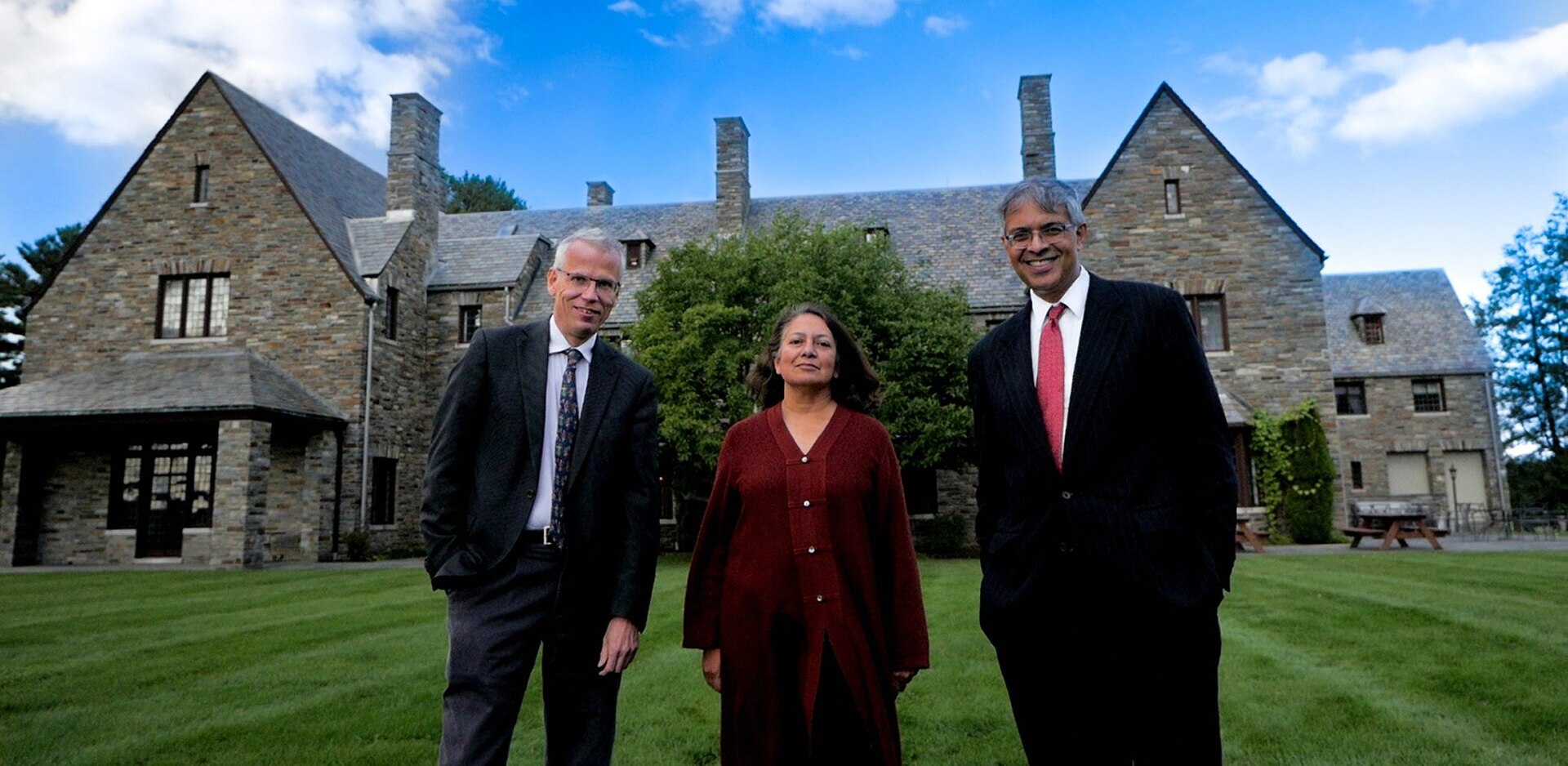
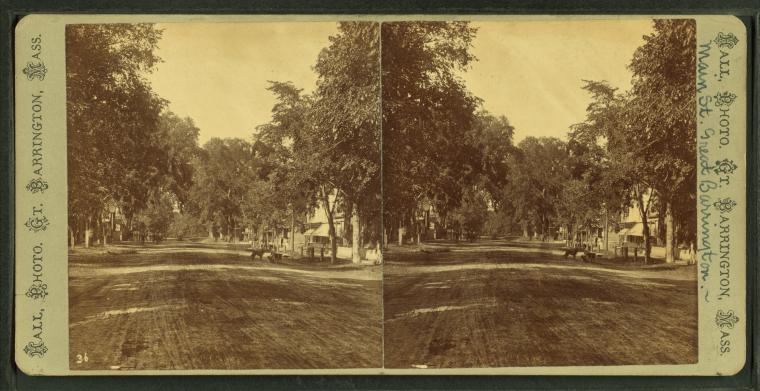
Kulldorff had invited Bhattacharya and Gupta to Massachusetts to record a video laying out an alternative to lockdowns, and to talk with a small group of journalists; the American Institute for Economic Research, a research group in Great Barrington, hosted the gathering and lent a room, equipment and a camera operator without charge.2 While there, the authors wrote, "the three spontaneously decided to also write a short Declaration to summarize the thinking."2 They wrote it from October 2 to October 4, 2020, signed it on October 4, sent it to scientific colleagues, and released it to the public on October 5.2 "A family member and a journalist helped with phrasing, grammar, and proof reading," they later wrote. "Nobody else saw the declaration before it was completed in its final form."2 In an addendum of October 2025 they added that "none of us are or have ever been affiliated with AIER," that the institute's president and board learned of the declaration only after it was published, and that the title, suggested by Bhattacharya, simply named the town where it was written.2
What the declaration says
The declaration runs to about 500 words. It opens: "As infectious disease epidemiologists and public health scientists we have grave concerns about the damaging physical and mental health impacts of the prevailing COVID-19 policies, and recommend an approach we call Focused Protection."1 Its central passages, quoted from gbdeclaration.org, read:
"Current lockdown policies are producing devastating effects on short and long-term public health. The results (to name a few) include lower childhood vaccination rates, worsening cardiovascular disease outcomes, fewer cancer screenings and deteriorating mental health - leading to greater excess mortality in years to come, with the working class and younger members of society carrying the heaviest burden. Keeping students out of school is a grave injustice.
Keeping these measures in place until a vaccine is available will cause irreparable damage, with the underprivileged disproportionately harmed. ...
The most compassionate approach that balances the risks and benefits of reaching herd immunity, is to allow those who are at minimal risk of death to live their lives normally to build up immunity to the virus through natural infection, while better protecting those who are at highest risk. We call this Focused Protection.
Adopting measures to protect the vulnerable should be the central aim of public health responses to COVID-19. By way of example, nursing homes should use staff with acquired immunity and perform frequent testing of other staff and all visitors. Staff rotation should be minimized. Retired people living at home should have groceries and other essentials delivered to their home. When possible, they should meet family members outside rather than inside. ...
Those who are not vulnerable should immediately be allowed to resume life as normal. Simple hygiene measures, such as hand washing and staying home when sick should be practiced by everyone to reduce the herd immunity threshold. Schools and universities should be open for in-person teaching. Extracurricular activities, such as sports, should be resumed. Young low-risk adults should work normally, rather than from home. Restaurants and other businesses should open. Arts, music, sport and other cultural activities should resume."1
(The original uses a long dash after "mental health"; it is shown here as a hyphen to follow this site's style.) The declaration's medical premises are taken up in the medical note below. What matters for this lesson is what it asked for in policy: open schools, open businesses, normal life for the young and healthy, and concentrated protection for the old and sick, with nursing home staff who had recovered, frequent testing, and delivered groceries for retirees.1 Seven weeks later the three published a longer paper on the site, "Focused Protection: The Middle Ground between Lockdowns and 'Let it Rip,'" dated November 25, 2020, in which they wrote that "some media outlets and scientists have falsely characterized it as a 'herd immunity strategy' that aims to maximize infections among the young," and that "we believe that everyone should take basic precautions to avoid spreading the disease and that no one should intentionally expose themselves to COVID-19 infection."10
Taking it to the public
The authors put the declaration online for anyone to sign. A volunteer web designer, Lucio Saverio Eastman, built the site overnight and hosted it on his own server.2 The signature counter on gbdeclaration.org read 941,799 when this lesson was written.1 The authors acknowledge that some early online signatures were pranks, such as "Dr. Johnny Bananas," and say fake names were under one percent and most were removed.2 In the weeks that followed they defended the proposal in public; their November paper describes a debate Bhattacharya held with Harvard epidemiologist Marc Lipsitch under the sponsorship of the Journal of the American Medical Association.10
What it cost
The Collins email of October 8, 2020
The federal government's top medical research official answered within four days, in private. On October 8, 2020, at 2:31 p.m., NIH Director Francis Collins emailed Anthony Fauci, director of the National Institute of Allergy and Infectious Diseases, and NIH officials Cliff Lane and Lawrence Tabak.3 The final report of the House Select Subcommittee on the Coronavirus Pandemic, issued December 4, 2024, quotes the email as saying that the proposal needed "a quick and devastating published take down of its premise," and elsewhere as calling for "a quick and devastating published takedown of [the paper's] premises."3 The email came to light through a Freedom of Information Act request and The Wall Street Journal's editorial board wrote about the exchange on December 21, 2021, under the headline "How Fauci and Collins Shut Down Covid Debate."113 Kulldorff summarized it this way: Collins "called us 'fringe epidemiologists' and asked his colleagues to orchestrate a 'devastating published takedown.'"5 (The published wordings differ slightly, and this lesson could not open the released email itself; see the unverified list.) The released exchange also included a reply from Dr. Fauci, which this lesson could not open. The House report lists Wired, The Wall Street Journal, The Guardian, the Independent and the Telegraph among the outlets that dismissed the declaration, citing a Wired article of October 7, 2020, "There is no 'scientific divide' over herd immunity."3
The private message became public policy in a week. On October 14, 2020, Collins told The Washington Post that the declaration was "a fringe component of epidemiology...that is not mainstream science," and called it dangerous.3 The House report, written by the subcommittee's majority, concluded that "anyone associated with the paper was immediately categorized as a 'fringe' theorist" and that "it was evident from the early days of the COVID-19 pandemic that public health leadership had little interest in engaging in any form of alternative debate."3
Silenced online
The three found their arguments restricted on the largest platforms. "Big tech outlets like Facebook and Google followed suit, suppressing our ideas, falsely deeming them 'misinformation,'" Bhattacharya told Reason in April 2022.11 Kulldorff wrote that a 2021 tweet in which he said "Thinking that everyone must be vaccinated is as scientifically flawed as thinking that nobody should" was censored by Twitter, and that he had also been censored by LinkedIn, Facebook and YouTube.5 Bhattacharya and Kulldorff became plaintiffs, with Aaron Kheriaty (lesson 16 and lesson 17), in the federal suit Missouri v. Biden. When it reached the Supreme Court as Murthy v. Missouri, the Court held on June 26, 2024 that "neither the individual nor the state plaintiffs have established standing to seek an injunction against any defendant." On the doctors, the Court wrote that their declarations pointed not to the CDC but "to officials at the National Institutes of Health and the NIAID," and "those entities are not before us."12 The Court did not decide whether the government had pressured the platforms; it decided only that these plaintiffs had not tied their own restrictions to the defendants before it.12
Kulldorff loses Harvard
The heaviest cost fell on Kulldorff. In 2021 he was removed from the CDC's COVID-19 vaccine safety work group after he argued in an op-ed that the Johnson and Johnson vaccine should not be paused for older Americans; "I am probably the only person ever fired by the CDC for being too pro-vaccine," he wrote.5 Then came the vaccine mandate at Mass General Brigham, the hospital system through which he held his Harvard appointment. He objected on scientific grounds: he had already had COVID-19, and he argued that it was risky to vaccinate someone with his immune deficiency without studies of patients like him.5 His medical and religious exemption requests were denied. "This stance got me fired by Mass General Brigham, and consequently fired from my Harvard faculty position," he wrote in City Journal on March 11, 2024, in an essay that began: "I am no longer a professor of medicine at Harvard. The Harvard motto is Veritas, Latin for truth. But, as I discovered, truth can get you fired."5 (The original sentence uses a long dash where this lesson uses a comma.) This account is his; Harvard and Mass General Brigham's own statements on the dismissal were not found for this lesson.
Bhattacharya and Gupta kept their posts, but the label "fringe" followed all three for years. Kulldorff wrote that a member of Harvard's Center for Health and Human Rights accused him of being "enticed . . . with Koch money" and of being cultivated by political think tanks, charges he called false.5


How it ended
The official record turns
No court ruled on the Great Barrington Declaration, and no single event ended the dispute. The record changed in stages. In July 2023, speaking to a Braver Angels panel, Francis Collins himself, by then retired as NIH director, described the narrow view he and others had taken. As quoted in the House Select Subcommittee's final report, he said: "If you're a public health person and you're trying to make a decision, you have this very narrow view of what the right decision is. And that is something that will save a life; it doesn't matter what else happens. So you attach infinite value to stopping the disease and saving a life. You attach zero value to whether this actually totally disrupts people's lives, ruins the economy, and has many kids kept out of school in a way that they never quite recover from. So, yeah, collateral damage. This is a public health mindset and I think a lot of us involved in trying to make those recommendations had that mindset and that was really unfortunate. It's another mistake we made."3 The House report itself, issued December 4, 2024, found that the declaration "categorically did not advocate for individuals to intentionally get infected with COVID-19 or a 'let it rip' approach," and that its authors "were not demanding their policy ideas become law. They were simply asking that they be allowed to participate in the conversation."3
Bhattacharya at the NIH
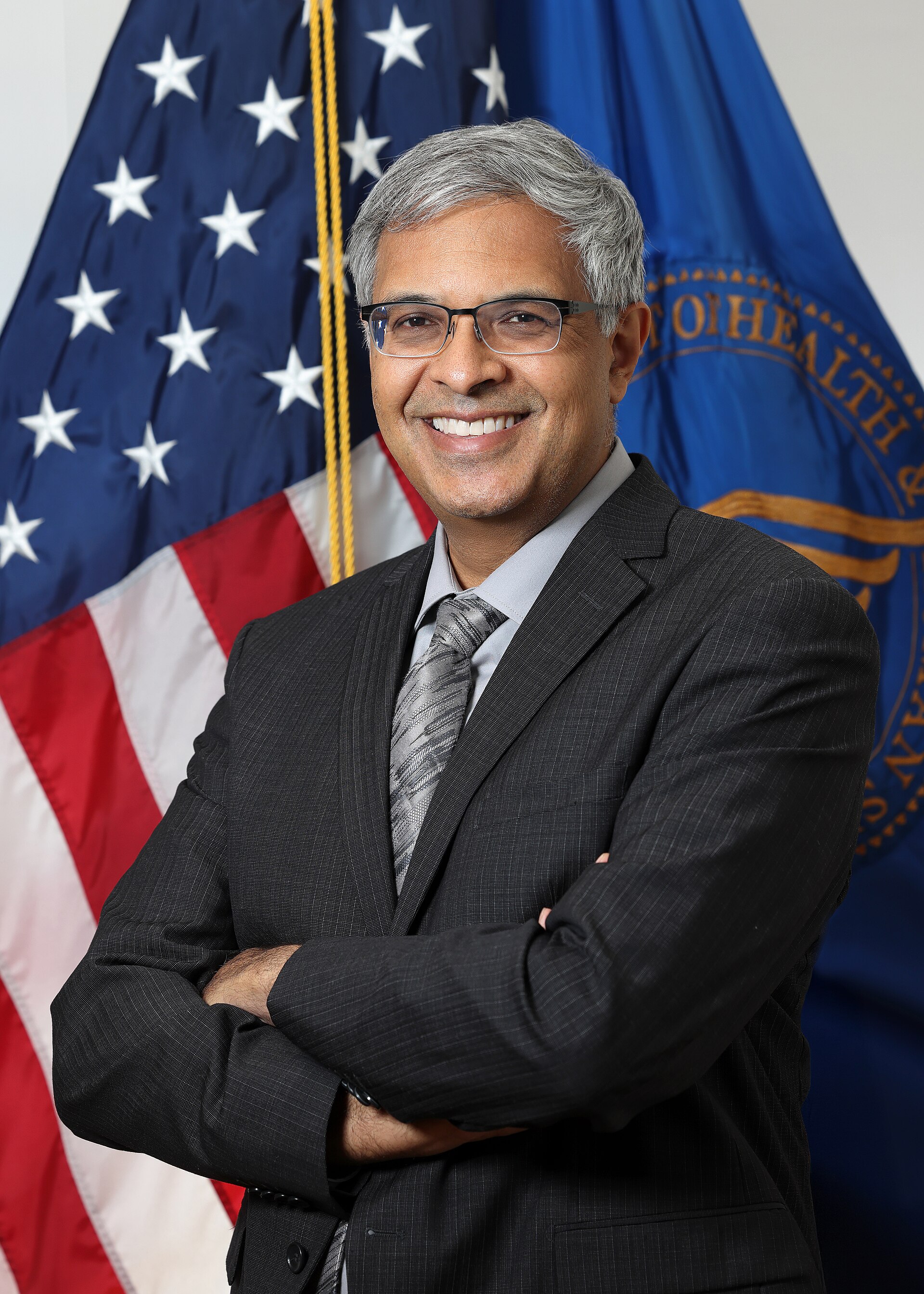
The man Collins had called a fringe epidemiologist was confirmed by the Senate on March 25, 2025 to lead Collins's old agency, and on April 1, 2025 he "took the helm as 18th director of the National Institutes of Health," in the NIH's own words.6 He left his Stanford professorship to take the post.6 The New York Times reported on February 18, 2026 that he would also temporarily run the Centers for Disease Control and Prevention as acting director during a leadership change; this lesson could not open a federal record of that appointment or of its end date (see the unverified list).13 As of November 7, 2026, the CDC's leadership page lists Dr. Erica Schwartz as CDC Director and does not list Bhattacharya.14
His tenure has drawn organized dissent from inside his own agency, and the facts belong in a fair profile. On June 9, 2025, a group of NIH staff published the "Bethesda Declaration," a letter addressed "Dear Dr. Bhattacharya," saying: "we dissent to Administration policies that undermine the NIH mission, waste public resources, and harm the health of Americans and people across the globe." The letter said NIH had "targeted multiple universities with indiscriminate grant terminations, payment freezes for ongoing research, and blanket holds on awards," and it said its signers "modeled" their dissent "after your Great Barrington Declaration."15 The letter also quoted his own pledge at his confirmation hearing: "I will establish a culture of respect for free speech in science and scientific dissent at the NIH."15 Under his leadership the NIH also changed its rules on foreign research partners, announcing on May 1, 2025 that it would no longer allow foreign subawards to be nested under domestic grants, citing reporting and national security concerns.16

Kulldorff at the vaccine committee and HHS
On June 9, 2025, the Department of Health and Human Services announced that it had "removed the 17 sitting members" of the CDC's Advisory Committee on Immunization Practices, and Secretary Robert F. Kennedy Jr. said, "A clean sweep is necessary to reestablish public confidence in vaccine science."17 Kulldorff was among the new members and was chosen to chair the committee. The official summary of its June 25, 2025 meeting records: "Dr. Martin Kulldorff, Chair of the ACIP, convened the meeting on June 25, 2025," and "stressed the importance of open scientific inquiry, rebuilding public trust, and addressing vaccine safety transparently."18
The committee's work under his chairmanship was disputed, and the record shows why. At its September 18 and 19, 2025 meeting it voted 8 to 3, with one abstention, that the combined measles, mumps, rubella and varicella vaccine "is not recommended" before age 4 and that children that age should receive separate MMR and varicella shots; Kulldorff voted yes.19 The same meeting voted 12 to 0 that "All pregnant women should be tested for hepatitis B infection," tabled a second hepatitis B vote over Kulldorff's lone objection, and moved COVID-19 vaccination for all ages to "individual-based decision-making."19 At the December 4, 2025 meeting, the committee's executive secretary announced that "Dr. Martin Kulldorff has accepted the position as Chief Science Officer within the Department of Health and Human Services and, as a result, has stepped down from his role as an ACIP member and chair."7 As of November 2026 the CDC lists the committee's 2026 meetings as cancelled: "Due to ongoing litigation, this meeting is cancelled."20
Gupta at Oxford
Sunetra Gupta took no government post. As of November 2026 the University of Oxford's Department of Biology lists her as Professor Sunetra Gupta, still working on the evolution of pathogen diversity.8 Her stand cost her the same label as her colleagues, but she kept her chair and her research, and she remains, with Kulldorff and Bhattacharya, a named author on the declaration's site.1 The site now advertises a book edited by Kulldorff and Bhattacharya, The Great Barrington Declaration: Documents, Defenses, and Disputations, published by MAHA Books and Brownstone Institute.1
Timeline
| Date | Event |
|---|---|
| Oct. 2 to 4, 2020 | Kulldorff, Gupta and Bhattacharya write the declaration at the American Institute for Economic Research in Great Barrington.2 |
| Oct. 4, 2020 | The three authors sign the declaration.1 |
| Oct. 5, 2020 | The declaration is released to the public.2 |
| Oct. 7, 2020 | Wired publishes "There is no 'scientific divide' over herd immunity," later cited by the House report.3 |
| Oct. 8, 2020 | Collins emails Fauci, Lane and Tabak at 2:31 p.m. calling for a "devastating published take down."3 |
| Oct. 14, 2020 | Collins tells The Washington Post the declaration is "a fringe component of epidemiology."3 |
| Oct. 15, 2020 | The John Snow Memorandum appears in The Lancet, calling the approach "a dangerous fallacy unsupported by scientific evidence."4 |
| Nov. 25, 2020 | The authors publish "Focused Protection: The Middle Ground between Lockdowns and 'Let it Rip.'"10 |
| Apr. 2021 | Kulldorff is removed from the CDC's COVID-19 vaccine safety work group after opposing the Johnson and Johnson pause for older people, by his account.5 |
| Dec. 21, 2021 | The Wall Street Journal's editorial board writes "How Fauci and Collins Shut Down Covid Debate."3 |
| Apr. 20, 2022 | Reason reports that the Collins email was obtained through a Freedom of Information Act request.11 |
| July 2023 | Collins tells a Braver Angels panel, "It's another mistake we made."3 |
| Mar. 11, 2024 | Kulldorff publishes "Harvard Tramples the Truth," saying he was fired by Mass General Brigham and therefore from Harvard.5 |
| June 26, 2024 | Murthy v. Missouri: the Supreme Court holds the plaintiffs, including Bhattacharya and Kulldorff, lacked standing.12 |
| Dec. 4, 2024 | The House Select Subcommittee's final report criticizes the response to the declaration.3 |
| Mar. 25, 2025 | The Senate confirms Bhattacharya as NIH director.6 |
| Apr. 1, 2025 | Bhattacharya takes office as the 18th NIH director.6 |
| June 9, 2025 | HHS removes all 17 ACIP members; NIH staff publish the Bethesda Declaration.1715 |
| June 25, 2025 | Kulldorff convenes his first ACIP meeting as chair.18 |
| Sept. 18 to 19, 2025 | ACIP, under Kulldorff, votes against the combined MMRV shot before age 4 and for individual decision-making on COVID-19 vaccines.19 |
| Oct. 2025 | The authors add an addendum to gbdeclaration.org on how the declaration came about.2 |
| Dec. 4, 2025 | ACIP is told Kulldorff has become HHS Chief Science Officer and stepped down as chair.7 |
| Feb. 18, 2026 | The New York Times reports Bhattacharya will also temporarily run the CDC (not confirmed from a federal record).13 |
Why it took courage
In October 2020 it was easy for a scientist to agree with the official line and dangerous to say otherwise. These three said otherwise, under their own names and university titles, at the height of the pandemic, in a document anyone could read in a few minutes. They did not hide behind anonymity or bury their view in a technical journal. They wrote in plain language for the public and invited the public to sign.12
The liberty they defended was the liberty of science itself: the freedom to question an official consensus in public and to be answered with argument rather than suppression. The NIH director's own email shows what they were up against. The head of the nation's chief medical research agency did not ask for a debate; he asked for "a quick and devastating published take down."3 A scientist's career depends on grants, appointments and the good opinion of colleagues, and the authors knew all three were at risk. Kulldorff wrote that he faced "a choice between science or my academic career. I chose the former."5 He lost his professorship and kept his conscience.
They also spoke for people who had no voice in the debate: children kept out of school, the poor who could not work from home, patients who missed cancer screenings. The declaration said, "Keeping students out of school is a grave injustice," and that "the working class and younger members of society" were "carrying the heaviest burden."1 Whatever one concludes about the medical science, that plea for the people who bore the costs of lockdown was a moral stand, and it was made when few in their profession would make it.
Finally, they kept to lawful and open means. They wrote, signed, debated and, when two of them believed the government had pressed social media companies to suppress them, they went to court.12 They lost that case on standing and accepted the ruling. Their example shows how dissent should work in a free country: in public, in one's own name, with evidence, and through the institutions the Constitution provides. The module's lesson on forms of lawful resistance describes these means, and the First Amendment protects them.
What the other side said
The fullest answer came from thirty-one scientists in The Lancet on October 15, 2020, in "Scientific consensus on the COVID-19 pandemic: we need to act now," known as the John Snow Memorandum, whose signers included Rochelle Walensky of Massachusetts General Hospital, later CDC director.45 It said: "The arrival of a second wave and the realisation of the challenges ahead has led to renewed interest in a so-called herd immunity approach, which suggests allowing a large uncontrolled outbreak in the low-risk population while protecting the vulnerable. ... This is a dangerous fallacy unsupported by scientific evidence."4 It argued that "uncontrolled transmission in younger people risks significant morbidity and mortality across the whole population," that "the proportion of vulnerable people constitute as much as 30% of the population in some regions," and that "prolonged isolation of large swathes of the population is practically impossible and highly unethical."4 NIH Director Francis Collins told The Washington Post on October 14, 2020 that the declaration was "a fringe component of epidemiology...that is not mainstream science," and he later testified to the House subcommittee that it was "a dangerous approach" and that he was "looking for a response from credible experts to get that response out there quickly before this becomes somehow a U.S. policy."3 On Bhattacharya's NIH tenure, NIH staff wrote in the Bethesda Declaration that the administration had forced NIH, "under your watch," into actions including "indiscriminate grant terminations."15
Still disputed: Scientists still disagree over whether focused protection could have worked in 2020 and 2021 and whether lockdowns saved more lives than they cost; the House subcommittee's majority sided with the declaration's authors on the suppression of debate, while the John Snow signers have not withdrawn their memorandum, and the authors' later federal decisions (NIH grant actions and the 2025 vaccine committee votes) are disputed in their own right.341519
Medical note: The declaration (Oct. 4, 2020) stated that "vulnerability to death from COVID-19 is more than a thousand-fold higher in the old and infirm than the young," that "for children, COVID-19 is less dangerous than many other harms, including influenza," and that "all populations will eventually reach herd immunity," which "can be assisted by (but is not dependent upon) a vaccine."1 These are the authors' statements. The John Snow Memorandum (Oct. 15, 2020) answered that "there is no evidence for lasting protective immunity to SARS-CoV-2 following natural infection," that the infection fatality rate "is several-fold higher than that of seasonal influenza," and that infection "can lead to persisting illness, including in young, previously healthy people."4 This lesson takes no position on these medical questions.
Hard questions and answers
Was the declaration a "let it rip" plan?
Its authors said no from the start, and the text supports them: it called protecting the vulnerable "the central aim of public health responses" and listed specific measures for nursing homes and retirees.1 Seven weeks later they wrote that "no one should intentionally expose themselves to COVID-19 infection."10 The House report agreed it "categorically did not advocate" a "let it rip" approach.3 Its critics answered that allowing normal life for the young would in practice mean uncontrolled spread, and that the vulnerable could not be walled off.4
Did Collins do anything wrong by sending a private email?
Scientists may criticize each other, and a director may ask colleagues to answer an argument. The concern raised by the email is who sent it and how. The director of the nation's chief medical research agency asked senior colleagues for a "devastating" public "take down" of three named scientists' work, rather than for a debate with them, and within a week told a national newspaper their view was "fringe."3 Collins later conceded that public health officials had attached "zero value" to the collateral damage of their policies.3
Did Kulldorff lose his job for the declaration or for refusing a vaccine?
On his own account, the formal reason was the vaccine mandate: his medical and religious exemption requests were denied and Mass General Brigham fired him, which ended his Harvard appointment.5 He links it to his public dissent, writing that after the attacks on the declaration "it was clear that I faced a choice between science or my academic career."5 This lesson found no public statement from Harvard or the hospital giving their side.
Did the Supreme Court reject their claim that they were censored?
No. In Murthy v. Missouri the Court held only that the plaintiffs had not shown standing to seek an injunction against the defendants before it. It noted that the doctors' declarations pointed to the NIH and NIAID, which "are not before us."12 It made no finding that the platforms' restrictions were justified or that no government pressure occurred.
Are their later government records part of the hero story?
They are part of the record, and a fair reader should know them. This profile honors the stand they took in 2020, when they had power over no one and much to lose. Since 2025 two of them have held great power, and their decisions are open to the same scrutiny they demanded of others: NIH staff dissented from Bhattacharya's grant actions in the Bethesda Declaration, citing his own words on dissent back to him, and the vaccine committee Kulldorff chaired changed long-standing recommendations by split votes.1519 That their critics modeled a dissent on the Great Barrington Declaration is itself a tribute to what the three began.15
What would a public health officer say today?
A defender of the 2020 consensus would point to the memorandum's warning that a third of the population in some regions counted as vulnerable and could not realistically be protected while the virus spread among everyone else.4 A defender of the declaration would point to Collins's own admission about collateral damage and to the House report's conclusion that "there was absolutely no room for any kind of high level, scientific debate."3 Both can agree on one lesson for any local health board: publish the reasoning, invite the dissent, and answer it on the merits. Lesson 22 and the module on testifying and public comment show how.
Related lessons
- Five Doctors Against California's Speech Law: physicians who challenged a state law against COVID-19 "misinformation."
- Dr. Aaron Kheriaty, Fired for Natural Immunity: their co-plaintiff in Missouri v. Biden.
- Emergency Power in 2020: the orders the declaration opposed.
- Dr. Ryan Cole: a dissenting physician on an Idaho health board.
- What the Stands Won and the record of every ruling.
- Ordered Liberty: overview, legitimate authority and its limits, forms of lawful resistance.
- The First Amendment.
Still open
These items could not be confirmed against a primary source before publication. The lesson states them as open, and they stay on the fact-check list.
- The Oct. 8, 2020 Collins email and Dr. Fauci's reply are not quoted here from the released emails themselves: the House report quotes the Collins email twice with slightly different wording ("take down of its premise" and "takedown of [the paper's] premises"). Who obtained the emails under the Freedom of Information Act (often reported as the American Institute for Economic Research) is not confirmed; Reason (2022) says only that the email was obtained through a FOIA request.
- Bhattacharya's service as acting CDC director (reported by The New York Times on Feb. 18, 2026) and the date it ended were not confirmed from a federal record; the CDC leadership page (updated Nov. 6, 2026) lists Erica Schwartz as CDC Director without a start date.
- Kulldorff's HHS title is taken from the ACIP summary of Dec. 4 to 5, 2025 ("Chief Science Officer within the Department of Health and Human Services"); his start date and the HHS office in which he serves were not confirmed from a federal record.
- The dates of Kulldorff's dismissal by Mass General Brigham and Harvard were not found in an opened source; the lesson relies on his own account of Mar. 11, 2024. No statement by Harvard or Mass General Brigham was found.
- No current controversy involving Sunetra Gupta was sourced; the lesson states none.
- Collins's Oct. 14, 2020 Washington Post quotation and his testimony are quoted as the House report quotes them; the Post article and transcript were not opened.
Learn more
- The Great Barrington Declaration: The full text takes three minutes to read; read it before reading what others said about it.
- The John Snow Memorandum (The Lancet, 2020): The main scientific answer, in its signers' own words.
- Martin Kulldorff, Harvard Tramples the Truth (City Journal, 2024): His first-person account of what dissent cost him.
- House Select Subcommittee final report (2024), pages 333 to 334: The congressional majority's findings on the response to the declaration, with the email citation.
- Murthy v. Missouri (2024): What the Supreme Court did and did not decide about the doctors' censorship claims.
Notes
- Martin Kulldorff, Sunetra Gupta and Jay Bhattacharya, "The Great Barrington Declaration," signed Oct. 4, 2020, full text, author descriptions and signature counter (941,799 on the date retrieved), gbdeclaration.org (retrieved Nov. 7, 2026). Read it online. ↩
- Great Barrington Declaration, "Why was the Declaration Written?" and "How Did the Great Barrington Declaration Come About? (addendum, October 2025)," gbdeclaration.org (retrieved Nov. 7, 2026). Read it online. ↩
- Select Subcommittee on the Coronavirus Pandemic, Committee on Oversight and Accountability, U.S. House of Representatives, "After Action Review of the COVID-19 Pandemic: The Lessons Learned and a Path Forward," Final Report, Dec. 4, 2024, pages 333 to 334 (Great Barrington Declaration; notes 1281 to 1291, citing the Oct. 8, 2020, 2:31 p.m. email from Collins to Fauci, Lane and Tabak and The Washington Post of Oct. 14, 2020) and 391 to 392 (notes 1558 to 1561) (retrieved Nov. 7, 2026). Read it online. ↩
- Nisreen A. Alwan and 30 co-authors, "Scientific consensus on the COVID-19 pandemic: we need to act now" (the John Snow Memorandum), The Lancet 396, no. 10260 (published online Oct. 15, 2020): e71 to e72, doi:10.1016/S0140-6736(20)32153-X, full text via Europe PMC, PMC7557300 (retrieved Nov. 7, 2026). Read it online. ↩
- Martin Kulldorff, "Harvard Tramples the Truth," City Journal (Manhattan Institute), Mar. 11, 2024 (retrieved Nov. 7, 2026). Read it online. ↩
- National Institutes of Health, "The NIH Director" page: Jayanta "Jay" Bhattacharya, M.D., Ph.D., confirmed by the Senate Mar. 25, 2025, took office as 18th director Apr. 1, 2025 (retrieved Nov. 7, 2026). Read it online. ↩
- Centers for Disease Control and Prevention, Advisory Committee on Immunization Practices, Meeting Summary, Dec. 4 to 5, 2025, page 1 (announcement that Kulldorff accepted the position of HHS Chief Science Officer and stepped down as member and chair) (retrieved Nov. 7, 2026). Read it online. ↩
- University of Oxford, Department of Biology, "Professor Sunetra Gupta," research interests page (retrieved Nov. 7, 2026). Read it online. ↩
- Great Barrington Declaration, "Frequently Asked Questions," section "Lockdowns and Collateral Damage," gbdeclaration.org (retrieved Nov. 7, 2026). Read it online. ↩
- Jay Bhattacharya, Sunetra Gupta and Martin Kulldorff, "Focused Protection: The Middle Ground between Lockdowns and 'Let it Rip,'" Nov. 25, 2020, gbdeclaration.org (retrieved Nov. 7, 2026). Read it online. ↩
- Nick Gillespie, "Dr. Jay Bhattacharya: How To Avoid 'Absolutely Catastrophic' COVID Mistakes," Reason, Apr. 20, 2022 (retrieved Nov. 7, 2026). Read it online. ↩
- Murthy v. Missouri, No. 23-411 (U.S. June 26, 2024), slip opinion, syllabus and opinion of the Court (Barrett, J.), pages 15 to 16 on Drs. Bhattacharya, Kulldorff and Kheriaty (retrieved Nov. 7, 2026). Read it online. ↩
- Sheryl Gay Stolberg, "N.I.H. Director Will Temporarily Run C.D.C. in Leadership Shake-Up," The New York Times, Feb. 18, 2026, as cited in public reference sources; the article itself could not be opened for this lesson (retrieved Nov. 7, 2026). Read it online. ↩
- Centers for Disease Control and Prevention, "CDC Leadership" page, listing Erica Schwartz, MD, MPH, JD, as CDC Director (retrieved Nov. 7, 2026). Read it online. ↩
- NIH staff signers, "The Bethesda Declaration," letter to NIH Director Jay Bhattacharya, Bethesda, Maryland, June 9, 2025, published by Stand Up for Science (retrieved Nov. 7, 2026). Read it online. ↩
- National Institutes of Health, Notice NOT-OD-25-104, "Updated NIH Policy on Foreign Subawards," May 1, 2025 (retrieved Nov. 7, 2026). Read it online. ↩
- U.S. Department of Health and Human Services, press release, "HHS Takes Bold Step to Restore Public Trust in Vaccines by Reconstituting ACIP," June 9, 2025 (retrieved Nov. 7, 2026). Read it online. ↩
- Centers for Disease Control and Prevention, Advisory Committee on Immunization Practices, Meeting Summary, June 25 to 26, 2025, page 1 (retrieved Nov. 7, 2026). Read it online. ↩
- Centers for Disease Control and Prevention, Advisory Committee on Immunization Practices, Meeting Summary, Sept. 18 to 19, 2025, votes on MMRV vaccines (pages 19 to 20), hepatitis B vaccine (pages 44 to 45) and COVID-19 vaccines (pages 87 to 89) (retrieved Nov. 7, 2026). Read it online. ↩
- Centers for Disease Control and Prevention, "ACIP Meetings" page, listing the 2026 meetings of March 18 to 19, June 24 to 26 and October 21 to 23 as cancelled "Due to ongoing litigation" (retrieved Nov. 7, 2026). Read it online. ↩
Check yourself
1. Where and when was the Great Barrington Declaration signed?
The authors wrote it Oct. 2 to 4, 2020 at the American Institute for Economic Research in Great Barrington, signed it Oct. 4 and released it Oct. 5.
2. What did the declaration call its approach?
It recommended "an approach we call Focused Protection": normal life for those at minimal risk and better protection for those at highest risk.
3. What did NIH Director Francis Collins ask for in his Oct. 8, 2020 email, as quoted in the House report?
The House Select Subcommittee's final report quotes the email to Fauci, Lane and Tabak calling for a quick and devastating published take down.
4. How did the John Snow Memorandum describe the herd immunity approach?
The Lancet memorandum of Oct. 15, 2020 used those words and argued that the vulnerable could not be isolated.
5. According to Kulldorff's own account, what formally ended his Harvard appointment?
He wrote in City Journal (Mar. 11, 2024) that the hospital system fired him and that this ended his Harvard faculty position.
6. What did the Supreme Court hold in Murthy v. Missouri (2024) about Bhattacharya and Kulldorff?
The Court decided standing only and noted their declarations pointed to NIH and NIAID officials, who were not before it.
7. Which position did Kulldorff take after chairing the CDC's vaccine advisory committee in 2025?
The ACIP summary of Dec. 4 to 5, 2025 records that he accepted that post and stepped down as member and chair.
8. What did the NIH staff letter of June 9, 2025 say it was modeled on?
The Bethesda Declaration told Bhattacharya, "We hope you will welcome this dissent, which we modeled after your Great Barrington Declaration."
Terms in this lesson
- Great Barrington Declaration
- A one-page statement signed Oct. 4, 2020 by Martin Kulldorff, Sunetra Gupta and Jay Bhattacharya, calling for Focused Protection of the vulnerable instead of general lockdowns.
- Focused Protection
- The declaration's proposal: allow people at minimal risk to live normally while concentrating protection on those at highest risk, such as nursing home residents and the elderly.
- Lockdown
- As the declaration's authors defined it, a set of measures including closed schools and businesses, limits on events, travel restrictions, work-from-home orders, curfews and quarantine rules.
- Herd immunity
- The point at which enough of a population is immune that the rate of new infections stabilizes or falls, reached through infection, vaccination or both.
- John Snow Memorandum
- A letter by 31 scientists in The Lancet (Oct. 15, 2020) answering the declaration and calling for continued measures to suppress transmission.
- Freedom of Information Act (FOIA)
- The federal law that lets the public request records from federal agencies; the Collins email of Oct. 8, 2020 became public through such a request.
- National Institutes of Health (NIH)
- The federal agency that conducts and funds most U.S. biomedical research. Francis Collins directed it in 2020; Jay Bhattacharya became its 18th director on Apr. 1, 2025.
- ACIP
- The Advisory Committee on Immunization Practices, which advises the CDC on vaccine schedules. HHS replaced all 17 members on June 9, 2025; Kulldorff chaired it until December 2025.
- Standing
- The requirement that a plaintiff show an injury traceable to the defendant and redressable by the court; the ground on which Murthy v. Missouri was decided.
- Bethesda Declaration
- A June 9, 2025 letter from NIH staff to Director Bhattacharya dissenting from administration policies, explicitly modeled on the Great Barrington Declaration.
- Collateral damage
- Harm caused by a policy beyond its intended target; Francis Collins used the phrase in 2023 to describe the effects of pandemic measures that officials had given "zero value."
- Mass General Brigham
- The Boston hospital system that employs most Harvard Medical School faculty; by Kulldorff's account it fired him over its COVID-19 vaccine mandate, ending his Harvard post.
Sources
- The Great Barrington Declaration (full text and signers) (2020-10-04) checked 2026-11-07
- Great Barrington Declaration: Why was the Declaration Written? (with Oct. 2025 addendum) (2020; addendum 2025-10) checked 2026-11-07
- Great Barrington Declaration: Frequently Asked Questions (2020) checked 2026-11-07
- Focused Protection: The Middle Ground between Lockdowns and 'Let it Rip' (2020-11-25) checked 2026-11-07
- John Snow Memorandum, The Lancet 396:e71-e72 (PMC7557300) (2020-10-15) checked 2026-11-07
- House Select Subcommittee on the Coronavirus Pandemic, Final Report (2024-12-04) checked 2026-11-07
- Kulldorff, Harvard Tramples the Truth, City Journal (2024-03-11) checked 2026-11-07
- NIH Director page (Bhattacharya) (2025) checked 2026-11-07
- University of Oxford, Professor Sunetra Gupta (2026) checked 2026-11-07
- Reason, Gillespie interview with Bhattacharya (2022-04-20) checked 2026-11-07
- Murthy v. Missouri, No. 23-411 (U.S. 2024), slip opinion (2024-06-26) checked 2026-11-07
- New York Times (Stolberg) on Bhattacharya and the CDC (not opened) (2026-02-18) checked 2026-11-07
- CDC Leadership page (2026) checked 2026-11-07
- The Bethesda Declaration (NIH staff letter) (2025-06-09) checked 2026-11-07
- NIH Notice NOT-OD-25-104, foreign subawards (2025-05-01) checked 2026-11-07
- HHS press release reconstituting ACIP (2025-06-09) checked 2026-11-07
- ACIP Meeting Summary, June 25 to 26, 2025 (2025-06-25) checked 2026-11-07
- ACIP Meeting Summary, Sept. 18 to 19, 2025 (2025-09-18) checked 2026-11-07
- ACIP Meeting Summary, Dec. 4 to 5, 2025 (2025-12-04) checked 2026-11-07
- CDC ACIP Meetings page (2026) checked 2026-11-07
- Photo: Kulldorff, Gupta and Bhattacharya at AIER, Taleed Brown (Wikimedia Commons) (2020-10) checked 2026-11-07
- Photo: Main Street, Great Barrington, Hall Photo (Wikimedia Commons) (circa 1865 to 1905) checked 2026-11-07
- Photo: Stanford Main Quad from Hoover Tower, King of Hearts (Wikimedia Commons) (2011-05-09) checked 2026-11-07
- Photo: Jay Bhattacharya official portrait, Chia-Chi Charlie Chang (Wikimedia Commons) (2025-03-31) checked 2026-11-07