Lesson 20 of 23 · about 40 minutes
Small Businesses and Landlords at the Supreme Court: NFIB v. OSHA and Alabama Association of Realtors v. HHS
Updated November 7, 2026
You'll be able to
- Name the landlords, associations and States that brought the eviction and OSHA cases and say what each risked.
- Explain what the CDC eviction order and the OSHA emergency temporary standard required, and the penalties each carried.
- Summarize the holdings of Alabama Association of Realtors v. HHS and NFIB v. OSHA in the Court's own words.
- Explain why Biden v. Missouri came out the other way on the same day.
- State the strongest arguments of the government and the dissenting Justices, by name.
- Apply the 'clear authorization' principle to a state or local emergency order.
Start here: the short version
Two of the most important limits on federal emergency power in the pandemic were won by people who rent out houses and people who run businesses. In November 2020 the Alabama and Georgia Associations of Realtors, two landlords named Danny Fordham and Robert Gilstrap, and the companies they use to manage rental homes sued to end the nationwide eviction moratorium ordered by the Centers for Disease Control and Prevention.1 On August 26, 2021, the Supreme Court agreed that the CDC had claimed power Congress never gave it: "If a federally imposed eviction moratorium is to continue, Congress must specifically authorize it."2 Less than five months later, on January 13, 2022, the National Federation of Independent Business, 25 other trade associations, and 27 States led by Ohio persuaded the Court to stop the Occupational Safety and Health Administration's rule that would have required about 84 million workers to be vaccinated or tested weekly.34 The same day the Court allowed a narrower vaccine rule for health care facilities funded by Medicare and Medicaid, in Biden v. Missouri, which shows exactly where the line fell.5 These plaintiffs took on the federal government in the middle of a national emergency and asked one question: who decides? They won the answer that Congress, not an agency, makes laws of this size.

Who they were before
This lesson profiles two groups of plaintiffs. Neither had anything to do with the virus except that it reached their tenants and their employees. Both were ordinary participants in the economy who found themselves bound by federal orders that came with criminal penalties or heavy fines, and who decided to test those orders in court.
The landlords and the realtor associations
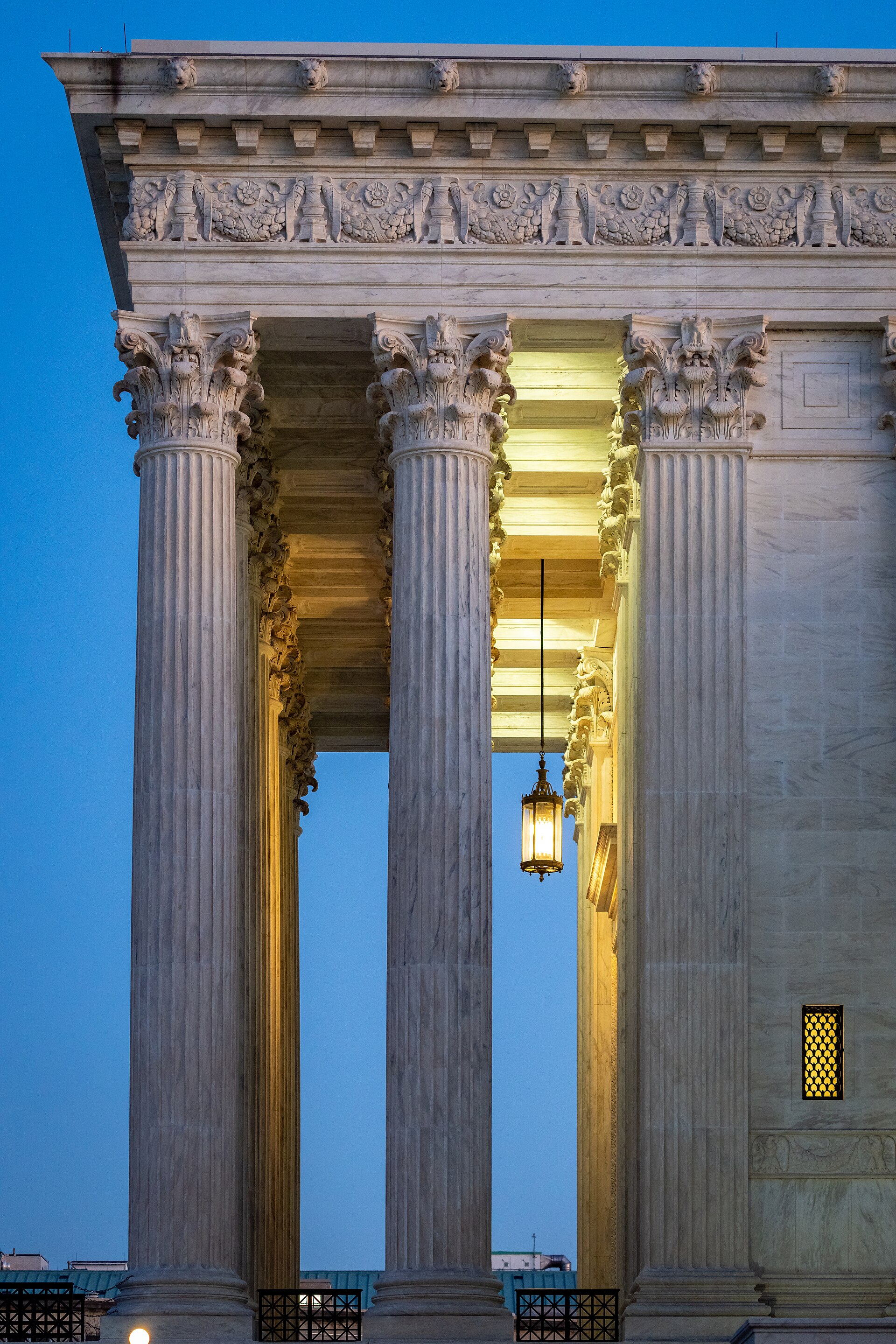
The plaintiffs in the eviction case were, in the words of Judge Dabney L. Friedrich of the U.S. District Court for the District of Columbia, "Danny Fordham, Robert Gilstrap, the corporate entities they use to manage rental properties (Fordham & Associates, LLC, H.E. Cauthen Land and Development, LLC, and Title One Management, LLC), and two trade associations (the Alabama and Georgia Associations of Realtors)." They "filed this action on November 20, 2020."1 The Supreme Court described them as "[r]ealtor associations and rental property managers in Alabama and Georgia."2
The Alabama Association of Realtors announced the suit on November 24, 2020, and described itself as having "over 18,000 members" from 23 local boards and 1,200 real estate companies. It said that more than half a million Realtors in America own at least one rental property.6 Its chief executive, Jeremy Walker, later said the moratorium "jeopardized the private property rights of everyone who owns property of any kind in the country."7
Danny Fordham runs Fordham and Associates LLC, a property and investment company in Montgomery, Alabama. He told Business Alabama that he considers it a small mom-and-pop operation and that one tenant owed him $10,000 in back rent while still receiving water, garbage pickup and maintenance. "I'm frustrated about it," he said.7 Judge Friedrich found that the three management companies "have each had tenants who have stopped paying rent, invoked the protections of the eviction moratorium, and would be subject to eviction but for the CDC Order."1 In the Supreme Court their lawyers, led by Brett A. Shumate of Jones Day, wrote that "the two individual landlords here had already lost thousands of dollars from the moratorium when they filed suit in November 2020, with no foreseeable prospect of recovery."8 Robert Gilstrap and Title One Management appear in the record through Gilstrap's sworn declaration; this lesson found no public interview with him and does not add to what the court record shows.1
NFIB and the 26 business associations
The National Federation of Independent Business told the Court it was "the nation's leading small business association, representing members in Washington, D.C., and all fifty states," with "290,564 businesses" as members as of November 13, 2021.9 It filed with 25 other trade associations, among them the American Trucking Associations, the National Retail Federation, FMI (the Food Industry Association), the National Association of Convenience Stores, the American Bakers Association and the Brick Industry Association, along with state groups from Kentucky, Louisiana, Michigan, Mississippi, Ohio, Tennessee and Texas, mostly truckers, grocers, convenience stores and petroleum marketers.9 Together, the application said, they "represent hundreds of thousands of businesses, which in turn employ millions of Americans."9
The associations put their own people on the record. Twelve people signed declarations, among them Karen Harned, Lyle Beckwith, Michael Gannon, Steve DeHaan, Jade West and Lori Buss Stillman.9 One employer quoted in the application said: "[w]e are already struggling to get and keep employees. This mandate will create an even larger challenge to keep our business open and operating." Another wrote: "I strongly support vaccinations, but the reality is that there is a percentage of my employees who are vehemently opposed to the covid vaccines, and no carrot or stick is going to change their mind."9 The associations were represented by the firm Lehotsky Keller, with Steven P. Lehotsky as counsel of record and Scott A. Keller among their lawyers.99
The States, including Idaho
The second application came from 27 States: "Alabama, Alaska, Arizona, Arkansas, Florida, Georgia, Idaho, Indiana, Iowa, Kansas, Kentucky, Louisiana, Mississippi, Missouri, Montana, Nebraska, New Hampshire, North Dakota, Ohio, Oklahoma, South Carolina, South Dakota, Tennessee, Texas, Utah, West Virginia and Wyoming." Ohio Attorney General Dave Yost and Kentucky Attorney General Daniel Cameron signed it, and Ohio Solicitor General Benjamin M. Flowers was counsel of record.4 Among the many other petitioners in the lower courts was "Chuck Winder, in his official capacity as President Pro Tempore of the Idaho Senate."4 The Speaker of the Idaho House, Scott Bedke, filed his own application with others on December 20, 2021.10
The range of challengers is worth seeing whole. The government's brief listed fourteen applications, from Job Creators Network and Phillips Manufacturing & Tower Co. to the Southern Baptist Theological Seminary, Word of God Fellowship, Betten Chevrolet and Fabarc Steel Supply.11 Small manufacturers, a car dealer, seminaries and churches, truckers and grocers all asked for the same relief. The Court chose two of them, NFIB's and the States', for argument.3
The order they faced
The CDC eviction moratorium
Congress's first pandemic relief law, the CARES Act of March 2020, "imposed a 120-day eviction moratorium for properties that participated in federal assistance programs or were subject to federally backed loans." When it expired in July 2020, "Congress did not renew it."2 On September 4, 2020, the CDC published its own order, "Temporary Halt in Residential Evictions To Prevent the Further Spread of COVID-19."12 The Supreme Court later described it: "The new, administratively imposed moratorium went further than its statutory predecessor, covering all residential properties nationwide and imposing criminal penalties on violators."2 The penalties ran "up to a $250,000 fine and one year in jail."2
To be protected, a tenant had to sign a declaration. As Justice Breyer summarized the later version, the tenant had to attest that he or she had "used best efforts to obtain all available governmental assistance for rent or housing," met income limits, could not pay "due to substantial loss of household income, loss of compensable hours of work or wages, a lay-off, or extraordinary out-of-pocket medical expenses," was making partial payments, and had "no other available housing options."13 A landlord who received such a declaration could not evict for nonpayment.
The CDC relied on a 1944 statute, section 361(a) of the Public Health Service Act, codified at 42 U.S.C. 264(a). Its words matter, because the case turned on them:
"The Surgeon General, with the approval of the [Secretary of Health and Human Services], is authorized to make and enforce such regulations as in his judgment are necessary to prevent the introduction, transmission, or spread of communicable diseases from foreign countries into the States or possessions, or from one State or possession into any other State or possession. For purposes of carrying out and enforcing such regulations, the Surgeon General may provide for such inspection, fumigation, disinfection, sanitation, pest extermination, destruction of animals or articles found to be so infected or contaminated as to be sources of dangerous infection to human beings, and other measures, as in his judgment may be necessary."2
Congress extended the CDC's order once, for a month, in December 2020. After that, the Court noted, "the CDC again took matters into its own hands," extending the moratorium through March, then June, then July.2 The extensions were published on February 3, March 31 and June 28, 2021.14

The OSHA vaccine-or-test rule
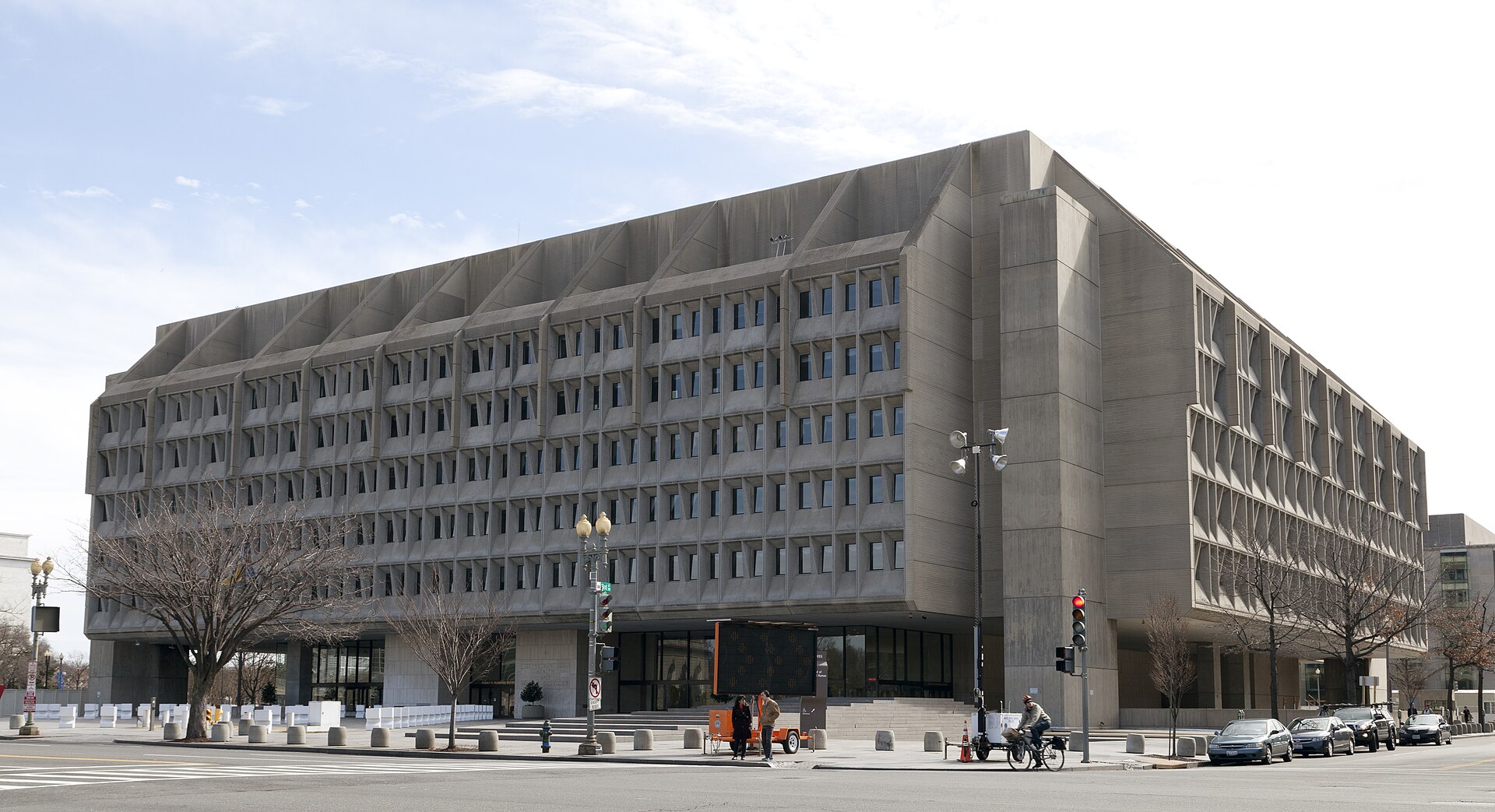
On September 9, 2021, President Biden announced "a new plan to require more Americans to be vaccinated," including an emergency rule requiring employers with at least 100 employees "to ensure their workforces are fully vaccinated or show a negative test at least once a week."3 OSHA published the rule, titled "COVID-19 Vaccination and Testing; Emergency Temporary Standard," on November 5, 2021, at 86 Fed. Reg. 61402.3
The Supreme Court summarized what it required. "The mandate, which employers must enforce, applies to roughly 84 million workers, covering virtually all employers with at least 100 employees. It requires that covered workers receive a COVID-19 vaccine, and it pre-empts contrary state laws. The only exception is for workers who obtain a medical test each week at their own expense and on their own time, and also wear a mask each workday."3 Covered employers had to "develop, implement, and enforce a mandatory COVID-19 vaccination policy" and verify and keep proof of each worker's status; unvaccinated workers who did not comply had to be "removed from the workplace." Violations carried fines "up to $13,653 for a standard violation, and up to $136,532 for a willful one."3
OSHA issued the rule as an "emergency temporary standard," which skips the ordinary notice-and-comment process. The Occupational Safety and Health Act allows that only when employees are "exposed to grave danger from exposure to substances or agents determined to be toxic or physically harmful or from new hazards" and the standard is "necessary to protect employees from such danger." The Court noted that before COVID-19 "the Secretary had used this power just nine times before (and never to issue a rule as broad as this one)."3
The government's view of the rule was different, and it should be stated in its own words. The Solicitor General told the Court that the standard "generally requires employers with 100 or more employees to implement a written policy that requires either (1) all employees to be vaccinated against COVID-19 or (2) employees who are not fully vaccinated to wear masks and supply proof of a negative COVID-19 test at least once every seven days when working with others in indoor settings," and that "covered employers may choose which one to implement."11
What they did
The landlords win, and then wait
The realtors and landlords sued the Department of Health and Human Services, the CDC and the Department of Justice in Washington, D.C., arguing that the CDC exceeded its statutory authority, skipped notice and comment, acted arbitrarily, and took property without compensation.1 On May 5, 2021, Judge Friedrich granted summary judgment and held that "the CDC Order must be set aside."1 But on May 14 she stayed her own judgment while the government appealed, and the D.C. Circuit refused to lift the stay on June 2.2
The landlords first asked the Supreme Court to lift the stay in No. 20A169. On June 29, 2021, the Court declined to vacate the stay. Justice Kavanaugh wrote that he agreed the CDC had exceeded its authority but would leave the stay in place because the CDC planned to end the moratorium in a few weeks; Justices Thomas, Alito, Gorsuch and Barrett would have vacated the stay.2
The moratorium expired on July 31, 2021. "Three days later, the CDC reimposed it."2 The new order, published August 6, 2021, covered counties "experiencing substantial or high levels of COVID-19 transmission."15 The landlords' application quoted the President's remarks of August 3: he had acknowledged that "[t]he bulk of the constitutional scholarship" said further action was "not likely to pass constitutional muster," but said extending it would be "worth the effort" because "by the time it gets litigated, it will probably give some additional time while we're getting that $45 billion out."8
The landlords went back to Judge Friedrich, who agreed on August 13 that the stay was no longer justified but held that the D.C. Circuit's earlier ruling bound her; the D.C. Circuit again refused on August 20.2 The same day, August 20, 2021, the landlords filed their second application with the Chief Justice.16
The businesses and States race the deadline
The challenges to OSHA's rule began the day it was published. "Scores of parties, including States, businesses, trade groups, and nonprofit organizations, filed petitions for review, with at least one petition arriving in each regional Court of Appeals," the Supreme Court recounted. The Fifth Circuit stayed the rule, in a case brought by BST Holdings and others, holding that the mandate likely exceeded OSHA's authority. The cases were then consolidated by random selection in the Sixth Circuit.3 There, "nearly 60" petitioners asked the full court to hear the case; the request failed on "an evenly divided 8-to-8 vote," with Chief Judge Sutton writing that the Secretary's "broad assertions of administrative power demand unmistakable legislative support." A three-judge panel then dissolved the Fifth Circuit's stay, over Judge Larsen's dissent.3
NFIB and its fellow associations filed their application on December 17, 2021, and the States filed theirs the next day; both went to Justice Kavanaugh as Circuit Justice for the Sixth Circuit.17 On December 22 the Court did something unusual for an emergency application: it set the two applications for oral argument. The argument was held on January 7, 2022. Scott A. Keller argued for the business associations, Ohio Solicitor General Benjamin M. Flowers argued for the States, and Solicitor General Elizabeth B. Prelogar argued for the government.17 Meanwhile, on December 8, 2021, a majority of the Senate had voted for S.J. Res. 29 to disapprove the rule.3
The associations' argument was practical as well as legal. Their application cited surveys in which "more than 74% of the respondents told [one Applicant] they expect to lose more than 10% of their workers as a result of the ETS," and another in which "92% of respondents expected 'that employees would quit their jobs rather than undergo weekly testing.'"9 They said that weekly testing was available only where tests could be found, and quoted a survey "that among those employers who have attempted to do so, only 28% are able to find adequate providers to ensure that weekly testing is available for their employees."9
What it cost
For the landlords, the cost was rent they could not collect and could not expect to recover. Their application quoted their sworn statements that they "will be unlikely to obtain any payment or damages from these tenants once the Eviction Moratorium expires," and that their "only ability to mitigate loss and obtain rental income from the properties is to evict non-paying tenants and rent the properties to paying tenants."8 The Supreme Court agreed that the moratorium "put the applicants, along with millions of landlords across the country, at risk of irreparable harm by depriving them of rent payments with no guarantee of eventual recovery," and added that "many landlords have modest means."2 Fordham said he saw rental assistance checks come through for nonpaying tenants only about 18 months into the pandemic.7
The size of the burden was large. The Court found that "[a]t least 80% of the country, including between 6 and 17 million tenants at risk of eviction, falls within the moratorium," and treated the "nearly $50 billion in emergency rental assistance" Congress provided as "a reasonable proxy of the moratorium's economic impact."2 The cost was also in rights: preventing landlords "from evicting tenants who breach their leases intrudes on one of the most fundamental elements of property ownership," which the Court named as "the right to exclude."2
For the businesses, the cost was compliance spending and lost workers. The Court summarized: "We are told by the States and the employers that OSHA's mandate will force them to incur billions of dollars in unrecoverable compliance costs and will cause hundreds of thousands of employees to leave their jobs."3 The associations noted that OSHA itself cited studies in which "between 38-50% of unvaccinated employees say they would rather quit than submit to vaccination mandates."9
The plaintiffs also carried the cost of fighting the federal government on an emergency schedule: two trips to the Supreme Court for the landlords in two months, and for the businesses, a race from the November 5 publication to a January argument.23
How it ended
Alabama Association of Realtors v. HHS (August 26, 2021)
The Court granted the landlords' application in an unsigned per curiam opinion, reported at 594 U.S. 758 (2021). Justice Breyer, joined by Justices Sotomayor and Kagan, dissented, so the vote was 6 to 3.2 "We vacate that stay, rendering the judgment enforceable," the Court wrote, and the moratorium ended.2
On the merits the Court said the applicants were "virtually certain to succeed," and, later, that "it is difficult to imagine them losing." It reasoned that "the CDC has imposed a nationwide moratorium on evictions in reliance on a decades-old statute that authorizes it to implement measures like fumigation and pest extermination. It strains credulity to believe that this statute grants the CDC the sweeping authority that it asserts."2 The listed measures in the statute's second sentence "directly relate to preventing the interstate spread of disease by identifying, isolating, and destroying the disease itself," while the link between evictions and interstate spread was a "downstream connection."2
The Court then applied the principle that would govern the OSHA case: "We expect Congress to speak clearly when authorizing an agency to exercise powers of 'vast economic and political significance.'"2 It asked what limit the government's reading would leave: "Could the CDC, for example, mandate free grocery delivery to the homes of the sick or vulnerable? Require manufacturers to provide free computers to enable people to work from home? Order telecommunications companies to provide free high-speed Internet service to facilitate remote work?" It concluded that "[s]ection 361(a) is a wafer-thin reed on which to rest such sweeping power."2
The Court did not deny the government's purpose. "It is indisputable that the public has a strong interest in combating the spread of the COVID-19 Delta variant. But our system does not permit agencies to act unlawfully even in pursuit of desirable ends." It added: "It is up to Congress, not the CDC, to decide whether the public interest merits further action here."2
National Federation of Independent Business v. OSHA (January 13, 2022)
Six days after argument, the Court stayed OSHA's rule in a per curiam opinion, reported at 595 U.S. 109 (2022). Justice Gorsuch, joined by Justices Thomas and Alito, concurred. Justices Breyer, Sotomayor and Kagan dissented jointly, so the vote was 6 to 3.3
The Court began from first principles: "Administrative agencies are creatures of statute. They accordingly possess only the authority that Congress has provided." The rule, it said, "is no 'everyday exercise of federal power.'" The Court described it instead as a significant encroachment into the lives and health "of a vast number of employees."3 The Act "empowers the Secretary to set workplace safety standards, not broad public health measures." And: "Although COVID-19 is a risk that occurs in many workplaces, it is not an occupational hazard in most. COVID-19 can and does spread at home, in schools, during sporting events, and everywhere else that people gather."3
The Court distinguished a vaccine from ordinary safety rules: "A vaccination, after all, 'cannot be undone at the end of the workday.'" It left room for narrower rules: "Where the virus poses a special danger because of the particular features of an employee's job or workplace, targeted regulations are plainly permissible," such as for "researchers who work with the COVID-19 virus." And it noted that "OSHA, in its half century of existence, has never before adopted a broad public health regulation of this kind."3 On the balance of harms, it declined to choose between lives saved and jobs lost: "It is not our role to weigh such tradeoffs. In our system of government, that is the responsibility of those chosen by the people through democratic processes."3
Justice Gorsuch's concurrence opened: "The central question we face today is: Who decides?" He called the clear-statement rule "the major questions doctrine" and concluded: "The question before us is not how to respond to the pandemic, but who holds the power to do so. The answer is clear: Under the law as it stands today, that power rests with the States and Congress, not OSHA." He warned that if the Court enforced these limits "only in more tranquil conditions, declarations of emergencies would never end and the liberties our Constitution's separation of powers seeks to preserve would amount to little."18
Thirteen days after the ruling OSHA gave up. Effective January 26, 2022, it published an "[i]nterim final rule; withdrawal" of the November 5, 2021 standard, at 87 Fed. Reg. 3928.19

The contrast: Biden v. Missouri (January 13, 2022)
The same day, the Court went the other way on a narrower rule. In November 2021 the Secretary of Health and Human Services required facilities that take Medicare and Medicaid money to ensure their staff were vaccinated, "unless exempt for medical or religious reasons." Two federal district courts had blocked it: the Eastern District of Missouri on November 29, 2021, and the Western District of Louisiana on November 30.5 In the Supreme Court, Missouri Attorney General Eric Schmitt and Nebraska Attorney General Douglas Peterson answered for the States in the Missouri case; Louisiana's was joined by Montana, Arizona, Alabama, Georgia, Idaho, Indiana, Kentucky, Mississippi, Ohio, Oklahoma, South Carolina, Utah and West Virginia.2021
By 5 to 4 the Court stayed those injunctions. The per curiam said that ensuring "providers take steps to avoid transmitting a dangerous virus to their patients is consistent with the fundamental principle of the medical profession: first, do no harm," and drew the line in two sentences: "The challenges posed by a global pandemic do not allow a federal agency to exercise power that Congress has not conferred upon it. At the same time, such unprecedented circumstances provide no grounds for limiting the exercise of authorities the agency has long been recognized to have."5
Justice Thomas, joined by Justices Alito, Gorsuch and Barrett, dissented: "These cases are not about the efficacy or importance of COVID-19 vaccines. They are only about whether CMS has the statutory authority to force healthcare workers, by coercing their employers, to undergo a medical procedure they do not want and cannot undo."22 Justice Alito, joined by the same three, objected to "the unprecedented step of compelling over 10,000,000 healthcare workers to be vaccinated on pain of being fired."23
The difference between the two January 13 rulings is the lesson. The Medicare and Medicaid rule rested on Congress's long-standing grant to set conditions for the "health and safety of individuals who are furnished services" in funded facilities, and it allowed medical and religious exemptions.5 The OSHA rule tried to turn a workplace safety statute into a public health law for most of the private workforce. Chief Justice Roberts and Justice Kavanaugh joined the majority in both cases.35
Timeline
| Date | Event |
|---|---|
| March 2020 | The CARES Act imposes a 120-day eviction moratorium on federally backed properties.2 |
| September 4, 2020 | The CDC publishes its nationwide eviction order, 85 Fed. Reg. 55292.12 |
| November 20, 2020 | The Alabama and Georgia Associations of Realtors, Danny Fordham, Robert Gilstrap and their companies sue in federal court in Washington, D.C.1 |
| November 24, 2020 | The Alabama Association of Realtors announces the suit.6 |
| December 2020 | Congress extends the CDC order for one month.2 |
| February 3, March 31 and June 28, 2021 | The CDC extends its order on its own authority.14 |
| May 5, 2021 | Judge Dabney Friedrich holds the CDC order unlawful and sets it aside.1 |
| May 14, 2021 | Judge Friedrich stays her judgment pending appeal.2 |
| June 29, 2021 | The Supreme Court leaves the stay in place; Justice Kavanaugh concurs, four Justices would vacate.2 |
| July 31, 2021 | The moratorium expires.2 |
| August 3 and 6, 2021 | The CDC issues a new moratorium for high-transmission counties, published Aug. 6.152 |
| August 20, 2021 | The landlords file their second application with the Chief Justice.16 |
| August 26, 2021 | Alabama Association of Realtors v. HHS: the Court vacates the stay, 6 to 3, and the moratorium ends.2 |
| September 9, 2021 | President Biden announces a vaccine-or-test rule for employers of 100 or more.3 |
| November 5, 2021 | OSHA publishes its emergency temporary standard, 86 Fed. Reg. 61402.3 |
| November 2021 | The Fifth Circuit stays the rule in BST Holdings; the cases are consolidated in the Sixth Circuit.3 |
| December 8, 2021 | A majority of the Senate votes to disapprove the rule (S.J. Res. 29).3 |
| December 17 and 18, 2021 | NFIB and 25 associations, then 27 States led by Ohio, apply to the Supreme Court.17 |
| December 20, 2021 | Idaho House Speaker Scott Bedke and others file their own application.10 |
| January 7, 2022 | Oral argument: Scott Keller, Benjamin Flowers and Solicitor General Elizabeth Prelogar.17 |
| January 13, 2022 | NFIB v. OSHA stays the rule, 6 to 3; Biden v. Missouri allows the CMS rule, 5 to 4.35 |
| January 26, 2022 | OSHA's withdrawal of the standard takes effect, 87 Fed. Reg. 3928.19 |
Why it took courage
A landlord suing the federal government during a pandemic is not a sympathetic figure in a headline. Danny Fordham and Robert Gilstrap put their names on a lawsuit that could easily be described as an attempt to put families on the street. They pressed it anyway, because the question was not whether evictions are sad; it was whether an agency could suspend a whole body of state property law and criminalize ordinary leases with a pen. They won in the district court, watched the government keep the order alive through stays and a new order that the President himself had said was unlikely to pass constitutional muster, and came back to the Supreme Court a second time.82 That is persistence in defense of the rule of law.
The small-business owners behind NFIB faced a different pressure. Many of them, like the employer who wrote "I strongly support vaccinations," were not opposed to vaccines at all.9 They objected to an agency in Washington ordering every business of 100 or more to police the medical choices of its workers, with six-figure fines for willful violations.3 Saying so in December 2021 invited the charge that they were against public health. They made the argument on the merits, under oath, with their own names on the declarations, and the Court agreed that the question belonged to Congress and the States.
The liberty these plaintiffs defended is structural, and that makes it easy to overlook. It is the principle that laws are made by elected representatives, that federal power is limited and divided, and that the Tenth Amendment reserves the general power of governing to the States (see The Tenth Amendment). Idaho's own officials were part of this stand: the State of Idaho joined the 27-state application, the President Pro Tempore of the Idaho Senate was a petitioner below, and the Speaker of the Idaho House filed his own application.410 Every person who later benefits from a clear line between agency rules and acts of Congress owes something to a few landlords in Alabama and Georgia and a few hundred thousand small businesses who would not accept "emergency" as a reason to skip the Constitution's lawmaking process.
What the other side said
The government in the eviction case. Acting Solicitor General Brian H. Fletcher told the Court that Congress had extended the CDC's original order "in legislation that recognized that the order was a valid exercise of the CDC's statutory authority," and that the August 2021 order answered "recent, unexpected developments in the trajectory of the COVID-19 pandemic, including the rise of the Delta variant."24
Justice Breyer, joined by Justices Sotomayor and Kagan (eviction case). He wrote that "it is far from 'demonstrably' clear that the CDC lacks the power to issue its modified moratorium order," that the statute's first sentence gives broad authority whose "plain meaning includes eviction moratoria necessary to stop the spread of diseases like COVID-19," and that the CDC had cited studies finding "over 433,000 cases and over 10,000 deaths may be traced to the lifting of state eviction moratoria." He objected to deciding the question in an emergency posture: "These questions call for considered decisionmaking, informed by full briefing and argument. Their answers impact the health of millions."13
The government in the OSHA case. Solicitor General Elizabeth B. Prelogar's brief said that "OSHA found that workers are becoming seriously ill and dying because they are exposed to the virus that causes COVID-19, SARS-CoV-2, on the job," and that OSHA estimated the standard would "save over 6,500 worker lives and prevent over 250,000 hospitalizations" in six months.11
Justices Breyer, Sotomayor and Kagan (OSHA case). Their joint dissent began: "Every day, COVID-19 poses grave dangers to the citizens of this country." They argued the standard "falls within the core of the agency's mission" and ended: "When we are wise, we know enough to defer on matters like this one. When we are wise, we know not to displace the judgments of experts, acting within the sphere Congress marked out and under Presidential control, to deal with emergency conditions. Today, we are not wise."25
Still disputed: Whether evictions during the pandemic measurably spread COVID-19 was contested; Justice Breyer relied on studies the CDC cited, and a heading in the landlords' application called the CDC's public health justification "Legally Irrelevant And Pretextual."138 The "major questions doctrine" the Court applied is itself debated: the per curiam opinions did not use the name, Justice Gorsuch's concurrence did, and the dissenters said the Court imposed "a limit found no place in the governing statute."183 How many workers would actually have quit under the OSHA rule was disputed: the associations cited surveys, while OSHA estimated that only 1 to 3 percent would leave.9
Hard questions and answers
Did the Court put landlords ahead of tenants?
The Court did not decide that tenants should be evicted. It decided who could order a nationwide moratorium. "If a federally imposed eviction moratorium is to continue, Congress must specifically authorize it."2 Congress had already shown it could act: it passed the CARES Act moratorium, extended the CDC order once, and provided "nearly $50 billion in emergency rental assistance."2 States also kept their own power over landlord and tenant law, which the Court called "the particular domain of state law."2
Isn't a vaccine-or-test rule a workplace safety rule?
The dissent said yes, comparing it to fire and sanitation rules. The majority answered that COVID-19 is a risk "everywhere else that people gather," not a hazard peculiar to most jobs, and that "a vaccine mandate is strikingly unlike the workplace regulations that OSHA has typically imposed."3 It expressly left OSHA room to regulate jobs with special COVID-19 risks, such as virus researchers or "particularly crowded or cramped environments."3
Why did the health care rule survive when the OSHA rule did not?
Because the statutes were different. Congress had long authorized the Secretary of Health and Human Services to set conditions for facilities paid by Medicare and Medicaid "in the interest of the health and safety of individuals who are furnished services," and the rule included medical and religious exemptions.5 The OSHA statute is about "occupational" hazards. The four dissenters in Biden v. Missouri thought even the health care rule went too far.22
Did the President really say the new moratorium was likely unconstitutional?
The landlords' application quoted his remarks of August 3, 2021: "[t]he bulk of the constitutional scholarship" indicated further action was "not likely to pass constitutional muster," but it was "worth the effort" because "by the time it gets litigated, it will probably give some additional time while we're getting that $45 billion out."8 The quotation is the application's, citing the White House transcript.
What can a state or county official learn from these cases?
Emergency power needs a statute that clearly grants it, and the bigger the order, the clearer the grant must be. A county health board or a governor should be able to point to the specific words that authorize a rule, as Idaho's legislators insisted after 2020 (see Lesson 04). Public comment is the place to ask for that citation (see Testifying and Public Comment).
Did the plaintiffs win anything permanent?
Yes. The eviction judgment became enforceable and the moratorium ended; OSHA withdrew its standard on January 26, 2022.219 Both opinions now stand as precedents that an agency must show clear congressional authorization before it claims power of "vast economic and political significance."23
Related lessons
- Lesson 01: Emergency Power in 2020, for the federal and state declarations.
- Lesson 04: Idaho Takes Back the Special Session, the state legislature's answer to emergency power.
- Lesson 05: The Travelers Who Ended the Federal Transit Mask Rule, another challenge to a CDC order.
- Lesson 09: The Worship Cases at the Supreme Court.
- Lesson 15: Jennifer Bridges and the Houston Methodist 117 and Lesson 19: The Navy SEALs and the Military Mandate, other mandate cases.
- Lesson 11: Shelley Luther and Lesson 12: Karl Manke, small-business owners who reopened.
- Lesson 22: What the Stands Won and Lesson 23: Timeline, Glossary, Sources.
- Ordered Liberty: Legitimate Authority and Its Limits.
- The Tenth Amendment and The Idaho Constitution.
Still open
These items could not be confirmed against a primary source before publication. The lesson states them as open, and they stay on the fact-check list.
- The U.S. Reports page citations 594 U.S. 758 (Alabama Association of Realtors) and 595 U.S. 109 (NFIB) were not checked against the printed volumes; the slip opinions cited here leave the page blank. Biden v. Missouri is cited by slip opinion only.
- No public statement or interview of Robert Gilstrap was found. Which of the companies (H.E. Cauthen Land and Development, Title One Management) belongs to which landlord, and in which State each landlord operates, is not stated in the court record cited.
- Danny Fordham's remarks (the $10,000 in back rent, "I'm frustrated about it") come from one outlet, Business Alabama (November 2021); no second outlet reporting them was found.
- The President's Aug. 3, 2021 remarks are quoted as the landlords' Supreme Court application quoted them, citing the White House transcript.
- The exact dates of the Fifth Circuit's stay in BST Holdings (November 2021) and of the Sixth Circuit's en banc vote and panel ruling (given in the filings as Dec. 15 and Dec. 17, 2021) were not checked against the circuit dockets.
- Karen Harned's title is not stated in the application's list of declarants.
- The later history of the CMS health care worker rule after Biden v. Missouri is not covered here.
Learn more
- Alabama Association of Realtors v. HHS (per curiam and dissent): Eight pages that read section 361(a) word by word; the dissent reads the same words the other way.
- NFIB v. OSHA (all three opinions): Read the Gorsuch concurrence on who decides alongside the joint dissent on deference to experts.
- Biden v. Missouri: The same-day contrast; compare what made the CMS rule different.
- Judge Friedrich's May 5, 2021 opinion: The first ruling that the CDC lacked the power, with the plaintiffs and their claims set out in full.
Notes
- U.S. District Court for the District of Columbia, Alabama Association of Realtors v. U.S. Department of Health and Human Services, No. 1:20-cv-03377-DLF, Memorandum Opinion (May 5, 2021) (Friedrich, J.), pp. 2 to 3, 5 and 20, via govinfo.gov (retrieved Nov. 7, 2026). Read it online. ↩
- Supreme Court of the United States, Alabama Association of Realtors v. Department of Health and Human Services, No. 21A23, 594 U.S. 758 (2021) (per curiam), decided Aug. 26, 2021, slip op. at 1 to 8 (retrieved Nov. 7, 2026). Read it online. ↩
- Supreme Court of the United States, National Federation of Independent Business v. Department of Labor, Occupational Safety and Health Administration, Nos. 21A244 and 21A247, 595 U.S. 109 (2022) (per curiam), decided Jan. 13, 2022, slip op. at 1 to 9 (retrieved Nov. 7, 2026). Read it online. ↩
- Emergency Application for an Administrative Stay and Stay of Administrative Action, Ohio v. Department of Labor, OSHA, No. 21A247 (Dec. 18, 2021), Benjamin M. Flowers, Ohio Solicitor General, counsel of record, with Attorneys General Dave Yost and Daniel Cameron, p. vii (parties) (retrieved Nov. 7, 2026). Read it online. ↩
- Supreme Court of the United States, Biden v. Missouri and Becerra v. Louisiana, Nos. 21A240 and 21A241, 595 U.S. ___ (2022) (per curiam), decided Jan. 13, 2022, slip op. at 1 to 10 (retrieved Nov. 7, 2026). Read it online. ↩
- Alabama Association of Realtors, "Alabama Realtors Challenges CDC Eviction Moratorium in Federal Court," news release, Nov. 24, 2020 (retrieved Nov. 7, 2026). Read it online. ↩
- Rachel Burchfield and Julie Bennett, "Alabama Association of Realtors leads charge to defeat federal eviction moratorium," Business Alabama, November 2021 issue (retrieved Nov. 7, 2026). Read it online. ↩
- Emergency Application to Vacate the Stay Pending Appeal, Alabama Association of Realtors v. HHS, No. 21A23 (Aug. 20, 2021), Brett A. Shumate, Jones Day, counsel of record, pp. i, iv, 14 and 31 to 32 (quoting the President's remarks of Aug. 3, 2021 and the landlords' declarations, D. Ct. Docs. 6-2 and 6-3) (retrieved Nov. 7, 2026). Read it online. ↩
- Emergency Application of Twenty-Six Business Associations for Stay, National Federation of Independent Business v. OSHA, No. 21A244 (Dec. 17, 2021), Scott A. Keller, Lehotsky Keller, counsel of record, pp. i to ii, 1 and 30 to 32, and appendix list of declarations (retrieved Nov. 7, 2026). Read it online. ↩
- Supreme Court of the United States, Docket No. 21A252, Scott Bedke, in His Official Capacity as Speaker of the Idaho House of Representatives, et al. v. Department of Labor, OSHA (docketed Dec. 20, 2021) (retrieved Nov. 7, 2026). Read it online. ↩
- Response of the Federal Respondents in Opposition, Nos. 21A243 to 21A252, 21A258 to 21A260 and 21A267 (Dec. 30, 2021), Elizabeth B. Prelogar, Solicitor General, caption and pp. 1 to 3 (retrieved Nov. 7, 2026). Read it online. ↩
- Centers for Disease Control and Prevention, "Temporary Halt in Residential Evictions To Prevent the Further Spread of COVID-19," 85 Fed. Reg. 55292 (Sept. 4, 2020) (retrieved Nov. 7, 2026). Read it online. ↩
- Alabama Association of Realtors v. HHS, No. 21A23, 594 U.S. 758 (2021), Breyer, J., joined by Sotomayor and Kagan, JJ., dissenting, slip op. at 1 to 8 (retrieved Nov. 7, 2026). Read it online. ↩
- Centers for Disease Control and Prevention, extensions of the eviction order: 86 Fed. Reg. 8020 (Feb. 3, 2021); 86 Fed. Reg. 16731 (Mar. 31, 2021); 86 Fed. Reg. 34010 (June 28, 2021) (retrieved Nov. 7, 2026). Read it online. ↩
- Centers for Disease Control and Prevention, "Temporary Halt in Residential Evictions in Communities With Substantial or High Transmission of COVID-19 To Prevent the Further Spread of COVID-19," 86 Fed. Reg. 43244 (Aug. 6, 2021) (retrieved Nov. 7, 2026). Read it online. ↩
- Supreme Court of the United States, Docket No. 21A23 (application submitted to the Chief Justice Aug. 20, 2021; granted Aug. 26, 2021) (retrieved Nov. 7, 2026). Read it online. ↩
- Supreme Court of the United States, Docket No. 21A244 (application Dec. 17, 2021; consolidated with No. 21A247 and set for argument Dec. 22, 2021; argued Jan. 7, 2022) (retrieved Nov. 7, 2026). Read it online. ↩
- NFIB v. OSHA, Nos. 21A244 and 21A247, 595 U.S. 109 (2022), Gorsuch, J., joined by Thomas and Alito, JJ., concurring, slip op. at 1 to 7 (retrieved Nov. 7, 2026). Read it online. ↩
- Occupational Safety and Health Administration, "COVID-19 Vaccination and Testing; Emergency Temporary Standard," interim final rule; withdrawal, 87 Fed. Reg. 3928 (Jan. 26, 2022), effective Jan. 26, 2022 (retrieved Nov. 7, 2026). Read it online. ↩
- Response to Application for a Stay, Biden v. Missouri, No. 21A240 (Dec. 30, 2021), Eric S. Schmitt, Attorney General of Missouri, and Douglas J. Peterson, Attorney General of Nebraska, cover page (retrieved Nov. 7, 2026). Read it online. ↩
- Response to Application for a Stay Pending Appeal, Becerra v. Louisiana, Nos. 21A240 and 21A241 (Dec. 30, 2021), Jeff Landry, Attorney General of Louisiana, et al., cover page (retrieved Nov. 7, 2026). Read it online. ↩
- Biden v. Missouri, Nos. 21A240 and 21A241, 595 U.S. ___ (2022), Thomas, J., joined by Alito, Gorsuch and Barrett, JJ., dissenting, slip op. at 1 to 8 (retrieved Nov. 7, 2026). Read it online. ↩
- Biden v. Missouri, Nos. 21A240 and 21A241, 595 U.S. ___ (2022), Alito, J., joined by Thomas, Gorsuch and Barrett, JJ., dissenting, slip op. at 1 to 2 (retrieved Nov. 7, 2026). Read it online. ↩
- Response in Opposition, Alabama Association of Realtors v. HHS, No. 21A23 (Aug. 23, 2021), Brian H. Fletcher, Acting Solicitor General, pp. 1 to 2 (retrieved Nov. 7, 2026). Read it online. ↩
- NFIB v. OSHA, Nos. 21A244 and 21A247, 595 U.S. 109 (2022), Breyer, Sotomayor and Kagan, JJ., dissenting, slip op. at 1 to 14 (retrieved Nov. 7, 2026). Read it online. ↩
Check yourself
1. What 1944 statute did the CDC rely on for its eviction moratorium?
The CDC cited 42 U.S.C. 264(a), which mentions measures such as inspection, fumigation and pest extermination.
2. Who were the individual landlords who sued with the Alabama and Georgia Associations of Realtors?
Judge Friedrich's opinion names Danny Fordham and Robert Gilstrap and their management companies.
3. What did the Court call section 361(a) as a basis for the moratorium?
The per curiam said it was 'a wafer-thin reed on which to rest such sweeping power.'
4. About how many workers did OSHA's vaccine-or-test rule cover, according to the Court?
The Court said the mandate applied to roughly 84 million workers at employers with at least 100 employees.
5. Which Justice's concurrence in NFIB v. OSHA opened with 'The central question we face today is: Who decides?'
Justice Gorsuch, joined by Justices Thomas and Alito, wrote the concurrence.
6. What happened to OSHA's rule on January 26, 2022?
OSHA published a withdrawal of the emergency temporary standard, effective Jan. 26, 2022, at 87 Fed. Reg. 3928.
7. Why did the Court allow the CMS health care rule in Biden v. Missouri?
The per curiam tied the rule to conditions of participation 'in the interest of the health and safety of individuals who are furnished services.'
8. Which Idaho official filed his own application against the OSHA rule?
Docket No. 21A252 lists Scott Bedke, in his official capacity as Speaker of the Idaho House of Representatives. Senator Winder was a petitioner in the lower courts.
Terms in this lesson
- Eviction moratorium
- An order forbidding landlords to evict tenants, here for nonpayment of rent, for a set period.
- Section 361(a)
- The 1944 provision of the Public Health Service Act, 42 U.S.C. 264(a), authorizing regulations to prevent the interstate spread of communicable disease.
- Emergency temporary standard (ETS)
- An OSHA rule that takes effect on publication, without notice and comment, allowed only for grave danger from toxic or physically harmful agents or new hazards.
- Major questions doctrine
- The principle that courts expect Congress to speak clearly before an agency may exercise powers of vast economic and political significance.
- Stay
- A court order that temporarily suspends a ruling or an agency rule while review continues.
- Vacate a stay
- To lift a stay so that the underlying judgment takes effect, as the Court did for the landlords on Aug. 26, 2021.
- Per curiam
- An unsigned opinion issued for the Court as a whole.
- Conditions of participation
- The health and safety requirements a hospital or other facility must meet to receive Medicare and Medicaid payments.
- Administrative Procedure Act
- The federal law that governs how agencies make rules and lets courts set aside agency action that is unlawful or exceeds statutory authority.
- Right to exclude
- A core element of property ownership; the Court said the moratorium intruded on it.
- Shadow docket
- An informal name for the Court's emergency orders, decided on applications rather than after full briefing and argument.
- Nondelegation
- The constitutional principle that Congress may not hand its lawmaking power to agencies without meaningful limits, discussed in Justice Gorsuch's concurrence.
Sources
- Alabama Association of Realtors v. HHS, No. 21A23, 594 U.S. 758 (2021) (2021-08-26) checked 2026-11-07
- Alabama Ass'n of Realtors v. HHS, D.D.C. No. 20-cv-03377, Memorandum Opinion (May 5, 2021) (2021-05-05) checked 2026-11-07
- Realtors' Emergency Application, No. 21A23 (2021-08-20) checked 2026-11-07
- Government's Response in Opposition, No. 21A23 (2021-08-23) checked 2026-11-07
- CDC eviction order, 85 Fed. Reg. 55292 (2020-09-04) checked 2026-11-07
- CDC eviction order (high-transmission counties), 86 Fed. Reg. 43244 (2021-08-06) checked 2026-11-07
- CDC extension, 86 Fed. Reg. 34010 (2021-06-28) checked 2026-11-07
- NFIB v. Department of Labor, OSHA, Nos. 21A244, 21A247, 595 U.S. 109 (2022) (2022-01-13) checked 2026-11-07
- NFIB and 25 associations, Emergency Application, No. 21A244 (2021-12-17) checked 2026-11-07
- Ohio and 26 States, Emergency Application, No. 21A247 (2021-12-18) checked 2026-11-07
- Solicitor General's Opposition (OSHA), Nos. 21A243 et al. (2021-12-30) checked 2026-11-07
- OSHA withdrawal of the ETS, 87 Fed. Reg. 3928 (2022-01-26) checked 2026-11-07
- Biden v. Missouri, Nos. 21A240, 21A241 (2022) (2022-01-13) checked 2026-11-07
- Missouri et al., Response to Stay Application, No. 21A240 (2021-12-30) checked 2026-11-07
- Louisiana et al., Response to Stay Application, Nos. 21A240, 21A241 (2021-12-30) checked 2026-11-07
- Supreme Court dockets 21A23, 21A244, 21A252 (2021-2022) checked 2026-11-07
- Alabama Association of Realtors news release, Nov. 24, 2020 (2020-11-24) checked 2026-11-07
- Business Alabama, Alabama Association of Realtors leads charge to defeat federal eviction moratorium (2021-11) checked 2026-11-07