Lesson 12 of 23 · about 40 minutes
Karl Manke, the 77-Year-Old Barber of Owosso (Michigan)
Updated November 7, 2026
You'll be able to
- Tell the story of Karl Manke's reopening and the state's three legal actions against him from the court record and news reports.
- Explain what the Michigan Supreme Court decided on June 5, 2020 in his case and on October 2, 2020 in In re Certified Questions (No. 161492).
- Quote the 1945 Emergency Powers of the Governor Act and explain why four justices held it an unconstitutional delegation and three disagreed.
- State plainly what he won and what he lost, including the $9,000 licensing fines and the late appeal.
- Describe what a local official can learn about legal footing, time limits and proportionate enforcement.
Start here: the short version
Karl Manke was a 77-year-old barber who had cut hair in Owosso, Michigan, for about 60 years. On May 4, 2020, after six weeks closed and with Governor Gretchen Whitmer's order extending the closure of barbershops to May 28, he reopened his shop.12 The state answered on every front it had. Local police ticketed him; the state health department declared his shop an imminent danger; the attorney general sued to close him; the licensing department suspended his barber license and his shop license; the Court of Appeals ordered a judge to shut him down.134 He kept cutting hair. On June 5, 2020, the Michigan Supreme Court vacated the order to close him.5 On October 2, 2020, the same court held that the governor had no authority to issue COVID-19 orders after April 30, 2020 under one emergency statute and that the other statute she relied on was unconstitutional.6 Seventeen days later the criminal charges against him were dropped.7 The licensing case ended differently: a state board fined him and his shop $9,000 in all, and his appeal was dismissed because it was filed late.1 His stand took courage because an old man with a small shop stood up to the full weight of a state government, in his own name, and said he would be governed but not ruled.4
Who they were before
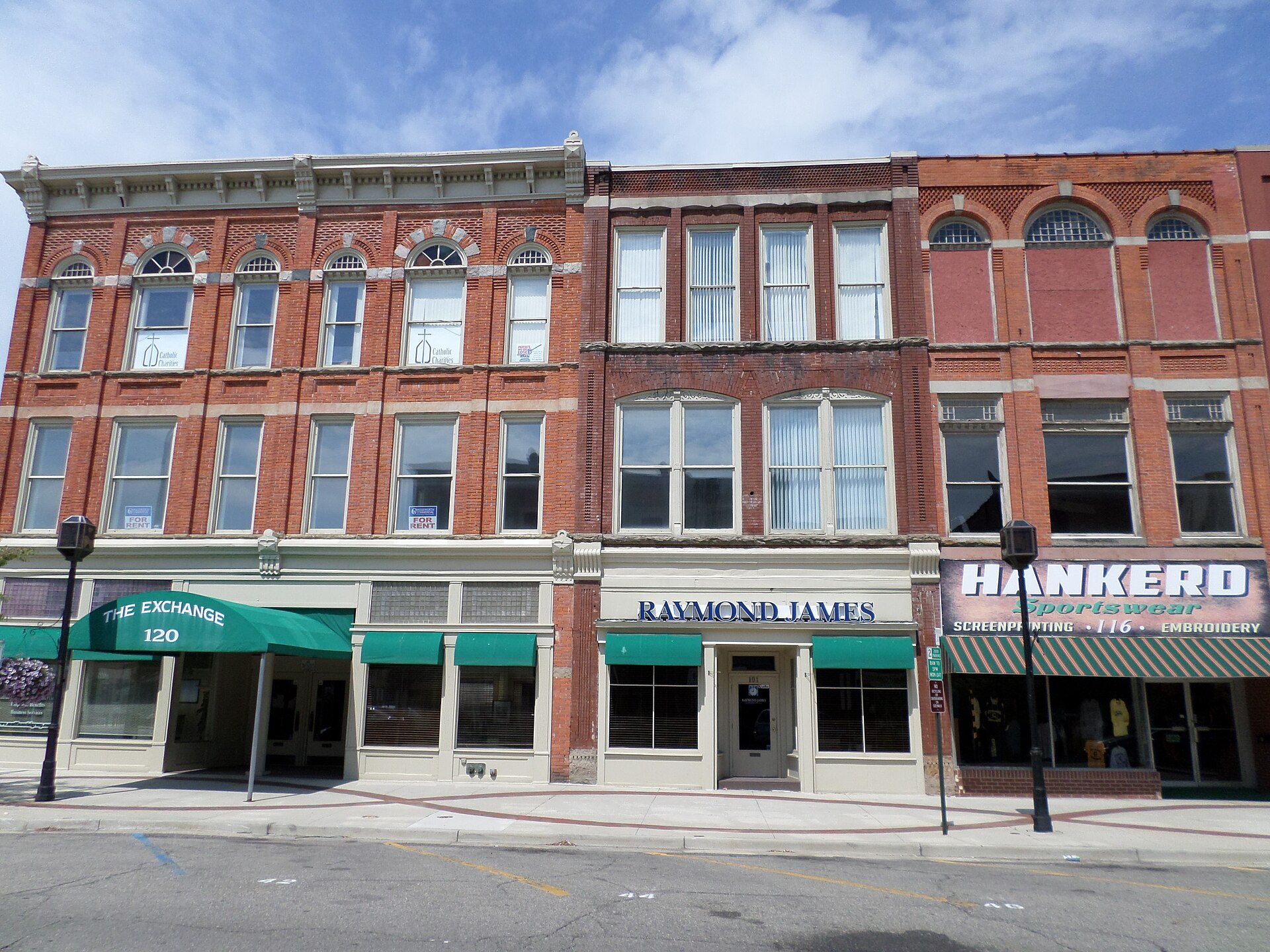
Karl W. Manke owned and worked in Karl Manke Main St. Barber and Beauty Shop in Owosso, a small city in Shiawassee County about 40 miles northeast of Lansing.18 Fox News reported in May 2020 that he had cut hair in Owosso for 60 years, and his lawyer told FOX 2 Detroit in October 2020 that he had "been a barber for 60 years and never had a blemish on his record."29 News accounts throughout 2020 gave his age as 77.847 He was, in other words, a man who had already worked a full life in one trade in one town, and who had no reason to pick a fight with anyone.
He was not a public figure before May 2020. He told Fox News that his last day of work was March 21, 2020. "The indication was it would be a couple of weeks," he said. "And I'm not fine with that, but a lot of the other businesses were still staying open."2 As the weeks ran on, money ran short. He said he could no longer afford to stay closed.2 When he reopened, the Associated Press reported, he said the governor's extension of her order had "knocked me to my knees."8

The order they faced
The governor's orders
The Michigan Court of Appeals later laid out the orders in sequence. On March 10, 2020, Governor Whitmer issued Executive Order 2020-4, declaring a state of emergency. On March 16 she issued Executive Order 2020-9, placing temporary restrictions on places of public accommodation, and six days later Executive Order 2020-20 explained that those places included "facilities offering non-essential personal care services," defined to include hair services.1 The closure of shops providing hair services was set to expire at 11:59 p.m. on April 30, 2020, but "in Executive Order 2020-69 the deadline was extended by the governor until May 28, 2020, at 11:59 p.m."1
That April 30 extension is the heart of the story. The Michigan Supreme Court's opinion of October 2 explains what happened that day. The Legislature had extended the governor's emergency and disaster declarations under the Emergency Management Act through April 30, 2020, by Senate Concurrent Resolution 2020-24, and did not extend them further. On April 30 the governor issued Executive Order 2020-66, ending the declaration under that act; then she issued Executive Order 2020-67, stating that a state of emergency remained declared under a different 1945 law, the Emergency Powers of the Governor Act; and then Executive Order 2020-68, which redeclared a state of emergency and disaster under the Emergency Management Act.6 Manke understood the situation the way the Legislature did. "It was about April 30th [when] the legislative branch of our state had decided that the governor was out of order, that she had used up her 28 days and that she could no longer initiate that type of an order," he told Fox News. "So I planned to go back to work."2
The 1945 statute
The Emergency Powers of the Governor Act, Michigan Compiled Laws 10.31, is short and broad. As the Supreme Court quoted it, the act allowed the governor, "During times of great public crisis, disaster, rioting, catastrophe, or similar public emergency within the state, ... when public safety is imperiled," to proclaim a state of emergency and then to "promulgate reasonable orders, rules, and regulations as he or she considers necessary to protect life and property or to bring the emergency situation within the affected area under control."6 A companion section, MCL 10.33, provided that "[t]he violation of any such orders, rules and regulations made in conformity with this act shall be punishable as a misdemeanor, where such order, rule or regulation states that the violation thereof shall constitute a misdemeanor."6 Fox News reported in May 2020 that violating the governor's order could bring a 90-day misdemeanor and a $500 fine.2 Under the act, those powers lasted until the governor herself declared "that the emergency no longer exists."6
The health department's order
Four days after he reopened, the state added an order aimed at him alone. "On May 8, 2020, DHHS issued an imminent danger and abatement order, signed by Director Gordon, requiring Manke to comply with Executive Order 2020-69 and ordering that the barbershop 'immediately close to the public,'" the Court of Appeals recorded.1 The Detroit News reported that Michigan State Police served him with a cease-and-desist order from the attorney general's office and the Department of Health and Human Services.3
The licensing statute
The third set of rules was the Occupational Code, under which every Michigan barber is licensed. It lets the Department of Licensing and Regulatory Affairs (LARA) summarily suspend a license, before any hearing, on an affidavit "that an imminent threat to the public health, safety, and welfare exists."1 For a man who had cut hair for six decades, a suspended license meant the loss of his trade itself, not just of a few weeks' income.
What they did
Reopening on May 4
He opened the shop again on Monday, May 4, 2020, the day the Court of Appeals later described as the day he reopened "in violation of Executive Order 2020-69."1 He wore a mask while he cut hair, used an ultraviolet light to sanitize his tools, and followed other sanitary measures, Fox News reported.2 Customers came from across the state, some from Detroit and Muskegon, and he worked as many as 15 hours a day to keep up.2 Local police gave him a misdemeanor citation that first week, and he said he had been cited twice.32 He said he would keep working until police arrested him or "until Jesus walks in."2
On Monday, May 11, he spoke to the crowd that had begun to gather outside the shop each day. "The government is not my mother, never has been," he said. "I've been in business longer than they've been alive."8 Michigan Public reported his words that same day, as he thanked the flag-waving supporters with tears in his eyes: "I came into this last Monday alone, thinking I'm going to swing in the wind. And I cannot believe the support that I've got."10
The first round in court
The attorney general's office went to the Shiawassee County Circuit Court for a temporary restraining order to close the shop. On May 11 the court declined to shut him down without first holding a hearing.108 The state turned to its licensing power. On May 12, 2020, LARA "summarily suspended Manke's and the barbershop's licenses."1 Attorney General Dana Nessel announced it the next day: "It is paramount that we take action to protect the public and do our part to help save lives."8 She told the Lansing State Journal the suspension was "absolutely the right move."10 His lawyer, David Kallman, answered: "It's pure retribution. It's abuse of power: How dare you stand up to me?"8 When reporters called the shop after the suspension, a woman who answered said he had not yet been served and was still cutting hair; a clipper could be heard buzzing in the background.8
He asked the circuit court to review the suspension by May 18. The court refused, the Court of Appeals later noted, "because the license suspensions were not final orders" and he "had not exhausted [his] administrative remedies."1 Circuit Judge Matthew Stewart also refused the health department's request for an injunction closing the shop.114
Haircuts at the Capitol
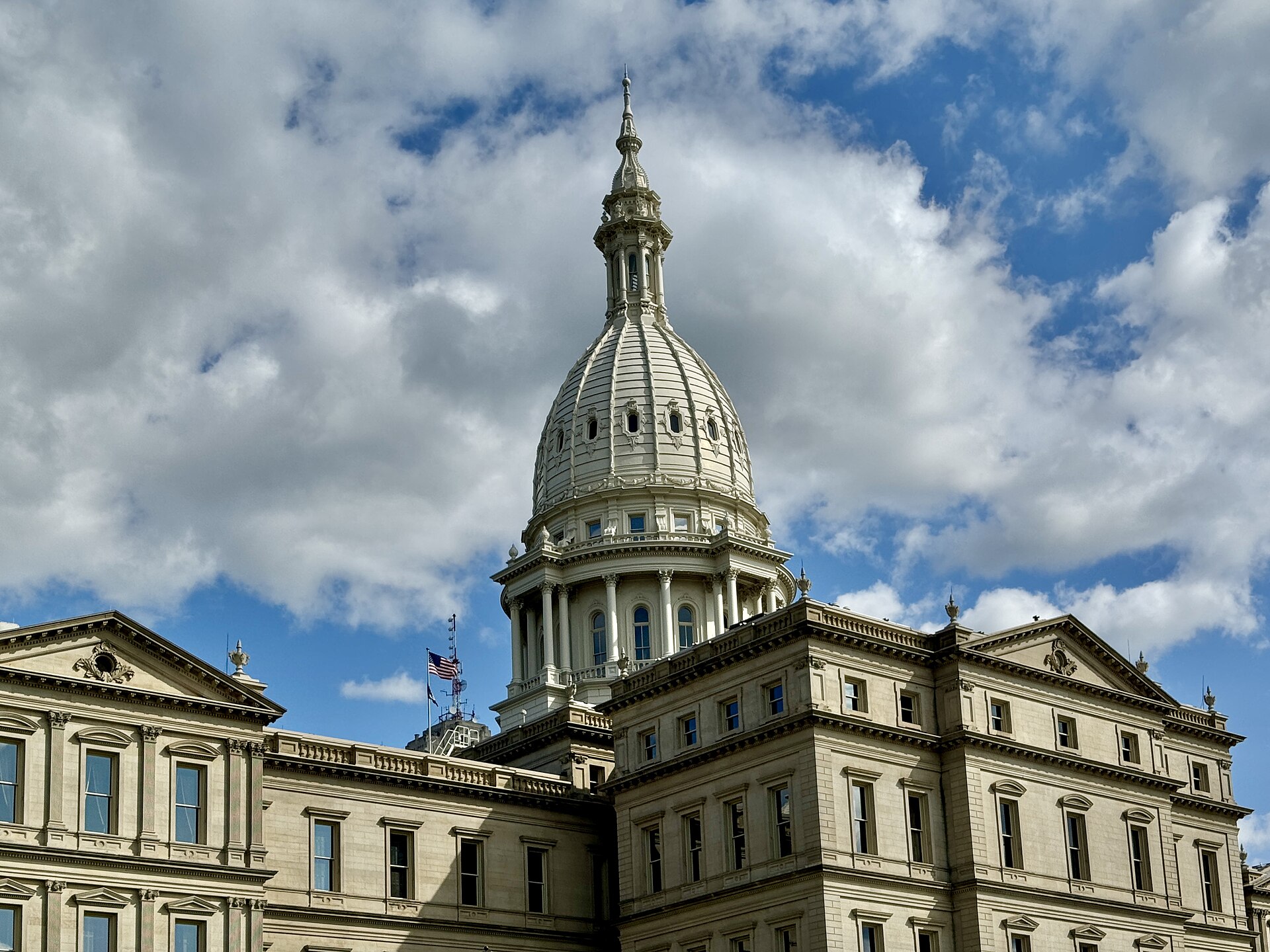
On Wednesday, May 20, 2020, he brought his clippers to Lansing. At a demonstration on the grounds of the Michigan State Capitol, dozens of barbers and hairstylists gave free haircuts in open defiance of the order, and he was among them, cutting hair on the Capitol steps. Michigan State Police issued seven citations at the demonstration.114 It was a public protest of a public order, held at the seat of the government that issued it. That afternoon later cost him $6,000.12

The order to close, and his answer
On Thursday, May 28, 2020, a panel of the Court of Appeals voted 2 to 1 that Judge Stewart had been wrong to refuse the state's request and should not second-guess the governor and her experts.11 "Uncontroverted evidence clearly revealed that COVID-19 is a highly communicable illness," the majority wrote. "Uncontroverted evidence revealed that COVID-19 is spread by infected persons showing no symptoms that could serve to warn others of the possibility of infection."4 Judge Brock Swartzle dissented in part.11 The next day the Court of Appeals ordered the trial court "to immediately sign and enter a preliminary injunction order," and the trial court did so that same day, stating that "this Order will be enforced through the Court's general contempt powers."5
He heard the news while cutting a customer's hair, and he did not hedge. "I could care less," he told the Associated Press. "If they want to put me in jail, put me in jail. ... I will be governed -- fair governing -- but not ruled. This is a police state action."4 On Saturday, May 30, he told his supporters: "I'm going to continue opening my shop. I'm going to continue working as a free American. This is not the Michigan I know."13 Michigan Public noted that by staying open he was "potentially risking being found in contempt of court."13 That risk was real: Justice David Viviano later noted in the Supreme Court's order, citing a news report, that the attorney general had filed a motion that week asking the trial court to hold him in contempt.5 His lawyer later said the state had sought contempt fines of $7,000 a day, which were never imposed.9
His lawyers had already filed an application in the Michigan Supreme Court on May 28.5 A Texas salon owner who had been jailed weeks earlier for the same kind of stand, Shelley Luther, came to Owosso and appeared at a rally outside his shop.4
What it cost
His license
For five weeks, from May 12 to June 16, 2020, the state held his barber license and his shop license in suspension.13 An administrative law judge upheld the suspension while it lasted, Michigan Public reported.14 For a barber, the license is the trade. A man who had worked 60 years without a mark on his record was told by his state that he was an imminent threat to public health.
Criminal charges
He lived for five and a half months under misdemeanor charges brought by the Shiawassee County prosecutor's office for violating the governor's orders.157 After the charges were dropped, his lawyer said that Manke "is ecstatic that the charges dismissed no longer faces the prospect of jail or fines."9
The fines
The licensing case was the one he lost. LARA filed a formal complaint on June 22, 2020, against him and the shop. After a contested hearing, Administrative Law Judge Stephen Goldstein issued a report on March 1, 2021, and on March 29, 2021, the Board of Barber Examiners, in two final orders, "fined Manke $4,500 and fined the barbershop $4,500 for violating MCL 339.604(c) and (h)."112 The Associated Press, reporting through NBC News, said $6,000 of the $9,000 stemmed from his part in the Capitol demonstration, where he was not licensed to practice, and the rest from conditions the board found in his shop: used neck strips and piles of hair on the floor, and a comb stored in his shirt pocket instead of a covered container.12 His lawyer's firm described the same split: $1,500 twice for the shop conditions and $3,000 twice for the protest, once against him and once against his shop.16
Time, and the weight of the state
The fight ran from May 4, 2020, to December 15, 2022, when the Court of Appeals issued its last opinion in his case: two years and seven months.1 In the spring of 2020 alone he faced three separate actions at once: the criminal citations, the health department's lawsuit, and the licensing case.16 Each was brought by a different arm of the same state government, with its full staff of lawyers. On the other side stood one 77-year-old barber and his lawyers. He had customers and supporters, but he had no way to know in May 2020 that the state's highest court would side with him twice.
How it ended
June 5, 2020: "rule of law, not hysteria"
On Friday, June 5, 2020, the Michigan Supreme Court acted on his application in Department of Health and Human Services v. Manke, No. 161394. The order said: "The application for leave to appeal the May 28, 2020 order of the Court of Appeals is considered and, pursuant to MCR 7.305(H)(1), in lieu of granting leave to appeal, we VACATE the order of the Court of Appeals and the May 29, 2020 order of the Shiawassee Circuit Court, and we REMAND this case to the Court of Appeals for plenary consideration."5 No justice dissented.5 The order itself gave no reasons, the ABA Journal noted.17
Justice David Viviano wrote a concurring statement. He said "it appears patently clear that two members of the Court of Appeals motion panel have no power to grant peremptory relief," because the court rule requires that such a decision "must be unanimous," and that doing so over Judge Swartzle's "explicit objection (and without responding to it) is inexplicable." He faulted the panel for deciding "the important constitutional issues of first impression raised by defendant without plenary consideration, full briefing, oral argument, or an opportunity for amici curiae to file briefs."5 Then he wrote the line that made the order famous:
It is incumbent on the courts to ensure decisions are made according to the rule of law, not hysteria.5
He closed: "Courts decide legal questions that arise in the cases that come before us according to the rule of law. One hopes that this great principle -- essential to any free society, including ours -- will not itself become yet another casualty of COVID-19." He quoted Sir Thomas More's answer to William Roper in A Man for All Seasons: "Yes, I'd give the Devil benefit of law, for my own safety's sake."5 (The justice's dashes appear here as double hyphens.) Michigan Public and the ABA Journal both reported the order and the concurrence that day.1417
The same day, the governor signed Executive Order 2020-115, which, as the Supreme Court's order noted, allowed "hair salons . . . and similar establishments" to open statewide on June 15, 2020.5 Barbershops and salons reopened across Michigan that day, six weeks after he had reopened his.7
The state drops its lawsuit and restores his license
In June 2020 the state agreed to a full and final dismissal of the health department's lawsuit, and the pending appeal in the Court of Appeals was dropped as well, Fox News reported from court documents and local reports.15 His lawyer's firm described the result the same way: after the Supreme Court's order, "the State voluntarily dismissed their lawsuit."16 "I am glad the state has finally realized I am not a health threat to anyone and that I have a right to continue to cut hair," he said in a statement.15
On Monday, June 15, the attorney general's office, on behalf of LARA, moved to lift the summary suspension of his licenses, and an administrative law judge granted the motion on Tuesday, June 16, The Detroit News reported. "Karl can cut hair and he's not prohibited from carrying on his business, so we're happy," Kallman said.3 FOX 2 Detroit reported the same outcome: "In June, the state restored Karl Manke's license."9 The formal licensing complaint went forward.3

October 2, 2020: the emergency powers case
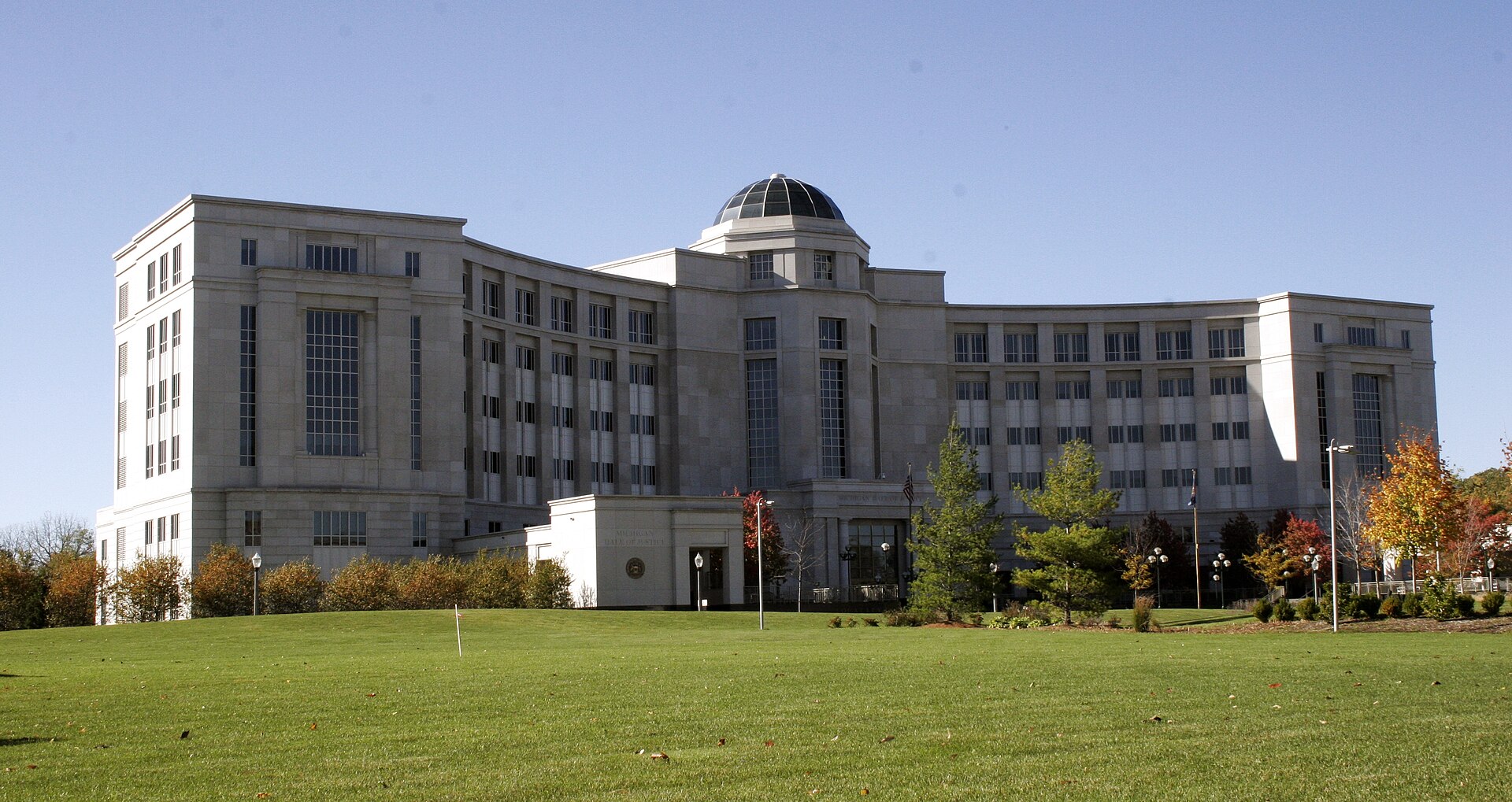
The decision that ended his criminal case came from a different lawsuit. Three health care providers and a patient whose knee replacement had been canceled sued in federal court over the governor's order banning nonessential medical procedures. The federal court asked the Michigan Supreme Court two questions of state law: whether the governor had authority "after April 30, 2020 to issue or renew any executive orders related to the COVID-19 pandemic" under either emergency statute, and whether either statute violated the separation of powers or the nondelegation rule of the Michigan Constitution.6 The case is In re Certified Questions from the United States District Court, Western District of Michigan (Midwest Institute of Health, PLLC v. Governor), No. 161492, argued September 9 and decided October 2, 2020.6
The court's answers, in the words of its syllabus: "The Governor did not have authority after April 30, 2020, to issue or renew any executive orders related to the COVID-19 pandemic under the EMA," a holding the court described as unanimous; and "The Governor did not possess the authority to exercise emergency powers under the EPGA because the act unlawfully delegates legislative power to the executive branch in violation of the Michigan Constitution," a holding of four justices.6 Justice Stephen Markman wrote for the majority, joined by Justices Brian Zahra and Elizabeth Clement and, on the key parts, Justice Viviano.6 The opinion's conclusion reads:
We conclude that the Governor lacked the authority to declare a "state of emergency" or a "state of disaster" under the EMA after April 30, 2020, on the basis of the COVID-19 pandemic.6
The next sentence of the conclusion held that "the EPGA is in violation of the Constitution of our state because it purports to delegate to the executive branch the legislative powers of state government-- including its plenary police powers-- and to allow the exercise of such powers indefinitely. As a consequence, the EPGA cannot continue to provide a basis for the Governor to exercise emergency powers."6 Just before that conclusion the majority wrote: "Although singular assertions of governmental authority may sometimes be required in response to a public emergency-- and the present pandemic is clearly such an emergency-- the sheer magnitude of the authority in dispute, as well as its concentration in a single individual, simply cannot be sustained within our constitutional system of separated powers." It added that "with respect to the public institutions that have most sustained our freedoms over the past 183 years, there must now be some rudimentary return to normalcy."6 The governor asked the court to delay the effect of its opinion to October 30; on October 12, 2020, the court denied that motion.18
October 19, 2020: the charges are dropped
The October 2 ruling knocked the legal ground out from under the misdemeanor case. On Monday, October 19, 2020, his lawyer announced that the Shiawassee County prosecutor's office was dropping the charges. The Associated Press reported that the case "fizzled after the Michigan Supreme Court on Oct. 2 said Whitmer used an unconstitutional law as the foundation for emergency orders to control the virus."7 WXYZ in Detroit and FOX 2 Detroit reported the same dismissal.199 His statement that day was short: "I appreciate the prosecutor dismissing all criminal charges against me in light of the Supreme Court's decision. It is definitely a weight off my shoulders. I just want to earn a living, and I am not a health threat to anyone. The Courts have consistently upheld my constitutional rights affirming that the governor's attempts to shut me down were out of line."19 In February 2021 a judge also dismissed disorderly conduct charges against six hairstylists who had been ticketed at the May 20 Capitol protest, after they pointed to the Supreme Court's ruling.12
The licensing case: the one he lost
The licensing complaint was a separate track, and it did not depend on the governor's emergency powers in the same way; it charged violations of the barbers' rules of conduct and of the Occupational Code.1 At the contested hearing he argued that he had a right to free speech when he cut hair at the Capitol protest. Administrative Law Judge Stephen Goldstein wrote in his March 1, 2021 report that the argument "may have merit," but that the tribunal had no jurisdiction to decide constitutional questions.12 On March 29, 2021, the Board of Barber Examiners imposed the $9,000 in fines.1 "It shows their pettiness, it shows their vindictiveness. The lack of proportionality here is almost breathtaking really," Kallman said.12
The appeal to the circuit court, where a judge could at last have ruled on the free speech claim, never got a hearing on the merits.16 The Court of Appeals told the story in its December 15, 2022 opinion. The deadline to appeal was June 1, 2021. On April 6, 2021, his counsel e-mailed a 67-page claim of appeal to the circuit court clerk and asked how to pay the filing fee; within about three hours the clerk replied that case-initiating documents had to be mailed with the fee and that filings over 50 pages "shall be mailed or hand delivered." The paper filing was mailed on June 1 and reached the clerk on June 3. On June 7, 2021, the circuit court dismissed the appeal for lack of jurisdiction because it was late.1 The Court of Appeals (Judges Douglas Shapiro, Stephen Borrello and Christopher Yates) affirmed in an unpublished per curiam opinion: "The circuit court did not have jurisdiction over plaintiffs' June 3, 2021 untimely claim of appeal and properly dismissed the appeal. We find no abuse of discretion in the circuit court's denial of plaintiffs' motion for reconsideration or reinstatement. Affirmed."1 The court noted that "The merits of the underlying administrative actions are not at issue in this appeal."1 The Michigan courts' public case records list that appeal as concluded and archived, with no Supreme Court case number attached, and list no Court of Claims case in his name.20 The fines stood.
So the ledger is mixed, and it should be stated plainly. He won the fight that mattered most to him in 2020: the state's attempt to close his shop by court order failed, his licenses were restored, and every criminal charge was dropped after the state's highest court held that the governor's orders after April 30 rested on no valid law. He lost the licensing case, on the board's findings and on a missed filing deadline, and the free speech question about the Capitol protest was never decided by a court.
Timeline
| Date | Event |
|---|---|
| March 10, 2020 | Executive Order 2020-4 declares a state of emergency in Michigan.1 |
| March 21, 2020 | His last day of work before the closure, by his account.2 |
| March 22, 2020 | Executive Order 2020-20 says closed places include facilities offering non-essential personal care services, including hair services.1 |
| April 30, 2020 | The Legislature's extension of the emergency declarations ends; the governor issues Executive Orders 2020-66, 67 and 68, and Executive Order 2020-69 keeps hair services closed to May 28.61 |
| May 4, 2020 | He reopens his shop in Owosso.1 |
| May 8, 2020 | The health department issues an imminent danger and abatement order to close the shop.1 |
| May 11, 2020 | The circuit court declines to close the shop without a hearing; "The government is not my mother."108 |
| May 12, 2020 | LARA summarily suspends his barber license and the shop license.1 |
| May 20, 2020 | He cuts hair at a protest on the State Capitol grounds; State Police issue seven citations there.11 |
| May 28, 2020 | The Court of Appeals, 2 to 1, orders the circuit court to close the shop; his application goes to the Supreme Court.115 |
| May 29, 2020 | The circuit court enters the injunction, enforceable by contempt.5 |
| June 5, 2020 | The Michigan Supreme Court vacates both orders; the governor signs Executive Order 2020-115.5 |
| June 15, 2020 | Barbershops and salons reopen statewide.7 |
| June 16, 2020 | An administrative law judge grants the state's motion to lift the license suspension.3 |
| June 22, 2020 | LARA files its formal licensing complaint.1 |
| October 2, 2020 | The Michigan Supreme Court answers the certified questions: no authority after April 30 under the EMA; the EPGA unconstitutional.6 |
| October 12, 2020 | The court denies the governor's motion to delay the effect of its opinion.18 |
| October 19, 2020 | The criminal charges against him are dropped.719 |
| March 1, 2021 | The administrative law judge's report is issued.1 |
| March 29, 2021 | The Board of Barber Examiners fines him and the shop $4,500 each.1 |
| June 7, 2021 | The circuit court dismisses his appeal as untimely.1 |
| December 15, 2022 | The Court of Appeals affirms the dismissal.1 |


Why it took courage
Most people who stand against a government do it with others: a church, a company, an association, a legal foundation. Karl Manke started alone. "I came into this last Monday alone, thinking I'm going to swing in the wind," he said a week after he reopened.10 He was 77, past the age when most men look for a fight, and he risked the one thing he had built over a lifetime: a license to practice his trade and a shop in his own name. The state took that license from him within eight days. He kept working.
The liberty he defended is one of the oldest in the common law, the right of a free man to earn a living at a lawful calling. He did not claim a right to harm anyone. He took the precautions any careful shop would take, and he asked to be judged on what he actually did. He said so in words that belong in any civics lesson: "I will be governed -- fair governing -- but not ruled."4 That sentence states the difference between consent to lawful authority and submission to unlimited power. It is the difference the Michigan Supreme Court drew four months later when it held that a single official could not hold the whole police power of the state "indefinitely" on her own say-so.6
He also defended the right to protest. When he took his clippers to the Capitol on May 20, he did it at the seat of the government that had closed him, in daylight, in front of the State Police. That is how free people answer an order they believe is unlawful: openly, at the right address. The state later fined him $6,000 for that afternoon.12 An administrative judge said his free speech argument "may have merit."12 No court ever ruled on it.
And his stand served the rule of law itself. The order that told a judge to close his shop was entered by two judges over the objection of a third, without full briefing or argument, after he had already asked the Supreme Court to hear him.5 Because he kept fighting, a justice of the state's highest court wrote that "It is incumbent on the courts to ensure decisions are made according to the rule of law, not hysteria."5 Those words were written in his case. This praise is for his stand on liberty, livelihood and due process; it makes no claim about the virus.
What the other side said
The attorney general. Attorney General Dana Nessel said when his licenses were suspended: "It is paramount that we take action to protect the public and do our part to help save lives."8 A spokesman for her office said his barbershop created "clear public health dangers" as long as it operated.10
The health department and LARA. The Department of Health and Human Services declared the shop an imminent danger and ordered it to "immediately close to the public." LARA suspended both licenses on an affidavit that "an imminent threat to the public health, safety, and welfare exists," as the Occupational Code requires.1
The Court of Appeals majority (May 28, 2020). "Uncontroverted evidence clearly revealed that COVID-19 is a highly communicable illness. Uncontroverted evidence revealed that COVID-19 is spread by infected persons showing no symptoms that could serve to warn others of the possibility of infection."4
The dissenting justices (October 2, 2020). Chief Justice Bridget McCormack, joined by Justices Richard Bernstein and Megan Cavanagh, agreed that the governor had no authority after April 30 under the Emergency Management Act but dissented from striking down the 1945 act. "[O]ur job is to apply the law," she wrote. "And all our precedent (and that of the United States Supreme Court) vindicates the Legislature's choice to delegate authority to the Governor in an emergency."6 The court's syllabus summarizes her view that the act's standards, that orders be "reasonable" and "necessary," were "as reasonably precise as the statute's subject matter permitted."6
The Board of Barber Examiners and the courts on the fines. The board found that he cut hair at the Capitol where he was not licensed to practice and that his shop had used neck strips and hair on the floor and a comb kept in a shirt pocket.12 The circuit court, affirmed by the Court of Appeals, found that "[d]espite almost two months to cure the defects, appellants did not properly file a claim of appeal until after the jurisdictional time limit expired."1
Still disputed: Whether the $6,000 fined for cutting hair at the Capitol protest punished protected speech (an administrative judge said the claim "may have merit," but no court decided it because the appeal was filed late)121; whether the 1945 Emergency Powers of the Governor Act was a lawful delegation (a 4 to 3 question on the court that decided it)6; and the state's claim that his open shop was an imminent danger, which the state itself dropped in June 2020 when it lifted the suspension and dismissed its lawsuit without giving a public reason.315
Medical note: Manke said on October 19, 2020, "I am not a health threat to anyone," and his lawyer said that month that no case of the virus had been traced to his shop.199 The state's position in May 2020 was that the open shop was an imminent danger to public health (health department order of May 8, 2020), and the Court of Appeals majority on May 28, 2020 cited uncontroverted evidence that COVID-19 is highly communicable and spread by people without symptoms.14
Some facts are unflattering and belong in the record. He kept cutting hair after his licenses were suspended and after a court ordered his shop closed on May 29, 2020, and he said publicly that he would not comply; the Supreme Court's order of June 5 vacated that injunction.845 The board's findings about his shop, the used neck strips, hair on the floor and the comb in his pocket, concern ordinary sanitation rules, not the closure order.12 And the appeal that might have cleared those fines was lost because it was filed two days late after an e-mailed filing was rejected.1
Hard questions and answers
He ignored a court order. Why is that admirable?
He disobeyed it openly and said so, and the order did not survive. The Michigan Supreme Court vacated it a week later, and Justice Viviano wrote that two judges had "no power" to grant that relief over a third judge's objection.5 Open refusal of an order a person believes unlawful, accepting the risk of the penalty, is the classic form of civil disobedience; Ordered Liberty lesson 08 discusses its limits. He took the risk in plain view.
A skeptic asks: didn't he win only because of someone else's lawsuit?
His criminal case ended because of the October 2 ruling in a case brought by health care providers.7 But his own case reached the Supreme Court first: the June 5 order vacating the order to close him came in his case, on his application.5 And he kept his shop open through May, before anyone knew how either case would end.
A defender of the order asks: shouldn't the state be able to close a business in a pandemic?
The Michigan Supreme Court did not say otherwise. It said the governor could not keep acting alone after the Legislature's approval ran out on April 30, and that the 1945 act gave one person indefinite power with too little guidance. Even the dissenters pointed to the ordinary remedies: legal challenges to particular orders, and the Legislature's power to amend or repeal the statute.6 The lesson for any official is that emergency power must have a legal basis, a time limit and a check by the people's representatives.
A civil liberties advocate asks: why fine a man for cutting hair at a protest?
The board treated it as practicing outside a licensed shop, and two-thirds of his $9,000 in fines came from that one afternoon.12 The administrative judge said he had no power to decide the free speech claim, and the appeal that could have decided it was dismissed as late.121 The question was left open, which is itself a caution about licensing rules used against protest.
A public health officer asks: what should a local official take from this?
Use the least severe tool that works, and be sure of its legal footing. The state used every tool at once against one barber: criminal tickets, an imminent danger order, a lawsuit, an emergency license suspension and a request for contempt. Within weeks it lifted the suspension and dropped the lawsuit, and the criminal case fell with the governor's authority.3157 A measured response with a sound legal basis would have spent less public trust.
Is the licensing case over?
Yes, as far as the public record shows. The Court of Appeals affirmed the dismissal of his appeal on December 15, 2022, and the court's records list the case as concluded and archived with no Supreme Court case number.120 Whether and when the fines were paid is not in the records this lesson could open.
Related lessons
- Emergency Power in 2020: The Orders, Who Signed Them, and How People Pushed Back
- Shelley Luther and Salon a la Mode (Dallas, Texas), who came to his rally in Owosso
- Ian Smith, Frank Trumbetti and Atilis Gym (Bellmawr, New Jersey)
- Idaho Takes Back the Special Session: SJR 102, another legislature reclaiming emergency power
- What the Stands Won, including the Michigan ruling among state emergency-power changes
- Timeline, Glossary, Sources and the Record of Every Ruling
- Ordered Liberty: Legitimate Authority and Its Limits and Forms of Lawful Resistance
- The First Amendment (protest and speech) and the Fourteenth Amendment (due process and the right to a lawful calling)
- Testifying and Public Comment
Still open
These items could not be confirmed against a primary source before publication. The lesson states them as open, and they stay on the fact-check list.
- His years as a barber (about 60) come from Fox News and his lawyer, not from a license record.
- The exact date the circuit judge, Matthew Stewart, refused the health department's injunction request was not found in a primary record; the May 11, 2020 ruling declining a temporary restraining order is from Michigan Public and the Associated Press.
- The administrative law judge's decision upholding the summary suspension is known only from a Michigan Public report; its date was not confirmed.
- The state's request for $7,000-a-day contempt fines is the account of Manke's lawyer (FOX 2 Detroit); the motion itself was not found.
- The exact date in June 2020 when the health department's lawsuit was dismissed was not confirmed; Fox News and counsel's page report the dismissal.
- Whether and when the $9,000 in fines was paid is not in the public records found.
- The outcome of the 2020 to 2021 citizen petition to repeal the 1945 act, which the dissenting justices mentioned on October 2, 2020, is not covered by this lesson's sources.
Learn more
- In re Certified Questions, opinion of October 2, 2020: Read the syllabus and Part IV of Justice Markman's opinion, then Chief Justice McCormack's partial dissent, for both sides of the delegation question.
- DHHS v. Manke, order of June 5, 2020: Three pages; Justice Viviano's concurrence on the rule of law in an emergency.
- Manke v. LARA, Court of Appeals, December 15, 2022: Eight pages; the full record of the licensing case and how a filing deadline ended it.
Notes
- Michigan Court of Appeals, Karl W. Manke and Karl Manke Main St. Barber and Beauty Shop v. Department of Licensing and Regulatory Affairs, No. 358782, unpublished per curiam opinion, December 15, 2022 (Shapiro, P.J., Borrello and Yates, JJ.), pp. 1 to 8 (retrieved Nov. 7, 2026). Read it online. ↩
- Fox News, "Michigan Barber reopens business despite lockdown order: Gov. Whitmer has 'no concept at all, the damage that she's doing to our state'," May 2020 (retrieved Nov. 7, 2026). Read it online. ↩
- The Detroit News, "Owosso barber Karl Manke's license suspension lifted," June 17, 2020 (read through a text-extraction tool; quotations as extracted) (retrieved Nov. 7, 2026). Read it online. ↩
- Associated Press, "Court orders defiant Michigan barber to close his shop," May 28, 2020, as published by WSET (retrieved Nov. 7, 2026). Read it online. ↩
- Michigan Supreme Court, Department of Health and Human Services v. Karl Manke, No. 161394 (COA No. 353607; Shiawassee CC No. 20-004700-CZ), order of June 5, 2020, with Viviano, J., concurring (retrieved Nov. 7, 2026). Read it online. ↩
- Michigan Supreme Court, In re Certified Questions from the United States District Court, Western District of Michigan, Southern Division (Midwest Institute of Health, PLLC v. Governor), No. 161492, decided October 2, 2020: syllabus; opinion of Markman, J., Parts III to V and note 25; opinion of McCormack, C.J., concurring in part and dissenting in part. Copy of the slip opinion as posted by the Civil Rights Litigation Clearinghouse, University of Michigan (retrieved Nov. 7, 2026). Read it online. ↩
- Associated Press, "Charges Dropped Against Michigan Barber Who Reopened Shop," October 19, 2020, as published by CBS Detroit (retrieved Nov. 7, 2026). Read it online. ↩
- Associated Press, "Michigan strikes back by suspending elderly barber's license," May 14, 2020, as published by WGVU News (retrieved Nov. 7, 2026). Read it online. ↩
- FOX 2 Detroit, "Owosso barber who defied Whitmer has charges dropped but may still lose license to work," October 2020 (retrieved Nov. 7, 2026). Read it online. ↩
- Michigan Public, "LARA suspends license of Owosso barber still cutting hair," May 13, 2020 (with its report of the May 11, 2020 circuit court ruling) (retrieved Nov. 7, 2026). Read it online. ↩
- Michigan Public (NPR), "Michigan Appeals Court Says Barbershop Must Close Despite Its Protests," May 28, 2020 (retrieved Nov. 7, 2026). Read it online. ↩
- Associated Press, "Michigan fines barber who gave haircuts at state Capitol protest," March 2021, as published by NBC News (retrieved Nov. 7, 2026). Read it online. ↩
- Michigan Public, "Owosso barber vows to stay open while he appeals to Michigan Supreme Court," May 31, 2020 (retrieved Nov. 7, 2026). Read it online. ↩
- Michigan Public, "Michigan Supreme Court sides with Owosso barber in fight with state over reopening," June 5, 2020, with its linked report "Administrative judge upholds state suspension of barber's license" (retrieved Nov. 7, 2026). Read it online. ↩
- Fox News, "Michigan drops lawsuit against barber who reopened in defiance of Whitmer's coronavirus lockdown," June 2020 (retrieved Nov. 7, 2026). Read it online. ↩
- Kallman Legal Group (counsel for Karl Manke), "Karl Manke Case," case summary page, statements of the firm and its client (retrieved Nov. 7, 2026). Read it online. ↩
- ABA Journal, "Top state court vacates order shutting down defiant barber's shop during COVID-19 crisis," June 2020 (retrieved Nov. 7, 2026). Read it online. ↩
- Michigan Supreme Court, In re Certified Questions (Midwest Institute of Health, PLLC v. Governor), No. 161492, order of October 12, 2020 denying the motion to stay the precedential effect of the October 2, 2020 opinion (retrieved Nov. 7, 2026). Read it online. ↩
- WXYZ Detroit, "All criminal charges dismissed against Owosso barber," October 2020 (retrieved Nov. 7, 2026). Read it online. ↩
- Michigan Courts, public case search records for "Manke": Court of Appeals No. 358782 (Manke v. LARA, filed Oct. 4, 2021, "Case Concluded; File Archived," no Supreme Court case number) and No. 353607 (DHHS v. Manke, Supreme Court No. 161394); no Court of Claims case listed (retrieved Nov. 7, 2026). Read it online. ↩
Check yourself
1. On what date did Karl Manke reopen his barbershop?
The Court of Appeals record states he reopened on May 4, 2020, in violation of Executive Order 2020-69. March 21 was his last day before closing; June 15 was the statewide reopening.
2. What did LARA do on May 12, 2020?
The Occupational Code allows summary suspension on an affidavit of an imminent threat; LARA suspended both licenses on May 12.
3. What did the Michigan Supreme Court do on June 5, 2020 in DHHS v. Manke?
The order vacated both the May 28 Court of Appeals order and the May 29 circuit court order; Justice Viviano wrote the 'rule of law, not hysteria' concurrence.
4. What was the unanimous holding of October 2, 2020?
All seven justices agreed on the EMA question; the holding that the 1945 EPGA was unconstitutional was 4 to 3.
5. Why did four justices hold the Emergency Powers of the Governor Act unconstitutional?
Justice Markman's opinion held the delegation unlawful because of its breadth, its indefinite duration and its inadequate standards, and found it not severable.
6. What happened to the criminal charges against him?
On October 19, 2020 his lawyer announced the prosecutor's office was dropping the case after the October 2 ruling; AP, WXYZ and FOX 2 reported it.
7. How much of the $9,000 in licensing fines came from the May 20, 2020 Capitol protest?
The AP reported $6,000 stemmed from the protest; the rest concerned shop conditions.
8. Why was his appeal of the licensing fines dismissed?
The deadline was June 1, 2021; the paper filing reached the clerk June 3. The Court of Appeals affirmed the dismissal on December 15, 2022, without reaching the merits.
Terms in this lesson
- Emergency Powers of the Governor Act (EPGA)
- Michigan's 1945 statute, MCL 10.31 et seq., letting the governor declare an emergency and issue orders until she declares it over. Held unconstitutional by a 4 to 3 vote on October 2, 2020.
- Emergency Management Act (EMA)
- Michigan's 1976 statute, MCL 30.401 et seq., under which a governor's emergency or disaster declaration lapses unless the Legislature extends it.
- Nondelegation doctrine
- The principle that a legislature may not hand its lawmaking power to the executive without adequate standards to guide and limit it.
- Separation of powers
- The division of government into legislative, executive and judicial branches, each barred from exercising the others' powers (Michigan Constitution, art 3, sec 2).
- Certified question
- A question of state law that a federal court asks a state's highest court to answer when the state law is unsettled.
- Summary suspension
- Suspension of a professional license before a hearing, allowed by the Occupational Code on an affidavit that an imminent threat to public health, safety and welfare exists.
- Imminent danger and abatement order
- A health department order declaring a condition an imminent danger and directing that it stop; here, ordering the shop to close to the public.
- Preliminary injunction
- A court order requiring or forbidding an act while a lawsuit is pending, enforceable by contempt.
- Peremptory reversal
- An appellate reversal without full briefing or argument. Under the Michigan court rule cited by Justice Viviano, it must be unanimous.
- Vacate
- To set aside a court order so it has no effect.
- Board of Barber Examiners
- The Michigan board, mostly barbers, that decides sanctions against licensed barbers after an administrative hearing.
- Claim of appeal
- The filing that starts an appeal of right; for an agency's final order in Michigan it must be filed within 60 days, and the deadline is jurisdictional.
Sources
- In re Certified Questions (Midwest Institute of Health v. Governor), Mich. No. 161492 (Oct. 2, 2020) (2020-10-02) checked 2026-11-07
- Michigan Supreme Court order, No. 161492 (Oct. 12, 2020) (2020-10-12) checked 2026-11-07
- DHHS v. Manke, Mich. No. 161394, order of June 5, 2020 (2020-06-05) checked 2026-11-07
- Manke v. LARA, Mich. Ct. App. No. 358782 (Dec. 15, 2022) (2022-12-15) checked 2026-11-07
- Michigan Courts case records, Manke (2026-11-07) checked 2026-11-07
- Michigan Public, May 13, 2020 (2020-05-13) checked 2026-11-07
- AP via WGVU, May 14, 2020 (2020-05-14) checked 2026-11-07
- Fox News, May 2020 (2020-05) checked 2026-11-07
- Michigan Public (NPR), May 28, 2020 (2020-05-28) checked 2026-11-07
- AP via WSET, May 28, 2020 (2020-05-28) checked 2026-11-07
- Michigan Public, May 31, 2020 (2020-05-31) checked 2026-11-07
- Michigan Public, June 5, 2020 (2020-06-05) checked 2026-11-07
- ABA Journal, June 2020 (2020-06) checked 2026-11-07
- Fox News, June 2020 (2020-06) checked 2026-11-07
- The Detroit News, June 17, 2020 (2020-06-17) checked 2026-11-07
- AP via CBS Detroit, Oct. 19, 2020 (2020-10-19) checked 2026-11-07
- FOX 2 Detroit, October 2020 (2020-10) checked 2026-11-07
- WXYZ Detroit, October 2020 (2020-10) checked 2026-11-07
- AP via NBC News, March 2021 (2021-03) checked 2026-11-07
- Kallman Legal Group, Karl Manke Case (2021) checked 2026-11-07