Lesson 15 of 23 · about 40 minutes
Jennifer Bridges and the Houston Methodist 117 (Texas)
Updated November 7, 2026
You'll be able to
- Explain what Houston Methodist's April 2021 policy required and what happened to employees who did not comply.
- Quote and explain Judge Lynn Hughes's June 12, 2021 findings, including his rejection of the Nuremberg comparison and the vaccine claims.
- Trace the three lawsuits by Houston Methodist employees through the Fifth Circuit and the Supreme Court.
- Describe how Executive Order GA-40 and Senate Bill 7 changed Texas law after 2021, and what SB 7 still allows hospitals to require.
- Distinguish a private employer's rule from a government order and explain why the difference decided the case.
- Identify the lawful means Bridges used, from testimony to suit to peaceable assembly.
Start here: the short version
Jennifer Bridges was a registered nurse who had worked for six and a half years at Houston Methodist Baytown Hospital when her employer announced, on April 1, 2021, that every one of its roughly 26,000 workers had to be vaccinated against COVID-19 by June 7 or lose their jobs.12 She refused, said so in public, testified for a bill in the Texas Senate, led a walkout on deadline day, and became the lead plaintiff of 117 employees who sued the hospital.132 She lost in court: U.S. District Judge Lynn N. Hughes dismissed the suit on June 12, 2021, the Fifth Circuit affirmed in 2022, a second suit failed in 2025, and the Supreme Court declined to hear it in January 2026.1456 On June 22, 2021, Houston Methodist said 153 employees had resigned or been fired.7 Yet within months the Governor of Texas ordered that no entity could compel the shot over a person's objection, and in 2023 the Legislature wrote that rule into law for private employers.89 The courage here was simple and costly: a working nurse chose her own judgment about her own body over her paycheck, said so under her own name, and kept saying it after it cost her the job.

Who they were before
Before April 2021 Jennifer Bridges was not a public figure. She was a nurse in Baytown, the refinery and port city east of Houston, and she had worked at the Houston Methodist Baytown campus for six and a half years.2 Texas Monthly, which profiled her in October 2021, reported that she lived in Baytown, had worked as a nurse for about a decade, and was 39 when the fight began.10 The Associated Press gave the same age in June 2021.7
She was not, by her own account, someone who opposed vaccination as such. Texas Monthly reported that she had been largely supportive of vaccination and had said she would have taken a COVID-19 vaccine once it was fully approved by the Food and Drug Administration.10 In the spring of 2021 no COVID-19 vaccine had full approval. The Pfizer-BioNTech vaccine had been available under an emergency use authorization since December 11, 2020, and the FDA did not grant full approval (under the name Comirnaty) until August 23, 2021.11 Her objection in April 2021 rested on that point. She told KHOU television, as Becker's Hospital Review reported on April 27, 2021: "I think our rights as human beings are more important than keeping that job."12 She offered an alternative: "In the meantime, we'll wear N-95s, face shields. We'll do what the CDC says is perfectly safe."12
She was also, by her own statement to Texas Monthly, someone who had already had COVID-19. She said she recovered from it in 2020 and believed she had natural immunity.10 That belief is hers, and the medical note below states what official bodies said about it.
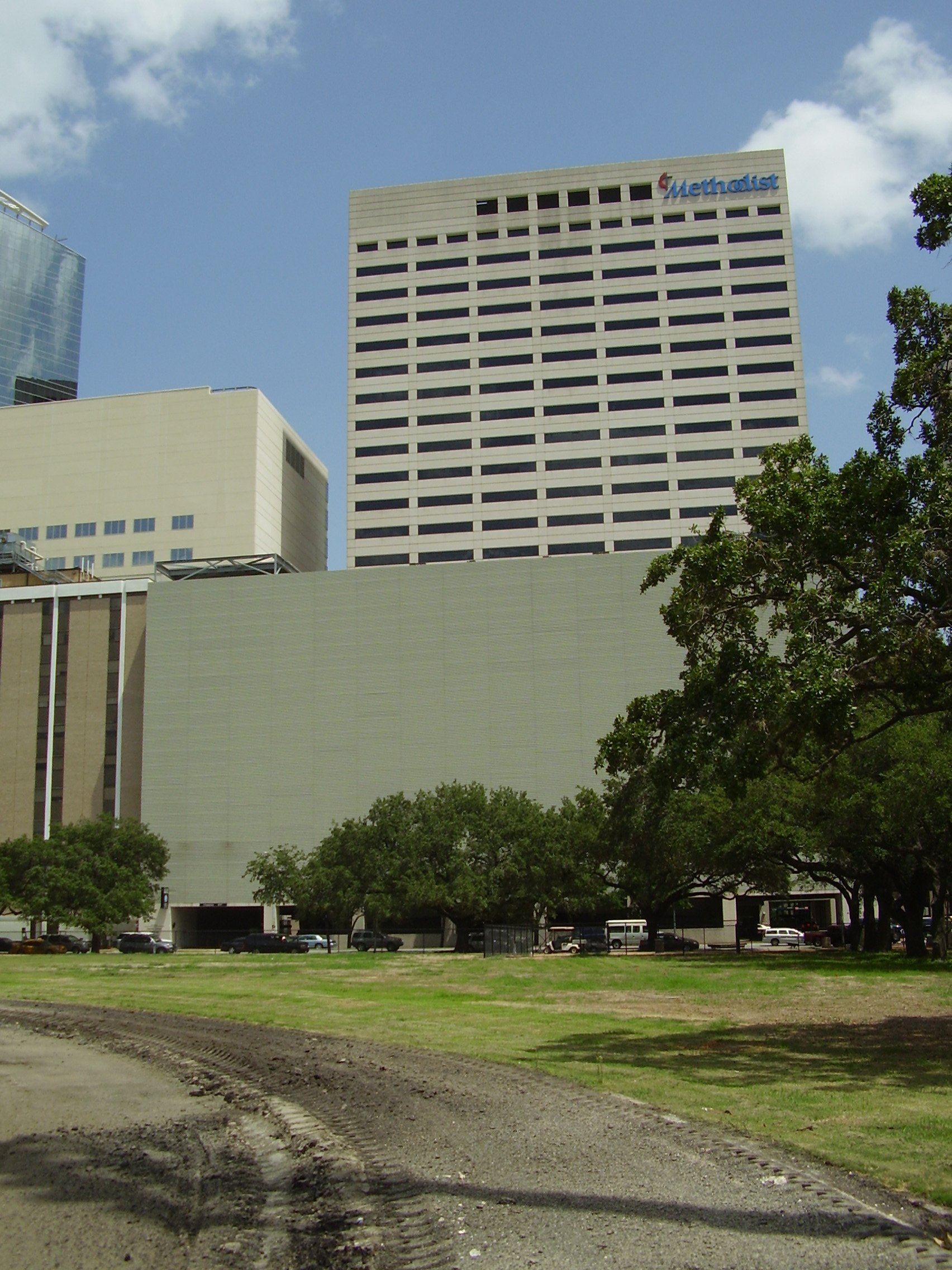
The employer she challenged was one of the largest hospital systems in Texas. The Fifth Circuit later described Houston Methodist as "a network of private, nonprofit hospitals," and a federal judge in 2025 found that it is a religious organization affiliated with the United Methodist Church for purposes of federal employment law.513 Its president and chief executive, Dr. Marc Boom, made the vaccination policy and defended it in public at every step.714
The order they faced
The rule Bridges faced was an employer's policy, not a government order. That fact decided her case, and it is the first thing a reader must hold onto. Judge Hughes summarized the policy in the first paragraph of his order:
"On April 1, 2021, Houston Methodist Hospital announced a policy requiring employees be vaccinated against COVID-19 by June 7, 2021, starting with the leadership and then inoculating the remaining workers, all at its expense."1
The Fifth Circuit's 2022 opinion added the mechanics. The policy was rolled out in two phases, first for management and then for everyone else. Employees had to be fully vaccinated within a set period "or else apply for exemptions based on medical condition or sincerely held religious belief." Those who failed to comply by the deadline "were placed on a two-week, unpaid suspension," and "Failure to comply with the policy by the end of the two-week suspension would result in immediate dismissal."4
Houston Methodist did grant some exceptions. On June 9, 2021, it reported that 285 employees had received a medical or religious exemption and 332 had been granted deferrals for pregnancy and other reasons, while 24,947 were fully vaccinated.14 The Texas Tribune, republishing The Washington Post, reported the same 24,947 figure.15 An employee who did not qualify for an exemption, or did not seek one, had two choices: take the vaccine or lose the job.
At that time Texas law gave her no shield. Texas is an at-will employment state, and the Fifth Circuit later quoted the Supreme Court of Texas: "The long standing rule in Texas is that employment for an indefinite term may be terminated at will and without cause."4 The only recognized exception relevant to her claim, from Sabine Pilot Service, Inc. v. Hauck (Tex. 1985), protects an employee fired "for the sole reason that the employee refused to perform an illegal act."4 A bill that would have barred discrimination based on vaccination status, Senate Bill 1669 by Sen. Bob Hall, was heard in the Senate State Affairs Committee on May 6 and May 10, 2021, and left pending in committee.16 No statewide order limiting private employers existed until October 2021.8

What they did
She spoke under her own name
Many health care workers had doubts in the spring of 2021. Few said so on television with their names attached while still employed by the institution they were criticizing. Bridges did. By late April 2021 her refusal was being reported by KHOU and Becker's Hospital Review, with her name, her credentials and her employer.12 She was not anonymous, she was not retired, and she had no tenure or contract protecting her.
She went to the Capitol
On May 6, 2021, the Texas Senate Committee on State Affairs heard Senate Bill 1669, a bill "Relating to prohibited discrimination regarding vaccination status and mandates for receiving or participating in the administration of vaccines; authorizing administrative penalties."16 The committee's official witness list shows "Bridges, Jennifer (also providing written testimony) (Self), Baytown" registered FOR the bill.3 She used the lawful channel that citizens have for exactly this purpose: she registered, gave her name and city, and put her position in writing before the people who write the laws. (Module 49, Testifying and Public Comment, teaches how that works in Idaho.) The bill did not pass that session.16
She sued
On May 28, 2021, Bridges and 116 other employees filed suit in Texas state court against The Methodist Hospital and Houston Methodist The Woodlands Hospital.41 Their lawyer, Jared Woodfill, told KPRC television that the mandate violated the Nuremberg Code and Texas public policy and that employees should have a choice without "force, deceit, fraud, threat, solicitation, or any type of binding or coercion."17 The hospital removed the case to federal court in Houston, because the complaint raised federal claims, and moved to dismiss.4
The complaint had three claims, as the Fifth Circuit later listed them: wrongful discharge under Sabine Pilot for being forced "to engage in an illegal act"; wrongful discharge for violating public policy "by forcing plaintiffs to receive an experimental vaccine"; and violations of federal law, including the emergency use authorization statute, 21 U.S.C. 360bbb-3, and the federal rules for human research subjects, "for failure to advise plaintiffs of the risks and benefits of the vaccine and to provide an option to accept or refuse the vaccine."4 The complaint also invoked the Nuremberg Code and compared the threat of firing to forced medical experimentation during the Holocaust.1 The court's answer to that comparison appears below in the court's own words.
She walked out on deadline day
June 7, 2021, was the deadline. That evening, as her shift ended at the Baytown hospital, Bridges led a walkout of employees who had not complied. "I took my mask off, threw my mask on, walked out the door, and here I am," she told KPRC.17 She told ABC13: "I don't think anyone should ever lose their job just because they do not want to get an injection."2 She added: "We're all suspended right now."2
Houston Methodist answered the same day in a statement quoted by ABC13. It said "almost 100 percent of our 26,000 employees have complied," and it drew a line on the walkout: "We fully support the right of our employees to peacefully gather on their own time," but "it is unacceptable to even suggest they abandon their patients to participate in this activity."2 The statement called those protesting "a few disgruntled employees."2 Bridges and the others gathered at the end of their shifts, outside, in public, under their own names.
The hospital then suspended 178 employees for two weeks without pay; 27 of them had received one dose.14 The Texas Tribune reported that 25 of the 178 got vaccinated during the suspension.15 Bridges did not.
She kept going after she lost
After Judge Hughes dismissed the suit on June 12, she appealed.15 On June 22, the day the suspensions ended in firings, she told the Associated Press: "We all knew we were getting fired today," and "I'm hoping if we win this at a federal level then they're going to create laws to protect employees."7 The Washington Post reported that she had taken a job with a private nurse staffing company that recruited her; she declined to name it, citing the risk of professional reprisal against the company.15 She and many of her former colleagues later brought a second federal suit, filed in April 2023, on a new theory; it is described below.5
What it cost
The plainest cost was the job. Bridges was suspended without pay in June 2021 and was out of work at Houston Methodist by June 22.27 A spokesperson for the hospital system said that day that "153 employees either resigned in the two-week suspension period or were terminated."7 Spokeswoman Gale Smith did not say how many of the 153 resigned and how many were fired.15 ABC7, reporting the same figure, gave the earlier count of 178 suspensions.18 For a nurse with six and a half years at one campus, that meant the loss of seniority, a familiar unit, colleagues and a steady paycheck in the middle of a career.
The second cost was public exposure. Judge Hughes wrote in a published order that her central factual claim was "false" and that her Holocaust comparison was "reprehensible."1 National outlets repeated those words. Few private citizens are named and rebuked in a federal judge's order that circulates across the country within a day.
The third cost came from private platforms. Texas Monthly reported that she raised about $180,000 on GoFundMe for the lawsuit before the platform removed the campaign for violating its vaccine misinformation policy, and that she said Squarespace shut down her sales of hats and T-shirts.10 She moved her fundraising to a Christian crowdfunding site.10
The fourth cost was years of litigation that she lost. From May 2021 to January 2026 the claims she and her colleagues brought went through a federal district court twice, the Fifth Circuit twice, and a petition to the Supreme Court, and they did not win a single ruling against the hospital.1456
How it ended
Judge Hughes dismisses, June 12, 2021
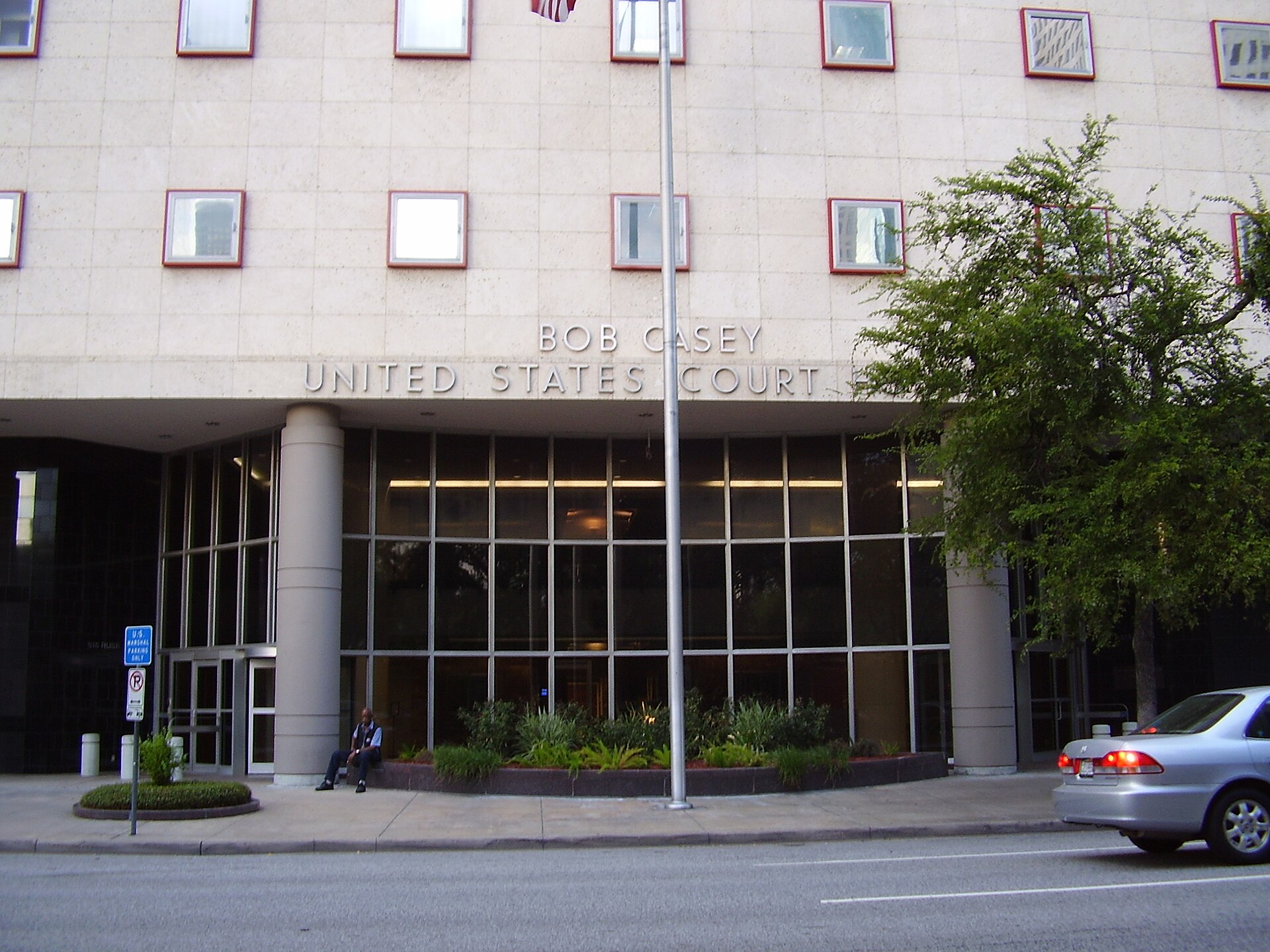
The case went to Judge Lynn Nettleton Hughes of the U.S. District Court for the Southern District of Texas, a former Harris County state district judge nominated by President Ronald Reagan in 1985.19 He ruled sixteen days after the suit was filed, in a five-page "Order on Dismissal" in Civil Action 4:21-cv-01774, signed at Houston on June 12, 2021.1 The order is short, and its words matter, so they are quoted here at length.
On the claim that the vaccines were experimental and dangerous, he wrote:
"Bridges dedicates the bulk of her pleadings to arguing that the currently-available COVID-19 vaccines are experimental and dangerous. This claim is false, and it is also irrelevant. Bridges argues that, if she is fired for refusing to be injected with a vaccine, she will be wrongfully terminated. Vaccine safety and efficacy are not considered in adjudicating this issue."1
On Texas wrongful termination law, he held that "Texas law only protects employees from being terminated for refusing to commit an act carrying criminal penalties to the worker," and that "Receiving a COVID-19 vaccination is not an illegal act, and it carries no criminal penalties."1 He noted the complaint's language: "in the press-release style of the complaint, she says that she refuses to be a 'human guinea pig.'"1 He cited Jacobson v. Massachusetts (1905) for the rule that state-imposed vaccination requirements do not violate due process, and he cited the Equal Employment Opportunity Commission's May 28, 2021 statement that employers can require vaccination "subject to reasonable accommodations for employees with disabilities or sincerely held religious beliefs," adding that the guidance "is not binding."1
On the federal emergency use statute, he wrote that the provision "confers certain powers and responsibilities to the Secretary of Health and Human Services in an emergency. It neither expands nor restricts the responsibilities of private employers; in fact, it does not apply at all to private employers like the hospital in this case."1
On the human subjects rules, he wrote: "Bridges has again misconstrued this provision, and she has now also misrepresented the facts. The hospital's employees are not participants in a human trial. They are licensed doctors, nurses, medical technicians, and staff members."1
On the Nuremberg Code and the Holocaust comparison, he wrote:
"She also says that the injection requirement is invalid because it violates the Nuremberg Code, and she likens the threat of termination in this case to forced medical experimentation during the Holocaust. The Nuremberg Code does not apply because Methodist is a private employer, not a government. Equating the injection requirement to medical experimentation in concentration camps is reprehensible. Nazi doctors conducted medical experiments on victims that caused pain, mutilation, permanent disability, and in many cases, death."1
And on coercion, in the passage most often quoted:
"Bridges says that she is being forced to be injected with a vaccine or be fired. This is not coercion. Methodist is trying to do their business of saving lives without giving them the COVID-19 virus. It is a choice made to keep staff, patients, and their families safer. Bridges can freely choose to accept or refuse a COVID-19 vaccine; however, if she refuses, she will simply need to work somewhere else."1
He closed: "Jennifer Bridges and the balance of the plaintiffs will take nothing from Houston Methodist Hospital and Houston Methodist The Woodlands Hospital."1

The Fifth Circuit affirms, June 13, 2022
Bridges appealed. A Fifth Circuit panel of Judges E. Grady Jolly, Jennifer Walker Elrod and Catharina Haynes affirmed in an unpublished per curiam opinion filed June 13, 2022, in No. 21-20311; Judge Haynes concurred in the judgment only.4 On appeal the employees pressed only their second claim, that firing a worker for refusing an experimental vaccine violates public policy. The court held that federal law does not supply that exception: "Federal law does not, and the district court did not err in dismissing plaintiffs' claim."4 It noted that the employees had "pivoted to alleged violations of Texas law and executive orders," a new argument it would not reach, and it declined to certify the question to the Supreme Court of Texas.4 Its last line: "For these reasons, we AFFIRM."4
Texas changes the rule, 2021 to 2024
While the appeal was pending, the State of Texas moved toward the position Bridges had taken. On October 11, 2021, Gov. Greg Abbott issued Executive Order GA-40, which recited that "countless Texans fear losing their livelihoods because they object to receiving a COVID-19 vaccination for reasons of personal conscience, based on a religious belief, or for medical reasons, including prior recovery from COVID-19," and ordered:
"No entity in Texas can compel receipt of a COVID-19 vaccine by any individual, including an employee or a consumer, who objects to such vaccination for any reason of personal conscience, based on a religious belief, or for medical reasons, including prior recovery from COVID-19."8
The order said the Governor would rescind it once the Legislature acted.8 Texas Monthly reported that after the order the employees' lawyer demanded their jobs back.10 No public record found for this lesson shows that Houston Methodist rehired them.
The Legislature acted two years later. On November 10, 2023, Gov. Abbott signed Senate Bill 7 of the 88th Legislature's third called session, which "prohibits private employers from requiring employees to get a COVID vaccination," in his words.9 The Texas State Law Library summarizes the law, codified as Chapter 81D of the Health and Safety Code: an employer "may not adopt or enforce a mandate" requiring COVID-19 vaccination of an employee or contractor; there is no exception for hospitals, though a health care facility may set "a reasonable policy" requiring unvaccinated workers to use protective equipment; the Texas Workforce Commission can impose a $50,000 penalty, waived if the employer hires or reinstates the worker; and the law took effect February 6, 2024.20 The protective equipment rule is close to what Bridges had offered in April 2021: "we'll wear N-95s, face shields."12 The law came too late to save her job, and it does not reach back to 2021.
The second suit fails, 2025
In April 2023 Bridges and other former employees sued again, first in Montgomery County, Texas; the hospital removed the case to federal court, where it became No. 4:23-cv-1699.5 This time the theory was that Houston Methodist acted as an arm of the government because it administered federally owned vaccines under the CDC COVID-19 Vaccination Program, so its mandate violated their constitutional right to refuse, enforceable under 42 U.S.C. 1983. They also sued the Chairman of the Texas Workforce Commission over denied unemployment benefits.5 The Fifth Circuit counted 112 plaintiffs on appeal, most of them former employees fired after refusing.5
The district court dismissed the federal claims with prejudice and sent the state law claims back to state court. On June 17, 2025, a panel of Judges Patrick Higginbotham, Edith Jones and Leslie Southwick affirmed in No. 24-20483. The court held that the argument "conflates Houston Methodist's role as their private employer with its role as a vaccine provider to the general public," and, quoting an earlier circuit case that had itself quoted Judge Hughes, that the emergency use statute "'does not apply at all' to those acting in their role as 'private employers like the hospital in this case.'"5 The employees asked the Supreme Court to hear the case. Justice Samuel Alito extended their filing time; the petition, No. 25-481, was filed October 15, 2025, the hospital waived its right to respond, and on January 12, 2026, the Court denied review.216
A third set of claims, religious discrimination suits under Title VII brought by 19 former employees in December 2022 and later consolidated, also failed.5 On August 15, 2025, Judge Andrew S. Hanen granted summary judgment to the hospital in Garza v. Houston Methodist Hospital, No. 4:22-cv-4288, holding: "The Court, therefore, concludes that Houston Methodist is a religious organization under 42 U.S.C. § 2000e-1(a)," a status that exempts it from that part of Title VII.13
Timeline
| Date | Event |
|---|---|
| Dec. 11, 2020 | The Pfizer-BioNTech vaccine becomes available under an FDA emergency use authorization for people 16 and older.11 |
| Apr. 1, 2021 | Houston Methodist announces that employees must be vaccinated by June 7, 2021.1 |
| Apr. 27, 2021 | Becker's Hospital Review reports Bridges's refusal and her words to KHOU: "I think our rights as human beings are more important than keeping that job."12 |
| May 6, 2021 | Bridges registers for SB 1669 and submits written testimony at the Texas Senate State Affairs Committee; the bill is left pending.316 |
| May 28, 2021 | Bridges and 116 co-workers sue in Texas state court; the hospital removes the case to federal court.14 |
| June 7, 2021 | Deadline day; Bridges leads a walkout at the end of her shift at the Baytown hospital.2 |
| June 9, 2021 | The hospital reports 178 suspended for 14 days without pay, 285 exemptions, 332 deferrals and 24,947 fully vaccinated.14 |
| June 12, 2021 | Judge Lynn N. Hughes dismisses the suit: "This is not coercion."1 |
| June 22, 2021 | Houston Methodist says 153 employees resigned during the suspension or were terminated.715 |
| Aug. 23, 2021 | The FDA grants full approval to the Pfizer-BioNTech vaccine, marketed as Comirnaty, for people 16 and older.11 |
| Oct. 11, 2021 | Gov. Greg Abbott issues Executive Order GA-40: "No entity in Texas can compel receipt of a COVID-19 vaccine" over an objection.8 |
| Oct. 21, 2021 | Texas Monthly reports that GoFundMe removed her roughly $180,000 campaign.10 |
| June 13, 2022 | The Fifth Circuit affirms the dismissal in No. 21-20311.4 |
| Dec. 2022 | Nineteen former employees file Title VII religious discrimination suits, later consolidated.5 |
| Apr. 2023 | Former employees file a second suit (Bridges II) in Montgomery County; it is removed to federal court.5 |
| Nov. 10, 2023 | Gov. Abbott signs SB 7 barring private employer COVID-19 vaccine mandates.9 |
| Feb. 6, 2024 | SB 7 takes effect, with a $50,000 penalty and no hospital exception.20 |
| June 17, 2025 | The Fifth Circuit affirms dismissal of Bridges II in No. 24-20483.5 |
| Aug. 15, 2025 | Judge Andrew Hanen grants summary judgment to the hospital in the consolidated Title VII case (Garza).13 |
| Sept. 4, 2025 | Justice Alito extends the time to petition the Supreme Court.21 |
| Oct. 15, 2025 | Petition for certiorari filed, No. 25-481.6 |
| Jan. 12, 2026 | The Supreme Court denies the petition.6 |
What the record also shows
A true profile states the unflattering facts too. Texas Monthly reported in October 2021 that Bridges's views hardened after she connected with vaccine skeptics online, that she said "There's no way in the world that I would take that thing now," that she had come to see the vaccines as part of a wider political plot, and that GoFundMe removed her campaign under its misinformation policy.10 The Washington Post, in a story republished by the Texas Tribune, reported that she promoted a June 2021 protest on Infowars.15 Her lawsuit's comparison of an employer's vaccine policy to Nazi medical experiments was rejected by the court as "reprehensible."1 This lesson does not praise any of those claims. It praises what is left when they are set aside: a worker who would not be compelled, and who said so openly.
Why it took courage
Most people who disagree with a rule at work keep quiet, comply and hold the job. That is a reasonable choice, and nothing here faults the 24,947 Houston Methodist employees who complied, many of whom wanted the vaccine. Bridges made the other choice, and she made it at the worst possible time and place. She was a bedside nurse, paid by the hour, in a field where references and reputation follow a person from one hospital to the next. She chose to put her name, her face and her employer's name on television in April 2021, two months before the deadline, when silence would have cost her nothing.12
She then used every lawful means a citizen has, in order. She spoke to the press. She registered and submitted written testimony at the State Capitol.3 She went to court as the first named plaintiff, which is the name a case carries for years.1 She assembled with co-workers in public at the end of a shift, not during it.2 She appealed when she lost.15 Module 52's lesson on forms of lawful resistance describes exactly this sequence: petition, testimony, suit, peaceable assembly, and acceptance of the lawful consequence. She took the consequence, which was the loss of the job, and kept speaking.
The liberty she defended is old and plain: a person's say over what is put into her own body, and her ability to keep earning a living while she exercises it. Judge Hughes held, and the Fifth Circuit agreed, that under Texas law in 2021 a private employer could make the choice for her by making it a condition of the job. He also wrote that if she refused "she will simply need to work somewhere else."1 Bridges took that sentence at its word and paid its price. The people of Texas, through their Governor in 2021 and their Legislature in 2023, later decided that no worker in the state should have to pay that price for refusing a COVID-19 vaccine, and wrote the protective-equipment alternative she had proposed into the statute.82012 She lost every case. The rule she stood against did not survive in Texas.
The courage also lay in being wrong in public about some things and continuing anyway. A federal judge called parts of her complaint false and reprehensible, and national news repeated it.1 Many people would have gone quiet after that. Her central demand, to be left alone to decline an injection without losing her work, never depended on the parts of the complaint the judge rejected, and she did not drop it.
What the other side said
Houston Methodist said the policy protected patients. President and CEO Dr. Marc Boom told employees: "You did the right thing. You protected our patients, your colleagues, your families and our community," and "The science proves that the vaccines are not only safe but necessary if we are going to turn the corner against COVID-19."7 On deadline day the hospital said its employees were "making the right decision to fulfill their sacred obligation to protect our patients," and called the protesters "a few disgruntled employees."2 Spokeswoman Gale Smith said leaders had no regrets: "Patients are always first, and that's what it's always been."15
Judge Lynn N. Hughes found as the court's finding that the claim that the vaccines were experimental and dangerous "is false, and it is also irrelevant"; that the employees "are not participants in a human trial"; that the Nuremberg Code "does not apply because Methodist is a private employer, not a government"; that "Equating the injection requirement to medical experimentation in concentration camps is reprehensible"; and that "This is not coercion."1
The Fifth Circuit held in 2022 that federal law supplies no public policy exception for refusing the vaccine, and in 2025 that the hospital acted as "their private employer," not as the government, when it adopted the policy.45
Still disputed: Whether a private hospital should be free to require a vaccine of its staff as a condition of employment remains contested. Texas answered no for COVID-19 vaccines from February 6, 2024, while the federal courts held that nothing in federal law or the Constitution barred Houston Methodist's 2021 policy; the employees' Texas law claims from the second suit were sent back to state court, and no final state ruling on them was found for this lesson.205
Medical note: In April and May 2021 Bridges said the COVID-19 vaccines were experimental and that staff were being made "guinea pigs," and her suit argued the vaccines were "experimental and dangerous"; she also said she had recovered from COVID-19 in 2020 and had natural immunity.15110 Judge Hughes found on June 12, 2021, that the claim "is false," and that the employees were not subjects of a human trial.1 At that time the vaccines were authorized for emergency use; the FDA granted full approval to the Pfizer-BioNTech vaccine (Comirnaty) on August 23, 2021, with Acting Commissioner Janet Woodcock saying the public "can be very confident that this vaccine meets the high standards for safety, effectiveness, and manufacturing quality the FDA requires of an approved product."11 Texas Monthly noted in 2021 that reinfection after recovery was possible.10 This lesson takes no position on these medical questions.
Hard questions and answers
She lost every case. How is that a hero story?
The profile praises the stand, not the score. Bridges lost in the district court, the Fifth Circuit twice, and at the Supreme Court's door.1456 But the question she raised in April 2021, whether a Texas worker could be fired for declining a COVID-19 vaccine, was answered by the State of Texas in her favor for the future, first by executive order in October 2021 and then by statute effective February 2024.820 Losing a lawsuit and being on the right side of a later law are not the same thing, and the lesson keeps them apart. Her courage was in acting before anyone knew how it would come out.
The hospital was protecting sick patients. Wasn't she endangering them?
The hospital's case was patient safety, and its leaders said so plainly; the court accepted that the policy was "a choice made to keep staff, patients, and their families safer."17 Bridges did not ask to work without precautions. She proposed N-95 masks and face shields and to follow CDC guidance.12 Texas's 2023 law adopted a version of that balance, letting hospitals require protective equipment of unvaccinated staff based on their risk to patients.20 Reasonable people weighed the risks differently. What the record does not show is that she proposed to work unprotected.
Why praise someone whose complaint a judge called reprehensible?
The judge's word applied to one argument: "Equating the injection requirement to medical experimentation in concentration camps is reprehensible."1 This lesson agrees that the comparison does not hold, and states the court's reasons in full. It also states the other unflattering facts in the record.1015 The praise is for something the judge did not condemn: refusing an injection openly and accepting the lawful consequence. A person can make a bad argument in a pleading and still be right to refuse to be compelled.
Did the Constitution protect her at all?
Not against Houston Methodist. The constitutional guarantees in the Bill of Rights and the Fourteenth Amendment limit governments, and the Fifth Circuit held in 2025 that the hospital acted as "their private employer" when it adopted the policy, even though it also gave federally owned vaccines to the public.5 Judge Hughes made the same point about the Nuremberg Code: it "does not apply because Methodist is a private employer, not a government."1 That is why her real remedy came through the Legislature. A citizen who wants protection from a private employer usually has to win it as a statute, and lesson 22 of this module, What the Stands Won, follows that pattern across the states.
Why were the numbers so small?
Because most employees complied. By the hospital's count 24,947 were fully vaccinated on June 9, 2021, out of more than 26,000, and 617 more had exemptions or deferrals.147 The 153 who resigned or were fired were well under one percent of the workforce.7 Small numbers made the stand more exposed: there was no strike large enough to force a compromise, only individuals willing to lose their jobs. Houston Methodist's policy was also among the first of its kind, and The Washington Post reported that the University of Pennsylvania Health System cited it when announcing its own requirement.15
What would a public health officer say about the Texas law?
Houston Methodist's leadership said the science made vaccination "necessary" and stood by the policy without regret.715 A health officer holding that view would see SB 7 as removing a tool hospitals had used to protect patients. The Legislature weighed that and kept one part of it, the right to require protective equipment of unvaccinated staff.20 In a self-governing state, that kind of trade-off belongs to the elected Legislature, which is where Bridges took her case first, on May 6, 2021.3
Related lessons
- Dr. Aaron Kheriaty, Fired for Natural Immunity: a physician fired by a public university, where the Constitution did apply.
- The Navy SEALs and the Military Mandate: refusing a vaccine order inside the armed forces.
- Small Businesses and Landlords at the Supreme Court: the federal workplace vaccine-or-test rule and the health care worker rule.
- What the Stands Won and the record of every ruling.
- Emergency Power in 2020: the orders and how people pushed back.
- Module 52, Ordered Liberty: Legitimate Authority and Its Limits and Forms of Lawful Resistance.
- Module 49, Testifying and Public Comment: how to register and testify on a bill.
- The Fourteenth Amendment: why it limits states and not private employers.
Still open
These items could not be confirmed against a primary source before publication. The lesson states them as open, and they stay on the fact-check list.
- Whether Houston Methodist rehired any terminated employees after GA-40 or SB 7: no public record found.
- The split of the 153 between resignations and terminations was never disclosed by the hospital (Texas Tribune, June 23, 2021).
- Whether Bridges personally was a plaintiff in the consolidated Title VII (Garza) case: not confirmed; the lesson does not say she was.
- The outcome of the Bridges II state-law claims remanded to Texas state court: not found.
- The May 28, 2021 suit was filed in Texas state court per the Fifth Circuit; the specific county for the 2021 filing was not confirmed (the 2023 suit was filed in Montgomery County).
- The date of the 178 suspensions is reported as June 7 (Texas Tribune) and the day after the deadline (KPRC); the lesson uses the June 9 report date.
Learn more
- Order on Dismissal, Bridges v. Houston Methodist Hospital (June 12, 2021): Five pages; read the court's reasoning in full.
- Fifth Circuit opinion in Bridges II (June 17, 2025): Explains why a private hospital that gave vaccines to the public was not a state actor as an employer.
- Executive Order GA-40 (Oct. 11, 2021): The Governor's findings about Texans who feared losing their livelihoods.
- Texas State Law Library on SB 7: Plain summary of what Texas employers may and may not do since 2024.
Notes
- Bridges v. Houston Methodist Hospital, Civil Action No. 4:21-cv-01774, Order on Dismissal, Document 18 (S.D. Tex. June 12, 2021) (Hughes, J.), 5 pages, signed at Houston; also reported as 543 F. Supp. 3d 525. Copy of the filed order hosted by McGrath North (retrieved Nov. 7, 2026). Read it online. ↩
- ABC13 (KTRK), "Group of Houston Methodist nurses host walkout over COVID-19 vaccine job requirement," June 7, 2021, with Houston Methodist's statement of that day (retrieved Nov. 7, 2026). Read it online. ↩
- Texas Senate Committee on State Affairs, Witness List, May 6, 2021, 9:00 AM, SB 1669 (listing "Bridges, Jennifer (also providing written testimony) (Self), Baytown" FOR) (retrieved Nov. 7, 2026). Read it online. ↩
- Bridges v. Methodist Hospital, No. 21-20311 (5th Cir. June 13, 2022) (per curiam, unpublished; Jolly, Elrod and Haynes, JJ.; Haynes, J., concurring in the judgment only), 2022 WL 2116213 (retrieved Nov. 7, 2026). Read it online. ↩
- Bridges v. Methodist Hospital, No. 24-20483 (5th Cir. June 17, 2025) (per curiam, unpublished; Higginbotham, Jones and Southwick, JJ.), appeal from S.D. Tex. No. 4:23-cv-1699 (retrieved Nov. 7, 2026). Read it online. ↩
- Supreme Court of the United States, Docket No. 25-481, Bridges v. The Methodist Hospital (petition filed Oct. 15, 2025; denied Jan. 12, 2026) (retrieved Nov. 7, 2026). Read it online. ↩
- Associated Press, "Houston hospital workers fired, resign over COVID-19 vaccine," KPRC Click2Houston, June 22, 2021 (153 figure, Bridges and Boom quotations) (retrieved Nov. 7, 2026). Read it online. ↩
- Office of the Governor of Texas, Executive Order GA-40, "Relating to prohibiting vaccine mandates, subject to legislative action," October 11, 2021, filed with the Secretary of State (retrieved Nov. 7, 2026). Read it online. ↩
- Office of the Texas Governor, "Governor Abbott Signs COVID Vaccine Freedom Bill At Governor's Mansion," press release, November 10, 2023 (SB 7, 88th Legislature, 3rd Called Session) (retrieved Nov. 7, 2026). Read it online. ↩
- Peter Holley, "The Making of an Anti-vax Warrior," Texas Monthly, October 21, 2021 (retrieved Nov. 7, 2026). Read it online. ↩
- U.S. Food and Drug Administration, "FDA Approves First COVID-19 Vaccine," press release, August 23, 2021 (retrieved Nov. 7, 2026). Read it online. ↩
- Becker's Hospital Review, "Why 1 Houston Methodist nurse is refusing the COVID-19 vaccine, even though it means losing her job," April 27, 2021, reporting Bridges's interview with KHOU (retrieved Nov. 7, 2026). Read it online. ↩
- Garza v. Houston Methodist Hospital, Civil Action No. 4:22-cv-4288 (S.D. Tex. Aug. 15, 2025) (Hanen, J.), memorandum opinion and order granting summary judgment; copy hosted by Horty Springer (retrieved Nov. 7, 2026). Read it online. ↩
- KPRC Click2Houston, "178 Houston Methodist employees suspended for not complying with COVID-19 vaccine requirement," June 9, 2021 (retrieved Nov. 7, 2026). Read it online. ↩
- Dan Diamond, The Washington Post, republished as "More than 150 employees resign or are fired from Houston hospital system after refusing to get vaccinated," The Texas Tribune, June 23, 2021 (retrieved Nov. 7, 2026). Read it online. ↩
- Texas Legislature Online, Bill Stages and History, 87(R) SB 1669 by Hall, "Relating to prohibited discrimination regarding vaccination status and mandates..." (heard May 6 and 10, 2021; left pending in committee) (retrieved Nov. 7, 2026). Read it online. ↩
- KPRC Click2Houston, "117 employees file lawsuit against Houston Methodist for mandating workers to take COVID-19 vaccine," May 28, 2021 (page later updated with June 7 coverage; Woodfill and Bridges quotations) (retrieved Nov. 7, 2026). Read it online. ↩
- ABC7 News (KGO), "153 employees who refused COVID-19 vaccine have resigned or been fired, Houston hospital says," June 22, 2021 (retrieved Nov. 7, 2026). Read it online. ↩
- Federal Judicial Center, Biographical Directory of Article III Federal Judges, "Hughes, Lynn Nettleton" (retrieved Nov. 7, 2026). Read it online. ↩
- Texas State Law Library, "New Law Will Prevent Private Employers From Requiring COVID-19 Vaccines," December 2023 (SB 7; Health and Safety Code ch. 81D; effective Feb. 6, 2024) (retrieved Nov. 7, 2026). Read it online. ↩
- Supreme Court of the United States, Docket No. 25A257 (application to extend time; granted by Justice Alito Sept. 4, 2025) (retrieved Nov. 7, 2026). Read it online. ↩
Check yourself
1. What did Houston Methodist's policy require, according to Judge Hughes's order?
The order says the hospital announced on April 1, 2021 a policy requiring employees be vaccinated by June 7, 2021, all at its expense.
2. How many employees did Houston Methodist say resigned or were terminated by June 22, 2021?
A hospital spokesperson said 153 employees resigned during the suspension or were terminated. 117 was the number of plaintiffs and 178 the number suspended.
3. What did Judge Hughes say about the suit's comparison to Nazi medical experiments?
He wrote that equating the requirement to experimentation in concentration camps is reprehensible and that the Code does not apply because Methodist is a private employer, not a government.
4. Why did Bridges's wrongful termination claim fail under Texas law?
Under Sabine Pilot, Texas protects only employees fired for refusing to perform an illegal act; receiving a vaccine is not illegal.
5. What did the Fifth Circuit decide on June 13, 2022?
The panel affirmed, finding federal law supplied no public policy exception and declining to certify.
6. What did Executive Order GA-40 (Oct. 11, 2021) say?
That is the order's operative sentence, which also named prior recovery from COVID-19.
7. What may a Texas hospital still require of unvaccinated staff under SB 7?
Chapter 81D lets health care facilities set a reasonable protective-equipment policy, close to what Bridges had offered.
8. What happened to the employees' second suit (Bridges II)?
The court held the hospital acted as a private employer, not a state actor, and the Supreme Court denied the petition in No. 25-481.
Terms in this lesson
- At-will employment
- The Texas rule that employment for an indefinite term may be ended by either side at any time, for any lawful reason or none.
- Sabine Pilot exception
- A narrow Texas exception to at-will employment protecting a worker fired solely for refusing to perform an illegal act that carries criminal penalties.
- Permission under 21 U.S.C. 360bbb-3 for the FDA to allow use of an unapproved medical product during a declared emergency, with information about the option to accept or refuse it.
- Full approval (Comirnaty)
- The FDA's licensing of the Pfizer-BioNTech COVID-19 vaccine on August 23, 2021, for people 16 and older.
- Nuremberg Code
- Principles for human experimentation drawn up after the trials of Nazi doctors; Judge Hughes held it does not bind a private employer.
- Removal
- The transfer of a case filed in state court to federal court, here because the complaint raised federal claims.
- Motion to dismiss (Rule 12(b)(6))
- A request that a court end a case because, even taking the facts alleged as true, they state no legal claim.
- Per curiam
- An opinion issued in the name of the court rather than a single judge.
- State action
- Conduct attributable to the government; constitutional rights generally limit only state action, not private employers.
- 42 U.S.C. 1983
- The federal statute allowing suits against persons who violate federal rights while acting under color of state law.
- Petition for certiorari
- A request that the U.S. Supreme Court review a lower court's decision; denial leaves the lower ruling in place without deciding the merits.
- Executive Order GA-40
- Gov. Greg Abbott's October 11, 2021 order barring any entity in Texas from compelling a COVID-19 vaccine over an objection of conscience, religion or medical reasons.
- Senate Bill 7 (2023)
- The Texas law, effective February 6, 2024, barring private employers from adopting or enforcing COVID-19 vaccine mandates, enforced by the Texas Workforce Commission.
- Title VII religious organization exemption
- 42 U.S.C. 2000e-1(a), which exempts religious organizations from Title VII's ban on religious discrimination in employment; applied to Houston Methodist in 2025.
Sources
- Bridges v. Houston Methodist Hospital, Order on Dismissal (S.D. Tex. June 12, 2021) (2021-06-12) checked 2026-11-07
- Bridges v. Methodist Hospital, No. 21-20311 (5th Cir. 2022) (2022-06-13) checked 2026-11-07
- AP via KPRC: Houston hospital workers fired, resign over COVID-19 vaccine (2021-06-22) checked 2026-11-07
- Texas Tribune / Washington Post: More than 150 employees resign or are fired (2021-06-23) checked 2026-11-07
- ABC7: 153 employees who refused COVID-19 vaccine have resigned or been fired (2021-06-22) checked 2026-11-07
- ABC13: Houston Methodist nurses host walkout (2021-06-07) checked 2026-11-07
- Becker's: Why 1 Houston Methodist nurse is refusing the COVID-19 vaccine (2021-04-27) checked 2026-11-07
- KPRC: 178 Houston Methodist employees suspended (2021-06-09) checked 2026-11-07
- KPRC: 117 employees file lawsuit against Houston Methodist (2021-05-28) checked 2026-11-07
- Texas Monthly: The Making of an Anti-vax Warrior (2021-10-21) checked 2026-11-07
- Texas Senate State Affairs witness list, May 6, 2021, SB 1669 (2021-05-06) checked 2026-11-07
- Texas Legislature Online: 87(R) SB 1669 history (2021-05-10) checked 2026-11-07
- Texas Executive Order GA-40 (2021-10-11) checked 2026-11-07
- Governor Abbott signs SB 7 (press release) (2023-11-10) checked 2026-11-07
- Texas State Law Library: SB 7 explainer (2023-12) checked 2026-11-07
- Bridges v. Methodist Hospital, No. 24-20483 (5th Cir. 2025) (2025-06-17) checked 2026-11-07
- Supreme Court docket 25-481 (2026-01-12) checked 2026-11-07
- Supreme Court docket 25A257 (2025-09-04) checked 2026-11-07
- Garza v. Houston Methodist Hospital (S.D. Tex. 2025) (2025-08-15) checked 2026-11-07
- FJC biography: Lynn Nettleton Hughes (current) checked 2026-11-07
- FDA: FDA Approves First COVID-19 Vaccine (2021-08-23) checked 2026-11-07
- Commons: Methodist Hospital in Houston (photo) (n.d.) checked 2026-11-07
- Commons: Texas Medical Center Main Street (photo) (n.d.) checked 2026-11-07
- Commons: Bob Casey Federal Courthouse (photo) (n.d.) checked 2026-11-07