Lesson 7 of 10 · about 55 minutes · Updated October 28, 2026
Calvary Chapel Growth and Fault Lines: The Network, the Succession After 2013, Controversies and Reforms
You'll be able to
- Explain how Calvary Chapel spread by planting, what affiliation meant before and after 2012, and why published church counts differ.
- Identify the best-known pastors who came out of Costa Mesa and describe their public ministries from their own published biographies.
- Lay out the succession after Smith's death and the November 2016 split, quoting both Brodersen and the Calvary Chapel Association council.
- Separate what was alleged from what was proved in the controversies reported by Christianity Today, the Los Angeles Times and other named outlets.
- State the best case for and against the Moses model in the words of named defenders and critics.
- List which reforms can be documented and which cannot.
Start here: the short version
Calvary Chapel began as one small congregation in Costa Mesa, California, that hired Chuck Smith as pastor in 1965, and by the time Smith died of lung cancer on Oct. 3, 2013, Christianity Today counted about 1,600 congregations in the United States and abroad that carried the name.1 The Calvary Chapel Association's own history page now says the ministry has "over 1,800 fellowships throughout the world" (retrieved Oct. 28, 2026).2 The movement grew by planting: a young man converted at Costa Mesa started a Bible study, the study became a church, and the church sent out more planters. That speed came with a governing idea, often called the "Moses model," in which the senior pastor leads and a board assists. Supporters credit the model for the growth; critics named in Christianity Today blamed it for weak checks on pastors.
After Smith's death his son-in-law, Brian Brodersen, became senior pastor at Costa Mesa. In November 2016 Brodersen resigned from the Calvary Chapel Association's leadership council, writing that "Our areas of disagreement are NOT theological or doctrinal," and announced a new Calvary Chapel Global Network.3 The council answered in writing that "CCGN is about freedom, without accountability."4 Two networks now claim Smith's legacy. At Costa Mesa itself, Char Brodersen, Brian's son, became sole senior pastor in January 2025 after what Western Seminary called "a four-year leadership transition process," and the church's staff page now lists Brian Brodersen as "Pastor Emeritus."56 This lesson sets out how the network spread, the pastors who came out of it, the succession, the 2016 split, the controversies documented in court filings and named news reports, and what reforms can and cannot be confirmed.
Where this lesson fits
Lesson 05, The Jesus People and Costa Mesa, tells how Chuck Smith came to the small Costa Mesa church and how the youth revival of the late 1960s and early 1970s filled it. Lesson 06, Calvary Chapel Doctrine and Practice, covers verse-by-verse teaching, the statement of faith, radio and Maranatha! Music. This lesson picks up the story where those two leave off: how one church became a network of well over a thousand, who led the network's best-known churches, and what happened to it after its founder died. Lessons 08 and 09 tell the Vineyard story in full, and lesson 10, Calvary Chapel and Vineyard Side by Side, offers a reader's checklist for any independent church. The general question of who holds an independent pastor to account is treated in lesson 04, Non-Denominational Churches; this lesson applies that question to one movement with a documented history.

How Calvary Chapel spread
Planting from a Bible study
The basic pattern can be read straight out of the biographies the movement's own churches publish. A young convert sat under Smith's teaching at Costa Mesa, began teaching the Bible to a handful of people somewhere else, and the group grew into a congregation that took the Calvary Chapel name. Harvest Christian Fellowship in Riverside describes its own start as a "small Bible study of 30 people and a 19-year-old pastor," that pastor being Greg Laurie.7 Calvary Chapel Golden Springs says Raul Ries began a home Bible study in 1974 that grew into Calvary Chapel West Covina.8 Christianity Today reported that Skip Heitzig started Calvary of Albuquerque "as a small Bible study" in 1981.9 No denomination approved these starts and no central office paid for them. That was by design: Rob Moll of Christianity Today reported in 2007 that Smith opposed forming a denomination.10
Sociologist Donald E. Miller of the University of Southern California, who studied Calvary Chapel, the Vineyard and Hope Chapel for his 1997 book Reinventing American Protestantism, described the result in an encyclopedia entry on Calvary Chapel. He wrote that the first Calvary Chapel "was founded in 1965 by Chuck Smith in Costa Mesa, California," and that some thirty years later there were more than 600 Calvary Chapels in the United States plus nearly 100 mission churches abroad. California had 255 of them; 42 other states had at least one; Washington, Oregon, Arizona and Florida each had more than 25; and Calvary Chapels existed in 35 countries. In a survey of several hundred Calvary pastors in the early 1990s, Miller found a median weekly attendance of 138 and found that about a quarter of the churches were less than two years old.11 The median figure is worth keeping in mind: the movement is often pictured through its megachurches, but the typical Calvary Chapel in Miller's survey was a small congregation.
Miller's book grouped Calvary Chapel with the Vineyard and Hope Chapel as what he called "new paradigm churches," a phrase quoted in Publishers Weekly's review of the book.12 The three shared informal dress, contemporary music, teaching aimed at ordinary readers of the Bible and a suspicion of denominational machinery. Lesson 04 explains why that combination spread so quickly in the 1970s and 1980s.
What "affiliation" meant
Because each Calvary Chapel is incorporated on its own and owns its own property, "affiliation" has always meant a relationship, not a legal merger. Christianity Today's 2006 report on Albuquerque described the network as roughly 1,300 independent churches and reported that Calvary Chapel had "recently" begun Calvary Chapel Outreach Fellowships, through which pastors could be affiliated with the movement or disaffiliated from it. A September 2006 Christianity Today report described the Outreach Fellowships as "an organization formed to maintain accountability for Calvary Chapel pastors."13913 The 2007 "Day of Reckoning" article added that "Accountability for network pastors is provided by Calvary Chapel Outreach Fellowships," described as "a ministry of Calvary Chapel Costa Mesa," that "Senior pastors are asked to oversee regions assigned to them," and that "The ministry is currently run by Paul Smith, Chuck's brother."10 This lesson could not find a primary document giving the exact year Calvary Chapel Outreach Fellowships was founded; Christianity Today's word "recently" in May 2006 places it shortly before that date.
The Calvary Chapel Association, which most readers today meet as the name on the network's church locator, describes itself in its home page's description as "a group of like minded men seeking to serve an bless the body of Christ" (the typing error is in the original, retrieved Oct. 28, 2026).14 Its regional page tells inquirers, "We invite you to reach out to any of the gentlemen listed on these pages for more information about affiliation."15 The page sets out no written application process. The same regional structure Moll described in 2007, senior pastors assigned to oversee regions, is still how a church makes contact.
When was the association itself formed? Some popular summaries place it in the 1990s. The sources this lesson could open point to 2012. Christianity Today's 2014 interview with Brodersen said Calvary Chapel "officially established an association with a 21-member leadership council" in 2012, and its 2013 obituary of Smith said that "In 2012, he established a 21-member leadership council" to oversee the association.161 Calvary Chapel Magazine, published by the association, recounts that Smith first asked Don McClure to help form the CCA Leadership Council to oversee the regional pastors, and that in July 2013, less than three months before his death, Smith wrote to pastors calling the council "my spiritual sons."17 The safest statement is that informal affiliation through Costa Mesa existed for decades, that Christianity Today described the Outreach Fellowships as recently begun in 2006, and that a formal association with a named council dates from 2012. This lesson could not confirm the association's legal form (for example, whether it is a separately incorporated nonprofit corporation and in which state); that point is listed as unverified.
The dove and the name
The sign of affiliation most people notice is the dove. A Calvary church-planting site published in 2013 states that the dove logo, which it calls the "Maranahta! Dove" (spelled that way on the page), is "the trademark-protected property of Calvary Chapel of Costa Mesa."18 The same page explains that "Calvary Chapel" was already the name of the small Orange County church that asked Smith, a former Foursquare pastor, to lead it, and that the church kept its name. Ownership of the mark matters for the 2016 story: when the network split, the church that owned the dove trademark became the flagship of the new network, while most of the pastors who had sat on the council stayed in the association. Lesson 06 covers the Maranatha! Music side of the dove's history.
Counting the churches
No published source gives a single, audited count of Calvary Chapels over time, and the figures that exist measure different things: some count only U.S. congregations, some add "ministries" or mission works, and after 2016 some count only the churches tied to one of the two networks. The table and chart below list every figure this lesson could confirm, each with its source and year. Read them as a range, not a growth curve.
| Year of figure | Figure | What it counts | Source |
|---|---|---|---|
| About 1995 (thirty years after 1965) | More than 600, plus nearly 100 abroad | U.S. Calvary Chapels, plus mission churches overseas | Donald E. Miller, encyclopedia entry "Calvary Chapel"11 |
| 2006 | About 1,300 | Independent churches in the network | Christianity Today, May 8, 200613 |
| 2007 | About 1,300 | U.S. churches | Rob Moll, Christianity Today, Feb. 16, 200710 |
| 2012 | "over one thousand congregations around the world" | Congregations worldwide | CBS Los Angeles, Jan. 3, 201219 |
| 2013 | About 1,600 | Congregations in the U.S. and abroad | Christianity Today obituary, Oct. 3, 20131 |
| 2014 | More than 1,500 | "churches and ministries" worldwide | Christianity Today, Feb. 26, 201416 |
| 2017 | About 1,700 | Churches in the Calvary Chapel Association after the split | Christianity Today, March 2017 issue20 |
| 2017 | More than 1,000 | Churches in the Calvary Chapel network | Christianity Today, June 13, 201721 |
| 2026 | "over 1,800 fellowships" | Fellowships worldwide tied to the association | Calvary Chapel Association history page, retrieved Oct. 28, 20262 |
Two cautions follow from the table. First, the figures before 2016 counted one network; the figures after 2016 count the association alone, and no source this lesson found gives a count for the Calvary Global Network's member churches. Christianity Today reported in 2017 that the new network continued to include existing Calvary Chapel congregations unless they opted out, which means some churches were counted by both bodies at once.20 Second, the CCA's 2026 word is "fellowships," which can include small groups that do not yet call themselves churches.

Pastors who came out of Costa Mesa
Moll wrote in 2007 that Smith's followers, among them Greg Laurie, Raul Ries, Mike MacIntosh and Skip Heitzig, had started more than 50 megachurches.10 The sketches below are limited to public ministry: churches founded, offices held, broadcasts and books, all from each ministry's own published biography or from a named news report. Following this module's rule, living pastors are described by their public ministry only.
Greg Laurie and Harvest
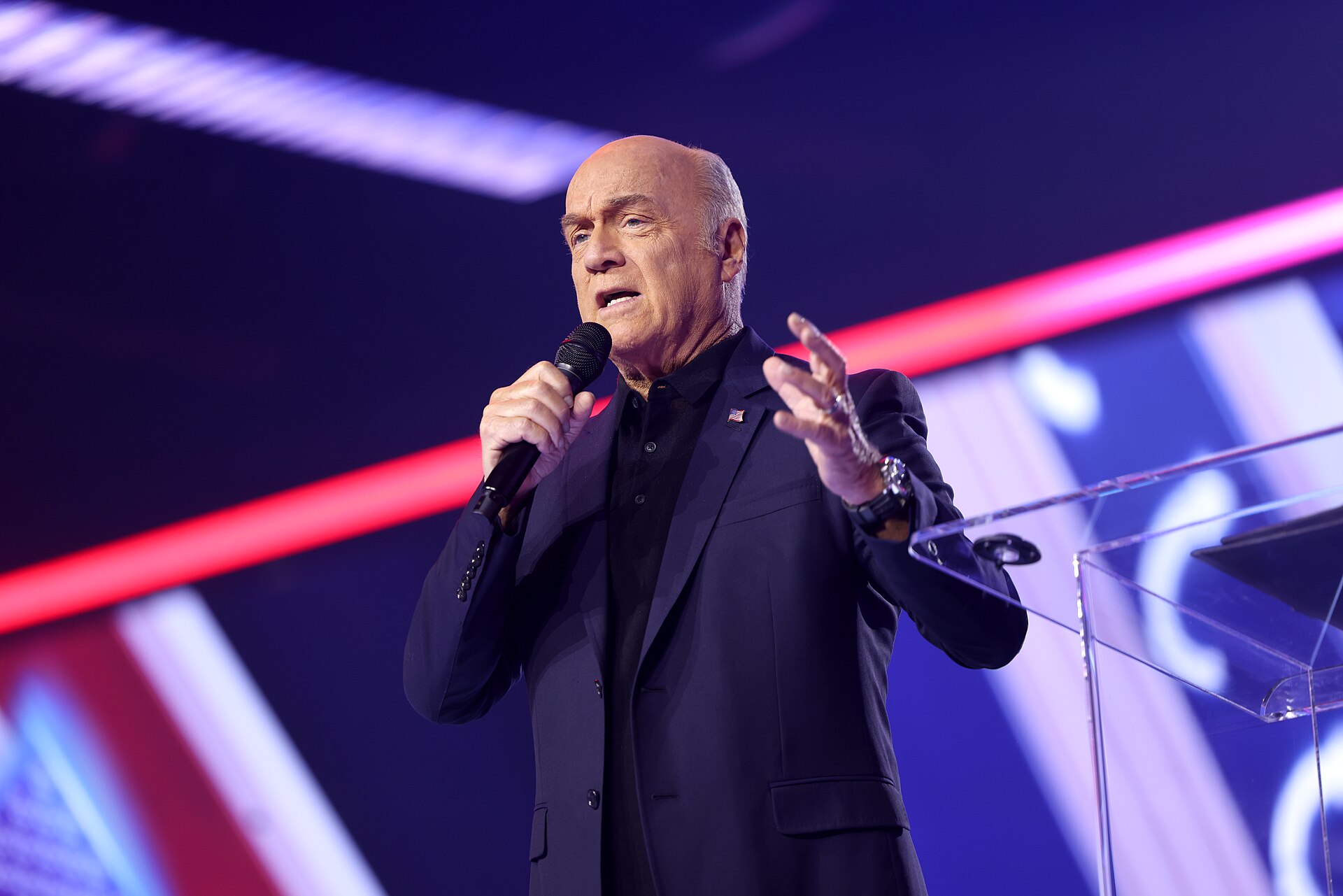
Christianity Today's obituary of Smith said Greg Laurie began ministry under Smith's leadership at age 19 and later founded Harvest Christian Fellowship in Riverside, California.1 Harvest's own biography of Laurie says the church began in the 1970s, during the Jesus Movement in Southern California, as that 30-person Bible study, and that it now has three California campuses and one in Hawaii. The same page says Laurie founded the Harvest Crusades in 1990, that 125 crusades have been held with more than 6.5 million in total attendance, that he has written more than 70 books including Jesus Revolution, and that among his national roles he has been a member of the board of directors of the Billy Graham Evangelistic Association. The 2023 Lionsgate film Jesus Revolution told the story of Greg and Cathe Laurie's conversion.7
Harvest's own attendance totals differ from the figures Christianity Today printed in 2017, when it reported that more than 7.7 million people had attended Harvest America events since 1990. The two numbers may count different events, and this lesson gives both.21 The same Christianity Today report, dated June 13, 2017, said Harvest had joined the Southern Baptist Convention the day after its annual Harvest America event while remaining affiliated with Calvary Chapel. It quoted Laurie: joining the convention "does not change our theology, philosophy of ministry, or our history."21 Harvest's step came seven months after the Costa Mesa split; the article did not tie the two together, and this lesson does not either.

Raul Ries
Calvary Chapel Golden Springs describes the "miraculous conversion in 1972" of its pastor, Raul Ries; Christianity Today reported in 2017 that Ries came to Christ through Smith's ministry that year.820 The church says Ries began a home Bible study in 1974 that became Calvary Chapel West Covina, and that the congregation moved to Diamond Bar in 1993 and is now known as Calvary Chapel Golden Springs. It describes Somebody Loves You Ministries, "directed by Raul Ries," as covering radio, concert evangelism, book publishing and film and video production.8 Ries sits on the Calvary Chapel Association's leadership council, and Christianity Today's 2017 report noted his church's partnerships with congregations in Colombia, Chile and elsewhere in Latin America.2220
Skip Heitzig
Christianity Today reported in 2006 that Skip Heitzig started Calvary of Albuquerque in 1981 as a small Bible study, left in 2003 to lead Ocean Hills Church in Southern California while remaining chair of the Albuquerque church's board, and returned as senior pastor in 2006; the church then reported weekly attendance of about 14,000.9 The events around his return are covered below in the controversies section, as Christianity Today reported them. In 2017, Christianity Today noted that Heitzig was one of three of the association council's 13 members whose names did not appear on the council's letter about the split, and that he did not respond to requests for comment.20 His name does not appear on the council roster the association published as of Oct. 28, 2026.22
Mike MacIntosh
Horizon Christian Fellowship in San Diego says, "In 1976, Mike started the ministry of Horizon Christian Fellowship." (Some secondary summaries give 1974; the church's own page gives 1976.) The church says more than one hundred churches and parachurch organizations around the world have grown out of the congregation, and that on June 7, 2015, MacIntosh handed leadership to his son, Phillip MacIntosh, who "now serves as Pastor over Horizon."23 Mike MacIntosh is listed on the association's leadership council.22
Jon Courson
A radio-station biography of Jon Courson says he founded Applegate Christian Fellowship, a nondenominational church in southern Oregon, in 1977 with about 20 people, that it grew to more than 8,000 under his leadership, and that in 2002 he accepted a request to join his longtime mentor Chuck Smith at Calvary Chapel Costa Mesa. His published works include the three-volume Jon Courson's Application Commentary, and the station's profile of him appears under the name Searchlight.24
The pastors who left: Gulliksen, Wimber and the Vineyard
The largest group to leave Calvary Chapel did so before the movement was twenty years old. Vineyard USA's own history page says that in 1974 Kenn Gulliksen (the page spells the name with two n's) started a church in West Los Angeles, sent out by Calvary Chapel, which became known as the first Vineyard; that the first Vineyards were planted from his church in 1975; that in 1977 John Wimber re-entered pastoral ministry to plant Calvary Chapel of Yorba Linda, the church that would become Vineyard Anaheim; and that in 1982 Wimber emerged as the network's leader and his church left Calvary Chapel to join the Association of Vineyard Churches.25 Moll's 2007 article noted that both Larry Eskridge and Donald E. Miller credit Calvary Chapel with, among other things, the birth of the Vineyard.10
The reasons for the parting, chiefly a disagreement over how much room to give to public displays of spiritual gifts such as healing and prophecy in worship services, belong to lessons 08 and 09: The Vineyard: Ken Gulliksen, John Wimber, Signs and Wonders and MC510 and The Vineyard from 1990 to Today. For this lesson the point is structural. A network built on independent churches and personal relationships has no formal process for a church to leave; it leaves when its pastor decides to. The 1982 Vineyard departure and the 2016 Costa Mesa departure both happened that way.
Hope Chapel and the Foursquare tie
Chuck Smith came to Costa Mesa from the International Church of the Foursquare Gospel, the Pentecostal denomination founded by Aimee Semple McPherson (lesson 02 tells her story). Miller wrote that Smith began the church in reaction to what he saw as the organizational formalism of the Foursquare denomination.11 The 2013 church-planting page likewise describes Smith as a former Foursquare pastor.18
Hope Chapel is the third movement in Miller's study, and it went the other way: it grew inside Foursquare. Ralph Moore founded the first Hope Chapel in California and moved to Hawaii in 1983, where, the Honolulu Star-Bulletin reported on May 6, 1999, he and 70 others prayed under a hau tree at Kailua Beach Park to start a new congregation; the paper counted more than 30 Hope Chapel congregations in Hawaii and 142 worldwide at that time.26 An article in Pneuma Review says the nearly 50 Foursquare churches in Hawaii "grew out of the ministries of two men," Ralph Moore and Wayne Cordeiro, naming Hope Chapel among Moore's churches.27 Miller put Hope Chapel beside Calvary Chapel and the Vineyard because of shared style, not shared structure: Calvary Chapel rejected denominational ties, the Vineyard formed its own association, and Hope Chapel stayed inside an existing Pentecostal denomination. This lesson could not confirm, from a source it could open, the founding year or city of the first California Hope Chapel; it is listed as unverified.

The Moses model and the accountability question
Lesson 06 explains the pastor-led model as a matter of doctrine and church order. This section looks at it as the record shows it was debated: who described it, who criticized it, who defended it, and what changed in the language after Smith's death.
Smith's own description
Smith explained his view to Christianity Today in 2007 in these words: "We take the model from the work that God established in the nation of Israel," he said. "Moses was the leader appointed by God. He took 70 men," and "they assisted Moses in overseeing the mundane types of issues that developed within the nation."10 The seventy men refer to the account in Numbers 11:16 to 17, where Moses is told to gather seventy elders of Israel to share his burden; the related advice of Jethro to appoint rulers over thousands, hundreds, fifties and tens is in Exodus 18. Moll summarized Smith's position as holding that senior pastors answer to God rather than to denominations or elder boards, and quoted Smith: "I'm responsible to the Lord."10
The best case for the model, in the words of its users, is speed and clarity. Mark Foreman, then a Calvary Chapel pastor, told Moll: "We're a fast-moving movement," and "There is little decision-making red tape."10 A pastor who believes he has been called to plant a church can begin without waiting for a presbytery, a vote or a budget committee. Lesson 05 shows how much of the early growth depended on young converts with no seminary training starting churches on their own initiative; the model gave them room to do that.
Named critics
The same article recorded the other side. Critics, Moll wrote, say the "Moses model" produces pastors who refuse to let their authority be challenged, and he reported that some attendees who sought financial information said they had been ostracized.10 He quoted an unnamed pastor of the movement: "The Titanic has hit the iceberg. But the music is still playing." Michael Newnham, a former Calvary Chapel pastor who ran a blog for Calvary Chapel critics (Phoenix Preacher), told Christianity Today in 2006 that the members involved "want to see accountability" and that the leadership "seems more involved in their own personal empires than in the sheep."1310 Dave Edling of Peacemaker Ministries, a Christian conflict-resolution organization, told Moll that Smith's approach was at one extreme of typical evangelical views on restoring sexually immoral pastors, and that restoration should always include a public rebuke and, in most cases, a period away from leadership.10 Foreman, the same pastor who praised the model's speed, also told Moll: "That's our Achilles' heel."10
In 2017 Richard Flory, senior director of research and evaluation at the University of Southern California's Center for Religion and Civic Culture, offered a scholar's reading of the split to Christianity Today: "The more authoritative it gets, the less likely it will be successful."20 He was speaking about network structure in general, not about any individual pastor.
Named defenders
Bill Ritchie, who oversaw Calvary pastors in the Pacific Northwest for the Outreach Fellowships, defended the system to Moll while admitting its limits. "More and more large, independent churches are starting up with no relationship or accountability to anybody," he said. "I've seen travesty in every form of governance that exists." And: "Frankly," he said, "you will be accountable for what you will be accountable for."10 The argument is that no structure prevents misconduct, that elder-ruled and congregation-ruled churches also have scandals, and that a voluntary fellowship of pastors at least provides some relationship where independent megachurches have none. Foreman's verdict on Smith himself was that "Chuck Smith wielded power well."10
What changed in the language
Three statements, years apart, mark a change in how leaders described the model. In 2014 Brodersen told Christianity Today that the Moses model was exaggerated by outsiders and the disgruntled, and said of it: "It's certainly not a required model."16 In November 2016 the association's council, explaining why it could not endorse Brodersen's new network, wrote that "CCGN is about freedom, without accountability."4 Each side, in other words, claimed accountability for itself. And in a Western Seminary profile published before the January 2025 handoff (it describes the change in the future tense), Char Brodersen described a change at Costa Mesa itself: "We are seeing our church go from the senior pastor model to more of a collaboration of leaders." He added: "No one individual is anointed by God: We all have the Spirit and a gift to bring."5 Whether that change in the flagship church's description of itself has been written into its bylaws is a separate question; this lesson could not find the church's governing documents online.
Controversies on the record
This section reports only matters documented in a court filing or a named major news report, gives the response of the person or organization where one was published, and separates what was alleged from what was proved. Allegations repeated only on blogs or in anonymous posts are left out. A filed lawsuit records what one party claims; it is not a finding. Where this lesson could not find how a case ended, it says so.
Calvary of Albuquerque, 2006
On May 8, 2006, Christianity Today published "Unaccountable at Calvary Chapel," about a governance dispute at Calvary of Albuquerque, which it described as a church of about 14,000.13 Pete Nelson, the senior pastor Skip Heitzig had chosen to succeed him, had resigned that February. CT quoted Nelson as saying he wanted "to pastor and lead a church and to be accountable to that local church." Nelson's resignation letter, which leaked, alleged that Heitzig, by then pastoring in California but still chairman of the Albuquerque church's board, kept control behind the scenes and had blocked local members from joining the board. A former elder, Greg Zanetti, who had written the board in November 2004 opposing a proposed "mega-board," went public with complaints: he alleged that Heitzig had removed $166,000 of church-owned stage equipment and sent it to his new church in California, and that the Albuquerque church's subsidy of Heitzig's radio program, about $500,000 a year, was poor stewardship. John Ackerman, an ethics professor at the University of New Mexico who joined members pressing for change, told CT: "Fiscal accountability was virtually non-existent."13
The responses CT recorded: assistant pastor Chip Lusko said "there were some inaccurate facts" in Nelson's letter without naming them; Heitzig did not return CT's calls but sent members a letter thanking them for their support; and the church offered private meetings with pastoral staff to members with questions. CT reported that two out-of-state elders, including Heitzig, later resigned from the board and that an interim pastor was named.13 A later CT report, in September 2006, said Heitzig had returned as senior pastor and recorded his answer to Nelson: Heitzig "admitted he made mistakes during the transition, but rebutted Nelson's charges," saying, "Some of the things that he mentions or allegations that he brings he himself voted for in board meetings." The same report said Calvary Chapel Outreach Fellowships had looked into the controversy and found "no evidence of sin or wrongdoing on the part of the board of directors, Skip Heitzig, or Pete Nelson," that the church said its finances had since been audited and gave CT a copy of the auditors' statement, and that Ackerman and other longtime lay leaders were leaving the church.9 No court case is reported in either article; CT's May report said the reform group had decided not to force change through a lawsuit.13 What is documented is the letters, the resignations, the board changes, the Outreach Fellowships' finding and the church's statement about its audit. The allegations by Nelson and Zanetti remain their allegations; the Outreach Fellowships' review was conducted inside the movement, and CT did not publish the audit itself.
The cases in "Day of Reckoning," 2007
Rob Moll's "Day of Reckoning: Chuck Smith and Calvary Chapel Face an Uncertain Future," published by Christianity Today on Feb. 16, 2007, is the most detailed major-press account of how the network handled misconduct by pastors while Smith was alive.10 Its specific items, with what was alleged and what was proved:
- A criminal conviction. "In 2003, John Flores, then a Costa Mesa pastor, was arrested and later convicted of having sex with a 15-year-old girl," Moll wrote, "the daughter of another pastor at the church." The conviction is a court result. Moll also reported that sources told him Flores had been fired twice before from Calvary ministries for alleged sexual misconduct. Smith's response, as Moll recorded it: Smith acknowledged the 2003 incident and said the church had cooperated with the police investigation, but denied that Flores had been fired previously for sexual immorality, saying he had been fired from the radio ministry, The Word for Today, for failing to do his work: "It wasn't anything sexual." The earlier firings for misconduct are therefore disputed, not proved.
- Restoration of pastors removed elsewhere. Moll reported that David Hocking was removed by Calvary Church of Santa Ana (which Moll noted is not affiliated with Calvary Chapel) in 1992 over an affair and that Smith hired him within three months, and that Joe Sabolick was fired by Calvary Chapel Laguna Beach in 2005 over alleged embezzlement and adultery, denied the charges, sued, was later hired by Smith and dropped the suit. Smith defended the practice of restoring repentant pastors.
- A police inquiry that found nothing illegal. Moll reported a case, "about which the facts remain in dispute," in which Jeff Scheller, then a Costa Mesa pastor, said a 12-year-old churchgoer had asked his wife for advice about inappropriate touching by a pastor, and Scheller reported it to the police as the law required. Santa Ana police told CT that interviews with girls at the church could not verify that anything illegal had occurred. Scheller resigned and said he was "being cut out." The response Moll recorded: Smith first said he could not remember the incident, later said Scheller was disgruntled, and said the church had cooperated with a police investigation that cleared the pastor, who remained on staff.
Moll's article also recorded Smith's general responses: that his accounting department was sound (Moll's paraphrase was "impeccable"), that he practices restoration of repentant pastors, and, during the reporting, a warning to the reporter: "The Lord warns, 'Don't touch my anointed. Do my prophet no harm.'"10 Lesson 04's discussion of what a congregation can ask its board applies directly: in each case Moll described, the question was who had the authority to remove a pastor and whether anyone outside the pastor's circle was told.
The Calvary Satellite Network litigation, 2005 to 2007
The movement's largest legal fight in Smith's lifetime was over radio. Christopher Goffard of the Los Angeles Times reported on Feb. 28, 2007, that Smith had partnered with Mike Kestler to build the Calvary Satellite Network (CSN), an FM network funded with $13 million from Smith's Costa Mesa church, that Smith cut its funding in 2003, and that a bitter struggle between the two men followed, with each side making serious personal and financial accusations.28 Moll's article set out the filings: "In December 2005, Lori Pollitt, a former CSN employee, filed a lawsuit accusing Kestler of sexual harassment"; Kestler accused Smith's side of depositing listener donations in non-CSN accounts; and "In February 2006, Kestler and Jeff Smith sued one another."10 Goffard reported that Smith backed Pollitt's suit.28 Moll reported that Calvary Chapel Costa Mesa and Kestler's church had grown the network to 47 full-power and 352 translator stations and that Smith said Costa Mesa had given about $11 million in total.10
Every accusation in these suits was an allegation by one party against another. The radio-industry news site DIYmedia.net reported on Sept. 10, 2007, that the two sides settled: Kestler's side kept close to half of the full-power stations and most of the translators and paid $200,000 to the California side, Kestler's church and businesses were removed from the Calvary Chapel name and branding, and the agreement stated that "Neither party admits any liability or wrongdoing of any kind whatsoever."29 Moll also recorded Smith's position on the harassment claims: "When I became convinced that the stories were true, we dropped him from the fellowship of Calvary Chapel."10 Neither the Benton Institute's summary of the Times article nor the other sources this lesson opened quoted a response from Kestler to the harassment allegation, and this lesson did not see the settlement document itself or find a published ruling in the Pollitt harassment suit; its outcome is listed as unverified. The harassment claim therefore remains an allegation, not a finding. Kestler's church is in Idaho; consistent with this module's rules, this lesson does not characterize that congregation, then or now.
Bob Coy and Calvary Chapel Fort Lauderdale, 2014
In the spring of 2014 Bob Coy, founding pastor of Calvary Chapel Fort Lauderdale in Florida, stepped down. A Christian Post report by Phil Cooke on July 17, 2014, gave the reason, in the article's words, as "a moral failure," and reported that after a transition Doug Sauder, a longtime teaching pastor there, was named lead pastor of a church the article put at 20,000 members across ten Florida campuses.30 The Christian Post report describes elders and board members who guided the church through the transition; it does not describe any written change to the church's governance, and this lesson found none.
The family lawsuit over The Word for Today, 2014
On Sept. 29, 2014, Christianity Today reported that Janette Manderson, one of Chuck Smith's daughters, had sued on behalf of her mother, Kay Smith, then 87, who CT reported suffers from dementia, against Brian Brodersen and the Calvary Chapel Costa Mesa board; Paul Smith, vice president of The Word for Today, Chuck Smith's publishing ministry, joined the suit.31 According to CT's account of the complaint, it alleged a 2009 plan to take control of Smith's sermons and other property of The Word for Today and use the revenue for the Costa Mesa church, and it claimed elder abuse and financial elder abuse. Matt Coker of OC Weekly reported the same filing the same day.32
The responses: Roger Wing, speaking for Brodersen and the board, declined to address specifics of the suit but told KABC-TV, as OC Weekly reported, "Everything we did, we did according to the law and according to stipulations given."32 CT reported that the church cited board minutes showing that control of Smith's intellectual property was released to The Word for Today in February 1998, and that Chuck Smith Jr. had written in a message that circulated online, "I suspect that the suit will quickly disintegrate."31 CT noted, "Lawsuits only tell one side of a story."31 This lesson could not find a published ruling, dismissal or settlement and lists the outcome as unverified. All of the claims in the complaint remain allegations as far as the public record this lesson could find shows.
What this lesson left out and why
Other cases involving individual Calvary Chapel pastors appear in summaries online, including a civil suit filed around 2011 that alleged church leaders moved a pastor between ministries despite warning signs, and a 2025 closure of a North Carolina Calvary Chapel after allegations against its pastor reported by an independent Christian news site. In January 2013 David Sessions of The Daily Beast wrote that the network was among evangelical bodies facing lawsuits over abuses "allegedly covered up by pastors and church leaders."33 This lesson could not open the original court record or a major-outlet report for the individual cases in those summaries, so, following the module's rules, it does not describe them. Their absence here is not a finding that nothing happened; it is a statement about what could be verified for this lesson.
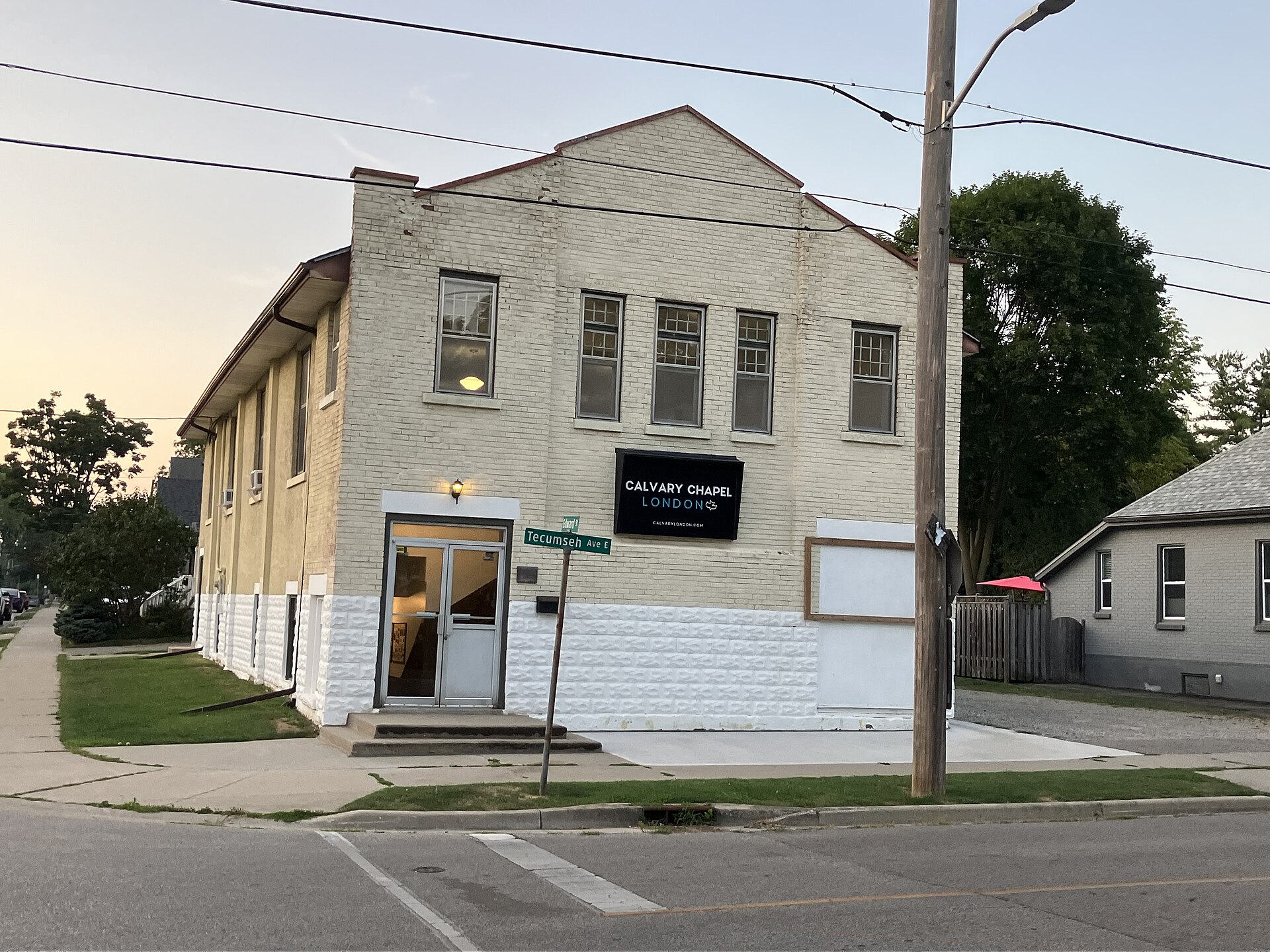

Smith's illness, death and the succession
The 2012 council
By his mid-eighties Smith had begun to arrange what would follow him. As noted above, Christianity Today reported that in 2012 the movement "officially established an association with a 21-member leadership council."16 Calvary Chapel Magazine later recalled that Smith asked Don McClure to help form it, and that in a July 2013 letter Smith called the council members "my spiritual sons."17 The council's own page today says that Smith "has passed on the leadership of the Calvary Chapel ministries over to a team of men" who worked with him for many years.22 The council as listed on Oct. 28, 2026, has fifteen members: Don McClure, Raul Ries, Mike MacIntosh, Joe Focht, Malcolm Wild, David Rosales, Sandy Adams, Bill Stonebraker, Lloyd Pulley, Jim Gallagher, Troy Warner, Steve Whinery, Mike McClure, Dave Love and Wade O'Neill.22 The 21 of 2012 and the 13 Christianity Today counted in 2017 had become 15 by 2026.20
Cancer and death
CBS Los Angeles reported on Jan. 3, 2012, that Smith, then 84, had told his congregation he had cancer, and quoted the church's Facebook page: "Today it was announced cancer has been found in his lung; there is uncertainty as to the extent."19 Christianity Today's obituary dated the diagnosis to 2011, said Smith kept preaching and overseeing the church's administration while ill, and reported that he died of lung cancer on Thursday, Oct. 3, 2013, at 86.1 (The two dates are compatible if the diagnosis came late in 2011 and the announcement at the start of 2012; this lesson could not confirm the exact diagnosis date.) The Christian Post reported that a memorial tribute was held on Oct. 27, 2013, at the Honda Center arena in Anaheim and that more than 200 churches planned to show it by webcast; a later report by Alex Murashko put attendance at more than 16,000 in person, with more than 52,000 watching live from 80 countries.3435
Brodersen chosen
Brian Brodersen, who married Smith's youngest daughter, Cheryl, on May 23, 1980,32 had pastored Calvary Chapel Vista from 1983, worked in church planting in Europe, moved to London in 1996 to plant Calvary Chapel Westminster, and returned to Costa Mesa in 2000 "at the request of Pastor Chuck," according to the church's biography of him. The same biography says, "Pastor Brian was elected to serve as the senior pastor in October 2013."36 Christianity Today reported that he became senior pastor five days after Smith's death.16 Murashko of the Christian Post reported on Nov. 15, 2013, that the congregation had voted that week to affirm the board's decision, and quoted Brodersen saying he and his wife were "committed to being here the rest of our lives as long as the Lord has us here."35
In his first long interview as senior pastor, given to Christianity Today's Timothy C. Morgan in December 2013 and published Feb. 26, 2014, under the headline "The Case for Big Change at Calvary Chapel," Brodersen set out the direction that would lead to the split. He said: "Calvary Chapel has been isolated when it comes to the bigger picture of evangelicalism," and he described the movement's theology: "Theologically, we are definitely non-cessationist."16 He named power as the greatest danger to pastors.16
The split of 2016
Brodersen's stated reasons
The Costa Mesa church's own website dates Brodersen's announcement, "An Update from Calvary Chapel of Costa Mesa," to Nov. 6, 2016, in its archive of posts for that month.37 In it Brodersen wrote, "We are not agreed on the direction that the ministry is to go," and "Our areas of disagreement are NOT theological or doctrinal"; rather, "they are more methodological and practical, yet they are real disagreements." He asked a question he attributed to "the prophet Amos": "Can two people walk together without agreeing on the direction?" That is a paraphrase of Amos 3:3, which the King James Version renders, "Can two walk together, except they be agreed?"38 He described some on the council as wanting to "dwell in the past" and others as wanting to "move ahead into the future," and concluded: "It is for these reasons that I have decided to resign my position as a member of the CCA Council." He said he would continue to pastor Costa Mesa and to "put on our annual Pastors and Leaders Conference," and announced that he was establishing the Calvary Chapel Global Network as a fellowship for like-minded pastors. "There are no sides," he wrote.3 The same post described the network as "a place for like-minded pastors to enjoy fellowship and be a part of something greater than our own local congregations" and said "there will be freedom to connect with CCCM, Calvary Chapel Global Network, and at the same time, be a part of CCA."3
The same month's archive lists follow-up posts by Brodersen titled "When Good Men Separate" (Nov. 15, 2016) and "Calvary Global Network" (Nov. 22, 2016).37 Christianity Today quoted Brodersen on the separation: "I don't see this separation as negative but rather [as] necessary for God's work to be expanded." It also quoted him on two matters of emphasis, end-times teaching ("sometimes I think our group of churches has been a little too quick to say when the Second Coming is going to be") and change ("You start getting criticism if you're trying to adapt to the culture or catch up with the times"), and his use of a Smith saying: "Blessed are the flexible. They will not be broken."20
The council's statements
The association has posted its council's letters from that autumn together on one page.4 A letter dated Oct. 31, 2016, written after a council retreat in the Pocono Mountains, said the council felt "the need for the Council members to speak with one voice" and announced an International Senior Pastors and Wives Conference for Nov. 6 to 8, 2017. A letter dated Nov. 10, 2016, answered Brodersen's resignation: "We are deeply saddened by Brian's mischaracterization of our vision for CCA and the Calvary Chapel movement," it said, adding that "our spiritual DNA comes from the New Testament and is timeless in its application." A letter dated Nov. 28, 2016, explained the council's separation from the new network. It objected that "Brian claims the authority to represent, and even more critically, to define, what Calvary Chapel is and is not," and that "Rather than granting us the freedom to join, Brian has forced us to choose to opt out." It concluded: "CCGN is about freedom, without accountability."4
Christianity Today reported the council's position that it "cannot endorse" the new network and that it recommended churches leave it, and quoted the council's concern that "Such a network will ... de-emphasize our Calvary Chapel distinctives ... and will cause confusion" (ellipses as in this lesson's quotation of CT). It also printed the council's tribute: "Pastor Chuck left us a glorious legacy."20 Raul Ries told CT: "We want to continue Chuck's vision, and [CCGN] is going in a different direction."20
The CT account and the opt-out problem
Christianity Today's report, "A Tale of Two Calvary Chapels," appeared in the March 2017 issue (posted online in February 2017). It counted about 1,700 churches in the association and a council of 13, and it explained the practical problem the Nov. 28 letter complained of: the new network drew on existing Calvary Chapel congregations around the world and included them unless they opted out.20 Some churches did. CT reported that John Randall's congregation, Calvary Chapel San Juan Capistrano, asked to be removed from the network, and quoted Randall, answering the charge that the association's side was backward-looking: "Of all the names listed, I don't know any of those men who are living in the past."20 At the association's West Coast pastors conference in April 2017, Calvary Chapel Magazine reported, council member Sandy Adams said some members "had different ideas for leading us forward," Joe Focht said "The separation at the beginning left us scratching our heads," and Adams said the door remained open for those who had gone another way to return.17
The record therefore shows agreement on one point. Both sides said in writing that the split was not over doctrine. Brodersen said so in capital letters; the council said its "spiritual DNA" was unchanged. The disagreement, in each side's own words, was over direction, authority to define the Calvary Chapel identity, and accountability. Neither side's documents describe any change to the statement of faith covered in lesson 06.
After the split: two networks
The new body's name has since been shortened. Its website now calls it Calvary Global Network (CGN) and describes it in one sentence: "We are churches working together to proclaim the gospel, make disciples, and plant churches."39 In a May 8, 2024, episode of the network's podcast, the speakers said "we are still Calvary Global Network," described CGN as a Calvary Chapel ministry whose main focus is planting Calvary Chapel churches, and said it remains open to like-minded churches outside the movement.40 This lesson could not find the date the name changed from "Calvary Chapel Global Network" to "Calvary Global Network." Neither CGN's site nor any source this lesson opened gives a count of its member churches.
The diagram below compares the two bodies as each describes itself. It does not rank them.
Costa Mesa in the 2020s
The four-year transition and Char Brodersen
On Jan. 14, 2023, Calvary Chapel Costa Mesa posted a message by Brian and Char Brodersen (the page's address calls it a leadership update) in which, its description says, "Pastors Brian + Char Brodersen shared the pulpit" and spoke about the church's history and its future.41 The church's staff page at one point described Char Brodersen (Brian Charles Brodersen) as "Associate-Senior Pastor" and said he "has spent the last 13 years pastoring a small church in Northern California."42 In the CGN podcast episode of May 8, 2024, Brian Brodersen explained that he was stepping away from the senior pastor role, that Char was scheduled to become the church's senior leader in January 2025, and that he himself would keep teaching weekly and serving on the board without running daily administration: "I won't be leaving the church at all."40 Western Seminary's profile of Char Brodersen, "One Leader Among Many," called the handoff "the culmination of a four-year leadership transition process" and said Char would become the "sole senior pastor" when his father retired in January 2025.5 A CGN podcast episode of April 16, 2025, introduced Brian Brodersen as "president and founder of CGN" and described his transition from senior pastor to pastor emeritus.43 As of Oct. 28, 2026, the church's staff page lists Char Brodersen as "Lead Pastor" and Brian Brodersen as "Pastor Emeritus."6
The succession thus followed a family line twice: from Chuck Smith to his son-in-law in 2013, and from Brian Brodersen to his son in 2025. The record also shows two differences. The 2013 succession followed a death and took five days; the 2025 succession was announced in advance and took about four years. And the language changed: the Western Seminary profile quotes the new pastor describing a move "from the senior pastor model to more of a collaboration of leaders."5
Bible college independence
On March 18, 2025, Calvary Chapel Bible College announced that it would become "organizationally and financially independent of Calvary Chapel Costa Mesa," of which it had been "a ministry," and would move its headquarters from Twin Peaks, California, to Bradenton, Florida, with a residential campus run in partnership with WestChurch, a Calvary Chapel congregation there. The college presented the change as a way to work more closely with all Calvary Chapel churches.44 Lesson 06 covers the college's role in training Calvary pastors.
Reforms: what can be documented
The assignment for this lesson was to report reforms only where they could be verified. Here is what the sources show, in order.
- Calvary Chapel Outreach Fellowships (date of founding unconfirmed). By 2006 and 2007 Christianity Today described a fellowship run from Costa Mesa through which pastors could be affiliated or disaffiliated, with senior pastors assigned to oversee regions; CT called it "recently" begun in May 2006, and in September 2006 reported that it had reviewed the Albuquerque dispute.13109 This is the earliest documented accountability structure above the local church.
- The 2012 association and council. Christianity Today reported the formal association with a 21-member council in 2012.16 The council's stated job, in Calvary Chapel Magazine's account, was to oversee the regional pastors.17
- Removal from the name. The 2007 radio settlement, as DIYmedia.net reported it, removed one pastor's church and businesses from the Calvary Chapel franchise and branding.29 That shows the trademark could be used as a tool of discipline; this lesson found no published policy describing when it is used.
- A change in the flagship's self-description, 2021 to 2025. The Western Seminary profile records Costa Mesa's new pastor describing a move away from the single senior pastor model.5 The staff page now lists an executive team and board without naming their members.6
- What this lesson could not find. No published, movement-wide written policy on reporting abuse, on financial disclosure to members or on independent investigation of complaints against pastors, from either the association or CGN, turned up in the sources this lesson could open. That is a statement about the sources found, not proof that no such policy exists. A reader who belongs to a particular Calvary Chapel can ask that church for its bylaws and its policies on these matters, as lesson 04 and lesson 10 explain.
What the record shows and what it does not
- Documented fact: Chuck Smith died Oct. 3, 2013; Brian Brodersen was elected senior pastor in October 2013 and affirmed by congregational vote in November; Brodersen announced his resignation from the CCA council and a new network on Nov. 6, 2016; the council's letters of Oct. 31, Nov. 10 and Nov. 28, 2016, are posted by the association; Char Brodersen became sole senior pastor of Costa Mesa in January 2025; John Flores was convicted after a 2003 arrest; the CSN dispute was settled in 2007 with no admission of wrongdoing.
- The movement's own claims: "over 1,800 fellowships" worldwide (CCA, 2026); the split was "NOT theological or doctrinal" (Brodersen); CCGN offered "freedom, without accountability" (CCA council); restoring repentant pastors is the right practice (Smith, as reported in 2007).
- Scholarly and press readings: Miller counted more than 600 U.S. churches about thirty years after 1965 and a median attendance of 138; Moll's 2007 reporting set specific misconduct cases beside critics' complaints about the Moses model; Flory said more authoritative networks are less likely to succeed.
- Open questions: the legal form of the CCA; the founding year of Calvary Chapel Outreach Fellowships; how many churches belong to CGN; the outcomes of the Pollitt harassment suit and the 2014 family lawsuit; whether Costa Mesa's move toward shared leadership has been written into its bylaws.
Claims checked
| Claim | Rating | Evidence |
|---|---|---|
| "Calvary Chapel has more than 1,800 churches." | Partly supported | The association's site says "over 1,800 fellowships" (2026), a term that can include groups smaller than churches, and the figure covers the association only.2 Christianity Today's last pre-split figure was about 1,600 (2013).1 |
| "The Calvary Chapel Association was formed in the 1990s." | Unsupported | Christianity Today dates the formal association with its council to 2012.16 Earlier affiliation ran through Calvary Chapel Outreach Fellowships, whose founding year this lesson could not confirm. |
| "The 2016 split was a doctrinal split." | Refuted | Brodersen wrote that the disagreements were "NOT theological or doctrinal," and the council wrote that its "spiritual DNA" was unchanged; both sides framed the dispute as direction and accountability.34 |
| "Costa Mesa left the Calvary Chapel movement in 2016." | Partly supported | Brodersen left the association's council and founded a separate network; he described CGN as a Calvary Chapel ministry and the church still uses the name and the dove.34018 |
| "Brian Brodersen still leads Calvary Chapel Costa Mesa." | Refuted (as of 2026) | Char Brodersen became sole senior pastor in January 2025; the church lists Brian Brodersen as "Pastor Emeritus."56 |
| "The Vineyard began as a Calvary Chapel." | Supported | Vineyard USA's history says Gulliksen's 1974 church was sent out by Calvary Chapel and that Wimber's church was Calvary Chapel of Yorba Linda until 1982.25 |
| "Calvary Chapel covered up abuse across the movement." | Unresolved | Moll documented specific cases, including a 2003 arrest and conviction and disputed earlier firings, and critics' accounts of weak oversight; Smith denied wrongdoing. The Daily Beast reported lawsuits alleging cover-ups. No court has made a movement-wide finding, and the network has no central body that could be found liable as a denomination would be.1033 |
| "The Moses model is required of every Calvary Chapel." | Refuted | Brodersen said in 2014, "It's certainly not a required model," and Costa Mesa itself now describes "a collaboration of leaders."165 |
Hard questions and answers
If both sides agree on doctrine, why did they split?
Because in a network without a denominational constitution, the questions that a denomination settles by rule, who may speak for the movement, who decides what its "distinctives" are, and who can discipline a member church, are settled by relationship and by ownership. The council's Nov. 28 letter objected that Brodersen "claims the authority to represent, and even more critically, to define, what Calvary Chapel is and is not."4 Brodersen's church owned the dove trademark and the flagship pulpit; the council held the relationships with most of the regional pastors. Each had a legitimate claim and there was no higher body to decide between them.
Does the Moses model cause abuse?
The record does not prove causation. It shows that the people closest to the cases disagreed. Critics quoted by Christianity Today said the model produced pastors who resisted challenge and financial disclosure; Bill Ritchie answered that he had "seen travesty in every form of governance that exists."10 What the cases in Moll's article share is a narrower point that both sides could test: in each, the decision to remove, hire or restore a pastor was made by one church's own leaders or by Smith himself. Elder-led and congregational churches have had their own scandals, so the honest answer is that the model concentrates the decision, and concentration can be used well or badly; Foreman's phrase for Smith was that he "wielded power well."10
Was the succession nepotism?
The family facts are documented: Brodersen is Smith's son-in-law, and Char Brodersen is Brian's son.365 Whether that is nepotism is a judgment the record cannot settle. Supporters can point to Brodersen's own pastoral record before 2000 (Vista from 1983, Westminster from 1996) and to the board election and congregational vote of 2013; Char Brodersen pastored a church in Northern California for 13 years before coming to Costa Mesa.363542 Critics can point out that two successive handoffs went to family members. Readers can weigh both.
Who actually owns "Calvary Chapel"?
No one owns the movement, because each church is its own corporation. The dove logo is described as "the trademark-protected property of Calvary Chapel of Costa Mesa."18 The council letters show the association does not accept that owning the mark gives Costa Mesa the right to define the movement.4 A local church's property and governance are set by its own articles and bylaws.
What happened to the lawsuits?
The CSN dispute settled in 2007 with a statement that neither side admitted wrongdoing, as reported by DIYmedia.net.29 The Pollitt harassment suit and the 2014 Manderson suit were reported at filing, and this lesson could not find a ruling or settlement for either. A filed complaint proves only that the complaint was filed.
Is Calvary Chapel a denomination now?
By its own account, no. Smith opposed forming one, and the association describes itself as a group of like-minded pastors.1014 In practice it now has features that resemble one: a named council, regional overseers, an affiliation process, a church locator and conferences. The 2016 split showed that it lacks the one feature that makes a denomination's decisions binding, a constitution that member churches have agreed to. Lesson 10 sets the Calvary Chapel and Vineyard structures side by side.
Related lessons and modules
- Lesson 04: Non-Denominational Churches, on independence, megachurches and who holds a pastor to account.
- Lesson 05: The Jesus People and Costa Mesa, on Smith's arrival and the youth revival.
- Lesson 06: Calvary Chapel Doctrine and Practice, on the statement of faith, the pastor-led model, radio and Maranatha! Music.
- Lesson 08: The Vineyard Beginnings and Lesson 09: The Vineyard from 1990 to Today.
- Lesson 10: Calvary Chapel and Vineyard Side by Side, with a reader's checklist.
- For how churches are treated under tax law, see Schools, Churches and Religious Organizations in the Idaho PACs module.
Learn more
- Rob Moll, "Day of Reckoning" (Christianity Today, 2007): The most detailed major-press account of accountability problems in the network while Smith was alive, with Smith's own words on the Moses model.
- Calvary Chapel Association council letters, autumn 2016: The council's side of the split in its own words.
- Brian Brodersen, "An Update from Calvary Chapel of Costa Mesa" (Nov. 6, 2016): Brodersen's side of the split in his own words.
- "A Tale of Two Calvary Chapels" (Christianity Today, 2017): A news account quoting both sides and an outside scholar.
- "The Case for Big Change at Calvary Chapel" (Christianity Today, 2014): Brodersen's first long interview as Smith's successor.
- Donald E. Miller, "Calvary Chapel" (encyclopedia entry): A sociologist's figures on the movement's size and typical church in the 1990s.
- Western Seminary, "One Leader Among Many": Char Brodersen on moving from the senior pastor model to a collaboration of leaders.
Still being checked (16 items)
These points could not be confirmed against a primary source when this lesson was written and fact checked in October 2026. The text above states each one as uncertain.
- The legal form of the Calvary Chapel Association (whether and where it is incorporated as a nonprofit corporation) could not be confirmed.
- The claim that the Calvary Chapel Association formed in the 1990s could not be confirmed; the sources found date the formal association and council to 2012. The exact founding year of Calvary Chapel Outreach Fellowships, the earlier structure, was not found; Christianity Today said in May 2006 that Calvary Chapel had "recently" begun it (fact check, Oct. 28, 2026).
- No count of Calvary Global Network member churches was found.
- The date the name changed from Calvary Chapel Global Network to Calvary Global Network was not found.
- The outcome of Lori Pollitt's December 2005 sexual harassment suit against Mike Kestler was not found; the 2007 CSN settlement is known only from DIYmedia.net's report, not from the settlement document. No published response from Mike Kestler to the harassment allegation was found in the sources opened.
- The outcome of the September 2014 lawsuit filed by Janette Manderson on behalf of Kay Smith was not found.
- The exact date of Chuck Smith's cancer diagnosis: Christianity Today says 2011; CBS Los Angeles reported the announcement on Jan. 3, 2012.
- The founding year and city of the first California Hope Chapel, and Hope Chapel's formal Foursquare affiliation, were not confirmed from a source opened for this lesson (Pneuma Review ties Moore's Hawaii churches to Foursquare).
- Harvest Christian Fellowship's exact founding year (Harvest says the 1970s) and the Harvest crusade attendance totals (Harvest says more than 6.5 million; Christianity Today in 2017 said more than 7.7 million) differ or are unstated.
- Horizon Christian Fellowship's founding year: the church's own page says 1976; some summaries say 1974.
- The Los Angeles Times obituary of Chuck Smith and the Feb. 28, 2007, Times article on CSN could not be opened directly; the latter is cited through the Benton Institute's summary.
- Other cases in online summaries (a 2011 civil suit over a pastor moved between ministries; the 2025 closure of Calvary Chapel Cary in North Carolina; allegations involving Bob Coy beyond his 2014 resignation for a 'moral failure') were left out because the court records or major-outlet reports could not be opened.
- No movement-wide written policy on abuse reporting or financial disclosure by either the CCA or CGN was found; this is a gap in the sources found, not proof that none exists.
- Whether Calvary Chapel Costa Mesa's described move to shared leadership has been written into its bylaws could not be checked.
- The Calvary Chapel Association page that collects the council's 2016 letters (calvarycca.org/?p=26218) returned a 'not found' page to direct requests during the Oct. 28, 2026, fact check, though a fetch service still returned its text; the quotations were checked against that text. If the page stays down, a replacement address or archived copy should be found.
- The Western Seminary profile of Char Brodersen describes the January 2025 handoff in the future tense; that the handoff took place rests on the church's staff page and the April 16, 2025, CGN podcast description.
Notes
- Christianity Today, "Chuck Smith, 86, Dies after Cancer Battle," Oct. 3, 2013 (retrieved Oct. 28, 2026). Read it online. ↩
- Calvary Chapel Association, "History of Calvary Chapel," calvarycca.org/history/, quoting "over 1,800 fellowships throughout the world" (retrieved Oct. 28, 2026). Read it online. ↩
- Brian Brodersen, "An Update from Calvary Chapel of Costa Mesa," calvarychapel.com, Nov. 6, 2016 (date from the site's November 2016 post archive) (retrieved Oct. 28, 2026). Read it online. ↩
- Calvary Chapel Association Council, letters to the movement dated Oct. 31, 2016, Nov. 10, 2016, and Nov. 28, 2016, posted together at calvarycca.org (retrieved Oct. 28, 2026). Read it online. ↩
- Western Seminary, "One Leader Among Many," profile of Char Brodersen, westernseminary.edu, c. 2025 (page shows a 2025 copyright and no other date) (retrieved Oct. 28, 2026). Read it online. ↩
- Calvary Chapel Costa Mesa, "Sunday Team" staff page, cccm.com/team, listing Char Brodersen as Lead Pastor and Brian Brodersen as Pastor Emeritus (retrieved Oct. 28, 2026). Read it online. ↩
- Harvest Ministries, "About Greg," harvest.org (retrieved Oct. 28, 2026). Read it online. ↩
- Calvary Chapel Golden Springs, page on Pastor Raul Ries and the church's history, calvarygs.org (retrieved Oct. 28, 2026). Read it online. ↩
- Christianity Today, "Calvary Reunion: Skip Heitzig Returns to N.M.," 2006 (no day shown on the page) (retrieved Oct. 28, 2026). Read it online. ↩
- Rob Moll, "Day of Reckoning: Chuck Smith and Calvary Chapel Face an Uncertain Future," Christianity Today, Feb. 16, 2007 (March 2007 print issue), as reproduced by BishopAccountability.org; also at christianitytoday.com/ct/2007/march/7.53.html (retrieved Oct. 28, 2026). Read it online. ↩
- Donald E. Miller, "Calvary Chapel," in Contemporary American Religion (Macmillan Reference), reproduced on Encyclopedia.com; the entry describes the movement about thirty years after 1965 (retrieved Oct. 28, 2026). Read it online. ↩
- Publishers Weekly, review of Donald E. Miller, Reinventing American Protestantism: Christianity in the New Millennium (University of California Press, 1997) (retrieved Oct. 28, 2026). Read it online. ↩
- Christianity Today, "Unaccountable at Calvary Chapel: Former pastor still pulled strings years after his departure, Calvary of Albuquerque members claim," May 8, 2006 (retrieved Oct. 28, 2026). Read it online. ↩
- Calvary Chapel Association, home page and self-description, calvarycca.org (retrieved Oct. 28, 2026). Read it online. ↩
- Calvary Chapel Association, "National, International and Regional Leadership," calvarycca.org (retrieved Oct. 28, 2026). Read it online. ↩
- Christianity Today, "The Case for Big Change at Calvary Chapel," interview with Brian Brodersen by Timothy C. Morgan (conducted December 2013), Feb. 26, 2014 (retrieved Oct. 28, 2026). Read it online. ↩
- Christmas Beeler and Tom Price, "Staying the Course: CCA Leaders Share Their Vision to Stay the Course," Calvary Chapel Magazine (account of the April 2017 CCA West Coast Pastors Conference; page dated Nov. 1) (retrieved Oct. 28, 2026). Read it online. ↩
- "Calvary Chapel Name and Logo," calvarychurchplanting.org, posted April 12, 2013 (date from the page address; no author shown) (retrieved Oct. 28, 2026). Read it online. ↩
- CBS Los Angeles, "OC Pastor, Jesus Movement Leader Reveals He Has Lung Cancer," Jan. 3, 2012 (retrieved Oct. 28, 2026). Read it online. ↩
- Christianity Today, "A Tale of Two Calvary Chapels: Behind the Movement's Split," March 2017 issue (posted online February 2017) (retrieved Oct. 28, 2026). Read it online. ↩
- Christianity Today, "Greg Laurie, Calvary Chapel's Big Crusader, Joins Southern Baptist Convention," June 13, 2017 (retrieved Oct. 28, 2026). Read it online. ↩
- Calvary Chapel Association, "Leadership Council," calvarycca.org/leadership-council/ (retrieved Oct. 28, 2026). Read it online. ↩
- Horizon Christian Fellowship, "Pastoral Team," hcf.org (retrieved Oct. 28, 2026). Read it online. ↩
- Hope FM, speaker biography of Jon Courson, hopefm.net (retrieved Oct. 28, 2026). Read it online. ↩
- Vineyard USA, "History and Legacy," vineyardusa.org (retrieved Oct. 28, 2026). Read it online. ↩
- Susan Kreifels, report on Ralph Moore and Hope Chapel, Honolulu Star-Bulletin, May 6, 1999 (retrieved Oct. 28, 2026). Read it online. ↩
- Pneuma Review, "God Answers Prayer at the Altar," pneumareview.com (retrieved Oct. 28, 2026). Read it online. ↩
- Christopher Goffard, "God's Word, Plus Static, on Calvary Satellite Network," Los Angeles Times, Feb. 28, 2007, as summarized by the Benton Institute for Broadband and Society (the Times page could not be opened for this lesson) (retrieved Oct. 28, 2026). Read it online. ↩
- DIYmedia.net, "Settlement Reached in Calvary Satellite Network Split," Sept. 10, 2007 (retrieved Oct. 28, 2026). Read it online. ↩
- Phil Cooke, "What's Next at Calvary Chapel Ft. Lauderdale Without Bob Coy," The Christian Post, July 17, 2014 (retrieved Oct. 28, 2026). Read it online. ↩
- Christianity Today, "Chuck Smith's Daughter Sues Calvary Chapel over Founder's Last Days," Sept. 29, 2014 (later updated) (retrieved Oct. 28, 2026). Read it online. ↩
- Matt Coker, report on the Smith family lawsuit, OC Weekly, Sept. 29, 2014 (retrieved Oct. 28, 2026). Read it online. ↩
- David Sessions, "Calvary Chapel's Tangled Web," The Daily Beast, Jan. 27, 2013 (retrieved Oct. 28, 2026). Read it online. ↩
- The Christian Post, "Chuck Smith Memorial Service to Include Global Webcast from 18,000-Seat Arena," October 2013 (retrieved Oct. 28, 2026). Read it online. ↩
- Alex Murashko, "Brian Brodersen Officially Takes Senior Pastor Role at Calvary Chapel Costa Mesa; Position Held by Chuck Smith," The Christian Post, Nov. 15, 2013 (retrieved Oct. 28, 2026). Read it online. ↩
- Calvary Chapel Costa Mesa, "Brian Brodersen," biography, cccm.com (retrieved Oct. 28, 2026). Read it online. ↩
- Calvary Chapel Costa Mesa, calvarychapel.com post archive for November 2016, listing "An Update from Calvary Chapel of Costa Mesa" (Nov. 6), "Calvary Chapel Rumor Control" by Carl Westerlund (Nov. 10), "When Good Men Separate" (Nov. 15) and "Calvary Global Network" (Nov. 22) (retrieved Oct. 28, 2026). Read it online. ↩
- Amos 3:3, King James Version, King James Bible Online (retrieved Oct. 28, 2026). Read it online. ↩
- Calvary Global Network, "Who We Are," cgn.org (retrieved Oct. 28, 2026). Read it online. ↩
- CGN Podcast, "What's New at CGN: Brian Brodersen's Changing Roles, Calvary Chapel Identity, and a New Initiative," May 8, 2024 (retrieved Oct. 28, 2026). Read it online. ↩
- Calvary Chapel Costa Mesa, "CCCM Leadership Update," message by Brian and Char Brodersen, Jan. 14, 2023 (retrieved Oct. 28, 2026). Read it online. ↩
- Calvary Chapel Costa Mesa, "Char Brodersen," staff biography giving the title Associate-Senior Pastor, cccm.com, undated (retrieved Oct. 28, 2026). Read it online. ↩
- CGN Podcast, "A New Season: Brian Brodersen on His New Role and What's Next for Him and CGN," April 16, 2025 (retrieved Oct. 28, 2026). Read it online. ↩
- Calvary Chapel Bible College, "CCBC's Next Chapter," March 18, 2025 (retrieved Oct. 28, 2026). Read it online. ↩
Check yourself
1. According to Christianity Today, when was the Calvary Chapel Association formally established with a 21-member leadership council?
Christianity Today reported in 2013 and 2014 that the formal association with a 21-member council dates from 2012. Earlier affiliation ran through Calvary Chapel Outreach Fellowships.
2. How did Brian Brodersen describe the disagreements behind his November 2016 resignation from the CCA council?
His Nov. 6, 2016, update said, "Our areas of disagreement are NOT theological or doctrinal," and called them methodological and practical.
3. Which phrase comes from the CCA council's Nov. 28, 2016, letter?
The council wrote that "CCGN is about freedom, without accountability." The other three quotations are Brodersen's or a Smith saying he used.
4. Who became sole senior pastor of Calvary Chapel Costa Mesa in January 2025?
Western Seminary's profile and the church's staff page show Char Brodersen as senior (lead) pastor, with Brian Brodersen as pastor emeritus.
5. In Donald E. Miller's survey of Calvary pastors in the early 1990s, what was the median weekly attendance?
Miller found a median of 138, a reminder that the typical Calvary Chapel was small even though the movement is known for its megachurches.
6. What does the record show about John Flores, as reported by Christianity Today in 2007?
Moll reported the 2003 arrest and later conviction. Claims that Flores had been fired twice before for misconduct were disputed by Smith.
7. How did the Calvary Satellite Network dispute end, as reported by DIYmedia.net in September 2007?
The settlement split the stations and stated that "Neither party admits any liability or wrongdoing of any kind whatsoever."
8. Which church began as Calvary Chapel of Yorba Linda before leaving Calvary Chapel in 1982?
Vineyard USA's history says Wimber planted Calvary Chapel of Yorba Linda in 1977 and that it left Calvary Chapel to join the Vineyard association in 1982.
Terms in this lesson
- Calvary Chapel Association (CCA)
- The fellowship of Calvary Chapel pastors led by a council of senior pastors, formally established in 2012 according to Christianity Today. Its site says it has over 1,800 fellowships.
- Calvary Global Network (CGN)
- The network Brian Brodersen announced on Nov. 6, 2016, first called the Calvary Chapel Global Network, with Calvary Chapel Costa Mesa as its flagship.
- Calvary Chapel Outreach Fellowships
- A ministry of Calvary Chapel Costa Mesa, described by Christianity Today in 2006 and 2007, through which pastors were affiliated or disaffiliated and senior pastors oversaw regions.
- Moses model
- The name given to Calvary Chapel's pastor-led government, which Chuck Smith explained by Moses and the seventy elders who assisted him (Numbers 11).
- Affiliation
- A relationship between an independent, separately incorporated church and the Calvary Chapel network, made through regional leaders; it is not a legal merger.
- Dove logo
- The Calvary Chapel dove, described in 2013 as the trademark-protected property of Calvary Chapel of Costa Mesa.
- Leadership council
- The group of senior pastors leading the CCA: 21 in 2012, 13 by Christianity Today's 2017 count, 15 listed in October 2026.
- Restoration
- Smith's practice, defended in 2007, of returning a repentant pastor to ministry after misconduct; critics such as Dave Edling favored public rebuke and a period away.
- Calvary Satellite Network (CSN)
- An FM radio network built with Costa Mesa funds; a dispute between Smith's side and Mike Kestler's side ended in a 2007 settlement with no admission of wrongdoing.
- The Word for Today
- Chuck Smith's teaching and publishing ministry, the subject of a 2014 lawsuit filed by his daughter on behalf of his widow.
- Pastor emeritus
- An honorary title for a retired senior pastor; Brian Brodersen's title at Costa Mesa since 2025.
- New paradigm churches
- Donald E. Miller's term for Calvary Chapel, the Vineyard and Hope Chapel in his 1997 book.
Sources
- Christianity Today, "Chuck Smith, 86, Dies after Cancer Battle," Oct. 3, 2013 (Oct. 3, 2013) checked 2026-10
- Calvary Chapel Association, "History of Calvary Chapel," calvarycca.org/history/, quoting "over 1,800 fellowships throughout the world" (undated (retrieved Oct. 28, 2026)) checked 2026-10
- Brian Brodersen, "An Update from Calvary Chapel of Costa Mesa," calvarychapel.com, Nov. 6, 2016 (date from the site's November 2016 post archive) (Nov. 6, 2016) checked 2026-10
- Calvary Chapel Association Council, letters to the movement dated Oct. 31, 2016, Nov. 10, 2016, and Nov. 28, 2016, posted together at calvarycca.org (Oct. 31, 2016) checked 2026-10
- Western Seminary, "One Leader Among Many," profile of Char Brodersen, westernseminary.edu, c. 2025 (page shows a 2025 copyright and no other date) (2025) checked 2026-10
- Calvary Chapel Costa Mesa, "Sunday Team" staff page, cccm.com/team, listing Char Brodersen as Lead Pastor and Brian Brodersen as Pastor Emeritus (undated (retrieved Oct. 28, 2026)) checked 2026-10
- Harvest Ministries, "About Greg," harvest.org (undated (retrieved Oct. 28, 2026)) checked 2026-10
- Calvary Chapel Golden Springs, page on Pastor Raul Ries and the church's history, calvarygs.org (undated (retrieved Oct. 28, 2026)) checked 2026-10
- Christianity Today, "Calvary Reunion: Skip Heitzig Returns to N.M.," 2006 (no day shown on the page) (2006) checked 2026-10
- Rob Moll, "Day of Reckoning: Chuck Smith and Calvary Chapel Face an Uncertain Future," Christianity Today, Feb. 16, 2007 (March 2007 print issue), as reproduced by BishopAccountability.org; also at christianitytoday.com/ct/2007/march/7.53.html (Feb. 16, 2007) checked 2026-10
- Donald E. Miller, "Calvary Chapel," in Contemporary American Religion (Macmillan Reference), reproduced on Encyclopedia.com; the entry describes the movement about thirty years after 1965 (1965) checked 2026-10
- Publishers Weekly, review of Donald E. Miller, Reinventing American Protestantism: Christianity in the New Millennium (University of California Press, 1997) (1997) checked 2026-10
- Christianity Today, "Unaccountable at Calvary Chapel: Former pastor still pulled strings years after his departure, Calvary of Albuquerque members claim," May 8, 2006 (May 8, 2006) checked 2026-10
- Calvary Chapel Association, home page and self-description, calvarycca.org (undated (retrieved Oct. 28, 2026)) checked 2026-10
- Calvary Chapel Association, "National, International and Regional Leadership," calvarycca.org (undated (retrieved Oct. 28, 2026)) checked 2026-10
- Christianity Today, "The Case for Big Change at Calvary Chapel," interview with Brian Brodersen by Timothy C. Morgan (conducted December 2013), Feb. 26, 2014 (December 2013) checked 2026-10
- Christmas Beeler and Tom Price, "Staying the Course: CCA Leaders Share Their Vision to Stay the Course," Calvary Chapel Magazine (account of the April 2017 CCA West Coast Pastors Conference; page dated Nov. 1) (April 2017) checked 2026-10
- "Calvary Chapel Name and Logo," calvarychurchplanting.org, posted April 12, 2013 (date from the page address; no author shown) (April 12, 2013) checked 2026-10
- CBS Los Angeles, "OC Pastor, Jesus Movement Leader Reveals He Has Lung Cancer," Jan. 3, 2012 (Jan. 3, 2012) checked 2026-10
- Christianity Today, "A Tale of Two Calvary Chapels: Behind the Movement's Split," March 2017 issue (posted online February 2017) (March 2017) checked 2026-10
- Christianity Today, "Greg Laurie, Calvary Chapel's Big Crusader, Joins Southern Baptist Convention," June 13, 2017 (June 13, 2017) checked 2026-10
- Calvary Chapel Association, "Leadership Council," calvarycca.org/leadership-council/ (undated (retrieved Oct. 28, 2026)) checked 2026-10
- Horizon Christian Fellowship, "Pastoral Team," hcf.org (undated (retrieved Oct. 28, 2026)) checked 2026-10
- Hope FM, speaker biography of Jon Courson, hopefm.net (undated (retrieved Oct. 28, 2026)) checked 2026-10
- Vineyard USA, "History and Legacy," vineyardusa.org (undated (retrieved Oct. 28, 2026)) checked 2026-10
- Susan Kreifels, report on Ralph Moore and Hope Chapel, Honolulu Star-Bulletin, May 6, 1999 (May 6, 1999) checked 2026-10
- Pneuma Review, "God Answers Prayer at the Altar," pneumareview.com (undated (retrieved Oct. 28, 2026)) checked 2026-10
- Christopher Goffard, "God's Word, Plus Static, on Calvary Satellite Network," Los Angeles Times, Feb. 28, 2007, as summarized by the Benton Institute for Broadband and Society (the Times page could not be opened for this lesson) (Feb. 28, 2007) checked 2026-10
- DIYmedia.net, "Settlement Reached in Calvary Satellite Network Split," Sept. 10, 2007 (Sept. 10, 2007) checked 2026-10
- Phil Cooke, "What's Next at Calvary Chapel Ft. Lauderdale Without Bob Coy," The Christian Post, July 17, 2014 (July 17, 2014) checked 2026-10
- Christianity Today, "Chuck Smith's Daughter Sues Calvary Chapel over Founder's Last Days," Sept. 29, 2014 (later updated) (Sept. 29, 2014) checked 2026-10
- Matt Coker, report on the Smith family lawsuit, OC Weekly, Sept. 29, 2014 (Sept. 29, 2014) checked 2026-10
- David Sessions, "Calvary Chapel's Tangled Web," The Daily Beast, Jan. 27, 2013 (Jan. 27, 2013) checked 2026-10
- The Christian Post, "Chuck Smith Memorial Service to Include Global Webcast from 18,000-Seat Arena," October 2013 (October 2013) checked 2026-10
- Alex Murashko, "Brian Brodersen Officially Takes Senior Pastor Role at Calvary Chapel Costa Mesa; Position Held by Chuck Smith," The Christian Post, Nov. 15, 2013 (Nov. 15, 2013) checked 2026-10
- Calvary Chapel Costa Mesa, "Brian Brodersen," biography, cccm.com (undated (retrieved Oct. 28, 2026)) checked 2026-10
- Calvary Chapel Costa Mesa, calvarychapel.com post archive for November 2016, listing "An Update from Calvary Chapel of Costa Mesa" (Nov. 6), "Calvary Chapel Rumor Control" by Carl Westerlund (Nov. 10), "When Good Men Separate" (Nov. 15) and "Calvary Global Network" (Nov. 22) (November 2016) checked 2026-10
- Amos 3:3, King James Version, King James Bible Online (undated (retrieved Oct. 28, 2026)) checked 2026-10
- Brian Brodersen, "An Update from Calvary Chapel of Costa Mesa" (short address of the Nov. 6, 2016, post; returned an error to some direct requests on Oct. 28, 2026) (undated (retrieved Oct. 28, 2026)) checked 2026-10
- Calvary Global Network, "Who We Are," cgn.org (undated (retrieved Oct. 28, 2026)) checked 2026-10
- CGN Podcast, "What's New at CGN: Brian Brodersen's Changing Roles, Calvary Chapel Identity, and a New Initiative," May 8, 2024 (May 8, 2024) checked 2026-10
- Calvary Chapel Costa Mesa, "CCCM Leadership Update," message by Brian and Char Brodersen, Jan. 14, 2023 (Jan. 14, 2023) checked 2026-10
- Calvary Chapel Costa Mesa, "Char Brodersen," staff biography giving the title Associate-Senior Pastor, cccm.com, undated (undated (retrieved Oct. 28, 2026)) checked 2026-10
- CGN Podcast, "A New Season: Brian Brodersen on His New Role and What's Next for Him and CGN," April 16, 2025 (April 16, 2025) checked 2026-10
- Calvary Chapel Bible College, "CCBC's Next Chapter," March 18, 2025 (March 18, 2025) checked 2026-10