Lesson 9 of 10 · about 55 minutes · Updated October 28, 2026
The Vineyard from 1990 to Today: Kansas City, the Toronto Blessing, the Break with Toronto and Vineyard USA
You'll be able to
- Explain who the Kansas City prophets were, what Ernest Gruen charged in 1990, and how the Vineyard's relationship with Mike Bickle's church began and ended (1990 to 1996).
- Describe the Toronto Blessing as participants and named critics described it, with its dates and documented attendance estimates.
- State what the Vineyard decided about Toronto in December 1995, the reasons Wimber gave in his own words, and how the Toronto church responded.
- List Vineyard USA's national directors since Wimber's death and the sources for their dates, including Jay Pathak's start on Jan. 1, 2022.
- Quote Vineyard USA's own statement of Kingdom theology and its statement of faith on Scripture and the gifts, and explain how they bear on the 1990s decisions.
- Evaluate Vineyard church counts by source and year, and summarize the 2006 position on women, the 2010s sexuality departures and the 2023 to 2024 governance reforms.
Start here: the short version
By 1990 the Vineyard was a young, fast-growing association of churches led by John Wimber, known for worship songs, prayer for the sick and the slogan that "everyone gets to play." In the seven years before Wimber's death on Nov. 17, 1997, it went through three tests that shaped it for the next generation. First, Wimber took a group of Kansas City pastors and self-described prophets (Mike Bickle, Paul Cain, Bob Jones and others) under Vineyard oversight in 1990, after a Kansas City pastor, Ernest Gruen, publicly accused them of false prophecy and manipulation. Within about two years Wimber was stepping back from the prophetic emphasis, and in 1996 Bickle's church left the Vineyard. Second, a meeting at the Toronto Airport Vineyard beginning Jan. 20, 1994, turned into the most publicized charismatic revival of the decade, the "Toronto Blessing," with laughter, falling, shaking and, in some meetings, animal-like noises. It spread to Holy Trinity Brompton in London by late May 1994. In December 1995 Wimber and the Association of Vineyard Churches board withdrew from the Toronto church, which carried on as Toronto Airport Christian Fellowship and later Catch the Fire. Third, the movement had to outlive its founder. Since 1997 Vineyard USA has had four national directors (Todd Hunter, Bert Waggoner, Phil Strout and, since Jan. 1, 2022, Jay Pathak), made women's ordination a local-church decision in 2006, held a traditional position on marriage that led some churches to leave in the 2010s, and in 2022 to 2024 rebuilt its structure and misconduct policies after an outside assessment. This lesson tells that story from the Vineyard's own documents, the people involved, the press record and named critics.
This lesson picks up where lesson 08 leaves off. Lesson 08 covers Kenn Gulliksen's first Vineyard (1974 to 1975), John Wimber's Calvary Chapel of Yorba Linda (1977), the break with Calvary Chapel and the 1982 adoption of the Vineyard name, the "signs and wonders" course MC510 at Fuller and the debt Vineyard theology owes to the Fuller New Testament scholar George Eldon Ladd. The Pentecostal and charismatic background to everything here is in lesson 02. The side-by-side comparison with Calvary Chapel, and a reader's checklist for evaluating any church of this kind, is in lesson 10.
A note on method. Vineyard USA's own history page is short and selective, and the most dramatic events of the 1990s are documented mainly in two kinds of records: the statements and letters of the people involved, and contemporaneous reporting in Christianity Today, Religion News Service and the charismatic press. Where the Vineyard's own account and the press record differ, both are given. Where a claim rests on one person's charge, it is labeled as that person's charge.
The Vineyard in 1990
Vineyard USA's present-day history page compresses the founding decade into a few lines: Kenn Gulliksen started a church in West Los Angeles in 1974, sent out by Calvary Chapel; Wimber re-entered pastoral ministry in 1977 to plant Calvary Chapel of Yorba Linda, later Vineyard Anaheim; and by 1982 there were at least seven Vineyards, Wimber had emerged as leader and "The official recognition of this transition took place in 1982: the emergence of what was to be called the 'Association of Vineyard Churches.'"1 A separate Vineyard USA page, its biography of Wimber, says plainly that "in the late 80s and early 90s" the movement "moved in some directions that, from a distance, seem to have been rabbit trails," directions that "confused some about what the focus of the movement was."2 The Kansas City episode and the Toronto Blessing are the two directions that phrase most plainly describes.
By early 1996, according to Christianity Today, the Anaheim-based association had 546 member congregations worldwide.3 When Wimber died at the end of 1997, the same magazine counted nearly 500 churches in the United States and about 250 more abroad.4 The two figures are not strictly comparable (one is worldwide membership of the association, the other a combined national and international estimate), but both place the Vineyard in the high hundreds of congregations in the mid-1990s.
Kansas City: the prophets and the Gruen report
Who the "Kansas City Prophets" were
The name "Kansas City Prophets" was a label applied by others, not an office. It referred to a circle of men associated with Kansas City Fellowship (also called Grace Ministries), the church Mike Bickle led in the Kansas City area from the early 1980s. Bickle had pastored in St. Louis from 1976 to 1982, and by Gruen's account of Bickle's own teaching tapes, a prophecy given to him in June 1982 and a second meeting in October 1982 shaped his move to Kansas City and his sense of being called to "help begin a worldwide movement."5 The prophetic figures most often named with him were Bob Jones, a man with a long record of claimed visions, and Paul Cain, a former healing evangelist of the 1950s who, according to Charisma, had been out of public ministry for more than 25 years before Bickle promoted his ministry in Kansas City in the late 1980s.6 Others named in the period included John Paul Jackson, whose promotion by Kansas City Fellowship is one of the sections of Gruen's report.5 (Jackson is widely reported to have later joined the staff of Wimber's Anaheim church; that move was not confirmed in a source opened for this lesson.)
Wimber's attraction to the group grew from his own convictions. The Vineyard taught that all the gifts listed in the New Testament, including prophecy, operate today (see the statement of faith quoted later in this lesson), so a circle of men claiming prophetic gifts fit the movement's theology; the question the record raises is how closely their claims were tested. Gruen's 1990 report reprints a church newsletter announcing that Wimber and Paul Cain would be "special guests" at a celebration of Bob Jones's 60th birthday at Kansas City Fellowship on Feb. 4, 1990, and quotes a 1989 Grace Ministries report stating that Wimber and Vineyard Ministries International had been "the major financial contributors" to a planned prophetic retreat center the group called "Shiloh."5 These are quotations of the group's own publications as reproduced by its critic; the original newsletters were not available for this lesson.
Ernest Gruen's sermon and documentation, 1990
Ernest J. Gruen was pastor of Full Faith Church of Love, a large charismatic congregation in the Kansas City area, and a nationally known figure in the charismatic renewal. On Sunday, Jan. 21, 1990, he preached a sermon titled "Do We Keep Smiling and Say Nothing?" that publicly accused Kansas City Fellowship of false prophecy and harmful practices. He then compiled a written report, Documentation of the Aberrant Practices and Teachings of Kansas City Fellowship (Grace Ministries), prepared by Gruen and members of his staff. In its introduction Gruen wrote that the opening 21 pages were "only a summary of over 200 pages of documentation."5
In his own words, Gruen's charge was this: "we have, in Kansas City, the beginnings of a Charismatic heresy which is far more significant than the shepherding controversy."5 (The "shepherding controversy" was a 1970s and 1980s dispute over a charismatic discipleship network that taught strict personal submission to pastors.) In an open letter dated April 4, 1990, he asked the board of the Network of Christian Ministries to examine the matter at its July 1990 meeting, and wrote that he and his staff were "totally convinced that many of his prophets prophesy by a familiar spirit." He asked that any conclusion be published in Charisma or Christianity Today.5
The report's table of contents shows the range of the charges: "ethical compromises in the promotion of the movement," including what Gruen called "a fabricated drought (a false sign)"; teaching about an end-time "elected seed" generation and a coming "superchurch"; Bickle's role as an "apostolic leader"; and transcripts of the prophets' visions and predictions.5 The drought charge shows how the report argued. Gruen quoted Bickle's taped retelling of a prophecy by Bob Jones that a drought would end with rain on Aug. 23, 1983, a sign Bickle described as "3 to 4 inches of rain." Gruen's staff then set out National Weather Service and newspaper records for June through August 1983: June had above-average rain, and Aug. 23 had "only .32 inches." The report quotes the Kansas City Times of Aug. 25, 1983, on "Tuesday's watered-down attempt at rain."5
Gruen's report is a partisan document written by a critic, and it should be read that way. It also admits its own errors: Gruen wrote that "some of the details weren't accurate" in his January sermon and listed corrections.5 Its value to a historian is that it quotes the Kansas City leaders' own tapes and publications at length, with dates, so the claims can be checked. The surviving electronic edition was "recreated in electronic format by permission" by Tricia Tillin of Banner Ministries, a British ministry critical of the charismatic renewal, and is hosted on the Internet Archive.5
Wimber steps in, 1990 to 1991
Wimber's response was to bring Kansas City Fellowship into the Vineyard and place it under his oversight. The church became Metro Vineyard Fellowship. Christianity Today reported in October 1996: "Many in the Vineyard viewed the Kansas City church with suspicion when it joined the movement five years ago because of its reliance on questionable prophecies." The same article cites the magazine's own report of Jan. 14, 1991, which places the move in 1990.7 The arrangement was meant to correct as well as protect. Wimber's critics read it as an endorsement; Wimber's supporters read it as a senior pastor taking responsibility for a troubled church.
The record shows that the oversight produced at least one public act of church discipline. In early December 1991 a six-page timeline was sent to church leaders and Christian media worldwide, with a letter from Wimber on behalf of "the national Vineyard leadership," reporting that Bob Jones had admitted "sexual misconduct (not adultery)" with two women, along with manipulation and divisive, slanderous activity. He was barred from church meetings and ministry for at least six months, and a pastor said full restoration might take two years or more.8 The same Christianity Today report, from March 1992, describes Wimber breaking a long silence toward his critics. "I recently changed my thinking about this important matter," Wimber said, announcing a series of booklets on Vineyard teaching. Among the critics named were John Armstrong (a ten-part series in the Baptist General Conference's The Standard), Ron Enroth, D. A. Carson and James Boice (in Power Religion) and John MacArthur (in Charismatic Chaos).8 Jack Deere, a former Dallas Theological Seminary professor and, in the magazine's words, "now a Vineyard minister," acknowledged that "unguarded statements" in Wimber's book Power Evangelism had "strongly implied" that conversions accompanied by signs and wonders were superior, and Wimber planned to revise it.8
Secondary accounts generally date Wimber's retreat from the prophetic emphasis to about 1991 to 1992, the period of the Jones discipline and the booklets; no single dated Vineyard document marking a change of policy was found for this lesson, so the date is approximate. What is documented is the direction. By the mid-1990s Wimber was calling the movement back to what he described as "the main and plain things in Scripture," a phrase Christianity Today recalled in 2014 when describing his reasons for the Toronto decision.9 The phrase became a Vineyard watchword: Vineyard USA's current teaching series "Heart of the Vineyard" includes an episode titled "The Main And The Plain."10
Metro Vineyard leaves, 1996
In August 1996 Bickle's congregation resigned from the Association of Vineyard Churches and renamed itself Metro Christian Fellowship. Bickle announced the decision in a 14-page document to the association's executive council. Christianity Today quoted his explanation that the Lord had confronted him "in a sudden, yet dramatic, way concerning an issue of compromise grounded in the fear of man," and reported that he tied the decision to a prophetic word from Paul Cain, several private dreams and a belief that the Vineyard did not share his views on intercession and prophecy. Todd Hunter, then the Vineyard's national coordinator, predicted "initial pain and confusion much like the split with the Toronto Airport Christian Fellowship" but called the separation "beneficial" in the long run. The magazine also reported that the Vineyard board rejected Bickle's description of the Toronto decision as based on "fear, jealousy, and lack of wisdom."7 Bickle went on to found the International House of Prayer in Kansas City (IHOPKC) in 1999, after this lesson's Vineyard story leaves him.
What happened later to the Kansas City figures
Two later public records bear on how the Kansas City period is now remembered, and both come from the people and institutions themselves.
In October 2004 Rick Joyner, Mike Bickle and Jack Deere released a public statement saying they had found evidence of long-term homosexual activity and frequent drunkenness by Paul Cain, that he had not submitted to a restoration process, and apologizing "to the body of Christ for our lack of discernment in promoting Paul's ministry," as quoted by Charisma News. Cain died in February 2019 at 89.6
In late October 2023, according to Religion News Service as published by Christianity Today, a group of former IHOPKC leaders "accused Bickle of a pattern of alleged clergy sexual misconduct." Earlier in December 2023 Bickle issued an online statement saying, "I sadly admit that 20+ years ago, I sinned by engaging in inappropriate behavior," and that "my moral failures were real," while saying that many allegations were false. On Dec. 22, 2023, IHOPKC's spokesman said the organization had received information confirming "a level of inappropriate behavior on the part of Mike Bickle that requires IHOPKC to immediately formally and permanently separate from him," as reported by Christianity Today.11 Those events belong to IHOPKC's history, not the Vineyard's, and this lesson does not go beyond what the parties themselves stated. They are mentioned here because readers researching the Kansas City prophets will meet them, and because they are part of the public record on the men Wimber brought into the Vineyard in 1990.
Toronto, 1994: the meetings begin
The church and its pastors
John and Carol Arnott started their first small group in Toronto in 1986, held their first public service in 1988 and secured their first building in 1990, according to the timeline on the website of Catch the Fire, the ministry the church later became.12 The congregation was a Vineyard church, the Toronto Airport Vineyard, which in Catch the Fire's words "met on the end of a runway at Pearson International Airport in Toronto." Eleanor Mumford, who visited in May 1994, called it "just a very ordinary little church" in an office block near the airport.13
Randy Clark and Jan. 20, 1994
The guest speaker was Randy Clark, "a former Southern Baptist pastor," as Christianity Today described him in 2014, whom the magazine's 1994 report called a "Saint Louis pastor."914 (He is widely described as pastor of a Vineyard church in the St. Louis area; the Vineyard affiliation of that church was not confirmed in a source opened for this lesson.) Christianity Today reported in 1994 that Clark had recently attended a conference in Tulsa led by the evangelist Rodney Howard-Browne and that Clark came to Toronto for a short series and stayed for about two months.14 The magazine's 2014 retrospective says Clark preached "for 42 of the first 60 consecutive days of the revival in 1994."9
Catch the Fire's own timeline gives the date and its meaning in a single line: "20 January, 1994 Randy Clark speaks at a Holy Spirit Weekend and the Holy Spirit came powerfully initiating the Toronto Blessing."12 Clark's ministry, Global Awakening, dates its own beginning to the same month and describes itself as "birthed by Randy Clark in January 1994."15 Christianity Today reported that about 120 people were present on Jan. 20.14
What participants said happened
Within months the Toronto meetings were running nightly except Mondays. The church's membership grew nearly threefold, to about 1,000, in the first year, and Britons were booking London-to-Toronto flights to attend.14 Christianity Today's 2014 retrospective put first-six-months attendance at about 50,000 unique visitors and recalled that Toronto Life magazine had called the church "Toronto's top tourist attraction of 1994."9 By mid-1996 Religion News Service reported an estimated 200,000 visitors from around the world, with membership up from about 360 to 1,000 since the renewal began and described the crowd at the service its reporter attended as a "2,500-member congregation."16 These figures come from the church and from journalists' estimates, not from audited counts, and they differ by date and method.
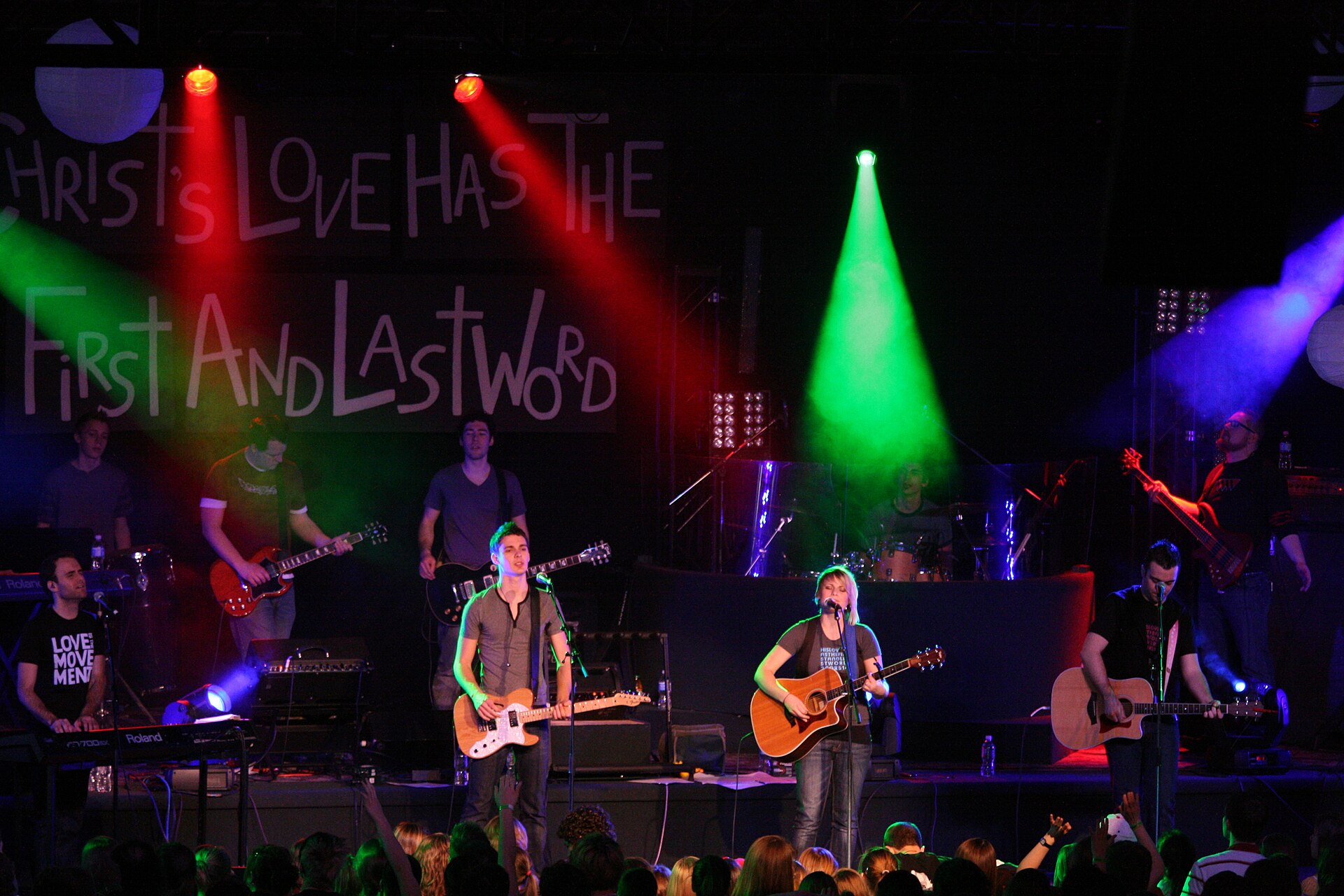
The physical phenomena were what made Toronto famous. In Christianity Today's first report, Arnott described most of his own members falling to the floor "laughing, rolling, and carrying on," and said of the experience, "It went from something hard to catch to something very contagious."14 The magazine described people who received prayer quivering, going limp or falling, others sobbing or laughing, and some lying for long periods in apparent ecstasy.14 Religion News Service in 1996 listed "holy laughter," sometimes for hours; being "slain in the Spirit," that is, falling backward under prayer; trembling, twitching and weeping; and, in some meetings, roaring, howling and other animal-like sounds and movements.16 Participants also reported deep emotional healing, renewed love for God and spouse, and fresh energy for ministry; the sociologist Margaret Poloma surveyed about 1,000 visitors in 1995 and again in 1997 to measure exactly those reports (her work is described below).
Arnott's defense, as quoted by Religion News Service, appealed to biblical precedent: "Why are we surprised, when you get touched by the Holy Spirit, that powerful things happen?"16 Supporters pointed to the Bible's accounts of people falling before God, to trembling at God's word, to Pentecost observers who thought the apostles were drunk (Acts 2:13), and to the bodily effects reported in the Great Awakening and early Methodist meetings described in lesson 01. Two early books presented the case from inside: Guy Chevreau, Catch the Fire: The Toronto Blessing (1994), and John Arnott, The Father's Blessing (1995).17 Catch the Fire's present-day summary calls it a "divine visitation" in which "the Holy Spirit poured out in unprecedented ways" and says it spread "to hundreds of nations around the world."12

What critics said, by name
Criticism came from several directions, and the critics did not all say the same thing.
- Sympathetic evangelicals who wanted discernment. Christianity Today's 1994 report quoted Justin Dennison, pastor of Bramalea Baptist Church (Fellowship of Evangelical Baptist Churches in Canada), who said many had been "touched and transformed by God" there but also that "some of the phenomena that occur I sense are of the flesh and not of the Spirit," a position that accepted the revival in principle while doubting parts of it.14
- Evangelical scholars who investigated in person. James A. Beverley, then professor of theology at Ontario Theological Seminary in Toronto (later Tyndale Seminary), published Holy Laughter and the Toronto Blessing: An Investigative Report (Zondervan, 1995), which treated the movement as a mixed case.18 Quoted by Religion News Service in 1996, he said, "The more bizarre the manifestation, the easier it is to believe it is caused by human emotion." John Stackhouse, a professor of religion at the University of Manitoba, told the same reporter, "No matter what they say their priorities are, if you go to their meetings, you see what their priorities are."16
- Apologists who rejected it. Hank Hanegraaff, president of the Christian Research Institute, argued in Counterfeit Revival (Word, 1997) that the Toronto, Pensacola and related revivals rested on manipulation and unbiblical teaching.19 Christianity Today's 1994 report noted that some apologists had already called the movement "self-centered and evil."14
- Cessationists, who hold that the miraculous gifts ended with the apostles, rejected the premise; John MacArthur's Charismatic Chaos had already criticized the Vineyard before Toronto began.8
Wimber's own view sat between the camps. In the December 1995 letter announcing the separation, as quoted by Religion News Service, he wrote that "these manifestations should not be promoted, placed on stage, nor used as the basis for theologizing."16 That sentence did not deny that God was at work in Toronto. It objected to how the phenomena were handled.
How scholars read Toronto
The most sustained scholarly study came from the sociologist Margaret M. Poloma, who surveyed visitors to the Toronto church and published her findings in The Toronto Report (1996), in the Journal for the Scientific Study of Religion (1997) and in Main Street Mystics: The Toronto Blessing and Reviving Pentecostalism (2003).20 Poloma read the Vineyard split through the sociologist Max Weber's idea of the "routinization of charisma": spontaneous religious movements face pressure to set rules, and the rules then restrain the spontaneity that started them. Quoted by Christianity Today in 1996, she said that in such movements "the institution set up by these believers soon becomes filled with firefighters rather than torch-bearers."3 Bill Jackson, a Vineyard pastor and historian, gives the inside Vineyard account of the decision in The Quest for the Radical Middle: A History of the Vineyard (1999), which frames the movement's identity as a "radical middle" between evangelical caution and charismatic excess.21
Holy Trinity Brompton, London, 1994
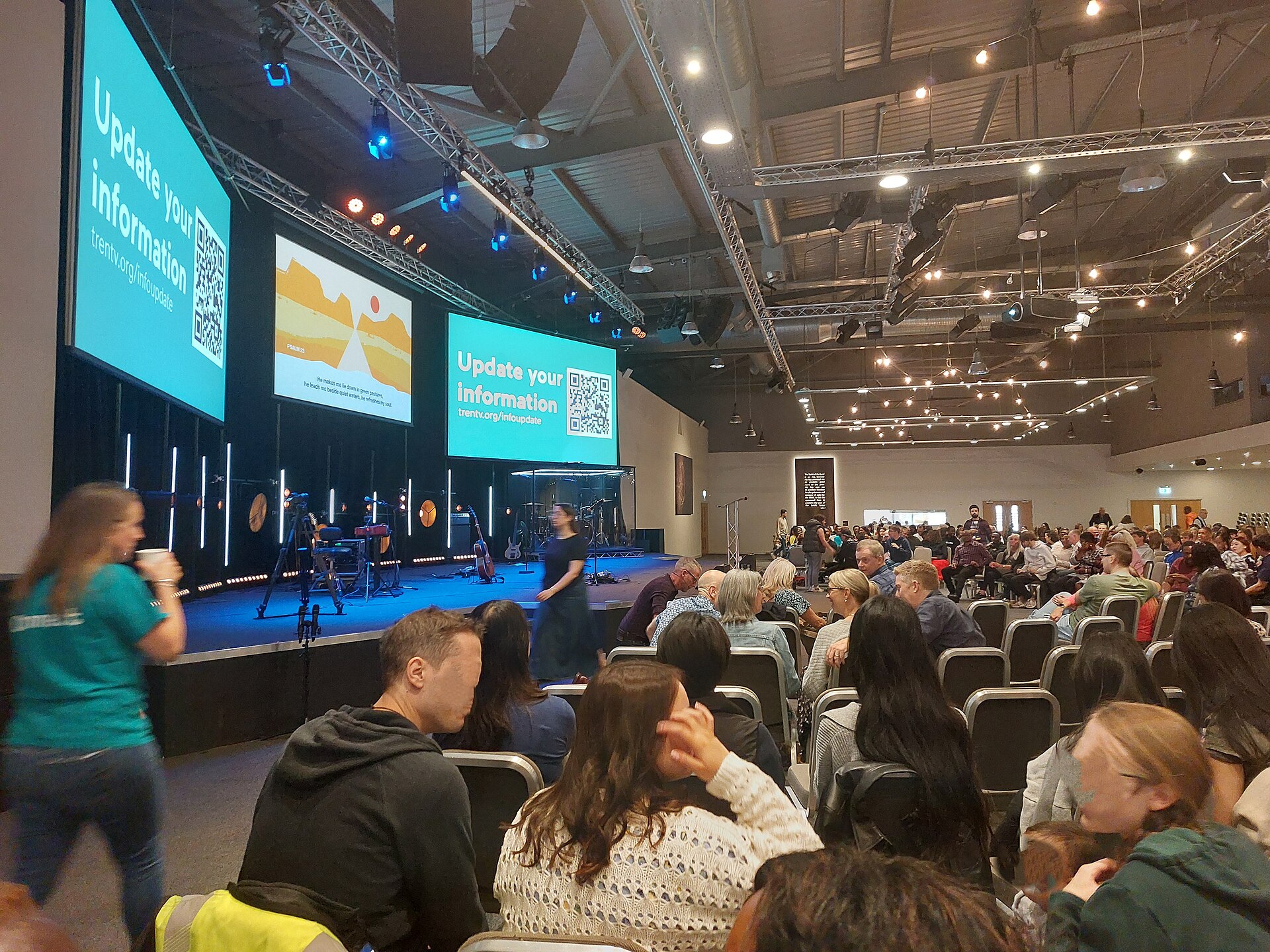
The Toronto phenomena reached Britain within four months, and their best-known British home was an Anglican parish, not a Vineyard church. Eleanor Mumford, wife of John Mumford, pastor of the South West London Vineyard, spent "only 48 hours" in Toronto. On Sunday morning, May 29, 1994, she spoke at Holy Trinity Brompton (HTB), a large evangelical and charismatic Church of England parish in London. Her account, published in the parish paper HTB in Focus on June 12, 1994, includes the lines "I went because I knew I was bankrupt and that I was longing" and "The truth is that this whole move of the Lord is all about Jesus."13
HTB's vicar, Sandy Millar, wrote in the same period (the Renewal Journal reprint introduces his piece as describing renewal that "commenced in May 1994" in the church) that "since about Tuesday of two weeks ago, we have begun to see an astonishing outpouring of the Spirit of God upon our own church and congregation," with prolonged laughter, weeping and people falling, "both during services and outside them in homes and offices." Millar himself went to Toronto with Jeremy Jennings for two and a half days.13 From HTB the phenomena spread rapidly among British evangelical and charismatic churches. That spread is documented in the parish's own publications; claims about how many British churches were touched (one charismatic magazine estimate in 1995 put it in the thousands) were not independently checked for this lesson.
The Mumfords later led Vineyard Churches UK and Ireland. Christian Today reported in January 2015 that John and Eleanor Mumford, who had led the British movement since 1987, would hand national leadership to John and Debby Wright, senior pastors of Trent Vineyard in Nottingham, and would focus on "continued development and momentum of the international Vineyard family." At the time there were 116 Vineyard churches in the UK and Ireland.22
The break with Toronto, December 1995
What happened on Dec. 5 and 6, 1995
The fullest contemporaneous account is James A. Beverley's report in Christianity Today of Jan. 8, 1996, "Vineyard Severs Ties with 'Toronto Blessing' Church." According to that report, "the American Vineyard Board and Council had decided at its annual meeting" to end its ties with the Toronto Airport Vineyard. On Dec. 5, 1995, John Wimber traveled to Toronto with Robert Fulton, Todd Hunter and Gary Best to tell John Arnott and his senior staff. The meeting lasted nearly three hours, and the Vineyard leaders asked Toronto to review the decision and respond the next day. About two hours later Arnott wrote a short letter agreeing to formal separation.3
The Toronto staff were caught off guard, the report said, partly because Wimber had endorsed Arnott's book and because Wimber and Best had planned to be in Toronto for a February conference, which was then canceled. Arnott's Dec. 6 email to supporters described the meeting as calm. Richard Riss, a church historian at Drew University and supporter of the revival, circulated the email with his own commentary, calling the split "a precipitous separation of the sheep from the goats," and later apologized for releasing it early and for his language about Wimber.3
The reasons the Vineyard gave
Wimber did not say that Toronto was a false revival. He said the opposite: "I believe that there has been an authentic visitation of the Spirit there." His objection was to how the meetings were being led, especially the attention given to animal-like manifestations such as barking and roaring, and the building of teaching around them. In his words, he was "unable because of my own scriptural and theological convictions to any longer give an answer for, or defend the way" the renewal was being pastored. The board, the report said, wanted the renewal "to move toward greater scriptural emphasis."3 Religion News Service later described the result as the Toronto church's "dismissal" from its denomination, announced "in a letter last December" by Wimber.16
Inside the Vineyard the decision drew both relief and grief. Tom Stipe, a former Vineyard pastor, told Christianity Today, "John Wimber has helped true biblical renewal by this decision." Hunter predicted the association would lose "very few churches," while acknowledging confusion and sadness.3
The Toronto side
Arnott's public response was restrained. Quoted by Religion News Service in 1996, he offered his own explanation: "The best we can do is figure we just got too big."16 The church took the name Toronto Airport Christian Fellowship (TACF) in early 1996; Catch the Fire's history says only that TACF "soon became a familiar new name."12 The name was in use by mid-1996, when Religion News Service and Christianity Today both used it.167 The exact day of the change (commonly given as January 1996) was not found in a primary document for this lesson.
The church continued and grew. It launched a School of Ministry in 1995, later renamed itself Catch the Fire, planted its first church in Raleigh, North Carolina, in 2008, and in September 2015 John and Carol Arnott handed senior leadership to Duncan and Kate Smith.12 In 2014 Christianity Today described a 3,200-seat auditorium, eight satellite campuses and 23 church plants, and reported that the Arnotts still saw themselves as "stewarding what God is doing."9 Randy Clark's Global Awakening, based in Mechanicsburg, Pennsylvania, continues to hold healing and revival meetings.15
Brownsville, briefly
A related event, often grouped with Toronto, was the revival at Brownsville Assembly of God in Pensacola, Florida, which began on Father's Day, June 18, 1995, under pastor John Kilpatrick and evangelist Steve Hill, and continued for about five years. Brownsville was a Pentecostal (Assemblies of God) church, not a Vineyard, and its style emphasized repentance preaching more than laughter. Hanegraaff treated Toronto and Pensacola together in Counterfeit Revival.19 In November 1997 the Pensacola News Journal published a critical series on the revival's finances and healing claims. Attendance figures for Brownsville range from more than 2.5 million to more than four million visitors depending on the source; the start date, the series and the figures were located through secondary listings and are flagged as not independently checked here.23
Wimber's illness and death, 1986 to 1997
Wimber led through the Kansas City and Toronto years in failing health. A biographical timeline published by Regent University Library records a heart attack in June 1986, a cancer diagnosis in 1993 and a stroke in January 1995.24 Christianity Today's obituary added that he had recovered from the cancer and had undergone triple-bypass heart surgery in his last years, and that he had recently retired as pastor of the Anaheim Vineyard.4
John Wimber died on Nov. 17, 1997, at 63. Christianity Today reported the cause as a brain hemorrhage following a fall; Regent's timeline says "massive brain hemorrhage"; Vineyard USA's biography says he died "from a brain aneurysm."4242 (Some reference works give Nov. 16; the Regent timeline and Christianity Today give Nov. 17.25) His widow, Carol Wimber, later wrote John Wimber: The Way It Was, which opens with his request, "When I die, you write the book, Carol, and tell them the way it was."26
Contemporaries measured his influence in large terms. The Pentecostal historian Vinson Synan told Christianity Today, "The greatest asset Vineyard had was Wimber, just like Wesley was the greatest asset to the Methodists," and C. Peter Wagner, Wimber's Fuller colleague, called him "one of those rare persons who has been the molder of a generation."4 Before his death Wimber had named a board of six regional overseers, including Hunter and Bob Fulton, to lead the association.4
Leadership after Wimber: four national directors
Vineyard USA's own pages do not publish a list of its national directors with dates, so the list below is assembled from contemporaneous reports and the association's announcements. The Association of Vineyard Churches in the United States now operates as Vineyard USA.
| Leader | Role and dates | Source |
|---|---|---|
| Todd Hunter | National coordinator by 1996 (title used by Christianity Today in 1996; the start year was not confirmed in a primary source); named national director by the board after Wimber's death (reported April 1998); resigned as national director and board president in 2000 | Christianity Today, Oct. 7, 1996; April 27, 1998; Aug. 7, 200072728 |
| Berten (Bert) Waggoner | Named acting national director in 2000, then national director; announced the 2006 board position on women in leadership | Christianity Today, Aug. 7, 2000; Vineyard Women in Leadership Network2829 |
| Phil Strout | Selected in October 2011 by one account; signed as national director by April 2013 in the Vineyard Women in Leadership booklet; exact start date unconfirmed in a primary source (reference works give either 2012 or January 2013); served through Dec. 31, 2021 | Vineyard USA announcement, March 2, 20213025 |
| Jay Pathak | Selected as national director-elect in March 2021, ratified by a majority of churches, became national director Jan. 1, 2022; listed as national director in Vineyard USA's 2026 annual report | Vineyard USA, 2021 announcements and 2026 report303132 |
Todd Hunter, to 2000
Hunter was the association's national coordinator through the Toronto and Kansas City separations, as the 1996 reports show. In April 1998 Christianity Today reported that the board had named him, at 40, national director of the Vineyard's 500 churches, succeeding Wimber.27 Wimber's obituary quoted the question Hunter was asking about the movement's future: "How can we become more participatory without getting stuck in the mud?"4 In 2000 he resigned as national director and board president.28 His later public ministry took him outside the Vineyard: his publisher describes him as formerly national director at Vineyard Churches USA, a member of the board of directors and executive committee of Alpha, and a bishop in the Anglican Mission in the Americas who led Churches for the Sake of Others, a church-planting initiative; he described that path in The Accidental Anglican (InterVarsity Press, 2010).33
Bert Waggoner, 2000 to the 2010s
Berten A. Waggoner was named acting national director when Hunter resigned in 2000 and then served as national director.28 His tenure is most associated with the 2006 position on women in leadership, described below, which he announced on behalf of the board.29 The Vineyard Women in Leadership booklet says he "became National Director in 2001" and that Todd Hunter was national director "from 1998-2000"; the exact end of his term was not confirmed in a primary source for this lesson.
Phil Strout, to 2021
Phil Strout's tenure ended with a reorganization. In March 2020, at a leadership team meeting in San Diego, he announced a process Vineyard USA called the "ReOrg," aimed at helping the national body "more effectively equip, encourage, and empower local church pastors." The executive team approved the first set of decisions in September 2020; an interim report followed in October 2020 and a final report in April 2021; a new national team was hired in October 2021 and began work in January 2022.31 Strout wrote in March 2021 that he would "continue to lead Vineyard USA as National Director through December 31, 2021."30
Jay Pathak, 2022 to the present
The selection of Strout's successor used a process the Vineyard had not used before. Senior pastors nominated candidates; the executive team accepted the top 15 who had three or more nominations; four continued through vetting; the executive team chose Jay Pathak; and a majority of Vineyard churches then voted to ratify the choice, which Vineyard USA announced on March 5, 2021.30 Pathak became national director on Jan. 1, 2022. Vineyard USA's biography says his "journey in the Vineyard began as an intern with Rich Nathan at the Columbus Vineyard," and that he and his wife, Danielle, planted Mile High Vineyard in the Denver area in 2001 (his current biography calls the church Arvada Vineyard). He is co-author, with Dave Runyon, of The Art of Neighboring.3034 Vineyard USA's 2026 annual report, retrieved Oct. 28, 2026, lists him as national director, and the Vineyard USA board of trustees page lists him among the seven trustees.3235 No announcement of a successor was found as of that date.

Women in ministry: the 2006 position
Whether women may serve as pastors, and especially as senior pastors, divided the Vineyard for years. The Vineyard Women in Leadership Network's booklet One in Christ: Men and Women Together in Ministry (around 2013) reprints the statement the Vineyard USA board approved in 2006, announced by Bert Waggoner. Its operative sentences are these: the leadership of the movement "will encourage, train, and empower women at all levels of leadership," and "Each local church retains the right to make its own decisions regarding the ordination and appointing of senior pastors."29 The booklet adds that "the movement as a whole welcomes the participation of women in leadership in all areas of ministry."29
The decision drew immediate public comment. Russell Moore, a Southern Baptist writer, reported on his blog on May 17, 2006, under the headline "Vineyard Churches Open Door to Women Pastors," that the board had approved guidelines allowing women to serve as senior pastors and asked members who reject gender egalitarianism to "bless" that ministry. A post on the Gospel Coalition website by Thabiti Anyabwile, titled "Vineyard Makes Another Bad Turn," called the statement "five years in the making" and argued that it weakened the authority, clarity and sufficiency of Scripture.3637 Supporters of women's ordination read the same statement as too cautious, because it left each church free to refuse.
Each side argued from Scripture. Those who favored the change pointed to women who prophesied and led in the New Testament (Phoebe, Priscilla, Junia, the daughters of Philip) and to Paul's statement that in Christ "there is neither male nor female" (Galatians 3:28, KJV). Those who opposed it pointed to 1 Timothy 2:12, "I suffer not a woman to teach, nor to usurp authority over the man" (KJV), and to the qualifications for elders in 1 Timothy 3. The Vineyard's 2006 position did not settle the exegesis; it settled the governance by assigning the decision to the local church. The module plan for this lesson mentioned a "2014 decision on women in ministry"; no Vineyard USA document from 2014 on that question was found, and the 2006 board statement is the one the Vineyard's own women's network cites. In 2022 Vineyard USA designated a Women's Association as one of its recognized associations, according to its National Leadership Handbook.38
Marriage and sexuality: the 2010s
Ann Arbor and Ken Wilson
The best-documented case is the Vineyard Church of Ann Arbor, Michigan. Its founding pastor, Ken Wilson, started it in 1975 with about half a dozen people in his living room; by 2008 he was preaching to about 750 in a former roller rink. In 2012, by his account to the Ann Arbor Observer, he began writing what became a 90-page letter to his congregation explaining why he no longer accepted the traditional reading of the biblical texts on same-sex relationships, and he later expanded it into a book. (The book is commonly cited as A Letter to My Congregation, 2014; the Observer says only that it appeared "two years" before its December 2015 article, so the title and year were not confirmed in a source opened for this lesson.)39 Wilson described the Vineyard USA policy as he understood it: lesbian, gay, bisexual and transgender people were welcome to attend but could not become formal members or be ordained, and Vineyard pastors could not officiate at their weddings. "What this really boils down to is exclusionary policies," he said. "When Vineyard USA reaffirmed its policy against gay members and pastors," the paper reported, Wilson left, in 2014. He and co-pastor Emily Swan started a new congregation that joined Blue Ocean, a small network of churches several of which, Wilson said, had also been Vineyards.39
The Observer's account was disputed in print. Don Bromley, who served as associate and executive pastor with Wilson from 1997 to 2011, wrote in a reader comment on Jan. 10, 2016, that it was a "mischaracterization" of what the Ann Arbor Vineyard had done; he disputed Wilson's statement about membership and said the split came from Wilson withdrawing the church from the denomination without a congregational vote.39 The two accounts are both on the public record and are not reconciled here.
Vineyard USA's position
Vineyard USA's public statement of faith, quoted below, says God created humanity "in His image, male and female," but its Core Values and Beliefs booklet does not itself define marriage or address same-sex relationships, and its 2024 National Leadership Handbook requires ministerial candidates to "demonstrate a lifestyle consistent with biblical standards of Christian conduct" without spelling out a sexual ethic.4038 The Vineyard's detailed position was set out in a 2014 position paper on pastoring LGBT persons, which reaffirmed marriage as between a man and a woman. That paper is widely cited, but it was not available on Vineyard USA's website when this lesson was checked on Oct. 28, 2026, so its exact title, date and wording are listed as unverified. Reports also name EastLake Community Church near Seattle as a congregation that left the Vineyard after announcing in early 2015 that it would fully include LGBT members; no primary document confirming EastLake's Vineyard affiliation and departure was opened for this lesson, so that case is also listed as unverified. In Canada, a separate national movement, Vineyard Canada, issued its own letter to church leaders in February 2020 on the same subject; it is described in secondary sources as saying the church does not officiate same-sex marriages or license people in same-sex marriages for pastoral ministry, but the letter itself was not opened here.25
The best case for each side, in its own terms: those who held the traditional position argued that the Vineyard's statement of faith treats the Bible as "our final, absolute authority, the only infallible rule of faith and practice," and that the biblical texts on marriage (Genesis 2:24, Matthew 19:4 to 6, Romans 1, 1 Corinthians 6:9 to 11) are clear and continuous across both testaments. Those who sought change, like Wilson, argued that the biblical writers "were aiming at married men having sex with boys, slaves, and prostitutes: exploitative relationships," and that pastoral experience with committed same-sex couples shows those texts do not fit them.4039 What the record shows is that Vineyard USA kept the traditional position, that a small number of churches and pastors left, and that at least one new network, Blue Ocean, formed in part from former Vineyards.
What Vineyard USA believes, in its own words
Kingdom theology
Vineyard USA describes its theology as organized around one idea. Its Core Values and Beliefs booklet (copyright 2016, Vineyard Resources, retrieved Oct. 28, 2026, from vineyardusa.org/Vineyard-Core-Values-Beliefs.pdf) says the statement of faith "is based on the conviction that the kingdom of God is the central theological motif that gives definition to all that we believe. It is a kingdom of God centered theology."40 Its web page on core values and beliefs (vineyardusa.org/about/, retrieved Oct. 28, 2026) puts it more briefly: "We see Jesus' teaching on the kingdom of God as the overarching and integrating theme of the Scriptures."41
The booklet calls the Vineyard "a God-initiated, global movement of churches committed to the theology and practice of the kingdom of God," commissioned to bear "witness to the already and not yet of the kingdom in words and deeds." It explains the "already and not yet" this way: "Since the kingdom of God is the future reign of God breaking into the present through the life and ministry of Jesus, we are a forward-leaning movement emphasizing the ever-reforming nature of the church engaging the world in love." It lists the deeds of the kingdom as "healing (physical, emotional, and social), doing justice, and delivering those held captive by evil."40 The scholarly source of this framework, George Eldon Ladd's teaching at Fuller Seminary, is covered in lesson 08.
The practical point of Kingdom theology for the 1990s debates is that it gave the Vineyard a reason both to expect miracles and to be modest about them. If the kingdom is "already," healings and prophecy are normal Christian practice. If it is "not yet," failure, unhealed sickness and mistaken prophecy are also normal, and no meeting is the arrival of the end. Read that way, Wimber's handling of both Kansas City and Toronto followed from the theology: he kept the gifts and refused to make a particular manifestation or prophetic circle the center.
The statement of faith
The statement of faith in the same booklet is a theologically conservative evangelical confession arranged as a story of God's kingdom. Several sections bear directly on this lesson. On Scripture: "We believe that the Holy Spirit inspired the human authors of Holy Scripture so that the Bible is without error in the original manuscripts. We receive the sixty-six books of the Old and New Testaments as our final, absolute authority, the only infallible rule of faith and practice." On the Holy Spirit and the gifts: "We believe in the filling or the empowering of the Holy Spirit, often a conscious experience, for ministry today. We believe in the present ministry of the Spirit and in the exercise of all of the biblical gifts of the Spirit."40 On the kingdom's future: "We believe that God's kingdom has come in the ministry of our Lord Jesus Christ, that it continues to come in the ministry of the Spirit through the Church, and that it will be consummated in the glorious, visible, and triumphant appearing of Christ."40 The 2024 handbook assigns to the Vineyard USA Council the responsibility for "ratifying changes to the VineyardUSA Statement of Faith."38
The phrase "all of the biblical gifts of the Spirit" is the continuationist commitment that separates the Vineyard from cessationist evangelicals, and the phrase "without error in the original manuscripts" is the inerrancy commitment that separates it from much of mainline Protestantism. Lesson 03 explains where those two positions sit in American evangelicalism.
Vineyard Music
For many churches that never joined the Vineyard, its songs were the Vineyard. The movement's recording work began in the 1980s under Wimber, and its label today operates as Vineyard Worship, with branches for Spanish-language worship (Adoracion Vina), children (Vineyard Kids), Vineyard Soul and the older Vineyard Music catalog. The label describes its songs as "born in the local church" and its hope as music that "will encourage you in your journey, drawing you closer to God."42 The intimate, first-person style of Vineyard songs (addressed to God rather than about God) was one of the movement's largest influences on wider evangelical worship. The founding dates of the label and its predecessor, Mercy Records, and the publication details of particular well-known songs, were not confirmed in primary sources for this lesson and are not given here.
The international Vineyard
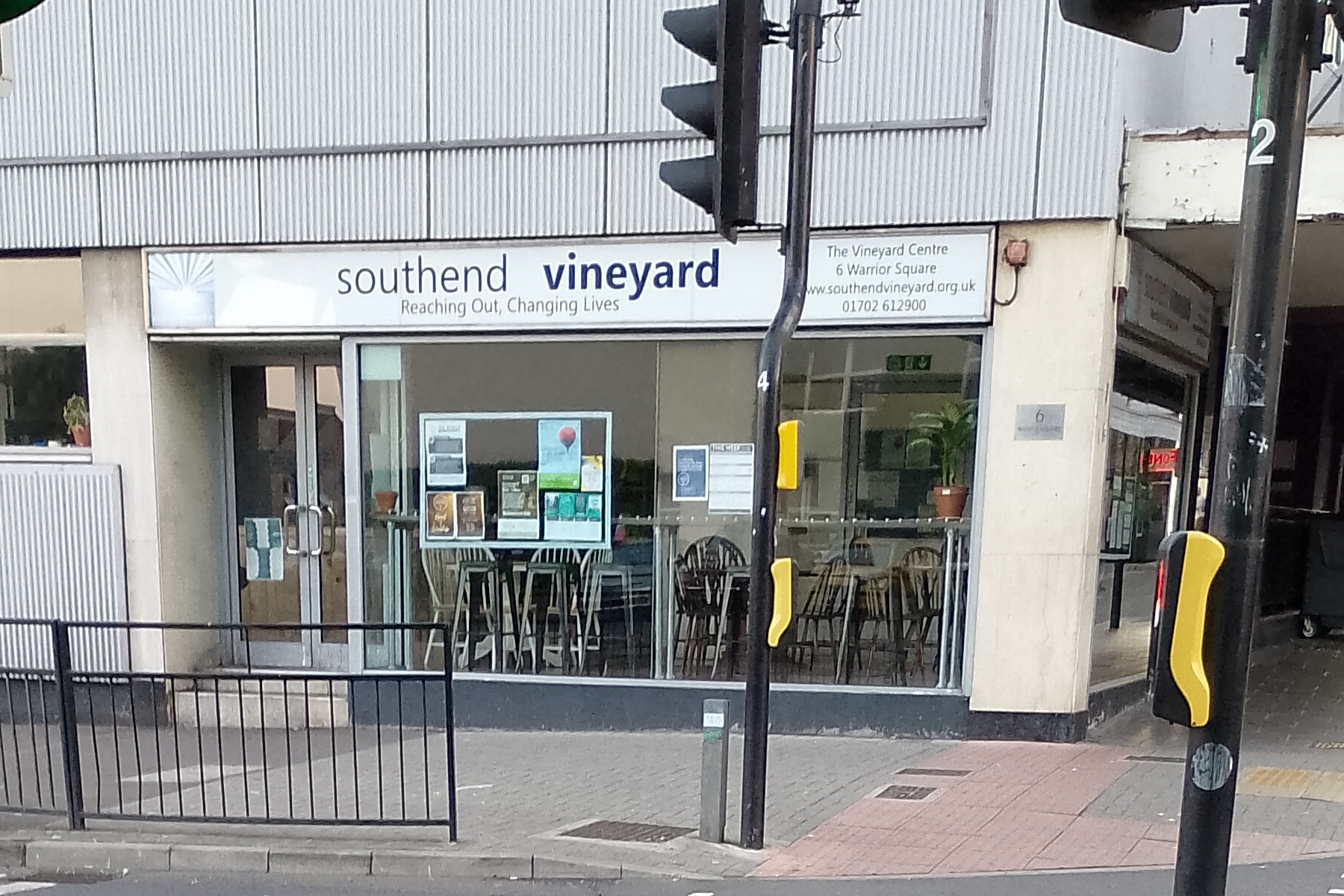
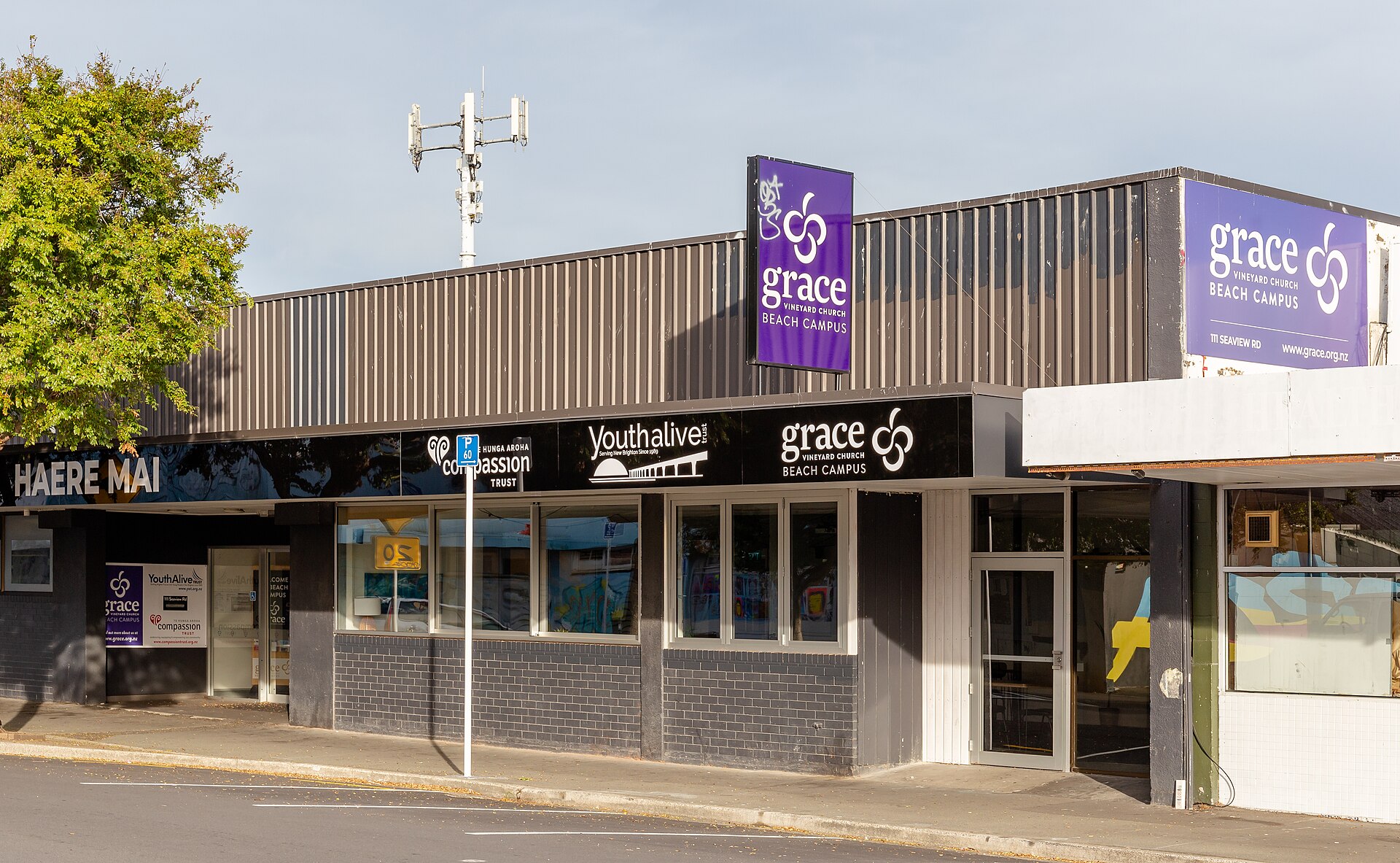
Vineyard USA calls the worldwide body a "family of churches spanning the globe," coordinated through Vineyard Global, a network of national directors. Its global page names national movements in the Philippines, Brazil, New Zealand, Denmark, the United Kingdom and Ireland, Canada, South Africa, Burkina Faso, Nepal, Mexico and Ukraine, and recalls an international gathering in Columbus, Ohio, in July 2015 where "4000+ leaders gathered together."43 Each national movement governs itself. Vineyard Churches UK and Ireland, led since 2015 by John and Debby Wright, says on its home page that "there are over 120 Vineyard churches in the UK & Ireland."44 Vineyard Canada describes itself as "a growing movement of churches across Canada."45


How many Vineyard churches?
Counts of Vineyard churches come from the movement itself and from reporters quoting it, and they measure different things (association members, U.S. churches, worldwide churches, people attending). The table and chart give each figure with its source and year.
| Year | Figure | What it counts | Source |
|---|---|---|---|
| 1996 | 546 | Member congregations of the association, worldwide | Christianity Today, Jan. 8, 19963 |
| 1997 to 1998 | nearly 500 U.S., about 250 abroad | Churches at Wimber's death | Christianity Today, January 19984 |
| 2015 | 116 | UK and Ireland churches | Christian Today, Jan. 29, 201522 |
| 2023 | more than 500 U.S. churches, about 121,000 people; more than 2,000 worldwide | Figures cited from Vineyard USA's 2023 annual report | Guidepost Solutions, Organizational Assessment, Vineyard USA, June 20, 202346 |
| 2026 (retrieved) | "over 2400+ churches worldwide" | Worldwide churches (undated claim) | Vineyard USA history page1 |
| 2026 (retrieved) | over 120 | UK and Ireland churches | Vineyard Churches UK and Ireland44 |
The 2023 worldwide figure (more than 2,000) and the history page figure (2,400 or more) differ by several hundred; the history page does not date its figure. Vineyard USA's 2026 annual report page, as retrieved on Oct. 28, 2026, displayed mostly rounded figures (for example "100 congregations (churches and sites)" and "1,000 students") that do not match the movement's other published counts and may be placeholders, so it is not used here for church counts.32
The 2020s: structure, safeguarding and education
The Guidepost assessment, 2023
The largest institutional change in the Vineyard since Wimber's death has been a move from a loose association toward written standards. On Sept. 12, 2022, Vineyard USA's national team engaged Guidepost Solutions, an outside firm, for what its report calls "an independent institutional assessment" of Vineyard USA and its affiliated churches. The report, dated June 20, 2023, and published on Vineyard USA's website, was not an investigation of particular misconduct cases, though it reviewed case studies for patterns. It drew on document review, 43 interviews and an advisory panel; 11 pastors declined to be interviewed.46
Guidepost identified three areas of concern: minimal structure or formal connection between Vineyard USA and local churches and pastors; no documented process across the movement for reporting and responding to misconduct allegations; and a lack of meaningful standards, guidance or accountability for staff, pastors and leaders. It found that the national body's main tie to churches was its bylaws and a trademark license requiring a 3 percent fee, that compliance with the fee was not verified, and that the license was rarely used for accountability. A misconduct reporting address had gone live on March 1, 2023, and had received five reports by the time of the report. Guidepost recommended a pastoral code of conduct, a misconduct process with confidentiality, non-retaliation and whistleblower protections, background checks for new staff and senior pastors, and joint ordination or credentialing.46
The National Leadership Handbook, 2024
Vineyard USA's response is visible in its National Leadership Handbook. Version 1.0 was ratified by the executive team in December 2021, alongside bylaws that came into force on Jan. 1, 2022; version 2.0 was ratified by the Vineyard USA Leadership Council in March 2024. The handbook makes the national director a permanent member of the board of trustees but bars the national director from chairing it, creates an executive committee of the chair, the national director and one other trustee, and sends new trustee names to the Council for ratification. It sets a national credentialing process in which pastors ordained before June 1, 2025, have their credentials endorsed and renewal requirements take effect by June 1, 2027.38 Version 2.0 has since been succeeded: Vineyard USA's handbook page says Version 3.0 was ratified by the Leadership Council on March 2, 2026, and went into effect on Aug. 29, 2026, and that in 2024 and 2025 churches acknowledged the handbook in their local bylaws. The provisions summarized here are those of Version 2.0; whether each one carries over unchanged into Version 3.0 was not checked line by line for this lesson.38 For readers comparing governance models, these provisions answer, in writing, the question lesson 04 asks of every independent church: who holds the pastor to account (see lesson 04).
Theology and education
Vineyard USA's theology and education office now runs a nine-month formation program, Vineyard Leadership Essentials, which it describes as "built around local mentoring relationships," a certificate in biblical theology and ministry offered with Northern Seminary, and Vineyard Scholars, "a network of pastors, theologians, academics, and curious leaders" with an annual conference (Nov. 19 to 20, 2026, in Denver).47 The Vineyard Institute, an online theological school associated with the South African Vineyard theologian Derek Morphew, was named in the plan for this lesson; its founding date and current status were not confirmed in a primary source and are listed as unverified.
What the record shows and what it does not
- Documented fact: Ernest Gruen preached against Kansas City Fellowship on Jan. 21, 1990, and circulated a written report of more than 200 pages in 1990; Bickle's church later joined the Vineyard and resigned in August 1996; Bob Jones was disciplined in December 1991.578
- Documented fact: the Toronto meetings began Jan. 20, 1994; Wimber and three Vineyard leaders informed Toronto of the separation on Dec. 5, 1995; Arnott agreed to separation the same evening; the church was operating as Toronto Airport Christian Fellowship by mid-1996.12316
- Documented fact: Wimber died Nov. 17, 1997; Hunter, Waggoner, Strout and Pathak followed as national leaders; Pathak took office Jan. 1, 2022.42830
- The movement's own claim: that Toronto was an "authentic visitation of the Spirit" (Wimber) and a "divine visitation" (Catch the Fire); that the kingdom of God is "the overarching and integrating theme of the Scriptures" (Vineyard USA).31241 These are statements of faith, not things a historian can confirm or refute.
- Scholarly reading: Poloma reads the Toronto split as the routinization of charisma; Jackson reads the Vineyard as a search for a "radical middle."32021
- Open questions: the exact day Toronto took its new name; the exact title, date and text of the 2014 Vineyard USA paper on LGBT persons; Phil Strout's start date; how many U.S. Vineyard churches exist in 2026 (the latest dated figure found is "more than 500" in 2023).
Claims checked
"The Vineyard expelled Toronto because it rejected the revival."
Rating: Refuted. Wimber said, at the time of the decision, "I believe that there has been an authentic visitation of the Spirit there." The stated reasons concerned pastoral handling, especially the promotion of animal-like manifestations and theology built on them, and a desire for "greater scriptural emphasis."3 Whether "expelled" is the right word is itself disputed: the Vineyard leaders asked Toronto to respond, and Arnott agreed to separation within hours.
"The Toronto Blessing began on Jan. 20, 1994, at meetings led by Randy Clark."
Rating: Supported. Catch the Fire's own timeline gives that date and names Clark; Christianity Today's 1994 report agrees on the date and describes Clark's extended stay.1214
"Wimber endorsed the Kansas City prophets without reservation."
Rating: Partly supported. Wimber did bring the group into the Vineyard, appeared with Paul Cain at a Kansas City event in February 1990 and, according to the group's own 1989 report as quoted by Gruen, gave financial support to its plans.5 But the same record shows oversight and discipline (the Bob Jones case of December 1991), Wimber's public engagement with critics from 1992, and a later turn back to "the main and plain."89
"Ernest Gruen later withdrew his charges."
Rating: Unresolved. IHOPKC has published what it describes as a joint statement by Gruen and Bickle from May 16, 1993, reflecting reconciliation; others, including a Gruen family member, have questioned that reading. The statement itself was not opened for this lesson. Gruen's original report remains available, and its documentary core (quotations, dates, weather records) is not affected by later reconciliation.548
"Millions of people visited the Toronto church."
Rating: Unsupported as stated. The dated figures found are about 50,000 unique visitors in the first six months of 1994 (as recalled by Christianity Today in 2014) and an estimated 200,000 visitors by mid-1996 (Religion News Service).916 Later cumulative totals in the millions circulate in popular accounts but were not found in a dated, sourced document.
"Vineyard USA does not allow women to be senior pastors."
Rating: Refuted. The 2006 board statement commits the movement to "empower women at all levels of leadership" and leaves "ordination and appointing of senior pastors" to each local church.29 Individual Vineyard churches may still decline to appoint women.
"Wimber died of cancer."
Rating: Refuted. Wimber had cancer diagnosed in 1993 and, according to Christianity Today, recovered from it. He died of a brain hemorrhage (Vineyard USA's page says aneurysm) on Nov. 17, 1997.4242
"The Vineyard has more than 2,400 churches."
Rating: Partly supported. Vineyard USA's history page says so, without a date; an outside assessment in 2023 citing Vineyard USA's own annual report gave "more than 2,000" worldwide and "more than 500" in the United States.146 The worldwide figure counts many independent national movements, not only Vineyard USA.
Hard questions and answers
If the Vineyard believed in prophecy, why did it back away from the Kansas City prophets?
Its statement of faith affirms "all of the biblical gifts of the Spirit," so the issue was never whether prophecy exists.40 The record shows the issue was conduct and accountability: a critic's documented charges of failed predictions and manipulation (Gruen), a public moral discipline (Bob Jones), and a prophetic circle whose claims about an end-time movement went well beyond Vineyard teaching.58 The Vineyard's response was to keep the gift and limit its authority, the same pattern it later followed with Toronto. A reader inside the movement may see that as wisdom; a reader outside it may ask why the checks came only after public criticism.
Was the Toronto separation about theology or about control?
Both readings appear in the record. Wimber framed it as "scriptural and theological convictions" about how the renewal was pastored. Bickle, leaving the Vineyard eight months later, characterized the Toronto decision as rooted in "fear, jealousy, and lack of wisdom," a description the Vineyard board rejected.37 Poloma's sociological reading treats it as a predictable institutional reaction to a spontaneous movement.3 The documents do not settle motive; they do show that the stated reasons were specific (manifestations put on stage, theology built on them) and that the Vineyard did not accuse Toronto of heresy.
How can anyone tell a genuine revival from emotional contagion?
No document in this lesson claims to answer that conclusively. Participants appealed to fruit (renewed love for God, healed marriages, new ministries), which Poloma tried to measure by survey.20 Critics such as Beverley argued that "the more bizarre the manifestation, the easier it is to believe it is caused by human emotion."16 Wimber's position, that the experiences could be real while still not being "promoted, placed on stage, nor used as the basis for theologizing," was an attempt to hold both views at once.16 The historian can record what was claimed, measured and decided; the theological judgment belongs to the reader.
Does leaving women's ordination to local churches mean the Vineyard has no position?
It has a position on governance and a leaning on theology. The 2006 statement commits the national movement to "encourage, train, and empower women at all levels of leadership," which is an egalitarian-leaning commitment, while declining to require local churches to ordain women or appoint them as senior pastors.29 Anyabwile's Gospel Coalition post treated it as a departure from Scripture, while supporters of full equality could read the local option as a compromise.36
Who holds a Vineyard pastor to account?
Before 2022 the honest answer, according to Vineyard USA's own commissioned assessment, was very little at the national level: the main ties were the bylaws and a trademark license, and there was no documented movement-wide process for misconduct reports.46 Since then, the 2024 handbook has created a national credentialing process, a board structure that separates the national director from the board chair and a reporting channel.38 Day-to-day accountability still rests largely with each church's own board, which is why the reader's checklist in lesson 10 asks for a church's bylaws and its board's minutes.
Is the Vineyard still growing?
The dated U.S. figures suggest it is not growing in the United States: about 500 churches in 1997 to 1998 and "more than 500" in 2023.446 Worldwide figures have risen, to more than 2,000 or 2,400 depending on the source, and the British and Irish movement grew from 116 churches in 2015 to more than 120 in 2026.2244 Because each figure counts something slightly different, the safest reading is flat in the United States and modest growth abroad.
Related lessons and modules
- Lesson 08: The Vineyard: Ken Gulliksen, John Wimber, Signs and Wonders and MC510
- Lesson 02: Pentecostal and Charismatic, for the Third Wave and the charismatic renewal
- Lesson 07: Calvary Chapel Growth and Fault Lines, for a parallel story of succession and reform
- Lesson 04: Non-Denominational Churches, for church governance and accountability
- Lesson 10: Calvary Chapel and Vineyard Side by Side
- For how churches' tax-exempt status relates to political activity in Idaho, see Schools, churches and religious organizations (Issues module 46).
Learn more
- Vineyard USA, Core Values and Beliefs (PDF): The full statement of faith and core values in the movement's own words.
- Christianity Today, Vineyard Severs Ties with 'Toronto Blessing' Church (1996): The most detailed contemporaneous account of the Dec. 5, 1995, meeting and Wimber's reasons.
- Gruen, Documentation (1990), Internet Archive: The critic's report on Kansas City Fellowship, with its quotations and dated evidence; read alongside the Vineyard's and Bickle's later statements.
- Guidepost Solutions, Organizational Assessment, Vineyard USA (2023): An outside, movement-commissioned look at how Vineyard USA relates to its churches and handles misconduct reports.
- Renewal Journal: Millar and Mumford on Holy Trinity Brompton (1994): First-hand accounts of how the Toronto phenomena reached London.
- Catch the Fire, Our Story: The Toronto church's own account of the revival and its later history.
Still being checked (20 items)
These points could not be confirmed against a primary source when this lesson was written and fact checked in October 2026. The text above states each one as uncertain.
- The exact day in early 1996 when the Toronto church took the name Toronto Airport Christian Fellowship (commonly given as January 1996); sources opened say only 1996 or early 1996.
- The exact date of the Association of Vineyard Churches board vote on Toronto; Christianity Today places it at the board's annual meeting before the Dec. 5, 1995, visit.
- Vineyard USA's 2014 position paper on pastoring LGBT persons: its exact title, date and text were not found on vineyardusa.org on Oct. 28, 2026.
- EastLake Community Church (Bothell, Washington): its Vineyard affiliation and early-2015 departure over LGBT inclusion were not confirmed in a primary source.
- The Vineyard Canada letter of Feb. 5, 2020, on sexuality was described from a secondary source and not opened.
- The title and year of Ken Wilson's book (commonly A Letter to My Congregation, 2014) were not confirmed in a source opened.
- The plan's reference to a "2014 decision on women in ministry": no Vineyard USA document from 2014 on women's ordination was found; the 2006 board statement is the documented decision.
- Wimber's date of death is Nov. 17, 1997, in Christianity Today and Regent University's timeline; some reference works give Nov. 16.
- The Vineyard Institute (associated with Derek Morphew): founding date and current status not confirmed.
- Founding dates of Mercy Records and Vineyard Music and authorship details of specific Vineyard songs were not confirmed and are not stated.
- The 1993 Gruen and Bickle joint statement published by IHOPKC was not opened.
- Vineyard USA's 2026 annual report page showed rounded figures that may be placeholders; current (2026) U.S. church count is therefore not stated.
- Randy Clark's 1994 church: Christianity Today (Oct. 24, 1994) calls him a "Saint Louis pastor" and Christianity Today (2014) "a former Southern Baptist pastor"; that his St. Louis-area church was a Vineyard was not confirmed in a source opened.
- Phil Strout's start date as national director: Wikipedia says he was selected in October 2011 to begin in January 2013; the Vineyard Women in Leadership booklet shows him signing as national director by April 2013. No primary announcement of his start was opened.
- Bert Waggoner: Christianity Today (Aug. 7, 2000) names him acting national director in 2000; the Vineyard Women in Leadership booklet says he "became National Director in 2001." His end date was not confirmed.
- Brownsville revival start date (June 18, 1995) and attendance figures come from secondary listings; the Pensacola News Journal series dates (Nov. 16 to 20, 1997) were confirmed only from an archived journalism-award page, not from the articles.
- The exact date of Bickle's December 2023 statement (commonly given as Dec. 12, 2023): the Christianity Today/RNS report cited says only "earlier in December," so the lesson does not give a day.
- The exact start date of Wimber's oversight of Kansas City Fellowship: Christianity Today (Oct. 7, 1996) says the church joined "five years ago" and cites a Christianity Today report of Jan. 14, 1991, which was not opened.
- John Paul Jackson's later move to the staff of the Anaheim Vineyard is widely reported but was not confirmed in a source opened.
- Todd Hunter's start as national coordinator (Wikipedia: February 1994) was not confirmed in a primary source.
Notes
- Vineyard USA, "Our History" (history and legacy page), vineyardusa.org (retrieved Oct. 28, 2026). Read it online. ↩
- Vineyard USA, "John Wimber (1934-1997)," vineyardusa.org (retrieved Oct. 28, 2026). Read it online. ↩
- James A. Beverley, "Vineyard Severs Ties with 'Toronto Blessing' Church," Christianity Today, Jan. 8, 1996 (retrieved Oct. 28, 2026). Read it online. ↩
- "Vineyard Founder Wimber Dies," Christianity Today, Jan. 12, 1998 issue (retrieved Oct. 28, 2026). Read it online. ↩
- Ernest J. Gruen and staff, Documentation of the Aberrant Practices and Teachings of Kansas City Fellowship (Grace Ministries) (Full Faith Church of Love, 1990), including the open letter of April 4, 1990, and sections I and II; electronic edition recreated by permission by Tricia Tillin, Banner Ministries, hosted on the Internet Archive (retrieved Oct. 28, 2026). A critic's document; quoted for its charges and its citations of Kansas City Fellowship materials. Read it online. ↩
- "Major Pentecostal Leader, Prophet Paul Cain Dies at 89," Charisma News, February 2019, quoting the October 2004 statement by Rick Joyner, Mike Bickle and Jack Deere (retrieved Oct. 28, 2026; the page refuses some automated requests but loads in a browser). Read it online. ↩
- James A. Beverley, "Leading Church Leaves Association," Christianity Today, Oct. 7, 1996 (retrieved Oct. 28, 2026). Read it online. ↩
- "Signs and Wonders: Wimber Breaks Silence to Answer Vineyard Critics," Christianity Today, March 9, 1992 (retrieved Oct. 28, 2026). Read it online. ↩
- Lorna Dueck, "The Enduring Revival" (on the 20th anniversary of the Toronto Blessing), Christianity Today, March 7, 2014 (retrieved Oct. 28, 2026). Read it online. ↩
- Vineyard USA, Resource Library, listing of the "Heart of the Vineyard" series, vineyardusa.org (retrieved Oct. 28, 2026). Read it online. ↩
- Bob Smietana (Religion News Service), "IHOPKC Cuts Ties with Mike Bickle over 'Inappropriate Behavior,'" Christianity Today, Dec. 23, 2023, quoting IHOPKC spokesman Eric Volz and Bickle's online statement of earlier in December 2023 (retrieved Oct. 28, 2026). Read it online. ↩
- Catch the Fire, "Our Story," including "Revival History" and "Our Story Through the Decades," catchthefire.com (retrieved Oct. 28, 2026). Read it online. ↩
- Sandy Millar, "Reminiscent of Revivals," and Eleanor Mumford, "The Current Move of the Spirit" (message at Holy Trinity Brompton, May 29, 1994), first published in HTB in Focus, June 12, 1994; reprinted in Renewal Journal no. 5 (1995), pp. 24 to 31 (retrieved Oct. 28, 2026). Read it online. ↩
- Joe Maxwell, "Is Laughing for the Lord Holy? Airport Vineyard's 'Blessing' Draws Toronto Charismatic Crowds," Christianity Today, Oct. 24, 1994 (retrieved Oct. 28, 2026). Read it online. ↩
- Global Awakening, "Randy Clark," globalawakening.com (retrieved Oct. 28, 2026). Read it online. ↩
- "The Charismatic Experience: Spirited Toronto Flock Shakes, Rattles," Religion News Service, June 13, 1996, no individual byline (retrieved Oct. 28, 2026; the page refuses some automated requests but loads in a browser). Read it online. ↩
- Guy Chevreau, Catch the Fire: The Toronto Blessing (London: Marshall Pickering, 1994); John Arnott, The Father's Blessing (Orlando: Creation House, 1995). Bibliographic citation; the books were not opened for this lesson. ↩
- James A. Beverley, Holy Laughter and the Toronto Blessing: An Investigative Report (Grand Rapids: Zondervan, 1995). Bibliographic citation; the Tyndale University publication record at this URL returned "not found" when checked on Oct. 28, 2026. Read it online. ↩
- Hank Hanegraaff, Counterfeit Revival (Dallas: Word, 1997; later edition Thomas Nelson, 2001). Bibliographic citation; the book was not opened for this lesson. ↩
- Margaret M. Poloma, The Toronto Report (Terra Nova, 1996); "The 'Toronto Blessing': Charisma, Institutionalization, and Revival," Journal for the Scientific Study of Religion 36 (1997); Main Street Mystics: The Toronto Blessing and Reviving Pentecostalism (AltaMira, 2003). Bibliographic citation; Poloma's survey numbers are described only in general terms here. Read it online. ↩
- Bill Jackson, The Quest for the Radical Middle: A History of the Vineyard (Cape Town: Vineyard International Publishing, 1999). Bibliographic citation; the book was not opened for this lesson. ↩
- Lucinda Borkett-Jones, "New directors for Vineyard UK, John and Ele Mumford to focus on international," Christian Today, Jan. 29, 2015 (retrieved Oct. 28, 2026). Read it online. ↩
- Society of Professional Journalists, 1997 Sigma Delta Chi Awards page (archived), listing the Pensacola News Journal series "Brownsville Revival: The Money and the Myths," published Nov. 16 to 20, 1997, and its article headlines (retrieved Oct. 28, 2026). The series articles themselves were not opened, so the Brownsville start date and attendance figures remain unverified. Read it online. ↩
- Regent University Library, "John Wimber: Biography" (timeline), libguides.regent.edu (retrieved Oct. 28, 2026; the page refuses some automated requests but loads in a browser). Read it online. ↩
- "Association of Vineyard Churches," Wikipedia (retrieved Oct. 28, 2026). Used only to locate primary sources and to document conflicting dates (Wimber's death given as Nov. 16, 1997; Phil Strout selected October 2011; the Vineyard Canada letter of Feb. 5, 2020), not as the sole source of any fact stated as settled. Read it online. ↩
- Vineyard Canada, "John Wimber: The Way It Was" (book notice for Carol Wimber's memoir), vineyard.ca (retrieved Oct. 28, 2026). Read it online. ↩
- News brief on Todd Hunter's appointment as national director, Christianity Today, April 27, 1998 (retrieved Oct. 28, 2026). Read it online. ↩
- "Briefs: North America," Christianity Today, Aug. 7, 2000 (Todd Hunter resignation; Berten Waggoner named acting national director) (retrieved Oct. 28, 2026). Read it online. ↩
- Vineyard Women in Leadership Network (history by Adey Wassink, content by Michelle Wilson), One in Christ: Men and Women Together in Ministry (c. 2013), reprinting the Vineyard USA Board of Directors' 2006 position statement announced by Bert Waggoner (retrieved Oct. 28, 2026). Read it online. ↩
- Vineyard USA, "Announcing Vineyard USA's New National Director-Elect" (March 2, 2021), "National Director-Elect Ratification and A Conversation With Phil and Jay" (March 5, 2021), and "Strout's Farewell Message and Legacy" (2021), vineyardusa.org (retrieved Oct. 28, 2026). Read it online. ↩
- Vineyard USA, "Vineyard USA ReOrg," with dated milestones March 2020 to January 2022, vineyardusa.org (retrieved Oct. 28, 2026). Read it online. ↩
- Vineyard USA, "2026 Annual Report," vineyardusa.org (retrieved Oct. 28, 2026). Lists Jay Pathak as national director; most numeric figures on the page appeared rounded or provisional when retrieved. Read it online. ↩
- InterVarsity Press, author biography of Todd D. Hunter (press kit for The Accidental Anglican, InterVarsity Press, 2010) (retrieved Oct. 28, 2026). Read it online. ↩
- Vineyard USA, "Jay Pathak" (national leadership team biography), vineyardusa.org (retrieved Oct. 28, 2026). Read it online. ↩
- Vineyard USA, "National Leadership Team" page, listing the Board of Trustees (retrieved Oct. 28, 2026). Read it online. ↩
- Thabiti Anyabwile, "Vineyard Makes Another Bad Turn," The Gospel Coalition blog (undated on the page as retrieved Oct. 28, 2026). Read it online. ↩
- Russell Moore, "Vineyard Churches Open Door to Women Pastors," russellmoore.com, May 17, 2006 (retrieved Oct. 28, 2026). Read it online. ↩
- Vineyard USA, National Leadership Handbook, version 2.0, ratified by the Vineyard USA Leadership Council March 4, 2024 (version 1.0 ratified December 2021), sections 2.4 to 2.7, 6.3.1, 7.3, 9.3 and 9.5 (retrieved Oct. 28, 2026); and Vineyard USA, "The National Leadership Handbook" page, vineyardusa.org/handbook/ (Version 3.0 ratified by the Leadership Council March 2, 2026, in effect Aug. 29, 2026) (retrieved Oct. 28, 2026). Read it online. ↩
- James Leonard, "Leaving the Vineyard: An Evangelical Congregation Splits over Gay Rights," Ann Arbor Observer, Dec. 31, 2015, with reader comment by Don Bromley, Jan. 10, 2016 (retrieved Oct. 28, 2026). Read it online. ↩
- Vineyard USA, Core Values and Beliefs (booklet, copyright 2016 Vineyard Resources), foreword, "A People of the Kingdom of God," and "Our Statement of Faith" (retrieved Oct. 28, 2026). Read it online. ↩
- Vineyard USA, "Core Values and Beliefs" web page, vineyardusa.org/about/ (retrieved Oct. 28, 2026). Read it online. ↩
- Vineyard Worship, home page, vineyardworship.com (retrieved Oct. 28, 2026). Read it online. ↩
- Vineyard USA, "Our Global Family," vineyardusa.org (retrieved Oct. 28, 2026). Read it online. ↩
- Vineyard Churches UK and Ireland, home page, vineyardchurches.org.uk (retrieved Oct. 28, 2026). Read it online. ↩
- Vineyard Canada, home page, vineyard.ca (retrieved Oct. 28, 2026). Read it online. ↩
- Guidepost Solutions, Organizational Assessment, Vineyard USA, June 20, 2023, published by Vineyard USA (retrieved Oct. 28, 2026). Read it online. ↩
- Vineyard USA, "Theology and Education" page (Vineyard Leadership Essentials, certificate with Northern Seminary, Vineyard Scholars), vineyardusa.org (retrieved Oct. 28, 2026). Read it online. ↩
- "Mike Bickle (minister)," Wikipedia (retrieved Oct. 28, 2026), used only to locate the IHOPKC press release "Ernie Gruen and Mike Bickle's Joint Statement from 1993" (dated May 16, 1993), which was not opened for this lesson. Read it online. ↩
Check yourself
1. Who preached the January 1990 sermon "Do We Keep Smiling and Say Nothing?" against Kansas City Fellowship?
Ernest J. Gruen of Full Faith Church of Love preached it on Jan. 21, 1990, and followed it with a written report of more than 200 pages.
2. On what date did the meetings that became the Toronto Blessing begin, according to Catch the Fire's own timeline?
Catch the Fire's timeline gives Jan. 20, 1994, when Randy Clark spoke at a Holy Spirit weekend. May 29, 1994, is Eleanor Mumford's talk at Holy Trinity Brompton, and June 18, 1995, is the Brownsville start.
3. What reason did John Wimber give for the separation from the Toronto church?
Wimber said he believed there had been "an authentic visitation of the Spirit there" but was unable "to any longer give an answer for, or defend the way" the renewal was being pastored, according to Christianity Today, Jan. 8, 1996.
4. Which London church became the best-known British center of the Toronto phenomena in 1994?
Eleanor Mumford spoke at Holy Trinity Brompton, an Anglican parish, on May 29, 1994, and its vicar Sandy Millar described an "astonishing outpouring of the Spirit" there; the Renewal Journal reprint dates the renewal at HTB to May 1994.
5. Who became Vineyard USA's national director on Jan. 1, 2022?
Jay Pathak was selected as national director-elect in March 2021, ratified by a majority of churches, and took office Jan. 1, 2022.
6. What did the Vineyard USA board's 2006 statement say about women senior pastors?
The statement commits the movement to empower women at all levels of leadership and leaves ordination and senior pastor appointments to each local church.
7. According to the 2023 Guidepost Solutions assessment, about how many Vineyard churches were in the United States?
Guidepost, citing Vineyard USA's 2023 annual report, gave more than 500 U.S. churches and about 121,000 people; the 2,400+ figure is a worldwide claim.
8. How does Vineyard USA's Core Values and Beliefs booklet describe the center of its theology?
The booklet says the statement of faith is based on the conviction that the kingdom of God is the central theological motif that gives definition to all that the Vineyard believes.
Terms in this lesson
- Kansas City Prophets
- A label applied by others to Mike Bickle's Kansas City Fellowship and associated figures such as Bob Jones and Paul Cain, who claimed prophetic revelation in the 1980s and early 1990s.
- Gruen report
- Ernest Gruen's 1990 Documentation of the Aberrant Practices and Teachings of Kansas City Fellowship, a critic's report of more than 200 pages charging false prophecy and manipulation.
- Metro Vineyard Fellowship
- The name of Bickle's Kansas City church while it belonged to the Vineyard (about 1990 to 1996); it became Metro Christian Fellowship when it left in August 1996.
- Toronto Blessing
- The name given to the revival that began at the Toronto Airport Vineyard on Jan. 20, 1994, marked by laughter, falling, shaking and other physical phenomena.
- Toronto Airport Christian Fellowship (TACF)
- The name the Toronto church took after its separation from the Vineyard in December 1995; it later became Catch the Fire.
- Holy laughter
- Prolonged, often uncontrollable laughter reported in the Toronto meetings and related revivals, interpreted by participants as a work of the Holy Spirit.
- Slain in the Spirit
- A charismatic term for falling to the floor under prayer, understood by participants as being overwhelmed by the Holy Spirit.
- Routinization of charisma
- Max Weber's term, used by Margaret Poloma, for the process by which spontaneous religious movements develop rules and institutions that restrain the spontaneity that started them.
- Kingdom theology
- The Vineyard's framework treating the kingdom of God, already present in Jesus' ministry and not yet complete, as the central theme of Scripture and the basis for healing, justice and deliverance.
- Already and not yet
- The phrase for the belief that God's reign has begun in Jesus but will be consummated only at his return; used in Vineyard USA's core values.
- National director
- The chief leader of Vineyard USA, a member of its board of trustees; since Jan. 1, 2022, Jay Pathak.
- Local option (women's ordination)
- The 2006 Vineyard USA position leaving the ordination of women and appointment of women senior pastors to each local church.
- Guidepost assessment
- The June 20, 2023, outside review of Vineyard USA's structure and misconduct processes by Guidepost Solutions, commissioned by Vineyard USA.
- Vineyard Global
- The network of national Vineyard directors that coordinates self-governing Vineyard movements in different countries.
Sources
- Gruen, Documentation of the Aberrant Practices and Teachings of Kansas City Fellowship (electronic edition) (1990) checked 2026-10
- Vineyard USA, Core Values and Beliefs (statement of faith booklet) (2016) checked 2026-10
- Vineyard USA, National Leadership Handbook 2.0 (March 2024) checked 2026-10
- Guidepost Solutions, Organizational Assessment, Vineyard USA (2023-06-20) checked 2026-10
- Vineyard Women in Leadership Network, One in Christ (with 2006 board statement) (c. 2013) checked 2026-10
- Vineyard USA, Our History (retrieved 2026-10-28) checked 2026-10
- Vineyard USA, John Wimber (retrieved 2026-10-28) checked 2026-10
- Vineyard USA, Core Values and Beliefs page (retrieved 2026-10-28) checked 2026-10
- Vineyard USA, Announcing Vineyard USA's New National Director-Elect (2021-03-02) checked 2026-10
- Vineyard USA, ReOrg (2020 to 2022) checked 2026-10
- Vineyard USA, Jay Pathak biography (retrieved 2026-10-28) checked 2026-10
- Vineyard USA, National Leadership Team (retrieved 2026-10-28) checked 2026-10
- Vineyard USA, 2026 Annual Report (2026) checked 2026-10
- Vineyard USA, Our Global Family (retrieved 2026-10-28) checked 2026-10
- Vineyard USA, Theology and Education (retrieved 2026-10-28) checked 2026-10
- Vineyard USA, Resource Library (retrieved 2026-10-28) checked 2026-10
- Catch the Fire, Our Story (retrieved 2026-10-28) checked 2026-10
- Global Awakening, Randy Clark (retrieved 2026-10-28) checked 2026-10
- Millar and Mumford, Renewal Journal no. 5 (from HTB in Focus, June 12, 1994) (1994; reprinted 1995) checked 2026-10
- Christianity Today, Is Laughing for the Lord Holy? (1994-10-24) checked 2026-10
- Christianity Today, Vineyard Severs Ties with 'Toronto Blessing' Church (1996-01-08) checked 2026-10
- Religion News Service, Spirited Toronto Flock Shakes, Rattles (1996-06-13) checked 2026-10
- Christianity Today, Leading Church Leaves Association (1996-10-07) checked 2026-10
- Christianity Today, Signs and Wonders: Wimber Breaks Silence to Answer Vineyard Critics (1992-03-09) checked 2026-10
- Christianity Today, Vineyard Founder Wimber Dies (1998-01-12) checked 2026-10
- Christianity Today, Todd Hunter named national director (brief) (1998-04-27) checked 2026-10
- Christianity Today, Briefs: North America (2000-08-07) checked 2026-10
- Christianity Today, Enduring Revival (Lorna Dueck) (2014-03-07) checked 2026-10
- Christianity Today, IHOPKC Cuts Ties with Mike Bickle (2023-12-23) checked 2026-10
- Charisma News, Prophet Paul Cain Dies at 89 (2019-02) checked 2026-10
- Christian Today, Vineyard Churches Announce New Directors (2015-01-29) checked 2026-10
- Ann Arbor Observer, Leaving the Vineyard (2015-12-31) checked 2026-10
- Russell Moore, Vineyard Churches Open Door to Women Pastors (2006-05-17) checked 2026-10
- Thabiti Anyabwile, Vineyard Makes Another Bad Turn (The Gospel Coalition) (undated) checked 2026-10
- Regent University Library, John Wimber biography timeline (retrieved 2026-10-28) checked 2026-10
- Vineyard Canada, John Wimber: The Way It Was (book notice) (retrieved 2026-10-28) checked 2026-10
- Vineyard Canada home page (retrieved 2026-10-28) checked 2026-10
- Vineyard Churches UK and Ireland home page (retrieved 2026-10-28) checked 2026-10
- Vineyard Worship home page (retrieved 2026-10-28) checked 2026-10
- InterVarsity Press, Todd D. Hunter author biography (retrieved 2026-10-28) checked 2026-10
- Beverley, Holy Laughter and the Toronto Blessing (Tyndale record) (1995) checked 2026-10
- Hanegraaff, Counterfeit Revival (1997) checked 2026-10
- Poloma, The Toronto Blessing: Charisma, Institutionalization, and Revival (JSSR) (1997) checked 2026-10
- Jackson, The Quest for the Radical Middle (1999) checked 2026-10
- Chevreau, Catch the Fire; Arnott, The Father's Blessing (1994; 1995) checked 2026-10
- Pensacola News Journal, Brownsville Revival: The Money and the Myths (archived index) (1997-11-16 to 1997-11-20) checked 2026-10
- Wikipedia, Association of Vineyard Churches (locator only) (retrieved 2026-10-28) checked 2026-10
- Wikipedia, Mike Bickle (minister) (locator only) (retrieved 2026-10-28) checked 2026-10