Lesson 5 of 10 · about 55 minutes · Updated October 28, 2026
The Jesus People and Costa Mesa: Chuck Smith, Lonnie Frisbee and the Youth Revival
You'll be able to
- Place the first Jesus People ministries (the Living Room, the House of Acts, His Place, the Christian World Liberation Front) in time and place, and explain why the movement did not begin at Calvary Chapel.
- Give the verified dates of Chuck Smith's call to Calvary Chapel Costa Mesa (Nov. 18, 1965 vote, Dec. 5, 1965 first sermon, Sept. 14, 1966 senior pastor) and summarize his Foursquare background.
- Describe Lonnie Frisbee's role at Calvary Chapel and in the early Vineyard, his departures and his death, using only what named sources report and noting where they disagree.
- Read attendance and baptism claims critically by naming the source of each number.
- Distinguish the Children of God from Calvary Chapel and the wider Jesus People movement.
- Identify what the 2023 film Jesus Revolution changed or left out, with the source for each point.
Start here: the short version
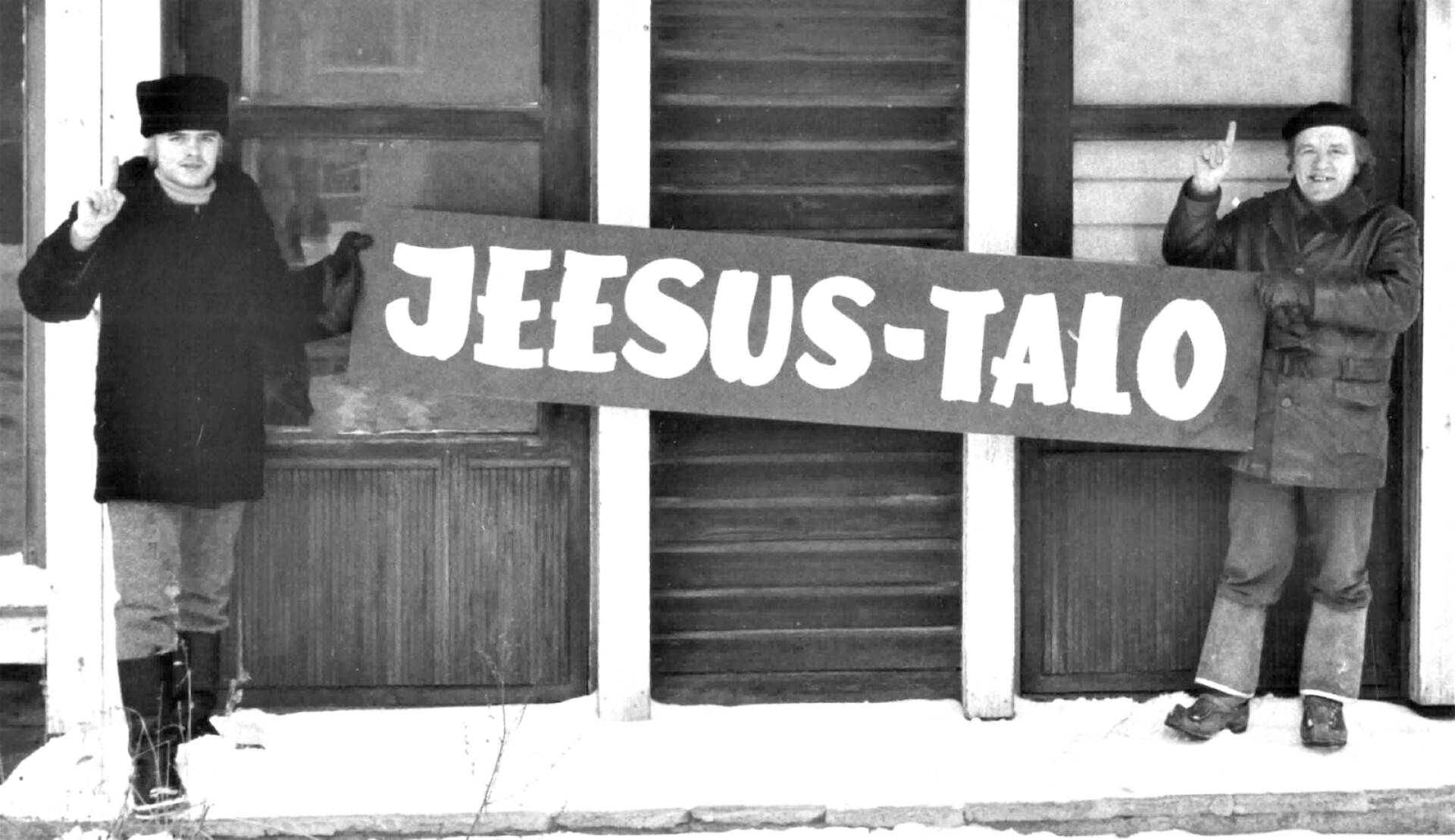
The Jesus People were young Americans, many of them hippies or runaways, who became evangelical Christians between about 1967 and the mid 1970s while keeping the long hair, bare feet, slang and rock music of the counterculture. The movement had no founder and no headquarters. It began in several places at once: a storefront coffeehouse called the Living Room near Haight and Ashbury streets in San Francisco in 1967, a communal farmhouse in Novato called the House of Acts, Arthur Blessitt's His Place on the Sunset Strip in 1968, and the Christian World Liberation Front in Berkeley in 1969.1 The historian Larry Eskridge, the movement's leading scholar, writes that it "spread across the country in the early 1970s" and that "by the end of the decade it had largely disappeared."1
The congregation that drew the most young converts, and that left the largest institution behind, was a small church in Costa Mesa, California, called Calvary Chapel. Chuck Smith, a former Foursquare Gospel pastor, gave his first official Sunday sermon there on December 5, 1965, to 50 people.2 In 1968 he and his wife Kay took in a young street evangelist named Lonnie Frisbee, opened a communal home called the House of Miracles with John and Jackie Higgins, and watched the church fill with hippies.23 By 1971 Calvary Chapel was meeting in a circus tent and baptizing converts by the hundreds in the ocean at Pirate's Cove in Corona del Mar. That June, Time magazine put "The Jesus Revolution" on its cover.1 Frisbee's later life, including his part in the founding years of the Vineyard, his firing over his sexual conduct, his death in 1993, and the way church histories did and did not remember him, is part of the record and is told here from named sources. The lesson ends with the 2023 film Jesus Revolution and what it changed.
This is the fifth lesson of Module 77. The movements behind it are traced in earlier lessons: the Holiness and Pietist roots in lesson 01, the Pentecostal and Charismatic movements (including the Foursquare Church, where Chuck Smith was trained) in lesson 02, postwar evangelicalism and Billy Graham in lesson 03, and independent churches in lesson 04. What Calvary Chapel came to teach and how it is governed belongs to lesson 06. The network's later growth, its succession after Smith's death in 2013 and its controversies belong to lesson 07. The Vineyard, which Lonnie Frisbee helped launch, has its own lessons, 08 and 09. The wider intellectual setting of the 1960s and 1970s, including Francis Schaeffer's L'Abri, which also drew young seekers, is taught in Liberty modules 56 and 58 (Francis Schaeffer and L'Abri and the 1970s: life and death questions).
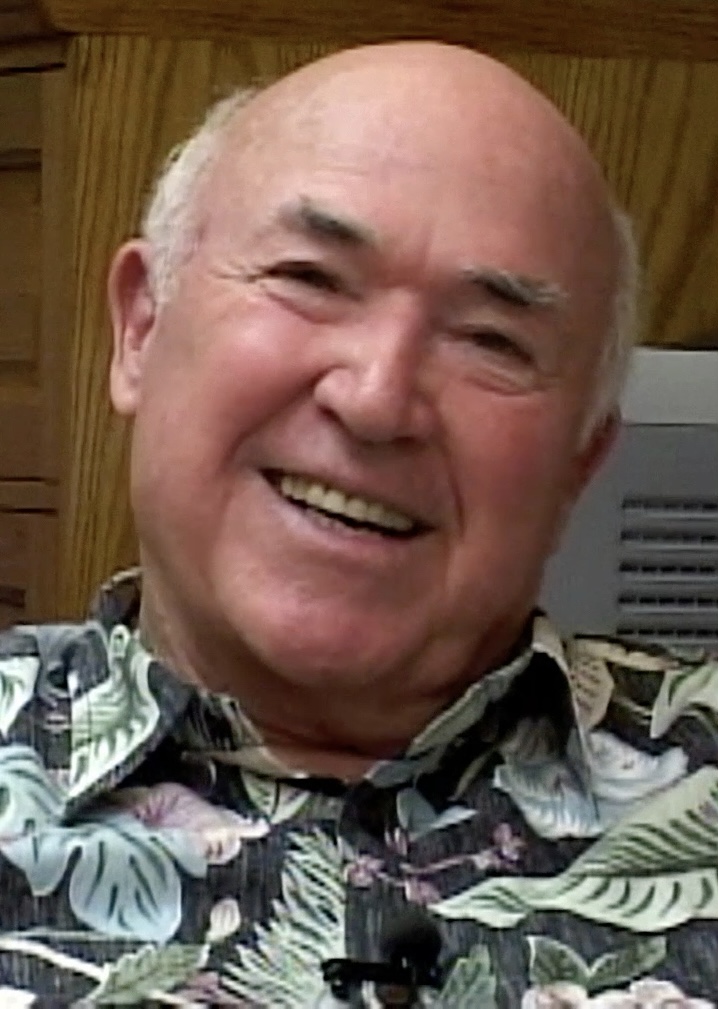

The movement in its own words
The fairest place to begin is with the account Calvary Chapel gives of itself. The Calvary Global Network, one of the two main associations of Calvary Chapel churches today (lesson 07 explains the split), publishes a dated history of the Costa Mesa church on calvarychapel.com. Its section on the Jesus People years opens this way: "What a shock it was to the conservative, middle-class congregation when the hippies arrived! Parents were deeply concerned about the Hippie influence on their children and the criticism of their neighbors and other churches in the area. But the Hippies passion for Jesus and their love for their neighbors broke through."2 (The missing apostrophe in "Hippies passion" is in the original.)
The same page sums up the whole story in one sentence: "The church kept growing out of its buildings till the property on Sunflower and Fairview in Santa Ana was purchased and a circus tent erected that expanded to fit the 2000+ people in attendance."2 Its entry for the summer of 1967 reads: "During the 'Summer of Love', Chuck and Kay Smith reach out to the Hippies. The ministry rapidly grows, and Chuck finds himself carrying out mass baptisms - sometimes 500 at a time - in the Pacific Ocean at Pirates Cove in Corona del Mar."2 (The original uses dashes, shown here as hyphens to match this site's style.)
Calvary Chapel Costa Mesa's own website repeats the same timeline nearly word for word, including the December 5, 1965, first sermon with "50 people in attendance" and the 1971 tent in which attendance grew from about 800 to more than 2,000.4 The founder's page on calvarychapel.com puts the start in one line: "Only 25 people had attended" when Smith arrived, and "Pastor Chuck went home to be with the Lord on October 3, 2013."5
Calvary Chapel Magazine, a publication that tells the movement's story for its own members, sums up the growth in 1971: "The Calvary Chapel family had grown from 800 to 2,000 people by the end of 1971," and "Thousands of converts were baptized at Pirate's Cove over the years."6 In a 2023 piece the church's best known living evangelist, Greg Laurie, who was converted at Calvary in those years, describes himself as having had a "front row seat" to what, he writes, "historians have called 'The Last Great Awakening.'"7
Two things stand out in the church's own account. First, it describes the Jesus People as something that happened to Calvary Chapel as much as something Calvary Chapel did: the hippies "arrived," and the congregation had to decide whether to welcome them. Second, the account is dated with care for the early years and becomes thin after the middle 1970s. The page itself says, "There is still more of the story to be told."2 The rest of this lesson tests the account against outside records and scholars, starting well before Costa Mesa.
The setting: Haight-Ashbury and the counterculture
The Summer of Love, 1967
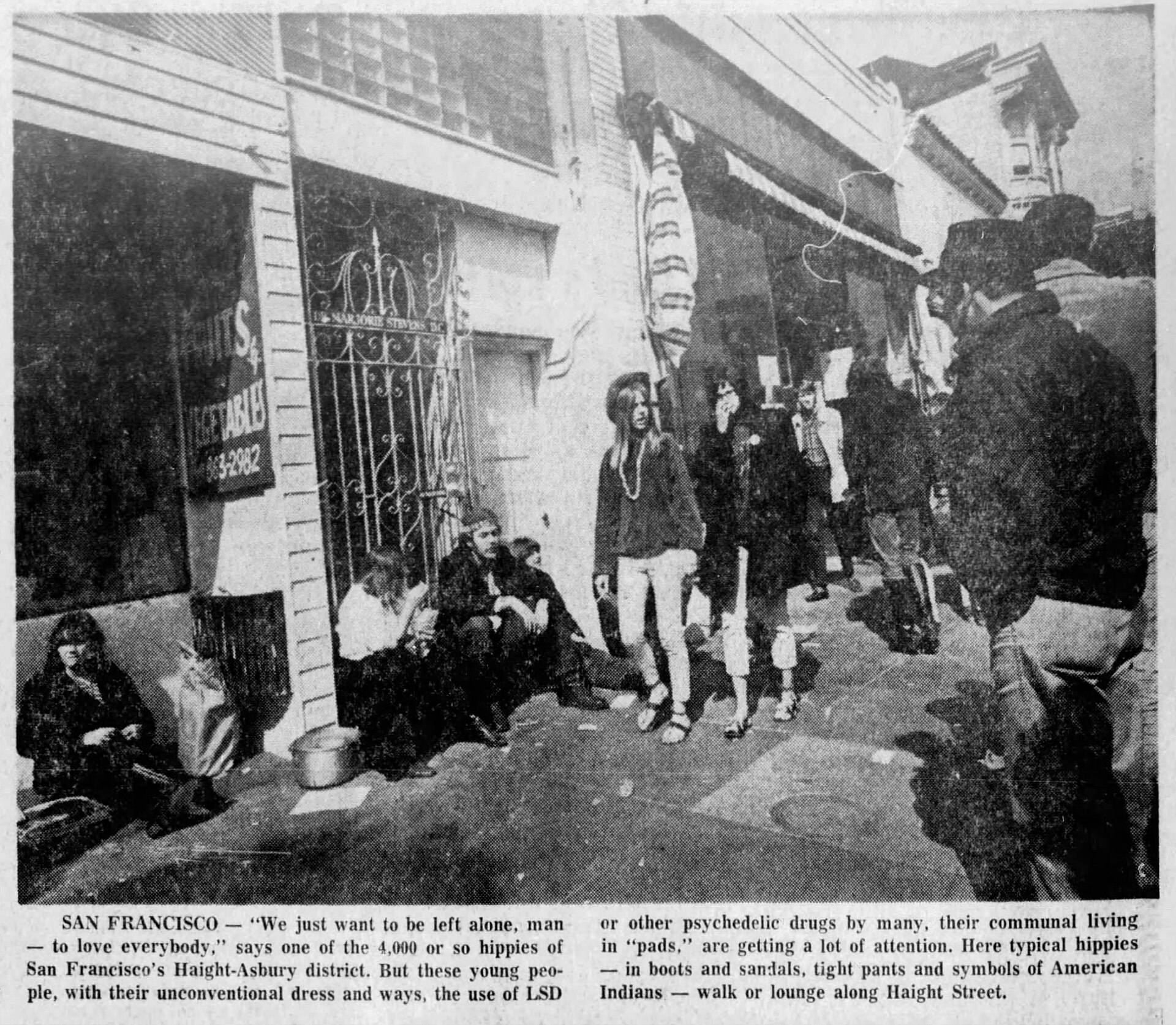
The Haight-Ashbury district of San Francisco, named for the intersection of Haight and Ashbury streets near Golden Gate Park, had become a center of the counterculture by 1966. In the spring of 1967 national newspapers and television made it famous. Eskridge, writing for The Conversation on the fiftieth anniversary in 2017, says: "Drawn by nationwide publicity, somewhere between 75,000 and 100,000 youth came to Haight-Ashbury during the spring and early summer of 1967. Many became homeless, hungry and sick."8
Eskridge describes the counterculture as having "a decidedly spiritual dimension," drawing on "meditation, the occult, Native American spirituality and Eastern forms of religion such as Zen Buddhism and the International Society for Krishna Consciousness."8 He cites the writer Charles Perry's book The Haight-Ashbury: A History on the problems the crowds brought, "including overcrowding, crime, sexually transmitted diseases and bad drug trips."8 Some of the young people who had come looking for freedom were, by the end of 1967, looking for a way out.

Why evangelicals and hippies were unlikely partners
In 1967 the theologically conservative churches of the United States (the fundamentalist, Holiness, Pentecostal and evangelical bodies described in lessons 01 through 03) generally taught short hair for men, modest dress, abstinence from alcohol and drugs, and suspicion of rock music. Eskridge notes that "many conservative churches had traditionally frowned on 'worldly entertainments.'"8 The hippies, for their part, had rejected what they saw as the conformity and materialism of their parents' America, including its churches. A young man with shoulder length hair and no shoes was not welcome in many sanctuaries. The surprise of the Jesus People movement was that some hippies became evangelical Christians in the full theological sense (a personal conversion, a high view of the Bible, faith in Christ's death and resurrection, urgency about evangelism) while keeping the clothes and music of the street, and that some churches let them.
The first Jesus People ministries
Ted Wise and the Living Room, San Francisco, 1967
Eskridge traces the movement's beginning to a small group around Ted Wise, "a drug-using sailmaker, who in late 1965 was 'saved' after one of his numerous LSD trips."8 With his wife, Elizabeth, and several other couples from the bohemian scene, Wise began attending a Baptist church. Eskridge's profile for the World Religions and Spirituality Project (WRSP), an academic reference site hosted at Virginia Commonwealth University, places that church in Mill Valley, in Marin County north of San Francisco, in 1966 and 1967.1 The new converts kept their long hair and their style, and the congregation was uneasy. Eskridge writes that Wise once "made a presentation on the music of Bob Dylan during a Wednesday night prayer meeting," and that the two groups "managed to ride out their differences."8
When the crowds came to the Haight in 1967, Wise urged a local pastor, John MacDonald, to act. MacDonald's own 1970 book, House of Acts, tells the story. Eskridge summarizes it: MacDonald toured San Francisco with Wise and found that Wise "by dress and appearance" belonged on the street and had "remarkable rapport" with the young people there, which MacDonald "clearly did not."8 With help from several Bay Area pastors, MacDonald helped Wise and his friends open "a coffeehouse called 'The Living Room,' a block north of the intersection of Haight and Ashbury."8 Eskridge's WRSP timeline says a nonprofit, Evangelical Concerns, Inc., was set up in 1967 to fund it, and that the Living Room closed in early 1969.1 Connie Bremer, who later married Lonnie Frisbee and who was part of the scene, placed the storefront "in the Haight on Page and the Panhandle, one block down from Haight Street" in a 2005 interview.9
Eskridge writes that over the next year and a half, "thousands of runaway youth and hippie characters (including a man named Charles Manson later convicted for mass murders) came into the mission to talk with what MacDonald referred to as the 'Street Christians.'"8 Many came only for soup, coffee and donated doughnuts. National evangelical readers first heard of Wise in January 1968, when Christian Life magazine profiled him, according to John G. Turner's review of Eskridge's book in Christianity Today.10
The House of Acts, Novato
The Wises and three other couples also lived together in a farmhouse in Novato, in Marin County, which they called the House of Acts, after the shared life of the first Christians in the book of Acts. Eskridge's WRSP timeline treats it as the first recognized appearance of hippie Christians.1 Connie Bremer, who later married Lonnie Frisbee, lived at the Novato house in 1967 and 1968, and Frisbee, then a teenager from Orange County who had led her to faith, "came back to marry" her, by her account.9 Turner's review of Eskridge says Frisbee "had just returned from a visit to Haight-Ashbury and the House of Acts" when Chuck Smith welcomed him at Calvary Chapel.10 The Christian commune, with shared money, shared meals and daily Bible study, became the standard form of Jesus People life. Eskridge cites the historian Timothy Miller's estimate that such communes "may have numbered 'several thousand at one time or another.'"1
Kent Philpott, David Hoyt and the Soul Inn
Others began preaching on the San Francisco streets at the same time. Eskridge names Kent Philpott, a Baptist seminary student, and "his hippie friend David Hoyt." By late 1968, he writes, "they had opened a shelter called 'The Soul Inn' in the basement of a small Baptist church in the city's adjacent Richmond district." With the same pastors who had backed the Living Room, they "put together a string of communes in San Rafael, Walnut Creek and other Bay Area communities."8
The Christian World Liberation Front, Berkeley, 1969
Across the bay, Berkeley in 1969 was the center of the campus protest movement. Eskridge's timeline records that in 1969 former staff members of Campus Crusade for Christ founded the Christian World Liberation Front (CWLF) there to reach radical students.1 The name itself borrowed the vocabulary of the campus left's liberation fronts while the message was the evangelical gospel. Time's religion reporter Richard Ostling, according to the magazine's 1971 letter from the publisher, had taken "a close look at Berkeley's colony of 'Jesus Freaks'" while on assignment in San Francisco.11 The CWLF is a reminder that the Jesus People were not only hippies from the drug culture. Some were student activists who brought the style of the protest rally into evangelism.
Arthur Blessitt on the Sunset Strip, 1968
In Los Angeles the best known street preacher was Arthur Blessitt, a Southern Baptist minister. Eskridge's timeline records that in 1968 Blessitt opened His Place on Sunset Boulevard, a storefront mission and coffeehouse that drew runaways and drug users.1 The Sunset Strip, the stretch of Sunset Boulevard through West Hollywood, was then lined with rock clubs. The same timeline notes that Don Williams opened the Salt Company coffeehouse in Hollywood in 1968.1 Blessitt became famous for carrying a large wooden cross on foot, and by 1971 he was a national figure. Time's letter from the publisher for the June 21, 1971, issue says that when the reporter-researcher Margaret Boeth "interviewed Evangelist Arthur Blessitt in New York," she learned they came from the same part of Mississippi.11
The movement spreads, 1969 to 1970
Eskridge writes that "by early 1969 this new-style interaction between hippie Christians and evangelical religion (particularly its Pentecostal branch) was happening elsewhere in the country in cities like Seattle, Detroit and Ft. Lauderdale."8 His WRSP timeline adds Atlanta, Kansas City, Milwaukee and suburban Chicago in 1970, and records that by mid 1970 Southern California had "well over a hundred Jesus People groups, coffeehouses, and communal homes."1 The underground "Jesus papers," such as the Hollywood Free Paper in Los Angeles and Cornerstone in Chicago, carried the message onto the street.8 But "undoubtedly the hotbed of the movement," Eskridge writes, "was farther to the south near Los Angeles," where the Jesus People drew "not only hardcore hippies from the drug culture and the streets but swarms of teenagers from youth groups belonging to the region's churches."8 The largest of the Southern California churches was in Costa Mesa.
Chuck Smith before Costa Mesa
Ventura, a Foursquare home and LIFE Bible College
Charles Ward Smith, always called Chuck, was born in Ventura, California, on June 25, 1927, according to his Los Angeles Times obituary by Christopher Goffard and the WRSP timeline of Calvary Chapel.123 He grew up in the International Church of the Foursquare Gospel, the Pentecostal denomination founded by the Los Angeles evangelist Aimee Semple McPherson in the 1920s (its history is in lesson 02). Christianity Today's obituary says he was raised in Southern California by a Bible-quoting mother and a salesman father.13
A 2014 Calvary Chapel Magazine profile by Debra Smith, "Broken and Surrendered," says that in 1945 he moved to Los Angeles to study at L.I.F.E. Bible College, the Foursquare Church's training school in Los Angeles.14 The WRSP timeline dates his graduation to 1946.3 Goffard's obituary says only that he was "A graduate of LIFE Bible College."12 The same Calvary profile says it was at L.I.F.E. that he began to notice differences between his own reading of the Bible and some Foursquare teaching, though it gives no detail.14
Kay Smith
Smith met Kay Johnson at a Sunday night service. Debra Smith's profile says they married six weeks later.14 In Calvary Chapel circles the two became "Papa Chuck" and "Mama Kay," and the church's histories treat the Jesus People outreach as a joint work: the calvarychapel.com timeline says that in the summer of 1967 "Chuck and Kay Smith reach out to the Hippies."2 The same timeline records Kay Smith's own ministry. In late November 1965, within weeks of her husband's call to Costa Mesa, she began "a weekly women's prayer meeting at Kay Madison's house. It soon moves to the church and continues to this day." In 1973 "Kay Smith and friends begin the women's ministry at CCCM - Joyful Life."2 When Chuck Smith died in 2013, Goffard reported that he was survived by Kay and four children, Chuck Jr., Jeff, Janette and Cheryl.12 Chuck Smith Jr. later became a pastor himself and, as described below, one of the people who spoke on the record about Lonnie Frisbee.
Seventeen years as a Foursquare pastor
The WRSP timeline gives the span of Smith's denominational career as "1947-1964 Smith served in a ministerial role in the Foursquare Gospel Church," roughly seventeen years.3 Debra Smith's profile fills in some of it. In 1948 Kay's sister arranged for him to pastor "a new Foursquare church plant" in Arizona that paid $15 a week. He pastored two Arizona churches for nearly four years in all. The family then moved to Corona, California, with their two children. He lost a grocery store job and, for a time, left the pastorate feeling defeated. Dr. Van Cleave, a Bible college professor whom Smith "greatly respected," encouraged him to apply for a church in Huntington Beach, which led to "years of fulfilling ministry."14 Goffard's obituary adds that he "taught at pulpits around Southern California, at times cleaning carpets to pay the bills."12
The profiles available online do not give the year Smith formally left the Foursquare Church, and the calvarychapel.com timeline does not say. Two outside sources give a general reason. Donald E. Miller writes that Smith started the Costa Mesa work "in reaction to the organizational formalism of his own Foursquare denomination,"15 and Christianity Today's obituary quotes Smith's book Chuck Smith: A Memoir of Grace on his Foursquare years: "I just never succeeded."13 Calvary Chapel's later practice (verse by verse teaching, a pastor-led church, an openness to the gifts of the Spirit without the Pentecostal requirement of speaking in tongues as evidence of the baptism in the Spirit) is usually read by scholars as a deliberate softening of his Foursquare training, a point taken up in lesson 06. What the record here supports is narrower: he was a trained, ordained Foursquare pastor for most of two decades before he came to an independent church in Costa Mesa at the age of 38.16
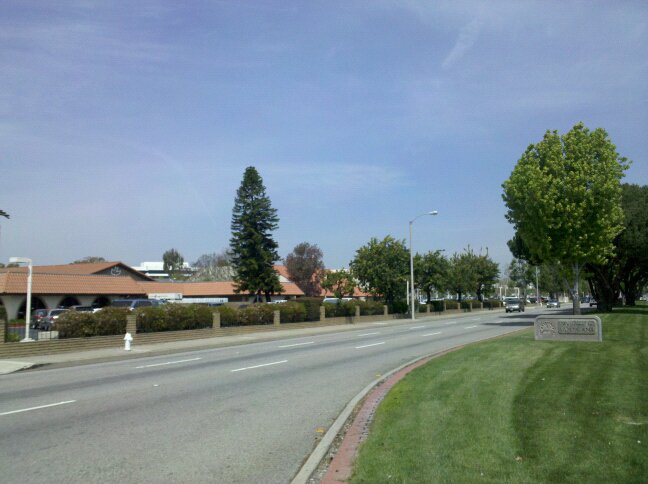
Calvary Chapel Costa Mesa, 1961 to 1967
A church older than its famous pastor
Calvary Chapel did not begin with Chuck Smith. The church's own history says it "all started when several elderly women asked beloved pastor Floyd Nelson to lead their informal nondenominational congregation." In the spring of 1961 they met "in a trailer court recreation room on Newport Boulevard in Costa Mesa because they wanted to bring church to their friend, Maude who lived there." After three weeks, "the 25-member congregation moves to the Girls Club on Plummer Street." The articles of incorporation were filed on December 21, 1961, and on April 22, 1962, the church bought "the old Church of Christ building on Church Street in Costa Mesa."2
The call of 1965: the verified dates
The brief for this module asked for the month and year of Smith's arrival to be checked, since it is usually given only as "December 1965." Calvary Chapel's own dated timeline gives four steps, and Calvary Chapel Costa Mesa's website repeats them:24
- October 1965: "Reverend Nelson invites Pastor Chuck Smith to speak at CCCM."
- November 18, 1965: "The church votes for Pastor Chuck Smith to become the assistant/teaching pastor of CCCM."
- December 5, 1965: "Pastor Chuck Smith gives his first official Sunday sermon, with 50 people in attendance." The congregation began reading Genesis at ten chapters a week, with topical sermons on Sunday morning and a verse by verse study of the same chapters on Sunday evening.
- September 14, 1966: "Pastor Chuck Smith becomes the senior pastor of CCCM."
Sharon Fischer, writing in Calvary Chapel Magazine, gives the same first Sunday: "He held his first official service as our pastor on Sunday, December 5, 1965. He was 38."16 (December 5, 1965, was a Sunday.) So the common date, December 1965, is correct for his first sermon as the church's pastor, with two qualifications: he was voted in on November 18, and he was the assistant or teaching pastor, under Nelson's leave of absence, until September 1966.
The size of the church at his arrival is given two ways in the church's own sources. The founder's page says "Only 25 people had attended," and the history page speaks of the "25-member congregation"; the same history counts "50 people in attendance" at his first official Sunday sermon.52 The two numbers are not in conflict (members and Sunday attenders are different counts), but writers who say Smith "started with 25 people" are using the membership figure.
A board meeting on December 9, 1965, produced a line the church still quotes. Rather than dwell on money troubles, the history says, Smith told the board: "Why don't we concern ourselves with the spirituality of the church. You know, when God guides, He provides."2
Growth before the hippies
The church grew before the Jesus People arrived. The timeline records the first wedding on April 29, 1967; a Sunday night radio broadcast of Smith's verse by verse study on station KGER beginning in August 1967; and two Sunday morning services, at 9:30 and 11:00, from October 8, 1967.2 In late 1967 Smith sold the Church Street building, and at a home Bible study "A prophecy is given ... regarding CCCM moving to a new location: 'It will be on a bluff overlooking the bay.'"2 In March 1968 the church began a Sunday afternoon service in rented space at Newport Harbor Lutheran Church on Cliff Drive, "overlooking Newport Bay," for $150 a week.2 The history places this entry directly after the prophecy and repeats its image (a church overlooking the bay), so it reads as a fulfillment, though the page does not say so in words. The fact that a Pentecostal-style prophecy was given and recorded at all, in a church later known for keeping such gifts out of its main Sunday services, is a detail worth keeping in mind when reading lesson 06.
Lonnie Frisbee and the House of Miracles, 1968
Who Lonnie Frisbee was
Lonnie Frisbee was an Orange County teenager who had become a Christian in San Francisco. The sources disagree on small facts about his early life, and the disagreements are worth stating plainly. The Los Angeles Times report on his funeral, March 18, 1993, said he "was born in Santa Ana," was 43 when he died, and "began his preaching career in San Francisco's Haight-Ashbury district when he was only 16, according to family members." His mother, Jeannette Graham, told the paper that he moved to the Bay Area after leaving Corona del Mar High School in Newport Beach.17 The WRSP profile of Calvary Chapel says he was born in Costa Mesa "in 1950," that his parents divorced when he was young, that he left home at fifteen, and that he joined the Living Room in 1967.3 The reference date usually given, June 6, 1949, fits the Times's age of 43 at death in March 1993; 1950 does not. The 2005 Variety review of the documentary about him says he died "at age 44."18
The same Variety review, summarizing the documentary, says that in the 1960s he experimented with drugs and appeared as a dancer on the television show Shebang until 1967, and that "Then 17, he had a vision of God in the desert."18 Connie Bremer, whom he married, said in a 2005 interview that she had known of him before they ever spoke but "kept my distance" because he was "construed as being not hip," and that later, in the Haight, he recognized her, witnessed to her and hitchhiked with her group. She said she was 19 and he was 18 when they married, and that they honeymooned "in a tent in his parents' backyard."9
How Smith met Frisbee
The best known version of the meeting comes from Calvary's side. The WRSP Calvary Chapel profile says that John Higgins, a friend of Smith's daughter, was asked by Smith to find a hippie and bring him to the Smith home, and that the hippie he brought was Frisbee.3 Goffard's 2013 obituary tells it more briefly: the church's membership "skyrocketed after he met a hitchhiking hippie, Lonnie Frisbee, who brought dozens of his hippie friends to Bible studies."12 Calvary Chapel Magazine's 2026 obituary of Higgins, by the magazine's founder Tom Price, is more specific: "it was John Higgins who picked up Lonnie Frisbee hitchhiking and brought him to meet Pastor Chuck and Kay for the very first time."19 The WRSP profile likewise says Frisbee, then eighteen, was the hippie "who Higgins picked up on the street."3 Some retellings, including Greg Laurie's memoir Lost Boy (2008), describe the driver as a boyfriend of Smith's daughter; this lesson could not open that book, and every published account opened here names Higgins.
Calvary Chapel's own timeline gives the meeting a season and a role: "Spring 1968 ... Pastor Chuck invites Lonnie Frisbee to be a part of the House of Miracles commune. Lonnie becomes a popular speaker at CCCM, with hundreds of young people crowding his weekly studies at the church."2 The WRSP timeline says that in 1968 "Lonnie and Connie Frisbee were invited by Smith to join the staff at Calvary Chapel, and Lonnie began evangelizing individuals in the counterculture."3 Eskridge, in his own WRSP profile, writes that "Smith was impressed with Frisbee's zeal and evangelistic gifts."1 The Times funeral report says, on the family's account, that "Frisbee taught Bible classes at Calvary Chapel from 1968-70."17
The House of Miracles and John and Jackie Higgins
The House of Miracles was Calvary Chapel's first communal home for new converts from the street. The WRSP Calvary profile, citing Donald E. Miller's Reinventing American Protestantism (1997), describes it as established in May 1968 by Smith, Higgins and Frisbee as a communal "crash pad" for hippies who had "accepted the Lord." It says Smith put Lonnie and Connie Frisbee in charge, that it first housed 35 new converts, with rent subsidized while they left the drug culture, and that it grew into a network of nearly 20 "community houses" supported by Calvary Chapel.3 David Tabb Stewart's WRSP profile of the Shiloh communes names Jacquelyn (Jackie) Higgins, John Higgins's wife, as a co-founder of the House of Miracles.20 Calvary Chapel Magazine's 2023 history lists the House of Miracles among several church houses, including one called the Green House, and quotes the later pastor Steve Carr as dating the first house, at the Blue Top Motel, to May 1968, with Lonnie and Connie Frisbee moving in to oversee it.6 Stewart lists the original leadership as four married couples (John and Jacquelyn Higgins, Lonnie and Connie Frisbee, Randy and Sue Morich, and Stan and Gayle Joy); his narrative gives the founding date as May 17, 1969, while his own timeline and the other sources say 1968.20
The brief for this lesson mentions "John and Ted Higgins." The sources opened for this lesson name John J. Higgins Jr. and his wife Jackie as the House of Miracles leaders and do not name a Ted Higgins; the second name may be a confusion with Ted Wise of the Living Room. It is listed as unverified.
The House of Miracles had a long afterlife outside Calvary Chapel. Stewart's Shiloh timeline records that in 1969 the houses "submitted" to John J. Higgins Jr., Randy Morich and Chuck Smith as "elders," and that in 1970 the houses moved to Oregon at the invitation of pastors of the Open Bible Standard Churches and took the name "Shiloh." Shiloh bought 70 acres near Dexter, Oregon, for a central commune and Bible school, later farmed five Oregon properties and sent teams across the United States and Canada from 1971 to 1978. In 1978 the board suspended and fired Higgins, and members began leaving the 37 communes still open; Higgins moved to Arizona to start Calvary Chapels. Shiloh "disincorporated" in 1989.20 Eskridge writes that Shiloh "may have created as many as 175" communal houses over its history, and his timeline says it closed its doors in 1980.1 (The two WRSP profiles use different end dates: 1980 for the end of active ministry and 1989 for legal dissolution.) Tom Price, founder of Calvary Chapel Magazine, wrote at Higgins's death that he led "one of the early church homes" and later pastored what became Calvary Chapel Tri-City in the Tempe and Phoenix area for decades.19
The revival at Calvary Chapel, 1968 to 1971
Frisbee the evangelist and Smith the teacher
Nearly every account of these years describes a pairing. Smith was a middle-aged pastor who taught the Bible chapter by chapter in a calm, plain voice. Frisbee was a long-haired young man who preached with intensity, prayed for people to be filled with the Holy Spirit, and, in the words of Turner's review of Eskridge, "according to countless men and women looked like their image of Jesus."10 Greg Laurie, who was a teenager in those meetings, calls them "as opposite as oil and water" and speaks of "the unlikely pairing of Chuck Smith and Lonnie Frisbee."7 Eskridge's WRSP profile describes "Frisbee as the charismatic 'Hippie Preacher.'"1 Goffard's 2013 obituary says simply that "Frisbee became Smith's assistant and a bridge to the counterculture."12
The church's own timeline records that Frisbee came on staff in 1970: "Lonnie is given a small salary to teach the Wednesday and Friday night services. He serves at CCCM until 1971. (In 1993, Lonnie Frisbee passes.)"2 The WRSP Calvary profile adds that he was ordained in 1971.3 Calvary Chapel Magazine tells a story typical of how the church remembers him: after a car accident, "Lonnie bent over the man" who lay unconscious, later visited the man's home, and the man came to faith.6
How many came: attendance claims and their sources
Attendance numbers from these years were not counted by any outside body. Every figure below is a claim by a named source, and they do not all agree.
- Calvary Chapel's history: 25 members when Smith came in 1965 and 50 at his first official sermon; two Sunday morning services from October 1967; a 300-seat chapel completed in June 1969 with two services, expanded by 1971 to three services with "500 chairs ... set up outside"; and, in the 1971 tent, growth "from 800 to over 2,000."2
- Larry Eskridge (WRSP, 2016): "By mid-1970, the church was pulling in over 1,500 people every Sunday."1
- The WRSP Calvary profile: membership grew from 25 to 2,000 within two years of Smith's arrival, and during Frisbee's time on staff the church reportedly baptized 8,000 people and saw 20,000 conversions. The profile presents those last two figures as Smith's own estimate, so they are the church's reported totals, not an outside count.3
- Variety's 2005 review, summarizing the documentary: the congregation "grew from 200 to 2,000 within six months" after Frisbee arrived.18
- Sharon Fischer, one of the church's original members, writing in Calvary Chapel Magazine (2020): by 1971 "a thousand or more" were coming to hear Smith teach; she remembered the Greenville chapel as seating 350 and the later main sanctuary as built "to seat close to 2,000."16
- Greg Laurie (Harvest.org, 2023): "Calvary erected a 1,600 seat tent and held three services on Sunday mornings."7
- Donald E. Miller (encyclopedia article): the church "met in a circus tent before finally building in 1974 a permanent sanctuary that seats 2,300 people."15
- Dave Rolph, a Calvary Chapel pastor quoted in Goffard's 2013 obituary: Smith "would reach as many as 8,000 worshipers during three Sunday sessions" in his last years.12
The "25 to 2,000 within two years" claim does not match Calvary Chapel's own dated timeline, which puts the 2,000 mark in the 1971 tent, five to six years after Smith's arrival. Eskridge's figure of more than 1,500 a Sunday by mid 1970 sits between the church's 800 and 2,000. A careful writer can say the church grew from a few dozen people in 1965 to more than 2,000 by the end of 1971, citing Calvary Chapel's history, and can cite Eskridge for more than 1,500 by mid 1970.
From the Greenville School to the tent
The church moved three times in five years. On May 15, 1968, the history says, it bought "the Greenville School at the corner of Greenville and Sunflower in Santa Ana for $55,050. The congregation, plus the Hippies, recycle old materials to build the new sanctuary." The 300-seat Sunflower/Greenville Chapel was finished in June 1969.2 (Sharon Fischer's memoir article gives the winning bid for the school as $53,050, "just $50 over the minimum bid amount"; the two church sources differ by $2,000.)16 On September 20, 1970, the church bought the land at Sunflower Avenue and Fairview Road, where it stands today; the history says the whole loan was paid off when the corner lot was sold to the Shell Oil Company.2 In 1971 "CCCM moves into a circus tent Pastor Chuck found." Calvary Chapel Magazine describes it as "a large green circus tent" used while a permanent building was planned.26
The permanent sanctuary: 1973 or 1974?
This module's plan dated the permanent sanctuary to 1973. The sources opened for this lesson do not confirm that year. Donald E. Miller, the University of Southern California sociologist who studied Calvary Chapel for Reinventing American Protestantism, writes that the church built "in 1974 a permanent sanctuary that seats 2,300 people," and the WRSP profile gives the same 1974 date and size.153 Calvary Chapel's own online timeline has no entry for the sanctuary at all; its 1973 entries are for the opening of Maranatha Christian Academy on September 11, 1973, with 400 students, and for Kay Smith's Joyful Life women's ministry.2 Construction may have run across both years, but until a dedication date is found in a church record or a contemporary newspaper, the safest statement is "about 1974, according to Miller." The building is the low sanctuary on Sunflower Avenue that Goffard described in 2013 as standing "at the border of Costa Mesa and Santa Ana."12

Baptisms at Pirate's Cove, Corona del Mar
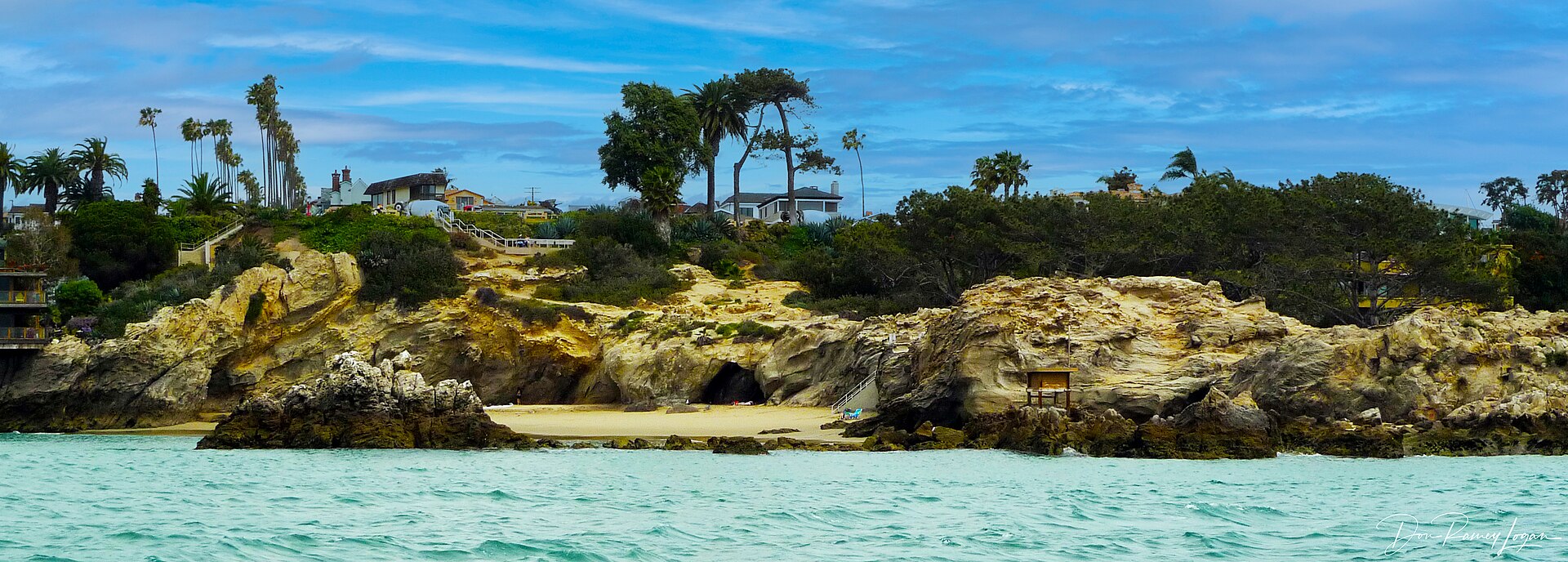
The best known images of the Jesus People are of mass baptisms in the Pacific. Calvary Chapel held them at a small beach below the cliffs of Corona del Mar, a neighborhood of Newport Beach, called Pirate's Cove (the church's history spells it "Pirates Cove"). Goffard's obituary says Smith "became Papa Chuck to the thousands he baptized below the ocean cliffs of Corona del Mar" and "presided over mass baptisms of thousands of new Christians at Pirate's Cove at Corona del Mar."12 Eskridge writes that "photos of ocean baptisms involving hundreds of enthusiastic teenagers being plunged beneath the waves as a sign of their dedication to 'follow the Lord' became a familiar sight."8
When did the baptisms begin? Calvary Chapel's timeline places the mass baptisms, "sometimes 500 at a time," under its entry for the summer of 1967.2 The same timeline says the hippies "arrive" in early 1968 and that Frisbee came in the spring of 1968, so the 1967 entry reads as a summary of what the outreach became over several years, not a record that 500 people were baptized in one day in 1967. Time's own 1971 cover story, as Belinda Luscombe quotes it in a 2023 Time article, described baptisms "at a cul-de-sac beach at Corona del Mar, California": "Under a setting sun, several hundred converts waded into the cold Pacific, patiently waiting their turn for the rite." Greg Laurie was baptized there in 1970, according to Luscombe.21 Calvary Chapel Magazine says only that "Thousands of converts were baptized at Pirate's Cove over the years."6 The safe statement is that the large Pirate's Cove baptisms belong to roughly 1968 through the early 1970s, with Calvary's own timeline placing the start of its hippie outreach in the summer of 1967. No source opened for this lesson gives the date of the first baptism there.

Music: Love Song and Maranatha! Music
Calvary Chapel let the converts bring their guitars. Goffard's obituary says Smith "allowed guitars to accompany worship songs," and quotes Miller: "It was really a new style of worship. It incorporated a generation of young people who otherwise would not have darkened the door of a church. Part of his genius was he was theologically conservative but simultaneously culturally avant garde."12 The bands that formed at the church, Love Song the best known among them, played rock and folk with Christian words. Calvary Chapel Magazine describes a 1971 event at which "Love Song drummer John Mehler quietly walked over to the drum kit" before the music began.6
In 1971 the church turned the music into a ministry with its own label, Maranatha! Music. The WRSP profile says it was founded in 1971 as a church outreach drawing on Jesus People musicians and that its first album was The Everlastin' Living Jesus Music Concert (1971).3 Eskridge writes that the movement's "rock-fueled enthusiasm" for upbeat music "created a 'Contemporary Christian Music' industry and triggered controversial change in many churches' worship styles and music," so that "hymns, choirs and organs were increasingly replaced in many churches with 'praise choruses,' 'worship bands' and electric guitars."8 Maranatha!'s later history belongs to lesson 06.
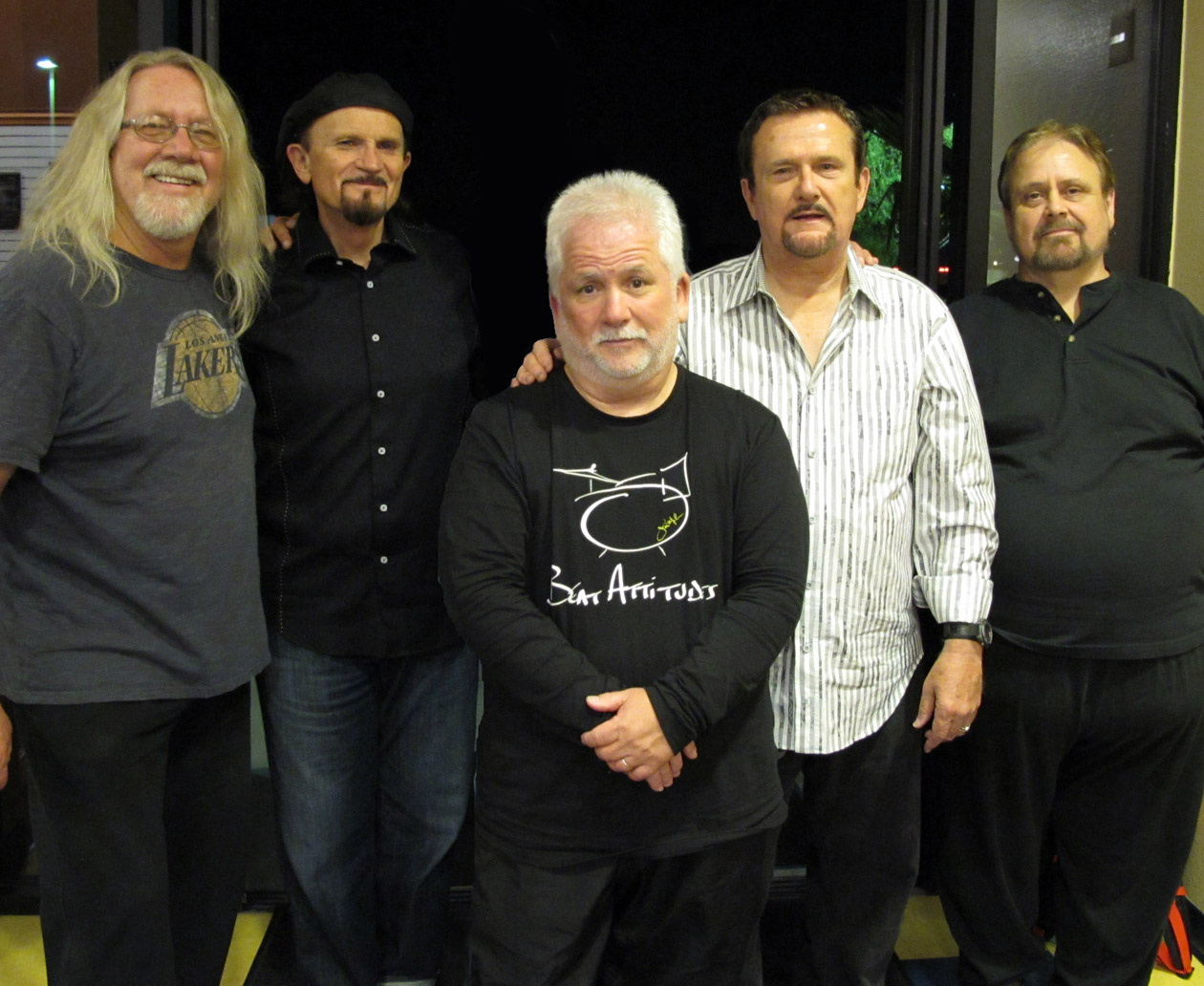

Lonnie Frisbee after 1971: departures, the Vineyard and his death
This section tells the parts of Frisbee's life that the sources treat as public: his ministry, his departures from two church movements, and the reasons those movements gave or were reported to have given. It reports his personal life only as named sources reported it, and it says which source said what.
The first departure, 1971
Calvary Chapel's own timeline says Frisbee served on staff "until 1971."2 The WRSP Calvary timeline gives the reason as doctrine: "1971 Frisbee and Smith parted ways due to theological differences, particularly over the practice of prophecy and glossolalia" (speaking in tongues).3 Its narrative says Frisbee emphasized conversions and speaking in tongues, while Smith held up love as the greatest expression of the Holy Spirit.3 Variety's summary of the 2005 documentary gives a more personal reason: Smith kept Frisbee so busy that "Frisbee's marriage suffered," and "Trying to salvage their relationship, he and his wife left Calvary, an action Smith viewed as a betrayal."18
Where did the Frisbees go? Several popular accounts say they joined a teaching ministry in Fort Lauderdale, Florida, connected with Bob Mumford and Derek Prince, which became known as the Shepherding (or Discipleship) movement. Connie Frisbee's 2005 interview confirms the move to Florida and the name: "Lonnie and I left Calvary Chapel and went to Florida with Bob Mumford." She added that she disliked how the documentary portrayed Mumford, and that when Mumford told Lonnie to step out of the ministry to keep his family in order, "he strongly suggested it" rather than ordering it.9 She also says she and Lonnie separated in 1973, that she "actually filed for divorce but never finished it," that he finished it some years later, and that "I think it became official about 1975."9 The city in Florida and the role of Derek Prince were not confirmed from the sources opened for this lesson.
The Vineyard years, 1978 or 1980 to the early 1980s
Frisbee returned to Southern California and, in the later 1970s, to the circle of John Wimber, a Calvary Chapel pastor in Yorba Linda whose church became the first large Vineyard congregation (its full story is in lesson 08). The sources give two different starting points. The WRSP Calvary timeline says "1978 Wimber invited Frisbee to Vineyard Movement Calvary Chapel," and its narrative says Frisbee "left Calvary Chapel in 1978 and joined John Wimber."3 The John Wimber Collection timeline at Regent University's library, by contrast, records the event the Vineyard remembers: on Mother's Day 1980, "Lonnie Frissbie says, 'Come Holy Spirit' at CCYL" (Calvary Chapel of Yorba Linda; the timeline misspells the name).22 Both can be true: Frisbee may have been in contact with Wimber's church before he spoke there on Mother's Day 1980. The Regent timeline also shows that in 1980 Wimber's church still carried the Calvary Chapel name; it did not join the Vineyard until 1982.22
Christianity Today Movies, introducing its 2005 interview with the filmmaker David Di Sabatino, said Frisbee "played a key role in the origins of the Vineyard movement."23 Variety's review says his "brief tenure there played perhaps the deciding role in a still-extant ministry's rapid initial growth spurt."18 The 1993 Times funeral report says, on the family's account, that he "spent much of his time preaching in other nations, including South Africa and Brazil."17
The second departure
The Vineyard's break with Frisbee came over his sexual conduct, according to the named sources available. Variety's review, summarizing the documentary, says: "Frisbee had secretly had occasional gay liaisons, on and off, for many years," and that Wimber removed him after discovering a longer-term affair.18 The WRSP Calvary profile says Wimber ended the partnership after learning of Frisbee's homosexual activity.3 The documentary's director told Christianity Today Movies in 2005 that Frisbee "defined himself as gay, way back," while the magazine's own introduction said he "struggled with homosexuality."23
Connie Frisbee gave a different account of how he understood himself. In her 2005 interview she said Lonnie "never looked at himself as being a homosexual" and "thought he was saved out of that." She said that in 1973 he told her he had been "hanging out at some gay bars," and that at the time she did not believe he had gone back, adding, "that's my own gut feeling."9 Greg Laurie, speaking in 2023 about Frisbee's last years, was quoted by ChurchLeaders as saying, "He knew what he did was wrong."24 These are three named views of one man's inner life. The record supports the statement that Frisbee had sexual relationships with men during his years of ministry, that the Vineyard removed him from ministry over them, and that the people closest to him described his own understanding of it differently.
The exact year of the Vineyard break is not settled by the sources opened for this lesson. It is usually placed in the early or middle 1980s and is left as unverified here.
His death in 1993 and the cause
Frisbee died at his home in Newport Beach after a long illness. The Los Angeles Times report of Thursday, March 18, 1993, says he "died Friday," which was March 12, 1993, and that his funeral was held on Wednesday, March 17, at the Crystal Cathedral in Garden Grove before several hundred mourners.17 The sources disagree on the cause:
- The 1993 Times report: "Relatives said he died of a brain tumor."17
- Christianity Today Movies (2005): "he died of AIDS in 1993."23
- Variety (2005): "Frisbee died of AIDS in 1993, at age 44."18
- The WRSP Calvary profile and Leah Payne's 2023 Religion News Service column also say he died of AIDS.325
- Greg Laurie, recalling a hospice visit in a 2023 podcast interview quoted by ChurchLeaders, spoke of "the effects of the AIDS."24
The family's 1993 statement and the later accounts can both be reported accurately, each with its source. This lesson did not see a death certificate or other medical record. The published accounts from 2005 onward, beginning with the documentary research, report AIDS.
According to Variety, at his funeral Smith and others lamented that he had not fulfilled his potential.18 The 1993 Times report said speakers described him as "a preacher who marched to a different drummer," whose "unorthodox ways enabled him to reach out to many who otherwise would not have been receptive to Christian preaching."17
How Calvary Chapel's histories remembered him
For about twenty years after his death, Frisbee was a missing person in many tellings of the Calvary Chapel story. The 2005 Christianity Today Movies introduction said "his name has largely been written out of the history books."23 Variety said that "Smith's autobiographical tome doesn't even mention him" and that Frisbee had been written out of "all official church histories."18 Goffard's 2013 obituary of Smith reported that the church "at times drew controversy, as in its treatment of Frisbee after it emerged that Frisbee was gay; Smith was accused of then downplaying his role."12 The obituary does not say who made the accusation; the documentary is the best known source of it.
The other side of the record is what Calvary Chapel publishes now. The Calvary Global Network's history names Frisbee in two dated entries: as "An Unexpected Co-Laborer" invited in spring 1968, the speaker whose "weekly studies" drew "hundreds of young people," and as a paid staff teacher from 1970 to 1971, followed by the line "(In 1993, Lonnie Frisbee passes.)"2 Calvary Chapel Magazine's 2023 history tells a story of his compassion at a car accident, and quotes Smith at Frisbee's 1993 memorial service saying of his preaching, "It was the power of the Spirit so strong in his life and his ministry."6 Greg Laurie, in his 2023 writing, gives Frisbee equal billing with Smith.7 So the charge that Calvary Chapel "erased" Frisbee is accurate for some earlier accounts (as reported by Di Sabatino and Variety) and not accurate for the church's current published history, which names him and dates his service but says nothing about why he left or how he died.
Chuck Smith Jr., Smith's son, was among those interviewed for the documentary. Di Sabatino, paraphrasing him, said Smith Jr. "is something of a Thomas, but he was there and he says Lonnie was real and genuine and almost impossible to explain because it was too weird."23 Di Sabatino said he believed Frisbee's influence "has not been properly contextualized."23
The 2005 documentary
Frisbee: The Life and Death of a Hippie Preacher was directed and produced by David Di Sabatino. Variety's critic Dennis Harvey reviewed it at the Mill Valley Film Festival on October 16, 2005 (the review ran October 30), and gave its running time as 95 minutes.18 The WRSP profile notes that Frisbee "has been referred to as" the "John the Baptist of southern California," citing Di Sabatino's earlier writing (1995).3 Connie Frisbee, who had been interviewed for the film, said in July 2005 that "The guy has gotten it pretty close. All in all, it's very accurate," while disagreeing with its treatment of Bob Mumford, and that Chuck Smith "was portrayed accurately."9
This module's plan also names the writing of Charles E. Fromm, a Maranatha! Music leader, as a source on Frisbee. This lesson could not open Fromm's work, so nothing from it is reported here, and it is listed among the unverified items for a later revision.
The nation notices, 1970 to 1972
Time magazine, June 21, 1971: "The Jesus Revolution"
Time covered the movement twice. Eskridge's timeline records an earlier article on August 3, 1970, "Street Christians: Jesus as the Ultimate Trip," as one of the first major pieces in the secular press.1 Then, on June 21, 1971, the magazine made the movement its cover story under the title "The Jesus Revolution."121 Belinda Luscombe, writing in Time in 2023, says the cover art was by Stanislaw Zagorski and showed Jesus "looking like the lead guitarist in a folk-funk band."21 Greg Laurie describes the same image as a "Pop Art psychedelic Jesus" who "gazed serenely from clouds."7
The publisher's letter in that issue explains how the story was reported. Richard Ostling, the magazine's New York religion reporter, had taken "a close look at Berkeley's colony of 'Jesus Freaks'" fifteen months earlier while covering a meeting of Catholic bishops in San Francisco. He then visited young evangelists in Michigan, Indiana and upstate New York. "The movement," he told the publisher, "is amorphous, evasive, going on everywhere and nowhere."11 The religion writer Mayo Mohs, who wrote the story from the correspondents' files, recalled being approached on Hollywood Boulevard: "A fresh-faced teen-ager in a pullover and corduroys came up to me on Hollywood Boulevard and talked about Jesus nonstop."11 The Los Angeles correspondent, Barry Hillenbrand, attended a service at Imperial Beach, near San Diego.11 The letter does not mention Calvary Chapel by name. Luscombe quotes Mohs's assessment in the story itself: "There is an uncommon morning freshness to this movement, a buoyant atmosphere of hope and love along with the usual rebel zeal."21
Eskridge treats 1971 as the year of national attention. His timeline notes that Billy Graham publicized the Jesus People at the Rose Parade on New Year's Day 1971, that the Associated Press named the movement one of its top ten stories of 1971, and that "By 1971, the movement had become the religious story of the year, capturing the cover of Time magazine."18
Explo '72 in Dallas
The high point of public attention came in June 1972, when Campus Crusade for Christ (now Cru) held Explo '72 in Dallas, an evangelistic training event and rally (Turner's description) that closed with a day-long music festival.10 Eskridge's WRSP profile says 85,000 young people came for daytime seminars and nightly rallies at the Cotton Bowl, where "Billy Graham and Campus Crusade leader Bill Bright tried to rein in the enthusiastic J-E-S-U-S cheering crowds between speakers and musical acts," and that on Saturday, June 17, the closing festival drew an estimated 180,000 people to the Texas State Fairgrounds.1 The attendance figures differ by source:
- Eskridge, WRSP timeline (2016): about 85,000 attendees, and an estimated 180,000 at the closing music rally.1
- Eskridge, The Conversation (2017): the day-long festival "attracted as many as 150,000 people."8
- Turner's review of Eskridge's book: "Nearly 100,000 people attended Explo '72," and the closing Jesus Music Festival "drew 180,000."10
- Jonathan Baer's review of the same book: rallies of 85,000 young people and an estimated 180,000 at the closing festival, which Baer, summarizing Eskridge, calls the movement's "high water mark."26
- Greg Laurie (Harvest.org, 2023): Explo "congregated 80,000 young people from 75 countries in Dallas," and the closing concerts drew "an estimated 200,000 people"; he also writes that Billy Graham "co-sponsored Explo and was the keynote speaker."7
- Luscombe, Time (2023): a Dallas gathering that "drew 80,000 young people."21
The safe statement is that Explo '72 drew roughly 80,000 to 100,000 people to the conference and an estimated 150,000 to 180,000 to the closing festival (Laurie, a participant, gives 200,000), with the source named for whichever figure is used. Explo was organized by an established evangelical ministry (Campus Crusade's place in postwar evangelicalism is described in lesson 03), and Eskridge's timeline marks it as the last great moment of national coverage: after Explo, "the movement gradually faded out of the news."1

The Children of God: a separate and different group
Readers often meet the Children of God in the same chapters as Calvary Chapel, and the two must be kept apart. The group began in Huntington Beach, a few miles from Costa Mesa, at about the same time, and it recruited from the same young people, but it had a different leader, a different theology and a different fate.
Eskridge's timeline records that in 1968 David Berg's "Teens for Christ" began in Huntington Beach, and that in 1969 Berg's group left Huntington Beach, traveled as an itinerant band, and took the name "Children of God."1 Turner's review of Eskridge's book calls the group "authoritarian" and says it "recruited Jesus People into its ranks, then cut them off from family and other outside relationships."10 Baer's review says Berg articulated heretical and perverse teachings, including "free love" sexuality that involved children, and that the group was later known as The Family International.26 Eskridge himself, after describing manipulative and abusive behavior in some Jesus People groups, writes that "Much of the sensationalistic coverage and legal controversy surrounding David Berg's Children of God also stemmed from accusations along these lines," and that this led to "a discrediting and marginalization of that group within the Jesus movement."1
Nothing in the sources opened for this lesson connects Calvary Chapel's leadership to the Children of God. Calvary Chapel was a settled local church under an ordained pastor, with a congregation that still included the older members who had been there before the hippies, and its houses were supported by the church and answered to its elders.20 The Children of God, by Turner's account of Eskridge, was a traveling group that cut its recruits off from family and outside relationships.10 The two shared a decade, a coastline and a pool of young converts.
The end of the movement, about 1979
Eskridge dates the end in general terms. In The Conversation he wrote: "By the late 1970s, however, the Jesus People had run out of steam. The hippie style grew less popular among teens. New styles of music and fashion came into vogue, and the Jesus People themselves grew older and moved on with their lives."8 In his WRSP profile he says that after Explo '72 "the movement gradually faded out of the news," and "by the end of the decade it had largely disappeared."1 He gives several reasons: "the rapid fade of the counterculture in the early 1970s"; a movement "so scattered, disorganized, and diverse" that its many local groups could never be coordinated; and the fact that "the Baby Boom cohort that made up the movement was growing up," so that by the late 1970s "the Jesus freak style had become something of an anachronism in the larger cultural scene."1
His timeline gives three markers near the end of the decade: in 1976 Evangelical Concerns, Inc., which had funded the Living Room, decided to close; in 1979 the Hollywood Free Paper ceased publication; and in 1980 Shiloh closed its doors.1 So "about 1979" is a fair shorthand for Eskridge's view, provided it is attributed to him and applied to the movement itself. The churches it left behind kept growing. Turner, reviewing Eskridge, notes that the media peak was earlier: "Within another year" of 1972, "it was clear that the Jesus Movement had run out of steam."10 Baer summarizes Eskridge's argument that the movement was "short-lived," "lasting roughly a decade beginning in 1967."26
Eskridge's verdict on the legacy is in his book's last pages, as quoted by Turner: "God's forever family had not been a mere cultural flash in the pan."10 He writes that "the two largest Christian groups to emerge in late 20th-century America, the Calvary Chapel 'fellowship of churches' and the Vineyard denomination, trace their roots to the Jesus People movement," and that "because of the Jesus People movement ... numerous baby boomers remained anchored to conservative evangelical churches well into the 21st century."8 By 2016, he wrote, Calvary Chapel had grown to "a 'fellowship' of more than 1,600 churches in North America and overseas."1 (Counts of Calvary Chapel churches vary by source and year; lesson 07 compares them.)
How the 2023 film "Jesus Revolution" retold the story
The film and its source
Jesus Revolution opened in theaters in February 2023. Luscombe's Time article names Jon Erwin as director and says the film took in more than $50 million in theaters; ChurchLeaders names Brent McCorkle as co-director.2124 Kelsey Grammer played Chuck Smith, Jonathan Roumie played Lonnie Frisbee, and Joel Courtney played Greg Laurie, as the RogerEbert.com review lists the cast.27 Payne notes that the film is based on a book co-written by Laurie, also titled Jesus Revolution.25 The Christian Post describes it as a Kingdom Story Company film made in collaboration with Lionsgate, directed by Erwin and McCorkle and produced by Kevin Downes.28
Laurie wrote in May 2023, under the heading "My True Story and the Beginning of Jesus Revolution," that the film began when Erwin saw the 1971 Time cover, sought him out, and met him for lunch in Irvine.7 Luscombe dates that meeting to the spring of 2016.21 Luscombe writes that the film dramatized the role of two Time covers, the April 1966 "Is God Dead?" cover and the 1971 "Jesus Revolution" cover, and that a character based on Laurie plays a major role in the script.21
What the film changed or left out
The film is a dramatization, and its makers and reviewers have named several differences from the record. Each item below names its source.
- Frisbee's sexuality and his death. Leah Payne, a historian of American religion at Portland Seminary, wrote for Religion News Service on February 27, 2023, that "in real life, Frisbee's sexuality was complex," that the film "does not include these details," and that he "died of AIDS at age 43," which the film does not say. Its closing text, as Payne quotes it, reads: "Lonnie died in 1993, still preaching the good news and dreaming of another Jesus Movement."25 The RogerEbert.com review likewise said the film leaves out a real-life character's substance abuse and homosexuality.27
- The omission was deliberate. Co-director Brent McCorkle, in an interview with Bravely Daily quoted by The Christian Post, said: "There was a lot of talk about it," and "we felt very very compelled and almost convicted to just be with Lonnie where he was at and not try to bring in other things." He added, "That was a conscious choice for sure."2824
- The Smith and Frisbee split. The RogerEbert.com review says "all we learn is a brief text over the end credits that they later reconciled."27 Payne says the film "puts their relationship in the background."25 The documentary record summarized above (Smith regarded the 1971 departure as "a betrayal," and Smith's autobiography did not mention Frisbee, according to Variety) is more complicated than a simple reconciliation.18
- Ages. Payne notes that Grammer was 67 when the film was made, while "Chuck Smith was in his early 40s" during the events, and that Roumie, at 48, was a generation older than Frisbee was then.25 Smith was born in 1927, so he was 40 to 44 between 1967 and 1971.12
- Whose story it is. Payne writes that because the film is based on Laurie's book, "Laurie's story takes center stage," and the movement is "refracted through Laurie's memory, which is selective." She notes that "the Vietnam War, the Cold War, the Civil Rights movement and the women's movement receive much less attention."25
- The music. Payne's column is titled "'Jesus Revolution' leaves out the tough stuff but gets the music right." She describes scenes in which "Young people sway to Christianized rock from Love Song," and points out that the real music scene was far wider than one band.25
The film also places the San Francisco beginnings, the Living Room and the House of Acts, largely offstage, and it does not show the Children of God or the other Southern California ministries described above. That is a choice of focus. Still, a viewer who knows only the film could come away thinking the Jesus People began in Costa Mesa. Eskridge's record shows it began in San Francisco and Marin County in 1967, and that Calvary Chapel became its largest Southern California church.1
What the record shows and what it does not
- Documented fact: Chuck Smith gave his first official Sunday sermon as Calvary Chapel's pastor on December 5, 1965, to 50 people, after a congregational vote on November 18, 1965, and became senior pastor on September 14, 1966 (Calvary Chapel's dated history). The church bought the Greenville School site on May 15, 1968, and the Sunflower and Fairview site on September 20, 1970, and met in a tent in 1971. Time's cover story "The Jesus Revolution" ran June 21, 1971. Frisbee died March 12, 1993 (date from the Los Angeles Times, March 18, 1993).
- The movement's own claim: Calvary Chapel describes the hippies' arrival as a work of God that overcame the fears of what it calls a "conservative, middle-class congregation," with mass baptisms "sometimes 500 at a time" and growth "from 800 to over 2,000" in the tent. These figures are the church's own; no outside count exists.
- Scholarly reading: Eskridge treats the Jesus People as a national movement that began in San Francisco in 1967, peaked in national attention in 1971 and 1972, faded by the end of the 1970s, and left Calvary Chapel and the Vineyard as its largest institutional heirs. Miller credits Smith with combining theological conservatism and cultural openness.
- Open questions: the exact year of the permanent sanctuary (Miller says 1974; this module's plan said 1973); the date of the first Pirate's Cove baptism; when Frisbee first joined Wimber (1978 or 1980) and when the Vineyard removed him; the cause of death on his death certificate (his family said a brain tumor in 1993; later accounts say AIDS); and the identity of a "Ted Higgins," whom no source opened here names.
Claims checked
"Chuck Smith founded Calvary Chapel in 1965."
Partly supported. Goffard's 2013 obituary says the movement "began with the 25-member church Smith founded on a Costa Mesa lot in 1965," and the WRSP timeline says Calvary Chapel "began as a small Bible study for shut-ins at a trailer park in Costa Mesa ... with Smith as pastor" in 1965.123 Calvary Chapel's own history says the congregation was started in 1961 by Floyd Nelson in a trailer court on Newport Boulevard and incorporated on December 21, 1961, and that Smith was invited in 1965.2 Donald E. Miller's encyclopedia article also says "The first Calvary Chapel was founded in 1965 by Chuck Smith in Costa Mesa, California."15 Smith founded the Calvary Chapel movement; he did not found the Costa Mesa congregation.
"Smith came to Calvary Chapel in December 1965."
Supported, with detail. He first spoke there in October 1965, was voted assistant or teaching pastor on November 18, 1965, gave his first official Sunday sermon on December 5, 1965, and became senior pastor on September 14, 1966.216
"Lonnie Frisbee came to Calvary Chapel in 1968."
Supported. Calvary Chapel's history dates his invitation to spring 1968, and the WRSP timeline and the 1993 Los Angeles Times report both give 1968.2317
"Calvary Chapel wrote Lonnie Frisbee out of its history."
Partly supported. Variety (2005) said Smith's autobiography did not mention him, Christianity Today Movies (2005) said he had "largely been written out of the history books," and the Los Angeles Times (2013) reported that Smith "was accused of then downplaying his role."182312 The Calvary Global Network's current online history names Frisbee, dates his invitation and staff service, and records his death.2 It does not discuss why he left either movement.
"Calvary baptized 500 people at a time at Pirate's Cove."
Unresolved. The figure is Calvary Chapel's own ("sometimes 500 at a time").2 Goffard and Calvary Chapel Magazine say "thousands" were baptized there over the years.126 No independent count of any single baptism was found.
"The Jesus Movement started at Calvary Chapel."
Refuted. Eskridge dates the first Jesus People ministries to the Living Room and the House of Acts in the San Francisco Bay Area in 1967, before Frisbee came to Costa Mesa in 1968.81 Frisbee himself became a Christian in San Francisco, his mother told the Los Angeles Times in 1993, and the WRSP profile places him in the Living Room group in 1967.173 Calvary Chapel became the movement's largest church.
"Calvary Chapel's permanent sanctuary was built in 1973."
Unresolved. Miller and the WRSP profile give 1974, for a 2,300-seat building.153 No source opened for this lesson gives 1973.
"The Children of God were part of the same movement as Calvary Chapel."
Partly supported. Both drew on the same young people in the same years and region, and Eskridge treats the Children of God within his history of the Jesus People. He also records the group's "discrediting and marginalization ... within the Jesus movement."1 No source ties the group's leadership or teaching to Calvary Chapel.
"Lonnie Frisbee died of AIDS."
Partly supported. Christianity Today Movies (2005), Variety (2005), the WRSP profile and Payne (2023) say so.2318325 His family told the Los Angeles Times in 1993 that he died of a brain tumor.17 This lesson did not see a primary medical record.
"The film Jesus Revolution is the true story."
Partly supported. Its main events (Smith's welcome of the hippies, Frisbee's preaching, Laurie's conversion, the Time cover) are on the record. Its makers chose to omit Frisbee's sexuality and his cause of death, it casts actors far older than the people they play, and it frames the movement through one participant's memory, according to McCorkle, Payne and the RogerEbert.com review.282527
Hard questions and answers
Was the Jesus People movement a real revival or a youth fad?
The record cannot settle a theological question. It can measure lasting effects. Eskridge, who studied the movement for decades, concluded that "God's forever family had not been a mere cultural flash in the pan" and that the movement kept "numerous baby boomers" in evangelical churches into the twenty-first century.108 He also says it "had largely disappeared" as a movement by the end of the 1970s.1 Both are true: the movement was short, and its churches and music lasted.
Did Chuck Smith treat Lonnie Frisbee unfairly?
The sources give each side. The documentary record, as summarized by Variety, says Smith saw Frisbee's 1971 departure as "a betrayal" and left him out of his autobiography, and the Los Angeles Times reported that Smith was accused of downplaying Frisbee's role.1812 The same sources say Smith spoke at Frisbee's funeral, and Calvary's own current history gives Frisbee a place of honor in its account of 1968 to 1971.182 The two men also disagreed on doctrine (the WRSP profile says prophecy and speaking in tongues), which is a reason for parting that does not depend on personal motives.3
Why did Calvary Chapel grow when other churches that welcomed hippies did not?
The sources point to several factors without ranking them: a pastor with seventeen years of experience who taught the Bible systematically; a gifted young evangelist who belonged to the culture he preached to; communal houses that gave converts a place to live; music that young people wanted to hear; and Southern California's huge population of teenagers in church youth groups, whom Eskridge calls "swarms."83 Miller's summary is that Smith was "theologically conservative but simultaneously culturally avant garde."12
How big was the Jesus People movement?
No one counted. The figures that exist are event counts (an estimated 150,000 to 180,000 at the Explo '72 closing festival), counts of communes (Timothy Miller's "several thousand at one time or another," cited by Eskridge), and congregational claims such as Calvary Chapel's 2,000 in the 1971 tent.182 Any single national total should be treated as an estimate and attributed.
Does Frisbee's private life discredit the revival he helped lead?
That is a theological and moral question each tradition answers for itself. The record shows that Smith parted from him in 1971 and Wimber removed him from ministry later, and that many converts of those years, Greg Laurie among them, credit their faith to meetings he led.187 Laurie's 2023 comment that "He knew what he did was wrong" and Connie Frisbee's account of how he saw himself are two named views from people who knew him.249
What should a reader check before repeating a Jesus People story?
Ask for the date and the source. Many popular retellings compress events (the church's own timeline files its mass baptisms under a 1967 entry), round numbers upward, or follow one participant's memory. The best sources for this period are the church's dated history, contemporary newspapers and magazines (Time, the Los Angeles Times), and Eskridge's published research. Lesson 10 offers a reader's checklist for any church's account of its own history.
Learn more
- Larry Eskridge, Jesus People Movement (WRSP): The movement's leading historian gives a free, dated narrative and timeline from 1965 to 1980.
- Larry Eskridge, Jesus People: a movement born from the Summer of Love: A short, readable account of the San Francisco beginnings and the movement's legacy.
- Calvary Global Network, History: Calvary Chapel's own dated timeline of the Costa Mesa church from 1961 to 1977.
- Time, A Letter From The Publisher, June 21, 1971: How Time's reporters gathered the 1971 cover story, in their own words.
- Leah Payne, Jesus Revolution leaves out the tough stuff (RNS): A historian's comparison of the 2023 film with the record.
- Lesson 08: The Vineyard beginnings: Where Lonnie Frisbee's Mother's Day 1980 appearance and John Wimber's break with Calvary Chapel are told in full.
Still being checked (18 items)
These points could not be confirmed against a primary source when this lesson was written and fact checked in October 2026. The text above states each one as uncertain.
- The permanent sanctuary date: this module's plan said 1973, but Donald E. Miller and the WRSP profile say 1974 (2,300 seats), and Calvary Chapel's online timeline has no sanctuary entry. No dedication date from a church record or contemporary newspaper was found.
- "Ted Higgins": the brief names John and Ted Higgins. Sources opened name John J. Higgins Jr. and his wife Jacquelyn (Jackie) Higgins; no Ted Higgins was found.
- Charles E. Fromm's writing on Frisbee and the Jesus movement was not opened, so nothing from it is reported.
- Eskridge's book God's Forever Family (2013) was not opened directly; Eskridge is cited from his WRSP profile (2016), his Conversation article (2017) and reviews of the book by Turner and Baer. The specific year 1979 as Eskridge's end date is a shorthand drawn from his phrase 'by the end of the decade it had largely disappeared' and his 1979 timeline marker (the Hollywood Free Paper ceased); it is not a direct Eskridge quotation.
- The date of the first Pirate's Cove baptism. Calvary's timeline files mass baptisms under a summer 1967 entry; Greg Laurie was baptized there in 1970 (Time, 2023).
- Lonnie Frisbee's birth date and place: the usual date June 6, 1949 was not confirmed from a primary record; the 1993 Los Angeles Times says he was born in Santa Ana and was 43, WRSP says Costa Mesa in 1950, and Variety says he died at 44.
- When Frisbee first joined John Wimber (WRSP says 1978; the Regent Wimber timeline records Mother's Day 1980) and the year the Vineyard removed him from ministry.
- Frisbee's cause of death on his death certificate: his family told the Los Angeles Times (1993) a brain tumor; later accounts say AIDS. No medical record was seen.
- Who picked Frisbee up hitchhiking: Calvary Chapel Magazine (Tom Price, 2026) and the WRSP profile both name John Higgins; some retellings, including Greg Laurie's memoir Lost Boy (2008, not opened), describe the driver as a boyfriend of Smith's daughter. Whether these are the same person was not confirmed.
- Where the Frisbees went after leaving Calvary in 1971: Connie Frisbee's 2005 interview confirms they "went to Florida with Bob Mumford"; the city (Fort Lauderdale) and any role of Derek Prince were not confirmed from a source opened for this lesson.
- Explo '72: Eskridge (WRSP) gives nightly rallies at the Cotton Bowl and a closing festival on Saturday, June 17, 1972, at the Texas State Fairgrounds, and Greg Laurie (2023) says Billy Graham co-sponsored it and was keynote speaker; the full dates of the event (Baer says five days, Laurie four) were not confirmed from a Campus Crusade or contemporary newspaper record.
- The film's exact release date and the co-author of Laurie's source book were not confirmed from a non-Wikipedia source; The Christian Post (March 6, 2023) names Kingdom Story Company, Lionsgate, Erwin, McCorkle and producer Kevin Downes, and Time says it was released in February 2023.
- Which Chuck Smith autobiography Variety meant when it said Smith's "autobiographical tome" does not mention Frisbee; Christianity Today (2013) cites Chuck Smith: A Memoir of Grace, which was not opened.
- The year Chuck Smith left the Foursquare Church (WRSP gives 1947 to 1964 as his Foursquare ministry; Miller says he started the Costa Mesa work in reaction to Foursquare "organizational formalism"); his marriage date and Kay Smith's maiden name (Johnson) were not confirmed from a source opened in the fact check.
- Image alt texts were written from the Commons file descriptions; the writer could not view the image files directly. The build should check the alt text against each image.
- The price Calvary paid for the Greenville School: the Calvary Global Network history says $55,050; Sharon Fischer (Calvary Chapel Magazine, 2020) says $53,050. No deed or newspaper record was seen.
- The founding date of the House of Miracles: Stewart's WRSP Shiloh narrative says May 17, 1969, while his own timeline, Eskridge, the WRSP Calvary profile and Calvary Chapel Magazine say 1968 (Carr: May 1968).
- The WRSP Calvary Chapel profile (wrldrels.org/?p=3164) returned 404 to direct scripted requests during the Oct. 28, 2026 fact check and was read through a web fetch tool; its canonical address listed in the WRSP index (/2016/10/08/calvary-chapel/) also returned 404. The build should confirm the link loads in a browser.
Notes
- Larry Eskridge, "Jesus People Movement," profile and timeline, World Religions and Spirituality Project, posted Oct. 15, 2016 (retrieved Oct. 28, 2026). Read it online. ↩
- Calvary Global Network, "History" (dated timeline of Calvary Chapel Costa Mesa, spring 1961 to 1977), calvarychapel.com (retrieved Oct. 28, 2026). Read it online. ↩
- World Religions and Spirituality Project (Virginia Commonwealth University), "Calvary Chapel," profile and timeline, posted Sept. 1, 2012, updated Oct. 4, 2013 (no author named on the page) (retrieved Oct. 28, 2026). Read it online. ↩
- Calvary Chapel Costa Mesa, "Calvary" (church history timeline), cccm.com (retrieved Oct. 28, 2026). Read it online. ↩
- Calvary Global Network, "Pastor Chuck Smith: Founder of Calvary Chapel" ("About Chuck" founder page), calvarychapel.com (retrieved Oct. 28, 2026). Read it online. ↩
- Christmas Beeler, "A Generation Led to Jesus: Remembering Pastor Chuck, Part 2," Calvary Chapel Magazine, issue 96 (Summer 2023), online edition (retrieved Oct. 28, 2026). Read it online. ↩
- Greg Laurie, "Time for a Revolution: Jon Erwin and the Making of 'Jesus Revolution'," Harvest.org, May 4, 2023 (retrieved Oct. 28, 2026). Read it online. ↩
- Larry Eskridge, "'Jesus People': a movement born from the 'Summer of Love'," The Conversation, Sept. 15, 2017 (retrieved Oct. 28, 2026). Read it online. ↩
- Connie Bremer-Murray (formerly Connie Frisbee), interview with Mark Ellis, July 25, 2005, published as "Connie Frisbee unvarnished," GodReports, Feb. 2023 (retrieved Oct. 28, 2026). Read it online. ↩
- John G. Turner, "God's Forever Family: They Got High on Jesus Instead," review of Larry Eskridge, God's Forever Family: The Jesus People Movement in America (Oxford University Press, 2013), Christianity Today, July 11, 2013 (retrieved Oct. 28, 2026). Read it online. ↩
- "A Letter From The Publisher," Time, June 21, 1971 (retrieved Oct. 28, 2026). Read it online. ↩
- Christopher Goffard, "Pastor Chuck Smith dies at 86; founder of Calvary Chapel movement," Los Angeles Times, Oct. 3, 2013 (retrieved Oct. 28, 2026). Read it online. ↩
- "Chuck Smith, 86, Dies After Cancer Battle," Christianity Today, Oct. 3, 2013 (retrieved Oct. 28, 2026). Read it online. ↩
- Debra Smith, "Broken and Surrendered: Pastor Chuck's Spiritual and Pastoral Journey," Calvary Chapel Magazine, issue 58 (Winter 2014), online edition (retrieved Oct. 28, 2026). Read it online. ↩
- Donald E. Miller, "Calvary Chapel," in Contemporary American Religion, via Encyclopedia.com (retrieved Oct. 28, 2026). Read it online. ↩
- Sharon Fischer, "Remembering Pastor Chuck Smith, Part 1," Calvary Chapel Magazine, online edition, Oct. 1, 2020 (retrieved Oct. 28, 2026). Read it online. ↩
- "Garden Grove: Funeral Services for 'Hippie Preacher'," Los Angeles Times, March 18, 1993 (retrieved Oct. 28, 2026). Read it online. ↩
- Dennis Harvey, review of Frisbee: The Life and Death of a Hippie Preacher (dir. David Di Sabatino, 95 min.), Variety, Oct. 30, 2005, reviewed at the Mill Valley Film Festival, Oct. 16, 2005 (retrieved Oct. 28, 2026). Read it online. ↩
- Tom Price, "Leader of the Early Calvary Chapel Houses for Hippies, Pastor John Higgins Passes," Calvary Chapel Magazine, online edition, June 5, 2026 (retrieved Oct. 28, 2026). Read it online. ↩
- David Tabb Stewart, "Shiloh Youth Revival Centers," profile and timeline, World Religions and Spirituality Project, posted March 4, 2013 (retrieved Oct. 28, 2026). Read it online. ↩
- Belinda Luscombe, "The Story Behind TIME's 'Jesus Revolution' Cover," Time, "A Century of Impact" collection, July 6, 2023 (retrieved Oct. 28, 2026). Read it online. ↩
- Regent University Library Special Collections, "John Wimber Collection Timeline" (retrieved Oct. 28, 2026). Read it online. ↩
- Christianity Today Movies, interview with David Di Sabatino on Frisbee: The Life and Death of a Hippie Preacher, April 19, 2005 (retrieved Oct. 28, 2026). Read it online. ↩
- Jesse T. Jackson, "'Jesus Revolution' Director Shares Why the Film Did Not Address Lonnie Frisbee's Sexuality," ChurchLeaders, March 7, 2023 (retrieved Oct. 28, 2026). Read it online. ↩
- Leah Payne, "'Jesus Revolution' leaves out the tough stuff but gets the music right," Religion News Service, Feb. 27, 2023 (retrieved Oct. 28, 2026). Read it online. ↩
- Jonathan Baer, "Book Review: God's Forever Family, by Larry Eskridge," 9Marks, Aug. 6, 2014 (retrieved Oct. 28, 2026). Read it online. ↩
- RogerEbert.com, review of Jesus Revolution (2023) (retrieved Oct. 28, 2026). Read it online. ↩
- Jeannie Ortega Law, "'Jesus Revolution' filmmaker explains why they chose not to share Lonnie Frisbee's sexuality," The Christian Post, March 6, 2023 (retrieved Oct. 28, 2026). Read it online. ↩
Check yourself
1. According to Calvary Chapel's own dated history, when did Chuck Smith give his first official Sunday sermon as the church's pastor?
The history records an October 1965 invitation to speak, a Nov. 18, 1965 vote, the first official Sunday sermon on Dec. 5, 1965 with 50 people, and his installation as senior pastor on Sept. 14, 1966.
2. Where does Larry Eskridge place the first Jesus People ministries?
Eskridge dates the Living Room in Haight-Ashbury and the House of Acts in Novato to 1967, before Frisbee came to Costa Mesa in 1968.
3. Who led the House of Miracles, Calvary Chapel's first communal home, when it opened in 1968?
The WRSP Calvary Chapel profile says Smith put Lonnie and Connie Frisbee in charge, and Stewart's WRSP Shiloh profile names John and Jackie Higgins as founders; the houses later moved to Oregon as Shiloh.
4. What did the Los Angeles Times report in 1993 as the cause of Lonnie Frisbee's death, according to his relatives?
The March 18, 1993 report said relatives gave a brain tumor as the cause. Later accounts from 2005 onward (Christianity Today Movies, Variety, Payne) say he died of AIDS.
5. What year does Donald E. Miller give for Calvary Chapel Costa Mesa's permanent 2,300-seat sanctuary?
Miller writes that the church met in a circus tent before building 'in 1974 a permanent sanctuary that seats 2,300 people.' A 1973 date was not confirmed by any source opened for this lesson.
6. How do the Children of God relate to Calvary Chapel?
Eskridge records Berg's Teens for Christ in Huntington Beach in 1968, renamed Children of God in 1969, and its later 'discrediting and marginalization' within the Jesus movement. No source ties it to Calvary Chapel.
7. Which of these was a deliberate choice by the makers of the 2023 film Jesus Revolution, according to co-director Brent McCorkle?
McCorkle said leaving it out 'was a conscious choice for sure.' Grammer played Chuck Smith.
8. Which statement about Explo '72 attendance is best supported?
Eskridge, Turner, Baer and Luscombe give figures in these ranges (Greg Laurie, a participant, gives 200,000 for the closing concerts); each number should be attributed to its source.
Terms in this lesson
- Jesus People
- Young converts of the late 1960s and 1970s, often from the counterculture, who held evangelical beliefs while keeping the dress, slang and music of their generation. Also called Jesus freaks or the Jesus movement.
- The Living Room
- A Christian coffeehouse opened in 1967 a block from the corner of Haight and Ashbury streets in San Francisco by Ted Wise and his friends, with support from Bay Area pastors. It closed in early 1969.
- House of Acts
- A communal farmhouse in Novato, California, shared from 1967 by the Wises and three other couples, often treated as the first hippie Christian commune.
- Christian World Liberation Front (CWLF)
- A Berkeley ministry founded in 1969 by former Campus Crusade for Christ staff to reach radical students in the language of the campus protest movement.
- His Place
- Arthur Blessitt's storefront mission and coffeehouse on Sunset Boulevard in Los Angeles, opened in 1968.
- Calvary Chapel Costa Mesa
- An independent church begun in 1961 under Floyd Nelson; Chuck Smith became its teaching pastor in 1965 and senior pastor in 1966, and it became the largest church of the Jesus People movement and the mother church of the Calvary Chapel network.
- House of Miracles
- Calvary Chapel's first communal home for new converts, opened in Costa Mesa in May 1968 under Lonnie and Connie Frisbee and John and Jackie Higgins. Its network of houses moved to Oregon in 1970 as Shiloh.
- Shiloh Youth Revival Centers
- The Oregon-based network of Christian communes that grew out of the House of Miracles from 1970, sent teams across North America until 1978, and was legally dissolved in 1989.
- Pirate's Cove
- A small beach below the cliffs of Corona del Mar in Newport Beach, California, where Calvary Chapel held mass ocean baptisms in the Jesus People years. Calvary's history spells it Pirates Cove.
- Foursquare Church
- The International Church of the Foursquare Gospel, the Pentecostal denomination in which Chuck Smith was raised, trained at L.I.F.E. Bible College and served as a pastor from about 1947 to 1964.
- Maranatha! Music
- The record label and music ministry Calvary Chapel started in 1971 to record Jesus People musicians; its first album was The Everlastin' Living Jesus Music Concert.
- Explo '72
- Campus Crusade for Christ's June 1972 evangelistic training event and rally in Dallas, which closed with a music festival estimated at 150,000 to 180,000 people.
- Children of God
- A group led by David Berg that began as Teens for Christ in Huntington Beach in 1968, took the name Children of God in 1969, and was later known as The Family International. It was separate from Calvary Chapel.
- Jesus Revolution
- The title of Time magazine's June 21, 1971 cover story on the movement, of Greg Laurie's co-written book, and of the 2023 film based on that book.
Sources
- Calvary Global Network, History (calvarychapel.com) (undated web page, retrieved Oct. 28, 2026) checked 2026-10
- Calvary Global Network, About Chuck (undated web page, retrieved Oct. 28, 2026) checked 2026-10
- Calvary Chapel Costa Mesa, Calvary (history timeline) (undated web page, retrieved Oct. 28, 2026) checked 2026-10
- Christopher Goffard, Pastor Chuck Smith dies at 86, Los Angeles Times (2013-10-03) checked 2026-10
- Chuck Smith, 86, Dies After Cancer Battle, Christianity Today (2013-10-03) checked 2026-10
- WRSP, Calvary Chapel profile and timeline (2012-09-01, updated 2013-10-04) checked 2026-10
- Larry Eskridge, Jesus People Movement, WRSP (2016-10-15) checked 2026-10
- Larry Eskridge, Jesus People: a movement born from the Summer of Love, The Conversation (2017-09-15) checked 2026-10
- David Tabb Stewart, Shiloh Youth Revival Centers, WRSP (2013-03-04) checked 2026-10
- Donald E. Miller, Calvary Chapel, Contemporary American Religion (Encyclopedia.com) (undated) checked 2026-10
- Debra Smith, Broken and Surrendered, Calvary Chapel Magazine (Winter 2014 (issue 58)) checked 2026-10
- Sharon Fischer, Remembering Pastor Chuck Smith, Part 1, Calvary Chapel Magazine (2020-10-01) checked 2026-10
- Christmas Beeler, A Generation Led to Jesus, Calvary Chapel Magazine (Summer 2023 (issue 96), online Oct. 9, 2023) checked 2026-10
- Tom Price, Pastor John Higgins Passes, Calvary Chapel Magazine (2026-06-05) checked 2026-10
- Garden Grove: Funeral Services for Hippie Preacher, Los Angeles Times (1993-03-18) checked 2026-10
- Christianity Today Movies, interview with David Di Sabatino (2005-04-19) checked 2026-10
- Dennis Harvey, review of Frisbee: The Life and Death of a Hippie Preacher, Variety (2005-10-30) checked 2026-10
- Connie Frisbee unvarnished (2005 interview), GodReports (2005-07-25, published 2023-02) checked 2026-10
- Regent University Library, John Wimber Collection Timeline (undated) checked 2026-10
- Time, A Letter From The Publisher, June 21, 1971 (1971-06-21) checked 2026-10
- Belinda Luscombe, Time, on the 1971 Jesus Revolution cover (2023-07-06) checked 2026-10
- John G. Turner, review of Eskridge, God's Forever Family, Christianity Today (2013-07-11) checked 2026-10
- Jonathan Baer, review of Eskridge, God's Forever Family, 9Marks (2014-08-06) checked 2026-10
- Leah Payne, Jesus Revolution leaves out the tough stuff but gets the music right, RNS (2023-02-27) checked 2026-10
- Jeannie Ortega Law, The Christian Post, on the film's omission (2023-03-06) checked 2026-10
- Jesse T. Jackson, ChurchLeaders, on the film's omission (2023-03-07) checked 2026-10
- RogerEbert.com, review of Jesus Revolution (2023) checked 2026-10
- Greg Laurie, Time for a Revolution, Harvest.org (2023-05-04) checked 2026-10
- Larry Eskridge, God's Forever Family: The Jesus People Movement in America (Oxford University Press, 2013), publisher page (2013) checked 2026-10