Lesson 8 of 10 · about 55 minutes · Updated October 28, 2026
The Vineyard: Ken Gulliksen, John Wimber, Signs and Wonders and MC510
You'll be able to
- Give the dated sequence from Kenn Gulliksen's first Vineyard (1974 to 1975) to Vineyard Christian Fellowship of Anaheim (1982) and the incorporation of the Association of Vineyard Churches (1985), and say where sources disagree.
- Describe John Wimber's background (music, 1963 conversion through a Friends Bible study, Fuller church growth work) from archival and Vineyard sources.
- Explain what MC510 was, why Fuller's faculty divided over it, when it was dropped, and what Ministry and the Miraculous (1987) concluded.
- Explain the "now and not yet" kingdom theology Wimber took from George Eldon Ladd and how it shaped the Vineyard's five-step healing prayer model.
- State the main criticisms made by Lewis, Poythress, Armstrong, MacArthur and Hanegraaff, and Wimber's responses, in their own words where possible.
- Separate documented fact, the movement's own claims, scholarly readings and open questions in the early Vineyard story.
Start here: the short version
The Vineyard began as a Calvary Chapel offshoot in Los Angeles. In 1974 a Calvary Chapel pastor named Kenn Gulliksen started a church on the west side of Los Angeles, and by 1975 he was calling the small group of churches that grew from it "Vineyard."1 A few years later John Wimber, a former professional musician who had come to faith in 1963 through a Quaker (Friends) Bible study in Yorba Linda, California, and who had spent the mid 1970s as a church growth consultant at Fuller Theological Seminary, planted a Calvary Chapel of his own in Yorba Linda in 1977.2 Wimber's church came to practice healing prayer, prophecy and other gifts of the Holy Spirit openly in its services, which Calvary Chapel's leaders did not do. In 1982 his congregation stopped using the Calvary name, joined Gulliksen's Vineyards, and Wimber became the leader of the network.3
From 1982 to 1985 Wimber co-taught a course at Fuller's School of World Mission, MC510, "Signs, Wonders and Church Growth," that included prayer for the sick in the classroom. It drew record enrollment and a sharp faculty dispute. Fuller dropped it in January 1986 and in 1987 published a faculty study, Ministry and the Miraculous, edited by Lewis Smedes.45 Wimber's books Power Evangelism (1986) and Power Healing (1987), his "now and not yet" teaching on the kingdom of God (borrowed from the Fuller New Testament scholar George Eldon Ladd), his habit of telling ordinary members to "do the stuff" Jesus did, and the worship songs that came out of his churches spread the Vineyard far beyond California. So did his critics. This lesson gives the Vineyard's own account first, then the dated record (including the places where sources disagree about dates), then what scholars and critics have said, with Wimber's answers.
This is the eighth lesson of Module 77. It picks up from lesson 05 (the Jesus People and Calvary Chapel Costa Mesa), lesson 06 (Calvary Chapel's doctrine and its pastor-led model) and lesson 02 (the Pentecostal and Charismatic movements and the "Third Wave"). The Vineyard's story after 1990, including Kansas City, the Toronto Blessing and Vineyard USA, belongs to lesson 09. The side-by-side comparison of the two movements is in lesson 10.
The Vineyard in its own words
The fairest place to start is with the story the Vineyard tells about itself. Vineyard USA, the national association of Vineyard churches in the United States, publishes a short official history. It says Kenn Gulliksen started a church in West Los Angeles in 1974, "sent out by Calvary Chapel," and that "This would be known as the first Vineyard church."1 It says the first Vineyards planted from that church came in 1975, that Gulliksen named the association "Vineyard" and led it for about five years, and that "By 1982, there were at least seven 'Vineyards' in a loose-knit fellowship of churches."1
The same page tells Wimber's story in a few lines. It quotes a Christianity Today description of him as a "beer-guzzling, drug- abusing pop musician, who was converted at the age of 29" (the hyphen and space are in the original). It says that "In 1977, John re-entered pastoral ministry to plant Calvary Chapel of Yorba Linda, which would become Vineyard Anaheim," that his congregation was "mostly made up of former Quakers," and that at Fuller Theological Seminary "his classes set attendance records."1 It describes his central conviction this way: "He began to 'do the stuff' of the Bible, about which he had formerly only read," and it closes by saying that "Christians are called to 'do the stuff' that Jesus did."1
A second Vineyard USA article, "What Is The Vineyard? Our History" (posted March 25, 2016), adds two points. It says Wimber's church left Calvary Chapel because some Calvary Chapel leaders did not share its emphasis on experiencing the Holy Spirit, and that the church "left Calvary Chapel in 1982 and joined the Association of Vineyard Churches." It also says "The official recognition of this transition took place in 1982."6 It credits George Eldon Ladd with the theology: "George Eldon Ladd's theological writings on the kingdom of God convinced John intellectually" that the gifts of the Spirit belong in the church today.6
Vineyard Canada's history page tells the same story with more detail on the split. It says Gulliksen came out of Calvary Chapel in Costa Mesa and "started a church in Hollywood in 1974," that Wimber founded Calvary Chapel Yorba Linda on Mother's Day 1977 with a congregation of mostly former Quakers, and that Wimber's teaching on the kingdom and the Holy Spirit led to a meeting with Calvary Chapel leaders at which "it was suggested that Wimber's church stop using the Calvary name and affiliate with Gulliksen's Vineyards." It dates the new name, Anaheim Vineyard Christian Fellowship, to Mother's Day 1982.3
Today Vineyard USA describes its theology in a 2016 document, Core Values and Beliefs. Two lines in it carry the ideas this lesson traces back to Wimber. "We believe in the present ministry of the Spirit and in the exercise of all of the biblical gifts of the Spirit." And the church is to bear "witness to the already and not yet of the kingdom in words and deeds."7 Its website puts the kingdom of God at the center: "We see Jesus' teaching on the kingdom of God as the overarching and integrating theme of the Scriptures."8
Notice two small differences already. Vineyard USA's history page says Gulliksen started in "West LA," while another Vineyard USA article and Vineyard Canada say "Hollywood." Vineyard USA's history page treats 1982 as the year the "Association of Vineyard Churches" was recognized, while archival timelines (below) say the Association was legally incorporated in 1985. Neither difference changes the story, but a careful reader should not repeat either detail as settled without saying which source it comes from.
Kenn Gulliksen and the first Vineyard
A Calvary Chapel pastor sent to Los Angeles
Kenn Gulliksen (his name is also spelled Ken Gulliksen and, in some Vineyard publications, Gullikson) was one of the young pastors who came up through Chuck Smith's Calvary Chapel Costa Mesa during the Jesus People years described in lesson 05. A 2007 Charisma profile by Julia Loren says he had been a pastor at Calvary Chapel in Costa Mesa and moved to Los Angeles with his wife to plant a new church.9 Vineyard USA's conference biography calls him "a soft-spoken, kind man," says he led the Vineyard association for about five years and planted many churches on both coasts, and says he lives in Los Angeles with Joanie.10
Why the name "Vineyard"
Every Vineyard source agrees on why Gulliksen chose the name. Vineyard USA says he believed God had told him to call the association "Vineyard."10 Loren's Charisma profile and the Vineyard Churches UK and Ireland biography of Wimber both say the name came from Isaiah 27:2 to 3,911 and Vineyard Canada, like Vineyard USA's history page, also cites John 15:5 ("I am the vine, ye are the branches").31 In the King James Version the Isaiah passage reads: "In that day sing ye unto her, A vineyard of red wine. I the LORD do keep it; I will water it every moment: lest any hurt it, I will keep it night and day."12 The name expressed a hope that God himself would tend the churches, which fit the movement's later stress on depending on the Holy Spirit.
Musicians and the early Bible studies
The first Vineyard drew a striking number of musicians and entertainers. Loren's profile says the singer Keith Green "accepted Christ during one of Gulliksen's Bible studies" and names Bob Dylan, Debby Boone, Randy Stonehill and Larry Norman among those who were drawn to the Vineyard.9 Vineyard USA's own biography of Gulliksen names Bob Dylan, T-Bone Burnett and Keith Green as people connected with him and the Vineyard.10
A widely repeated detail says the first Vineyard formed when Gulliksen brought together two home Bible studies, one meeting at the house of the singer Larry Norman and one at the house of Chuck Girard of the band Love Song, and that by early 1975 about thirteen groups met together at the Beverly Hills Women's Club. Pages that repeat this detail trace it to encyclopedia summaries rather than to a dated primary source, and this lesson could not find a firsthand account to confirm it. It is reported here as a commonly repeated account, not as established fact. Larry Norman, often called a founder of "Jesus rock," appears in Loren's list of Vineyard-connected musicians, which is as far as the checked sources go.9
Bob Dylan and the Vineyard, 1979
The Vineyard's best-known early connection is Bob Dylan's public profession of Christian faith in 1979. The account most writers follow runs this way. A woman Dylan was seeing, Mary Alice Artes, attended the Vineyard and asked pastors to visit her boyfriend. Andrew McCarron's 2017 study of Dylan, Light Come Shining (Oxford University Press), as excerpted on the Oxford University Press blog, says the church Gulliksen founded in 1974 was "a small but fast-growing evangelical church that emphasized redemption over judgment," that Vineyard pastors Larry Myers and Paul Emond visited Dylan's home, and that Dylan later attended most of a three-month Bible course at the Vineyard in Reseda, California.13
Gulliksen himself spoke about Dylan twenty years later. A 1999 news article by Dan Wooding, reporting an interview after Gulliksen spoke at a Jesus People reunion in Anaheim, quotes him: "Bob still is a believer by profession. He has not renounced the Lord." In the same report Gulliksen said Dylan had attended a months-long daily discipleship class and that the albums Slow Train Coming and Saved grew out of that period, and he said he had deliberately kept his distance from Dylan's circle so it would not look as if he was using the relationship. The article also says Gulliksen was by then pastoring Sojourners Church West L.A., a Calvary Chapel affiliate, after returning from the Vineyard to Calvary Chapel.14 (The text of Wooding's article is checked here from a copy reproduced on a Dylan fan archive, so its wording should be treated with that caution.)
What can be said with confidence is narrow. Vineyard sources and Dylan's biographers agree that Dylan was connected with Gulliksen's Vineyard in 1979, that Vineyard pastors ministered to him, and that he took part in a Vineyard Bible course. Whether Dylan was ever a "member" in any formal sense, how long his involvement lasted, and what he believes now are matters this lesson does not decide. Dylan has spoken about faith in interviews over the decades in ways that different writers read differently, and those interviews are outside this lesson's scope.
John Wimber before the Vineyard
A working musician
John Wimber's life before ministry is documented best by the John Wimber Collection at Regent University Library in Virginia Beach, which holds his papers and publishes a timeline drawn from them. It says he was born February 25, 1934, in Peoria, Illinois, played his first professional gig in 1949 at the Dixie Castle in Orange, California, married Carol in 1955, and in 1962 "Signs contract with the Righteous Brothers."2 Vineyard USA's own biography gives a different birthplace, saying he was born in Kirksville, Missouri (and, by a slip, "in the 1940s," which conflicts with the 1934 date in its own heading and with his age of 63 at death).15 The World Religions and Spirituality Project timeline by the sociologists David G. Bromley and John C. Peterson gives his birthplace as Missouri or Illinois, which is a fair statement of the disagreement.16
The Righteous Brothers connection is real but often overstated. The Regent timeline says only that Wimber signed a contract with the duo in 1962. Bromley and Peterson say the Wimbers recruited Bobby Hatfield and Bill Medley for a band called the Paramours, which later became the Righteous Brothers.16 Vineyard USA says Wimber was "involved in the founding and producing of the Righteous Brothers."15 Vineyard Churches UK and Ireland says he was "later to be involved with" the group.11 Julia Loren's 2007 Charisma profile goes further and calls him an "original band member" of the duo, and Bromley and Peterson say the group was "originally with Wimber on keyboards."916 None of the checked sources says he sang on the Righteous Brothers' hit records, and none gives his exact role in their later career, so the safe statement is that he was a professional musician and arranger who worked with the men who became the Righteous Brothers in the early 1960s.
Conversion through a Friends Bible study, 1963
By every account Wimber was not raised in church. Vineyard USA says he "grew up entirely outside of faith, as did his wife Carol."15 The marriage nearly ended in the early 1960s. Bromley and Peterson say the Wimbers separated in 1960 and then remarried in the Roman Catholic Church.16 Mark Crosby's biography for Vineyard Churches UK and Ireland says the couple remarried in a Catholic church after the near breakdown of the marriage, lived in Yorba Linda, a small Orange County town with Baptist, Catholic and Quaker congregations, and began attending the Quaker church there in 1963. A local welder named Gunner Payne answered their questions and introduced them to Christ; Bromley and Peterson call Payne a "Quaker lay evangelist."1116 The Regent timeline is precise: in November 1962 old friends Dick and Lynn Heying introduced them to Gunner Payne, in April 1963 they began attending Payne's Bible study, and in May 1963 "John and Carol accept Christ."2 Wimber was 29, which matches the Vineyard's "converted at the age of 29."
The Yorba Linda church was an evangelical Friends congregation, part of the Quaker family that in California had become a pastor-led, revival-minded church rather than the silent meeting many people picture. Wimber's later style, informal, low on ritual, and expecting God to speak, owed something to that setting. Henry I. Lederle, a theologian who has written on the "Third Wave," describes Wimber as an adult convert from an evangelical Quaker background who was generally Reformed in his theology.17
Lay evangelist and Friends pastor
The Regent timeline calls 1963 to 1974 a "Period of intense personal evangelism: leads hundreds to Christ." It says that in 1970 he was "Leading 11 Bible studies a week with over 500 people in attendance at Yorba Linda Friends Church" and that he joined that church's staff in 1971.2 Bromley and Peterson say he left the music business around 1967 to study the Bible at Azusa Pacific University, and that after graduating he was "registered" (ordained) by the Friends and became assistant pastor of the Yorba Linda Friends Meeting.16 Christianity Today's 1998 obituary says he graduated from Azusa Pacific in 1970 and pastored the Yorba Linda Friends Church for five years.18 Crosby gives 1970 for his joining the ministerial staff, as assistant and then co-pastor.11 The one-year difference (1970 or 1971) is a small one and is noted here for completeness.
The family also had an early experience Wimber later counted as his first encounter with the Holy Spirit's power. The Regent timeline lists, for 1963, "Prays for healing for Sean - first experience with the Holy Spirit," Sean being one of the Wimbers' sons.2 Crosby quotes Carol Wimber's memory that John resolved to live "as a fool for Christ."11
Church growth at Fuller, 1974 to 1978
In the mid 1970s Wimber left local church ministry for a job that put him in front of thousands of pastors. Fuller Theological Seminary in Pasadena, founded in 1947 (see lesson 03), had become the center of the "church growth" movement through its School of World Mission, where the missiologists Donald McGavran and C. Peter Wagner taught. The Regent timeline says that in 1974 Wimber left the Friends church staff "to become Founding Director of the Department of Church Growth" and that he led the Fuller Institute of Evangelism and Church Growth until 1978.2 Christianity Today's obituary says that in 1974 he became "director of church growth at the Fuller Evangelistic Association."18 Vineyard USA's history says he was asked to lead the Charles E. Fuller Institute of Evangelism and Church Growth.1 Crosby's biography says he enrolled in Wagner's Doctor of Ministry course in church growth in 1974 and took the job at the Charles E. Fuller Institute in 1975.11 Bromley and Peterson say Wagner invited him to help found the institute in 1974 and that he taught church growth and church planting as an adjunct at Fuller from 1975 to 1978.16
The names vary because the institute was attached to the Fuller Evangelistic Association, an organization connected to the radio evangelist Charles E. Fuller, the seminary's founder. Read together, the sources agree on the substance: from about 1974 or 1975 to 1978 Wimber was Fuller's founding church growth consultant, working closely with Wagner, visiting and advising hundreds of churches across denominations. That work matters to the later story. Wimber came to the signs and wonders question as a church growth man, asking why some churches grew and others did not, and Wagner's missiology, which studied fast-growing Pentecostal churches overseas, gave him an answer: the churches that expected miracles were the ones that were growing.
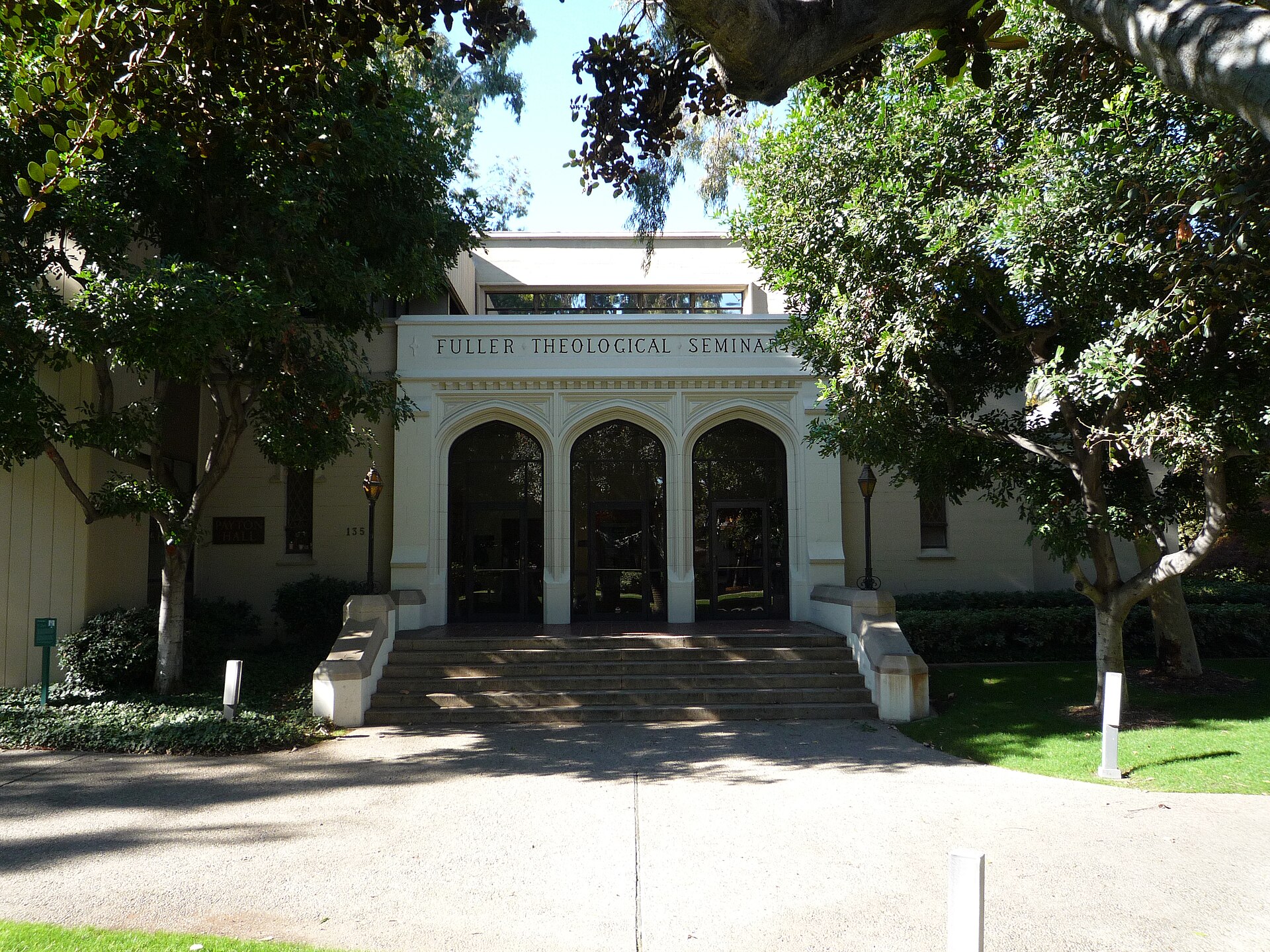

Calvary Chapel Yorba Linda, 1977 to 1982
Leaving the Friends church
The break with the Friends church came in 1977. The Regent timeline says that on May 8, 1977, "John Wimber and 40 members of the Bible Study asked to leave Yorba Linda Friends Church."2 Crosby says that in May 1977 John and Carol, together with "about sixty other people connected with Don McClure," became the Yorba Linda Calvary Chapel.11 Vineyard Canada says Wimber founded Calvary Chapel Yorba Linda on Mother's Day 1977.3 Bromley and Peterson place the request to leave in 1974 and the incorporation as a Calvary Chapel in 1977.16 The founding year of the Calvary Chapel, 1977, is the one point all of them share. (Mother's Day in 1977 fell on May 8, which matches the Regent date.)
Why Calvary Chapel? Chuck Smith's movement was the most visible new church network in Orange County, it welcomed independent congregations that shared its evangelical faith, and it was open, in principle, to the gifts of the Spirit, as lesson 06 explains. Its practice was to keep gifts such as tongues and prophecy mostly out of the main Sunday service and in "afterglow" meetings, with the Bible teaching at the center. The new Yorba Linda church affiliated with Calvary Chapel on those terms. Christianity Today's obituary says Wimber became full-time pastor of the church in 1978, the year he left the Fuller institute.18
Nine months of teaching on healing
The Regent timeline has a short entry for 1977: "Preaches about healing for nine months."2 The Vineyard's own retellings make this period the turning point. Crosby recounts that Wimber preached on healing and prayed for the sick for months with no visible results, and that after healing prayer began to see results he concluded, in a line Vineyard people still repeat, "We teach the word, then God does the work."11 He also tells of a woman who, in 1976, gave Wimber a word she believed came from God: "are you going to use your authority or not?"11 These stories come from Vineyard sources and from the Wimbers' own memories. They are the movement's account of its beginnings, and they are reported here as that.
Lonnie Frisbee and Mother's Day
The best-known event in early Vineyard history happened on a Mother's Day evening at Calvary Chapel Yorba Linda, when Lonnie Frisbee, the long-haired evangelist of the Jesus People years, spoke at the church. Frisbee's earlier role at Calvary Chapel Costa Mesa, and his departure from it, are covered in lesson 05.
John Wimber's own first-person account is reproduced by the Australian writer Geoff Waugh in the Revival Library collection, cited there to Wimber's writing of 1994. Wimber says that after the morning service he sensed the Lord telling him to "Ask that young man to give his testimony tonight." That evening, after Frisbee told his story, he invited the Holy Spirit to come. Wimber writes: "The Spirit of God literally knocked people to the floor and shook them silly." He says many people spoke in tongues, prophesied or saw visions, and that the church saw "approximately 1,700 converted to Christ in a period of about three months."19 Vineyard Canada gives the same outline: Wimber invited Frisbee reluctantly, since some saw him as unpredictable, and at the end of his talk Frisbee prayed "Come, Holy Spirit," with a response "unlike anything" the congregation had seen.3
The sources do not agree on the year. The Regent archive timeline gives "Mother's Day 1980: Lonnie Frissbie says, 'Come Holy Spirit' at CCYL" (the spelling is the archive's).2 Bromley and Peterson also give 1980.16 Vineyard Canada and the Revival Library page give Mother's Day 1979, and the Revival Library heading gives May 13, which was Mother's Day in 1979.319 The assignment for this lesson named 1980, and that is the date the archival timeline supports, but a reader should know that Vineyard publications themselves carry both years. This lesson gives the event as "Mother's Day 1980 (some Vineyard sources say 1979)."
Two more points belong with the story. The number 1,700 is Wimber's own estimate, written years later; no independent count exists. And Frisbee's later life complicated how both movements remembered him. He died in 1993 of complications of AIDS, as the World Religions and Spirituality Project's Calvary Chapel timeline records.20 For years neither Calvary Chapel nor the Vineyard said much about him in their official histories. The 2005 documentary Frisbee: The Life and Death of a Hippie Preacher by David Di Sabatino brought the story back into public discussion. Its claims about how the two movements handled Frisbee are the film's interpretation and are not repeated here as fact.
The break with Calvary Chapel, 1982
What the disagreement was about
By 1981 the Yorba Linda church was practicing in its main services what Calvary Chapel kept for smaller settings: open prayer for healing, words of knowledge (a specific insight believed to come from God about a person), prophecy and visible physical reactions such as shaking or falling. Calvary Chapel's founder, Chuck Smith, believed the gifts were real and present, but he held that public services should center on verse-by-verse teaching and that emotional or physical "manifestations" should not be encouraged. That position is described in Smith's own words in lesson 06.
Every Vineyard account describes the separation as amicable but real. Vineyard Canada says Wimber's teaching on the kingdom of God and the Holy Spirit led to a meeting with Calvary Chapel leaders at which "it was suggested that Wimber's church stop using the Calvary name and affiliate with Gulliksen's Vineyards."3 Crosby's biography says Calvary leaders felt the Yorba Linda church was "different" from other Calvary Chapels and advised a change of name, quoting them as saying, "When anyone goes to a Calvary Chapel, they know what to expect. But the Yorba Linda church is different." Crosby adds that the leaders blessed the church and prayed "a short dismissal prayer," and that John and Carol checked with Kenn Gulliksen before using the Vineyard name, promising they would never change it again.11 Vineyard USA says only that some Calvary Chapel leaders did not share the church's emphasis on experiencing the Holy Spirit.6 Bromley and Peterson describe a break over Wimber's emphasis on charismatic phenomena, and say Wimber joined Gulliksen's Vineyard churches and, at Gulliksen's request, took the lead.16
None of the checked sources gives the exact date, place or attendance of the meeting with Calvary Chapel leaders, and none quotes a written Calvary Chapel statement about it. Popular retellings sometimes name a particular pastors' gathering and a particular list of people present. Without a primary record this lesson does not repeat those details. The safe statement is the one all sides make: in the first half of 1982 Calvary Chapel's leadership asked Wimber's church to stop using the Calvary name, and the church joined Gulliksen's Vineyards instead.
Gulliksen hands the network to Wimber
Gulliksen, by this time leading a handful of Vineyards, asked Wimber to lead the whole group. Vineyard Canada says that in 1982 Gulliksen felt led to ask Wimber to lead the emerging movement.3 Vineyard USA says Gulliksen led the association for about five years, which fits 1975 to about 1982, and that Wimber became the leader of the growing network.10 Dan Wooding's 1999 report described Gulliksen as the pastor "who founded the Vineyard churches," who "left Calvary Chapel movement for a while under the leadership of the late John Wimber but is now back with Calvary Chapel" (the wording is Wooding's, not a quotation from Gulliksen).14
The Regent timeline dates the change precisely: "Mother's Day 1982: Joins fledgling Vineyard movement. Vineyard Christian Fellowship of Anaheim incorporated," and "May 8, 1982: Vineyard Christian Fellowship of Anaheim first public meeting."2 (Mother's Day 1982 was May 9, so these two entries are a day apart, which may reflect a Saturday meeting before the Sunday.) Crosby also gives Mother's Day 1982 as the day the name was officially taken.11 The congregation by then met in Anaheim, and Vineyard USA says it grew into "a vibrant church of thousands" while still meeting in a high school gymnasium.1 The Regent timeline records that the church "Moves to new facility on La Palma" in 1991.2
The Association of Vineyard Churches: 1985 or 1986?
The assignment for this lesson asked whether the Association of Vineyard Churches dates from 1986. The sources point to a staged beginning:
- 1982. Vineyard USA says the "Association of Vineyard Churches" was officially recognized in 1982, when the Anaheim church joined.6
- 1984. The Regent timeline says Wimber started Vineyard Ministries International, the conference and training ministry, and that the magazine First Fruits began publication.2
- 1985. The Regent timeline says Wimber "Incorporates the Association of Vineyard Churches."2 Bromley and Peterson also give 1985 for the incorporation, and add that Mercy Music, later Vineyard Music, was founded the same year.16
The year 1986, often repeated in encyclopedias, does not appear in the archival timeline as the founding date. It may reflect when the association began operating with its own national structure, but this lesson found no primary document for 1986. The best-supported statement is that the Association of Vineyard Churches was legally incorporated in 1985, after an informal fellowship using the name from 1982.
How fast it grew
The Vineyard grew quickly. In a 1997 Christianity Today interview, "God's Wonder Worker," conducted by Tim Stafford and James Beverley, the magazine counted the Vineyard's "500 churches," and Wimber himself said, "we've started about 380 churches, and we grew more than 1,000 percent in our first decade."21 Christianity Today's 1998 obituary put the number at nearly 500 churches in the United States and about 250 in other countries.18 The 500 and the obituary's counts are the magazine's figures, apparently supplied by the association, and the 380 and 1,000 percent are Wimber's own. They count congregations, not members. Later figures belong to lesson 09.

MC510: "Signs, Wonders and Church Growth"
What the course was
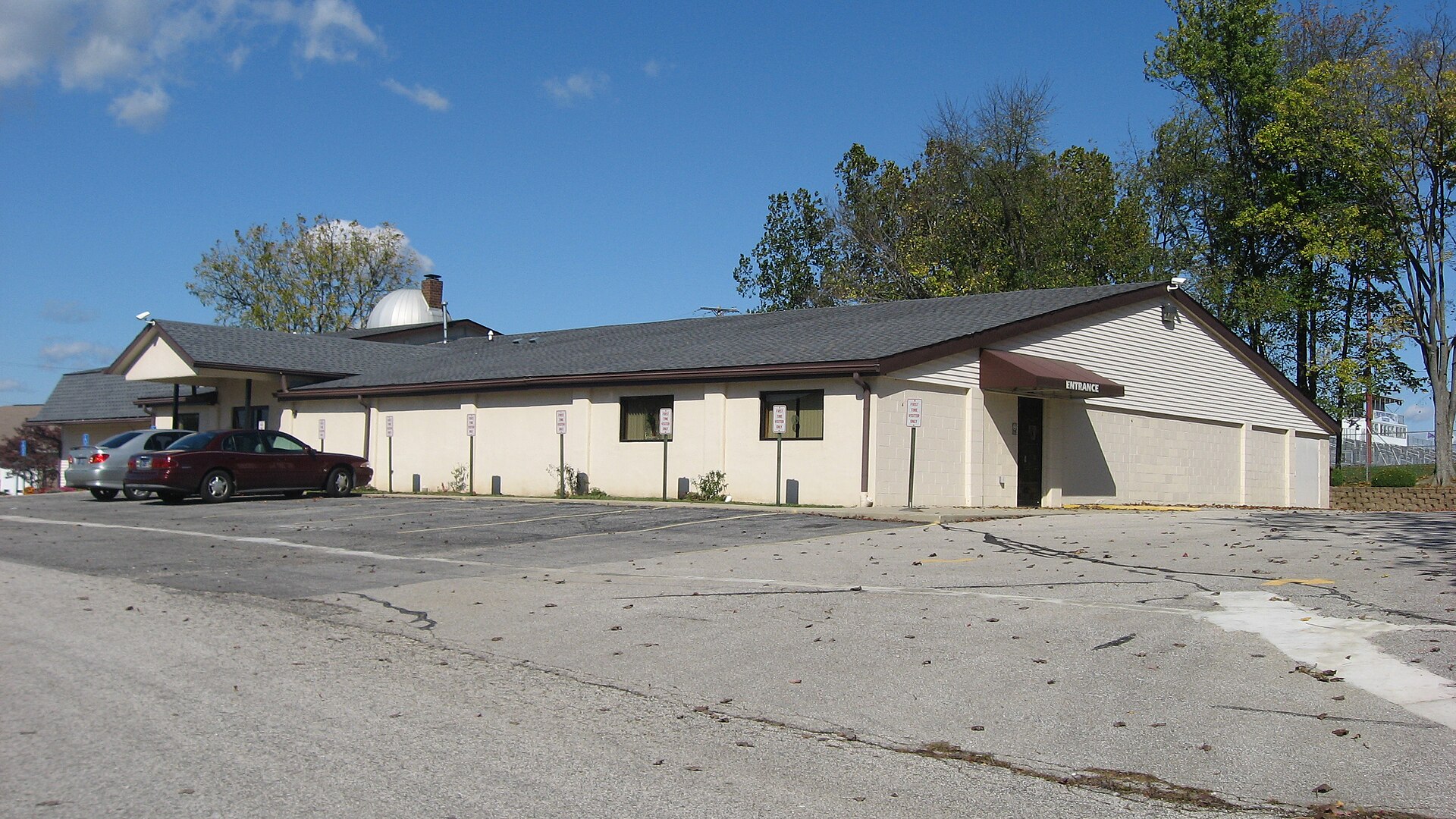
The course that made Wimber's name in the wider church was a Fuller Seminary class. Fuller's own archives hold the record. The David Allan Hubbard Library at Fuller keeps an "MC510 Signs and Wonders Collection" of class materials, records and correspondence, and its finding aid gives the dates. The course was approved in fall 1981 as "Signs, Wonders, & Church Growth," it ran from 1982 to 1985 at Fuller in Pasadena, and it was led by John Wimber and C. Peter Wagner.4 Its title changed twice: to "Healing Ministry and Church Growth" in summer 1983, and to "The Miraculous in Church Growth" in winter 1984.4 Crosby's biography gives the course name as "MC510 - Missions Class 510."11 Crosby's Vineyard biography says Fuller asked Wimber to run the course as an experiment starting in January 1982, using his "show and tell" format, and that it ran until 1985.11
"Show and tell" meant that the class did more than lecture. After Wimber taught on healing in the ministry of Jesus and in the missions research Wagner had gathered, he held what participants called a clinic or "ministry time," in which he and students prayed for sick people in the room, sometimes with the physical reactions seen at Yorba Linda. Fuller's finding aid says the course drew attention from students, faculty and outside observers, including Christian Life magazine, largely because of its teaching on miraculous healing and in-class prayer for the sick.4 The archive's container list includes a Christian Life item of October 1982, "MC510: Origin, History, Impact," and a 1983 Christian Life piece on signs and wonders.4
Enrollment was the largest at the seminary. Christianity Today reported in 1986 that in its second year 279 people enrolled, the highest enrollment of Fuller's roughly 400 courses.22 Vineyard USA's statement that Wimber's classes "set attendance records" matches that report.1 The course had a strong defender on the World Mission faculty. Charles H. Kraft, an anthropologist and missiologist, told Christianity Today: "Probably no more life-changing course has been offered at this seminary."22 According to the same report, a professor said many faculty members recalled mission experiences in which they had felt "a sense of inadequacy" on mission trips, having had nothing positive to contribute when confronted with sickness and spiritual powers.22
Why the faculty divided
Fuller had three schools: Theology, Psychology and World Mission. MC510 belonged to the School of World Mission, and much of the opposition came from the School of Theology. Fuller's archive says only that "Controversy surrounded the course in its few short years" and that a ten-member task force, including C. Peter Wagner and Paul Pierson, dean of the School of World Mission, was formed to evaluate and respond to the feedback.4 Christianity Today's report says Fuller's president, David Allan Hubbard, set up a faculty and student task force, that an estimated 30 percent or more of the seminary's students were charismatic, and that more than 13 percent came from developing countries, where many churches already expected healing and deliverance.22
The objections, as the faculty study later stated them, were practical and theological. Some faculty doubted that a graduate classroom was the right place to practice healing. Some worried that calling answered prayers "signs and wonders" blurred the line between ordinary Christian experience and the unique, revelatory miracles of the apostolic age. Henry Lederle, summarizing the faculty's report, says it objected to practicing healing within an academic classroom and argued that answers to prayers for healing should not be called "signs and wonders," because the phrase belongs to the revelatory events of salvation history.17 Don Lewis of Regent College in Vancouver, writing in June 1985 after attending a Wimber conference, faulted Fuller for lending the movement its credibility, and in a bracketed note added after he first wrote the piece, said Fuller had stopped giving graduate credit for the course.23 Christianity Today reported that the faculty council of Fuller's School of Theology had voted in the spring of 1985 to deny theology students credit for MC510.22
The cancellation, January 1986
The School of World Mission's own faculty council, the same faculty that had designed MC510, dropped it. Fuller's archive says Dean Paul Pierson announced its discontinuation in January 1986.4 Christianity Today reported in its February 1986 issue that the World Mission faculty council had canceled it, and that the campus newspaper, Semi, said the course would not be offered that academic year in order to review the "foundations of God's usual and unusual intervention in the human process," and that faculty and student leaders said the decision was meant to preserve unity on a campus the course had polarized.22 About 120 students and one professor rallied in support, and nearly all who attended signed a petition asking that the course continue. A student leader, Tom Messenger, said: "We feel investigation can best be accomplished while the course is in session."22
Wimber, an adjunct, accepted the decision publicly. The magazine reported that he said the faculty had a responsibility to scrutinize any course, "whatever the issues are," and that he did not know whether he would teach at Fuller again.22 The Regent timeline lists his MC510 teaching as "1982-1986," and Bromley and Peterson give 1982 to 1986 as well, which reflects the January 1986 cancellation date. Fuller's archive gives 1982 to 1985 as the years the course actually ran.2164 Fuller's finding aid also records a related course, MC511, introduced in spring 1985 and later discontinued.4
Ministry and the Miraculous, 1987
The task force worked for a year and published its report as a book. Christianity Today reported on February 6, 1987, that Fuller had released Ministry and the Miraculous: A Case Study at Fuller Theological Seminary, edited by the theology professor Lewis Smedes and to be published by Word.5 Hubbard said the purpose was "to share our theological and pastoral thinking with a larger audience of concerned Christians," and described the study's course as running "between the shoals of denying the possibility of miracles in our day and the rocks of presumption."5
According to the magazine's summary, the report affirmed that God still works miracles, but it argued that "ordinary healings [resulting from medical science] are no less divine than miraculous healings" (the brackets are the magazine's), rejected the idea that believers hold "a blank check from God" for healing, doubted that Jesus's commission to the Twelve in Matthew 10 was a permanent mandate for the church, warned that signs and wonders are not always a mark of God's activity since other religions also claim miracles, called for careful testing of healing claims, and urged caution about claims to discern demons.5 Hubbard also wrote that Wimber "came to be linked more closely with Fuller in the minds of the public" than his schedule as an adjunct warranted.5 Lederle cites page 28 of the report for its objection to the label "signs and wonders."17
Fuller did not abandon the subject. The 1987 report announced a new course, "The Ministry of Healing in World Evangelization," team-taught by faculty from all three schools.5 Fuller's archive identifies it as MC550, introduced in 1987.4 Christianity Today reported in January 1989 on a later symposium on signs and wonders held in Pasadena, where Wimber spoke and said, "Practice communicates our faith."24 Wimber's own role in the new course was undecided when the 1987 report came out, and the checked sources do not say he taught it. The same report quoted a seminary spokesman, Hugh James, saying the study "was never intended to criticize Wimber," and reported that Wimber still taught on occasion at the School of World Mission.5
Henry Lederle's reading of the episode is that the cancellation showed broader evangelicalism "has not yet fully moved beyond its heritage of cessationism and dispensationalism."17 That is one scholar's interpretation. A Fuller theologian of the time could reply that the report did affirm present-day miracles and objected only to particular claims and methods. Both readings rest on the same documents.
What Wimber taught
The kingdom "now and not yet"
The theological frame for everything Wimber did came from George Eldon Ladd, a New Testament professor at Fuller. Ladd argued that in the ministry of Jesus the kingdom of God, God's saving rule, had already broken into history, while its full arrival waits for Christ's return. Scholars call this "inaugurated eschatology." In the Vineyard it is called the "now and not yet" of the kingdom.
Derek Morphew, a South African Vineyard theologian, explains the debt in an article for Vineyard Churches UK and Ireland, "Why the Kingdom of God is at the Heart of Vineyard." He says Wimber drew his kingdom teaching from Ladd's book The Presence of the Future, and observes that "Ladd was not a particularly famous or leading New Testament theologian in his time." He sums up the idea as the end of the age beginning while the present age has not yet ended: "Many speak of the 'already' and the 'not yet'."25 Vineyard USA's teaching page puts it this way: "Through Jesus, God had inaugurated the kingdom on earth, but he would consummate it one day in the future," and "We believe that a necessary tension will always exist between the now and the not yet of the kingdom."26 Bill Jackson's 1999 history, as summarized by the reviewer Malcolm R. Brubaker, also identifies Ladd's kingdom theology as the base on which Wimber built.27
The frame did practical work. If the kingdom is already present, Christians should expect to see its signs, including healing and deliverance from evil, the way Jesus's disciples did. If the kingdom is not yet complete, then not everyone will be healed, and a failed prayer is not proof that the sick person lacked faith. Vineyard USA's article says the Vineyard holds the tension without denying God's present miracles or treating unanswered prayer as a lack of faith.26 This set Wimber apart from the "word of faith" preachers of the same decades, who taught that healing is guaranteed to those who believe. Don Lewis, otherwise a critic, credited Wimber for rejecting the idea that physical healing is guaranteed in the atonement, for admitting that many people prayed for are not healed, and for telling people to have a doctor confirm a healing before stopping medicine.23 Lederle describes Wimber's position as healing coming through the atonement, not as an automatic guarantee included in it.17
Power Evangelism, 1986
Wimber's first major book, written with Kevin Springer, was Power Evangelism (Harper and Row, 1986). A review by Kim Simmons for the Grace Evangelical Society quotes its definition from page 35: power evangelism is "a presentation of the gospel that is rational but that also transcends the rational," in which "The explanation of the gospel comes with a demonstration of God's power through signs and wonders."28 The same review quotes the book's claim that the key to effective evangelism is "combining the proclamation with the demonstration of the gospel."28 (These quotations are checked here against the review, not against a copy of the book.)
Behind the book was church growth research. Wagner and Wimber had noticed that in Latin America, Africa and Asia many of the fastest-growing churches were Pentecostal or charismatic and expected healing and deliverance as part of evangelism. Wimber argued that Western Christians had absorbed a worldview that left little room for the supernatural and so preached a gospel of words alone. Critics answered that Scripture, not missions statistics, should set the church's expectations. In 1992 the former Dallas Theological Seminary professor Jack Deere, by then a Vineyard minister, acknowledged that "unguarded statements" in Power Evangelism had implied that conversions accompanied by signs and wonders were superior, and said Wimber would distance himself from that view in a revised edition.29
Power Healing, 1987
The second book, Power Healing (Harper and Row, 1987), also written with Springer, laid out how Wimber's churches prayed for the sick. Vern S. Poythress, a New Testament professor at Westminster Theological Seminary, reviewed it in Eternity magazine in October 1987. He gave it real credit: "Wimber is plainly interested in grounding healing ministry in a rich theology of the kingdom of God," he wrote, and he noted that Wimber rejects the idea that God always wills immediate physical healing. He called the book "an important starting point."30 His main objection was method. Wimber, he said, relied almost entirely on healing stories in the Gospels and Acts without engaging the view that those events were unique to the founding of the church, and gave a large role to "words of knowledge," so that he was "relying to a large degree on his experience rather than the Bible." Poythress argued that James 5:14 to 18, where the elders of the church pray for the sick, offered a firmer basis for a regular ministry of healing.30
The five-step healing model
The most copied part of Power Healing is a five-step model for praying with a sick person, designed so that any church member, not only a pastor, could do it. Poythress's review summarizes the steps as: interview the sick person; make a "diagnostic" judgment about the cause; decide what kind of prayer is appropriate; pray; and follow up.30 Vineyard USA still teaches the model. Its 2016 article on the first step quotes a saying it attributes to Wimber: "It's more important to know what kind of person has a bug rather than what kind of bug has a person," and says that, "According to Wimber, we are listening to the person on two levels at this point," to the person and to God.31 Vineyard USA's current one-page overview has renamed the steps Discussion, Discernment, Diagnosis, Do It and Next Steps, and tells the person praying to ask permission before placing a hand on the shoulder and to keep their eyes open "to observe what the Lord is doing."32
Two points about the model matter for a reader judging it. First, it was built to be teachable. A Vineyard slogan, used as the title of a Vineyard USA article, is "Everyone Gets To Play," meaning that healing prayer is not reserved for a gifted evangelist on a stage.33 Second, it assumes that a person praying may receive a specific insight from God about the sick person, which is exactly the "words of knowledge" practice Poythress and other critics questioned.
"Doing the stuff"
The phrase most associated with Wimber is "doin' the stuff." The story behind it, told many times in Vineyard circles, is that as a new Christian Wimber read the Gospels, then went to church and asked when they would get to do the things Jesus did, the healings and miracles, and was told that churches did not do that anymore. Vineyard USA's history page compresses the idea into two sentences already quoted: he "began to 'do the stuff' of the Bible, about which he had formerly only read," and "Christians are called to 'do the stuff' that Jesus did."1 Another Vineyard USA page quotes his warning "not to eat the menu," which it explains as reading the Bible without ever doing what it says.33 The exact wording of the original conversation varies from one retelling to the next, and this lesson did not find it in a dated primary source. It is best treated as Wimber's own illustration of his conviction.
The "radical middle"
Wimber liked to say the Vineyard sat between evangelicals and Pentecostals. Bill Jackson, a Vineyard pastor, used the phrase for the title of the movement's authorized history, The Quest for the Radical Middle: A History of the Vineyard (Vineyard International Publishing, Cape Town, 1999, 419 pages). Brubaker's review says the book describes the Vineyard's effort "to retain the biblical foundation of Evangelicalism and the openness to the Spirit of Pentecostalism," calls Jackson an insider writing a history sanctioned by Vineyard leadership, and judges it "sympathetic but sufficiently objective."27 Vineyard USA explains the idea as a church being able "to hold onto two sides of a tension, valuing both, without giving either up."33
In practice the middle position meant several things a Pentecostal would notice. The Vineyard did not teach that speaking in tongues is the required first evidence of a separate baptism in the Spirit, which is the classic Pentecostal position described in lesson 02. Lewis noted that Wimber did not tie spiritual renewal to a "second blessing" marked by tongues.23 Wagner, who taught MC510 with him, called this kind of evangelical openness to the Spirit, outside both the Pentecostal denominations and the 1960s Charismatic Renewal in the older churches, a "third wave" of the Holy Spirit in the twentieth century. The term and its history are covered in lesson 02.
Vineyard worship music
Songs sung to God
Many people who never visited a Vineyard church know its songs. Wimber, the professional musician, made worship the center of a Vineyard service: a long set of simple, repeated songs, usually addressed to God in the second person ("you") rather than sung about God, led by a band instead of a choir or organ, before any teaching. In the 1997 Christianity Today interview he rated the Vineyard's worship among its real achievements and said it had "reintroduced intimacy."21 Vineyard USA's history says the early Anaheim congregation "sought God in intimate worship."1
The early songs and their dates
Hymnary.org, the hymnal database maintained at Calvin University, records the authors and copyright dates printed in published hymnals. For the early Vineyard songs it lists:
- "Spirit Song" ("O let the Son of God enfold you"), words and music by John Wimber, copyright 1979, Mercy/Vineyard Publishing, found in 28 hymnals in the database.34 It appears in denominational hymnals including the 1989 United Methodist Hymnal.
- "Isn't He?" ("Isn't he beautiful"), by John Wimber, copyright 1980, Mercy/Vineyard Publishing.35
- "Change My Heart, O God," by Eddie Espinosa, copyright 1982, Mercy/Vineyard Publishing, found in 28 hymnals in the database, including Lutheran, Baptist and Presbyterian collections and Spanish and Korean editions.36
- "Draw Me Close," by Kelly Carpenter, copyright 1994, Mercy/Vineyard Publishing, which belongs to the later period covered in lesson 09.37
The publishing names changed over time. Bromley and Peterson say Mercy Music, later Vineyard Music, was founded in 1985.16 The Regent timeline lists the "Publication of first two albums" in 1981.2 The copyright line on the songs now reads "Mercy/Vineyard Publishing," administered by outside music services. The song years given here are copyright dates as printed, which are usually close to, but not always the same as, the year a song was first sung.
Why the music traveled
Vineyard songs crossed denominational lines faster than Vineyard theology did. A Methodist or Lutheran congregation could sing "Spirit Song" or "Change My Heart, O God" without adopting healing clinics or words of knowledge. The sociologist Donald E. Miller, in Reinventing American Protestantism: Christianity in the New Millennium (University of California Press, 1997), studied the Vineyard alongside Calvary Chapel and Hope Chapel as the leading examples of what he called "new paradigm" churches. His publisher's description says the three movements together included more than a thousand congregations and used contemporary worship and Christian rock music in nontraditional buildings, and that Miller saw them as a "second Reformation."38 Miller's argument, developed at length in the book, is that these churches succeeded by stripping away bureaucracy and inherited forms while keeping a traditional faith, and the publisher's summary uses his phrase "postmodern traditionalists" for the people leading them.38 Worship music was one of the clearest marks of that pattern.

Critics of the time and Wimber's answers
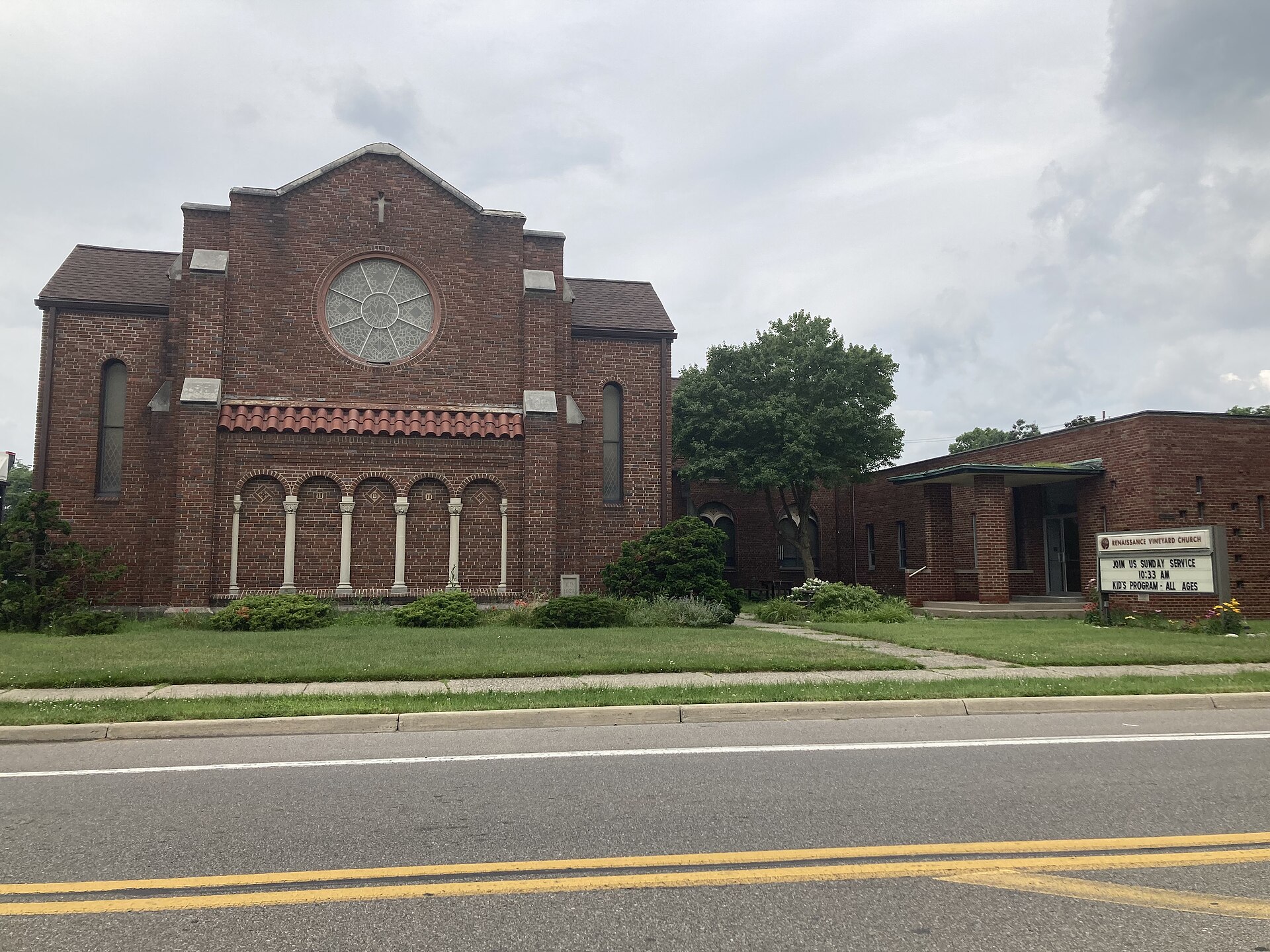
Wimber drew more organized criticism than almost any American pastor of his generation. The critics were not all of one kind. Some were cessationists, who hold that miraculous gifts such as prophecy, tongues and healing ceased with the apostles. Some were continuationists who believed in present-day healing but objected to particular Vineyard claims or methods. Some were journalists and researchers who focused on specific events. Their main arguments, in their own words where the sources allow, follow, with Wimber's replies.
Don Lewis, 1985
One of the earliest careful critiques came from Don Lewis, a historian at Regent College in Vancouver, who attended a Wimber "Signs and Wonders and Church Growth" conference and wrote it up in June 1985. The Christian Research Institute later published his assessment. Lewis praised several things: the emphasis on the Holy Spirit (he called it "lamentable that the church has often tended to over-react" to Spirit-focused movements), the equipping of ordinary members, the rejection of a tongues-marked "second blessing," and Wimber's caution about healing claims.23 He also objected that the conference advertising was sensational, that Hebrews 2:3 to 4 makes signs a confirmation of the gospel rather than its center, that Wimber's account of Western thought was oversimplified, and that "his use of Scripture is highly problematic," starting from experience and using the Bible to support it. He quoted Wimber as saying "At some point critical thinking must be laid aside," and called that inconsistent with Wimber's own reasoned arguments.23 Lewis also questioned the teaching that a Christian can be "demonized," and predicted that Wimber's criticism of other churches would produce a new and divisive denomination.23
The 1991 to 1992 wave
Criticism peaked in 1991 and 1992. Christianity Today's March 9, 1992, report "Signs and Wonders: Wimber Breaks Silence to Answer Vineyard Critics" listed the main voices:29
- John H. Armstrong, a pastor, wrote a ten-part series in The Standard, the magazine of the Baptist General Conference. He accepted that God heals today but questioned whether Vineyard healings were "the signs and wonders of Jesus," and argued that Vineyard leaders used the movement's youth to excuse weak theology and questionable practices.
- Ronald Enroth, a sociologist, criticized the movement in Churches That Abuse (Zondervan, 1992).
- D. A. Carson and James Montgomery Boice examined Vineyard theology in two chapters of Power Religion: The Selling Out of the Evangelical Church? (Moody Press, 1992), a collection edited by Michael Scott Horton.
- John MacArthur, pastor of Grace Community Church in Sun Valley, California, devoted a chapter to the Vineyard in Charismatic Chaos (Zondervan, 1992). The magazine summarized his view as holding the movement to be unbiblical and a source of chaos and confusion in the church.
The same report noted that Wayne Grudem, then at Trinity Evangelical Divinity School, wrote a long reply to The Standard series alleging "outright misrepresentations of facts," and said the magazine had refused to print a one-page response.29 Grudem's charge is an allegation by one party in the dispute and is reported as such.
Charismatic Chaos was a revision of MacArthur's earlier The Charismatics: A Doctrinal Perspective (Zondervan, 1978). In a Christianity Today review, "MacArthur's Crusade" (May 18, 1992), Robert W. Patterson, a Presbyterian Church in America minister, credited MacArthur's appeal to the principle that "Scripture is the rule against which we must measure all teaching," but said the book "vastly overstates the charismatic 'threat'" by choosing extreme cases, and that "Perhaps the major flaw of the book is more attitudinal than methodological."39 MacArthur's case in his own words, a cessationist reading of 1 Corinthians 13 and of the purpose of the apostolic miracles, is available in his book and his church's published sermons; this lesson does not quote the book because no copy was opened for the purpose.
Wimber breaks his silence
For years Wimber refused to answer critics in public. Christianity Today reported that he had cited Matthew 18:15 to 17, his Quaker background, and a 1977 prophetic word telling him to "turn the other cheek," reasons he gave in a 1988 issue of the Vineyard's Equipping the Saints.29 The Regent timeline records that in summer 1988 he wrote "Why I Don't Respond to Criticism" for that newsletter.2
In 1992 he changed course. The magazine reported that he now believed a public response was sometimes required, especially to correct misrepresentation, that he affirmed the inerrancy of Scripture, and that he planned booklets clarifying Vineyard teaching aimed at specific issues and critics. He also said he had not read The Standard articles or Charismatic Chaos, and complained that critics rarely came to him directly.29 Vineyard USA still publishes the resulting 1992 position paper, now titled "Why I Respond to Criticism," written for Vineyard pastors.40 The same 1992 report described how one Kansas City figure associated with the Vineyard, Bob Jones, had recently been disciplined after admitting misconduct; that story and the Kansas City prophets belong to lesson 09.29
Hank Hanegraaff, 1997
Hank Hanegraaff, president of the Christian Research Institute, published Counterfeit Revival (Word, 1997), aimed mainly at the Toronto Blessing and related revivals of the mid 1990s. James A. Beverley of Ontario Theological Seminary reviewed it for Christianity Today in September 1997. Beverley reported that the book gives Wimber a full chapter, attacking his prophetic views and his association with Lonnie Frisbee, and portrays Wimber and the Vineyard's national coordinator Todd Hunter as valuing inner experience over Scripture.41 Beverley called it "a misleading, simplistic, and harmful book," while crediting it for criticizing real excesses. He said Wimber had abandoned in 1991 the prophetic views Hanegraaff targeted, that only one of Hanegraaff's 46 references to Wimber's material came from the previous six years, and that Hunter had phoned and written Hanegraaff before publication to dispute the book's reading of him.41 Beverley's review is itself one side of a dispute: the magazine identified him as the author of Revival Wars: A Critique of Counterfeit Revival. No response from Hanegraaff to the review was opened for this lesson. The Toronto events belong to lesson 09.
Wimber on his own record
Near the end of his life Wimber offered some of the most candid assessments of his movement. In the 1997 Christianity Today interview he said the Vineyard had never become the evangelistically effective church he wanted: "That's a failure." He said of revival: "The norm for God moving among people is a pretty messy thing." He took "full responsibility" for bringing the Kansas City prophets into the Vineyard, and said that during a family crisis in those years "I just was preoccupied. And my leadership model failed me. I was too directive."21 He died November 17, 1997, aged 63, after a fall caused a massive brain hemorrhage. He had been treated for cancer in 1993, had a stroke in 1995, and had heart bypass surgery the year before his death.218
How scholars read the early Vineyard
Bill Jackson: the insider's history
Bill Jackson's The Quest for the Radical Middle (1999) remains the fullest account of the Vineyard's first quarter century. Its strengths and limits come from the same fact: Jackson was a Vineyard pastor writing with access to the leaders, and the book was published by the Vineyard's own international press. Malcolm Brubaker, reviewing it for Pneuma Review in 2007, read it from a Pentecostal point of view and found parallels with early Pentecostal history: the fear of losing fervor as a movement becomes an institution, a strong focus on Jesus, and an emphasis on training leaders. He also listed differences, including the Vineyard's practice at that time of not ordaining women "to pastoral leadership position" and its post-tribulational premillennial view of the end times.27 (The Vineyard's later decisions about women in ministry are covered in lesson 09.) Brubaker closed by hoping for "an updated telling of the Vineyard story."27
Donald E. Miller: the "new paradigm"
Donald E. Miller, a sociologist of religion at the University of Southern California, studied Calvary Chapel, Vineyard and Hope Chapel congregations for Reinventing American Protestantism (1997). He treated the three as one type of church: drawing people who felt disconnected from established religious institutions, meeting in nontraditional buildings, using contemporary worship, and seeking to recover the practice of the earliest Christians.38 Miller's interest was less in whether the miracles happened than in why these churches grew while older Protestant denominations shrank. On his reading, the Vineyard's openness to the Spirit and its worship music were part of a larger move toward direct, personal religious experience. Readers who want the parallel story of Calvary Chapel in Miller's terms will find it in lesson 06 and lesson 07.

Henry Lederle and the "Third Wave"
Henry I. Lederle, writing in Pneuma Review in 2012, placed Wimber in the history of independent charismatic churches. He summarized Wimber's approach as the belief that "the proclamation of God's kingdom needs to be accompanied by the demonstration of God's power," noted his books Power Evangelism, Power Healing and Power Points, and read the MC510 cancellation as a sign of how strongly cessationist and dispensationalist habits still shaped evangelical schools.17 Lederle writes as a sympathetic scholar of the charismatic tradition, and his judgment about Fuller is his own.
Critics as sources for history
The critics are also sources. Lewis's 1985 report is one of the few contemporary descriptions of an early Wimber conference by an outside observer, and it records Wimber's caution about medical treatment as well as the hype. Poythress's 1987 review is a careful summary of Power Healing. The 1992 Christianity Today report preserves who said what, and when, in the most intense year of debate. A reader does not have to agree with any of them to use them as evidence of what Wimber taught and how it was received.
What the record shows and what it does not
Documented fact. Wimber and Carol converted in May 1963 through a Bible study connected with the Yorba Linda Friends Church (Regent archive). He worked for Fuller's church growth institute from about 1974 or 1975 to 1978. He planted a Calvary Chapel in Yorba Linda in 1977. The church left Calvary Chapel and became Vineyard Christian Fellowship of Anaheim in May 1982. MC510 was approved in fall 1981, ran from 1982 to 1985, and was dropped in January 1986 (Fuller archive). Fuller published Ministry and the Miraculous, edited by Lewis Smedes, in early 1987 (Christianity Today). Power Evangelism appeared in 1986 and Power Healing in 1987 (Harper and Row). The Association of Vineyard Churches was incorporated in 1985 (Regent archive; Bromley and Peterson). Wimber died November 17, 1997.
The movement's own claim. Gulliksen believed God gave him the name "Vineyard." The Mother's Day meeting with Frisbee was a work of the Holy Spirit followed by about 1,700 conversions in three months (Wimber's own estimate). Healings in MC510 and in Vineyard churches were answers to prayer.
Scholarly reading. Miller (1997) treats the Vineyard as a "new paradigm" church alongside Calvary Chapel and Hope Chapel. Jackson (1999) describes a "radical middle" between evangelical and Pentecostal faith. Lederle (2012) reads the MC510 cancellation as evidence of lingering cessationism.
Open questions. Whether the Frisbee meeting was in 1979 or 1980. The exact date, place and participants of the 1982 meeting with Calvary Chapel leaders. Wimber's exact role with the Righteous Brothers and his birthplace (Peoria or Kirksville). Whether the first Vineyard Bible studies met in the homes of Larry Norman and Chuck Girard. How many healings reported in the 1980s were medically documented: no published medical study of MC510 cases was found for this lesson.
Claims checked
"John Wimber was a member of the Righteous Brothers." Partly supported.
Wimber worked with Bobby Hatfield and Bill Medley in the early 1960s. The Regent archive says he signed a contract with the Righteous Brothers in 1962, and Bromley and Peterson say he recruited the two singers into his band, the Paramours, which became the Righteous Brothers.216 Vineyard sources variously say he was "involved in the founding and producing" of the group or "later to be involved with" it, and Loren's Charisma profile calls him an "original band member."15119 No checked source says he performed on the duo's famous recordings. "Member" overstates what the record shows; "arranger and bandleader who worked with them" fits it.
"The Vineyard began when Wimber left Calvary Chapel in 1982." Refuted.
Every Vineyard source dates the first Vineyard to Kenn Gulliksen's church in 1974 and the first Vineyard plants and name to 1975. By 1982 there were "at least seven" Vineyards before Wimber's church joined.1 Wimber became the leader of an existing network. The claim confuses the movement's founding with its most famous leader.
"Calvary Chapel threw Wimber out." Partly supported.
Calvary Chapel leaders did ask Wimber's church to stop using the Calvary name, according to Vineyard Canada and Vineyard Churches UK and Ireland.311 The same sources describe the change as a suggestion that the church affiliate with Gulliksen's Vineyards, and Wimber's church had a ready home to go to. "Expelled" describes the outcome but not the tone the Vineyard's own sources give it. No written Calvary Chapel statement from 1982 was found.
"Fuller Seminary banned Wimber for false teaching." Unsupported.
The School of World Mission's faculty council dropped the course in January 1986 to allow a review and, by the account of faculty and student leaders, to preserve campus unity.22 The 1987 faculty report affirmed that God still works miracles while criticizing parts of the course's approach.5 Fuller started a new, team-taught healing course in 1987.4 No checked source shows a heresy charge or a formal finding against Wimber.
"MC510 was the most popular course at Fuller." Supported, for its time.
Christianity Today reported in 1986 that its second-year enrollment of 279 was the highest of Fuller's roughly 400 courses.22 Whether it was the most popular course "in Fuller's history" over all years is a larger claim the sources do not test.
"Lonnie Frisbee's Mother's Day meeting launched the Vineyard's charismatic practice." Partly supported.
Wimber's own account and Vineyard Canada make the meeting the turning point in the Yorba Linda church's experience of the Spirit.193 But Wimber had already preached on healing for months beginning in 1977 and seen answers to prayer, according to the Regent timeline and Crosby.211 The meeting intensified a direction already set. Its year, 1979 or 1980, is unresolved in the sources.
"Wimber taught that everyone who has faith will be healed." Refuted.
Both a critic and a reviewer say the opposite. Lewis reported in 1985 that Wimber admitted many people prayed for are not healed and rejected healing as guaranteed in the atonement.23 Poythress wrote in 1987 that Wimber rejects the idea that God always wills immediate healing.30 The "now and not yet" frame was his explanation for why many are not healed.26
"The Association of Vineyard Churches was founded in 1986." Partly supported.
The Regent archive and Bromley and Peterson give 1985 for its incorporation, and Vineyard USA dates its official recognition to 1982.2166 No checked primary source gives 1986.
"'Change My Heart, O God' was written by John Wimber." Refuted.
Hymnals credit Eddie Espinosa, with a 1982 Mercy/Vineyard Publishing copyright.36 Wimber's own songs from the period include "Spirit Song" (1979) and "Isn't He?" (1980).3435
"Wimber never answered his critics." Refuted.
He declined to answer for several years and explained why in 1988, then changed his position publicly in 1992 and began issuing position papers.2940
Hard questions and answers
If both movements believed in the gifts of the Spirit, why did they split?
Both held that the gifts of the Spirit continue today. They disagreed about practice. Calvary Chapel taught that the gifts are for today but kept them out of the main service and discouraged emotional or physical manifestations, with verse-by-verse teaching at the center (lesson 06). Wimber's church made prayer for healing and prophetic words part of the Sunday service and welcomed visible reactions. In a network whose churches share a name and a reputation, that difference in public worship was enough for Calvary Chapel's leaders to ask for a separate name.311 The record shows the request and the move; it does not show a doctrinal trial.
Did people in MC510 actually get healed?
The documents show that people were prayed for and that participants reported healings. They do not show medical verification. Fuller's own 1987 report called for careful testing of healing claims, which implies the faculty did not consider the claims already tested.5 Lewis noted that Wimber judged healing partly by physical sensations during prayer, which he considered too subjective.23 A Vineyard member would answer that Jesus's healings were not medically documented either, and that changed lives are evidence. The historical record cannot settle the theological question; it can only say that no published medical study of MC510 cases was found.
Is "now and not yet" just a way to explain away failed prayers?
The question is fair. The idea itself came first: Ladd developed inaugurated eschatology as a scholar's reading of the Gospels, years before Wimber applied it to healing prayer.25 Wimber's use of it did two things at once: it gave a reason to expect healing and a reason not to blame the sick when healing did not come.26 Whether that balance holds in practice in a given congregation is a question for that congregation's record, not for the theory.
Did Wimber's critics treat him fairly?
Some did and some did not, and the sources say so in their own words. Poythress and Lewis praised specific things before criticizing others.2330 Patterson, no charismatic, faulted MacArthur for overstating the threat.39 Beverley faulted Hanegraaff for relying almost entirely on Wimber material more than six years old.41 Grudem alleged that The Standard misrepresented facts.29 On the other side, Wimber admitted he had not read some of the books criticizing him, and Deere admitted "unguarded statements" in Power Evangelism.29 A fair conclusion is that both sides made specific errors that the other side documented.
Why do Vineyard histories give conflicting dates?
The early Vineyard was a set of house groups and small churches that kept few records, and its histories were written later from memory. The conflicts in this lesson (1974 or 1977 for leaving the Friends church, 1974 or 1975 for the Fuller job, 1979 or 1980 for the Frisbee meeting, 1982, 1985 or 1986 for the Association) mostly come from the difference between when something began informally and when it was incorporated or recorded. The Regent archive, built from Wimber's own papers, and Fuller's archive for MC510 are the closest to primary records and are the sources this lesson prefers where they speak.24
What should a reader make of Wimber's own verdict on his movement?
In 1997 he called the Vineyard's evangelistic record "a failure" by his own standard while praising its worship, and he took responsibility for the Kansas City prophets.21 Founders rarely speak that plainly. His candor settles nothing about his theology. It is evidence that the movement's founder judged it by results and was willing to say when results fell short. Lesson 09 follows what the Vineyard did with that legacy after his death.
For the movements that came before the Vineyard, see lesson 01 (Holiness and Pietism) and lesson 02 (Pentecostal and Charismatic). For how non-denominational churches like the Vineyard are governed and held to account, see lesson 04. For a reader's checklist that applies to any church in the Calvary Chapel or Vineyard family, see lesson 10.
Learn more
- Regent University Library, John Wimber Collection Timeline: The archival timeline built from Wimber's papers; the best single source for dates.
- Fuller Seminary, MC510 Signs and Wonders Collection finding aid: Fuller's own record of the course, its title changes, task force and cancellation.
- Christianity Today, "Fuller Seminary Releases Study on Miraculous" (1987): The contemporary report on what the faculty study concluded.
- Vern S. Poythress, review of Power Healing (1987): A careful critic who credits Wimber's kingdom theology while questioning his use of Scripture.
- Christianity Today, "God's Wonder Worker" (1997): Wimber's own late assessment of the Vineyard's successes and failures.
- Vineyard USA, History and Legacy: The movement's own short account of its origins.
Still being checked (18 items)
These points could not be confirmed against a primary source when this lesson was written and fact checked in October 2026. The text above states each one as uncertain.
- The year of Lonnie Frisbee's Mother's Day meeting at Calvary Chapel Yorba Linda: the Regent archive and Bromley and Peterson give 1980; Vineyard Canada and the Revival Library (Wimber's own account) give Mother's Day 1979 (May 13).
- The report that the first Vineyard formed from Bible studies at the homes of Larry Norman and Chuck Girard, and that about thirteen groups met at the Beverly Hills Women's Club in early 1975, was found only in pages derived from encyclopedia summaries; no firsthand source was found.
- Wimber's birthplace: Peoria, Illinois (Regent archive) versus Kirksville, Missouri (Vineyard USA).
- Wimber's exact role with the Righteous Brothers: contract signed 1962 (Regent); recruited the singers into the Paramours, with the group 'originally with Wimber on keyboards' (Bromley and Peterson); 'original band member' (Loren, Charisma, 2007). No source checked says he performed on their hit records.
- When the Wimbers were asked to leave the Yorba Linda Friends Church: May 8, 1977 (Regent) versus 1974 (Bromley and Peterson); and the size of the group (40 per Regent, about 60 per Crosby).
- Start of Wimber's Fuller church growth job: 1974 (Regent, Christianity Today) versus 1975 (Crosby; Bromley and Peterson for adjunct teaching).
- The date, place and participants of the 1982 meeting at which Calvary Chapel leaders suggested Wimber's church drop the Calvary name; no primary record was found.
- The founding year of the Association of Vineyard Churches as 1986 was not found in any primary source; 1985 (incorporation) and 1982 (recognition) are documented.
- Power Evangelism quotations are checked against Kim Simmons's review, not against a copy of the book. No Power Healing text was opened; its content is given through Poythress's review.
- The left-column labels in the five-step infographic (Diagnosis, Prayer selection, Prayer engagement) are shorthand following the order in Poythress's summary; Wimber's exact step names in Power Healing were not checked against the book.
- The "doin' the stuff" origin story (Wimber asking when the church would do what Jesus did) was not found in a dated primary source.
- The 1999 Dan Wooding article quoting Gulliksen was checked only as reproduced on a Dylan fan archive.
- George Eldon Ladd's The Presence of the Future is named from Derek Morphew's article; its publication details were not checked.
- The 2005 documentary Frisbee: The Life and Death of a Hippie Preacher by David Di Sabatino is named from general knowledge, not from a page opened for this lesson.
- C. Peter Wagner's coining of the term "Third Wave" is stated without a date; the year and place of first use were not verified (web search budget for this task ran out before it could be checked).
- Hymnary.org lists "Holy and Anointed One" (John Barnett) with a 1980 copyright, which conflicts with the commonly given later date; the song was left out of the lesson for that reason.
- Power Religion (Moody Press, 1992) is described as edited by Michael Scott Horton; the editor's name is not in the cited Christianity Today report and was not checked against the book.
- That Change My Heart, O God appears in Korean editions was not confirmed on the Hymnary.org page (Spanish is confirmed).
Notes
- Vineyard USA, "History & Legacy," vineyardusa.org (retrieved Oct. 28, 2026). Read it online. ↩
- Regent University Library, Special Collections, "John Wimber Collection Timeline" (also at libguides.regent.edu/Wimber/bio) (retrieved Oct. 28, 2026). Read it online. ↩
- Vineyard Canada, "History," vineyard.ca, copyright 2024 (retrieved Oct. 28, 2026). Read it online. ↩
- Fuller Theological Seminary, David Allan Hubbard Library, "MC510 Signs and Wonders Collection" finding aid, Online Archive of California (processed by Andrew Wong, 2019; reformatted Nov. 2024) ; the full finding aid PDF, CFT00182_MC510_Signs_and_Wonders_Finding_Aid_ADA_2026.pdf, linked from that page, gives the MC511 and MC550 details and the container list (retrieved Oct. 28, 2026). Read it online. ↩
- "Fuller Seminary Releases Study on Miraculous," Christianity Today, Feb. 6, 1987 (report on Lewis B. Smedes, ed., Ministry and the Miraculous: A Case Study at Fuller Theological Seminary, Fuller Theological Seminary, 1987, to be published by Word) (retrieved Oct. 28, 2026). Read it online. ↩
- Vineyard USA, "What Is The Vineyard? Our History," posted March 25, 2016, modified May 14, 2016 (retrieved Oct. 28, 2026). Read it online. ↩
- Vineyard USA, Core Values and Beliefs (Vineyard Resources, 2016), PDF (retrieved Oct. 28, 2026). Read it online. ↩
- Vineyard USA, "Core Values and Beliefs" web page (retrieved Oct. 28, 2026). Read it online. ↩
- Julia C. Loren, "The Legacy of a Humble Hero," Charisma online, Oct. 31, 2007 (retrieved Oct. 28, 2026). Read it online. ↩
- Vineyard USA National Conference, speaker biography, "Kenn Gulliksen" (retrieved Oct. 28, 2026). Read it online. ↩
- Mark Crosby, "John Wimber: Understanding John's ministry and his legacy to us," Vineyard Churches UK and Ireland, added July 29, 2012 (retrieved Oct. 28, 2026). Read it online. ↩
- Isaiah 27:2 to 3, King James Version, via Bible Gateway (retrieved Oct. 28, 2026). Read it online. ↩
- Andrew McCarron, excerpt from Light Come Shining: The Transformations of Bob Dylan (Oxford University Press, 2017), OUPblog, January 2017 (retrieved Oct. 28, 2026). Read it online. ↩
- Dan Wooding, "Please Pray for Bob Dylan," news article, Anaheim, Calif., April 25, 1999, as reproduced on the Expecting Rain Dylan archive (wording not checked against the original release) (retrieved Oct. 28, 2026). Read it online. ↩
- Vineyard USA, "John Wimber (1934-1997)" (retrieved Oct. 28, 2026). Read it online. ↩
- David G. Bromley and John C. Peterson, "Association of Vineyard Churches Timeline," World Religions and Spirituality Project (retrieved Oct. 28, 2026). Read it online. ↩
- Henry I. Lederle, "The Third Wave: New Independent Charismatic Churches, Part 2," Pneuma Review, Spring 2012, online p. 4 (retrieved Oct. 28, 2026). Read it online. ↩
- "John Wimber" obituary report, Christianity Today, Jan. 12, 1998 (retrieved Oct. 28, 2026). Read it online. ↩
- John Wimber, first-person account of the Mother's Day meeting, reproduced by Geoff Waugh (cited there as Wimber 1994, pp. 1 to 3), Revival Library, "1979 Anaheim, California, John Wimber" (retrieved Oct. 28, 2026). Read it online. ↩
- World Religions and Spirituality Project, "Calvary Chapel Timeline," posted Sept. 1, 2012, updated Oct. 4, 2013 (retrieved Oct. 28, 2026). Read it online. ↩
- Tim Stafford and James A. Beverley, "God's Wonder Worker" (interview with John Wimber), Christianity Today, July 1997 (retrieved Oct. 28, 2026). Read it online. ↩
- "Fuller Seminary Cancels Course on Signs and Wonders," Christianity Today, February 1986 (retrieved Oct. 28, 2026). Read it online. ↩
- Don Lewis, "Assessing the Wimber Phenomenon," written June 1985, Christian Research Institute, equip.org, article DV020 (retrieved Oct. 28, 2026). Read it online. ↩
- "'Signs and Wonders' Back in School?" Christianity Today, Jan. 13, 1989 (retrieved Oct. 28, 2026). Read it online. ↩
- Derek Morphew, "Why the Kingdom of God is at the Heart of Vineyard," Vineyard Churches UK and Ireland (retrieved Oct. 28, 2026). Read it online. ↩
- Vineyard USA, "What Is The Kingdom? The Now And The Not Yet Of The Kingdom," March 26, 2016 (retrieved Oct. 28, 2026). Read it online. ↩
- Malcolm R. Brubaker, review of Bill Jackson, The Quest for the Radical Middle: A History of the Vineyard (Cape Town: Vineyard International Publishing, 1999), Pneuma Review, Feb. 10, 2007 (retrieved Oct. 28, 2026). Read it online. ↩
- Kim Simmons, review of John Wimber with Kevin Springer, Power Evangelism (San Francisco: Harper and Row, 1986), Grace Evangelical Society; quotations from p. 35 as given in the review (retrieved Oct. 28, 2026). Read it online. ↩
- "Signs and Wonders: Wimber Breaks Silence to Answer Vineyard Critics," Christianity Today, March 9, 1992 (retrieved Oct. 28, 2026). Read it online. ↩
- Vern S. Poythress, review of John Wimber with Kevin Springer, Power Healing (Harper and Row, 1987), Eternity 38, no. 10 (October 1987): 46 to 47, reprinted at frame-poythress.org (retrieved Oct. 28, 2026). Read it online. ↩
- Vineyard USA, "The 5 Step Prayer Model, Step 1: The Interview," April 12, 2016 (retrieved Oct. 28, 2026). Read it online. ↩
- Vineyard USA, "Quick Overview of the Five Step Prayer Model" (PDF) and "Five Step Prayer Model" page (retrieved Oct. 28, 2026). Read it online. ↩
- Vineyard USA, "What Is The Vineyard? Our Uniqueness," March 25, 2016 (retrieved Oct. 28, 2026). Read it online. ↩
- Hymnary.org, "Spirit Song" (O let the Son of God enfold you), John Wimber, copyright 1979 Mercy/Vineyard Publishing (retrieved Oct. 28, 2026). Read it online. ↩
- Hymnary.org, "Isn't He?" (Isn't he beautiful), John Wimber, copyright 1980 Mercy/Vineyard Publishing (retrieved Oct. 28, 2026). Read it online. ↩
- Hymnary.org, "Change My Heart, O God," text by Eddie Espinosa, copyright 1982 Mercy/Vineyard Publishing (retrieved Oct. 28, 2026). Read it online. ↩
- Hymnary.org, "Draw Me Close," Kelly Carpenter, copyright 1994 Mercy/Vineyard Publishing (retrieved Oct. 28, 2026). Read it online. ↩
- University of California Press, description of Donald E. Miller, Reinventing American Protestantism: Christianity in the New Millennium (1997; paperback 1999, 262 pp.) (retrieved Oct. 28, 2026). Read it online. ↩
- Robert W. Patterson, "MacArthur's Crusade" (review of John MacArthur, Charismatic Chaos, Zondervan, 1992), Christianity Today, May 18, 1992 (retrieved Oct. 28, 2026). Read it online. ↩
- John Wimber, "Position Paper: Why I Respond To Criticism" (1992), Vineyard USA (retrieved Oct. 28, 2026). Read it online. ↩
- James A. Beverley, "Counterfeit Critique" (review of Hank Hanegraaff, Counterfeit Revival, Word, 1997), Christianity Today, September 1997 (retrieved Oct. 28, 2026). Read it online. ↩
Check yourself
1. Who started the church that Vineyard USA calls "the first Vineyard church"?
Vineyard USA says Kenn Gulliksen, sent out by Calvary Chapel, started a church in West Los Angeles in 1974 that would be known as the first Vineyard church.
2. According to the Regent University Wimber Collection timeline, when did John and Carol Wimber accept Christ?
The timeline says they began attending Gunner Payne's Bible study in April 1963 and accepted Christ in May 1963.
3. What did Fuller's archive say happened to MC510 in January 1986?
The finding aid says Paul Pierson, dean of the School of World Mission, announced the discontinuation of MC510 in January 1986.
4. Who edited Fuller's 1987 study Ministry and the Miraculous?
Christianity Today reported on Feb. 6, 1987, that the study was edited by theology professor Lewis Smedes.
5. Which year do the Regent archive and Bromley and Peterson give for the incorporation of the Association of Vineyard Churches?
Both give 1985. Vineyard USA dates official recognition of the association to 1982, and 1986, often repeated, was not found in a primary source.
6. From whom did Wimber take the "now and not yet" teaching on the kingdom of God?
Vineyard USA and Derek Morphew credit the Fuller New Testament scholar George Eldon Ladd, especially The Presence of the Future.
7. Who wrote "Change My Heart, O God" (copyright 1982)?
Hymnary.org credits Eddie Espinosa, copyright 1982 Mercy/Vineyard Publishing.
8. On which point do the sources disagree about the Lonnie Frisbee Mother's Day meeting?
The Regent archive and Bromley and Peterson give 1980; Vineyard Canada and the Revival Library give Mother's Day 1979.
Terms in this lesson
- Vineyard
- The name Kenn Gulliksen gave his churches in 1975, drawn from Isaiah 27:2 to 3; later the Association of Vineyard Churches, led by John Wimber from 1982.
- Association of Vineyard Churches
- The network of Vineyard congregations, informally recognized in 1982 and incorporated in 1985 according to the Regent archive; the U.S. body is now Vineyard USA.
- MC510
- "Signs, Wonders and Church Growth," a Fuller School of World Mission course led by John Wimber and C. Peter Wagner from 1982 to 1985, dropped in January 1986.
- Ministry and the Miraculous
- Fuller Seminary's 1987 faculty study, edited by Lewis Smedes, that affirmed present-day miracles while criticizing parts of MC510's approach.
- Power evangelism
- Wimber's term (book, 1986) for presenting the gospel with a demonstration of God's power through signs and wonders such as healing and words of knowledge.
- Word of knowledge
- In Vineyard practice, a specific insight believed to come from God about a person, often used in healing prayer.
- Now and not yet
- The view, taken from George Eldon Ladd, that God's kingdom has begun in Jesus but will be completed only at his return; also called inaugurated eschatology.
- Five-step prayer model
- Wimber's method for healing prayer from Power Healing (1987): interview, diagnosis, choice of prayer, prayer and follow-up; renamed Discussion, Discernment, Diagnosis, Do It and Next Steps by Vineyard USA.
- Doin' the stuff
- Wimber's shorthand for doing what Jesus did in the Gospels, including healing and deliverance, rather than only reading about it.
- Radical middle
- The Vineyard's self-description as holding evangelical biblical foundations together with Pentecostal openness to the Spirit; the title of Bill Jackson's 1999 history.
- Cessationism
- The view that miraculous gifts such as prophecy, tongues and healing ended with the apostolic age; held by critics such as John MacArthur.
- Third Wave
- C. Peter Wagner's term for evangelicals open to the gifts of the Spirit outside Pentecostal denominations and the Charismatic Renewal; often applied to the Vineyard.
- New paradigm churches
- Donald E. Miller's 1997 term for Calvary Chapel, Vineyard and Hope Chapel congregations: informal, contemporary in worship and traditional in faith.
Sources
- Vineyard USA, "History & Legacy," vineyardusa.org checked 2026-10
- Vineyard USA, "What Is The Vineyard? Our History," posted March 25, 2016, modified May 14, 2016 checked 2026-10
- Vineyard Canada, "History," vineyard.ca, copyright 2024 checked 2026-10
- Vineyard USA National Conference, speaker biography, "Kenn Gulliksen" checked 2026-10
- Julia C. Loren, "The Legacy of a Humble Hero," Charisma online, Oct. 31, 2007 checked 2026-10
- Andrew McCarron, excerpt from Light Come Shining: The Transformations of Bob Dylan (Oxford University Press, 2017), OUPblog, January 2017 checked 2026-10
- Dan Wooding, "Please Pray for Bob Dylan," news article, Anaheim, Calif., April 25, 1999, as reproduced on the Expecting Rain Dylan archive (wording not checked against the original release) checked 2026-10
- Regent University Library, Special Collections, "John Wimber Collection Timeline" (also at libguides.regent.edu/Wimber/bio) checked 2026-10
- Vineyard USA, "John Wimber (1934-1997)" checked 2026-10
- David G. Bromley and John C. Peterson, "Association of Vineyard Churches Timeline," World Religions and Spirituality Project checked 2026-10
- Mark Crosby, "John Wimber: Understanding John's ministry and his legacy to us," Vineyard Churches UK and Ireland, added July 29, 2012 checked 2026-10
- "John Wimber" obituary report, Christianity Today, Jan. 12, 1998 checked 2026-10
- John Wimber, first-person account of the Mother's Day meeting, reproduced by Geoff Waugh (cited there as Wimber 1994, pp. 1 to 3), Revival Library, "1979 Anaheim, California, John Wimber" checked 2026-10
- Fuller Theological Seminary, David Allan Hubbard Library, "MC510 Signs and Wonders Collection" finding aid, Online Archive of California (processed by Andrew Wong, 2019; reformatted Nov. 2024) checked 2026-10
- "Fuller Seminary Cancels Course on Signs and Wonders," Christianity Today, February 1986 checked 2026-10
- "Fuller Seminary Releases Study on Miraculous," Christianity Today, Feb. 6, 1987 (report on Lewis B. Smedes, ed., Ministry and the Miraculous: A Case Study at Fuller Theological Seminary, Fuller Theological Seminary, distributed by Word, 1987) checked 2026-10
- Henry I. Lederle, "The Third Wave: New Independent Charismatic Churches, Part 2," Pneuma Review, Spring 2012, online p. 4 checked 2026-10
- Don Lewis, "Assessing the Wimber Phenomenon," written June 1985, Christian Research Institute, equip.org, article DV020 checked 2026-10
- Kim Simmons, review of John Wimber with Kevin Springer, Power Evangelism (San Francisco: Harper and Row, 1986), Grace Evangelical Society; quotations from p. 35 as given in the review checked 2026-10
- Vern S. Poythress, review of John Wimber with Kevin Springer, Power Healing (Harper and Row, 1987), Eternity 38, no. 10 (October 1987): 46 to 47, reprinted at frame-poythress.org checked 2026-10
- Vineyard USA, "The 5 Step Prayer Model, Step 1: The Interview," April 12, 2016 checked 2026-10
- Vineyard USA, "Quick Overview of the Five Step Prayer Model" (PDF) and "Five Step Prayer Model" page checked 2026-10
- Derek Morphew, "Why the Kingdom of God is at the Heart of Vineyard," Vineyard Churches UK and Ireland checked 2026-10
- Vineyard USA, "What Is The Kingdom? The Now And The Not Yet Of The Kingdom," March 26, 2016 checked 2026-10
- Vineyard USA, Core Values and Beliefs (Vineyard Resources, 2016), PDF checked 2026-10
- Hymnary.org, "Change My Heart, O God," text by Eddie Espinosa, copyright 1982 Mercy/Vineyard Publishing checked 2026-10
- Hymnary.org, "Spirit Song" (O let the Son of God enfold you), John Wimber, copyright 1979 Mercy/Vineyard Publishing checked 2026-10
- Hymnary.org, "Isn't He?" (Isn't he beautiful), John Wimber, copyright 1980 Mercy/Vineyard Publishing checked 2026-10
- Hymnary.org, "Draw Me Close," Kelly Carpenter, copyright 1994 Mercy/Vineyard Publishing checked 2026-10
- Tim Stafford and James A. Beverley, "God's Wonder Worker" (interview with John Wimber), Christianity Today, July 1997 checked 2026-10
- "Signs and Wonders: Wimber Breaks Silence to Answer Vineyard Critics," Christianity Today, March 9, 1992 checked 2026-10
- Robert W. Patterson, "MacArthur's Crusade" (review of John MacArthur, Charismatic Chaos, Zondervan, 1992), Christianity Today, May 18, 1992 checked 2026-10
- James A. Beverley, "Counterfeit Critique" (review of Hank Hanegraaff, Counterfeit Revival, Word, 1997), Christianity Today, September 1997 checked 2026-10
- John Wimber, "Position Paper: Why I Respond To Criticism" (1992), Vineyard USA checked 2026-10
- Malcolm R. Brubaker, review of Bill Jackson, The Quest for the Radical Middle: A History of the Vineyard (Cape Town: Vineyard International Publishing, 1999), Pneuma Review, Feb. 10, 2007 checked 2026-10
- University of California Press, description of Donald E. Miller, Reinventing American Protestantism: Christianity in the New Millennium (1997; paperback 1999, 262 pp.) checked 2026-10
- Vineyard USA, "What Is The Vineyard? Our Uniqueness," March 25, 2016 checked 2026-10
- "'Signs and Wonders' Back in School?" Christianity Today, Jan. 13, 1989 checked 2026-10
- World Religions and Spirituality Project, "Calvary Chapel Timeline," posted Sept. 1, 2012, updated Oct. 4, 2013 checked 2026-10
- Vineyard USA, "Core Values and Beliefs" web page checked 2026-10
- Isaiah 27:2 to 3, King James Version, via Bible Gateway checked 2026-10
- Bill Jackson, The Quest for the Radical Middle: A History of the Vineyard (Vineyard International Publishing, 1999) (1999) checked 2026-10
- Wikimedia Commons, Payton Hall, Fuller Theological Seminary (Bobak Ha'Eri, CC BY 3.0) (2008-12-26) checked 2026-10
- Wikimedia Commons, Vineyard Christian Fellowship Church in Bloomington (Nyttend, public domain) (2011-10-14) checked 2026-10
- Wikimedia Commons, Renaissance Vineyard Church, Ferndale (Dclemens1971, CC BY 4.0) (2024-07-09) checked 2026-10
- Wikimedia Commons, Calvary Chapel Costa Mesa and Welcome to Santa Ana sign (Vercillo, CC BY-SA 3.0) (2010-04-15) checked 2026-10
- Fuller Theological Seminary, MC510 Signs and Wonders finding aid (PDF, 2024 reformat) (2024-11) checked 2026-10
- David G. Bromley, Toronto Blessing profile (Virginia Commonwealth University) (n.d.) checked 2026-10