Lesson 14 of 14 · about 40 minutes · Updated October 28, 2026
Review: A Chart of the Denominations and Their Families
You'll be able to
- Place each Protestant family of Part B (Lutheran, Reformed, Anglican, Congregational, Anabaptist, Baptist, Quaker, Methodist and Holiness, Restoration, Pentecostal) on a time line beside the Catholic and Orthodox churches.
- Compare the major US bodies on authority, baptism, the Lord's Supper, church government and ordination, using each body's own confession or statement.
- Read a denomination's membership figure correctly: what it counts (baptized, confirmed, communicant, adherents, estimate), what year it describes, and who reported it.
- Summarize the main dates, splits and mergers covered in each of lessons 01 to 13 and find the lesson that treats each body in full.
- Find each body's own documents (confession, constitution or book of order, statistics) and the outside data sources (ARDA, Pew, CARA, the Young Center, Krindatch).
- Rate common claims about denominations (how many there are, which are growing, who baptizes infants) against the record.
Start here: the short version
This closing lesson puts the whole module on one page. Part B followed the Protestant families from the end of the Reformation (about 1560 to 1600) to 2026: Lutherans, the Reformed and Presbyterians, Anglicans and Episcopalians, Congregationalists, Baptists, Methodists and the Holiness bodies, Anabaptists, Quakers, the Restoration Movement and the Pentecostals, with the Catholic and Orthodox churches set beside them for orientation. The lesson gives a family tree of all of them, a comparison table of what each body says about authority, baptism, the Lord's Supper, church government and ordination, with its founding date and its latest US count (always with the year and the source), a one-paragraph review of each of lessons 01 to 13 with a link, and a list of where each body publishes its own documents.
Two cautions run through the chart. First, each church is described in its own words, from its own confession or website; the site does not pick a theological winner. Second, the counts are not alike: some bodies count baptized members, some confirmed or communicant members, some "adherents" including children, and one (the Amish) is an outside estimate. Read every number with its label, its year and its footnote.
How to use this review
The lessons of this module were written to be read in order, but most readers come back to them with a single question: where does this church come from, and how is it different from the one down the street? The chart and the table below are built for that question. The family tree shows when each family began and the main mergers and splits in its American history. The comparison table puts the bodies side by side on six questions that divide churches in practice. The lesson-by-lesson review then points to the full treatment of each family, where the sources, the votes, the dates and the disputes are set out at length.
Three kinds of statement appear on this page, and they are kept apart. A church's own claim about itself (that it continues the apostolic church, that it teaches what Scripture teaches, that it restored the New Testament pattern) is reported as that church's claim. A documented fact (a date of a meeting, a vote, a reported membership figure) is footnoted to the record. A scholar's reading of the facts is given with the scholar's name. Where the record is thin or disputed, the text says so and the item is listed in "Claims checked" or in the open questions.
Where Part B begins
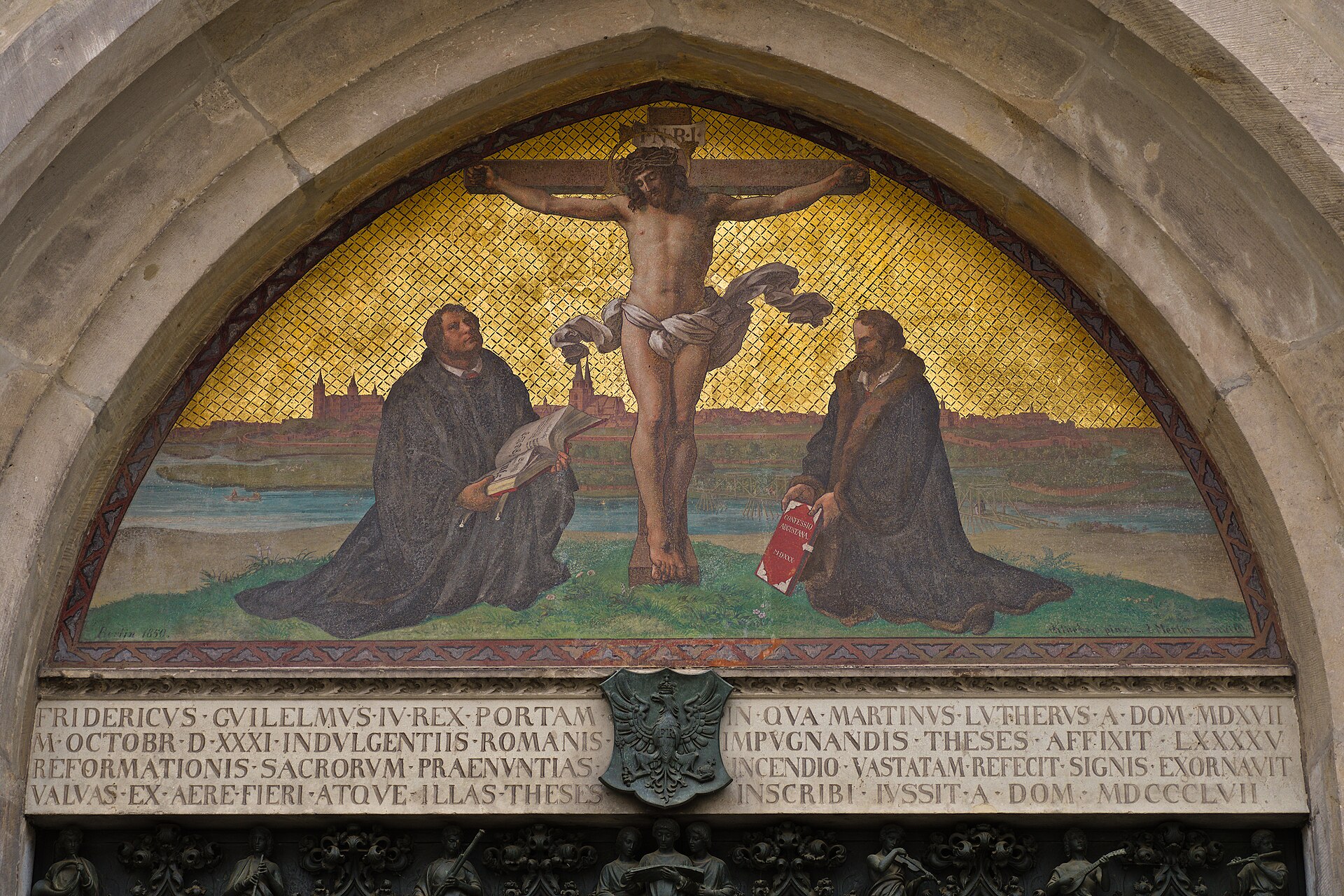
Part B starts where Module 79, Church History, Part A stops. Martin Luther's 95 Theses (1517), the Diet of Worms (1521) and the Augsburg Confession (1530) are told in 79 lesson 11, Luther and the Reformation. Zwingli's Zurich, Calvin's Geneva, the Schleitheim Confession of the first Anabaptists, Henry VIII's break with Rome, Thomas Cranmer's prayer books of 1549 and 1552, the Peace of Augsburg (1555) and the Council of Trent (1545 to 1563) are in 79 lesson 12, Zwingli, Calvin and the Wider Reformation. By about 1560 the main Protestant families of the sixteenth century were in place: a Lutheran church with the Augsburg Confession, Reformed churches in Switzerland, France, the Netherlands and Scotland, a Church of England with its own prayer book, and scattered Anabaptist congregations under persecution.
The Augsburg Confession already shows the questions that would sort the families for the next five centuries. In the English text posted at bookofconcord.org, its ninth article says: "Of Baptism they teach that it is necessary to salvation, and that through Baptism is offered the grace of God, and that children are to be baptized who, being offered to God through Baptism are received into God's grace." The tenth says "that the Body and Blood of Christ are truly present, and are distributed to those who eat the Supper of the Lord." The fourteenth says "that no one should publicly teach in the Church or administer the Sacraments unless he be regularly called."1 Baptism, the Supper, and who may preach and administer the sacraments: nearly every division traced in this module turns on one of these, or on the prior question of authority (Scripture alone, Scripture with a confession, Scripture with Tradition, or Scripture with the inward light).
The later Pietist and Wesleyan revivals are told in Module 77, lesson 01, Holiness and Pietism, and the Pentecostal story in 77 lesson 02. What the word "evangelical" means is defined in 77 lesson 03, and non-denominational churches, which stand outside most of the charts below, are in 77 lesson 04.

The family tree of the churches
The chart below is drawn as a set of lanes on one time line, from 1500 to 2026. Each lane is a family. The colored bar begins when the family began (by its own account or by the first documented congregation or confession), and the dots mark the events named in the two lines of text under the bar. The Catholic and Orthodox lanes are there for orientation: both churches trace their history to the apostles, and the Protestant lanes begin from the Western church in the sixteenth century. Mergers and splits in the American story are named in the text lines; the full trees of mergers for the Lutherans and Presbyterians are in lessons 01 and 02.
The comparison table
The table gives each body's own position on six questions, in short form, followed by its founding date and its latest US count. "Authority" means what the body names as its rule of faith. "Baptism" means who is baptized and how. "Communion" means what the body says happens at the Lord's Supper (also called the Eucharist, Holy Communion or the Lord's Table) and who may receive it. "Government" is the body's polity: episcopal (bishops), presbyterian (elders in graded assemblies), congregational (the local church governs itself), or a mixture. "Ordination" says who may be ordained to the ministry of word and sacrament. Each entry is a summary of the body's own documents; the full statements and the history behind them are in the lesson named in the first column.
The counts are the most recent the body itself has published, with the year the number describes, except where noted. They are not alike. Lutherans and Episcopalians report baptized members, including children. Presbyterians report communicant or total members. Baptists count members who were baptized as believers. The Assemblies of God report adherents, a wider circle than members. The Amish figure is a scholarly estimate of the whole population, children included. The Catholic figure is the number of Catholics connected to parishes, as reported in the Official Catholic Directory.2
| Body (lesson) | Authority | Baptism | Communion | Government | Ordination | Founded | Latest US count (year, source) |
|---|---|---|---|---|---|---|---|
| Catholic Church (13) | Scripture and Tradition, taught by the Magisterium (pope and bishops) | Infants and adults; "the basis of the whole Christian life"3 | The Eucharist; bread and wine become the body and blood of Christ (transubstantiation); received by Catholics in good standing | Episcopal: pope, bishops in dioceses | Men only (bishops, priests, deacons) | Claims continuity from the apostles; first US diocese, Baltimore, 1789 | 66.3 million parish-connected (2025, Official Catholic Directory via CARA); 73.7 million self-identified (survey estimate)2 |
| Orthodox churches (13) | Scripture within Holy Tradition; the seven ecumenical councils | Infants and adults, by triple immersion, with chrismation | The Divine Liturgy; the gifts become the body and blood of Christ; received by Orthodox Christians | Bishops in self-governing (autocephalous) churches and synods | Men only | Claims continuity from the apostles; Alaska mission 1794; OCA autocephaly 19704 | 1,167,178 adherents, Eastern and Oriental together (2020, Krindatch census); 675,765 Eastern Orthodox5 |
| Lutheran Church Missouri Synod (01) | Scripture; the Book of Concord (1580) as a true exposition of it | Infants and adults; a means of grace | Real presence of Christ's body and blood; close communion | Synod of congregations, with districts and a president | Men only | 18476 | 1,674,315 baptized; 1,328,392 confirmed (2024, LCMS annual report)7 |
| Wisconsin Evangelical Lutheran Synod (01) | Scripture; the Book of Concord | Infants and adults | Real presence; closed communion, with stricter fellowship (prayer and worship) than the LCMS | Synod of congregations | Men only | 1850, Granville, Wisconsin8 | 322,000 baptized; 257,858 communicant; 1,233 churches (end of 2025, down 5,943 members from 2024)941 |
| Evangelical Lutheran Church in America (01) | Scripture, the ecumenical creeds and the Lutheran Confessions | Infants and adults | Real presence; open to the baptized; full communion with several other churches | Churchwide assembly and synods led by bishops | Women and men | 1988 (constituting convention April 1987)10 | 2,588,700 baptized in 8,208 congregations (end of 2025)11 |
| Presbyterian Church (U.S.A.) (02) | Scripture; the Book of Confessions | Infants of believers and adults | Spiritual presence (Reformed); open to the baptized | Presbyterian: session, presbytery, synod, General Assembly | Women and men | 1983 reunion | 1,019,003 members, 8,304 congregations (2025)12 |
| Presbyterian Church in America (02) | Scripture; the Westminster Standards | Infants of believers and adults13 | Spiritual feeding on Christ; a fenced table | Presbyterian | Men only (elders and ministers) | December 1973, Birmingham | 400,751 total members, 1,667 churches (2024)14 |
| Orthodox Presbyterian Church (02) | Scripture; the Westminster Standards | Infants of believers and adults | Spiritual feeding on Christ | Presbyterian | Men only | June 11, 1936, Philadelphia | 33,941 members (end of 2025)15 |
| Episcopal Church (04) | Scripture, the creeds and the Book of Common Prayer (1979); the Articles kept as a historical document | Infants and adults16 | Holy Eucharist; real presence, variously explained; open to the baptized | Episcopal, with a bicameral General Convention | Women and men in all three orders | 1789 (first bishop consecrated 1784) | 1,547,779 active baptized, including dioceses outside the US (2023); no total published for 20241718 |
| Anglican Church in North America (04) | Scripture, the creeds, the Thirty-nine Articles and the 1662 Prayer Book as standards | Infants and adults | Holy Communion; real presence | Episcopal, with a provincial council and college of bishops | Men as bishops; women as priests where the diocese permits | June 2009 | 130,111 members in 1,027 congregations, US and Canada (2024)19 |
| United Church of Christ (05) | Scripture; creeds and confessions as "testimonies" of faith | Infants and adults | Open table | Congregational, in covenant with associations, conferences and General Synod | Women and men | 1957 | 666,073 members, 4,431 congregations (end of 2024)42; 683,936 in 4,485 at the end of 202320 |
| Southern Baptist Convention (06) | Scripture; the Baptist Faith and Message (2000) as a confession | Believers only, by immersion21 | A memorial ordinance | Congregational: autonomous churches that cooperate | Pastor limited to men21 | 1845, Augusta, Georgia | 12,331,954 members, 46,608 churches (2025)22 |
| American Baptist Churches USA (06) | Scripture; no binding creed | Believers only, by immersion | A memorial ordinance | Congregational, with regions | Women and men | 1907 (as the Northern Baptist Convention) | About 1.1 million reported by the body (not confirmed in a document opened for this lesson) |
| United Methodist Church (07) | Scripture first, with tradition, experience and reason; the Articles of Religion | Infants and adults23 | Open table; real, spiritual presence | Connectional: bishops, annual conferences, General Conference | Women and men | April 196824 | 3,814,781 members, 20,158 churches, US (latest statistical year shown, GCFA)25 |
| Global Methodist Church (07) | Scripture; the Articles of Religion and Confession of Faith | Infants and adults | Open to believers | Connectional, with bishops | Women and men | May 1, 2022 | About 7,250 congregations worldwide (September 2026, as reported from the GMC; it passed 6,000 in October 2025); no membership total published4326 |
| African Methodist Episcopal Church (07) | Scripture; the Methodist Articles of Religion | Infants and adults | Open table | Episcopal and connectional | Women and men | 1816, Philadelphia27 | No recent audited count found |
| Mennonite Church USA (08) | Scripture; Confession of Faith in a Mennonite Perspective (1995) | Believers only28 | A sign and remembrance; foot washing practiced in many congregations | Congregations in area conferences | Women and men | 2002 merger | About 50,000 (reported for 2025; not confirmed in a document opened for this lesson)29 |
| Old Order Amish (08) | Scripture; the Dordrecht Confession (1632) and the Ordnung | Believers only, as young adults | Twice a year, with foot washing | Church districts with bishop, ministers and deacon chosen by lot | Men only | 1693 division | 404,575 in the US, children included (2025 estimate, Young Center)30 |
| Religious Society of Friends (09) | The Inward Light of Christ, with Scripture | No outward rite: the baptism "of the Spirit and fire"31 | No outward rite; inward communion | Monthly, quarterly and yearly meetings | No clergy in unprogrammed meetings; recorded ministers and pastors, women and men, in programmed meetings | About 1650 (George Fox) | No national total; members and attenders fell 12 percent from 2010 to 2020 (FWCC)32 |
| Churches of Christ (10) | The Bible only; no creed | Believers only, by immersion, for the remission of sins | Every Sunday; a memorial | Autonomous congregations led by elders | Men only as elders and preachers | Listed apart in the 1906 religious census | 1,423,295 adherents (baptized and unbaptized) and 1,092,182 in attendance, in 11,875 congregations (2021, 21st Century Christian data)33 |
| Christian Church (Disciples of Christ) (10) | Scripture; no creed but Christ | Believers, usually by immersion | Every Sunday, open to all34 | Covenantal: congregations, regions, General Assembly | Women and men | 1832 union; 1968 restructure | 277,864 members (2022, as reported in the press)35 |
| Assemblies of God (13) | Scripture; the Statement of Fundamental Truths | Believers only, by immersion; Spirit baptism taught as a further experience | A memorial ordinance | Cooperative fellowship of self-governing churches, with districts | Women and men credentialed | April 1914, Hot Springs, Arkansas | "More than 3 million" adherents (2024 data, Influence magazine)36 |
The rows can be read down as well as across. Read down the "Baptism" column and the families fall into two groups: those that baptize the infants of believers (Catholic, Orthodox, Lutheran, Reformed, Anglican, Congregational, Methodist) and those that baptize only those who confess faith (Anabaptist, Baptist, Restoration, Pentecostal), with the Quakers keeping no outward rite at all. Read down "Government" and the three classic polities show up in pure and mixed forms. Read down "Ordination" and the line that divides most sharply in 2026 runs through families, not between them: Lutherans, Presbyterians, Anglicans, Baptists and Methodists all have bodies on both sides of the question of women's ordination.
The confessions in their own words
A few short passages show how the bodies themselves state the positions summarized in the table. The Thirty-nine Articles of the Church of England, in the text posted by the Church of England, say that "Holy Scripture containeth all things necessary to salvation" (Article VI), that "There are two Sacraments ordained of Christ our Lord in the Gospel, that is to say, Baptism, and the Supper of the Lord" (Article XXV), and that "The Baptism of young Children is in any wise to be retained in the Church" (Article XXVII).16 The Westminster Confession, in the text posted by the Orthodox Presbyterian Church, says that "the infants of one, or both, believing parents, are to be baptized" (28.4), and that worthy receivers feed on Christ "yet not carnally and corporally but spiritually" (29.7).13 The Methodist Articles of Religion, as posted by the United Methodist Church, keep the Anglican wording on infants: "The Baptism of young children is to be retained in the Church" (Article XVII).23
On the other side of the font, the Baptist Faith and Message (2000) says: "Christian baptism is the immersion of a believer in water in the name of the Father, the Son, and the Holy Spirit" (Article VII), and in Article VI that "the office of pastor/elder/overseer is limited to men as qualified by Scripture."21 Mennonite Church USA's Confession of Faith in a Mennonite Perspective says: "We believe that the baptism of believers with water is a sign of their cleansing from sin" (Article 11).28 Robert Barclay's Apology (1676), the classic Quaker statement, describes the one baptism as "a pure and spiritual thing, to wit, the baptism of the Spirit and fire" (Proposition 12).31 The Christian Church (Disciples of Christ) says on its identity page: "All are welcome to the Lord's Table," and "Most congregations do this by celebrating communion every Sunday."34 The Catechism of the Catholic Church opens its article on baptism: "Holy Baptism is the basis of the whole Christian life" (paragraph 1213).3
The lessons in review
Each paragraph below sums up one lesson of the module and links to it. The lessons give the full sources; the paragraphs here repeat only the main dates and the main points of difference, so that the chart and table above can be read against them.
Lesson 01: Lutherans and the Lutheran synods
Lesson 01 follows the Lutheran confessions from the Augsburg Confession (1530) through the Formula of Concord (1577) to the Book of Concord of 1580, and then the Lutheran churches in America: Henry Melchior Muhlenberg and the Ministerium of Pennsylvania (1748), the Saxon emigration of 1838 to 1839 under Martin Stephan and C. F. W. Walther, and the founding of the body now called the Lutheran Church Missouri Synod in 1847. The Association of Religion Data Archives gives its original name as "The German Evangelical Lutheran Synod of Missouri, Ohio and Other States," shortened in 1947.6 The Wisconsin Synod held its first meeting at Granville in 1850, and its own time line records that in 1961 the "Synod resolves to break with LCMS."8 The lesson sets out the doctrine of church fellowship that separates the LCMS from the stricter WELS and Evangelical Lutheran Synod, the Seminex walkout of February 1974, the mergers that made the ELCA in 1988 (the ELCA's own history names the American Lutheran Church, the Lutheran Church in America and the Association of Evangelical Lutheran Churches10), the ELCA's full communion agreements and its 2009 ministry decisions, and the bodies that formed after them (LCMC in 2001, NALC in 2010). The ELCA reported 2,588,700 baptized members at the end of 2025, down from 2,677,239 a year earlier.11

Lesson 02: The Reformed and Presbyterians
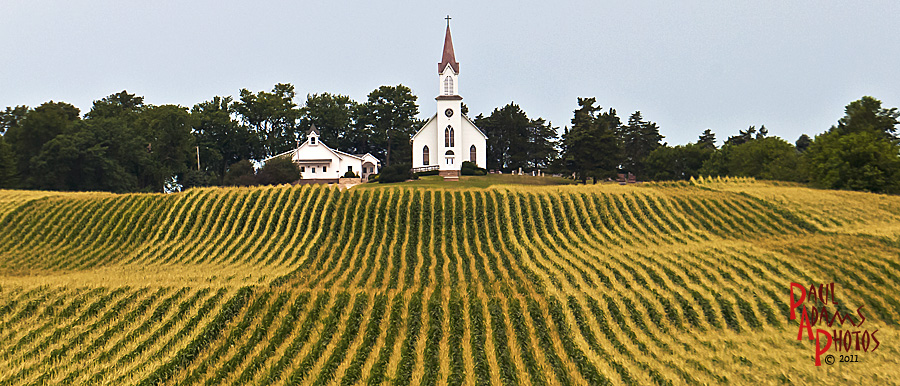
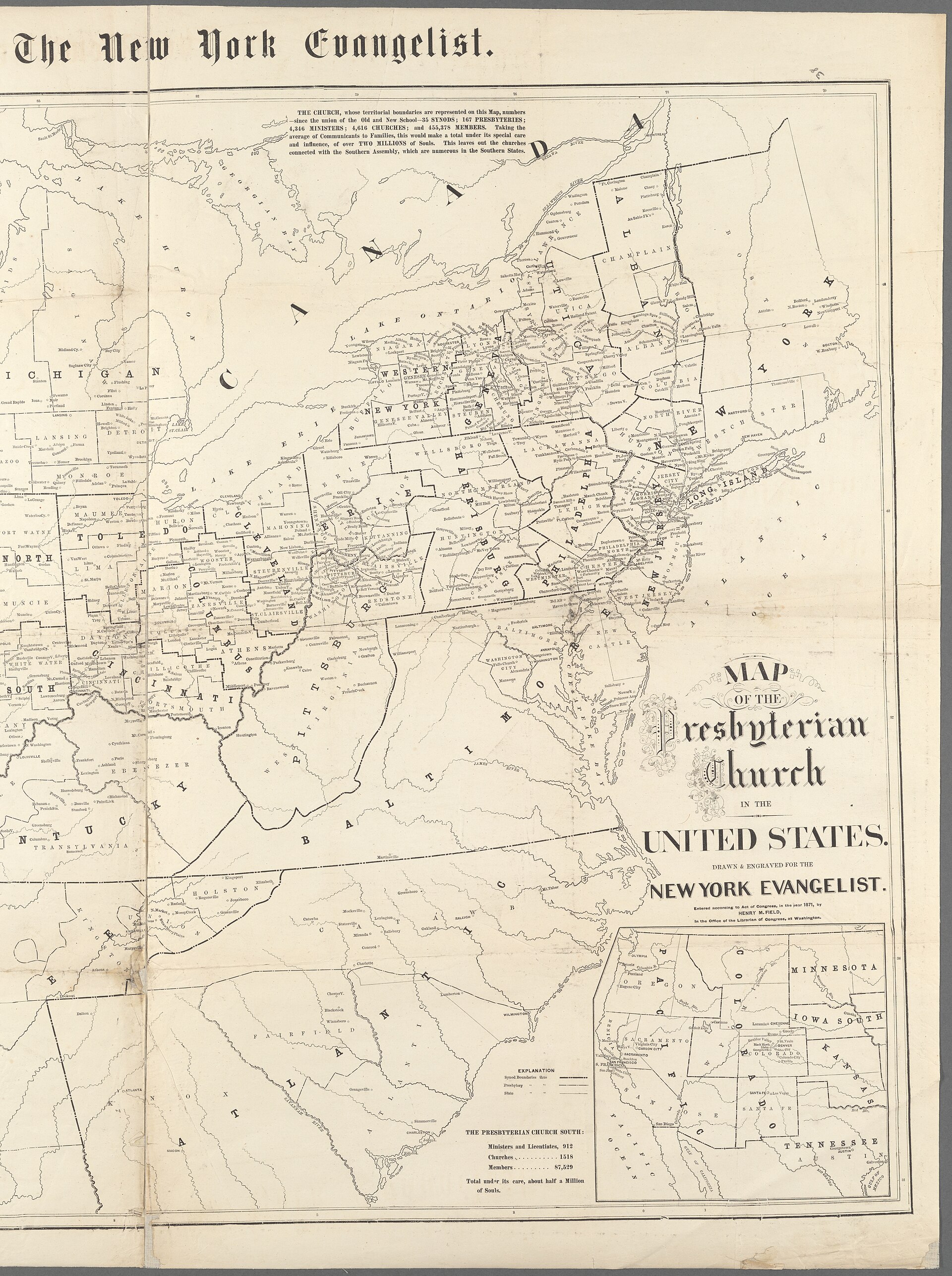
Lesson 02 traces the Reformed family from the Scots Confession of 1560 and John Knox (briefly, since 79 lesson 12 tells his story) to the Westminster Assembly of the 1640s and its Confession and Catechisms, the Covenanters, and the Disruption of 1843 in Scotland. In America it follows Francis Makemie and the first presbytery (1706), the Old Side and New Side and Old School and New School divisions, the Auburn Affirmation of 1924, J. Gresham Machen and the fundamentalist and modernist controversy, the Orthodox Presbyterian Church (1936), the Presbyterian Church in America (1973), the 1983 reunion that formed the PC(USA), and the newer bodies (EPC in 1981, ECO in 2012), with the Christian Reformed Church, the Reformed Church in America and the URCNA. The PC(USA) reported 1,019,003 members for 2025, "a loss of 26,845 members from 2024," in 8,304 congregations.12 The PCA's five-year summary reports 400,751 total members at the end of 2024, up from 383,338 in 2020,14 and the OPC's 2026 General Assembly heard that "total OPC membership stood at 33,941" at the end of 2025.15

Lesson 03: Calvinism and Arminianism
Lesson 03 sets the two systems side by side in each side's own words: the Five Articles of the Remonstrance (1610), drawn up after the death of Jacobus Arminius in 1609, and the Canons of the Synod of Dort (1618 to 1619), which answered them point by point and gave rise to what later came to be called the five points of Calvinism. The lesson checks when the acronym TULIP first appears (it is a modern summary, not a term from Dort), covers Amyraldianism and the Westminster Confession's chapter III on God's eternal decree, and explains the Wesleyan Arminian view (with a link to 77 lesson 01 for Wesley himself). It also gives the Lutheran answer in Article XI of the Formula of Concord, which accepts neither system as stated. The lesson ends with where the Baptists, Presbyterians and Methodists line up today: confessional Presbyterians hold Dort and Westminster, Methodists hold the Wesleyan view, and Baptists are found on both sides.

Lesson 04: Anglicans and Episcopalians
Lesson 04 runs from the Elizabethan Settlement of 1559 and the Thirty-nine Articles (Latin 1563, English 1571), through Richard Hooker, the 1662 Book of Common Prayer and the Nonjurors, to the Episcopal Church after the American Revolution: Samuel Seabury's consecration in Aberdeen in November 1784 and the 1789 convention and prayer book. It follows the Oxford Movement, the Lambeth Conferences and the Chicago-Lambeth Quadrilateral, the ordination of women (the Philadelphia Eleven in 1974 and the 1976 authorization), the 1979 prayer book, the 2003 consecration in New Hampshire, the founding of the Anglican Church in North America in June 2009 and GAFCON (2008), and the state of the Anglican Communion through 2026. The Episcopal Church's 2023 parochial report analysis counted "6,754 open parishes and missions, 1,547,779 active baptized members, and a total average Sunday worship service attendance (ASA) of 410,912."17 For 2024 the church published no membership total; its Public Affairs Office said the new questions "revealed confusion in how churches understood and reported this topline number."18 ACNA reported 130,111 members for 2024.19
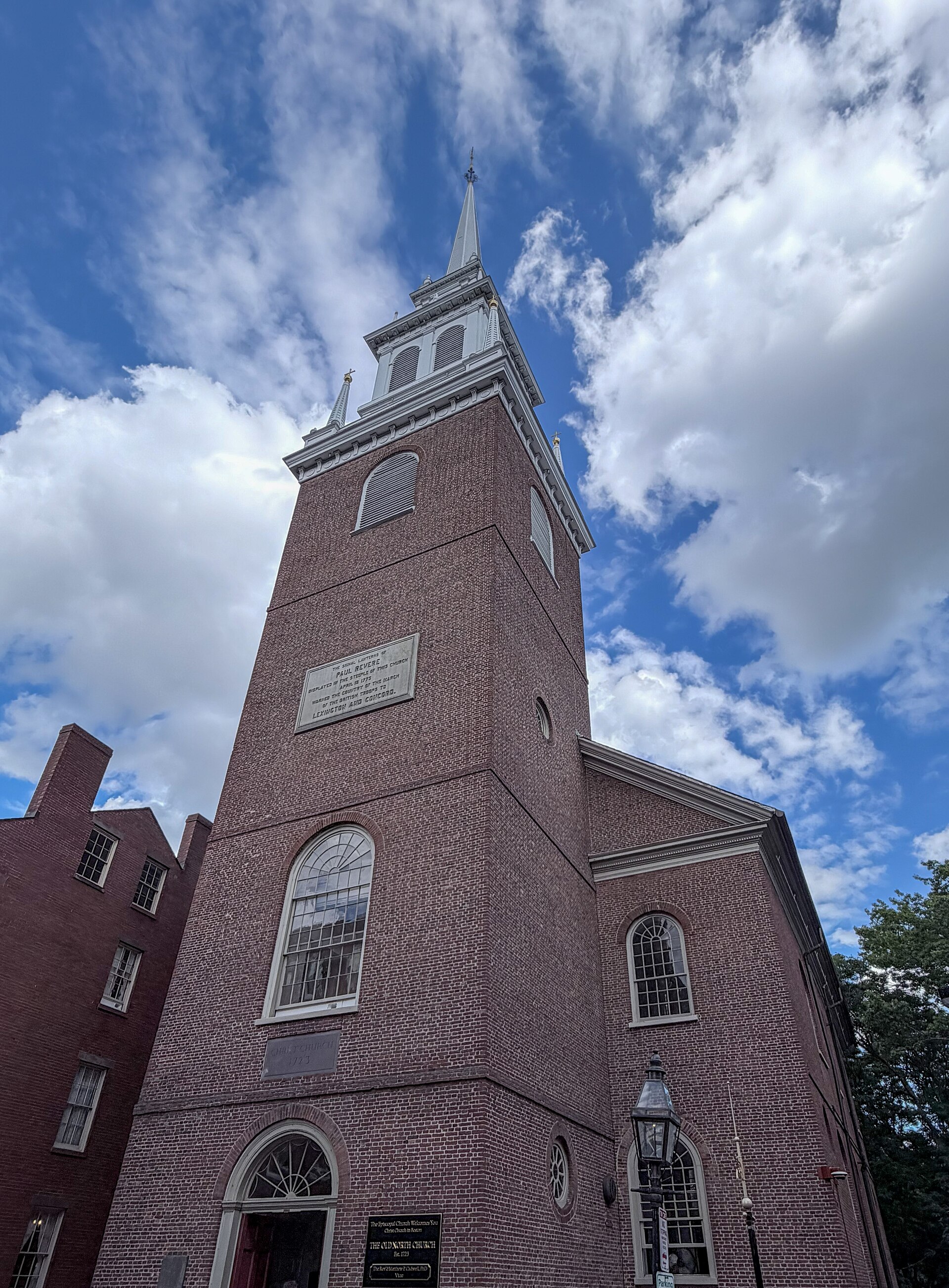

Lesson 05: Congregationalists and the Puritans
Lesson 05 separates the Puritans who stayed in the Church of England from the Separatists who left it, and follows both to New England: Plymouth in December 1620 after the Mayflower Compact, and Massachusetts Bay in 1630. It sets out the Cambridge Platform (1648), the Savoy Declaration (1658) and the Half-Way Covenant (1662), Jonathan Edwards only so far as the lesson needs him, the end of the state establishments (Connecticut 1818, Massachusetts 1833), and the Unitarian departure. The modern line runs through the 1931 merger of the Congregational churches with the Christian Church (the UCC's own history records that "On June 27, 1931, at Seattle, Washington, the Christian Church" joined the Congregationalists37) to the United Church of Christ in 1957, while the continuing Congregational bodies (the NACCC from 1955 and the Conservative Congregational Christian Conference) stayed out of the union. The UCC's 2024 statistical profile reports that "At the end of 2023, there were 4,485 congregations in the United Church of Christ with a total of 683,936 members."20 Its later "Summary Statistics 1955 - 2024" gives 666,073 members in 4,431 congregations for 2024.42 For Puritan law and the founding, see also Liberty 56, lesson 08.
Lesson 06: Baptists
Lesson 06 begins with John Smyth's congregation in Amsterdam (1609) and Thomas Helwys's return to England (1612), distinguishes General from Particular Baptists, and sets out the 1689 London Baptist Confession. In America it follows Roger Williams and Providence, Isaac Backus and John Leland on religious liberty, the Triennial Convention (1814), the founding of the Southern Baptist Convention at Augusta in 1845 and its 1995 resolution on slavery and racism, Landmarkism (J. R. Graves), the Baptist Faith and Message (1925, 1963, 2000) and the conservative resurgence from 1979. It then surveys the many kinds: Southern, American Baptist Churches USA, Independent Fundamental, Free Will, Primitive, Reformed, Old Regular, Seventh Day, the National Baptist bodies and the Cooperative Baptist Fellowship (1991). The SBC's 2025 Annual Church Profile reported membership "dipping to 12,331,954" in 46,608 affiliated congregations, still the largest Protestant body in the country by its own count.22
Lesson 07: Methodists and the Holiness lines
Lesson 07 covers the Methodist denominations (Wesley's life and the Holiness revival are in 77 lesson 01): the Christmas Conference in Baltimore (December 1784) with Francis Asbury and Thomas Coke, the African Methodist Episcopal Church (1816), AME Zion and the CME Church, the 1844 division over slavery and the 1939 reunion, the Evangelical United Brethren and the 1968 merger that made the United Methodist Church, the Wesleyan Methodist and Free Methodist churches, and the Holiness bodies (the Church of the Nazarene, the Salvation Army, the Church of God, Anderson). It then follows the 2019 special General Conference, the disaffiliations, the launch of the Global Methodist Church on May 1, 2022, and the 2024 General Conference decisions. By August 2023 the UMC reported that "U.S. annual conferences have approved 6,225 congregations for disaffiliation," about 20.4 percent of US congregations.38 The UMC's data site now shows 3,814,781 members in 20,158 active US churches for the latest reported year.25 The Global Methodist Church passed 6,000 congregations worldwide in October 202526 and reported about 7,250 in September 2026.43
Lesson 08: Anabaptists today
Lesson 08 follows the heirs of the first Anabaptists: the Dordrecht Confession (1632), the Amish division of 1693 under Jakob Ammann, the Mennonites at Germantown (1683), the Hutterites with their community of goods (Jakob Hutter was burned at Innsbruck in 1536), and the Brethren of Alexander Mack (Schwarzenau, 1708). It describes Mennonite Church USA (formed by merger in 2002), the conservative Mennonite and Old Order groups, and Wisconsin v. Yoder (1972) on Amish schooling in a paragraph. The Young Center for Anabaptist and Pietist Studies at Elizabethtown College estimates 404,575 Amish in the United States in 2025, in 662 settlements and 3,056 church districts, a figure that "include[s] both adults and children."30 Mennonite World Conference counts 2.03 million baptized believers in the wider Anabaptist family worldwide.29
Lesson 09: Quakers and the radical tradition
Lesson 09 tells the story of George Fox and the Inward Light, Margaret Fell, the peace testimony of 1660, persecution and the Toleration Act (1689), William Penn's charter for Pennsylvania (1681), Mary Dyer (hanged on Boston Common in June 1660), John Woolman and the campaign against slavery, and the Hicksite and Orthodox separation of 1827 to 1828, followed by the Gurneyite and Wilburite division. It explains the difference between programmed meetings (with pastors and planned worship) and unprogrammed meetings (silent worship without clergy), and the present groupings: Friends United Meeting, Friends General Conference, Evangelical Friends Church International and the Conservative Friends. It closes with the wider radical tradition (Seekers, Levellers and Diggers briefly, and the Shakers). No national membership total is published; FWCC's census work found "a decline of 24% in the number of Friends meetings and churches in the United States between 2010 and 2020" and a 12 percent decline in members and attenders.32
Lesson 10: The Restoration Movement
Lesson 10 starts at the Cane Ridge meeting of August 1801 and Barton W. Stone, Thomas Campbell's Declaration and Address (1809) and Alexander Campbell, and the union of the Stone and Campbell movements at Lexington, Kentucky (1832). It follows the disputes over instrumental music in worship and over missionary societies, the separate listing of the Churches of Christ in the 1906 federal census of religious bodies, the 1968 restructure of the Christian Church (Disciples of Christ), the independent Christian Churches and Churches of Christ, and, as far as the record allows, the International Churches of Christ. The lesson sets out what each body says about baptism (by immersion of believers, with differences over its purpose), the weekly Lord's Supper, and congregational autonomy. The Disciples describe weekly communion in their own words: "Most congregations do this by celebrating communion every Sunday."34
Lesson 11: Mainline and evangelical
Lesson 11 asks how the denominations divide into "mainline" and "evangelical," who uses the "Seven Sisters" label for the older Protestant bodies, and what the bodies' own membership reports show decade by decade. It weighs the explanations scholars have offered (Dean Kelley's Why Conservative Churches Are Growing, 1972; Roger Finke and Rodney Stark; the birth-rate study of Michael Hout, Andrew Greeley and Melissa Wilde, 2001) and the doctrinal differences as each side states them, on Scripture, sexuality and ordination, with the dates of the votes. It describes the National Council of Churches and the National Association of Evangelicals (linking 77 lesson 03 for the definition of evangelical and Liberty 58, lesson 14 for Barth and liberal theology) and gives the figures from the Pew Research Center's large national religion surveys of 2007, 2014 and 2023 to 2024. The bar chart above shows why the categories matter: the largest single Protestant body (the SBC) reported a membership decline in 2025, while some smaller confessional bodies (the PCA, the OPC and ACNA) reported growth.
Lesson 12: Dominion theology and Reconstructionism
Lesson 12 describes three movements from their own writers' texts and then gives the critiques of those who reject them, in their own words. Christian Reconstructionism is presented from Rousas John Rushdoony's The Institutes of Biblical Law (1973) and the Chalcedon Foundation (1965), with Greg Bahnsen's Theonomy in Christian Ethics (1977) and the writings of Gary North; the New Apostolic Reformation from C. Peter Wagner's own use of the term; and the "Seven Mountains" framing from the accounts of Loren Cunningham, Bill Bright and Lance Wallnau. The lesson separates postmillennialism, theonomy and "dominion" as each writer defines them, traces the roots each movement claims (Kuyper's sphere sovereignty, the Puritan law codes, Van Til's presuppositional apologetics), and gives the published responses, including Westminster Theological Seminary's faculty volume Theonomy: A Reformed Critique (1990) and denominational statements. Francis Schaeffer's A Christian Manifesto is treated in Liberty 56, lesson 05.
Lesson 13: Pentecostal, Orthodox and Catholic bodies
Lesson 13 is a short orientation to three groups that are not Protestant families in the Reformation sense, or (in the Pentecostal case) that grew from Protestant roots into a family of their own. It describes the Assemblies of God (organized at Hot Springs, Arkansas, in April 1914), the Church of God in Christ, the Church of God (Cleveland, Tennessee), the Foursquare Church and the Oneness bodies such as the United Pentecostal Church, with the history in 77 lesson 02. It sets out the Orthodox jurisdictions in America, the autocephaly of the Orthodox Church in America (which the OCA describes as "Founded in 1794 ... Granted Autocephaly in 1970"4) and the Assembly of Canonical Orthodox Bishops, linking 79 lesson 08 for the East and West division. It closes with the Catholic Church in the United States, its dioceses and Eastern Catholic churches, and its counts from CARA: 16,125 parishes and 66.3 million parish-connected Catholics in 2025.2 Alexei Krindatch's census counted 1,167,178 Orthodox adherents in 2,909 parishes in 2020.5
Where to find each body's own documents
The fairness rule of this module is to let each body speak first. The list below gives where each body publishes its confession or statement of faith, its constitution or book of order, and its statistics. Web addresses change; when a link moves, the body's archives or historical society usually keeps the older documents.
- Lutherans. The Book of Concord in English at bookofconcord.org.1 LCMS: lcms.org (Constitution, Bylaws and Handbook; the Commission on Theology and Church Relations reports; the annual report with statistics). WELS: wels.net (doctrinal statements, the "This We Believe" statement, statistical summaries). ELCA: elca.org (Constitutions, Bylaws and Continuing Resolutions; social statements; the annual summary of congregational statistics).
- Presbyterian and Reformed. PC(USA): pcusa.org (the Book of Confessions and the Book of Order; annual statistics from the Office of the General Assembly). PCA: pcaac.org (the Book of Church Order, the Westminster Standards with PCA amendments, and statistics). OPC: opc.org (the Westminster Confession and Catechisms; General Assembly reports with the statistician's report).13
- Anglican and Episcopal. The Thirty-nine Articles and the 1662 Book of Common Prayer at the Church of England's site.16 The Episcopal Church: the 1979 Book of Common Prayer, the Constitution and Canons, and the parochial report analyses at generalconvention.org. ACNA: anglicanchurch.net (Constitution and Canons, the 2019 Book of Common Prayer, the catechism To Be a Christian).
- Congregational. UCC: ucc.org (Constitution and Bylaws, the Statement of Faith, General Synod resolutions, and the statistical profile from the Center for Analytics, Research and Development, and Data).20 The Cambridge Platform and Savoy Declaration in Williston Walker's Creeds and Platforms of Congregationalism (1893, public domain).
- Baptists. SBC: the Baptist Faith and Message at bfm.sbc.net; Annual Church Profile reports from Lifeway Research and Baptist Press.21 American Baptist Churches USA: abc-usa.org. The member bodies of the Baptist World Alliance at baptistworld.org.
- Methodists and Holiness. UMC: the Book of Discipline and Book of Resolutions, and the Articles of Religion at umc.org; statistics at umdata.org.2325 Global Methodist Church: the Book of Doctrines and Discipline at globalmethodist.org. AME Church: the Book of Discipline and history at ame-church.com. Church of the Nazarene: the Manual.
- Anabaptists. Mennonite Church USA: the Confession of Faith in a Mennonite Perspective.28 Amish population figures: the Young Center.30 Global Anabaptist statistics: Mennonite World Conference.
- Friends. Barclay's Apology and other early texts at Quaker Heritage Press;31 each yearly meeting publishes its own Faith and Practice; census work at FWCC Section of the Americas.
- Restoration Movement. Disciples: disciples.org (the Design for the Christian Church, the Disciples Year Book).34 Churches of Christ: no central office; the directory Churches of Christ in the United States published by 21st Century Christian. Thomas Campbell's Declaration and Address (1809) is in the public domain.
- Pentecostal. Assemblies of God: the Statement of Fundamental Truths, position papers and statistics at ag.org; AG News and Influence magazine.36
- Catholic and Orthodox. The Catechism of the Catholic Church at vatican.va;3 US statistics at CARA.2 The Orthodox Church in America's history and its Tomos of Autocephaly at oca.org;4 census figures at Orthodox Reality.5
- Across all bodies. The Association of Religion Data Archives (thearda.com) for group profiles and the US Religion Census; the Pew Research Center for its national religion surveys (2007, 2014, 2023 to 2024) and global estimates.639
What the record shows and what it does not
- Documented fact: the dates of the confessions and assemblies named in the table (the Augsburg Confession 1530, the Thirty-nine Articles 1563 and 1571, the Westminster Confession of the 1640s, the Baptist Faith and Message 2000), and each body's own published count for the year given.
- Documented fact with a caution: the counts measure different things (baptized, confirmed, communicant, total, adherents, estimated population), so a comparison between two bodies is only as good as the match between their definitions.
- A church's own claim: that it continues the church of the apostles (Catholic and Orthodox), that its confession agrees with Scripture (Lutheran, Reformed), that it restored the New Testament pattern (Restoration), or that it follows the Inward Light (Friends). These are reported as claims; the site does not judge them.
- Scholarly reading: why some bodies grew and others shrank (Kelley, Finke and Stark, Hout, Greeley and Wilde) is a matter of interpretation, set out with names in lesson 11.
- Open questions: the true number of Quakers in the United States (no national total is published), the size of bodies that do not publish counts (the AME Church, several National Baptist conventions), and the exact final number of United Methodist disaffiliations, which the Lewis Center (7,631) and UM News (7,659) count slightly differently.
Claims checked
"There are 30,000 (or 45,000) Protestant denominations"
Rating: Partly supported. Large figures of this kind come from the Center for the Study of Global Christianity. The Pew Research Center, using its data, wrote that "CSGC has obtained denominational membership information from about 41,000 organizations worldwide," and explained in a note that "This is the global sum of the total number of denominations in each country."39 The same body working in fifty countries counts fifty times, and the total includes Catholic, Orthodox and independent bodies. The number is real as a count of national organizations; it is not a count of distinct Protestant doctrines or traditions, which the chart above groups into about ten families.
"The ELCA is the largest Lutheran church in the United States"
Rating: Supported. The ELCA reported 2,588,700 baptized members at the end of 2025;11 the LCMS reported 1,674,315 baptized members for 2024.7 The ELCA's figure fell by 88,539 in one year; the two bodies' figures should be compared with care, since the LCMS number describes 2024 and the ELCA number 2025.
"The Southern Baptist Convention is the largest Protestant body in America"
Rating: Supported. The SBC's 2025 Annual Church Profile reported 12,331,954 members,22 more than three times the next figure in the chart (the United Methodist Church's 3,814,781).25 The Catholic Church, with 66.3 million parish-connected members in 2025, is larger than any Protestant body.2
"Mainline churches are shrinking and evangelical churches are growing"
Rating: Partly supported. The older mainline bodies report steady losses: the PC(USA) lost 26,845 members in 2025,12 the ELCA fell from 2,677,239 to 2,588,700 baptized members between 2024 and 2025,11 and the UCC's own profile records "a net loss of 631 congregations and 295,303 members" from 2013 to 2023.20 But the largest evangelical body, the SBC, also reported a membership decline in 2025.22 Growth is reported by some smaller confessional bodies: the PCA (from 383,338 in 2020 to 400,751 in 2024),14 the OPC (up 397 members in 2025)15 and ACNA (up 1,997 in 2024).19 The pattern is real for the mainline; "evangelical churches are growing" is true of some bodies and false of others.
"Protestants do not baptize babies"
Rating: Refuted. The Augsburg Confession says "that children are to be baptized,"1 the Thirty-nine Articles that infant baptism "is in any wise to be retained,"16 the Westminster Confession that the infants of believers "are to be baptized,"13 and the Methodist Articles that it "is to be retained in the Church."23 Believers' baptism only is the position of the Anabaptist, Baptist, Restoration and Pentecostal families.
"The Episcopal Church has stopped reporting its membership"
Rating: Partly supported. The 2024 report omitted the membership total after a change in the parochial report form; the church's Public Affairs Office said the changes "revealed confusion in how churches understood and reported this topline number."18 The church still published parishes, attendance and baptisms, and its 2023 analysis gave 1,547,779 active baptized members.17 Whether a total will be published for later years is not known as of October 2026.
"A quarter of United Methodist churches left"
Rating: Supported for congregations by the end of 2023; partly supported for earlier dates. UM News reported in July 2023 that annual conferences had "approved the exit of 6,179 churches with property," about 20 percent of US congregations.40 The UMC's own August 2023 count was 6,225, about 20.4 percent, against a 2019 base of 30,541 congregations.38 By December 31, 2023, when the disaffiliation paragraph expired, the Lewis Center for Church Leadership counted 7,631 churches approved for disaffiliation, 25 percent of United States churches, holding 24 percent of members,44 and the UM News tally reported by Christianity Today gave 7,659, "nearly 1 out of 4."45 Lesson 07 compares the counts. The share of members who left is a different number from the share of congregations, and the two should not be confused.
"The Missouri Synod was founded in Missouri"
Rating: Partly supported. The Saxon immigrants who formed its core settled in and around St. Louis and Perry County, Missouri, and ARDA's profile says the body "was founded in Missouri by German immigrants in 1847."6 The synod's founding convention, however, met in Chicago in April 1847, and its original name covered "Missouri, Ohio and Other States." Lesson 01 gives the founding record.
Hard questions and answers
A Catholic reader asks: if Protestants all hold to Scripture, why are there so many bodies?
The record in this module shows that the divisions came over particular, documented questions, and that each side stated its reasons. Some were questions of doctrine present from the sixteenth century (the Supper between Lutherans and Reformed, infant baptism between both of them and the Anabaptists, predestination at Dort). Some were questions of church government (bishops, presbyteries or the congregation). Some arose in America: slavery divided the Baptists in 1845 and the Methodists in 1844; the fundamentalist and modernist controversy divided the Presbyterians in the 1920s and 1930s; the ordination of women and questions of sexuality divided Lutherans, Episcopalians, Presbyterians and Methodists from the 1970s to the 2020s. The record also shows many mergers: the ELCA (1988), the UCC (1957), the UMC (1968), the PC(USA) (1983) and the 1939 Methodist reunion each joined bodies that had been apart. Catholic writers have long answered that the divisions show the need for a living teaching office; Protestant writers answer that unity rests on the gospel confessed in common. Both positions are stated by the bodies themselves; the site does not decide between them.
An Orthodox reader asks: why are the Catholic and Orthodox churches on a chart of Protestant denominations?
Only for orientation. Neither church describes itself as a denomination among others: each holds that it is the church founded by the apostles, and the Orthodox Church in America dates its own mission in North America to 1794.4 The Protestant families all began within the Western (Latin) church, and their confessions define themselves against Catholic teaching at many points, so a reader needs the starting point in view. The East and West division itself is in 79 lesson 08.
A Lutheran reader asks: if the LCMS and the ELCA both claim the Book of Concord, why can their members not commune together?
Because the two bodies hold different views of what agreement in doctrine requires before altar fellowship. The ELCA's constitution accepts the Lutheran Confessions and its full communion agreements of 1997 to 1999 with Reformed, Episcopal and Moravian churches express its view that a shared understanding of the gospel is enough for shared communion. The LCMS practices close communion and does not recognize those agreements as consistent with the Confessions; WELS and the ELS hold a stricter rule still, extending to joint prayer. Each body's own statements and the history from the Synodical Conference to the 1960s breakup are in lesson 01.
A skeptic asks: can these membership numbers be compared at all?
With care. The ELCA, LCMS, WELS and Episcopal figures include baptized children; the SBC counts members baptized as believers, so its children under the age of profession are not counted; the PCA's "total membership" includes communicant and non-communicant members and teaching elders; the Assemblies of God report adherents, a wider group than members; the Amish figure is an outside estimate of the whole population; and the Catholic figure comes in two forms, 66.3 million parish-connected and 73.7 million self-identified in 2025.2 Members also differ from attenders: the OPC reported 33,941 members and a morning worship attendance of 27,094 in 2025,15 while the Episcopal Church's 2023 attendance (410,912) was about a quarter of its active baptized membership.17 Trend lines inside one body, using that body's own definition, are more reliable than comparisons between bodies.
A Baptist reader asks: are Baptists, Anabaptists, Quakers and the Restoration churches really "Protestants"?
Their self-descriptions differ. Many Baptists accept the word; the Landmark Baptists of the nineteenth century (lesson 06) taught a succession of Baptist churches back to the New Testament that never belonged to Rome, and so rejected it. Anabaptist writers often describe their movement as a "Radical Reformation" distinct from the Lutheran and Reformed churches that persecuted it. Friends describe a return to primitive Christianity through the Inward Light; the Restoration churches describe a restoration of the New Testament church that sets aside the denominational names of the Reformation. Historians group them as Protestant because all of them arose from the Western church's divisions after 1517 and none accepts the papacy; the bodies' own preferred names are given in each lesson.
A reader asks: which families are growing?
By the bodies' own latest reports, the older mainline bodies are shrinking (PC(USA), ELCA, UCC, the Episcopal Church through 2023), the largest evangelical body (SBC) is shrinking in members while reporting gains in attendance and baptisms,22 and some smaller bodies report growth (PCA, OPC, ACNA, the Global Methodist Church in congregations). The Amish population, which grows mainly by births and retention, is estimated at 404,575 in the United States for 2025.30 The causes are disputed: lesson 11 sets out the explanations of Kelley, Finke and Stark, and Hout, Greeley and Wilde, each in its authors' own terms.
Closing the module
Part B began where the sixteenth century left the churches and ends in 2026 with more than a dozen families and hundreds of American bodies, many of them named in the lessons. The chart and table on this page are a map for coming back to them. For the history after Part B (the Holiness, Pentecostal, charismatic and non-denominational movements) continue to Module 77, Church History, Part C; for the earlier story, return to Module 79, Church History, Part A.
Learn more
- ARDA US group profiles: Profiles, founding dates and county-level census data for hundreds of US bodies.
- CARA Frequently Requested Church Statistics: Catholic parish, clergy and population figures from 1965 to 2025 in one table.
- Young Center: Amish population: State-by-state Amish settlements, districts and population estimates, updated yearly.
- Pew Research Center, Global Christianity, Appendix B: How the much-quoted counts of denominations are built.
- Krindatch, Orthodox Christian Churches from 2010 to 2020: The fullest count of Orthodox parishes and adherents in the United States.
Still being checked (10 items)
These points could not be confirmed against a primary source when this lesson was written and fact checked in October 2026. The text above states each one as uncertain.
- American Baptist Churches USA count (about 1.1 million): not confirmed in a document opened for this lesson.
- Mennonite Church USA count (about 50,000 in about 530 congregations, 2025): reported from the Mennonite World Conference census, but the MWC page as opened showed only global totals.
- Assemblies of God: ag.org statistics pages returned 403 errors; the table uses AG News's statement of "more than 3 million" adherents. The exact 2024 adherent and church counts were not confirmed.
- AME Church founding year 1816: the AME history page as opened did not show the year in the portion read; no recent AME membership count was found.
- The UMData.org US figure (3,814,781) is labeled "latest reported statistical year" without naming the year on the page.
- Founding dates repeated from lessons 01 to 13 and the module brief and not reopened for this lesson: LCMS organized in Chicago in April 1847; SBC Augusta 1845; UCC June 25, 1957; ACNA June 2009; GMC May 1, 2022; Assemblies of God Hot Springs April 1914; LCMC 2001; NALC 2010; PC(USA) June 10, 1983; Seabury November 1784; Philadelphia Eleven 1974 and 1976 authorization; Amish 1693; Dordrecht 1632; Brethren 1708; Hicksite separation 1827 to 1828; Cane Ridge 1801; Declaration and Address 1809; 1832 union; first US Catholic diocese Baltimore 1789; NACCC 1955; ABCUSA 1907 as the Northern Baptist Convention.
- Doctrinal summaries in the table for ACNA (the Thirty-nine Articles and 1662 Prayer Book as standards; women priests by diocese, bishops men only), the GMC, the AME Church, the Amish (communion twice a year with foot washing) and the Assemblies of God (Statement of Fundamental Truths) were written from general knowledge of those bodies' documents and were not quoted from a document opened for this lesson.
- Disciples of Christ count (277,864, 2022): taken from The Roys Report (Jeffrey Walton, from the Disciples' own data); the Disciples Year Book itself was not opened.
- The LCMS 2024 Annual Report does not say which year's congregational reports its membership figures describe; the table labels them 2024 after the report's title.
- Assemblies of God: the "more than 3 million" adherents figure is from Influence magazine (2024 data); ag.org's 2024 statistical report could not be opened (403).
Notes
- The Augsburg Confession (1530), Articles IX, X and XIV, English translation as posted at bookofconcord.org (verse numbers omitted in quotation) (retrieved Oct. 28, 2026). Read it online. ↩
- Center for Applied Research in the Apostolate (CARA), Georgetown University, "Frequently Requested Church Statistics" (Excel file), 2025 column: 16,125 parishes; Catholic population 66.3 million (Official Catholic Directory, parish-connected) and 73.7 million (self-identified, survey-based) (retrieved Oct. 28, 2026). Read it online. ↩
- Catechism of the Catholic Church, Part Two, Section Two, Chapter One, Article 1, paragraph 1213, English text at vatican.va (retrieved Oct. 28, 2026). Read it online. ↩
- Orthodox Church in America, "History and Archives" ("Founded in 1794, Granted Autocephaly in 1970") (retrieved Oct. 28, 2026). Read it online. ↩
- Alexei Krindatch, "Orthodox Christian Churches in the United States from 2010 to 2020" (Orthodox Reality, November 2022): 1,167,178 adherents and 2,909 parishes (Eastern and Oriental) in 2020; Eastern Orthodox 675,765 adherents (retrieved Oct. 28, 2026). Read it online. ↩
- Association of Religion Data Archives, "Lutheran Church-Missouri Synod (LCMS) (1847 - Present)," US group profile (retrieved Oct. 28, 2026). Read it online. ↩
- The Lutheran Church Missouri Synod, 2024 Annual Report, "Rosters and Statistics": 5,767 member congregations, 1,674,315 baptized members, 1,328,392 confirmed members, 547,230 average weekly attendance. The report does not state which year's congregational reports the figures describe (retrieved Oct. 28, 2026). Read it online. ↩
- Wisconsin Evangelical Lutheran Synod, "History" time line (1850 first meeting at Granville; 1961 "Synod resolves to break with LCMS") (retrieved Oct. 28, 2026). Read it online. ↩
- Wisconsin Evangelical Lutheran Synod, "WELS Statistics" (2025 statistical summary and analysis): summary figures of 1,233 churches, 322,000 baptized members and 257,858 communicant members (the page's introductory sentence still gives older figures of 1,241 churches, 330,687 baptized and 264,498 communicant) (retrieved Oct. 28, 2026). Read it online. ↩
- Evangelical Lutheran Church in America, "History of the ELCA" (formed in 1988 by the merger of the American Lutheran Church, the Lutheran Church in America and the Association of Evangelical Lutheran Churches; constituting convention April 1987) (retrieved Oct. 28, 2026). Read it online. ↩
- Evangelical Lutheran Church in America, Form A: Summary of Congregation Statistics as of 12/31/2025, ELCA Congregation Totals (run date Aug. 14, 2026): 8,208 congregations and 2,588,700 baptized members in 2025; 8,386 and 2,677,239 in 2024 (retrieved Oct. 28, 2026). Read it online. ↩
- Presbyterian Church (U.S.A.), "PC(USA) still home to more than 1 million members," news release, June 29, 2026 (2025 statistics: 1,019,003 members, 8,304 congregations) (retrieved Oct. 28, 2026). Read it online. ↩
- Westminster Confession of Faith (1646 to 1647), chapters 1.6, 28.4 and 29.7, text posted by the Orthodox Presbyterian Church (retrieved Oct. 28, 2026). Read it online. ↩
- Presbyterian Church in America, Administrative Committee, Statistics five-year summary 2020 to 2024 (PDF): total membership 383,338 (2020) to 400,751 (2024), churches 1,667 (2024) (retrieved Oct. 28, 2026). Read it online. ↩
- Orthodox Presbyterian Church, report on the 92nd General Assembly (2026), statistician's report for 2025 (retrieved Oct. 28, 2026). Read it online. ↩
- Church of England, Articles of Religion (the Thirty-nine Articles, 1563 Latin, 1571 English), Articles VI, XXV and XXVII, text posted on the Church of England website (retrieved Oct. 28, 2026). Read it online. ↩
- The Episcopal Church, Office of the General Convention, analysis of the 2023 parochial report data, "Vital Statistics" (retrieved Oct. 28, 2026). Read it online. ↩
- Church Times, "Episcopal Church in US omits annual membership count after questionnaire confusion," Nov. 14, 2025 (retrieved Oct. 28, 2026). Read it online. ↩
- Anglican Ink, "ACNA sees multi-year growth," June 26, 2025, reporting the Anglican Church in North America's 2024 congregational data released at its Provincial Council, June 19, 2025 (retrieved Oct. 28, 2026). Read it online. ↩
- United Church of Christ, Center for Analytics, Research and Development, and Data (CARDD), United Church of Christ Statistical Profile 2024 (PDF, posted January 2026), "Congregations and Members" and "Growth and Decline" (retrieved Oct. 28, 2026). Read it online. ↩
- Southern Baptist Convention, The Baptist Faith and Message (2000), Articles VI (The Church) and VII (Baptism and the Lord's Supper) (retrieved Oct. 28, 2026). Read it online. ↩
- Lifeway Research, "Southern Baptists see attendance and baptism gains amid membership declines," May 5, 2026, reporting the 2025 Annual Church Profile (retrieved Oct. 28, 2026). Read it online. ↩
- The United Methodist Church, The Articles of Religion of the Methodist Church, Article XVII, Of Baptism, as posted at umc.org (retrieved Oct. 28, 2026). Read it online. ↩
- The United Methodist Church, "Our History" (retrieved Oct. 28, 2026). Read it online. ↩
- General Council on Finance and Administration of the United Methodist Church, UMData.org, home page summary for the US Regional Conference, 3,814,781 total church membership and 20,158 active churches, "Data from latest reported statistical year" (retrieved Oct. 28, 2026). Read it online. ↩
- Christian Daily International, "Global Methodist Church surpasses 6,000 congregations worldwide," Oct. 16, 2025 (retrieved Oct. 28, 2026). Read it online. ↩
- African Methodist Episcopal Church, "Our History" (the Free African Society of Richard Allen and Absalom Jones, Philadelphia, 1787, and the church that grew from it) (retrieved Oct. 28, 2026). Read it online. ↩
- Mennonite Church USA, Confession of Faith in a Mennonite Perspective (1995), Article 11, Baptism (retrieved Oct. 28, 2026). Read it online. ↩
- Mennonite World Conference, "Membership, map and statistics" (2.03 million baptized believers in the Anabaptist family worldwide). The Mennonite Church USA figure of about 50,000 is reported from the MWC 2025 census but was not shown on the page as opened for this lesson (retrieved Oct. 28, 2026). Read it online. ↩
- Young Center for Anabaptist and Pietist Studies, Elizabethtown College, "Amish Population, 2025": United States total 662 settlements, 3,056 districts, 404,575 estimated population (retrieved Oct. 28, 2026). Read it online. ↩
- Robert Barclay, An Apology for the True Christian Divinity (1676), Proposition 12, Concerning Baptism, online text of Quaker Heritage Press (retrieved Oct. 28, 2026). Read it online. ↩
- Friends World Committee for Consultation, Section of the Americas, "FWCC Census of Friends Shows Declines, but More Research is Needed," Sept. 7, 2022 (retrieved Oct. 28, 2026). Read it online. ↩
- Kent E. Fillinger, "Noninstrumental Churches of Christ Facing Uncertain Future," Christian Standard, Oct. 13, 2021, citing data from 21st Century Christian: 11,875 congregations, attendance 1,092,182, adherents 1,423,295 (retrieved Oct. 28, 2026). Read it online. ↩
- Christian Church (Disciples of Christ), "Our Identity" (statements on communion and baptism) (retrieved Oct. 28, 2026). Read it online. ↩
- Jeffrey Walton, "Analysis: Disciples of Christ Suffer Massive Membership Drop Post-2019," The Roys Report, Sept. 15, 2023, reporting 277,864 members for 2022 from the Disciples' own data (cited as given; not opened for this lesson) (retrieved Oct. 28, 2026). Read it online. ↩
- Daniel D. Isgrigg, "Good News You Can Use: Statistics and Trends Worth Celebrating," Influence magazine, Feb. 16, 2026 (reprinted by AG News, March 2026), drawing on the 2024 Annual Church Ministries Report (retrieved Oct. 28, 2026). Read it online. ↩
- United Church of Christ, "A Short Course in the History of the United Church of Christ" (retrieved Oct. 28, 2026). Read it online. ↩
- The United Methodist Church, "Is The UMC really...? Part 12: Where are we now?", Aug. 3, 2023 (retrieved Oct. 28, 2026). Read it online. ↩
- Pew Research Center, Global Christianity: A Report on the Size and Distribution of the World's Christian Population, December 2011, Appendix B, Methodology for estimating Christian movements (retrieved Oct. 28, 2026). Read it online. ↩
- Heather Hahn, "Church sees signs of renewal even as exits rise," UM News, July 19, 2023 (retrieved Oct. 28, 2026). Read it online. ↩
- Jonathan R. Hein, "2025 Stats: Good News, Hard News, and Useful Surprises," Forward in Christ (WELS), published online July 16, 2026: "WELS ended 2025 with 322,000 members, down 5,943 from 2024" (retrieved Oct. 28, 2026). Read it online. ↩
- United Church of Christ, CARDD, "Summary Statistics 1955 - 2024" (PDF posted May 2026): 666,073 members and 4,431 congregations in 2024; 683,936 and 4,485 in 2023 (retrieved Oct. 28, 2026). Read it online. ↩
- Michael Gryboski, "Global Methodist Church reports growth in congregations, conferences, holds General Conference in Africa," The Christian Post, Sept. 9, 2026: about 4,700 member churches in 2024 and 7,250 as of September 2026 (retrieved Oct. 28, 2026). Read it online. ↩
- Lovett H. Weems Jr., Lewis Center for Church Leadership, final report on disaffiliating churches, Jan. 16, 2024, as published in UM Insight, "Twenty-five percent of churches disaffiliated from The United Methodist Church" (retrieved Oct. 28, 2026). Read it online. ↩
- Kate Shellnutt and Daniel Silliman, "United Methodists Down 7,659 Churches As Exit Window Ends," Christianity Today, December 2023, citing United Methodist News (retrieved Oct. 28, 2026). Read it online. ↩
Check yourself
1. In what year was the Book of Concord, the collected Lutheran confessions, published?
The Book of Concord appeared in 1580 (June 25, 1580, per lesson 01). 1530 is the Augsburg Confession, 1577 the Formula of Concord, and 1619 the close of the Synod of Dort.
2. Which body reported 12,331,954 members in its 2025 Annual Church Profile?
Lifeway Research reported the SBC's 2025 membership as "dipping to 12,331,954" in 46,608 congregations, still the largest Protestant body in the United States.
3. Which of these families baptizes only those who confess faith for themselves?
Mennonite Church USA's Confession of Faith speaks of "the baptism of believers." The Augsburg Confession, the Thirty-nine Articles and the Methodist Articles of Religion all keep infant baptism.
4. A church governed by elders meeting in graded assemblies (session, presbytery, synod, General Assembly) has which polity?
Presbyterian polity governs through elders in a ladder of assemblies, as in the PC(USA), the PCA and the OPC (lesson 02).
5. The Canons of the Synod of Dort (1618 to 1619) were written in answer to which document?
Dort answered the Remonstrants' five articles of 1610 point by point (lesson 03).
6. Which body published no membership total for 2024 after confusion over a revised parochial report form?
The Church Times reported in November 2025 that the Episcopal Church omitted the topline membership count; its last published total (2023) was 1,547,779 active baptized members.
7. Robert Barclay's Apology (1676) describes the one true baptism as what?
Barclay's Proposition 12 states the classic Quaker view, which keeps no outward rite of baptism (lesson 09).
8. When did the Global Methodist Church launch?
The Global Methodist Church launched on May 1, 2022 (lesson 07). April 23, 1968 is the UMC merger; December 1784 the Christmas Conference; June 2009 the founding of ACNA.
Terms in this lesson
- Confession of faith
- A church's official written statement of what it believes, such as the Augsburg Confession, the Westminster Confession or the Baptist Faith and Message.
- Polity
- A church's form of government: episcopal (bishops), presbyterian (elders in graded assemblies) or congregational (the local church governs itself), or a mixture.
- Episcopal polity
- Government by bishops, who ordain clergy and oversee dioceses; used by the Catholic, Orthodox, Anglican and Methodist families.
- Presbyterian polity
- Government by elders meeting as a session, presbytery, synod and general assembly.
- Congregational polity
- Each congregation governs its own affairs, though it may cooperate in associations or conventions; used by Baptists, Congregationalists and the Churches of Christ.
- Believers' baptism
- Baptism given only to those who profess faith for themselves, usually by immersion; the practice of the Anabaptist, Baptist, Restoration and Pentecostal families.
- Real presence
- The teaching that the body and blood of Christ are truly present in the Lord's Supper; explained differently by Catholics, Orthodox, Lutherans, Anglicans and Methodists.
- Close (or closed) communion
- The practice of admitting to the Lord's Supper only those who share the congregation's confession, as in the LCMS, WELS and ELS.
- Full communion
- An agreement between two church bodies to share the Lord's Supper and recognize each other's ministers, as in the ELCA's agreements of 1997 to 1999.
- Disaffiliation
- The process by which a congregation leaves a denomination, in the UMC case under a temporary paragraph of the Book of Discipline that let churches leave with their property through 2023.
- Adherents
- A count that includes members together with children and regular participants who are not members; used by the Assemblies of God and by religion censuses.
- Autocephaly
- Self-governing status for an Orthodox church, which chooses its own head; granted to the Orthodox Church in America in 1970.
Sources
- The Augsburg Confession (English text) (1530) checked 2026-10
- Articles of Religion (Thirty-nine Articles) (1563, 1571) checked 2026-10
- Westminster Confession of Faith (OPC text) (1646 to 1647) checked 2026-10
- The Baptist Faith and Message 2000 (2000) checked 2026-10
- The Articles of Religion of the Methodist Church (1784) checked 2026-10
- Confession of Faith in a Mennonite Perspective, Article 11 (1995) checked 2026-10
- Robert Barclay, Apology, Proposition 12 (1676) checked 2026-10
- Disciples of Christ, Our Identity (2026) checked 2026-10
- Catechism of the Catholic Church, paragraph 1213 (1992, 1997) checked 2026-10
- ELCA Summary of Congregational Statistics as of 12/31/2025 (2026-08-14) checked 2026-10
- ELCA, History of the ELCA (2026) checked 2026-10
- LCMS 2024 Annual Report (2026-02-09) checked 2026-10
- WELS Statistics (2025) checked 2026-10
- WELS History time line (2026) checked 2026-10
- PC(USA) still home to more than 1 million members (2026-06-29) checked 2026-10
- PCA statistics five-year summary 2020 to 2024 (2025-04) checked 2026-10
- OPC report on the 92nd General Assembly (2026) checked 2026-10
- Episcopal Church analysis of 2023 parochial report data (2024) checked 2026-10
- Church Times, Episcopal Church omits annual membership count (2025-11-14) checked 2026-10
- Anglican Ink, ACNA sees multi-year growth (2025-06-26) checked 2026-10
- United Church of Christ Statistical Profile 2024 (2026-01) checked 2026-10
- UCC, A Short Course in the History of the United Church of Christ (2026) checked 2026-10
- Lifeway Research, Southern Baptists see attendance and baptism gains amid membership declines (2026-05-05) checked 2026-10
- UMData.org (GCFA) (2026-10) checked 2026-10
- UMC, Our History (2026) checked 2026-10
- UM News, Church sees signs of renewal even as exits rise (2023-07-19) checked 2026-10
- UMC, Is The UMC really...? Part 12 (2023-08-03) checked 2026-10
- Christian Daily International, Global Methodist Church surpasses 6,000 congregations (2025-10-16) checked 2026-10
- Young Center, Amish Population 2025 (2025) checked 2026-10
- Mennonite World Conference, Membership, map and statistics (2026) checked 2026-10
- FWCC Census of Friends Shows Declines (2022-09-07) checked 2026-10
- The Roys Report, Disciples of Christ membership drop (Jeffrey Walton) (2023-09-15) checked 2026-10
- Christian Standard, Noninstrumental Churches of Christ Facing Uncertain Future (Fillinger) (2021-10-13) checked 2026-10
- Influence magazine, Good News You Can Use (Daniel D. Isgrigg) (2026) checked 2026-10
- CARA Frequently Requested Church Statistics (2025) checked 2026-10
- Alexei Krindatch, Orthodox Christian Churches from 2010 to 2020 (2022-11) checked 2026-10
- Orthodox Church in America, History and Archives (2026) checked 2026-10
- ARDA, Lutheran Church-Missouri Synod group profile (2026) checked 2026-10
- Pew Research Center, Global Christianity, Appendix B (2011-12) checked 2026-10
- AME Church, Our History (2026) checked 2026-10
- Episcopal Church parochial report analyses (index) (2026) checked 2026-10
- Baptist World Alliance member bodies (2026) checked 2026-10
- Forward in Christ, 2025 Stats (WELS) (2026-07-16) checked 2026-10
- UCC Summary Statistics 1955 - 2024 (2026-05) checked 2026-10
- Christian Post, Global Methodist Church reports growth in congregations (2026-09-09) checked 2026-10
- Lewis Center for Church Leadership, Twenty-five percent of churches disaffiliated (UM Insight) (2024-01-16) checked 2026-10
- Christianity Today, United Methodists Down 7,659 Churches As Exit Window Ends (2023-12) checked 2026-10